
It's green black walnut season. I don't know how people figured out you could use unripe walnuts in cooking but I'm glad they did, and after you try making my fermented green walnut syrup I think you will be too, even if you don't like the taste of black walnuts cracked from the shell.
Background
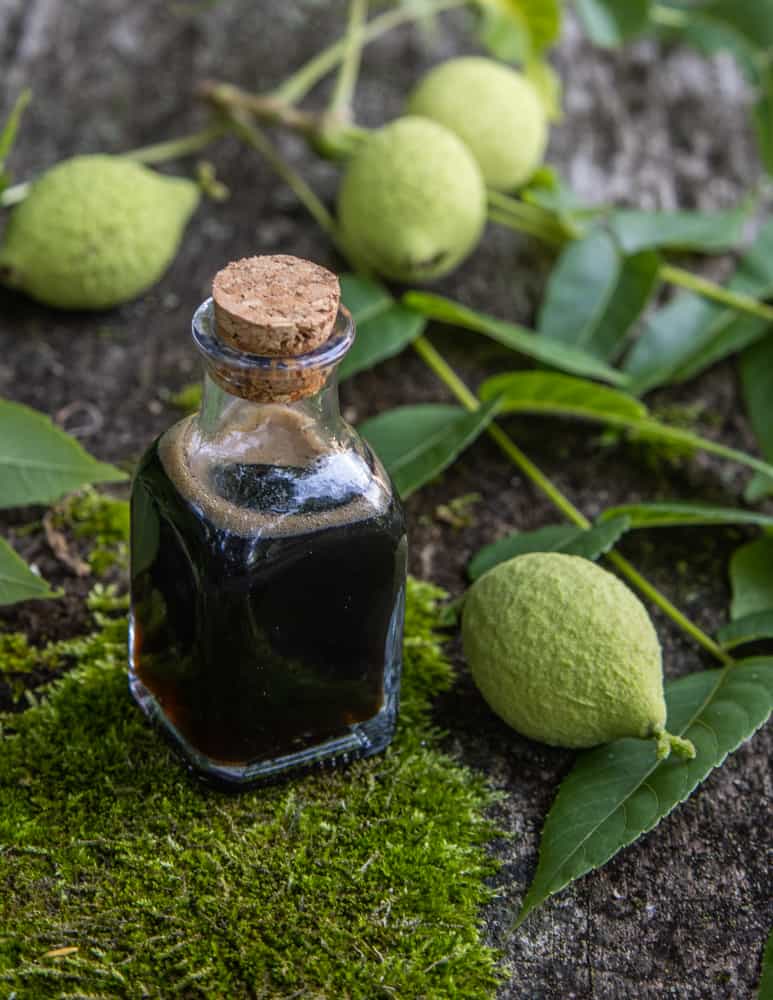
Unripe black walnuts are pretty well known in the wild food community, due at least in part to the popularity of Nocino, the Italian black walnut liquor. While it makes a fun conversation piece and digestif, I can only have small amounts of alcohol due to complications from Lyme, so I wanted to make something more versatile.
A few years ago I was reading an old book, (the name escapes me). In the preserves section, like many old books I've read from the1900's (Housekeeping in Old Virginia being a great one) there were numerous preparations calling for green black walnuts. One of them was "Green Walnut Syrup". I made a note of the name in a file and forgot about it for a few years.
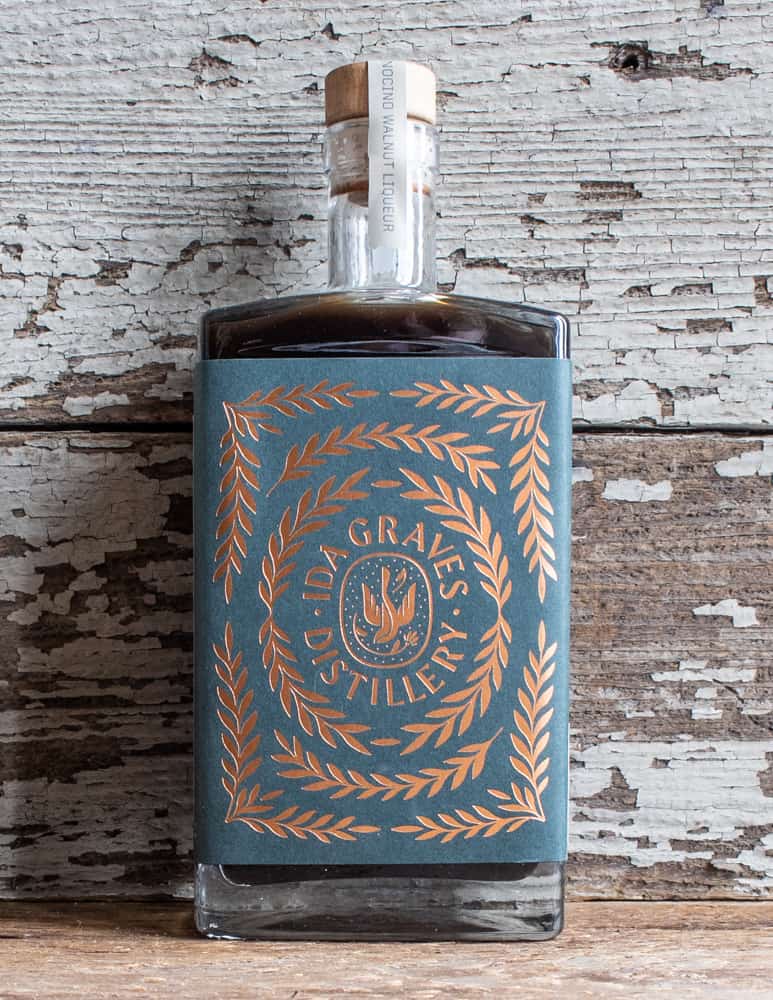
While working with Ida Graves Distillery to produce the Nocino we made from 2020-2022 I remembered the green walnut syrup and thought it'd be fun to use it as the sweetener for nocino instead of sugar.
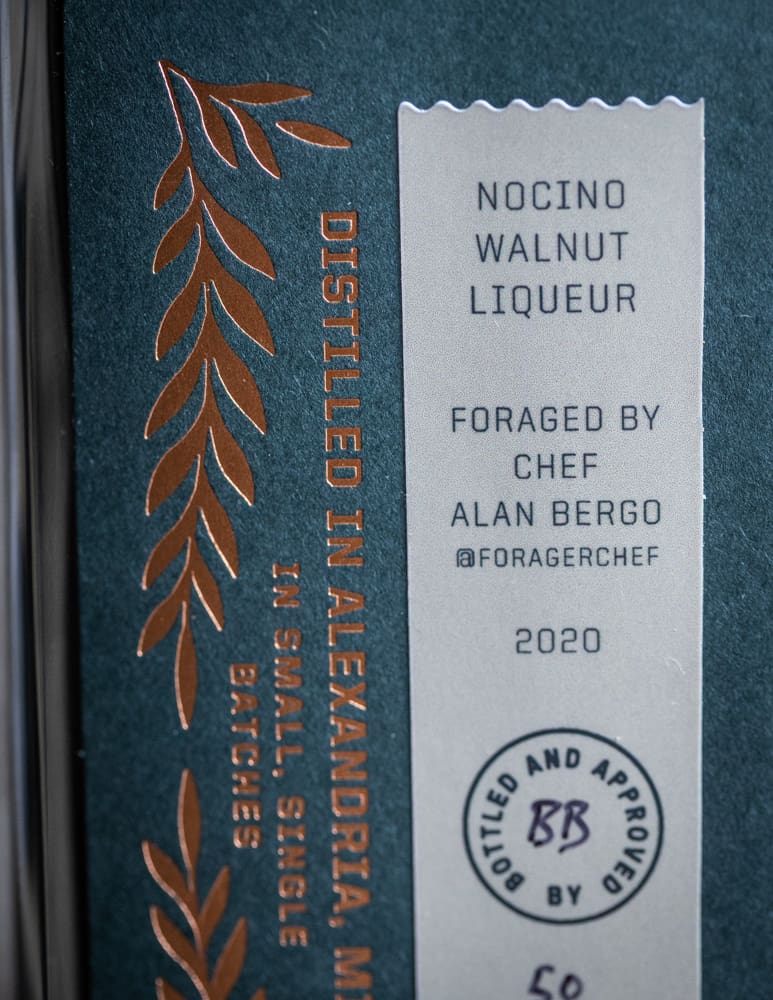
Knowing that unripe walnuts have a high water content, I figured a Korean cheong-style syrup where an ingredient is immersed in sugar for long periods would work well. Now, five years after I originally posted this, I know of more than a few friends around the country selling walnut syrup at farmers markets as a value-added product.
I'd never heard of anyone else talk about green walnut syrup until a charity dinner I did with Hank Shaw this year. After I served a small glass of walnut wine with dessert, a man came up to thank me for reminding him of a memory with his German grandmother.
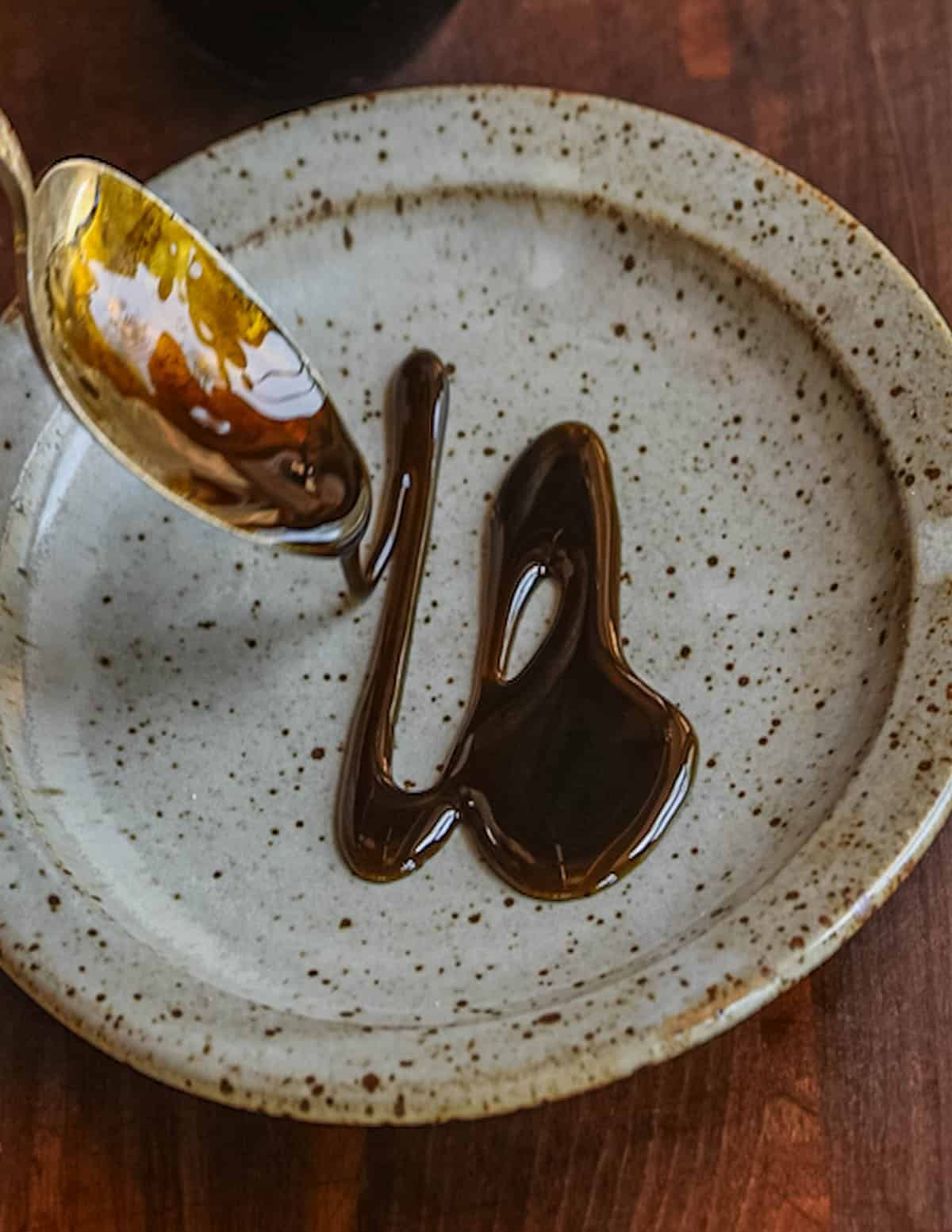
He said his family would harvest the green nuts and cook them into a thick, black syrup his grandfather ate religiously on buttered toast. I'm sure there's more references like this out there, so if you know of any, please leave a comment.
Using different species of walnuts
After making this for a few years now I had to try it with different varieties. Butternuts or white walnuts (Juglans cinerea) are the closest approximation to black walnuts, but ripen a full month earlier and should be harvested in Early to mid-June.
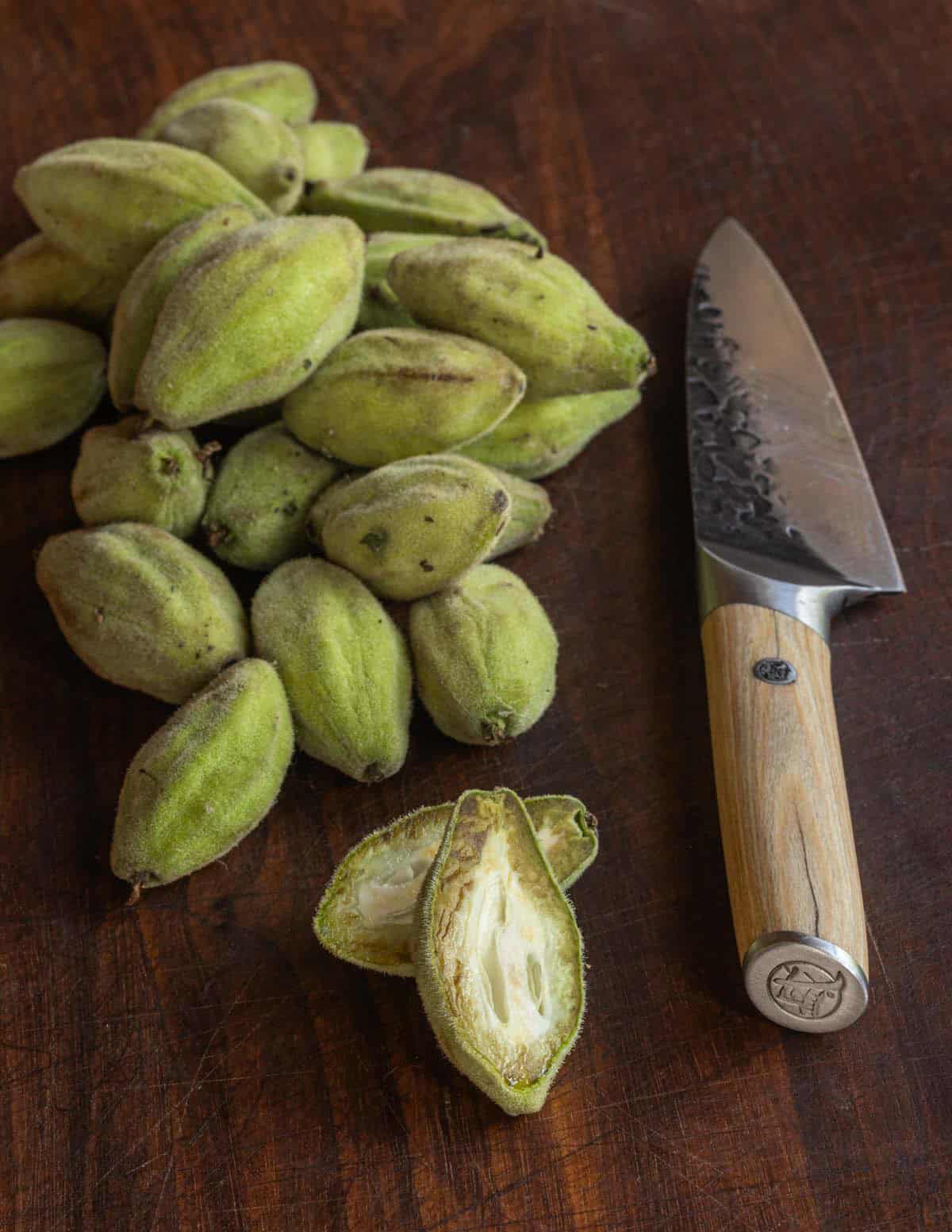
Green black walnuts can be picked up until Mid July where I live. I've heard of others making it from unripe shagbark hickory nuts, but I haven't made it myself yet.
How to Make Walnut Syrup (The Maceration)
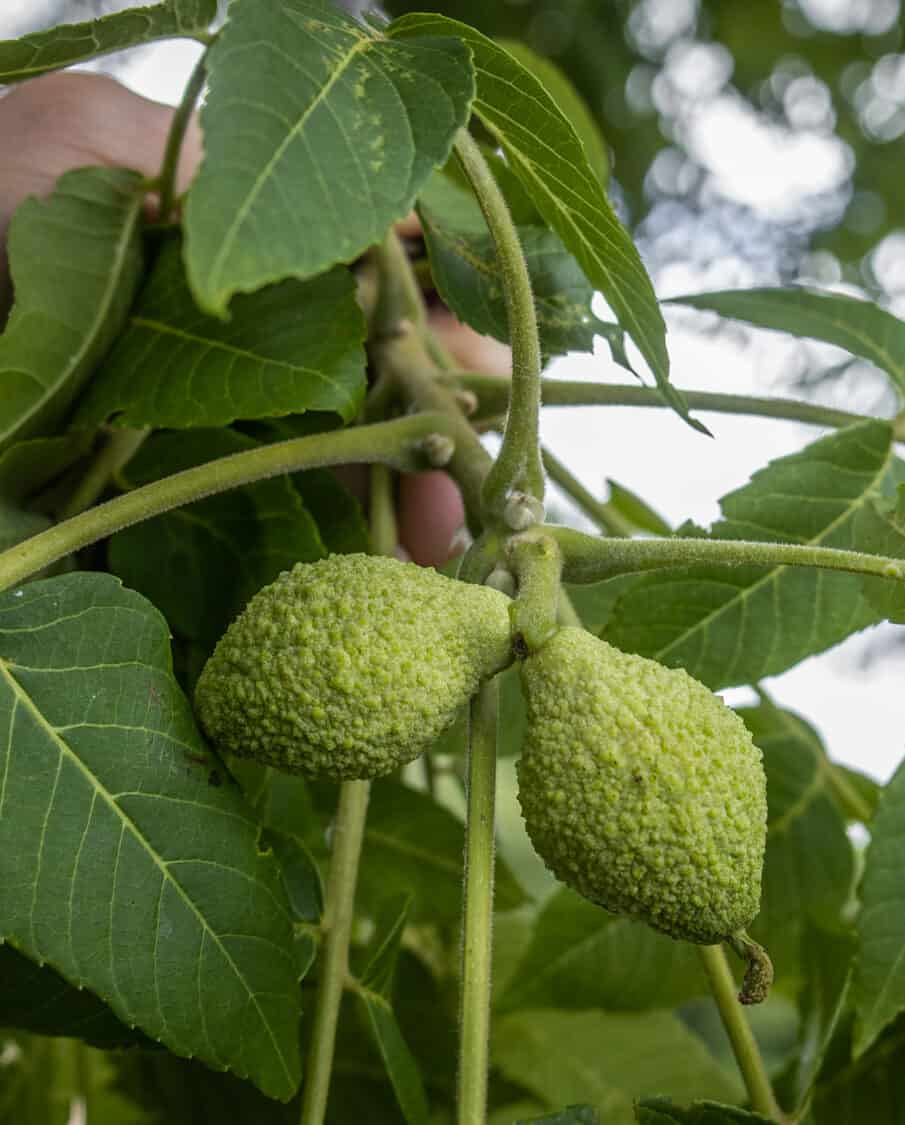
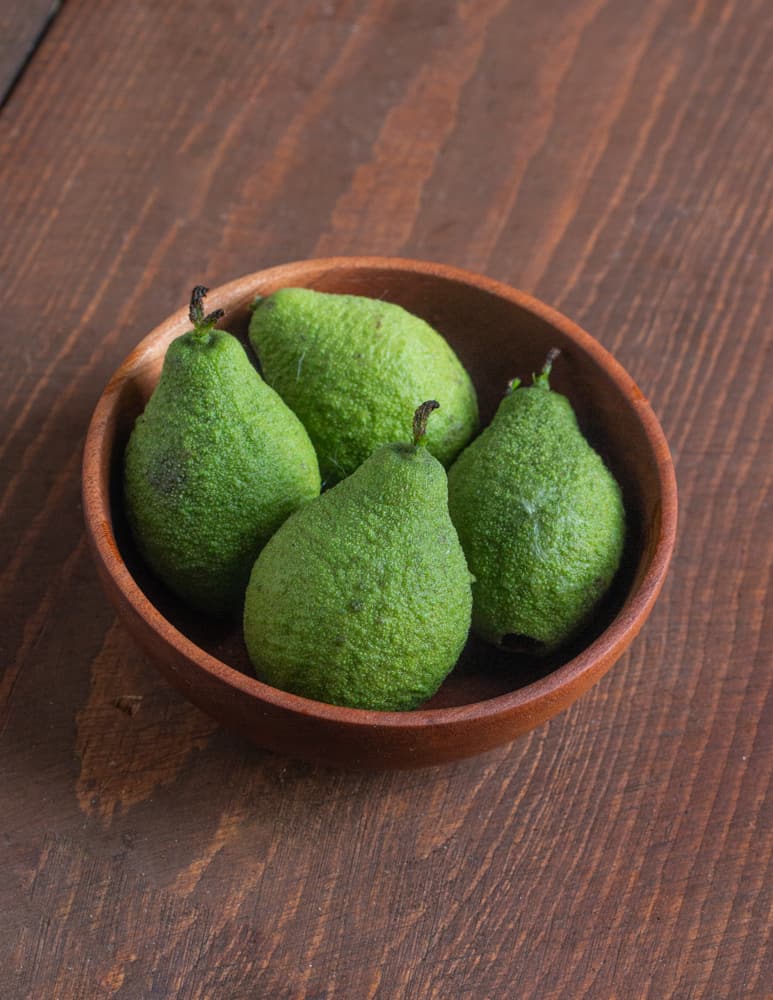
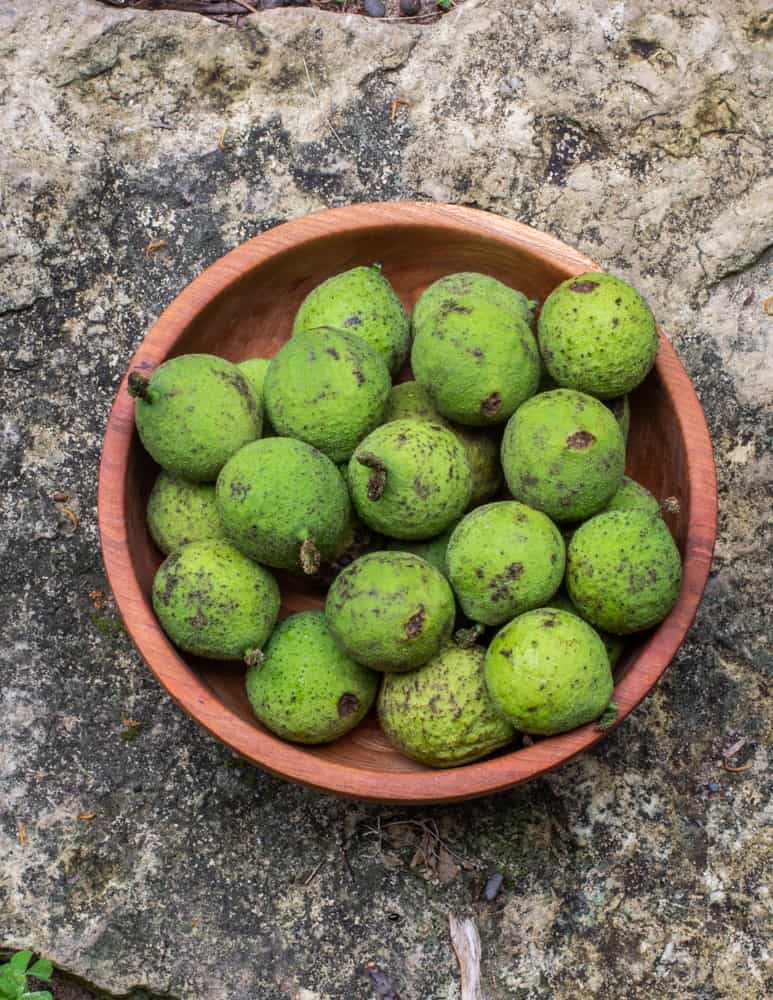
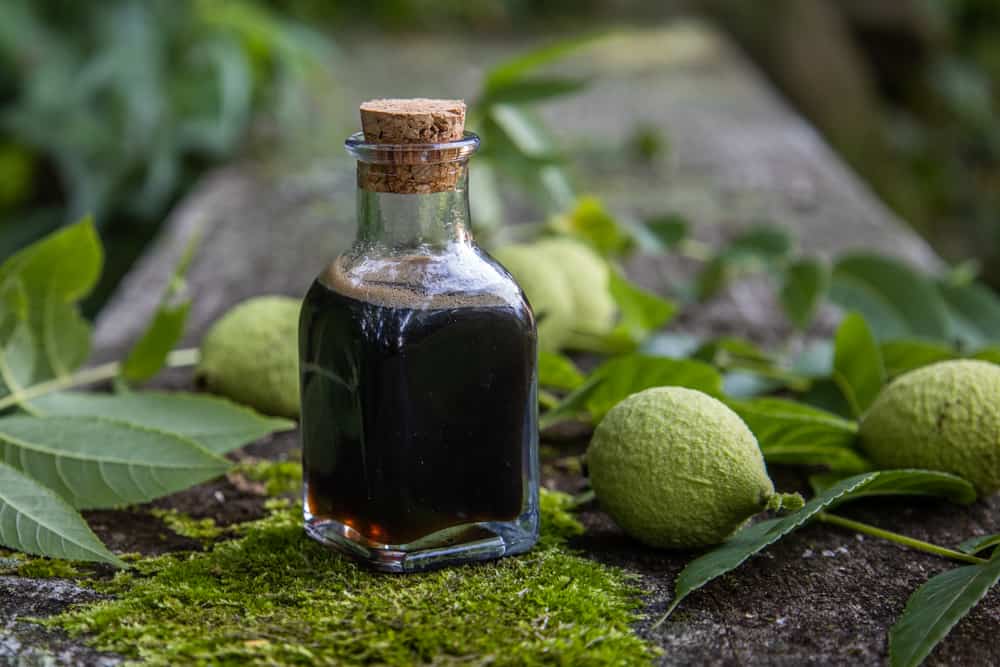
First you need to harvest the green walnuts from a tree. Look for trees in full sun with low branches that are easy to reach. Ideally they'll be young and tender enough to cut with a knife without any resistance, but, as you won't be eating the physical nuts, it's ok if they're slightly larger. I like them the size of ping-pong balls.
Variations due to the age of the nuts
Very young nuts can work (see below) but they contain less water than larger nuts.
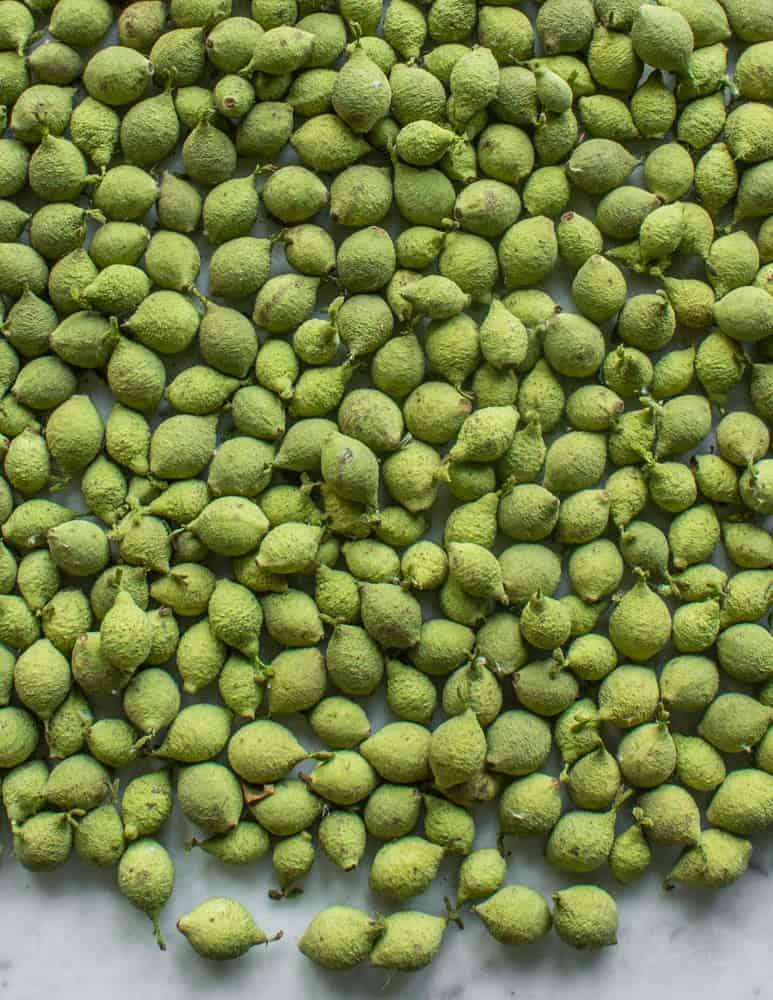
Nuts that have visible brown shells inside should be avoided as the hulls may start to break down during the process. As long as you can easily cut through the nuts or pierce them with a toothpick, they should be fine. Expect some variation from tree to tree.
Maceration
Take your green walnuts, cut them in half, then mix them with twice their weight in sugar, which could be white, brown, or unrefined cane sugar. You could also use maple syrup or honey.
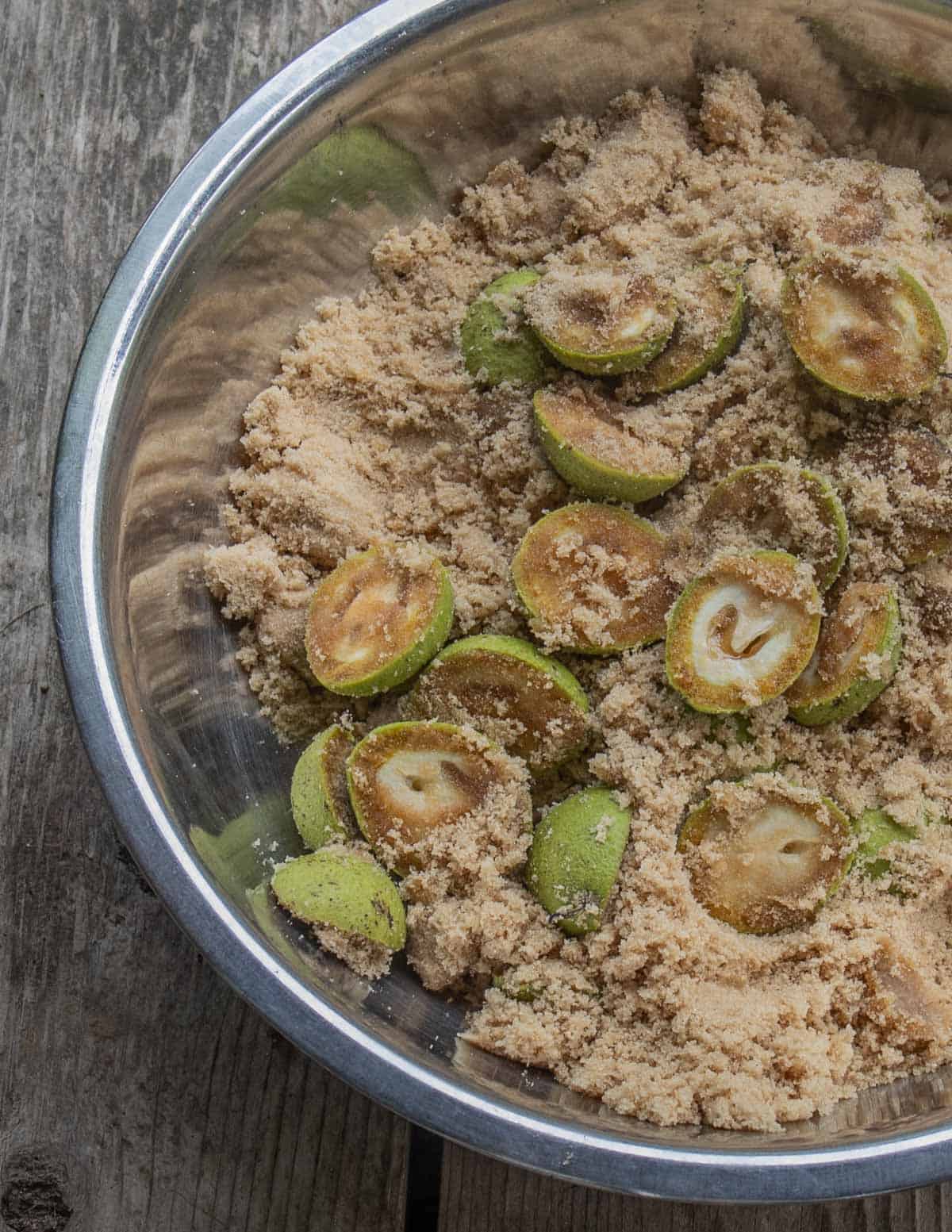
Pack the nuts and sugar in a glass container like a mason jar so you can watch the show.
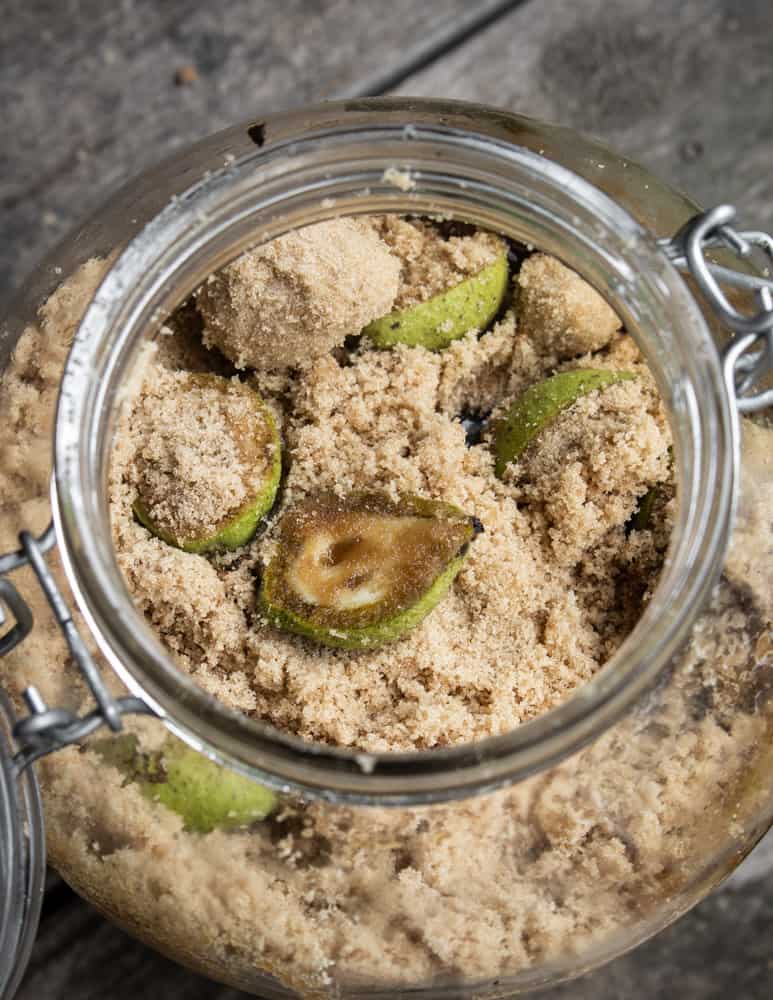
After only a day or two, the alchemy begins as the sugar coaxes out what seems an impossible rush of natural water from the green walnuts.
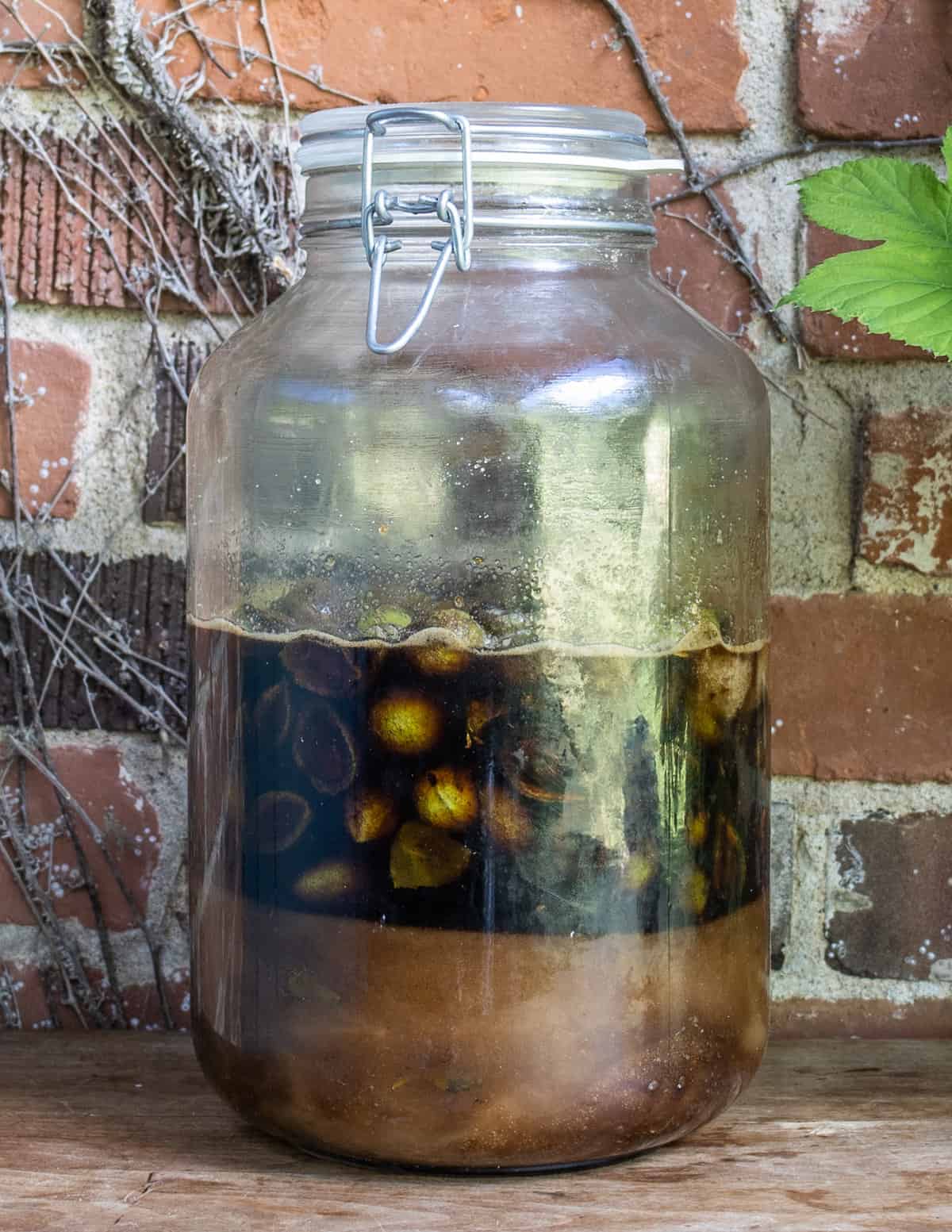
When the water releases, the walnuts will be swimming in liquid and there will be visible fermentation and bubbling, pressurizing the contents of the jar and letting out a satisfying hiss when the lid is opened. This is natural, and the fermentation isn't strong enough that you'd have to worry about jars exploding.
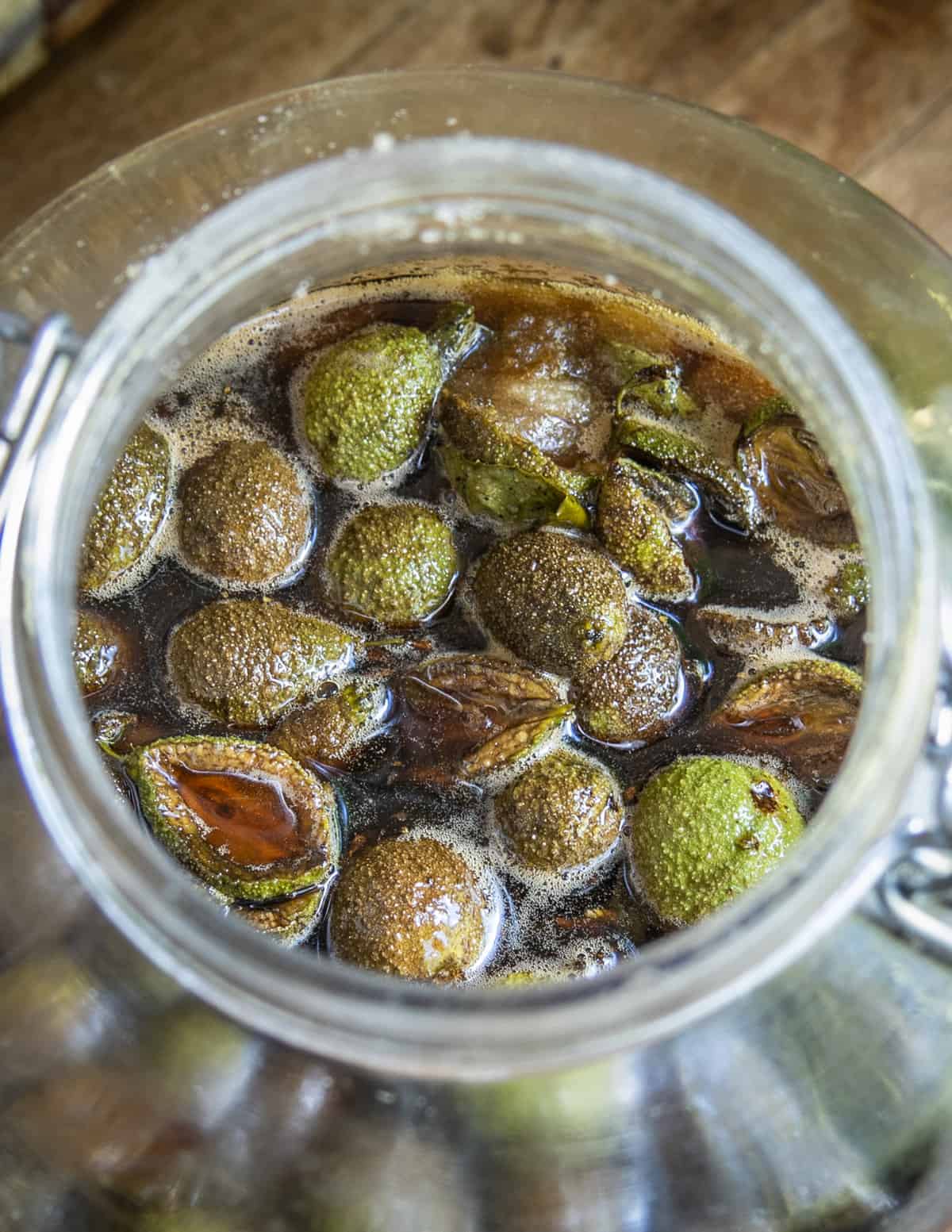
After 30 days or so, you scrape out the black, sugary walnut sludge into a pot, bring it to a boil, then strain, discarding the walnuts, and bottle the syrup. Ah Viola.
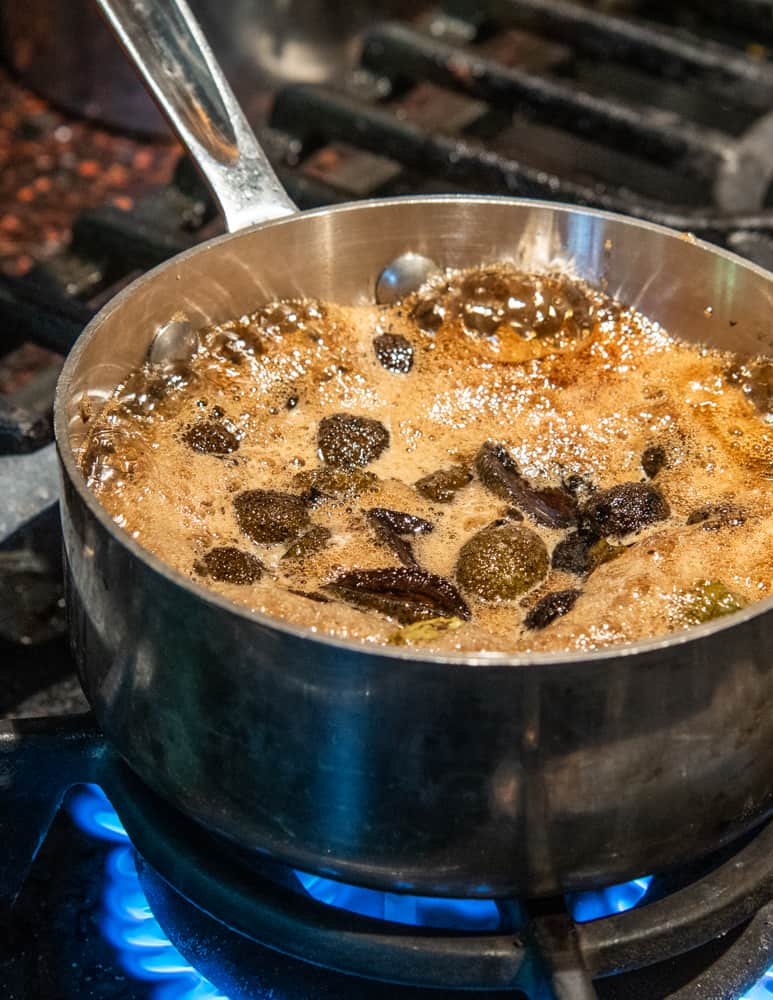
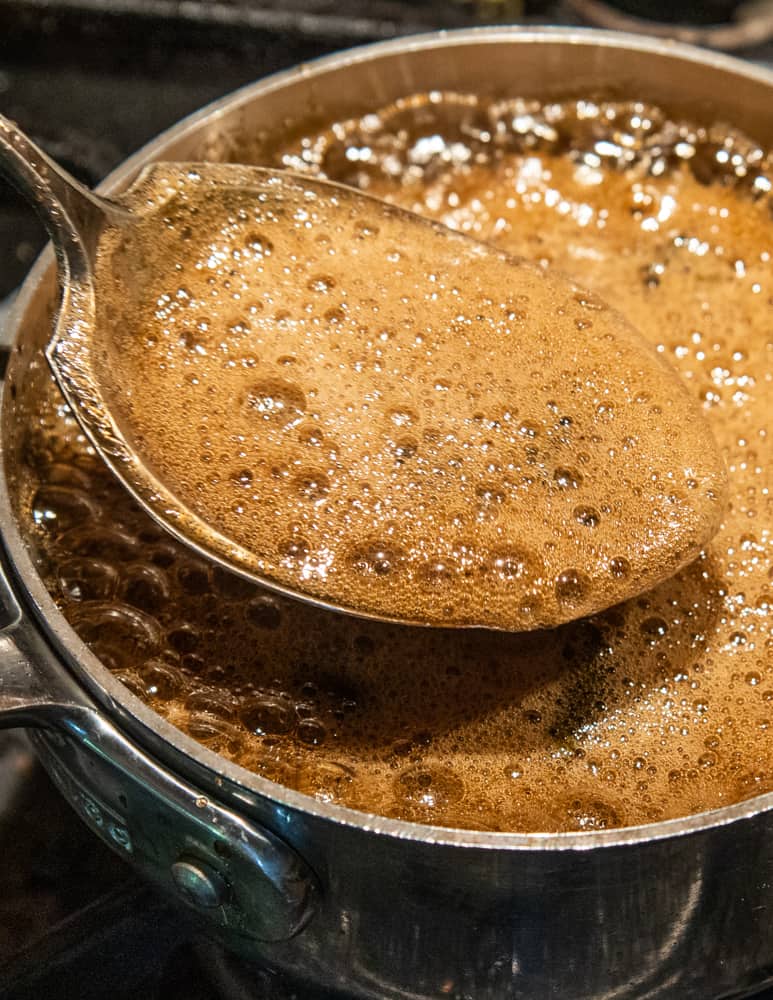
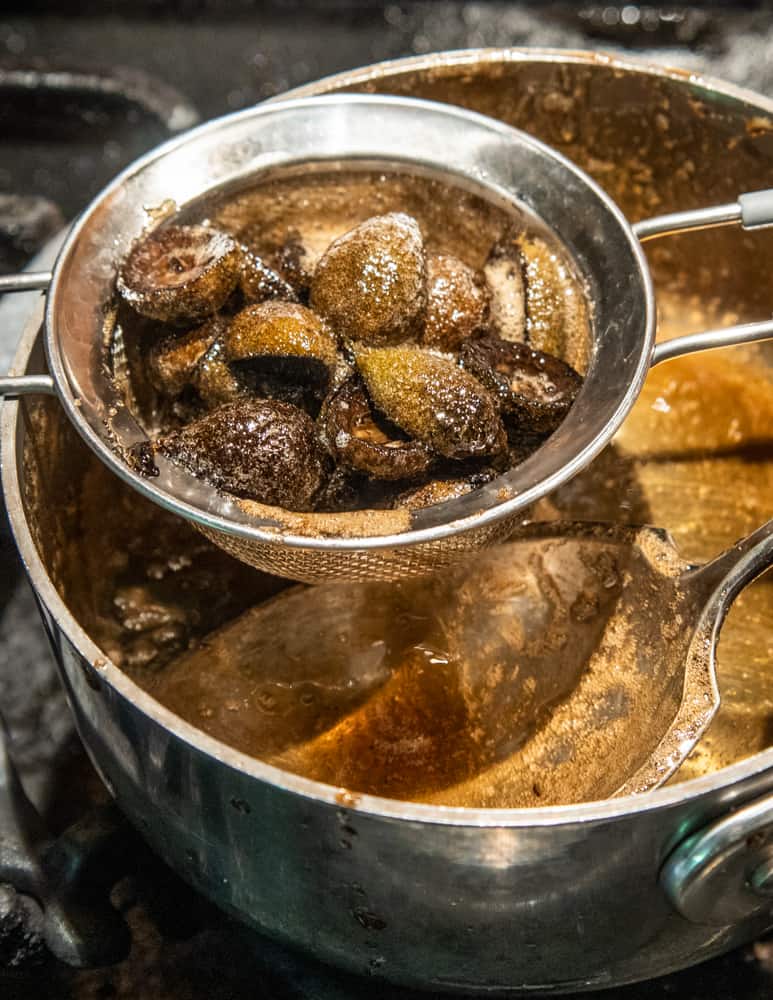
While I typically discard the nuts, there's still some goodness you can squeeze from them if you want. The cooked nuts can be used to make nocino or vin de noix.
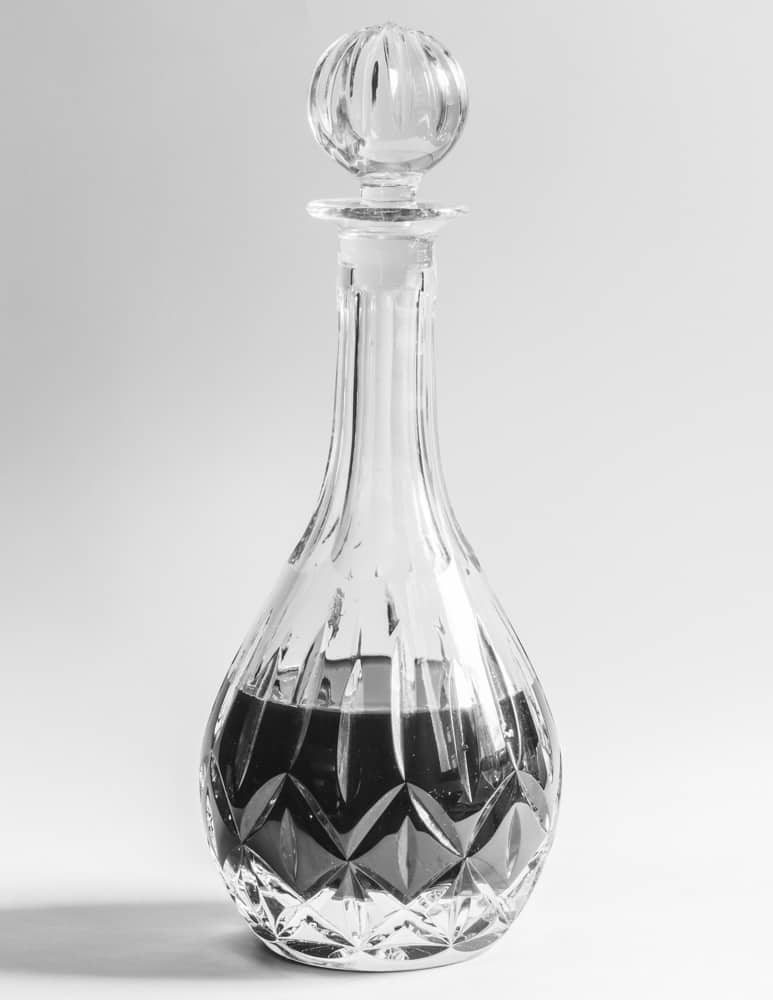
Originally I'd hoped to capture the toe-curling aroma of green citrus from the young nuts, but over time the syrup develops the same sort of earthy, rich leather notes of walnut liqueurs. It's not a bad thing.
Aging Out The Tannins
One clarification I wanted to emphasize here is the tannins (bitterness) in the syrup. If you've made walnut liquor you'll know it tastes horribly bitter until the tannins relax. For reasons unknown to me (maybe the age of the nuts?) some walnut syrups I've made have been ready immediately, or only need a few days of aging, but some need a month or more.
Long story short, if your syrup tastes bitter at first don't worry-you didn't do anything wrong. Set the jars on the shelf for a while and be patient. The timeline is variable, but eventually the tannins will break, revealing a similar, subtle walnut flavor as with walnut liquor.
How to use it
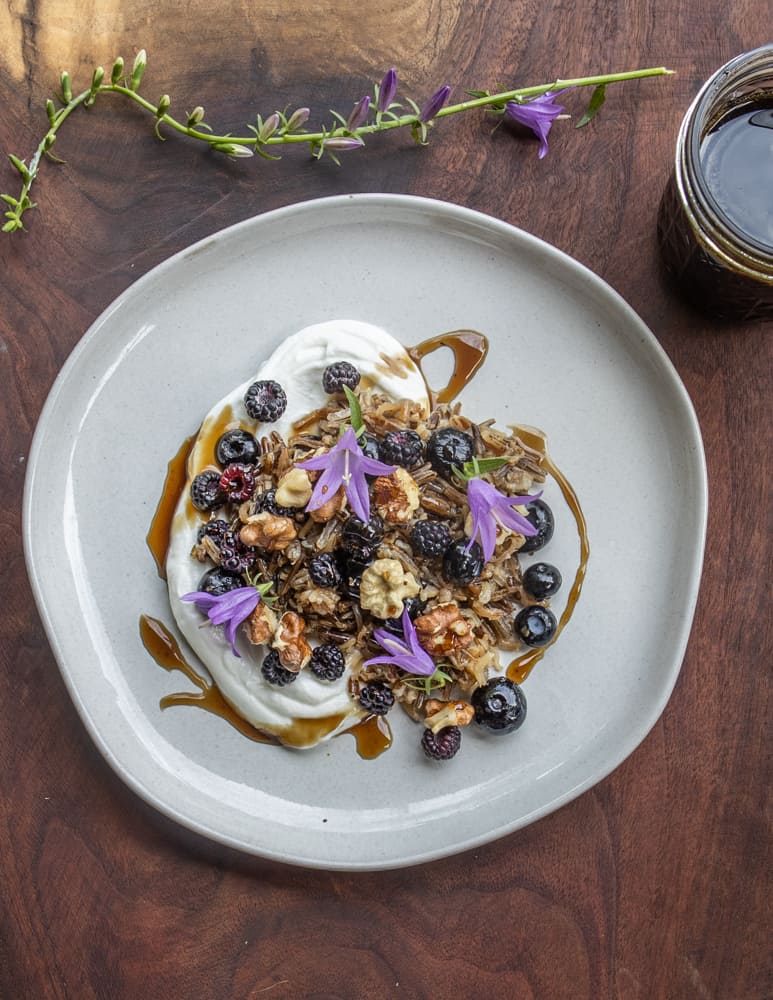
While the flavor is not as intense as mugolio, it's still fun. You can use the walnut syrup anywhere you would use maple syrup, and it loves yogurt and creamy soft cheeses. I've also used it for baking in things like granola, and anywhere I'd use molasses.
Using it to flavor spirits like nocino might be the ultimate version: a study in the flavor of black walnuts only the forest can provide.
Related Posts
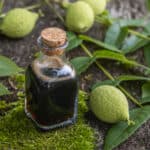
Green Walnut Syrup (Molasses)
Equipment
- 1 Mason jars you'll need two quart jars or one half gallon jar
- 1 Strainer or cheesecloth
- 1 4 quart stainless steel saucepot
Ingredients
- 1 lb (roughly 15-22) young unripe black walnuts or butternuts soft enough that they can be cut through with a knife
- 2 lb Brown sugar or Turbinado sugar or cane sugar
- 2 teaspoons organic corn syrup to prevent crystallization, optional
Instructions
Harvest and Prep the Nuts
- Harvest unripe black walnuts directly from the tree. Younger is best, smaller than a ping pong ball. Older, more round nuts may be more tannic.
- While it may be tempting to harvest walnuts that have already fallen, you will want to cut some of them in half to make sure they're pearly white and clean on the inside, without any spotting or deterioration. Wash the walnuts and reserve.
- Wearing gloves, cut the walnuts in half using a heavy knife on a cutting board that won't stain. Older recipes often mention crushing or pounding the unripe nuts, which you could also do, but beware of splattering juice.
- Mix the walnut with the sugar, then pack into a container that can accomodate the entire mixture. For the amount listed, you would want a half gallon mason jar.
Maceration
- Allow the walnut-sugar mixture to sit at room temperature or outside for at least 30 days, and up to a few months, opening the jar occasionally to release carbon dioxide as the mixture will ferment. Shake or stir it occasionally to coat the nuts in the fermenting syrup and help prevent mold. Set a reminder to cook the jar in 30 days.
Boiling, straining and storing
- After 30 days, scrape the sugary walnut mixture into a non-reactive sauce pot with high sides. Add the corn syrup if using. On high heat, bring the mixture to a simmer to melt the syrup, turn the heat off and remove the walnuts using a slotted spoon and discard.
Finishing and Jarring
- Bring the syrup back to a boil turn off the heat and wait a minute for the foam to settle, skim off the foam if present (it will subside as the jars cool either way). Pour the piping hot syrup into the jars leaving ½ inch of headspace, screw on the lids tightly.
- The cooking process should take about 10 minutes. You're only melting the syrup and getting it hot to sterilize it, not reducing it. Overcooking the syrup will cause the jars to crystalize.
- Process the jars in a water bath, 10 minutes per pint. Some people simply turn the jars upside down and allow to cool and seal. The syrup will last for years and doesn't need to be refrigerated until it's opened. It can be a little tannic at first but mellows as it ages.
Mary
I just cooked down my 1st batch. It's a good taste for black walnuts. Mine turned to the consistency of soft caramel as soon as it started to cool. Is that what's to be expected? I'm wondering if I might have heated it too long. I have two more batches to cook but am spacing them each a month apart to see how the flavor changes with more fermenting time. Am loving your book! Thanks for sharing.
Alan Bergo
Thanks Mary. Yes you may have cooked it a little too long. Just bring it to a simmer and melt the sugar, then strain. You can add the more firm honey to the next batch you cook.
Mary
All 3 of my batches turned into a crystal-textured paste after they cooled. After the first noted above, the other two were cooked as the recipe instructed, The flavor is nice though. I used the small nuts as recommended and Sugar In The Raw, all weighed with a scale. I'm scratching my head as to what made mine different; the recipe is so straightforward. I'd like to try again next year to create a syrup but would appreciate any thoughts to achieve a better end product. I have access to trees with low branches that make picking the nuts super easy 🙂
Alan Bergo
Mary, you likely cooked it too long. Just bring it to a simmer and get everything hot enough to melt the sugar. Sugar in the raw will have less moisture than brown sugar too, just something to keep in mind. If your nuts were very small, they could also have less liquid natural liquid. Put it back into a pot and add some extra water to refresh the consistency. Sugar in the raw is more prone to crystallization naturally too, but I avoid suggesting people add corn syrup to stabilize it as I hate the stuff. I just finished a whole gallon of it and it worked like a charm. Small batches will have their water cook off more quickly too.
Lastly, you can always use a sweetener that has more water in it. Maple or honey both ferment very well, you would just cover the nuts with them and proceed as for sugar.
Claudia
Just strained and bottled mine! It smells delightful and tastes even better. I wish I had collected more green black walnuts but now I know for next year. Looking forward to adding this to coffee, cocktails, and more. Thank you for sharing this recipe 🙂
Alan Bergo
Glad it worked for you.
Nick Garber
Do you know if the process is safe with pecans? Our walnuts are past prime, but I found a pecan tree.
Alan Bergo
I haven’t made it personally, but I would definitely try.
Jace
Just canned a batch that I let sit for 35 days. Wow, the flavor and aroma is incredible! Thank you for sharing! This will make a killer old fashioned.
Billy
Been cracking walnuts for decades now but new to the honey and nocino life and have a question...how come these end products don't stain (assuming they won't?) Does the staining compound (whatever that may be) break down somehow even as the color deepens? Ty for the recipes, bought your book!
Alan Bergo
Thanks for grabbing the book Billy. So yeah, the blackening, discoloration you'll get with fresh, green walnuts is denatured through the maceration process in both of these recipes. It won't stain your hands, a plate, or most other things.
Pamela Weiner
I started a batch of this maybe 20 days ago or so, and I'm starting to see some mold on the top.... I did a bunch of googling and it looks like a) botulism can't grow in high sugar concentrations and b) boiling kills mold spores. Can I save it by skimming off any visible mold and making sure to boil the crap out of it at the end of the month? I was REALLY excited about this and was planning to use it in the nocino I have going, but I don't want to poison myself or any friends. Thank you so much for sharing your knowledge, I've been enjoying your book a lot 😉
Alan Bergo
Pamela, yes, it’s fine. If you don’t stir it regularly to coat the nuts with the fermenting syrup you might get a little harmless white mold. Just pick it off, remember to agitate the jars and stir next time. Bringing it to a boil will sterilize it.
Michelle Schonberger
After about 2 weeks I noticed mould growing on the top of my walnut honey.
Should I be storing it in the dark? How else can this be prevented?
Alan Bergo
Thanks for asking Michelle, so, I address this in the recipe method. You want to make sure to stir it occasionally which will cost the nuts in syrup as it ferments and help ward off mold. Pick the mold off and discard, I’m assuming it’s simple white mold, which is harmless, especially as the syrup will be heated after macerating, which will kill any baddies.
Craig Fisher
I love the foraging but struggle with the cooking so this is a great web site for me. I tried the walnut honey and now there is mold growing on the top, any ideas on what went wrong?
Alan Bergo
Craig, did you weigh the ingredients? If you used very large walnuts they could stick out a bit. Just pick the mold off and make sure to stir the liquid as it ferments. Eventually it will be rock solid and very stable as the pH lowers.
Don Blackert
I attempted to post earlier but apparently it didn't make it into the comments. I was asking if you had ever tried hickory nuts. Between that attempted post and now I "went to the woods" and have now started a batch of 3 pounds of walnuts (and a few butternuts thrown in) and a second batch of 2 pounds of hickory nuts, both batches at your 2:1 sugar :nut ratio. I found the butternuts to be much drier than the walnuts. Hickory were about at moisture laden as the walnuts. Fun experiment. Can't wait to try it in a few months.
D
Did you do this with shagbark hickory? How did it turn out? I made this with walnuts last year and this year, but recently discovered a hickory tree in my yard and would be interested in trying it. I know Alan alluded to it being possible, but I can't find any resources online and I'm not sure when would be the time to harvest the hickory. Thanks!
Diana McAnally
OK, this was just shared with me and I'm intrigued with another use for green nuts. I've made the Croatian version of Nocinw (Orahovica) for a few years, and have some jars of pickled green walnuts I've made - all with English walnuts off trees in our garden. My Orahovica is made with a few coffee beans and a vanilla bean in the jar. This year I'm adding lemon zest for a change.
I'm hoping the nuts are still green enough to try the syrup. Thanks for sharing this recipe.
Alan Bergo
As long as you can cut through the nuts easily and the inner shell hasn't begin to form, you're fine.
Diana McAnally
they were a little brittle but I managed to hack through them 🙂 Going to sweeten this year's Orahovica with the resulting syrup.
Marguerita Young
I have a Black Walnut tree growing in my yard & would like to try this recipe but I may be too late. The rinds aren't half as warty as yours in the picture. The aroma of them is amazing. Reminds me of a grappa I once had.
Do you think they'll still work?
Charlotte
Can this be made with refined (white) sugar?
Alan Bergo
Yes.
John Smalldridge
Great recipe! Lots of black walnuts where I live so I’ll have to try this. I was wondering if the same treatment would work with sassafras? Would the recipe still be two parts sugar to one part sassafras?
Catherine
This recipe lit me up. I, too, love the scent of black walnuts and I'm fortunate to have four black walnut trees right out my back door, here in Milwaukee - two mature (beyond 75 ft) and two grown, literally, from seed, about half that. The branches on the smaller two are within reach, so the walnuts could enjoyably be picked by hand.
I set up an area out back to prepare the harvest and put together two mixtures: one with demerara and one with dark brown sugar. This morning, I noticed that the alchemy had already begun. The entire experience was so pleasurable; it stirred up feelings of how much I truly delight in being active in the out of doors, and for that I am grateful. Thank you, Alan.
Alan Bergo
Thanks Catherine. It's a fun edible science project. The syrup will tease you and hold the citrus aroma at first, but mellows to a nice, eerie walnut essence. I just sweetened my 2021 walnut wine with it and can't wait to taste it in the winter.
Sarah Tracy
This sounds great, I will try making it today (as a recent thunderstorm brought down a branch laden with green black walnuts just begging to be used.
I made Nocino a few times, and loved how dark it is. I decided to sweeten mine with a bit of maple syrup as an homage to the walnut tree’s “neighbor” (the maple tree is next to the black walnut tree in my yard)
Alan Bergo
Thanks Sarah, I've really been enjoying it.
Shannon
Hi Sarah, I see the date on your post and noticed that I did the same thing. Probably same storm lol. I just canned mine today.
Kate
Does this work with English walnuts too? By the way, I first heard about preserved green walnuts in Hungary. After that, my cousin who lives in London told me that she has green walnut preserves as a Christmas treat. I have made both pickled (salted) green walnuts, and a sweetened preserve with them, both of which you eat the immature walnut. I am on my way to harvest English walnuts around the corner to try your recipe now.
Alan Bergo
I would assume it will work with English walnuts, but I haven't tried it myself.
Dave Emerson
In Eastern Europe people candy green walnuts. They are served in their syrup similar to your walnut honey. The Greek name is Glyko Karydaki, but I believe it’s popular from Greece to Russia.
Thanks for all the pleasure your blog has brought me.
Dave
Alan Bergo
Thanks Dave, there's actually a recipe for preserved walnuts in my book. I know it from Greece to the Caucuses, as you mention.
Jen
Could you use unpasteurized honey for this?
Alan Bergo
Yes but it will contain more water.
Gerry Jenkison
Looking at that beautiful forest of Black Walnut trees, it looks to me as if wild grape is clambering up them. If so, the wild grape will become so heavy that it will weigh down branches enough to break them, Trees cannot heal sort of wound, so disease and rot can set in. You
Might want to take a bunch of friends and cut the vines off at the source. Love your recipes for unripe fruits. Thank you from Prince Edward County in Canada.
Alan Bergo
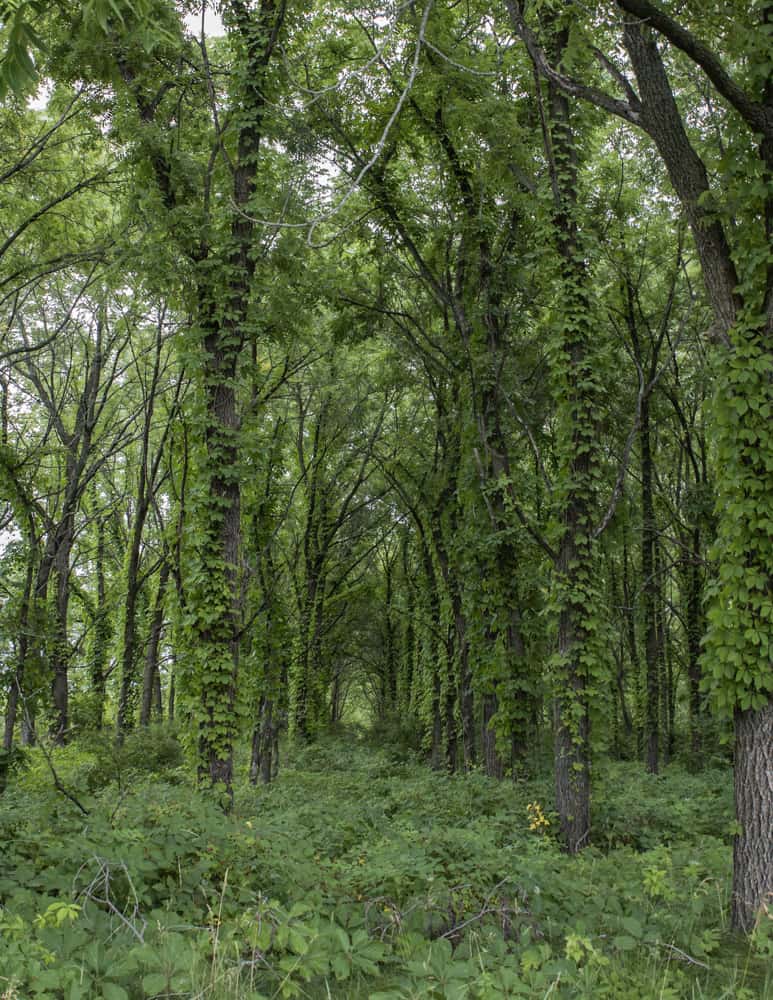
It is actually Virginia creeper, but lots of heavy vines can cause issues I'd assume.
Jorge Vilanova
This is further information about Ratafia. Please check the following page about the elaboration of Ratafia. The Ratafia Russet is actually made in my hometown of Olot. The information is in french but cab be easily translated using Google. I could not find it in English.
https://blog.costabrava-pals.com/ratafia-catalan/
There is also information in Wikipedia.
Alan Bergo
Great info. Thank you!
Jorge Vilanova
I have not tried this recipe but I may when I can.
The Nocino liqueur seems to me to be a cousin of the Ratafia which is a liqueur from the northeast region of Spain (Catalonia). This is made by many people at home or can bought from commercial producers. It is definitely made from steeping walnuts and other herbs in alcohol. I have never seen it any liquor store in the US.
I have not tried Nocino but I will search for it if I can find it in a liquor store.
Terry Allaway
Ratafia from Quince is also very good and easily made at home
Jay Nelson
Can this be done successfully with pecans? No black walnuts in my neck of the woods.
Alan Bergo
Unripe green ones, possibly. I haven't tried it.