
Beef tagliata is a catch-all term that just means sliced steak in Italian. It's a good, quick recipe when fresh salad greens are available. The first one I was shown was served with boxed arugula, but it's much better made with fresh greens from the wild places around a yard or garden. Today I'll walk you through how I make it, dressed with a simple chive blossom vinaigrette as they happened to be in season too.
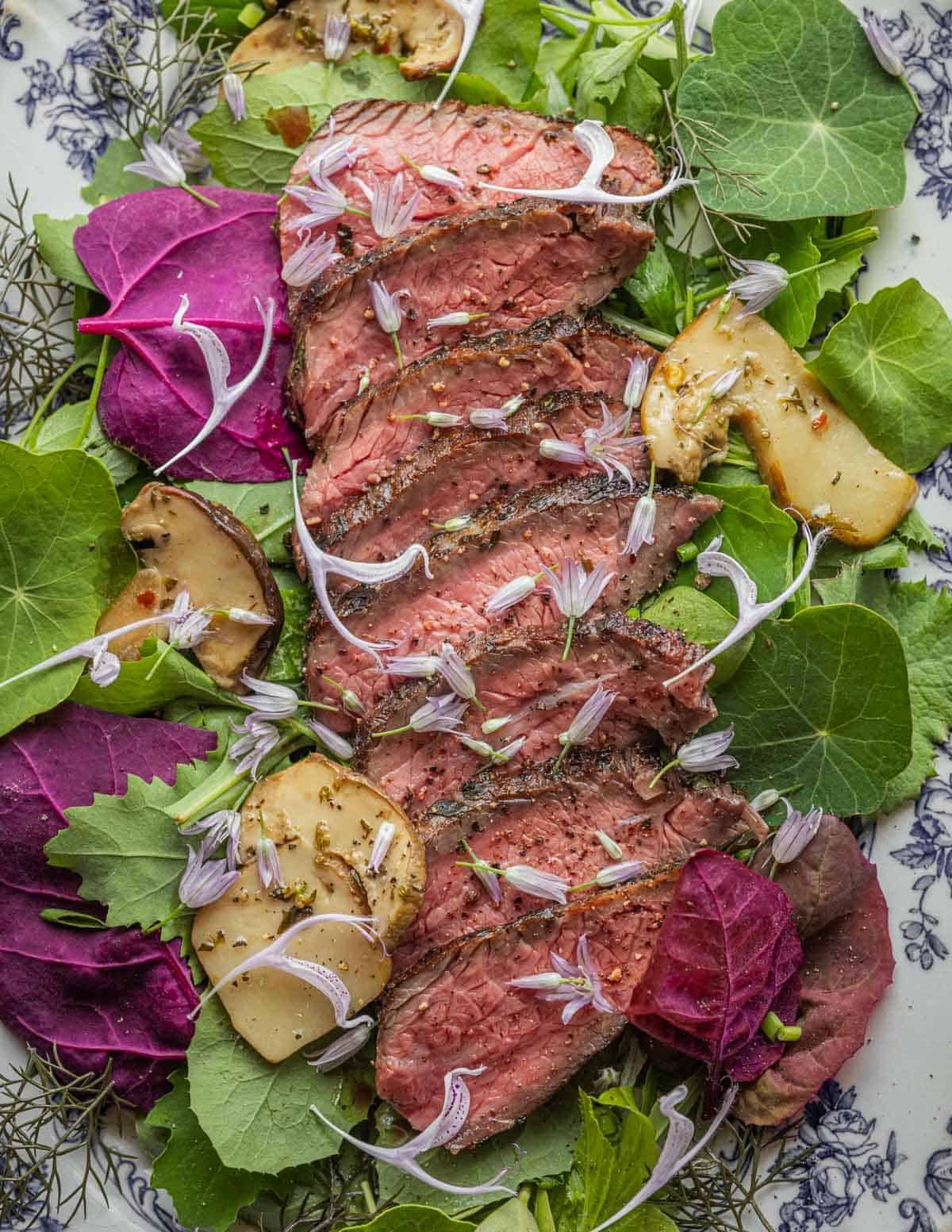
The word tagliata comes from the Italian verbe tagliare, meaning to cut. It's the same root word that gives us the hand-cut pasta tagliatelle. It follows from there that "steak tagliata" can be just about any cut of meat that can be sliced.
When I was a bus boy at an Italian restaurant in Wayzata Minnesota the Tagliata di Manzo con Rucola (beef tag in kitchen speak) was just a lunch special used to move excess steaks served unceremoniously on a bed of boxed arugula. Besides not overcooking the steak, impeccably fresh, interesting greens really make the dish here.
Steak
You want a steak that can be cut into nice slices here. I've used flank steak, but some other good options are:
- Hanger steak
- Teres major
- NY strip
- Skirt steak
- Top sirloin
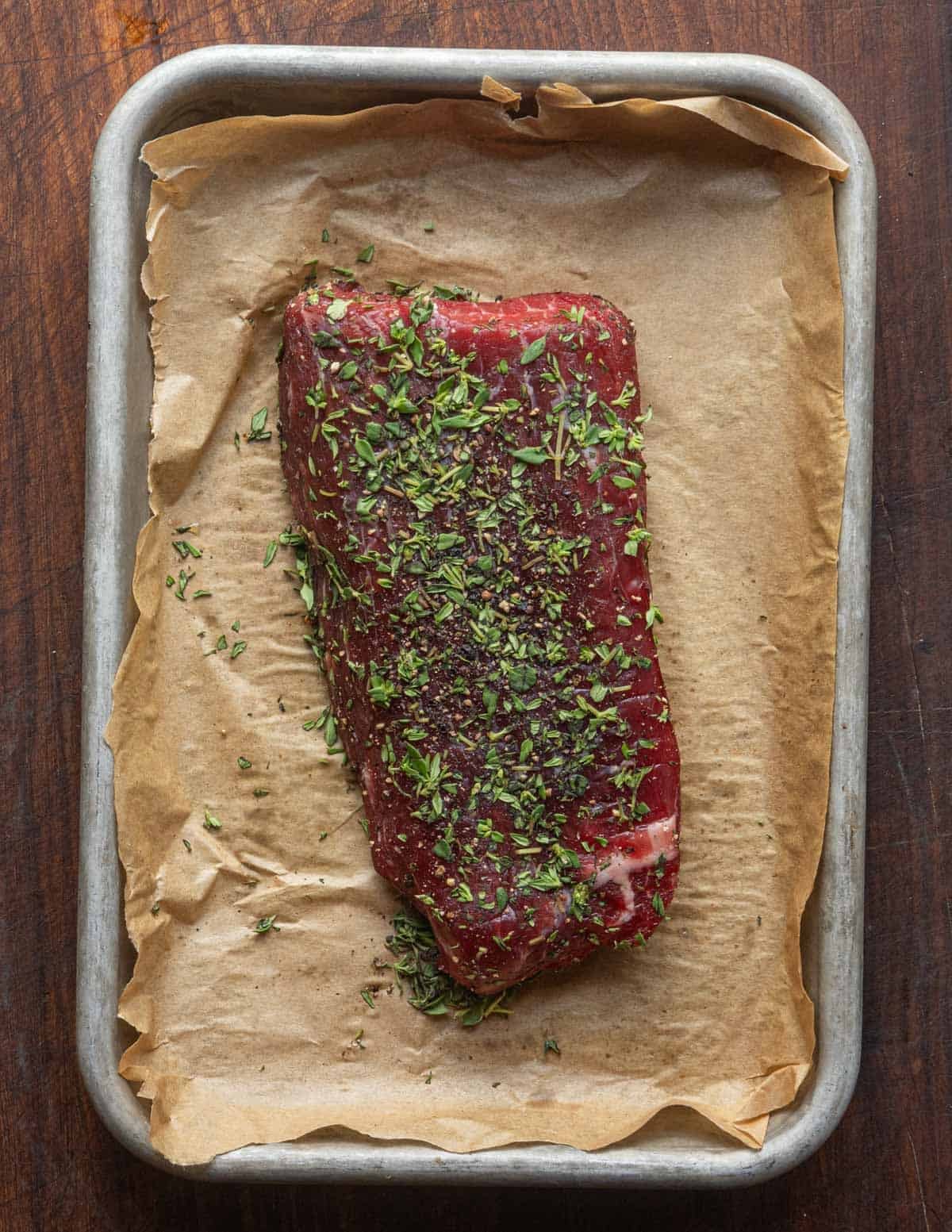
I don't do much to the steaks before cooking besides season them with salt, pepper and thyme. For the best caramelization you'll want to allow the steaks to sit, uncovered in the fridge overnight, turning them once or twice. The salt dries out the surface of the meat, ensuring a perfect brown crust.
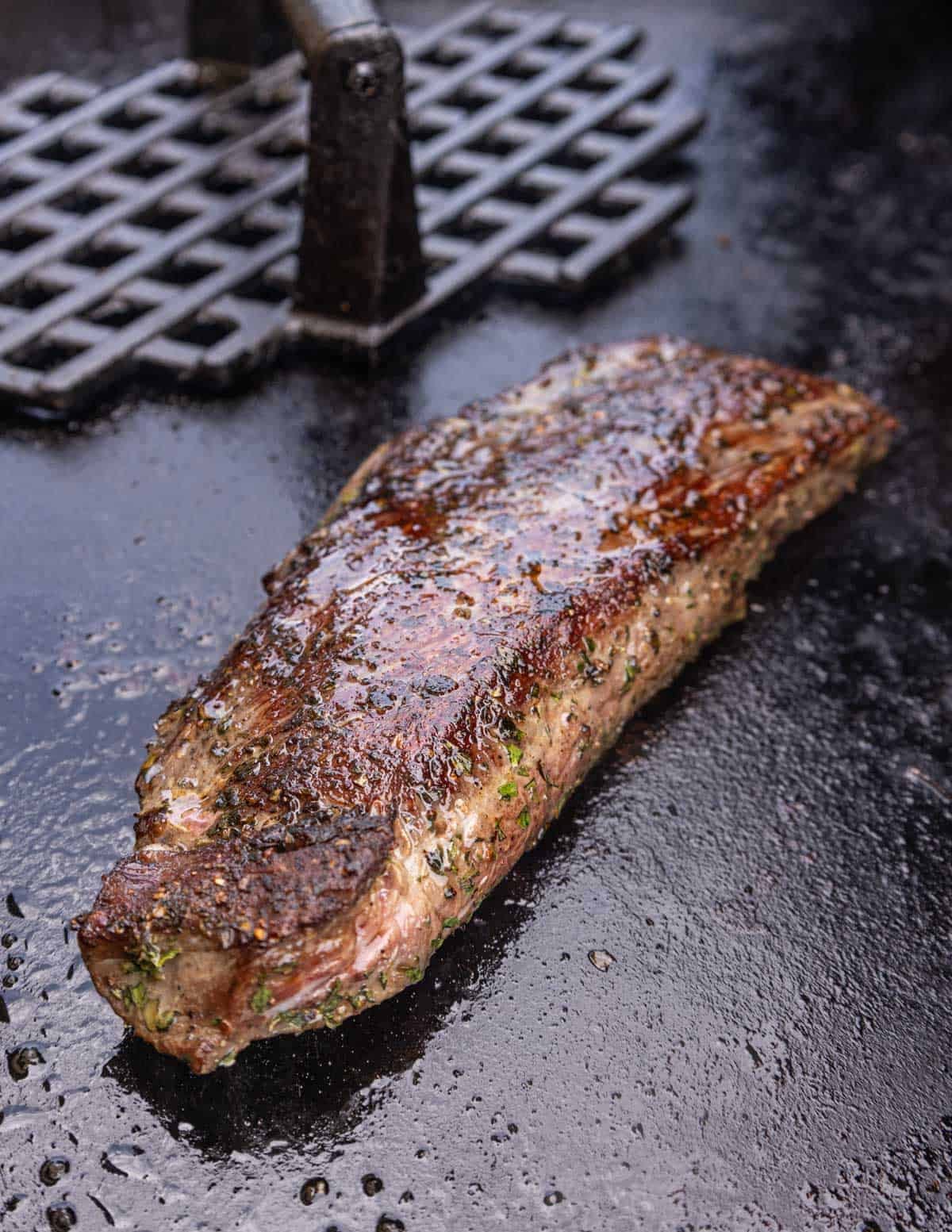
I cooked mine on a Blackstone flattop griddle, but a charcoal or gas grill is fine too. Use whatever you have-the seasoning and resting overnight is what's important.
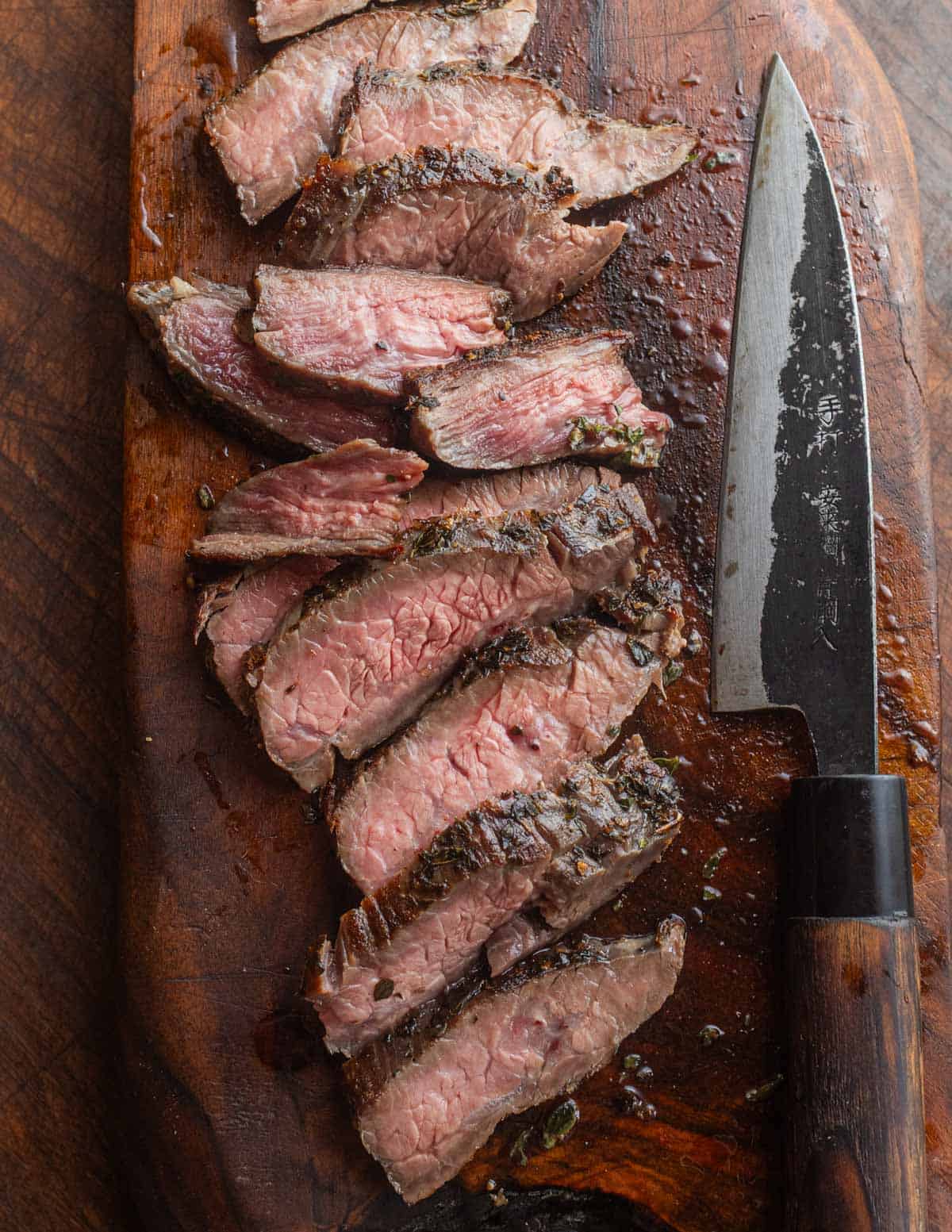
After it's cooked, I rest the steak on a paper towel for at least 10 minutes per pound before slicing. There should be a visible release of liquid to let you know it's properly rested.
Resting your meat is the key for that perfect, edge-to-edge, blush color. Some hard working muscles like the teres major need even more time to redistribute their juices, but as long as you let it rest a bit it'll be better than if you didn't.
Salad Greens and Herbs
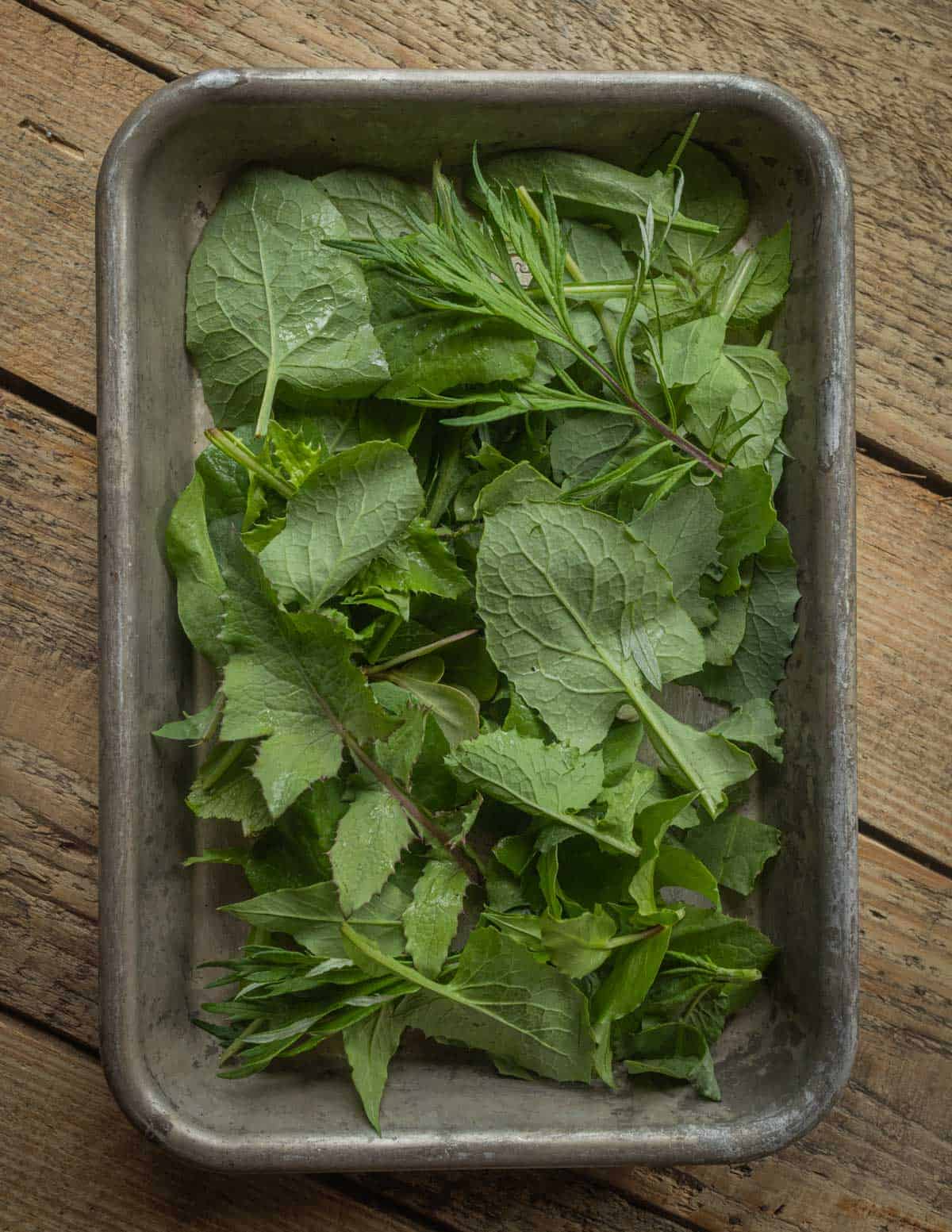
I channeled my inner Nonna and picked a few salad greens growing wild in my yard. Right now I have a lot of dandelions, sow thistle and chicories, mugwort tips, young nasturtium leaves, chickweed tips and orache.
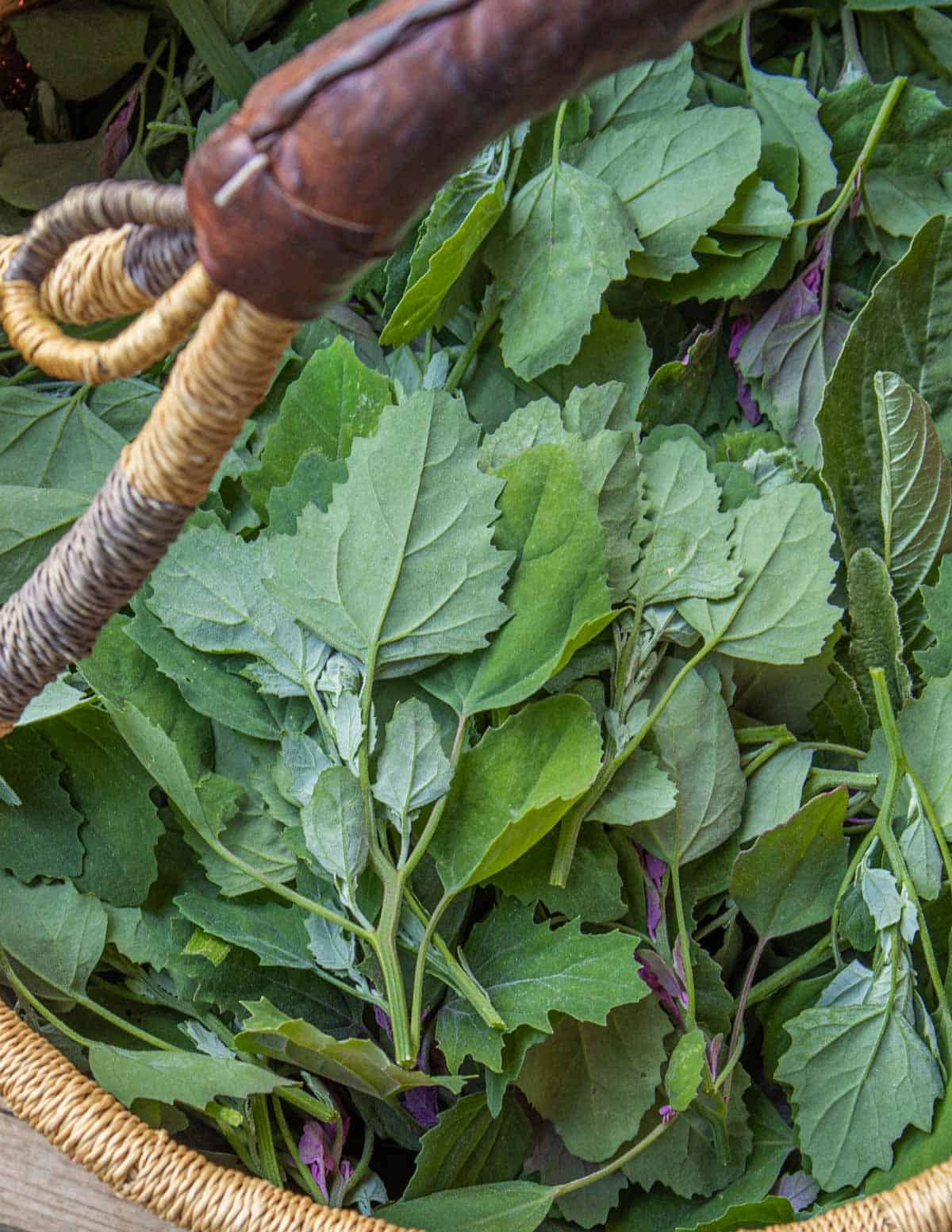
The young tops of lambs quarters are one of my favorites for salad and often make up at least half of the greens. Adding whole clusters of young leaves adds texture and chew that turns eating a salad into an adventure, in a good way.
I always make sure to add some herbs too. Bronze fennel and bolting cilantro were what I added here but a few torn leaves of basil or mint are nice if you have some.
One important trick to know about harvesting wild greens for eating raw is that I try to pick them from the shade if possible as they'll always be more tender and mild than those in full sun.
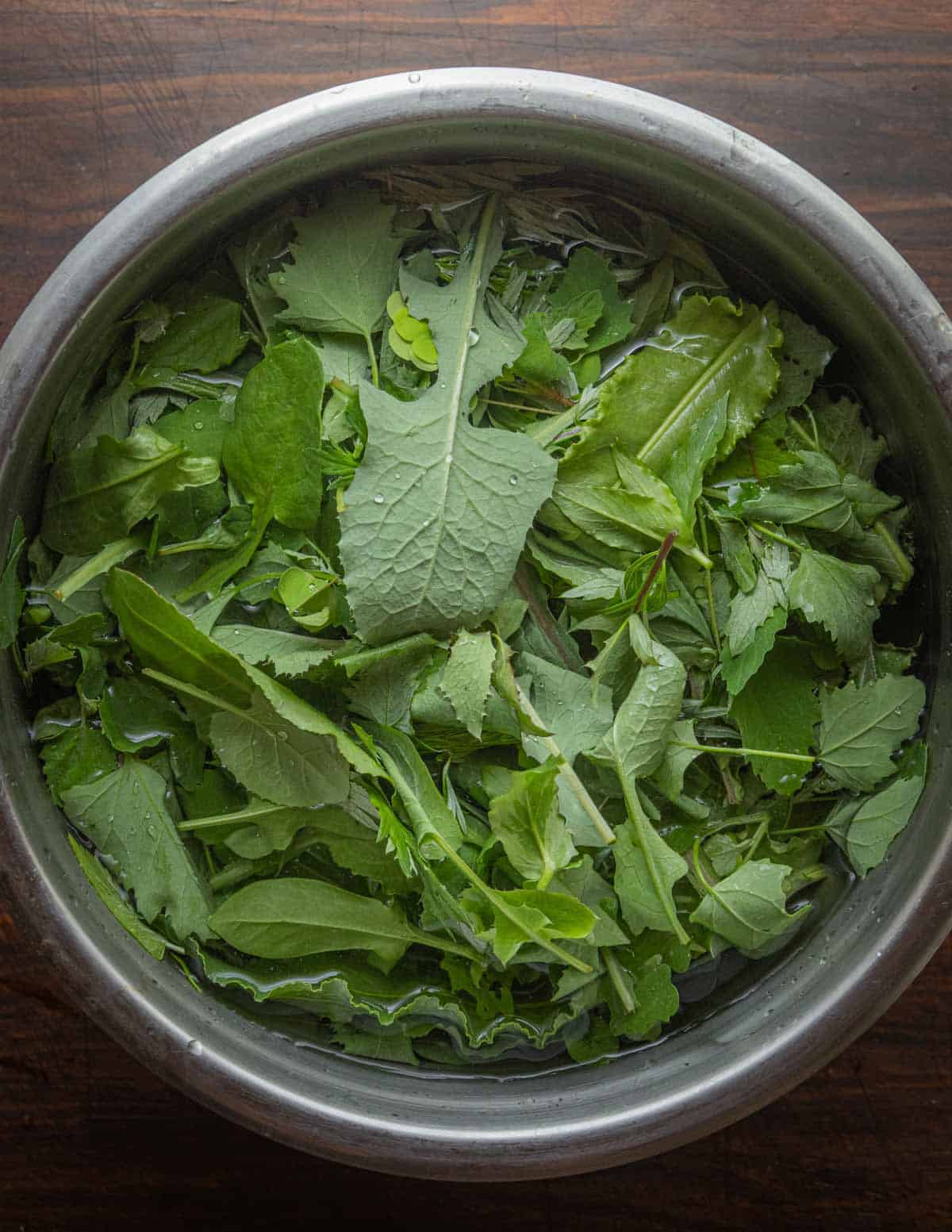
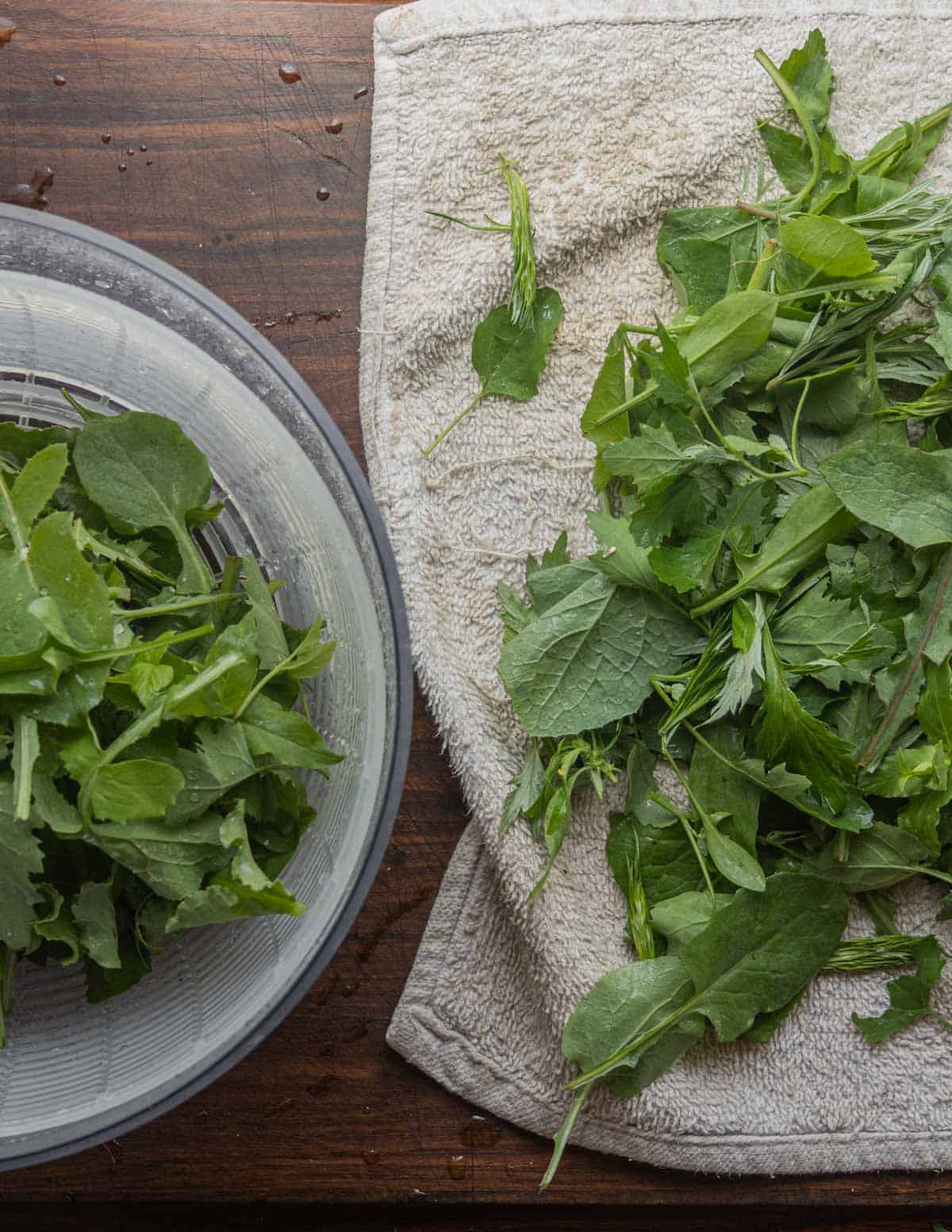
The greens should be soaked in cold water to refresh them, spun dry, then wrapped in a towel and held in a zip top bag or an old plastic bag until needed.
If you don't have access to a mix of greens, a watercress or arugula salad works too, ideally freshly picked.
Chive Blossom Dressing
To dress the greens, extra virgin olive oil, fresh lemon, salt and pepper are fine, but I had a bunch of chive blossoms and a craving for Caesar vinaigrette. One of my favorite things to do when I have a lot of chive blossoms is to make a simple chive blossom vinaigrette, so I combined the two.
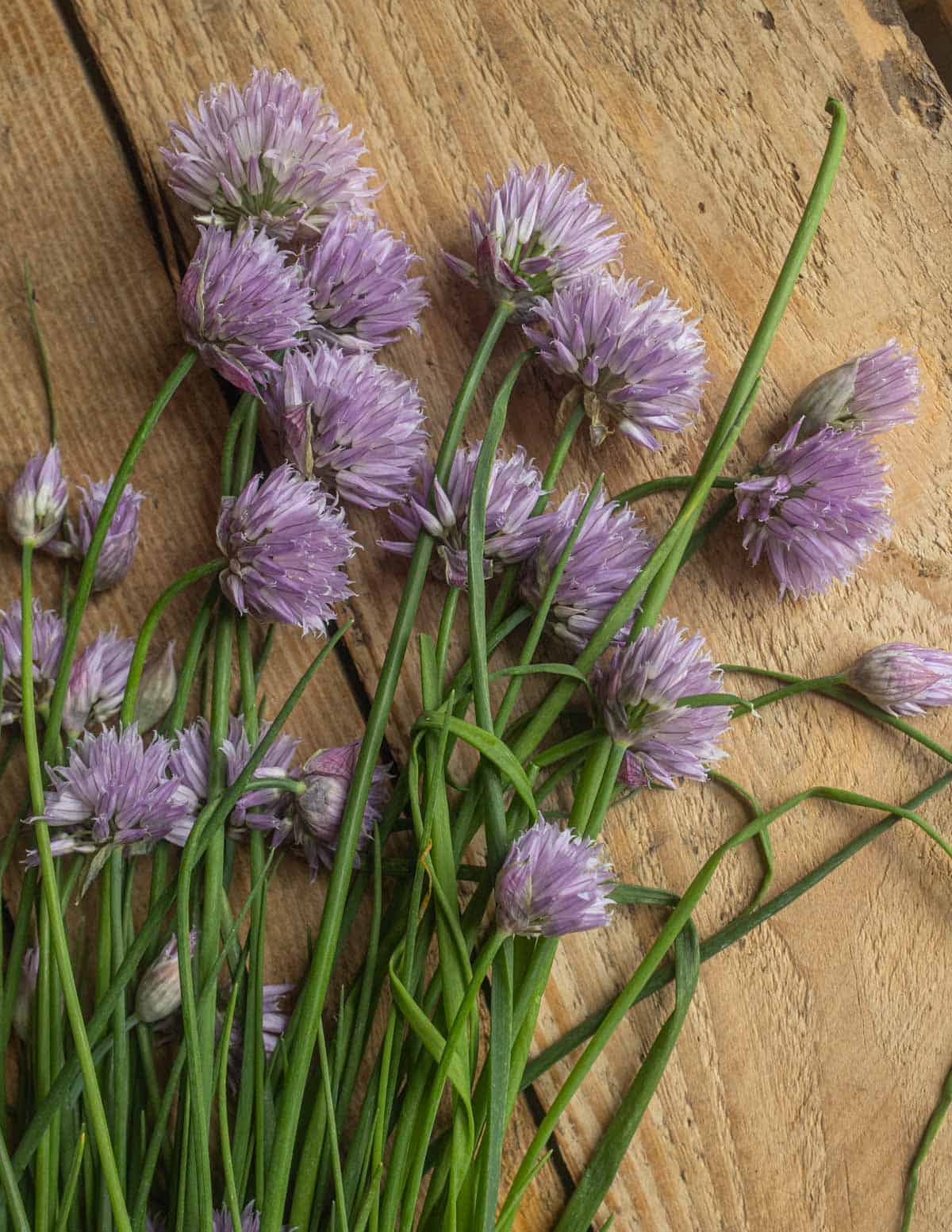
Chive blossoms are pretty, but can also be added to dishes in pretty large quantities where they become more of a textural pop of allium flavor as opposed to a garnish. We used to do it all the time at Heartland in St. Paul when the farmers brought us more flowering chives than we knew what to do with.
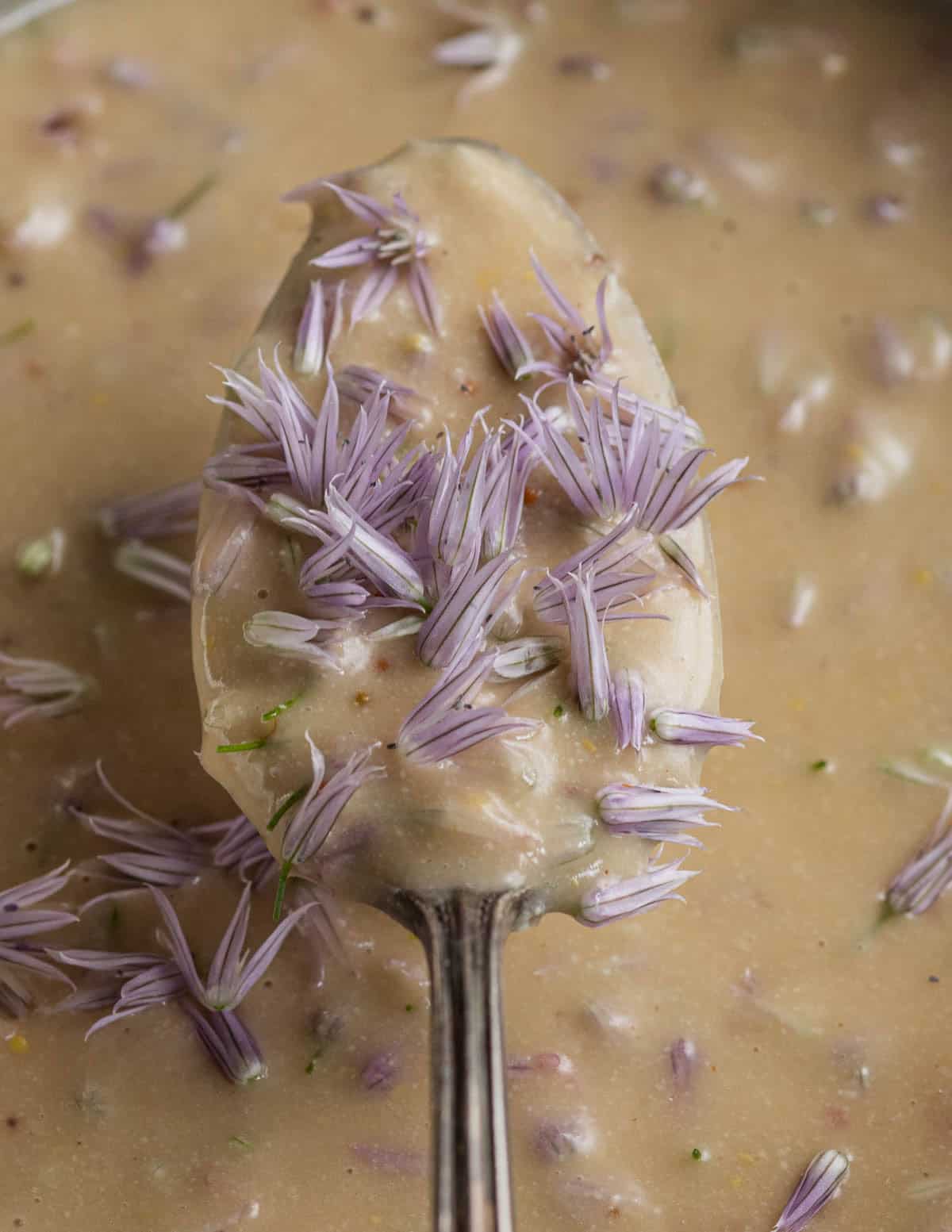
More of an idea than a strict recipe, the takeaway here is that you can use handfuls of chive blossoms in your favorite salad dressing.
Serving
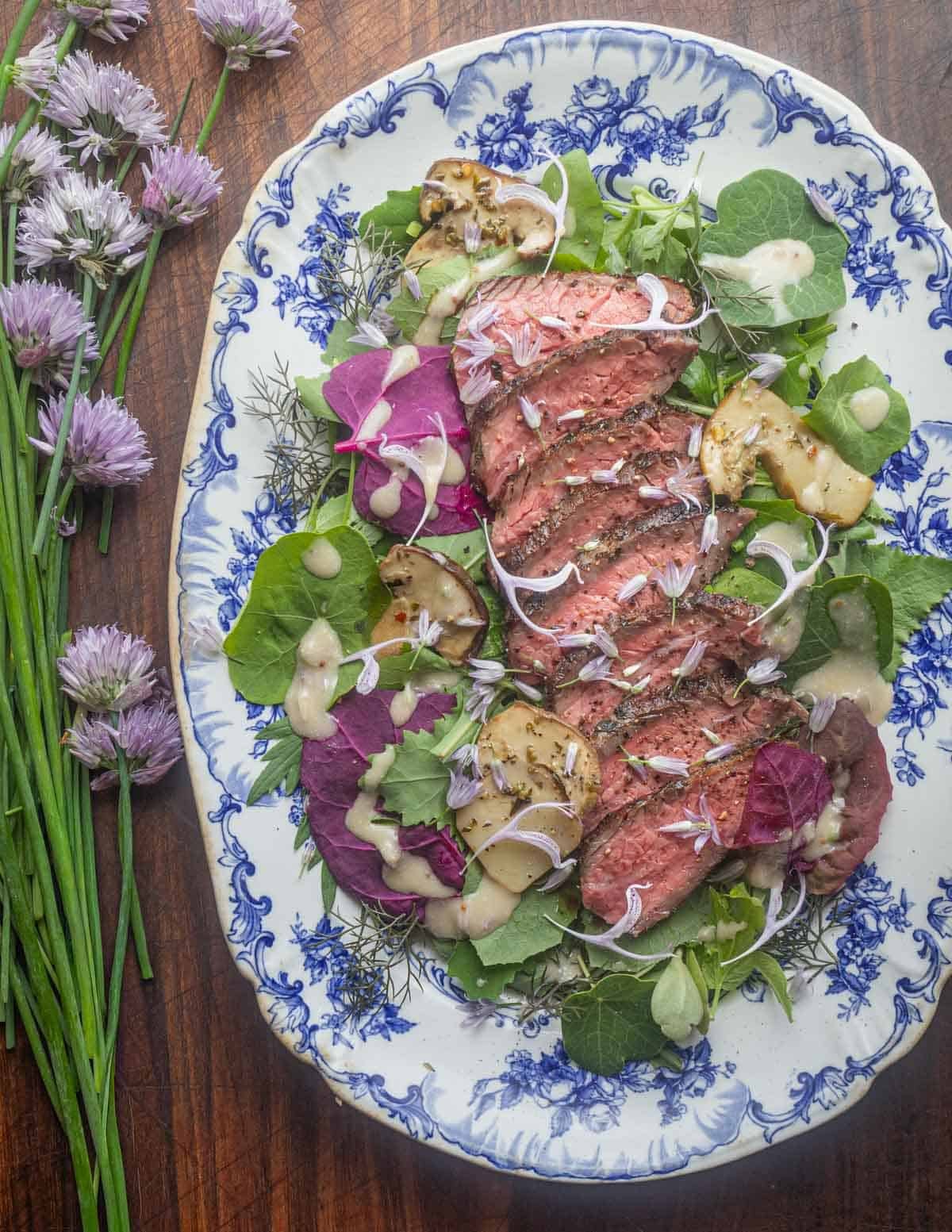
Once the steaks are cooked I'll arrange the greens and herbs on a wide plate and scatter the warm steak slices over the top. You can toss the greens with the dressing, but sometimes I simply drizzle it over the top so the greens mix with the dressing as I eat. Scatter some extra chive flowers over the top for good measure and serve.
Related Posts
Beef Tagliata with Chive Blossom Dressing
Equipment
- 1 grill or griddle I used a Blackstone flat top grill but use whatever's convenient
- 1 Grill tongs
- 1 Salad spinner
- 1 small mixing bowl
Ingredients
Steak
- 8 oz flank, skirt, hanger, sirloin or NY strip steak or another lean steak that can be nicely sliced
- kosher salt to taste
- fresh ground black pepper to taste
- 2 teaspoons chopped fresh thyme
Salad
- 6 oz salad greens or high quality arugula or watercress
- 1 small handful fresh torn herbs basil, mint, cilantro, bronze fennel, anise hyssop, etc
Chive Blossom Vinaigrette (Makes 2 cups)
- 1.25 cups mild olive oil
- ⅔ cup pecorino cheese grated
- ¼ cup Red wine vinegar
- ¼ cup lemon juice fresh squeezed only
- 2 cloves garlic
- ¼ teaspoon fresh ground black pepper
- 3 tablespoons anchovies or anchovy paste
- ½ cup chive blossoms you can add up to 1 cup
- 1 tablespoon cooking oil such as light olive oil
Instructions
Steak Tagliata
- Season the steak on both sides with salt, pepper and fresh thyme.
- Lay the steaks on a baking sheet lined with parchment and refrigerate overnight, turning once during the process to help the outside dry out for a good sear.
- Heat a grill or griddle until hot, then add the oil or lightly oil the grates with a greased paper towel.
- Cook the steak (ideally with a grill press on it) for 2-3 minutes per side. 2 minutes for medium rare, 3 for medium to medium-well.
- If you don't use a grill press, increase the cook time by a minute per side. Exact cooking times will vary depending on the thickness of your steak.
Chive Blossom Vinaigrette
- Combine all ingredients except the chive blossoms and oil and puree in a food processor.
- Slowly drizzle in the oil in a thin stream to form a creamy emulsion. If the dressing breaks-don't worry it'll still be good.
- Stir the chive flowers into the dressing, allow to wilt, then pour into a pint mason jar and refrigerate until needed.
- Over time the olive oil in the dressing will become firm. Bring the dressing to room temperature to restore the consistency.
Salad
- Harvest young greens and tender growing tips of plants and immerse them in cold water until perky and refreshed, about 10-15 minutes.
- Spin the greens dry and roll in a kitchen towel, then store in a plastic bag or a zip top bag in the fridge.
Becca Van K
Hi Alan! Love your work so much and I reference your recipes constantly. Made this two days ago and it was delicious. How long do you think the dressing is good for? Thanks!
Alan Bergo
Hello. Glad you liked it. As it contains both vinegar and citrus it’s very stable, it will last a long time in the fridge. I’m still using a jar that’s over a month old now.
Becca Van K
That's great news, thanks!
Mike M
Just cut back all my chives too. Try this. Tempura battered and fried chive blossoms. Reminiscent of onion rings but lighter and "flowery". just the right size for snacking or a salad topping instead of croutons. I will be trying your vinaigrette Alan.
AllisonK
Perfect! I just cut ~2 cups of chive blossoms last night, and was looking for something to do with them besides garnishes and a chive blossom salt mix! (Normally I leave the blossoms because they are so pretty, but this results in my patch becoming HUGE because they reseed...)
Alan Bergo
Yeah I just cut mine back. Then my friend cut his dad’s entire patch for me to use. There are worse things to have a lot of though!