
A delicious berry, with a unique, oblong form, honeyberries are like kidney bean-shaped blueberries that grow from a small shrub. Long known as an edible in Japan and Russia, they're relatively unknown in most of North America but have been gaining popularity in the homesteading and food forest crowd for years now. If you've had difficulty growing blueberries at home I highly recommend them. Today I'll walk you through my experience growing the plants for the past few years.
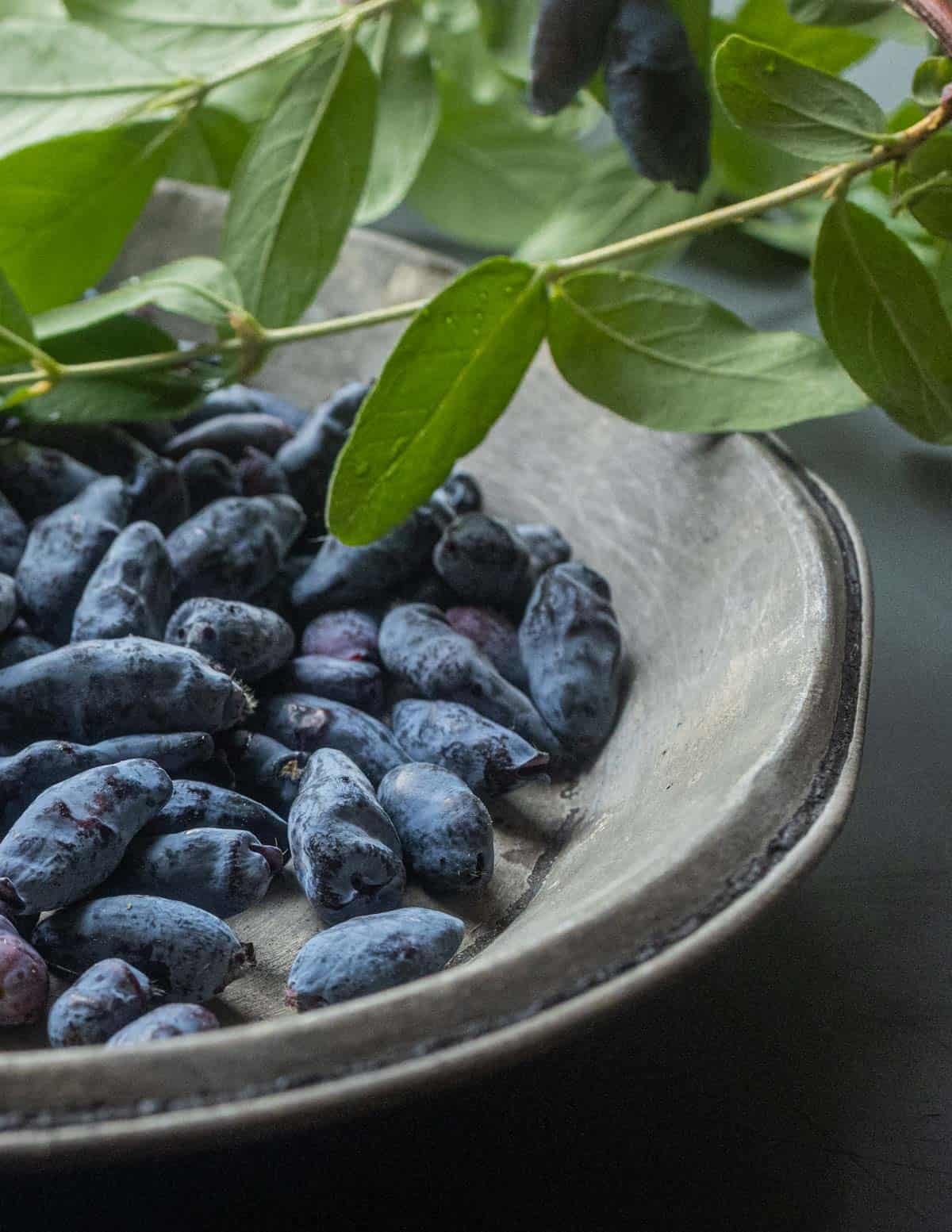
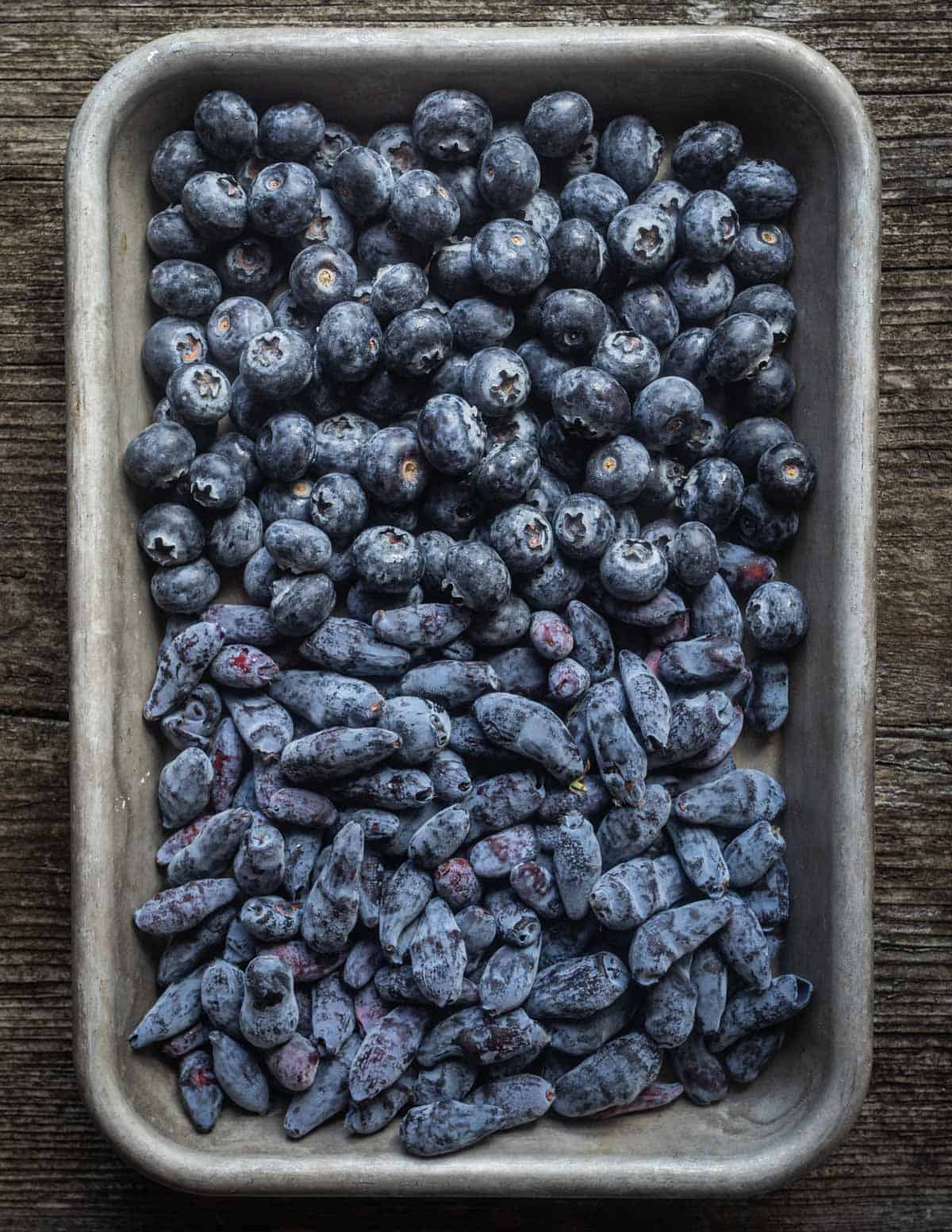
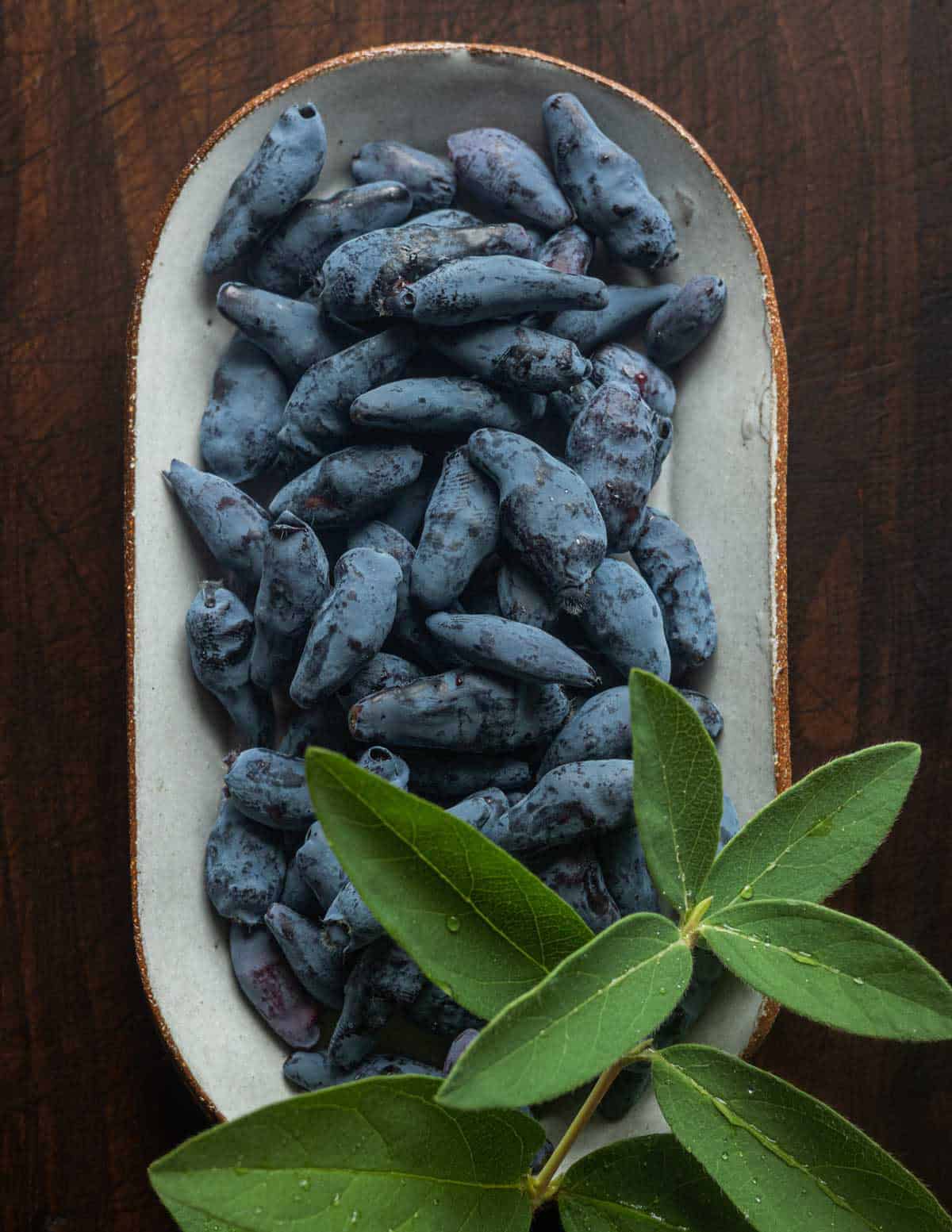
Besides highbush cranberries, if there's one fruit I wish I had more of it's these. They're larger than wild blueberries, and taste better than conventional ones. See them side-by-side with store-bought blueberries below. While some people think they look strange, I love their asymmetry.
I'd known of honeyberries for at least ten years, but finding them has always been challenging. I feel like once more people understand them as a dependable, easy to grow alternative to blueberries that may change, but who knows.
Background
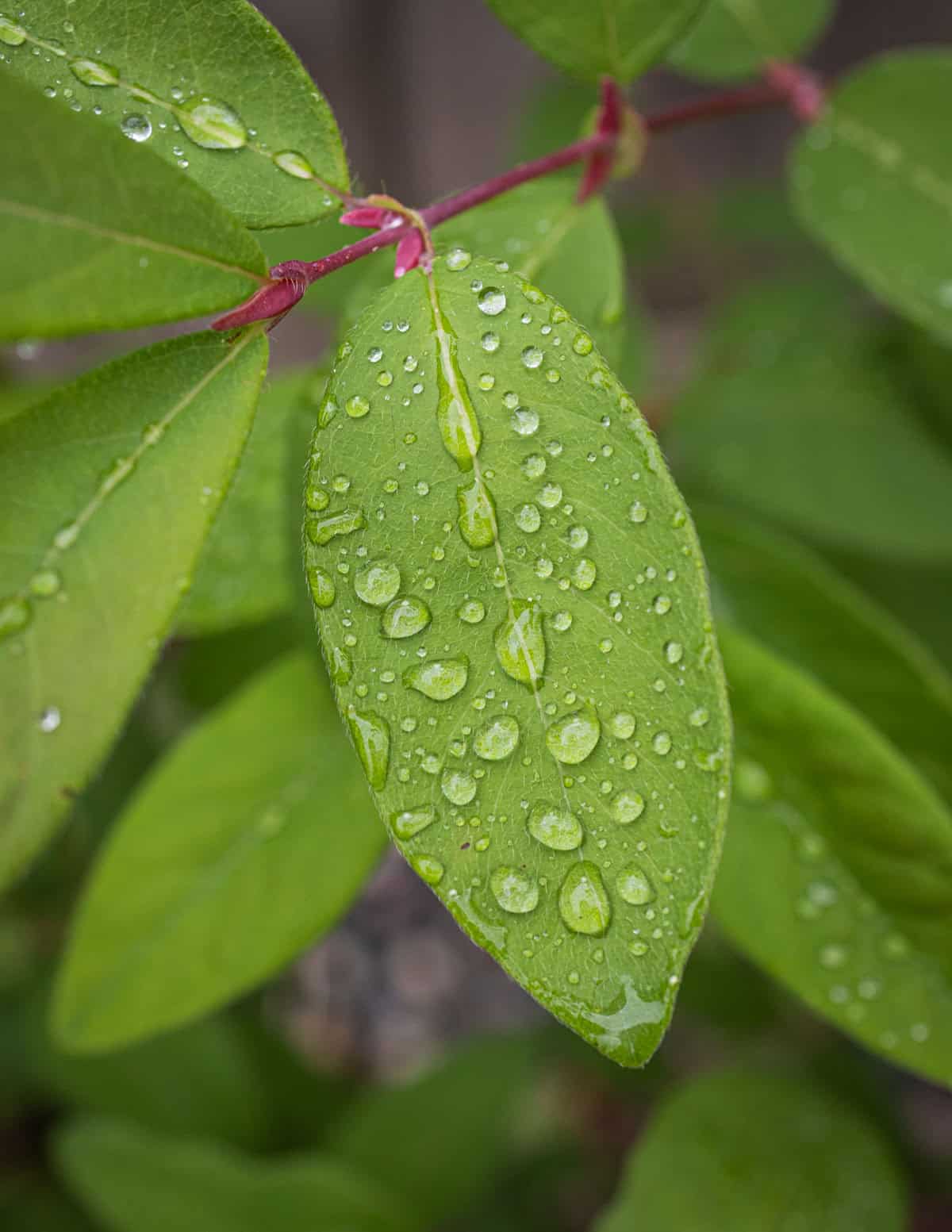
Lonicera caerulea is a small deciduous shrub, making it a type of honeysuckle. There's many types of honeysuckle, but L. caerulea is the only one I know of whose fruit is eaten. There's native varieties, as well as non-native, invasive honeysuckles I often see in Minnesota (L. maackii and L. tartarica).
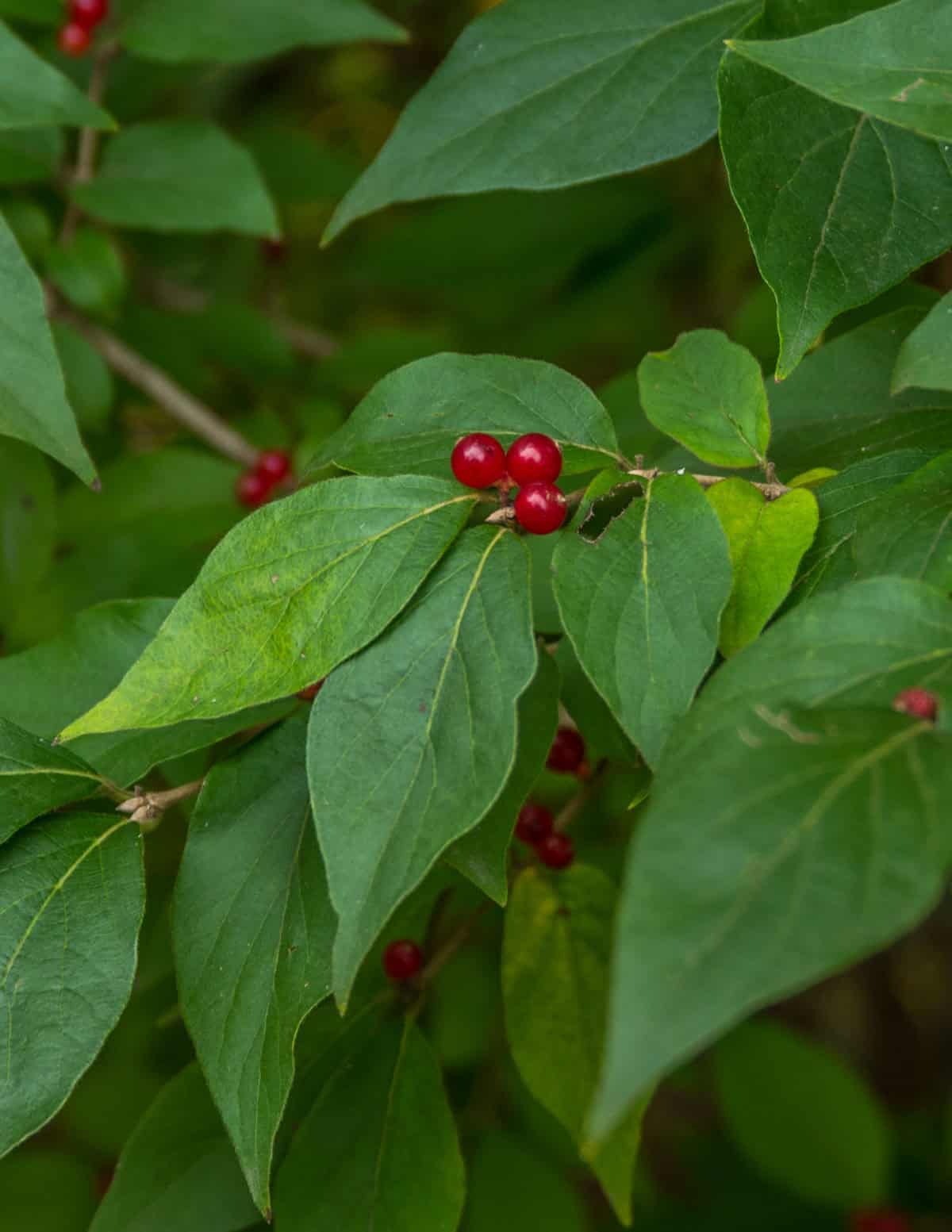
Sometimes honeyberry plants are called fly honeysuckle. I try to avoid that name as it's easily confused with other, non-edible relatives (see above) that are crowding-out our native fruit shrubs as I type this.
While I know a few people that will sample honeysuckle flowers on occasion, all that I've seen produce red berries that shouldn't be eaten. While honeyberries may share the same genus as other honeysuckles, the similarity ends with the shape of the flowers.
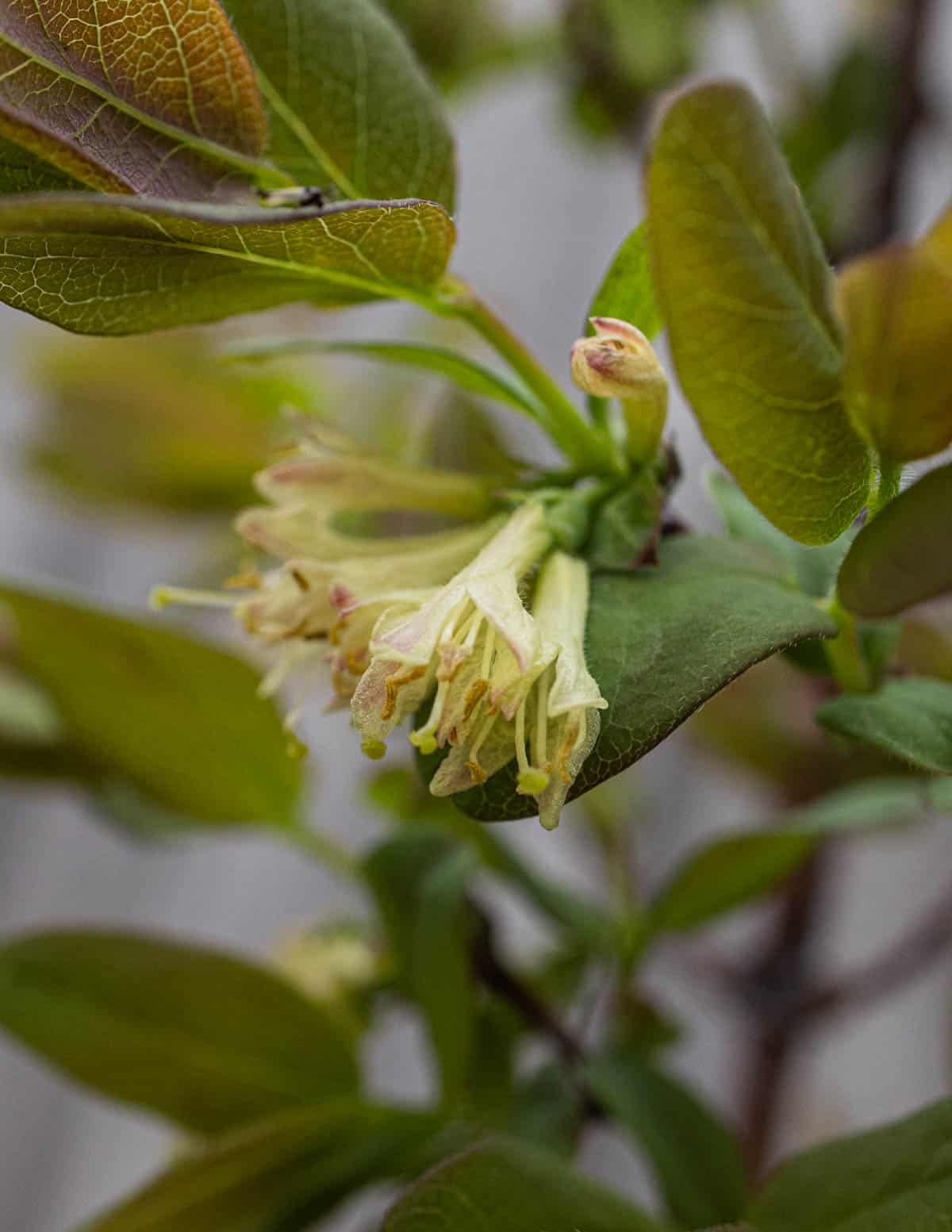
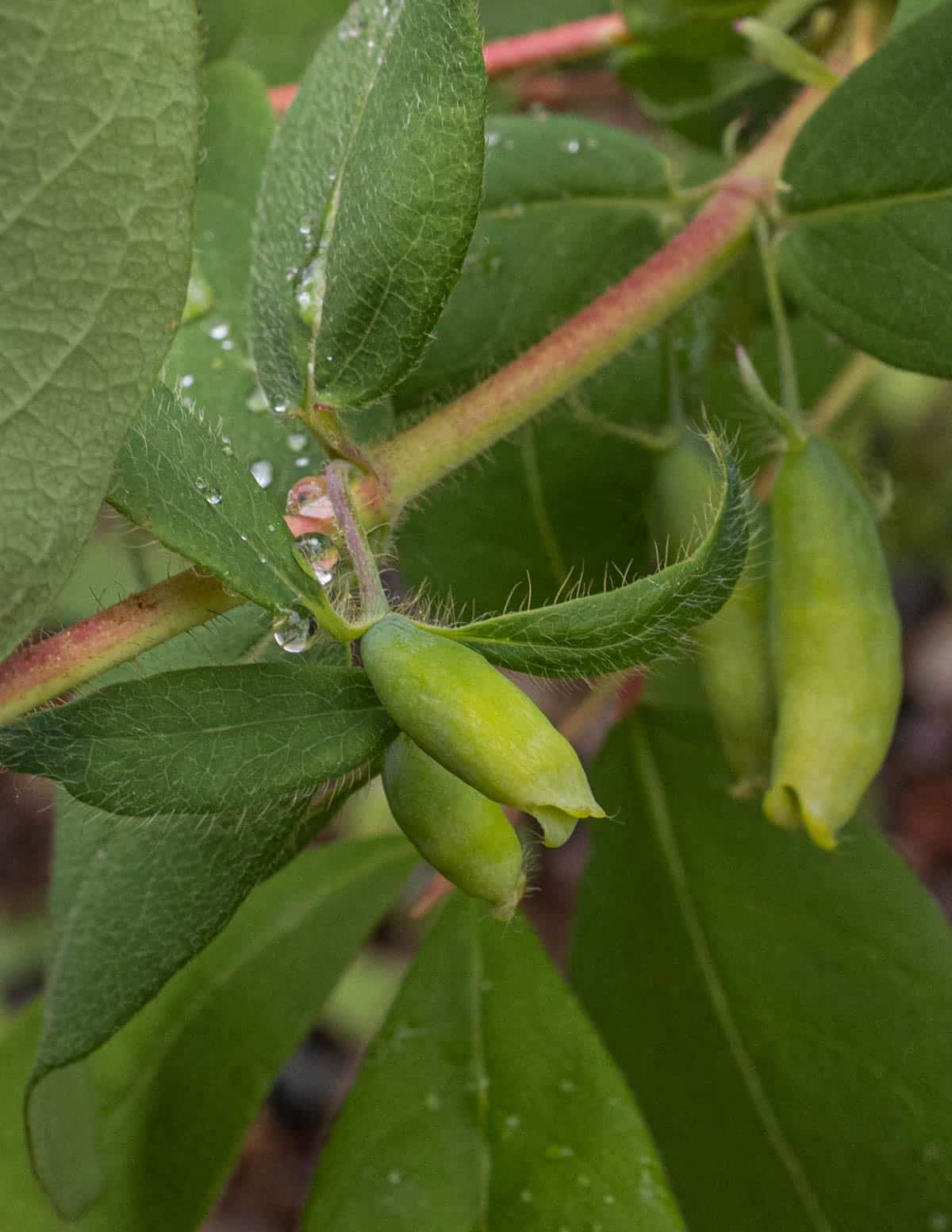
Hardy from zones 2-7, the plants are circumboreal, meaning they like high latitudes, enjoy colder climates (down to -40 F!) and are native to East Asia and Russia, as well as Canada.
Wild plants exist, specifically mountain fly honeysuckle (Lonicera villosa), which some of my friends in Northern Minnesota harvest in conifer swamps. Accounts of flavor range from very tart to indistinguishable from cultivated fruit. Russian and Japanese varieties have been selected over time to produce sweeter fruit and are what suppliers now sell to the public.
Many years have gone into developing the sweetest-tasting, highest fruiting shrubs in Japan and Russia. As you might expect, commercial products like haskap jams, jellies, syrups, fruit powder, flavored chocolates, juices and wines are sold.
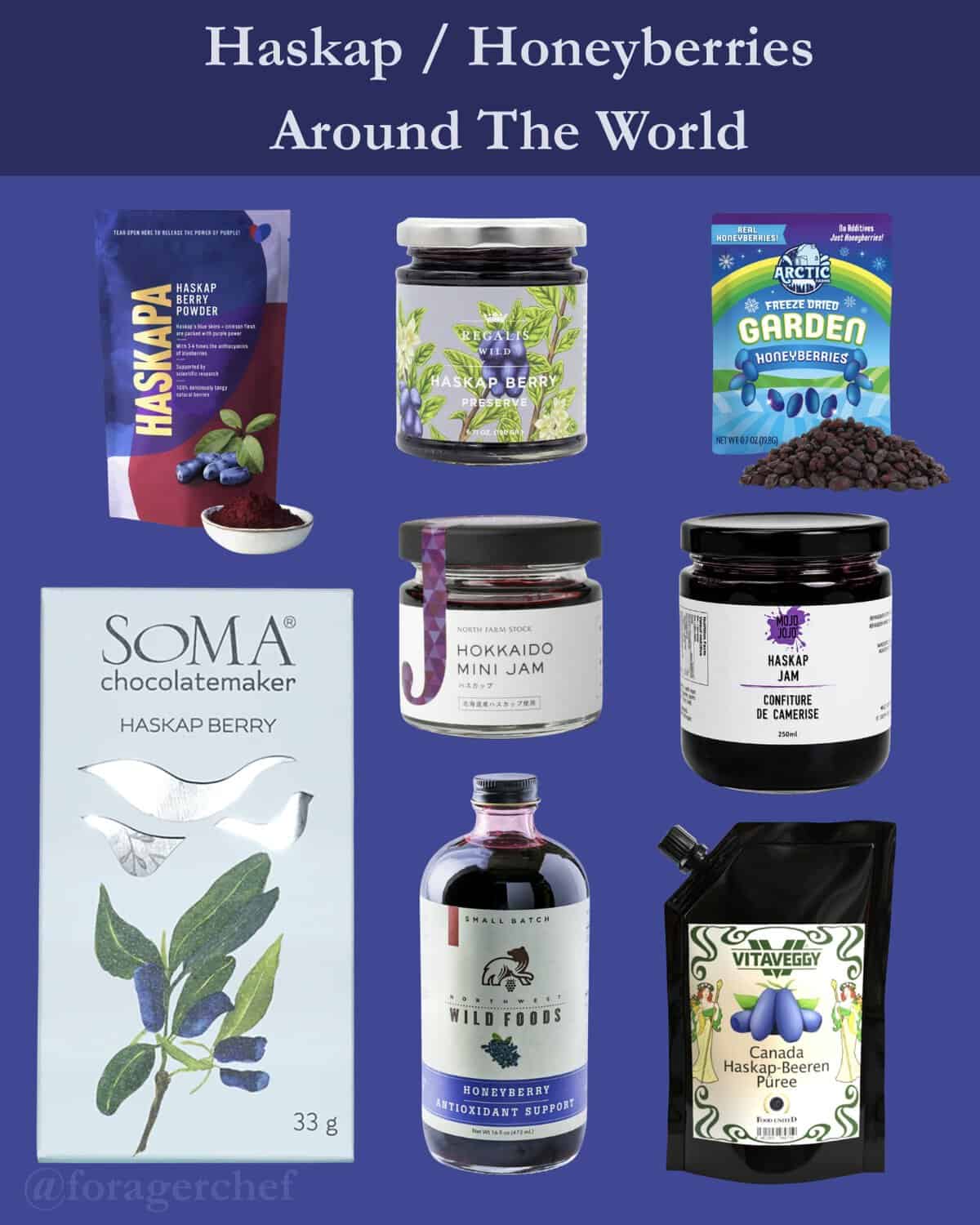
If you're like me, the name haskap might be hard to place. The name is derived from hasukappu, a word in the indigenous Ainu language of Japan that roughly translates to "presents on the end of branches".
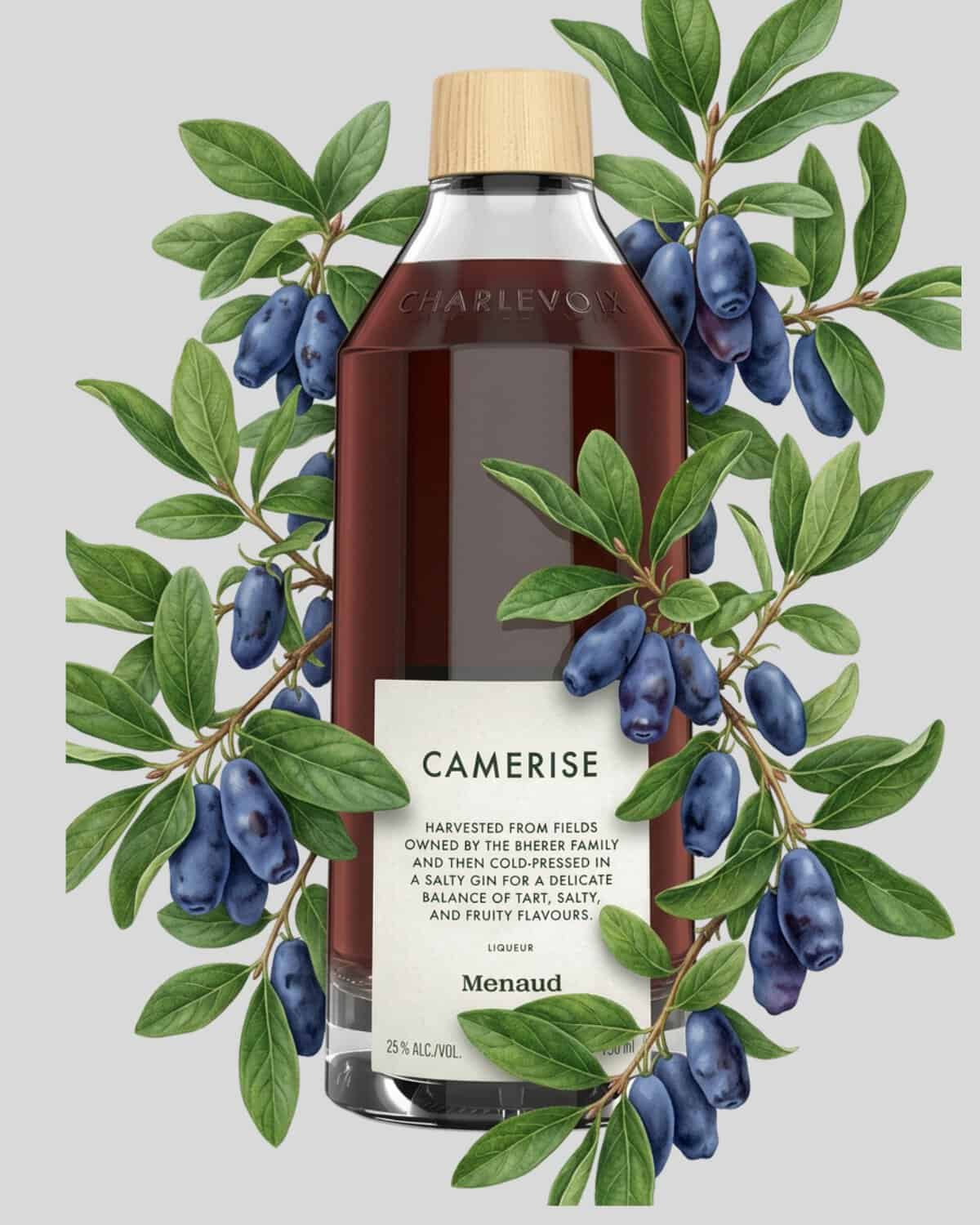
They're also enjoyed in Quebec and parts of Canada where the fruit is known as camerise. Besides typical fruit products like preserves they're also used to make liquor and wines.
Many people I know who have food forests or simply want an early-season edible berry in the yard grow the plants now. After considering some of the attributes, it's easy to see why:
- Ripening in June, honeyberries are the first fruit available in Minnesota, even before serviceberries at my house.
- In good conditions, a honeyberry plant can live and produce fruit for over 30 years.
- For a home garden, the yield is high compared to blueberries. My plants have been in the ground for two and half years. I got a handful of fruit the second year and a couple pounds the third year, with more still to come.
- Over time, a single mature honeyberry plant can produce 5-10 lbs of fruit per year.
Growing and Tending Honeyberries
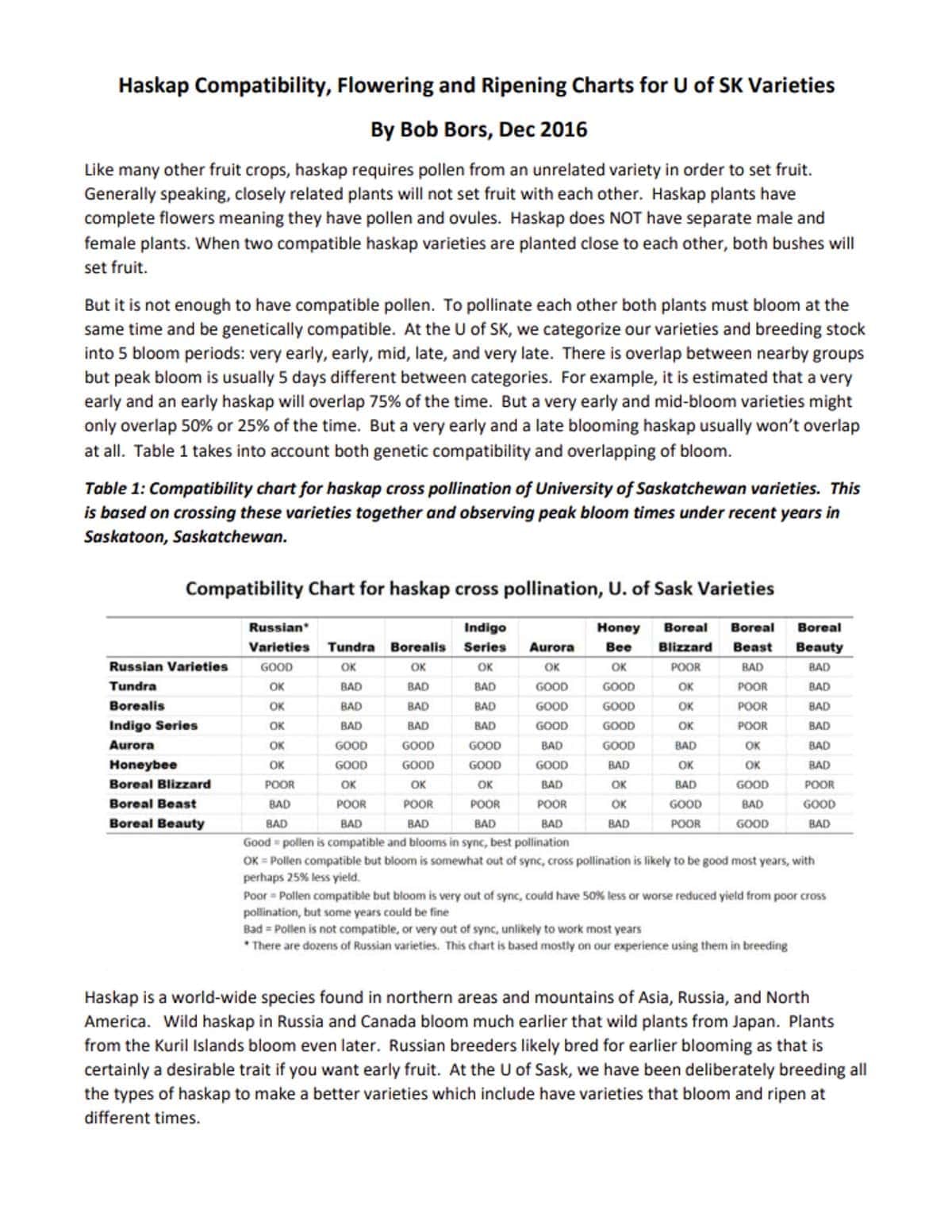
One of the most important things to know about the plant is that to make fruit you'll at least two unrelated varieties that flower at the same time.
Make sure to research before planting to ensure your varieties are known to work well together. I found the haskap compatability chart from the University of Saskatchewan helpful when choosing mine, take a look at the excerpt below.
These were one of the very first fruit shrubs I planted on my property as I'd heard so many good things about them. I currently grow six varieties of fruit shrubs, and the honey berries have given me the biggest return, so far. Three years ago I planted three types: Borealis, Borealis Beast, and Borealis Beauty, but there's many others to choose from.
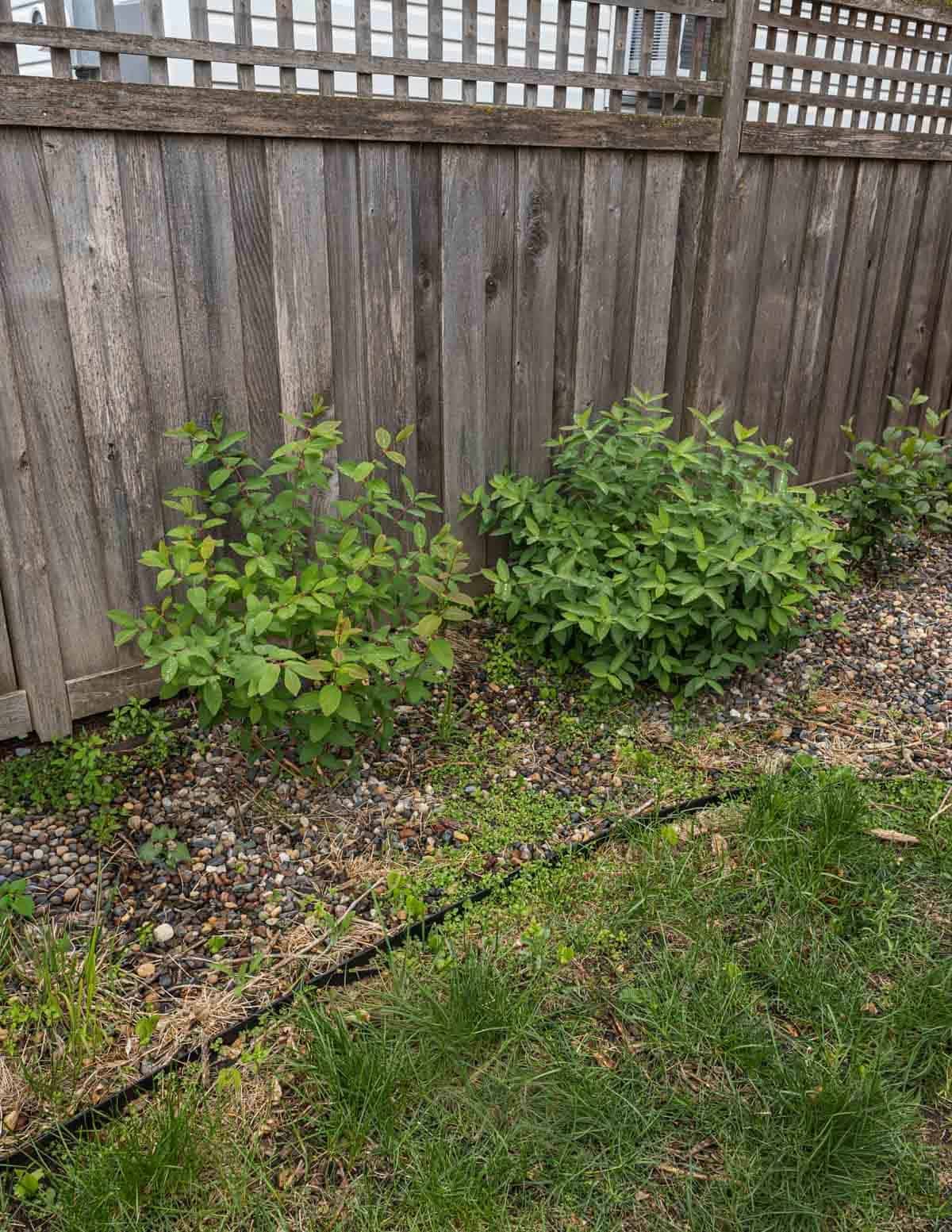
Honeyberry plants like full sun, so give them a nice piece of real estate. Where blueberries seem to be very picky about where they grow, preferring very acidic soil with a low pH. honeyberries can thrive in a wider range of soil types from clay to sandy loam and generally don't need soil amendments.
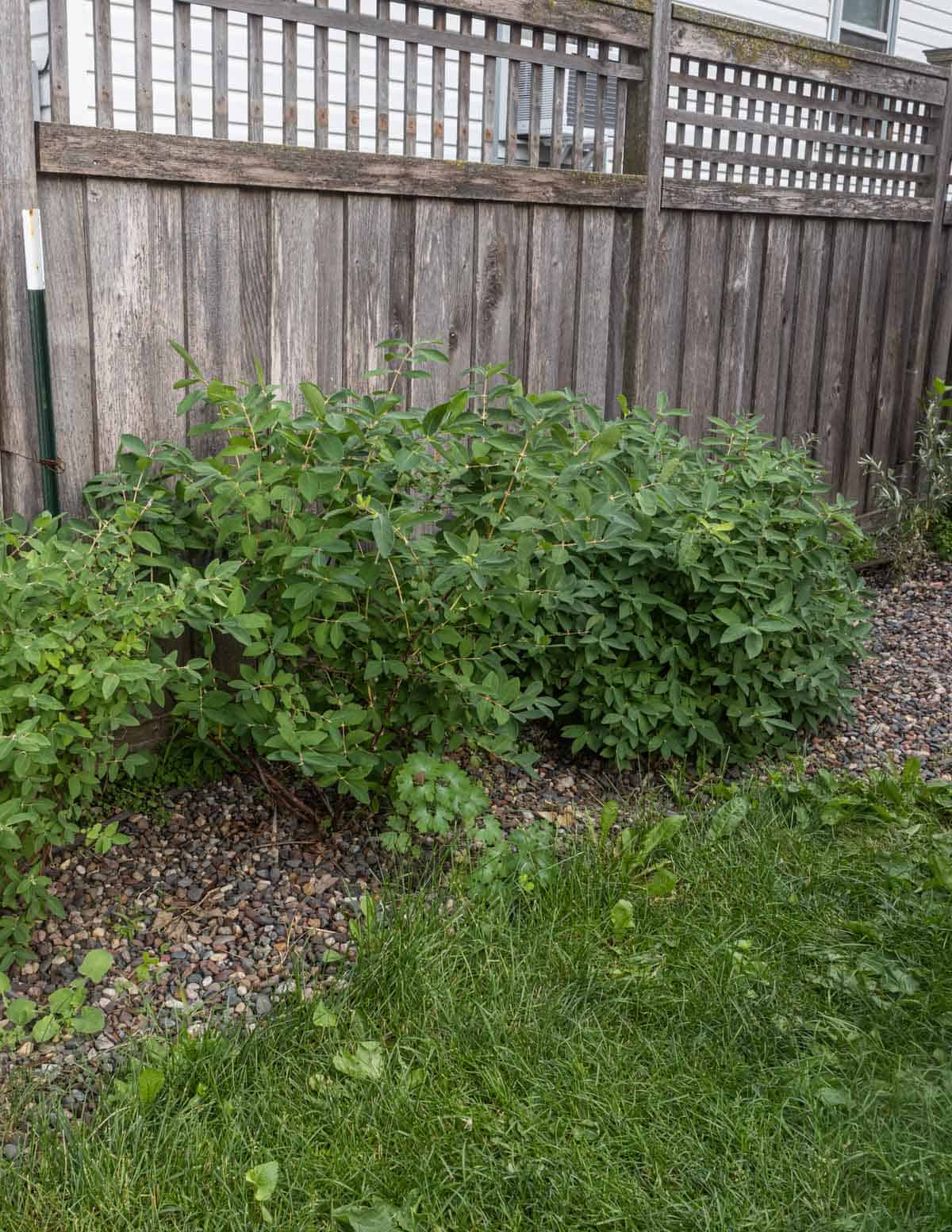
Personally, I've done nothing more than regularly water mine and they've been a joy to grow. Unlike some other fruits I've had to remove due to space on my ⅓ acre (elderberries and brambles) they're very well behaved get along well with the seaberries and aronia nearby. I particularly like the bushy borealis which is short, round and stout.
I've also been surprised at the plant's durability. This year I had to move one in the spring while it was flowering. After being traumatized from digging up a year-old elderberry and finding a five foot lateral root, I was pleasantly surprised to see the honeyberries had a shallow root system and simply popped out of the ground. Even after being disrupted during pollination the plant still went on to make fruit the same year!
Harvesting and Cooking with Honeyberries
After the flowers are pollinated in May, the fruit will begin to grow and ripen in June in Minnesota. One thing I've noticed it will be good to mention is that patience is a virtue here. The fruit can turn blue a week or two before they're truly ripe, so It's good to wait until they're easily removed from the plant before harvesting.
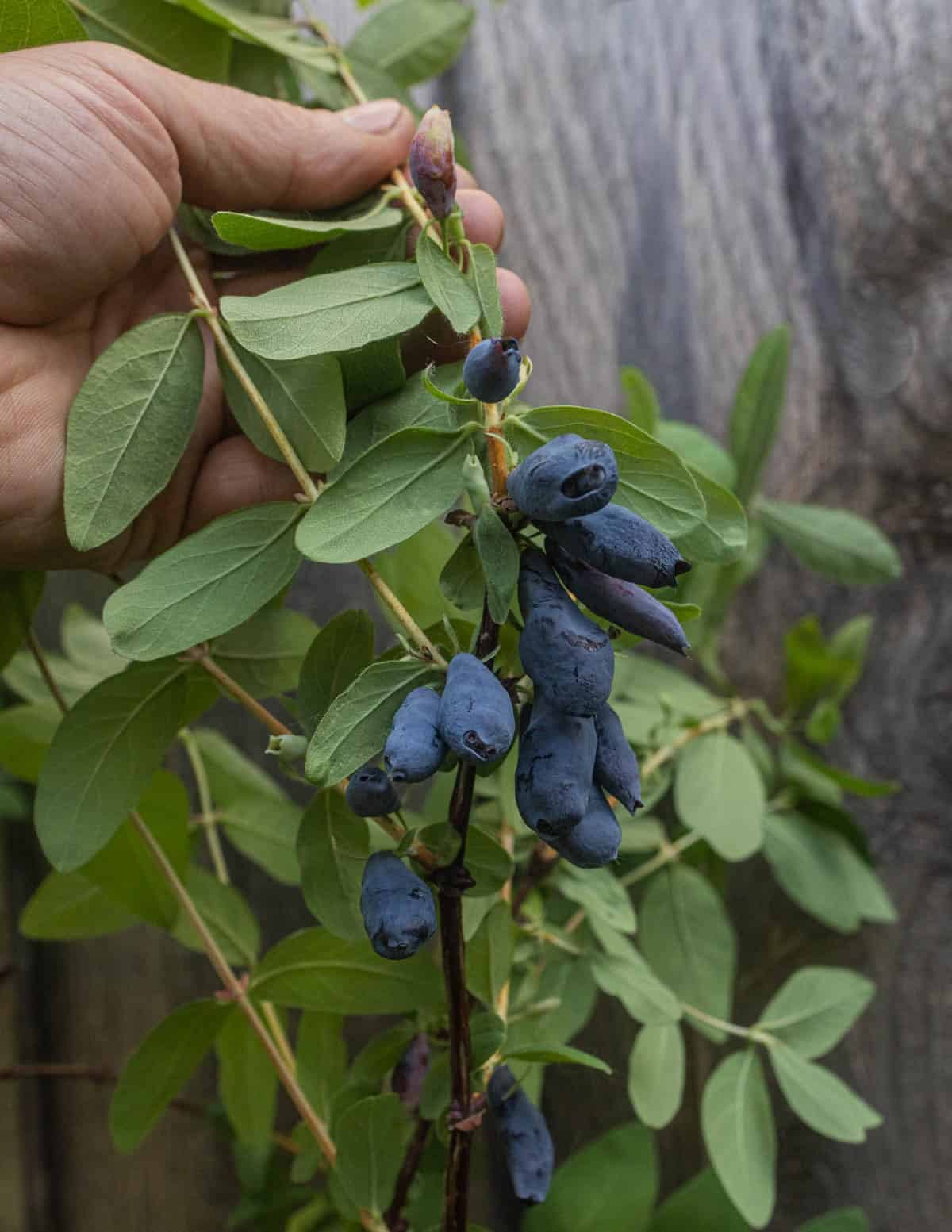
Ripe berries remove easily from the stems and are notably sweet, while underripe berries are tart and sour. When in doubt, trust your palate.
Harvesting
At their low height, these are a perfect backyard fruit shrub for small hands to harvest from. If you can keep children from getting to them before you there's a few different ways to harvest. Slightly related, the first year I had them birds stripped the berries so I bought fruit nets, but I've had no problems once the leaves filled out.
Just like blueberries, harvesting by hand will give high quality berries with the longest shelf life, but eventually you'll need a volume-harvesting method similar to groundcherries. Commercial honeyberry growers may lay a tarp down, gently beating the plant with a broom to release only the ripe berries.
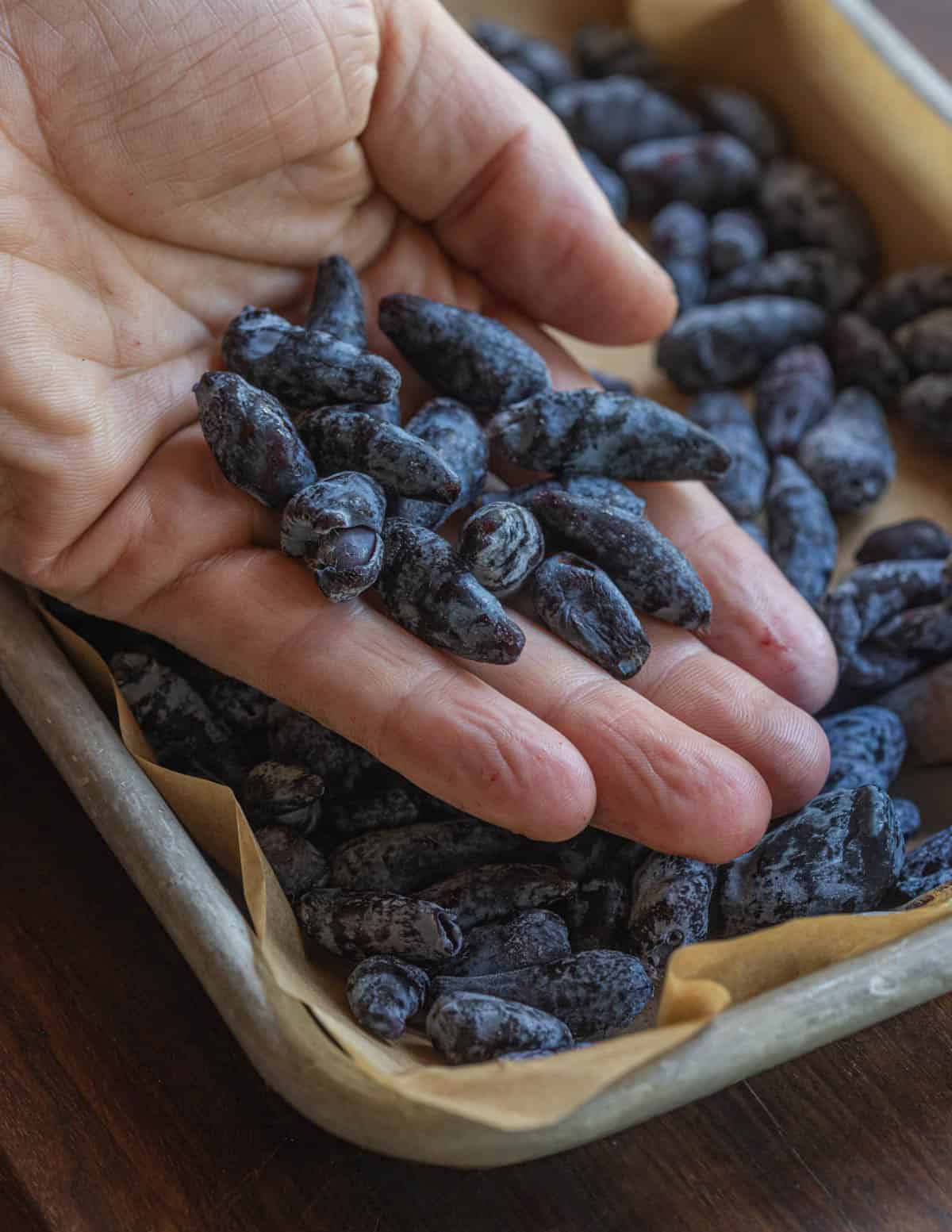
Fresh honeyberries will keep for up to a week in the fridge. Like most berries, for long term storage the best way to preserve them is the IQF treatment: lay them on a baking sheet lined with parchment and freeze, then transfer to a zip-top bag and cook with them directly from frozen.
Cooking
As you'd expect, for culinary purposes, honeyberries taste like blueberries and can be substituted for them in any recipe. When ripe, the flavor's generally blueberry-forward, but each variety I have has subtle differences. Some are more tart, and one has a bit of musk that reminds me of black currant. Cooked together into a jam or jelly, most people wouldn't be able to tell it from blueberries, which isn't a bad thing at all.
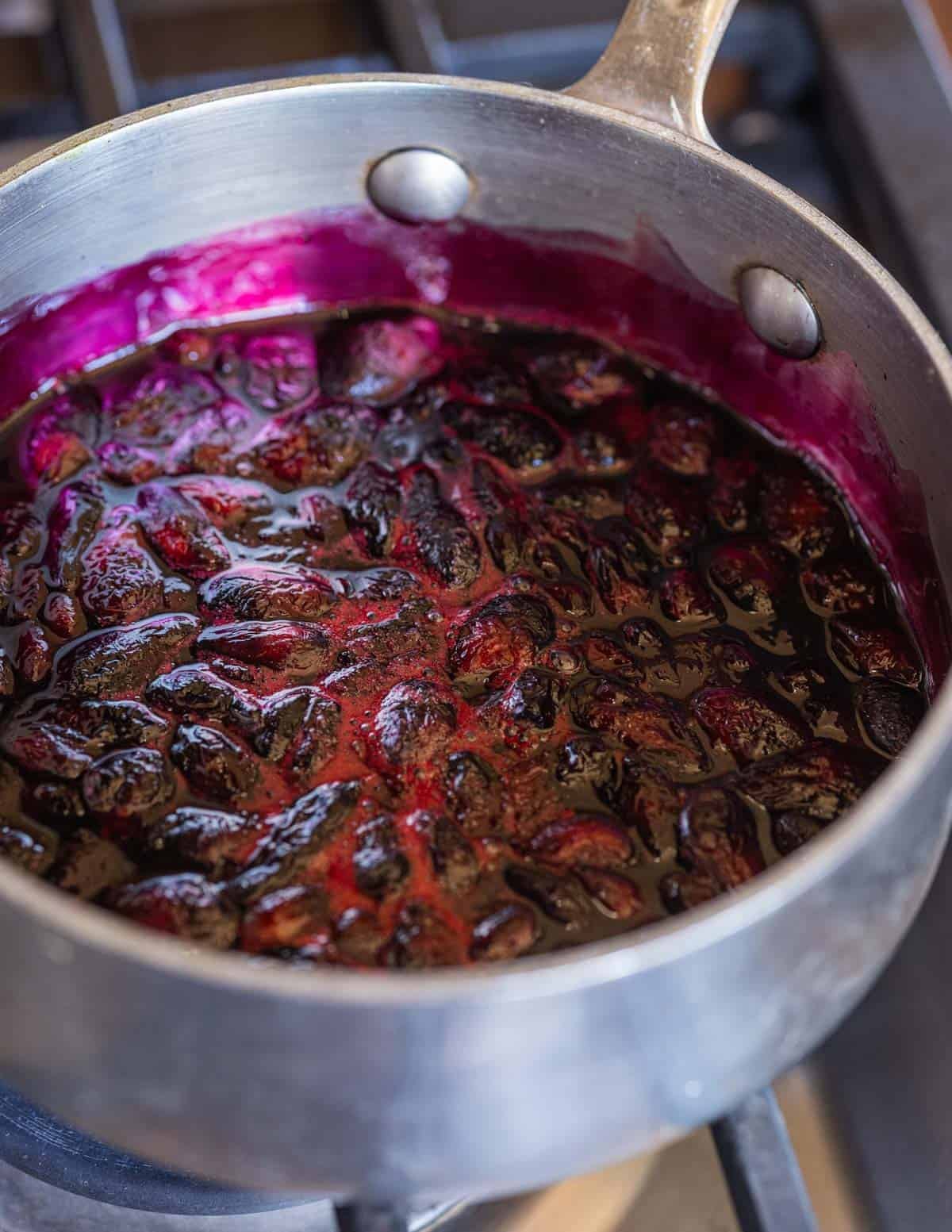
One very noticeable difference is in the skin. Conventional highbush blueberries have been designed to travel, and I often find them to have noticeably tough skins. The haskap fruit, on the other hand, is dreamy. The skin's thin, delicate, becoming velvety smooth and silky when cooked.
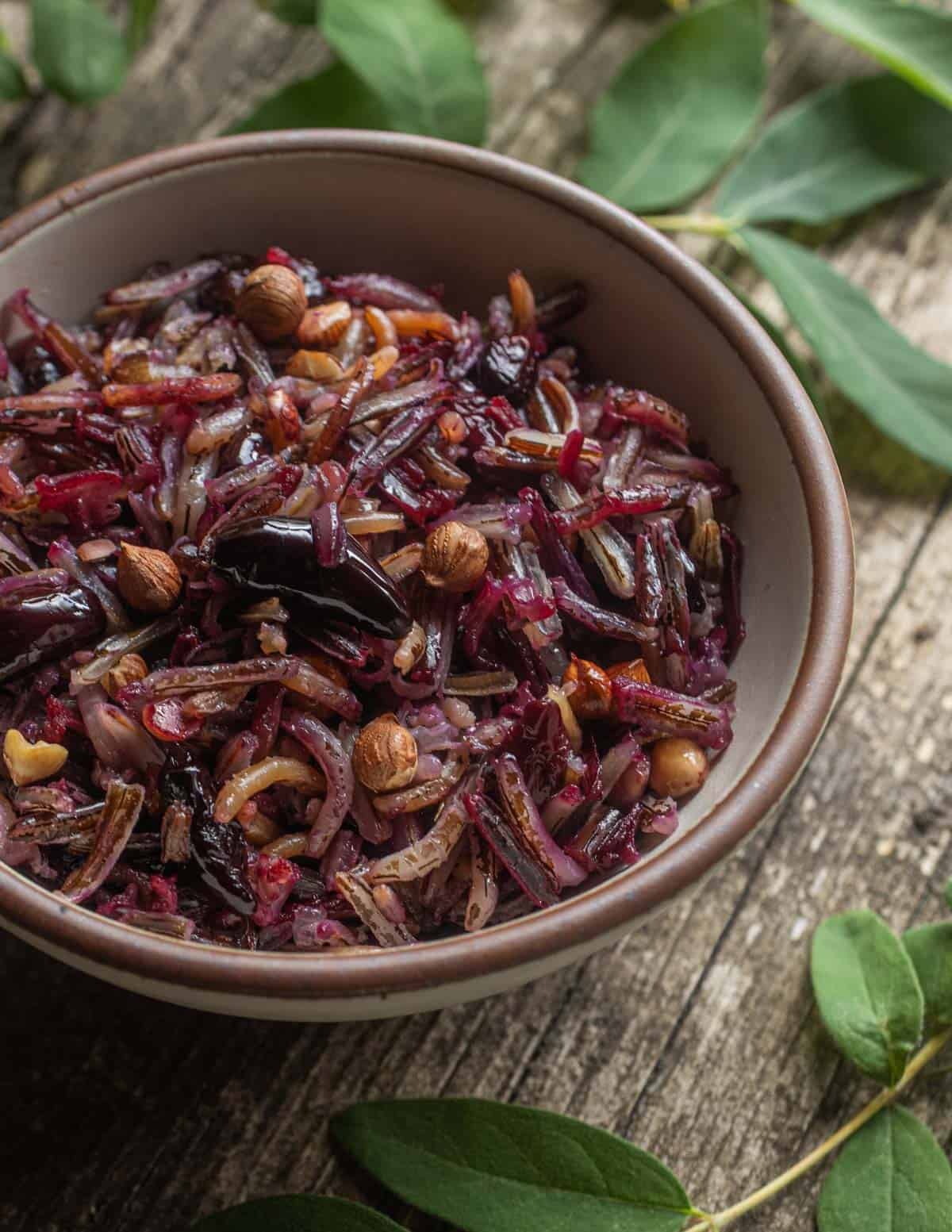
Eventually I'll be able to make jams and preserves, but right now I'm perfectly content with eating them by the handful, and adding them to one of my favorite breakfasts: wild rice with berries, nuts, butter, maple syrup and a pinch of cinnamon.
I had some leftover wild clover creme fraiche this week. A big dollop with a handful of berries, maple syrup and columbine flowers was a luxury.
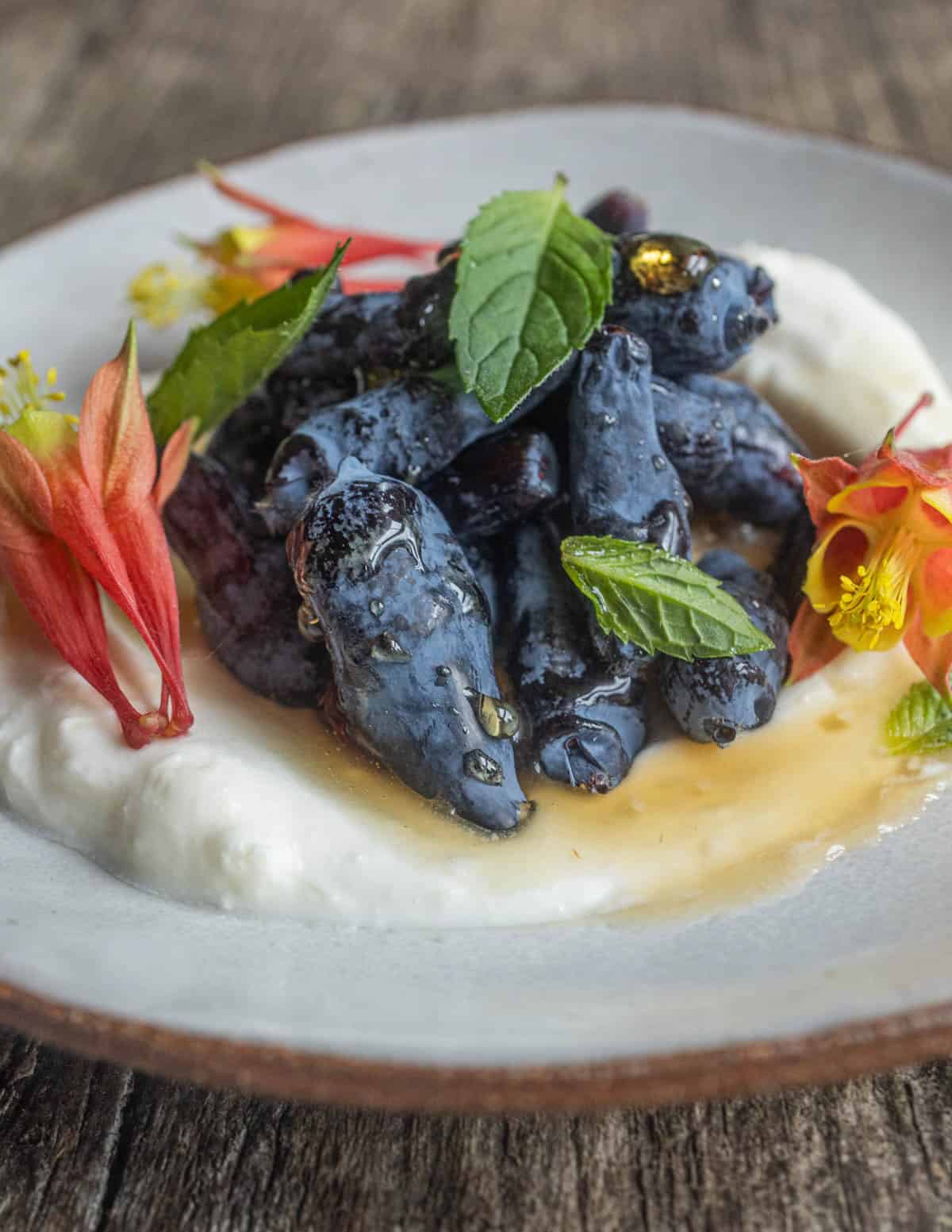
Besides pie and upside-down cake, a favorite recipe for blueberries of mine is called the sottobosco. Take a cup of pristinely fresh berries, drizzle them with creme anglaise top with crushed amaretti.
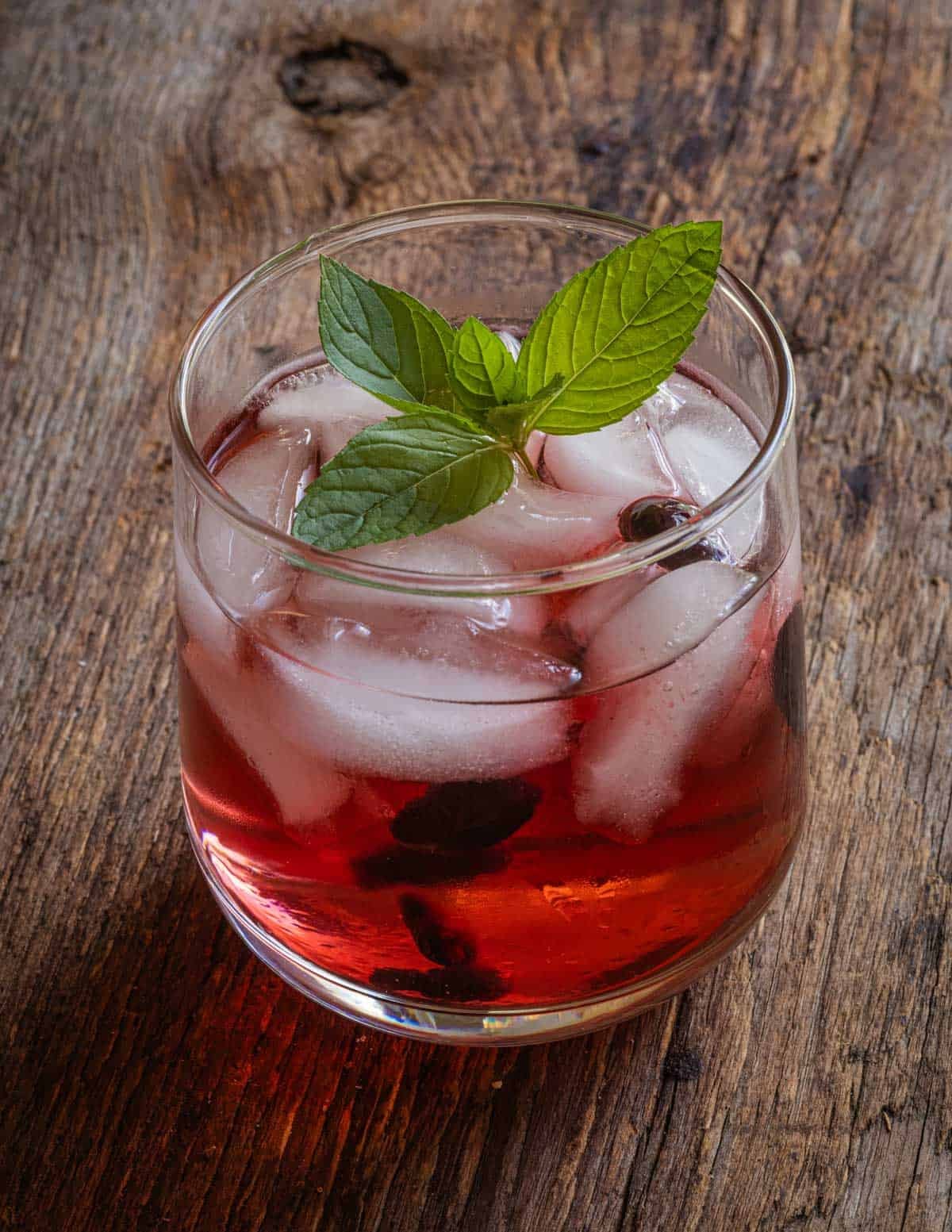
Once I have enough, one of the first things I plan to make are jars of honeyberry kompot, a sort of lightly sweetened drink my friend, Polish Author Michał Korkosz swears by.
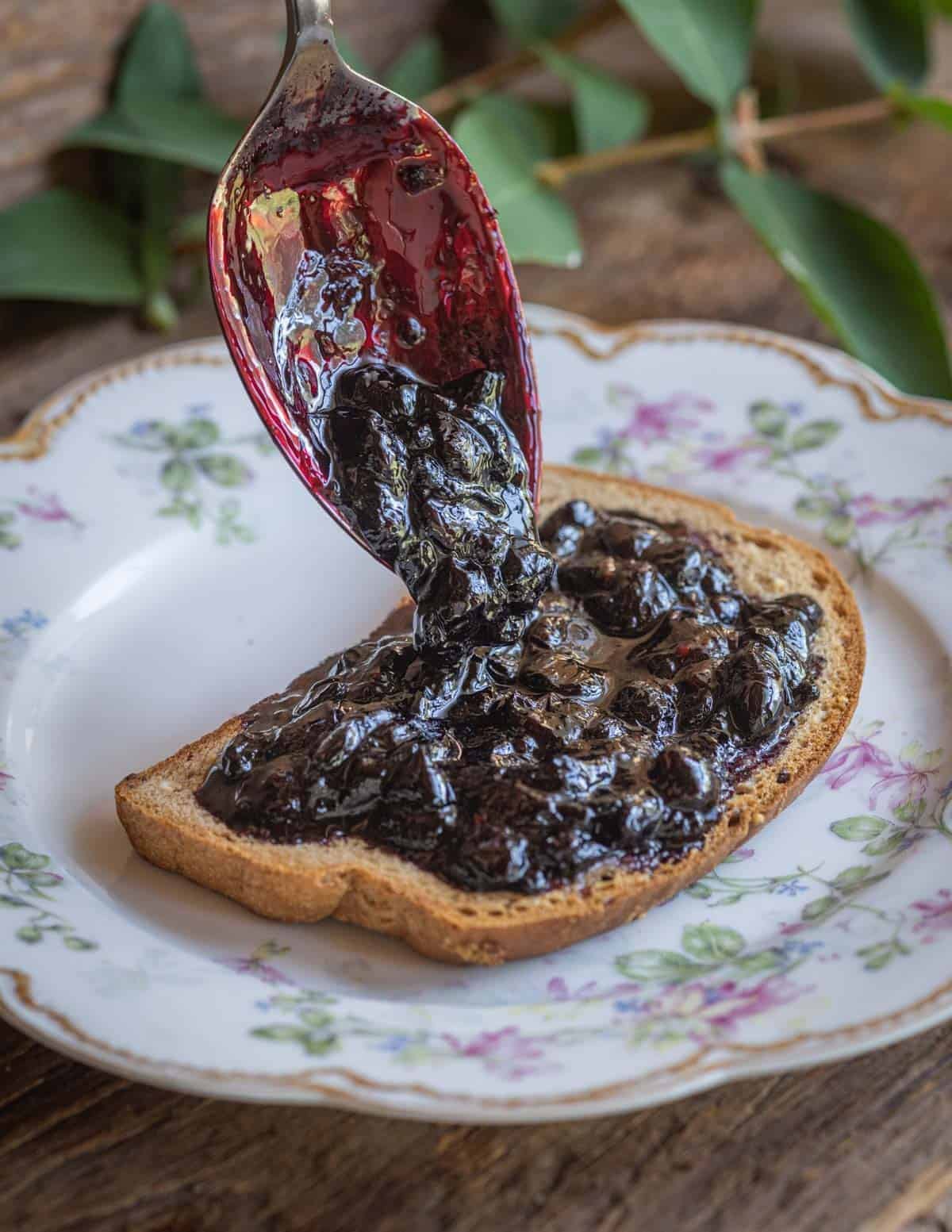
Jams and preserves taste similar to blueberries, but the skins are very smooth and tender. With my last harvest, I kept it simple, simmering the berries with maple syrup and eating them piled on a piece of buttered toast. If you want to make honeyberry jam, try my low-sugar, pectin-free recipe I use for black currants and mulberries. I'm sure you'll find all kinds of things to do with them.
Do you grow honeyberries or have anything to add? If so please comment and share your experience so more people can discover this very special fruit.
Related Posts
Cole
I've been on the fence about planting haskaps for a while, and kept pushing them off in favor of other fruit shrubs/trees. You've just shot them to the top of my list - thank you!
Alan Bergo
You’re welcome. I was so impressed this year I started to grow some more from haskaps from cuttings. They seem to take pretty well to it.
Leah Shabshelowitz
Thanks for this great post! I'm excited to explore this for our own garden (which *can" get down to -40!).
Also, I appreciate all the time and expertise you put into these. I really love reading them, and while I don't often comment online, I value your insights and recipes a lot. Thanks for doing what you do!
Alan Bergo
Hey thanks Leah.
Lianne Mitchell
I was so excited to see your email about these berries. I've had my plants for 5 years (2021) and they did nothing. A handful, barely, from 6 bushes that never grew more than an inch or so per year. Then I realized that they were probably being pruned by the deer!! So this spring I fenced them in and they've grown at least a foot, some more and I have a lot of berries.
I have a lot of birds around and was warned they'd get eaten - but (so far...knock on wood) they haven't taken a lot. I have 6+ foot high loose bird/deer netting around them, close to the bushes, so that might be deterring them. The top is floppy and moves in the wind. But it's not really covered over the top.
If you want sweet berries, you have to be patient and wait until they're really ripe and almost falling off the branch without having to pull them.
I heard about the haskap berries on a freeze drying facebook group and decided to give them a try. My blueberries still produce very little to nothing (after 10+ years). I had one year they perked up. I took a permaculture-ish class a few years ago. The instructor said that if you take about a tablespoon of soil from under well producing blueberries and put it under your crappy ones, it will help.
I took some soil from his beautiful bush and put it under mine (July or August). The following year my 8 or 9 year old, dead looking bushes, actually looked good and I got a handful of berries. However, the effect didn't last. I'm going to try to see if I do it every year, or at least a few years in a row, it will have a more permanent effect.
I was also happy to see that columbine flowers are edible. I had a lot of them when I lived in Minnesota, but am having a hard time establishing them here in Maine. But I'm still working on that.
Alan Bergo
Thanks for sharing Lianne. Deer are so pesky sometimes. Just to clarify with columbines as I didn’t in the image, I only eat A. canadensis and in small amounts in season-a garnish.
Michel
Hi Alan, just receive FLORA. It's a nice and interesting book.
Mark Nowotarski
We have had 2 honeyberry bushes in our garden in coastal CT for about four years now. The birds seem to leave them alone (relative to our blueberries). The deer with give them a bit of a trim, but nothing dramatic. To prepare, I just microwave the fruit with a bit of sugar to make a compote that my wife loves with her morning yogurt.
Alan Bergo
Thanks Mark.
Mike M
Alan,
I've had 3 bushes for 6 years with the middle one a taller smaller berry variety. Even if you put netting over them the robins will crawl under, hop up and get many of them. If you pick them when they are easy to twist off but before they all start dropping, they will be a bit under ripe and very tart. You can let them sit out overnight and they ripen more.
The robins will tell you when to protect or pick. I trim my bushes shortly after picking to open up the bush. If you sit on a crate or short stool it makes them easier to see. I've had robins swoop in while I'm picking.
A trick for cleaning is to use a big bowl and cover them with water. swirl your hand around to find any stems and lots of stuff sticks to your hand. Dip and rinse and eventually all those little bits are gone. It's weird but anything unwanted sticks to your fingers and hands.
There are lots of "haskap recipes" out there and I've added them to rhubarb, made compotes, jam, jelly, and I think ice cream is my favorite. Juice is good in sweet tea. A sauce made with a touch of cardamom and balsamic vinegar goes well on meats, cheese cake, spinach like greens and, well, almost anything.
Alan Bergo
Thanks Mike.
Julie Moronuki
We have four shrubs, although our soil is not great (currently trying to restore it, with techniques gleaned from permaculture, biointensive ag and agroforestry, but anyway) and I'm not sure we planted them in great places, so they've been slow to grow for us. This year they seem to be taking off, and we had a bunch of berries ripen, but I went away for a couple of days and came home to find the bushes stripped by birds. Better luck next year! We used to have hardly any birds in our yard, as the environment was so degraded, so having enough birds around to share the berries has been one of our goals. Next year I'll put bird nets over a couple of the honeyberries and leave the other two for the birds, as we do with our golden currants and cherries.
I'm not sure which varieties we have, but ours are tart and my husband prefers them over regular blueberries, because of their tartness. We are in northwestern Montana and the haskaps ripen before everything else for us, too. We've not yet had more than a handful to eat at a time, but kompot does sound like a great idea for when we do. I make kompot also each year with some of our grapes and, usually, with some plums. I can it so we can break it out (usually mixed with carbonated water, for us) at our winter celebrations.
AllisonK
Haskaps are FANTASTIC for us here in northwest Minnesota where we have alkaline clay! (There is one newer variety of blueberry that, allegedly, will grow here--otherwise blueberry shrubs last a couple of years at most, dying a tortuous death.) Having early fruit is lovely, and they're so tasty! I have 5 haskaps planted along my garage, along with a gooseberry, "champagne" and pink currants, and a jostaberry. All do well in our cold winters, as long as they are protected from hungry rabbits. (If rabbits eat haskaps to the ground the plant will grow back but will not fruit that year.)
Alan Bergo
Thanks Allison.
Gilbert
They taste like insipid blueberries.
Black currants grow invasively here. Their flavor is acerbic. How do they bring out the creme de cassis and black currant jam flavors? Lots of sugar I suppose.
However the black currant leaves have all the best flavor from their first growth. If I had Honeyberries I would cook them with black currant leaves.
Alan Bergo
Each variety is a little different, so calling them all insipid is painting with a pretty broad stroke. The point is that they're a unique fruit that can take the place of blueberries, are much easier to grow, and are available before anything else.