
They come in a slew of brilliant colors and are crisp, tart and delicious. Begonias are my favorite edible flower, and the fact they're edible will be new to many. While most know they make a great annual flower, I plant begonias exclusively to eat. I've yet to find a variety I don't like, and for the past three years I've been gardening they've been one of, if not the first plant I'll buy each year. Today I'll walk you through the ones I like the best, and how I use them.
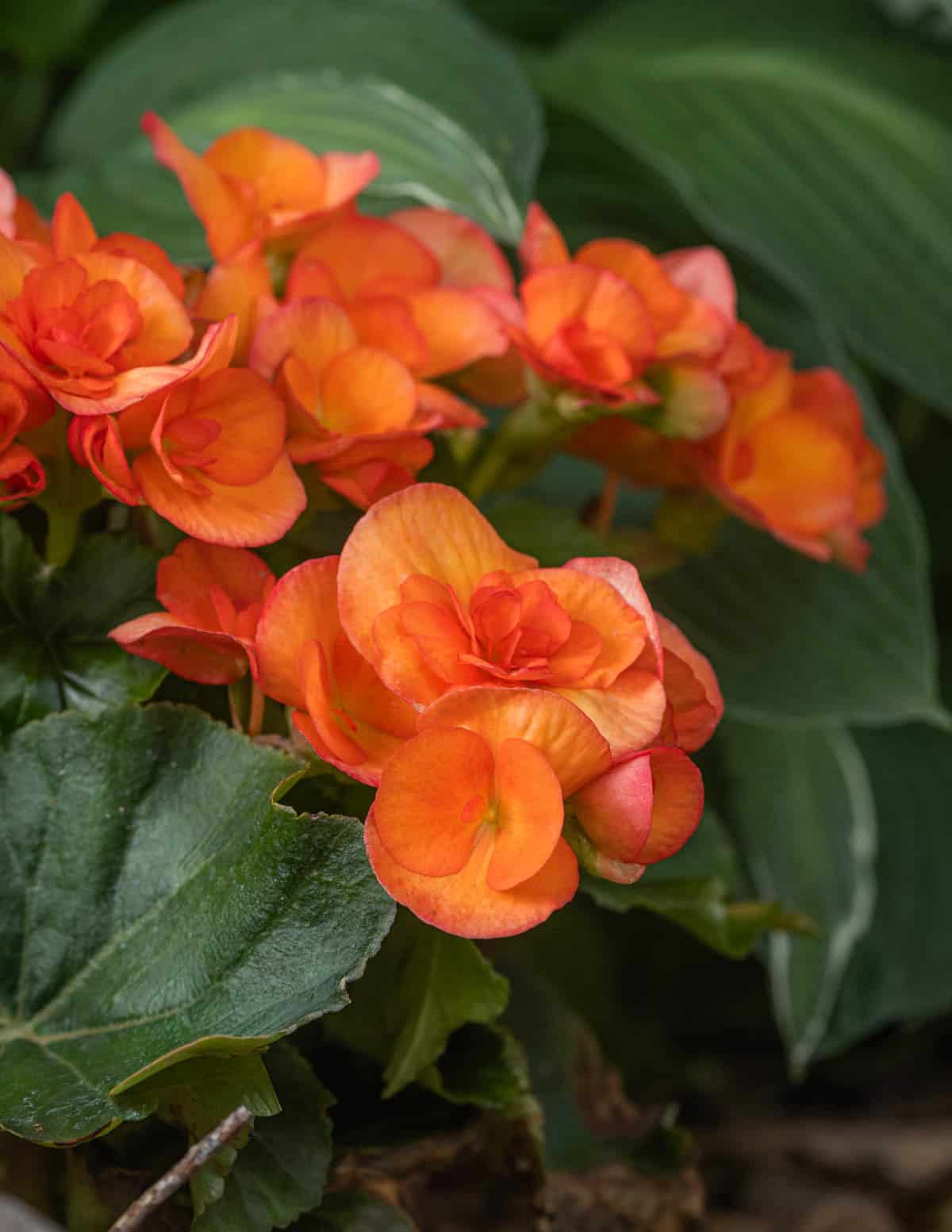
I owe a debt to two people for turning me onto begonias as an edible flower: Chef Dan Shmidt of Wise Acre Eatery, and Dean Engleman, the mastermind behind Tangletown gardens and the farm that supplies Wise Acre.
When we did a collaboration dinner a few years back I got to tour their farm, and one of the first things I remember is being handed a deliciously tart begonia flower. If you're in the Twin Cities, Wise Acre is one of the last true standard bearers of farm-to-table cooking, and they still grow most of what they serve at their farm near Plato, Minnesota.
Background
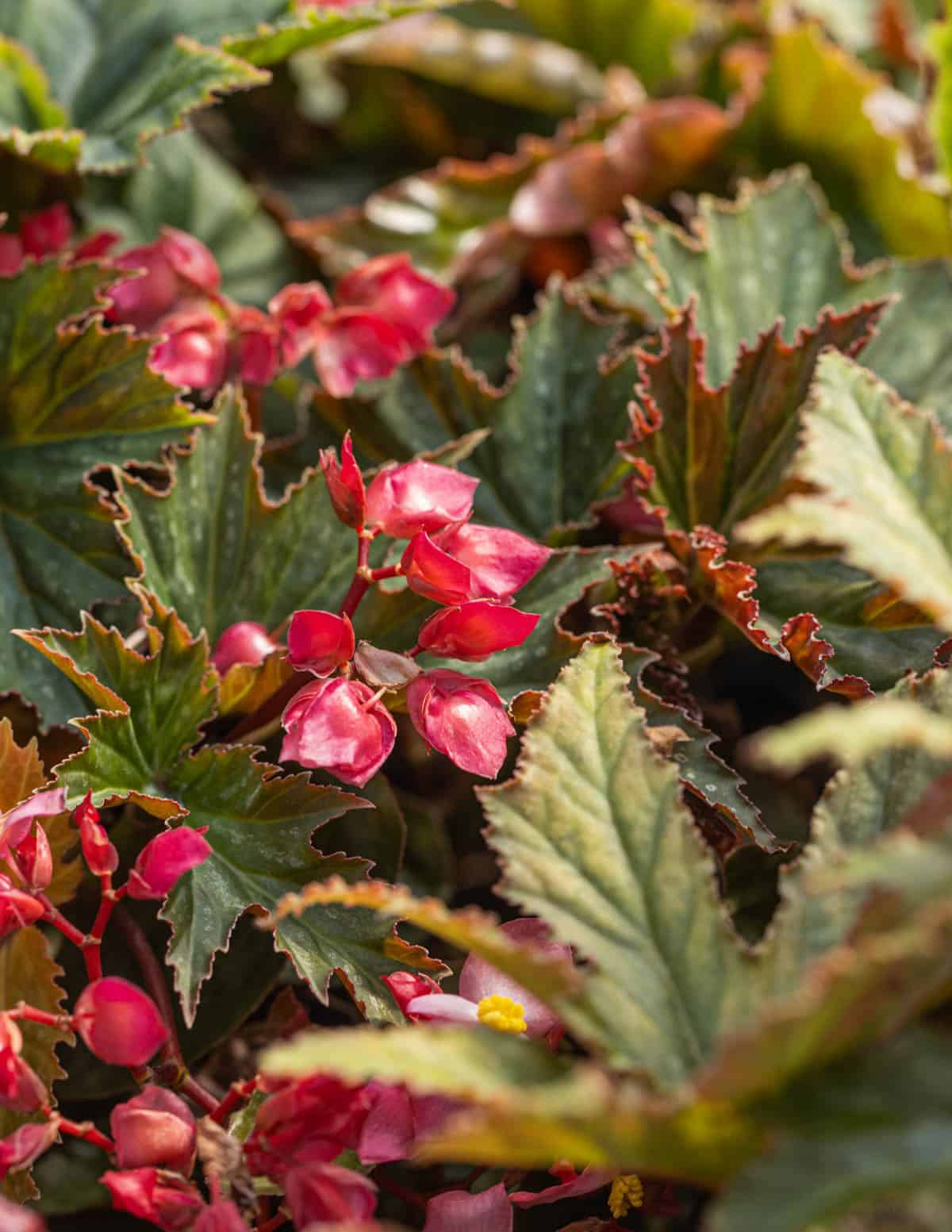
The genus begonia is large, containing over 1000 species typically planted as ornamentals for their colorful blooms. I've had friends tell me they're a hibiscus, which, while not technically true, is understandable as the leaves share a similarity and both plants can contain oxalic acid like sorrel and rhubarb. The oxalic acid is responsible for the tart, sour taste.
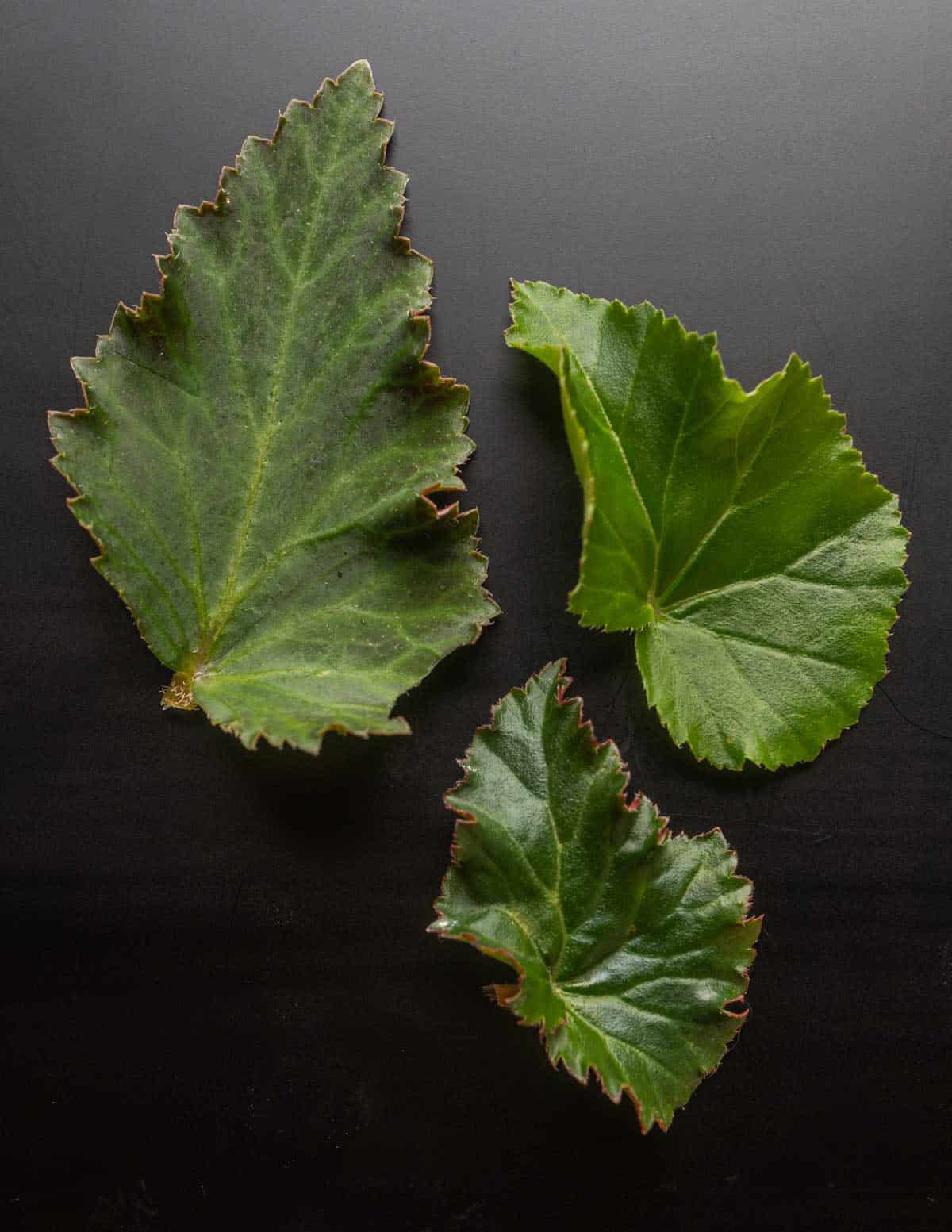
At a botanical level, modern DNA studies place begonias in the Curcubitales, meaning they're actually more closely related to cucumbers, melons and squash. While I can't tell you all begonias are edible, I've tried every variety I can find and have never had an issue, but there are some that are better than others.
Best Varieties for Eating
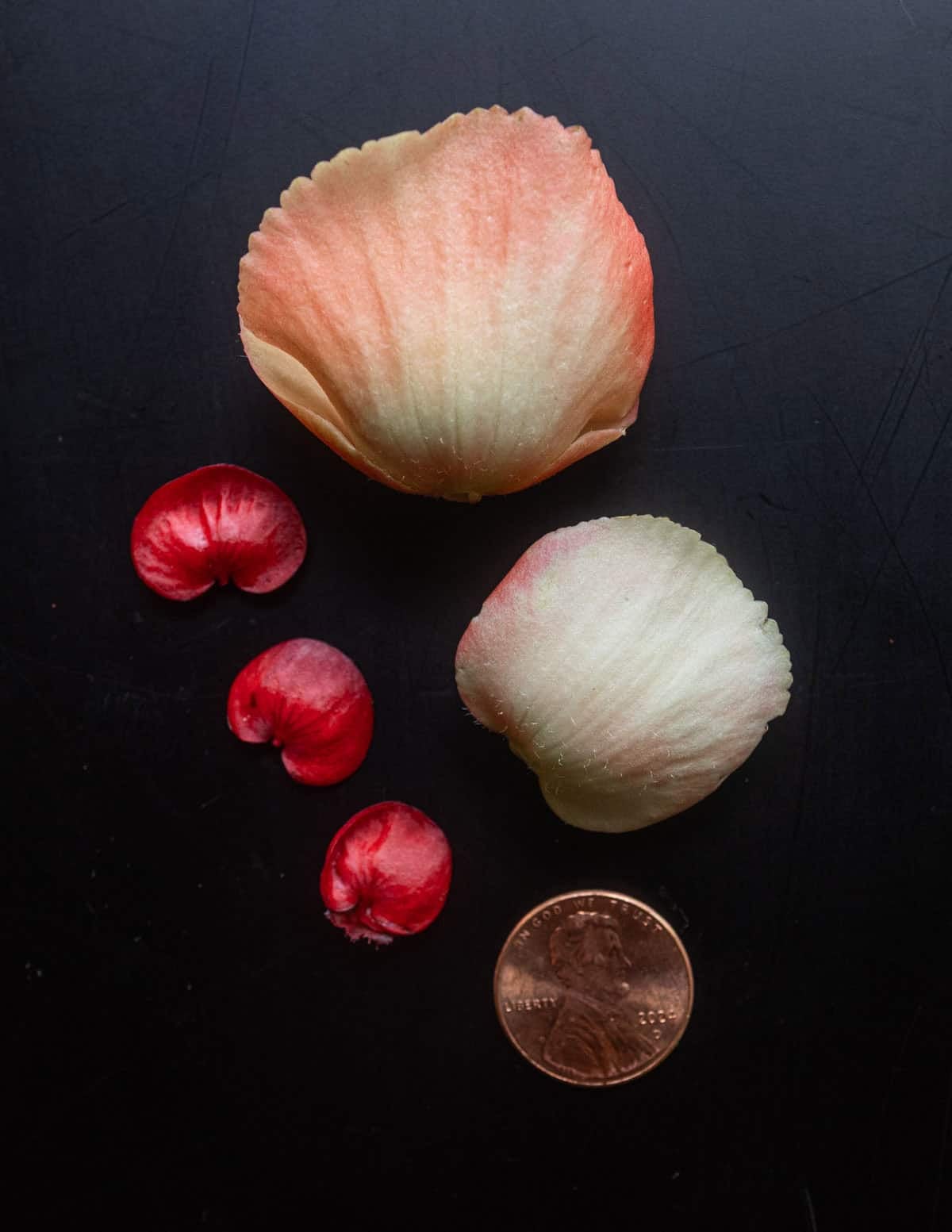
To put it simply: buy or grow the flowers that look like food. When purchasing begonias to eat, I'm looking for plants with the largest, most succulent blooms. Sizes can vary a lot between varieties. Wax begonias are currently my least favorite as they're so small. Tuberous begonia varieties are dependably large and are probably my favorite.
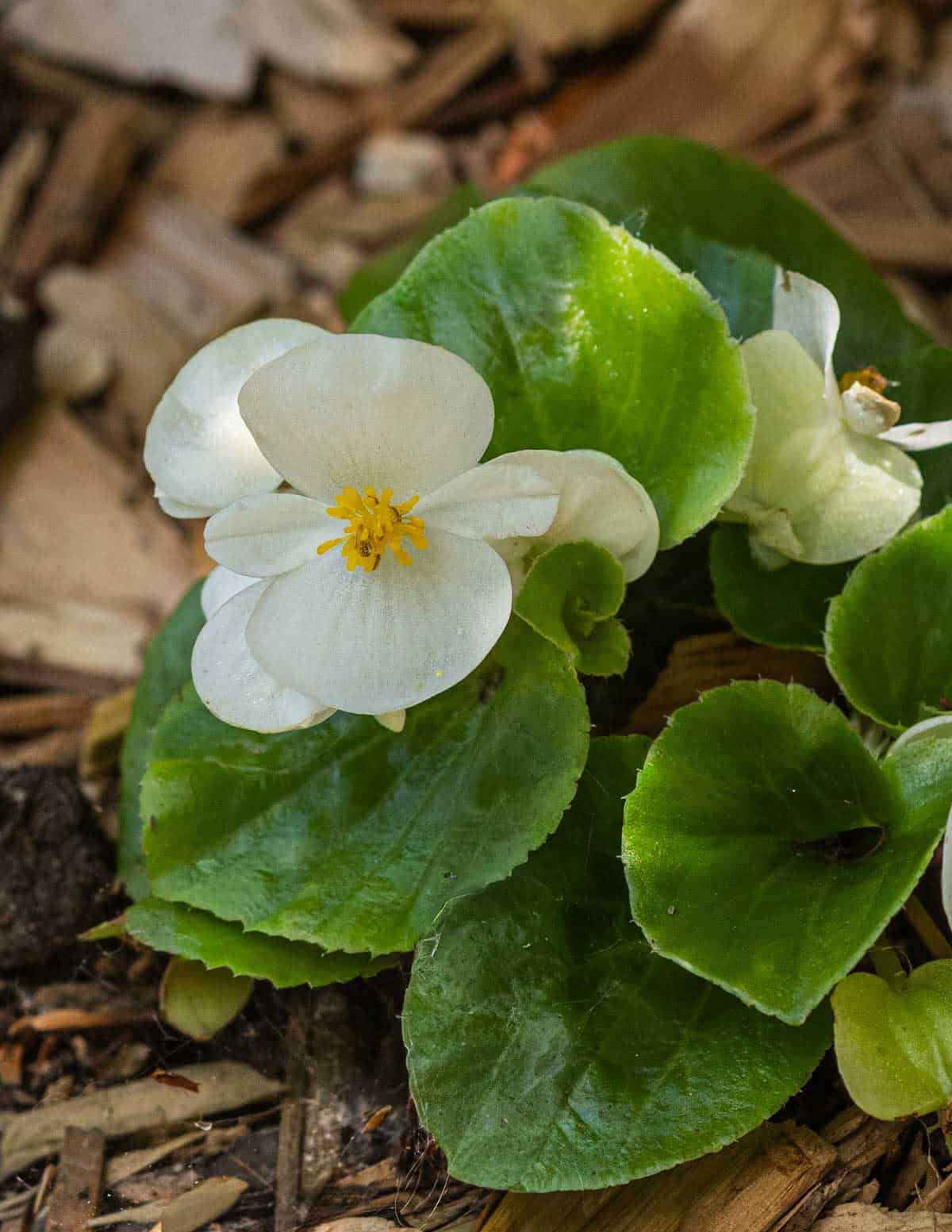
Smaller flowers are ok, but the small blooms just don't have the same impact as the larger ones as you can see with the small, red, wax begonias compared to the fragrant peach begonias below.
Double Blossoms
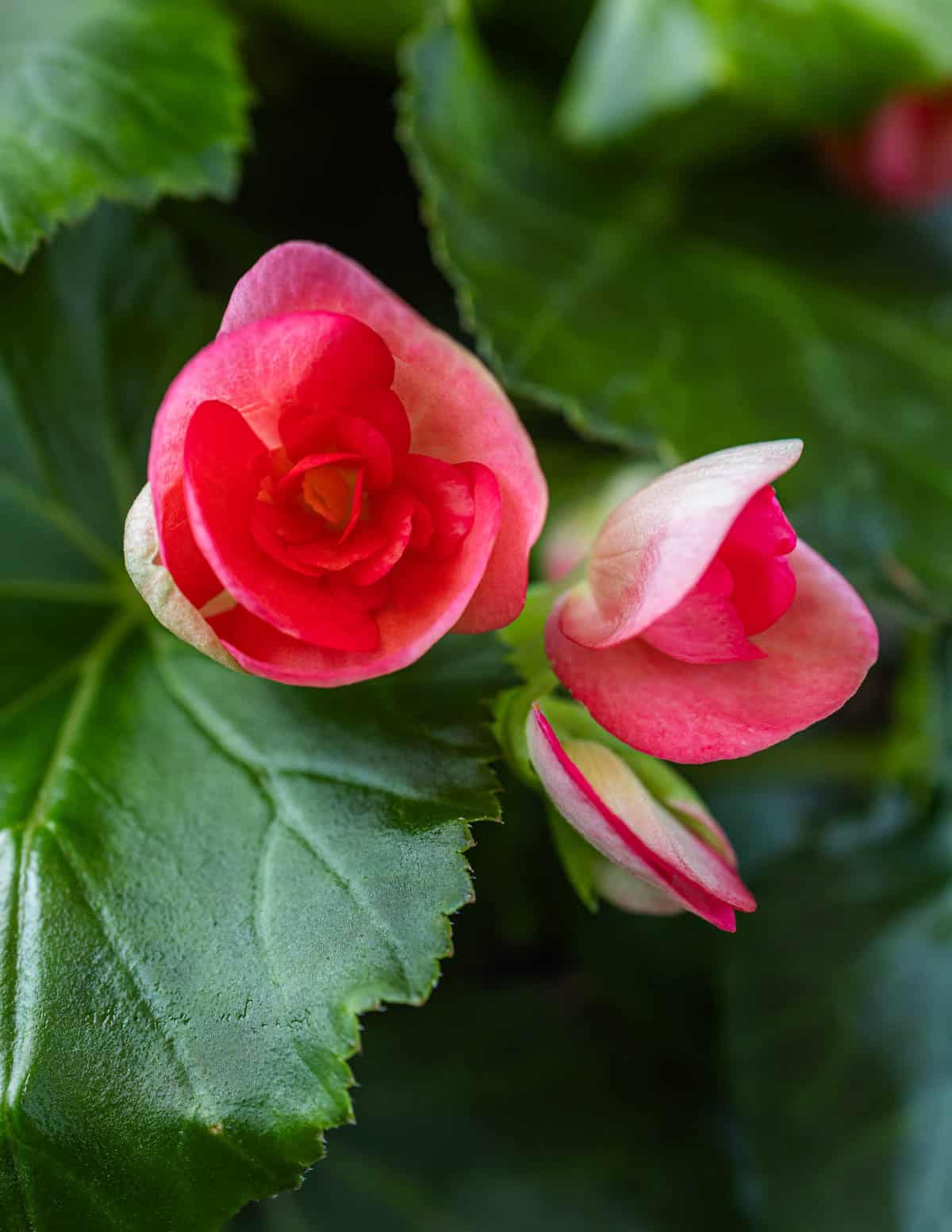
Most of the begonias I see have blooms comprised of single overlapping petals, and they're just fine. However, at the farmers market last week I came across fragrant peach falls begonias, and instantly preferred them to all others I've had for the double blossom.
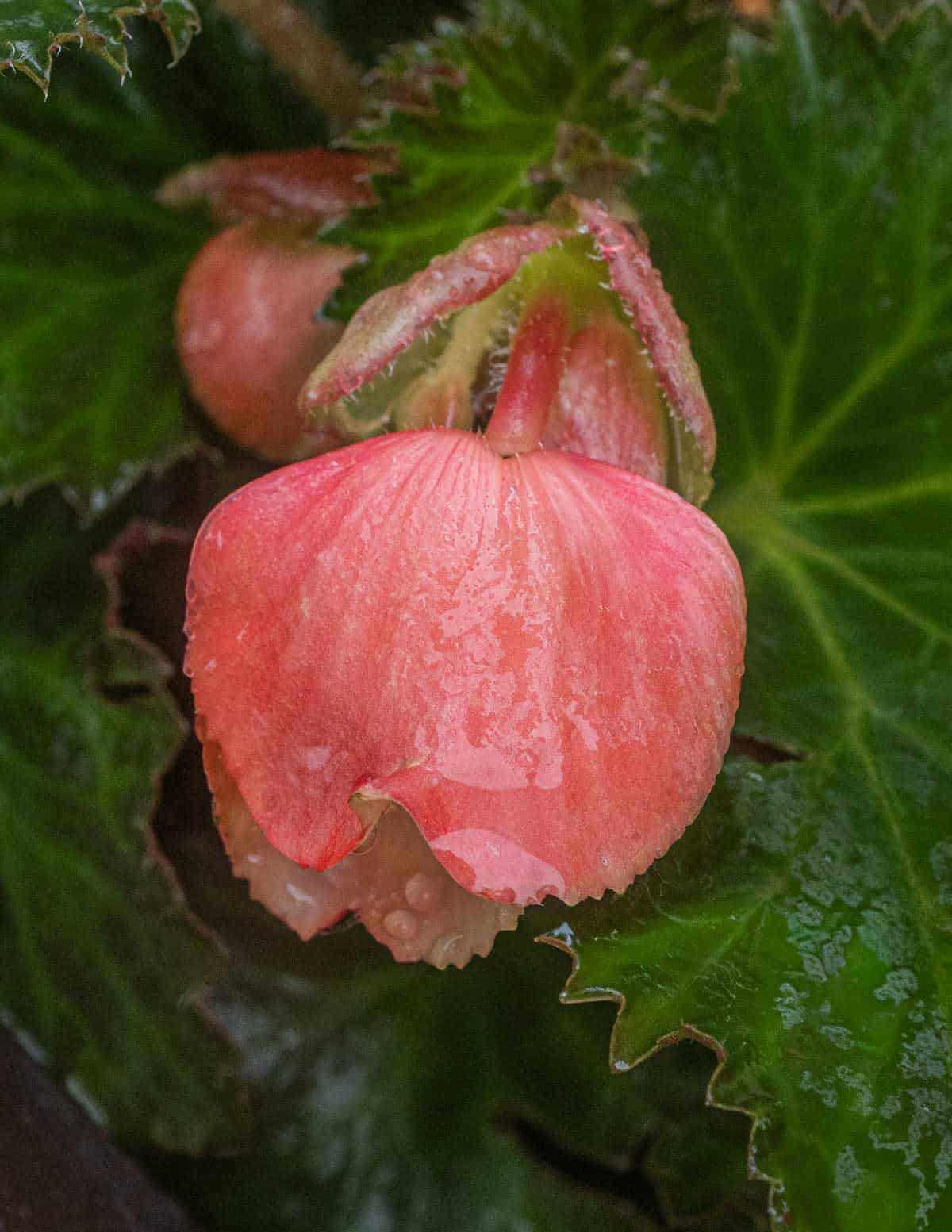
Double blossom means the flowers are composed of a bloom within another layer of petals, making them thicker and more substantial. The floral peach aroma of the ones I've had is soft and delicate too-nothing like the cloying perfume of say, peonies.
Planting and Harvesting
One of the many reasons I love begonias as an edible ornamental is that they thrive in the shade or indirect sun during the summer when most of my other edible plants prefer full sun. They like rich, but well-drained soil and don't like "wet feet", as the saying goes.
Most people I know keep begonias in a pot, hanging basket or a planter, but, like many plants, my begonias are the most robust when I put them directly in the ground. I inevitably end up with some in raised beds and planters too, but the top producers are always in a slightly shady spot under my hawthorn tree.
Dead-Heading For The Most Blooms
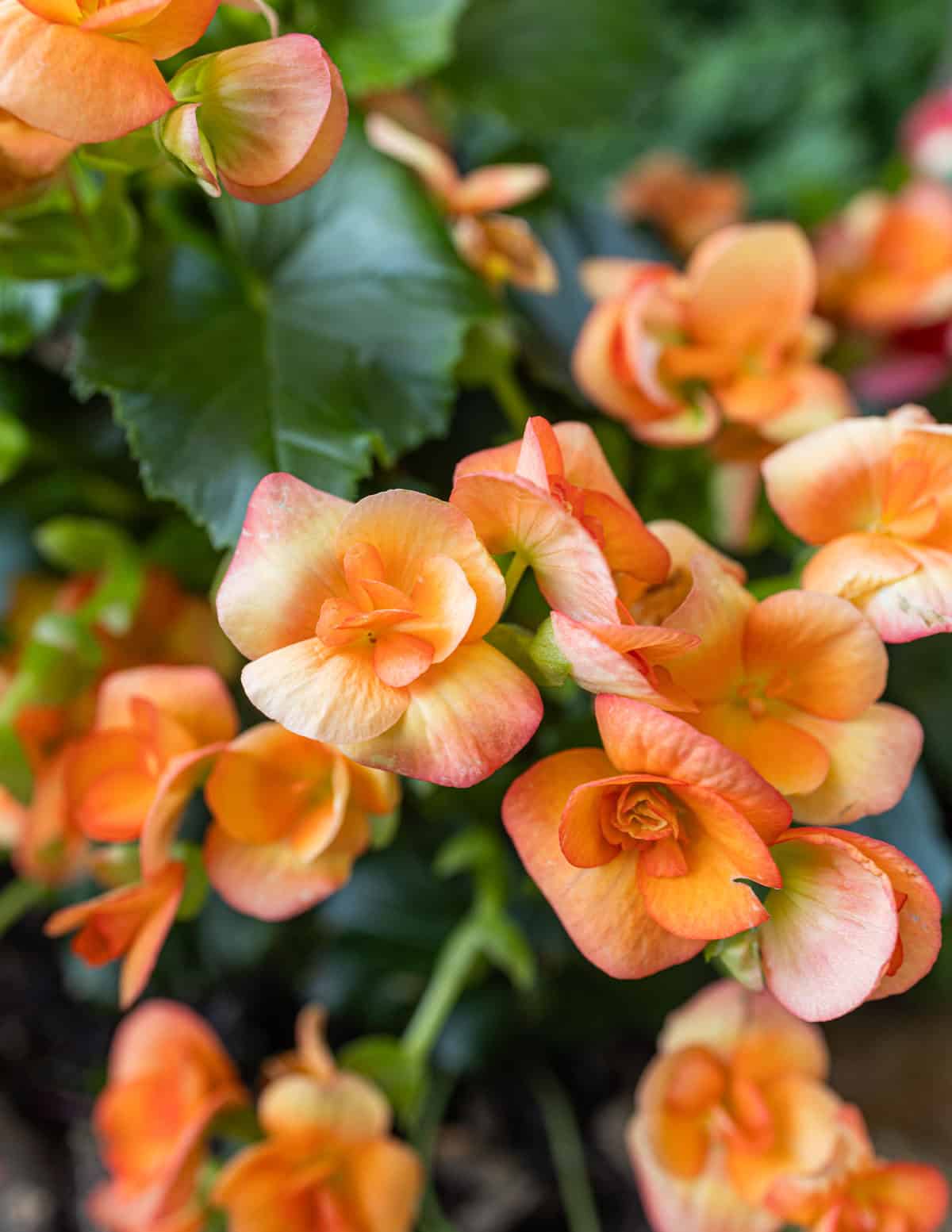
For the most edible blooms, you'll also want to dead-head the plants to encourage new growth when the flowers have filled out. To encourage a flush of new, fresh flowers, pluck the old, tired flowers from the plant and water the plant.
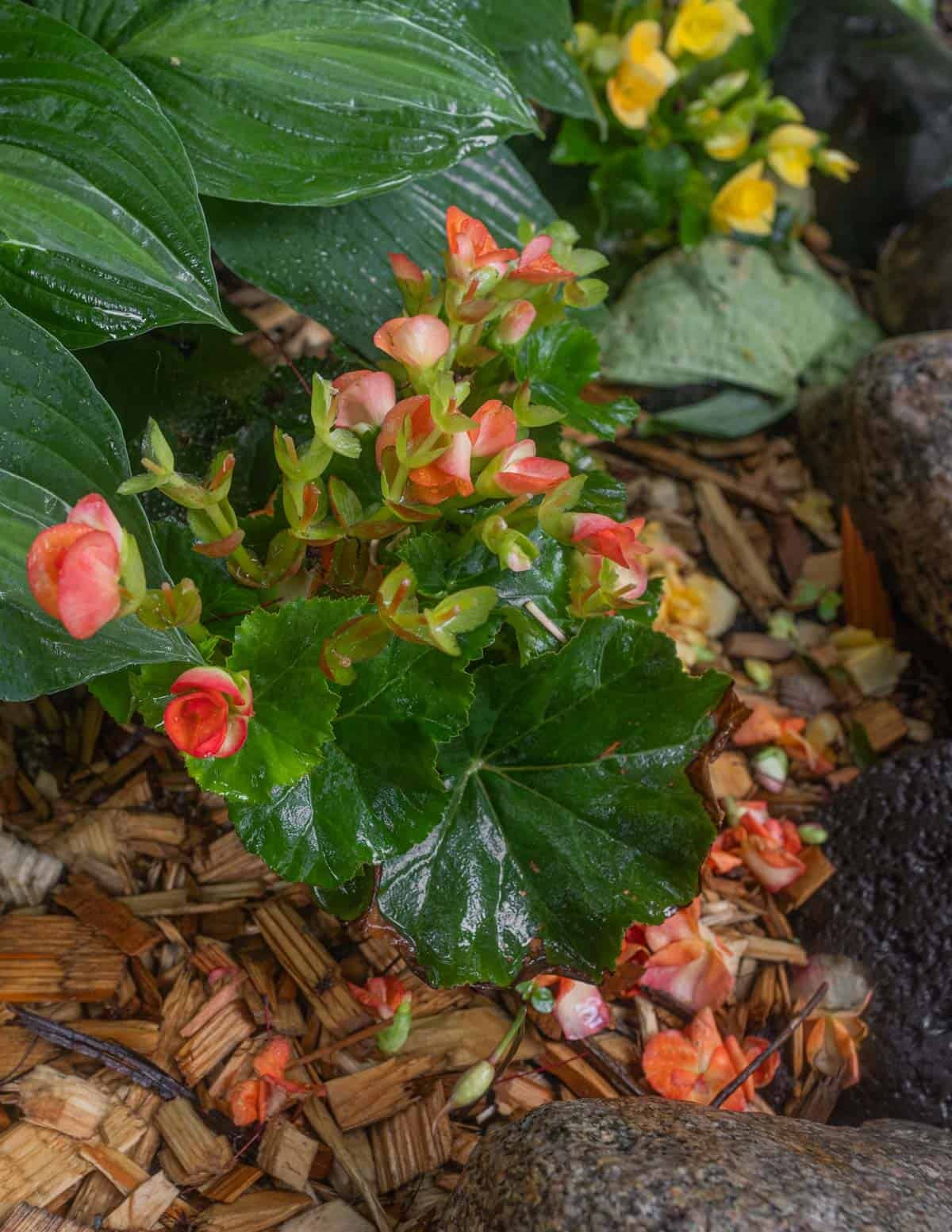
After a week, fresh flowers will appear so you can get them at the perfect stage for eating. I've stripped every bloom from a plant and have never seen them suffer for it.
Best Stage For Eating
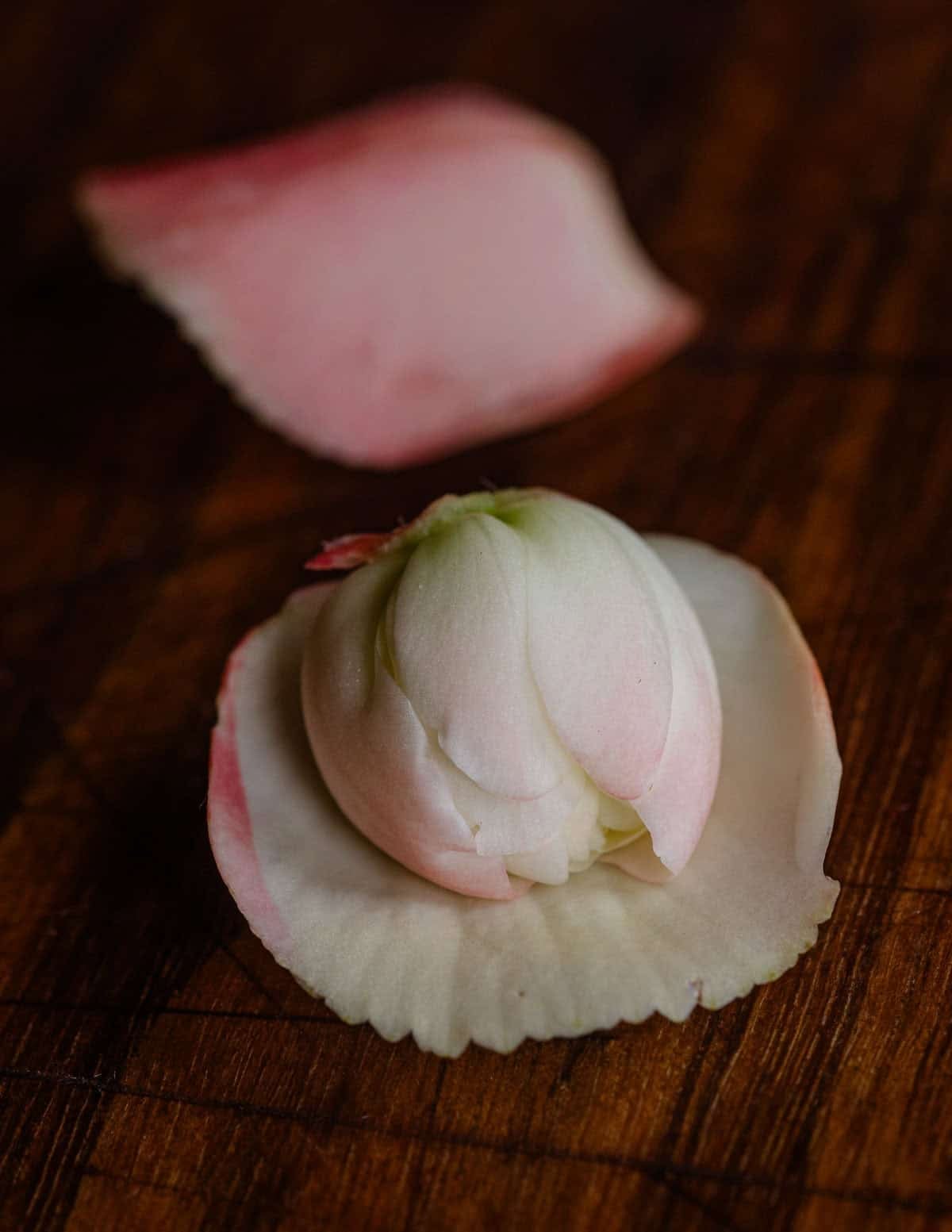
On the topic of eating, there's definitely a stage of growth I prefer to others. While the flowers are edible anytime, the unopened blossoms (shown below) are the most crisp and fun to eat.
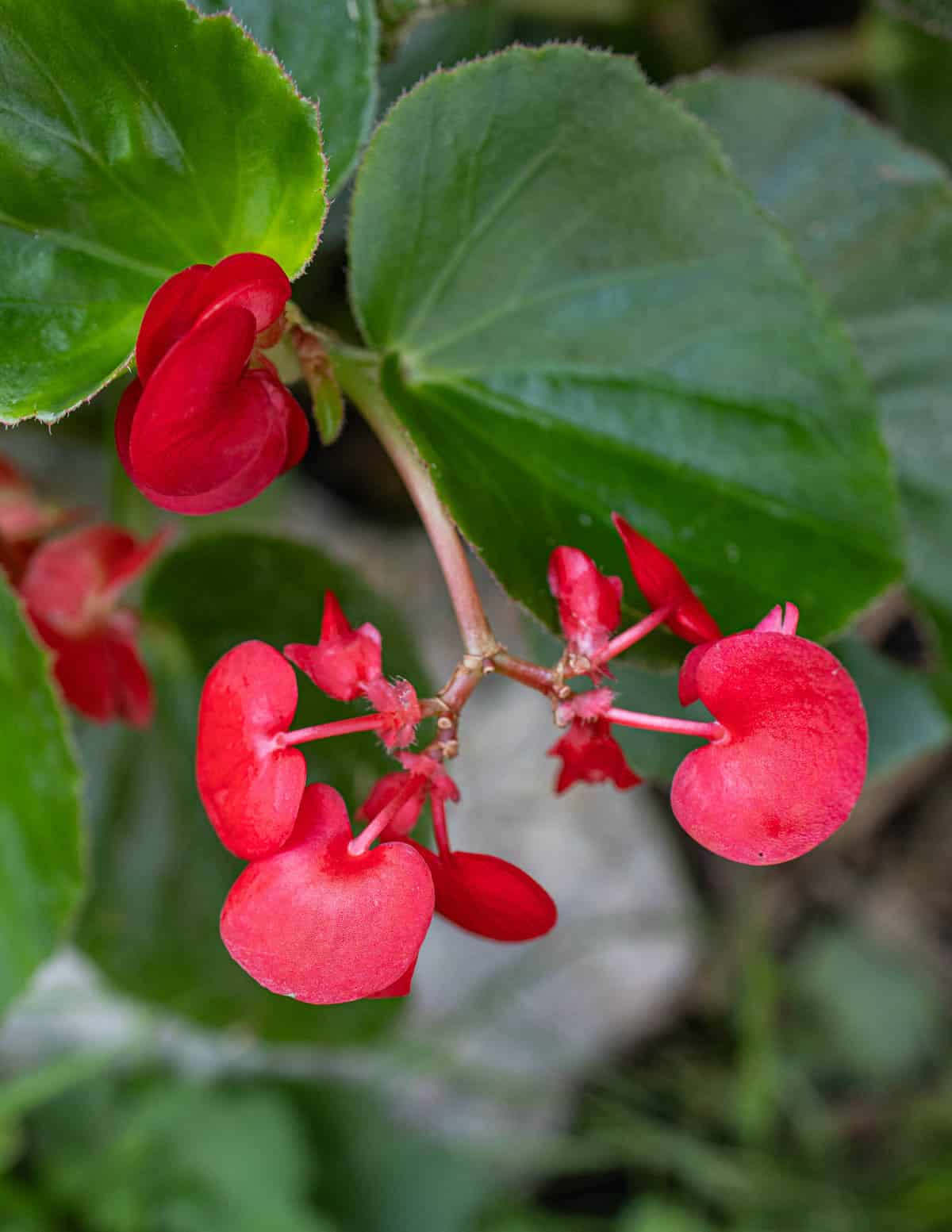
With the double-bloom varieties, the unopened blossoms are so firm and crisp they may as well be a small vegetable. I'll eat the them anytime though, either as whole flowers, or picked into individual petals if they've opened up.
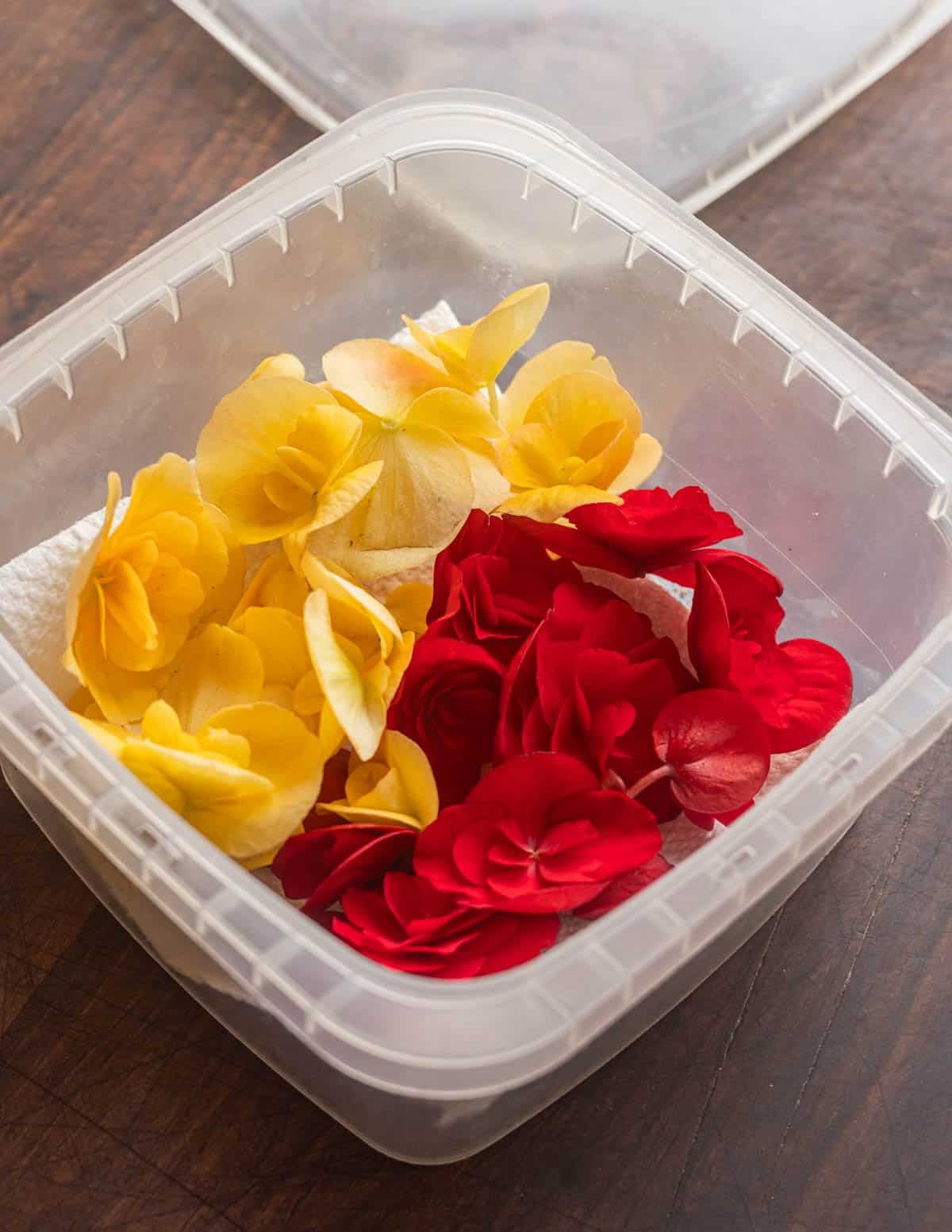
Another nice thing about begonias is their shelf life. Compared to many other flowers that quickly wilt (spiderwort, chicory) they're pretty robust and will last a few days in the fridge, stored in a hard-sided container with a lid.
Safety Note
Just like with wild food, it's important to know your food is clean and free of pesticides and chemicals. As commercial begonia growers do not treat the plants like food, unless you know organic growers like I do, if you buy them, you will want strip the flowers from the plant and start sampling only the new growth that comes after.
Cooking with Begonias
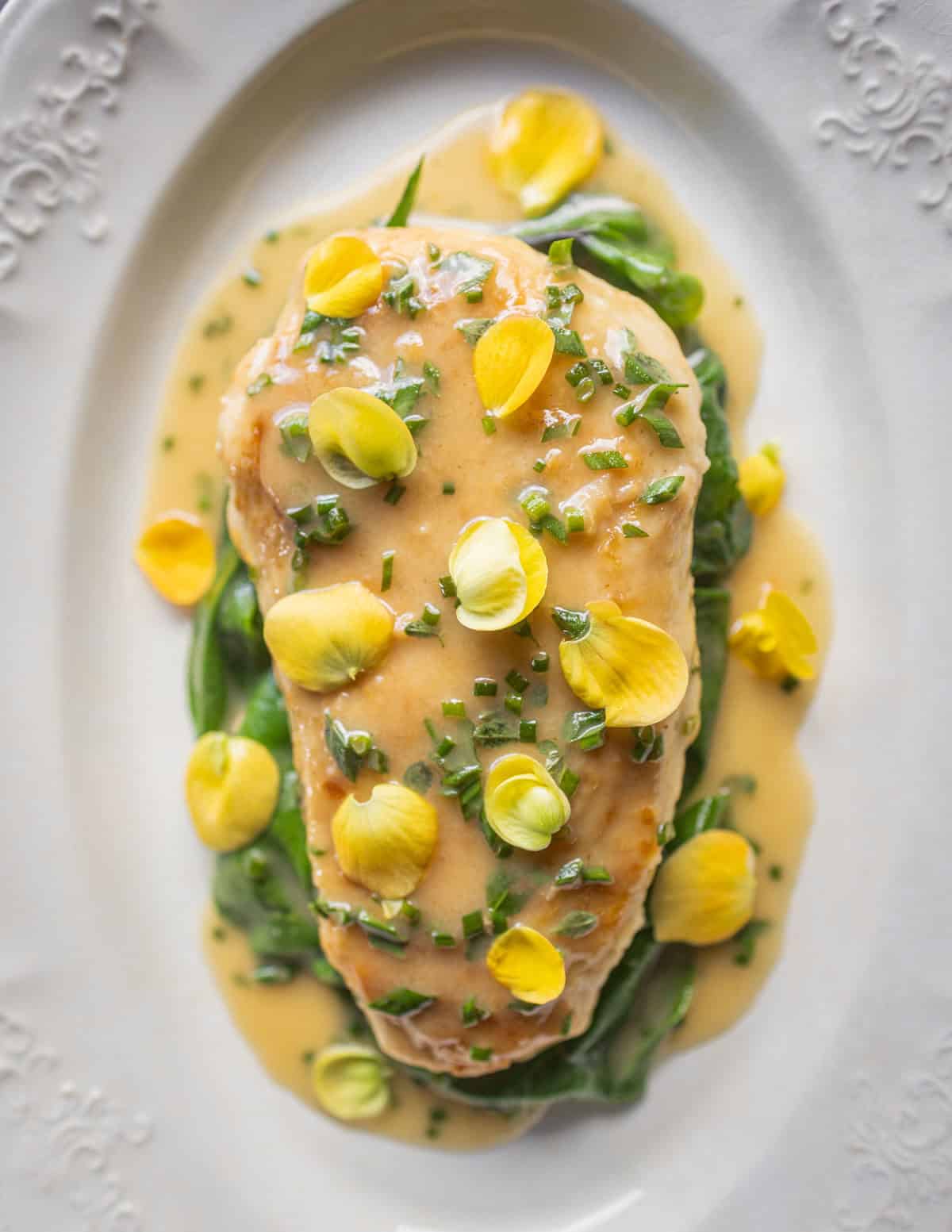
As with most edible flowers, cooking is a bit of a misnomer here as I don't expose them to heat. Like most edible flowers, begonias are ideal in salads, but, in the right place, can also work as a garnish for warm dishes. The chicken with lemon sauce and fresh herbs below will be in my forthcoming book, Fauna.
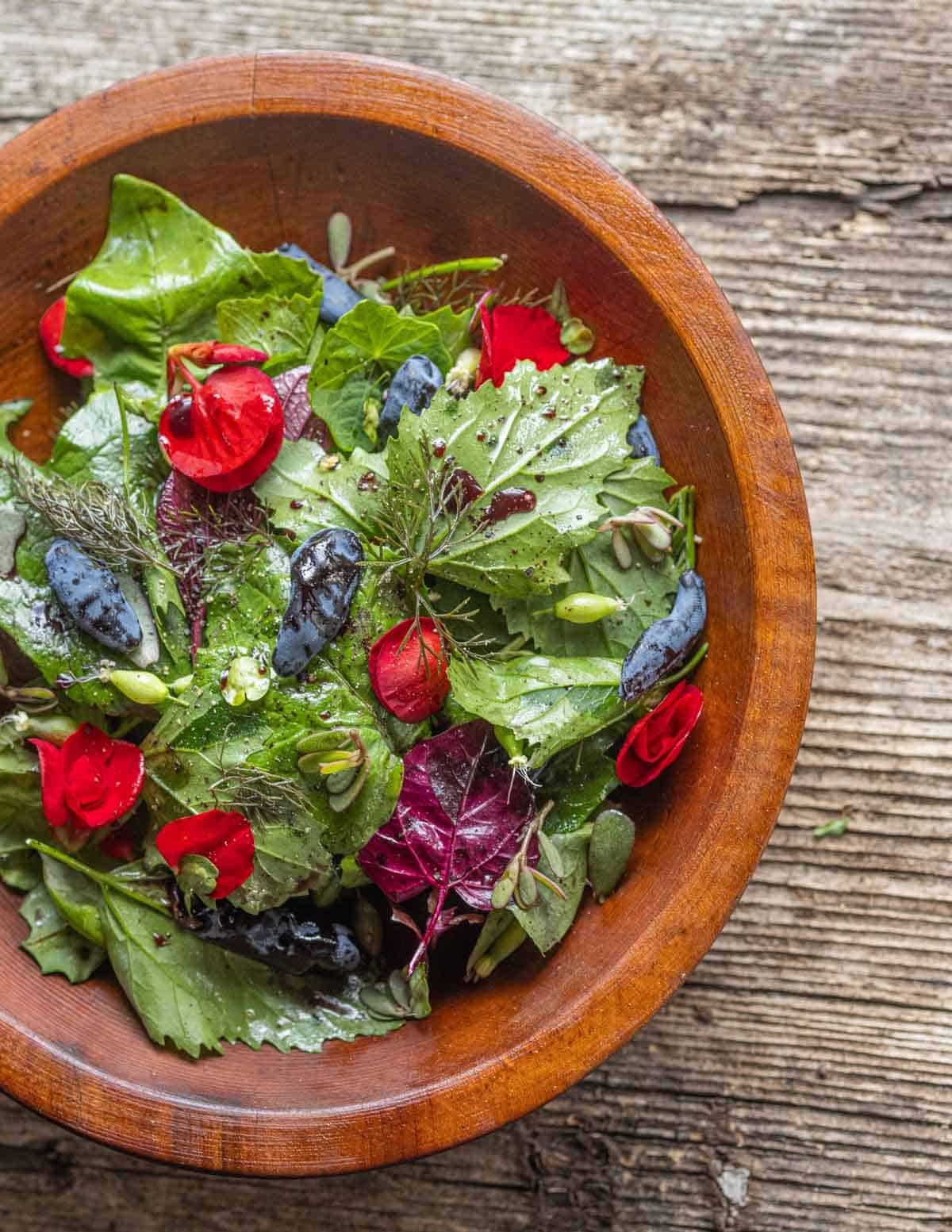
Like most edible flowers, a good salad is still my go-to. Toss whole blooms in a salad for pops of tart flavor, or handfuls of petals for a milder, more subtle effect.
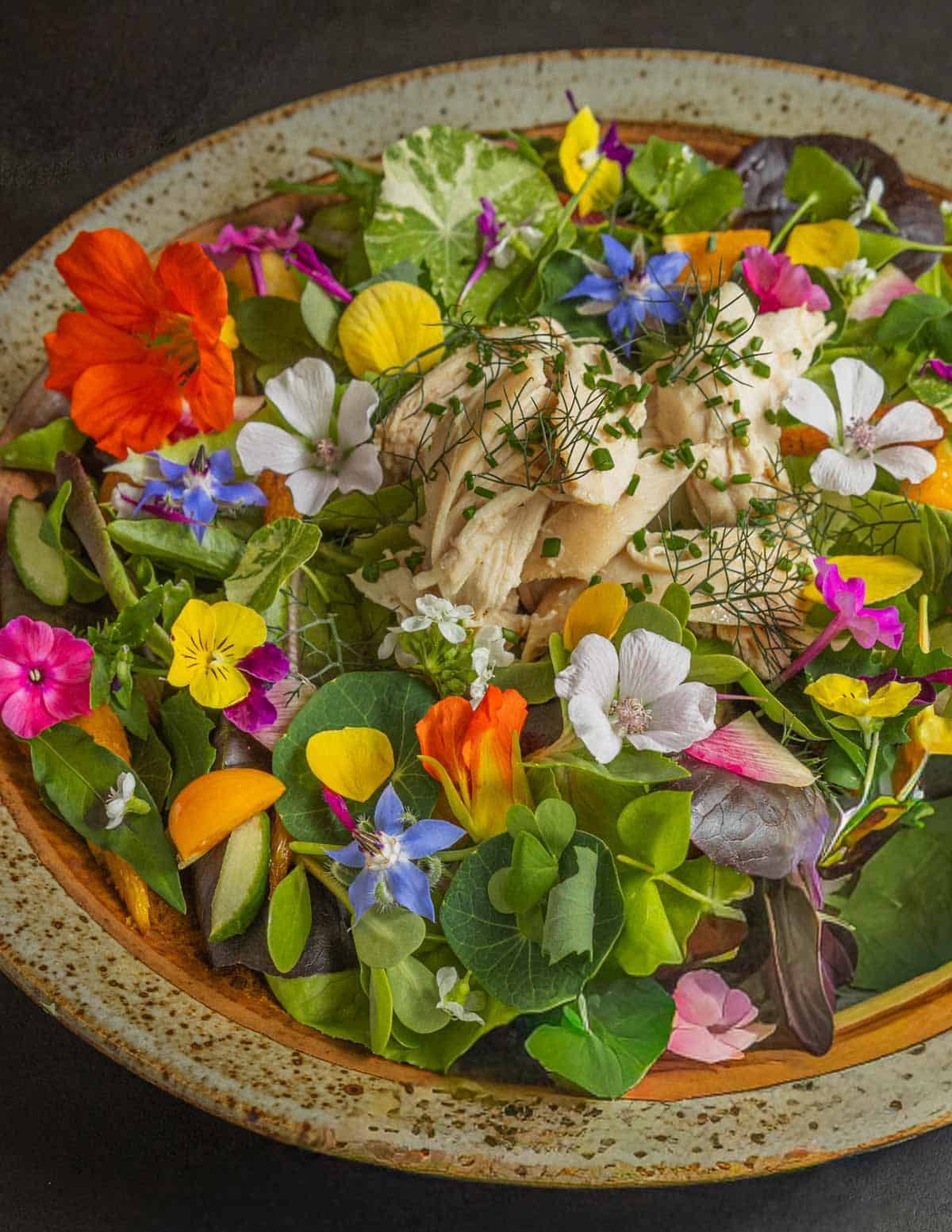
One of my favorite times to make a salad is early summer, which is peak season for edible flowers. Begonias are right at home with a mixture of others like borage, bee balm, nasturtiums, mallow, phlox, oxe-eye daisies, pansies and more. The Farmers' Salad below is also in my next book.
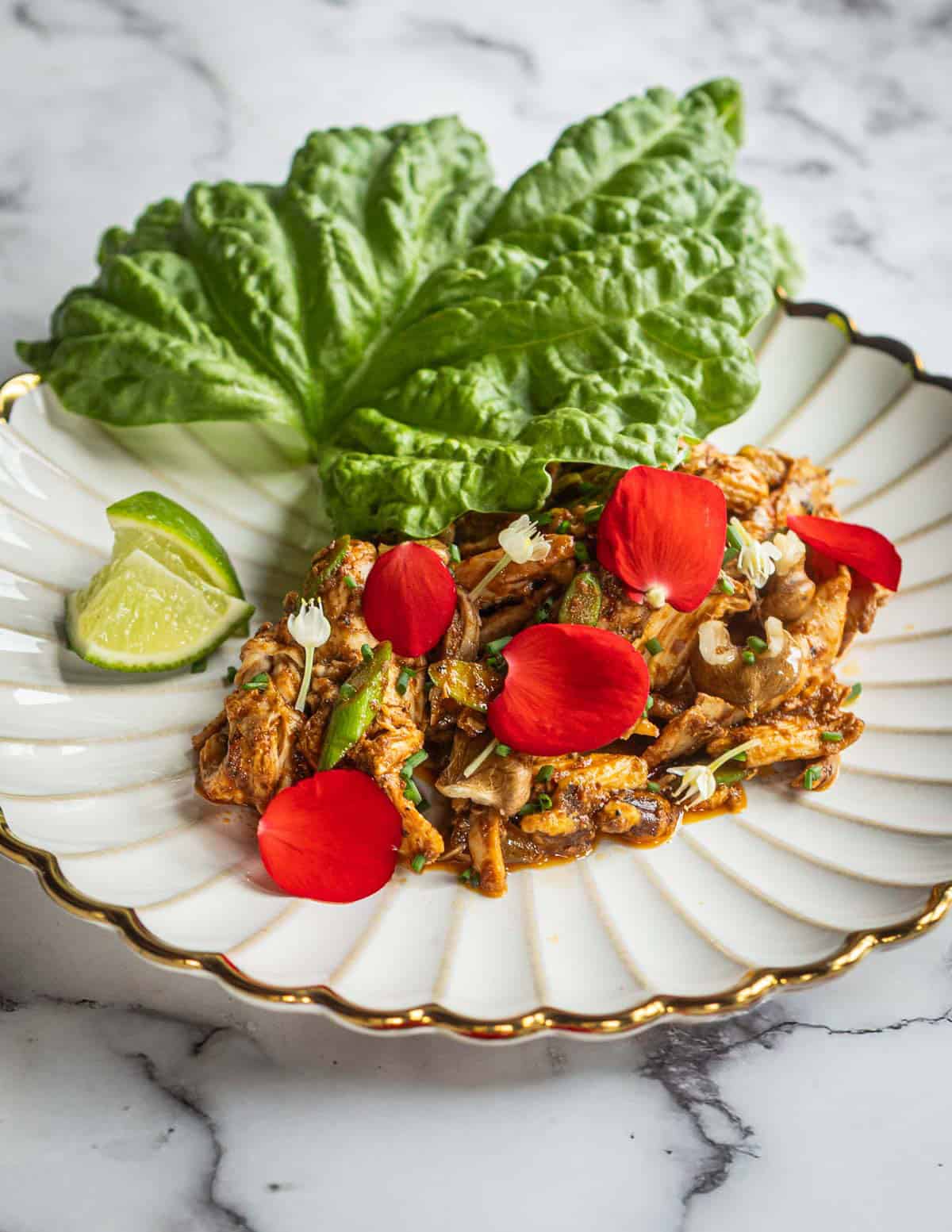
On a personal note, the brilliant colors of begonias are hard to photograph in a natural way, which is part of why it's taken me 3 years to get around to sharing them. Although it tastes great, the chicken salad with wild seed harissa and garlic scapes below is a book outtake I just couldn't seem to style right.
Have you eaten begonias before? If you haven't, feel free to run outside, grab a few and confirm the tart, crunchy taste in a comment so people don't think I'm making it up!
Susan ONeill
Love them. After reading your article, I went out and sampled my yellow fibrous begonia. Wow what a great burst of lemon.
Sarah Willoughby
I ran to my front stoop to taste a blossom and my mind was blown. An explosion of flavor! Thank you! My poor begonias are missing a few blossoms…
Alan Bergo
Aren’t they good?! Thanks for commenting.
Coop
All begonias are edible; they used to be called pie plant, like rhubarb, and the leaves were used to make a sort of lemon pie. They were my best year round sellers when I was supplying restaurants with unusual edibles. I grew them all year round for 13 years (with other edible flowers) and sold them by the box full to a 5 star restaurant (and several others) until the federal government put me out of business by outlawing the compact fluorescent lights that I used to grow plants in my house. The chefs used both the small ones and the medium and large ones, usually whole for the small ones and often in salads, and the big ones for garnishes or separated into individual petals. They were also often put on sweet desserts as a garnish. Regular customers used to ask for extra flowers on their meals.
Alan Bergo
Thanks Coop.
Tom Lang
Sorry, I was tired yesterday when I replied. I obviously misread the nutrition info for begonia flowers. The data was per KILOGRAM of fresh weight flowers, so 2,000 mg/kg of potassium in fresh tuberous begonias equals 200 mg per 100g versus about 400 mg of potassium in 100g of ripe banana. That makes more sense than the flowers having more potassium than bananas. Glad I thought about it when I went to bed last night because it didn't sound right to me and it wasn't right.
Renee Malowitz
Wow, all these years of gardening and I didn't know they were edible. Thanks for enlightening me!
Kate
I have a large potted begonia that I've brought in every winter for years, where in the spring I give it a trim, put the cuttings in water, and have about 30 new plants for summer. I never knew the flowers were edible though - as soon as I finished this I went out and ate a handful of unopened blossoms. WOW! Thank you!
Alan Bergo
Hey thanks Kate. Have fun!
Patricia
Okay so I just went outside and tried a peach and a yellow variety open pedals and closed pedals they are tart and snappy and quite enjoyable but I have to admit I felt a little weird because I got the plants at Costco and fear they probably sprayed with God knows what chemicals. Perhaps next year I'll try a nursery plantt
Peter
Thanks, insightful as always. I’ve not tried begonias yet, but I will now! We’re always looking to expand what we can grow and eat. When buying new plants from a greenhouse do you wait out the first set of blooms or have any process in relation to pesticides or fertilizers that may have been used? Thanks again!
Cheri Collins
Yes, I have eaten them. I used to nip off the occasional blossom while watering them as a teenager. I used to eat other flowers, too. I don’t know what inspired me to do so - I’ve just nibbled the landscape since I was a tot. Begonias are delicious!
Alan Bergo
Thanks Cheri
Mornalee Hoy
You are so wise! Thank you again for a solid read and a new Pinterest Board in my notes. Keep up the good work!
Alan Bergo
Thanks Mornalee
Angell O
It makes me so happy to watch humans eat flowers, and begonias are some that surprise folks consistently not just with the fact that they're edible, but also that they're a delight to eat. Despite all that though, it's the bonus sparkle factor of blooms and petals that's one of the reasons they're in my top favourites:)