
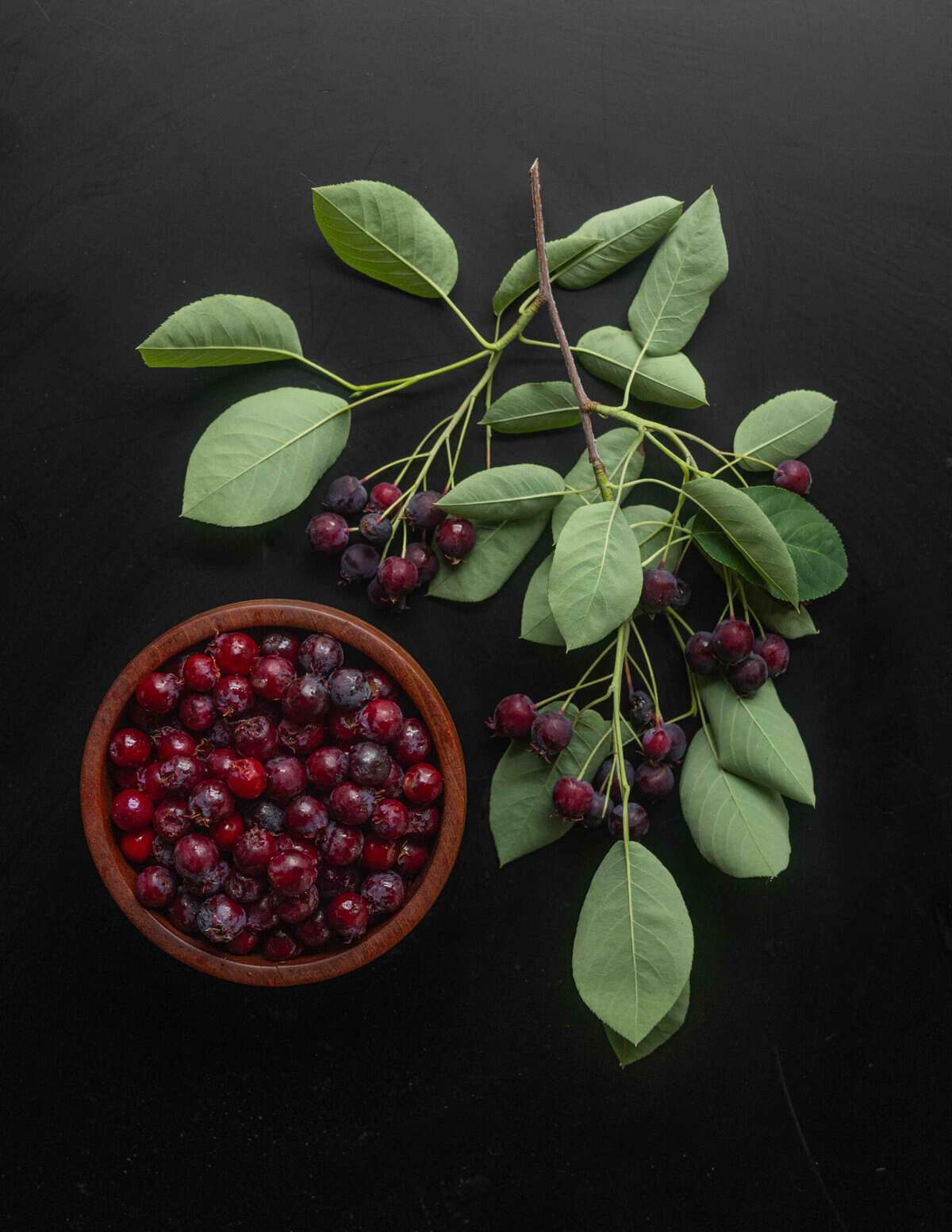
Serviceberries are one of the finest wild berries I know of, and one of the most underappreciated. It exists in a duality: the fruit isn't widely eaten today, but it is the most culturally significant fruit I've discussed on this site, with more common names than any other. Also known as the juneberry, shadbush, saskatoon, and sugar plum, the fruit of the genus Amelanchier have a special flavor unique among all other berries.
What Are Serviceberries?
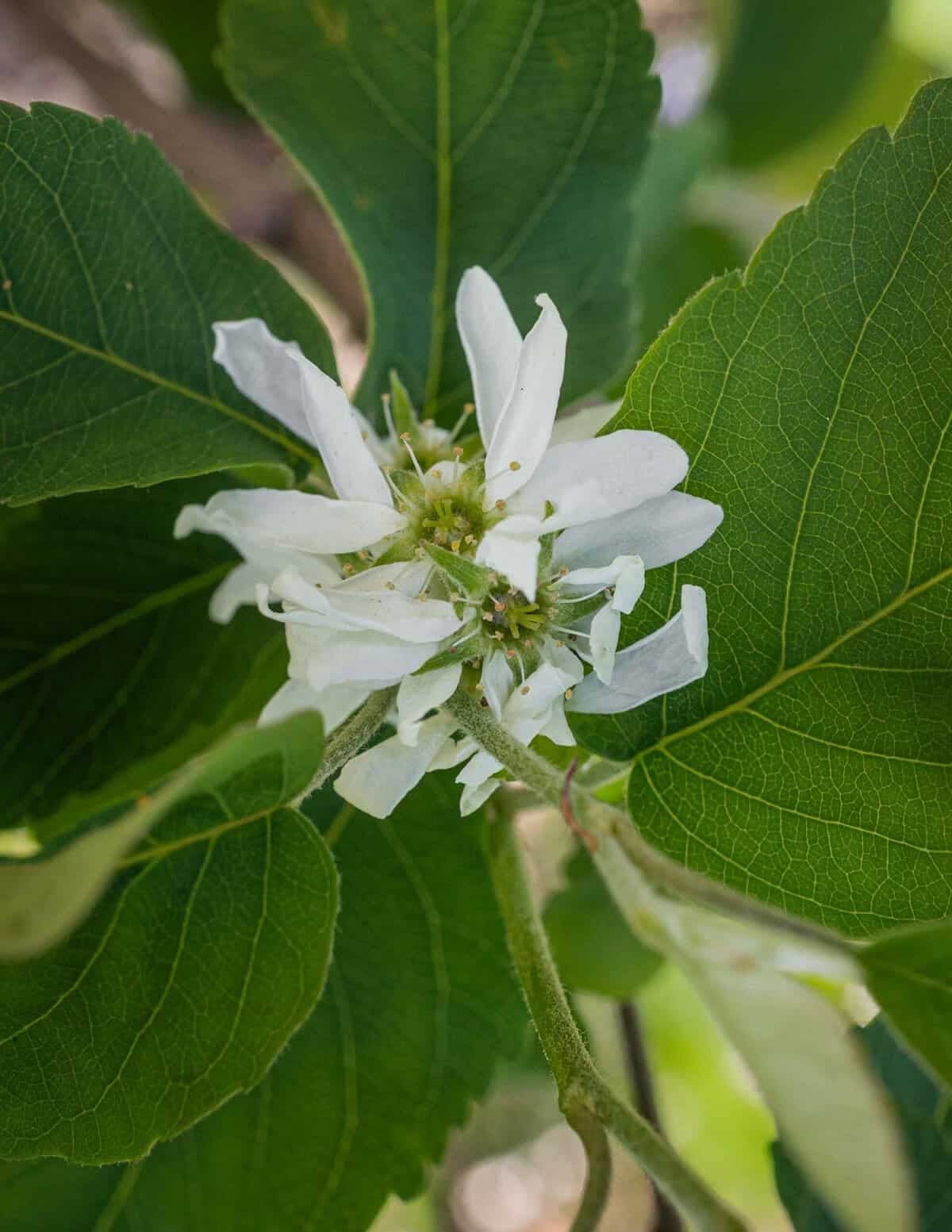
At the botanical level, serviceberries are the fruit of a cold-hardy shrub or tree in the genus Amelanchier. There's numerous varieties and cultivars, but I think of them essentially as western serviceberry (Amelanchier alnifolia) and Eastern (Amelanchier canadensis).
Depending on the variety they'll usually range from 10-25 feet tall, which can make them a nice addition for yards, edible landscaping and food forests. Small, multi-trunk trees meant for urban areas will be on the shorter side, but wild trees can be much taller-up to 40 feet.
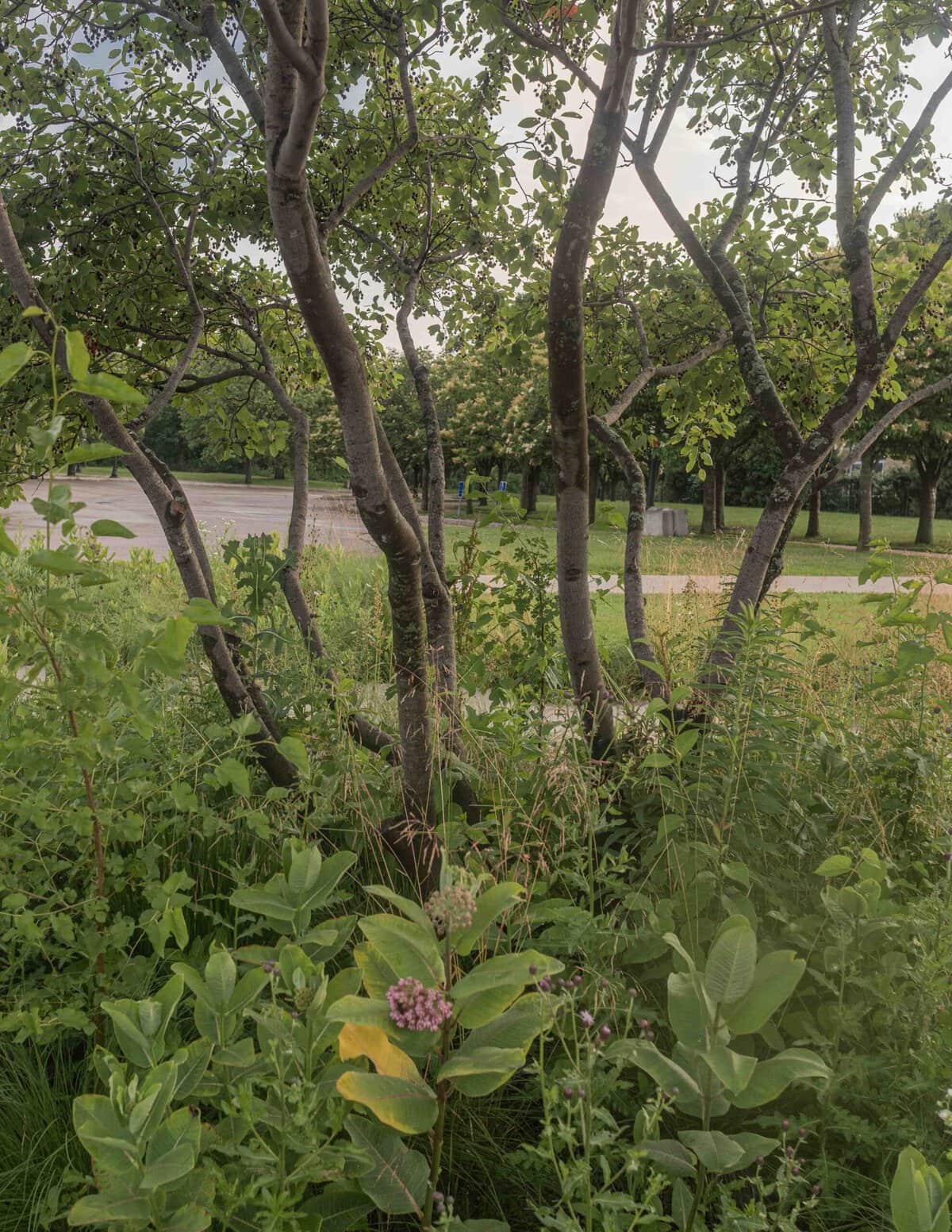
The plants have a wide native range across most of North America, but are probably most widely known in the prairie Provinces of Saskatchewan, Manitoba and Alberta. Many of the cultivars sold in garden stores originated from research done at the University of Saskatchewan, and the province's capital (Saskatoon) is named for the fruit. Ornamental plantings can be found in many cities, and I used INaturalist to find a group of 12 ornamental trees at the Como Zoo in St. Paul.

Discussing this plant can get a bit confusing as it has numerous common names. The name juneberry comes from the berries often ripening in June. The name shadbush or shadblow comes from the plant flowering at the same time in the spring as the spawning runs of the American shad fish.
As usual, Sam Thayer has excellent information in his Field Guide to Edible Plants of Eastern North America. Regarding some of the common names, he writes:
This berry is common, underappreciated, and variable in quality. Despite the prevalent etymological myth, the name "serviceberry" has nothing to do with church services. Until about 1900 this berry was called "sarviss" in English-a name derived from the Latin sorbus for another fruiting tree, possibly mountain-ash. Today, serviceberries are grown commercially-mostly in Saksatchewan, under the name "saskatoon".
The name saskatoon is derived from the Cree word misâskwatômina, meaning "fruit of the many-branched tree". The fruit is an integral part of the diets of indigenous peoples of the Northern Plains and Prairie, and one of the most heavily documented fruits used to make pemmican and its Lakota cousin, wasna.
What Do They Taste Like?
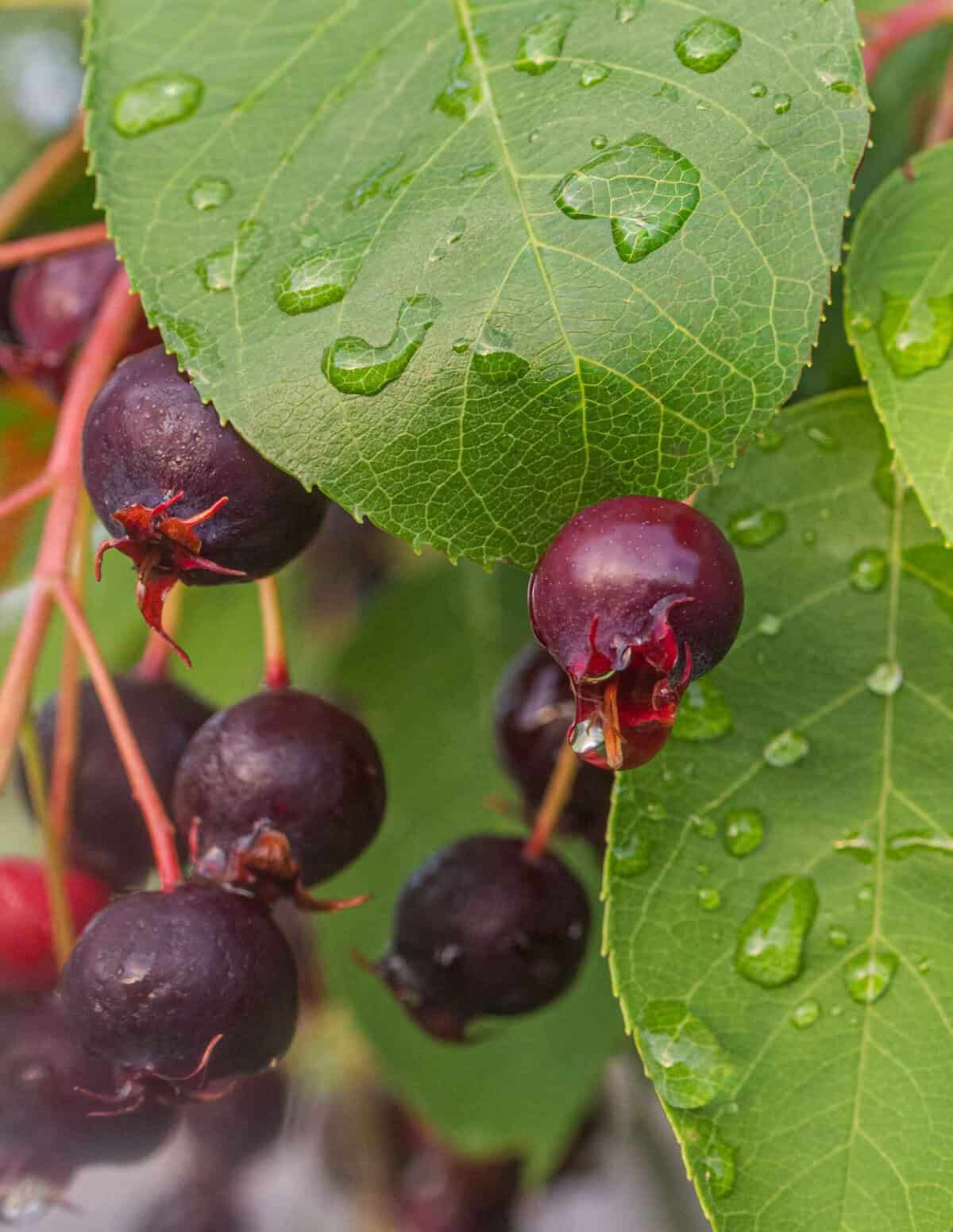
When ripe, I describe the taste of juneberries as a ripe, juicy berry, with notes of cherry, blueberry, a little strawberry, and a touch of apple or rosehip. They're slightly chewy. After the fresh berry taste comes the surprise: gentle pops of almond flavor lingering on your palate as you chew, occasionally crushing a seed.
While cooking with the fruit this week I listened to Wall Kimmerer's book The Serviceberry. It's a poignant, thoughtful referendum on capitalist economies, punctuated with foraging anecdotes, stories and wisdom.

I love how she describes the taste:
"In Potawatomi, it is called Bozakmin, which is a superlative: the best of the berries. I feel one on my tongue, and agree with my ancestors on the rightness of that name. Imagine a fruit that tastes like a blueberry crossed with the satisfying heft on an apple, a touch of rosewater, and a minuscule crunch of almond-flavored seeds. They taste like nothing a grocery store has to offer: wild, complex with a flavor that your body recognizes as the real food it's been waiting for."
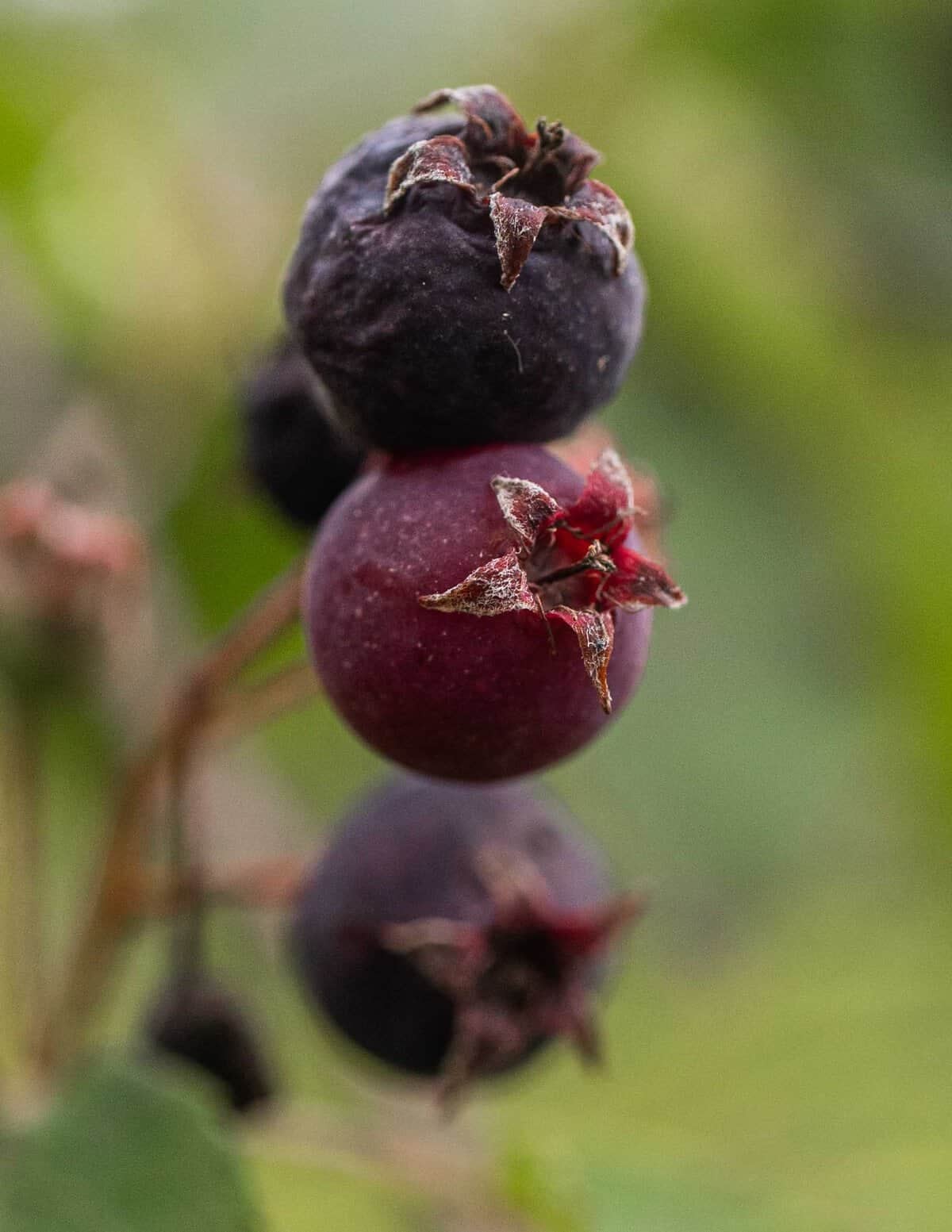
Just like apple seeds and cherry pits, serviceberry seeds taste of almond, the flavor being a by-product of their shared lineage in the Rosaceae family. Seeds are often seen as an obstacle to work around or remove in the kitchen, but with serviceberries, the seeds can be part of the attraction. The almond flavor softens after cooking, but will subtly perfume a dish they're cooked in.
Havesting and Processing
Sometime around Mid June where I live the fruit are ready to harvest. While typically true to their name, ripening in mid-June in the Twin Cities, the window for getting the fruit can be a lot wider than a single month. As long as the conditions are good, I can usually harvest fruit during the last week of July or the first week of August while harvesting blueberries near the South Shore of Lake Superior.
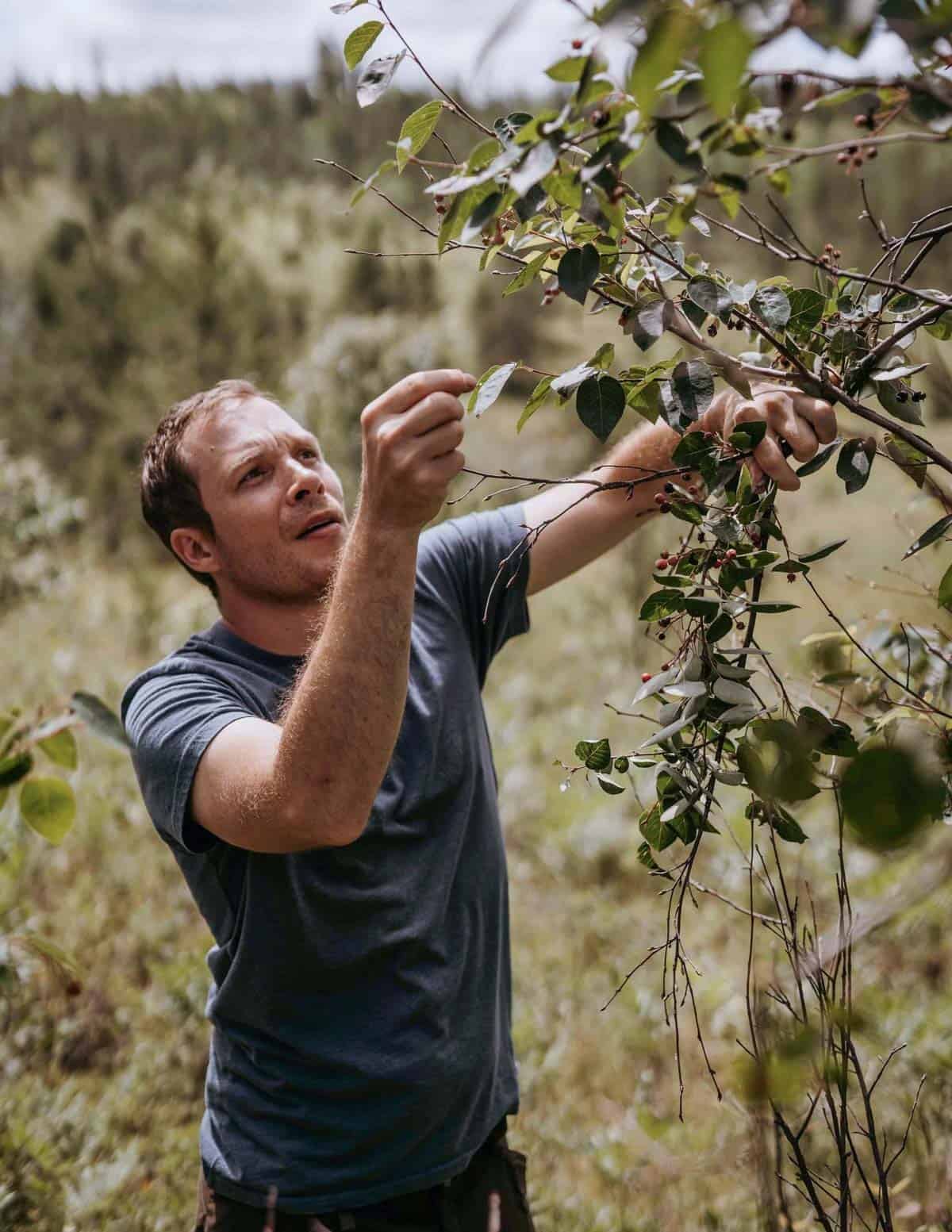
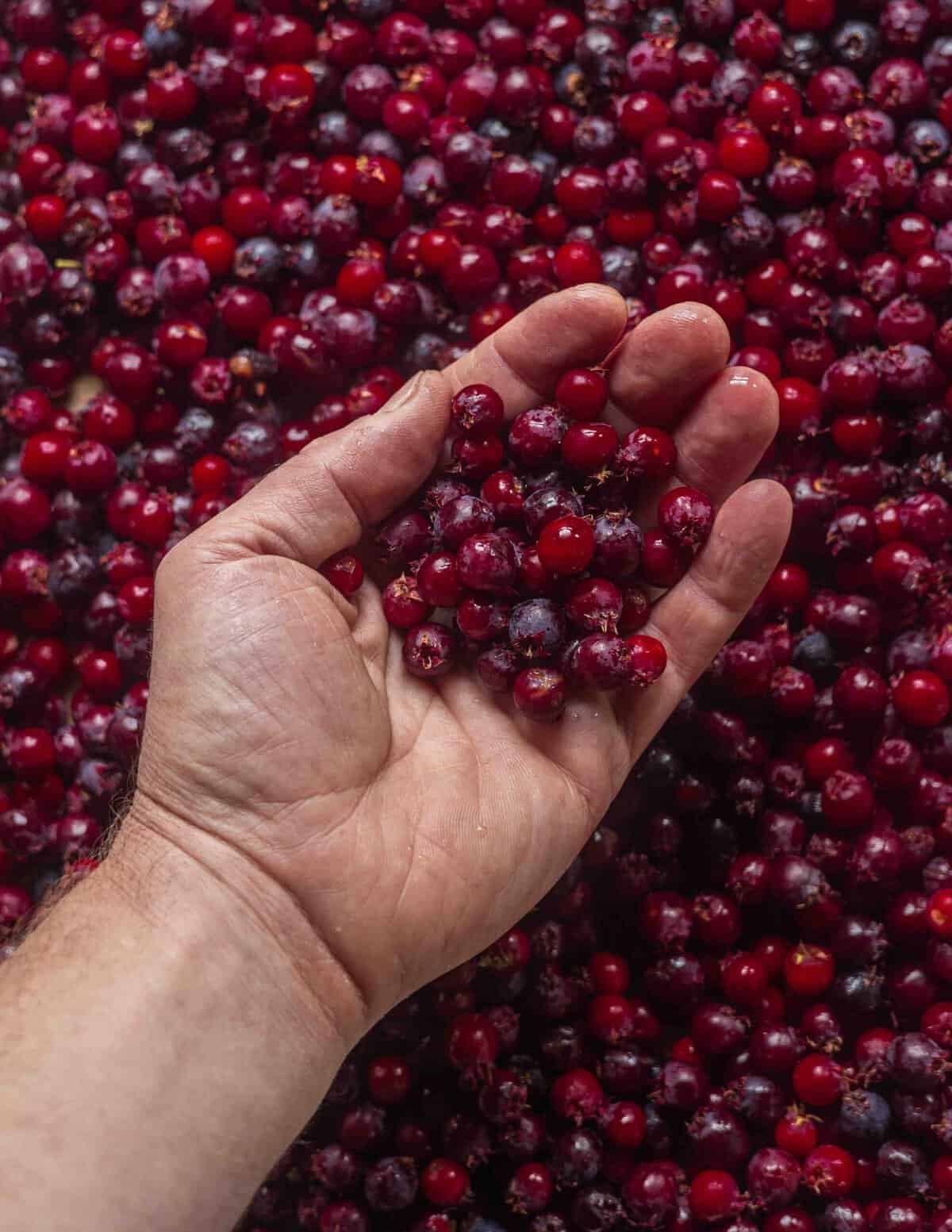
Old timers will say that the fruit should only be harvested when deep purple. Technically that's true, but as long as the fruit willingly releases from the raceme / stem, I'm fine with it.
A compounding factor here is that where I live, the fruit may be destroyed by pests and diseases before they're deep purple. Suffice to say I think it's ok to have some red berries in the mix with the purple ones, and a lack of sweetness is nothing some maple syrup can't fix.
Harvesting Tools
It's fine to eat a few berries out of hand for fun, but I usually want around five pounds if I'm going to harvest. In a perfect world, there's three tools I bring with that greatly increase the amount of berries you can harvest.
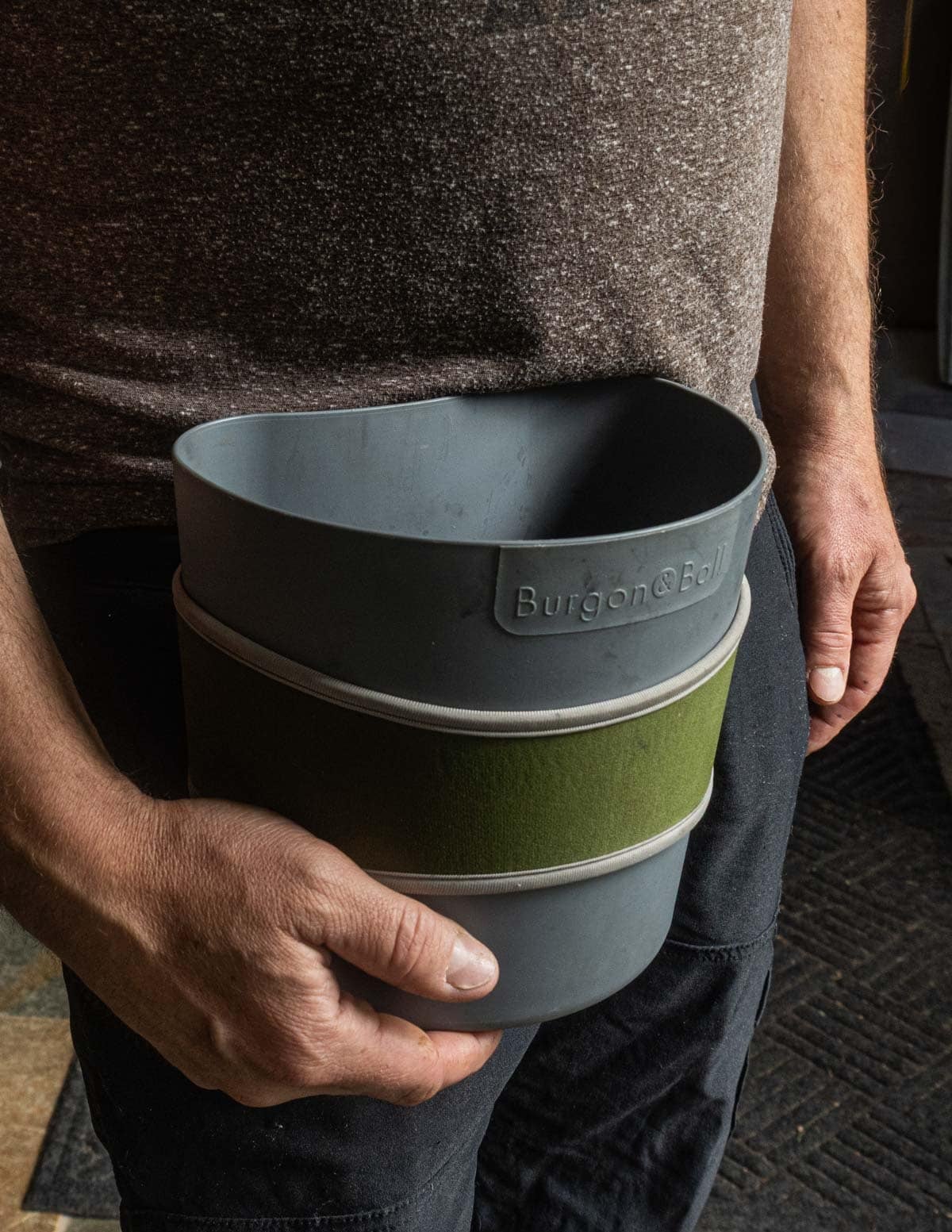
Blickey
A blickey is a harvesting container with a shoulder strap or to a belt so you can harvest with both hands. I've used a coffee mug stuck in my belt in a pinch. I like this model, but it seems hard to find now. Gertens carries it if you're in the Twin Cities.
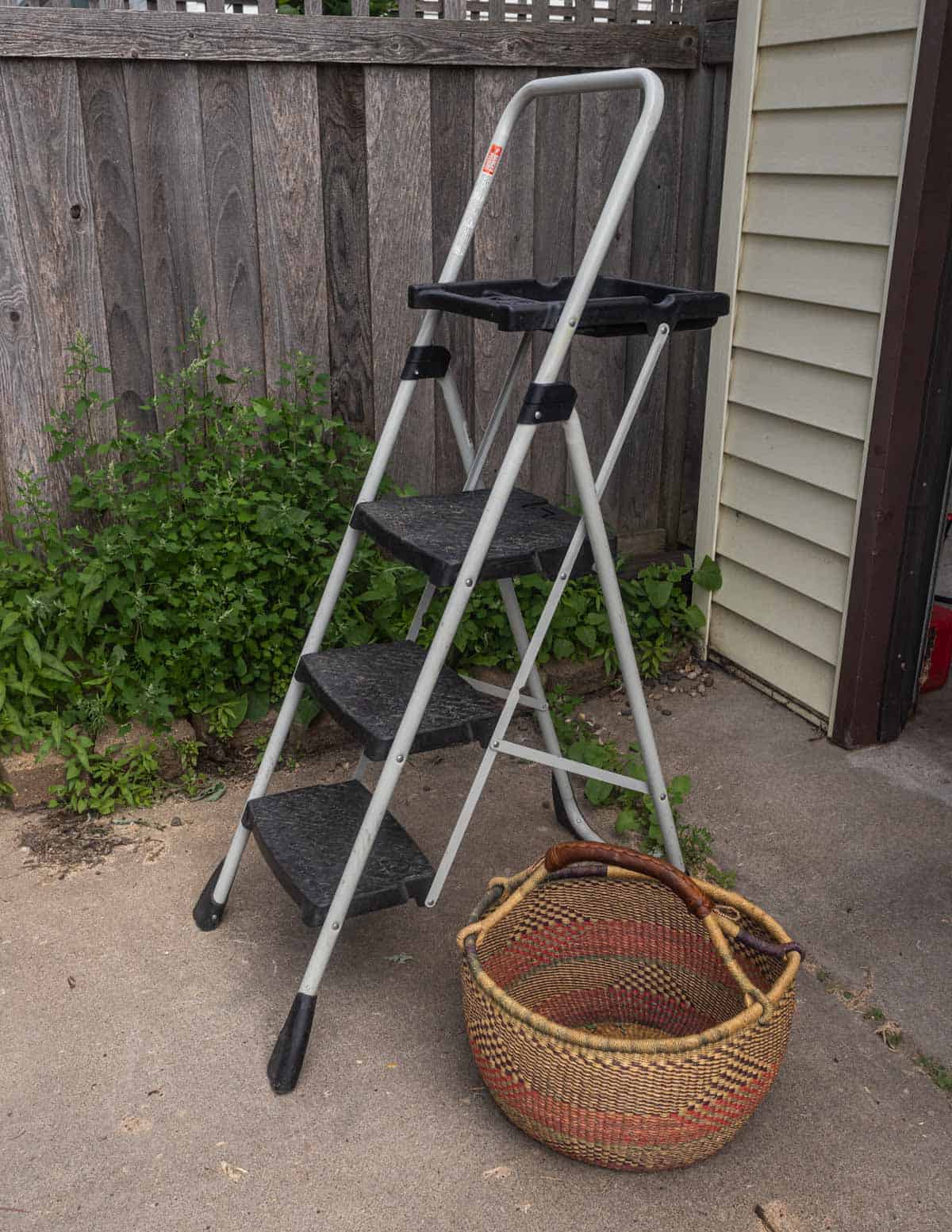
Step Ladder
I have a small step-ladder I keep around specifically for berry picking. A three-foot size fits nicely in the back of most sport utility vehicles. An extra foot or two of reach will increase your harvest dramatically.
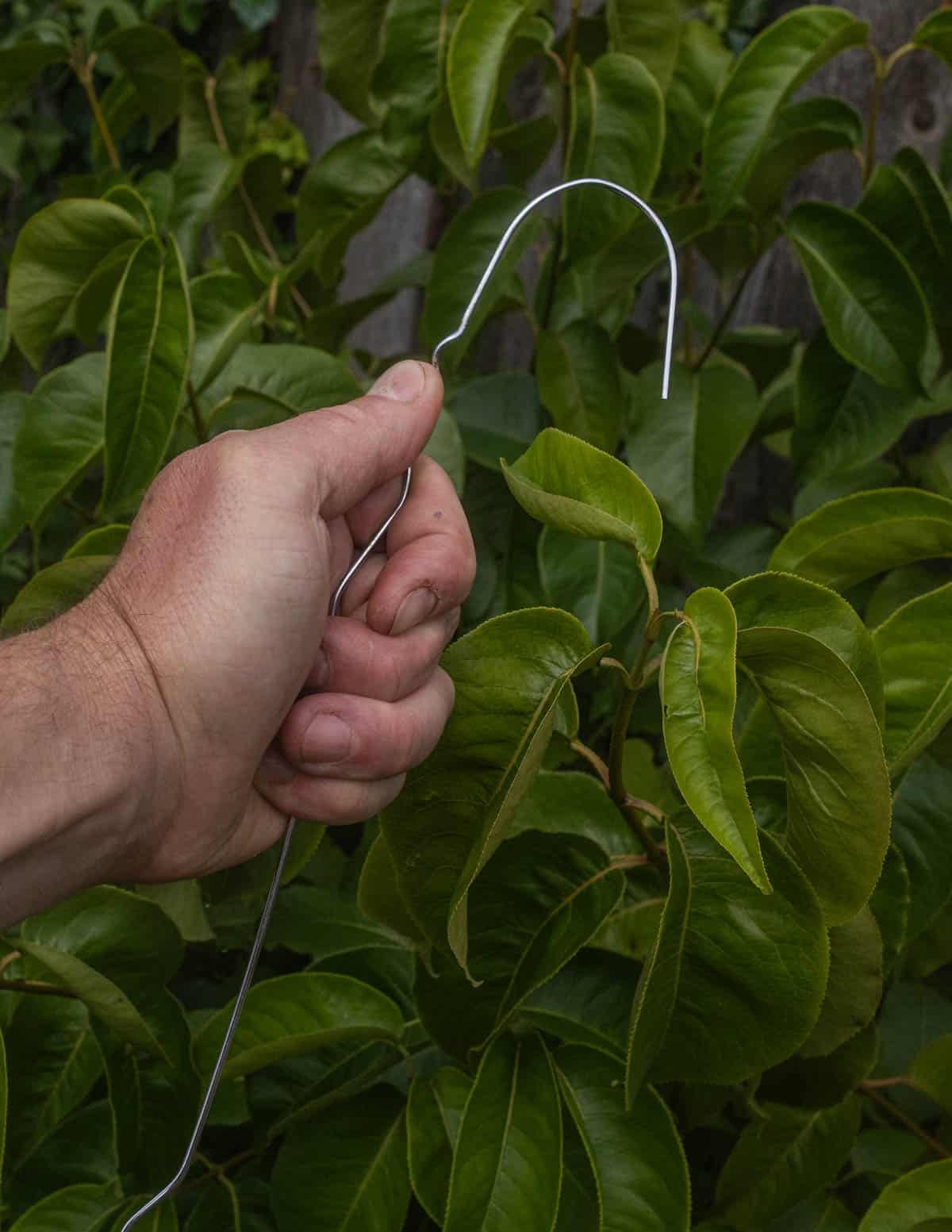
Fruit Hook
A game-changing tool, a fruit hook can be anything with a curved end you can use to gently bend down the higher branches. I have friends with fancy custom made ones, but I prefer an unraveled wire coat hanger as they're cheap and easy to transport. I'd wager a fruit hook doubles what I can harvest from a typical wild tree.
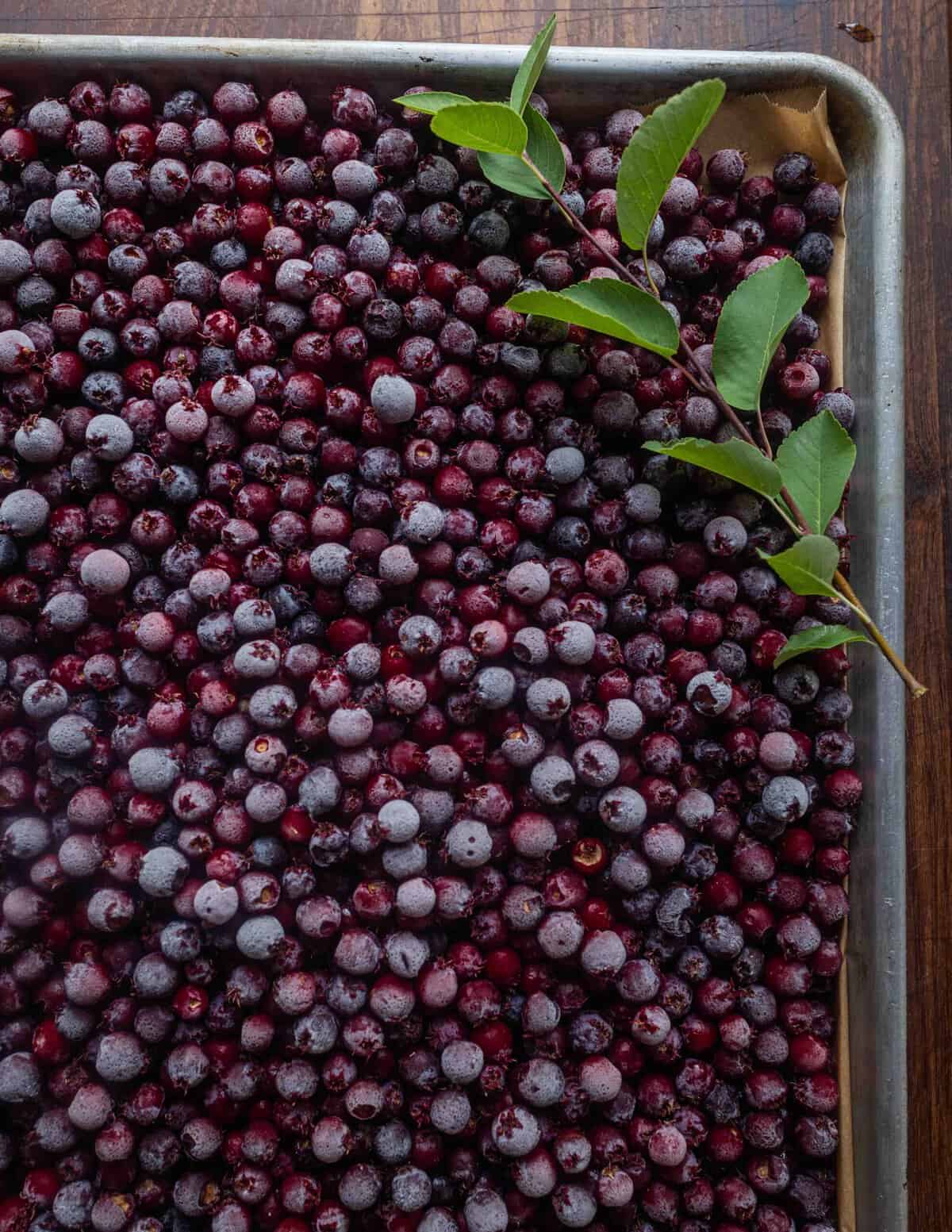
Similar to other wild berries, serviceberries have a short shelf life and should be used quickly. They'll last for a few days in the fridge, but I usually freeze the fruit straight-away so I don't lose any. Cook with the fruit straight from the freezer.
Serviceberry Pests and Diseases
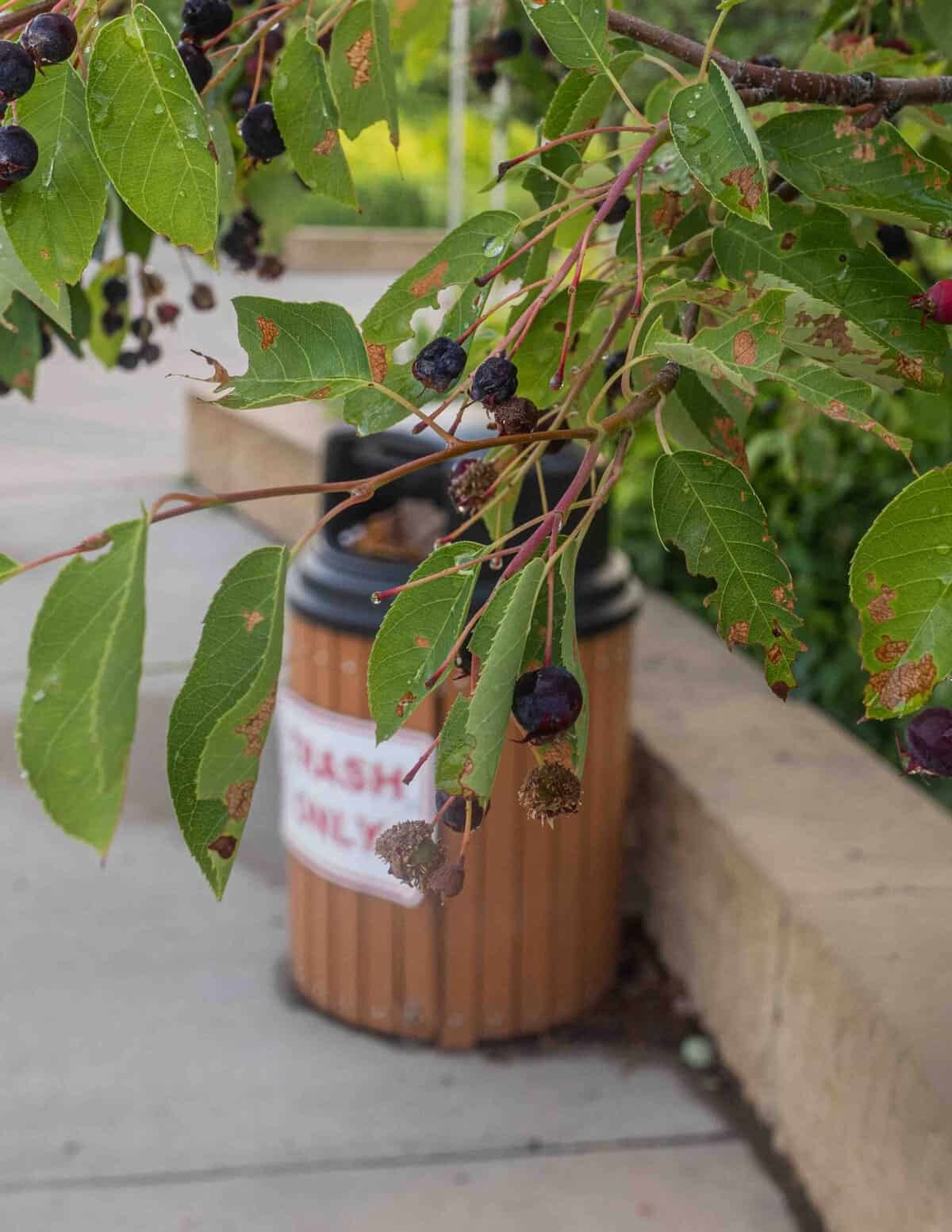
While they're one of the best fruit I know of, it's been years since I've said "that was a good serviceberry harvest". I photographed plants in numerous locations for this post over the course of the past few years, and every single plant I saw was affected by something.
Invasive Fruit Flies
Where I harvest in Minnesota and Wisconsin, the spotted wing drosophila has laid waste to most of our fruits: cherries, raspberries, mulberries, serviceberries, and more. If your berries appear to ripen unevenly and shrivel on the branch before becoming ripe, you may have SWD larvae.
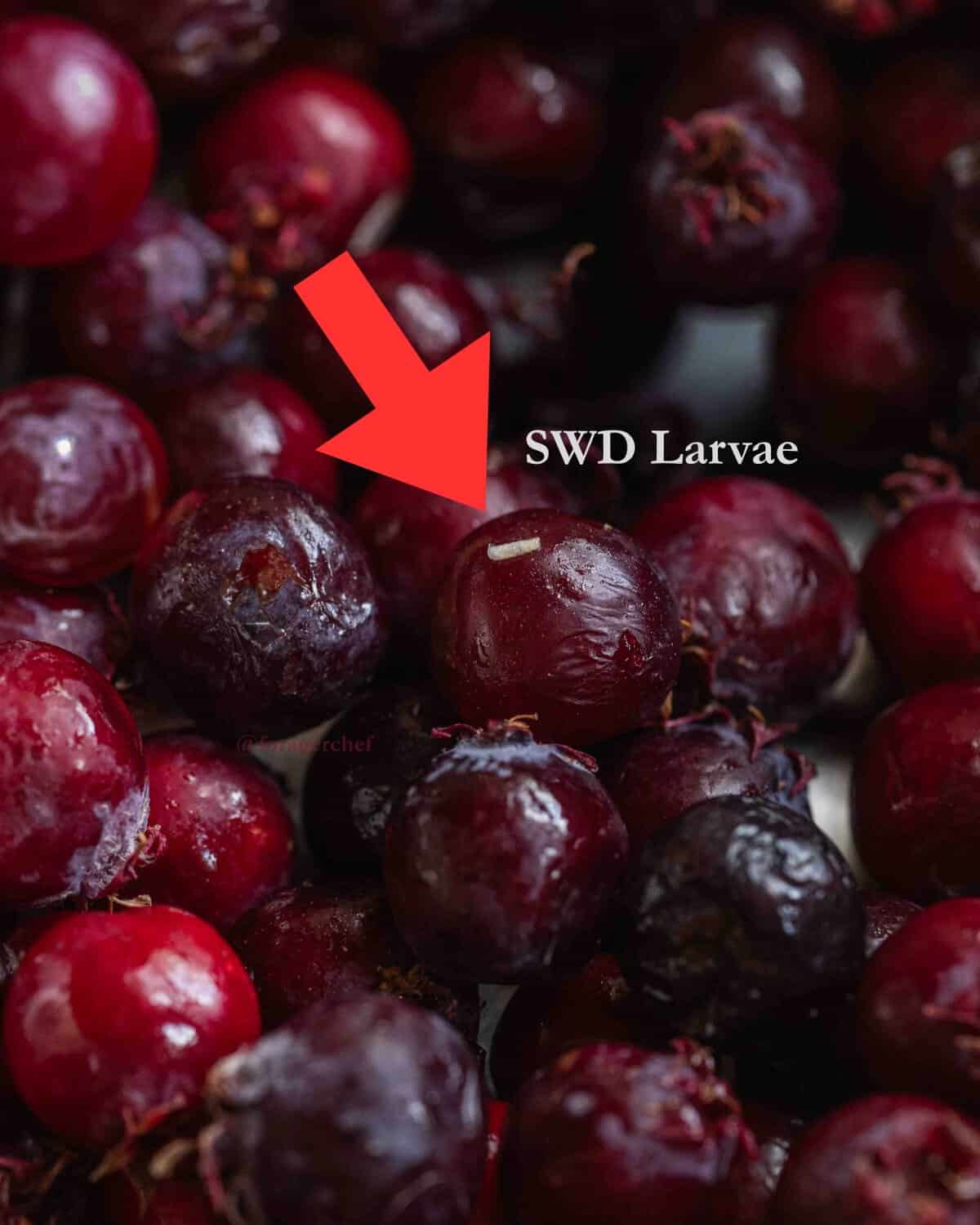
Crushing some of the soft berries or leaving them in the fridge in container with a closed lid will reveal wiggling fly larvae / small white worms that eat through the fruit. The larvae are small and harmless if consumed, but off-putting. The flies are more active when it's warm and wet, and I think of them as another reason to freeze the fruit promptly after harvesting.
Cedar-Serviceberry Rust
Even more widespread than SWD in my experience is cedar apple rust and related Gymnosporangium rust fungi. I'm paraphrasing here, but the jist is that juniper or cedars in close proximity to the plants release spores in the spring which infect the serviceberries.
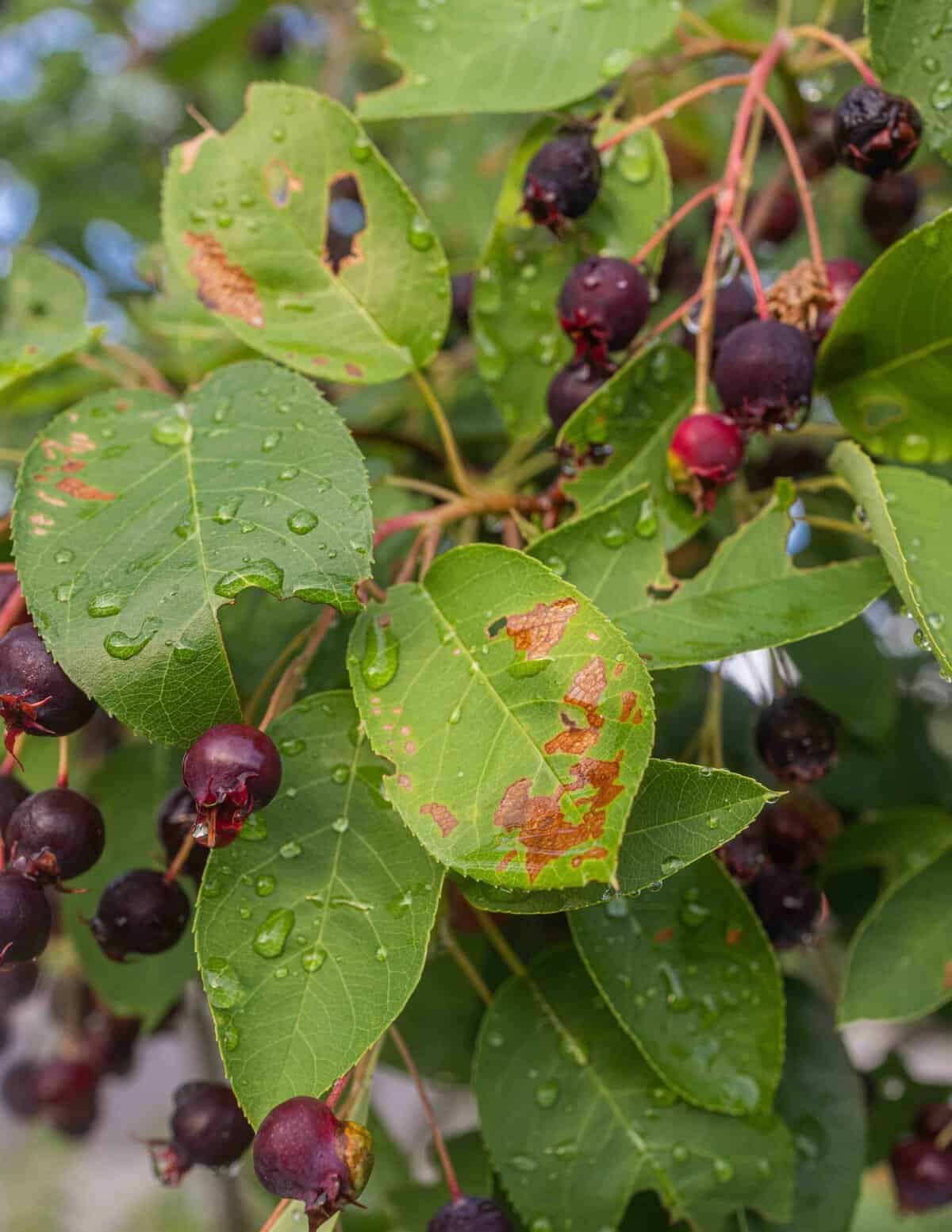
The plants will generally look sickly, with symptoms like:
- Young fruits and leaves developing orange or rust-colored spots.
- Berries become distorted, misshapen, or warty.
- Fruits can shrivel and drop before becoming ripe.
- With Gymnosporangium fungi, the blossom end can become distorted, looking a bit like a sea-anemone, as shown below.
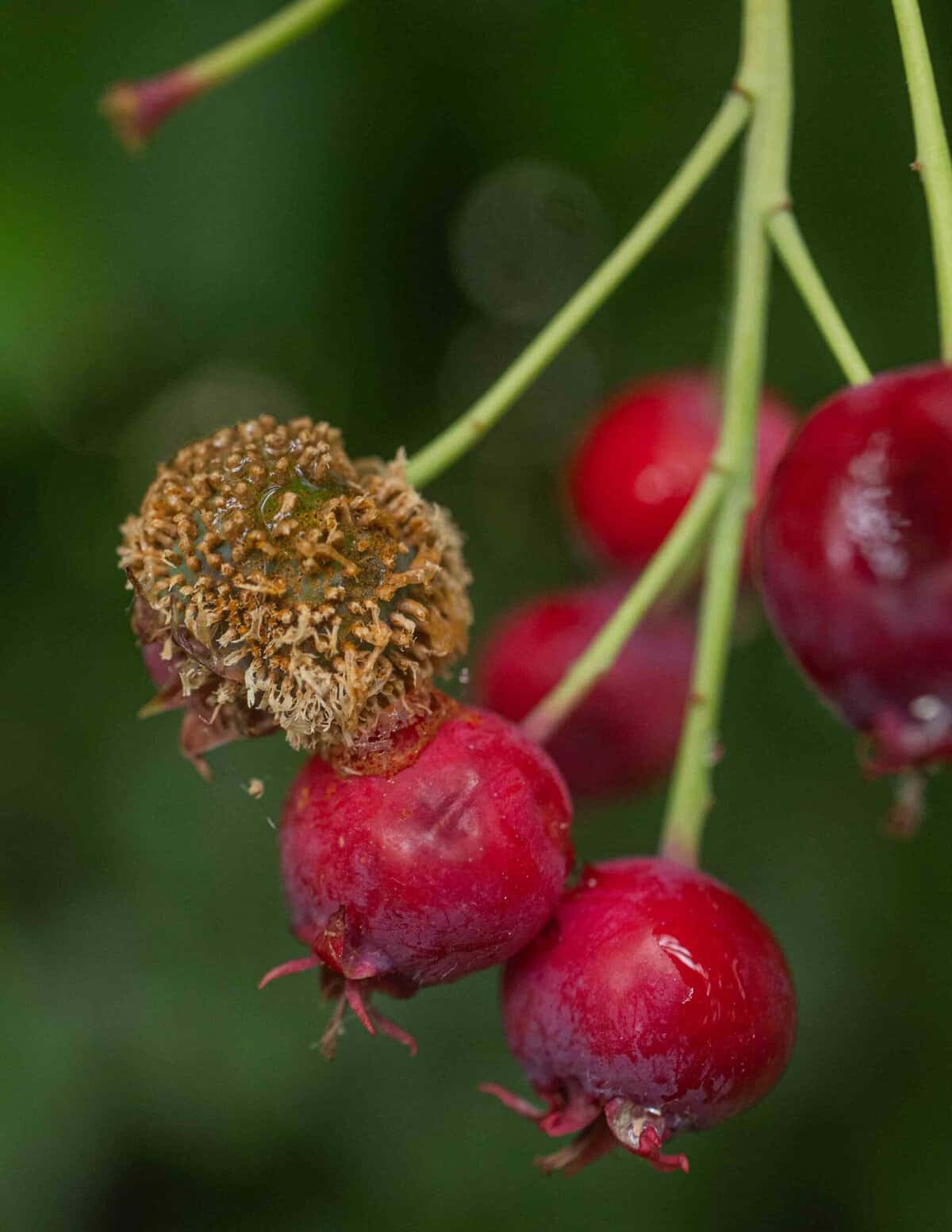
I've seen great serviceberry patches decimated by rust in Northern Wisconsin, and for the past five years I've barely bothered to look for them in the summer. For what it's worth, the Autumn Brilliance cultivar is said to be resistant to cedar rust. Generally speaking, cultivars of A. alnifolia seem much more resistant to pests and diseases than the eastern A. canadensis and are what I recommend planting.
General Cooking and Preserving
As you might expect, you can cook with the fruit the same way you would any other berries. Jams and preserves are great, as is simply tossing a handful on a bowl of ice cream, in a salad, or straight into your mouth, still warm from the summer sun. I freeze them raw in bags on on sheet trays to preserve their quality and halt any SWD larvae, then they can be used straight from the freezer.
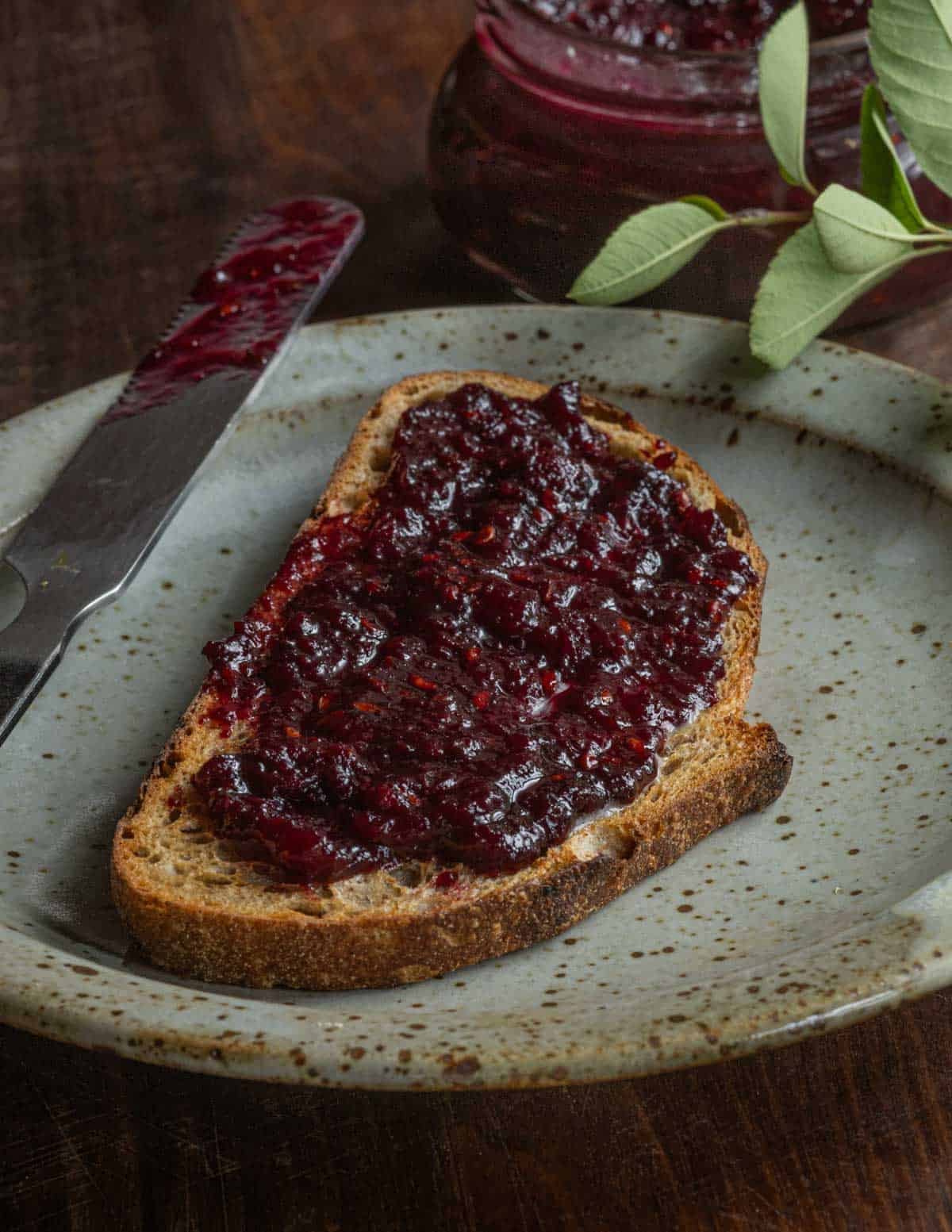
One attribute that's different from most other berries is the water content. Compared to say, a blueberry or a grape, serviceberries contain much less natural juice and can occasionally taste a bit dry.
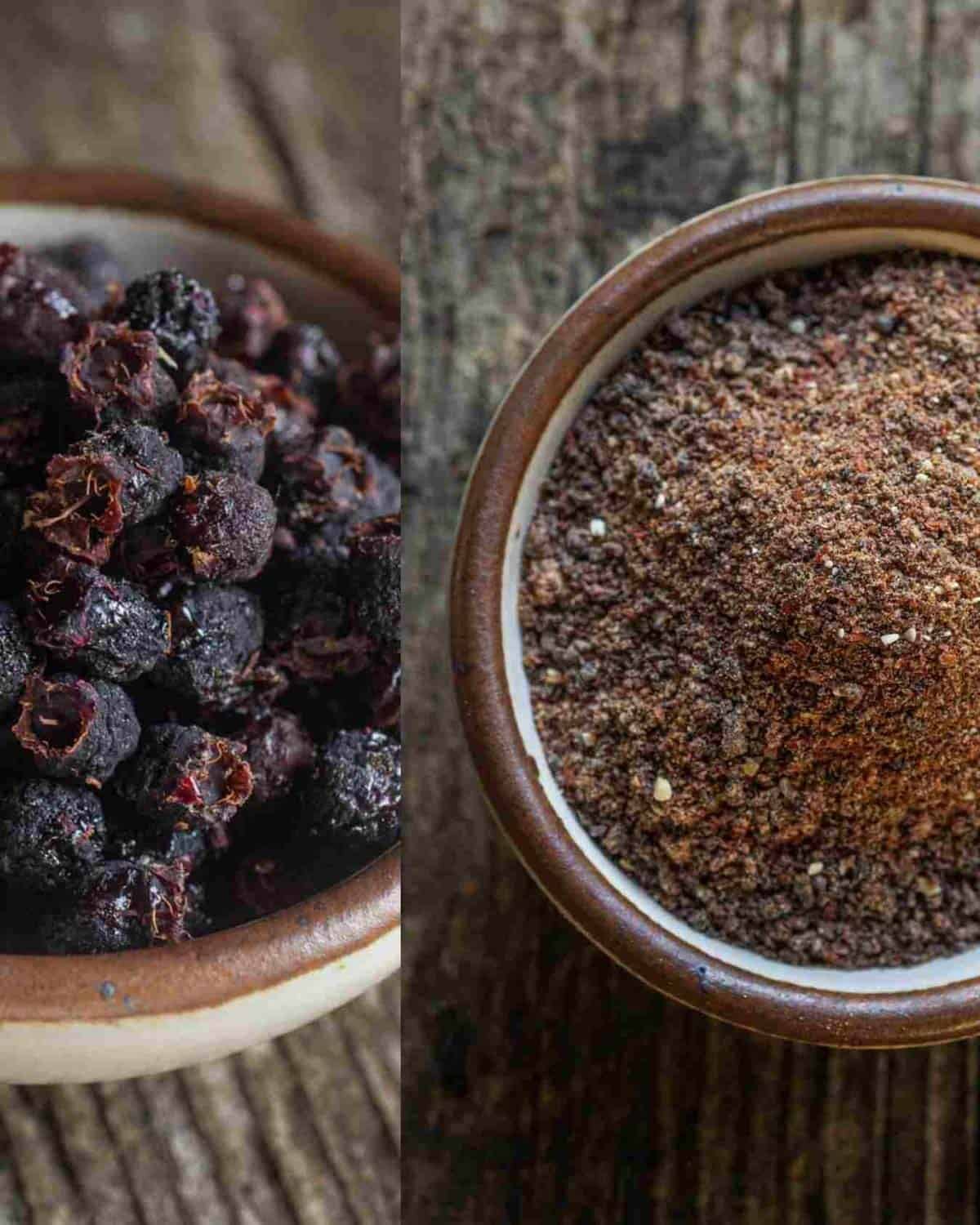
Not being the juiciest berry isn't necessarily a bad thing, and the low-moisture content undoubtedly contributed to the tradition of dehydrating the berries, which is a nice way to preserve them without sugar.
Juneberry Recipes
Preserves, muffins and juneberry pie are wonderful, but there's also indigenous that shouldn't be overlooked. Besides what I mention here and wojape sauce, there's also a red tea made from the young stems and leaves that I keep forgetting to try-let me know if you've made it.
Pemmican / Wasna
Serviceberries are a traditional fruit used in pemmican, which many people will associate with jerky. It's essentially smoked, dried, venison or bison meat ground to a powder and mixed with ground, dried fruit like cranberries, serviceberries, or chokecherries, bound with melted tallow.
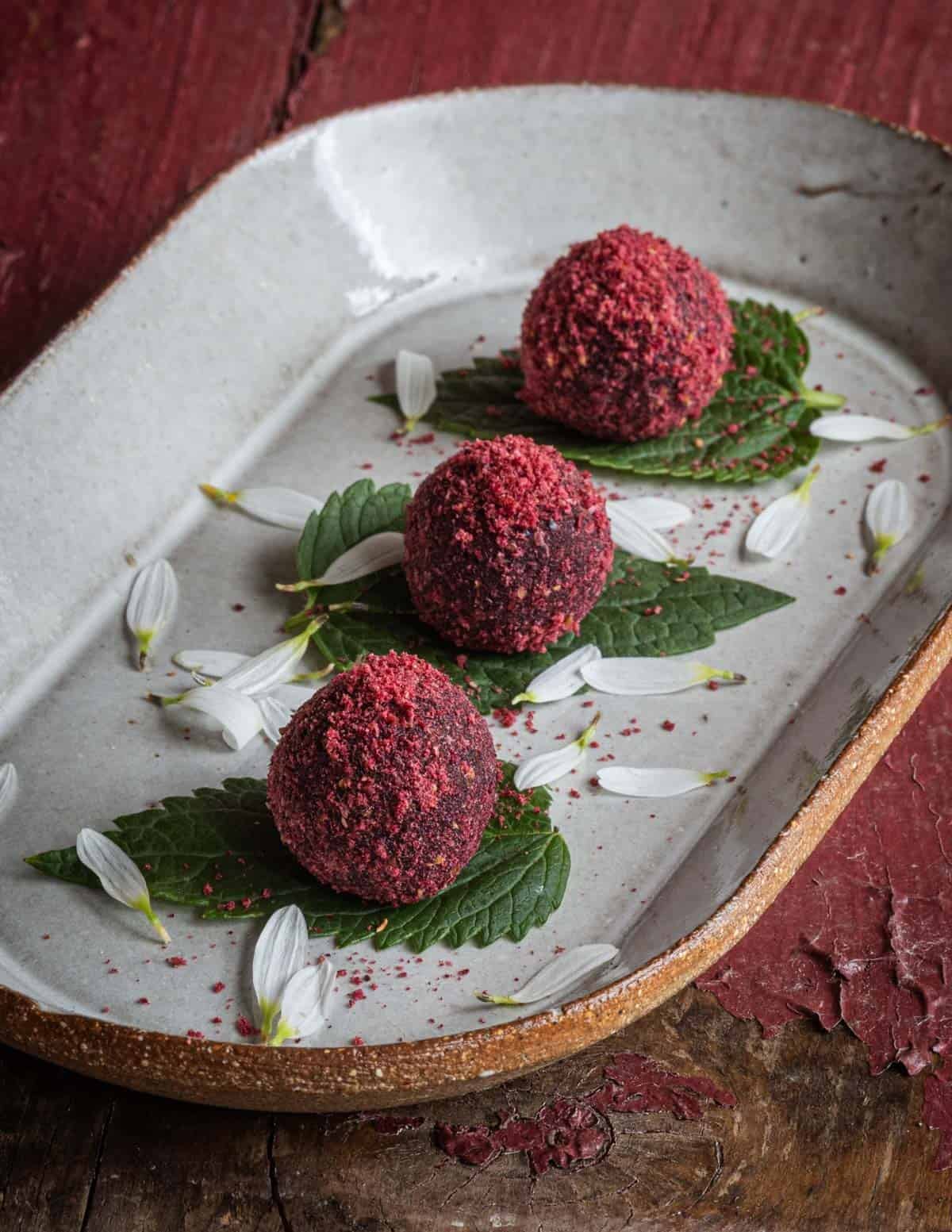
They can also be used in the Lakota cousin wasna, which I learned to make from my friend Linda Black Elk who heads Chef Sean Sherman's non-profit NATIFS. Pictured above is for a special menu I'm working on where the fruit and meat balls are served with an anise hyssop leaf, inspired by Sean's new book Turtle Island.
Leather
Serviceberry leather is a rustic preserve of the dried fruit that's essentially a fruit roll-up, just better. It's the first thing I ever tasted made with the fruit and I try to make a batch every time I get some.
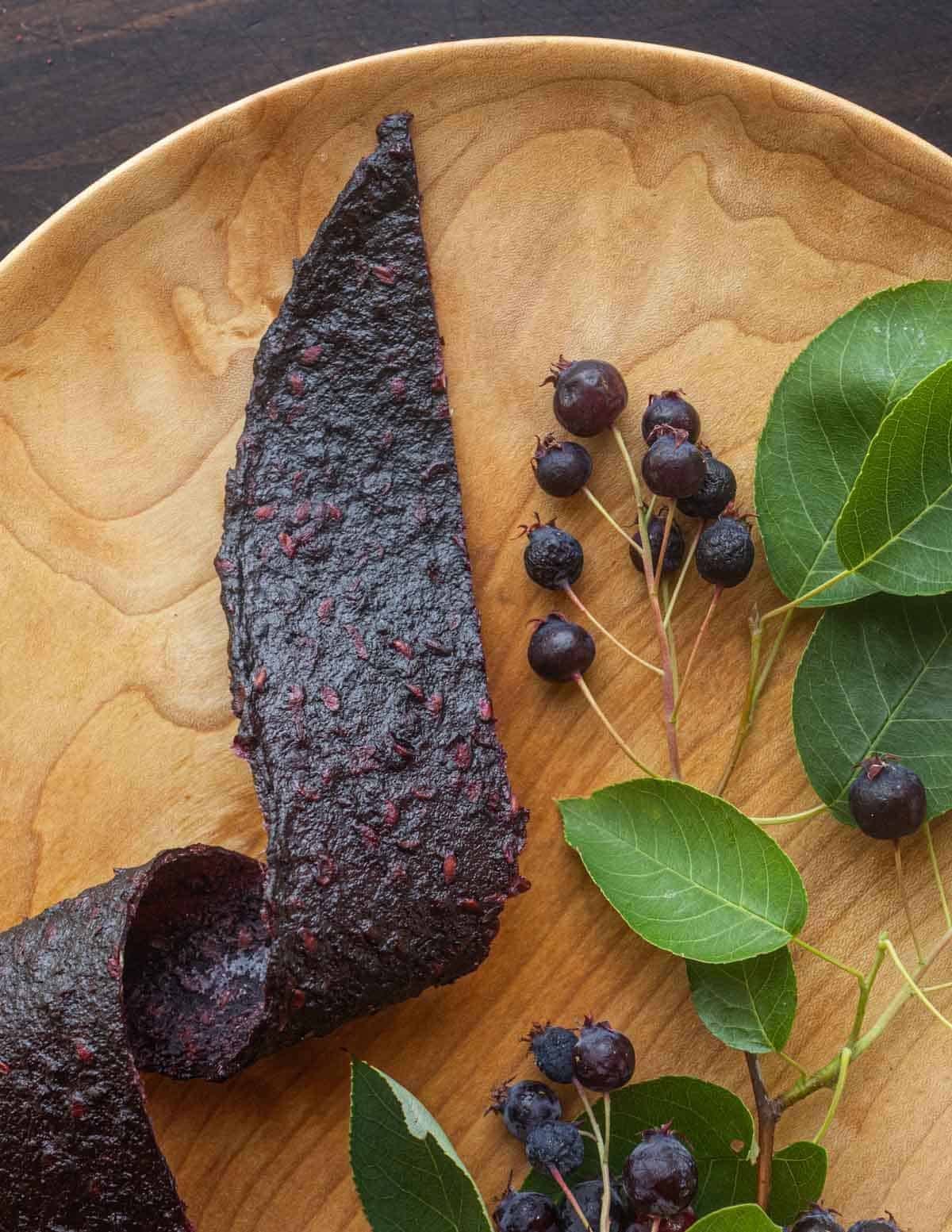
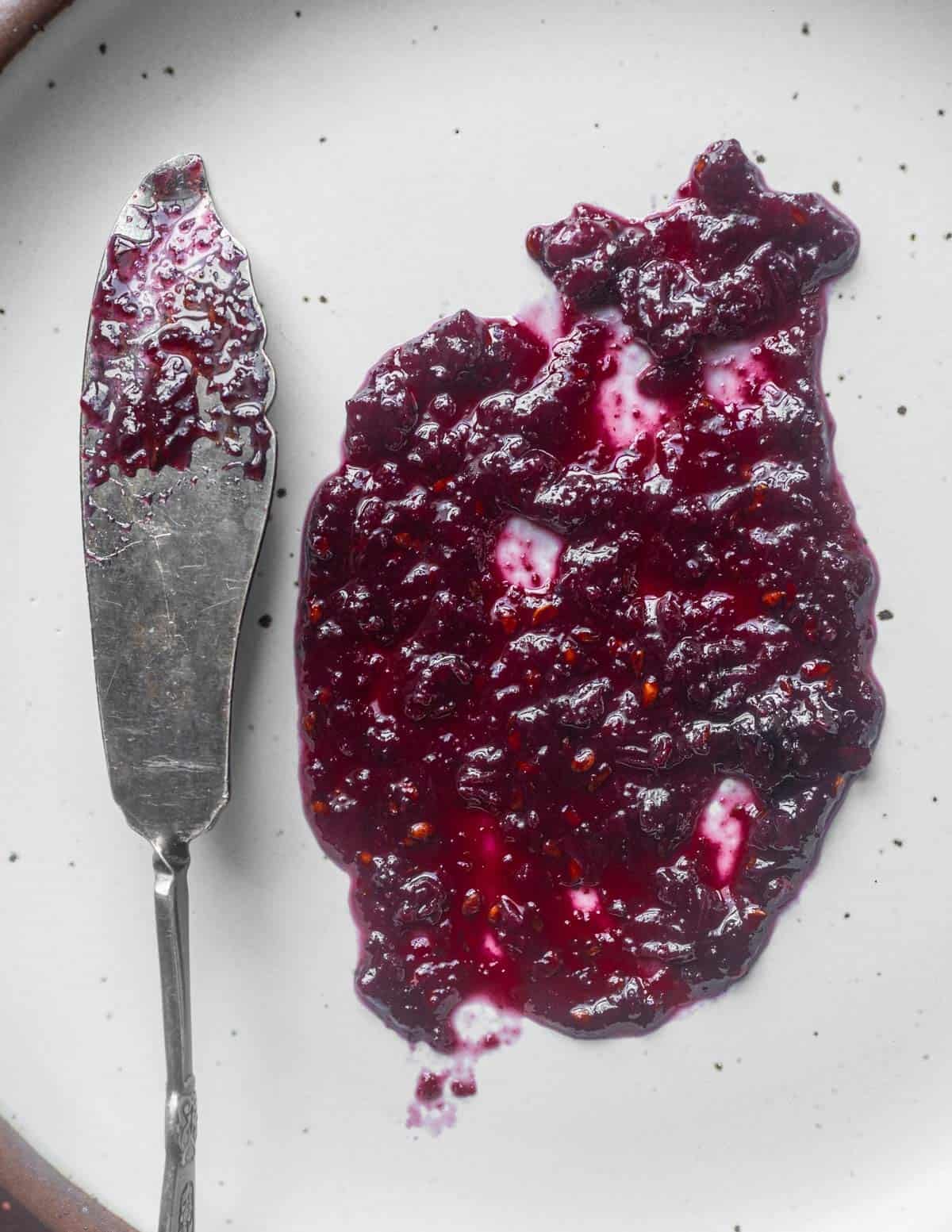
Cook the fruit with some maple syrup to taste, puree until smooth (the seeds will remain) spread on a silicon mat or parchment and dehydrate until pliable. I have a formal recipe for it here.
Simple Compote / Sauce
The first thing I made this year was a simple compote. Take a pound of berries, add ⅓ cup of maple syrup and a tablespoon of homemade vinegar. Cook until the fruit softens, then mash them with the back of a spoon and simmer until thickened, folding in a squeeze of fresh lemon juice and a knob of butter at the end. A scrape of orange zest can be nice too.
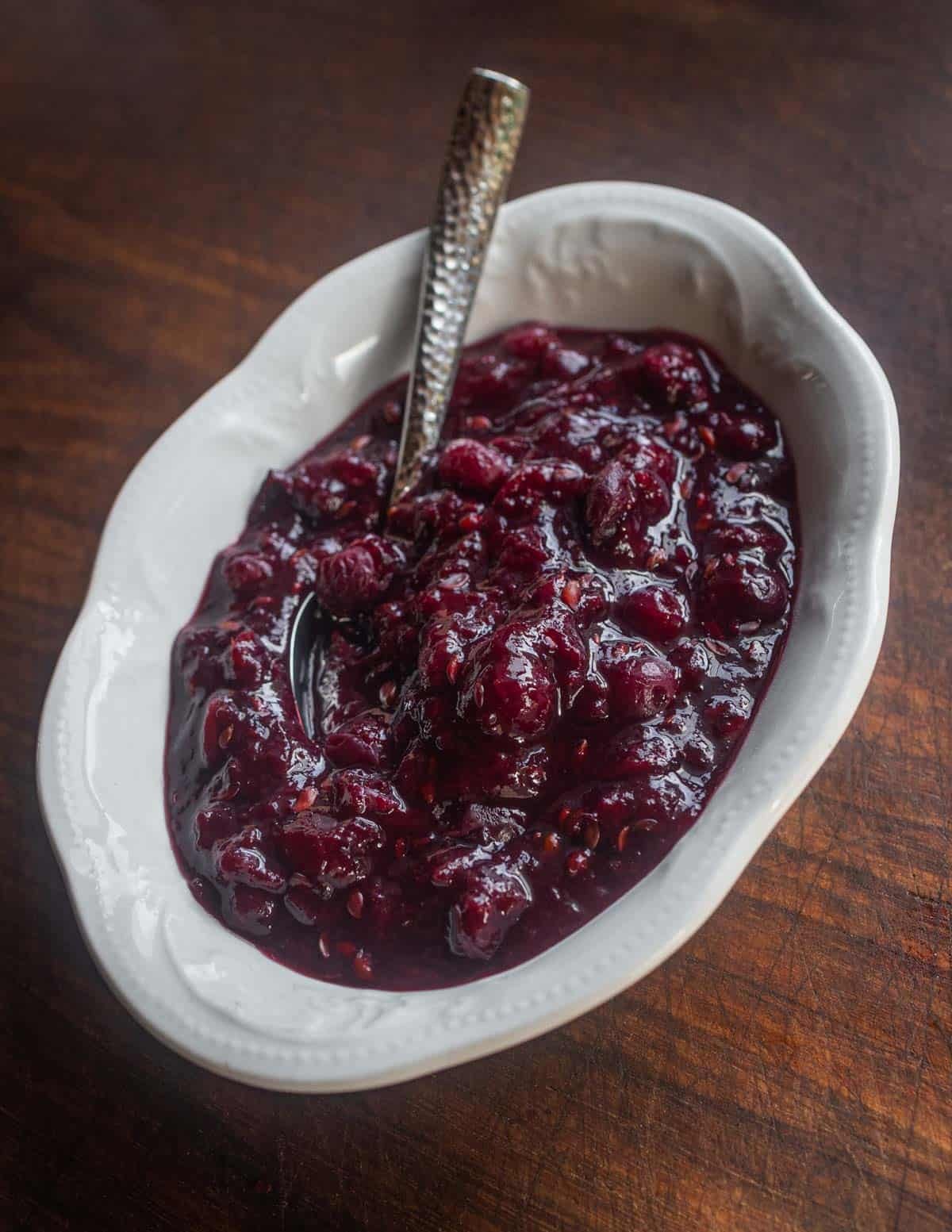
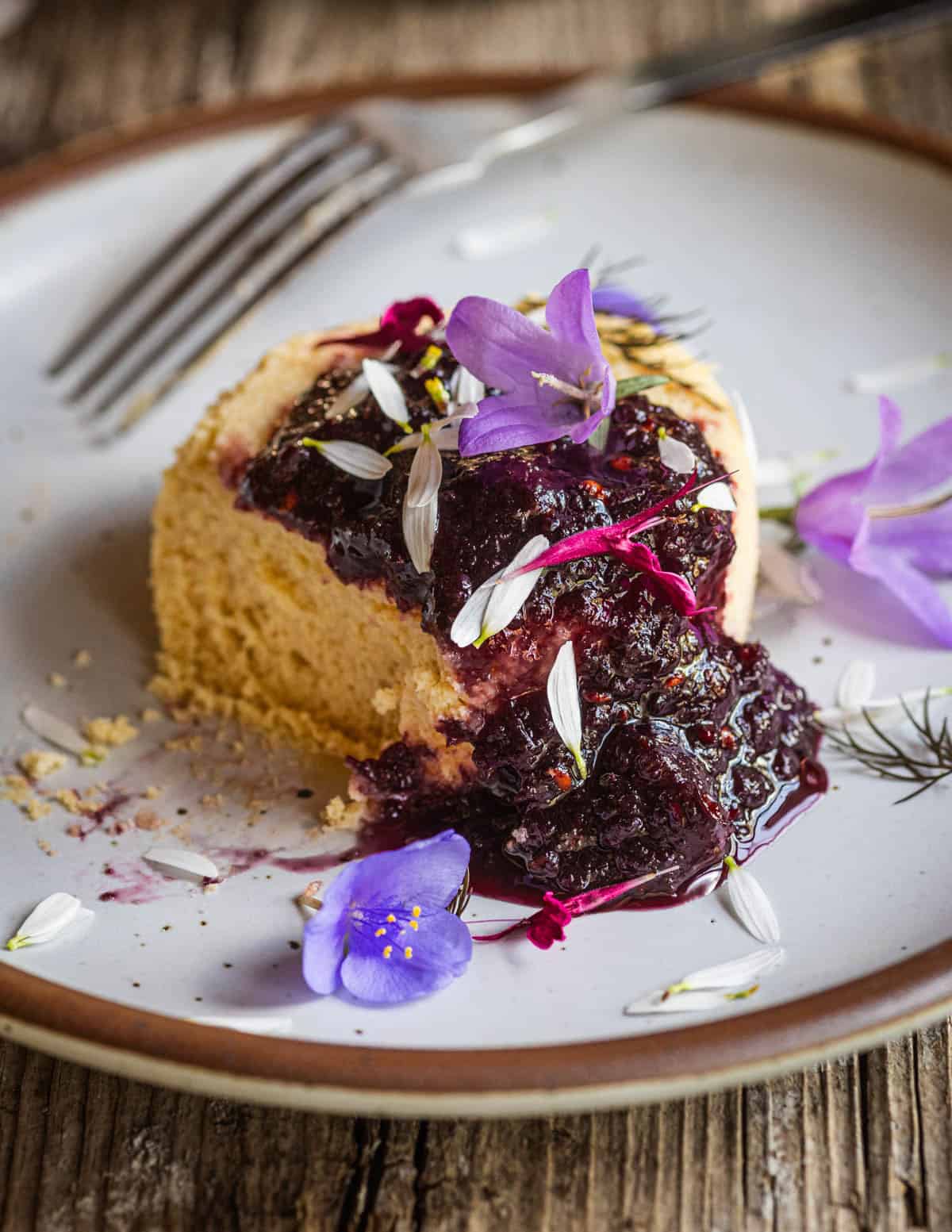
It can be enhanced with a splash of red wine or seedless raspberry puree if the fruit is lacking in flavor. The end result tastes remarkably like cherry compote with notes of almond. It's incredible on cheesecake.
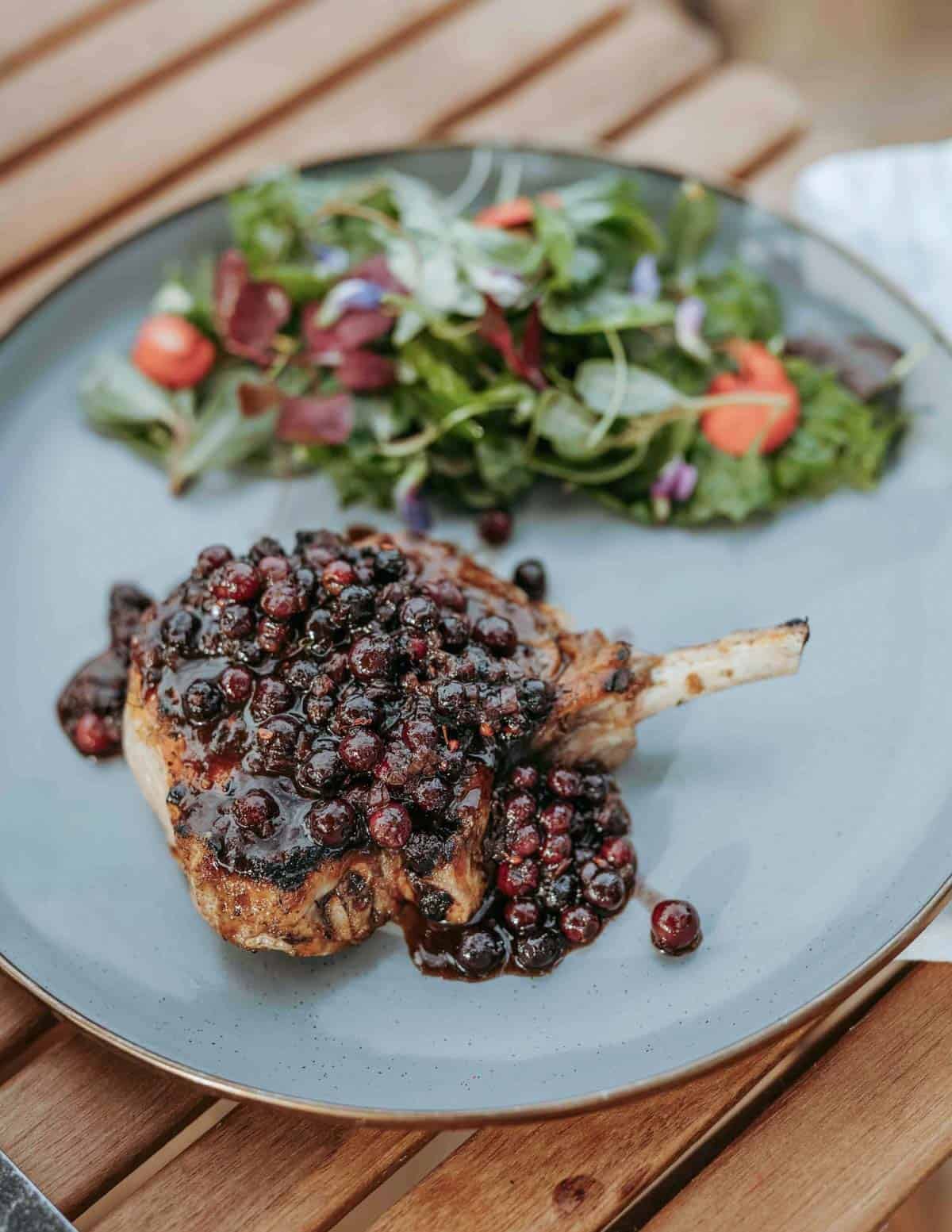
Serviceberries also work well as a savory sauce, and there's a version of the sauce on pork chops shown below in my next book Fauna. It's similar to the sweet sauce but with less maple, and includes shallots, vinegar and splash of red wine.
Liquors and Vinegar
I once gave a speech to a group of homebrewers in Canada who sent me bottles of homemade serviceberry liquor. It had a noticeable flavor of almond and remains one of the best cassis-type recipes I've had.
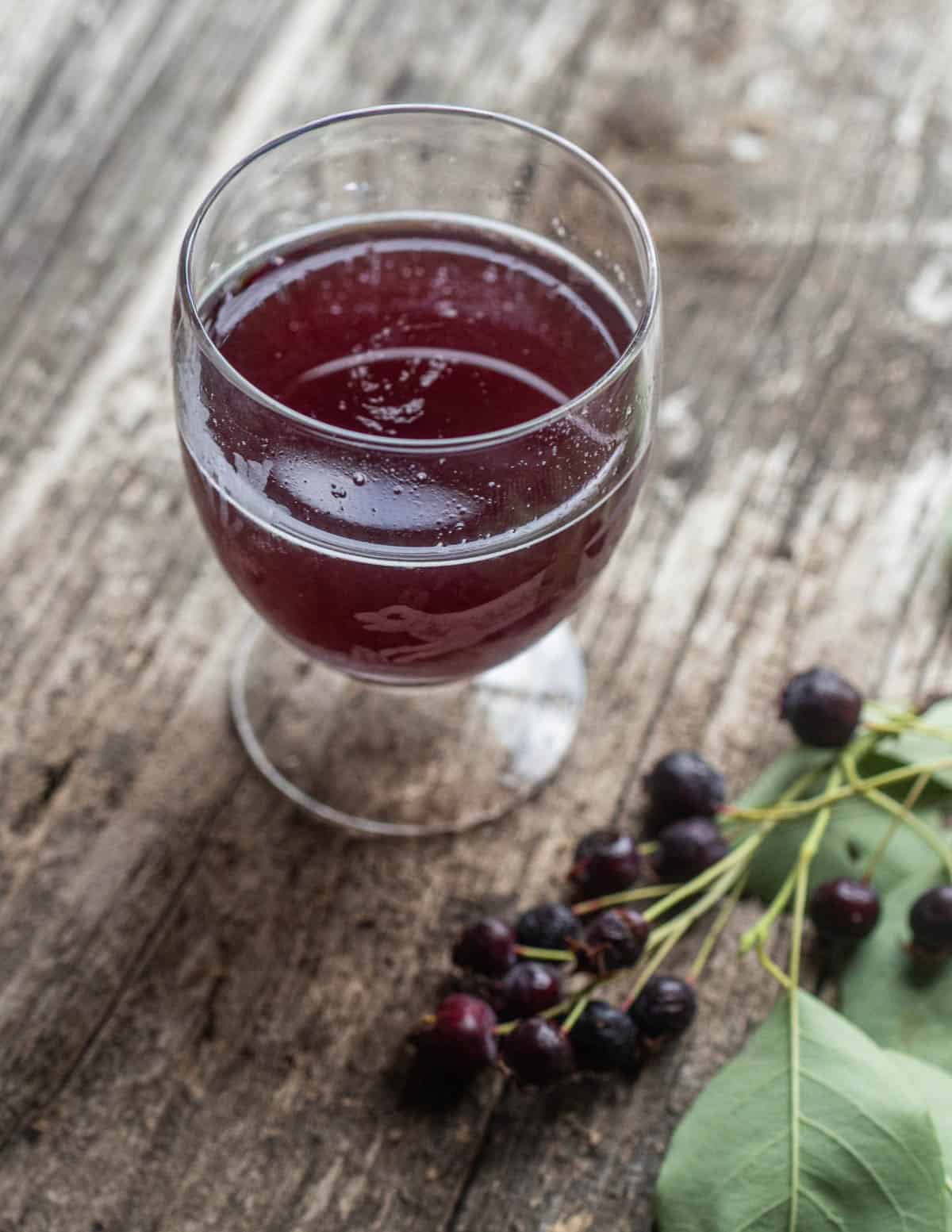
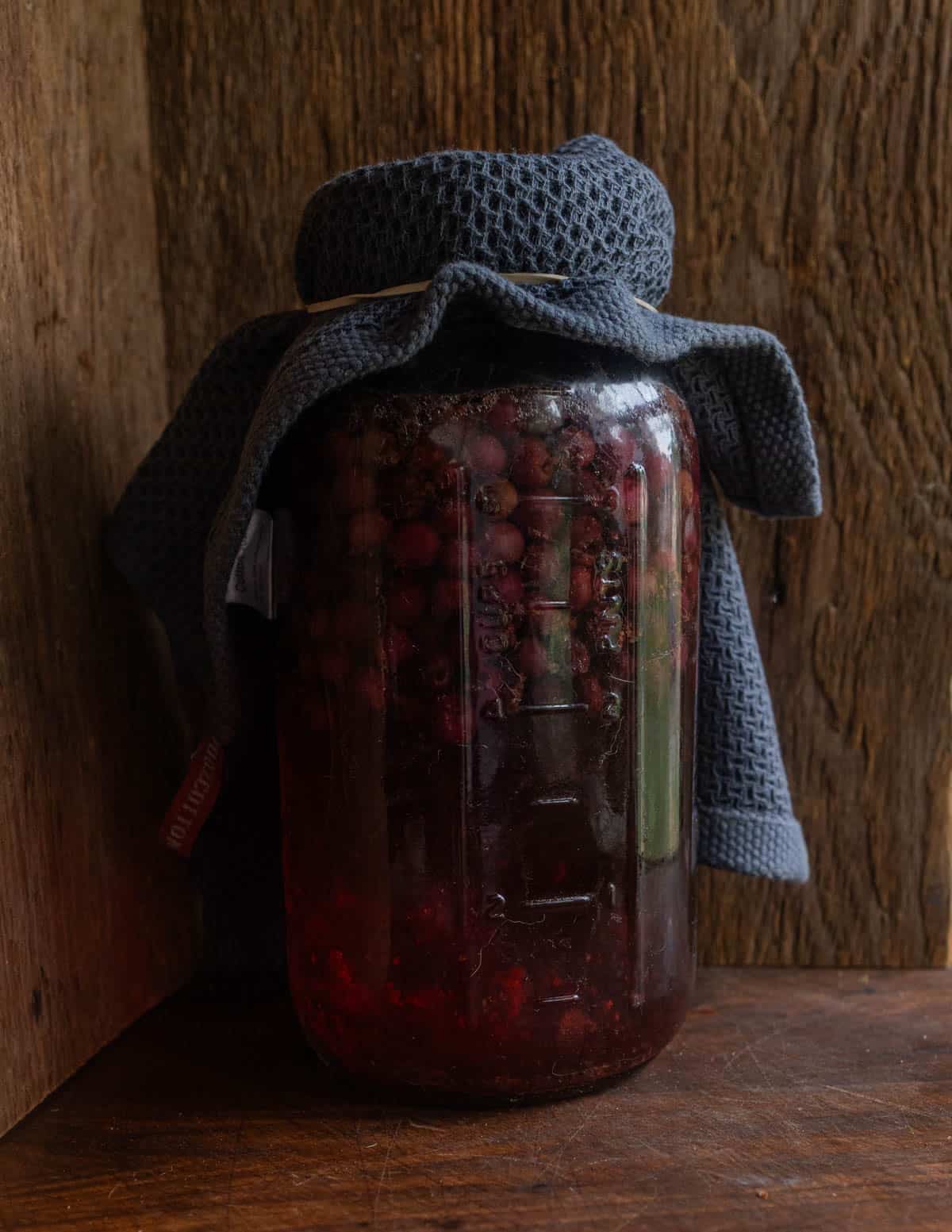
There's also commercial liquors made from the fruit, mostly in Canada. You can use my recipe for blackcurrant cassis to try your own. Following that, buggy berries make a terrific vinegar. With vinegar and liquors, I sometimes add a spoonful of frozen aronia berries to enhance the color.
Do you harvest serviceberries, have a tip or a story to add? Please leave a comment if you do.
Related Posts
Further Reading
Native American Uses of Amelanchier Fruit From American Indian Health and Diet Project.
Jacqui
A looong time ago I worked in Algonquin Park, Ontario, at the wildlife research station there. There is an old airfield that is full of service berry trees and we would watch them turn red and hope for a harvest. Without fail the Cedar Waxwings beat us to them, descending in flocks a couple of days before we decided they were ready to pick. I'm sure they deserved them more than we.
Dave
Serviceberries, chokecherries, pincherries, blueberries, elderberries, blackberries and cranberries all pair well with meats, and particularly venison and pork. Pork tenderloin becomes something special with all of them. One caveat! if you choose to buy store bought syrup as a shortcut to picking your own berries and then processing them into syrup be careful you do not get syrup made with High fructose corn syrup. That stuff is a crime against nature and renders the berries/fruits unusable for cooking. It may be edible as a syrup on pancakes, or on ice cream, but cooking it in a pan on on a grill will taste awful. You cannot caramelize it to make that delicious coating on the meat,
Lianne
My service berries are just ripening and I'm still picking haskap berries. Have you ever mixed the two? I'm wondering if the less sweet service berries can cut the tartness of the haskaps. I know leaving the haskaps to ripen longer gets them sweet, but I still keep getting some tart ones. But they have to be pretty soft to be sweet and I worry about that line of being ripe and quickly going into rotten.
Austin
My wife and I harvested June berries when we first started dating. I showed her what the tree and berries looked like on one of our hikes and the next week she surprised me with about 3 pounds she had harvested herself. We ended up making a pie out of them and had so much extra we spent the day delivering slices of pie to friends and coworkers.
We have made it a family tradition, now with our three kids in tow, to harvest some each year and make a pie. You're right about pest and disease hitting them hard. Since that first year we've never had anywhere close to 3 lbs. Our chokecherry harvest makes up for it, but it's always a lot of work tracking down enough near us to get enough for 1 pie. Our climate in The Black Hills makes them unripe until about August, and then it's a mad dash to beat the flocks of birds to them.
I love this little post Mr. Bergo, as I do all, but thanks for spreading some love for one of my families favorite traditional fruits. I would have it that the whole world could taste a slice of our juneberry pie, if only.
Alan Bergo
I love this. Thanks so much for sharing Austin.
Vanessa Bembridge
Love the tip on the trug! Have you ever tried a Swedish berry picker? They have them at ingebretson’s (and amazon).
https: //www.ingebretsens.com/small-berry-picker
Alan Bergo
Hi Vanessa, oh yes. I couldn’t live without my blueberry rake (same red model as they sell) I keep a few extras around for friends. Besides blueberries I really like them for herbs and tree fruit/berries too.
Beth
We have 3 serviceberries in our yard and didn't know what they were until I read about them in Robin's book. I love the way they change after the cold winter...the green leaves form, the multi colored bud to white flower and just as the berries form, the leaves turn orange. We know it is getting near time to pick as the robins start arriving. I thank the tree and join the celebration of picking with the birds and then squirrels. Everyone gets just enough to enjoy and usually I freeze them and make serviceberry crisp with Graeter's vanilla ice cream. I can't wait to try your leather recipe!
Alan Bergo
Thanks Beth. I thought it was a lovely little book, and a quick read!
Corla McGillivray
Am blessed to live in Saskatchewan and have enjoyed “Saskatoons” my whole life. I remember when I was young going picking in the ravines near our home and dad got a smack on the ankle by a porcupine. Always on the lookout for skunks and such as they rule the roost. We are lucky here in Saskatoon that This Berry is very common planting in our park plantings so every year we get a few for our freezer!
Last week our fridge was on the fritz, had to pull two bags out of the freezer and stew them up for a pie… i added a few raisins and lemon to the mix and thickened with corn starch… was excellent. I don’t normally like a raisin pie so this was a nice compromise ha ha.
Alan Bergo
Thanks for sharing Corla.
Heather
I teach in an inner city school, and this year I noticed there are 7 serviceberry trees in the school parking lot. In June, during my lunch break, I went out to the parking lot with my container and picked berries. Not only did I get several gallons of berries, but I enjoyed a nice break outdoors with the birds in the middle of the day. I made jam from the berries which I shared with my colleagues. I called it Parking Lot Jam.
Alan Bergo
I support parking lot jam 🙂
Jenny Koczur
They re-did a parking ramp last year next door to the building I work in, and they planted 5 juneberry trees in the landscaping! And there are even more that I know of and harvest from a short walk away. I’m so lucky! Definitely one of my very favorite fruits. Thank you for all the good ideas of things to do with them!
Paula
Growing up in rural East Tennessee I always heard of a “sarvissberry” bush. I couldn’t identify one if I tried but I’m assuming that they were referring to serviceberry. Any idea if they grow wild in TN?
Alan Bergo
Yes! The range extends from Alaska down to Georgia (if we combine both east and west species). Sarviss is one of the specific common names, and one of the older names at that.
Alan Bergo
Yeah once you start looking for them in landscaping you can do really well. I was scrambling trying to get images of a trunk this week and used Inaturalist, boom-twelve trees less than 5 min away. Now I just need to get them before the rust and worms 🙁
David Harness
I’m blessed to live where the Canadian prairies meld into aspen parkland. Lots of wild saskatoon berries here, and several U-pick farms. Most people I know love “saskatoons” — we eat them raw, in jams and sauces… and saskatoon pie with vanilla ice cream can’t be beat! Cook down the berries first into a thick pie filling.
Another thing I tried a couple years ago was wild goose breast with a saskatoon-orange compote. It was a great combination! I pan-seared the breasts in homemade lard.
Alan Bergo
Thanks for sharing David.
Jane Nesmith
Our serviceberry crop (we have 3 trees) was skimpy this year, and robins got most of the berries as they ripened! So your post made me nostalgic for the years we had more berries and fewer robins!
Alan Bergo
Thanks Jane, similar for me. I was thinking it'd be another year of not being able to finish this article but a friend on Facebook invited me over to a loaded tree. The larvae and rust were well established, but there was enough I could pick through them.