Dark, sweet, and tart, with a flavor like the soul of a grape. A simple wild grape jelly recipe is the perfect thing to make with wild grape juice if you're new to foraging, or if you just have a grape vine on your property. It's easy to make, but there's a couple thing to know and a few decisions to consider before giving it a shot. Read on and I'll explain.
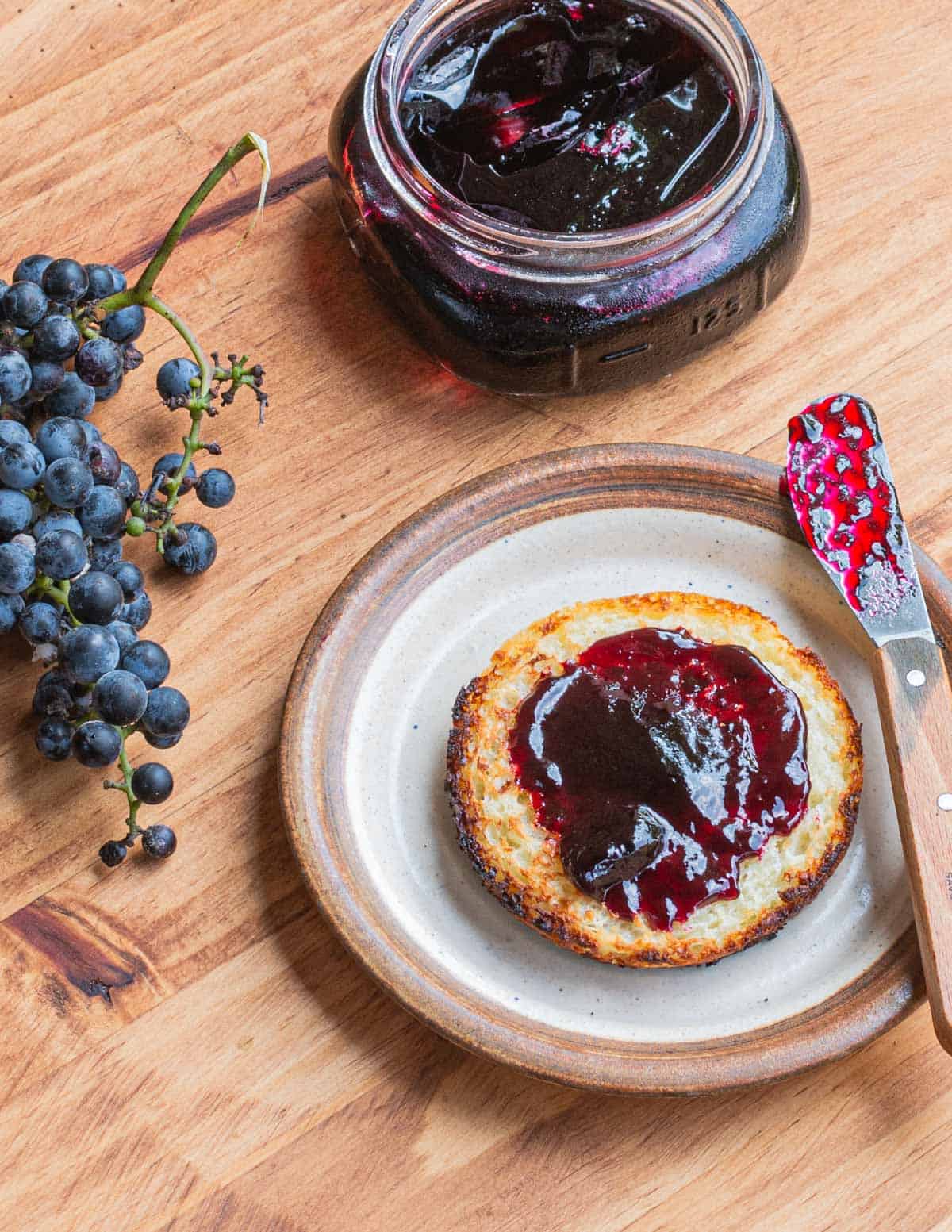
How to Make Jelly from Wild Grapes
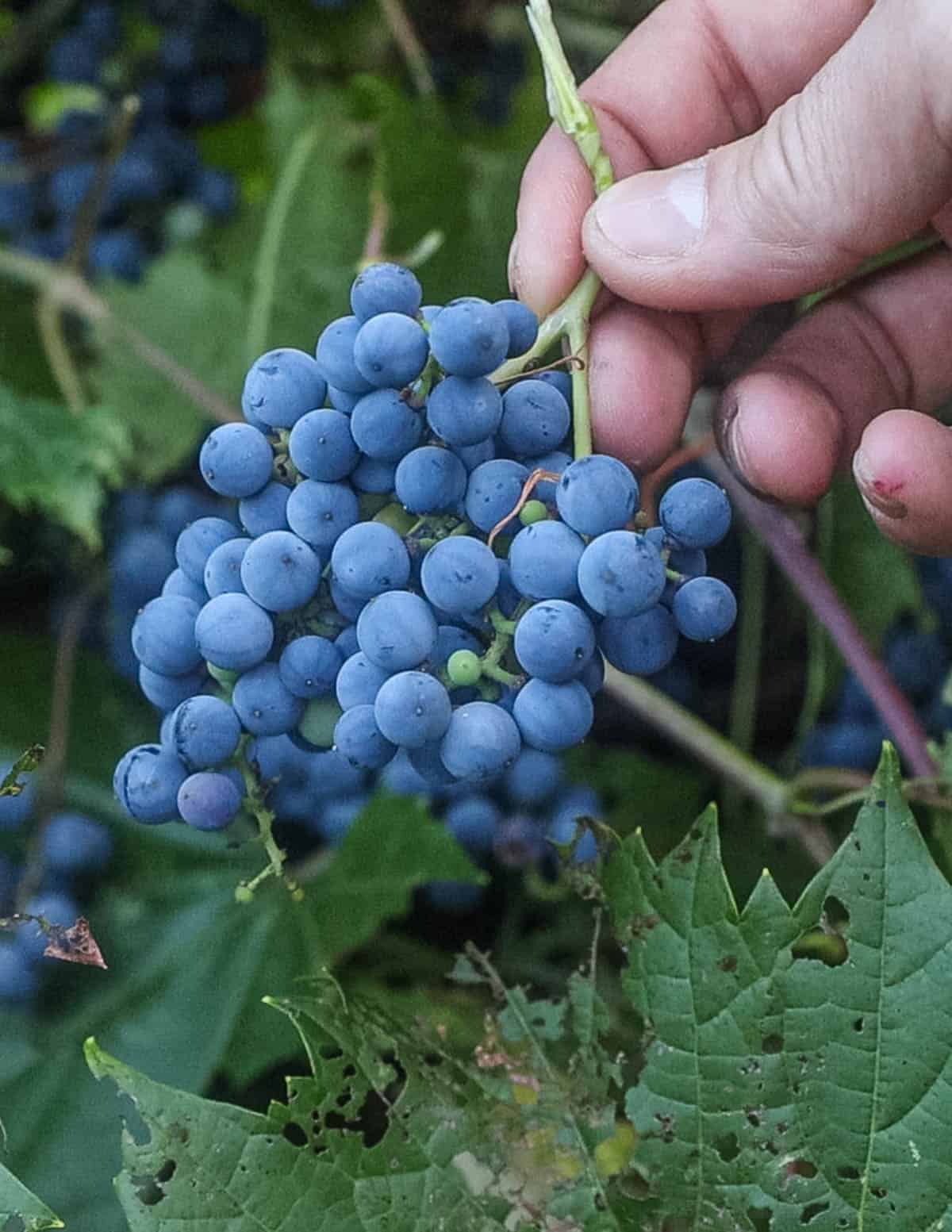
The first thing to do is harvest grapes when they're ripe, typically around Sept for me in Minnesota. I'm harvesting Vitis riparia, or wild river grapes, but you can use this recipe with any wild grape juice. Summer grapes (Vitis aestivalis), Fox Grapes and Oregon Grapes are other wild varieties that could also be used.
Harvest and Juice the Grapes
Make the Jelly
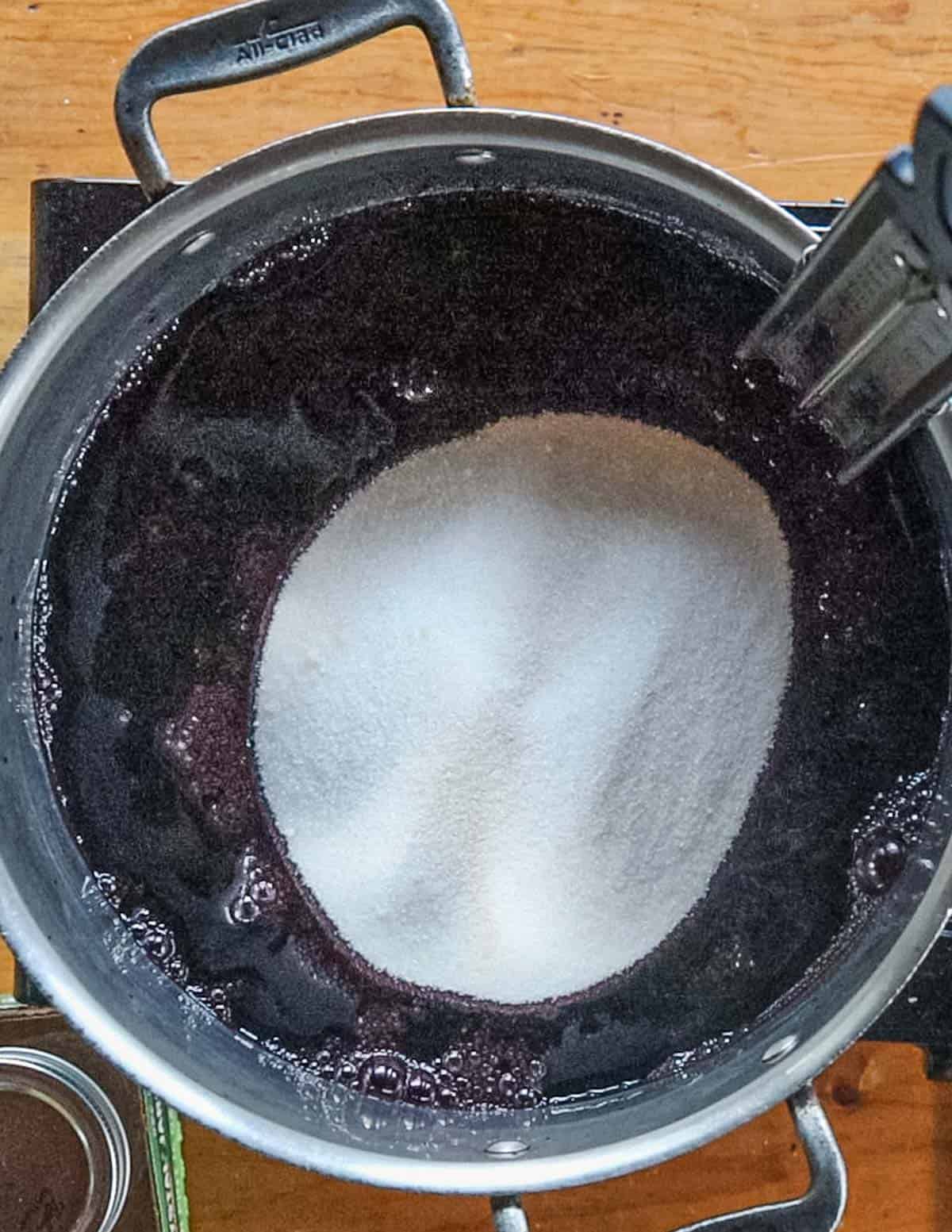
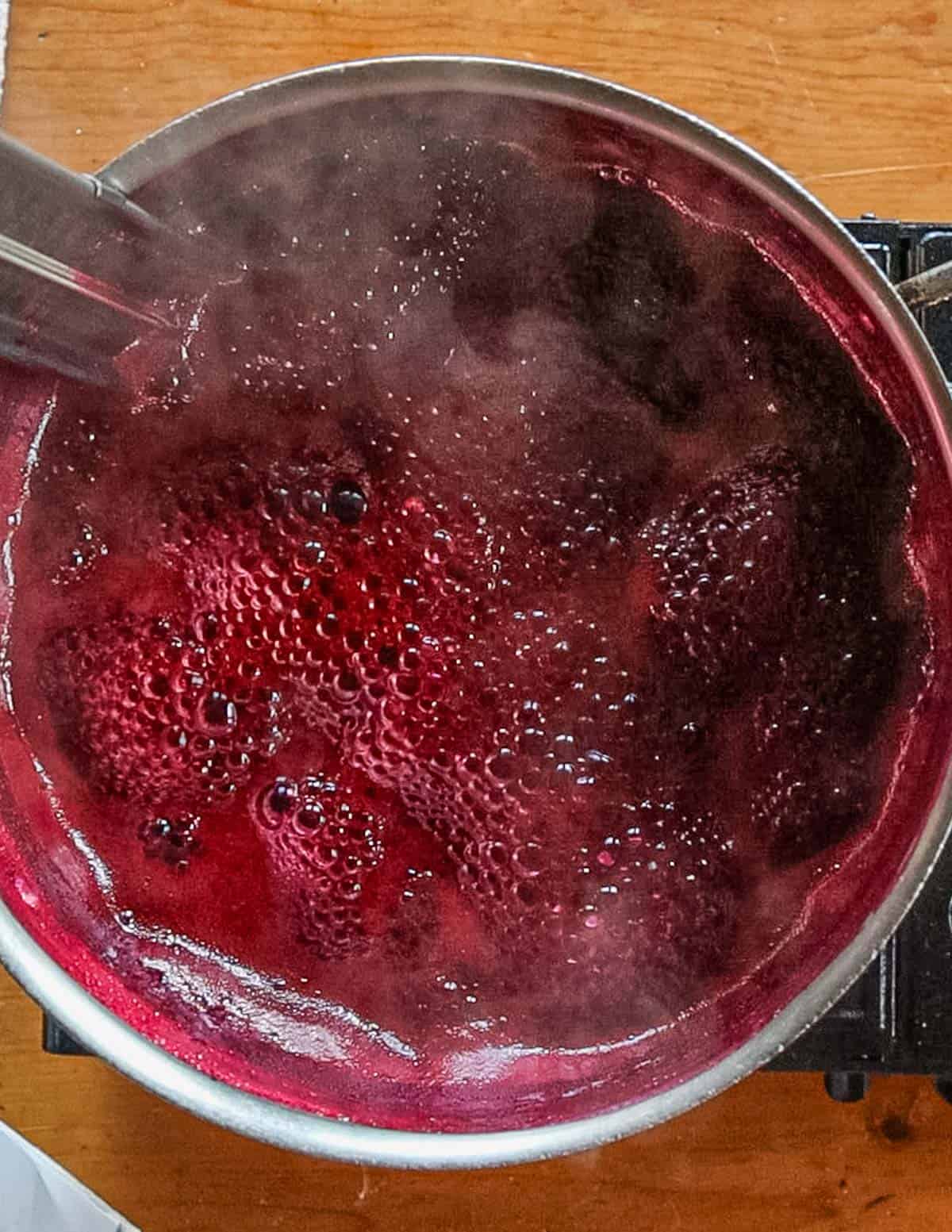
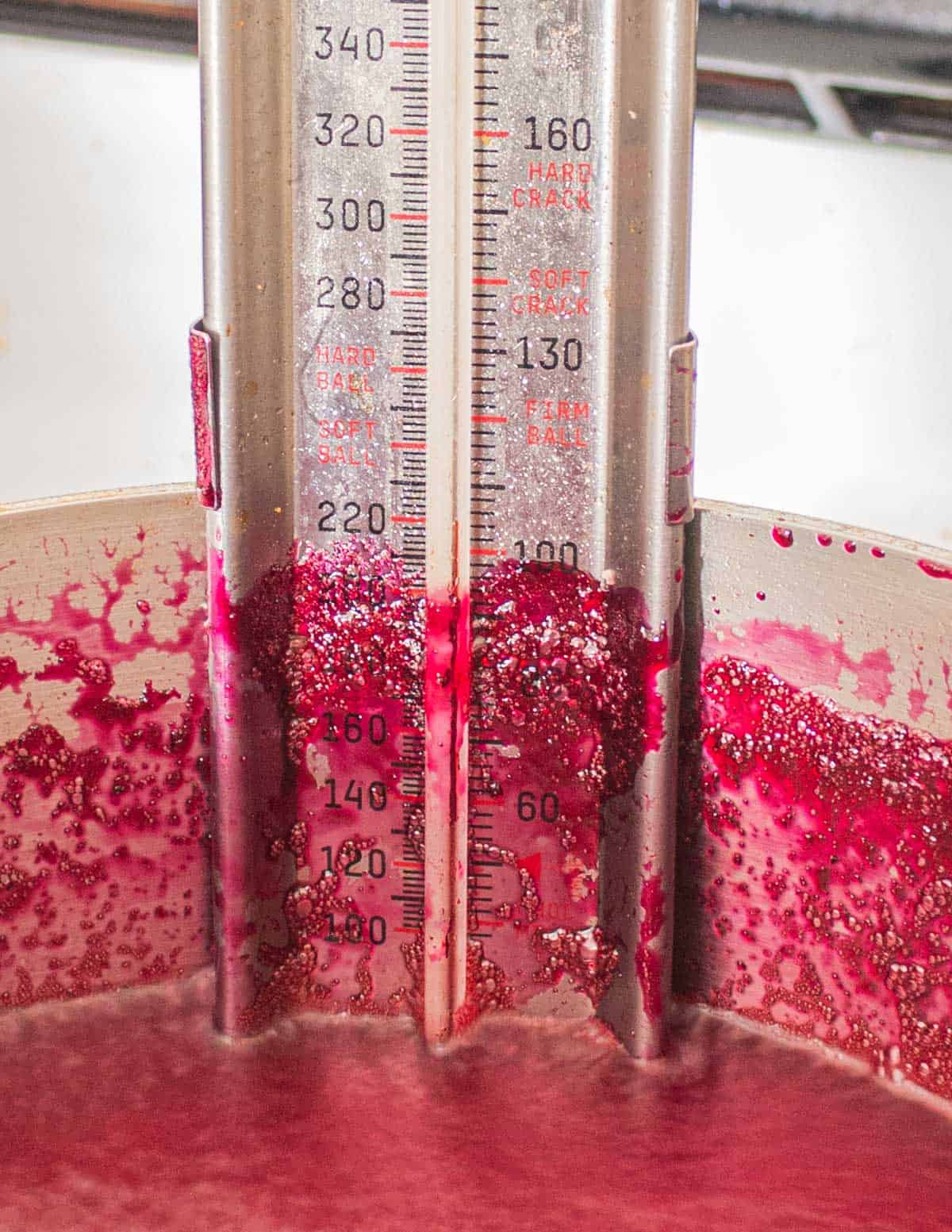
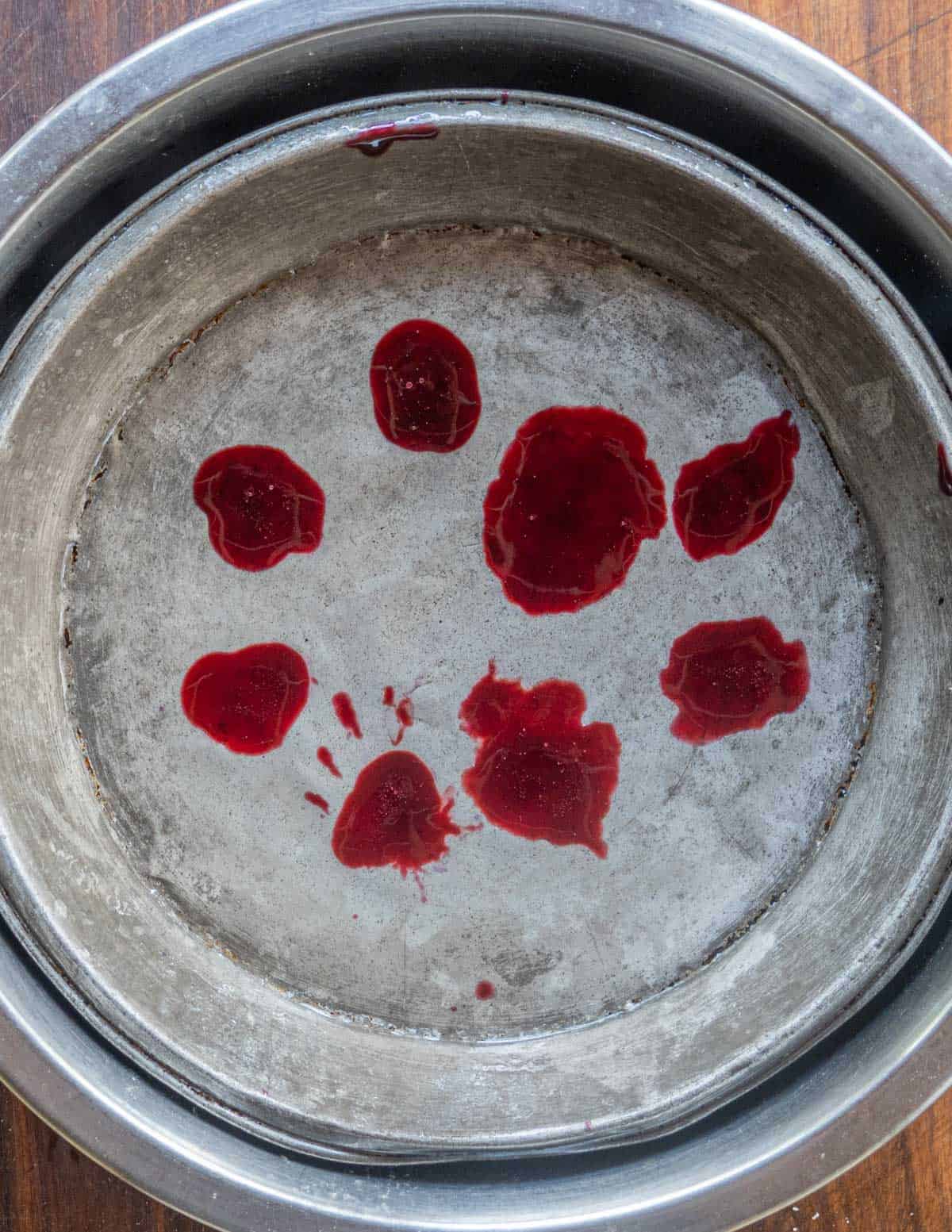
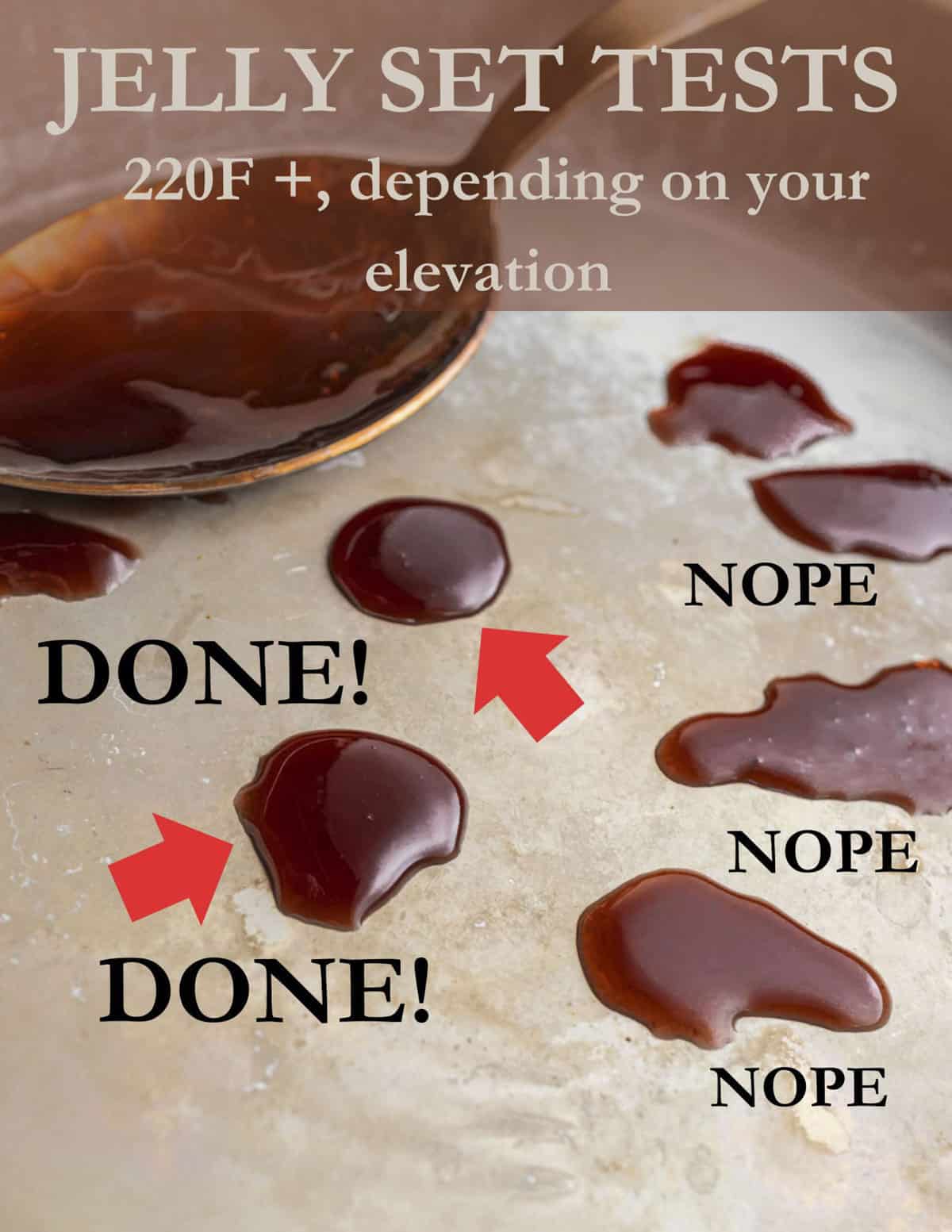
Set tests ensure you know the jelly will set and are a learned skill. Dropped on a plate over a bowl of ice, the mixture should not run like water, but should hold its shape and look wrinkled after a second or two. It should also look wavy on the spoon and drip off in slow strands.
Don't Scale Jelly Recipes
Lastly, one very important thing to know is that you cannot scale jelly by just multiplying the proportions. Bigger batches mean a longer cooking time which can degrade the pectin, preventing it from setting properly.
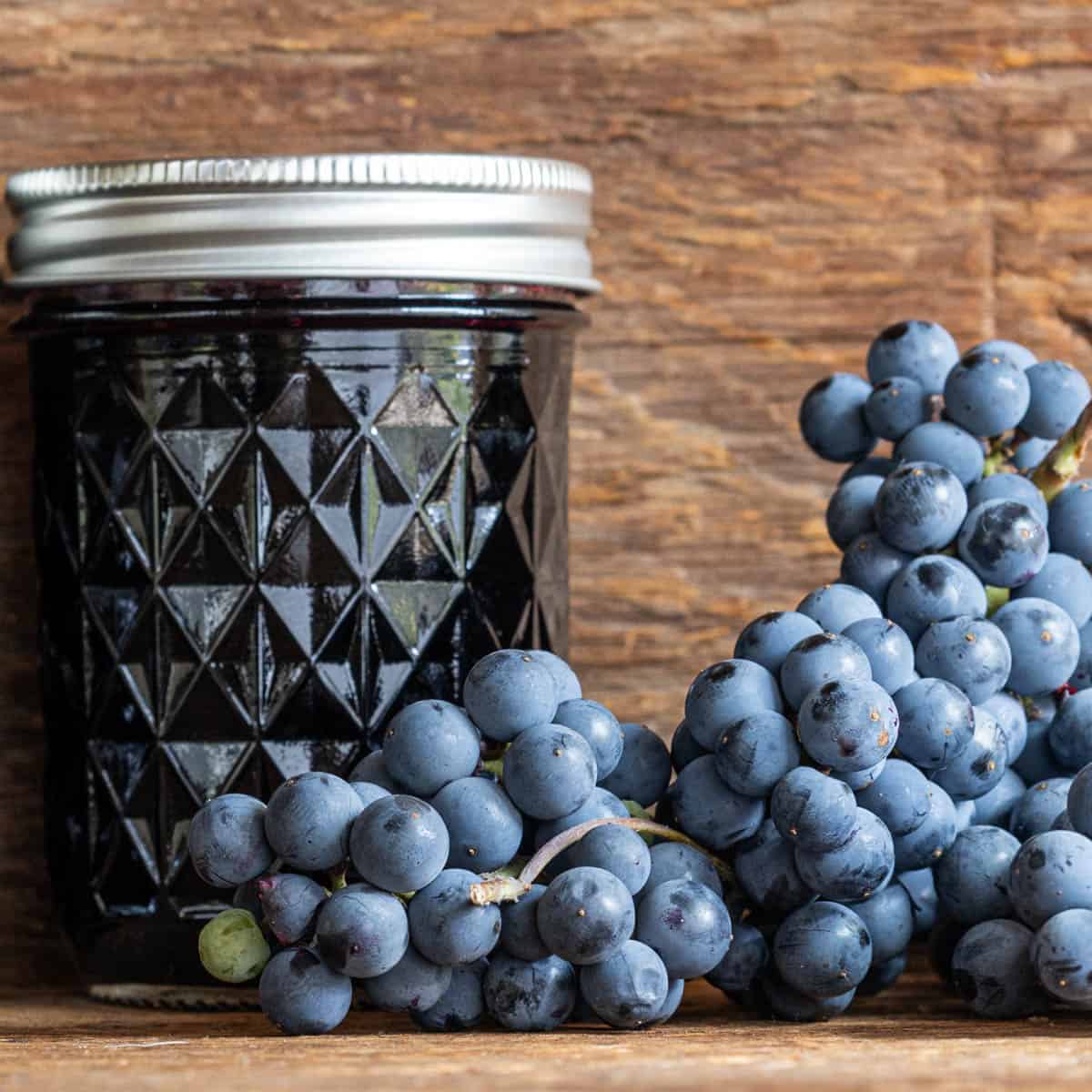
Other Things to Make with Wild Grapes
- Naturally Pickled Grape Leaves (Lacto-Fermented)
- Vegetarian Grape Leaf Rolls (Dolmas or Dolmades)
- Homemade Saba (Grape Juice Reduction)
Homemade Wild Grape Jelly
Equipment
- Large, heavy bottomed pot (2 gallon capacity, at least 10 inches wide.) you can use a 1 gallon size pot for a half batch, the wider the better.
- Strainer
- Cheesecloth
- Potato masher
- Canning jars with lids
Ingredients
- 32 oz (4 cups) wild grape juice (you’ll need about 5 lbs of grapes)
- 1 cup water
- 8 teaspoons powdered apple pectin full strength, such as Ball Classic Fruit Pectin
- 28 oz (4 cups) sugar
- 2 teaspoons fresh lemon juice or from concentrate
- ½ tsp unsalted butter to reduce foam
Instructions
Harvest the grapes
- Remove the grapes from the vine in whole clusters using a scissors.
Juice the Grapes
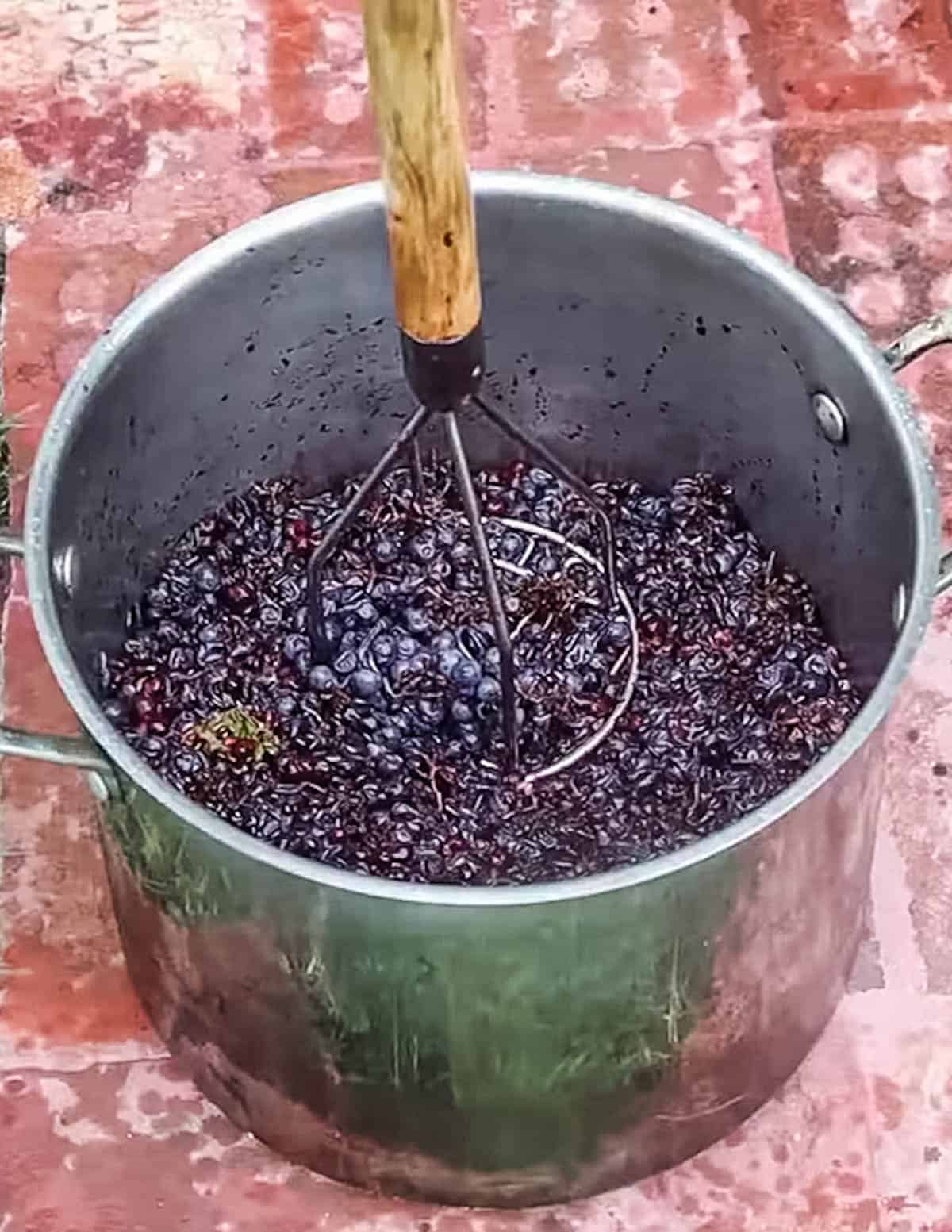
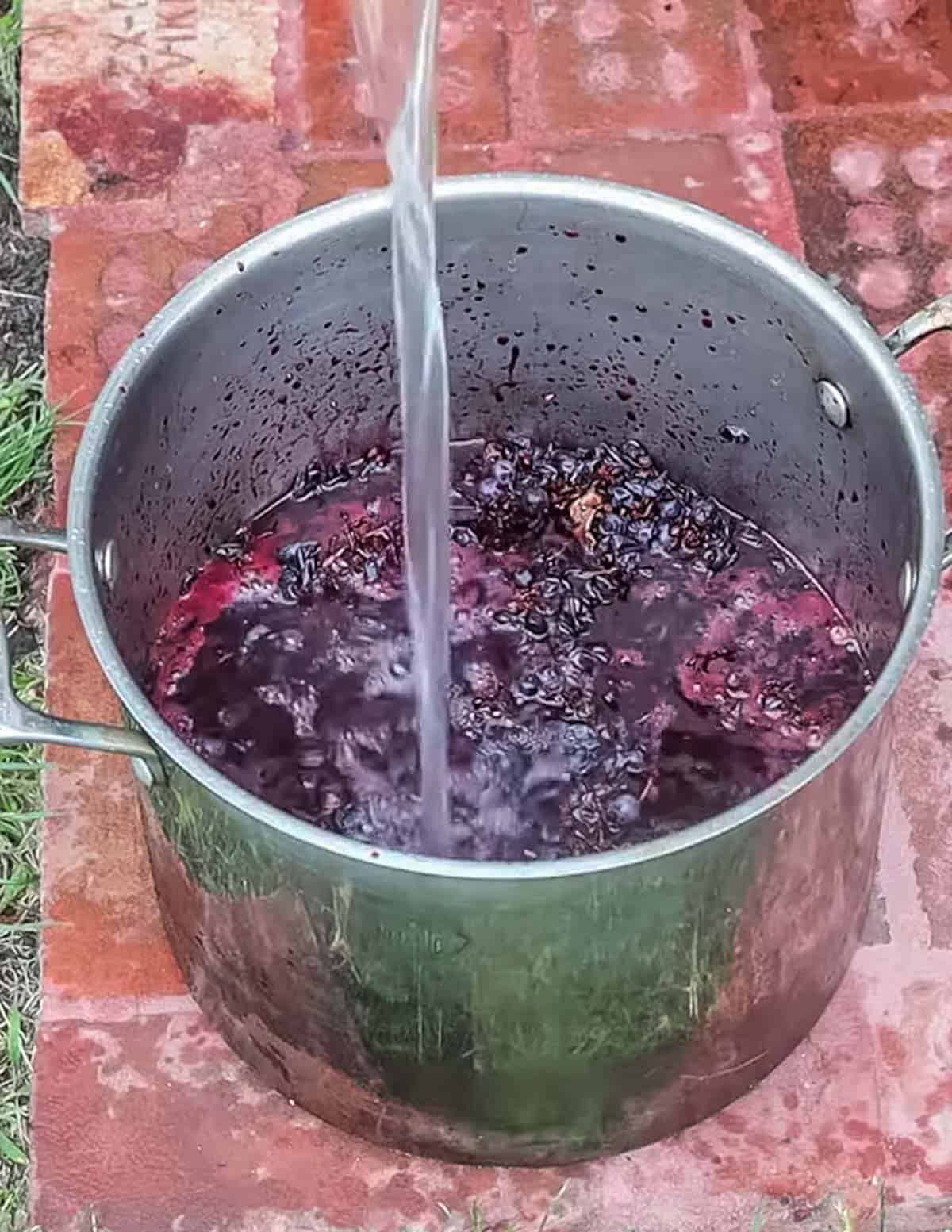
- Put the grapes in a large pot and mash them.
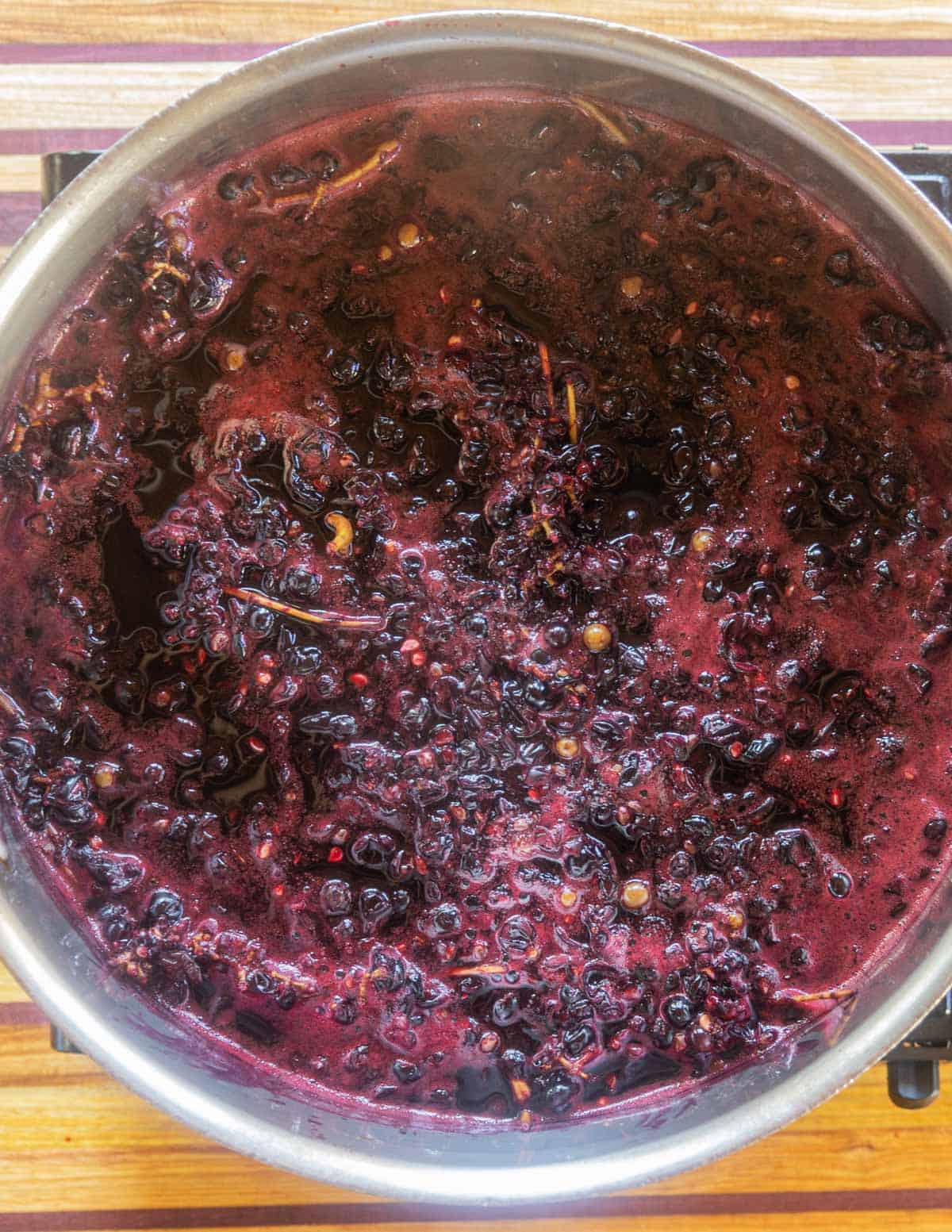
- Add the water so the grapes are nearly covered. If your grapes are larger than Vitis riparia, or you're using a steam juicer you may not need much water, if any. Bring the pot to a simmer cook on low heat for 30 minutes.
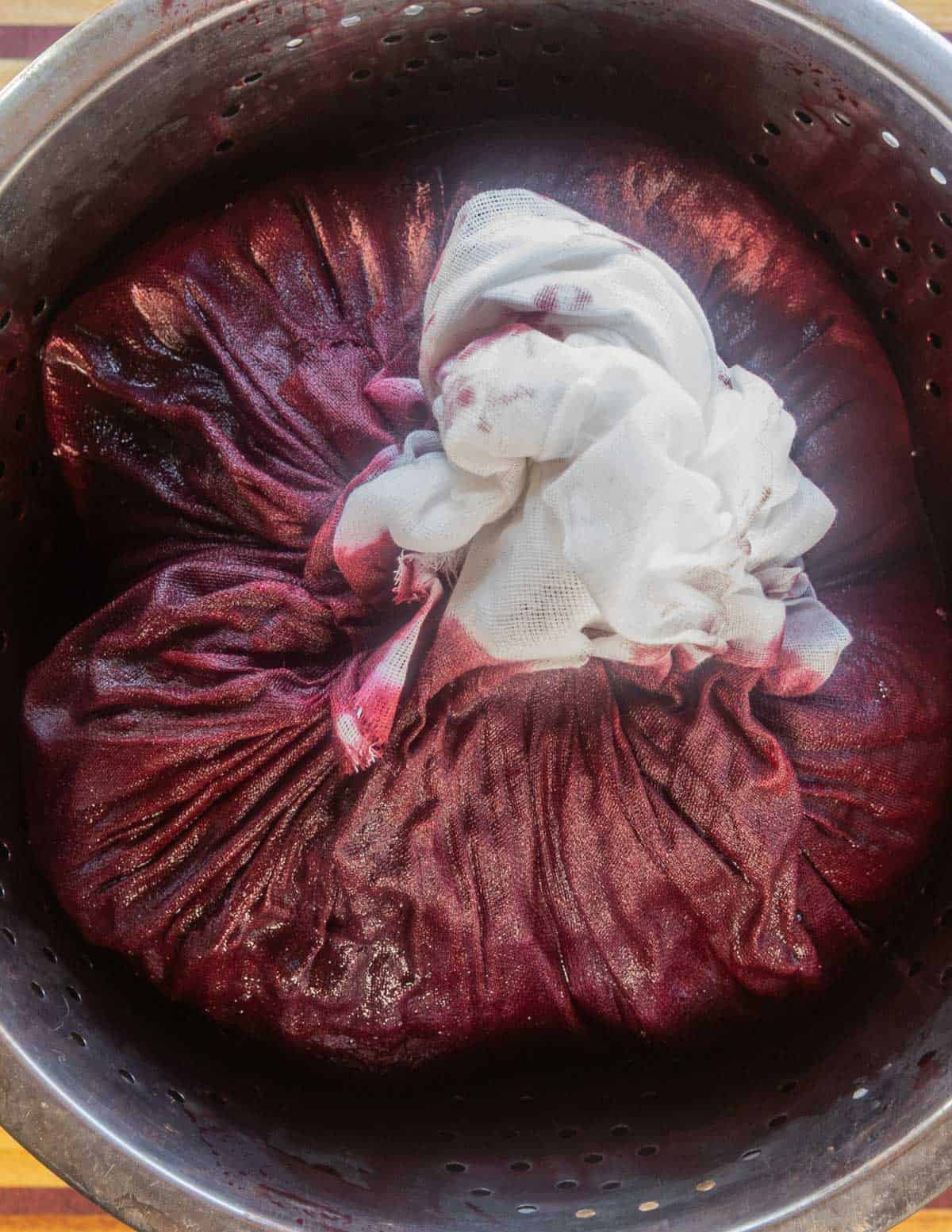
- Strain the grape juice while still warm through cheesecloth, squeezing out the excess. Save scrap for making wild grape vinegar.
Make the Jelly
- Put small metal pie plate or other thin surface over a bowl of ice for a set test.
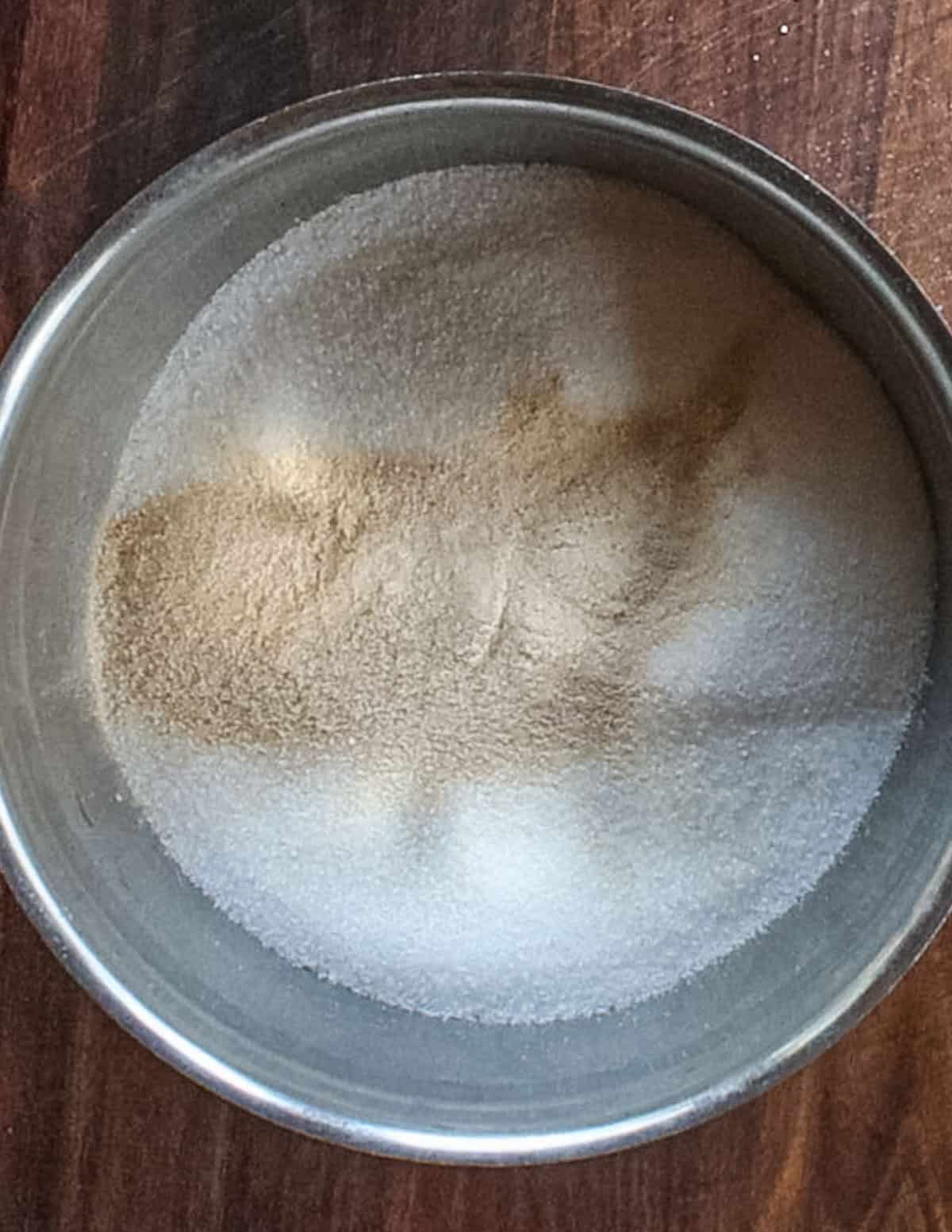
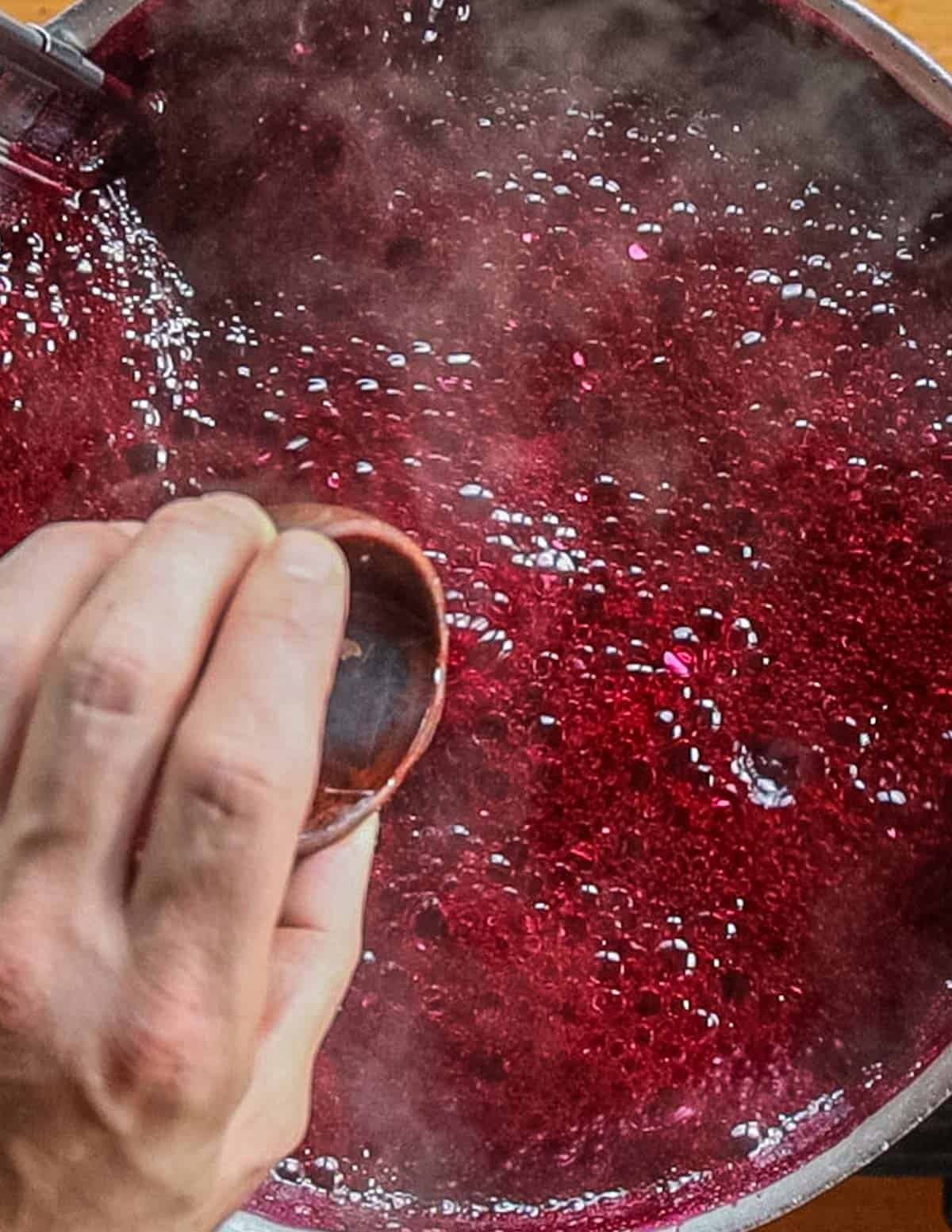
- Mix the pectin and sugar. Whisk the grape juice and sugar mixture, add the butter, bring to a rolling boil on high heat and until it starts to hover around 220F, skimming off any foam. Do not turn the heat down while cooking. If the jelly threatens to overflow your pot is too small.
Set Tests
- Here’s where the intuition comes in. Right after the jelly passes 220F, spoon a ½ teaspoon of jelly into the chilled metal bowl to test the set, if it holds it’s shape around the edge and doesn't run like water anymore it’s ready, if not, continue cooking a bit. Drips off of the spoon should hesitate to fall, which is known as sheeting.
- I'm usually confident in the set around 223-225F, although if the grapes are cooked with their seeds to make juice (which add natural pectin) it can set around 220F. When the jelly holds it's shape dropped on a chilled plate, turn off the heat and beat in the lemon juice.
Storing
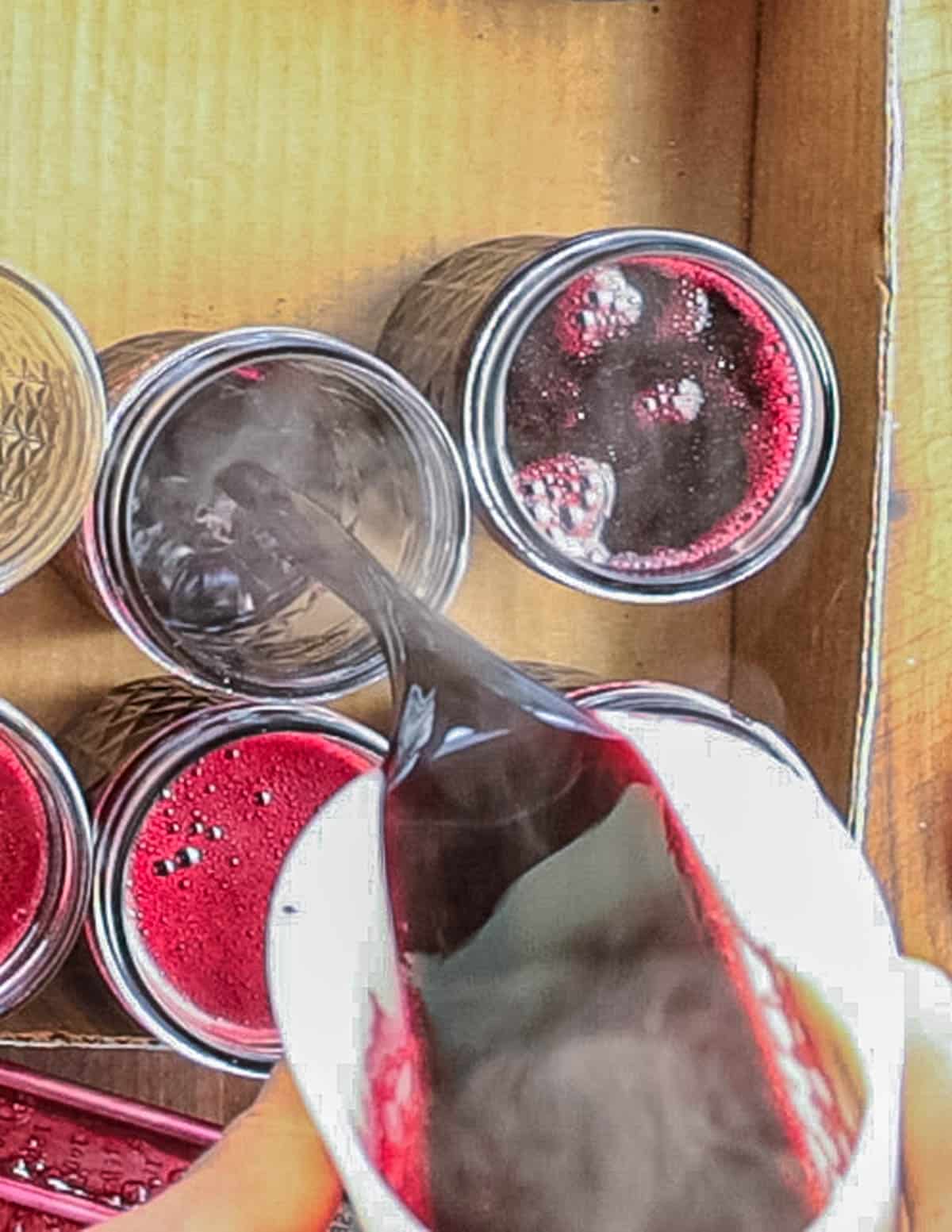
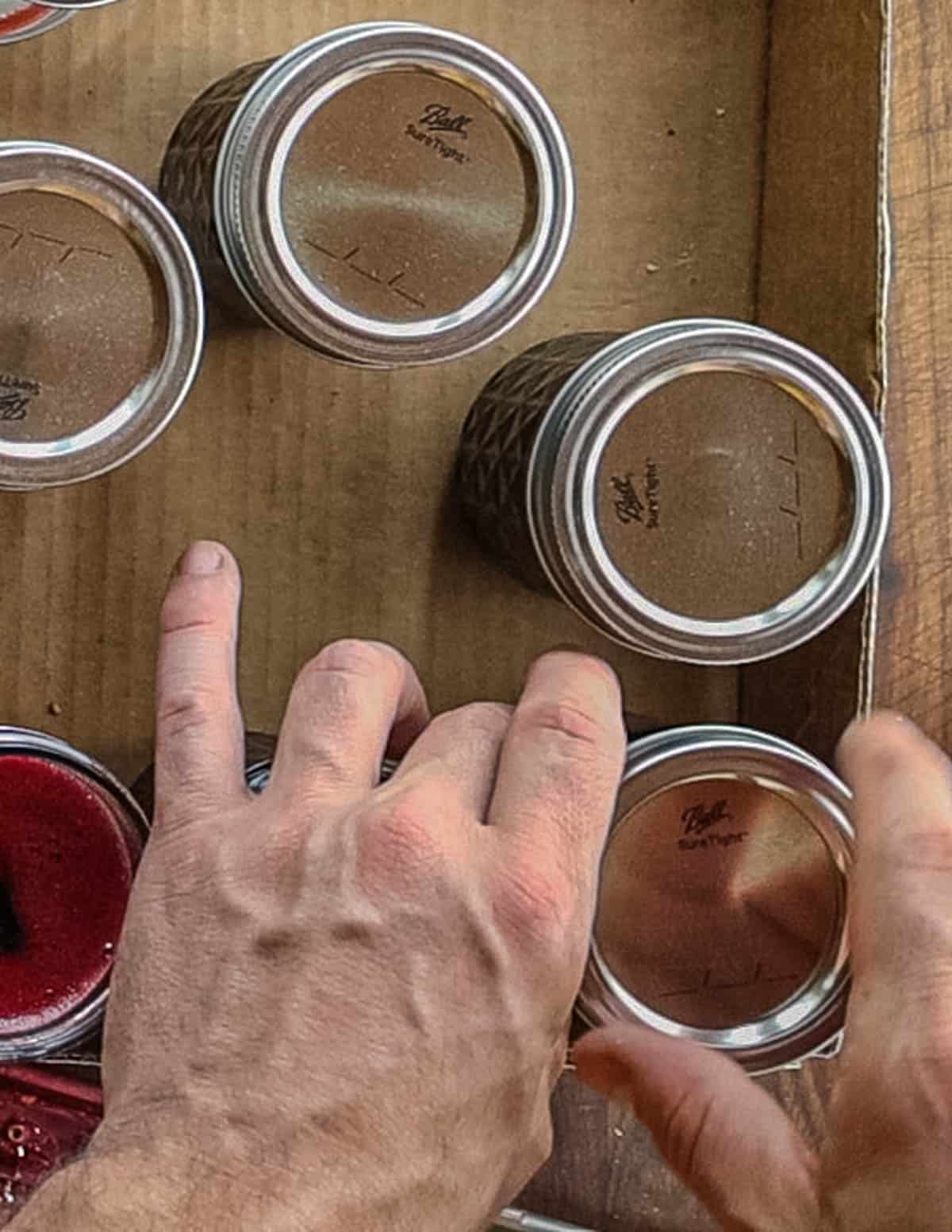
- Pour the jelly into sterilized pint or half pint jars screw on the lids. Process the jars in a water bath canner for 10 minutes. Sometimes I don't waterbath can them as they're high in acid and very safe.
Cheryl
Can you use fruit pectin or do you have to use apple pectin?
Zach Roth
I made this for the first time today. It turned out great! It was quite a fun adventure finding tons of river grapes then going a little farther and finding a big patch of lobsters and some oysters to bring home. I'm trying to get into foraging more and your website is a gold mine for me. I also live in Minnesota so it's nice to have a resource that uses Minnesota as a refrence. Thank you for sharing your adventures and knowledge to the world. Its much appreciated.
Alan Bergo
Thanks Zach.
Kat
Planning to use this recipe with Frontenac grapes growing in my parents’ backyard. They’re a small, tart wine grape and I think it would pretty much be the same as your wild grapes (fingers crossed). I am looking at about seven homer buckets worth of grapes this autumn, so any other recipe ideas other than jam and vinegar would be appreciated!
Alan Bergo
Frontenac grapes are a cross between a French American hybrid and our native wild grapes so it should work fine. Could be a touch sweet.
If I have large amounts of fruit I like to juice them.
John Casaleggio
I was thinking of using crushed Amber Jelly mushroom instead of pectin. Do you think this will work?
Alan Bergo
No.
Tammi
Question, do you take the individual grapes off the vine before mashing them? I am assuming yes, but just wanted to make sure
Alan Bergo
Hi Tammi. I’ve done this two ways which I’ll explain so it makes sense.
1: If you only want to extract juice you can mash them while attached to the racemes. You would then take that juice and add pectin as there’s no pectin transferred from the seeds to the juice.
2: If you remove the grapes from the racemes, mash and cook them with the seeds in it, there will be additional pectin transferred in the cooking process which will help ensure the jelly sets properly.
Deborah Armstrong
I would like yo try the recipe with the grapes from my backyard. They are already sweet thought. Not tart at all. Can I cut down the sugar and if what would you suggest?
Alan Bergo
This recipe is made for wild grapes that are very tart. Conventional grapes could be used and you could likely cut the sugar by 1/3. What you should do there is cook the grapes after mashing to ensure you get pectin from the seeds, then strain and proceed.
Kristal Baty
If my grape juice is already sweet, can I cut down on the sugar?
Alan Bergo
Likely. This recipe is designed and tested with wild grapes which are extremely tart. I’d start with 70% of what I call for in the recipe.
Kristal Baty
I could not find Ball fruit pectin. I have Mrs. Wages. Can I use the same amount as called for in your recipe? Sorry so many questions - first time jelly maker.
Alan Bergo
If it’s your first time it’s best to stick with the recipe. Ball pectin is easily found online. I’m not familiar with the pectin you have and you’d need to consult some resources on if it’s strong enough or what an equal ratio would amount to.
Emma Rodriguez Dos Santos
I've just tried my first pottle of 8 jars made of this, with NZ backyard grapes, from a month ago. It was super sweet, but set quite well and delicious with a strong cheddar-type cheese. Part way through the next batch with mixed grapes... Thanks for the helpful video and all the tips.
Daria
Hi Alan,
I can’t wait to try this recipe!! Before I do though I was wondering if a regular meat like thermometer would work for this as well? My next question is also if I would be able to use corn starch as a thickener instead of pectin?
Can’t wait to hear from you!
Cheers,
Daria
Alan Bergo
Hello, unfortunately no, for both questions.