
An antique herb useful as a decorative plant, as well as for its cucumber-flavored leaves. Salad burnet (Sanguisorba minor) has been used by humans for at least 2000 years, gracing the herb gardens of Ancient Greece, Rome, Victorian Britain, and Mount Vernon. Today we'll take a look at its background and history, and go over how it can be used in a modern kitchen.
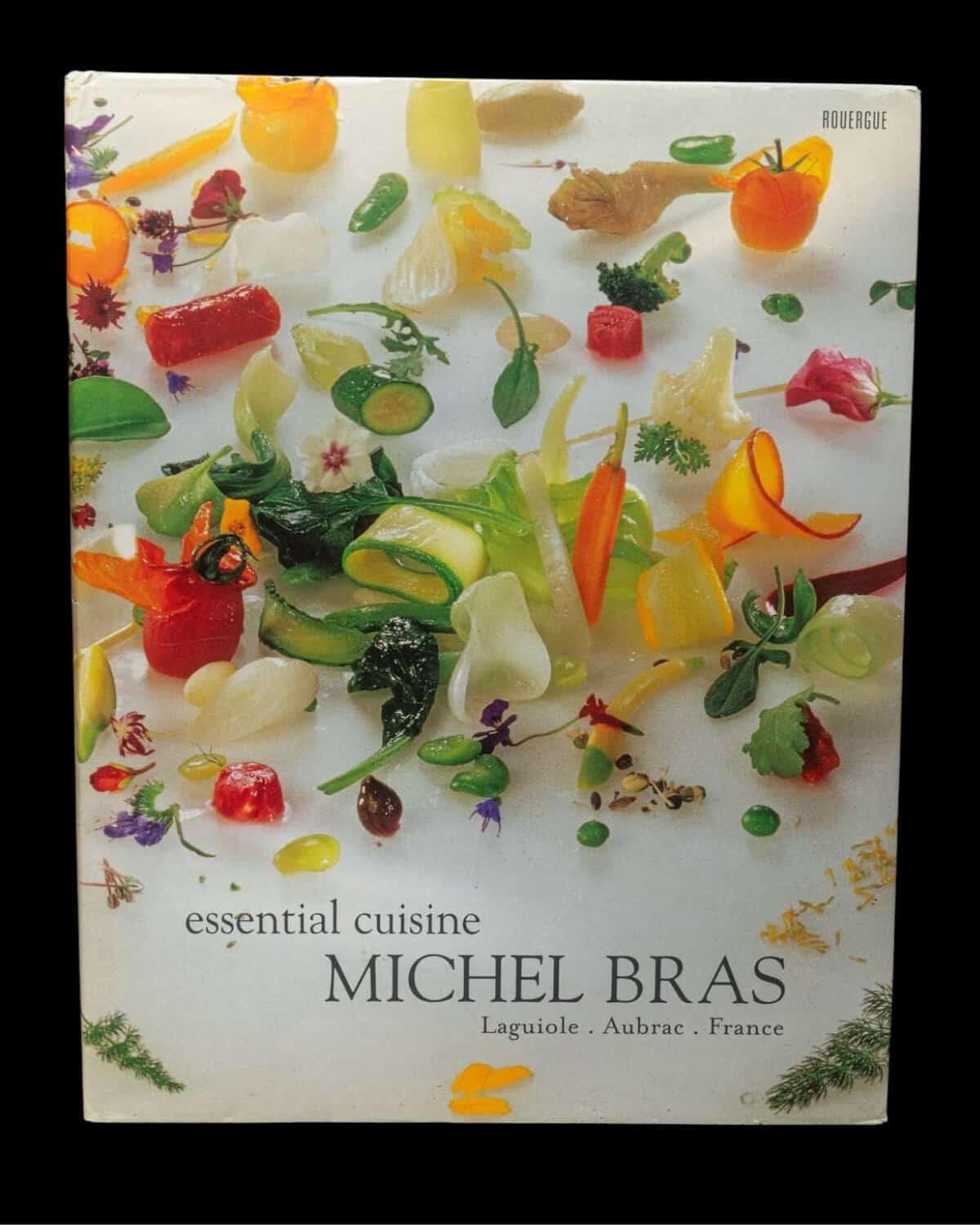
One of the few wild plants I didn't learn from foraging guides, I first saw bunet as reading Michel Bras: Essential Cuisine. The legendary French Chef from Aubrac used it in his signature dish the Gargouillou, which can be composed of up to 60 or more plants, vegetables and herbs.
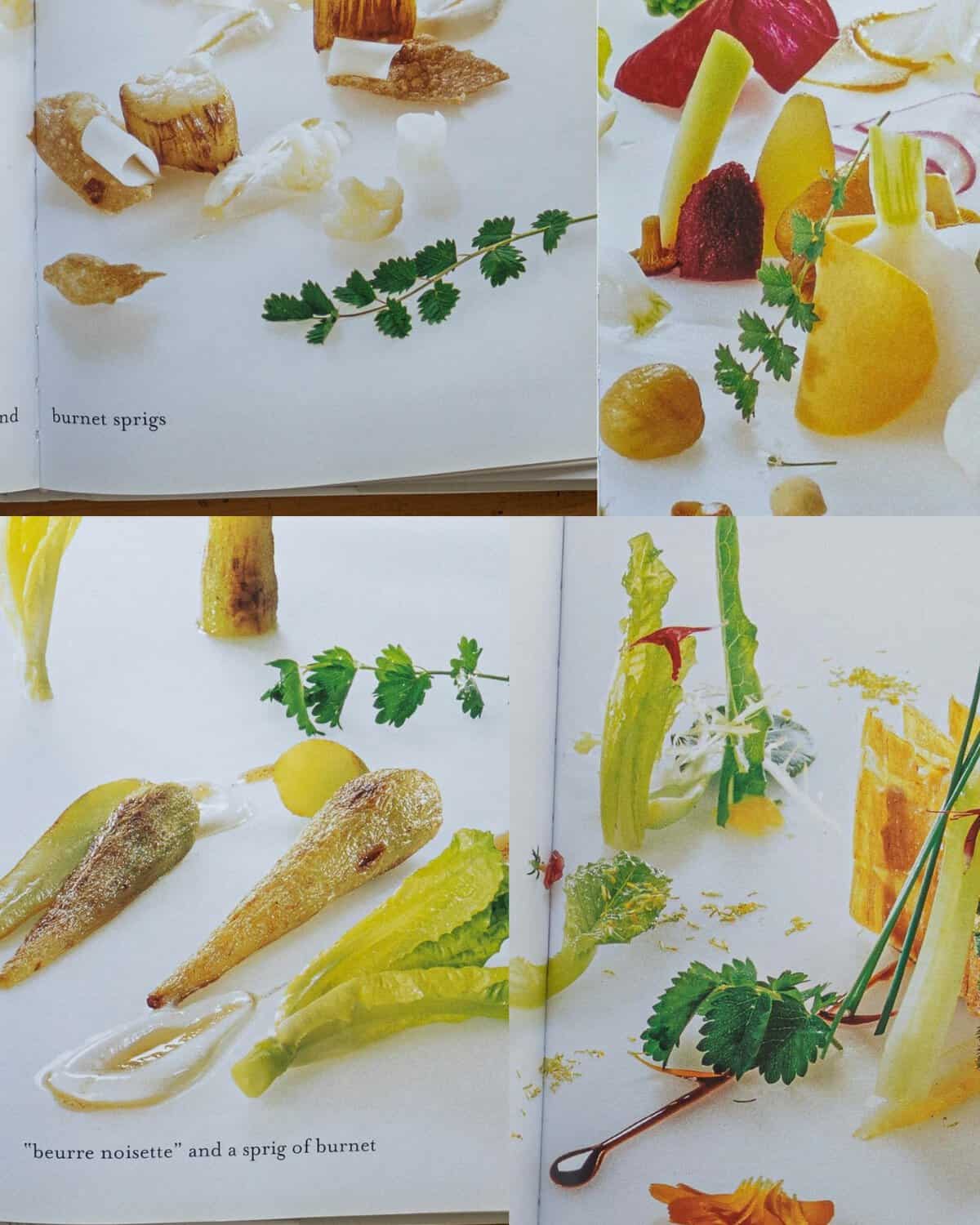
Burnet, sometimes leaves, sometimes in whole sprigs, was sprinkled throughout the book.
Fast forward two decades. I stumbled on my first wild burnet while at the Milkweed Inn run by my friend Lane Reagan (another Michelin-starred chef) in the Upper Peninsula.
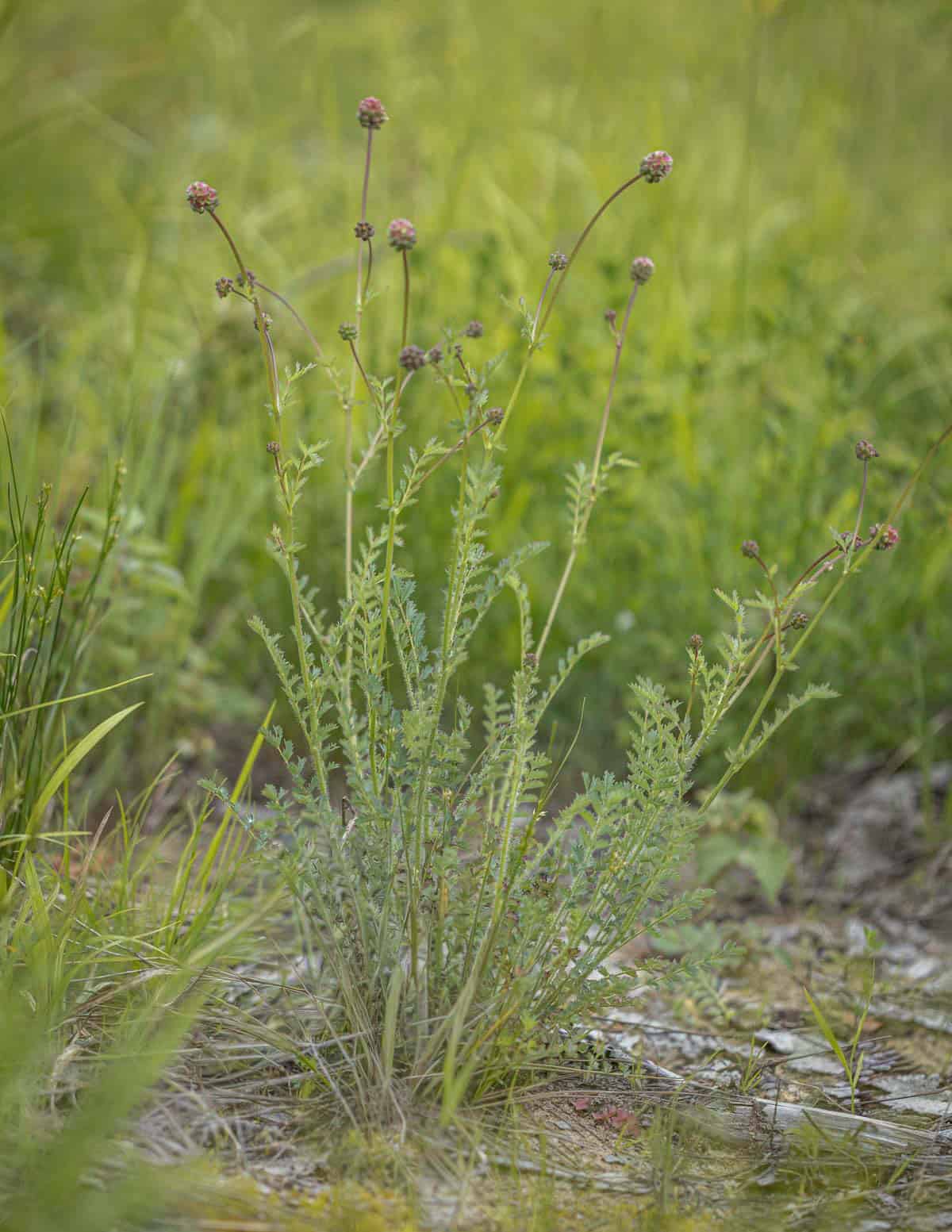
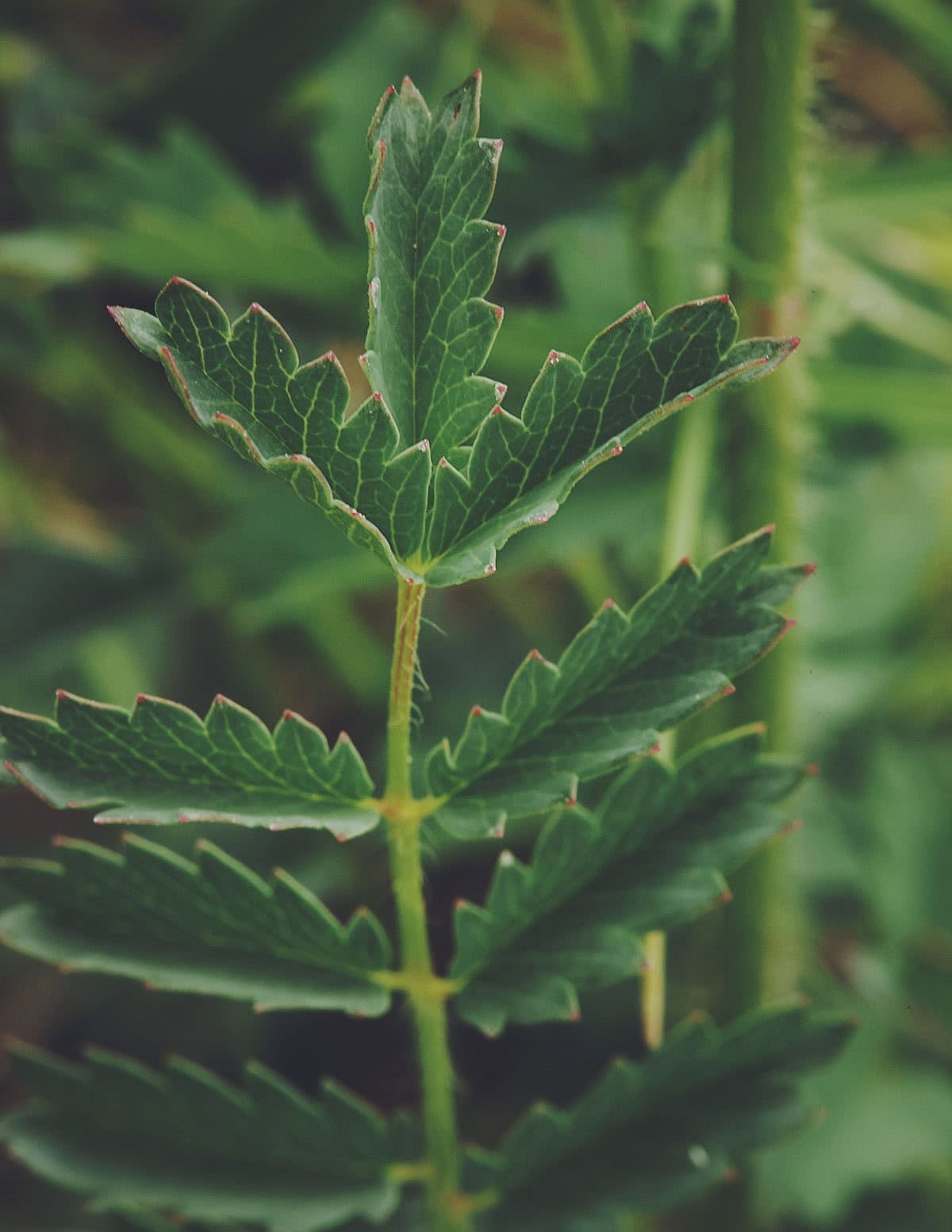
Twenty years after seeing it in the Bras book I still I knew it instantly. Thrilled to find it wild, I introduced it to Chef Lane and they keep it as a regular ingredient on the menu now. The first plant I found is shown above.
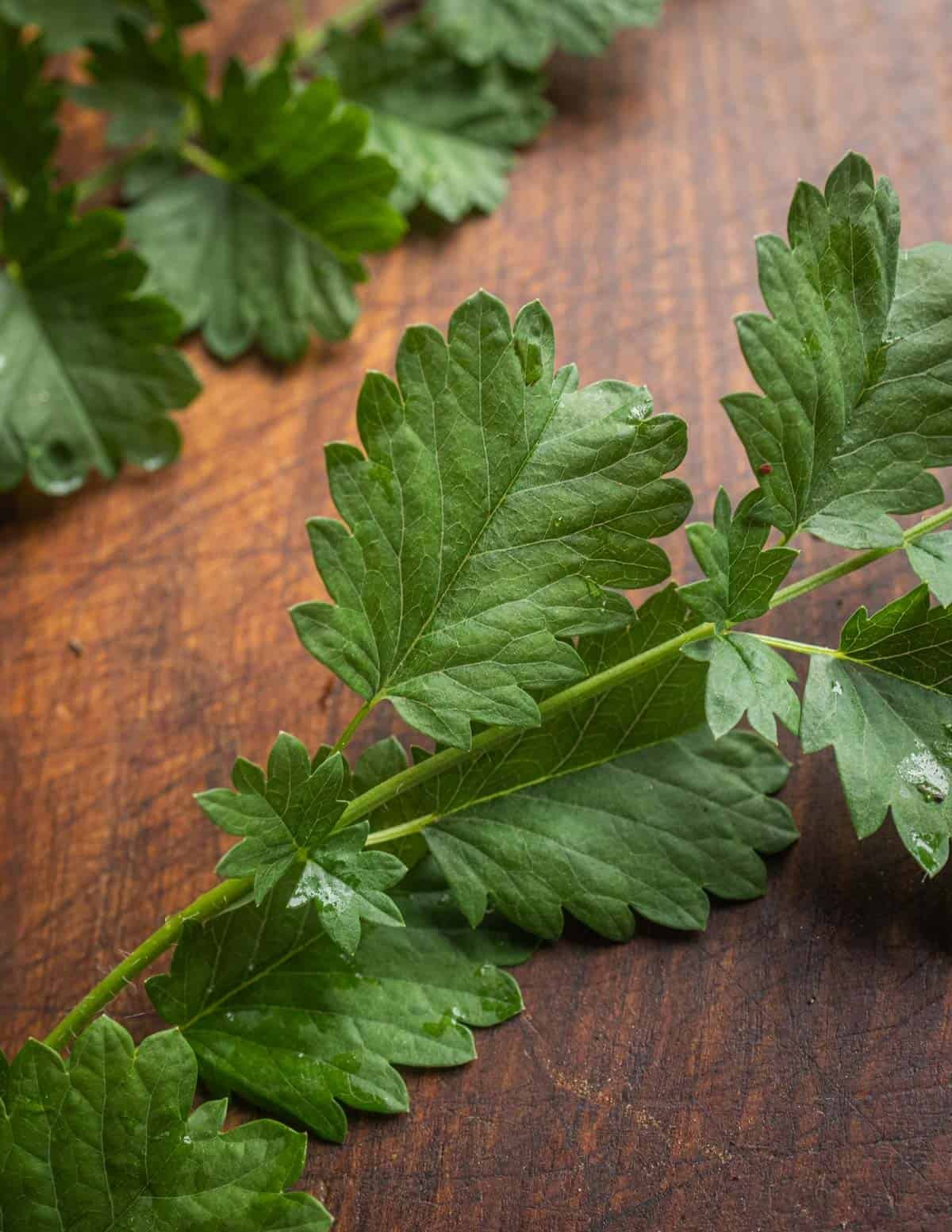
The leaf close-up below is courtesy of my friend, filmmaker Jesse Roesler, who was with me as we battled epic horseflies in the Upper Peninsula gathering it and other ingredients during my week-long residency. A few years after that I planted it when I purchased my first home and we've been together ever since.
Background and History
Sanguisorba minor (Poterium sanguisorba is a synonym) is a hardy, perennial herb in the Rosaceae or rose family. It's origins are a bit murky, and it's been said to be native to Central and Western Asia, the Middle East, the Mediterranean, Northern Africa, and Europe. Wherever it's from, I like it.
The first references to humans using it are likely from China, where the roots of its larger cousin great burnet (Sanguisorba officinalis) were used medicinally. (For the record, Sam Thayer describes S. officinalis as more astringent and an inferior edible.)
The next references I can find are from Classical Greece. Pliny the Elder and Dioscorides both mention the plant, often mixing it with drinks or wine. It was also said to be popular in Colonial America and documented in the gardens of Thomas Jefferson and at Mount Vernon, presumably as a salad plant.
Many of the historical references to the plant are associated with its name. Sanguisorba comes from the Latin sanguis (blood) and sorbere (to absorb), referring to its reputed power to stop flowing blood, but not as a clotting agent like yarrow.
Throughout the ages, soldiers from Ancient Greece and Rome to the American Revolution drank burnet tea in hopes that it would stop the flow of blood if they were injured. I find the tea unremarkable, personally.
Growing Salad Burnet
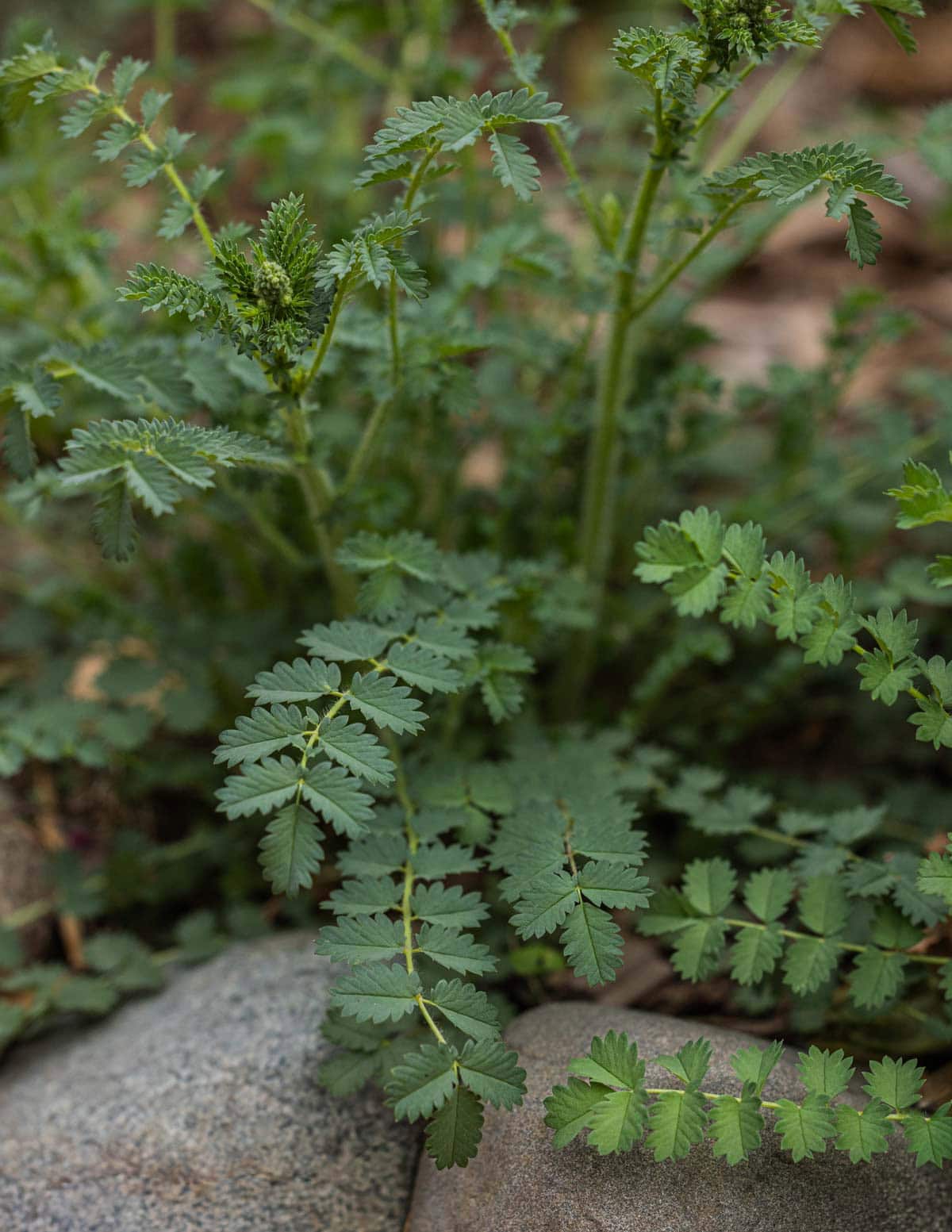
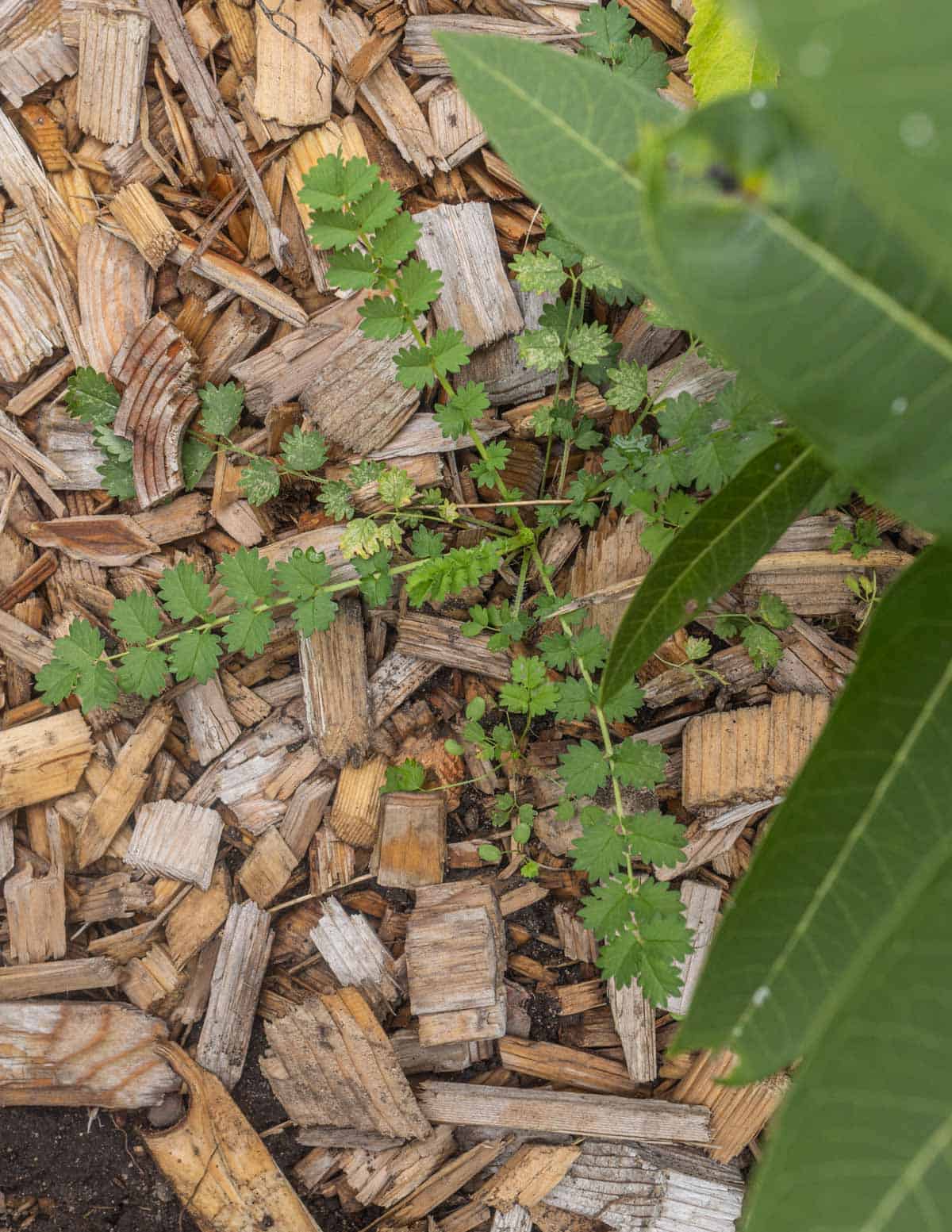
Salad burnet is a great plant for novice gardeners. The seeds germinate easily, it's drought tolerant and hardy from zones 4-8. First year plants will be small basal rosettes, as shown below under the milkweed. After it's established it's basically a perennial parsley bush.
It's also durable and doesn't mind being moved around. I've found it helpful in keeping weeds like creeping charlie at bay and quickly covering patches of ground I eventually want to use for something else in the future.
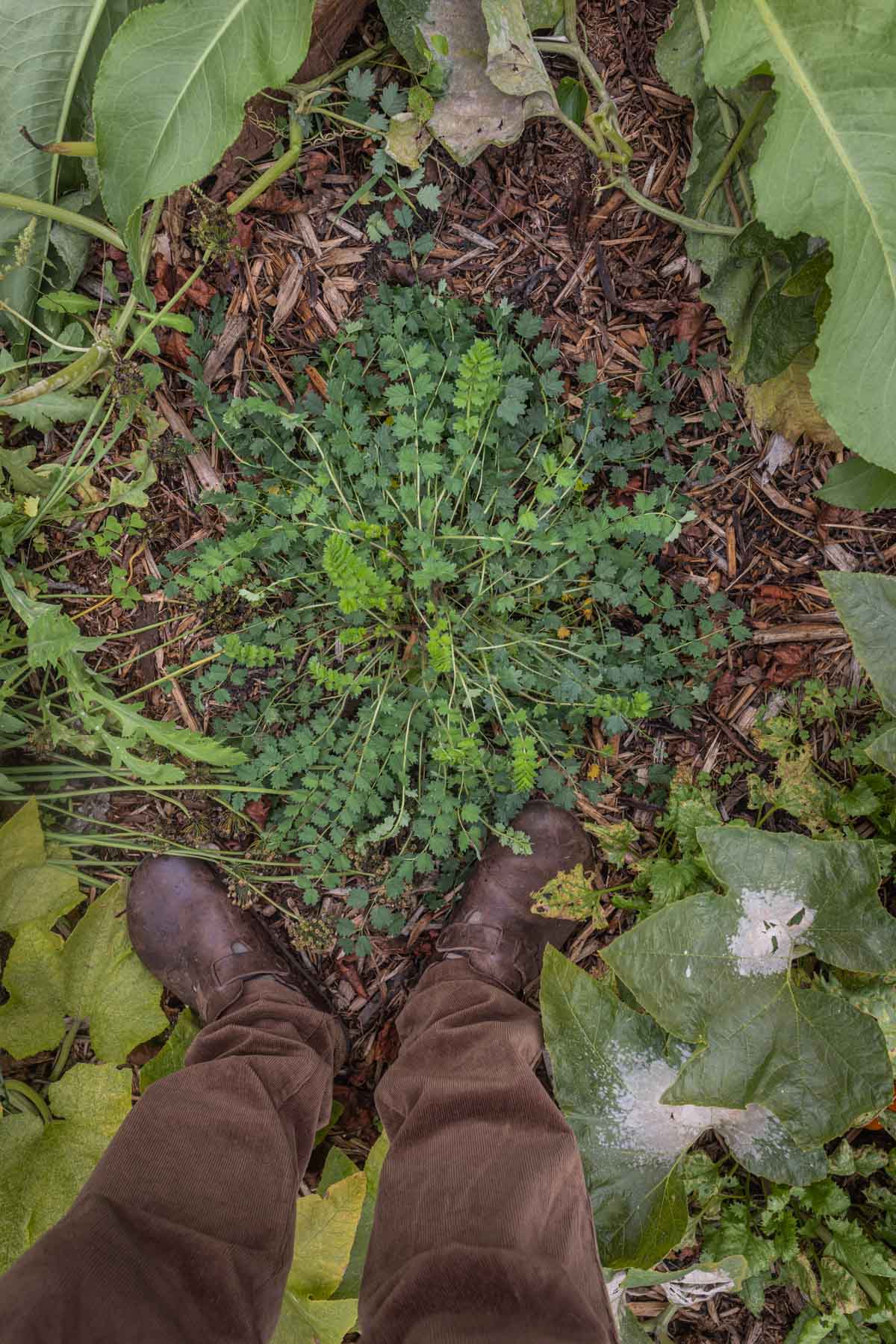
One of the best attributes of the plant is its omnipresence from spring to fall. Once the basal rosettes are fully leafed out I cut them down to the ground, which quickly encourages a fresh flush of leaves, again, and again. I've cut mine to the ground at least 4 times this year in St. Paul.
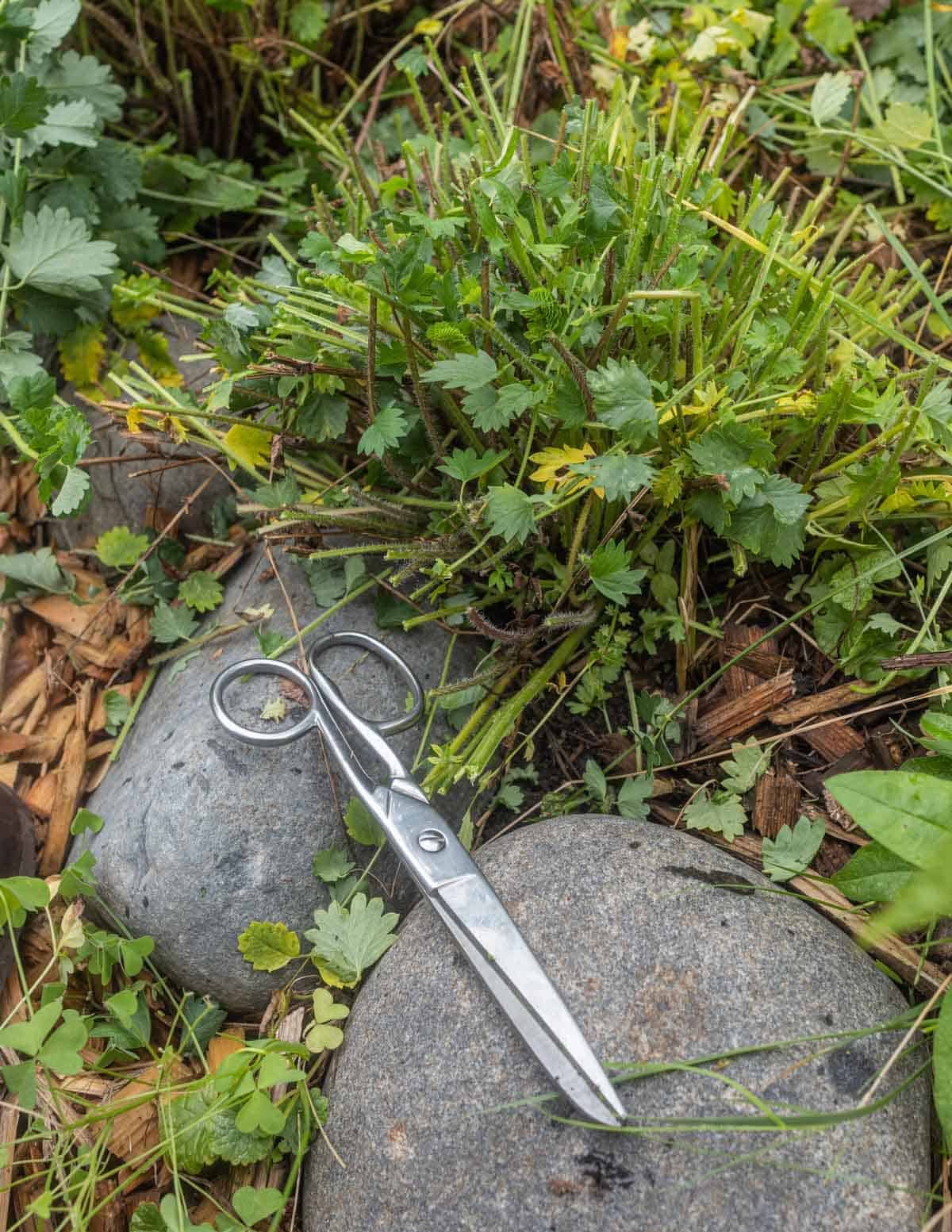
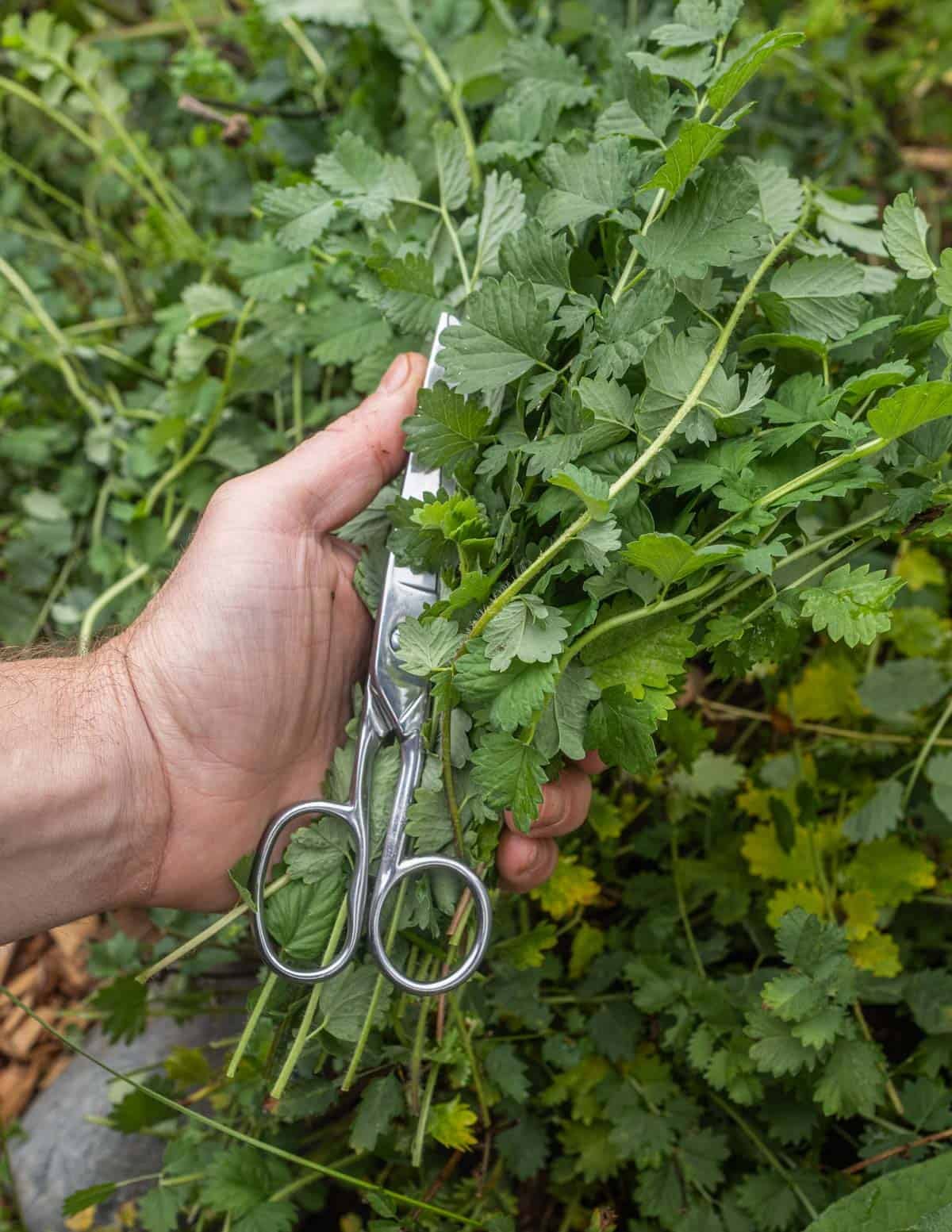
Left to their own devices, the plants can get a little sloppy-looking as they go to seed, but it's nothing a little trim can't fix.
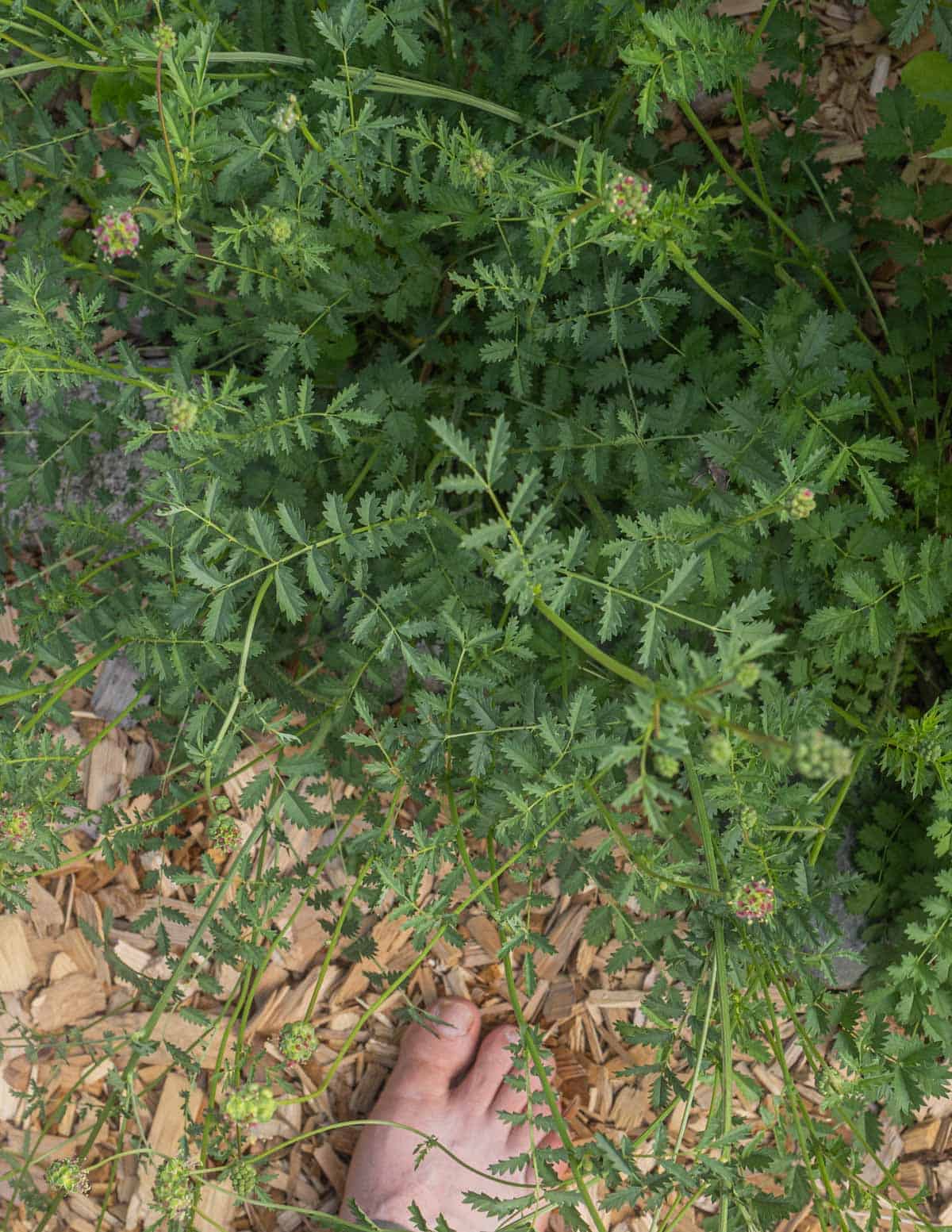
Once the flower stalks form they produce quirky red flowers which eventually turn into seed heads. Unfortunately they're not really noticeable enough to be a showy garden flower.
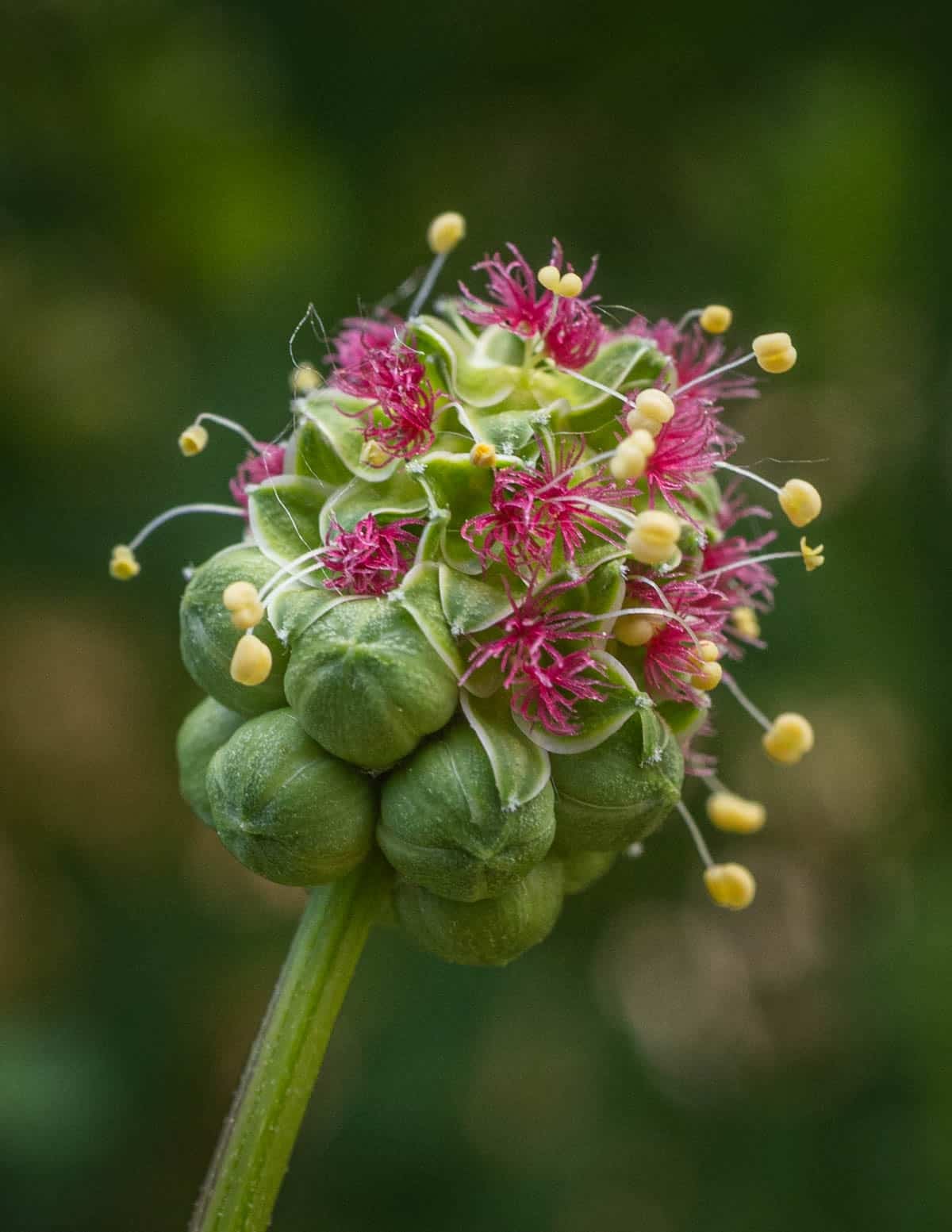
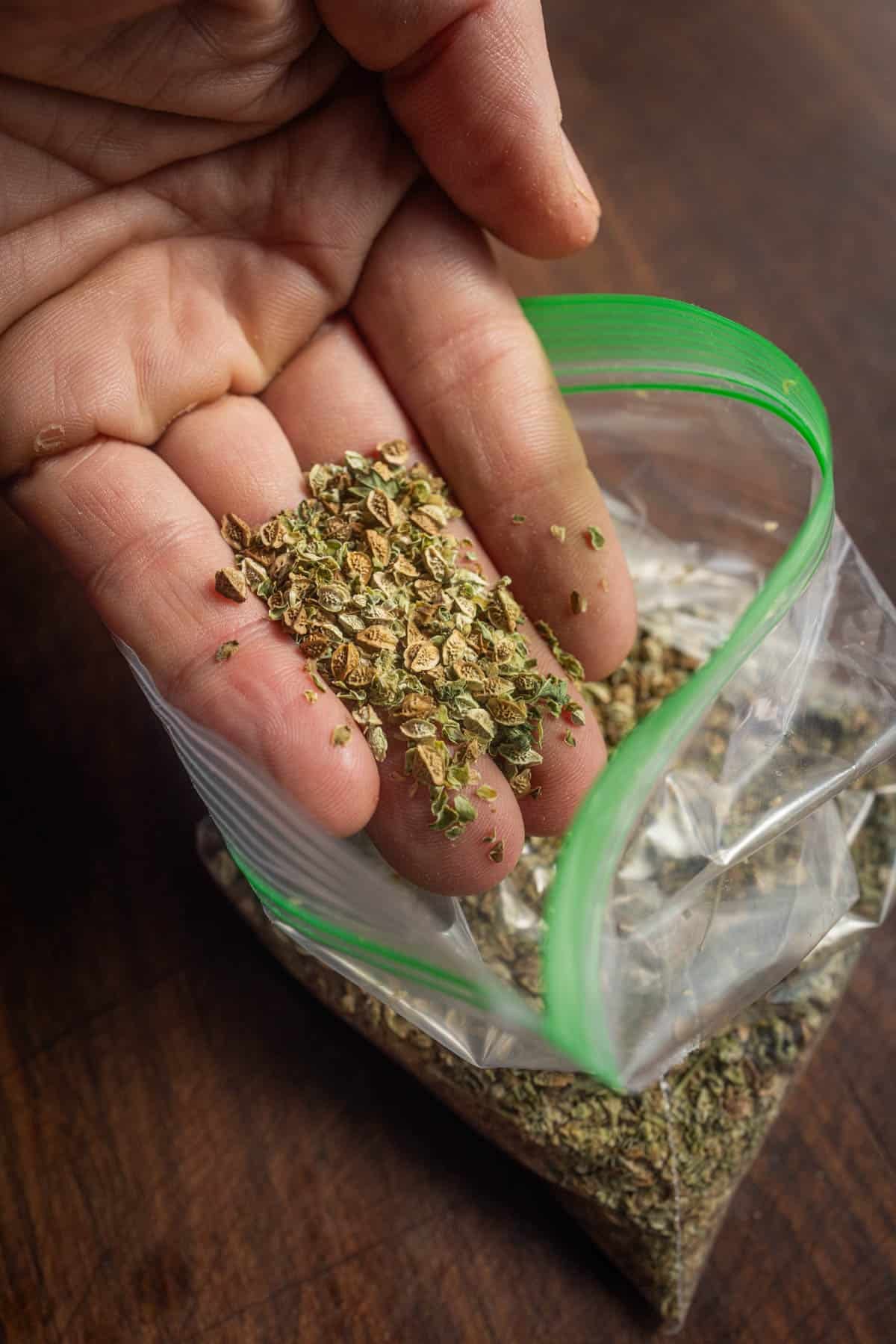
While it's easy to control and not really invasive in North America, it will spread if you let it. I save the seeds to give away, and plenty of my friends grow it now, too. Burnet seeds are also cheap and easy to order online. The seeds have no culinary value I'm aware of.
How to Cook with Burnet
All you need to know about cooking with burnet is four words: perennial, cucumber-flavored parsley. References online are filled with parroted information about the plant from people who've never used it. It's said to be a substitute for mint (it's not) and useful for flavoring drinks (I've found it unremarkable), although it does make a nice garnish for a gin and tonic.
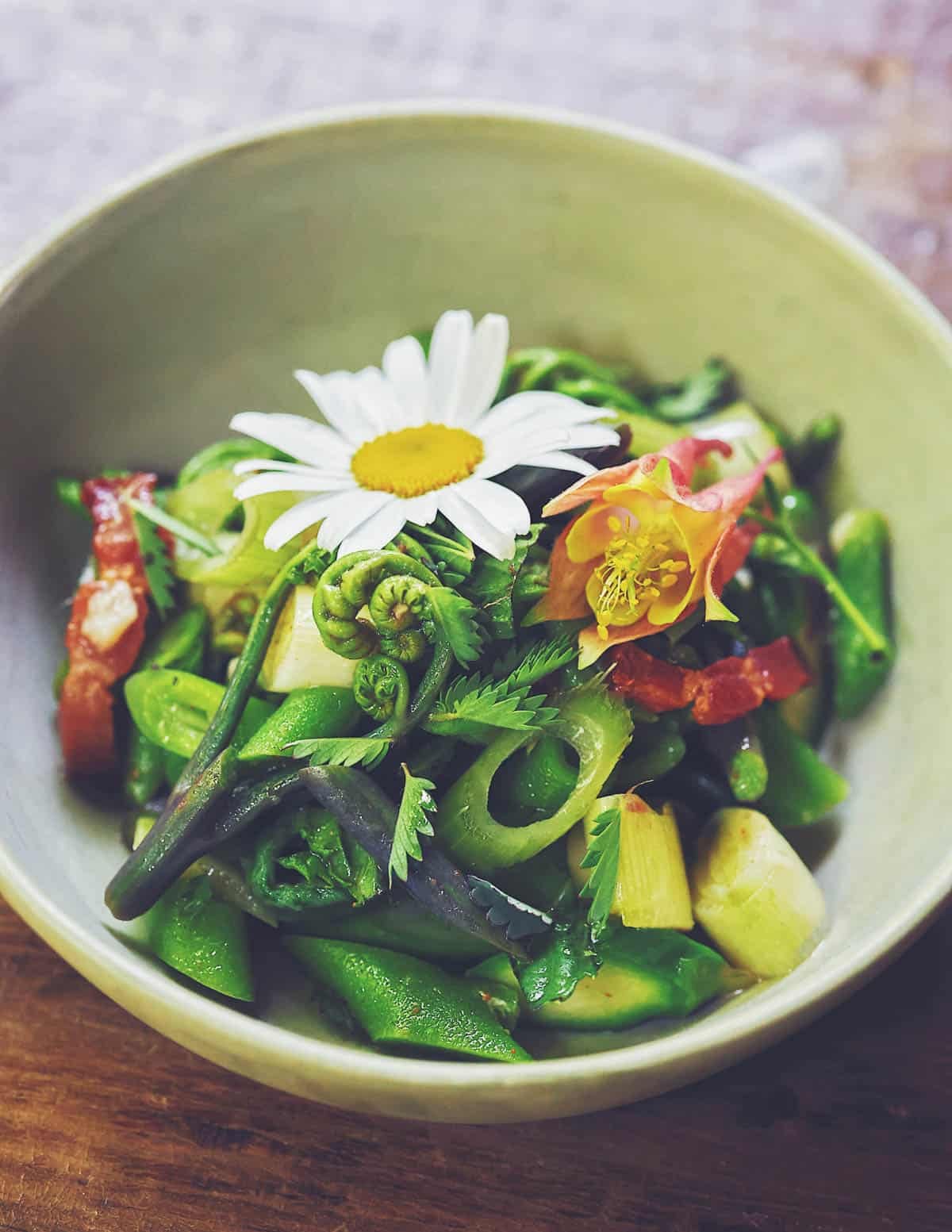
The flavor is cucumber-esque when young, and older leaves taste like eerily like raw butternut squash to me, with a slight bitterness. For better or worse, the flavor is barely noticeable unless eaten raw by the handful.
Instead of using it in drinks or to prepare for your next gunshot wound I recommend just using burnet as a parsley substitute. Like most plants, young leaves are the most tender and have the mildest flavor. I get the biggest harvest from mature leaves and they're perfectly acceptable chopped or even whole in the right place.
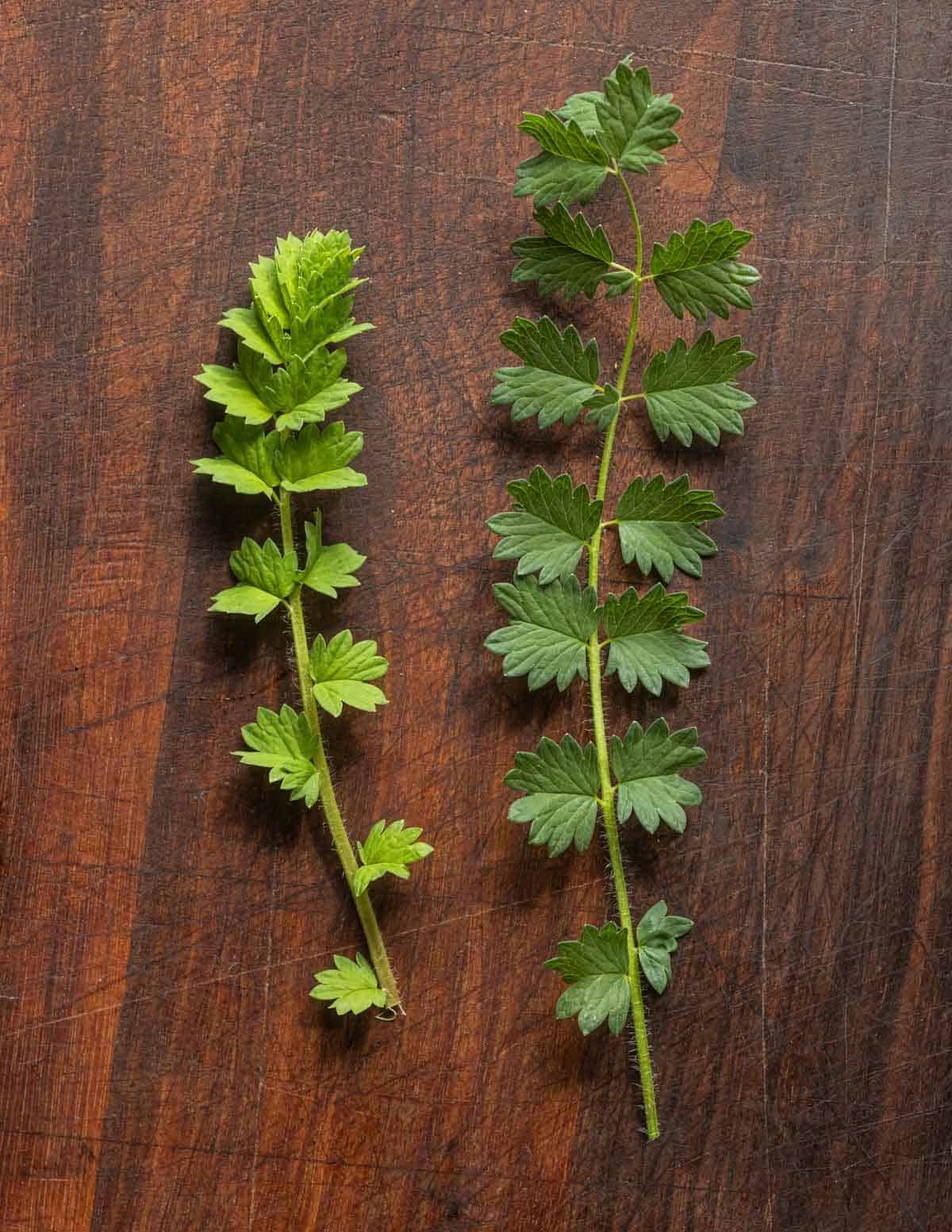
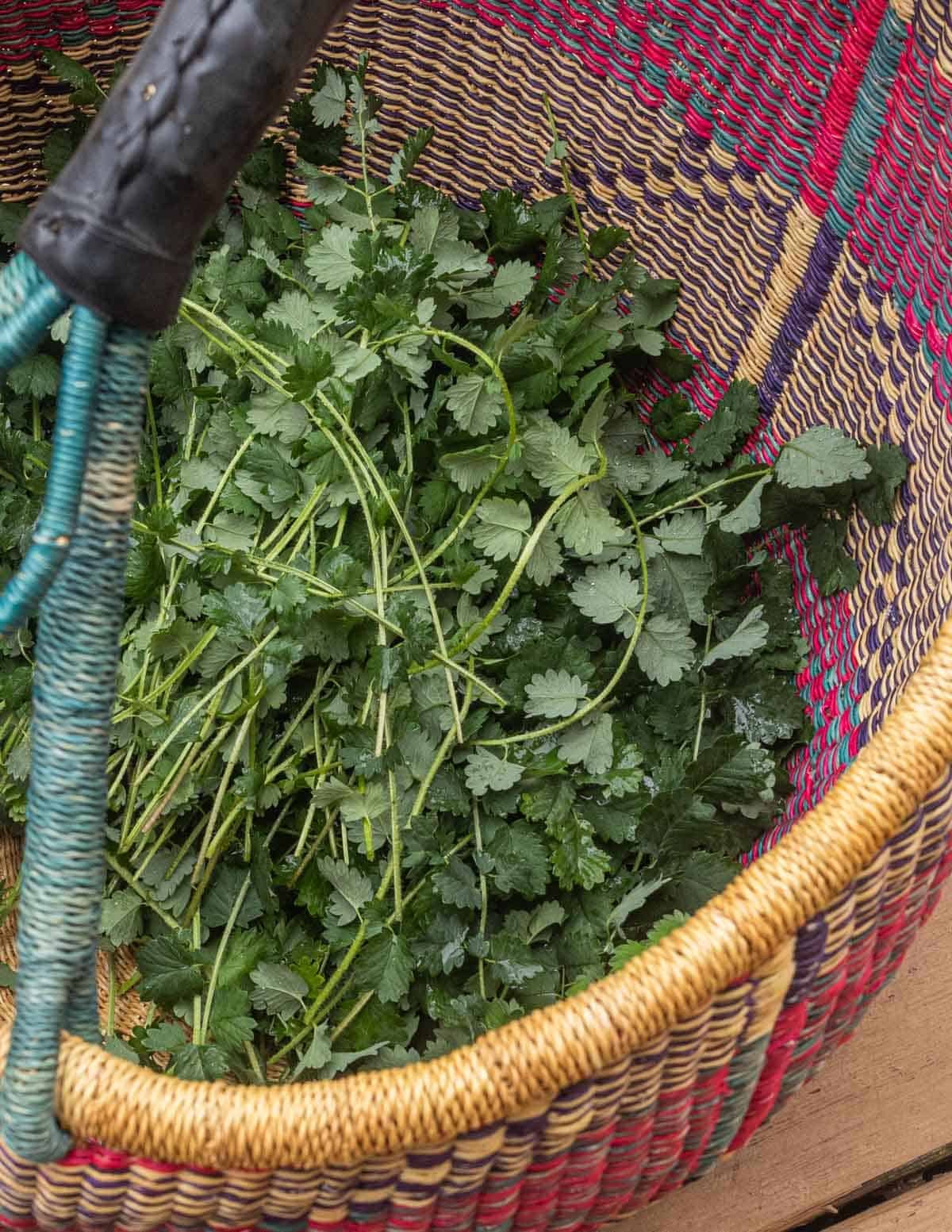
Using the greens is easy, and they can be stripped from the stems just like thyme, but with less effort.
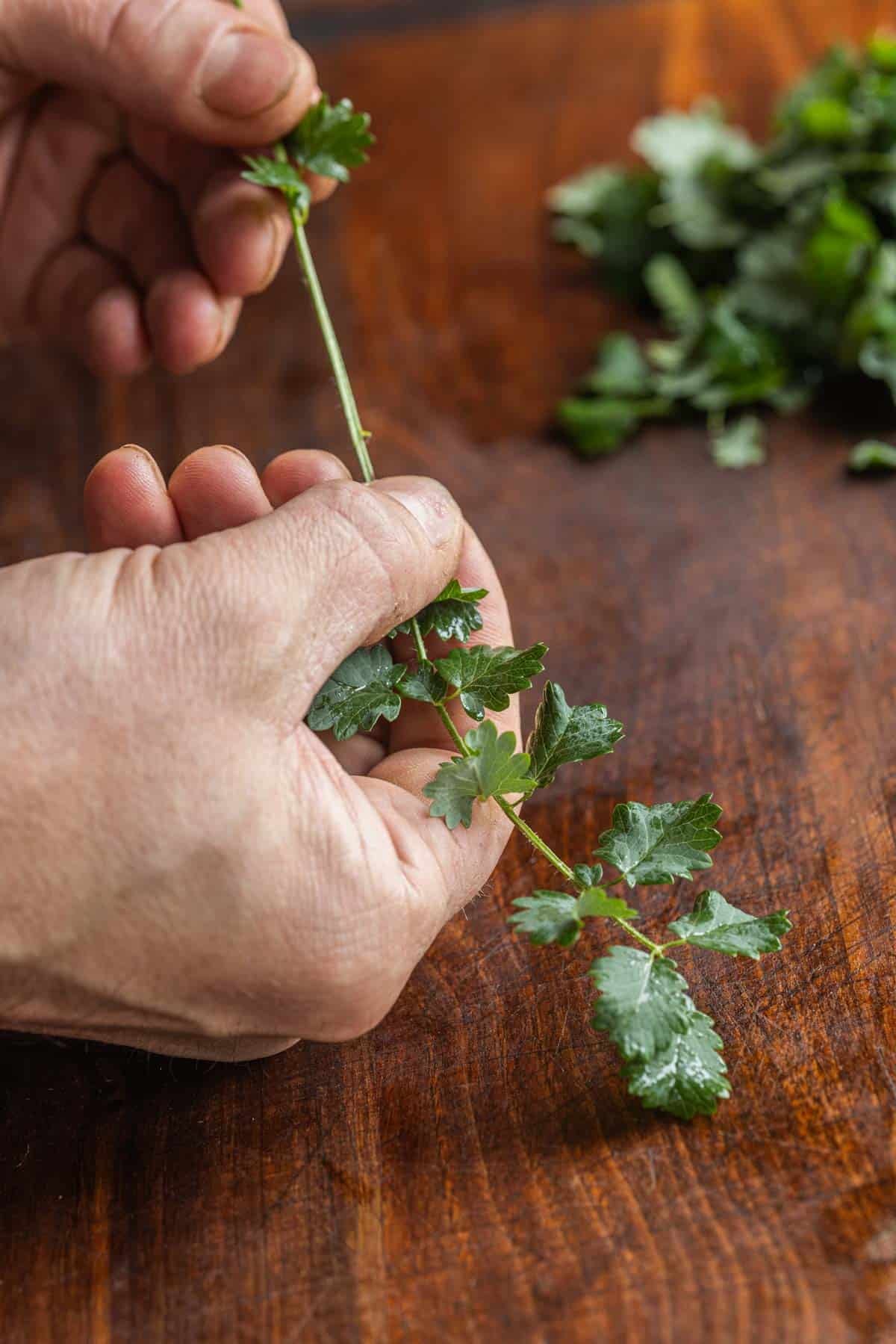
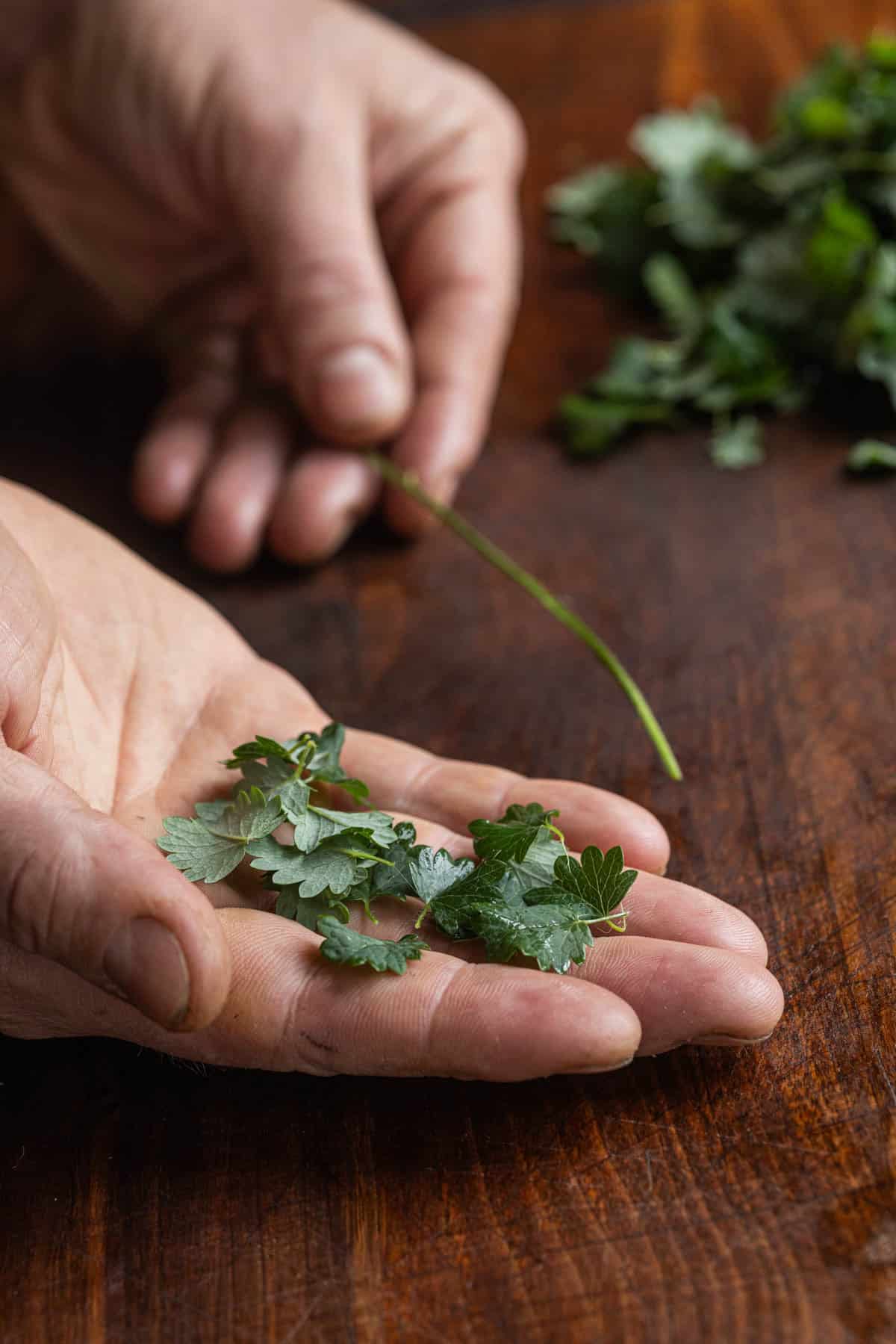
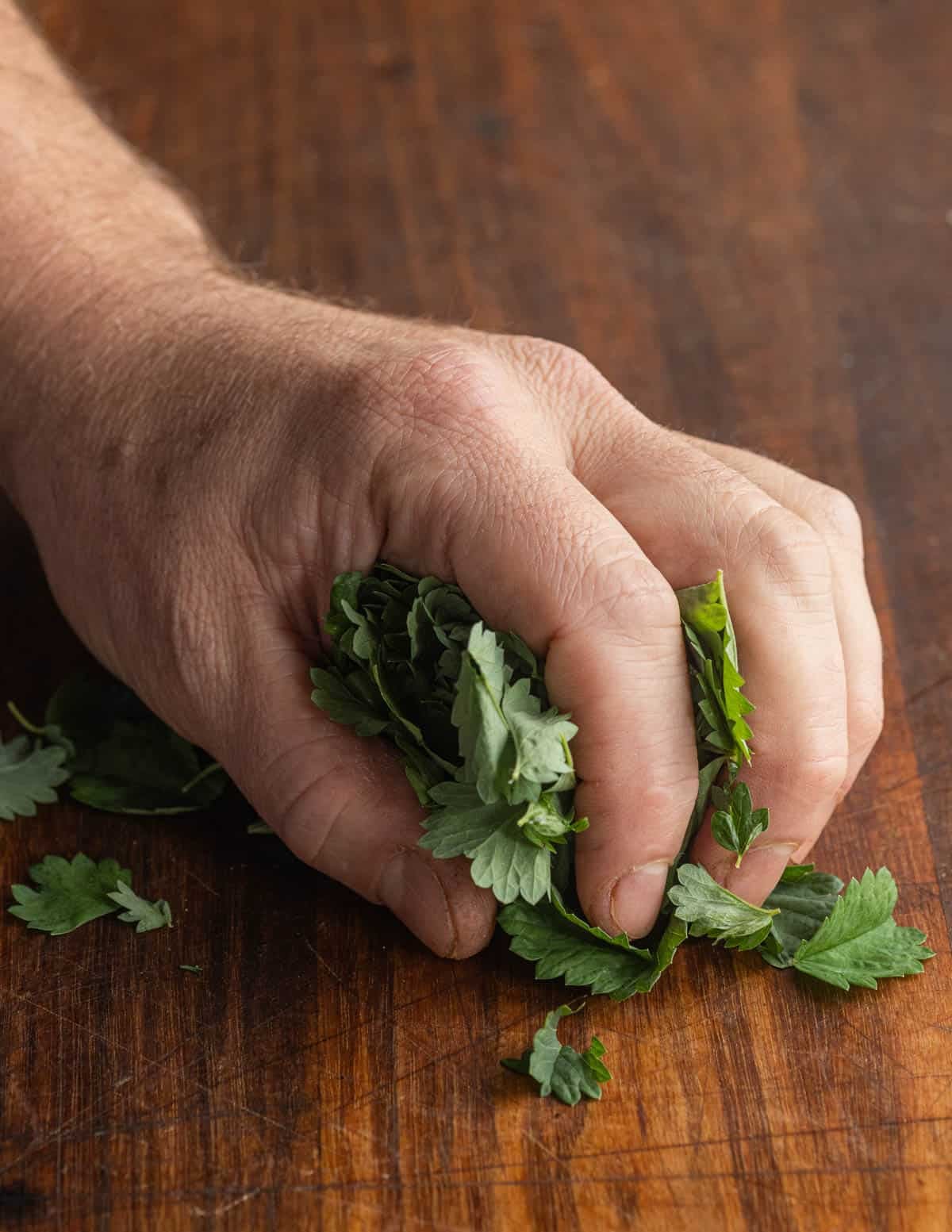
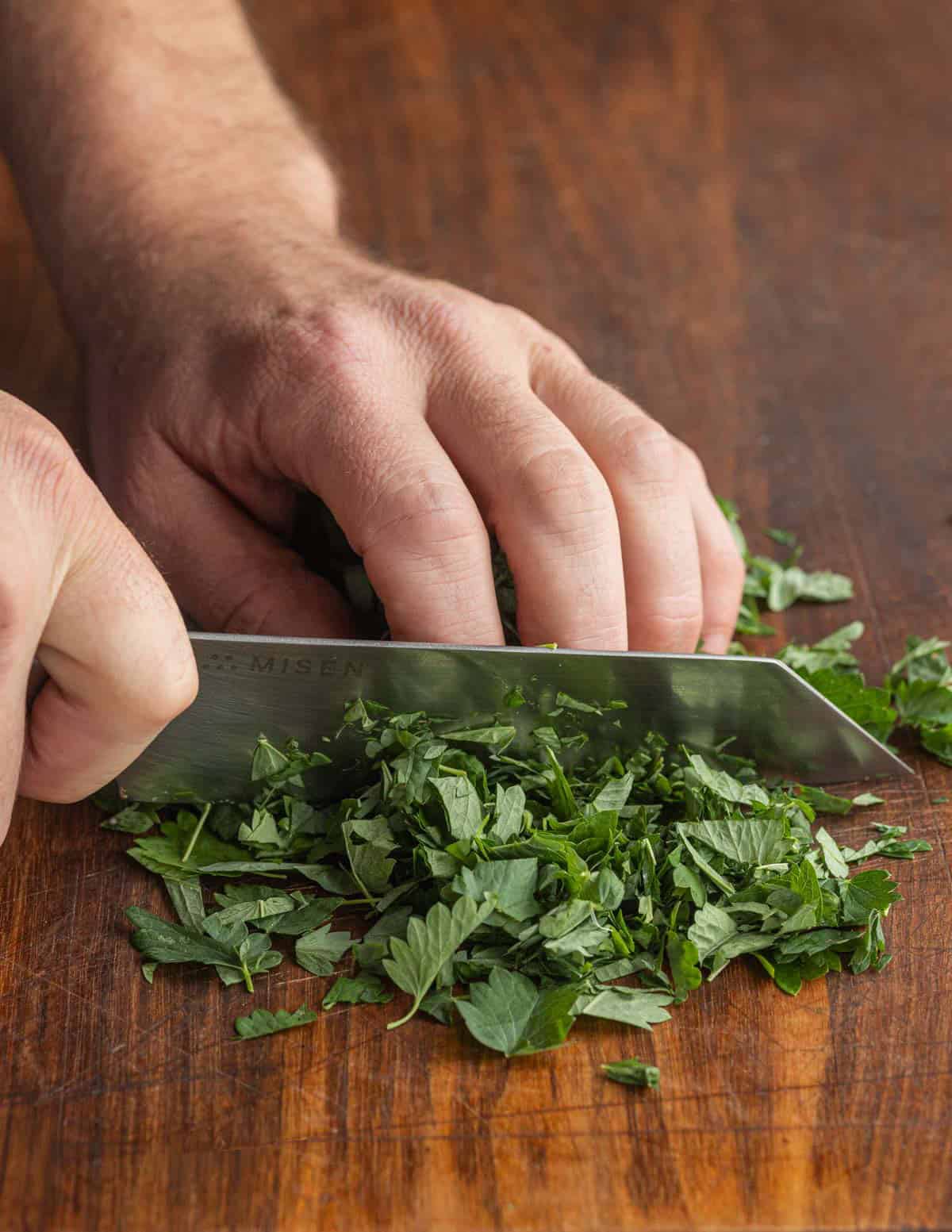
After you've stripped the leaves from the stem they can be added to dishes as a garnish, tossed whole in a salad, or chopped like parsley. Just like parsley, I ball up the leaves with my off-hand, gradually moving my fingers back and shredding them.
Simple Salad Burnet Recipes and Ideas
As I said before, just think of using the leaves as you would parsley. I really haven't found a place where it doesn't work. Just keep in mind that references online may overstate it's herbal flavor. Using it in drinks, salad dressing and infusions hasn't really done much for me.
Using Leaves As A Garnish
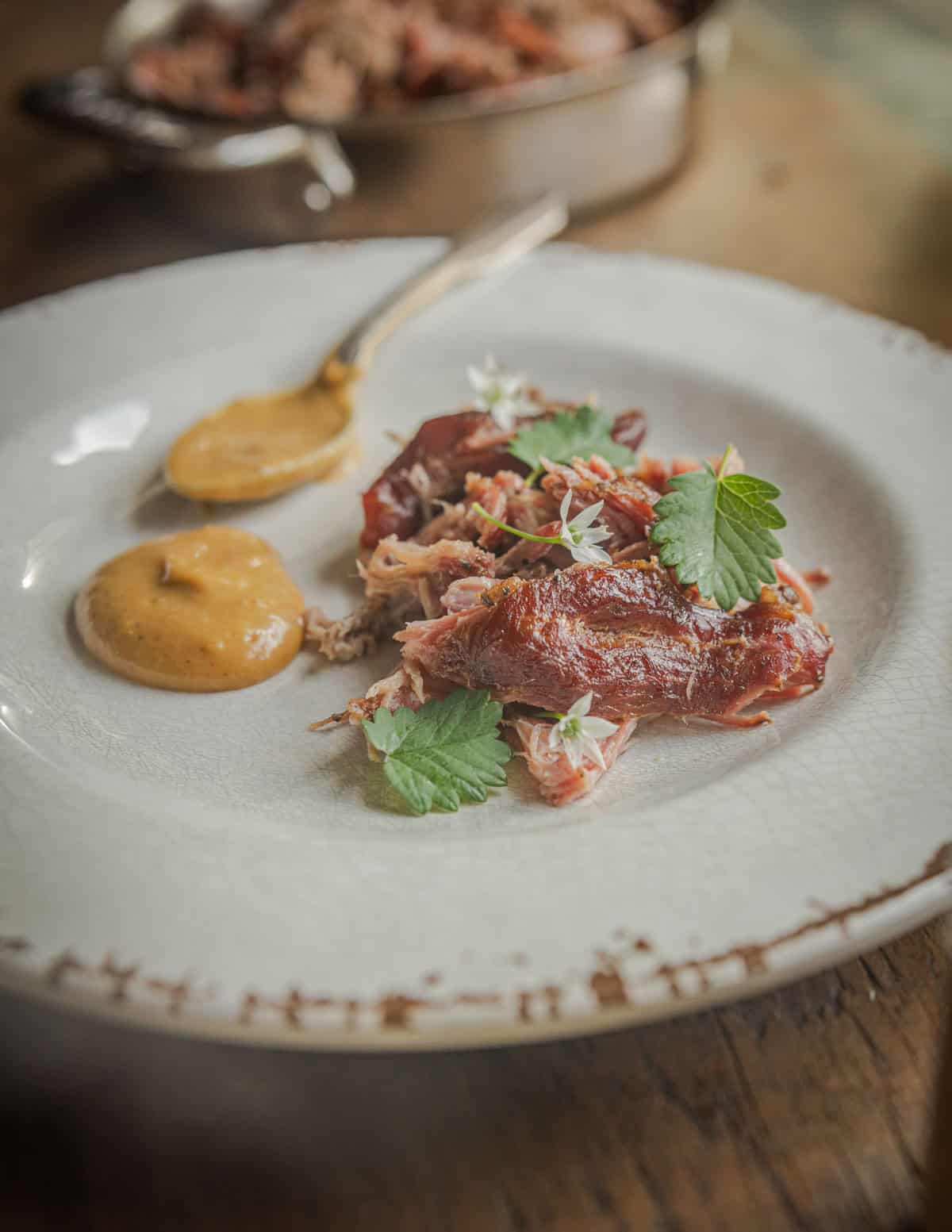
The simplest way to use burnet leaves is as a garnish like parsley, although the flavor is milder. The leaves are sprinkled throughout my new book in a few recipes shown below.
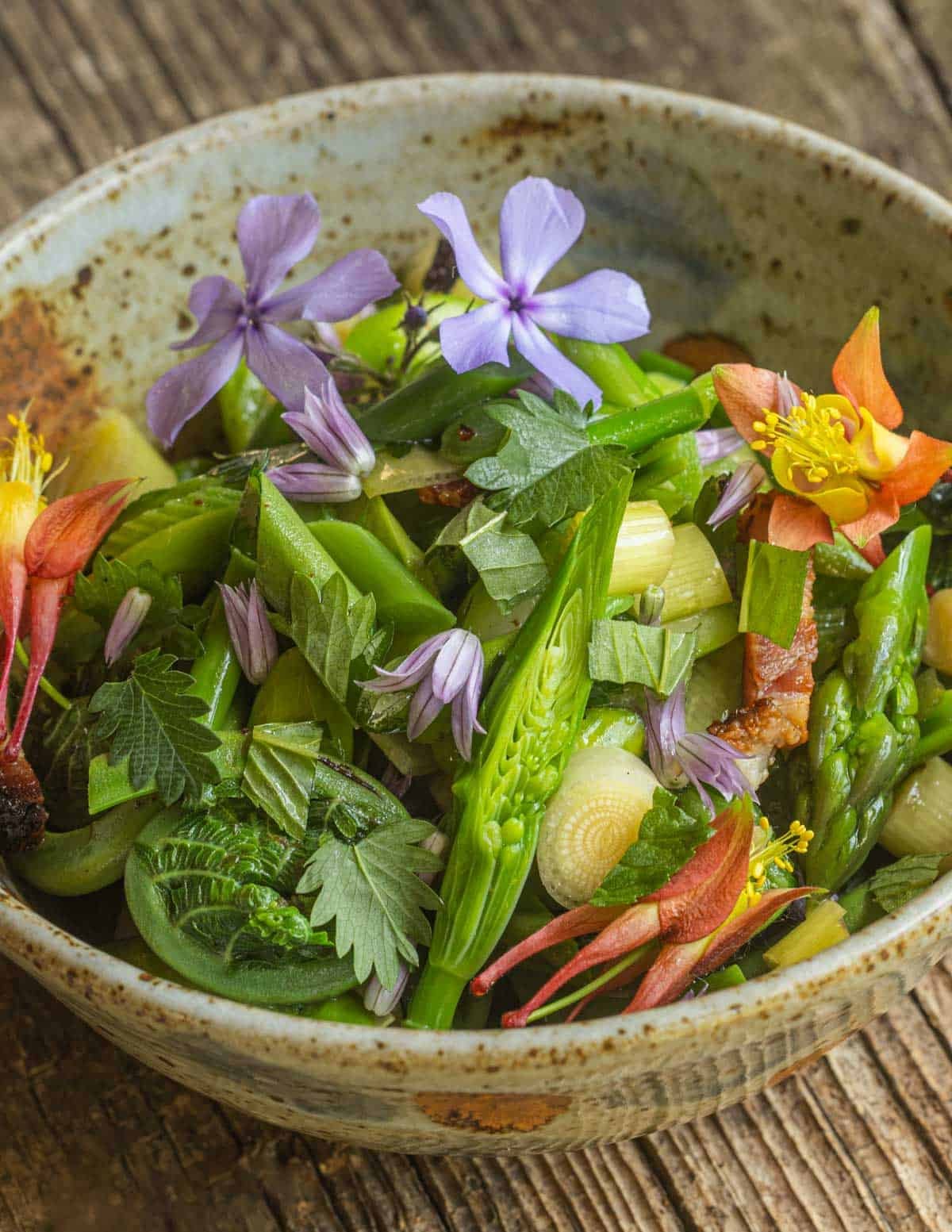
Burnet Tabouleh
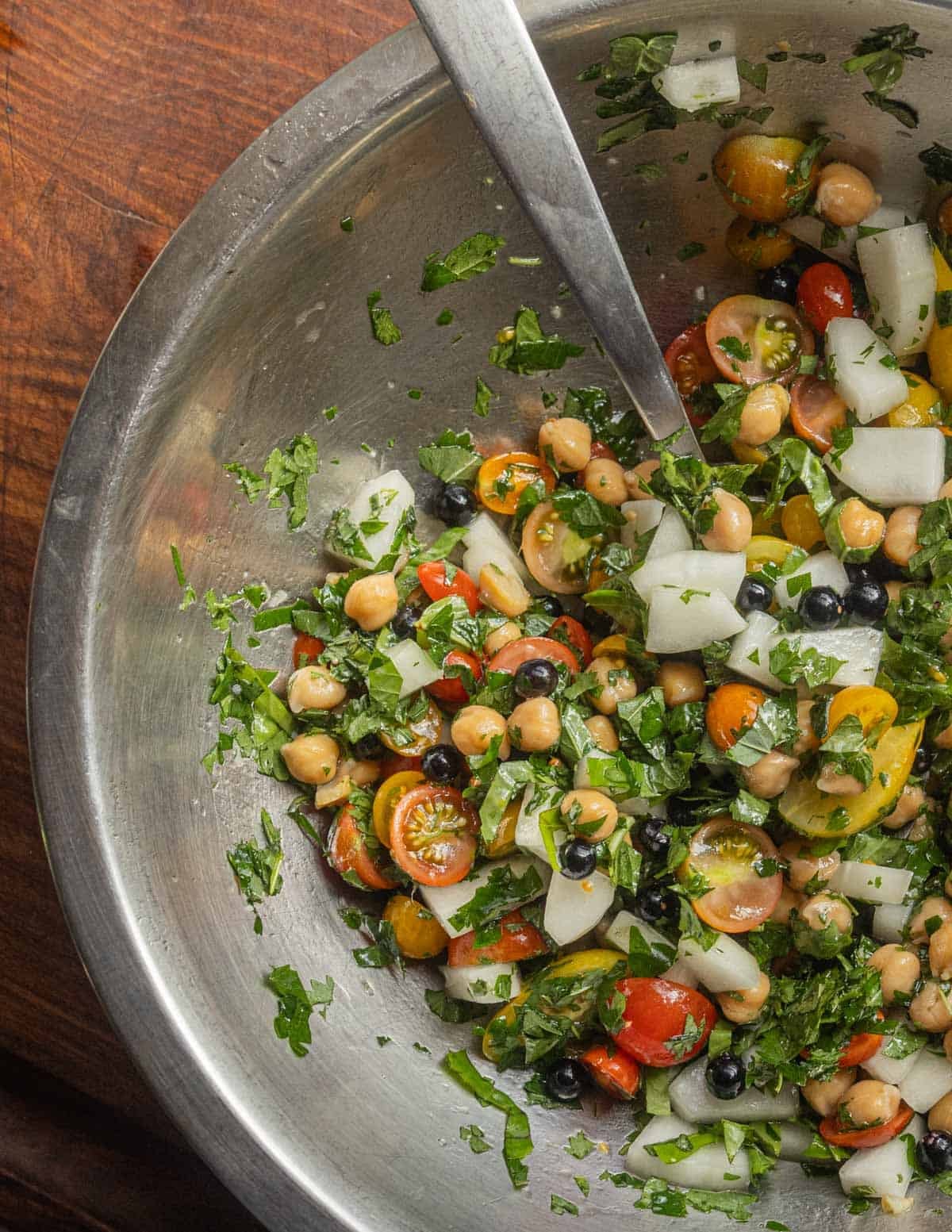
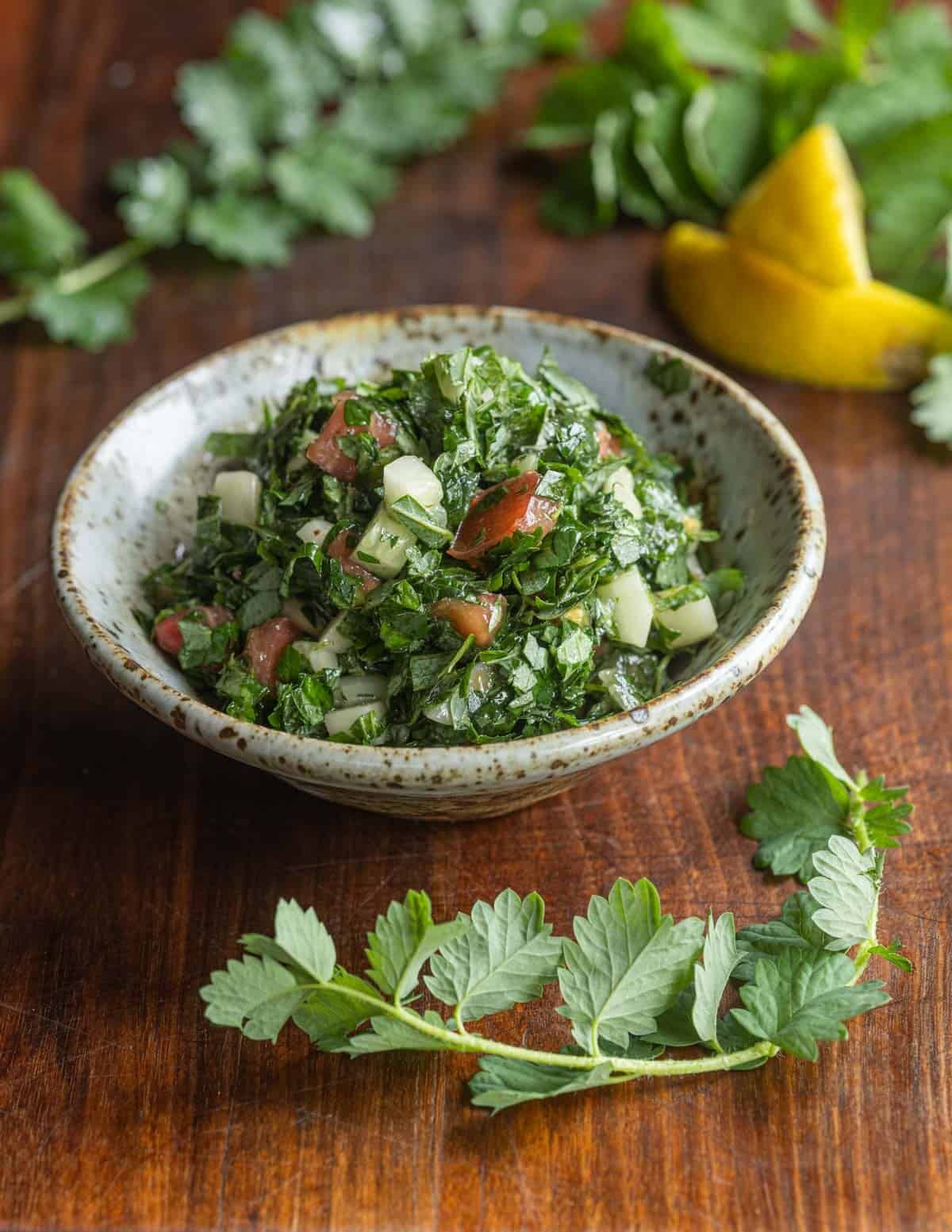
Like other parsley-like plants, one of my go-to recipes has been a simple riff on tabouleh, often without grains or using wild rice instead of bulgur. It's easy: finely chop a bunch of burnet and mix it with diced tomatoes, cucumbers, olive oil, salt, pepper and fresh lemon juice.
Composed Salads
Along the same lines as tabouleh, I've also been enjoying the leaves finely chopped and added in large amounts to chunky, composed salads. The salad below has been on rotation for a couple weeks. Cherry tomatoes, cucumbers, chickpeas, and small black nightshade berries are in the version below.
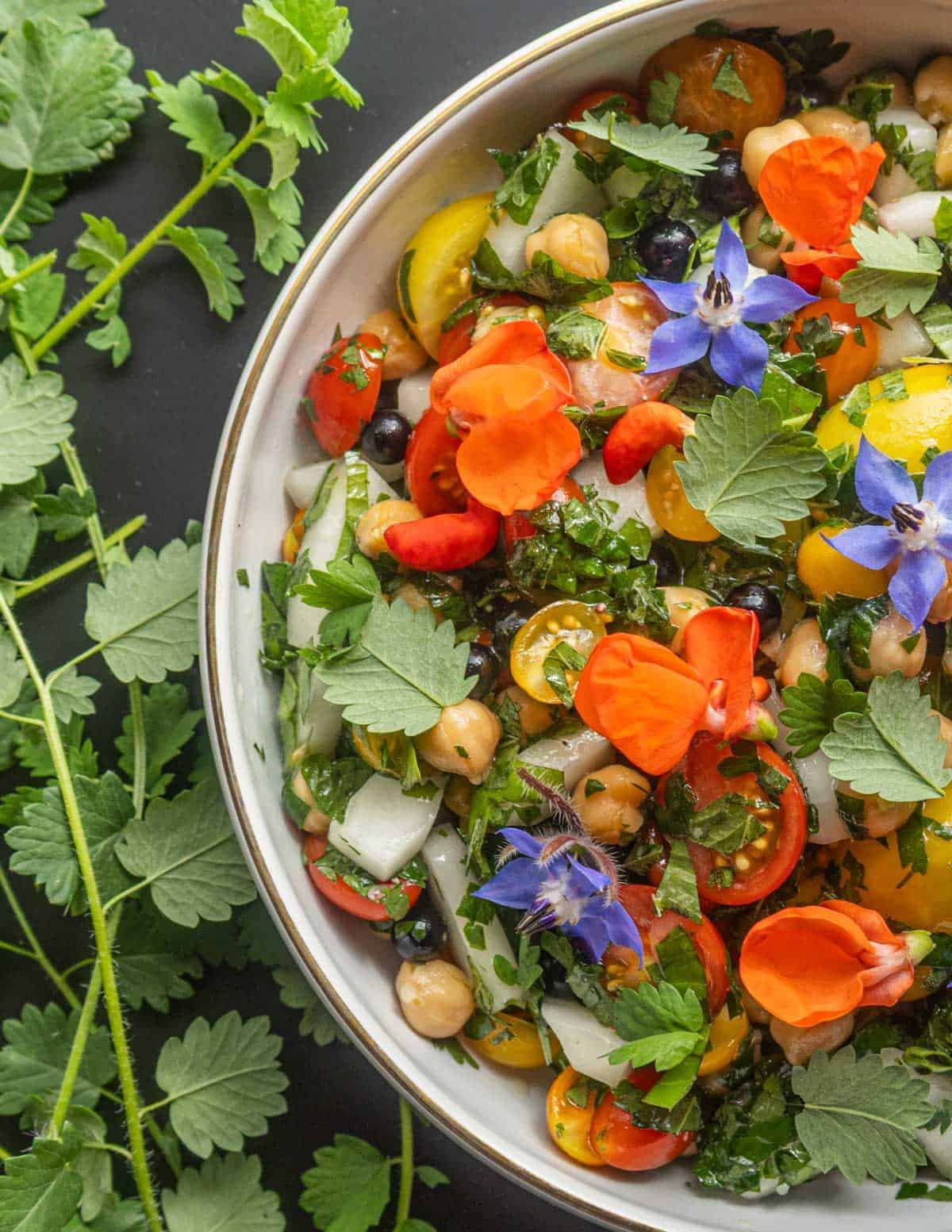
To switch it up, sometimes I'll push it towards and antipasti salad, adding cubed salami, mozzarella, olives or feta cheese. You can see the recipe here.
In closing, burnet is a unique, attractive plant to grow with a long history as a wild edible. Instead of being a showpiece or having a life-changing flavor, it's usefulness for me is as a supporting character in the garden and the kitchen.
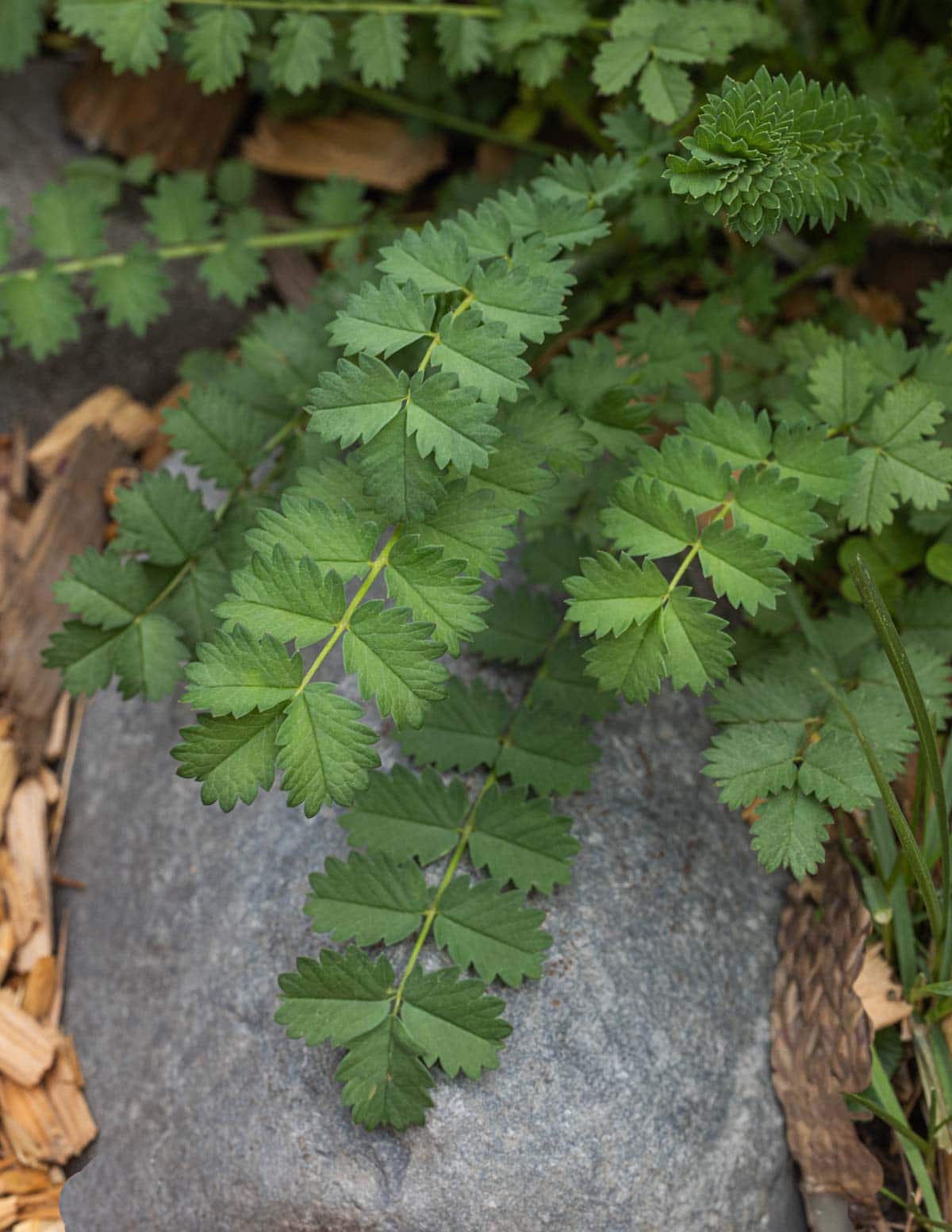
Have you grown salad burnet, used it, or have anything to add? If so leave a comment and let me know.
Andrew
What are your other top perennial herbs besides this one, borage, and lovage?
Alan Bergo
Anise hyssop, mint, bee balm, lavender (zone appropriate), yarrow, costmary, rue.
Amy
Really enjoyed learning about this one, including its long history. I don’t think I have it here on the West Coast but it called to mind oxeyed daisy leaves which are plentiful here, on big basal rossetts, and a unique flavour, almost sweet (in an artichoke kinda way) and lovely in salads or a flavourful puree sauce with white white like Bill Jones (our local Forager Chef) does.
Alan Bergo
Thanks Amy.
loretta
Mostly just a hearty thank you!!! We live in North Central WA, formerly Alaska (you must go a foraging there some time if you have not already!) and I am SOLD on salad burnet! This post, as all of yours are, is not only well researched, important writing, but beautiful and inviting. Thank you for sharing your efforts. I do overwinter parlsey (flat and curly), and beg it to self seed each year, so my hopes are high for salad burnet to join the crew. I am especially thrilled about the cucumber flavor profile. I am going to look for a seed source right now. Have not seen this in my usual sources. Will report back if I cannot find a source.
Alan Bergo
Thanks Loretta. Here in MN I can’t get parsley to re-seed, if you can burnet should have no problem staying around.
AllisonK
Wow! I have lived all over southern MN, currently live in northwest MN, and have been a (lazy) forager for 15+ years, but I have never seen or heard of salad burnet! I am going to look for seeds to order, so I can add it to my foragable backyard!!
Alan Bergo
Yep it’s perfect for that. Not a life changing flavor or anything like that, but it’s a unique, historically wild edible that’ll play well with others.