
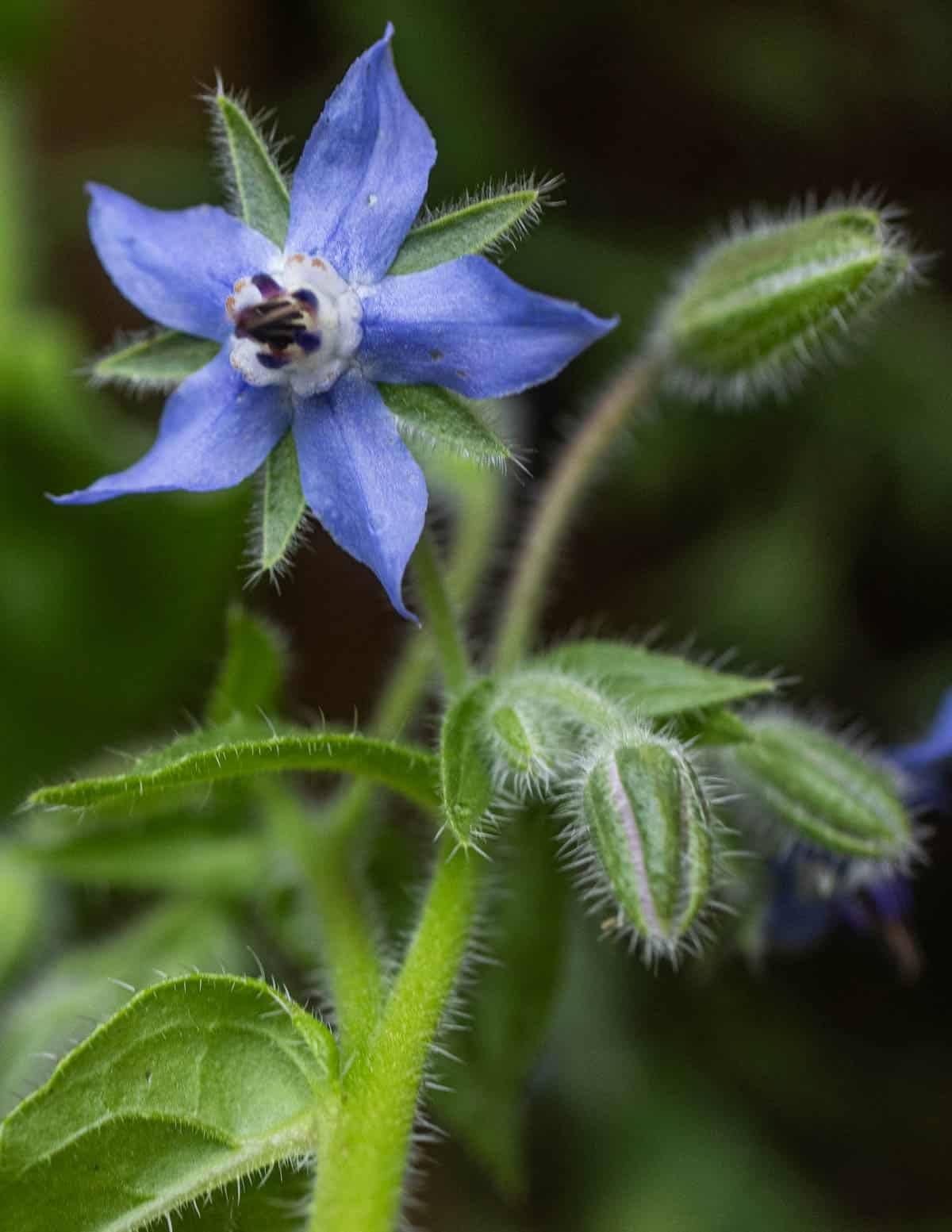
Used since antiquity, borage is an old herb to grow for yourself and the bees. While the star-shaped blue flowers are pretty, they're the least substantial part of the plant. Borage leaves, stems and buds are also edible, and are a traditional wild food of the Mediterranean. Today we'll go over some of the background of the plant, my experience growing it, and most importantly, what you need to know about using it in the kitchen.
Background and Description
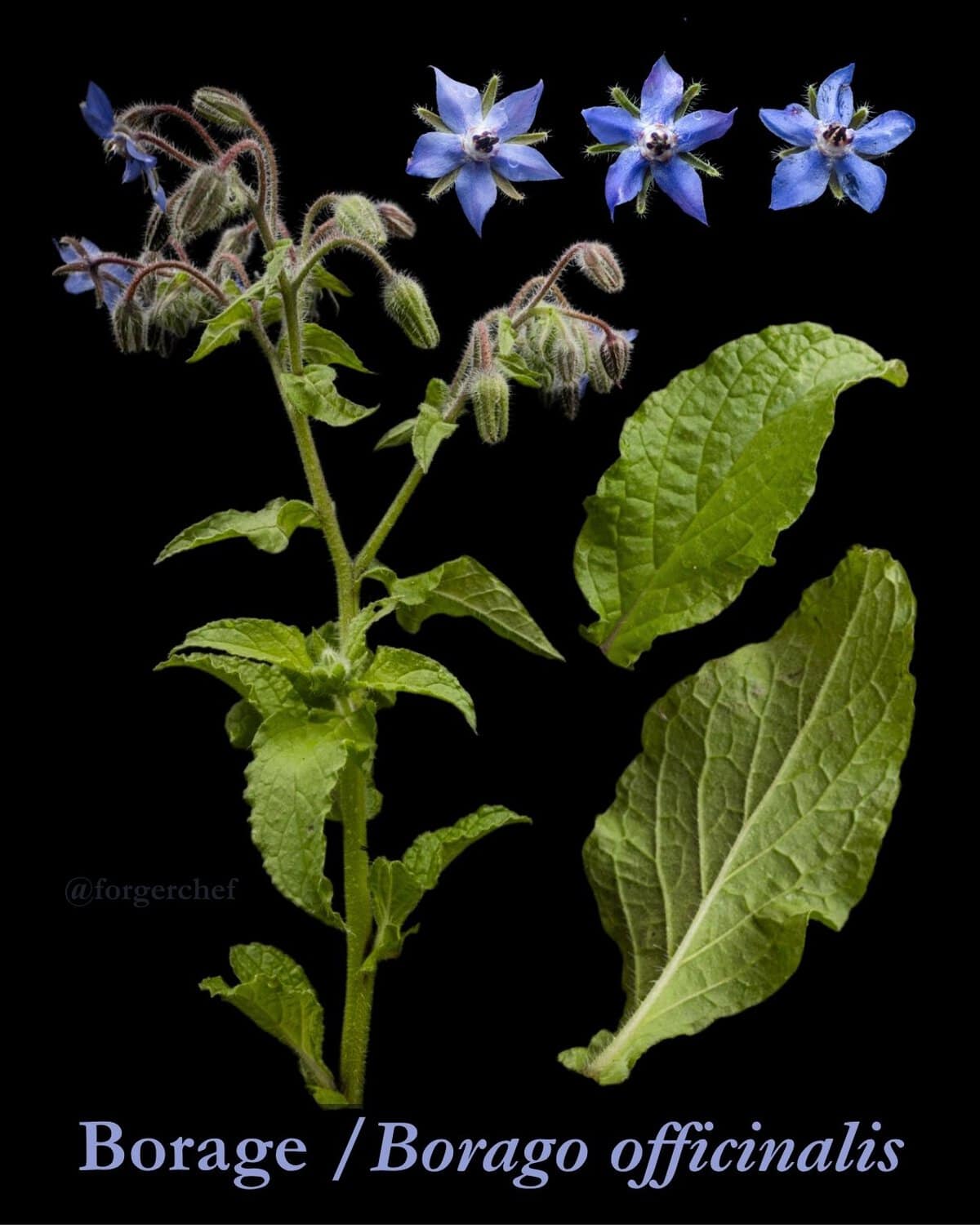
Borage (Borago officinalis) is a self-seeding, annual herb native to the Mediterranean where it grows wild. Herb is a slightly misleading term, but more succinct than "furry spinach that tastes like cucumbers".
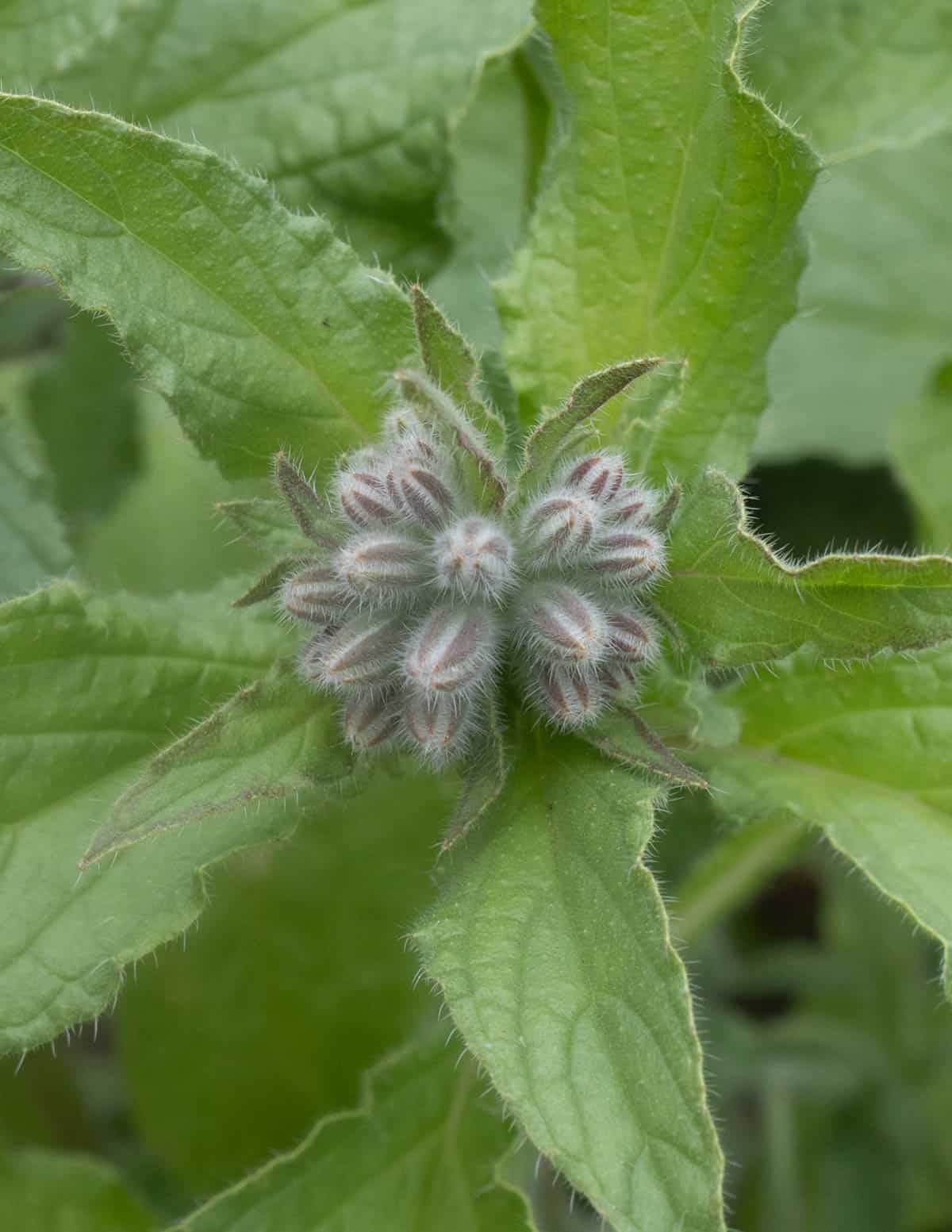
In the spring, the plants appear as a cluster of basal leaves that are oval-shaped, hairy, and smell of cucumber when crushed.
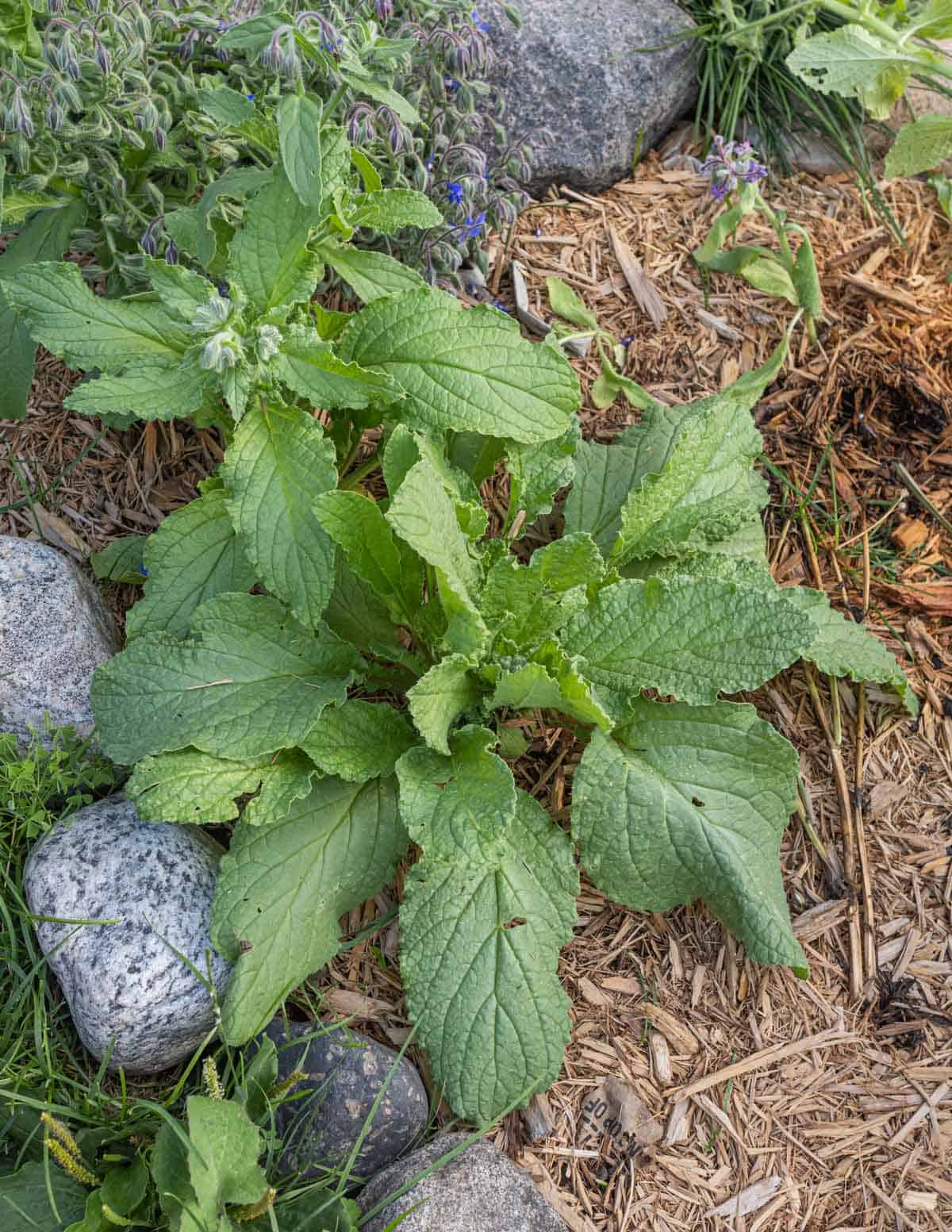
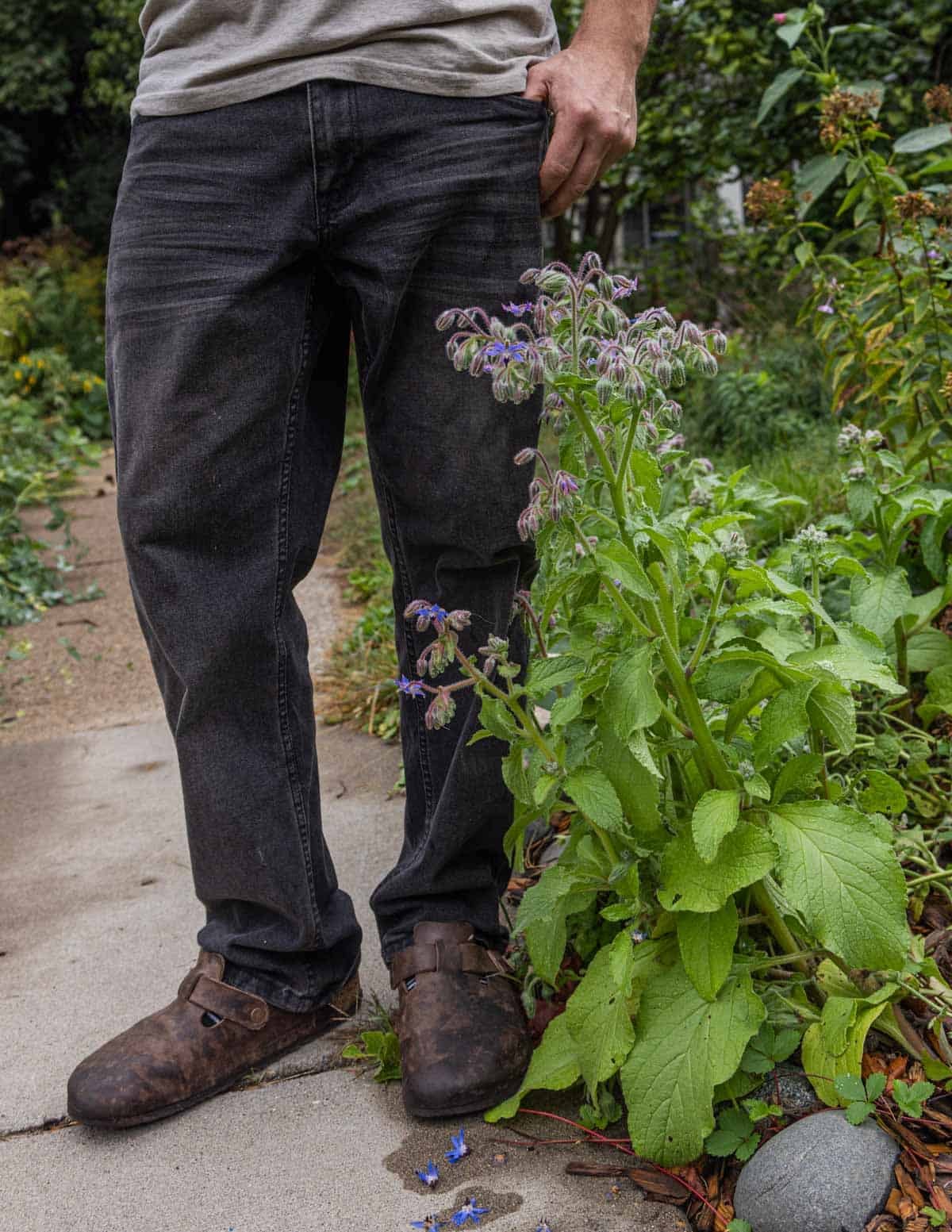
As it grows, the plant produces flower stalks with alternate leaves. At maturity they only reach a couple feet tall, eventually falling over in a heap on the ground where they'll continue to sprawl, flower and go to seed. To me they're whimsical, unique, and occasionally sloppy looking.
Borage and humans have a long relationship, dating back at least 2000 years. The Greeks and Romans knew it and valued it for infusing drinks, reputed medicinal properties, and inspiring courage, among other things.
Similar Plants
Borage is in Boraginaceae genus, making it related to a few other edible plants I know of like comfrey (Symphytum officinale), Virginia bluebells (Mertensia virginica) and oyster plant (Mertensia maritima).
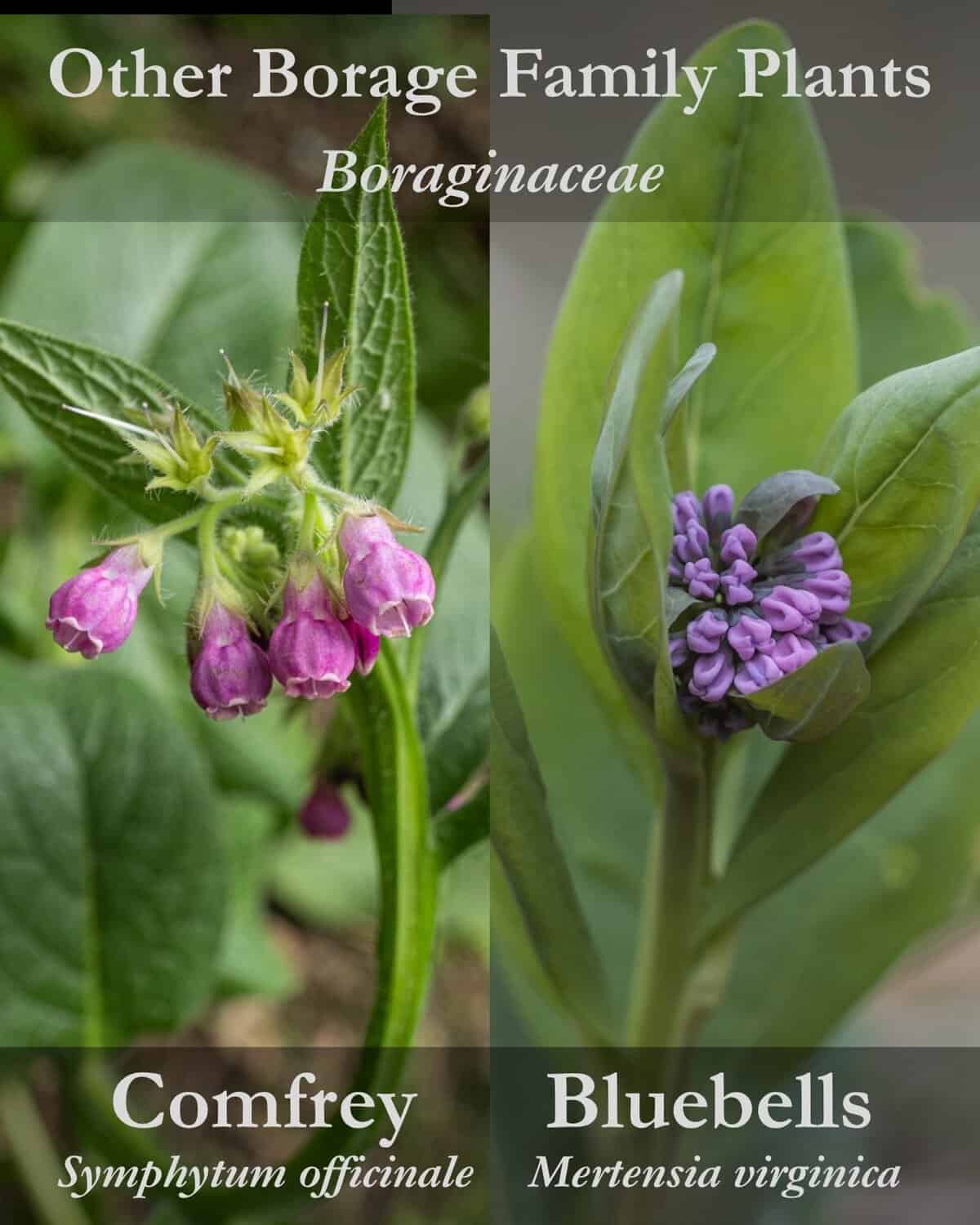
All of the aforementioned plants have a mild taste of cucumber, oysters, or a combination, but borage definitely has the strongest cucumber taste of all to me.
While it's unlikely to find it growing wild in North America, foragers in Europe should make sure they can separate the plants from foxgloves (Digitalis) which are toxic and have leaves that look similar.
Growing Borage
Borage is one of, if not the easiest plant I've grown. The seeds don't require cold stratification and typically have a very high germination rate. The cold Minnesota winters keep the plants in check where I live, but keep in mind they self seed and will spread in warmer climates. The plants do best in full sun but will sprout just about anywhere they want.
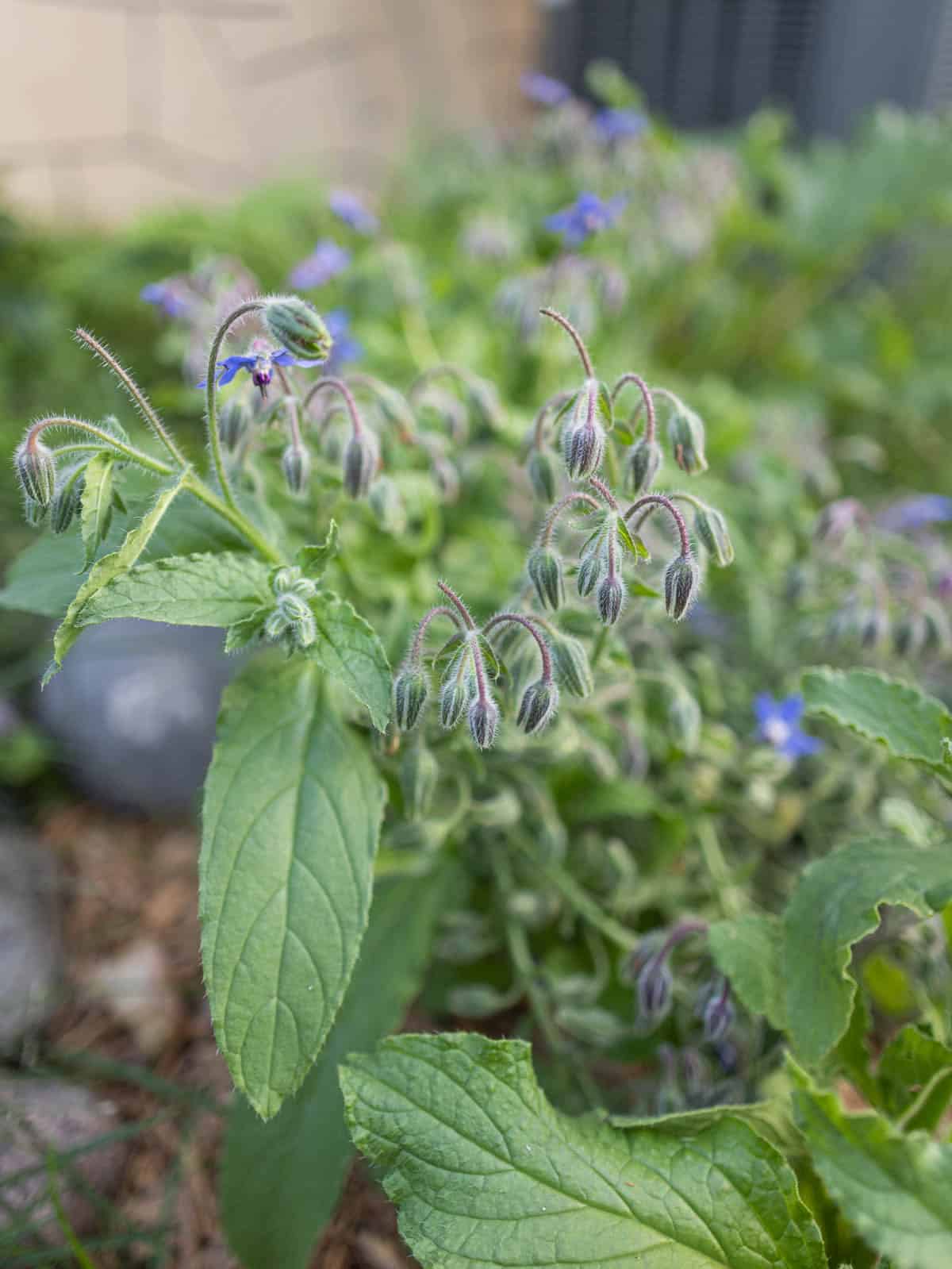
I've grown borage every year I've had a garden. Even where I live in St. Paul Minnesota the plant will self-seed, popping up spontaneously here and there. They don't ask for much, and their sprawling, a-typical shape adds a fairy tale touch to a yard, garden, or both.
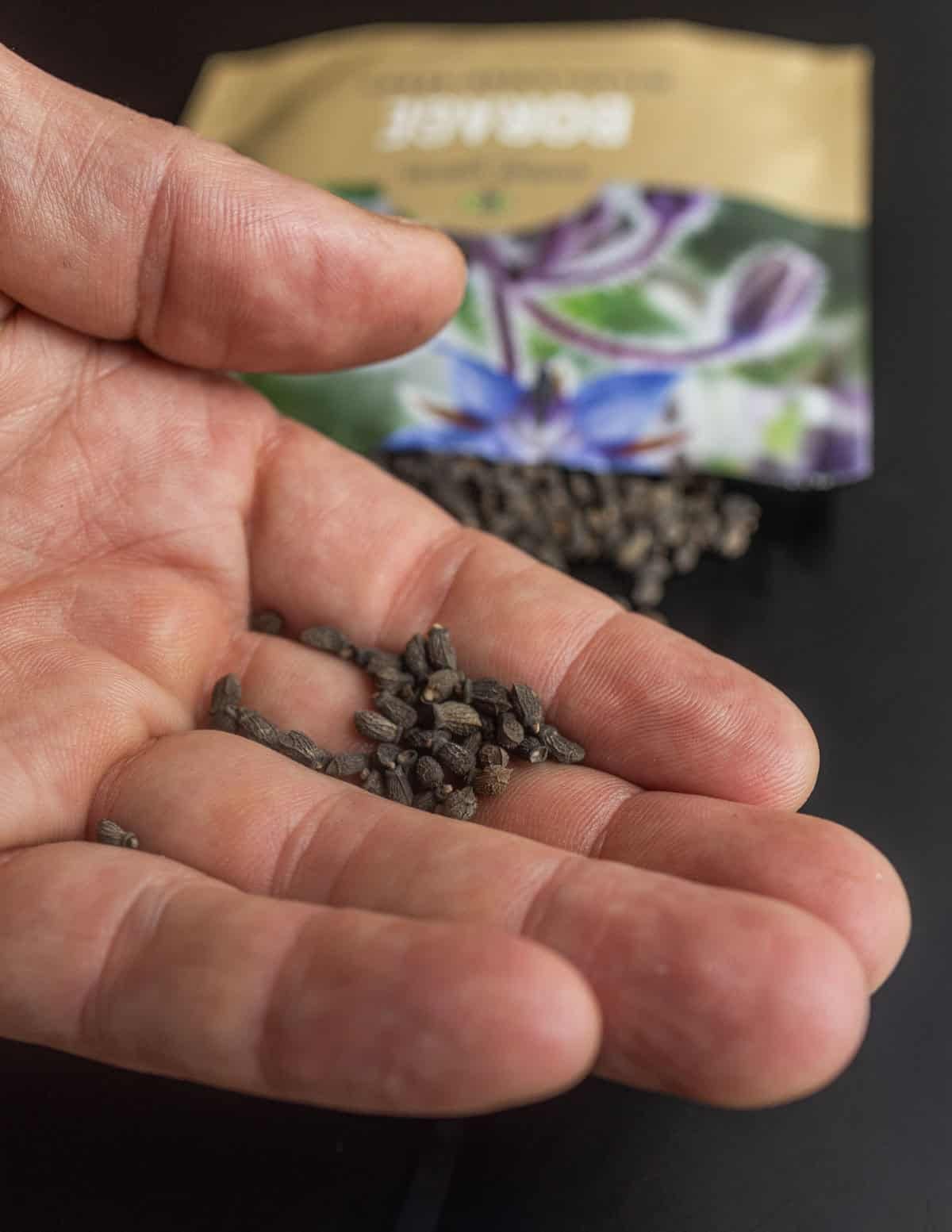
I find it tricky to catch the seeds on the plant in time before they hit the ground. If my plants don't re-seed for some reason, borage seeds are easy and cheap to buy online. It took me two years of buying seeds for them to come back on their own but they're well established now.
Benefits of Borage in the Garden
At a high level, I grow borage more for it's non-culinary properties than what it can add to a recipe. Following is a quick list of the attributes I value it for.
A Pollinator Plant
If you want a plant to attract bees and other pollinators borage is one of the best plants I know. Every morning when the plant is flowering I can walk outside and hear the gentle hum of bumblebees cruising around gathering nectar from the flowers.
Dynamic Accumulator / Mulch
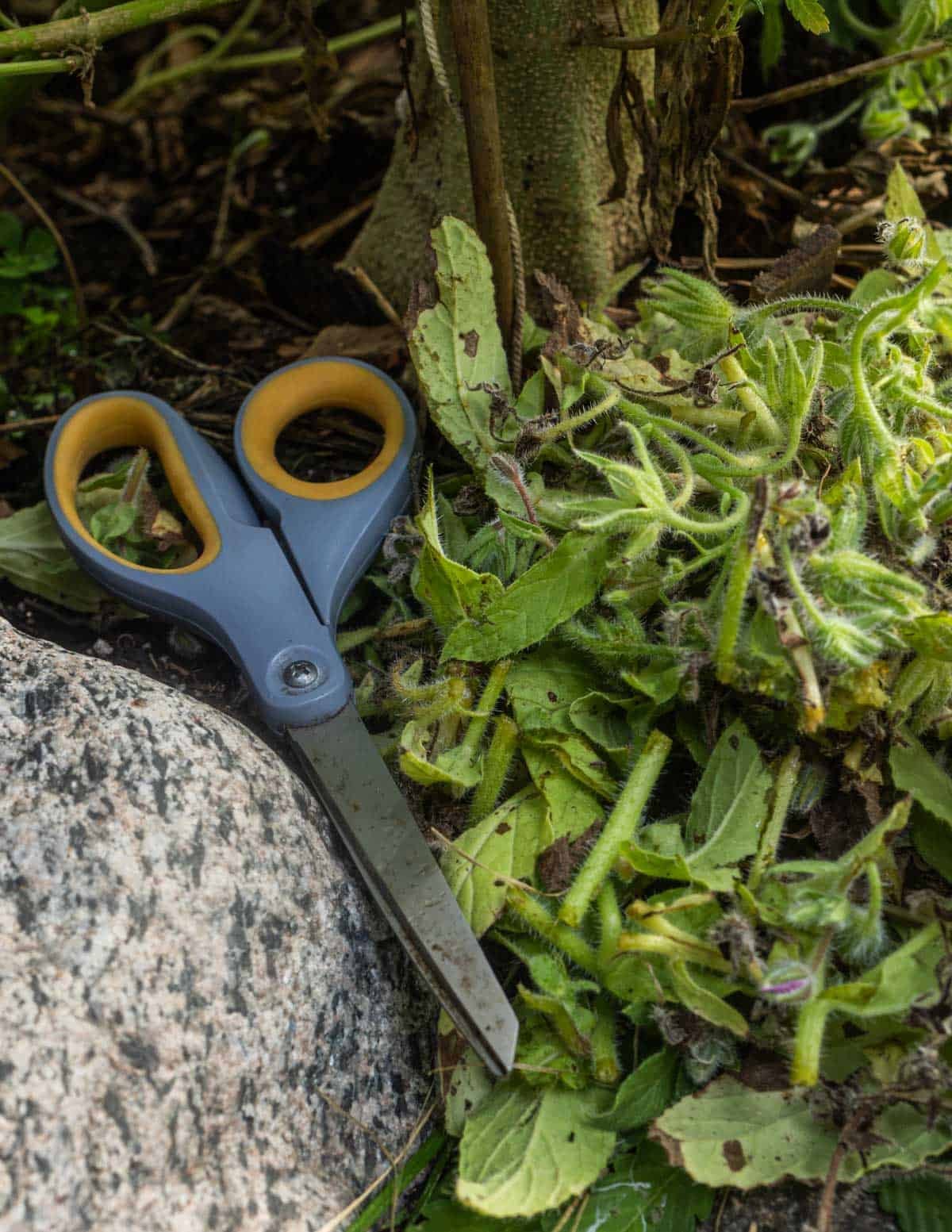
Just like it's cousin comfrey, the root of borage draws up nutrients from the soil, specifically potassium and calcium. Many people use the plants as "chop and drop mulch" and it's as easy as it sounds: chop the plants down and drop them underneath another plant. Over time the nutrients will be dispersed in the soil. One friend of mine plants borage (and comfrey) under fruit trees.
Weed Control
The blob-like, spreading growth of borage is good for covering ground and keeping weeds at bay. Along with purslane I've found it useful for covering nooks and crannies in the garden where weeds can encroach.
A Companion Plant
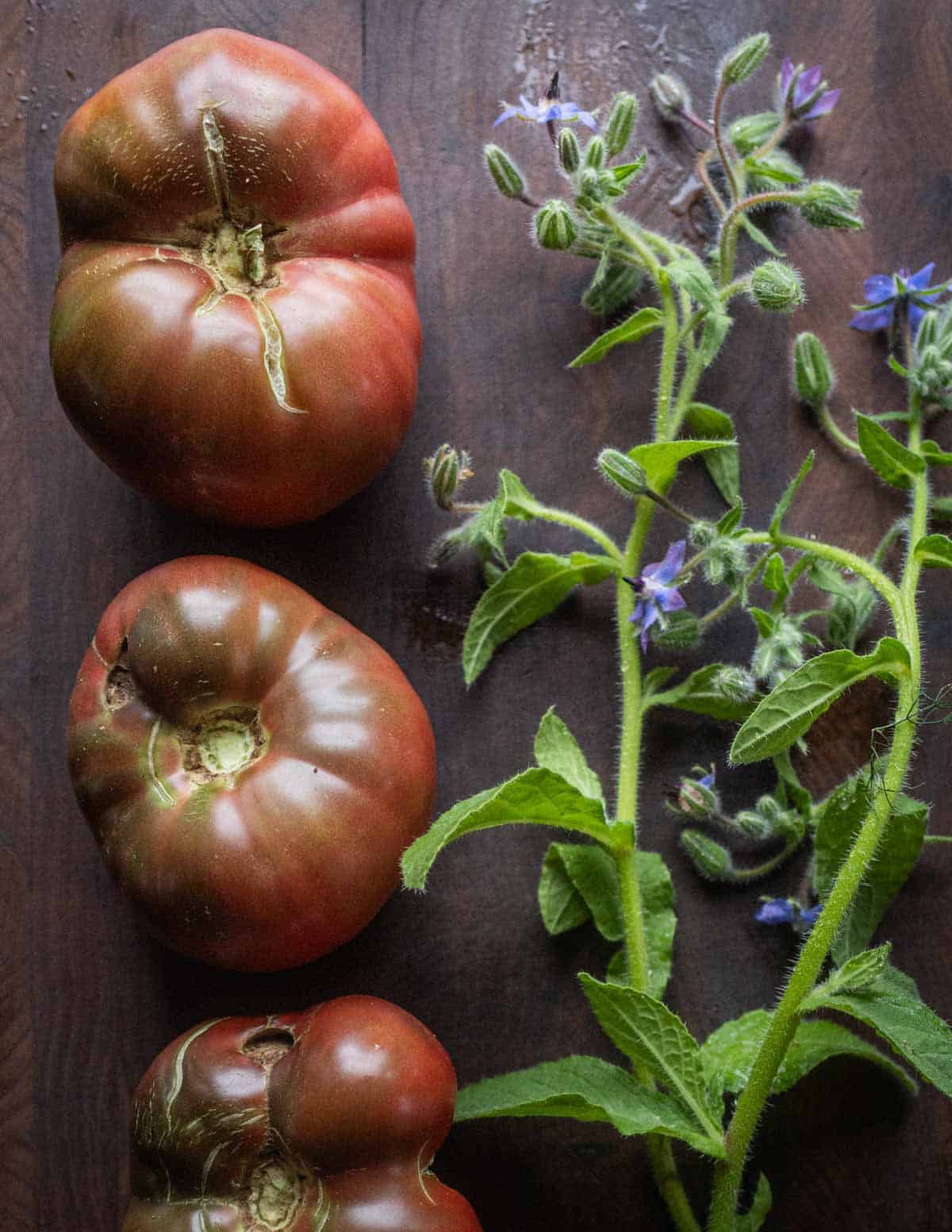
As it accumulates nutrients from the ground, planting borage next to other vegetables may improve their yield. It has a tendency to sprawl, so give it a wide berth in between other plants or cut it back regularly. I've been putting mine punext to tomatoes, cucumbers, squash, hemp, corn, and other greedy, heavy-feeding annuals.
Cooking with Borage & Traditional Recipes
As an edible, borage is mediocre. It can be cooked like most leafy greens, but the leaves are fuzzy and cook up soft, which is why traditional recipes use in blends and mixes. Some resources will say the young leaves can be sliced for salad, but the texture is still off-putting to most.
Young basal leaves are the most tender and best to eat, but slightly older leaves on the flower stalk can also be harvested, as long as they feel tender and fresh.
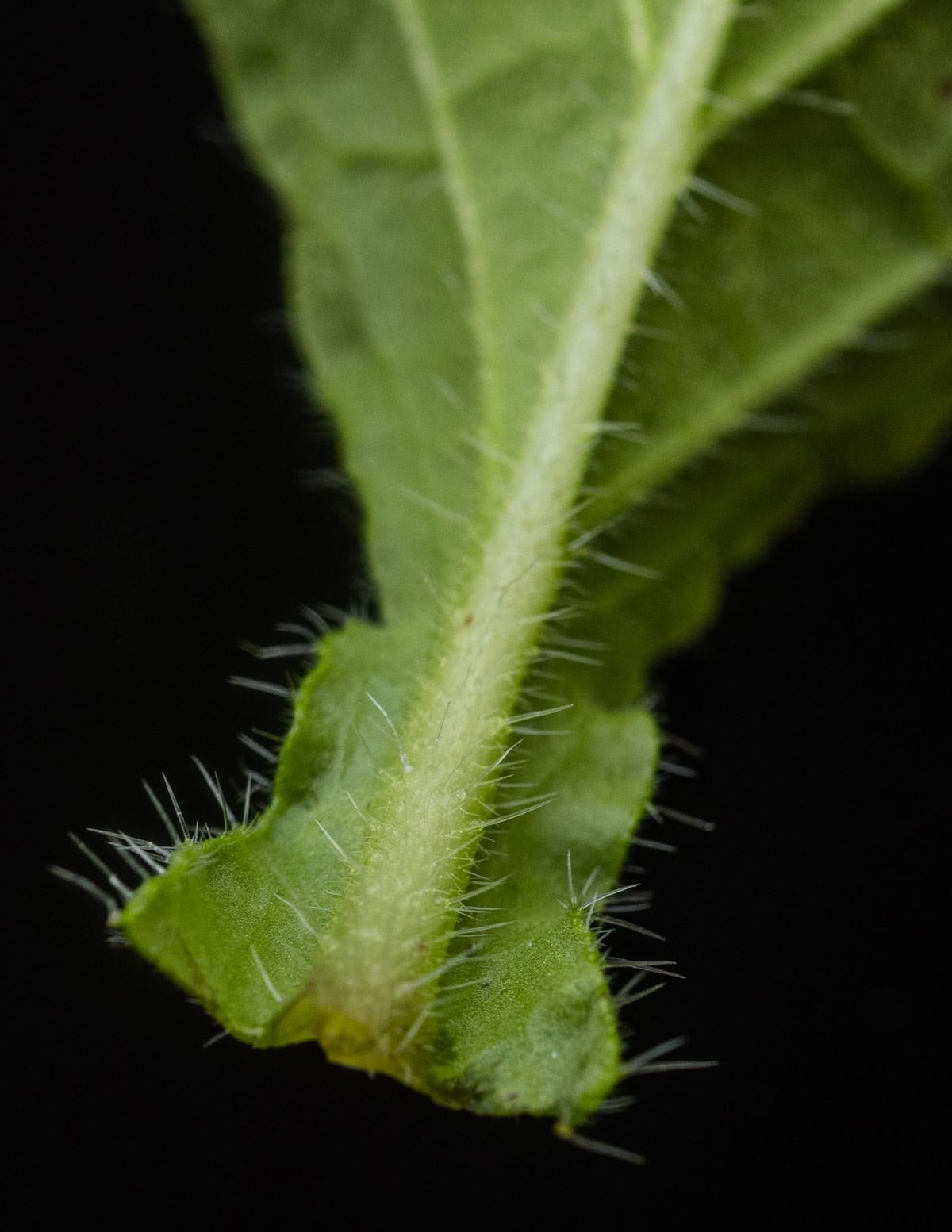
Over time, the spiny hairs on older plants can eventually get rigid enough to prick your finger, like zucchini. Cooking tames the stiff hairs, but they're still noticeable.
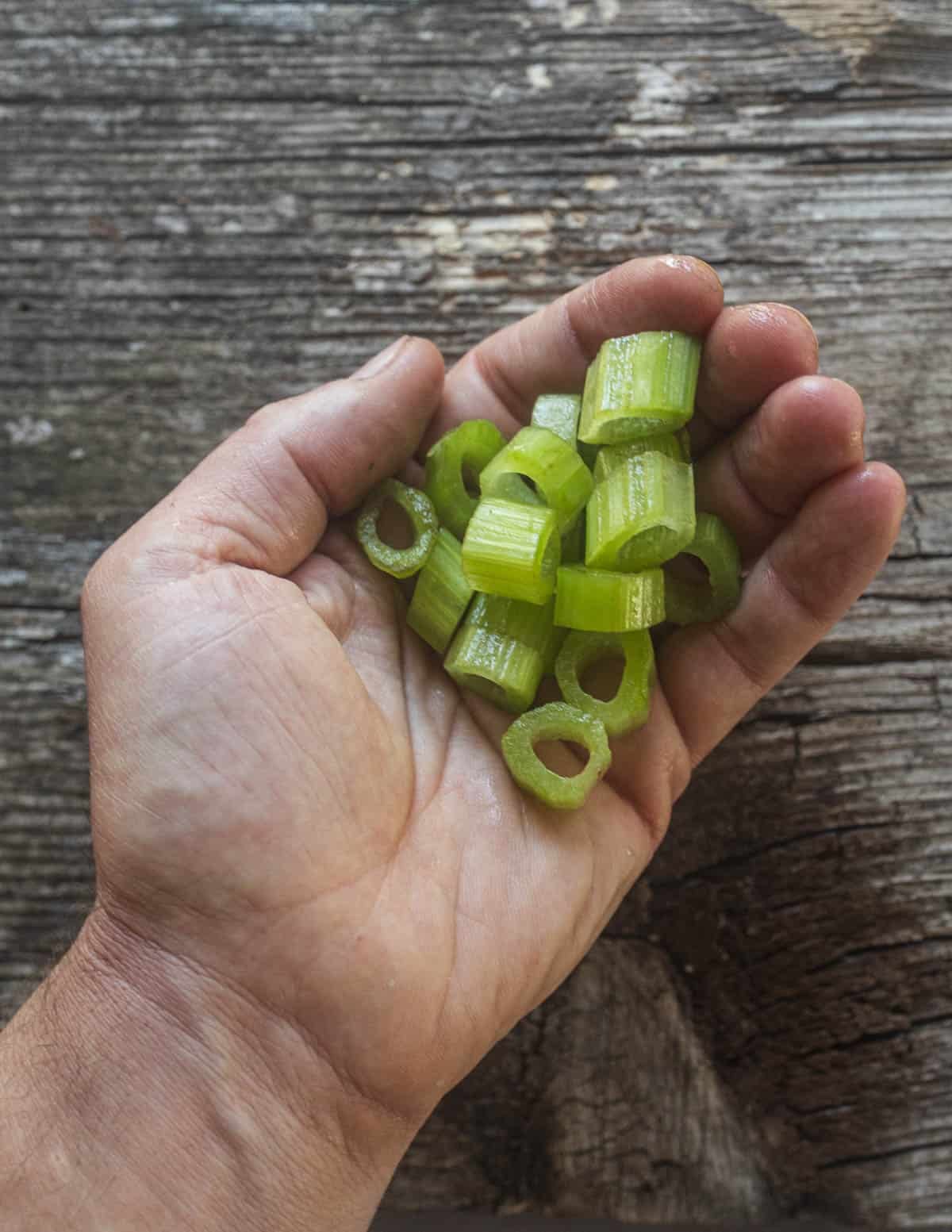
The sometimes large, hollow stems are also edible, but I only really eat them when they're from very robust plants with stems thicker than an inch, since they should be peeled. They're slightly mucilaginous but not unpleasant mixed with other things.
The most important thing to know about borage is that I never simply sit down and eat a bowl of cooked borage greens. This is for a few reasons:
- The greens cook much faster than most leafy greens and get mushy fast.
- The furry texture of the leaves by itself is a deterrent.
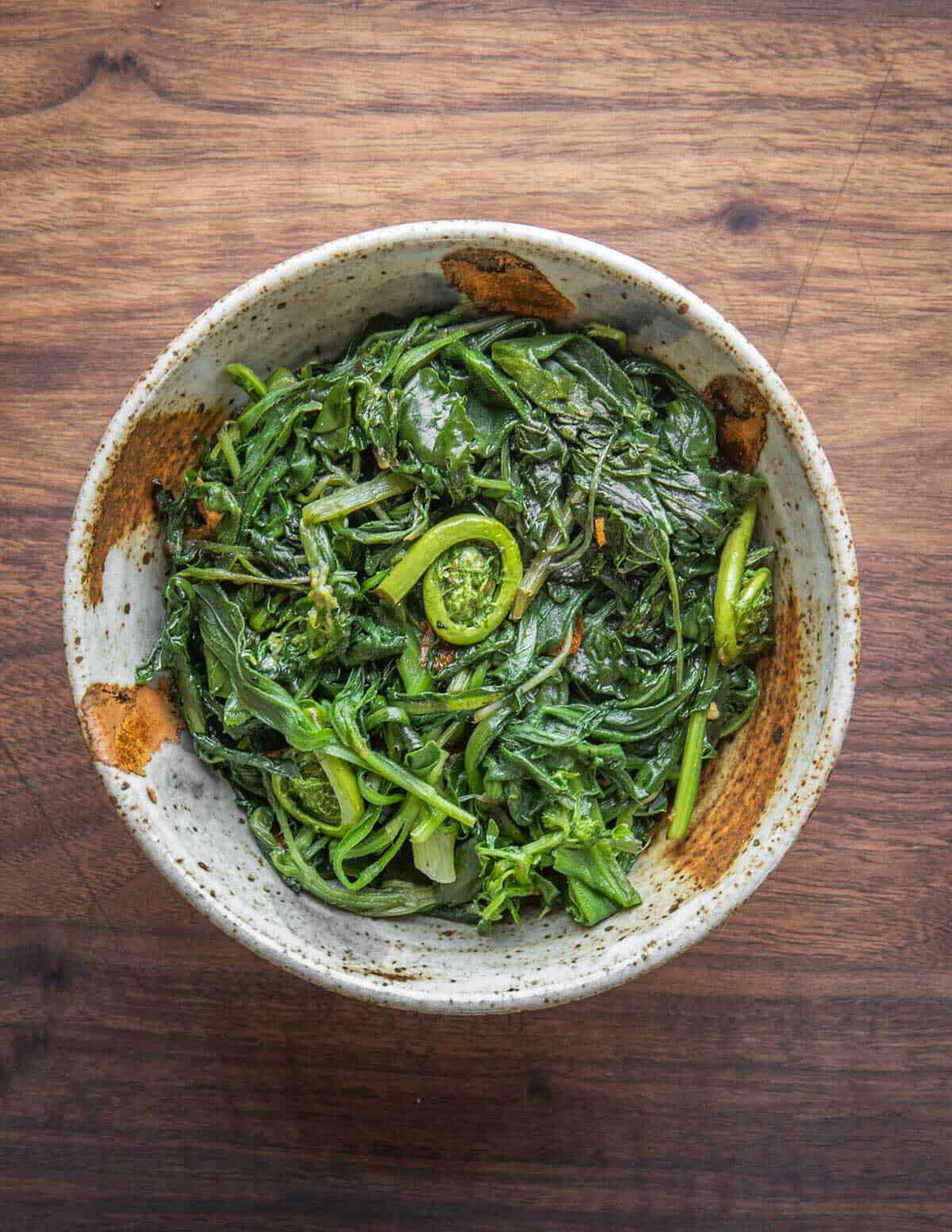
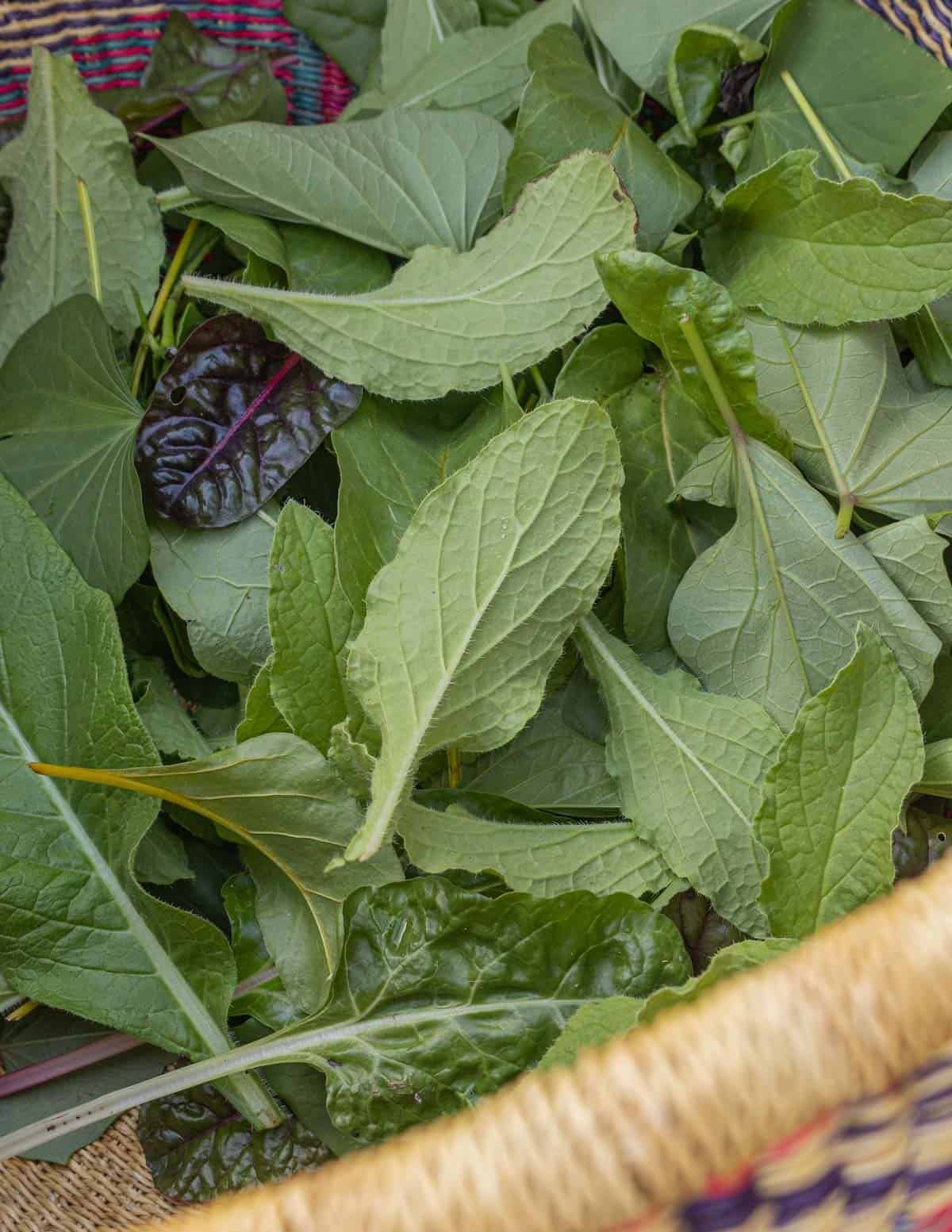
Taking that into account, it should come as no surprise that borage is often an ingredient in stuffing and fillings, soups, and blends of wild greens. Below is a blend of complimentary greens I cooked this week: borage, comfrey, sweet potato, chard and beet.
Here's a few simple recipes I know where borage is explicitly called out.
Simple Cooked Greens
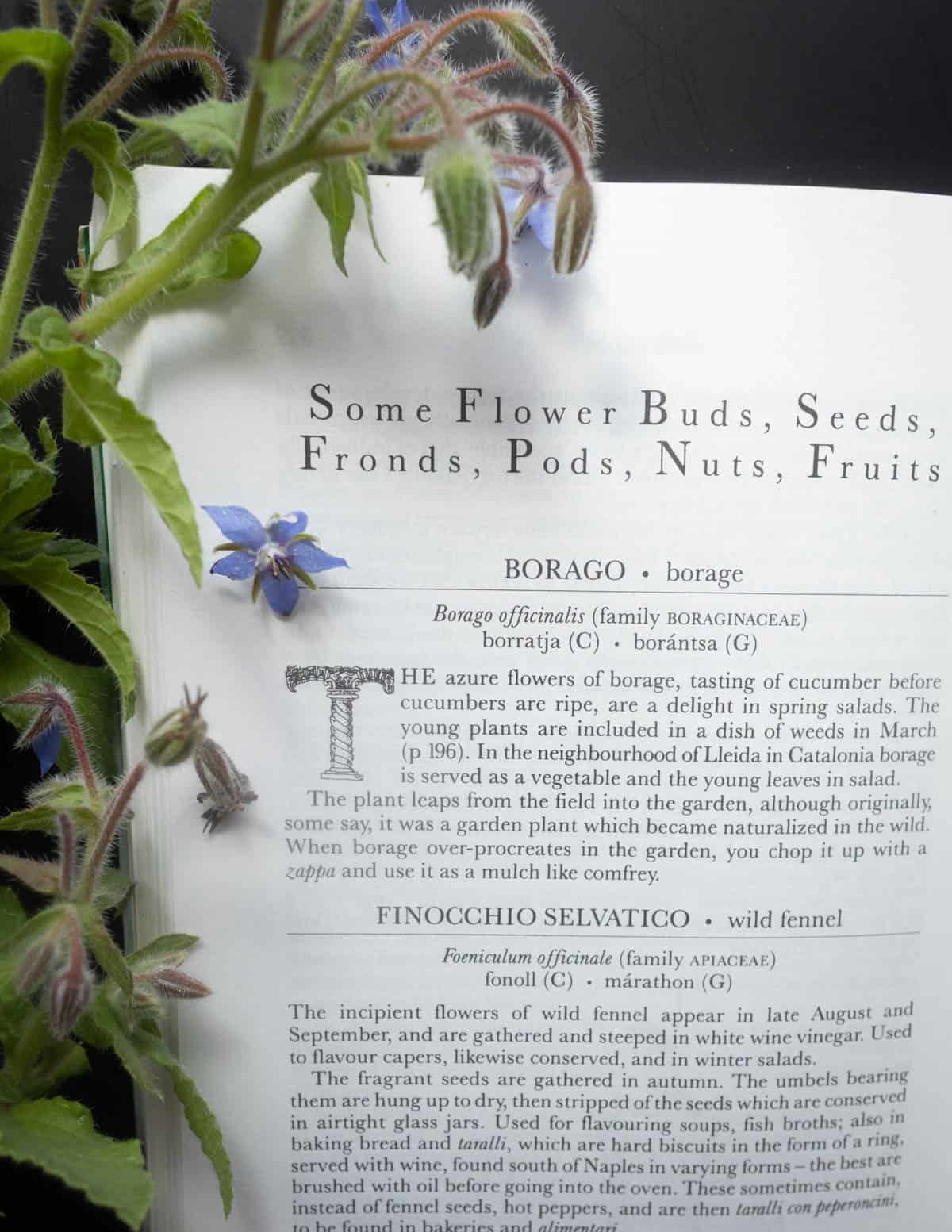
One of the best recipes I have is from Patience Gray's Honey From A Weed. It's very simple, but there's a few good lessons if you read between the lines. There are no proportions:
"Picking a handful of comfrey in spring when it reappears, a handful of wild beet, some young leaves of borage, growing wild, and some shoots of fennel, I wash them well, tear them apart and throw wet into a pan containing hot olive oil. Turning them about in the pan, their liquor first exudes and then evaporates. After a few minute's, the dish is ready to serve with grated pecorino. Oddly enough, one can do a hard day's work on this, when eaten with good bread".
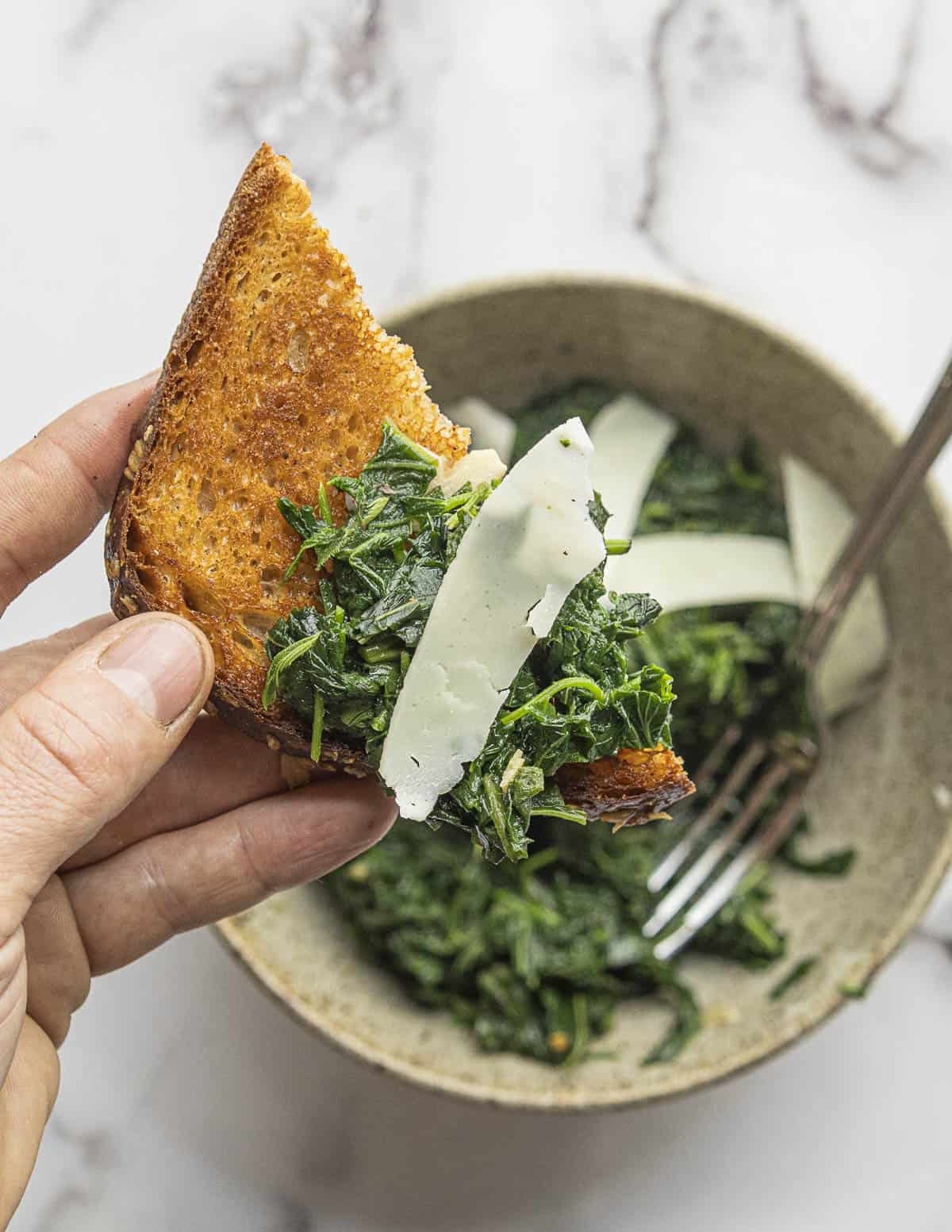
The big takeaways here are that the borage leaves are used in a blend, and that each of the greens mentioned cooks quickly. Hardy greens like kale, rapini or similar which take longer to cook should be omitted.
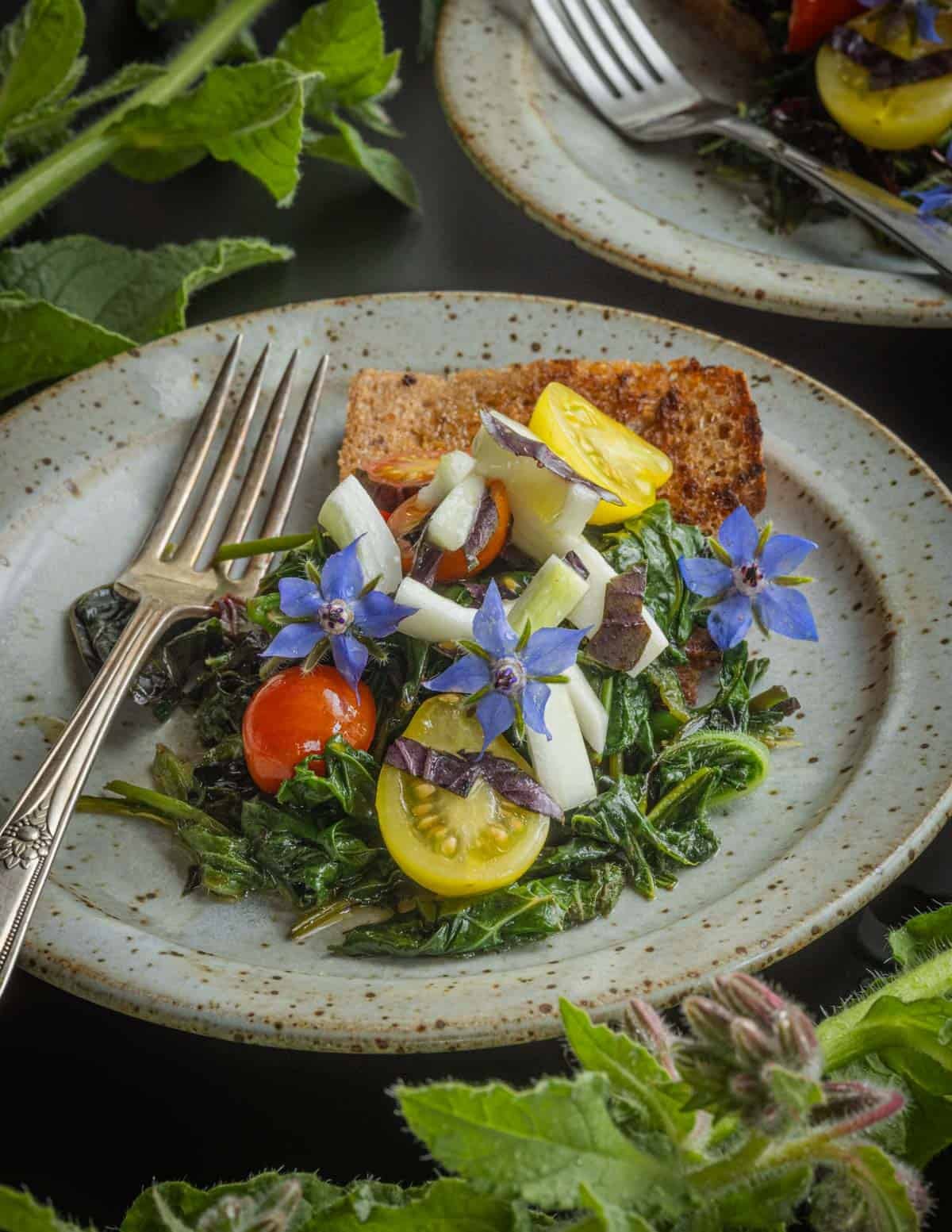
The greens are also simply cooked-not boiled, which preserves the texture. Below is a recent version I made, topped with sliced fresh tomatoes, cucumbers and herbs. I add cheese before serving. It's lovely mopped up with a slice of bread and good olive oil.
Erbazzone
A sort of flat, double-crusted pie of savory greens from Emiglia Romagna. A large mix of wild plants is cooked down with onions, garlic, bacon and parmesan and wrapped in a double crust. Many similar recipes from around the world can be adapted to include borage greens. Torta de boragine can be a synonym.
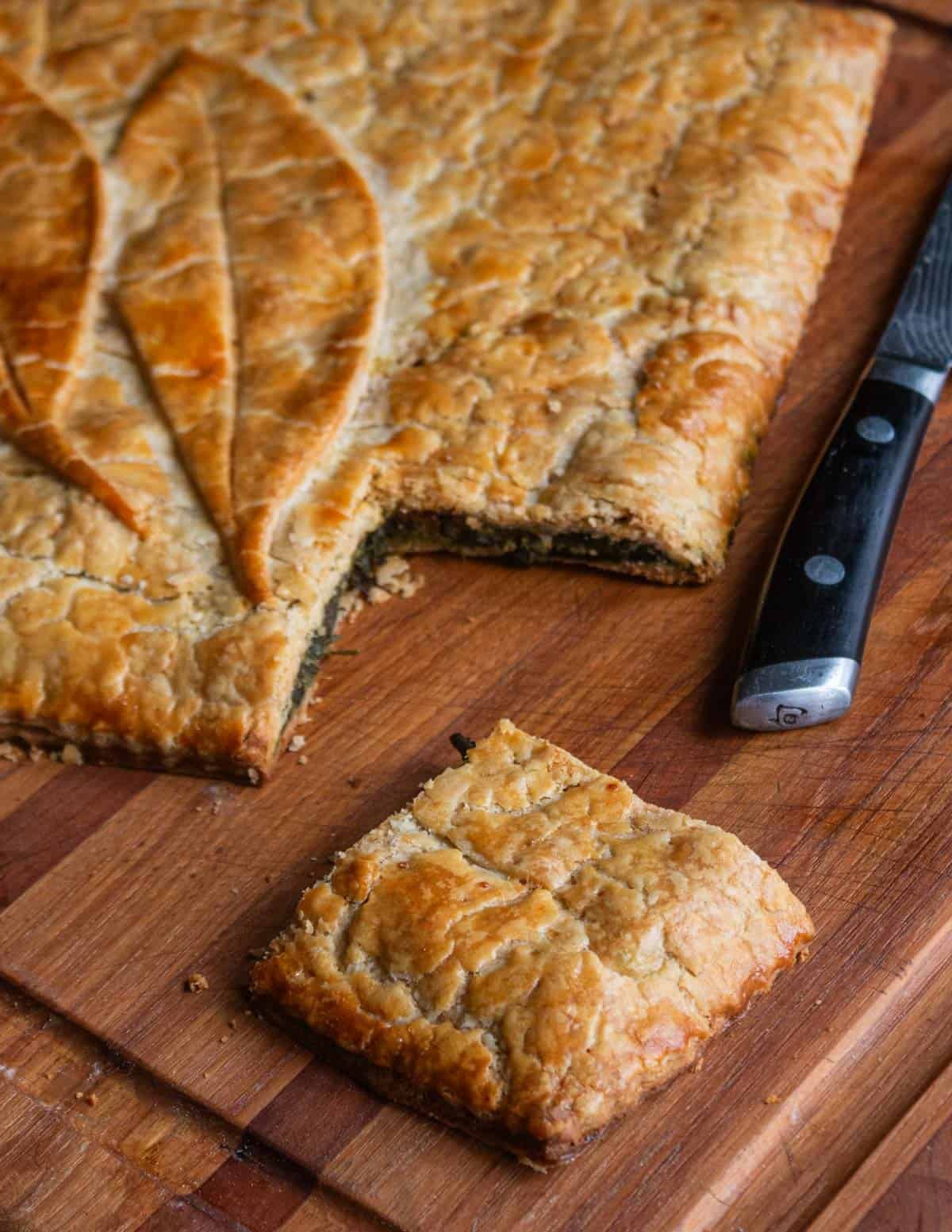
The recipe's for Erbazzone is in my first book, and on this site.
Ligurian Preboggion and Pansotti
Possibly the best documented borage recipe I know, the prebboggion is a traditional mix of over a dozen wild plants from Liguria. If you look closely at the greens below from a market in Turin a reader sent in, you can see wild borage buds directly above the cardboard sign.
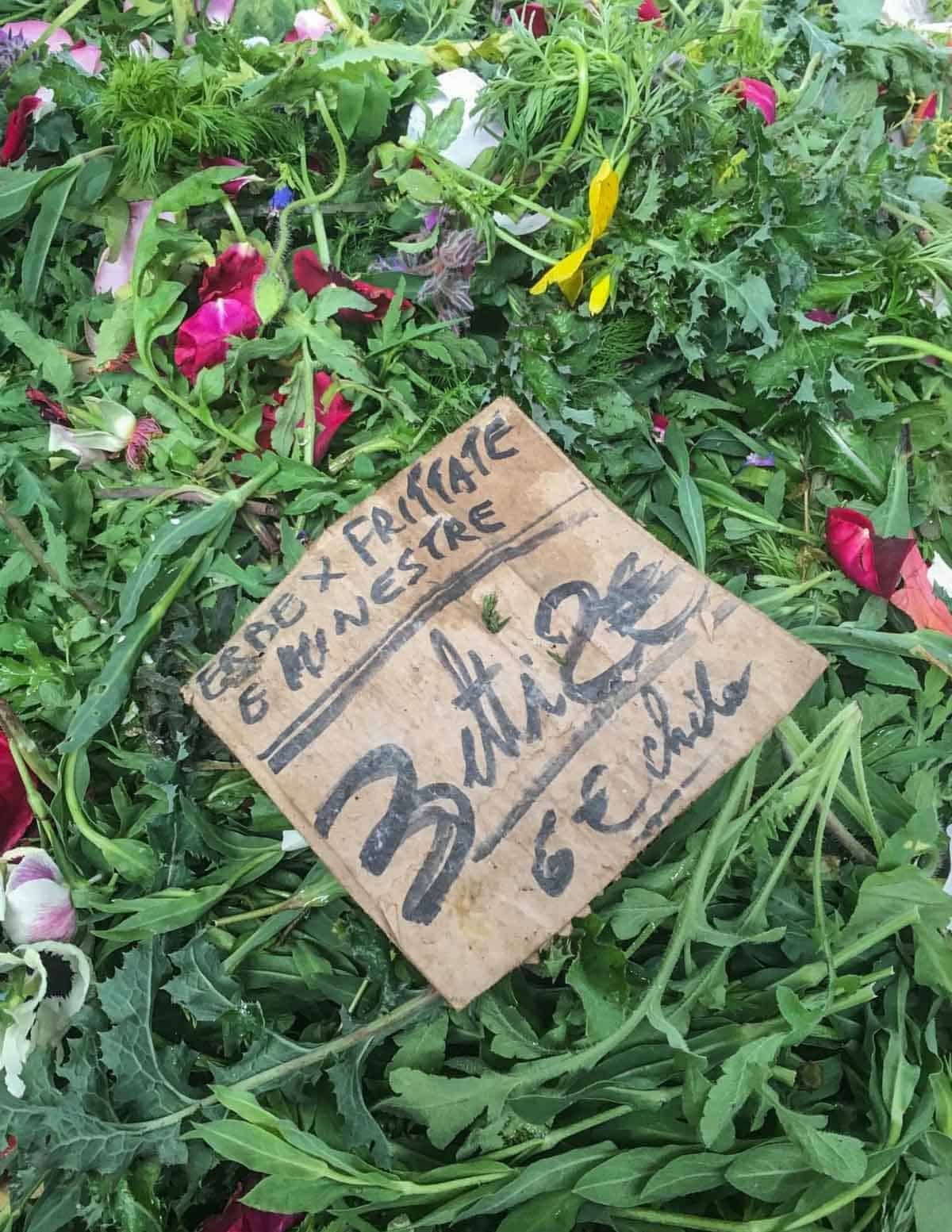
The greens can be cooked together as for the recipe from Patience Gray, but mostly you'll see the mixture as a stuffing for filled pasta like pansotti: the Ligurian filled pasta dressed with a rustic sauce of crushed walnuts, bread, garlic and cheese. For fillings, the whole plant, including tender stems, leaves and flower buds may be used as they're finely chopped.
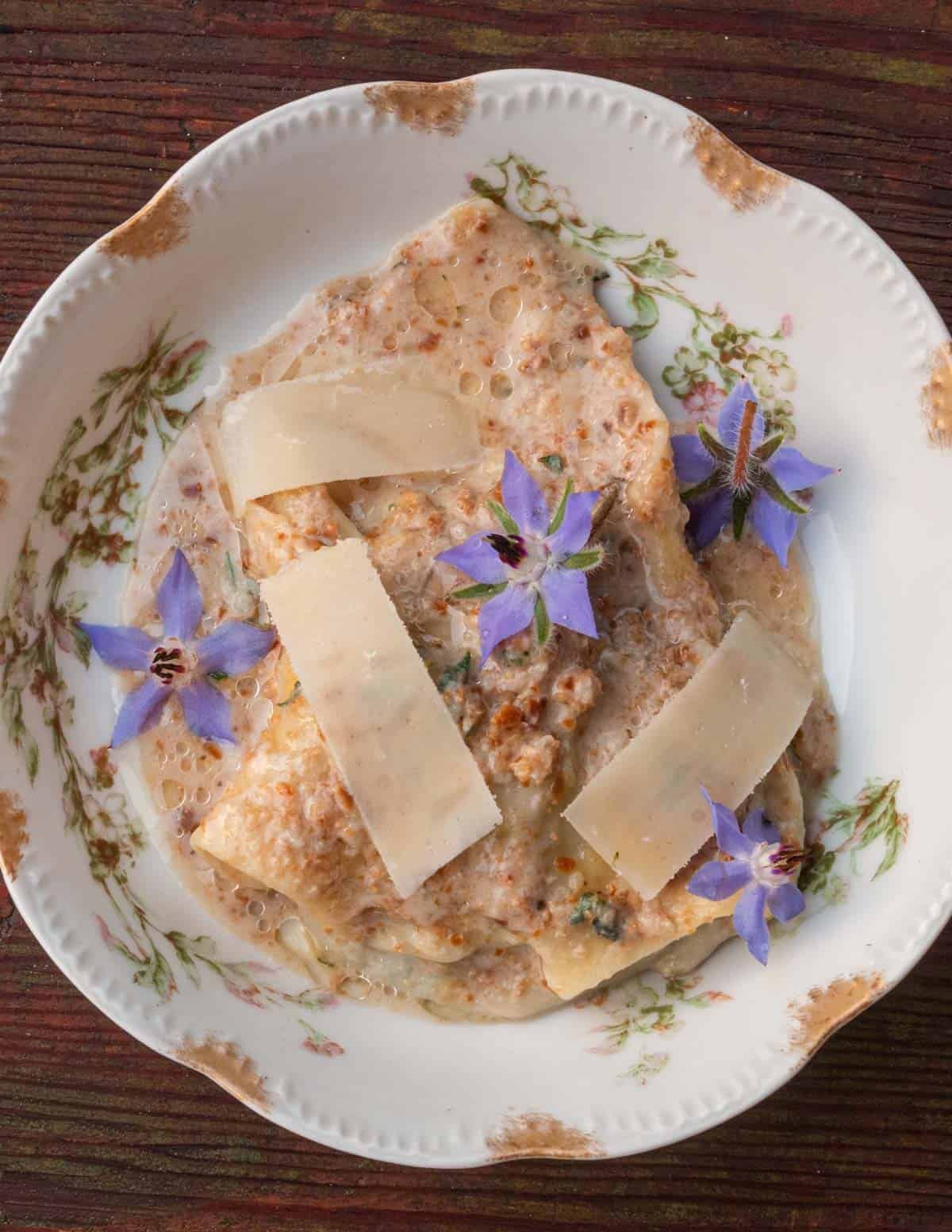
Frittelle de Boragine
Fritters are another common recipe, sometimes with chopped leaves, sometimes flowers, as well as a special version where two leaves sandwich a filling of anchovy and cheese. I recommend using my recipe for green burgers / spinach patties.
Is Borage Safe to Eat? (Pyrrolizidine Alkaloids)
Borage and comfrey contain hepatoxic compounds called pyrrolizidine alkaloids that can harm the liver in large amounts. Unlike some compounds, the alkaloids aren't broken down by cooking or boiling. This might sound scary at first, but there's precedents for reconciling a plant being both edible and toxic.
First, the plant has a long history of being cooked and eaten. I have numerous books that discuss it as a vegetable, and none of them mention liver toxins. Like many wild foods, looking closely at traditions, and the small details therein, is important.
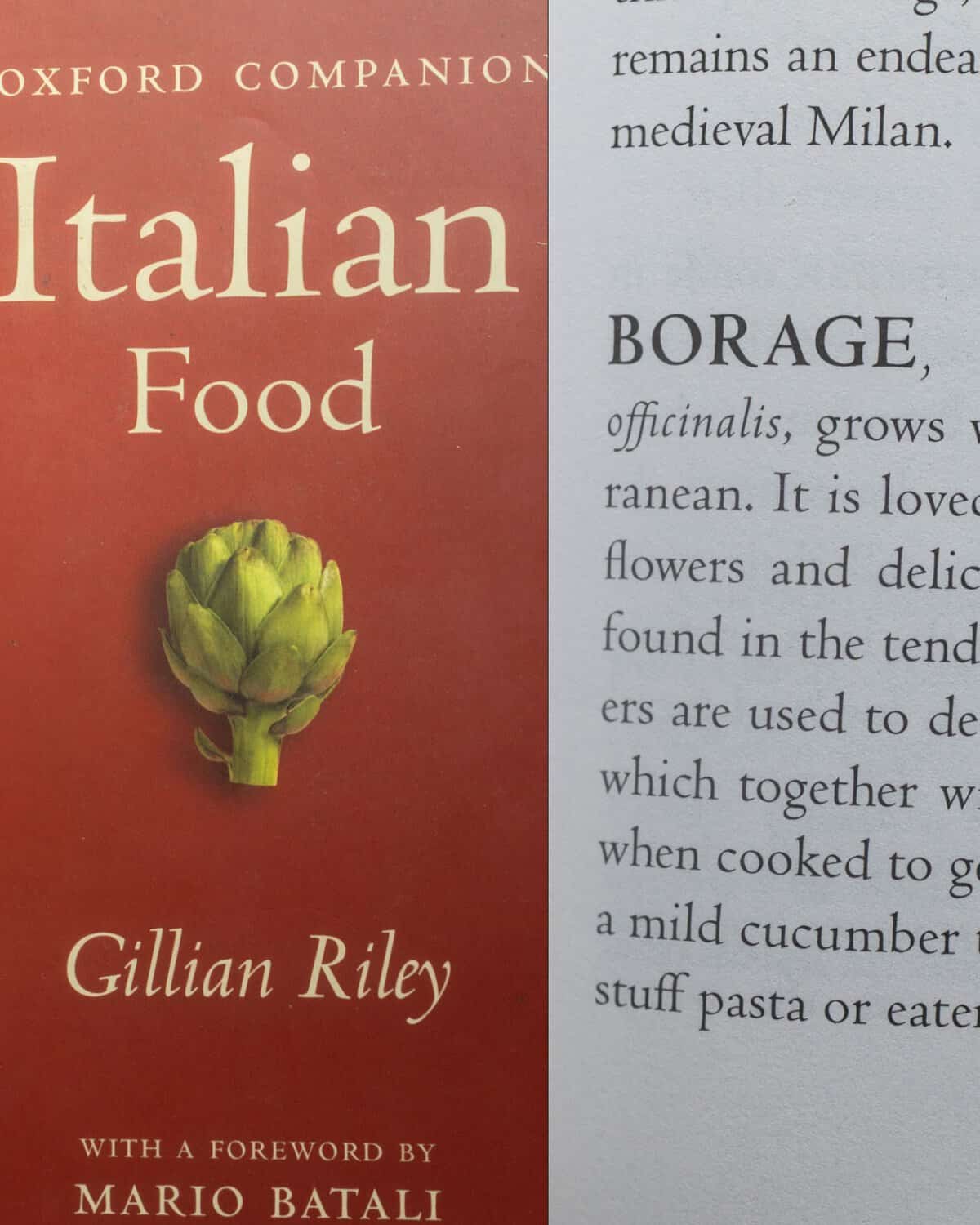
To keep it brief, as with so many things, dosage makes the poison. I feel comfortable with a serving a couple ounces of borage greens per person, and the hairy texture of the leaves is such that they're better mixed with other greens anyway. In my opinion, the plant is harmless-I just wish it tasted better.
The long history as an edible would be enough for me to not worry personally, but I also found an article on Science Direct.com covering the alkaloid toxicity of borage, comfrey and coltsfoot that was helpful. In 2,804 cases of Pyrrolizidine Alkaloid poisoning studied, only 11 were relevant: nine involving comfrey, one with coltsfoot. There were zero cases involving borage.
Plenty of other foods can contain PA's too, like grains and honey. It is the amount, not the presence of them, that makes something dangerous. That said, out of an abundance of caution, pregnant women and people on medication for liver issues should probably avoid borage and comfrey.
Do you grow or eat borage or have anything to add? Please leave a comment if you do.
Bernadette Kazmarski
I grew it for the first time this year but a groundhog took a liking to it, fuzzy leaves and all. I did get to see and photograph a lot of flowers and they aided in summer pollination. A portion of the plants is still there, likely trying to keep disguised so the groundhog doesn't notice them. I guess I'll see if they managed to toss any seeds.
Lisa Golden Schroeder
Borage flowers make a beautifully pink herb vinegar!
Alan Bergo
Thanks Lisa.
Jacqui
Thanks for the post!
Borage leaves, blanched, are used in tartes/quiches in France. I have eaten this prepared by other (more normal) people so I think it is a thing. The furryness is not disturbing in a quiche.
Also people fill borage or comfrey leaves (one folded over or two stacked) with various things (ricotta, rice, whatever) and then fry them.
And they are excellent as tempura.
Alan Bergo
Thanks Jacqui. Yes I meant to make the borage fritters where two leaves are sandwiched between ricotta-anchovy filling but ran out of time.
Abigail
The flowers are where it's at, they are so plentiful and such a beautiful garnish - tasty as well. My friend just gave me a bunch that she freeze dried and they're going to make an excellent winter garnish for tastings.
Alan Bergo
Hey freeze drying borage flowers is a fun idea.
Karen
Thank you for this delightful journey into Borage, recipes and uses.
First year planting this, I performed late, but it's blooming now. Aphid eggs on one bloom cluster, feeding ants, who in turn, deal with predator wasps. The latter I welcome to the yard, as they, along with honey, bumble bees enjoy the ground cover thyme and flowers. What intricate action to witness in creation.
Alan Bergo
Thanks Karen, I've been thrilled at how many different insects, birds and other creatures frequent my yard after I started digging up the sod to replace everything with edibles.
h2
I love using the tender new leaves of spring Borage in salads. The flowers too, of course, though I always feel a bit guilty stealing from the bees.
Linda
Yes I have eaten Borage but grow it mainly for the bees. Like you said, it just hums with bees. I also gather comfrey for making a fertilizer but didn't even realize it was edible?? Thanks for your information.
Lydia
Thank you, I didn't know any party other than the flowers was edible.
Clarification please-you say "a couple ounces per person"- is that cooked or raw weight because those would be very different in the amount of the PA you'd be getting.
Thank you.
Alan Bergo
When I talk about weight it means raw: put the plants in a bowl on a tared scale until it reaches 2 oz, then cook them. Either way, borage is something I don't really worry about. Comfrey I do limit my intake, but even so I throw a leaf or two in regularly to mixes of greens throughout the year.