
• Skip to primary navigation
  • Skip to main content
  • Skip to primary sidebar
Forager | Chef
  • Home
  • About
  • Recipes
  • Interviews
  • Partnerships
  • Contact
menu icon
go to homepage
  • Home
  • About
  • Recipes
  • Interviews
  • Partnerships
  • Contact
    • Facebook
    • Instagram
    • YouTube
  • subscribe
    search icon
    Homepage link
    • Home
    • About
    • Recipes
    • Interviews
    • Partnerships
    • Contact
    • Facebook
    • Instagram
    • YouTube
  • ×
    Home » Wild Mushroom Recipes

    Baked Mushroom Juice

    Published: Nov 21, 2026 Modified: Nov 21, 2026 Author: Alan Bergo

    Jump to Recipe Jump to Video

    A rich nectar you can extract from many mushrooms to layer flavor in soups and sauces, condiments, used like au jus, or even sipped warm from a mug. Today I'll walk you through how I make roasted mushroom juice. It's a great trick to know if you often find yourself with more mushrooms than you can use in a sitting, as many of us do.
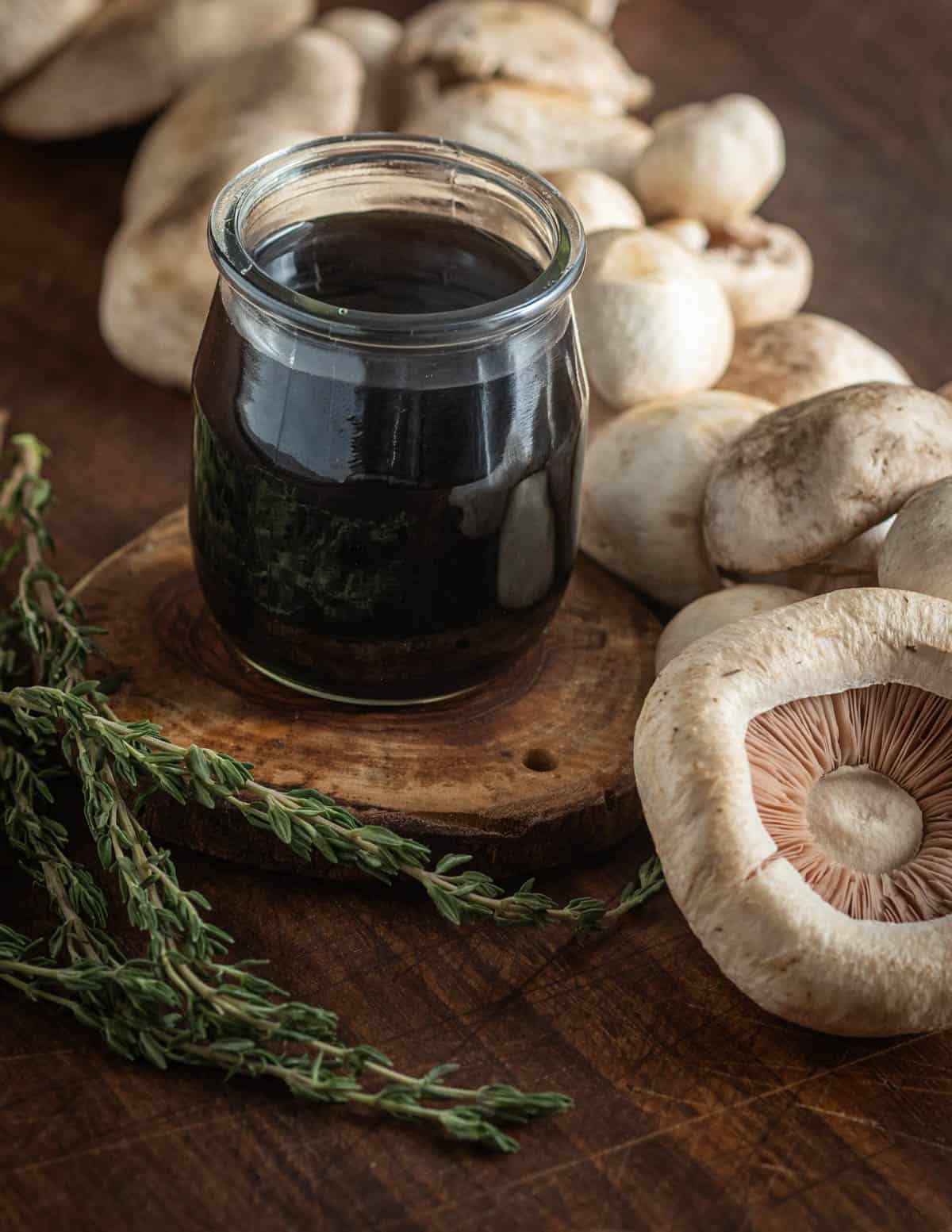
    A small glass cup of mushroom juice surrounded by fresh of meadow mushrooms and sprigs of fresh thyme on a wood background.
    A cup of juice from a haul of meadow mushrooms.

    The Variable Water Content of Mushrooms

    Mushrooms contain a lot water, but that amount will vary due to the species and recent rainfall, as anyone who's picked water-logged mushrooms after a storm can tell you.
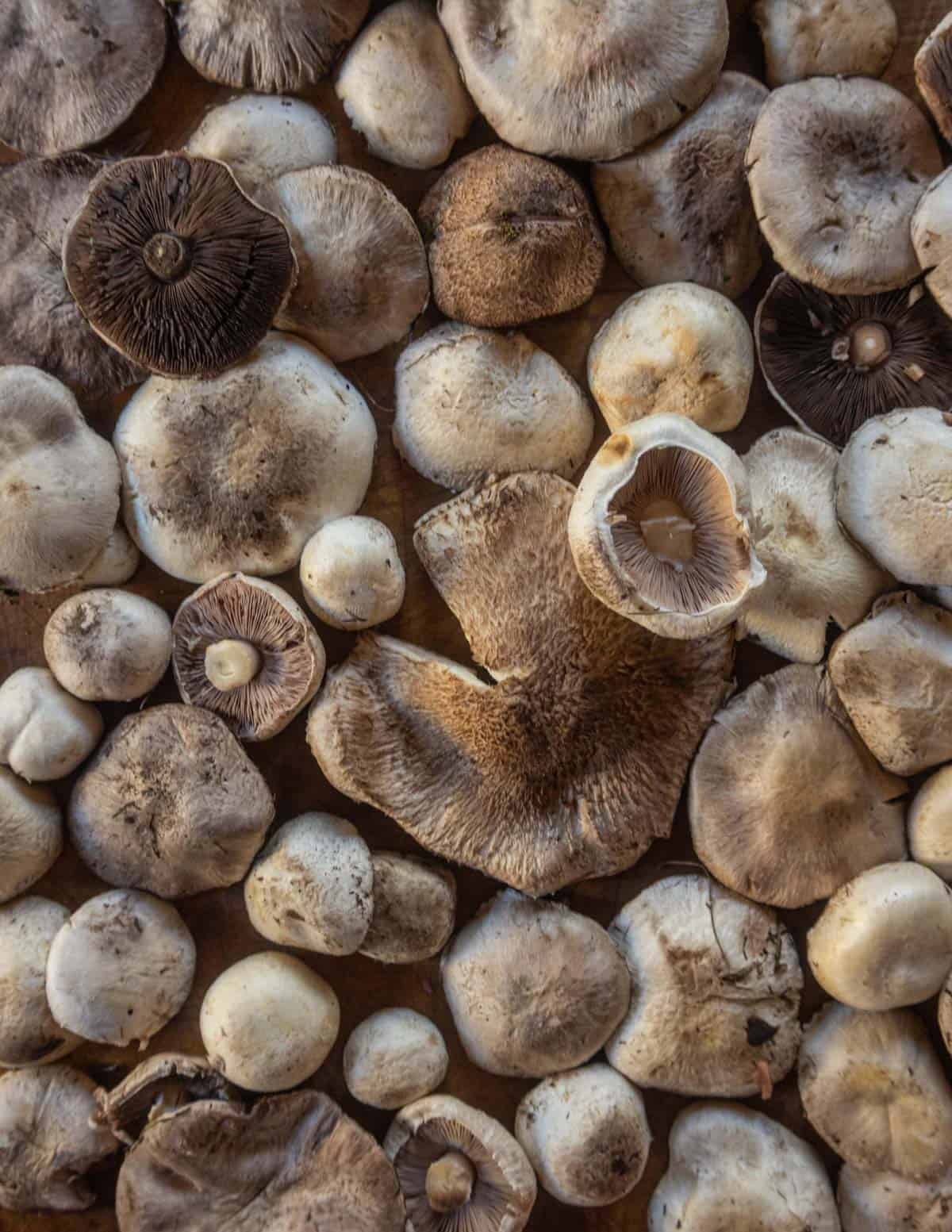
    A top down image showing a cutting board filled completely with fresh mushrooms that have been cleaned and had their stems removed
    A few pounds of meadow mushrooms.

    Over the years I've harnessed mushroom liquid in recipes like pheasant back shoyu and mushroom ketchup. I've also tried putting mushrooms through a juicer which gives an opaque, uninteresting liquid.

    Recently I came across a large flush of meadow mushrooms with my friend Melissa after a rainfall I couldn't resist. I harvested as clean as I could, but the mushrooms still needed a rinsing to be free of soil.
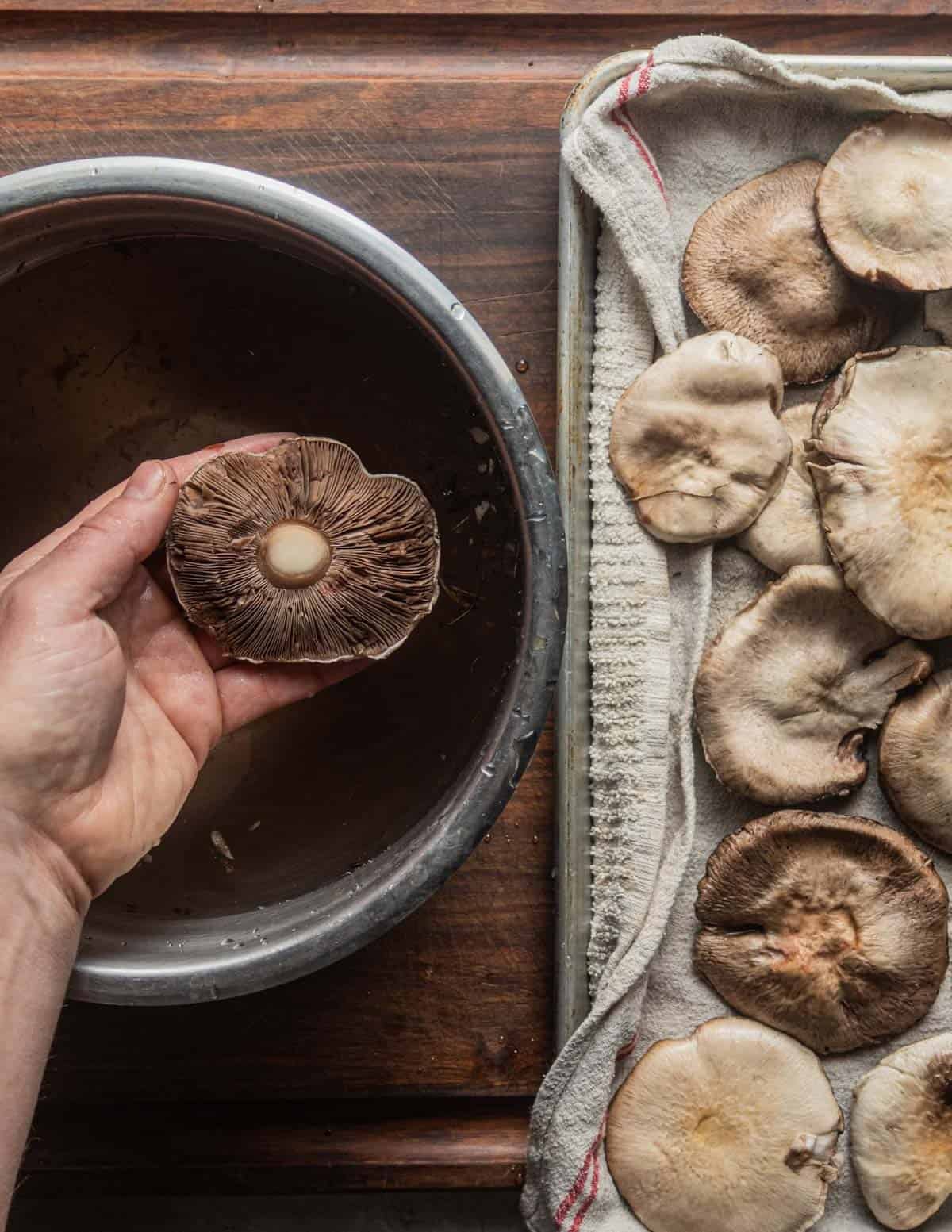
    He top down image showing a hand washing a fresh metal mushroom in a bowl of water next to a baking sheet filled with cleaned mushrooms, laying out on paper towels to dry.
    Wash and clean the mushrooms, laying them out to dry on paper towels.

    In a rental cabin with limited equipment and a fridge filled with mushrooms I cooked pounds every day. As nearly every mushroom had a perfect cap, I wanted to cook them whole slowly to concentrate their flavor, but that requires a big surface area or a flat top griddle and all I had were a few baking sheets.
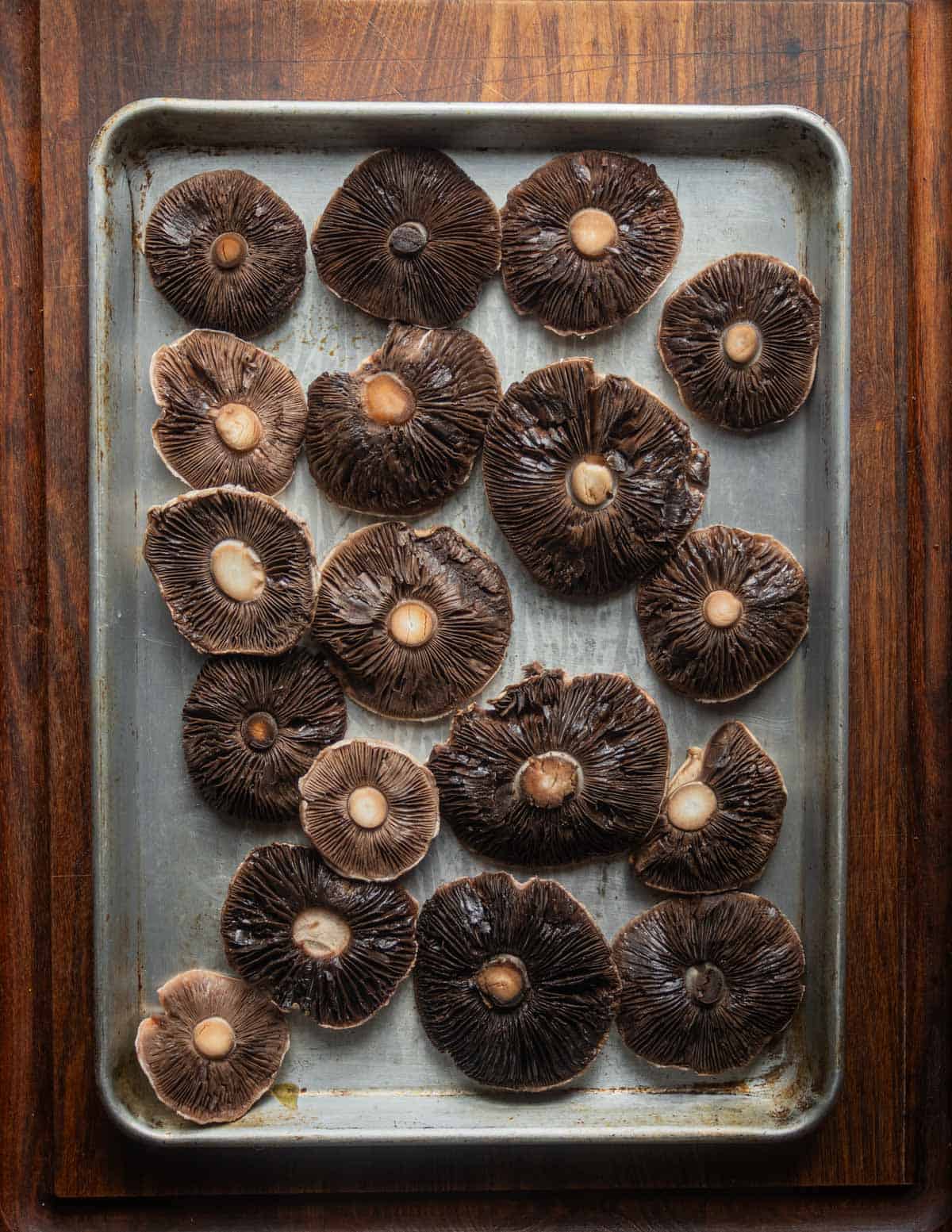
    A large baking sheet filled with cleaned, washed metal mushrooms, ready to bake.
    Lay the cleaned mushrooms on a baking sheet. Use parchment if you have some.

    After 30 minutes in an oven, instead of golden brown mushrooms I opened the door to see the caps drowning in juice. Cooking a large volume at once, along with the rain and rinsing dramatically increased the amount of liquid they gave off. My nose told me it was delicious before I tasted it.
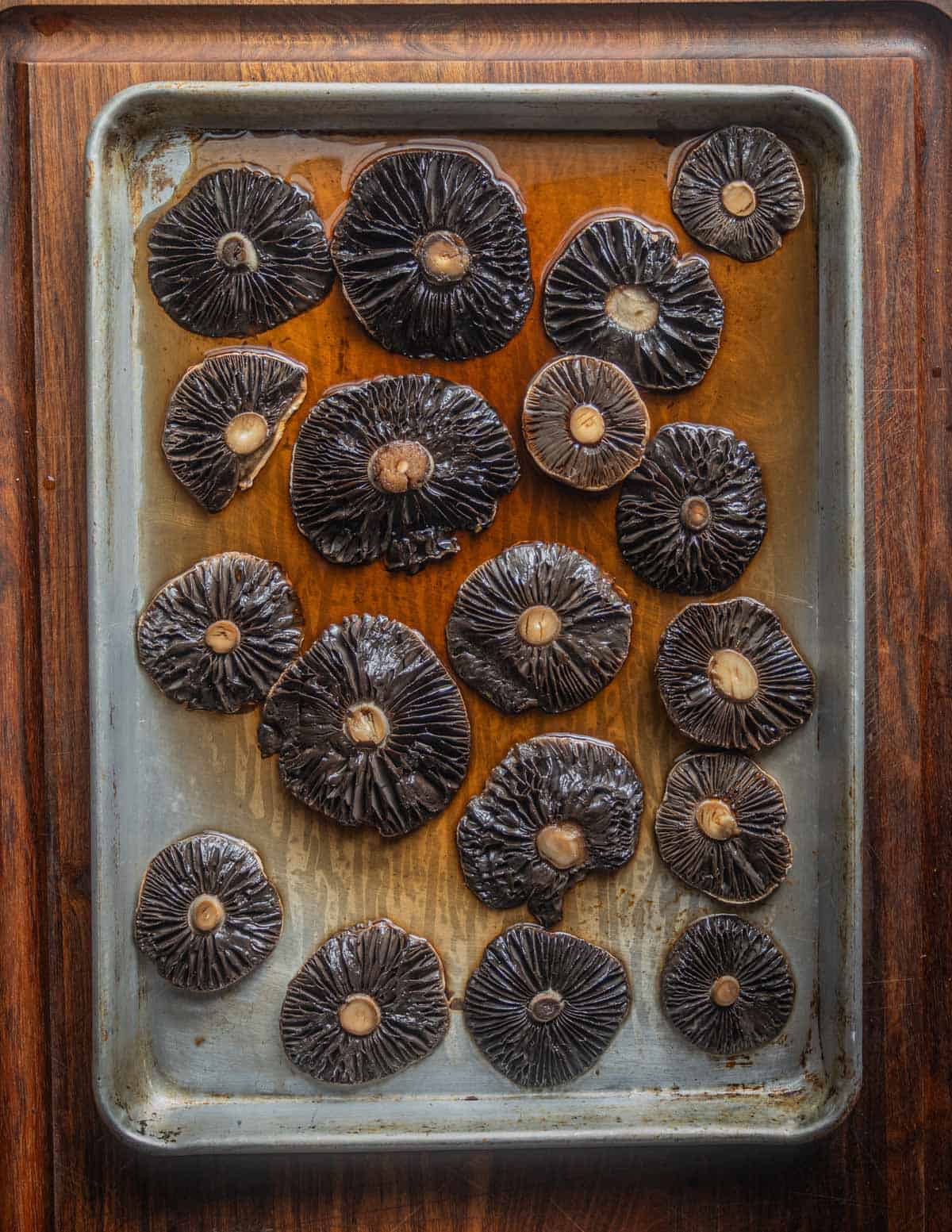
    A baking sheet filled with many cooked meadow mushrooms, showing the gilled side with the baking sheet, filled with dark brown mushroom juice.
    Bake the mushrooms until they release their juice.

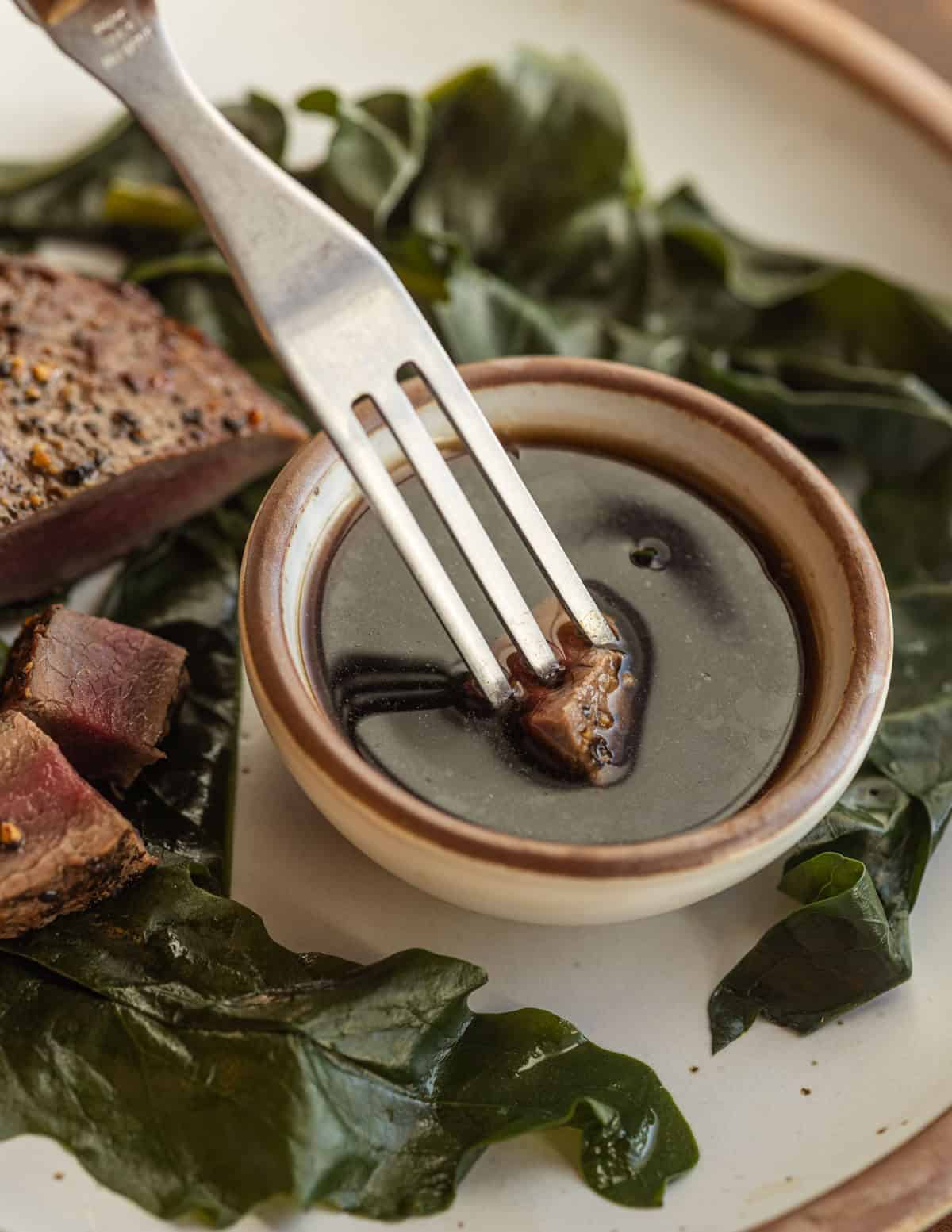
    Thrilled with the flavor, I strained off the mushroom nectar in cups for dinner and we dipped everything on the plate in it, from bites of steak and greens to the sauteed mushroom caps themselves. For the finale, I warmed the juice back up and sipped it. Reduced to concentrate the flavor and seasoned with nothing more than salt it was a nectar of the gods.
    Chef's Tips

    The liquid that releases on the baking sheet is only the first release. As the baked mushrooms cool in a bowl they'll release more. Finally, allowing them to rest in a colander overnight (with or without a weight) will give even more.
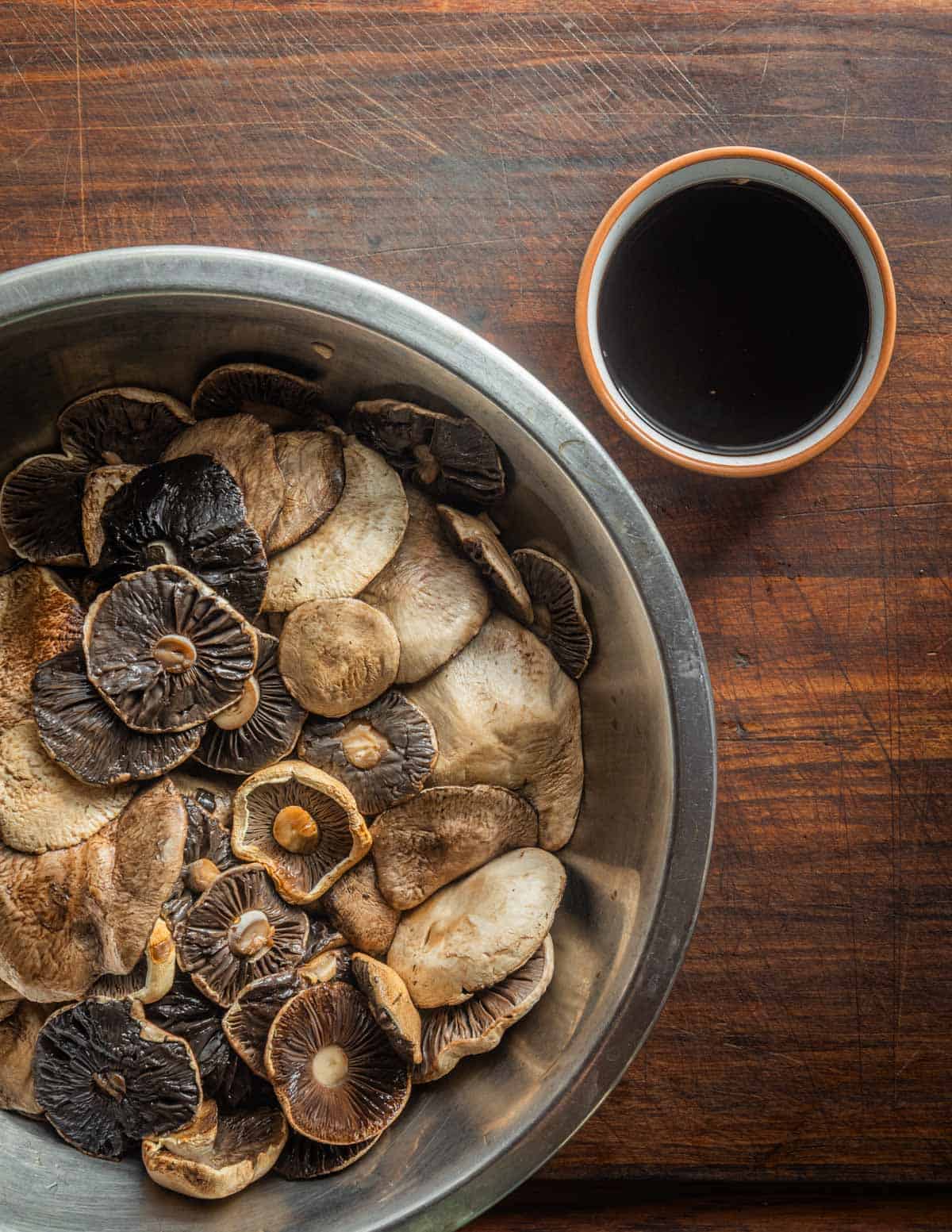
    A metal mixing ball filled with multiple pounds of cooked metal mushrooms, showing a white ramekin of dark mushroom juice next to the bowl on a black walnut wood background.
    Additional mushroom juice harvested after sitting in a colander overnight.

    Using mushroom juice like au jus is just one idea. For large batches, the juice can be frozen in ice cube trays or large blocks and added to sauces, gravies and other condiments.

    Any place you could use a little extra mushroom flavor will be nice. Adding a cup to pot roast with mushrooms built a deep layer of flavor.
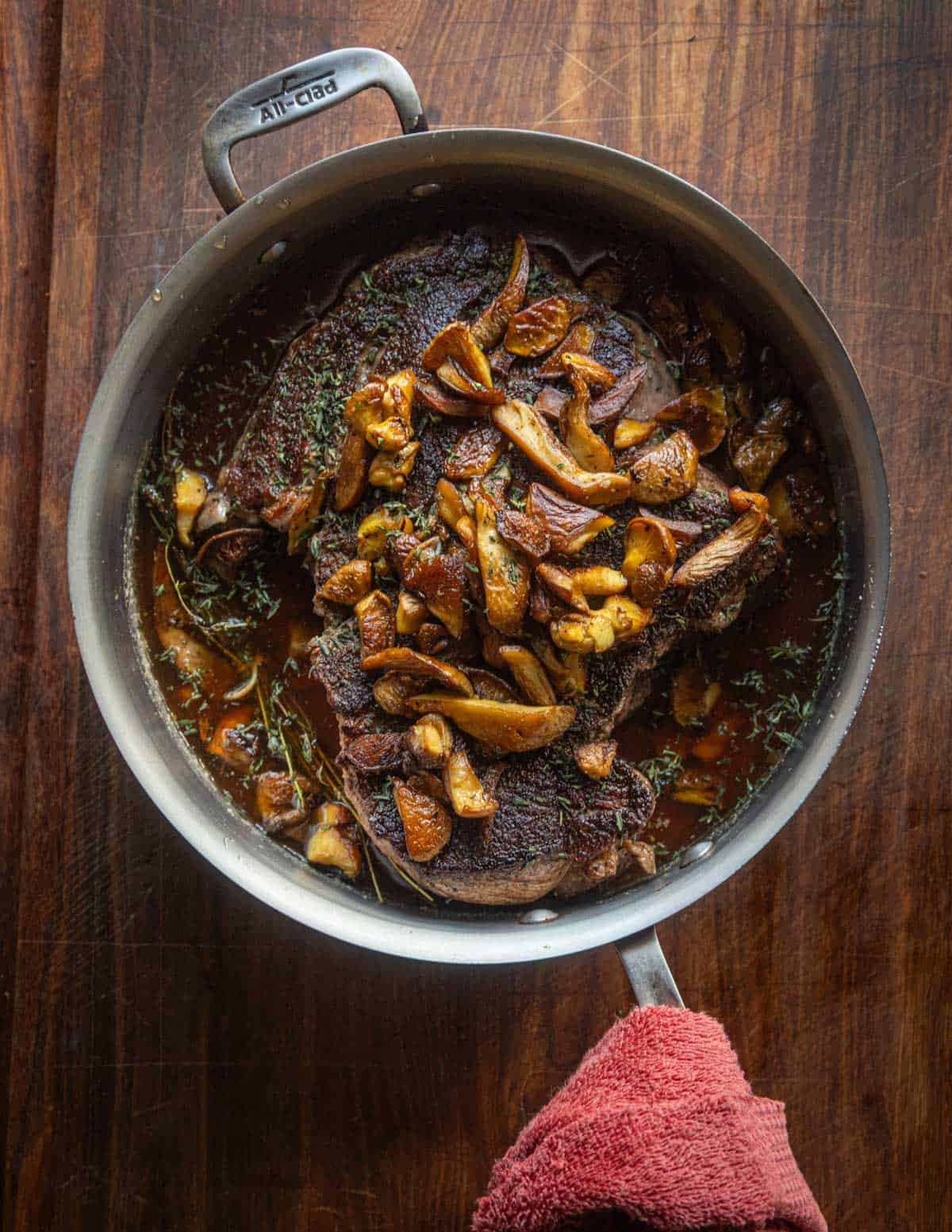
    A red towel on the handle of a brazing pan showing a pot roast with mushrooms, fresh, chopped thyme, and a dark broth made with mushroom juice.
    The meadow mushroom juice added great flavor to a pot roast with late fall oyster mushrooms.

    The juice made a welcome addition to clear broths and soups, like the soba noodle bowl below.
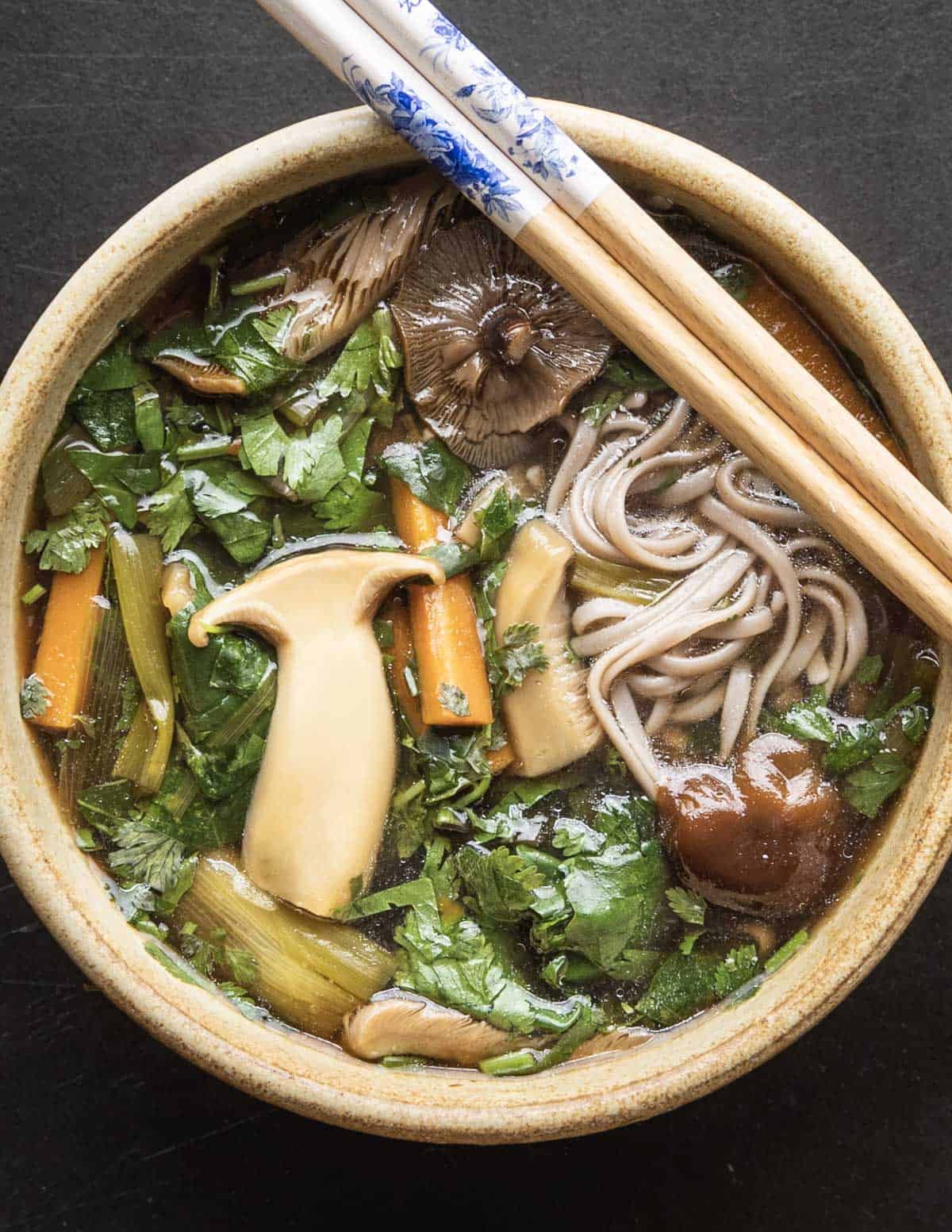
    A bowl of oyster mushroom soup with soba noodles.
    A bowl of oyster mushroom soup with soba noodles.

    Different mushrooms will perform better than others. With their large surface area, Agaricus species and parasol mushrooms are two of the best, but milk cap mushrooms, large hedgehogs, chanterelles and boletes will give similar results.

    Larger mushrooms will also give better results than smaller ones, making this a good method for mature specimens, like the shaggy parasols with 10 inch caps shown below.
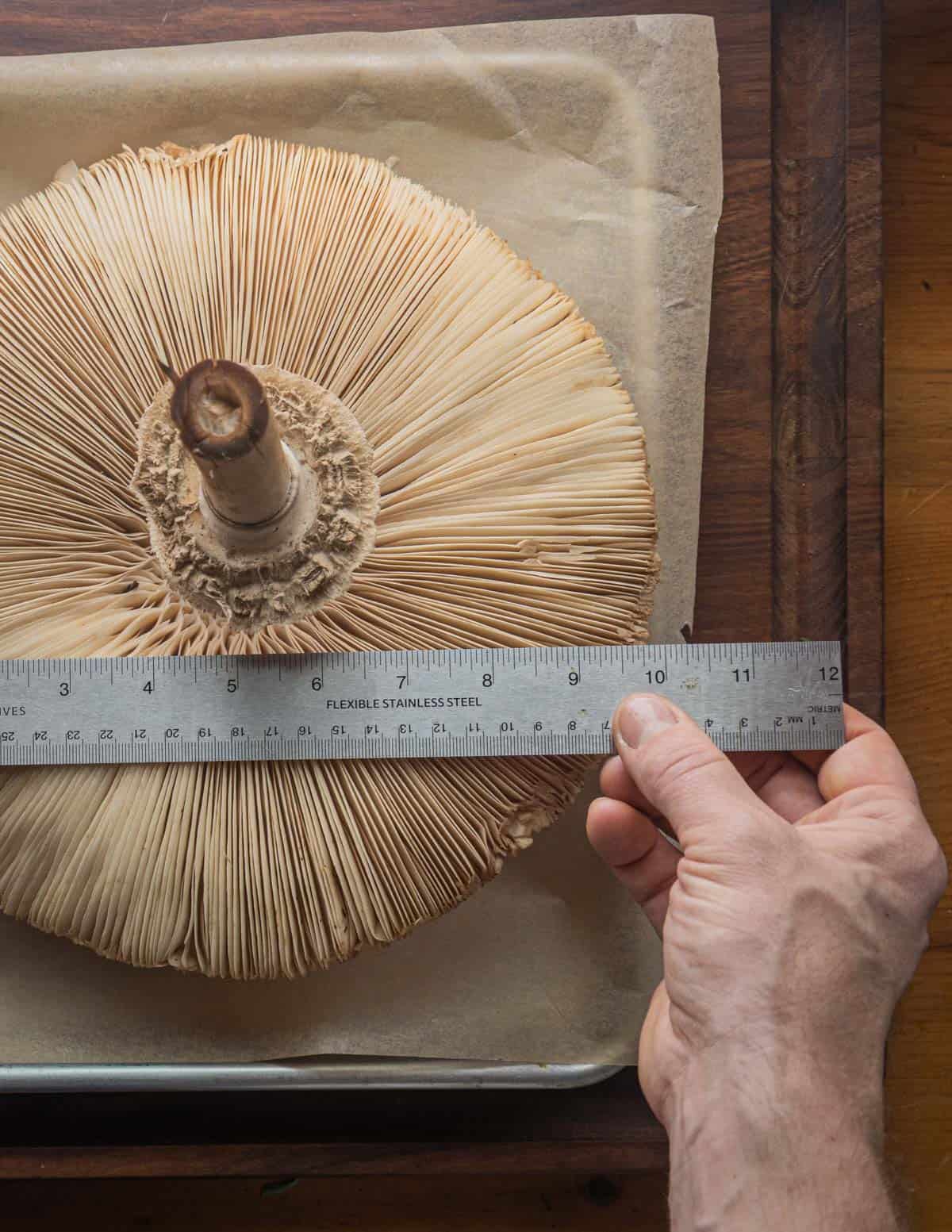
    A hand holding a ruler up to a very large shaggy parasol Mushroom cap showing it’s over 10 inches across on a sheet tray on a black walnut wood background.
    This method is ideal for large, gilled mushrooms with open caps, like these shaggy parasols.

    And the juice is just a by-product of cooking here. The mushroom caps themselves are wonderful cooked slowly in oil until browned. They have a potent, meaty flavor all by themselves.
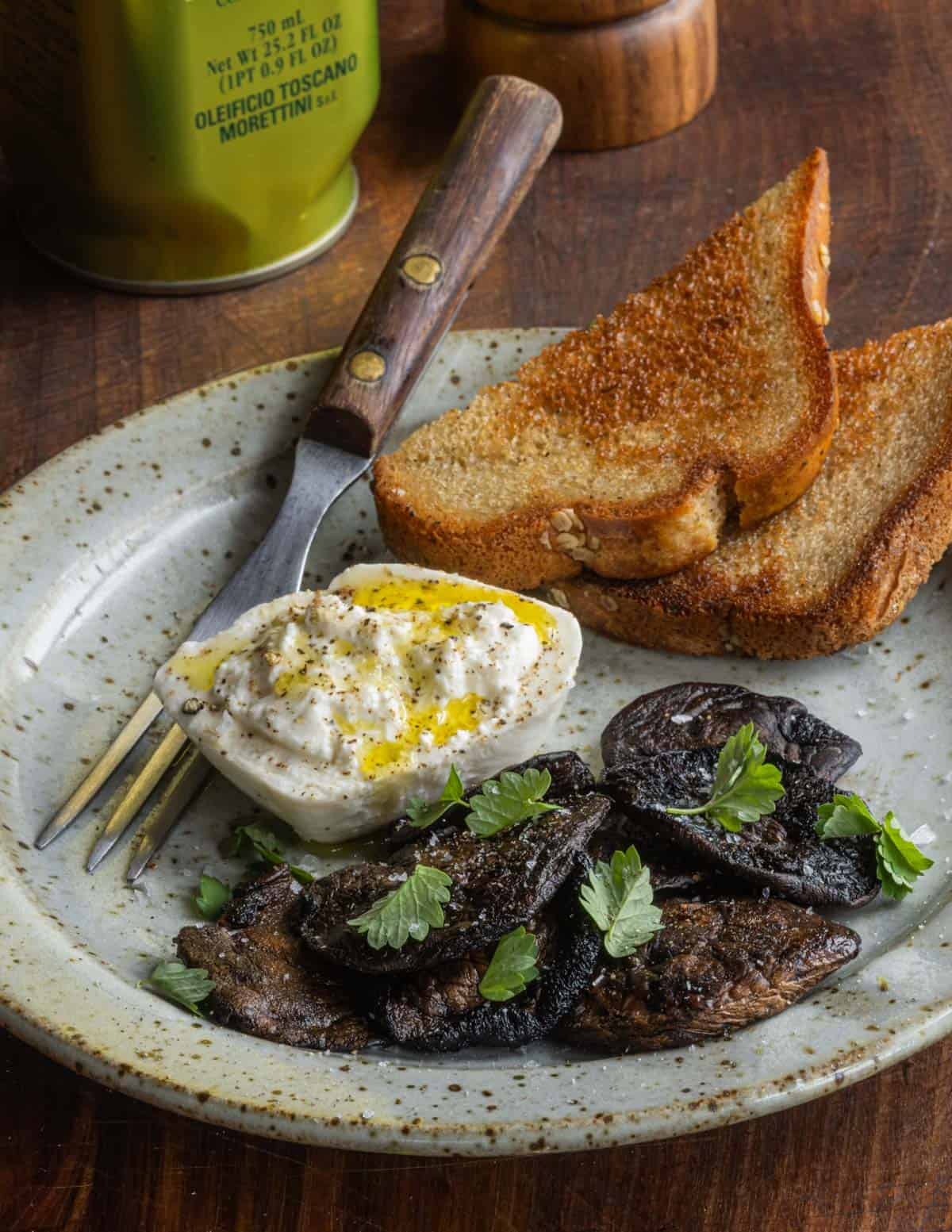
    Cooked meadow mushroom caps garnished with burnet, served with burrata cheese, olive oil, and toast.
    Slow cooked mushroom caps with burnet, burrata and toast.

    Have you ever had wet mushrooms throw you a curveball, or needed to pivot because of their water content? Share a story in the comments if you have one.

    Related Posts
    • Mushroom Ketchup
    • Dryad Saddle Shoyu
    • Black Staining Polypore Broth
    A small glass cup of mushroom juice surrounded by fresh of meadow mushrooms and sprigs of fresh thyme on a wood background.
    Print Recipe Pin Recipe
    No ratings yet

    Baked Mushroom Juice

    A rich mushroom juice made from baking washed or wet mushrooms. It can be used for dipping, soups, sauces, or sipped from a mug. More technique than recipe, I've been able to get 1 cup of liquid per pound of mushrooms, but expect yield to vary with species.
    Prep Time15 minutes mins
    Cook Time30 minutes mins
    Total Time45 minutes mins
    Course: Condiment
    Cuisine: American
    Servings: 8 Servings
    Calories: 25kcal
    Author: Alan Bergo

    Equipment

    • 2 large baking sheets
    • Parchment paper optional
    • 1 Very large mixing bowl for cleaning (you can also use a sink)

    Ingredients

    • 4 lbs wild mushrooms see note
    • 1 tsp kosher salt

    Instructions

    • Trim the mushrooms of any stems so the caps will lay flat.
    • Clean the mushrooms by gently rinsing them and dipping in a bowl of cool water, then laying out on a baking sheets lined with paper towels while you clean the rest.
    • Preheat the oven to 325F.
    • Arrange the mushrooms on a baking sheets (ideally lined with parchment). If you want, you can add a handful of fresh thyme sprigs or other herbs.
    • Bake the mushrooms until wilted and they've given up their juice, 15-20 minutes, then remove the baking sheet from the oven to cool, putting a piece of parchment on top to prevent too much evaporation.
    • When you can handle the tray, carefully pour the juice off from and reserve.
    • Put the mushrooms in a colander over a larger bowl, cover with cling film, put a bowl with a few potatoes or another weight on top and refrigerate overnight.
    • The next day, harvest the additional liquid from under the colander and combine with the rest of the juice.
    • Season the mushroom juice with salt to taste, then refrigerate for up to two weeks or freeze for a year.

    Video

    Notes

    The proportions and yield in this recipe are approximate and will vary from species to species. The more mushrooms you have, the more juice you can get. This will be most useful for large harvests of 4 lbs or more.  
    Mushroom juice can be used many ways. It will add a great flavor to brothy soups, and can be used to deglaze pans for sauces and condiments. One of my favorite ways to use it is simply reduced a bit to concentrate the flavor and used like au jus for dipping, seasoned to taste with salt. 

    Nutrition

    Serving: 2oz | Calories: 25kcal | Carbohydrates: 4g | Protein: 4g | Fat: 0.4g | Saturated Fat: 0.1g | Polyunsaturated Fat: 0.2g | Sodium: 151mg | Potassium: 361mg | Fiber: 1g | Sugar: 2g | Vitamin C: 2mg | Calcium: 3mg | Iron: 1mg

    « Silken White Truffle: Tuber panzhihuanense

    Reader Interactions

    Leave a Reply Cancel reply

    Your email address will not be published. Required fields are marked *

    Recipe Rating


    Primary Sidebar

    Chef Alan Bergo

    HI, I'm Alan: James Beard Award-winning Chef, Author, Show Host and Forager. I've been writing about cooking wild food here for over a decade. Let me show you why foraging is the most delicious thing you'll ever do.

    More about me →

    Get The Book

    the forager chef's book of flora
    The Forager Chefs Book of Flora

    As Seen On

    Footer

    Privacy

    Subscribe

    Be the first to hear what I'm doing

    Contact

    As an Amazon Associate I earn from qualifying purchases.

    Copyright © 2025 Forager | Chef LLC® Accessibility Statement

    Rate This Recipe

    Your vote:


    A rating is required
    A name is required
    An email is required