
Mugolio, a dark, aromatic syrup imbued with the flavor of pine cones, is the poster child for the kind of crazy cool, Illuminati-esque foodstuff foragers have access to, all for the price of a hike, or even less, depending on how close you are to some pine trees.
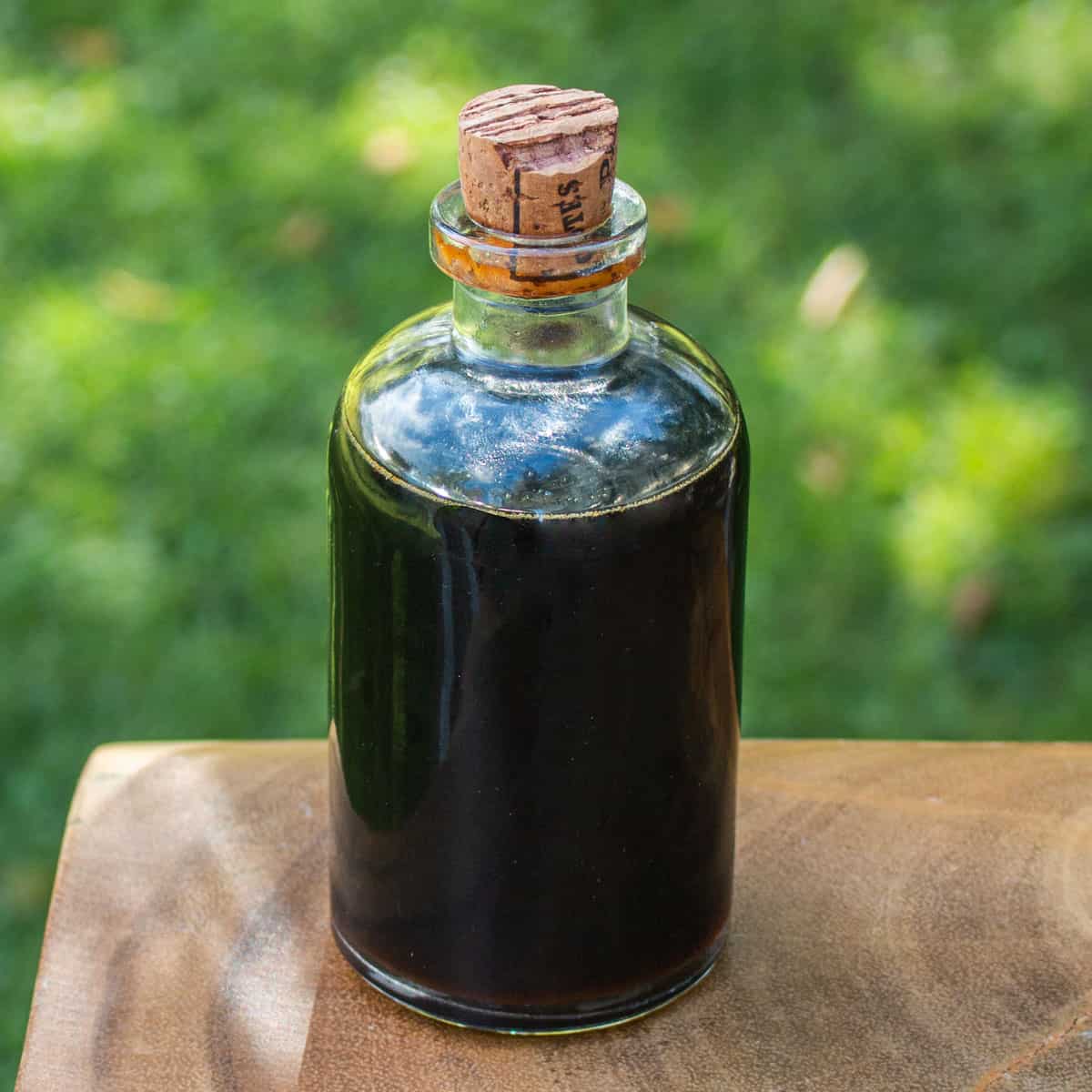
The syrup came on my radar when my friend Dan Farmer gave me a little jar of some he made to try. I remember it being good, but I forgot about it until I opened the Salt Cellar, and started making my own from spruce tips, which is excellent, but not quite the same as pine cone syrup (for the record both are great).
Mugolio is now still a bit of a chef secret, and available through elite specialty distributors, but the price is staggeringly high, exorbitant even, when you consider you can make nearly the exact same thing at home, for less than it costs to make a cake.
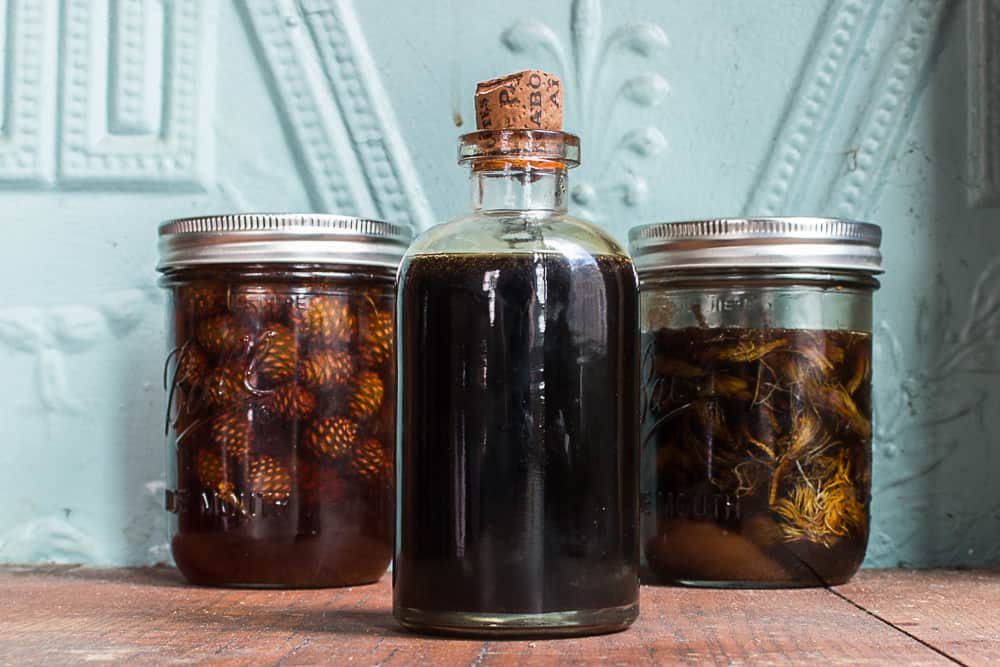
A chef secret that takes months to make
The cost of mugolio is not found in ingredients, but is paid in time. How much time is certainly up for debate, and you’ll notice my recipe turns around a lot quicker than burying a jar of pine cones and sugar in the yard and digging it up the next year (an actual recipe from Romania). You’ll want to wait at least a month for a good pine syrup, although aging it longer can be fun.
Mugolio: more than just pine cones
Real quick, some reality. I use the word mugolio interchangeably for syrups made from numerous tree parts, if you look around you’ll see mugolio usually refers to a syrup made from the young cones of mugo pine (Pinus mugo), harvested at a specific time of year, under the strictest of conditions, blah, blah, blah.
I’ve made all kinds of similar sugar based products from all kinds of conifer parts, and it isn’t some difficult, arcane thing you can only do in the light of a full moon— just the opposite.
Making mugolio is easy, and there’s a very forgiving time window for harvesting cones, or other things products like cedar cones, wintergreen, juniper, or spruce tips. All of the aforementioned making excellent syrups in their own right.
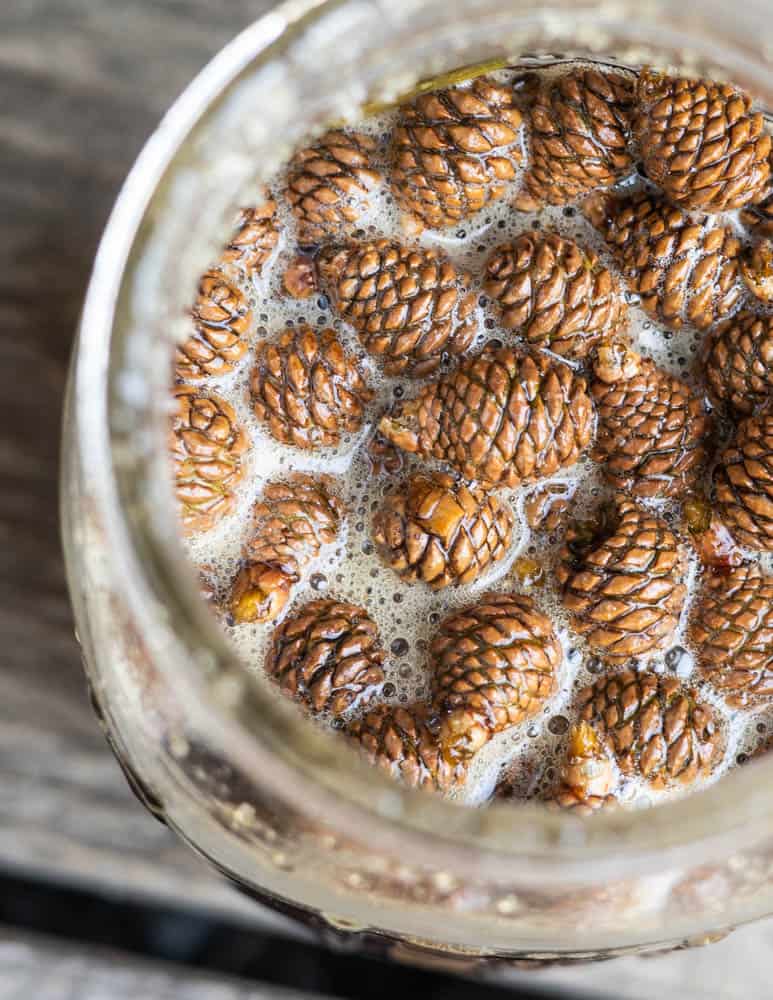
There’s something special about the pine cone syrup though. Pine cones hold more water than any other thing I’ve used, and they also ferment during the maceration process, vigorously.
The day after you combine the pine cones and sugar, there will look as if there was a rush and release of water—what was once a solid packed jar of pine cones and sugar is not 75 % full and liquid.
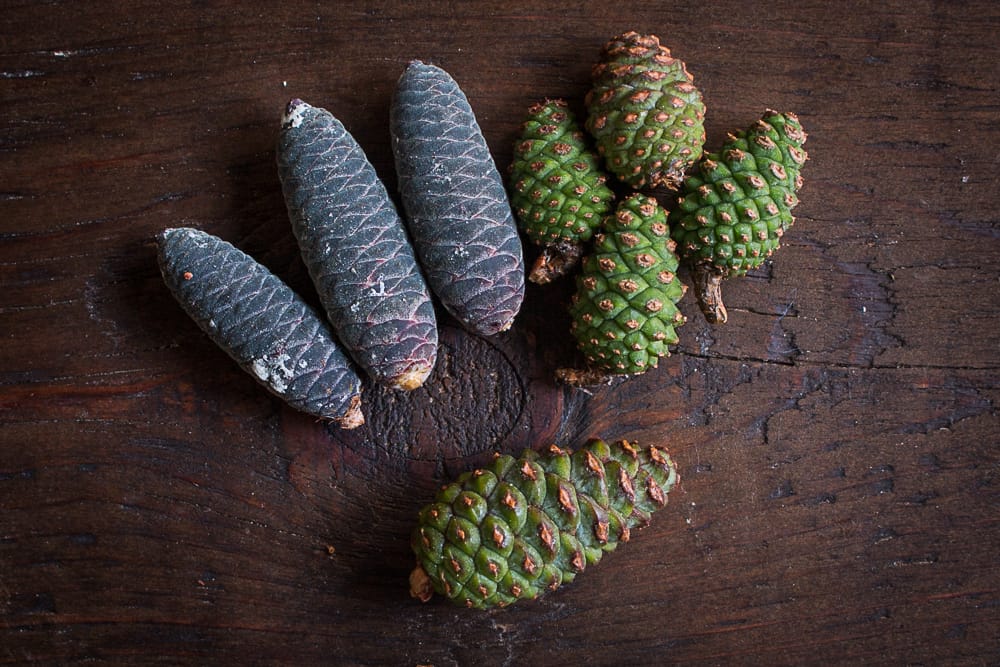
Species of unripe pine cones I've used to make syrup
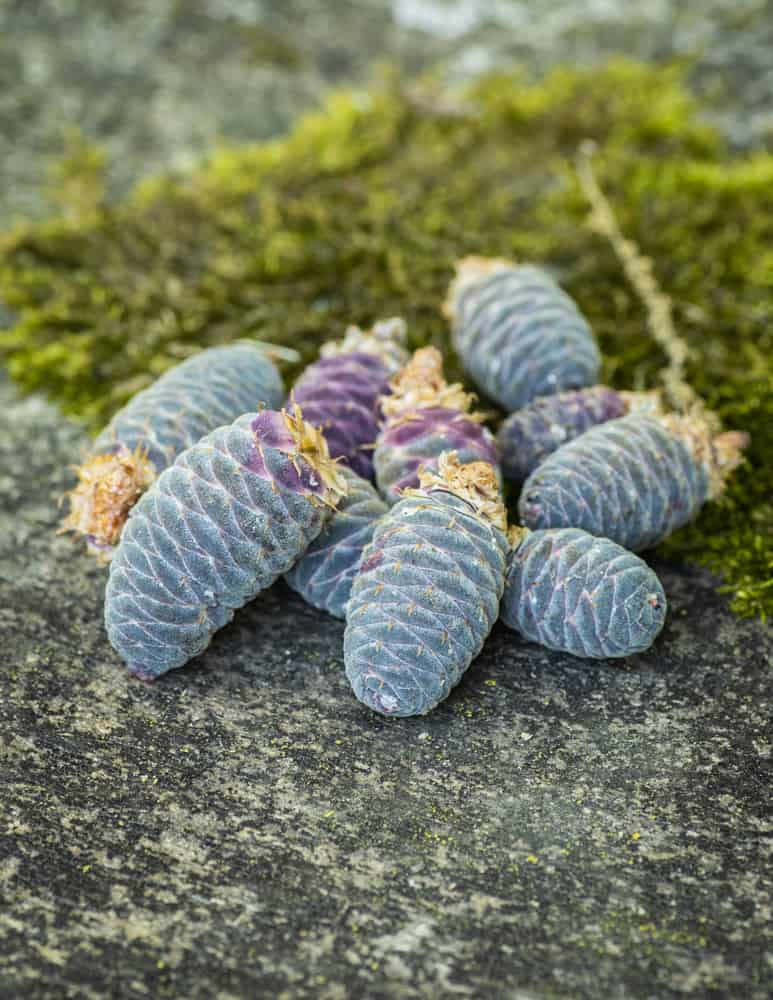
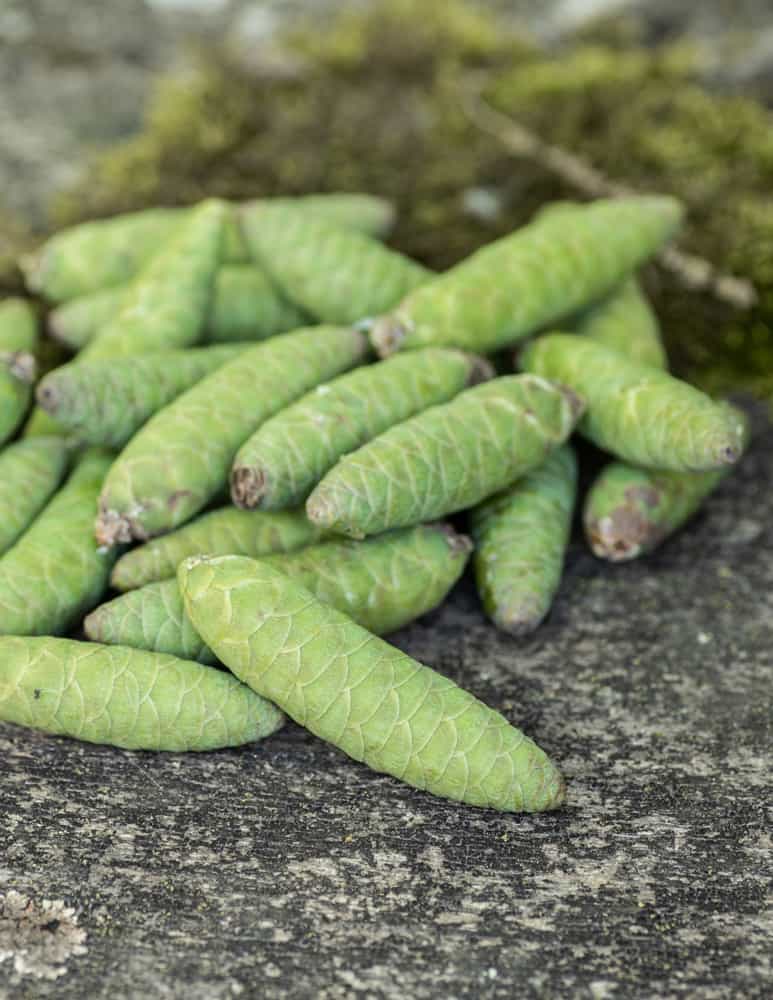
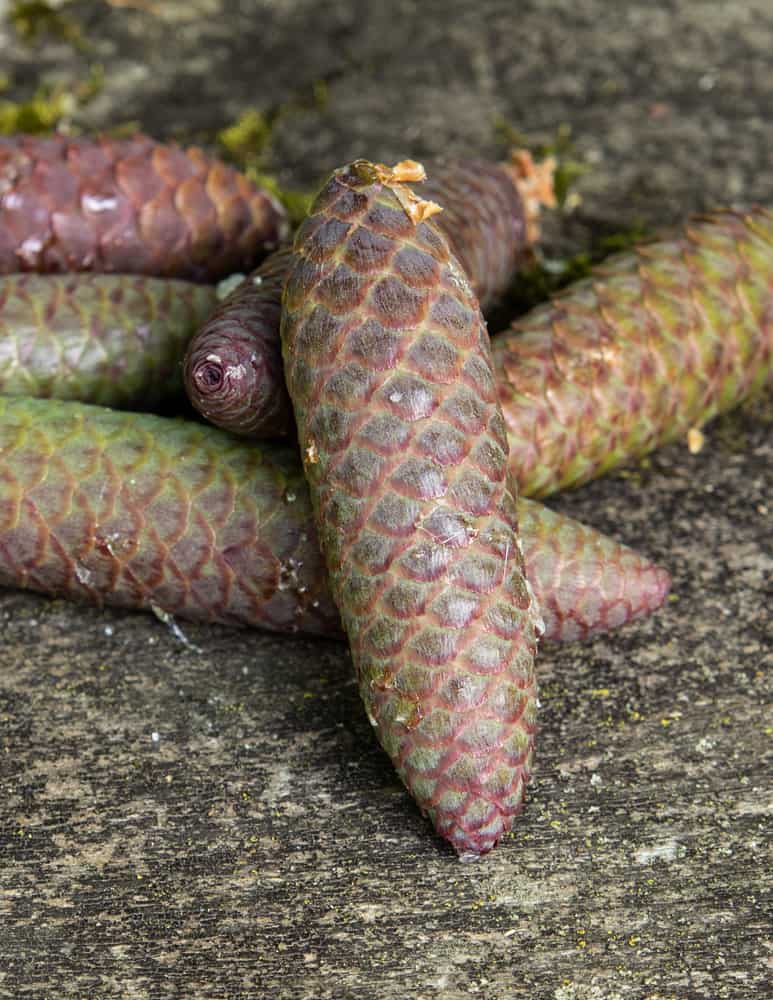
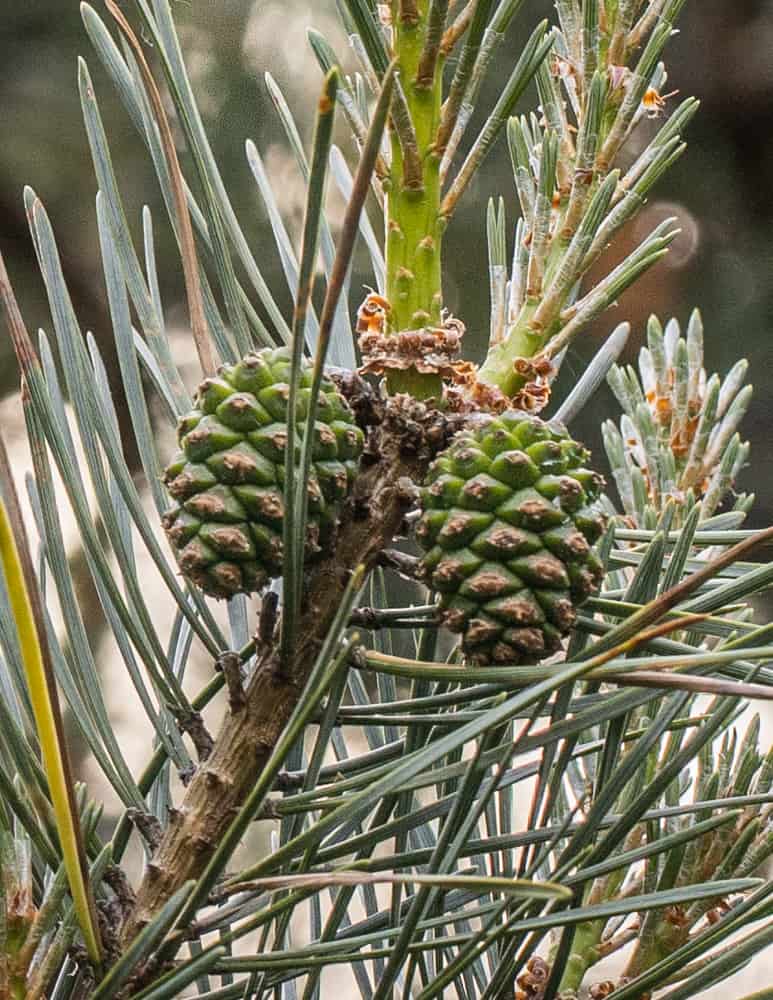
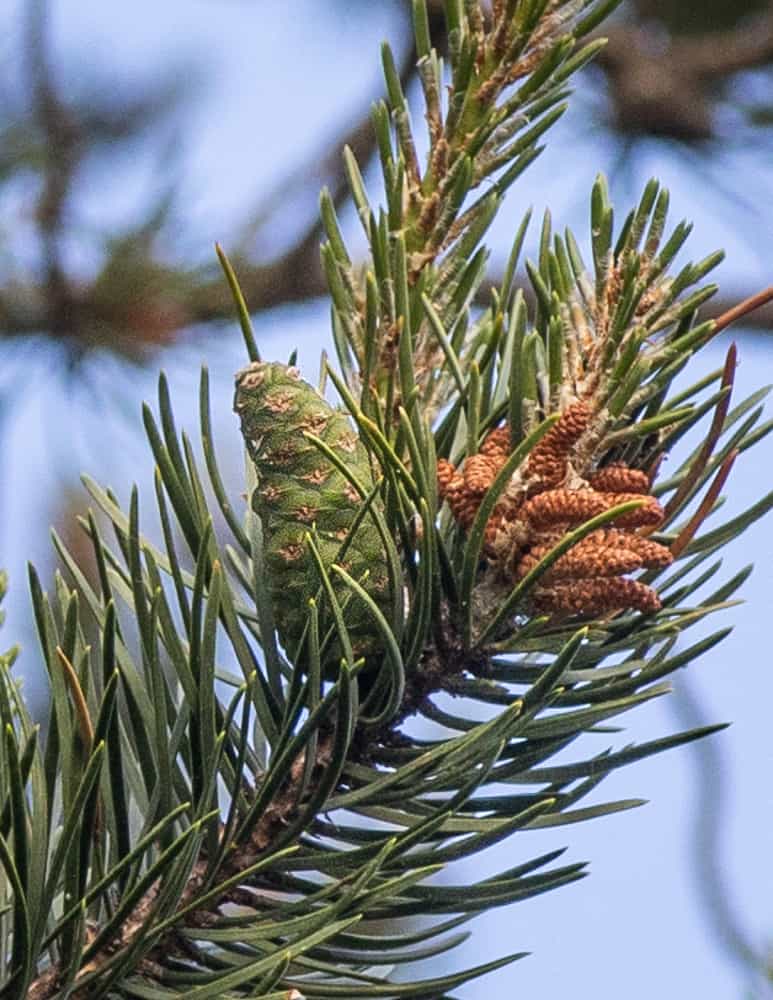
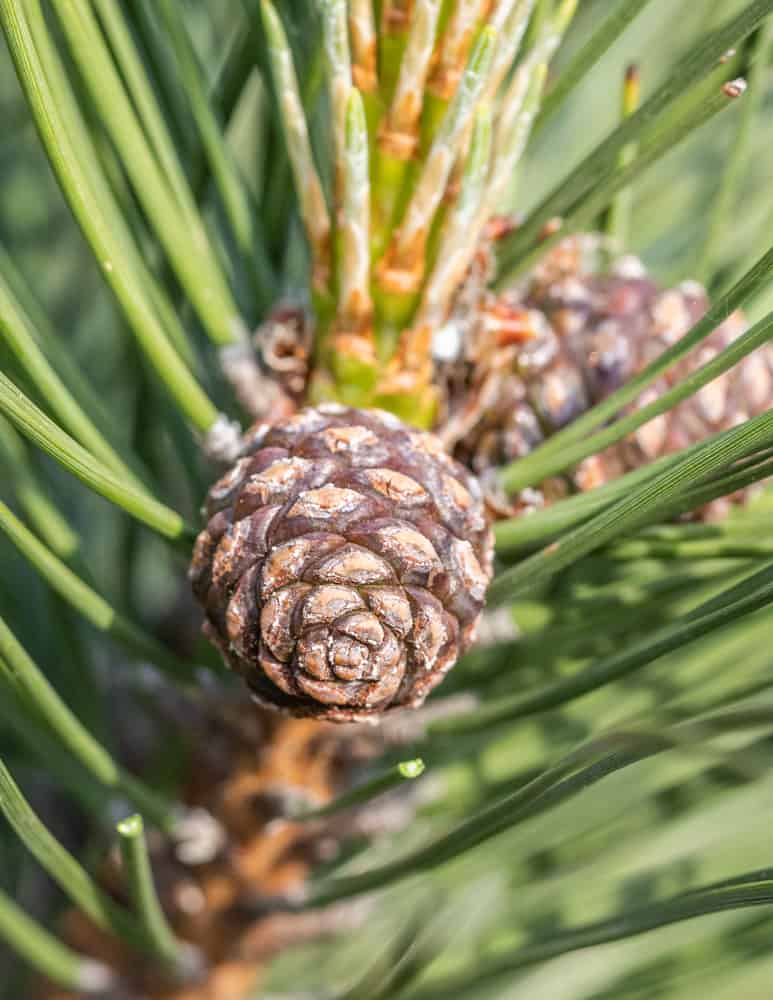
Variation in flavor between species
One of the most fascinating things about mugolio is that every species of tree you harvest unripe cones from will impart a noticeably different flavor unique to the finished product.
Once I started to notice the different flavors, I made a point out of trying to "mugolio" as many different species of unripe coniferous cone I can, and I found some fascinating things. Here's a quick breakdown of the differences between flavors I taste.
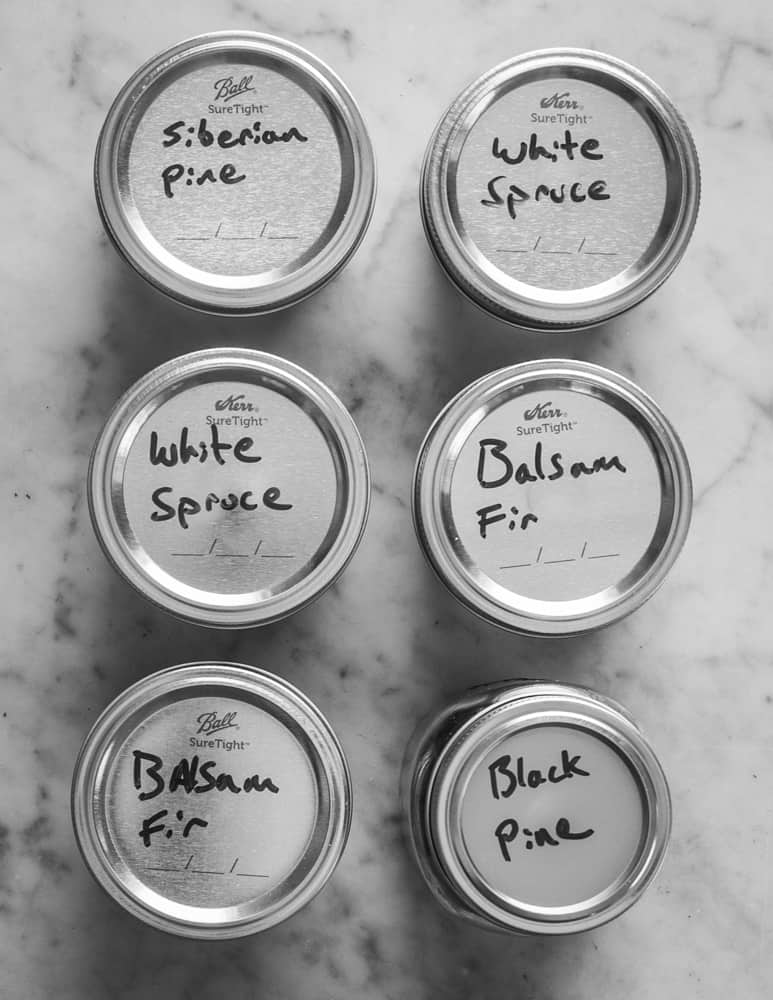
Pinus/Pines
Mugolio made from pinus cones have a resinous, assertive taste.
Picea/Spruces
Spruces lack the aggressive resinous flavor of pines and are the most subtle of all I've tasted. Instead of the resinous taste, spruce cones, just like spruce tips, have a citrusy note to them, and so will syrups made from their cones.
Thuja and likely others/Cedars
The only cedar I've made mugolio with is the green cones Thuja occidentalis, since they're easy to find in landscaping. It has a taste exactly like the aroma of fresh green cedar, a bit in between spruce and pine mugolios.
Abies/Firs
Of all the syrups here, and all the different flavors, the syrups I've made from balsam fir are the most delicious.
Firs have a resinous punch like pine mugolios, but it's slightly less aggressive, and most noticeably, comes with strong notes of warm spices like cloves, allspice, and cinnamon.
Unfortunately, mature balsam fir trees, at least around me, seem to only want to grow cones at the very top of the tree, which can make getting enough for a batch of syrup tricky.
Using other conifer products
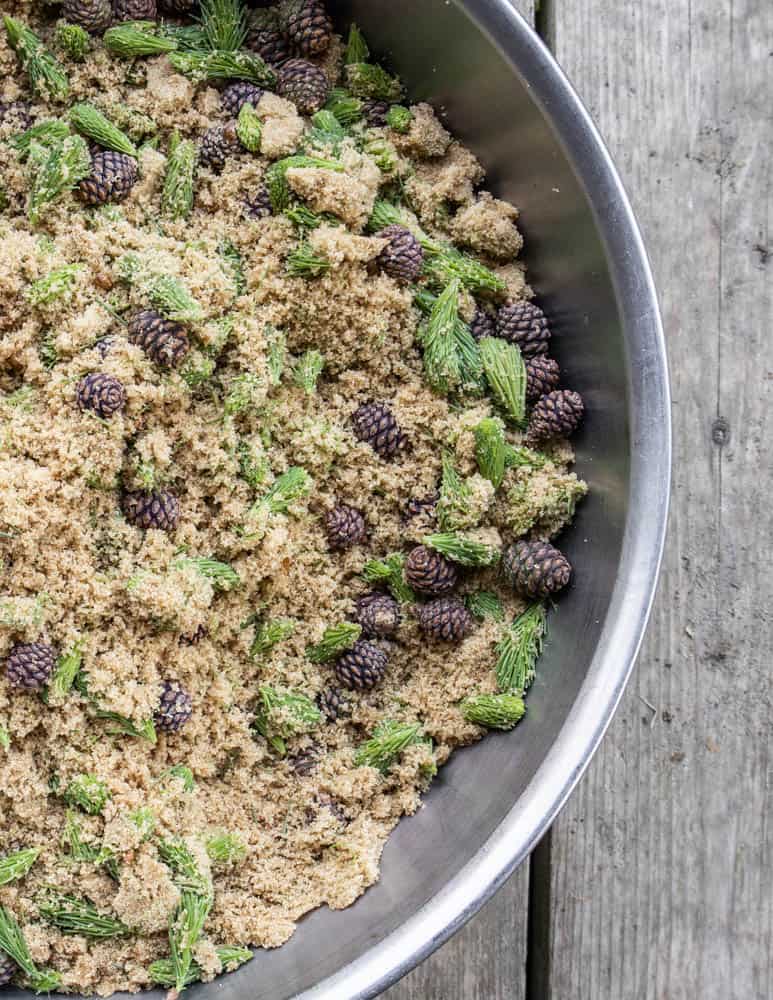
Other tree products like spruce tips, pine tips and cedar cones I've worked with are more dry, and may not ferment during the maceration process, but they can still make a fine syrup.
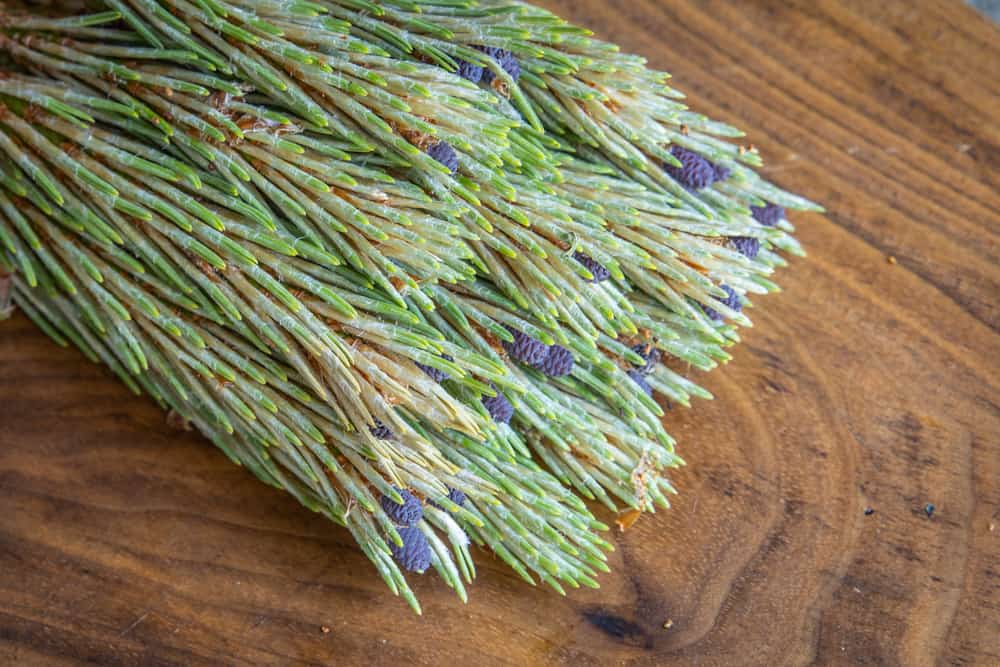
The point is: you can make syrups like this out of all kinds of things, and everyone I’ve had has been good. If you have spruce trees near you, take a look at the basic spruce tip syrup too, which is nearly the same, sans the fermentation. Here's a few things I've used:
- Unripe eastern white cedar cones (Thuja occidentalis. This could can be an abortifacient in high doses)
- Juniper berries (Juniperis virginiana)
- Spruce tips (many species)
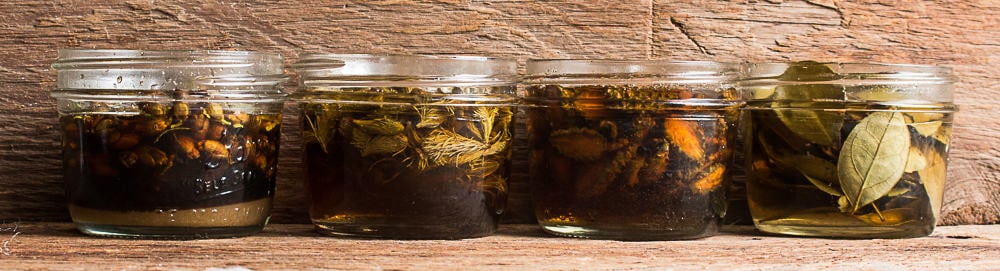
The best part is figuring out how to use it. Somethings take some experimentation, mugolio not so much.
You can literally put it on just about anything where maple syrup would be good, and you’ll be glad you did. The syrup has the essence of pine, but with none of the strong tannins you’d expect If you took a bite out of a pine cone—just pure piney goodness.
Harvest young pine cones in spring or early summer
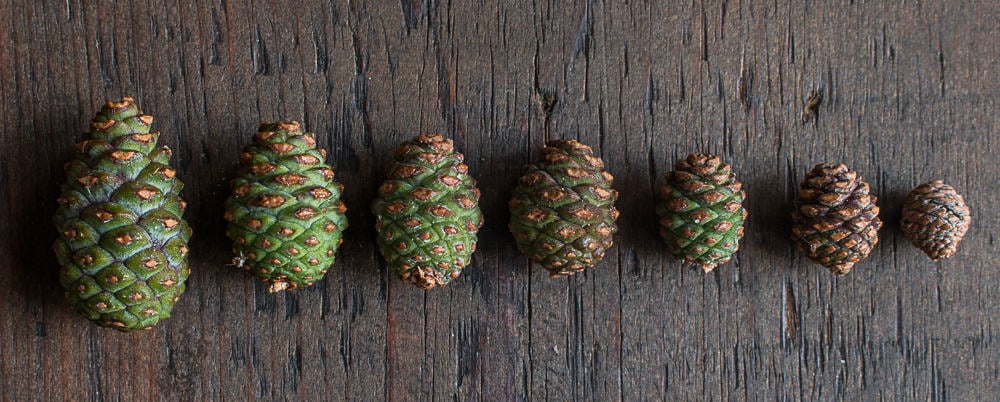
Most importantly, you are looking for unripe pine cones in the spring and early summer, not the fall, not the winter. Opened cones are not to be used.
This is up for debate, but my favorite comes from green cones as they contain more water. Purists might say that you need to harvest pine cones when they're the size of a pinky nail, or some other arbitrary size.
I can tell you after making this for years now, that any of the pine cones pictured in the image above will make a fine syrup, but smaller cones will make a syrup with a much stronger flavor, strong enough that some people may not like it.
Another good rule of thumb I've found is that whatever cone you're picking will probably be sticky and exuding resinous, sticky liquid at a prime stage for making pine cone syrup.
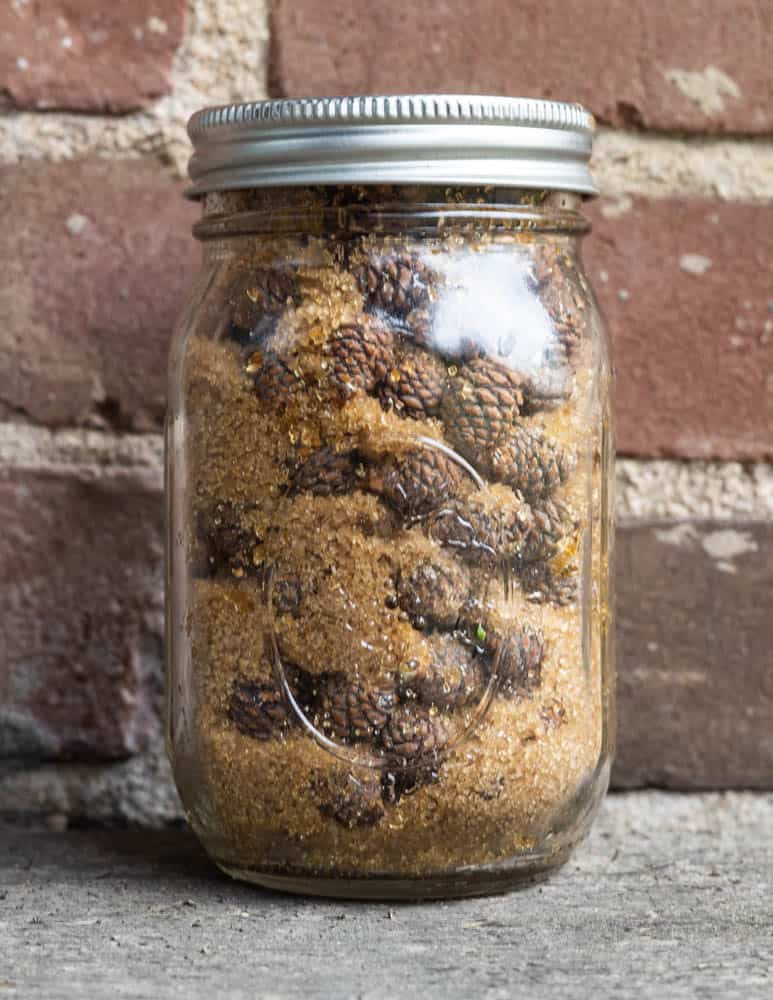
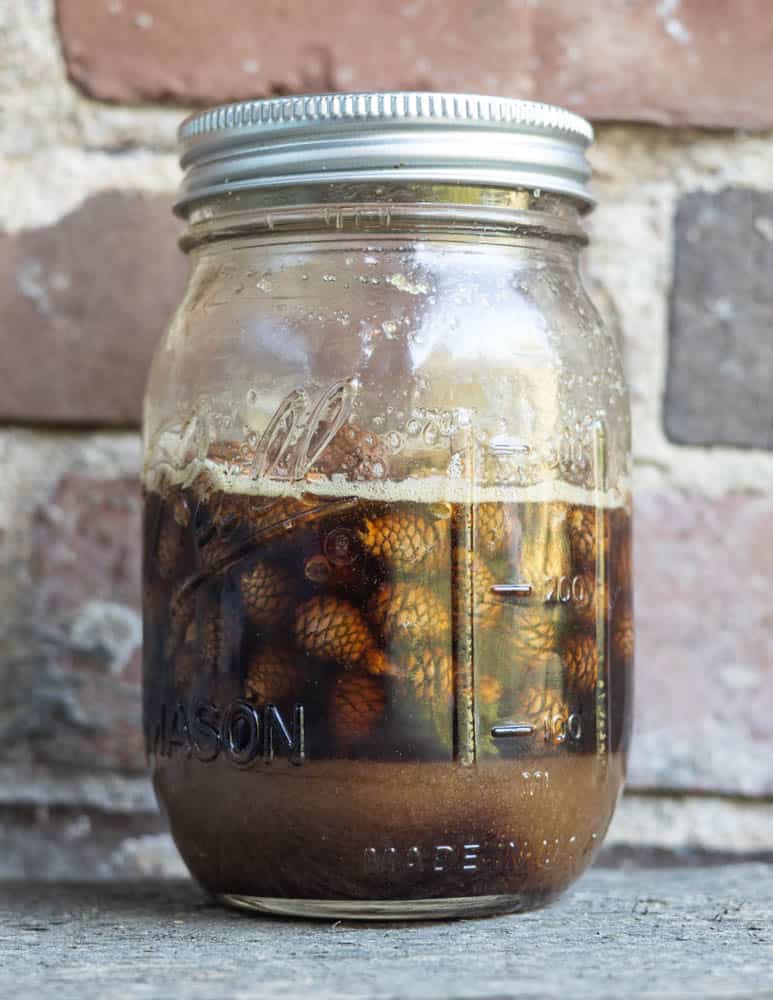
Green cone=higher water content
Larger green cones hold more water in them which makes syrup making much easier, and also allows for some fermentation in the process, which adds fun flavors.
As long as the cones are meristematic and tender, and can be cut through with a knife, even if it's into pieces with long cones like white spruce or balsam fir, they will make a good mugolio. The only cones that won't work, are mature, tough, barky cones, like those you'd see on the ground.
Using very young pine cones
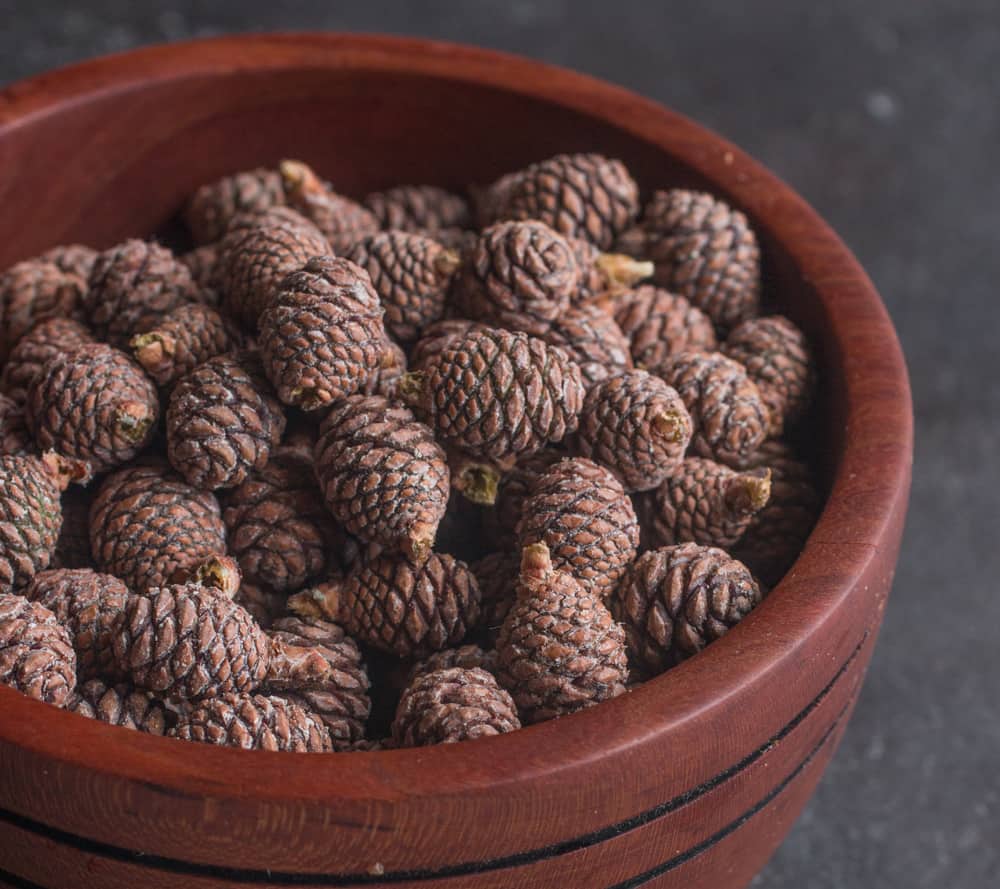
You can use young pine cones, but they're smaller and don't hold as much water as cones that are green, so they're not ideal here.
If you really want to try with very young pine cones, try chopping them up medium to make it so more cones can be fit in a jar, which means more water, meaning an easier syrup. You can also add a splash of water to help it on it's way.
Is it safe?
Yes, this is absolutely, positively safe, and there's no need to worry about botulism. I can't speak to the exact science of spruce tip and cedar cones syrups, (also safe) but pine cone syrup is especially safe as it ferments as it macerates, due to the higher water content of the cones if harvested at the green stage.
The extended fermentation lowers the pH, making it shelf stable. Remember that sugar is a preservative, and conifer products are all naturally acidic, which is a preservative in itself.
Consider using gloves
The most prime pine and spruce cones for making syrup will be plump, but still unripe. At this stage, most of them will be very sticky and oozing a sappy resinous substance that will quickly coat your hands and will stay for hours. Consider wearing gloves to avoid sticky hand syndrome.
Choosing the right sugar
Some recipes might call for white sugar, and while it will work and give you a flavored syrup, white sugar is more dry, and I find the clear color far less attractive than the caramel color that organic, unrefined turbinado-style sugar or even light brown sugar or a similar substitute will give.
I try to avoid using plain white sugar when I can, and I highly doubt that original mugolio recipes used such highly refined products when the first adventurous people crafted them.
Use a good sugar that you can feel good about eating, and drizzling over everything, because you'll want to drizzle it, on, well, everything. Here's a list of sugars that will work
Turbinado
Turbinado is slightly more dry than commercial brown sugars, but it has an excellent flavor.
Light, golden, or dark brown sugar
These are some of the most versatile and affordable, but I suggest using a high quality organic brand. The varying molasses content of the different colors of sugar is negligible in regards to the flavor of the finished syrup.
Maple sugar
Maple sugar is the most expensive you could use, and in my opinion is not the most ideal as it's prone to crystallization from my experience. It is delicious though. If you'd like to harness the flavor of maple with your pine cones, you can just toss pine cones into maple syrup at a ratio of 1 cup of pine cones to 1 lb (2 cups) of maple syrup.
Zirbenshnaps
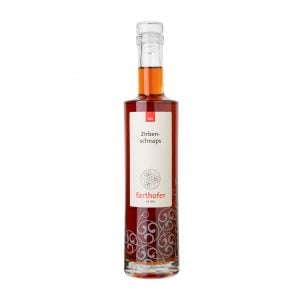
This stuff is unique enough that it needs a special mention. Zirbenschnaps is a liquor made with pine cones.
I’m not an expert on distillation by any means, but I’ve been working with a distillery to make similar products, and one thing we’ve been toying around with is making a rendition of it by simply using it as the sweetener in a macerated liquor.
The traditional zirbenshnaps has a red tone to its color, which makes me think they’re using a syrup made from fresh pine cones cooked immediately—not aged.
I know there’s also birch schnaps, and that’s made with reduced birch syrup, so I think using mugolio would be fine. Currently I know zirbenshnaps is only sold at ultra high-end restaurants in my area.
Whatever you make with it, it’s one of the most fascinating and delicious condiments made from wild ingredients I know of.
Making Large Batches
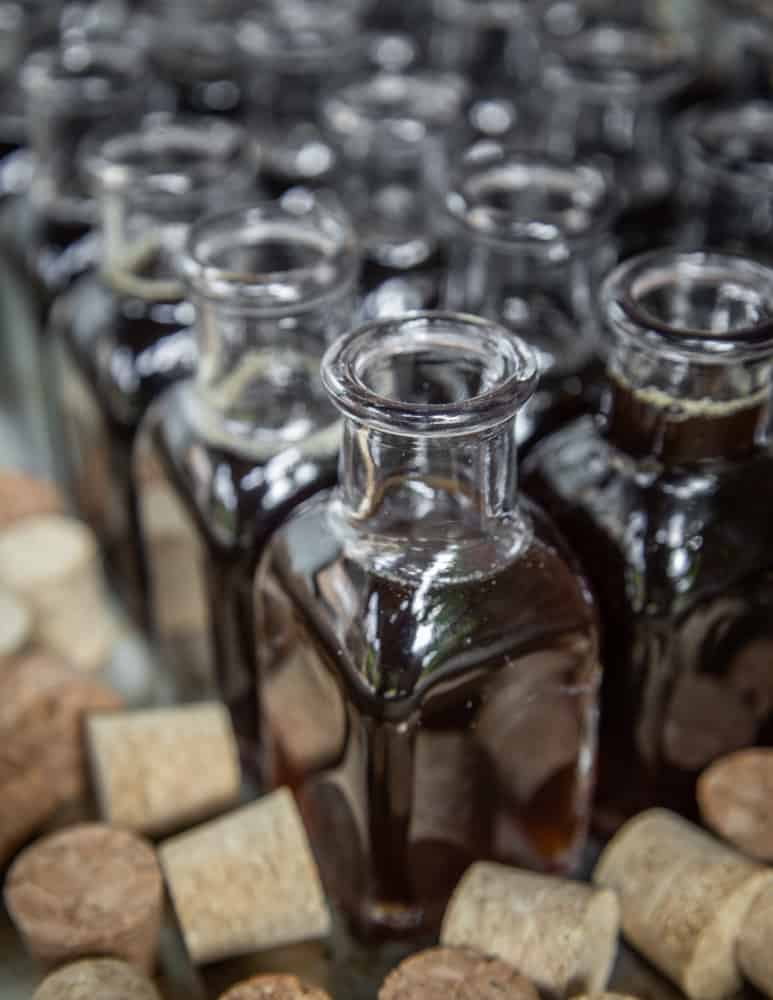
I occasionally make very large batches of syrup, 2 or 3 gallons at a time. Here's a few tips on doing that if it's something you're interested in, especially as this is such a fun (also cheap) and interesting thing to give as gifts. The tips below are intended for those people making 1 gallon batches and up at a time.
Skimming the foam
Similar to maple syrup, when you cook large quantities of the syrup, it will begin to froth and foam at the top and will double in size quickly.
Some cones seem to create more foam than others, especially Norway Spruce. When you notice foam during the cooking process, do your best to skim it off with a spoon and discard.
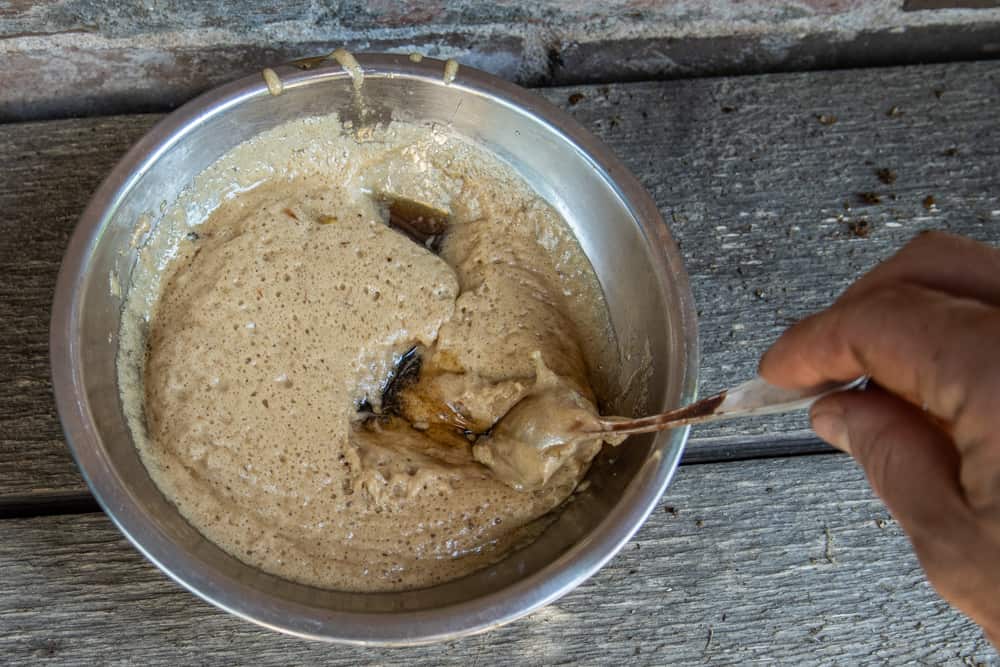
After you bring the syrup to a simmer and strain, put it back in the pot and bring it to a simmer again, let it rest for a minute or two so the syrup can settle and return to it's original volume. If you don't do this, you run the risk of having jars that are half full after settling.
Canning for long-term storage
Pour the piping hot syrup into large jars, or, for smaller ones, pour the syrup into a pitcher with a spout, and pour directly into canning jars (4 oz mason jars make a great gift). Fill the jars nearly to the brim, leaving about ⅛ inch headspace, then, working quickly, screw on the lids tight and turn the jars upside down.
You don't have to water bath-process this as it's basically the same sugar concentration as maple syrup, just make sure your jars are clean. The jars will seal naturally but should be refrigerated after opening.
Here’s a few ideas for using it, and a few things yet on my list to try.
Ideas for using
- Drizzled on pancakes, crepes waffles and other things primed for syrup.
- Use it to flavor whipped cream
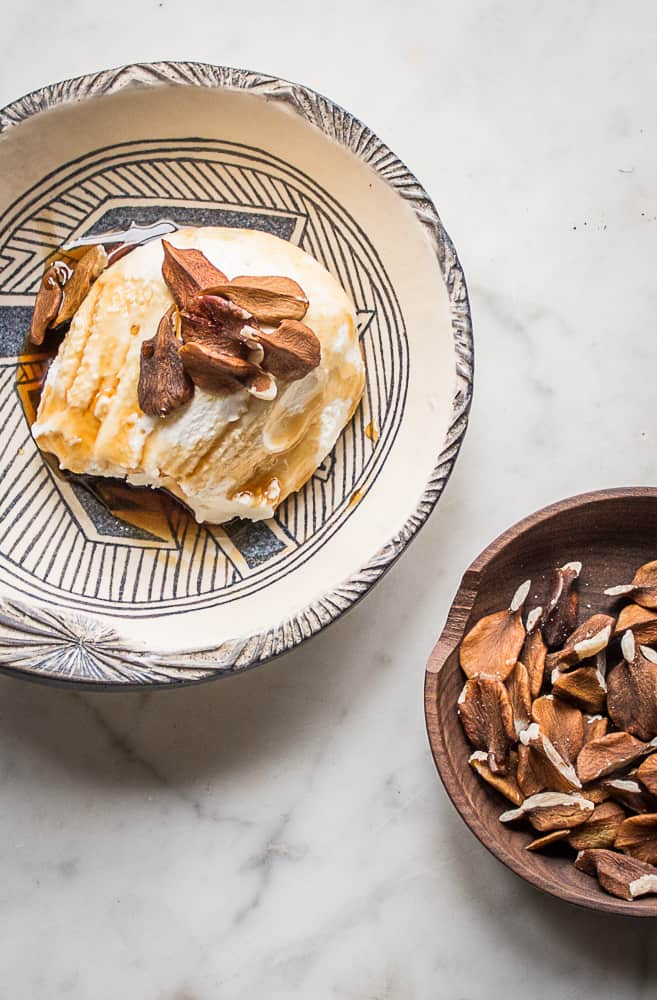
- Excellent drizzled over soft cheese like mascarpone, labneh, chevre, etc.
- Drizzled over fresh fruit
- Using in place of honey, I love drizzling it over bowls of warm buttered wild rice with nuts, fruit, and yogurt for breakfast.
- It’s good in desserts, added in small amounts like you would use honey. Dairy based desserts like ice cream, panna cotta and custards of all kinds can just be seasoned to taste with it.
- Try adding small drizzles to salads, or whisking into vinaigrettes.
- Mixing it with a splash of vinegar just to loosen it a bit makes a good brush on or glaze for hams, etc.
- One of my friends adds it to whiskey
Mugolio, or Pine Cone Syrup
Equipment
- 1 quart mason jar or similar
Ingredients
- 2 cups (8 oz) young red pine or other pine cones (soft enough to be cut with a knife) *
- 2 cups (16 oz) organic brown sugar or other brown sugar, just not white which is dry and makes a clear syrup
Instructions
Maceration
- Rinse the cones in warm water to remove any foreign particles if needed. I don't usually wash them. Inspect your cones for any that have holes or insects and discard.
- Combine the sugar and pine cones and pack into a quart jar, then allow to macerate (age) for 30 days. Put the jars in a sunny place where they will get warm during the day, which will help ward off mold.
- During the first few weeks of maceration, open the jar occasionally to release carbon dioxide as the mixture will ferment vigorously. Shake it occasionally to help it on it's journey.
- As the cones release their water, the volume of the contents in the jar will decrease. Sugar slush will settle on the bottom and is natural. If you have more cones and sugar, you can add it to fill up the jar. The less air in the jar, the lower the chance of mold.
Finishing and storing
- After the maceration is complete, scrape the sugar slush and pine cones into a pot and add two tablespoons of water for each quart jar. Bring to a brisk simmer and heat through to melt the sugar, then strain and bottle. Discard the cooked cones and thank them for their service.
- All you need to do is bring the temperature up and melt the sugar, if you reduce the syrup too much it will crystalize after it cools. For the amounts listed it should take about 5-10 minutes.
- The syrup is stable at room temperature since the fermentation lowers the pH, but will keep the best flavor in the fridge. It can also be water bath processed, which I'll do if I sell it. For home storage I pour the very hot syrup into jars, screw on the lids and turn them upside down to seal.
John
Hello Alan, we are in the process of making Mugolio from pine cones collected from trees on our property. One jar of Jack pine and one jar of scotch pine have what seems like mold on the top of the fluid covering the cones. Is this normal?
Alan Bergo
It’s likely a harmless mold. Spoon it off the top and finish the syrup by cooking as directed. It’s not harmful but over time it can affect the flavor. One thing you can do is reduce the amount of air in the jars by adding more cones mixed with sugar, next time.
John
We spooned off the mold and simmered it slowly to avoid burning it. Then put into sterilized jars and refrigerated. It is delicious. Having some on my morning bagel. Thank you.
Alan Bergo
Glad it worked out. Shaking the jars and/or filling with extra cones and sugar can reduce the amount of air and help by coating the cones in the fermenting syrup, in the future.
Shari
I must have done something horribly wrong. I collected my baby pine cones followed your recipe emphatically I just reduced it and bottled it and honest to God it tastes horrid. Is it an acquired taste? It's sweet but man the bitter after taste is bad. I don't like the taste at all maybe it's just me and I don't have a sophisticated palate. I used Hemlock, Red Pine and Balsam firs. Very heavy on the Red Pine since I had them in abundance. I don't know if I did something wrong?? it's just not good.
Alan Bergo
Hi Shari. This recipe is so easy and trustworthy, every person I've ever served it to has loved it, and it would be like selling water in the desert if I made it a commercial product. I don't know what went wrong here-if it's just not for you or if there was some user error, but it is definitely good, and I wouldn't give up on it.
Shari Somogyi
I shall try again !! Thank you!
Casie
Does the cooking process kill any of the beneficial properties of the product, like it would honey or other fermented foods?
Alan Bergo
Traditional mugolio is always cooked. If you want to consume living ferments, I recommend eating a ferment that is traditionally eaten raw, like kimchi or sauerkraut.
Matthew Kenne
Hi, Alan. This question also applies to spruce tip syrup: is there a particular reason to boil the cones/tips with the syrup and then strain them out of the hot syrup? Wouldn't it be easier/safer to pluck out the cones or strain out the tips before boiling the liquid like cooking maple syrup? Wouldn't there be less of a chance of overboiling the syrup and having it harden/crystalize? Looking forward to my first spruce tip batch to be ready to boil in 10 days.
Alan Bergo
If you want to pick the cones out, go for it, but. This isn’t practical at all with spruce tips as it won’t be liquid and you’ll have a lot of waste.
John
Hello Alan, we are in the process of making Mugolio from pine cones collected from trees on our property. One jar of Jack pine and one jar of scotch pine have what seems like mold on the top of the fluid covering the cones. Is this normal?
Keith Ikeda-Barry
Hello Alan,
Thank you for sharing this recipe.
We found surprisingly few trees with green cones this spring, but ended up gathering 3 cups of acorn-sized young cones from what my online research leads me to think is Pinus mugo, (dwarf mountain pine) which is used a lot in landscaping here in Vancouver, Canada.
We cut them in half and combined them with 3 cups of mixed demerara/dark brown sugar. Things went as your post and helpful video describe. After de-gassing the jars every day, I swapped in silicone pickling lids that have a little x-shaped valve cut into a small nipple.
After 16 days outdoors (facing south, shaded overhang) we removed a few penny-sized spots of white mold and put the jars in the fridge for two more weeks.
The result is a very good flavour, like almonds and pine sawdust in a woodshop, with a distinct green-herbal tang, perhaps from fermentation.
The syrup is very thin, however. We heeded your warning about melting the sugar and not boiling too hard. What do you suggest for increasing the viscosity without having it crystallize?
Other notes:
We found a waxy, milky layer on top of the liquid after draining. It coated our tasting spoons and lined the maceration jars. It cleaned off with citrus-based cleaner. Did you get that in any of your batches?
So far we've found that the sweetness of vanilla ice cream overpowers the sugar in the syrup, leaving the flavours a bit stark. It was amazing on cream cheese and croissant, though. Your labneh suggestion looks just right. Maybe ricotta, too.
(I'll comment later about how our spruce tip harvesting went. We tasted every pine tree in our neighbourhood!)
Alan Bergo
The tricky thing is that each species of cone and the stage of growth at which they're harvested can affect the natural water content of the cones. I would simmer your syrup a little longer or use turbinado sugar if you used brown sugar. There's likely correlation of temperature and the correct viscosity you can get using a candy thermometer, like maple syrup-I haven't worked with it like that yet. What you're describing sounds like some harmless mold, which isn't ideal, but won't hurt you, especially as the syrup is cooked. Try filling up the jars as they lose volume with more sugar and cones which decreases the amount of air in the jar, which is usually at least part of the issue. I've never had that happen, personally.
Keith Ikeda-Barry
You were right, of course; a few more minutes simmering and it thickened up beautifully. It really condensed the flavour, too. It was good before, but now it's "Wow! I see what all the fuss is about!"
I did not take temperature readings, unfortunately.
I'll look for turbinado for the next batch. We passed our foraging spot today and there are still enough small green cones to make more.
It makes sense to minimize the air in the jars. During maceration we did combine two jars into one after the volume had decreased.
The mold that we picked out and the waxy sheen on the liquid are two different things. The mold was no issue, but I'm not sure how to avoid it in the future with the jars on a warm balcony (can't quite get direct sunlight). I'm pretty sure the "wax" is the resin/sap from the cones, perhaps from the stems. It cleans up with citrus-based cleaner, as I mentioned, but it makes me reconsider which pans and strainer to use in the future.
We drained some Balkan 3% yogurt overnight and spread the dense curd on brioche toast with the mugolio and toasted walnuts. Spectacular. It's a rare day that we get to try something really new and unique. Thank you again for your recipe, video and careful instructions.
Alan Bergo
Thanks Keith! Glad I could be helpful.
Jo
I tried this recipe last year with larch cones & demerara sugar and it was incredible.
Cannot thank you enough for sharing this recipe.
After only making a small batch last year just to try it out, I've found my biggest problem was patience waiting for green cones this year again!
The mistake has not been made this year. Many batches of several different varieties are currently bubbling away.
So simple and so tasty, thanks again.
Alan Bergo
Hey Thanks Jo, glad it worked for you.
Julie
What a delectable delight this is! I have made several batches with young Long Leaf Pinecones that were incredible!To one batch I added a few apple slices during the final week of processing and WOW! Also tried with Loblolly but that ended up tasting like PineSol flavored Nyquil. I was able to harvest some young Eastern White Pine cones on a trip to the SC mountains that had fallen after a storm. Lucky me! 3 jars processing now. I'm curious to know if this works with juniper berries. If so, should I pluck off the individual tiny berries or use the whole cluster with the greenery as well. Thanks so much!
Alan Bergo
Yes juniper will work, just make sure they're fresh and ideally, green. Glad you're having fun.
Sasha
Hi! Wondering if you think this wood (🤓) work with dawn redwood cones? It’s a deciduous conifer and there seem to be some edible applications in Chinese literature 🧐.
Alan Bergo
I'd definitely try it with them, and, with the heritage I'd expect the flavor to be comparable to mugolio made with cedar cones, meaning it would taste more floral than the red pine mugolio I usually make. It's a special flavor. Thanks for turning me onto that tree too, really cool!
A
I am making this with spruce cones this year for the first time! It has been on my to-do list for years since seeing your original post. I harvested some of the green cones, but found that I harvested a couple too many for the jar, so I put them in the fridge. I was wondering if I could add these to the jar now, as after a couple days the sugar is melting and the contents decreased in volume as you described. Is there any reason I shouldn't add the cones I had in the fridge for two days? Thank you so much for this blog post and all the detail. I am constantly enchanted by the way you work with wild plants.
Alan Bergo
It's fine to keep the cones in the fridge, they'll last for at least two weeks or longer.
A
Thank you!
Michael
I made this out of loblolly and I’m gonna be honest it tastes like medicine.
Alan Bergo
Thanks for sharing. A number of people have been asking about that one. Each species Ive had is a little different, some better than others, obv.
Kaylie
Great! Thank you much! Excited to see how it tastes when it's done!
Kaylie O'Harra
Hi!
I am trying out your recipe with some green cones I found but I am having a hard time Identifying the pine they came from (it for sure is in the pine family). Could I accidentally make something toxic or are pines pretty safe? I have tried to research it, it looks similar to the red pine cones you shared. Thanks for any advice just trying not to poison myself.😅
Alan Bergo
You'll be fine. This is a very safe recipe.
Sunshine Fox
You mentioned making this with Juniper berries…should they be green like the pine cones or should I wait for them to mature?
And have you ever tried making this with pine catkins? (Or are catkins the young cones?)
Alan Bergo
It's best to do it when they're green as you want something with natural water in it to allow it to ferment. I don't use the catkins-those are for harvesting pine pollen, for me. The young terminal shoots at the end of the branches can work though.
Jo
Dark brown sugar is difficult to source and, if making any quantity of Mugolio, can get expensive. I use 1 cup white sugar mixed with 2 tablespoons of molasses in place of commercially prepared brown sugar
Alan Bergo
Brown sugar is cheap and easy to find.
Michaell Fontenot
I want to make this it soundings delicious , I live in the south so all I have is loblolly pine and maybe some jack pine and I’m not sure if I can make this with loblolly pine does this work with all pine or just some pines like sugar pine and also can I make this with bald cypress berries.
Alan Bergo
Use the Jack pine. I can’t speak to the loblolly pine, I’m looking into it though. If you could harvest some loblolly cones and send them to me I can run a batch too.
Michael
I have just realized that the jack pine is actually scotch pine. Also I can try to send them to you.
Andy
Thank you. Love your work. I cannot wait to try this. I was reading your article and thinking that I wished there was a video and voila, there it was! Keep 'em coming.
Alan Bergo
Thanks Andy.
Gabrielle Beland
I'm trying this this spring, so far so good!
I've been processing firewood and the occasional conifer for years now and the BEST tip i ever picked up is: rub your hands in butter thoroughly, as if it were soap, and the sap and resin comes right off 😀
Alan Bergo
I'm going to have to try that for sure. TU
Birgit Mikulaschek
Wow, your description is very detailed.
Thanks! I'm looking forward to trying it out. You mentioned Zirbenschnaps, and as I am from Austria, where the product originates from I venture to explain it further. It's a liqueur. The cones of Pinus cembra are the ones being used (commonly known as Arolla pine, Swiss, or Swiss Stone pine) here is a picture from my page: https://www.facebook.com/GasthausAhorner/photos/pb.100054565804455.-2207520000./1283135962043732/?type=3
You cut them up, add sugar and korn (grain spirit, but I guess you can use any neutral spirit) to let it sit in a warm and sunny place for some weeks.
Alan Bergo
Hey that's great Birgit. Thanks for sharing.
Judy Nguyen
HI Alan! I am so glad I came across your site. I am in the Santa Cruz, CA area. I found some green cones that look to be from a yellow pine (either Monterey or Ponderosa). I've been findinh a lot of conflicting info. I know the needles on these aren't great to use but are the pine cones for either of these trees OK for mugolio/cone syrup?
Alan Bergo
Hi Judy! Both of those should work fine! Let me know if you have any questions during the process if you give it a try.
Judy Nguyen
Thank you! I got a couple batches in the works now with some turbinado sugar. I'll let you know how it turns out at the end of May!
Michael
Brown sugar is white sugar with molasses added to it.
Alan Bergo
And the added liquid from the molasses helps ensure people have enough liquid in their jars to allow fermentation. It is a safeguard against user-error. After you make it once and understand the process you can branch out to different types of sugar-turbinado and natural types are fine. I'm have insurance for this site in case I get sued from, say, someone consuming improperly fermented food, but I'm not trying to go through that.
Jake
Hey we're gonna try this again this year after an unsuccessful attempt with some cones too late in the season (we think anyway). I noticed that the resinous male cones (small and pink-purple, right on the tip of the branches) are really aromatic and give off an amazing smell. I was interested if you've ever tried including other parts of the tree in the process and how that went, before we potentially make another dud batch.
Thank you so much for your recipes and knowledge, you're a real source of inspiration and guidance
Thanks!
Alan Bergo
Hey Jake, the male cones may look attractive, but their use is for pollen-not for syrup. They don't have the natural water baby pine cones have, and my experiments with them as an edible, pre-pollen, have not been palatable. The syrup is very easy to make, but yes, the cones have to be young enough. They can be harvested during a pretty wide window-they just need to be tender enough to cut with a knife. For mugolio I actually prefer the slightly larger cones when they begin to have a flush of green on them since they'll have more water which speeds things up. I hope this is helpful, and let me know if you have any questions during the process. See my post on Pine Pollen for more.
Patricia Montgomery
Hi, I just came across this article and have question. I live in NW Georgia (US) and the pines on our farm are all loblolly. Can these cone be used to make Mugolio syrup?
Alan Bergo
I haven’t used that species specifically, they should work. I make it out of every type of pine I can find just to test the flavors. Just make sure the cones are young and tender. Let me know if you have any questions during the process.