
Mugolio, a dark, aromatic syrup imbued with the flavor of pine cones, is the poster child for the kind of crazy cool, Illuminati-esque foodstuff foragers have access to, all for the price of a hike, or even less, depending on how close you are to some pine trees.
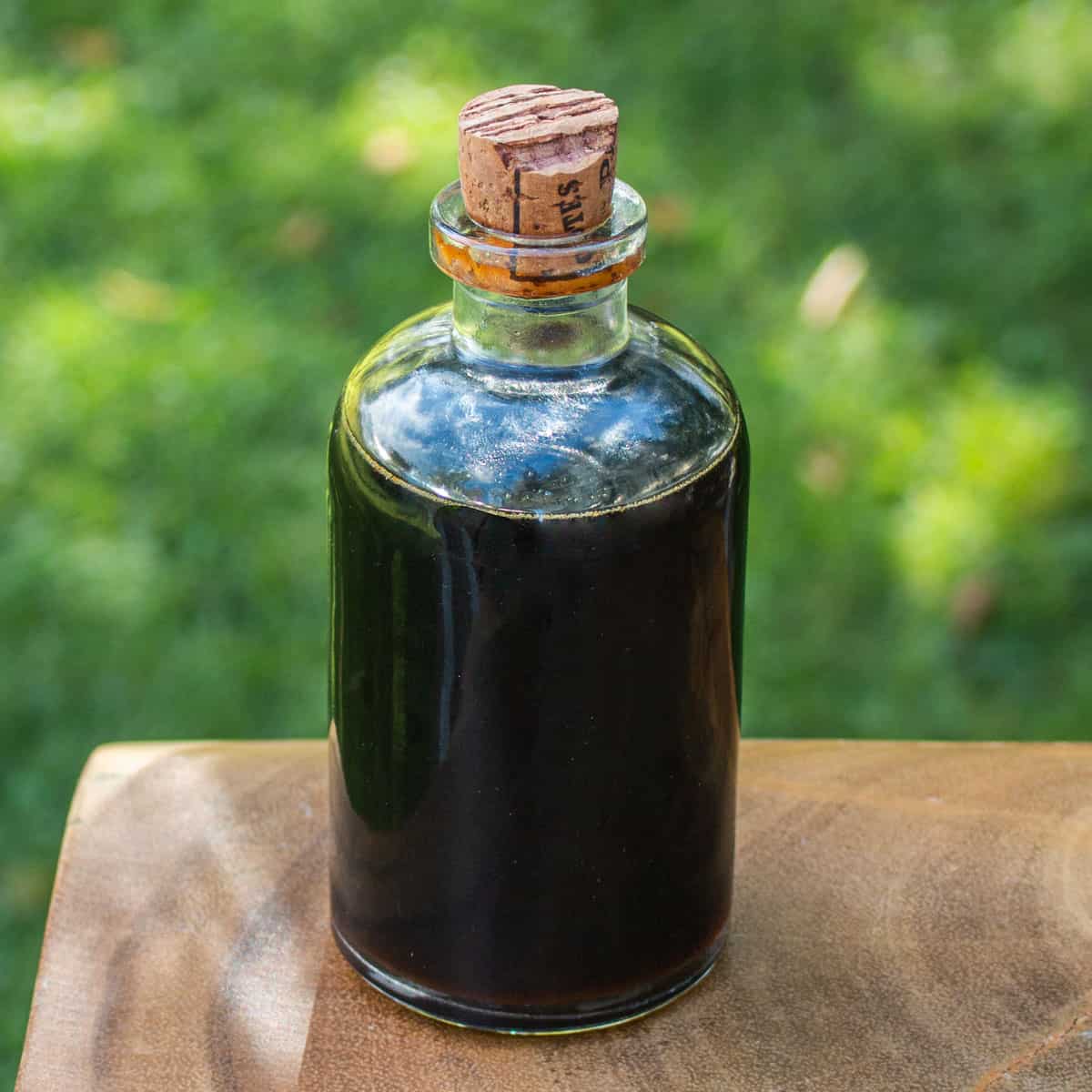
The syrup came on my radar when my friend Dan Farmer gave me a little jar of some he made to try. I remember it being good, but I forgot about it until I opened the Salt Cellar, and started making my own from spruce tips, which is excellent, but not quite the same as pine cone syrup (for the record both are great).
Mugolio is now still a bit of a chef secret, and available through elite specialty distributors, but the price is staggeringly high, exorbitant even, when you consider you can make nearly the exact same thing at home, for less than it costs to make a cake.
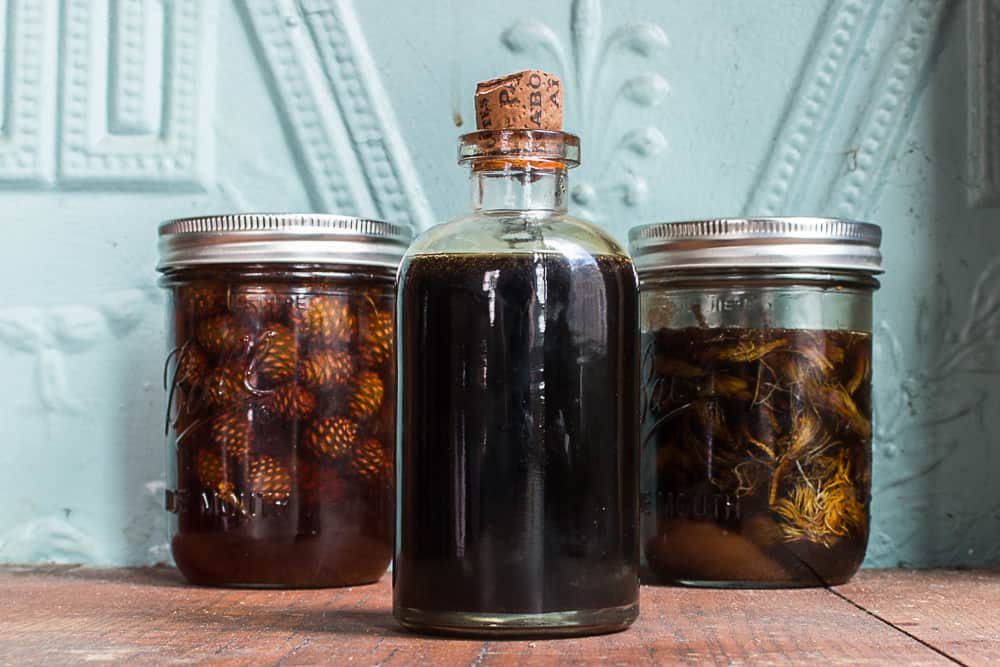
A chef secret that takes months to make
The cost of mugolio is not found in ingredients, but is paid in time. How much time is certainly up for debate, and you’ll notice my recipe turns around a lot quicker than burying a jar of pine cones and sugar in the yard and digging it up the next year (an actual recipe from Romania). You’ll want to wait at least a month for a good pine syrup, although aging it longer can be fun.
Mugolio: more than just pine cones
Real quick, some reality. I use the word mugolio interchangeably for syrups made from numerous tree parts, if you look around you’ll see mugolio usually refers to a syrup made from the young cones of mugo pine (Pinus mugo), harvested at a specific time of year, under the strictest of conditions, blah, blah, blah.
I’ve made all kinds of similar sugar based products from all kinds of conifer parts, and it isn’t some difficult, arcane thing you can only do in the light of a full moon— just the opposite.
Making mugolio is easy, and there’s a very forgiving time window for harvesting cones, or other things products like cedar cones, wintergreen, juniper, or spruce tips. All of the aforementioned making excellent syrups in their own right.
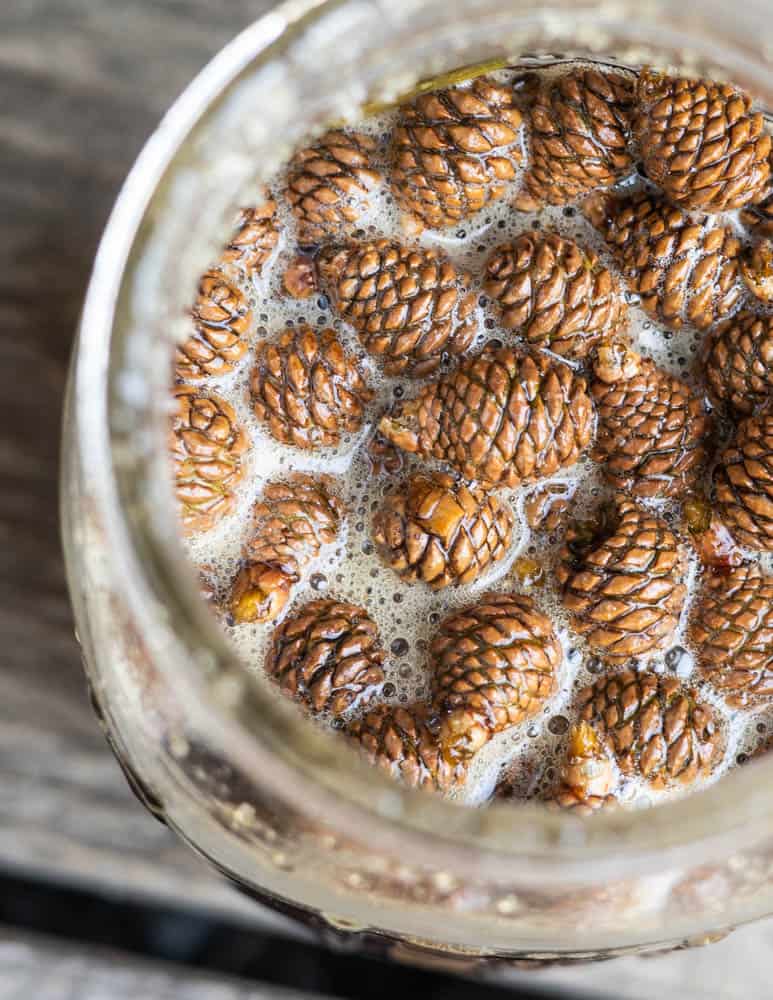
There’s something special about the pine cone syrup though. Pine cones hold more water than any other thing I’ve used, and they also ferment during the maceration process, vigorously.
The day after you combine the pine cones and sugar, there will look as if there was a rush and release of water—what was once a solid packed jar of pine cones and sugar is not 75 % full and liquid.
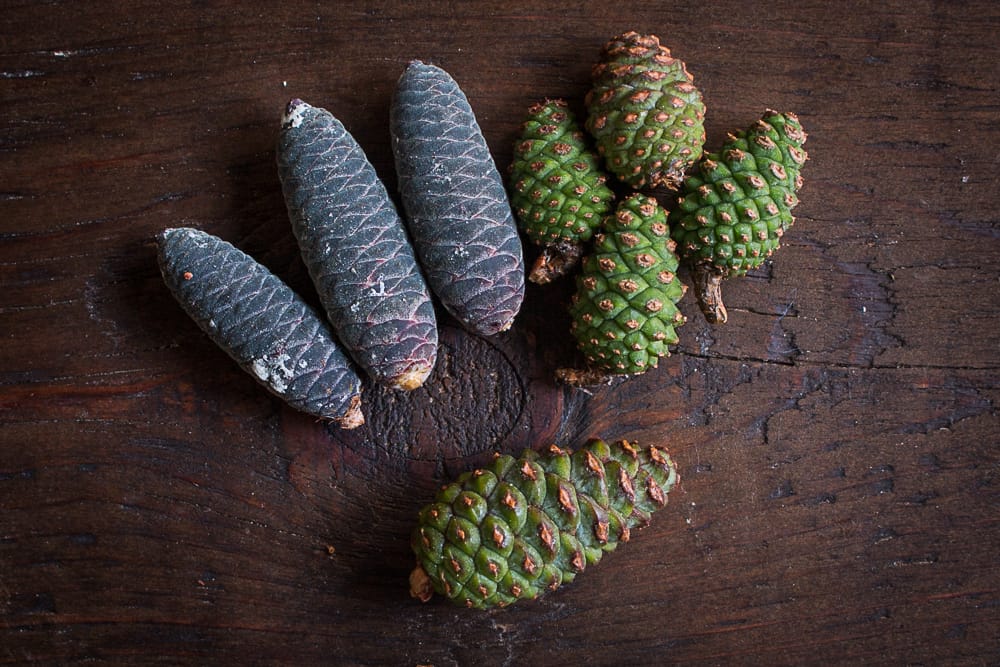
Species of unripe pine cones I've used to make syrup
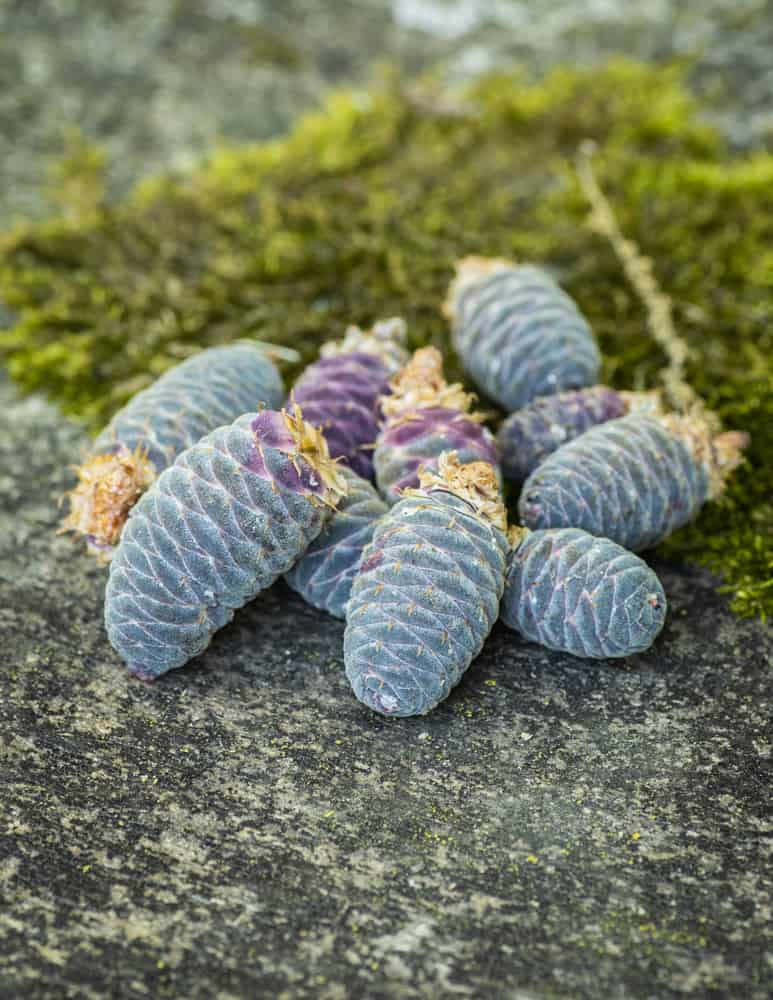
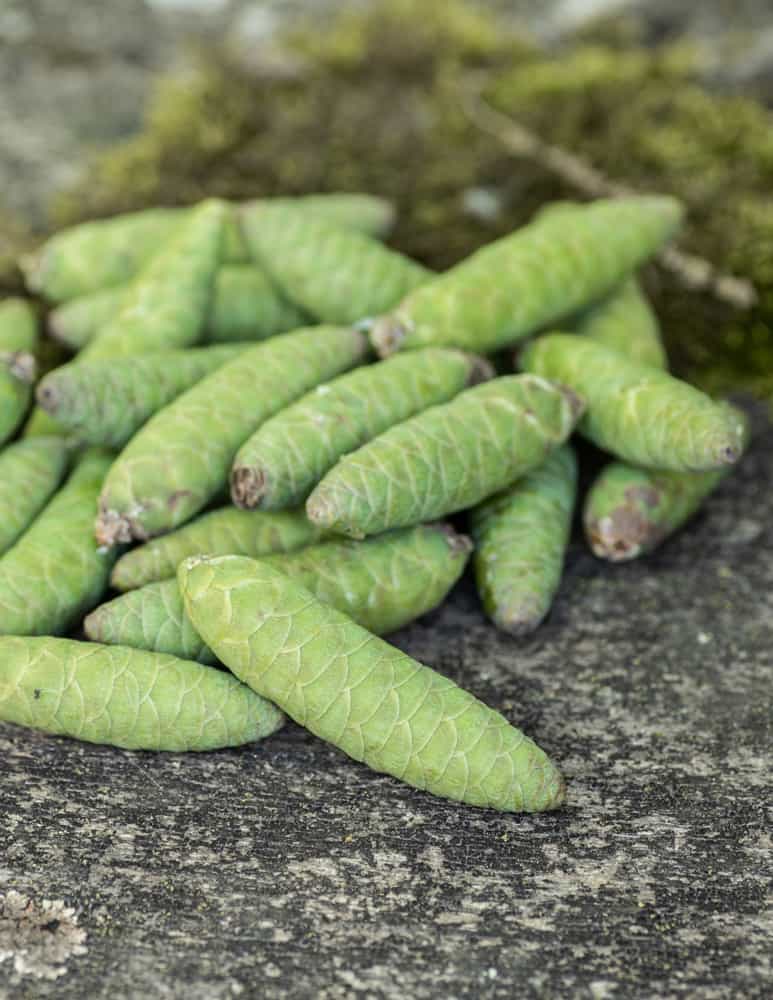
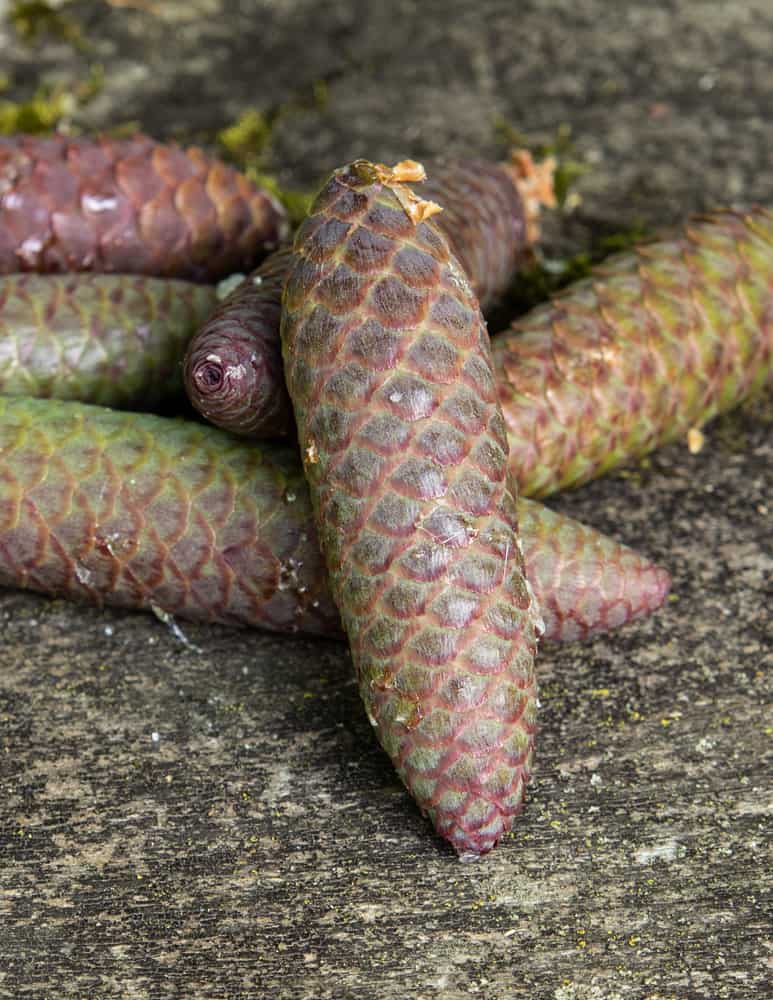
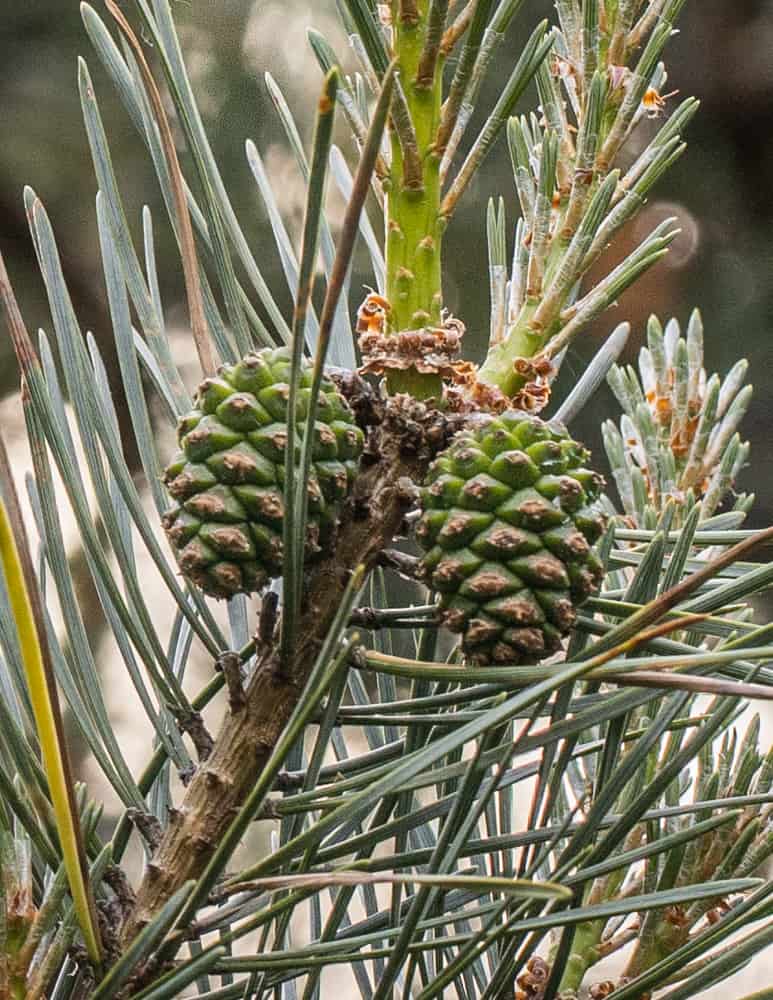
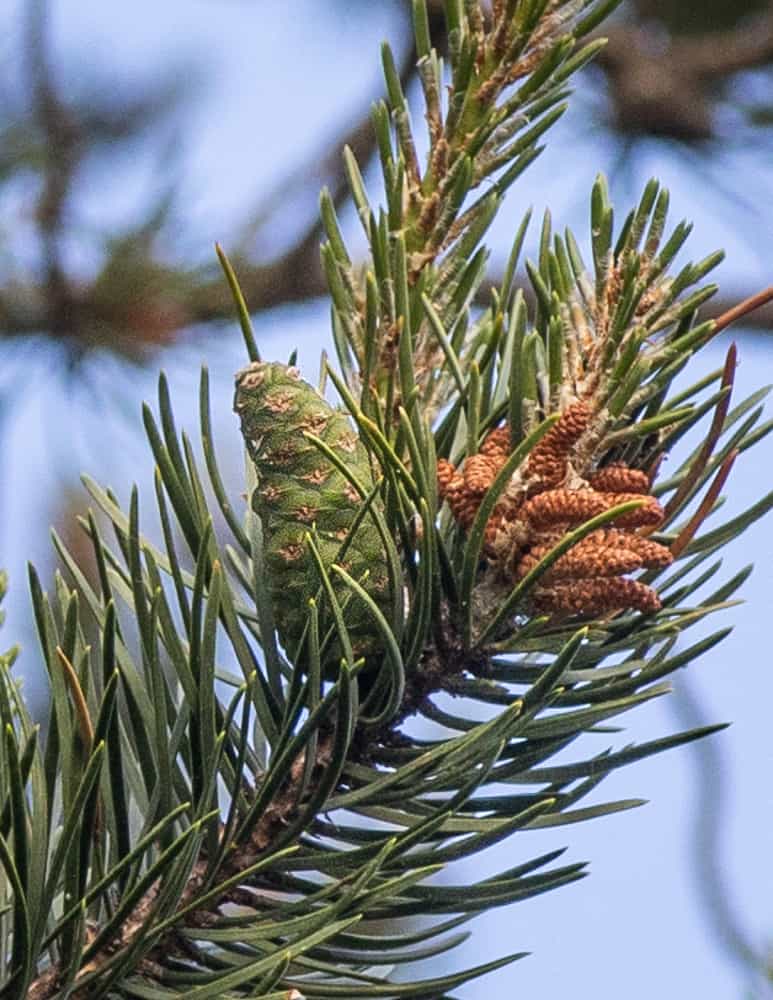
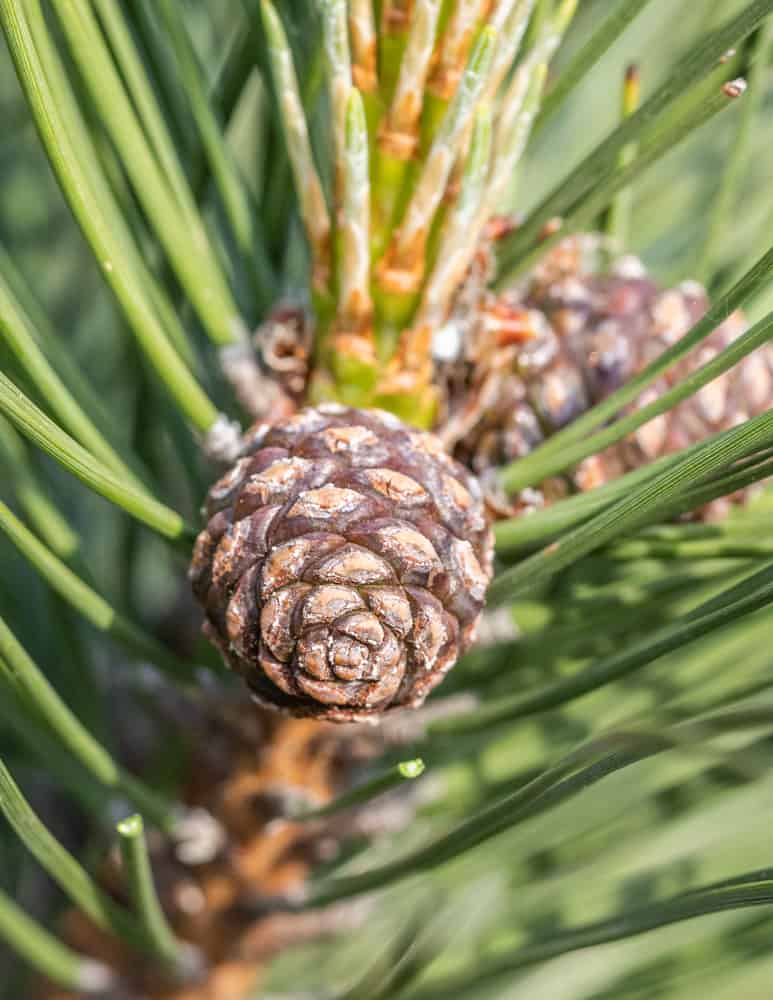
Variation in flavor between species
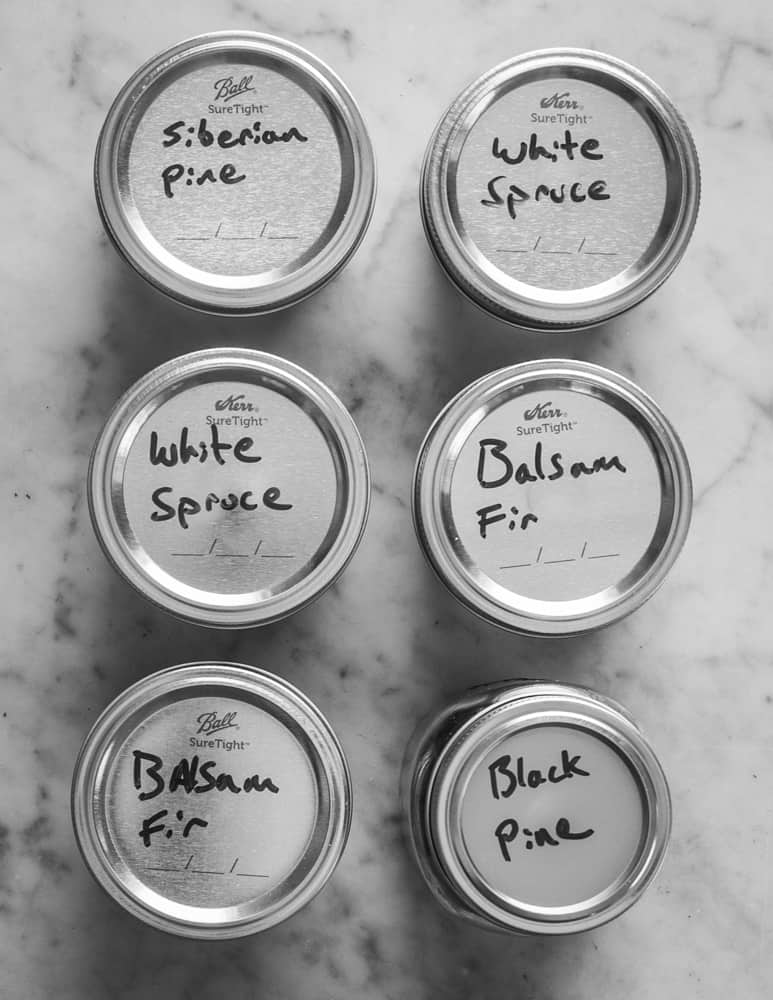
One of the most fascinating things about mugolio is that every species of tree you harvest unripe cones from will impart a noticeably different flavor unique to the finished product.
Once I started to notice the different flavors, I made a point out of trying to "mugolio" as many different species of unripe coniferous cone I can, and I found some fascinating things. Here's a quick breakdown of the differences between flavors I taste.
Pinus/Pines
Mugolio made from pinus cones have a resinous, assertive taste.
Picea/Spruces
Spruces lack the aggressive resinous flavor of pines and are the most subtle of all I've tasted. Instead of the resinous taste, spruce cones, just like spruce tips, have a citrusy note to them, and so will syrups made from their cones.
Thuja and likely others/Cedars
The only cedar I've made mugolio with is the green cones Thuja occidentalis, since they're easy to find in landscaping. It has a taste exactly like the aroma of fresh green cedar, a bit in between spruce and pine mugolios.
Abies/Firs
Of all the syrups here, and all the different flavors, the syrups I've made from balsam fir are the most delicious.
Firs have a resinous punch like pine mugolios, but it's slightly less aggressive, and most noticeably, comes with strong notes of warm spices like cloves, allspice, and cinnamon.
Unfortunately, mature balsam fir trees, at least around me, seem to only want to grow cones at the very top of the tree, which can make getting enough for a batch of syrup tricky.
Using other conifer products
Other tree products like spruce tips, pine tips and cedar cones I've worked with are more dry, and may not ferment during the maceration process, but they can still make a fine syrup.
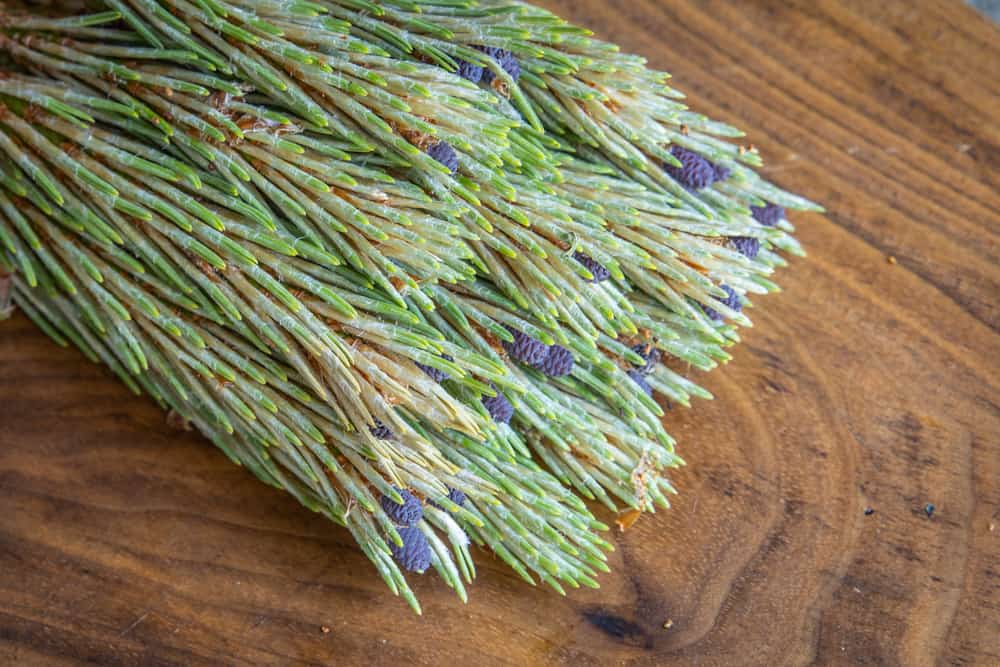
The point is: you can make syrups like this out of all kinds of things, and everyone I’ve had has been good. If you have spruce trees near you, take a look at the basic spruce tip syrup too, which is nearly the same, sans the fermentation. Here's a few things I've used:
- Unripe eastern white cedar cones (Thuja occidentalis. This could can be an abortifacient in high doses)
- Juniper berries (Juniperis virginiana)
- Spruce tips (many species)
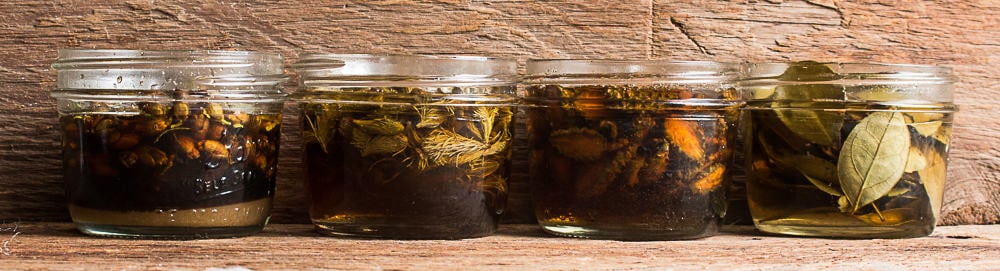
The best part is figuring out how to use it. Somethings take some experimentation, mugolio not so much.
You can literally put it on just about anything where maple syrup would be good, and you’ll be glad you did. The syrup has the essence of pine, but with none of the strong tannins you’d expect If you took a bite out of a pine cone—just pure piney goodness.
Harvest young pine cones in spring or early summer
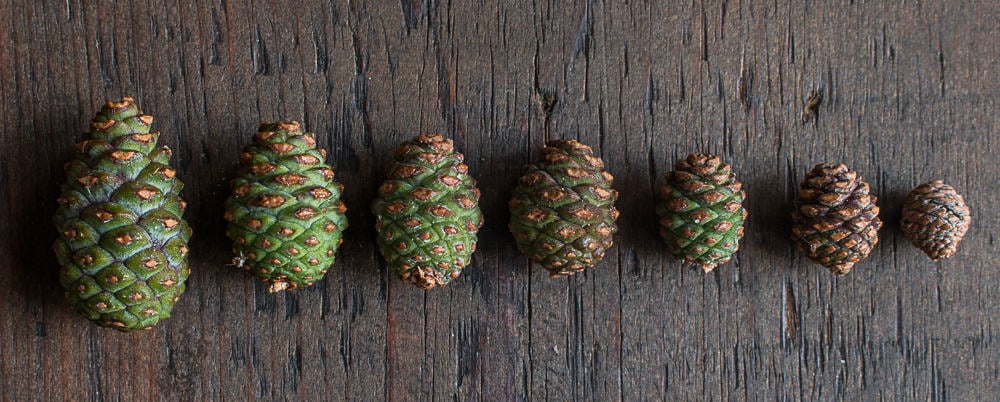
Most importantly, you are looking for unripe pine cones in the spring and early summer, not the fall, not the winter. Opened cones are not to be used.
This is up for debate, but my favorite comes from green cones as they contain more water. Purists might say that you need to harvest pine cones when they're the size of a pinky nail, or some other arbitrary size.
I can tell you after making this for years now, that any of the pine cones pictured in the image above will make a fine syrup, but smaller cones will make a syrup with a much stronger flavor, strong enough that some people may not like it.
Another good rule of thumb I've found is that whatever cone you're picking will probably be sticky and exuding resinous, sticky liquid at a prime stage for making pine cone syrup.
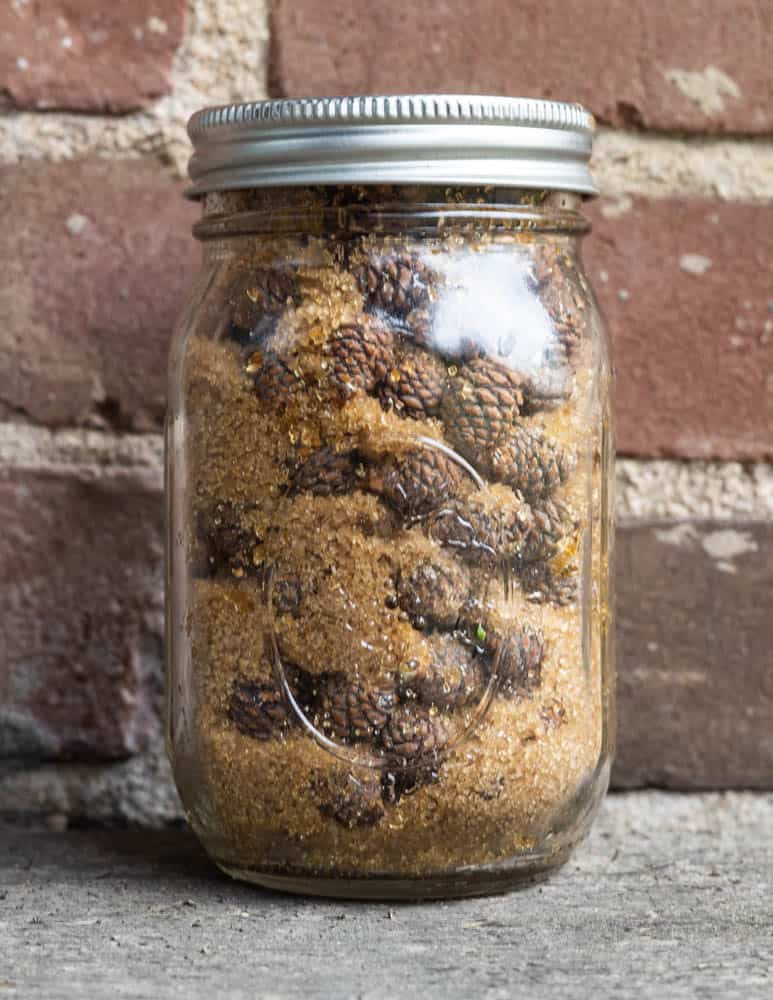
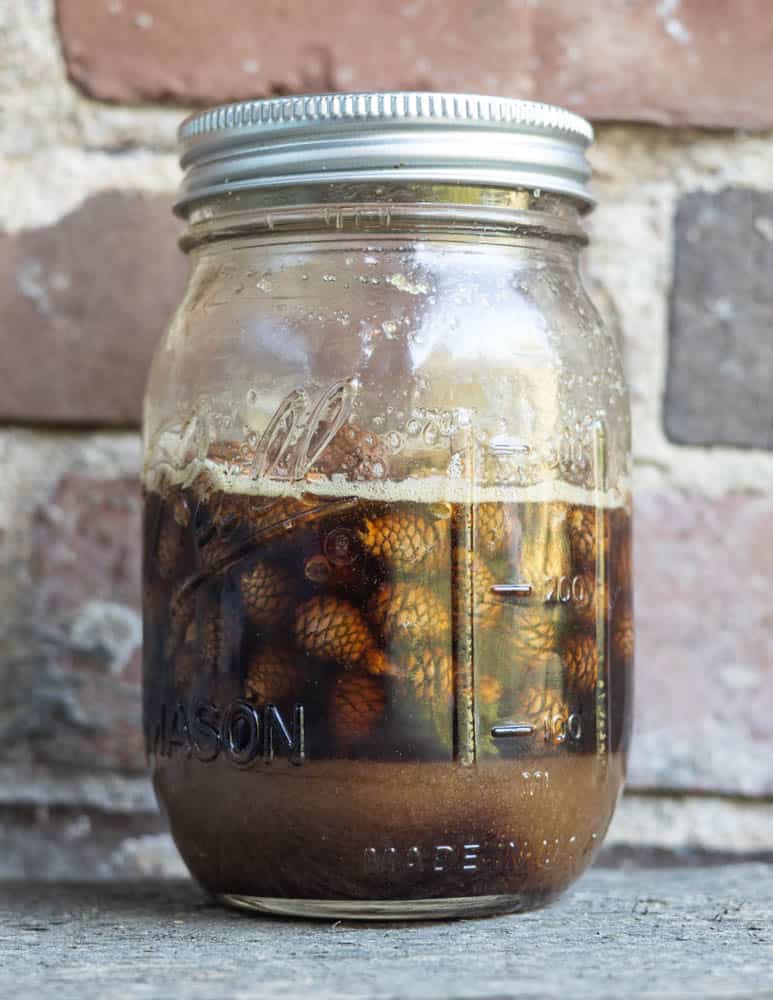
Green cone=higher water content
Larger green cones hold more water in them which makes syrup making much easier, and also allows for some fermentation in the process, which adds fun flavors.
As long as the cones are meristematic and tender, and can be cut through with a knife, even if it's into pieces with long cones like white spruce or balsam fir, they will make a good mugolio. The only cones that won't work, are mature, tough, barky cones, like those you'd see on the ground.
Using very young pine cones
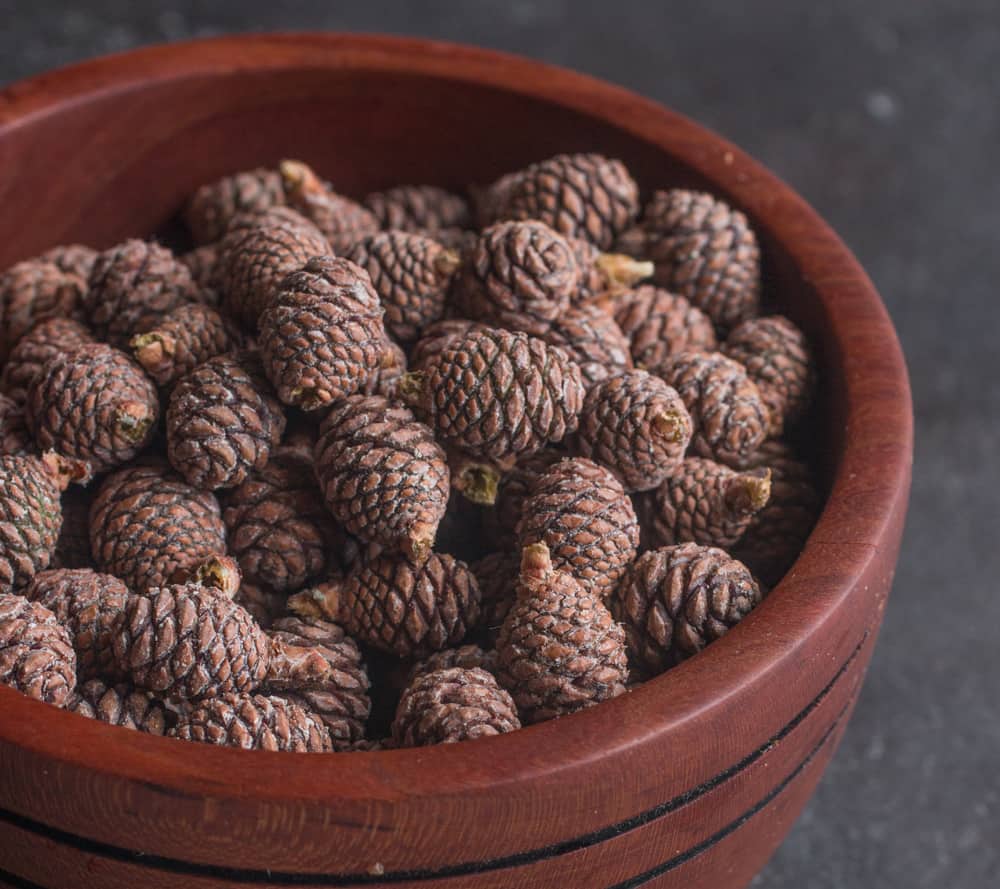
You can use young pine cones, but they're smaller and don't hold as much water as cones that are green, so they're not ideal here.
If you really want to try with very young pine cones, try chopping them up medium to make it so more cones can be fit in a jar, which means more water, meaning an easier syrup. You can also add a splash of water to help it on it's way.
Is it safe?
Yes, this is absolutely, positively safe, and there's no need to worry about botulism. I can't speak to the exact science of spruce tip and cedar cones syrups, (also safe) but pine cone syrup is especially safe as it ferments as it macerates, due to the higher water content of the cones if harvested at the green stage.
The extended fermentation lowers the pH, making it shelf stable. Remember that sugar is a preservative, and conifer products are all naturally acidic, which is a preservative in itself.
Consider using gloves
The most prime pine and spruce cones for making syrup will be plump, but still unripe. At this stage, most of them will be very sticky and oozing a sappy resinous substance that will quickly coat your hands and will stay for hours. Consider wearing gloves to avoid sticky hand syndrome.
Choosing the right sugar
Some recipes might call for white sugar, and while it will work and give you a flavored syrup, white sugar is more dry, and I find the clear color far less attractive than the caramel color that organic, unrefined turbinado-style sugar or even light brown sugar or a similar substitute will give.
I try to avoid using plain white sugar when I can, and I highly doubt that original mugolio recipes used such highly refined products when the first adventurous people crafted them.
Use a good sugar that you can feel good about eating, and drizzling over everything, because you'll want to drizzle it, on, well, everything. Here's a list of sugars that will work
Turbinado
Turbinado is slightly more dry than commercial brown sugars, but it has an excellent flavor.
Light, golden, or dark brown sugar
These are some of the most versatile and affordable, but I suggest using a high quality organic brand. The varying molasses content of the different colors of sugar is negligible in regards to the flavor of the finished syrup.
Maple sugar
Maple sugar is the most expensive you could use, and in my opinion is not the most ideal as it's prone to crystallization from my experience. It is delicious though. If you'd like to harness the flavor of maple with your pine cones, you can just toss pine cones into maple syrup at a ratio of 1 cup of pine cones to 1 lb (2 cups) of maple syrup.
Zirbenshnaps
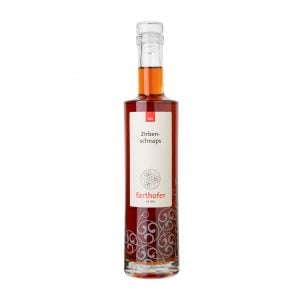
This stuff is unique enough that it needs a special mention. Zirbenschnaps is a liquor made with pine cones.
I’m not an expert on distillation by any means, but I’ve been working with a distillery to make similar products, and one thing we’ve been toying around with is making a rendition of it by simply using it as the sweetener in a macerated liquor.
The traditional zirbenshnaps has a red tone to its color, which makes me think they’re using a syrup made from fresh pine cones cooked immediately—not aged.
I know there’s also birch schnaps, and that’s made with reduced birch syrup, so I think using mugolio would be fine. Currently I know zirbenshnaps is only sold at ultra high-end restaurants in my area.
Whatever you make with it, it’s one of the most fascinating and delicious condiments made from wild ingredients I know of.
Making Large Batches
I occasionally make very large batches of syrup, 2 or 3 gallons at a time. Here's a few tips on doing that if it's something you're interested in, especially as this is such a fun (also cheap) and interesting thing to give as gifts. The tips below are intended for those people making 1 gallon batches and up at a time.
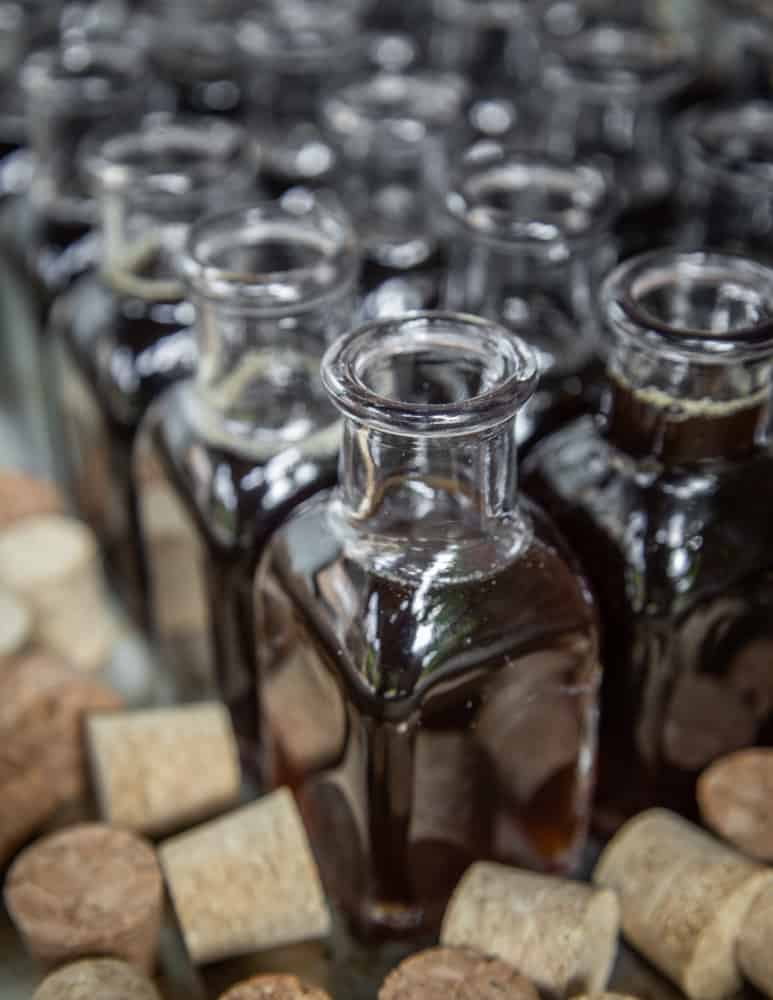
Skimming the foam
Similar to maple syrup, when you cook large quantities of the syrup, it will begin to froth and foam at the top and will double in size quickly.
Some cones seem to create more foam than others, especially Norway Spruce. When you notice foam during the cooking process, do your best to skim it off with a spoon and discard.
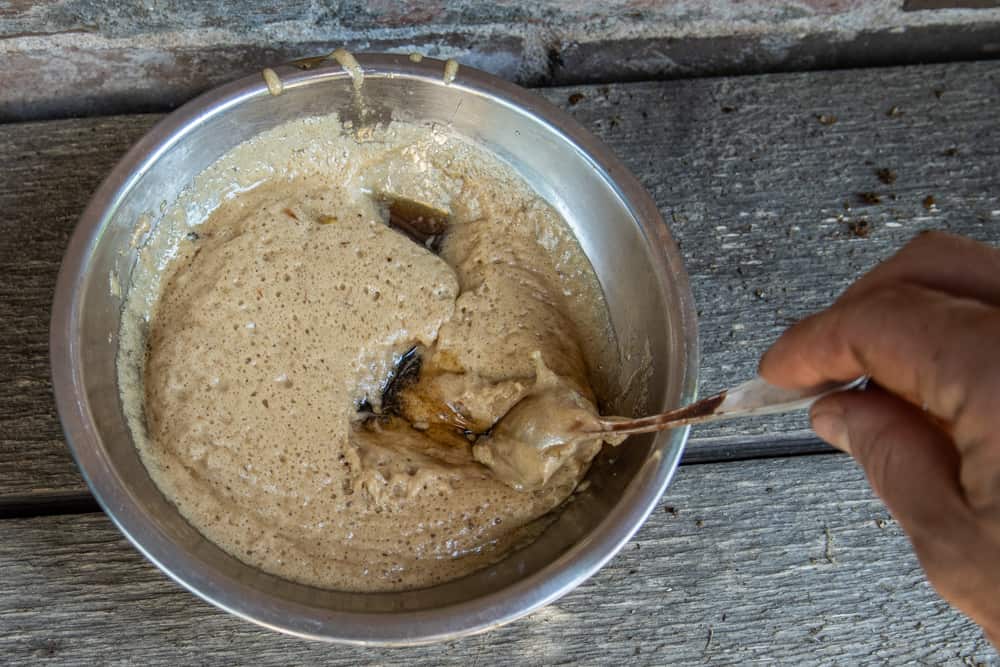
After you bring the syrup to a simmer and strain, put it back in the pot and bring it to a simmer again, let it rest for a minute or two so the syrup can settle and return to it's original volume. If you don't do this, you run the risk of having jars that are half full after settling.
Canning for long-term storage
Pour the piping hot syrup into large jars, or, for smaller ones, pour the syrup into a pitcher with a spout, and pour directly into canning jars (4 oz mason jars make a great gift). Fill the jars nearly to the brim, leaving about ⅛ inch headspace, then, working quickly, screw on the lids tight and turn the jars upside down.
You don't have to water bath-process this as it's basically the same sugar concentration as maple syrup, just make sure your jars are clean. The jars will seal naturally but should be refrigerated after opening.
Here’s a few ideas for using it, and a few things yet on my list to try.
Ideas for using
- Drizzled on pancakes, crepes waffles and other things primed for syrup.
- Use it to flavor whipped cream
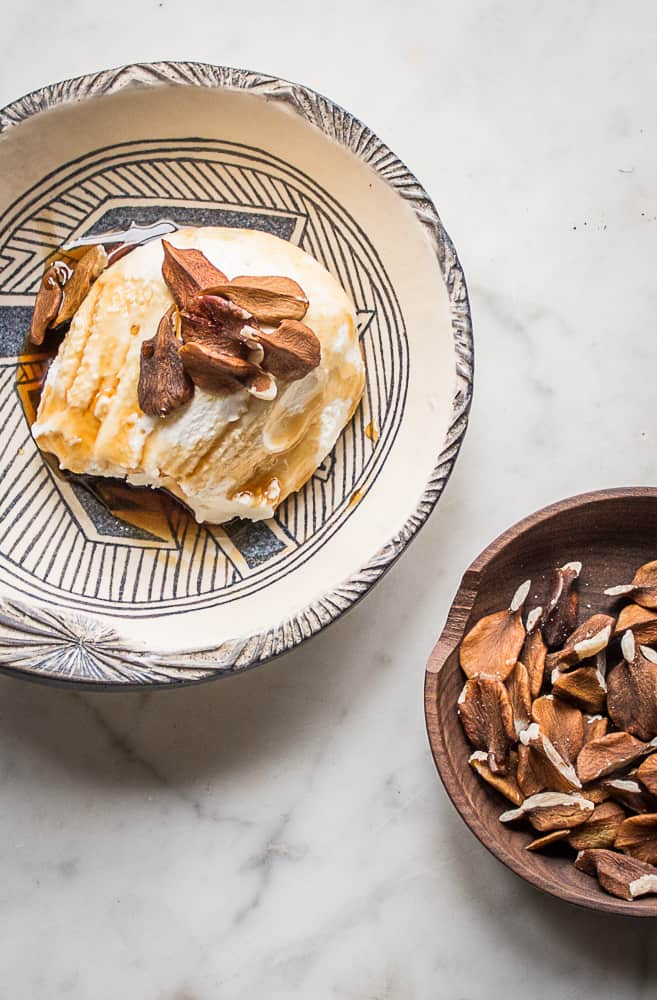
- Excellent drizzled over soft cheese like mascarpone, labneh, chevre, etc.
- Drizzled over fresh fruit
- Using in place of honey, I love drizzling it over bowls of warm buttered wild rice with nuts, fruit, and yogurt for breakfast.
- It’s good in desserts, added in small amounts like you would use honey. Dairy based desserts like ice cream, panna cotta and custards of all kinds can just be seasoned to taste with it.
- Try adding small drizzles to salads, or whisking into vinaigrettes.
- Mixing it with a splash of vinegar just to loosen it a bit makes a good brush on or glaze for hams, etc.
- One of my friends adds it to whiskey
Mugolio, or Pine Cone Syrup
Equipment
- 1 quart mason jar or similar
Ingredients
- 2 cups (8 oz) young red pine or other pine cones (soft enough to be cut with a knife) *
- 2 cups (16 oz) organic brown sugar or other brown sugar, just not white which is dry and makes a clear syrup
Instructions
Maceration
- Rinse the cones in warm water to remove any foreign particles if needed. I don't usually wash them. Inspect your cones for any that have holes or insects and discard.
- Combine the sugar and pine cones and pack into a quart jar, then allow to macerate (age) for 30 days. Put the jars in a sunny place where they will get warm during the day, which will help ward off mold.
- During the first few weeks of maceration, open the jar occasionally to release carbon dioxide as the mixture will ferment vigorously. Shake it occasionally to help it on it's journey.
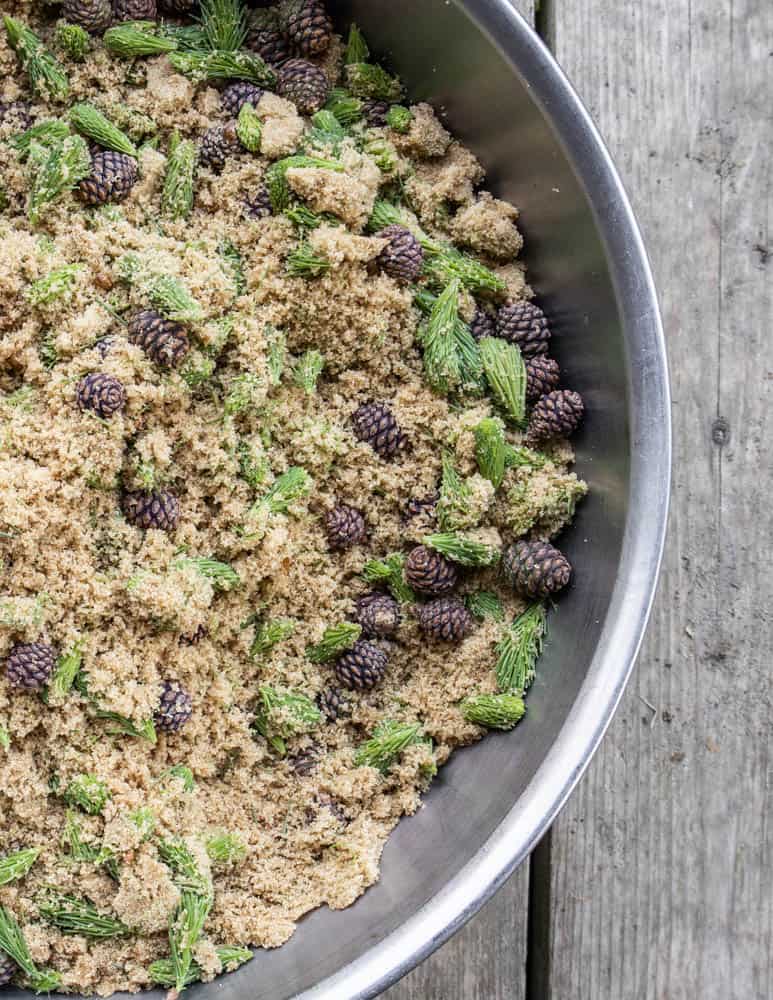
- As the cones release their water, the volume of the contents in the jar will decrease. Sugar slush will settle on the bottom and is natural. If you have more cones and sugar, you can add it to fill up the jar. The less air in the jar, the lower the chance of mold.
Finishing and storing
- After the maceration is complete, scrape the sugar slush and pine cones into a pot and add two tablespoons of water for each quart jar. Bring to a brisk simmer and heat through to melt the sugar, then strain and bottle. Discard the cooked cones and thank them for their service.
- All you need to do is bring the temperature up and melt the sugar, if you reduce the syrup too much it will crystalize after it cools. For the amounts listed it should take about 5-10 minutes.
- The syrup is stable at room temperature since the fermentation lowers the pH, but will keep the best flavor in the fridge. It can also be water bath processed, which I'll do if I sell it. For home storage I pour the very hot syrup into jars, screw on the lids and turn them upside down to seal.
Angie
Can you do this with Douglas for Kobe’s?
Alan Bergo
Your autocorrect is funny. Yes.
Angie
Processing today! Me and my Kobes are very excited 😆
Sinclair
Tell us how it goes! I have some Doug Kobes too!
Dave Edwards
Can monk fruit be used instead of sugar for mugolio? Would like to make some for a diabetic friend.
Alan Bergo
I haven't cooked with that, and I wouldn't try it.
Cat J
Wow, thank you so much for responding to these posts! It’s really helpful. I wanted to let you know I have just bought your book. I’m excited about trying out my first batch of mugolio on pancakes in the morning! I live in Southern US so we have tons of pine trees and I’ve started several batches with mostly loblolly and slash pine in half gallon canning jars. I have one batch in the works with green black walnuts. I used the green black walnuts for nocino a year ago and it’s really an interesting flavor. Will let you know how it turns out!
Alan Bergo
Thanks Cat.
Jennifer
Non-crunchy Peanut butter works really well to get sap off skin.
Rebecca Campbell
I've been searching high and low for info on how to harvest a pine tree and not go too far. Any ideas how much is safe to take? I dont want to kill my pine. I just came across an old Appalachian version of pine syrup.
Alan Bergo
Rebecca, the cones will fall on their own and harvesting them would never kill the tree. It's like harvesting apples. I'd be interested in hearing about the Appalachian version too!
Cally
Alan, THANKS so much! A friend turned me onto your instructions and I'm happy to know they're all pines are safe. I will try Virginia Pine and my lovely Hemlock next spring. I'm also keen to try some with vodka and sugar..
Wanted to let you know that Zirben Schnapps isn't a distilled product. The locals in the Sölk River valley of Austria just add candied sugar called 'Brauner Kandies' (crystallized sugar -- what we used to call rock candy but made with brown sugar) to the pine cones of a particular tree (the name's in Wikipedia) and pour 'Korn' over it, which is alcohol made from grains. Some vodkas will do, or everclear, if you like that flavor, which generally persists a bit. In Austria everybody does it a little differently but I'm pretty sure it doesn't take much more than a month. An Austrian friend of ours gave us some frozen pine cones and what we made (decades ago) tasted great. I think the hardest thing about making Zirben is getting the pine cones, which typically grow near the top of the tree. It's the only pine product I've had to date (this will be remedied!), and it's REALLY tasty stuff! Beautiful color too.
Thanks again for all your sharing!
Alan Bergo
Thanks Cally, really helpful to have some info saying it's a maceration. Now if I can get some this year in time to try a batch.
Patrick
I started a batch of red pine mugolio (and a half-batch of spruce mugolio) around a month ago. In both cases, the green cones didn't release *nearly* enough liquid to dissolve the sugar in the jar, so I added water bit by bit until it all finally dissolved. However, this ended up being much more than "a splash" of water as you suggested--I didn't measure it at the time, but I would guess I added at least half a cup of fresh water. Is there any danger of botulism (or other spoilage) as a result of adding too much water and throwing off the proportions? I didn't see much evidence of fermentation, either....might that be a side-effect of having too much water?
I also noticed some fuzzy white mold growing on top, which I think was present for a couple of weeks. Is there any chance that this recipe could be truly "ruined" by mold that wasn't removed immediately? Or would the boiling process at the end kill any remnants?
Alan Bergo
Patrick, as you can see in the images in this post, the sugar will not completely dissolve-it never does. The final simmering and heating is what dissolves it. With cones harvested at different ages, and different species being variables here, there can be some variation. Your adding water could affect the fermentation. Sometimes my jars are nearly carbonated with pressure, sometimes not. Either way, the cones will ferment-spruce tips don't contain as much water, so they won't ferment unless you add some water.
If you get mold, pick it off and discard, or put the jar in a warm place and let the sun heat it which helps too. The final heating process kills bacteria and sterilizes the syrup.
Just today someone commented they forgot about a jar in the cupboard for over a year and had no mold. The variability that I deal with regarding people in different locations with different ambient temperatures and different cones of species and ages is vast, but there's nothing wrong with the recipe.
Karen Glass
Have you ever used a long needle pine? I’m going to experiment with the cones and I wanted to try the needles as well they are very long ( about 10 inches ), should I just cut them up, d’you think?
Alan Bergo
I haven't used them. If the cones are long, cut them into 1 inch segments and it should work fine.
Andrew
Hello, I'm trying this recipe for the first and am a little confused about the maceration time. It says 60 days but in the instructions you are boiling after 30 days. Which is it?
Alan Bergo
30 is fine. At first I went a little hardcore. There isn't a huge difference in the flavor between 30-60 days. Small differences and nuances like this can take years to tease out.
Andrew
Awesome, thank you!
Daniel
Hello! About how long do you simmer / boil for? I know when creating a simple syrup I usually have to boil for about 12-14 minutes - is that the goal here too, or is it just a brief couple minutes to melt the sugar?
Alan Bergo
Please watch the video. All you're doing is heating up the syrup to melt the sugar. If you over-reduce it the syrup will crystalize when it's cooled.
Sam
I'm making this with Douglas Fir cones! Very excited to see how it turns out, I'm in the first could of days but I've seen online that the time where it sits and draws out the water is different depending on the person. Are 2 months actually necessary?
I'm making 2 larger batches with brown sugar and one smaller batch with honey and I'm noticing differences immediately. The honey has pulled the water out of the cones but now I have a layer of cone water when I let it sit - when I heat this do I heat the whole thing (the more solid honey and the water) or do I pour off the water first?
Can cedar "berries" be used in this as well? They are edible and have a bit of a juniper berry taste, or so I've been told. I live in an area that is flush with Red Cedar trees and all the green cones are weighing down the branches right now.
Thanks for having this all up, I learned a lot - especially reading through the comments!
Sam
Please ignore my question about cedar, you've answered it a bunch of times 🙂
Alan Bergo
Sam, you heat the whole thing-everything that's in the jar. The flavor will be fine after 30 days.
Vincent
Hey there, just found out about Mugolio today!! I ferment hot sauces, kefir, and mead on the regular and now adding this! So cool! Reading over your instructions I noticed you said to burp the jar a few times, I have a bunch of fermentation lids for my mason jars, will these work for the fermentation process of the pine cones or will it release too much carbon dioxide too fast for this process? Thank you!!
Alan Bergo
It should be fine to use your lids.
Elisa
Love this recipe! Trying a larger batch this year. All the sugar has melted, leaving several pine cones no longer submerged. Do you advise removing those or adding more sugar to cover or maybe water? Thanks for the advice.
Alan Bergo
You can do either-adding a splash of water is probably my choice since you'll be cooking it afterward anyway, and you can adjust the consistency to your liking. As long as you stir it and the cones get coated with the fermenting syrup occasionally the lowering of the pH will keep them just fine and ward off mold, so you likely don't need to do anything, but if you'll be gone for a period of time you may want to top it off.
Elisa
I added a little water, removed a few cones I couldn’t get to stay under the liquid line, and have been stirring it everyday. Alas, I’m getting fuzzy, white mold.
Alan Bergo
Then it's time to bring it to a simmer and jar it up.
Elisa
Ok. The cones have only been “steeping” for two weeks. Do you think they would have imparted enough flavor or should I just cut my losses and scrap this year’s batch?
Thanks for your continued advice. I didn’t have any problems with last year’s batch so I’m a little stumped on how to proceed this time.
Erin
Your website, knowledge and generosity are amazing! Thank you so much for this site.
I have a question about harvesting pine cones:
I happen to live near an old recovering cut block and it has small pine trees coming back, lodgepole pine, I believe. Some of them have only 1-3 cones on them. For other wild harvesting, I am aware of ethical practices and not taking too much from one place etc. Does the same apply to pine cones? Does it hurt the tree? I kind of figure, it simply means that the cone I take will obviously not reproduce into another new tree, but the remaining tree should be ok, provided its healthy enough to heal the scar where the green cone comes off.... thoughts or corrections greatly appreciated. The larger trees in the area have cones yo high up to reach.
Thanks very much!
Alan Bergo
Erin, yes your instinct is correct here. Ethical harvesting is important, but we have to take it on a case by case basis. There is no harm in harvesting cones from a tree. You'll never be able to harvest all the cones if you tried, since many are so high. Some trees specifically (balsam) often make most of their cones near the top of the tree. And yes, removing a cone just means there's no chance that the cone can grow a tree, which isn't really an issue as we don't need each tree to reproduce 100 times. Hope that helps.
Lisa
Hi, thanks for the wonderful knowledge. I picked some young larch cones today, but I haven’t been able to find any information on whether they are edible or have any unwanted effects. Have you used latch cones?
Thanks!
Alan Bergo
I haven't but they should be fine.
Felicia
I don't have any quart jars. Is it imperative to pack the jar full?
Alan Bergo
No. You can use another container, make sure it's non-reactive.
Rachele
could I add water? I am afraid it will become too thick or harden, or does that not happen?
Alan Bergo
The sugar draws out the natural water of the pine cones. No water is needed.
Krista
Thank you so much for sharing your knowledge and responding to comments. I have learned a lot throughout. We recently started Christmas tree farming and as part of raising Fraser Firs we need to remove cones in spring. So thought this would be a great way to use the large volume.
My question is it takes us several days to pick all the cones. Can I leave them in a container and then begin the processing part a few days after picking?
Alan Bergo
Yes that's fine. Pine cones are very sturdy. Keep them in the fridge or freeze them.
Evan
I discovered your website a few days ago; I love it! I have swaths of Lamb's Quarter around my yard and you've inspired me to start using it!
I'm curious how early you gather these cones. A park had some downed spruce(?) trees in some severe winds we had here in eastern South Dakota and I decided to investigate before the forestry guys could take it down. They were mostly pale with some red and quite squishy, not really looking much like what you have depicted.
I'm going to keep a close eye on these so I can get them going as early as I can, do you have any reference for how hard they should be? Otherwise I'll just wait until some pines look about the same as you have shown, then harvest some spruce cones going as well.
Alan Bergo
Hi Evan, you'll want to harvest the cones as shown in this article. Mushy cones sound like they've deteriorated to me. They should be young and green, and easily cut with a knife. Make sure to watch the video too.
Evan
I think I've figured it out now, with a little more effort on identification. I believe they were Norway Spruce, but I think the cones were far too young yet. They hadn't started to show any brown, scaly bits yet.
I have located some pine trees in my area instead, so I'll keep my eyes open for their development and perhaps look around for some non-Norway spruce near me.
Alan Bergo
Good deal. Just keep looking at trees and you'll get the hang of it. I will mention that Norway spruce syrup is ok, but it's more tannic than others. If you can find another species around (white spruce and Co. blue are very dependable) use them instead.
Adam Churvis
One of the best things I've tasted.
Sam
Have you noticed a difference with Norway spruce cones when they are red like in your picture or when they're a little older and green? Thanks for the awesome recipe!
Alan Bergo
Just get them as young as possible. As long as you can cut them through with a knife they'll work. I will add that Norway spruce isn't as good as some of the others, the syrup is more tannic than red pine, etc. White spruce is better if you can find some.
Sam
Unfortunately its mostly Norway spruce near me but will have some firs in the future. Glad to see it works with red and green cones. Will try both to compare. Thanks again!