
Insanely rich, decadent, and perfect for special occasions. My all-time favorite recipe for lobster doesn't even include the meat, and the batch I made for this post cost me around $10. This is a lobster sauce recipe made from lobster shells, but it can be made with shells of many crustaceans-shrimp, crayfish, crab, langoustines, prawns or a combination are all great, and unique. If it turns orange after it's cooked and comes from the sea, it'll work.
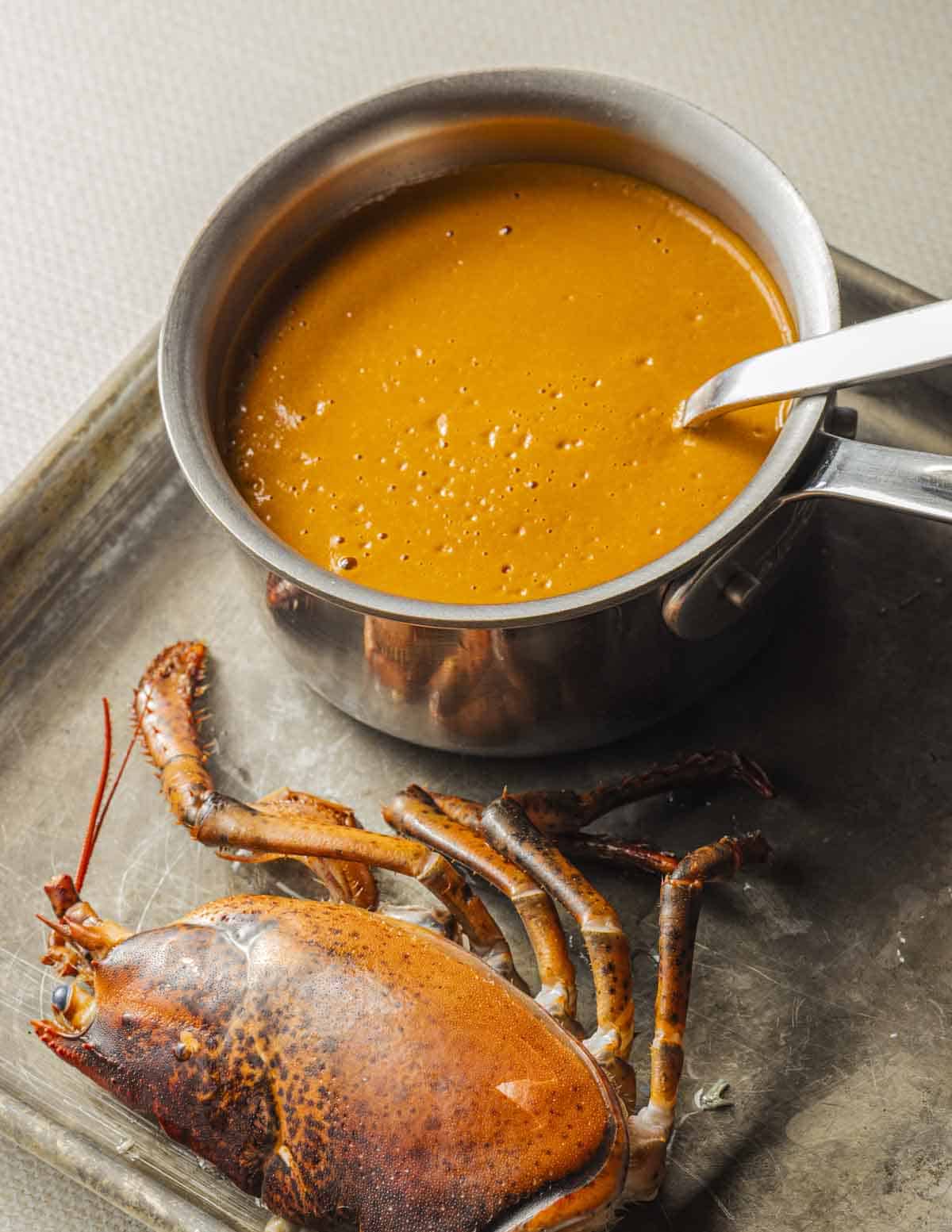
This is one of those secret weapon sauces and helps you get the most from any crustacean. The key is the shells, which I save in the freezer anytime I eat shrimp, lobster, crab or crayfish. My favorite are shrimp or lobster heads, which, while usually discarded, contain more meat and juices than you'd think.
Lobster heads also contain tomalley (the soft green innards in the head which are technically the liver and pancreas) which should always be added. While rare, if you find red female lobster roe you can add that too. If you're a chef or ambitious home cook, fish mongers can order ten pound cases of lobster heads. My local seafood shop sells small bags of lobster shells and heads for a few bucks.
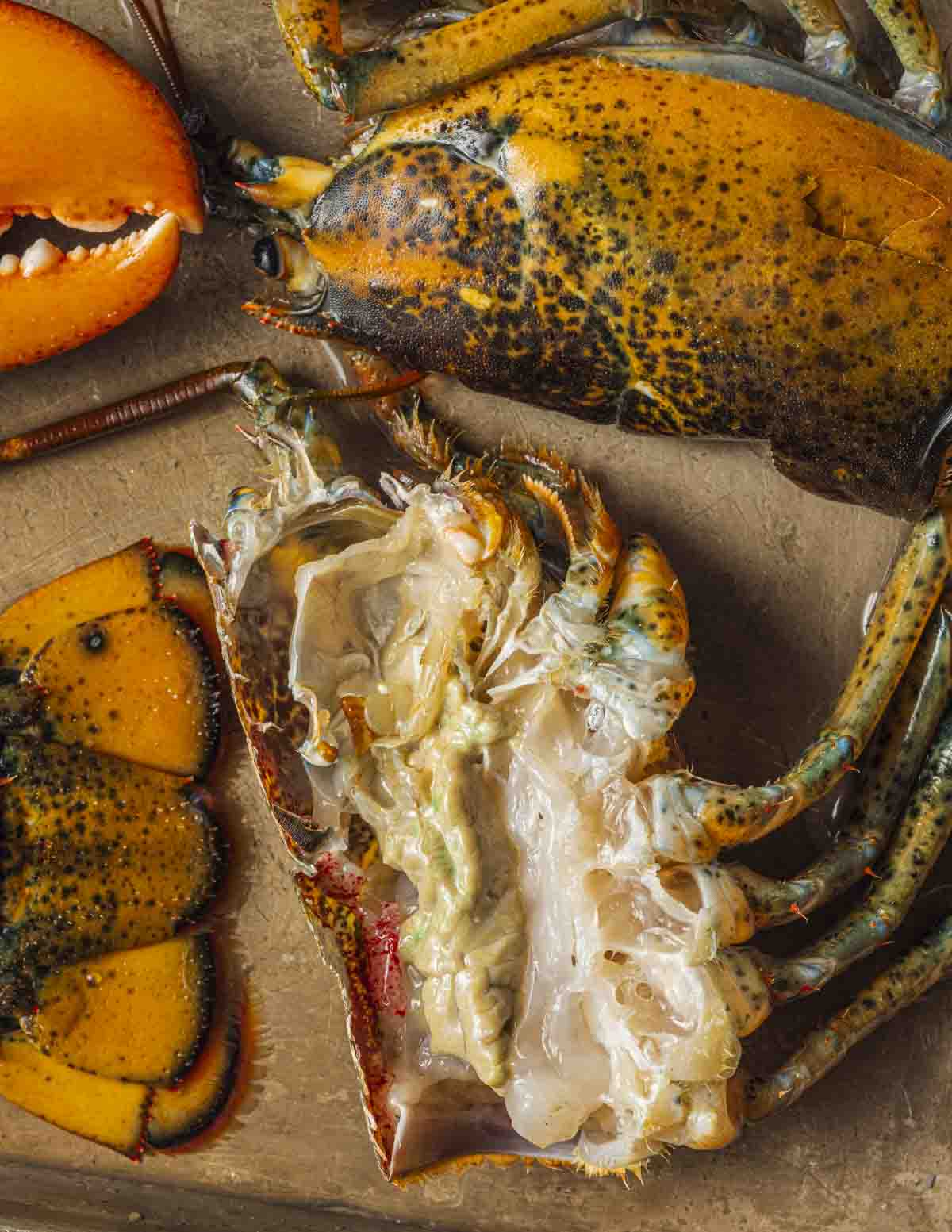
Lobster heads and crustacean shells are cheap. But, use the sauce on some pasta with a stingy amount of lobster and you’ll have a bowl pasta you can sell at the price of a steak. It’s very useful for off-setting other, more expensive items on a menu.
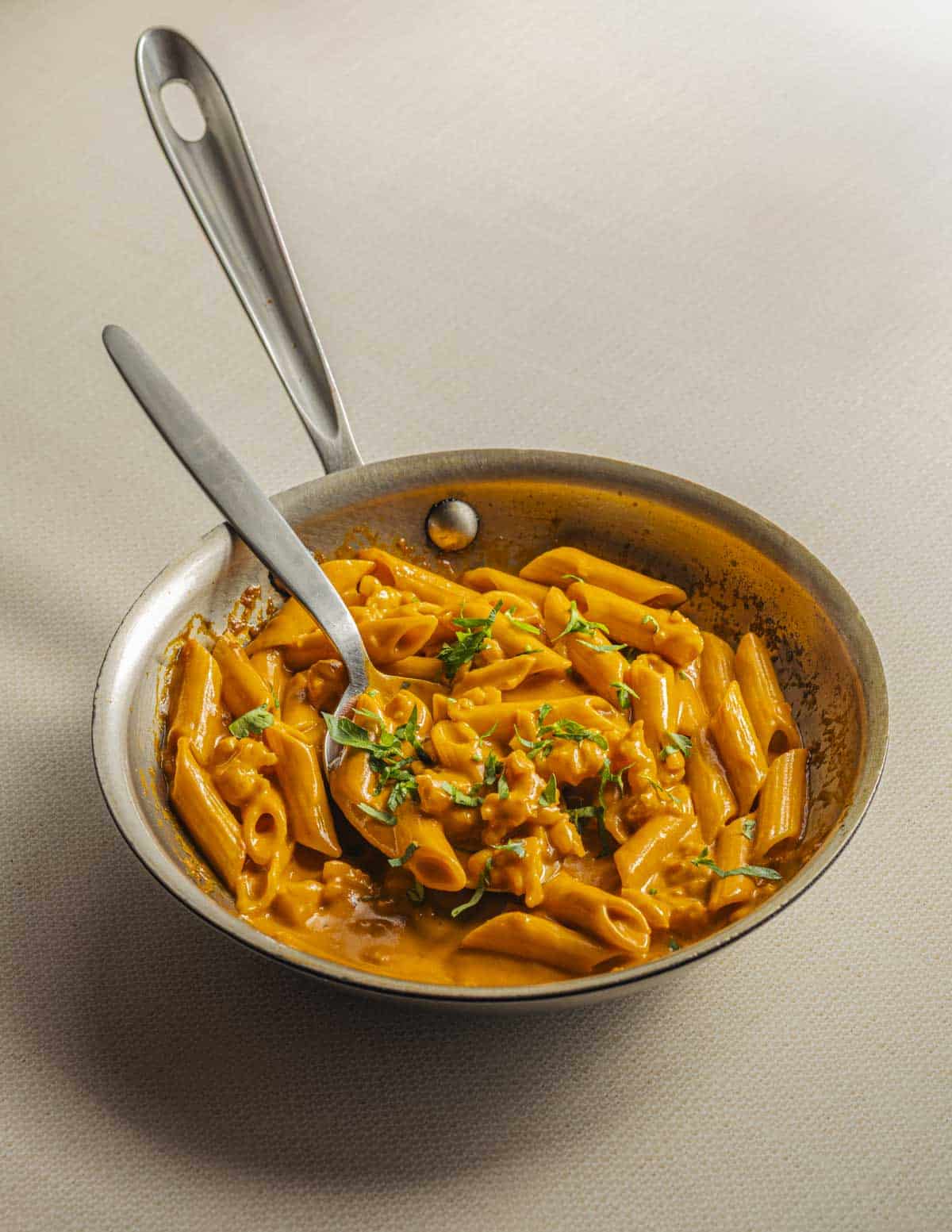
Seriously, pick a special meal of the year and the sauce fits in like a charm. For the price of $10 and some elbow grease you’ll get a restaurant quality sauce worthy of Valentines, New Years, Christmas or any other special occasion meal you can come up with. Here's how to make it.
How to Make Lobster Stock
The shells are used to make lobster stock and it's the same process as when making bisque. First the shells need to be baked, then crushed to release their juices. Don’t brown them, just get them cooked through and crisp so they crush easily. If you have a kitchen shears you can cut the shells into smaller pieces which will make the most potent stock.
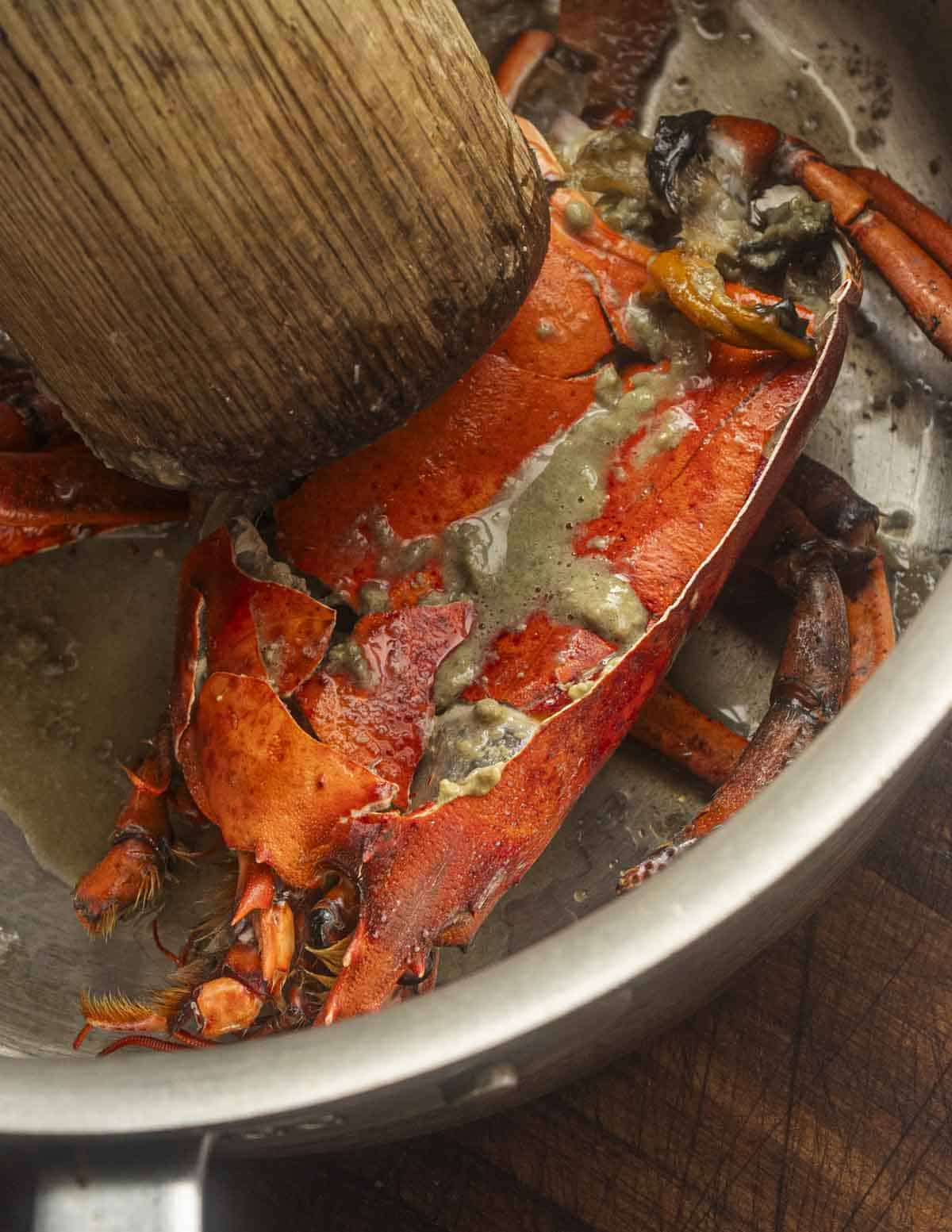
Next, add a few cups of white mirepoix: celery, onion and leek greens. Resist any urge to add carrots which can make it sweet. Cover the aromatics with water with a splash of brandy or cognac, bring to a boil, then turn the heat down and simmer for an hour.
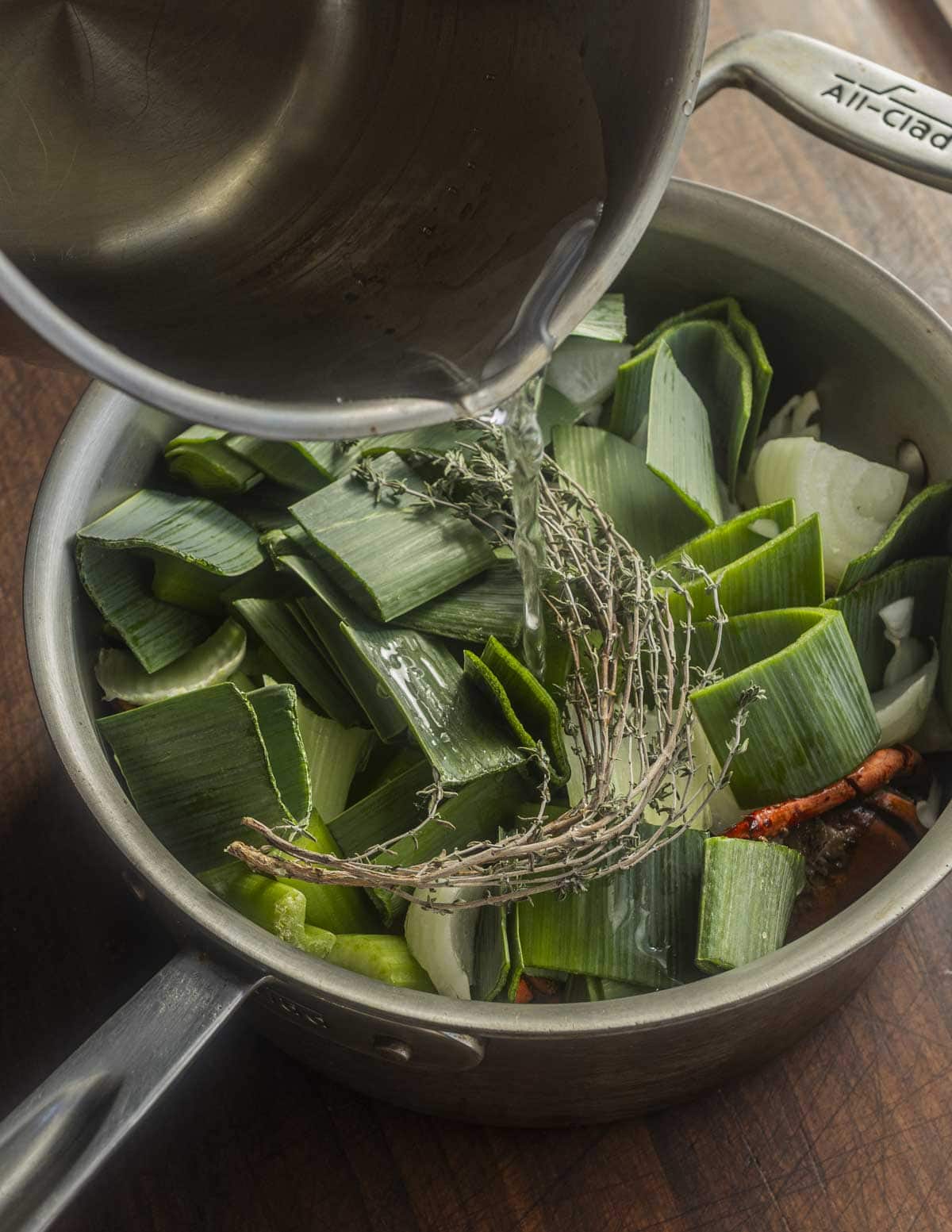
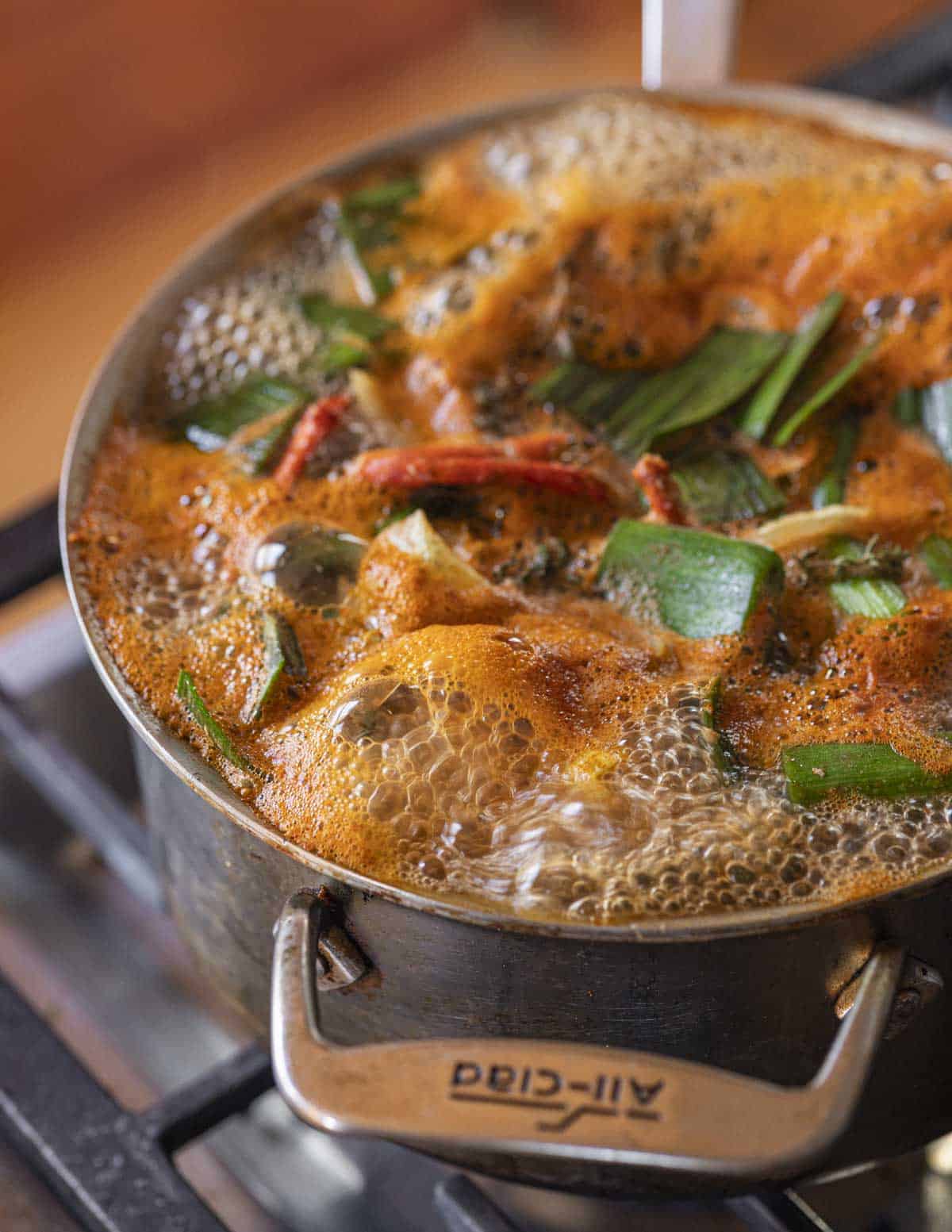
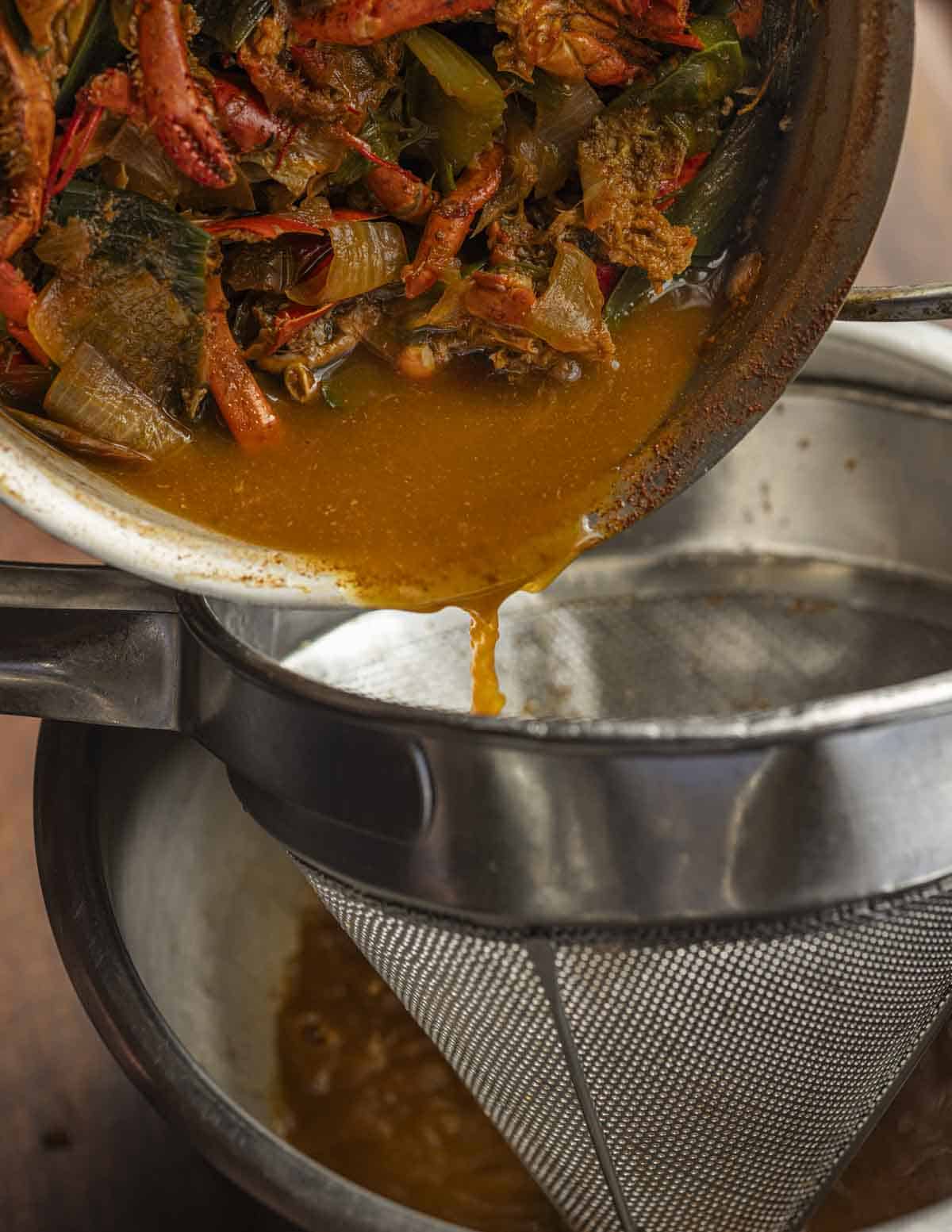
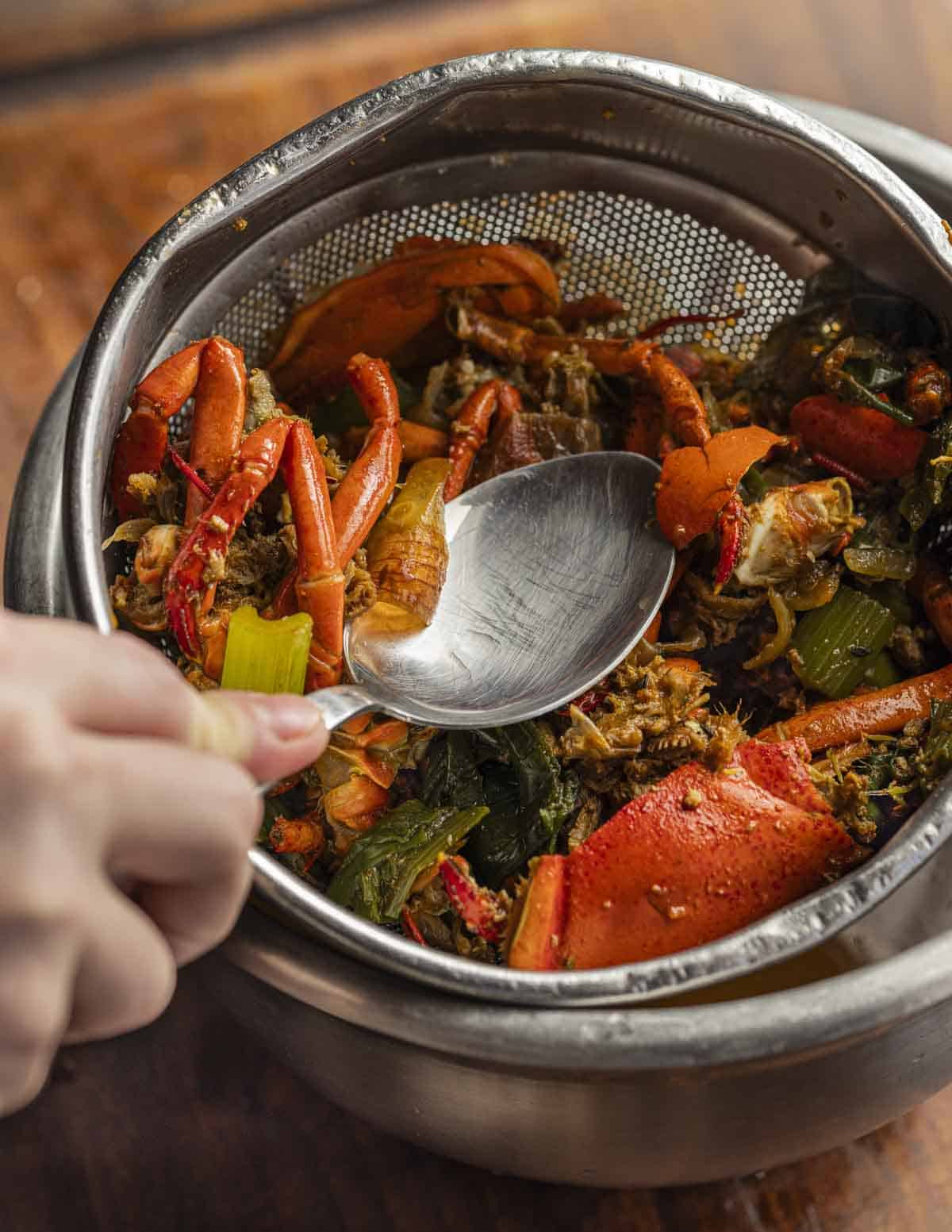
Strain the stock, making sure to press on the shells to extract as much juice as possible. wipe the pan clean and add the return the stock to it.
Bring the stock to a simmer and reduce. You're looking for around 1-2 cups of strong, rich stock here.
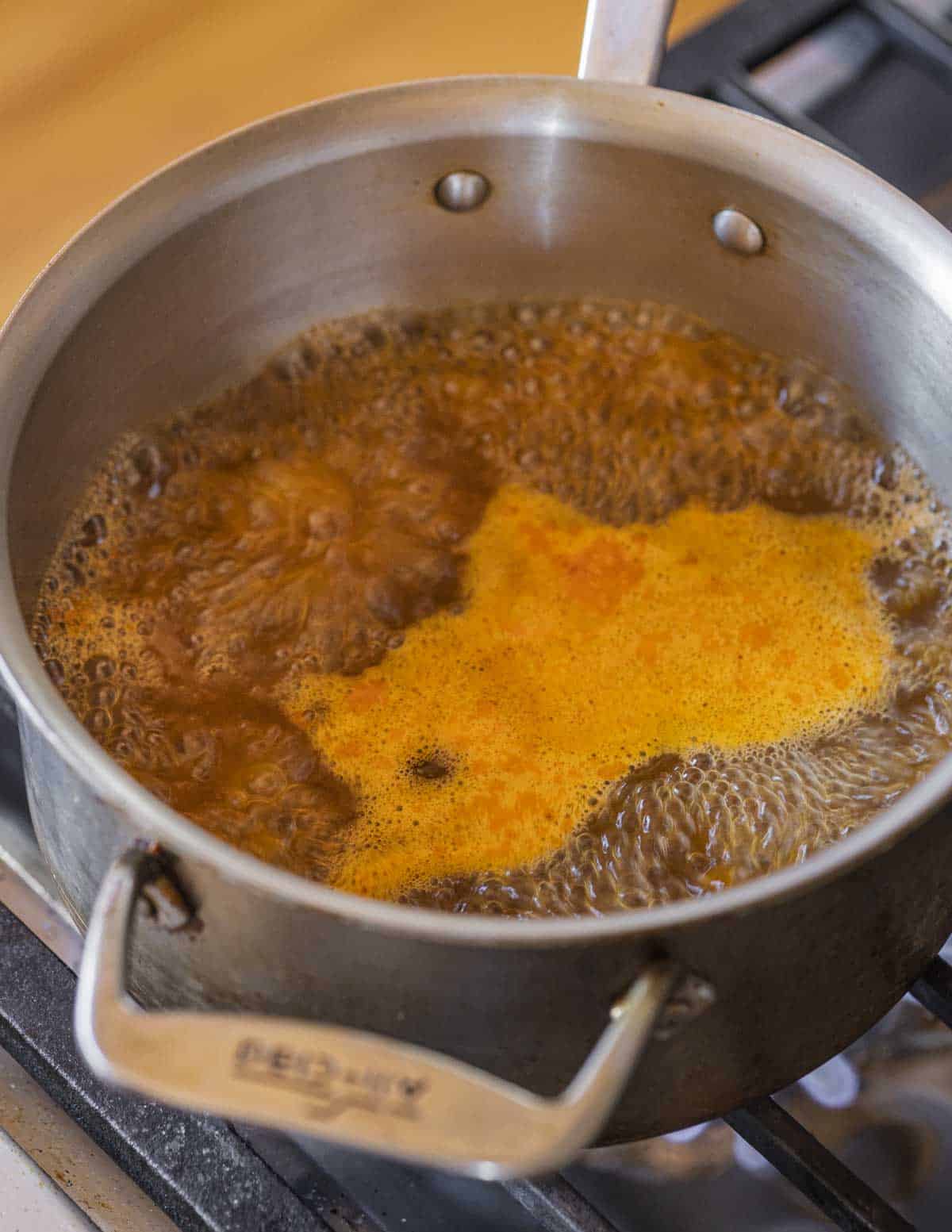
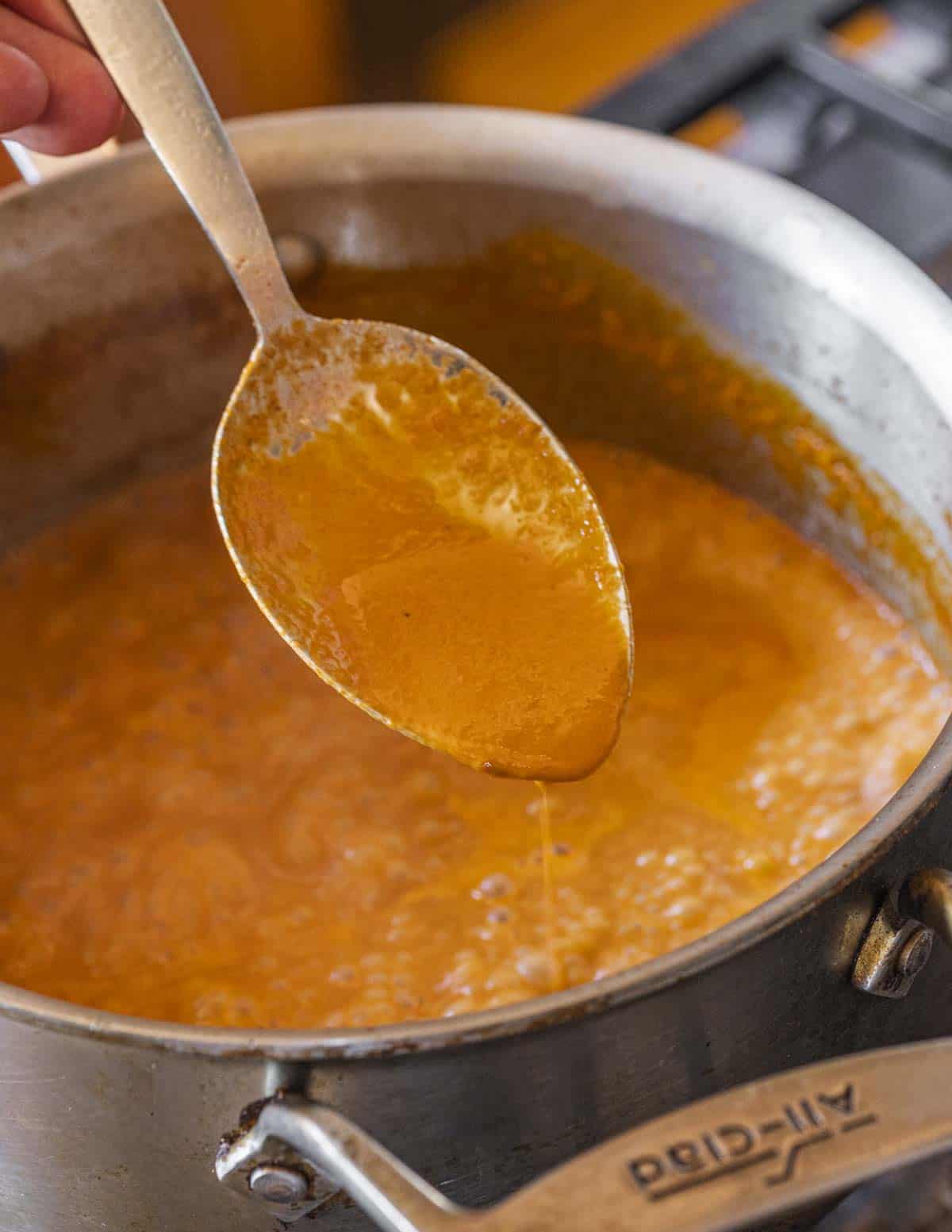
Add the tomato puree and cream, bring to a simmer and reduce again by around ⅓. You’ll have about 3 cups.
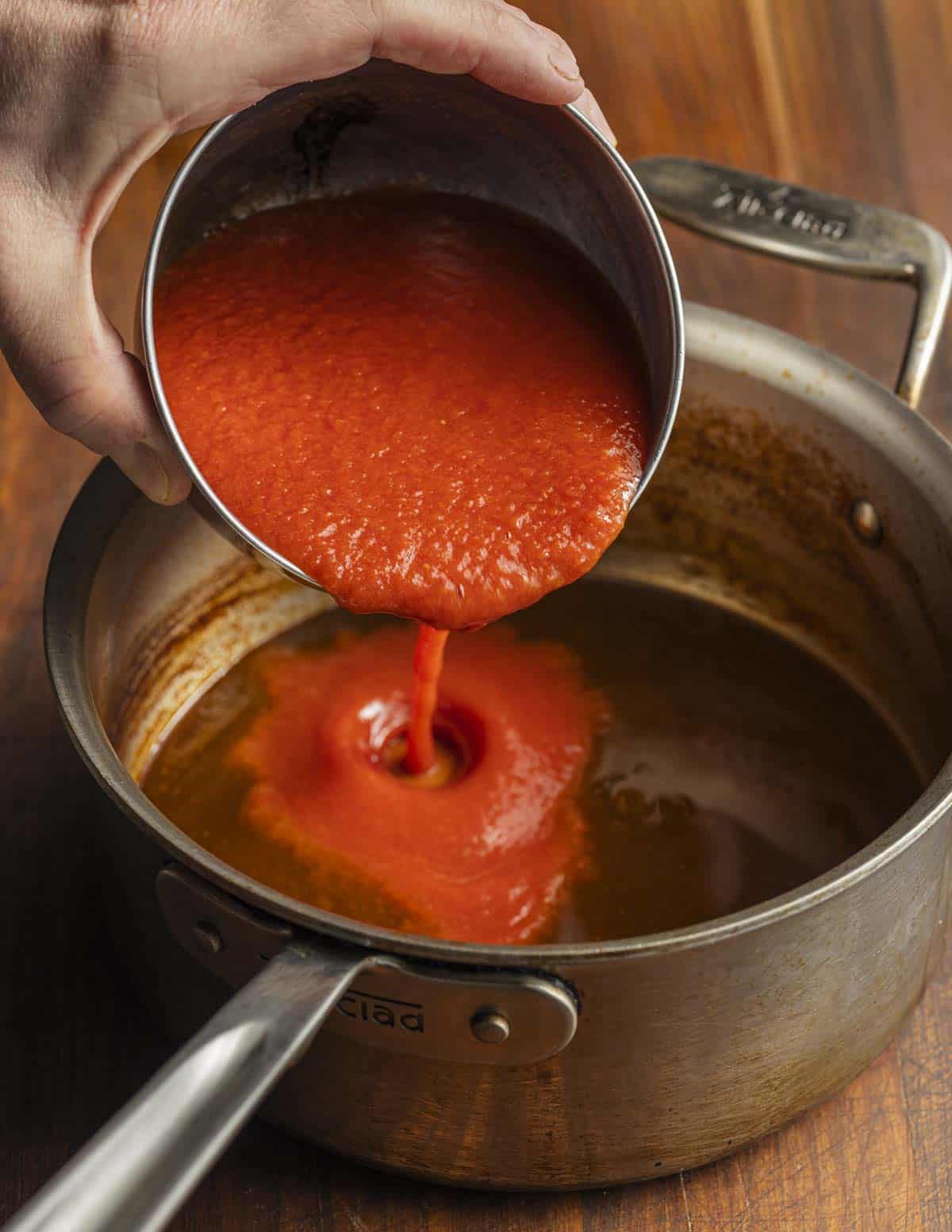
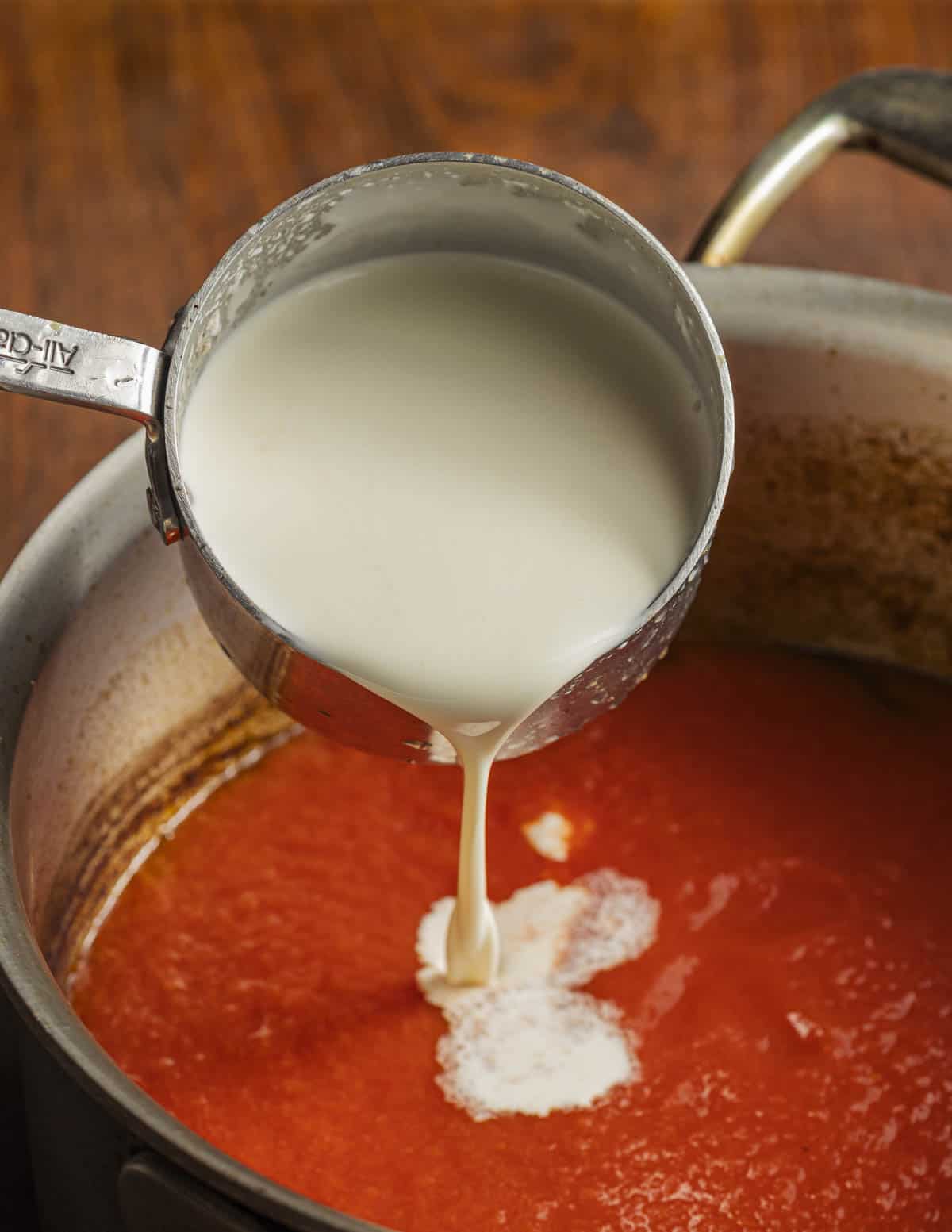
Puree it in a blender until very smooth, adding a knob of butter to reduce friction of the blades and incorporate air for a velvety-smooth texture.
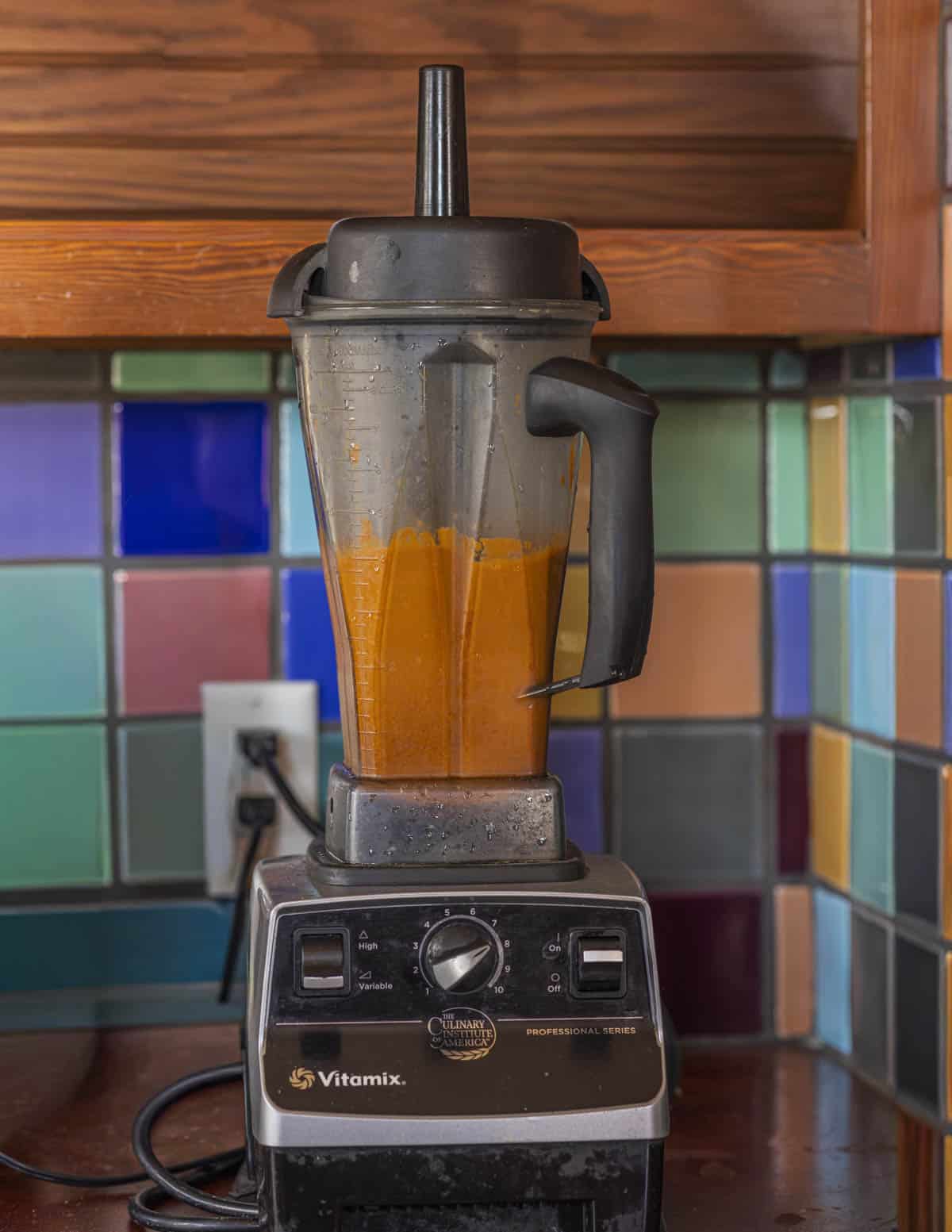
From here the sauce just needs to be seasoned and it's ready to go. It can also be made ahead and frozen.
Chef's Tips and Variations
- The shellfish stock is the same recipe I use to make seafood bisque. You can follow my recipe for lobster mushroom bisque in the link that follows, omitting the lobster mushrooms.
- Call a seafood shop and request lobster heads, or ask them to save you shrimp and crab shells to save space in your freezer.
- For an even richer broth, slowly cook the aromatics and crushed shells which have been cut into small pieces in the pot instead adding the vegetables raw, adding the tomato paste and paprika near the end, caramelizing gently and deglazing with cognac before adding the water.
- The stock reduction in this post is the same I use to make lobster compound butter, which is also very good-omit the tomato and cream and drizzle extra-reduced stock into a food processor with butter.
- Also, make sure to try making lobster and shellfish oil. Crush the shells, cover with mild oil, a generous spoonful of paprika and salt, bake at 250 F for an hour, cool, strain and refrigerate. Great with pasta, soups, dressings, or even shellfish aioli.
How to Use it
The sauce is incredibly versatile, just keep in mind it's very rich and a little goes a long way. It can be used as a condiment for scallops, sauteed shrimp, or salmon, as well as chicken or pork.
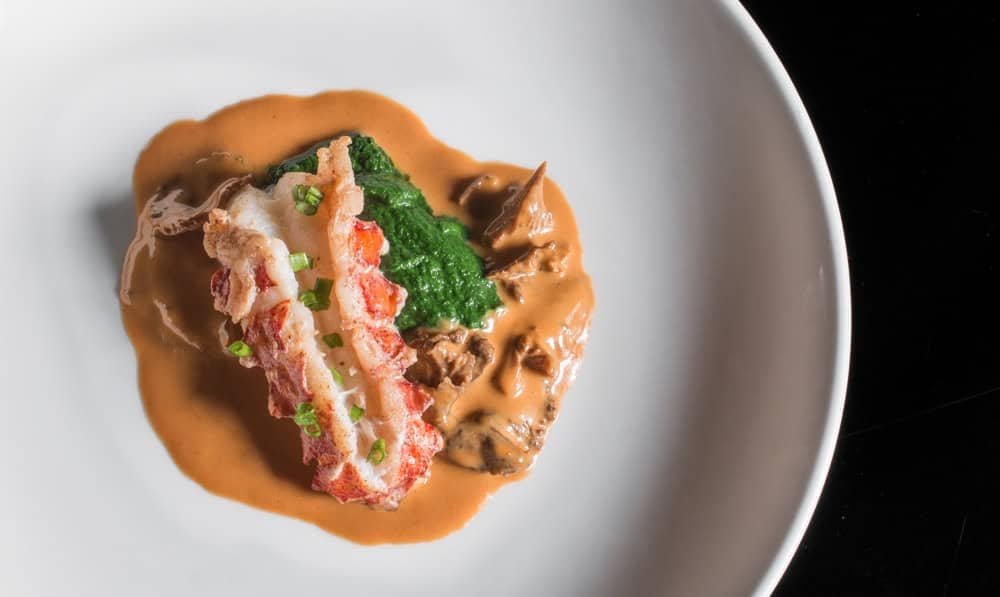
One of the best ways to use it, and how I often served it in restaurants was as a sauce for pasta, or ravioli for special menus.
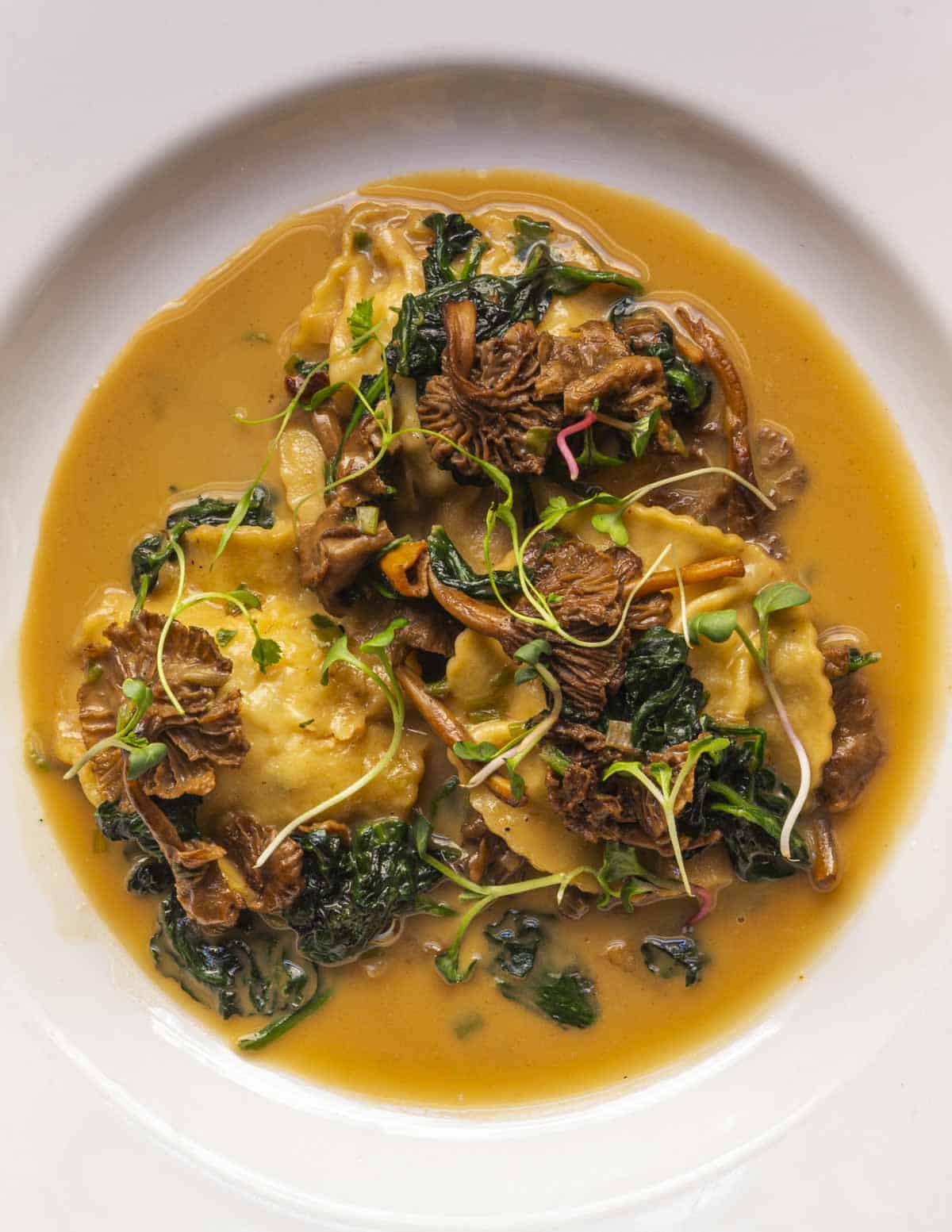
If you use the sauce to make a simple pasta like the penne pictured in the post, it's one of the few times cheese can work with fish. If it's spicy, add pecorino, if it's mild, use Parmigiano Reggiano.
Related Posts
Lobster Sauce
Equipment
- 1 3 Quart Stainless Steel Sauce Pot or a small pasta pot
- 1 Blender
- 1 Strainer or cheesecloth
- 1 Mallet for crushing the shells
Ingredients
Lobster Stock
- 12 oz lobster heads or other shells or use crayfish, crab, or shrimp shells
- 2 ribs celery cut into 1 inch pieces
- 1 medium white or yellow onion cut into 1 inch pieces
- 2 large cloves garlic lightly crushed, skin-on
- Green leaves of one leek cut into 1 inch pieces
- 2 tablespoons paprika
- 2 tablespoons tomato paste
- 4 oz brandy or cognac
- Small handful of fresh thyme or ½ teaspoon dried thyme
- 1 dried bay leaf
- Knife tip of cayenne pepper ⅛th-¼ teaspoon, optional
Final Sauce
- 2 cups tomato puree or tomato sauce made from canned, whole, peeled tomatoes
- 8 oz heavy cream
- 2 tablespoons unsalted butter
Instructions
Bake the Shells
- If the shells are raw roast them in a 350 F oven for 15 minutes. The goal here is to get the shells crisp so they crush easily, reducing the volume they take up in the pot to ensure a concentrated stock. With lobster heads specifically (crayfish too) you don’t want to cook them too much as they contain meat, juices and tommalley that can burn. Shrimp and crab shells are more forgiving.
Crush the Shells and Make the Stock
- Crush the cooked heads and shells in a pot with a mallet. To avoid splattering you want a pot with high sides. I love my 3 qt, 8 inch All Clad for this, but a pasta pot will work-just make sure the shells stay covered with water.
- Add the aromatics, vegetables, cognac or brandy to the pot and cover with water. Bring the pot to a boil, turn the heat to a simmer and cook for an hour, then strain.
- Discard the shells and vegetables-if you have chickens it makes a great meal for them. Wipe the pot out, return the stock to it, bring back to a boil, then turn to a brisk simmer and reduce until a little over a cup remains. For reference, one cup will make the most potent sauce, but don’t feel the need to measure as you’ll be reducing the sauce further after adding the tomato and cream.
- Add the tomatoes and cream, bring back to a simmer and reduce again by around ⅓, or until thick enough to coat the back of a spoon.
Puree the Sauce
- Transfer the mixture to a blender, add the butter, ¼ salt and cayenne if using and puree until very smooth-about 60 seconds.
- Taste the sauce and adjust the seasoning for salt if needed, pausing to appreciate how something that tastes so good could be so cheap. Cool to room temperature and refrigerate in a container with a tight-fitting lid. The sauce will last for 5 days but also freezes well. If you freeze the sauce, bring it to a simmer and puree it again to refresh the consistency.
- The sauce has many uses: a sauce for scallops, stirred into risotto, served with pork, poultry, as a sauce for pasta, or spooned over poached eggs on toast. Steamed spinach or blanched, sauteed cauliflower with crunchy salt and a lemon wedge are two very good side dishes.
Thomas Cali
I like your comment, "If it turns orange after it's cooked and comes from the sea, it'll work." Another ingredient that would add a ton of flavor would be lobster roe. I have about a pound of it, frozen. After seeing your recipe here, I've decided how I am going to use it. Maybe I will pair it with some nice, fresh sea urchin roe as well! Thank you for your recipe!
Roberto
Would port work with this instead of brandy or cognac?
Alan Bergo
Yes just make sure it's dry.