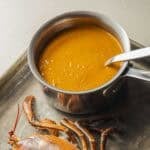
Lobster Sauce
A rich, creamy sauce infused with stock made from shrimp, crayfish, crab, or lobster shells. A great condiment for fish, pasta, risotto, steaks, chicken or pork.
Servings: 8 servings
Calories: 198kcal
Cost: 10
Equipment
- 1 3 Quart Stainless Steel Sauce Pot or a small pasta pot
- 1 Blender
- 1 Strainer or cheesecloth
- 1 Mallet for crushing the shells
Ingredients
Lobster Stock
- 12 oz lobster heads or other shells or use crayfish, crab, or shrimp shells
- 2 ribs celery cut into 1 inch pieces
- 1 medium white or yellow onion cut into 1 inch pieces
- 2 large cloves garlic lightly crushed, skin-on
- Green leaves of one leek cut into 1 inch pieces
- 2 tablespoons paprika
- 2 tablespoons tomato paste
- 4 oz brandy or cognac
- Small handful of fresh thyme or ½ teaspoon dried thyme
- 1 dried bay leaf
- Knife tip of cayenne pepper ⅛th-¼ teaspoon, optional
Final Sauce
- 2 cups tomato puree or tomato sauce made from canned, whole, peeled tomatoes
- 8 oz heavy cream
- 2 tablespoons unsalted butter
Instructions
Bake the Shells
- If the shells are raw roast them in a 350 F oven for 15 minutes. The goal here is to get the shells crisp so they crush easily, reducing the volume they take up in the pot to ensure a concentrated stock. With lobster heads specifically (crayfish too) you don’t want to cook them too much as they contain meat, juices and tommalley that can burn. Shrimp and crab shells are more forgiving.
Crush the Shells and Make the Stock
- Crush the cooked heads and shells in a pot with a mallet. To avoid splattering you want a pot with high sides. I love my 3 qt, 8 inch All Clad for this, but a pasta pot will work-just make sure the shells stay covered with water.
- Add the aromatics, vegetables, cognac or brandy to the pot and cover with water. Bring the pot to a boil, turn the heat to a simmer and cook for an hour, then strain.
- Discard the shells and vegetables-if you have chickens it makes a great meal for them. Wipe the pot out, return the stock to it, bring back to a boil, then turn to a brisk simmer and reduce until a little over a cup remains. For reference, one cup will make the most potent sauce, but don’t feel the need to measure as you’ll be reducing the sauce further after adding the tomato and cream.
- Add the tomatoes and cream, bring back to a simmer and reduce again by around ⅓, or until thick enough to coat the back of a spoon.
Puree the Sauce
- Transfer the mixture to a blender, add the butter, ¼ salt and cayenne if using and puree until very smooth-about 60 seconds.
- Taste the sauce and adjust the seasoning for salt if needed, pausing to appreciate how something that tastes so good could be so cheap. Cool to room temperature and refrigerate in a container with a tight-fitting lid. The sauce will last for 5 days but also freezes well. If you freeze the sauce, bring it to a simmer and puree it again to refresh the consistency.
- The sauce has many uses: a sauce for scallops, stirred into risotto, served with pork, poultry, as a sauce for pasta, or spooned over poached eggs on toast. Steamed spinach or blanched, sauteed cauliflower with crunchy salt and a lemon wedge are two very good side dishes.
Video
Notes
I usually save the shells of any crustacean in a bag in the freezer until I'm ready to make the sauce or bisque. When the bag is full, I make the stock and reduce it down to save space, freezing the stock until I need it, or using straight away.
I use a sauerkraut mallet Ito crush the shells, but in a pinch I’ve seen line cooks use a sheet tray with the back of a saute pan. You can also use a shears to cut the shells into small pieces for the richest stock.
Instead of cognac you can also use whiskey. bourbon or dry sherry, whiskey being my first choice. Chef Russell Klein of Meritage in St. Paul used to make one with Scotch.
Nutrition
Calories: 198kcal | Carbohydrates: 9g | Protein: 4g | Fat: 14g | Saturated Fat: 8g | Polyunsaturated Fat: 1g | Monounsaturated Fat: 3g | Trans Fat: 0.1g | Cholesterol: 55mg | Sodium: 111mg | Potassium: 426mg | Fiber: 2g | Sugar: 5g | Vitamin A: 1767IU | Vitamin C: 8mg | Calcium: 49mg | Iron: 2mg