
Mushroom scallops are a good, cheap appetizer or entree. While they've been popularized by restaurants using the meaty stems of king oyster mushrooms, wild boletes bring the dish to another level. Essentially sauteed mushrooms with lemon-caper sauce, they can be served by themselves as an appetizer, or with a side or two as a vegetarian entree. Today we'll go over the basics.
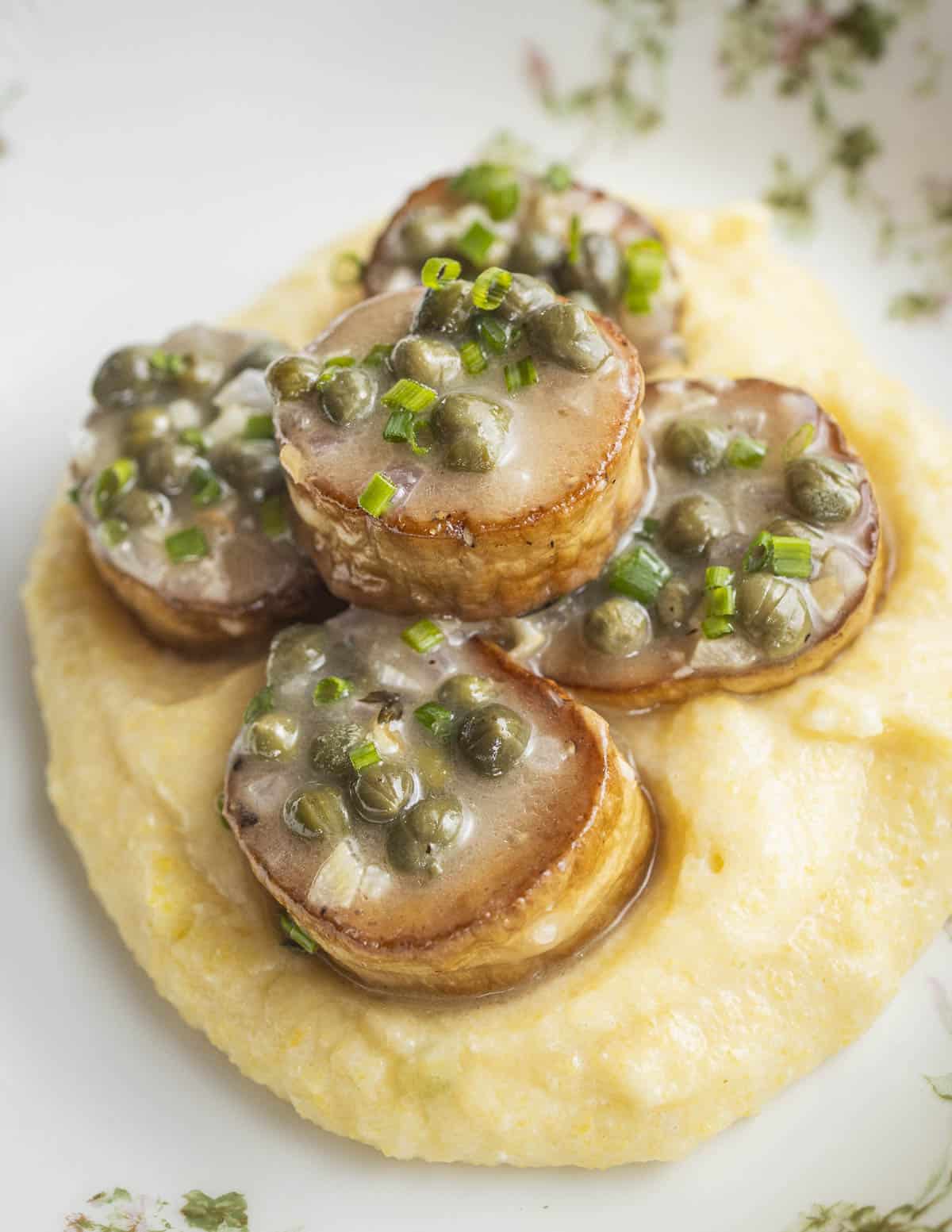
This simple mushroom recipe is usually associated with king oysters in restaurants, but the wild version made with the stems of porcini and other boletes is something else entirely.
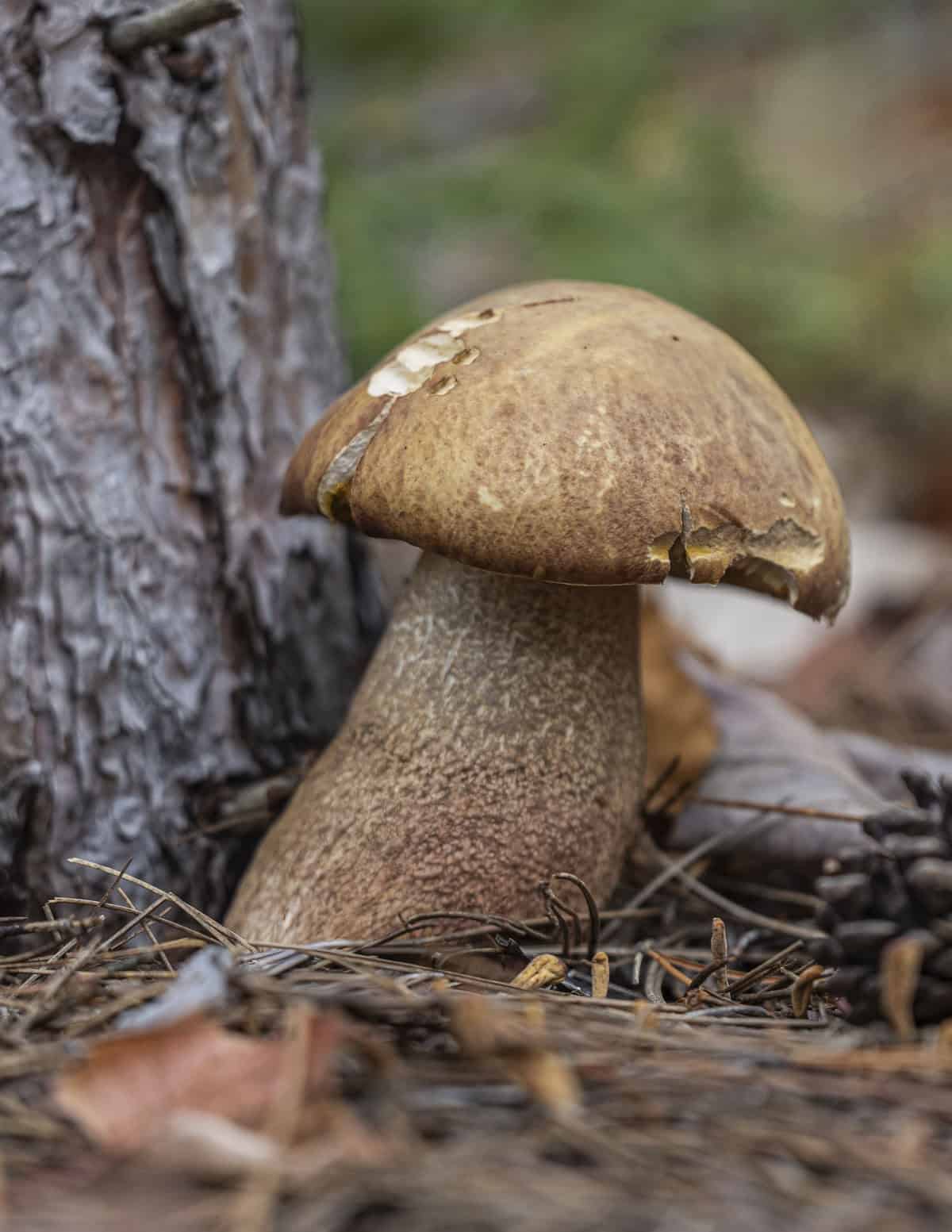
While wholesalers often get porcini, mushroom hunters have access to them and many other tasty Boletus species. With some boletes (West Coast Boletus grandedulis, that means you) the stems can be so large they're better described as steaks (see my post on cauliflower mushroom steaks for reference there). While many mushrooms can be cooked like this, to be scallops they need to be round, slightly chewy stems.
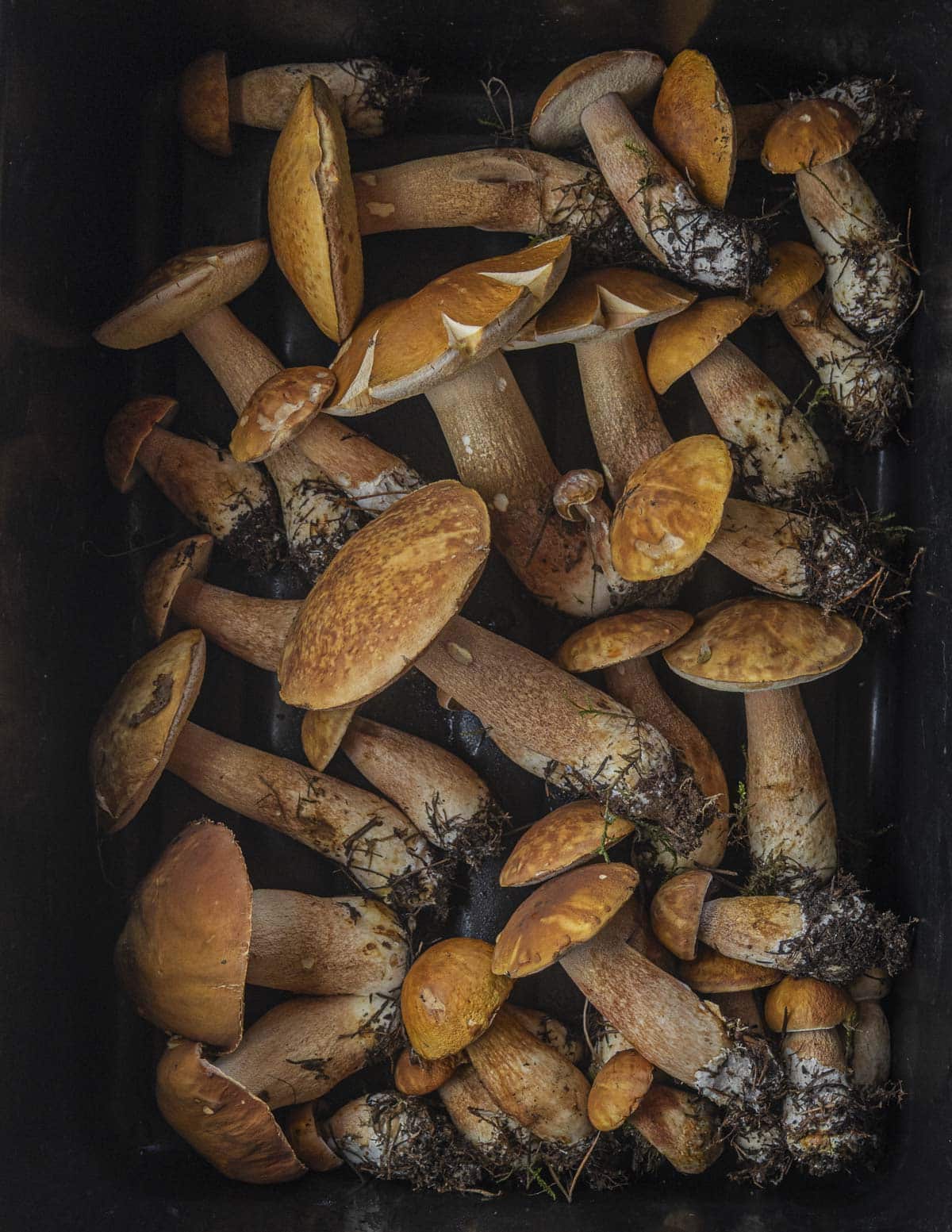
The only issue with that, as any mushroom hunter can tell you, is that pristine bolete stems are not the norm for most mushroom hunters. Back in October 2023 we had the greatest Boletus flush I've ever seen, and the cold weather meant there were no fungal gnat larvae. I ate myself silly on them for weeks and I still have 2 pounds of perfect, bug-free cubes in my freezer two years later, lying in wait.
With a simple recipe including only a few ingredients the devil's in the details and technique is important. Not enough browning and the dish will taste flat. If the pan dries out the mushrooms will burn.
Even I messed up two batches making this (I blame the finicky butane burner I film on!). One batch was a little too blonde and tasted flat. The next one, made with boletes got dark very quick, but a spoonful of capers and herbs helped to hide my sins (see below). For the record I would've still served them, but I digress.
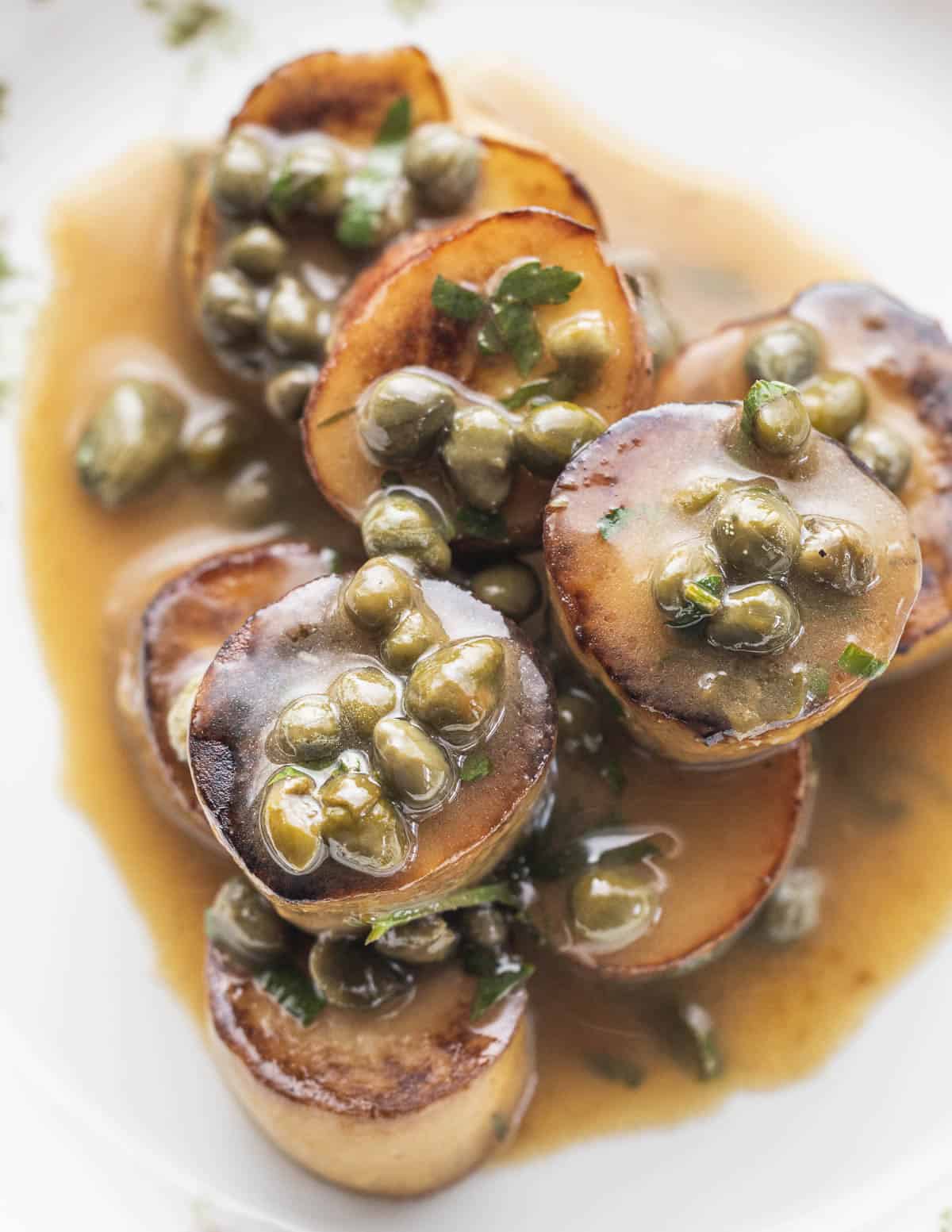
The big thing to remember here is that cheaper mushrooms need to be cooked slowly to brown them and concentrate their flavor, and king oysters are the poster child for this. Porcini and wild boletes are more forgiving but still benefit from slow evaporation of moisture and caramelization.
How To Make It
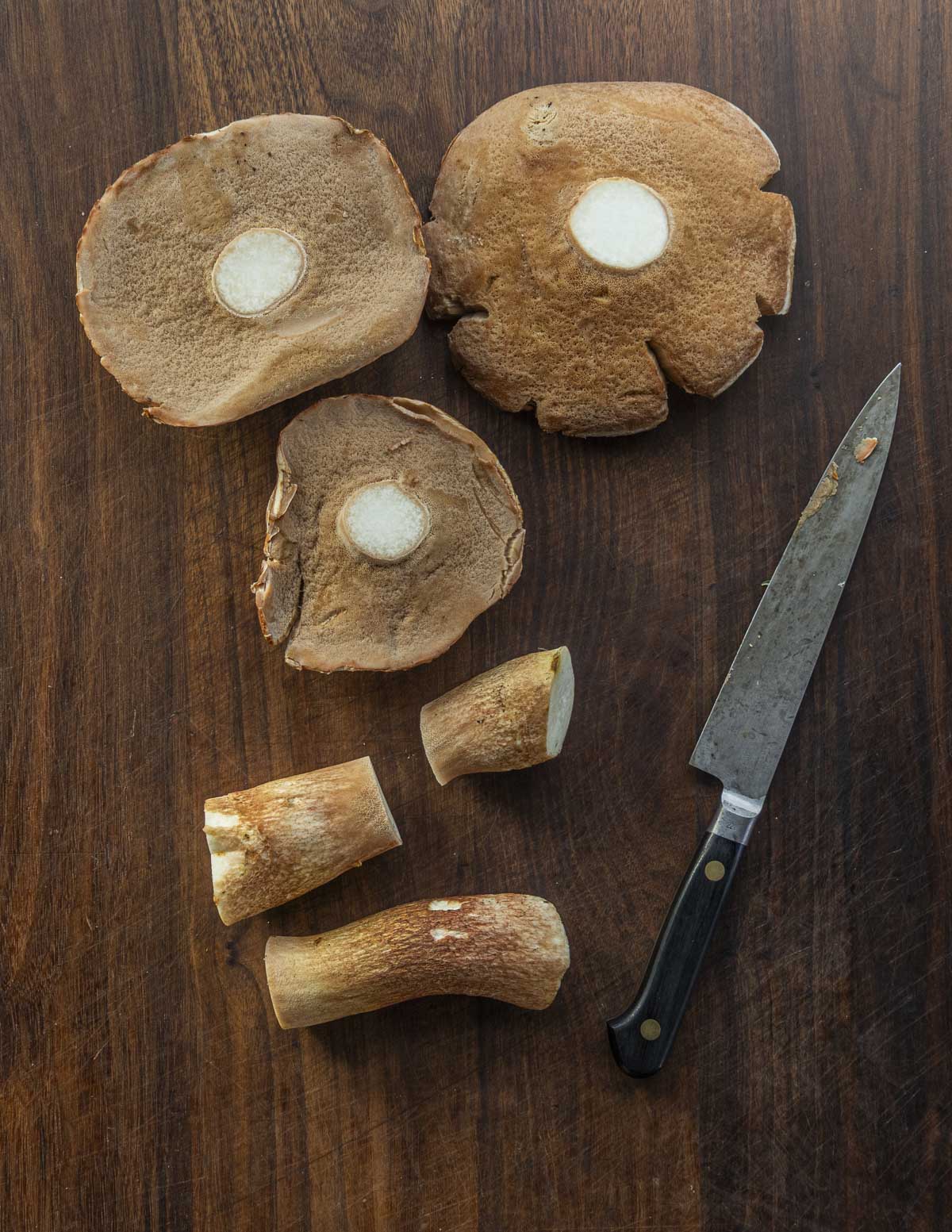
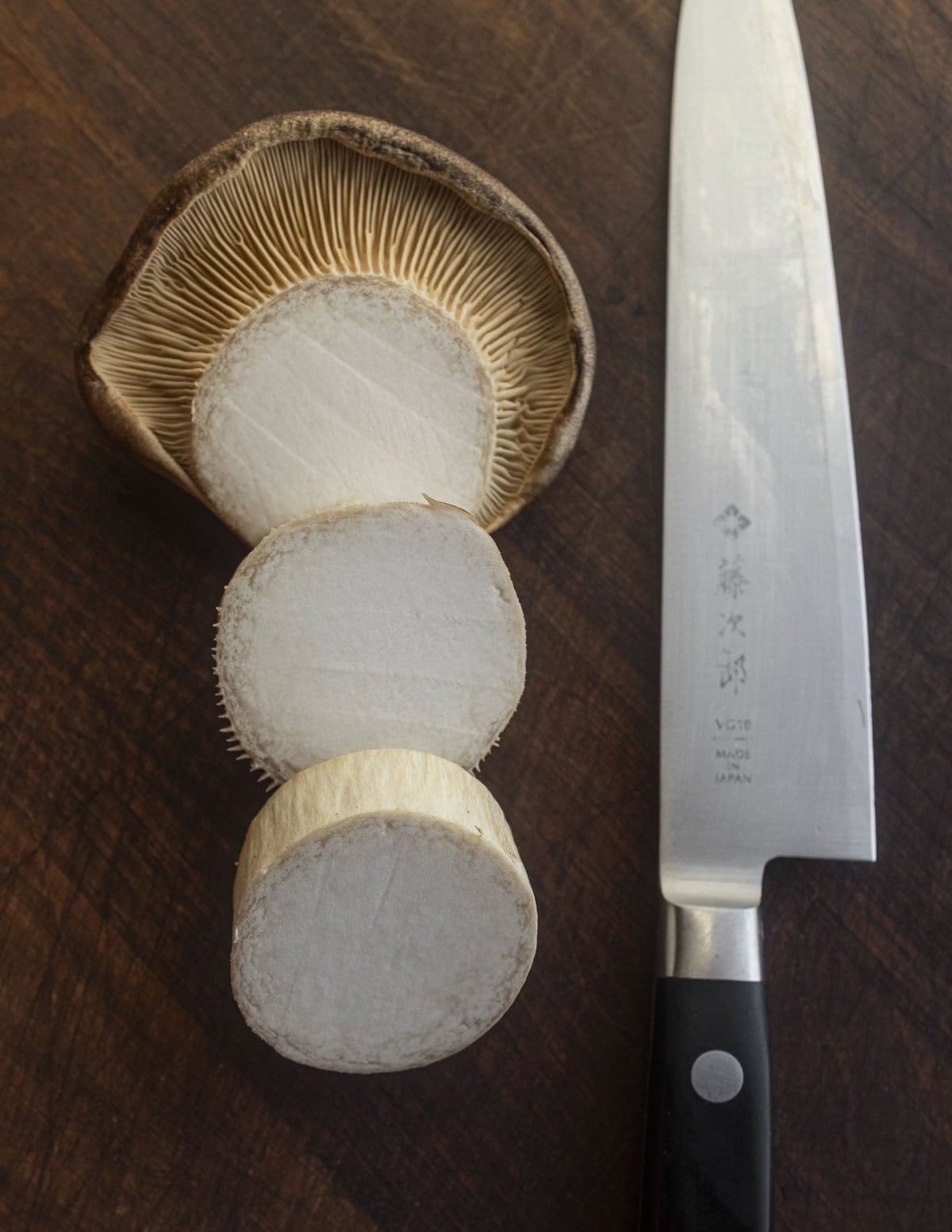
You want mushrooms with a thick stem that will be tender when cooked. Like the name implies, the stems are cut into thick rounds roughly the size of a large sea scallop.
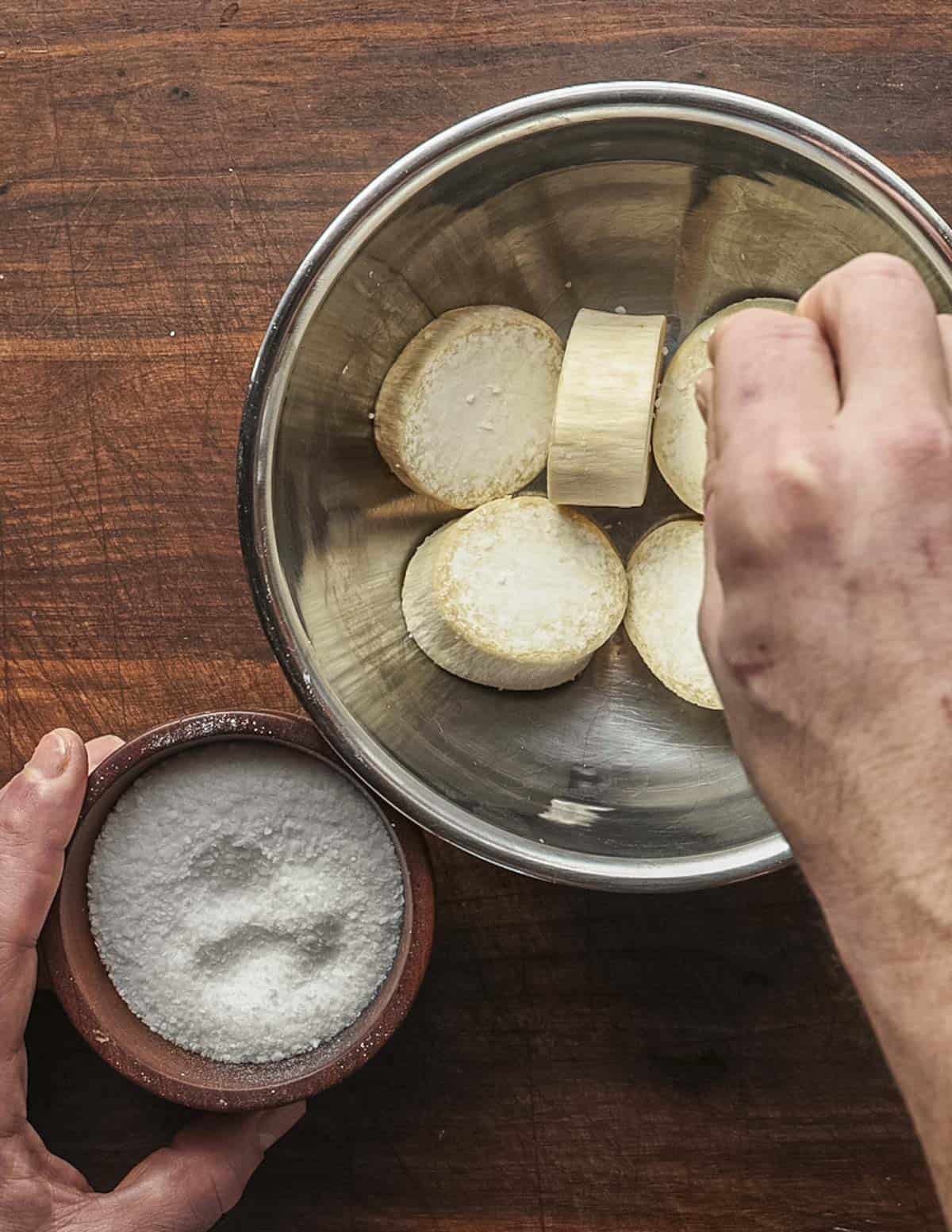
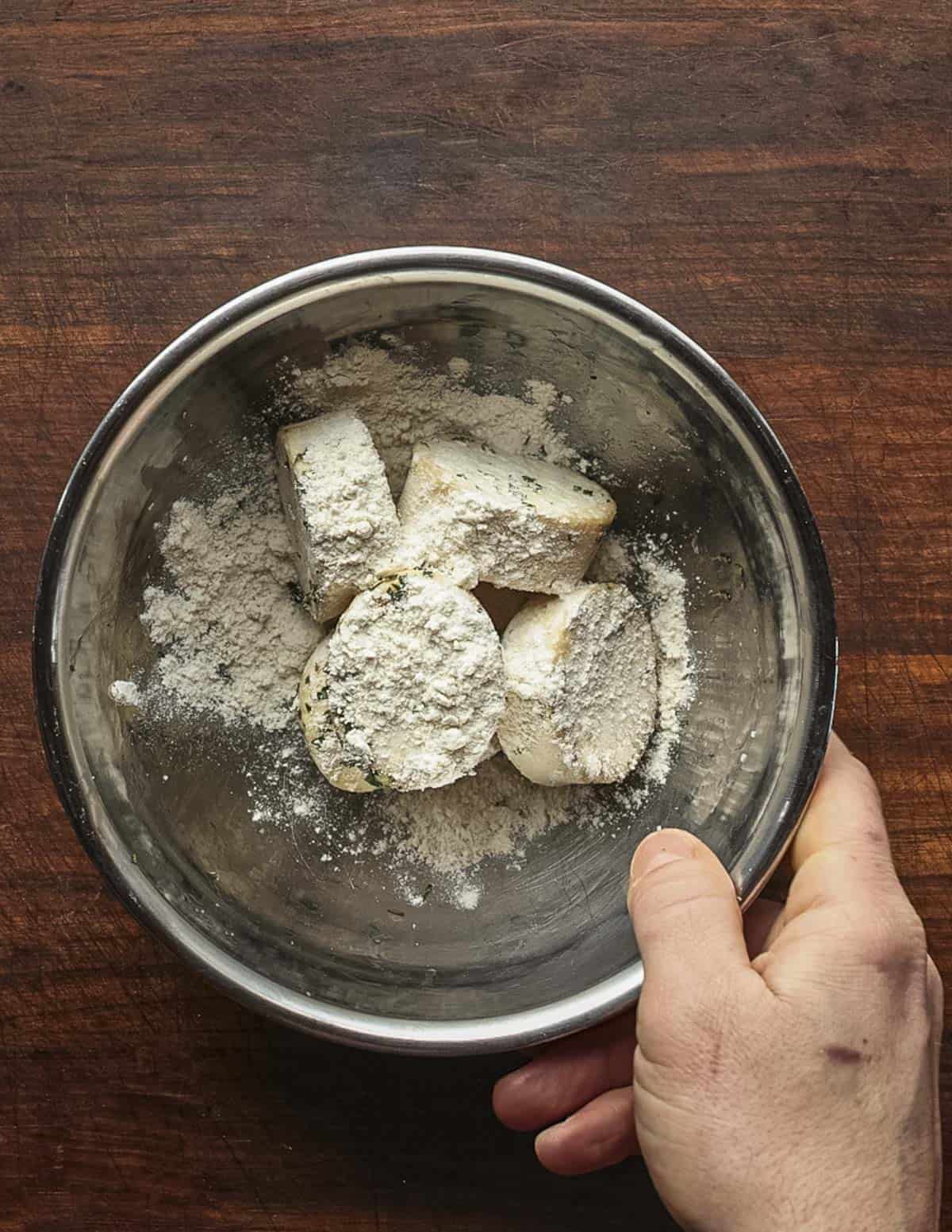
Next the mushrooms are seasoned with a pinch of salt and allowed to rest for a few minutes, which draws out their water and helps a dusting of flour to adhere. Many recipes don't dredge the mushrooms in flour, and while I may cook wild boletes without flour, I think it helps the more bland, cultivated mushrooms. The flour also insulates the mushrooms and makes it easier to control how brown they get.
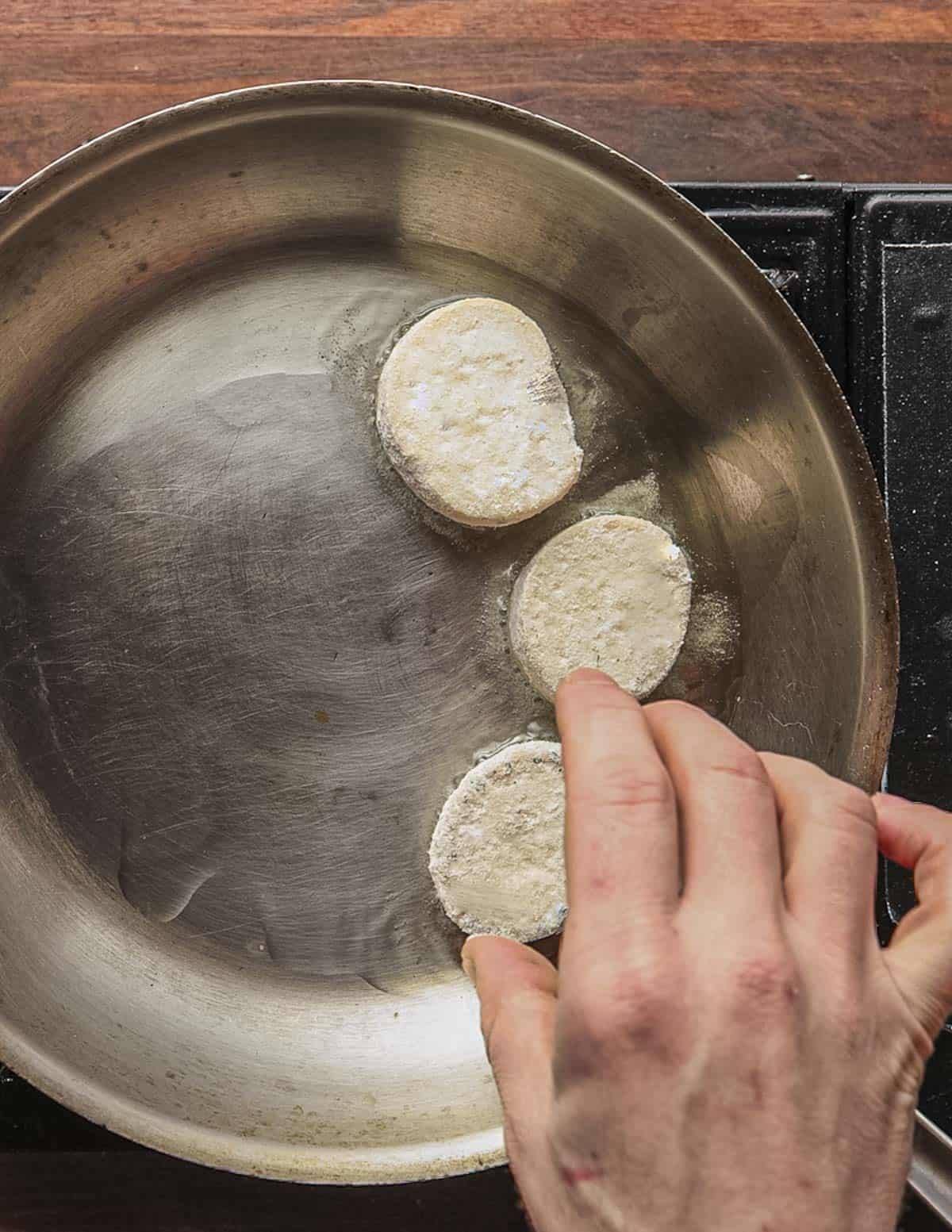
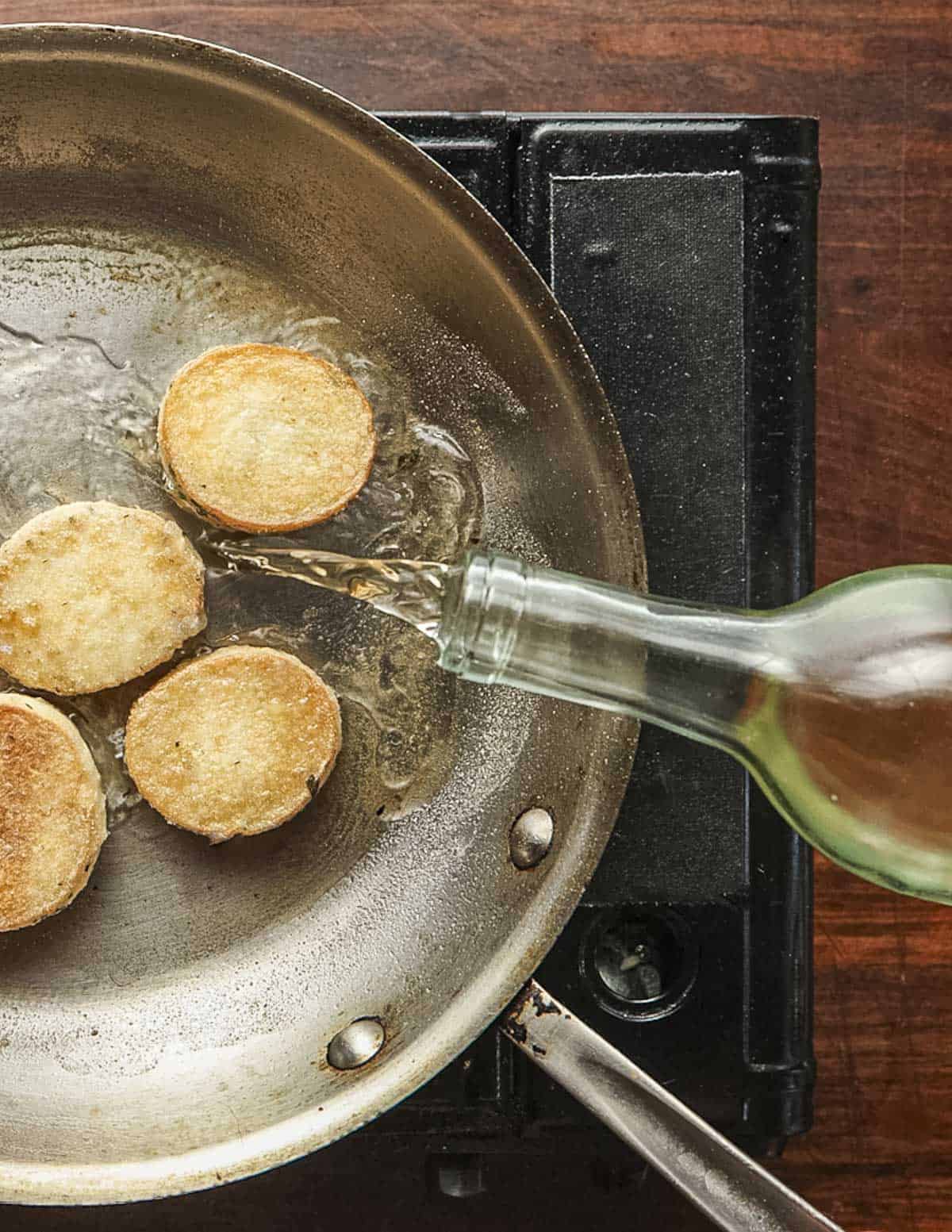
Just like regular scallops, the mushrooms are browned in oil, just not on high heat. Unlike scallops, you won't overcook them if you brown both sides. Once the mushrooms are browned the pan is deglazed with dry white wine, then a good ladle of chicken or vegetable stock is added.
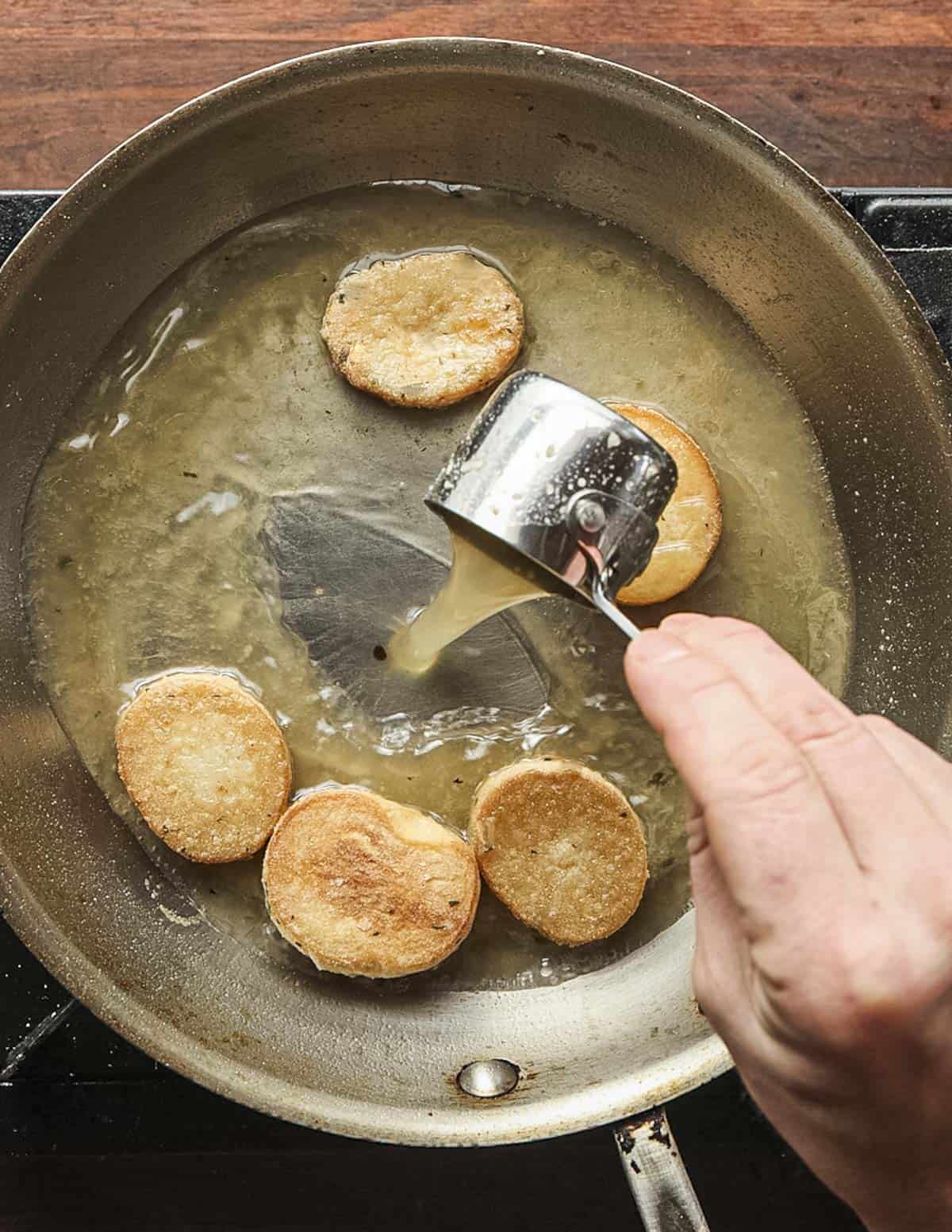
Next add some capers and a tablespoon of butter rolled in flour. Tossing a pat of butter in flour is a good old school trick for thickening a small amount of pan sauce. Even though the flour and butter aren't kneaded or mixed, somehow it works without clumping. I have to use GF flour.
Simmer the mushrooms in their sauce until thickened, finish with a splash of fresh lemon, herbs if you have some, and voila. It can be served as-is, or on a dollop of something soft and creamy like polenta or with wilted greens.
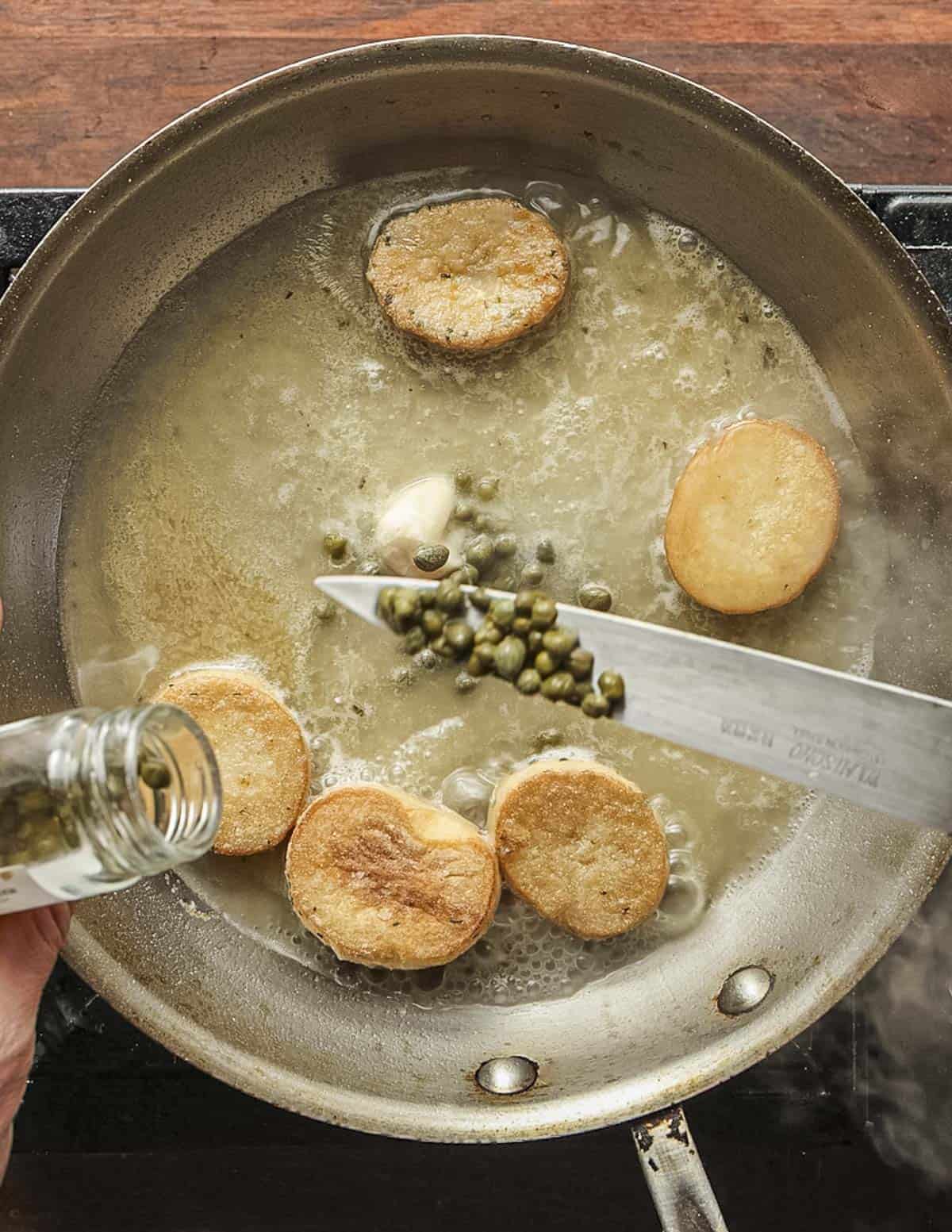
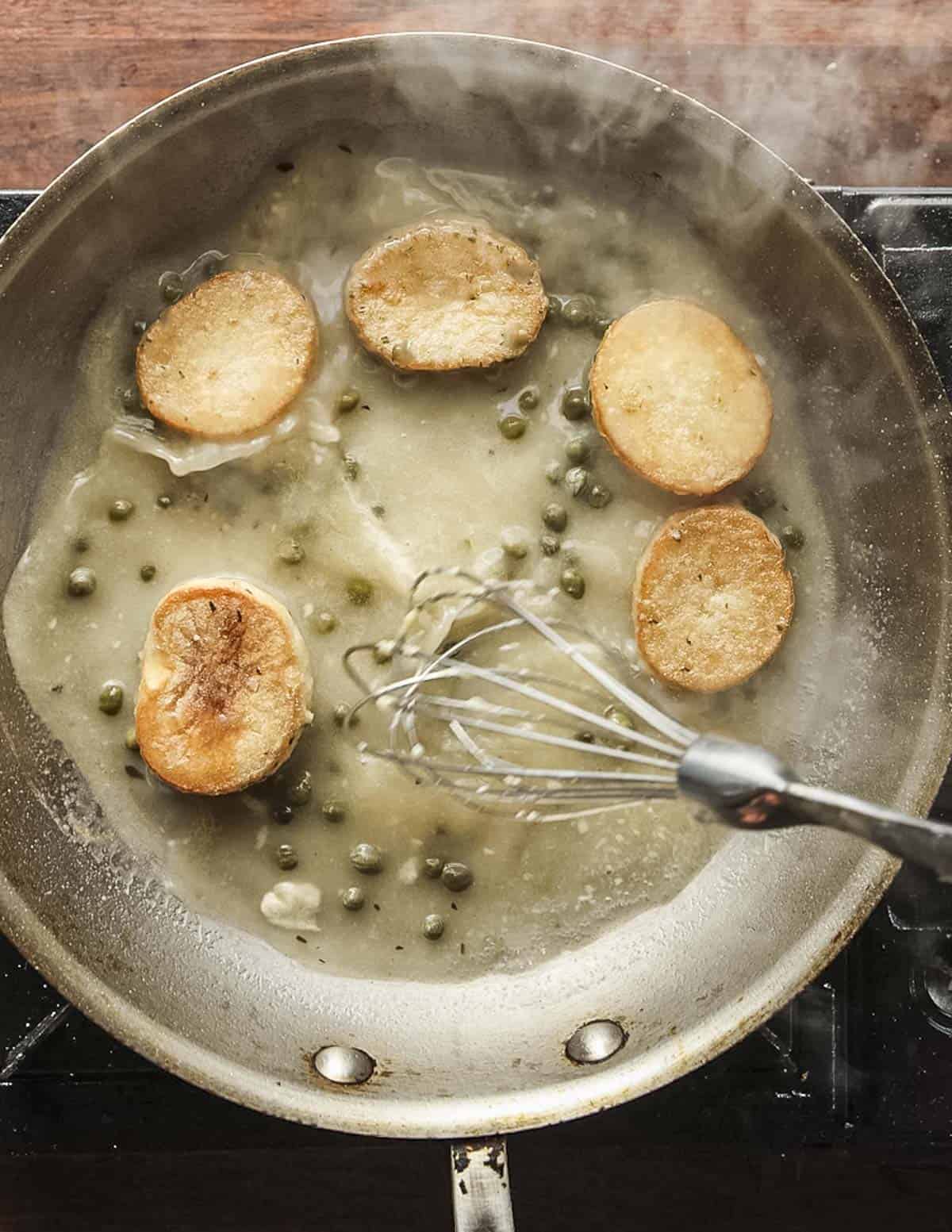
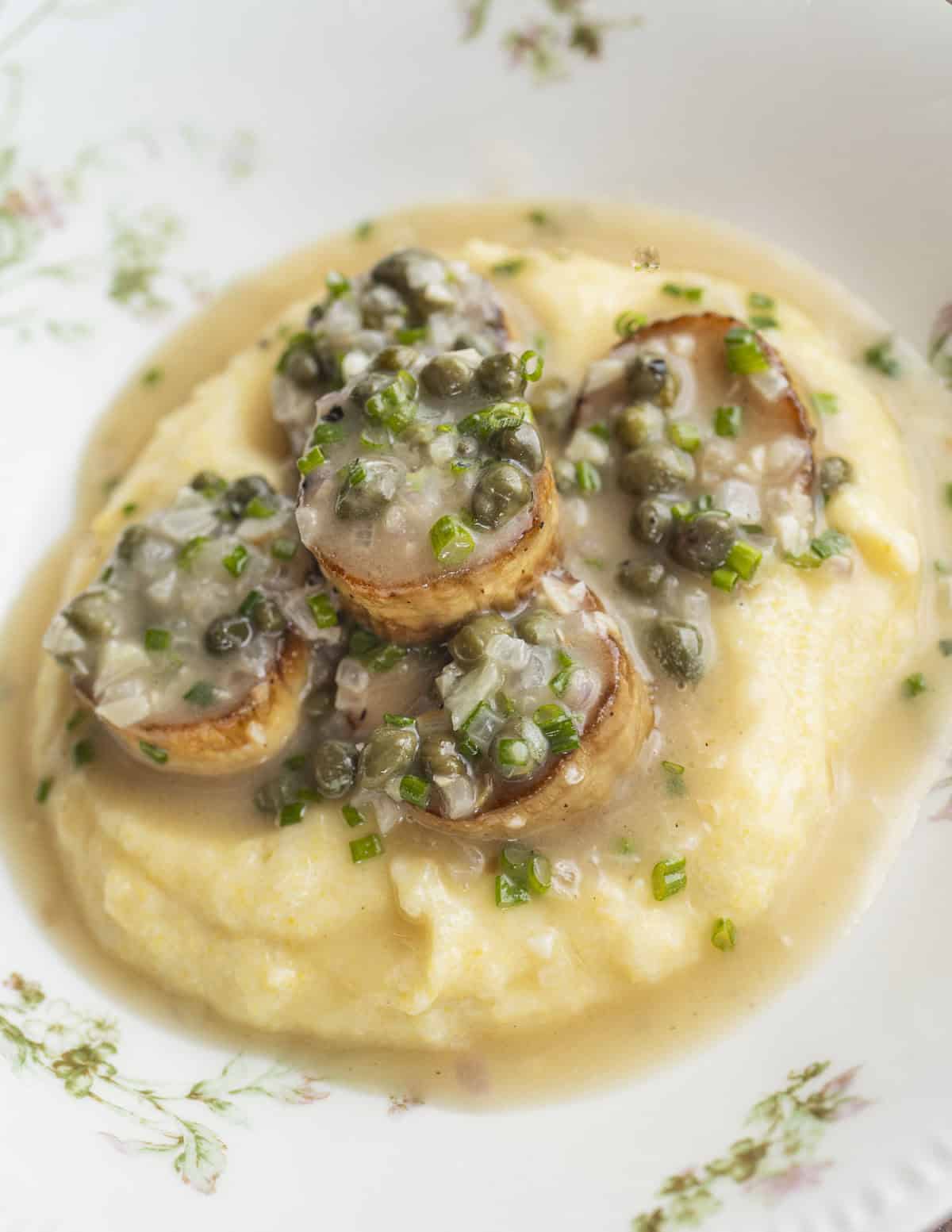
King oysters are passable and can be good as long as they're well cooked, but the best will be bookmarking it for the next time you find a large bolete with a bug-free stem.
Related Posts

King Oyster Mushroom Scallops
Equipment
- 1 10 inch saute pan
Ingredients
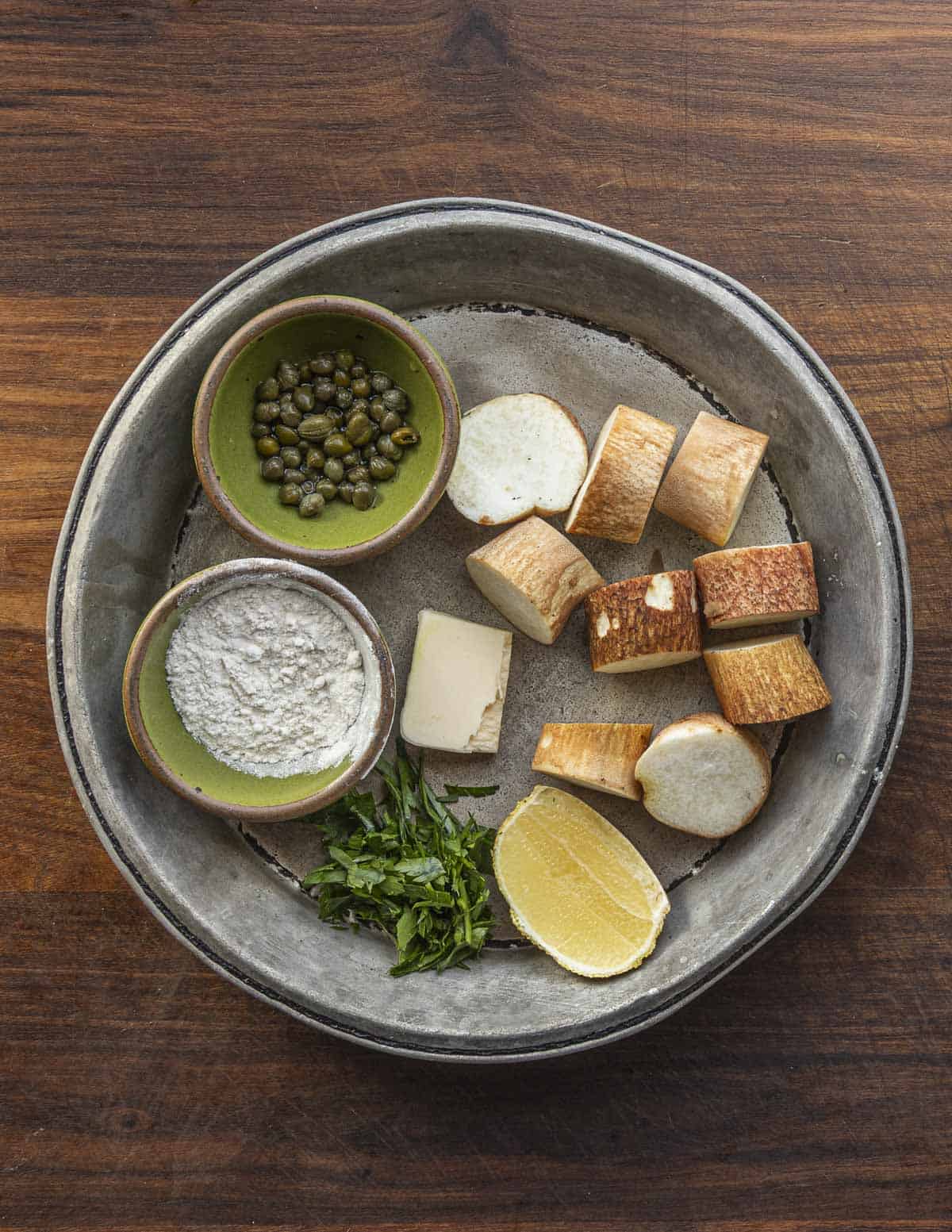
- 4 oz bolete stems, king oyster mushroom stems, or similar *see note on larger batches
- 1.5 tablespoons cooking oil
- 2 teaspoons non-pareielle capers
- 1 tablespoon unsalted butter chilled
- 1 teaspoon all purpose flour
- Kosher salt a pinch to taste
- Fresh squeezed lemon juice
- Pinch of fresh chopped Italian parsley or a mix of parsley and tarragon
- ¼ cup chicken stock
- ¼ cup dry white wine
- ½ oz (1 tablespoon) shallot minced
- 1 small clove garlic grated
Instructions
- Cut the mushroom stems into thick rounds about 1 inch tall. You can also cut them on a slight bias for a different shape.
- Toss the mushrooms with ½ tablespoon of cooking oil and a pinch of salt.
- Heat the oil in a 10 inch skillet until hot over medium-high heat. Watch the heat here, you need to slowly cook the mushrooms down and they should visibly lose around 30% of their volume to concentrate their flavor, especially with cultivated mushrooms.
- Add the garlic and shallot if using and cook for a minute until translucent.
- Deglaze the pan with the wine, reduce by half, add the chicken stock and capers and bring to a gentle simmer. Toss the butter in the teaspoon of flour to coat i, then add to the pan, whisking to help it dissolve.
- Reduce the sauce until it can coat the back of a spoon. Double check the seasoning for salt and pepper and adjust until it tastes good to you, add the squeeze of lemon and herbs.
- The mushrooms can be served on their own a la carte, on a bed of wilted, drained greens like spinach or lambsquarters, or on a small mound of polenta.
- Transfer the mushrooms into a serving dish, spoon the sauce and capers over the top and serve.
Mike M
"the next time you find a large bolete with a bug-free stem."
So, like never? In 30 years I've never found a bolete anywhere within an hour Northwest to Southeast of Twin cities that is not buggy, even when they are just coming up buttons. Got any tips without giving away your spots?
Alan Bergo
Hey Mike. I left my Midwest neighbors a breadrcumb trail here. Everything you need to know with the exception of the exact coordinates of places I go is in this post, and I'll even share the location. As most of us are well aware you will not find boletes like that until October in MN (where all the mushrooms shown were harvested). You need a warm fall with a bout of very heavy rain. After the rain is when you look. I can't understate the helpfulness of having friends who hunt mushrooms here. Back in '23, we got a lot of rain in Oct, and reports started to trickle in about Edulis clade fruiting heavy all around the metro.
About a week later I had multiple people telling me to go to the Rum River State Forest. Low and behold, even though scores of people had already been there I could've picked my fill a few times over, and every single one was perfect and pristine. Later I went out for the subcaerulescens near Gen Andrews, to a private patch and had the best bolete harvest of my life.
It's not that your spots are wrong, it's that these conditions where we live are exceedingly rare, and the last comparable flush, from my estimation speaking with chefs who bought mushrooms in Minnesota in the 90's, was over 20 years ago. Every year I will get a few perfect ones as shown here, but I focus my efforts when it's colder outside because of the bugs. This year I went to the UP in Oct and did very well with the B. subcaerulescens and chippawaensis.