
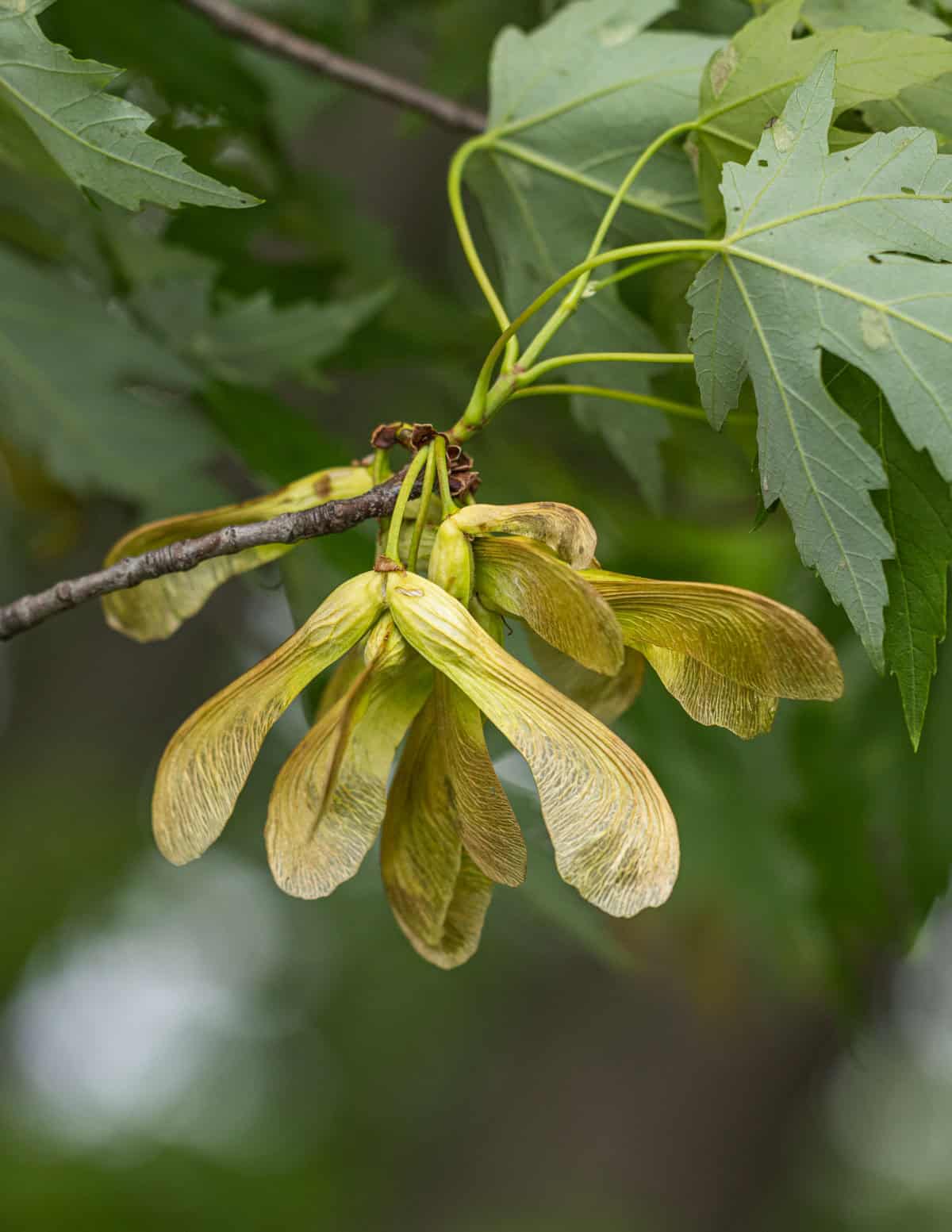
Yes, the helicopters and whirlybirds that you remember littering the yard as a kid are edible, and are surprisingly good. After cooking they taste like a small soybean with a touch of bitterness. Widely available, maple seeds are safe and easy to harvest. Today we'll go over some ways to process and use them in the kitchen.
Background
Similar to dandelions and black walnuts, maple seeds occupy a kind of sweet spot as an edible plant as many people are aware of them, but likely haven't eaten them or know they're edible. I'd eaten them a handful of times, but hadn't put the work into treating them as a food until this week when I grabbed a few bags of silver maple seeds.
Edible Species
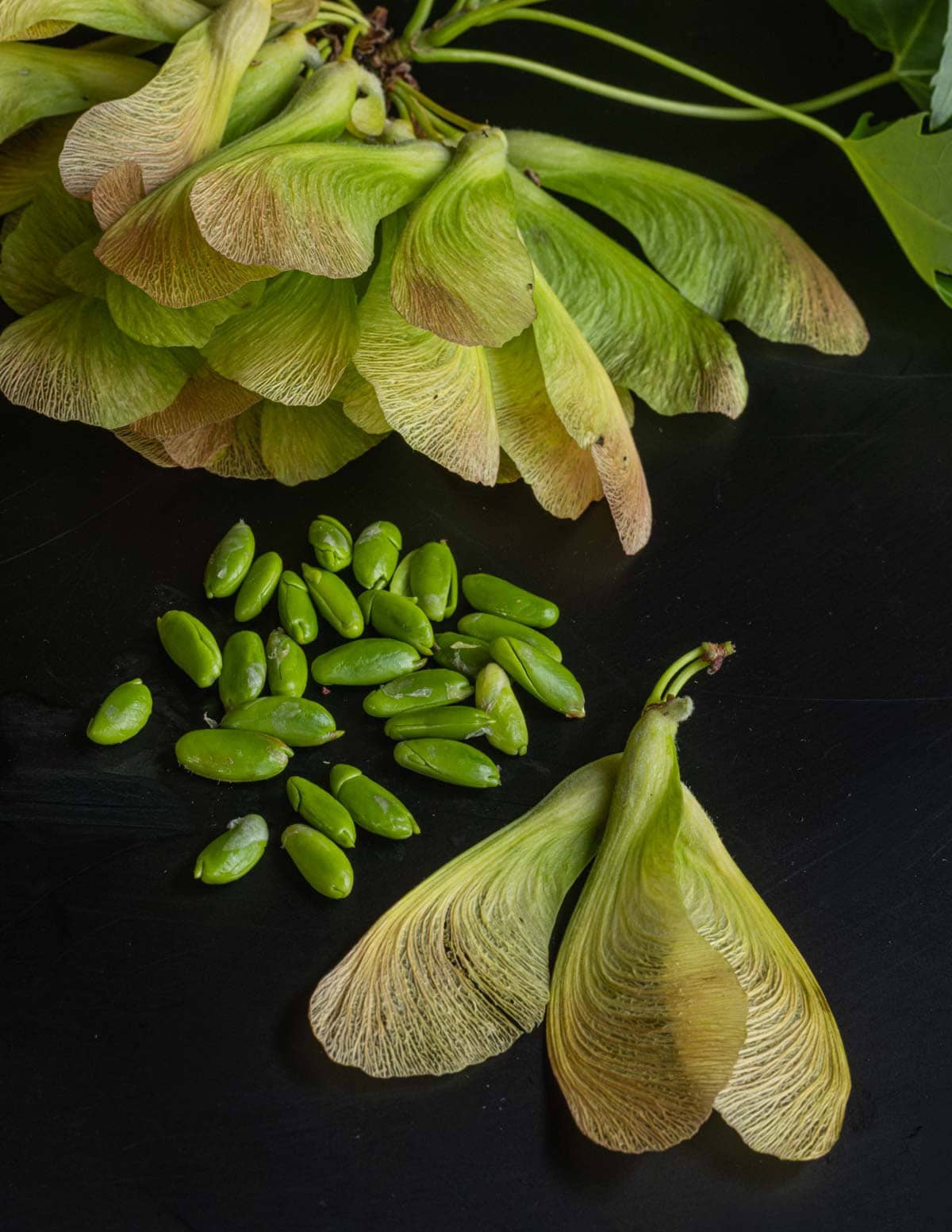
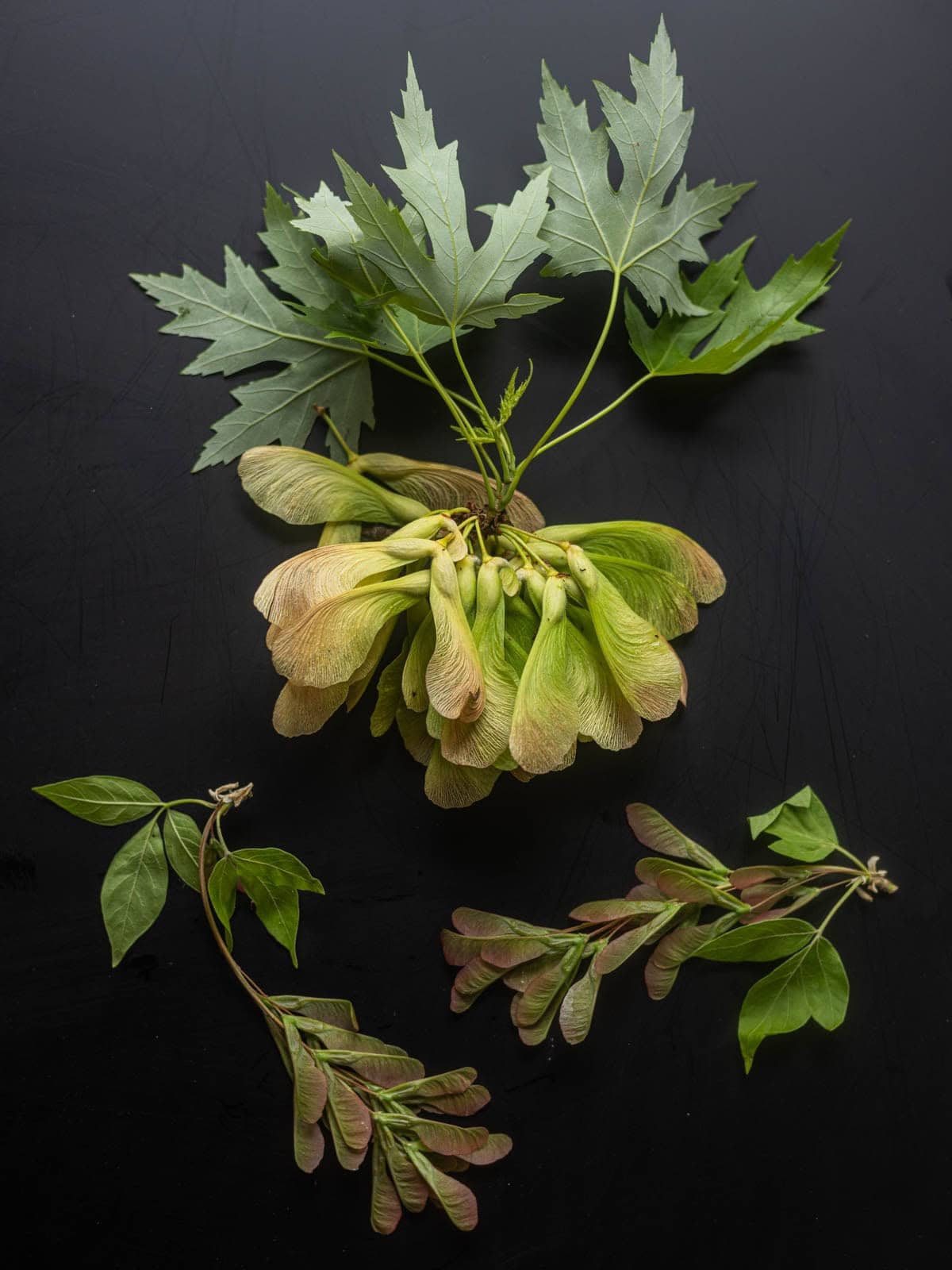
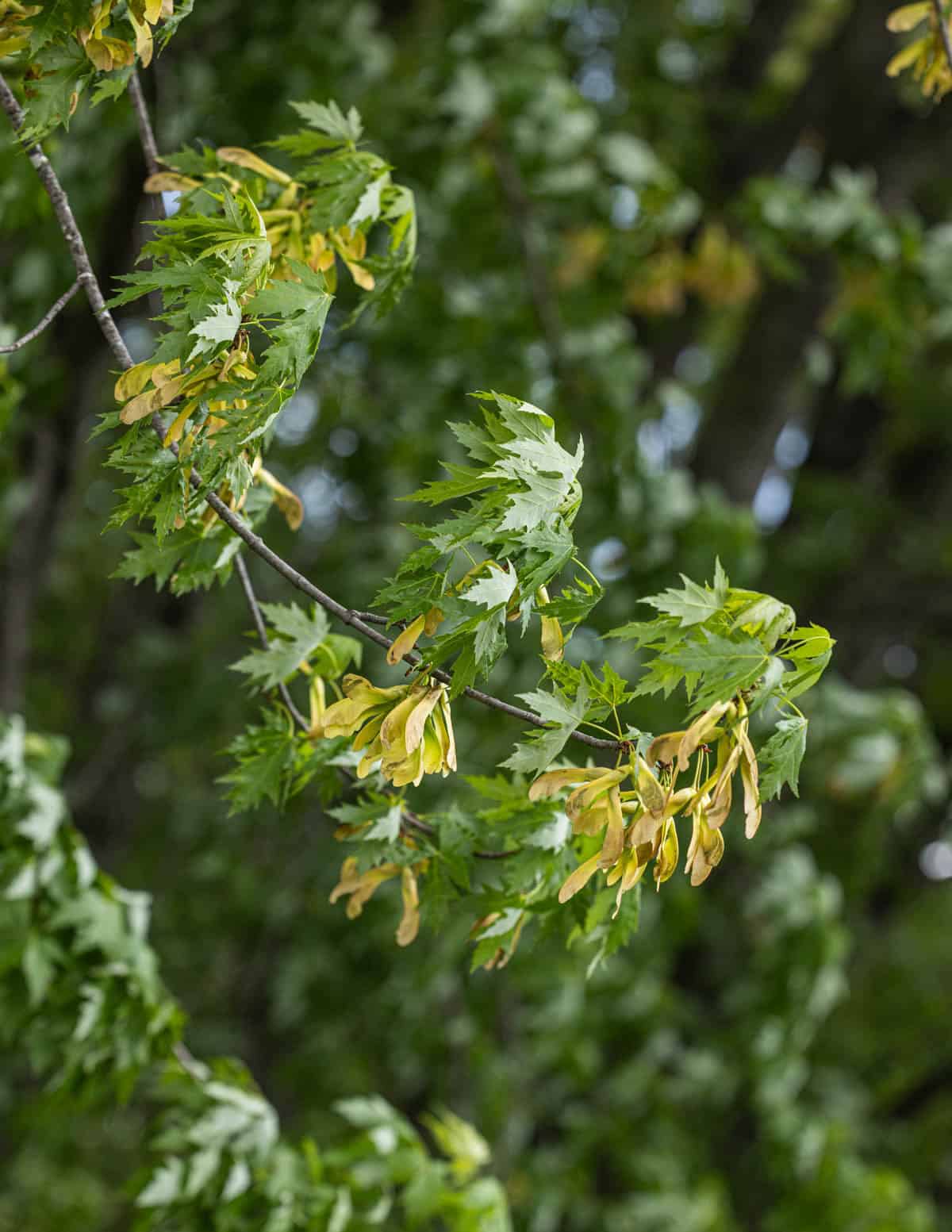
Most species of maple should be edible, but the taste and quality will vary from species to species. Your eyes and instincts are the best tools for finding good ones to eat: just look for the largest, plumpest samaras you can. To date my favorite are silver maple (Acer saccharinum) seeds. Note the difference in size between them, and boxelder (Acer negundo) below.
Inedible or Toxic Maple Seeds
I've only eaten silver maple seeds as they're the largest in my area. While speaking with friends and readers who've eaten these, one person mentioned a childhood friend who ate around 70 green maple seeds and promptly vomited. It's important to note here that the species they ate is unknown.
Some species of trees in the genus Acer are not recommended for eating, like Sycamore and Box Elder as they contain hypoglycin A methylenecyclopropyl amino acids. An online search around poisoning from these compounds might concern some people, and I don't recommend eating those species out of an abundance of caution.
However, as with plants like milkweed and pokeweed, studies and accounts of poisoning often refer to the raw plant, not after boiling or cooking. Dosage can also make the poison, and I don't eat more than an ounce of food that's new to me in a sitting. My advice is to stick to silver maple seeds, or research the specific varieties near you before consuming.
Documentation in Foraging Literature
Interestingly, the use of maple seeds as a food was nearly non-existent from my foraging literature with the exception of Samuel Thayer, of course. Even my Indigenous references lacked documentation of the seeds being eaten by any North American tribes. I'd wager they were eaten historically but are easily obscured by the popularity of maple syrup.
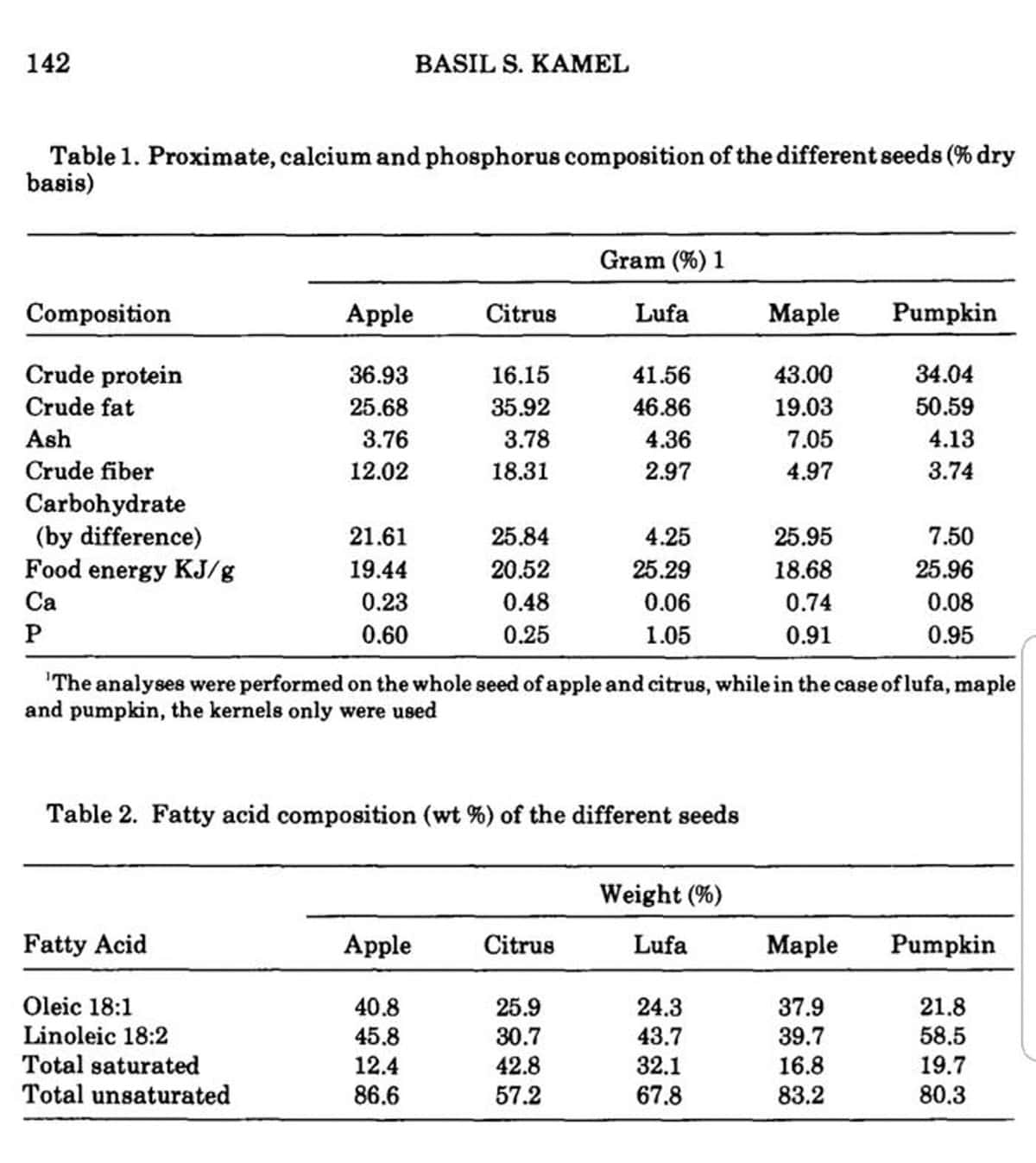
By contrast, I was able to find nutrition information for maple seeds. The study below is from 1982. Long story short, maple seeds are relatively nutrient dense and are comparable pumpkinseeds and green legumes like peas. Note that the study refers to shelled, dried seeds where green, unripe seeds are shown in this post. Green seeds will contain more water-weight.
Social media and the internet notwithstanding, the lack of references on eating maple seeds is interesting as they're easily accessible and widely available. In rural areas near where I live silver maples are common in woods and along riverbanks, as well as urban areas where they're planted as shade trees. If you keep your eyes peeled for them in the spring they're easy to pick out.
Composition
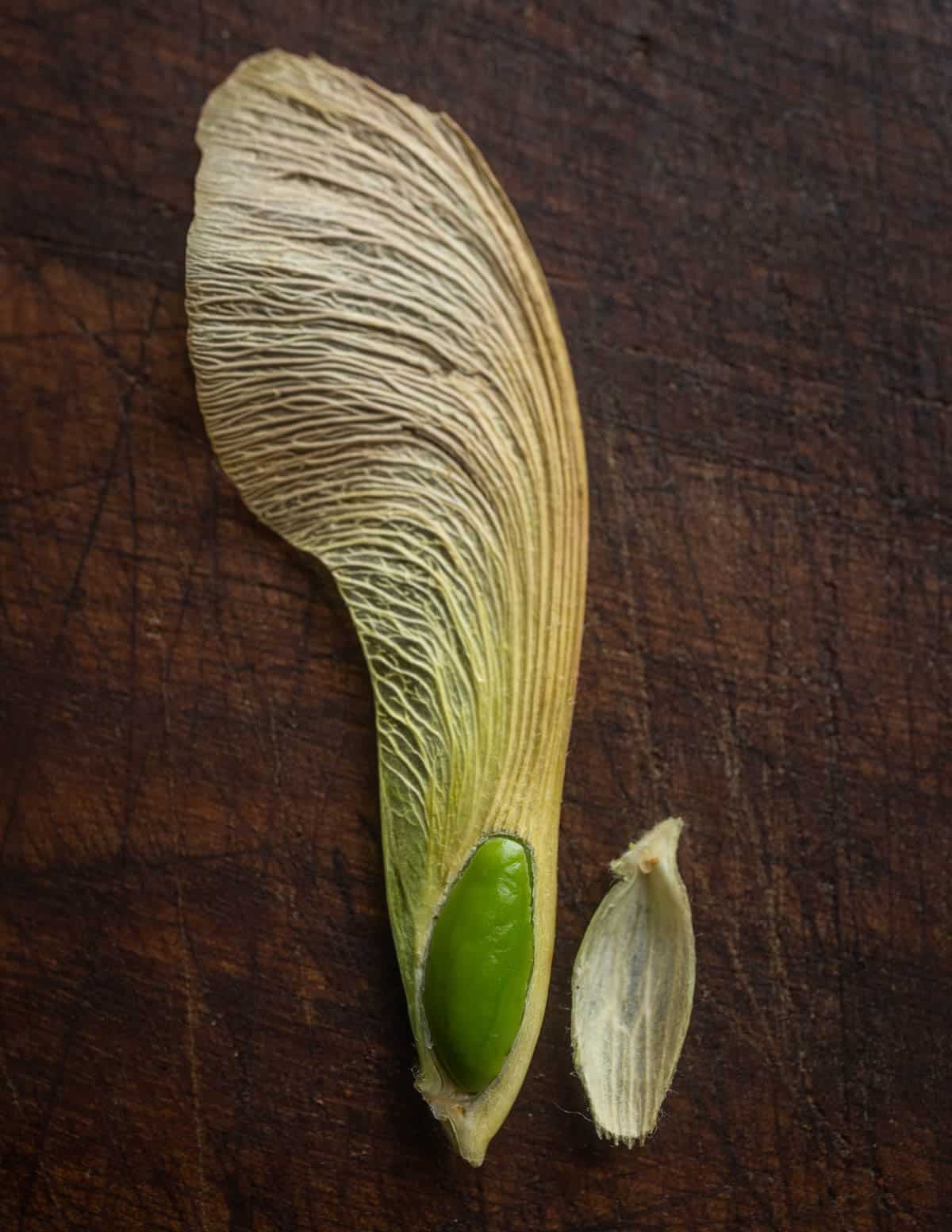
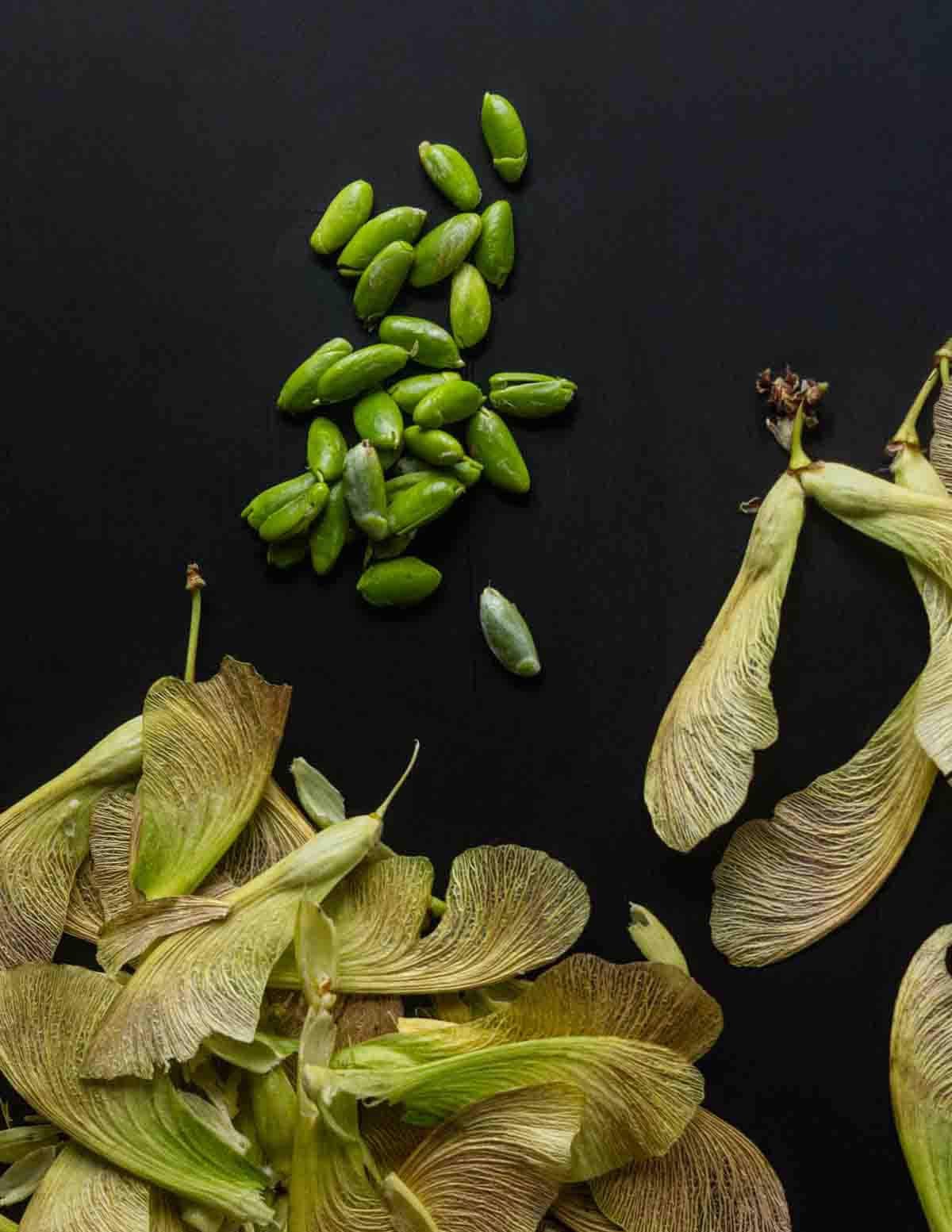
Maple seeds are composed of two parts: the outer, papery husk, known as the samara, and the edible seed. The seed itself is composed of two halves held together by a thin test or membrane, similar to other nuts and legumes like peas. The test is slightly astringent, but removing it is too tedious to be worthwhile. I removed the test in the image below to show the green color.
Harvesting and Processing
Harvest unripe, green maple seeds directly from the tree in the Spring. In Minnesota this is around early may-right around the same time as morels, elm samaras and basswood leaves are ready. Look for low-hanging branches loaded with seeds like the one below.
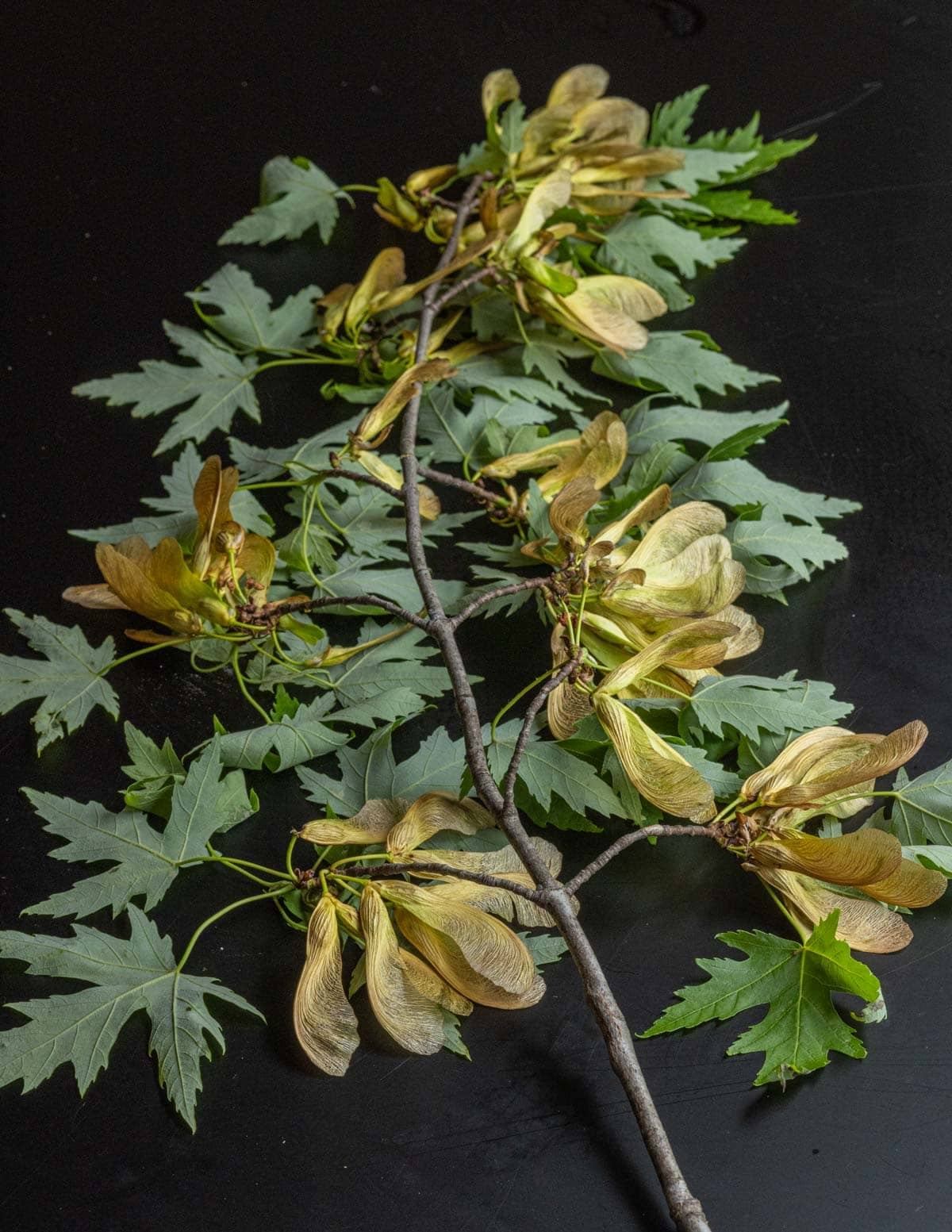
Older or mature seeds are still edible but I've heard they can be more bitter and must be boiled, please comment if you can add anything there. Samaras are pretty durable and will hold in a zip-top bag in the fridge for a couple weeks. To clean them, all you need to do is pop the seed from the samara.
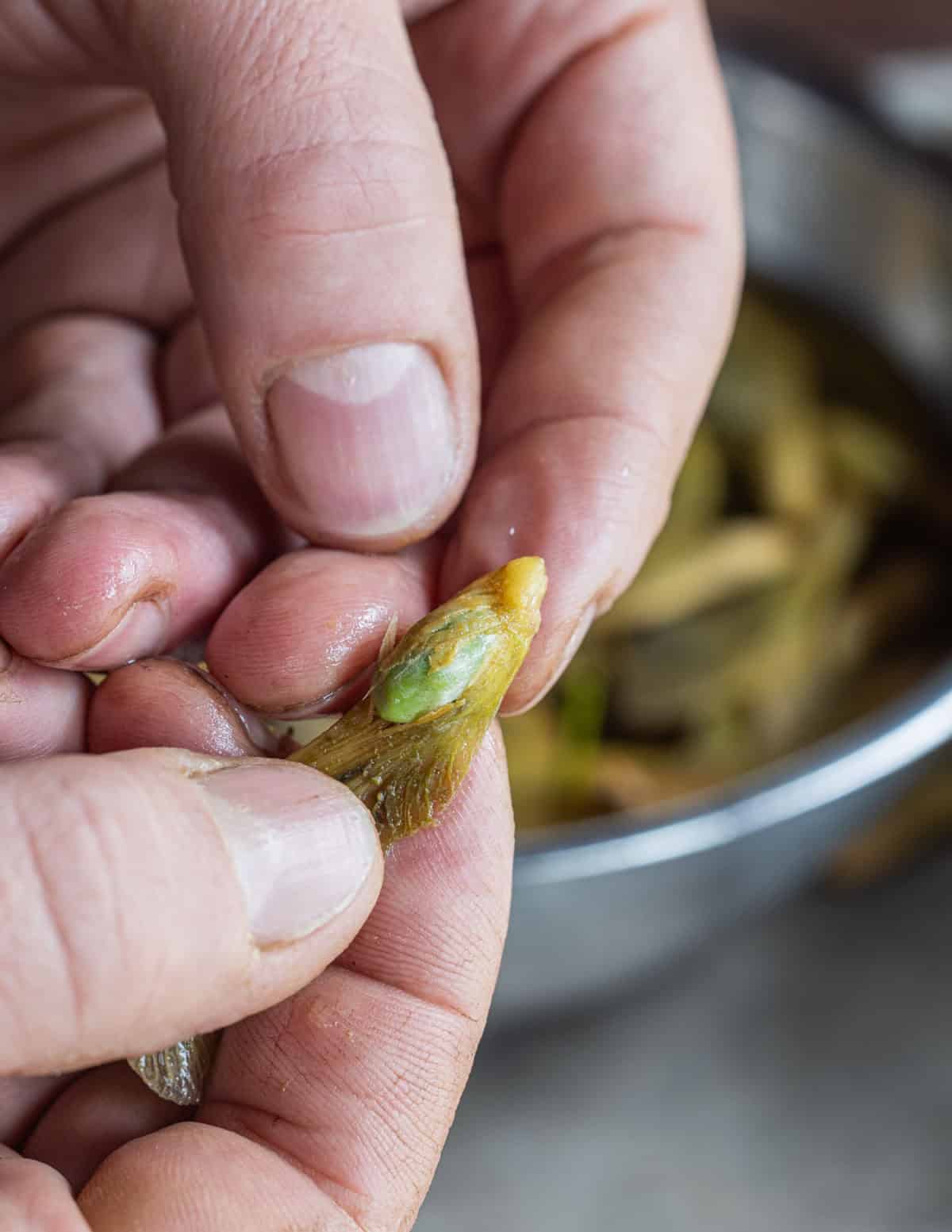
Soaking the samaras before shucking in water can help speed up the process, but I had decent results either way.
Yield Test
I often advise foraging educators and chefs serving wild foods, and my biggest question was the return on investment. In a nutshell (or samara): how long does it take me to harvest and process them, and how much do I get for my labor? I did a casual yield test like I'd do with new ingredients in a restaurant and the results might surprise you.
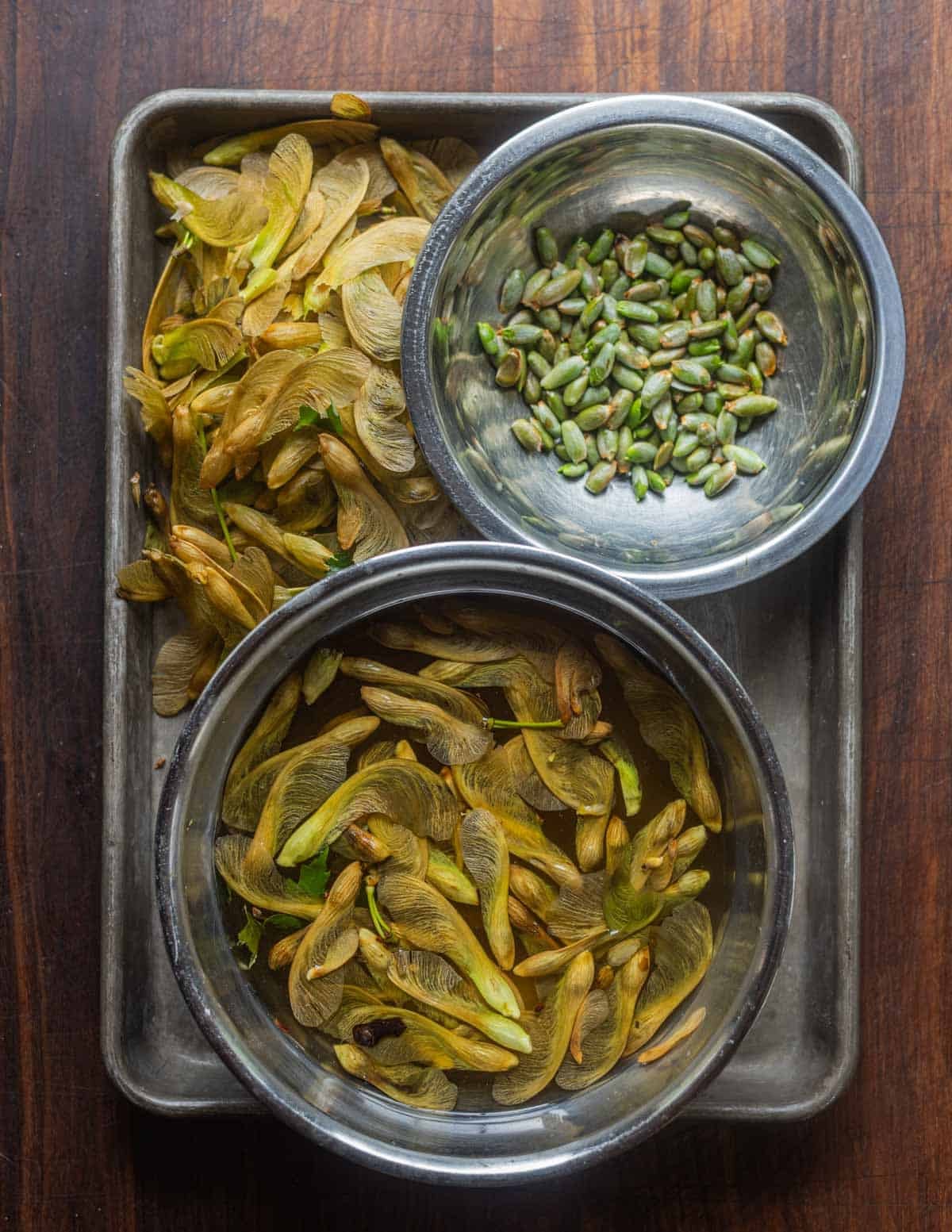
It took a friend and I about 15 minutes to gather a grocery bag of samaras and the occasional maple leaf. After soaking in cold water for an hour, it took me another hour to shuck exactly 200 grams (half a pound / 8oz) or roughly 875 individual seeds. It may not sound like a lot, but it's better than wild hazelnuts.
The seeds may be small and tedious for one person to clean alone, but half a pound of food for 75 minutes of labor isn't a bad yield. The cheat code is teamwork: add two extra sets of hands and the ratios shift dramatically, giving you ½ a pound of food in around twenty-five minutes.
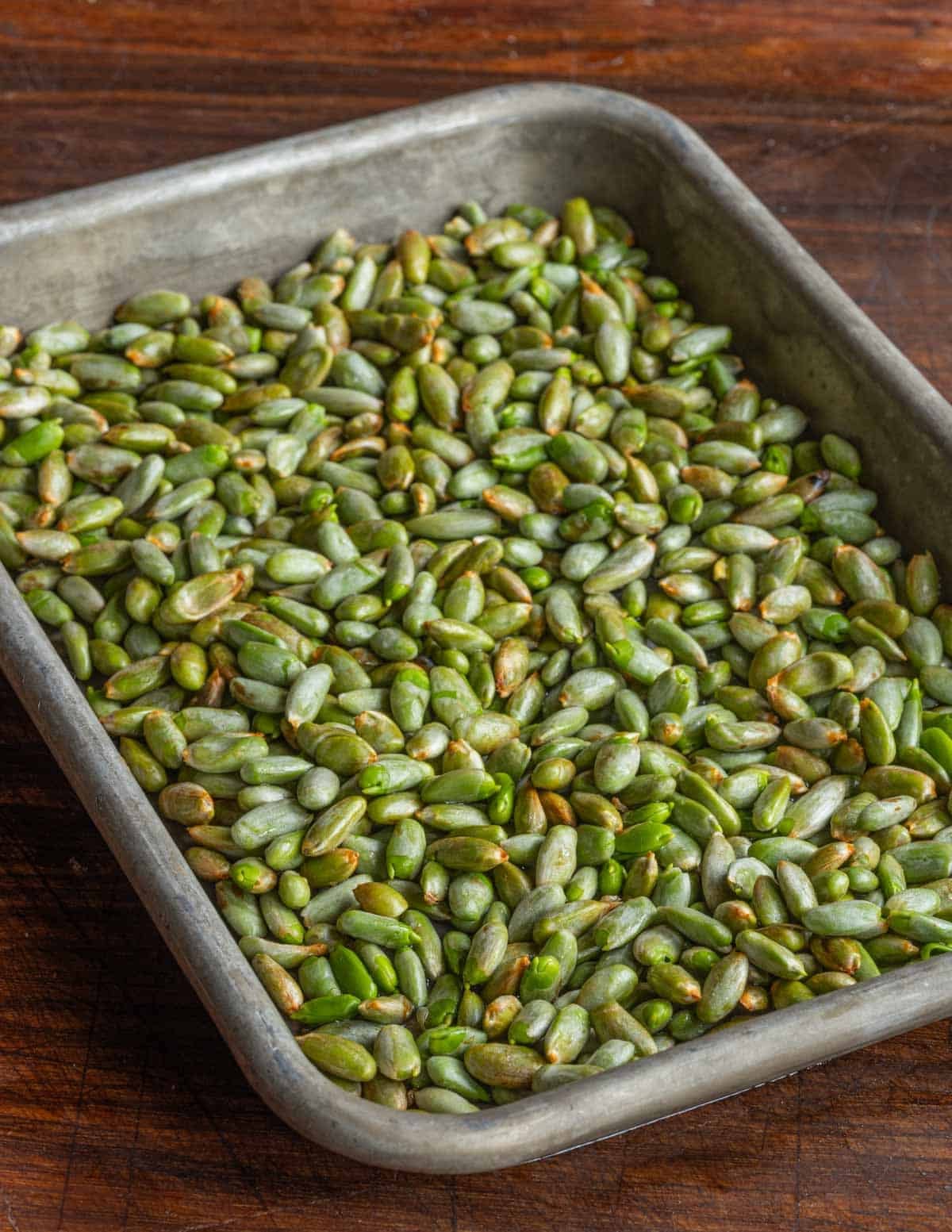
When you consider that you only need a sprinkle to garnish a dish they become absolutely worthwhile, if I can pull myself away from hunting morels during early May that is.
General Cooking and Maple Seed Recipes
First, the seeds should be eaten cooked as a few people I know have had indigestion eating them raw, which also doesn't taste great. I cooked the seeds a few different ways according to how I wanted to serve them. Roasting is the best bet for your first time, as it helps caramelize the astringent test that surrounds the seeds where boiling does not.
Roasted Maple Seeds
My hunch was the seeds would taste the best removed from the samara, tossed with oil and lightly roasted. For slightly chewy seeds, mix ½ cup maple seeds with a ⅛th teaspoon cooking oil and a pinch of salt and bake at 350 F for 10 minutes, transferring to a bowl to cool.
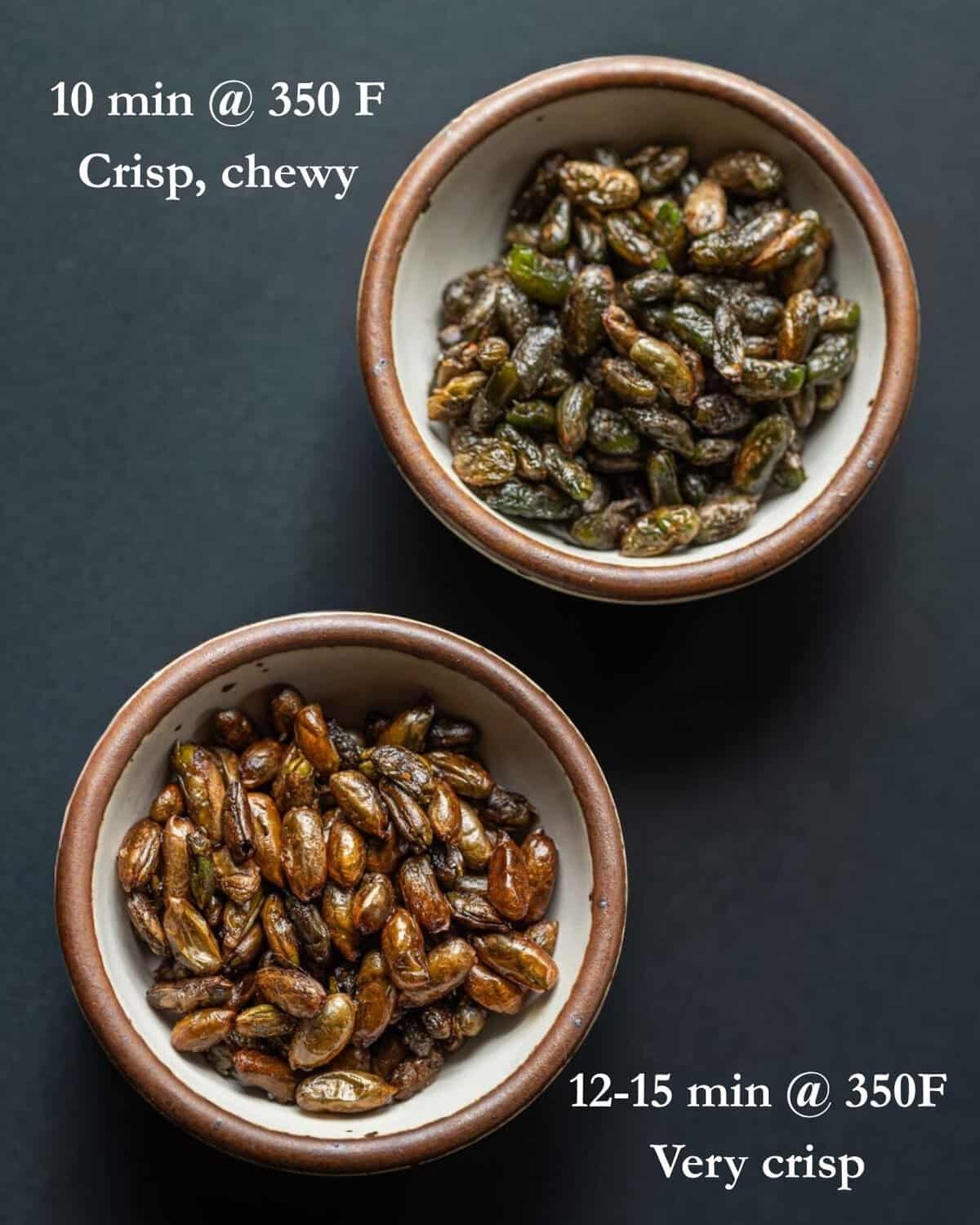
For crunchy texture like pumpkinseeds, bake them for 12-15 minutes and allow them to cool in the pan. They'll add a unique texture sprinkled on a salad and plenty of other things. The texture is good, like roasted pumpkinseeds, but firmer.
Cooking the Whole Samaras
For a quick and easy approach I tried cooking the seeds inside the samaras to serve as "wild endamame" like I've seen on social media. Baked at 350F for 10-15 minutes the seeds stay slightly moist and have a fudgy texture that reminded me of gingko nuts, but turned hard and unpalatable as they cooled. Undercooking them will be your best bet here.
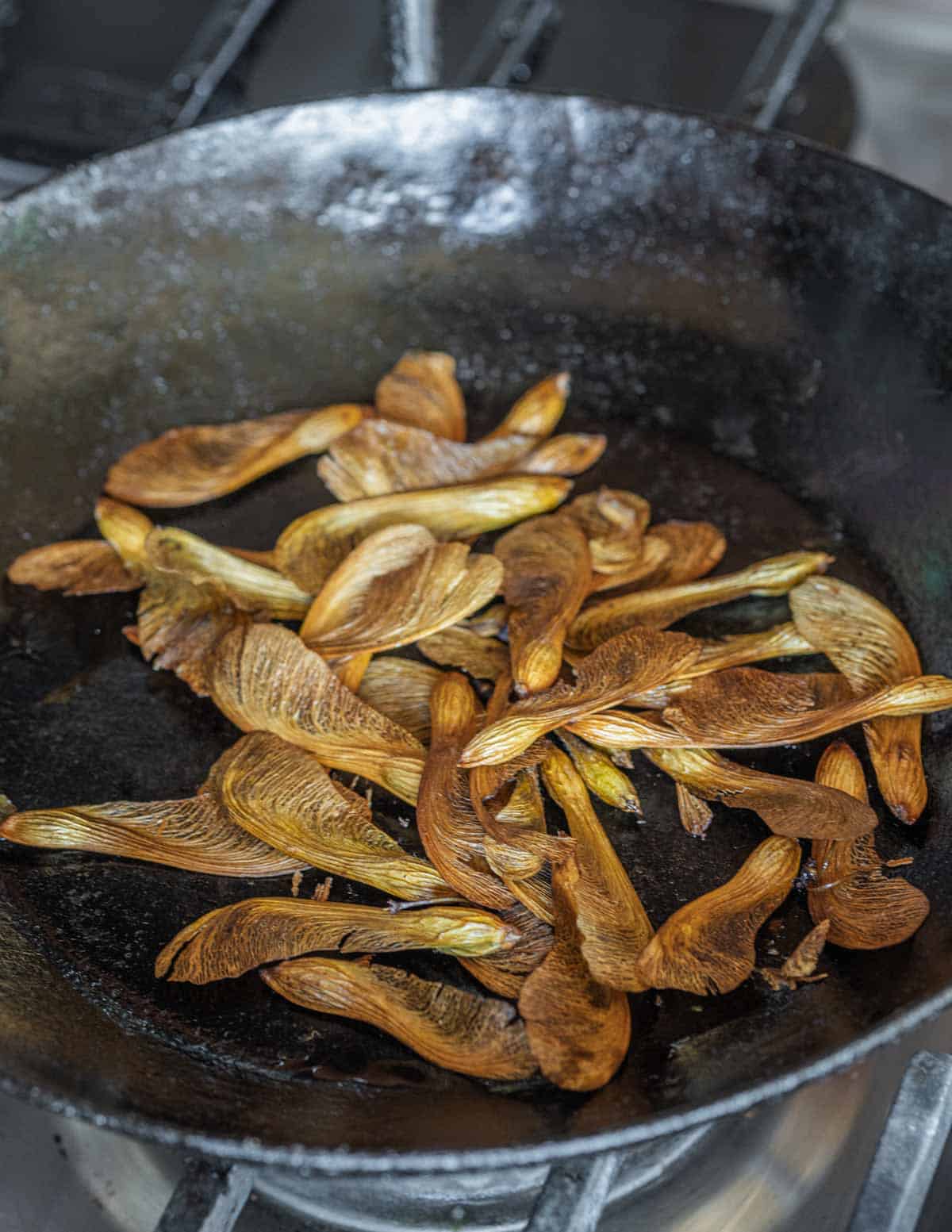
I could see a select few restaurants like my friends at Honey Badger serving the whole, roasted samaras alongside other crisp baked leaves like nettles for an appetizer with a natural look.
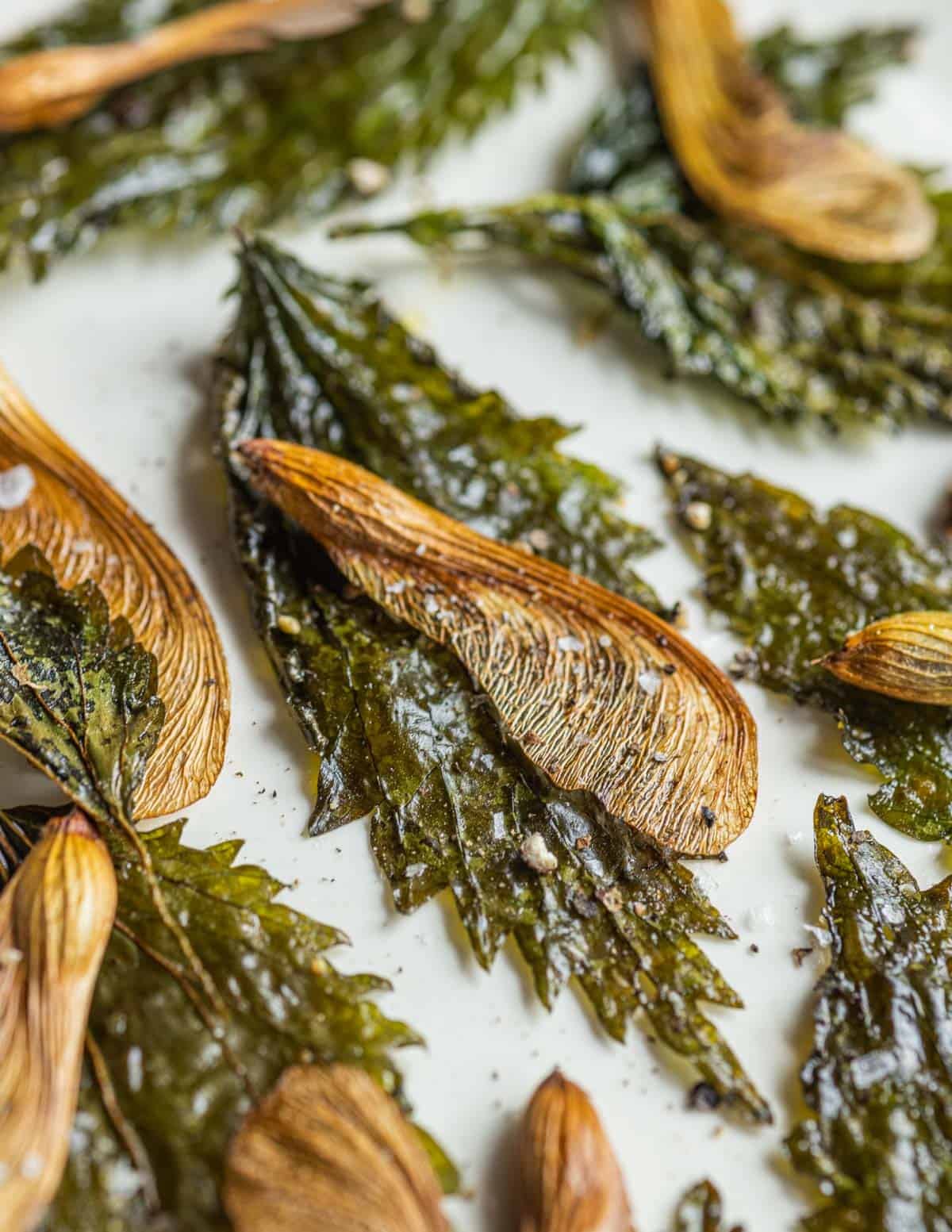
To be frank, roasting in the samara was my least favorite preparation. It's a novelty compared to golden, toasted flavors of the roasted seeds.
Boiled Maple Seeds
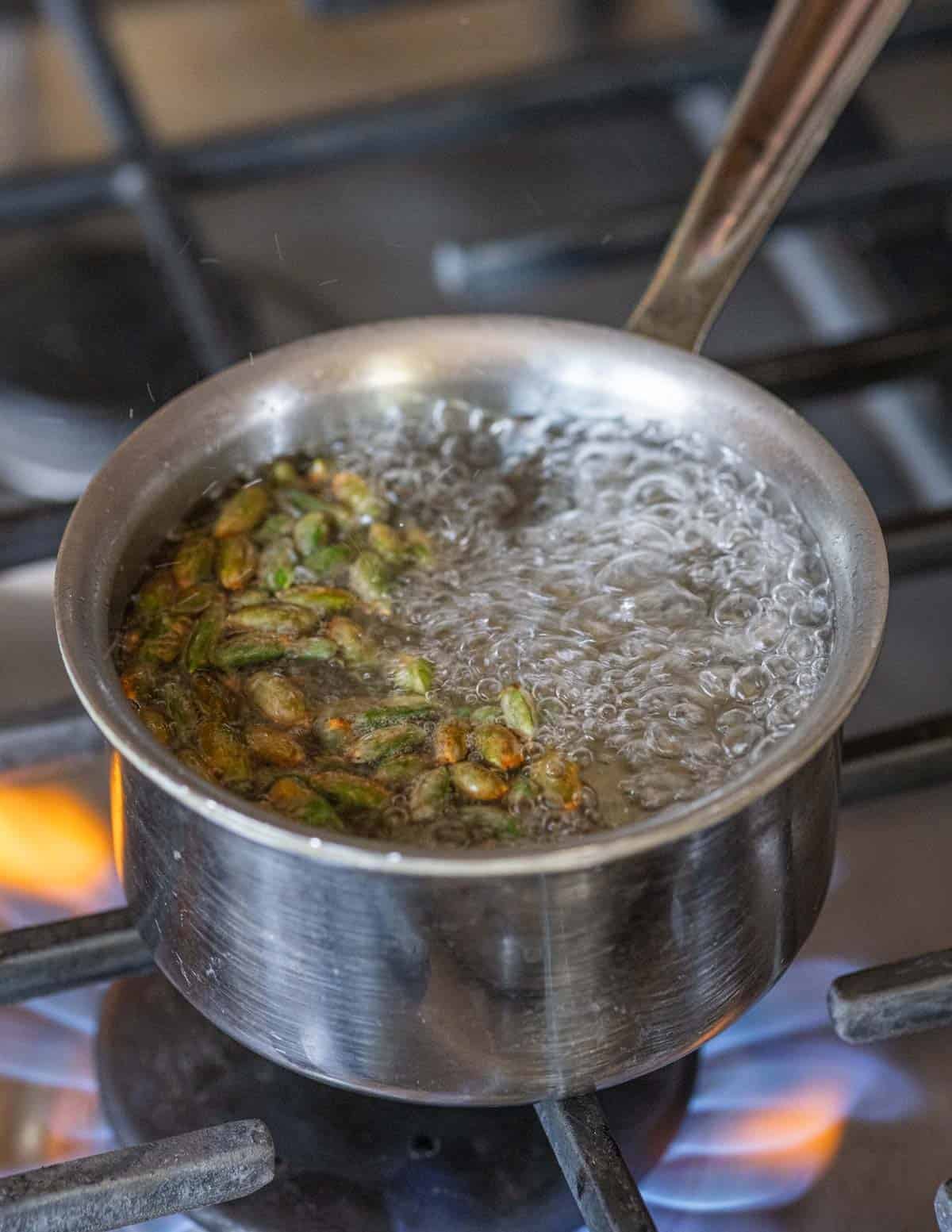
Boiled in salted water for 60 seconds yields slightly crunchy seeds with a bright green color and mild leguminous flavor. There's a touch of bitter astringency on the finish but nothing compared to say, a bay nut (Umbellularia californica).
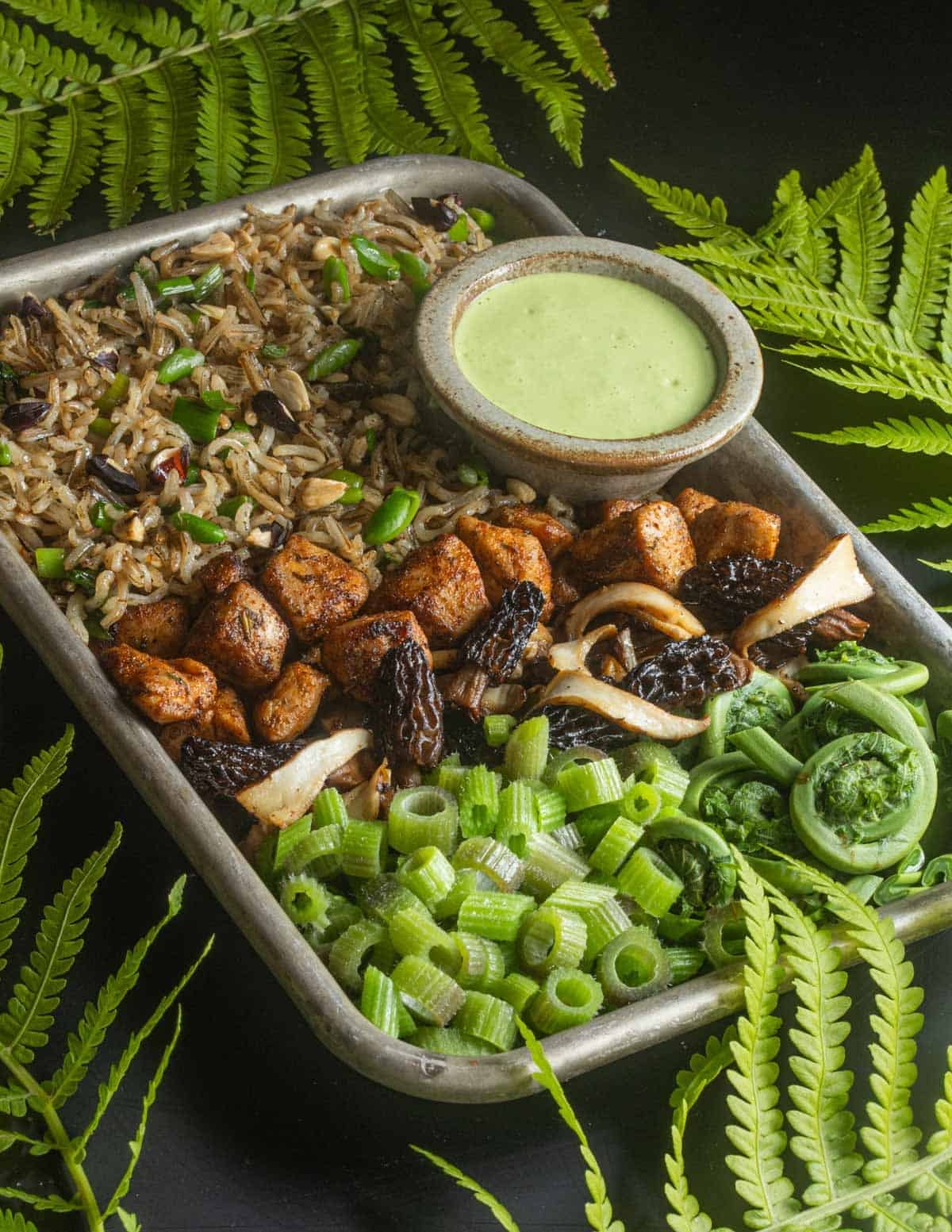
Warmed in a bowl of wild rice or a pilaf they blend into the background, adding a pop of color and texture. Below they're mixed into wild rice with beechnuts. It gets tossed with morels, pheasant backs, fiddleheads and cow parsnip stems, served with the ramp yum yum sauce from my upcoming book Fauna.
Maple Seed Duqqa / Dukkah
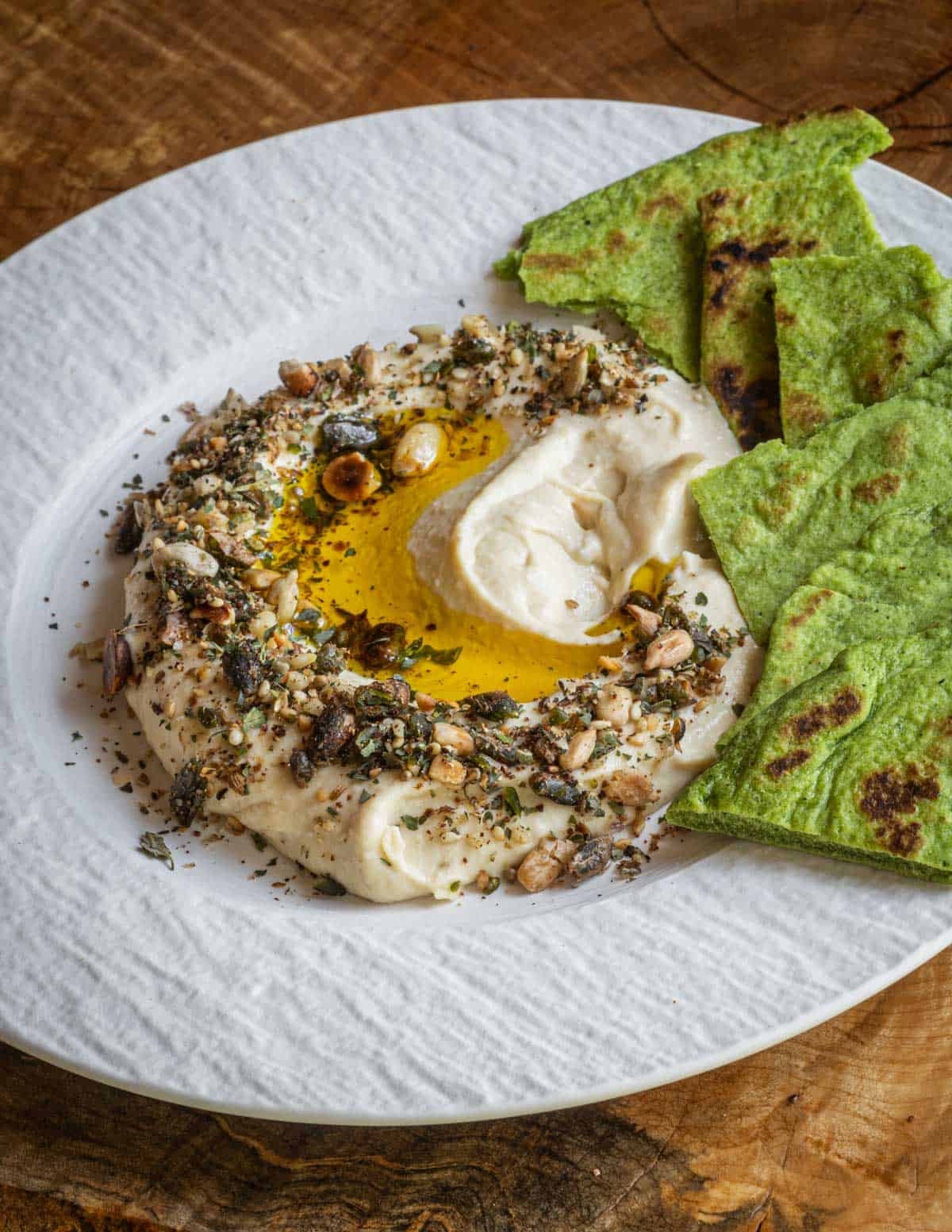
By far the best thing I made with the green maple seeds was a sort of Midwestern Duqqa. It's an aromatic Egyptian spice and nut mixture you can sprinkle on all kinds of food to add a pop of texture and flavor.
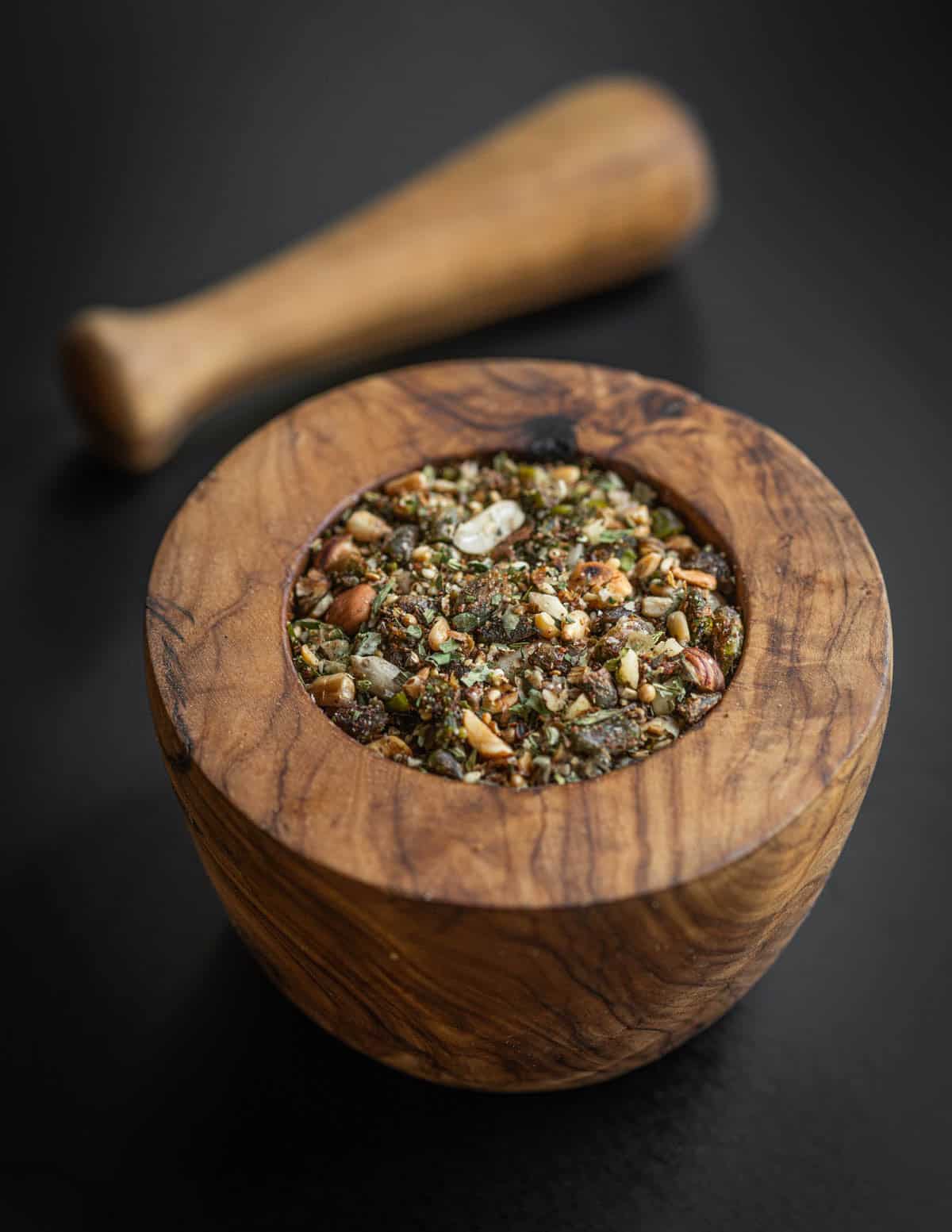
Almonds are traditional, but I used a mostly wild Midwestern blend of black walnuts, wild hazelnuts, sunflower seeds, maple seeds, wild pine nuts from Hank Shaw, and sesame seeds.
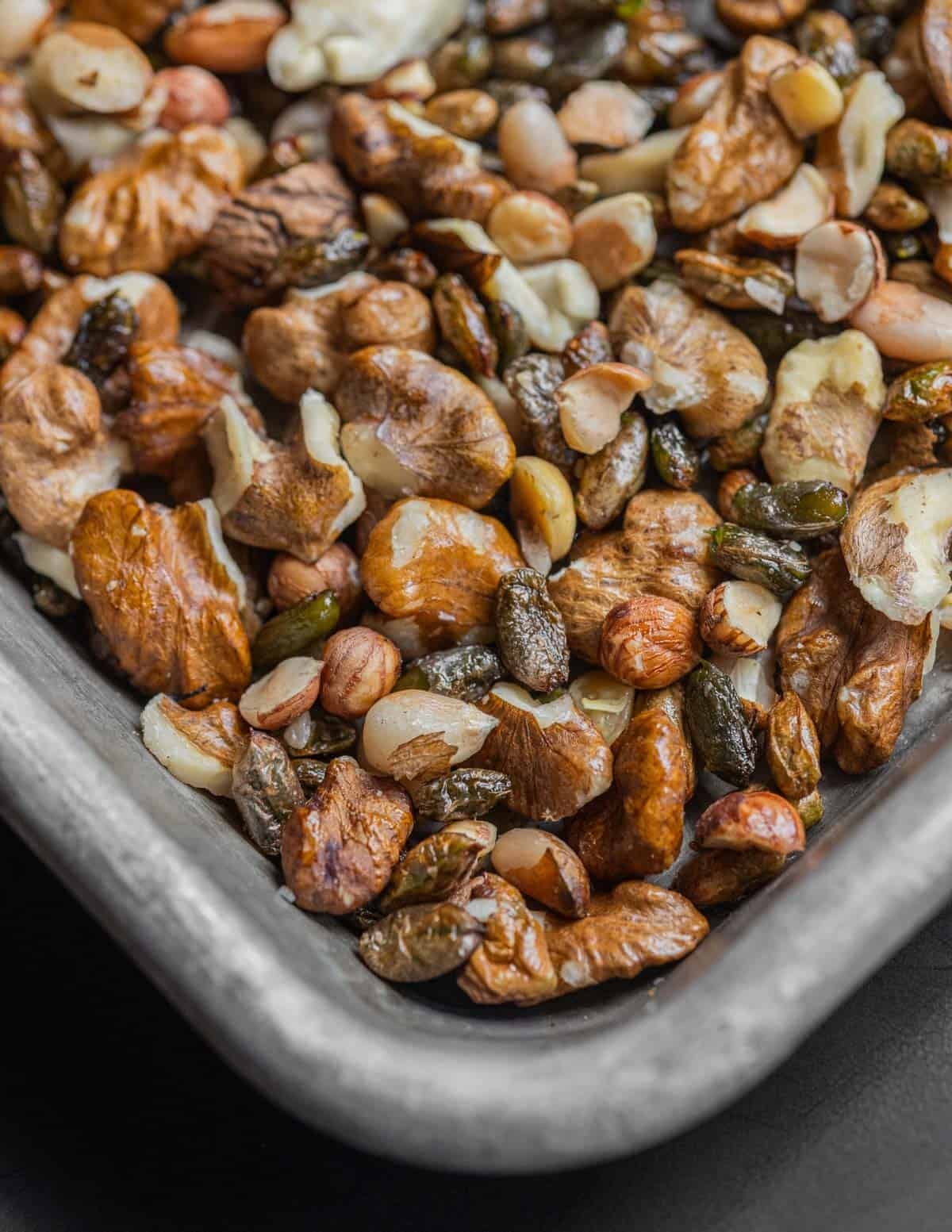
The recipe's very easy. To make a little over half a cup I used the following, but you can mix and match whatever you have.
- ¼ cup green, unripe maple seeds
- 1 Tablespoon sesame seeds
- 1 tablespoon black walnuts
- 1 tablespoon wild hazelnuts
- 1 tablespoon wild pine nuts
- 1 tablespoon sunflower seeds
- 1 tablespoon coriander
- 1 teaspoon wild fennel seed
- 2 tablespoons dried bee balm leaves
- 1 teaspoon sumac
- ⅛th teaspoon kosher salt
Roughly toast the nuts and seeds at 350 F for roughly ten minutes until aromatic, then cool. Gently crush the nuts in the mortar and pestle, leaving some larger pieces for character, and a few whole. Toast the spices separately in a pan, cool and crush coarsely in a mortar and pestle. Combine the nuts and spices in a bowl, add the salt, sumac and bee balm leaves and store in a jar. It was crazy good on hummus with flatbread made from ramp leaves.
Sweet Preparations
Just like pumpkinseeds, maple seeds can be sweet or savory. All by themselves the green seeds can be lightly toasted and glazed with maple syrup which calms the mild bitterness.
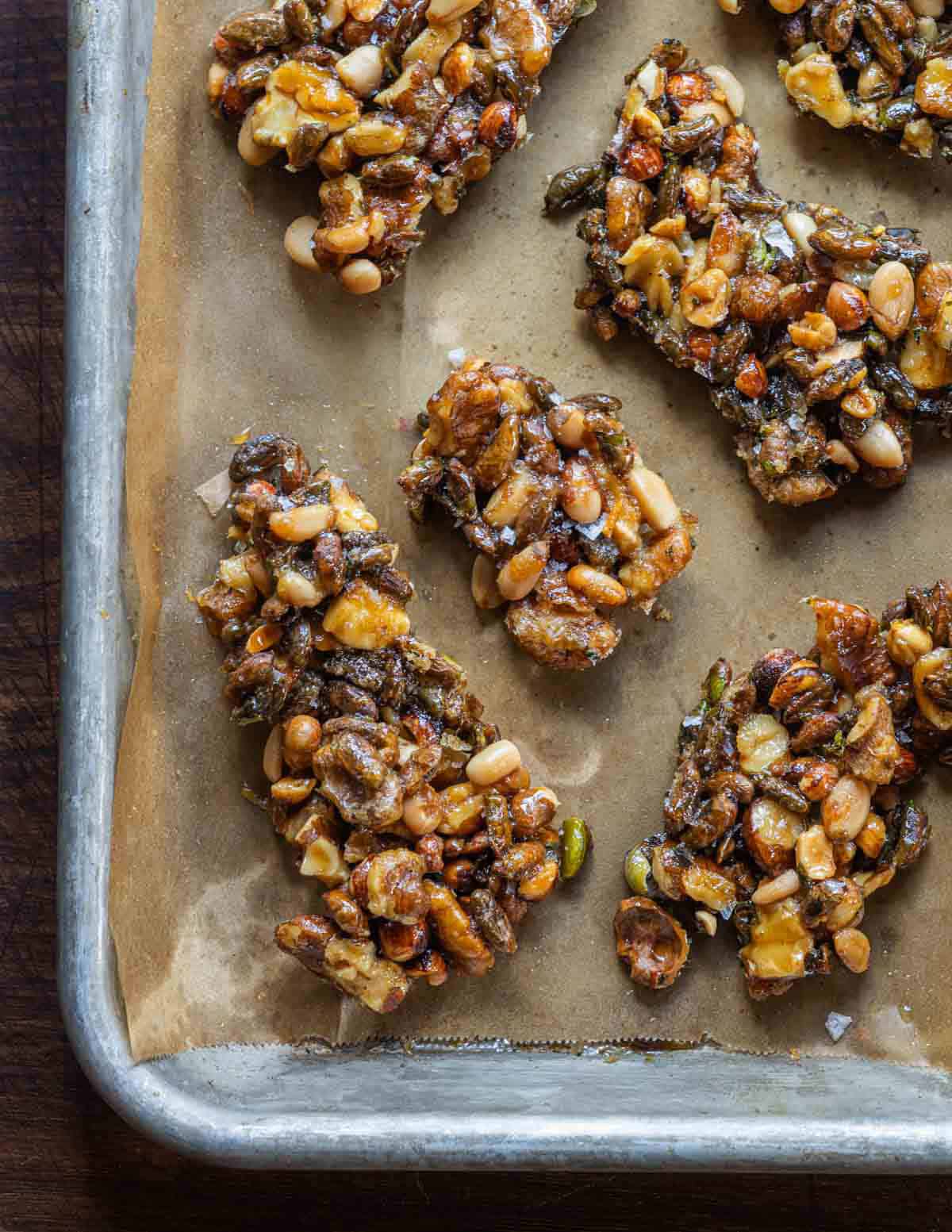
Having cracked a nice blend of wild nuts for the dukkah already, I used them in my maple candied nut recipe and it worked like a charm as you can see above. Bonus points if you can spot the safety hazard I left in the image. it's a reminder of what to avoid when cracking nuts.
Additional Ideas
just about anywhere you'd use pumpkinseeds, you could use maple seeds. Here's a few other suggestions that came to mind.
- Roughly chop the seeds, leaving some whole, and add them to a wild gremolata mixed with grated, finely chopped parsley-like plants, lemon zest, and an herb like bee balm.
- Mix the seeds into stuffings for poultry or similar.
- Add the toasted nuts to a mix of candied nuts, brittle or toffee, stirring them in at the end of cooking.
- Fold blanched green seeds into a savory porridge like congee.
- Use roasted maple and other nuts in a special granola made with wild nuts and seeds like nettle, hemp, sunflower and pumpkin.
Have you eaten maple seeds? I've only covered working with the green, unripe seeds here, but they can also be used dried. If you have anything to add about working with dried maple seeds specifically please leave a comment.
Deborah
Can maple seeds be eaten as sprouts?
Alan Bergo
I would assume so but I haven’t done it personally.
Mike M
Haven't tried eating them but I would imagine the best seeds come the the best trees for maple syrup. I'm guessing they will be sweeter just like the sap sugar content.
My adventure for today is to collect some from my hard maple and try to sprout them before eating. I don't remember you mentioning any kind of seed you gather and sprout before eating. Some lids with a mesh for mason jars are out there on that www highway. Rinse twice a day and right before you see the tiny little leaves, they should be ready. They might even be more gentle on the stomach like bean sprouts. I would still cook or toast lightly.
Alan Bergo
Thanks Mike.
Hank Lengfellner
You piece uses "green" seeds, wonder why?
Can ripe.seeds picked up from the ground?
Alan Bergo
Sure, as long as they're still green inside. People have also cooked with dried seeds but I don't have any experience with those personally.
Sheri L Putnam - Cline
That's awesome! I love your inspirations for using them. Can't wait to gather some and try them in my sprouted seed & bean bread making. Once they are sprouted & soft I run it all through my Champion juicer and make it into a pulp to add to my bread doughs. Thank you!
Christopher
When you mention dried seeds, do you know if that means juvenile seeds put into the dehydrator or mature end-of-season seeds collected as they fall?
Alan Bergo
Could be either I'd assume.
Terry Allaway
Alas, our Big Leaf Maples of the Pacific NW are covered with fine tiny spines over the seed part of the samara. I have many childhood memories of trying to rub them out of feet and hands in the bathtub. Regardless, we still peeled and stuck them to our noses and played in the grass below. As always, another enjoyable read!
Katie Goin
I tried them raw. Big mistake! My stomach was not happy. So roasting/ boiling is the trick ? I will try again !
Alan Bergo
Thanks Katie
Kay
I loved to munch on Maple seeds as a child, gathered from right underneath the trees. Pine nuts were another treat from my walks. Wild hazel nuts are more work for less yield. Plums from street trees are still a favorite! I love reading your friendly suggestions!
Coop
I knew they were safe to eat and nutritious, but I was never able to get past the bitter taste and considered them "famine food". I taste bitter flavors very strongly, apparently more so than my friends and family, and can't stand them. From the notes here, I should try seeds from young trees, and from a wider variety of trees. Given that Norway maple is very invasive here, there are many young saplings available to check out and maybe I'll find something that I find palatable. Good information!
Tana
Hi Alan, if you search in German you will find hundreds of websites with historical information and recipes using Maple keys and seeds. The ternimology for your search would be "Ahornfrucht" or "Ahornfruechte" (the plural) or "Ahornfluegelnuesse" (maple key nuts), "Ahornsamen" (maple seeds) and then "Rezepte" or "essen"
Utopia.de explains that the keys from older trees contain more bitter compounds, so collecting seeds from younger trees is recommended. https://utopia.de/ratgeber/ahornfrucht-fluegelnuesse-ernten-und-essen_755926/
Interestingly enough, even the Federal Center for Nutrition, a government site has a page on all of the uses for maple blossoms and fruit, including making false capers. https://www.bzfe.de/presse/pressemeldungen-archiv-2024-und-frueher/ahorn-essbares-vom-baum
I have recently been exploring something called "Streckmehl" (stretch flour) or Baummehl (tree flour) - for which the leaves of linden trees, oaks and also maple leaves and the cambium of the bark was also used. The cambium or leaves were dried and ground to make a flour for "stretching" regular bread flour in times of scarcity - now rediscovered for using to introduce colour or interesting tastes to breads and pastries....
Alan Bergo
Thank you so much!! I’ll dig in tonight.
Tribal
Unique green spring food! Thanks for realizing these wild vegetables in modern cuisine once more, your work is good.
Surely mature, tannic nuts could be leeched and prepared like acorns, the flavor was reminiscent. Surely they're higher in protein and nut reminiscent oils when ripe, perhaps a respectable tree grain-nut. Conceptually like mesquite.
Do you have thoughts on maple leaves? (Yes, they chew like laminated paper, but still.)
P.S: Recently reminded of / tried soaking in-shell walnuts. Even 7 month cured nuts soaked 12 hours hydrated the nutmeat enough that more quarters survived cracking--without that imbued moisture causing loss of the flavor achieved from curing. (Also didn't fill in the shell, expansion aptitude lessens with how long it was dry.) Even if a slight re-curing is needed, more "nutmeats back on the menu" might justify these low-labor movements.
Alan Bergo
The only thing I can speak to here is maple leaves. I know young spring leaves are cured in salt for a year, rinsed and then deep fried in China. Haven’t tried it personally.
Linda
You've only mentioned silver Maple but is it the same for all, such as Japanese Maple? Love all the foraging information. Thanks
Alan Bergo
All Acer species will make edible seeds but the quality and bitterness will vary.
Bryan Rakovec
I left one of those "safety hazards" in the mix when I made your black walnut cookies. Almost broke a tooth. Those cookies were excellent by the way and my turkey hunting friends loved them. Look forward to trying some maple seeds.
Alan Bergo
Thanks for commenting Bryan.
Jerry Brown
I never thought of these as a food source. Thanks!
Alan Bergo
Thanks Jerry,