
If you spicy sauces and fermentation, you're going to love this fermented maple hot sauce recipe. It can be hot or mild depending on the peppers you use and comes together with just a few ingredients. Easy to make and cheap, the most expensive ingredient is the time it takes to ferment the peppers. Read on and I'll explain two different ways you can make it.
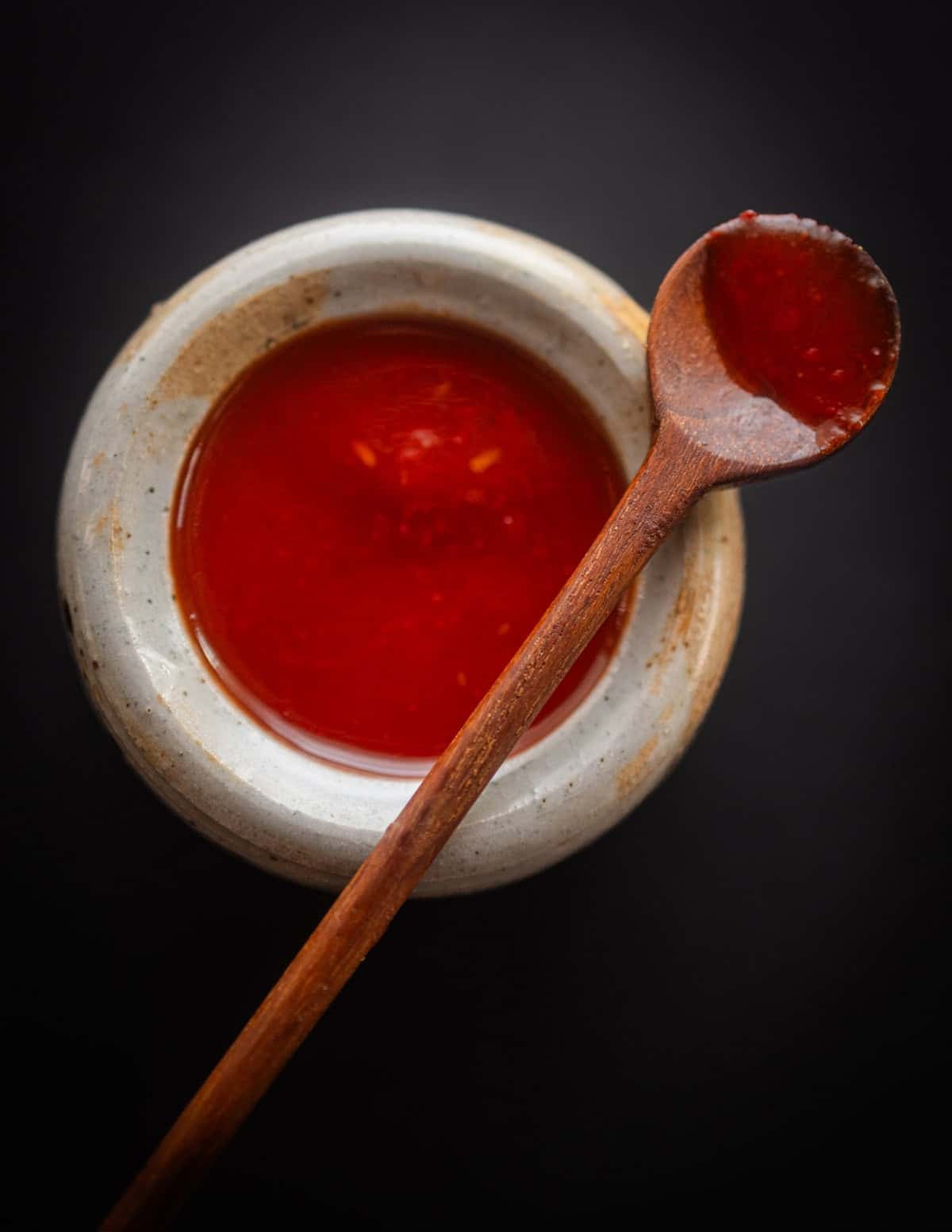
Originally I called this maple sriracha and that's how it will be labeled in my next book. At the end of the day it's just a simple hot sauce made from fermented red fresno peppers and maple syrup. Many grocers carry Fresno peppers, but they can also be special ordered.
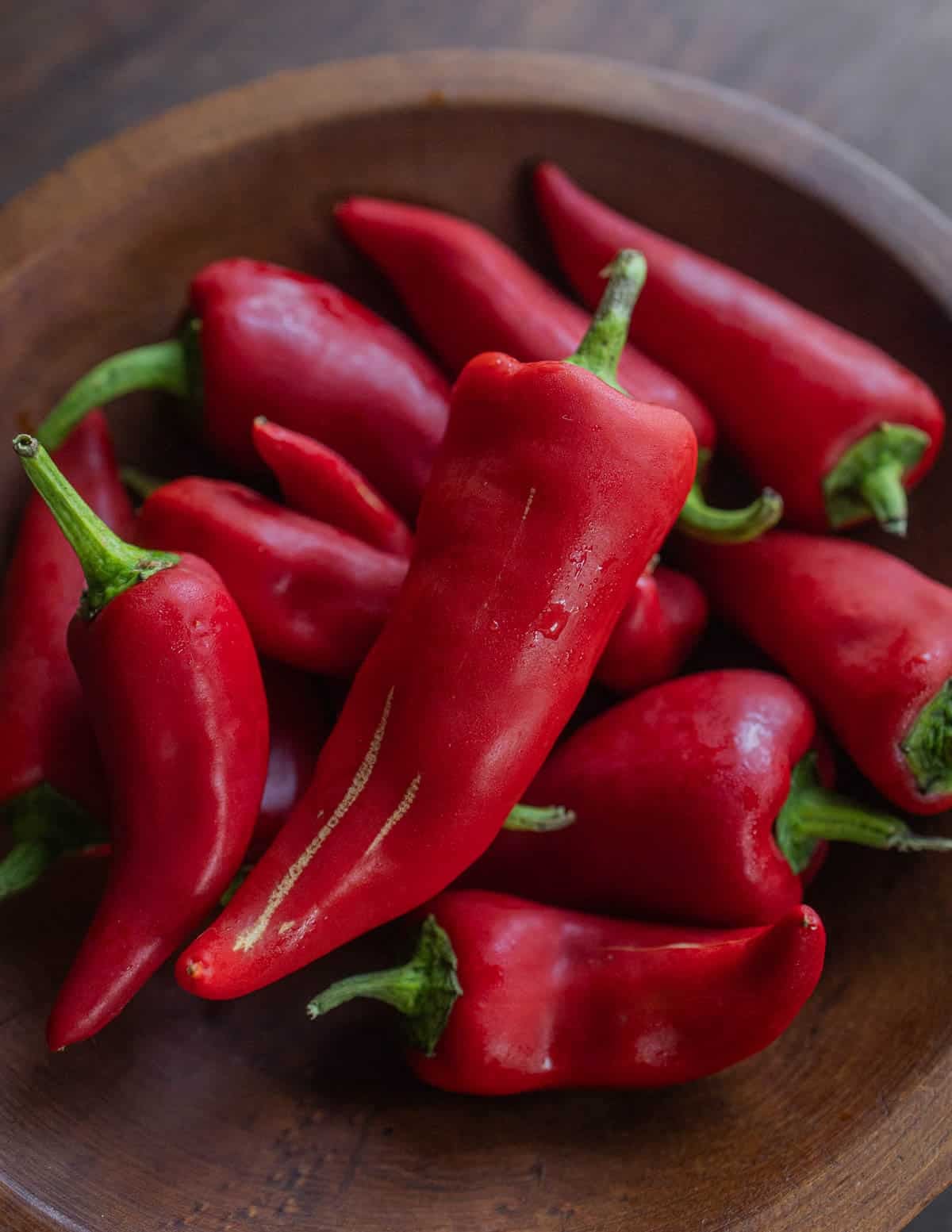
The maple syrup is the key ingredient here, and the combination of sweet and hot, with just a pinch of cumin, is a match made in heaven.
How to Make it
There's a few different ways to do this. My preference is vacuum sealing the peppers with salt for ease, but I know some people prefer fermenting in glass so I'm going to cover both methods. Either way is fine.
Grinding the peppers in a food processor saves space for large batches and encourages fermentation, while vacuum sealing is fast and easy. Both methods are shown below.
Whichever method you choose, the first step is to trim and seed the peppers. I go out of my way to source red Fresno peppers for their dependability and consistent flavor, but you can make a similar sauce from any hot pepper. Red jalapenos or cayenne peppers are another option.
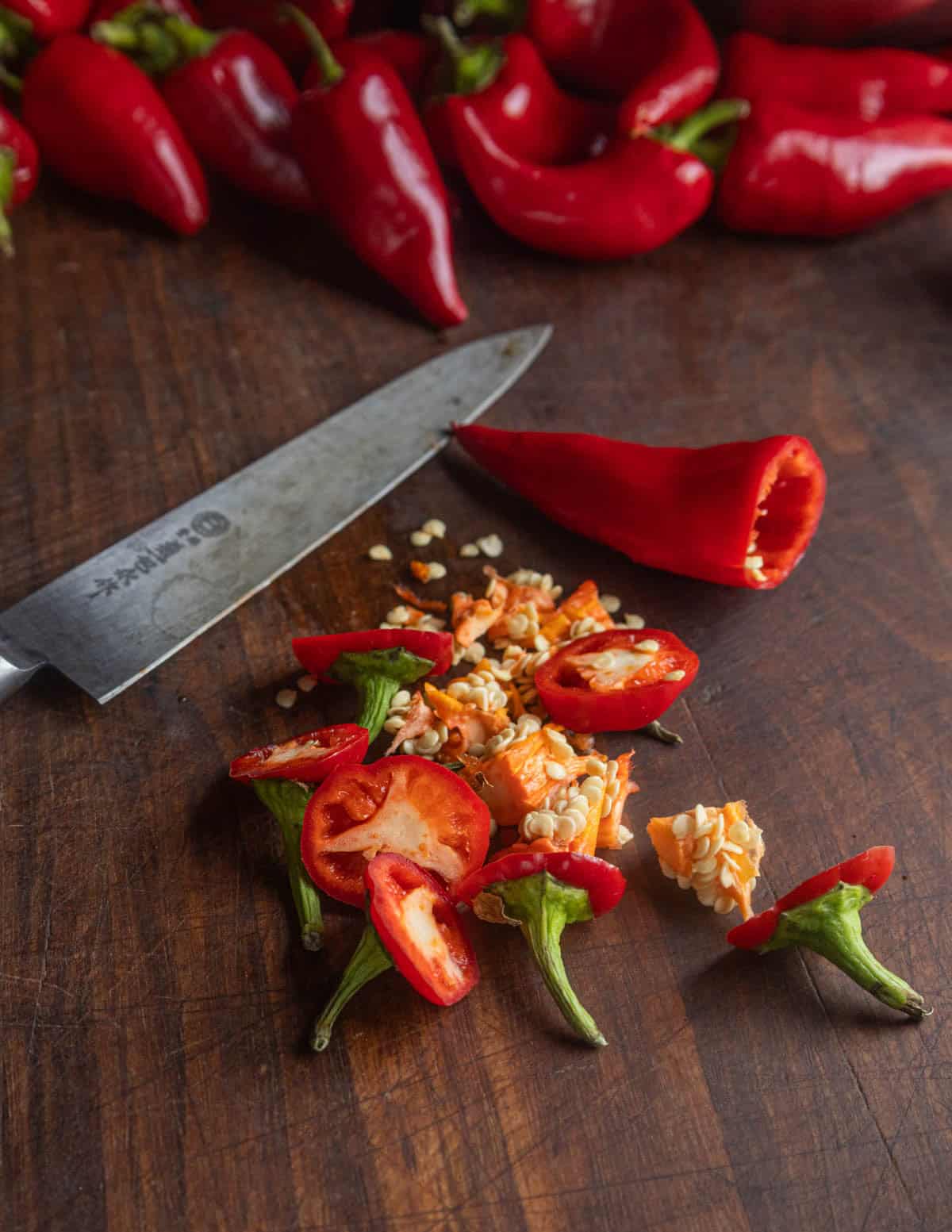
Many recipes don't remove the seeds. I like to remove most, but not all of them for textural reasons but there's some personal preference here. One thing to consider is that including all the seeds will increase the heat level. That said, the sauce is still plenty spicy made from seeded peppers.
Option 1: Salted and Vacuum Sealed
The first method is my favorite. Take the trimmed, seeded peppers and weigh them in grams, then add 1% of their weight in kosher salt. One percent salt is pretty standard here, but you can add up to 2%, just keep in mind it will ferment slower the more salt you add.
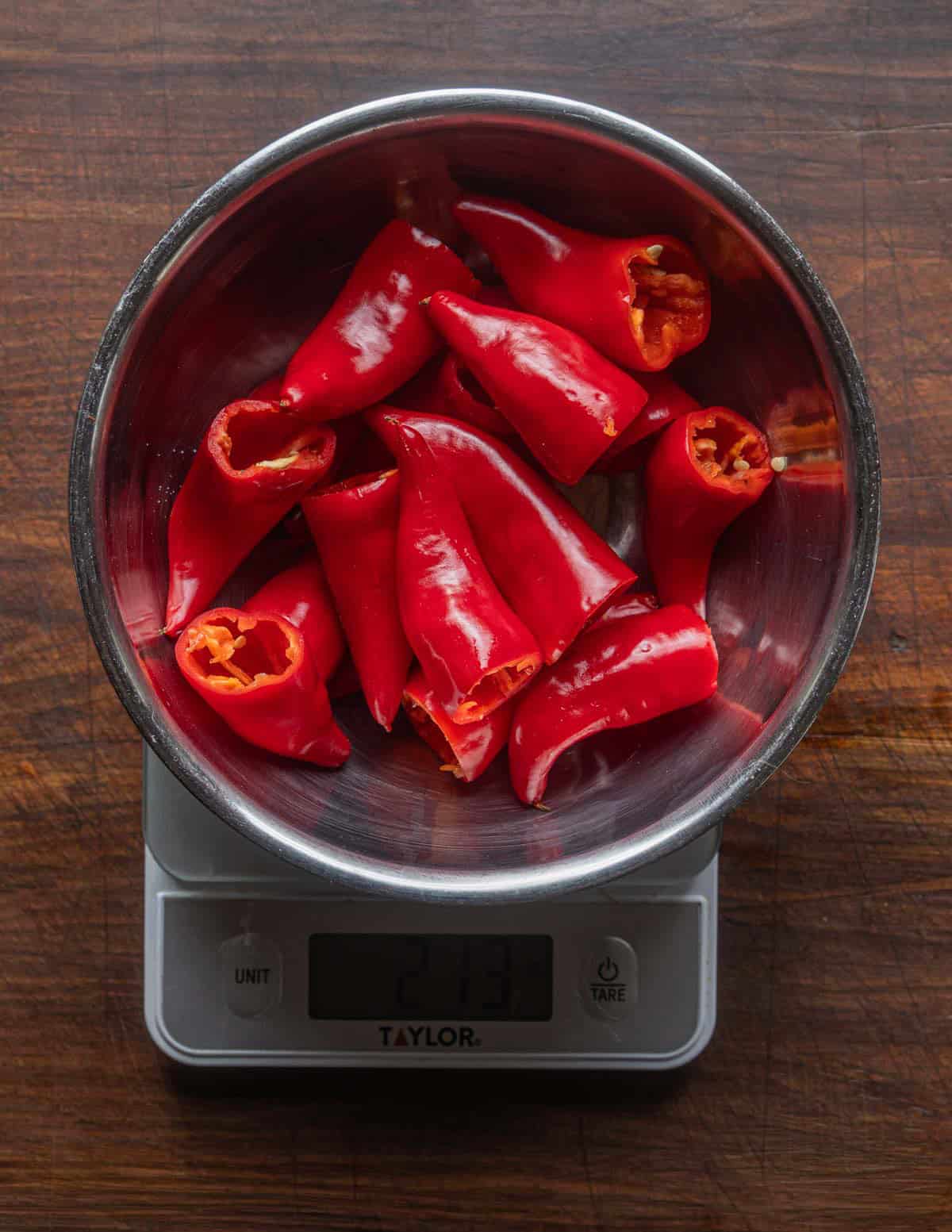
Mix the peppers with a couple sliced garlic cloves, salt and vacuum seal. Allow the peppers to ferment at room temperature for two weeks. Sidenote: I've also done this with sliced, frozen ramp bulbs instead of garlic.
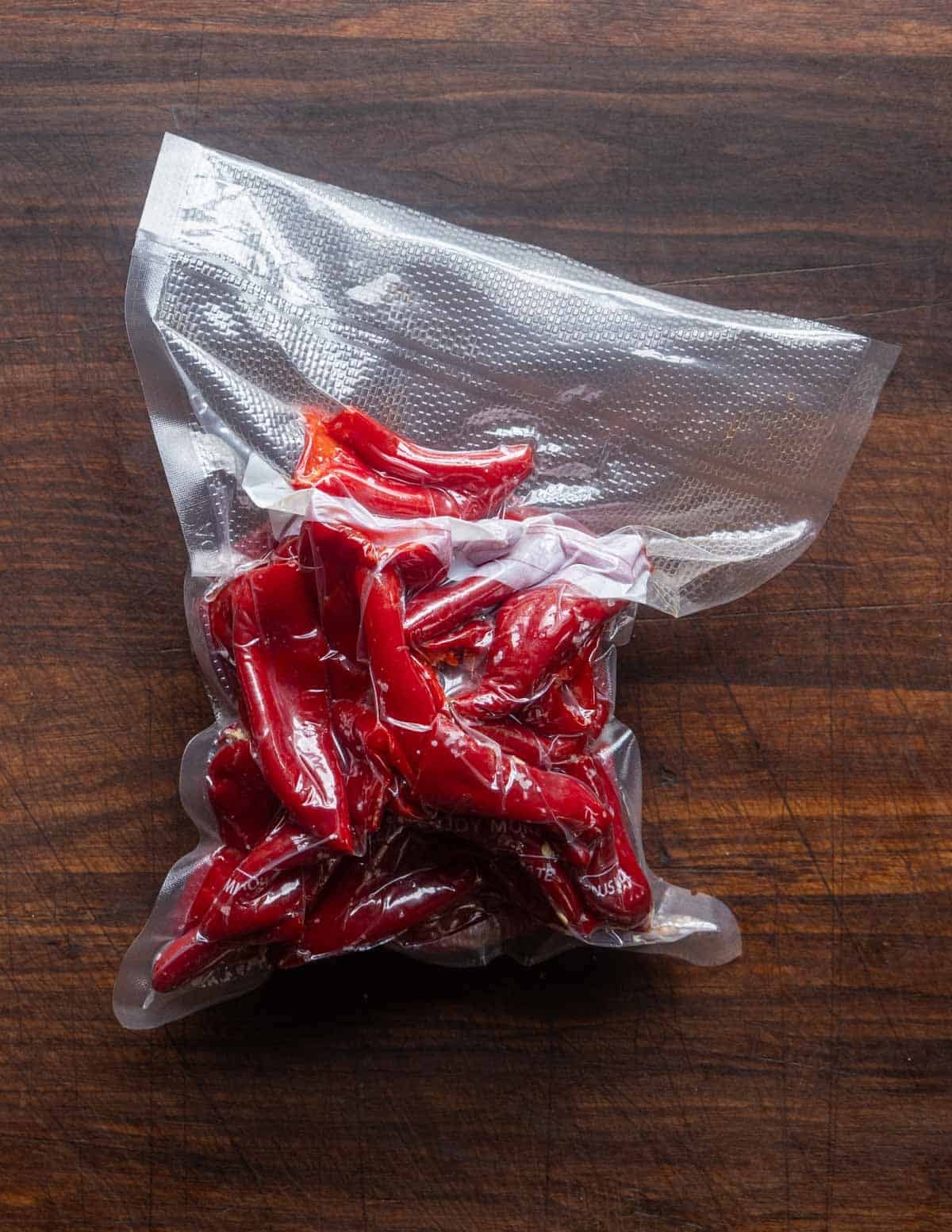
As the peppers ferment the lactobacillus bacteria will create carbon dioxide, causing the bag to inflate. This lets you know the fermentation is active. I've had a 100% success rate using this method.
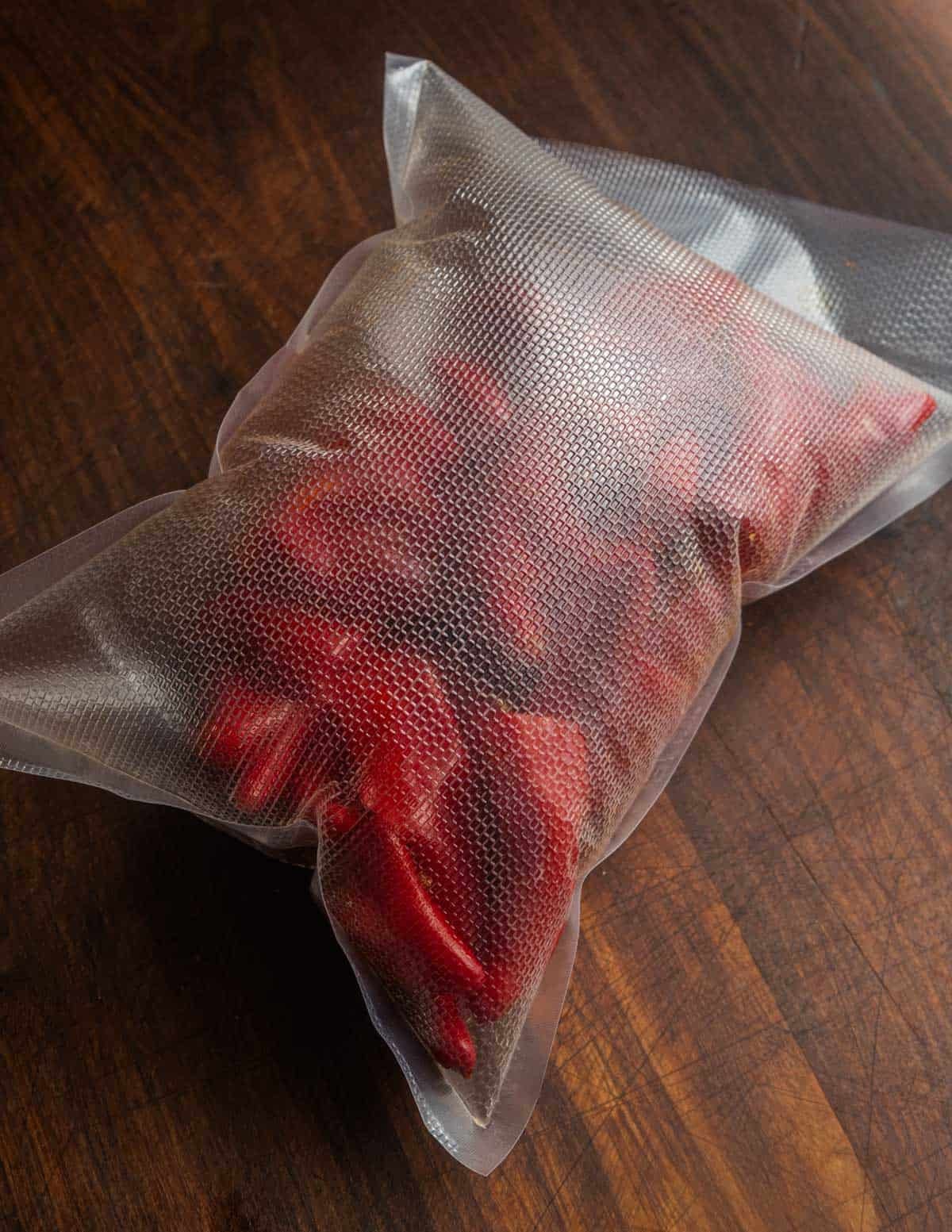
Option 2: Traditional Pepper Mash
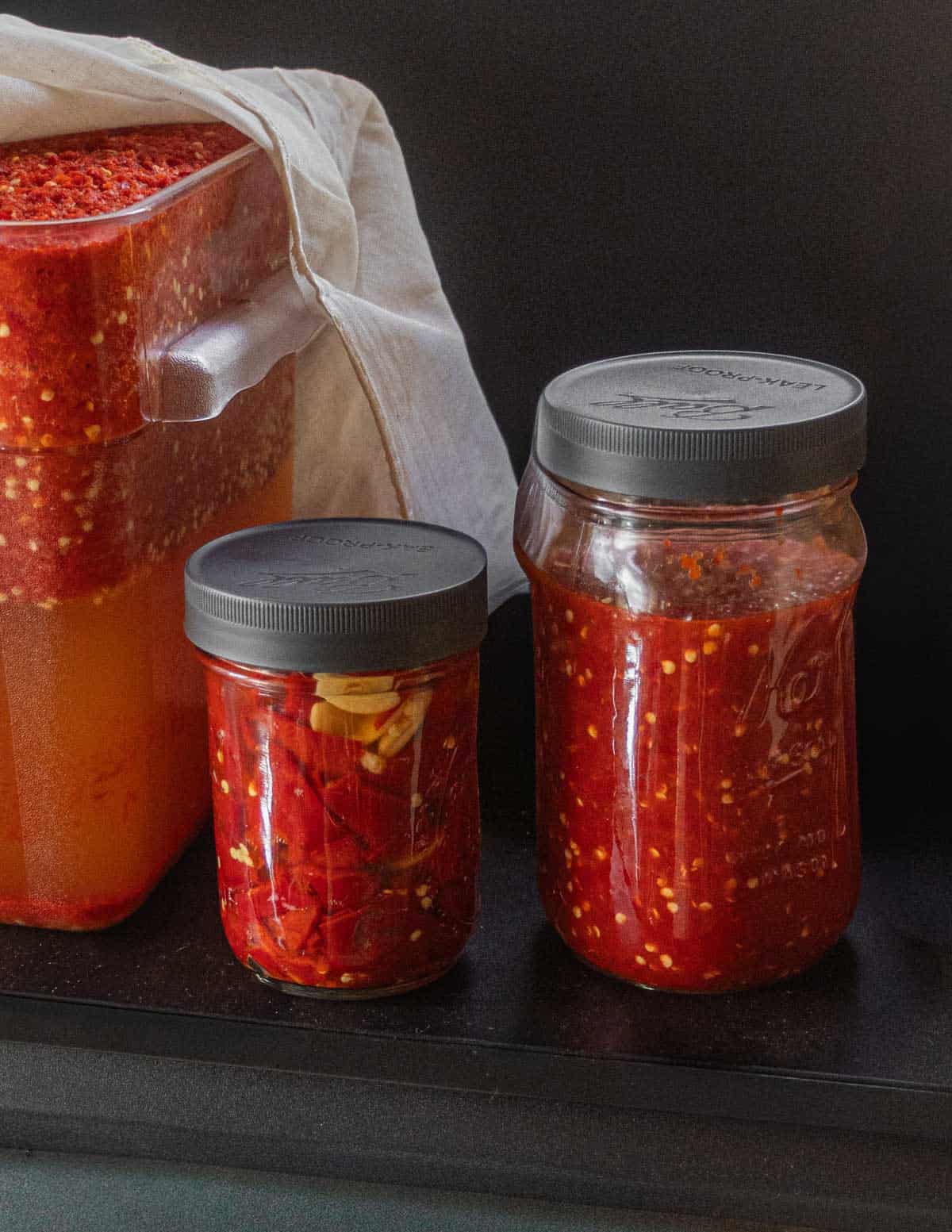
For a more traditional fermentation, you can grind the peppers in a food processor, mix with salt and a splash of water to keep them covered with liquid, then ferment in a clean glass jar.
Using the same weight of peppers, put them in a food processor with the garlic and blend until everything's finely chopped.
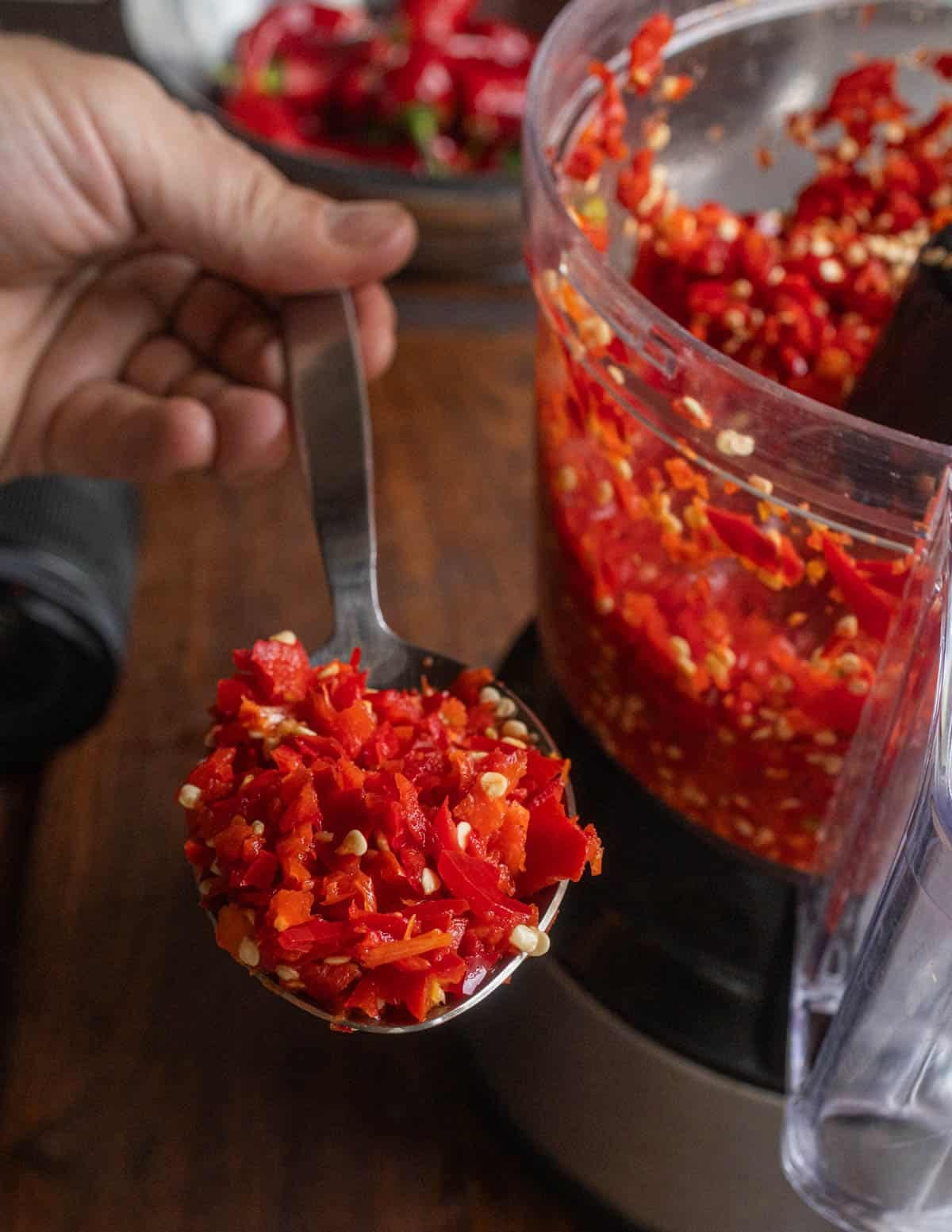
Put the pepper mash in a jar, adding the water, salt, and stirring to combine.
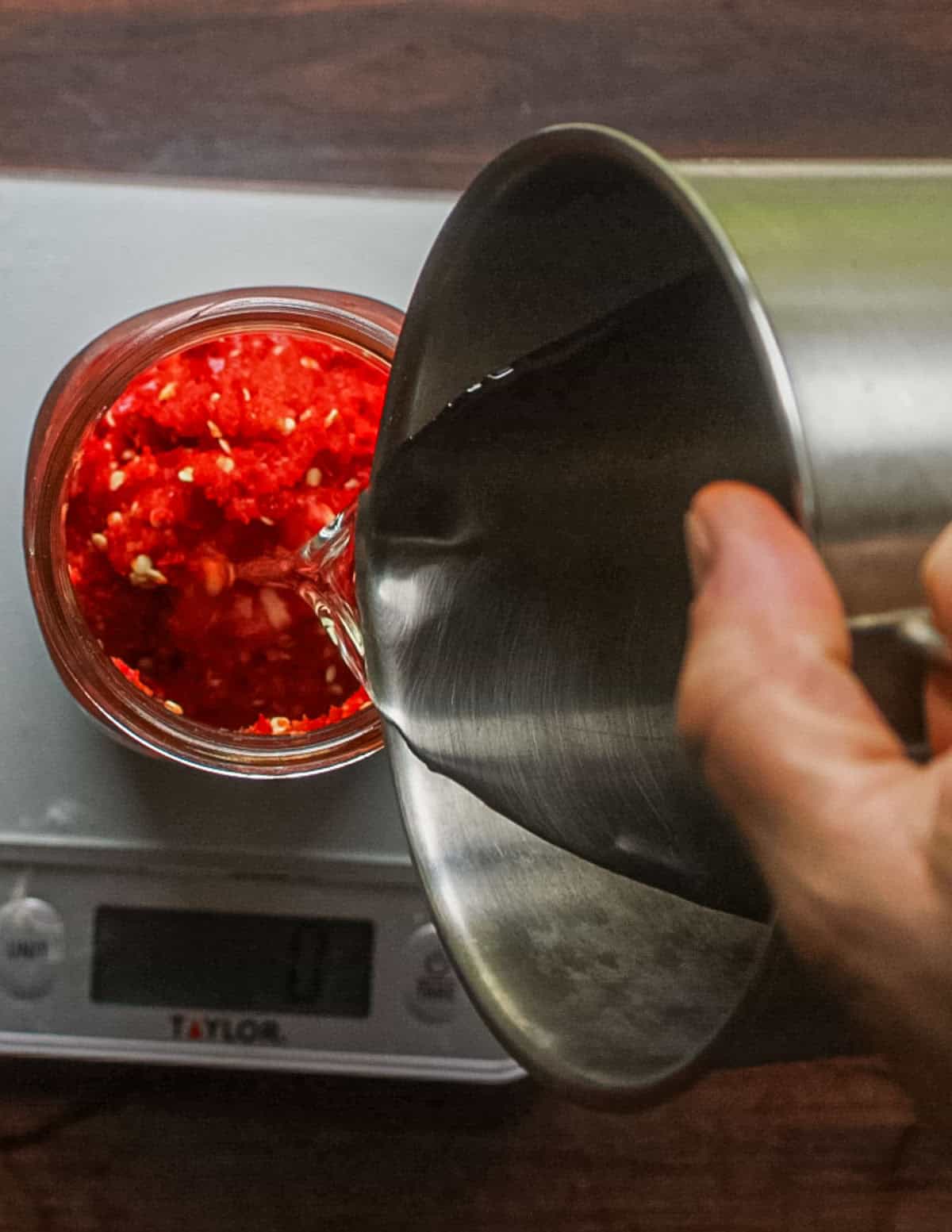
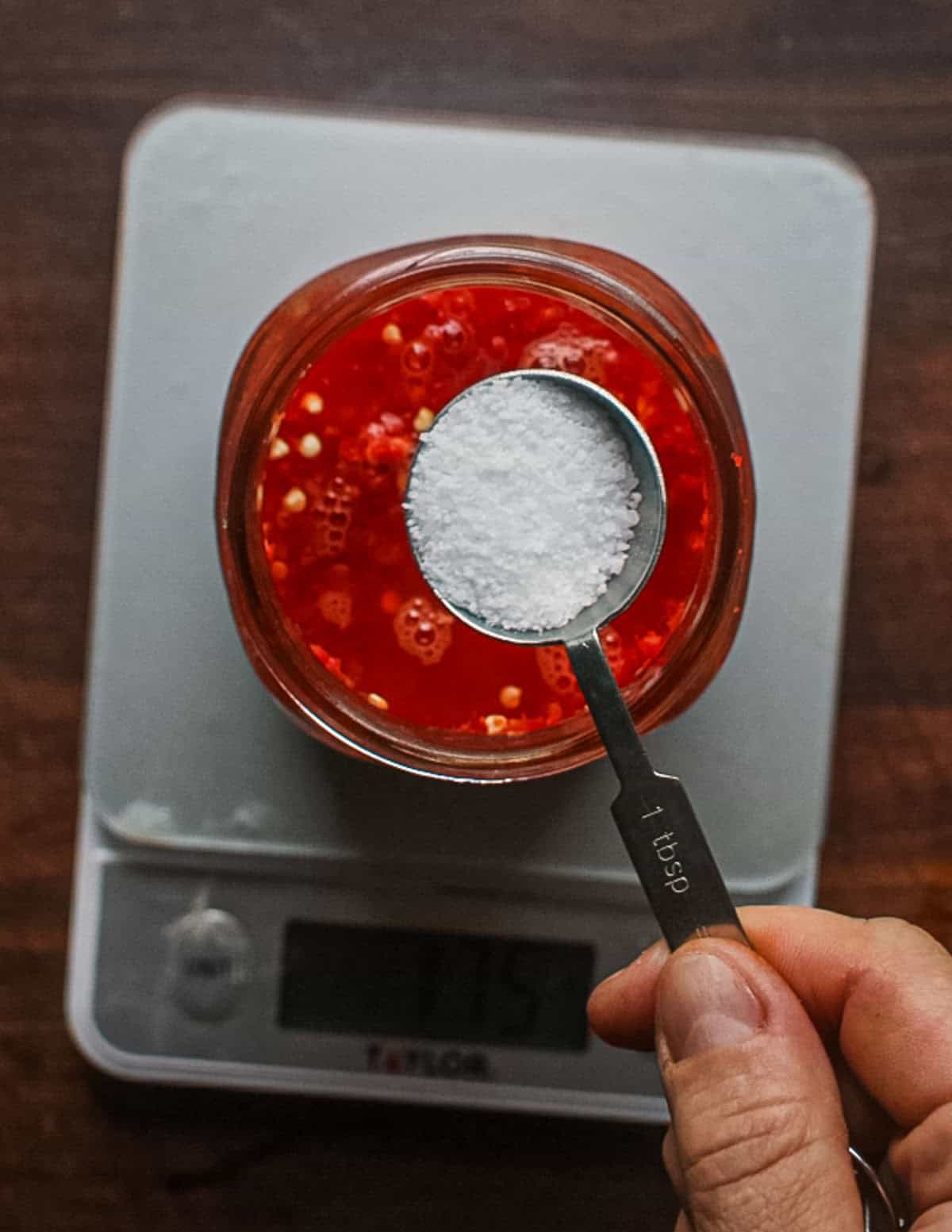
Put a lid on the jar and allow to ferment at room temperature. It's important to note that as water from the recipe is added during the fermentation for the jar method, it should be omitted during the final cooking.
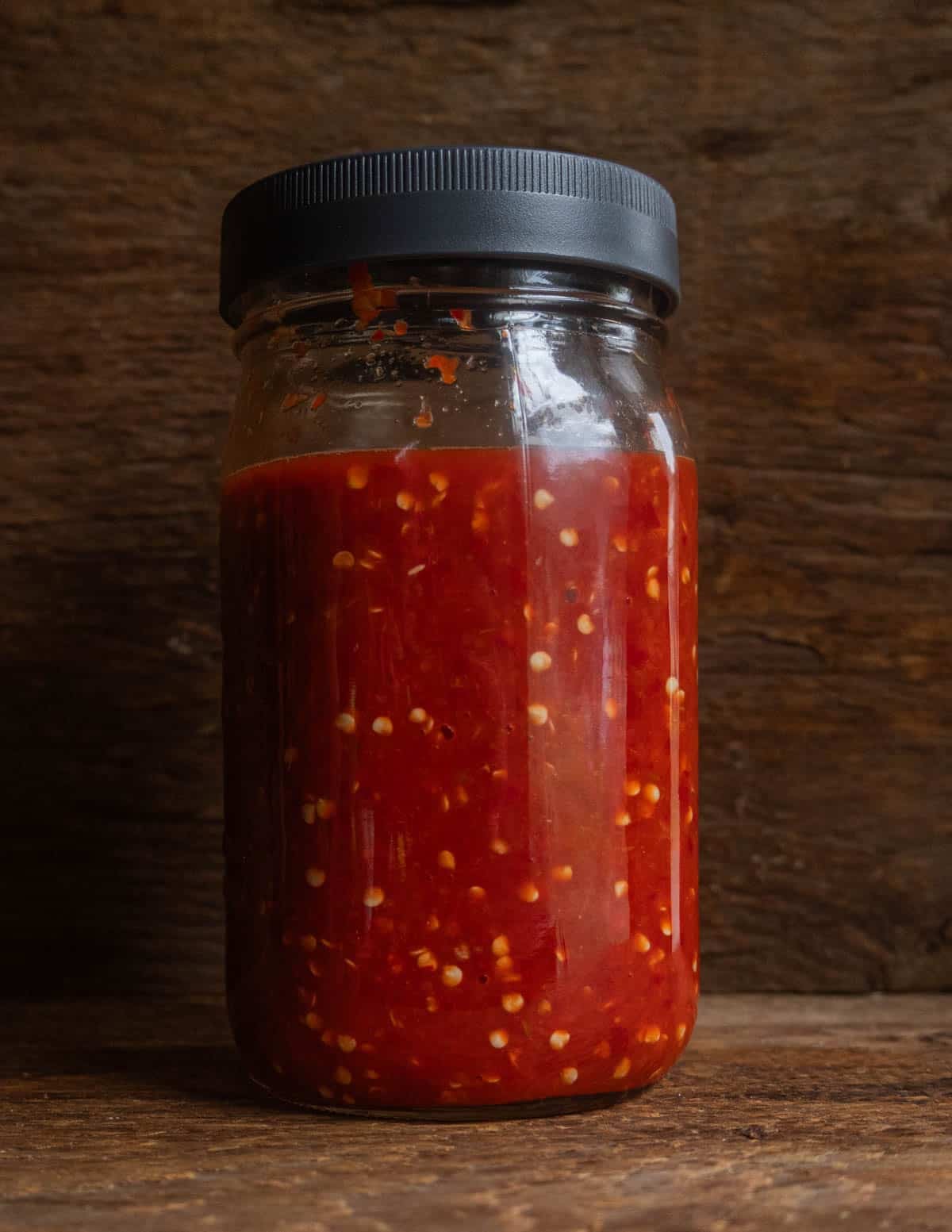
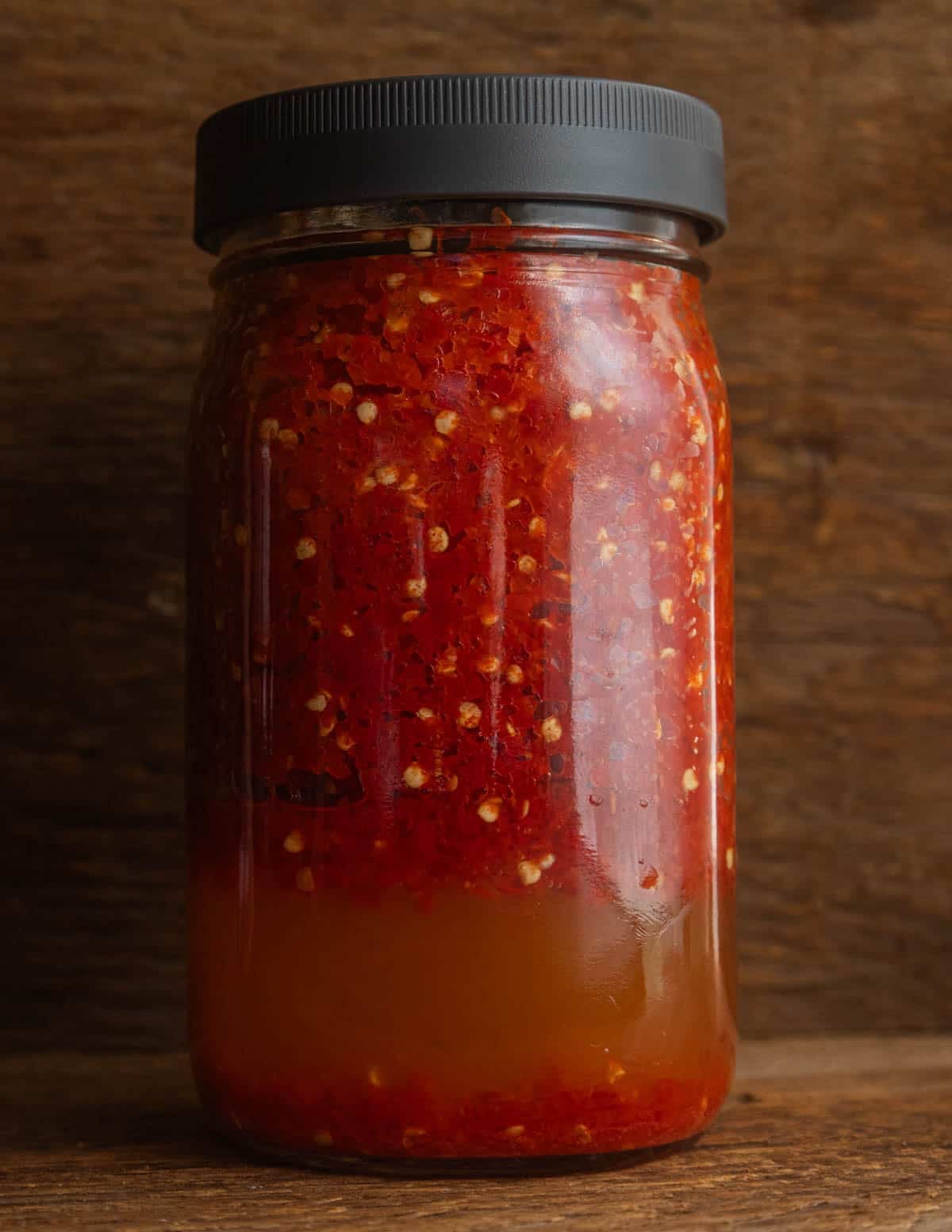
Cooking and Processing the Sauce
After two weeks of fermentation the sauce is ready to process, bottle and store. Empty the contents of the jar or bag into a small, non-reactive pot. Add the maple syrup, cumin, water, and vinegar.
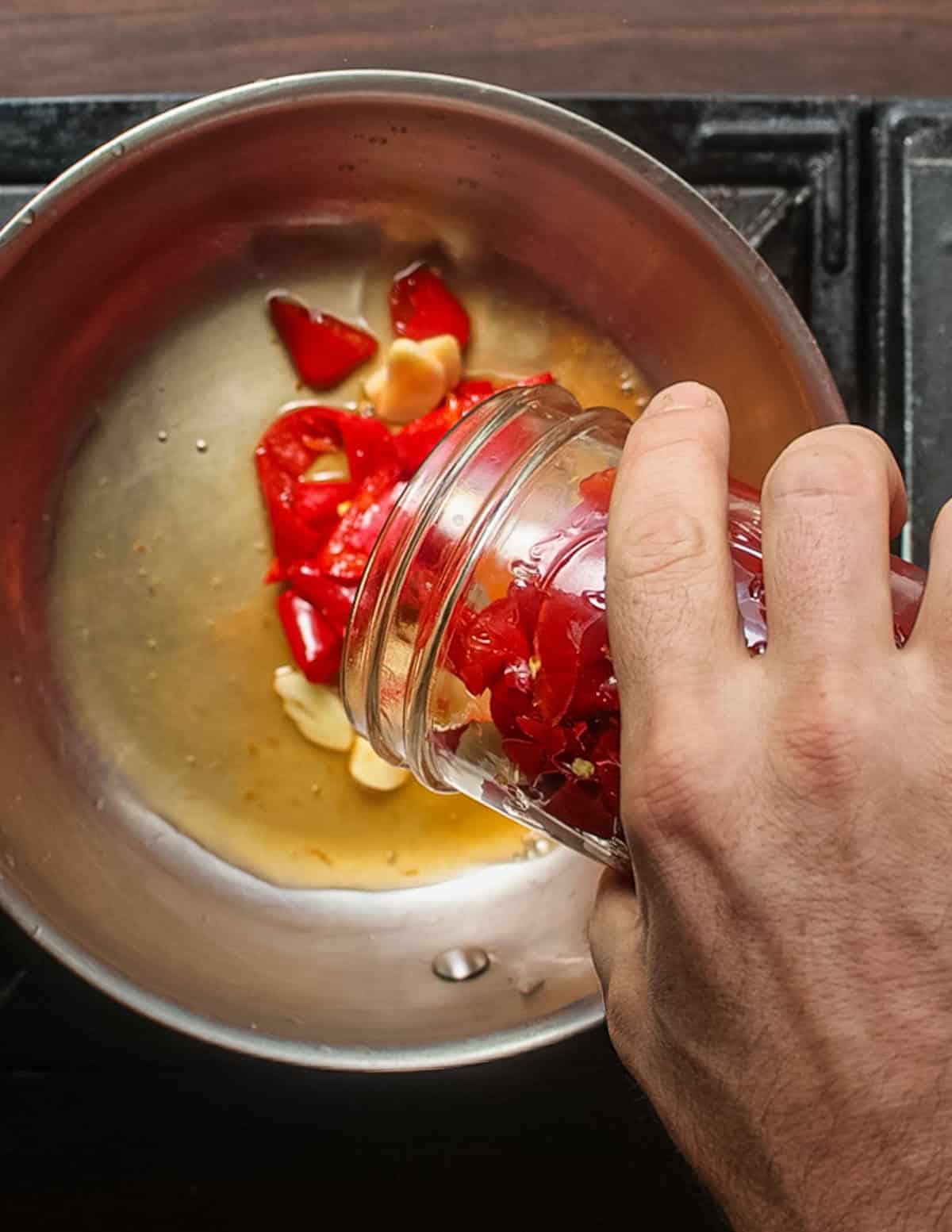
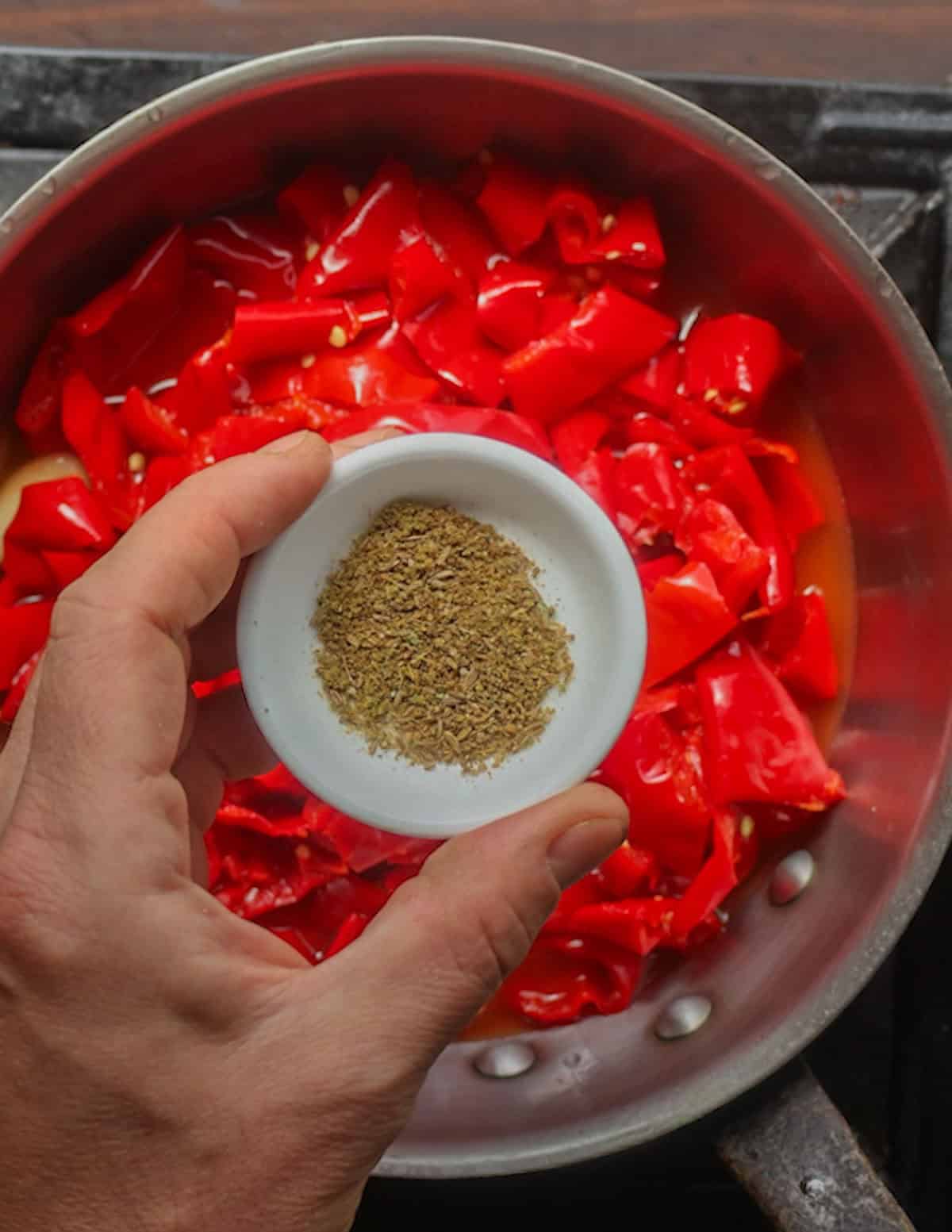
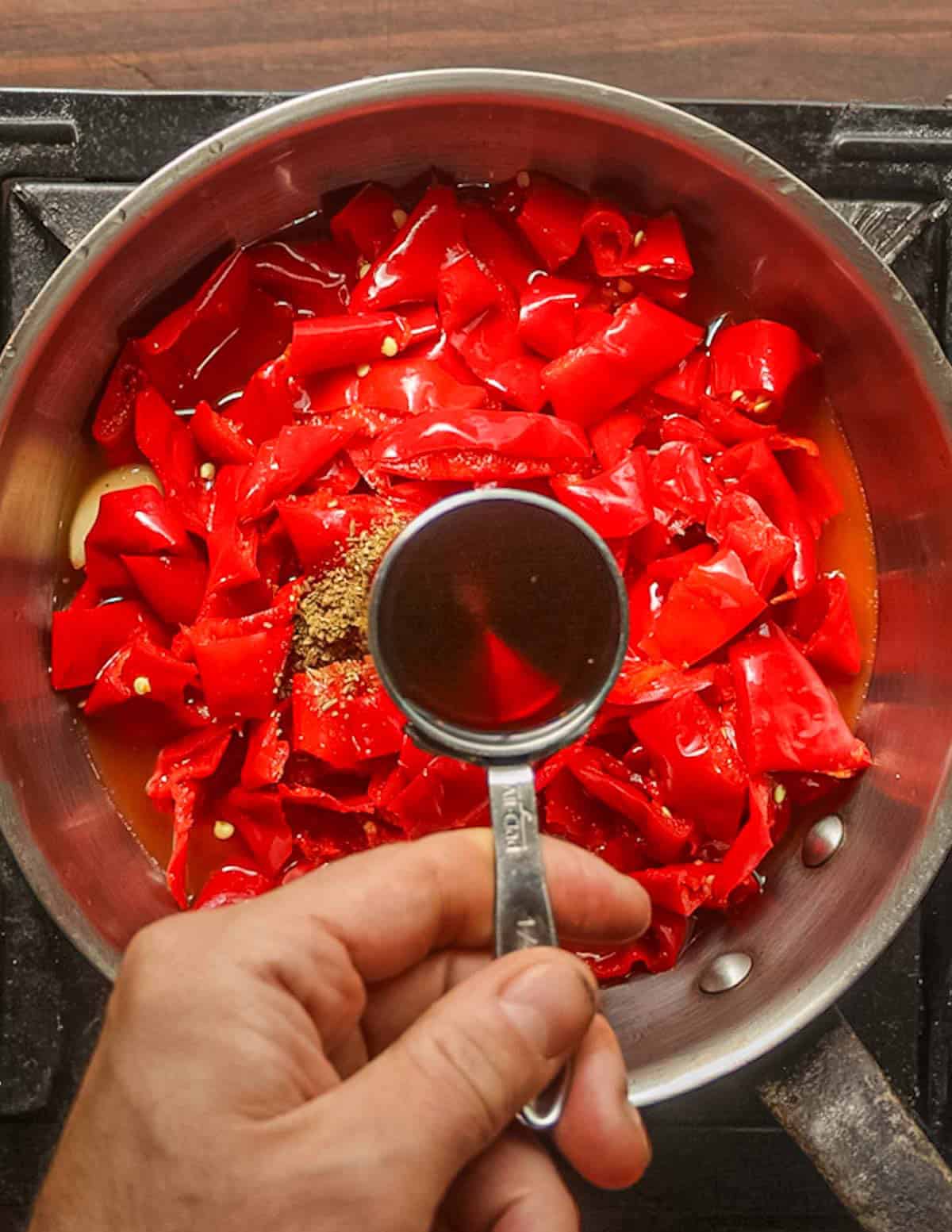
Bring the mixture to a boil and cook for sixty seconds, there's no need to reduce the liquid, all you need to do is soften the peppers.
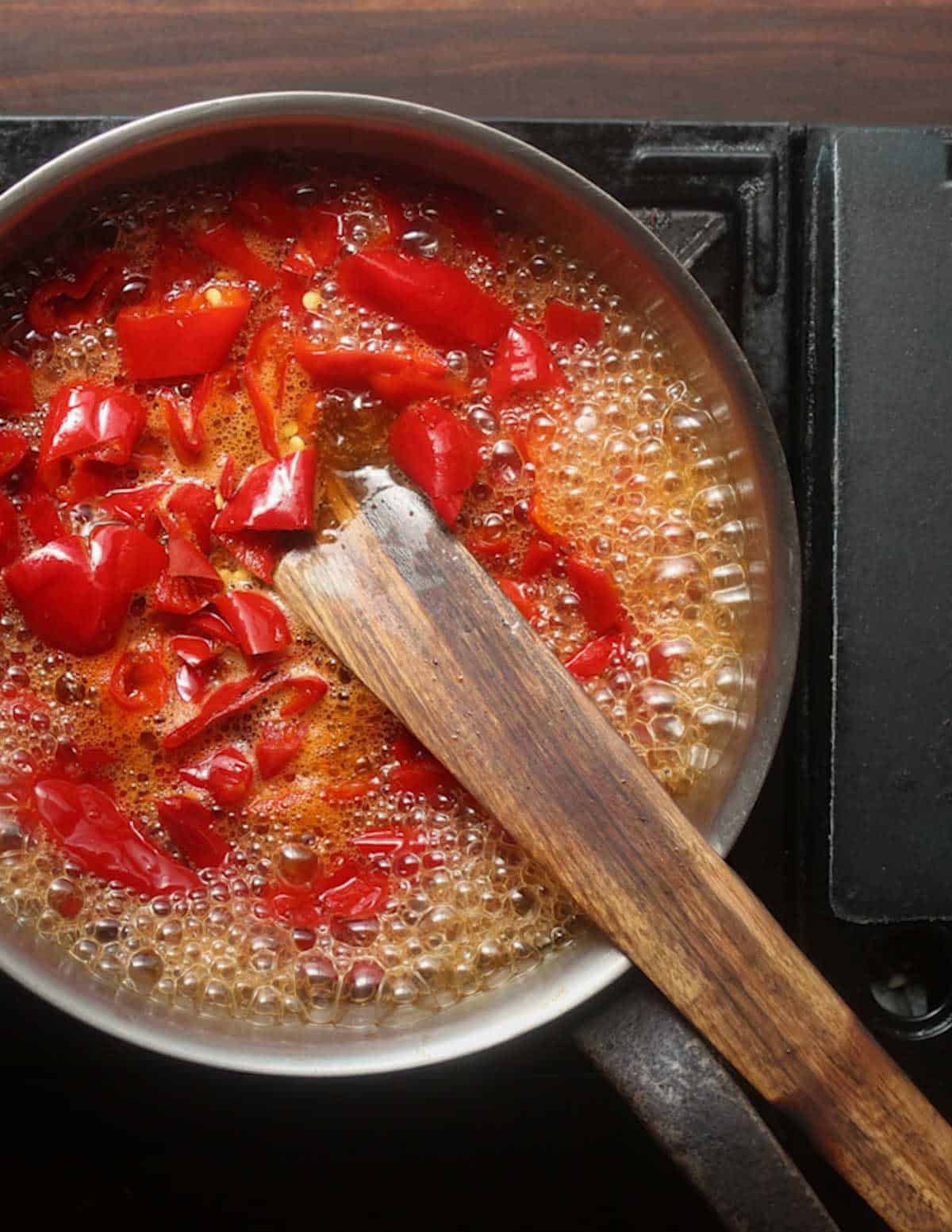
Once the mixture's cooked for a minute or so it's done. Pour the contents into a blender, then carefully puree until nearly smooth.
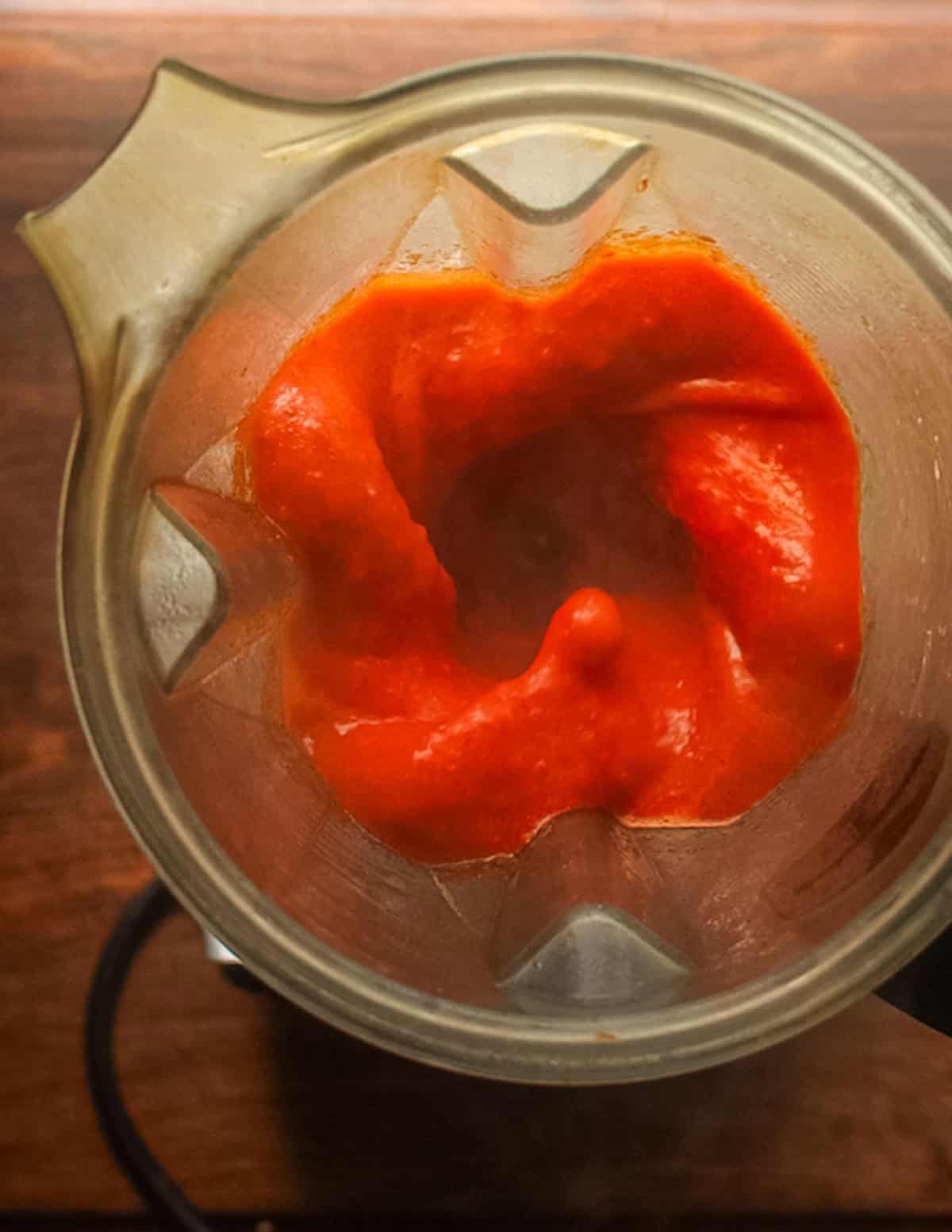
Safety note: pureeing hot liquids in a blender is dangerous if there's no way for the pressure to escape. Make sure there's a way for air to release through the lid while pureeing before turning on the blender. Most blenders are designed with a hole in the lid for this purpose.
Finally, taste the sauce and adjust the seasoning. This is a lightly salted sauce, but I will usually add about ½ teaspoon of extra salt to taste after it's been pureed.
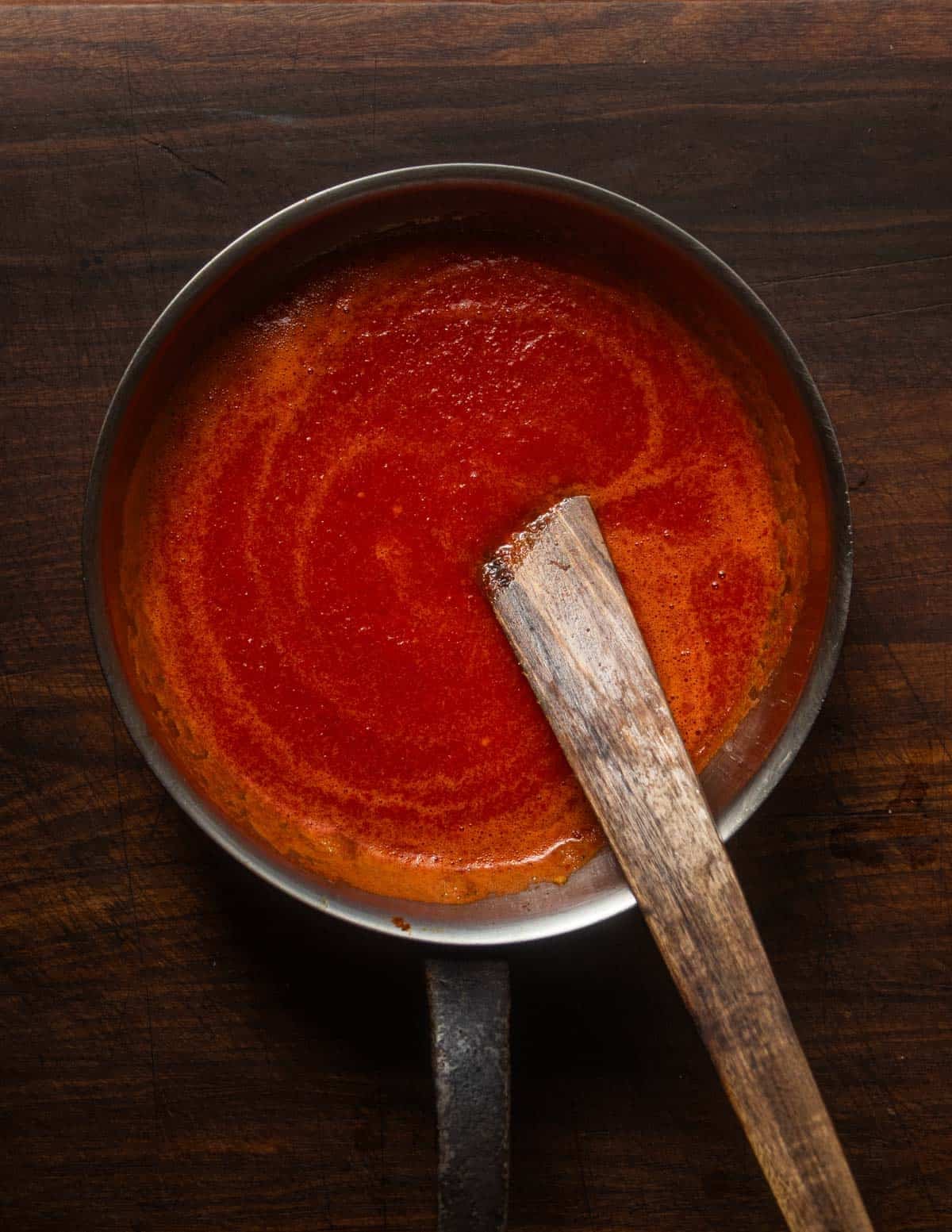
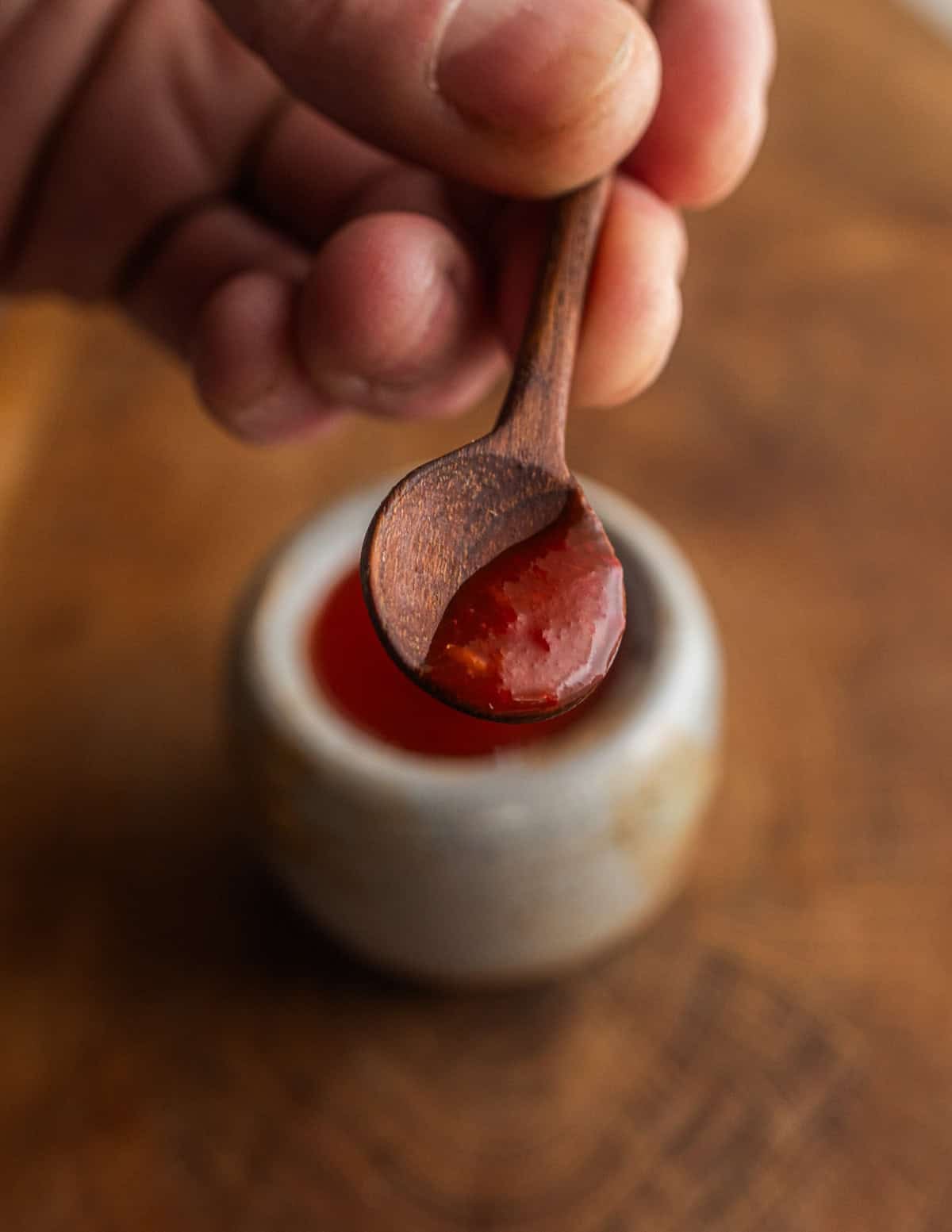
As long as it was fermented for a full two weeks the sauce will last for a very long time in the fridge.
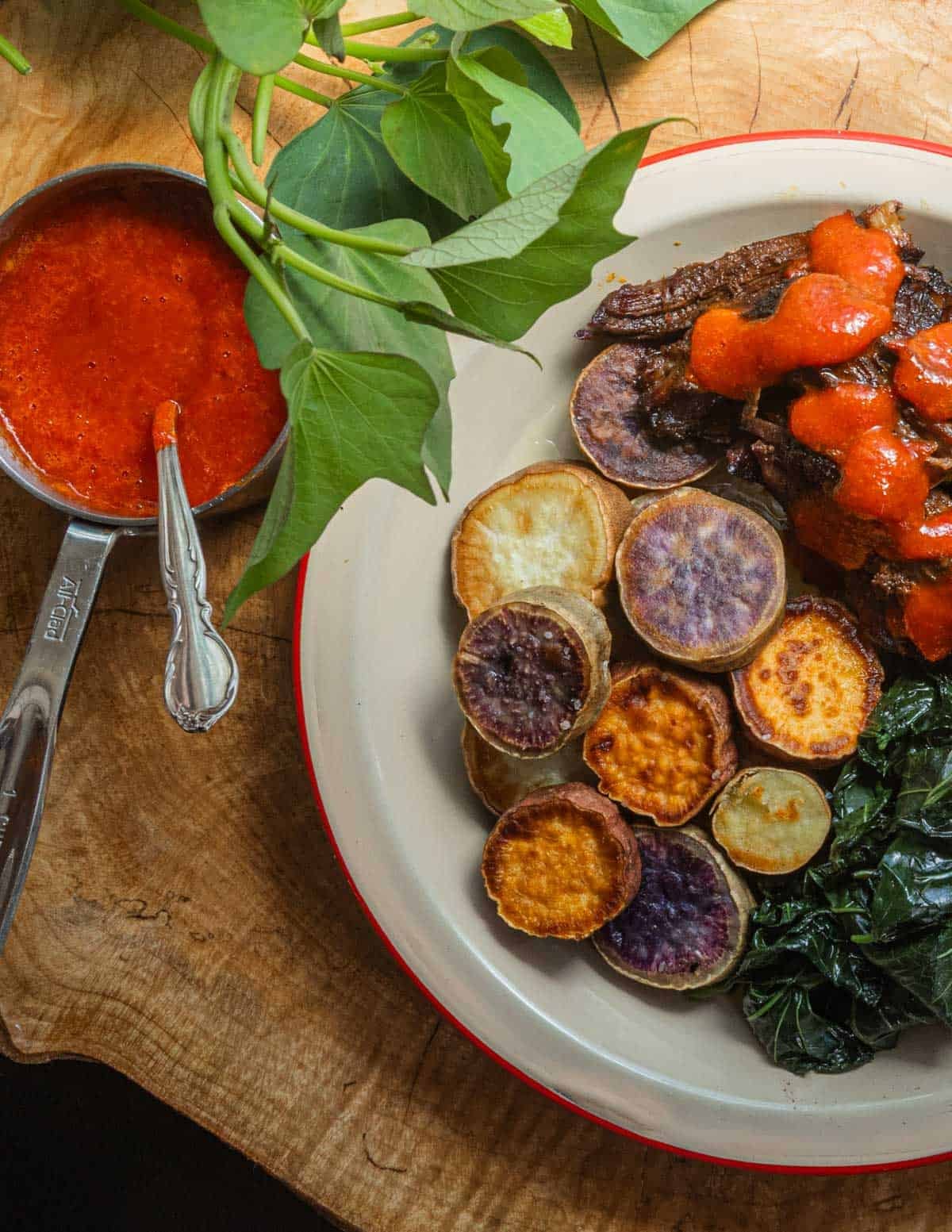
I love it on all kinds of things, but especially smoked food. Below is the smoked, pulled bison from my upcoming book, served with sweet potatoes and sweet potato leaves.
Related Posts
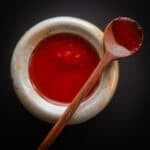
Fermented Maple Hot Sauce
Equipment
- 1 gallon vacuum bag and sealer or a 1 qt mason jar, ideally narrow mouth
- 1 Blender like a Vitamix
- 1 3 quart sauce pot ideally stainless steel
- 1 Spice grinder or mortar and pestle
Ingredients
- 1 lb red fresno peppers or other hot peppers
- ½ tsp Kosher salt 1 % of the peppers weight, plus more to taste
- ½ cup maple syrup
- ¼ cup rice wine vinegar
- ¼ cup water
- ½ tsp cumin seed lightly toasted
Instructions
Fermentation
- Remove the stems from the peppers and most of the seeds.
Vacuum Sealed Method
- Toss with the salt and garlic and vacuum seal. Allow the mixture to ferment at room temperature for two weeks.
- I like to ferment the peppers in a warm room where I have a dehydrator going in the summer which helps speed up the process.
Glass Jar Method
- Grind the peppers to a paste in a food processor with the garlic.
- Transfer the pepper paste to a jar, add the salt and water, stir, screw on a lid and allow to ferment for two weeks.
Cooking and Finishing the Sauce
- Toast the cumin seed and grind to a powder.
- Pour the fermented pepper-garlic mixture into a non-reactive pan, adding the water, vinegar, and maple syrup.
- If you use the ground pepper method you will skip adding the water as it was added prior to fermentation.
- Bring the pot to a boil, turn off the heat, then carefully puree the mixture in a blender until smooth-ish.
- Pureeing hot sauces can be dangerous as it causes pressure to build in the blender. Make sure there's a way for air to escape through the lid before pureeing so the top doesn't blow off.
- Taste the sauce and adjust the seasoning for salt. I usually add an additional ½ teaspoon or so.
- Transfer the sauce to a jar, cool, and store in the fridge. If it was fermented for the full two weeks it will last a long time. It can likely be water-bath canned but I haven't tried it yet.
Video
Notes
- Maple syrup is my first choice for sweetening this sauce, but honey will work fine too. Maple sugar works too, but is more expensive than syrup.
- This can be a good recipe for dark maple syrup or syrup of lower quality as it's used as a sweetener instead of all by itself.
- To speed up fermentation, you can add a few scrapes of fresh ginger, or a piece of sauerkraut.
Leave a Reply