
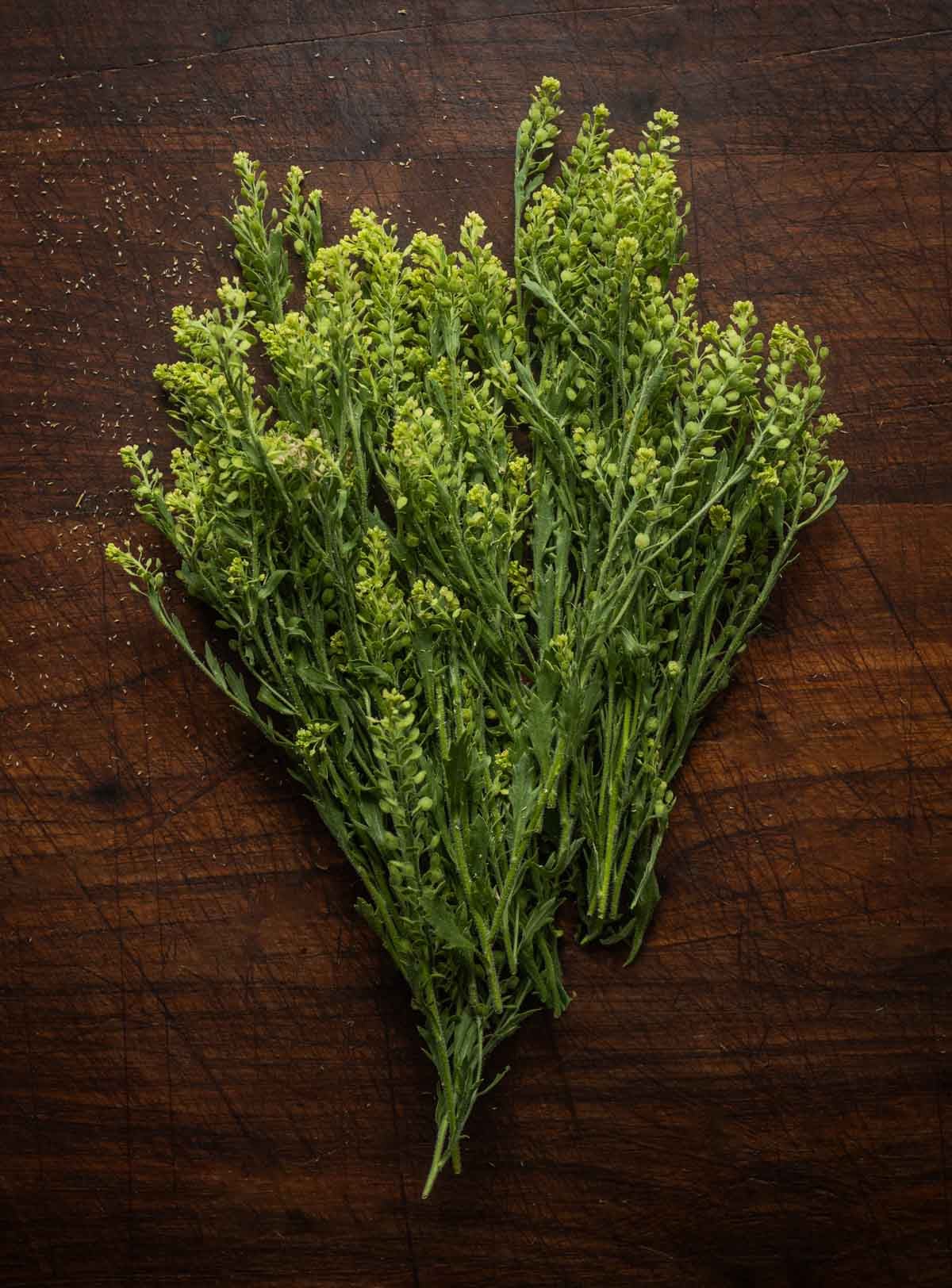
A cousin of mustard greens with a spicy hot flavor, Virginia pepperweed (Lepidium virginicum) and it's cousins are multi-use plants. Also known as poor man's pepper and peppergrass, they can do double duty as an edible ornamental and make a nice addition to flower bouquets and table settings.
Background
At a high level, this is a plant in the Brassicaceae family, making it a cousin of mustard greens, broccoli, cabbage, cress, and many other plants you've probably eaten. While it's native to North America, it can look like a weed at first glance, growing in disturbed areas, ditches, roadsides, sidewalk cracks and similar places.
Like many plants I discuss here, L. virginicum is just one of a few related species you might find. The genus Lepidium contains many others like field peppergrass (Lepidium campestre), and broad-leaved peppergrass (Lepidium latifolium) to name two. All are edible and can be used in similar ways as I describe here, but the two aforementioned species are non-native and can be more invasive.
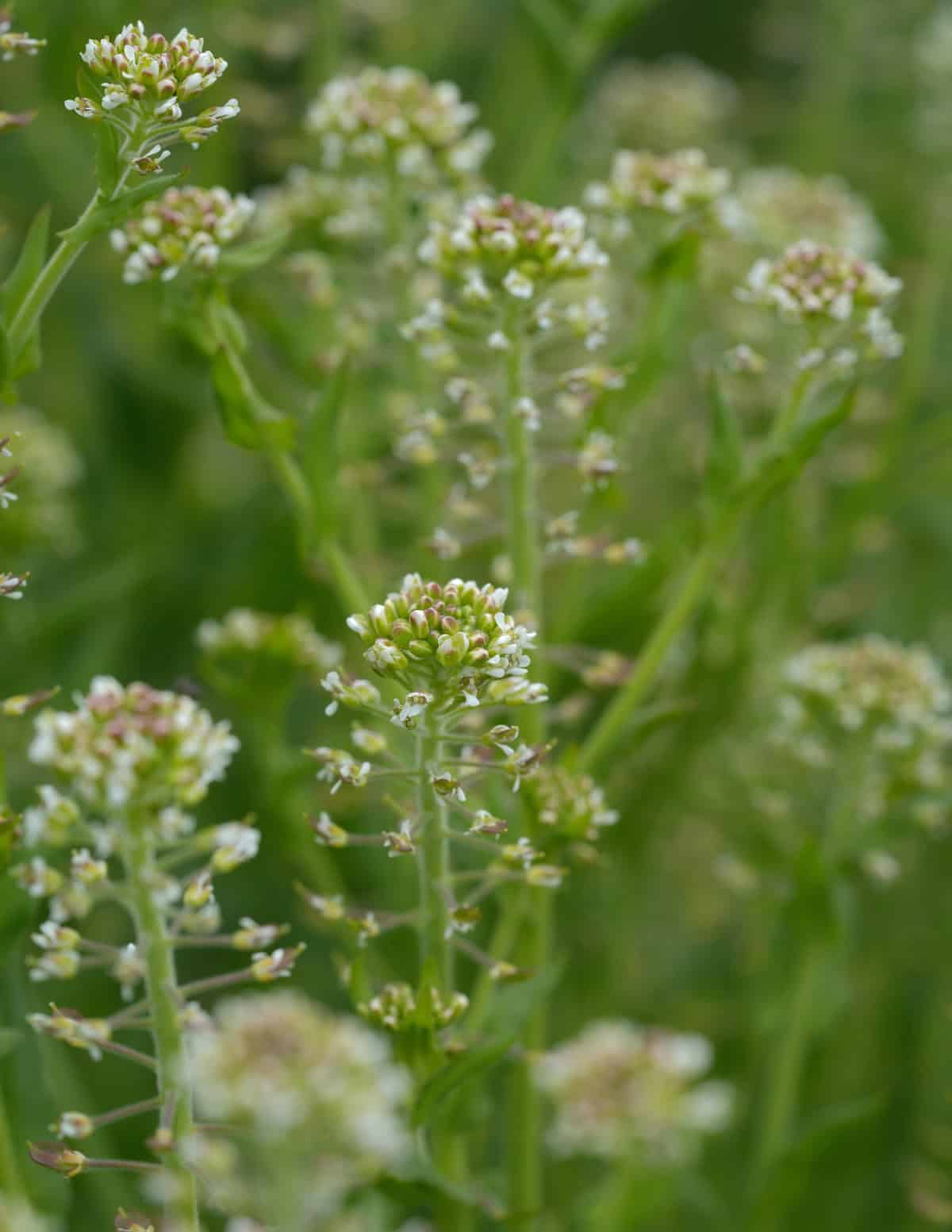
Green-flowered peppergrass (Lepidium densiflorum) is a native found in Minnesota, but I don't often see it in large patches. Last week I found a good haul of L. virginicum in Arizona so that's what's mostly shown in this post. Large stands of it seemed to be everywhere in Riparian areas near Flagstaff.
Identification
These plants are pretty distinctive when flowering so this won't be an exhaustive overview. What sticks out to me is the alternating arrangement of circular seeds nearing the apex of the flower stalks, and the relatively short height they reach, which is about shin-high. Shepherds purse (Capsella bursa-pastoris) is a bit similar, but much shorter and the seeds are more triangular instead of round.
Peppergrass Leaves
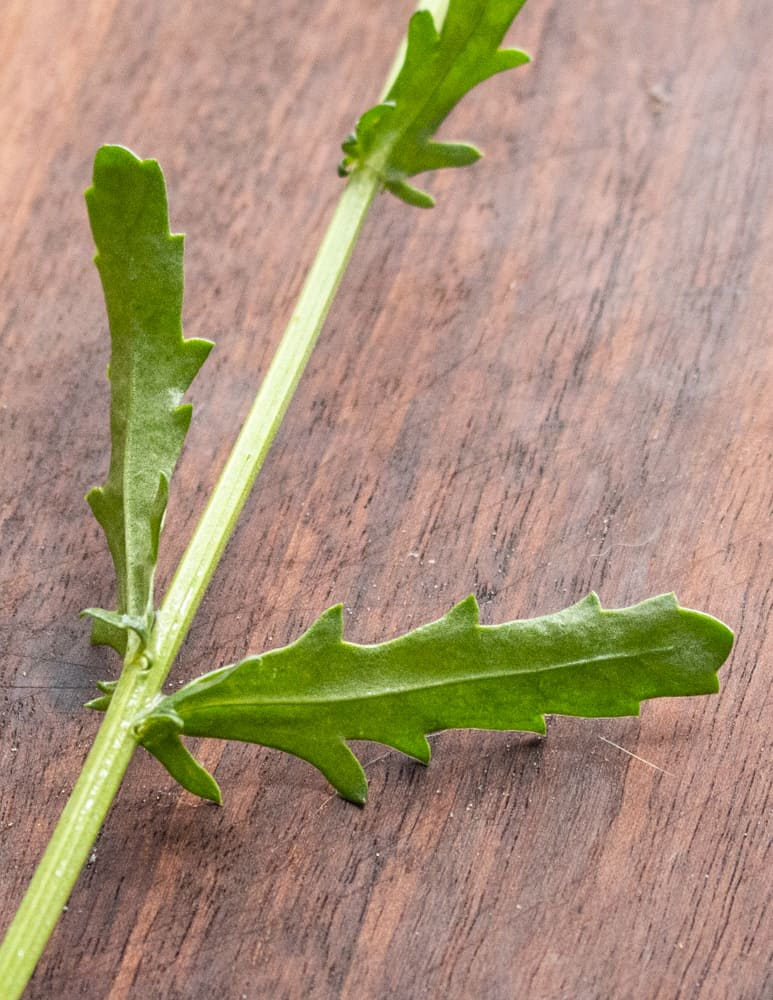
The leaves aren't that distinctive to me, but I definitely agree with Sam Thayer that they resemble oxe-eye daisy leaves and could easily be confused with them.
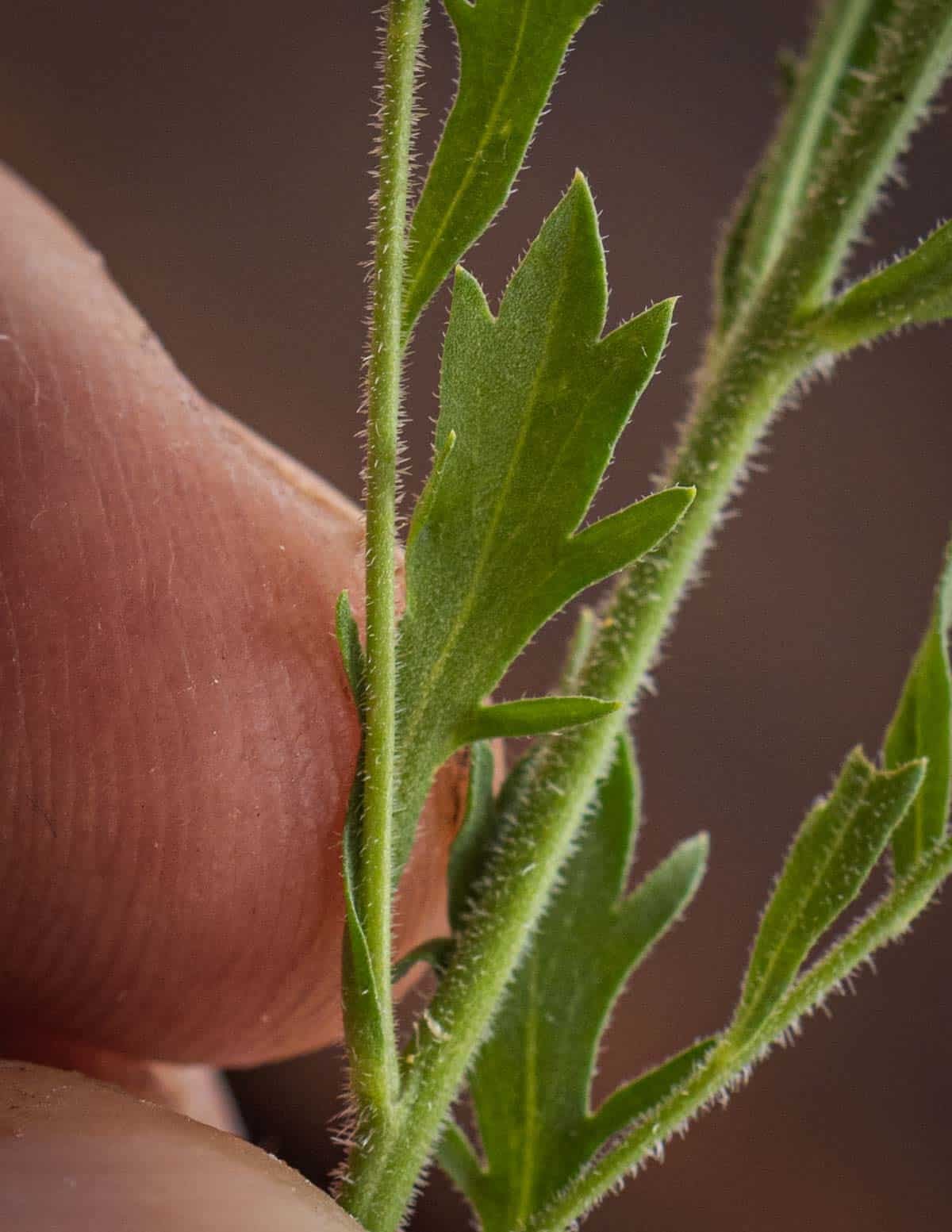
As it's an Aster, Ox eye daisy lacks a mustardy taste and taste subtly aromatic: a flavor I compare to chrysanthemum greens used in Korean cooking. The leaves are shown below.
Seeds
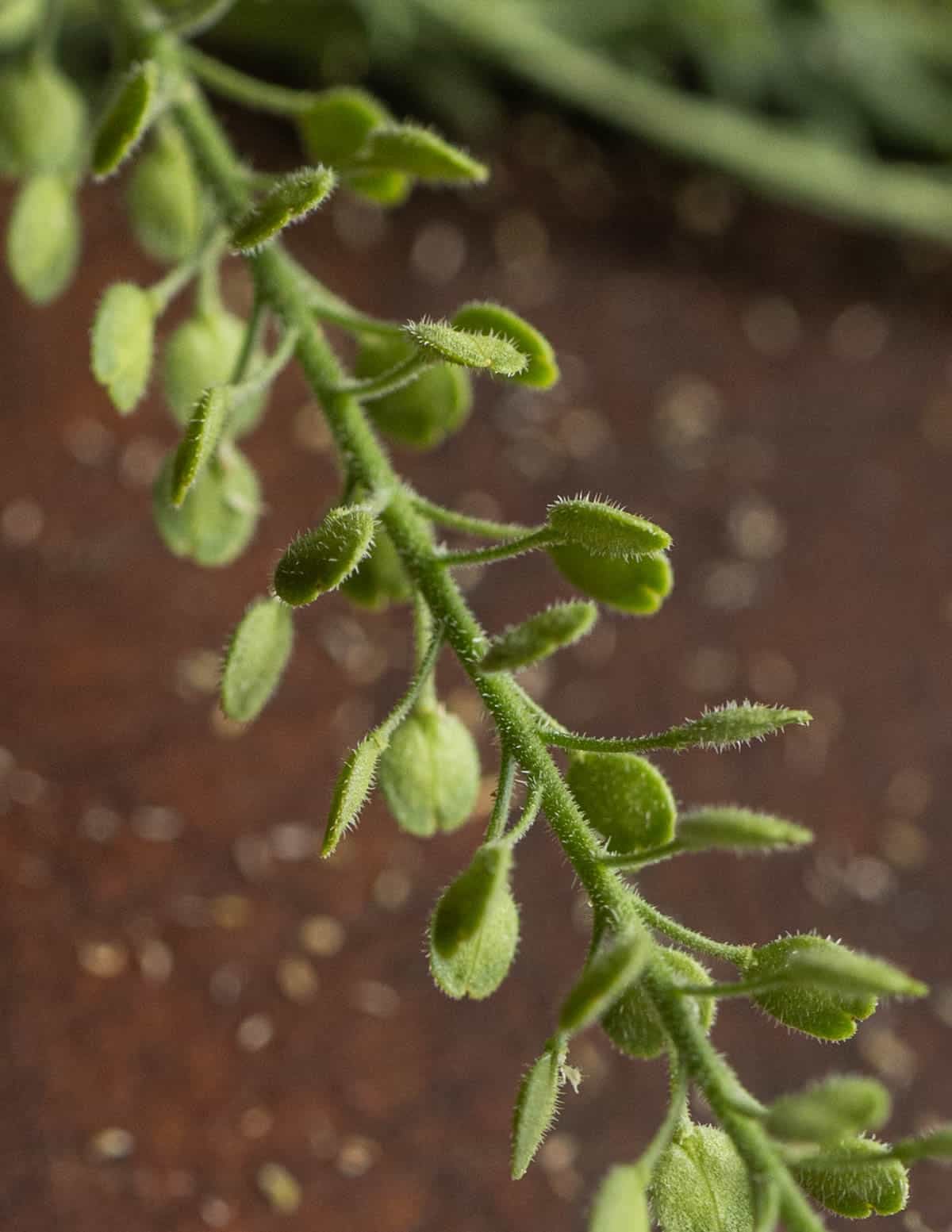
Pepperweed stems and seeds are small, round seeds that grow alternately on the flower stalk. The seeds and stems are covered in very fine, white hairs that can be hard to see with the naked eye. Another characteristic you'll notice is the subtle indent at the terminal end.
Flowers
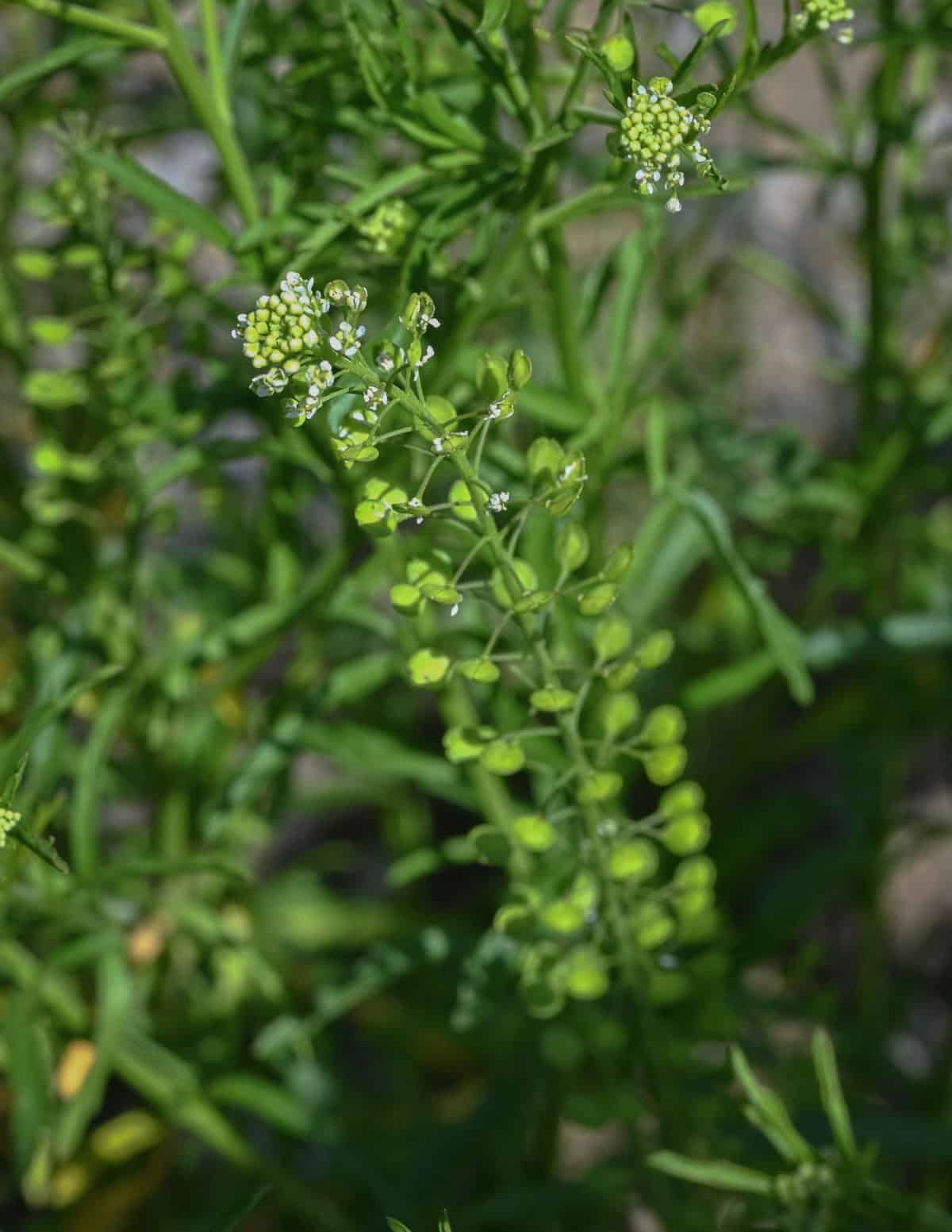
The small white flowers are very small and hard to photograph, but if you zoom in you'll be able to see a tell-tale Cruciferous characteristic that's the same across all plants in the Brassica family: flowers with four alternating petals.
Cooking with Peppergrass
Unless you can find large patches of young tender leaf rosettes you won't be cooking these like a leafy green. The part I prefer to use is the young growing tender tips of the flower stalk, including the unripe seeds that can be sprinkled on a dish. For chefs, foraging educators and eaters who value novel shapes and textures they have their place.
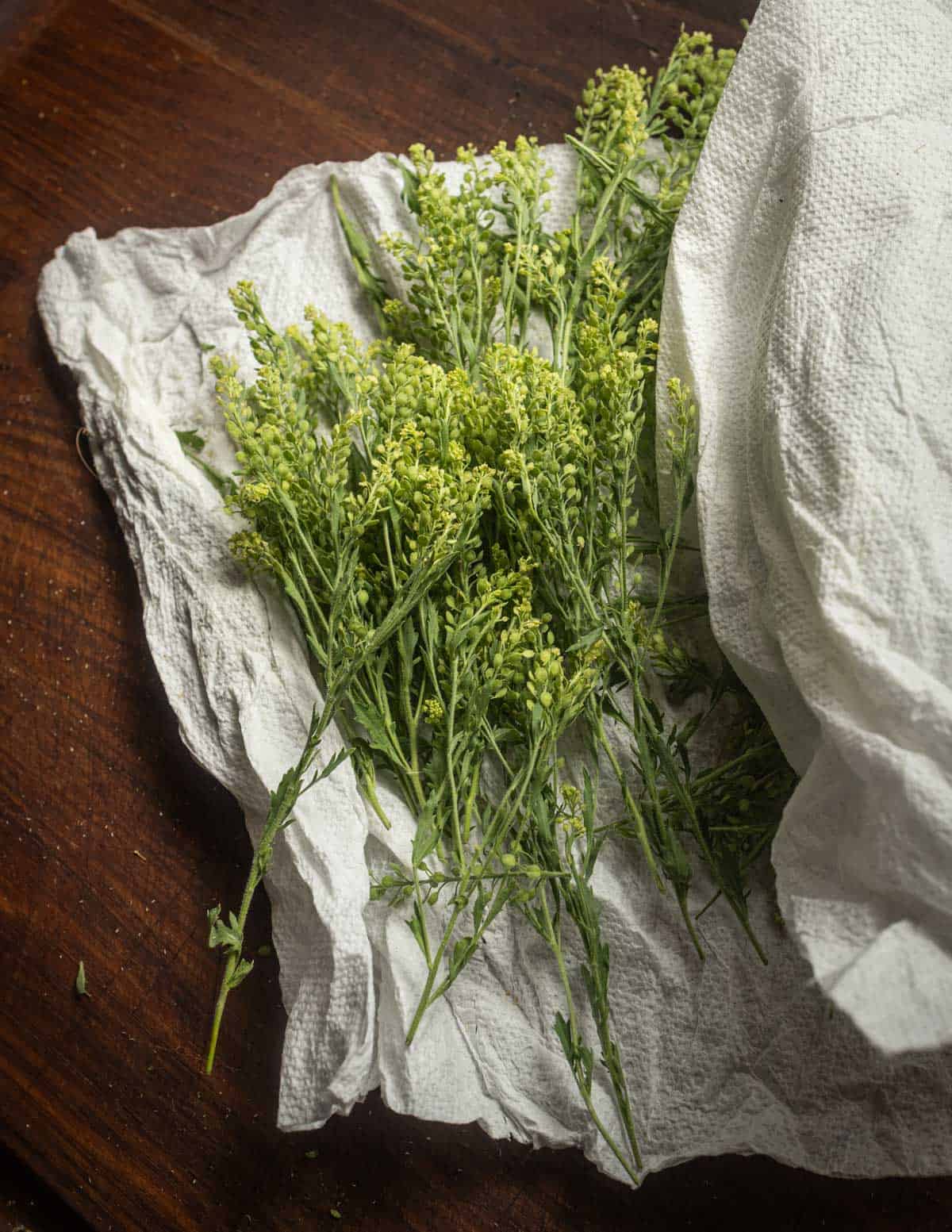
When flowering these are sturdy plants with a woody stem, which translates to a long shelf life after harvesting. I brought home a large gallon bag in my suitcase and they're still perfectly fine a week later, where the wild Sysymbrium broccoli raabs I harvested were holding on for dear life. Soak them in cold water after harvesting, then wrap in dry paper towels and store in a zip-top bag.
The best part for cooking in my opinion is the spicy, slightly sweet unripe seeds and tender flowering tips. Think of them like parsley crossed with mustard greens. Generally they're something to sprinkle on a dish at the end of cooking. Like elm samaras, I could also see them working well in soups where they'll blend into the background.
The name peppergrass, while correct in theory, is a bit misleading when it comes to actual cooking. When eaten by themselves the flavor is aggressive, spicy hot with a subtle sweetness that reminds me of nasturtiums. But, mixed with other ingredients the flavor becomes submissive.
That means while they'll taste very spicy as a trail nibble, you'll need to use a heavy hand with them in the kitchen to notice them. If you want a wild plant that's truly spicy no matter what, look for waterpepper (Persicaria hydropiper).
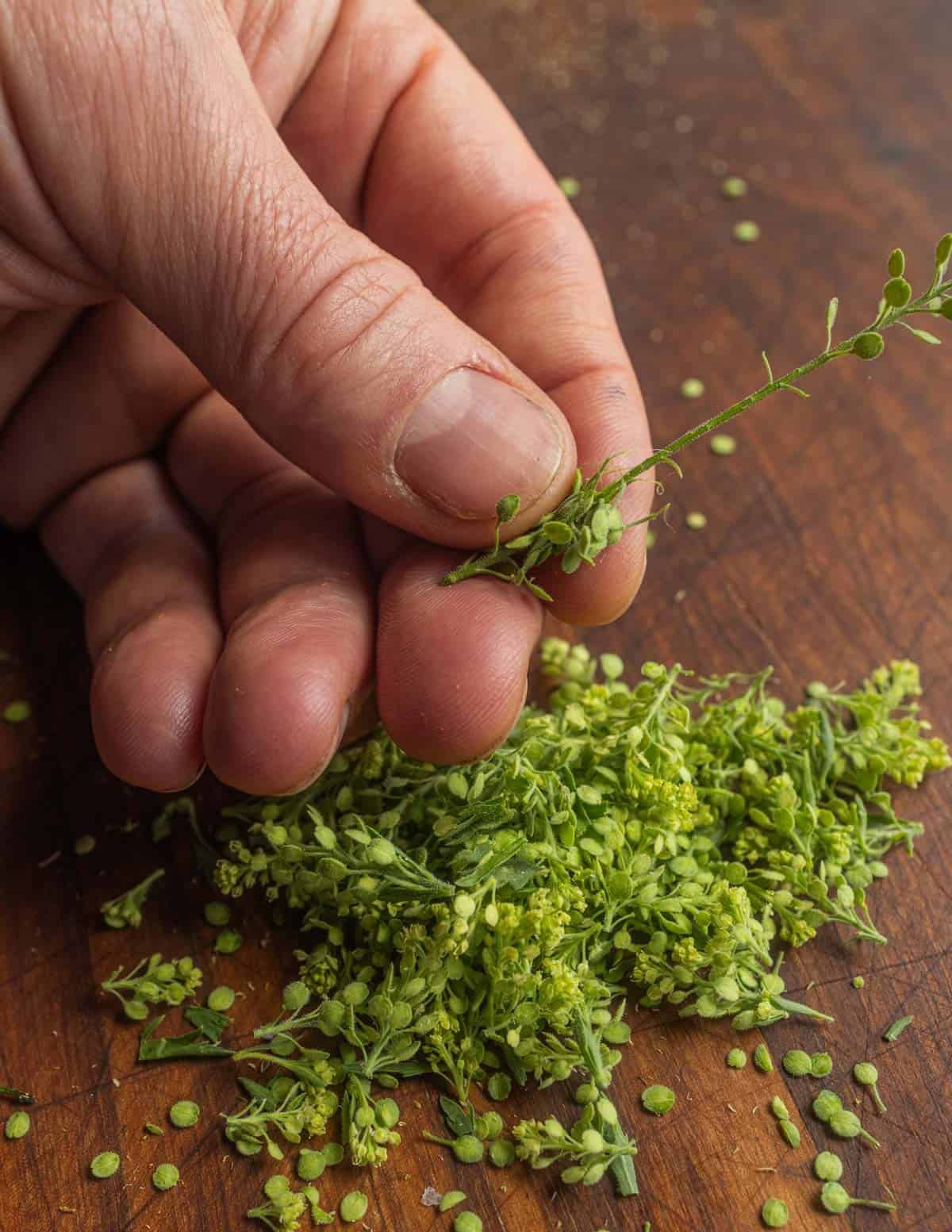
I like to strip the unripe seeds and leaves from the woody stems, along with any tender tips that come off in the process. What you'll be left with is a mixture of light-green seeds and flowers that can be added to dishes by the handful for a mild mustardy flavor. They were good mixed with the first Spring herbs I had coming up in my yard.
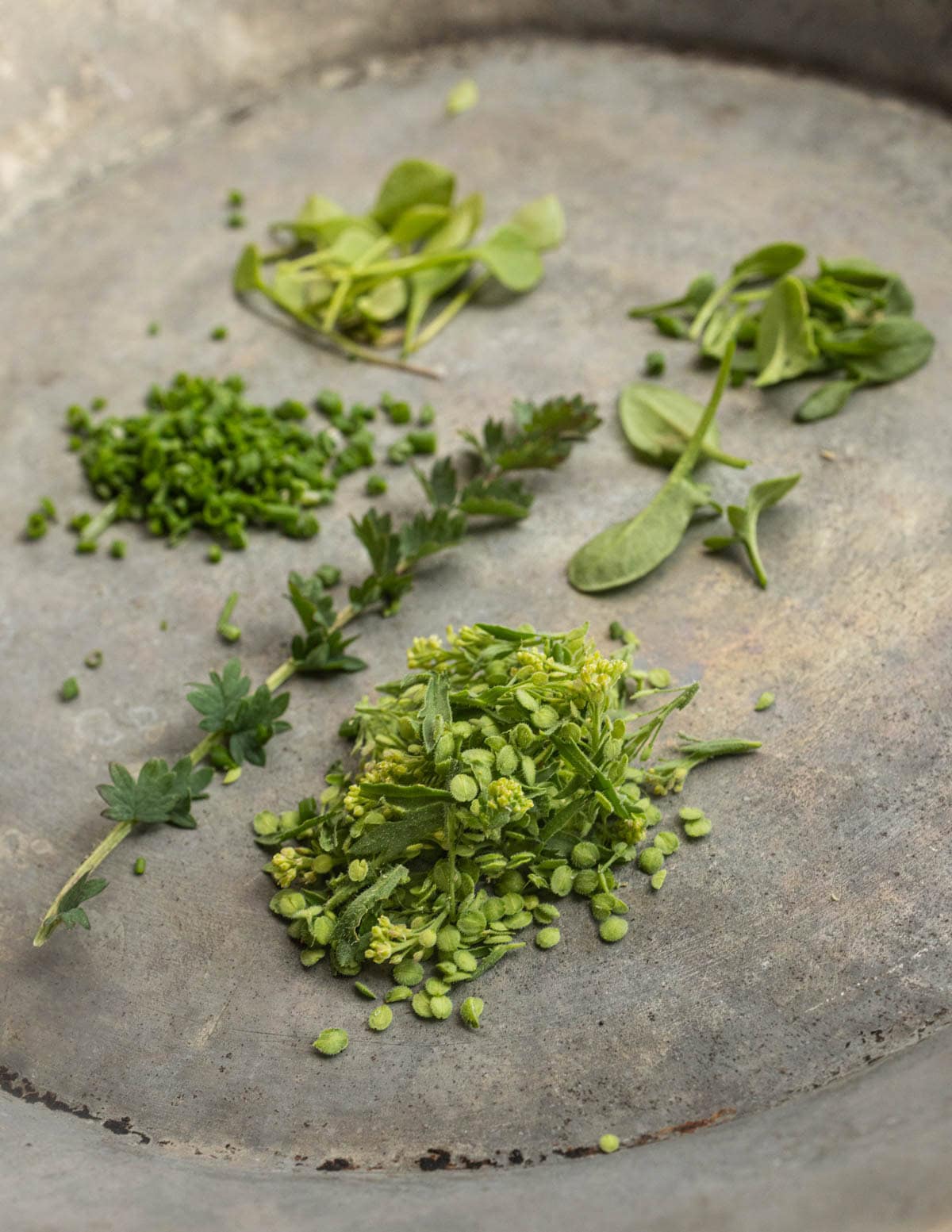
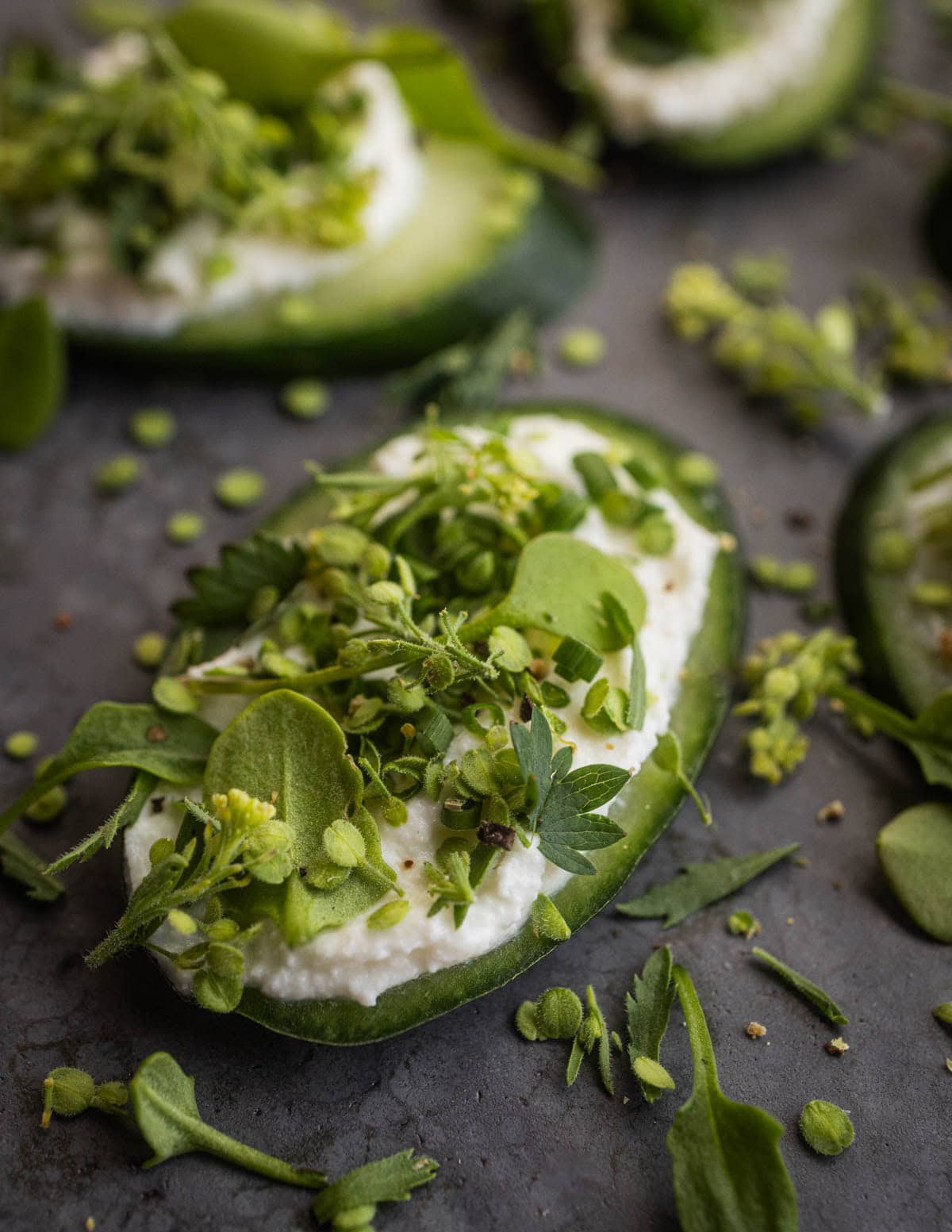
The first thing I made this week was as easy as it gets: slices of cucumber with a thin layer of goat cheese and the first fresh herbs of the season. Mint would've been perfect, but I settled with salad burnet, sheep sorrel, miners lettuce, and a healthy amount of unripe peppergrass seeds.
Next was a simple pasta with four different parts of wild mustard plants used in place of rapini for a variation of one of my all-time favorite pastas: Orrechiette alla Barese.
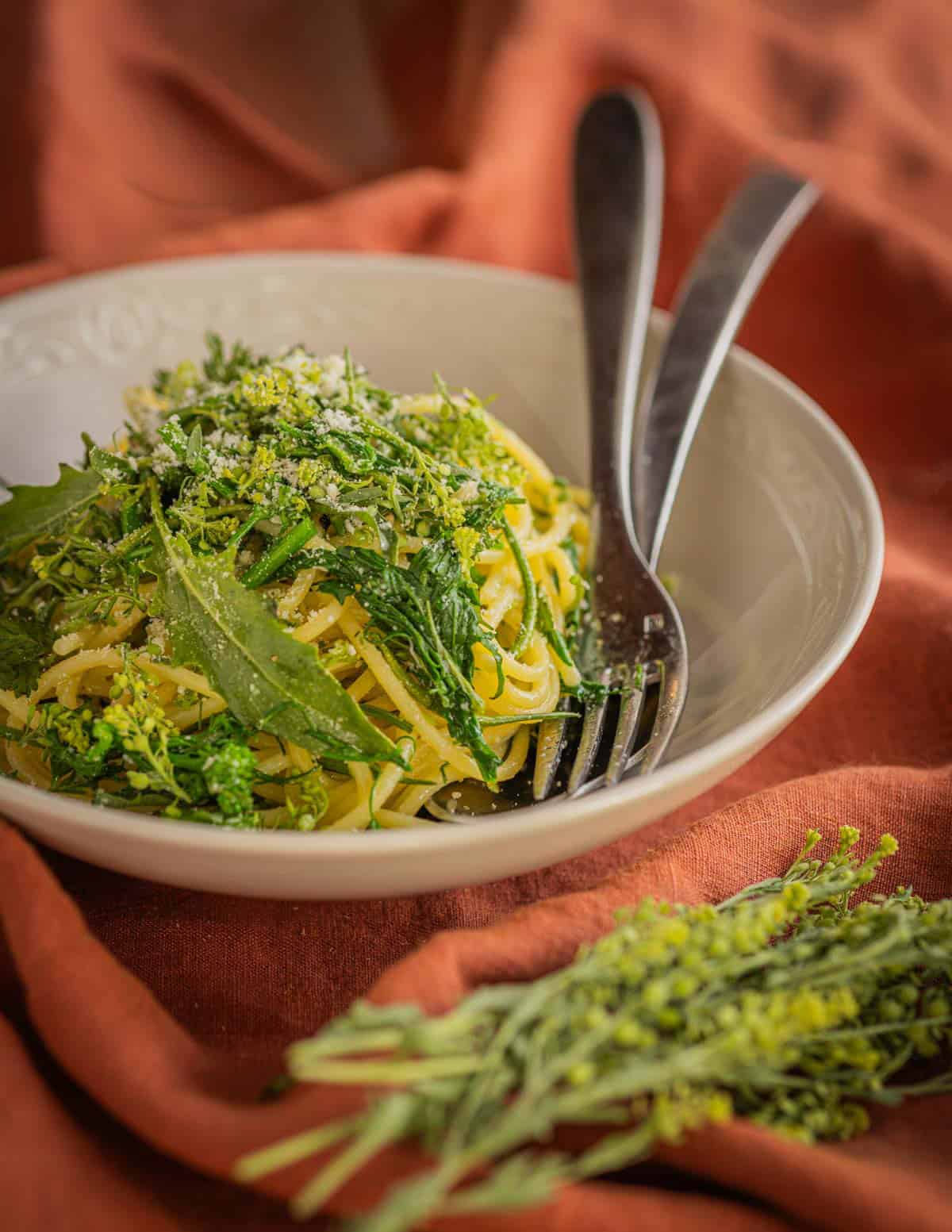
Instead of just rapini, this time I used a mix of four different mustard plant parts: unripe mustard seed pods and peppergrass seeds, leaves, and the tender flowering tops or wild "rapini" of London Rocket (Sysmbrium altissium). I also use the tips of bittercres (Barbarea vulgaris) for this, which, as you might expect, are more bitter.
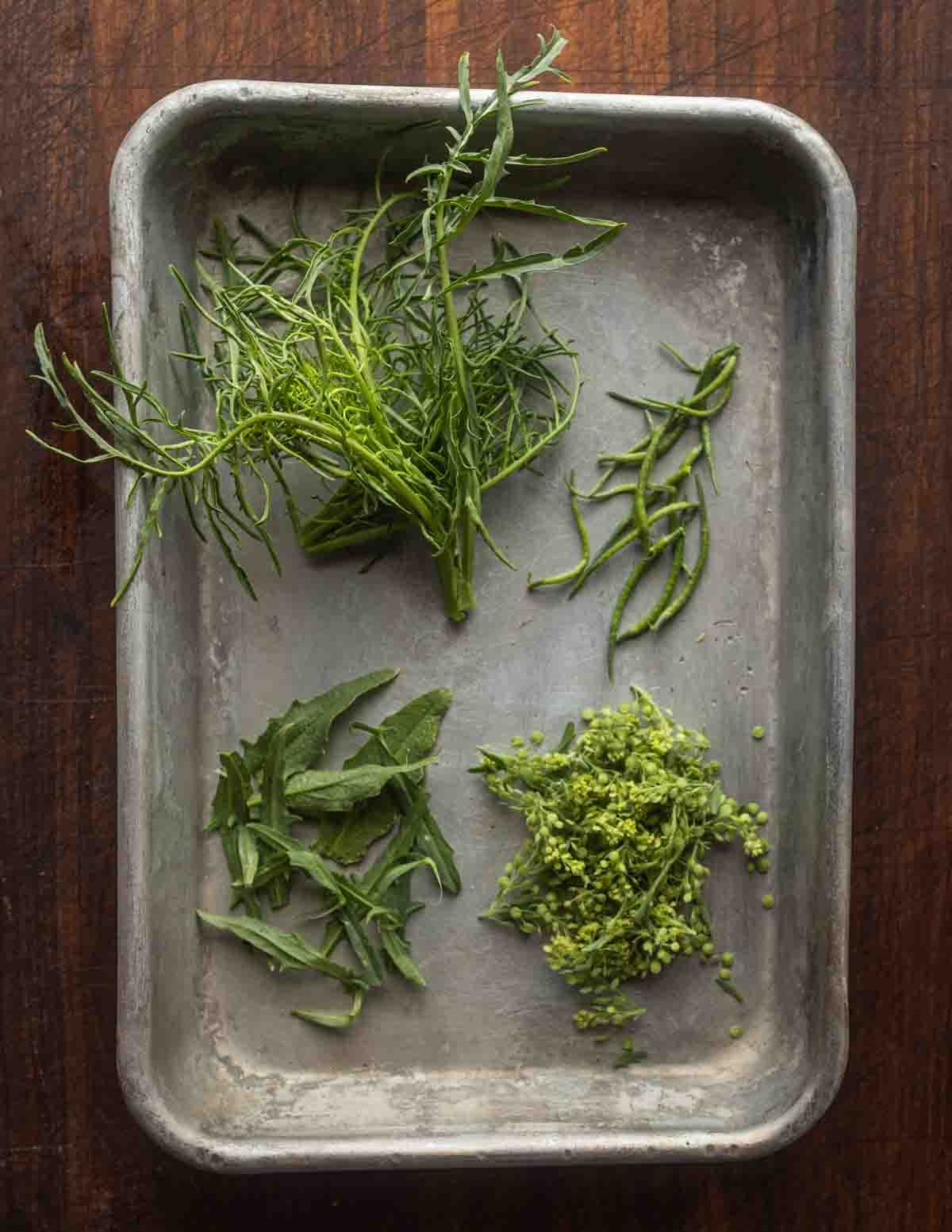
Slightly bitter, spicy, with a touch of anchovy, white wine and parmesan it made for a delicious first taste of spring for me.
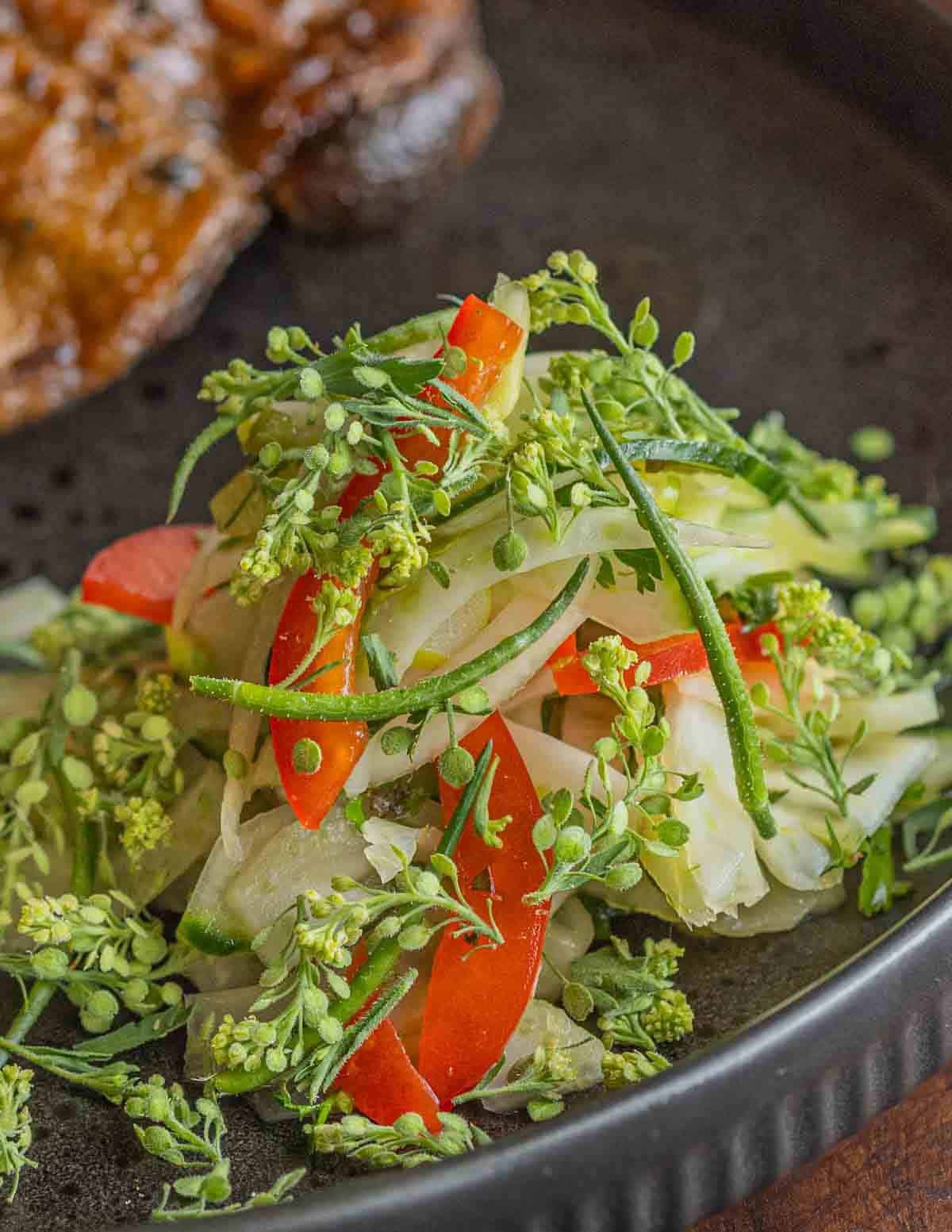
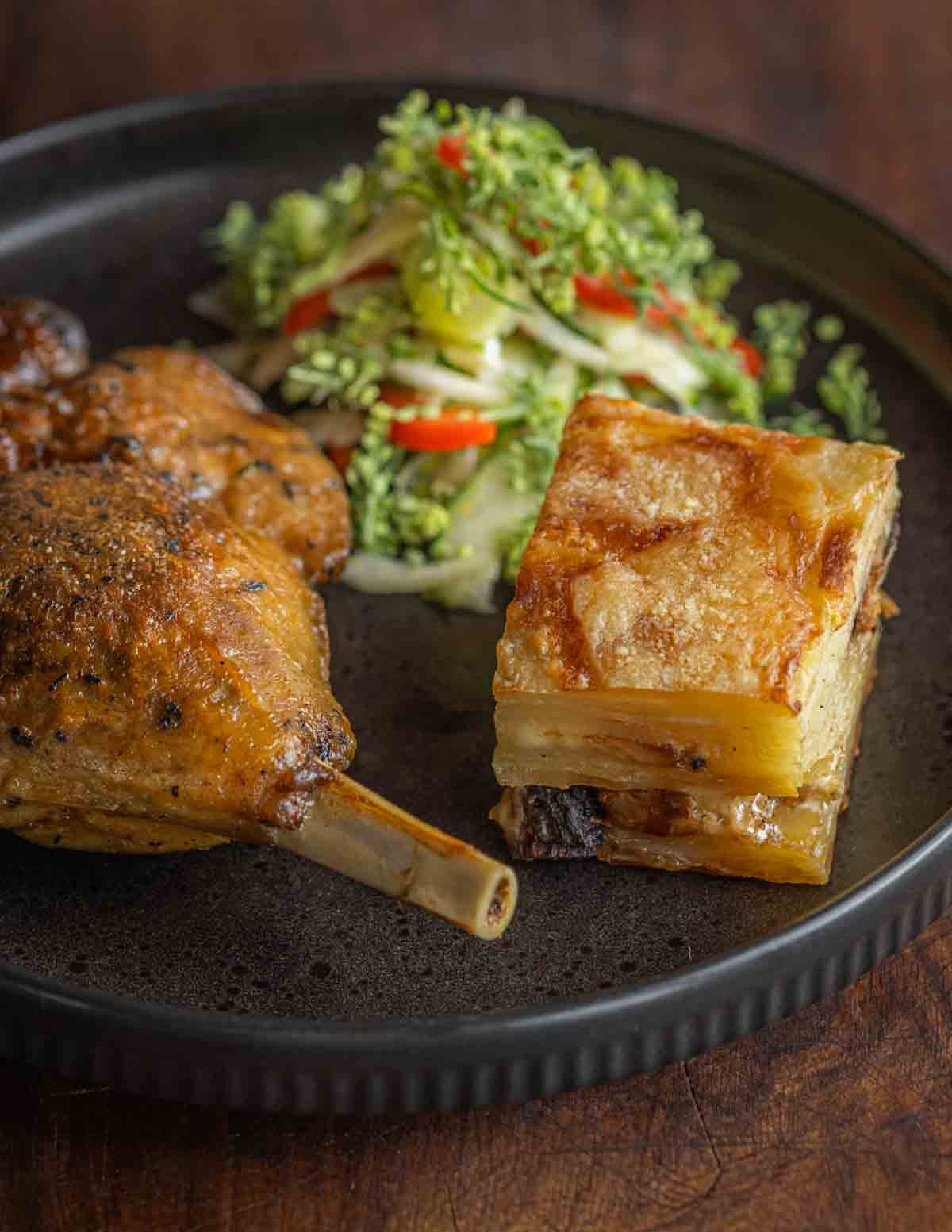
After that, Hank Shaw and I had the last tossed with a fennel slaw, gratin Dauphinoise, and a piece of crispy duck confit.
Have you cooked with peppergrass before? Leave a comment if you have anything to add.
Leave a Reply