
A fresh herb salt can be a great way to use up herbs when the garden's overflowing, and a learning experience that'll give you a deeper understanding of different herbs you grow, and how their flavors can be combined with others. Inspired my an Italian mix of herbs called borraccino said to smell like the forest after a rainfall, today I'll walk you through a few versions you can make at home.
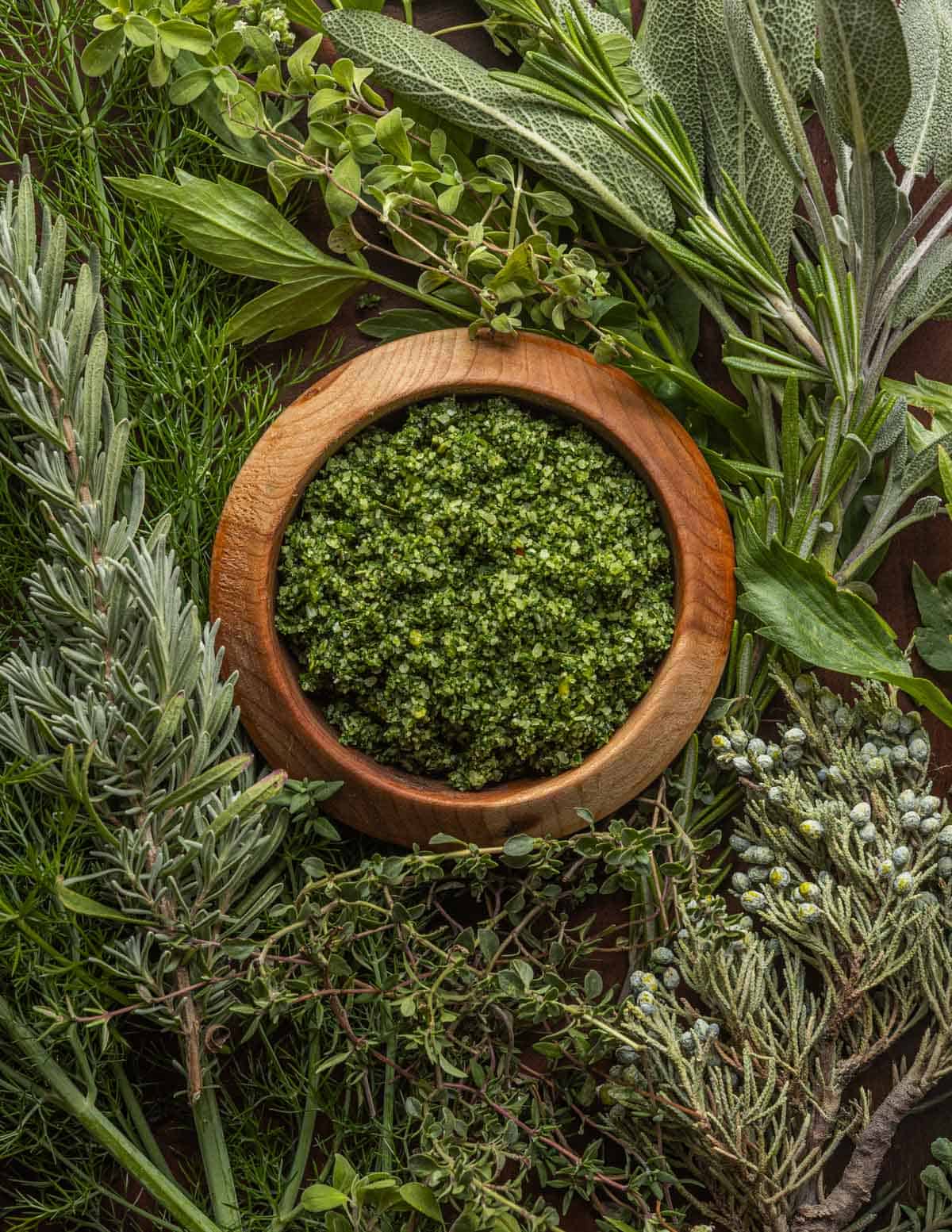
For most of my career I've looked down on herb salts, as all I knew where expensive jars in boutique kitchen stores of dried herbs mixed with dried salt. But, just like ramp salt, processing the herbs with the salt when fresh gives a very different product, the end result becoming a snapshot of your garden at a certain place in time.
How to Make it
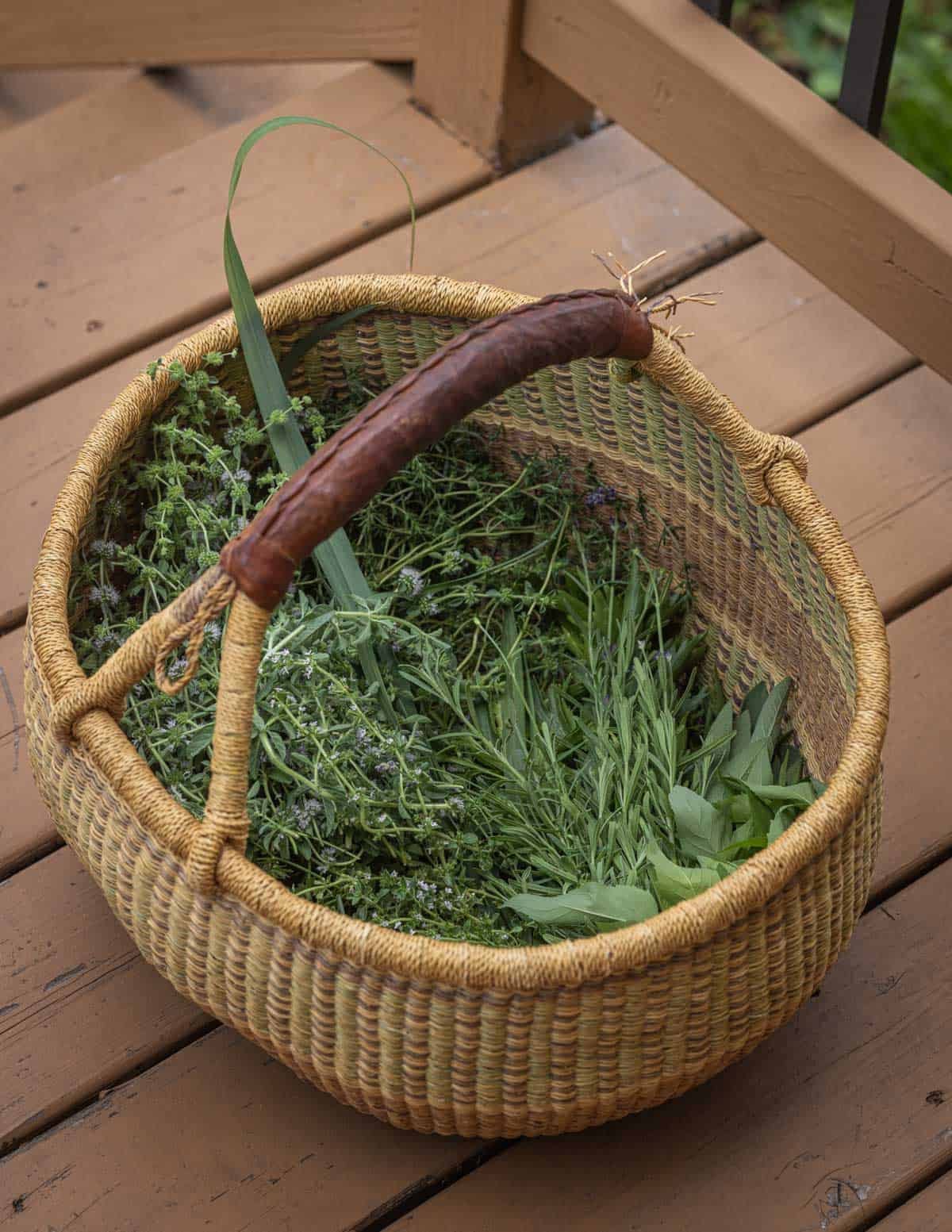
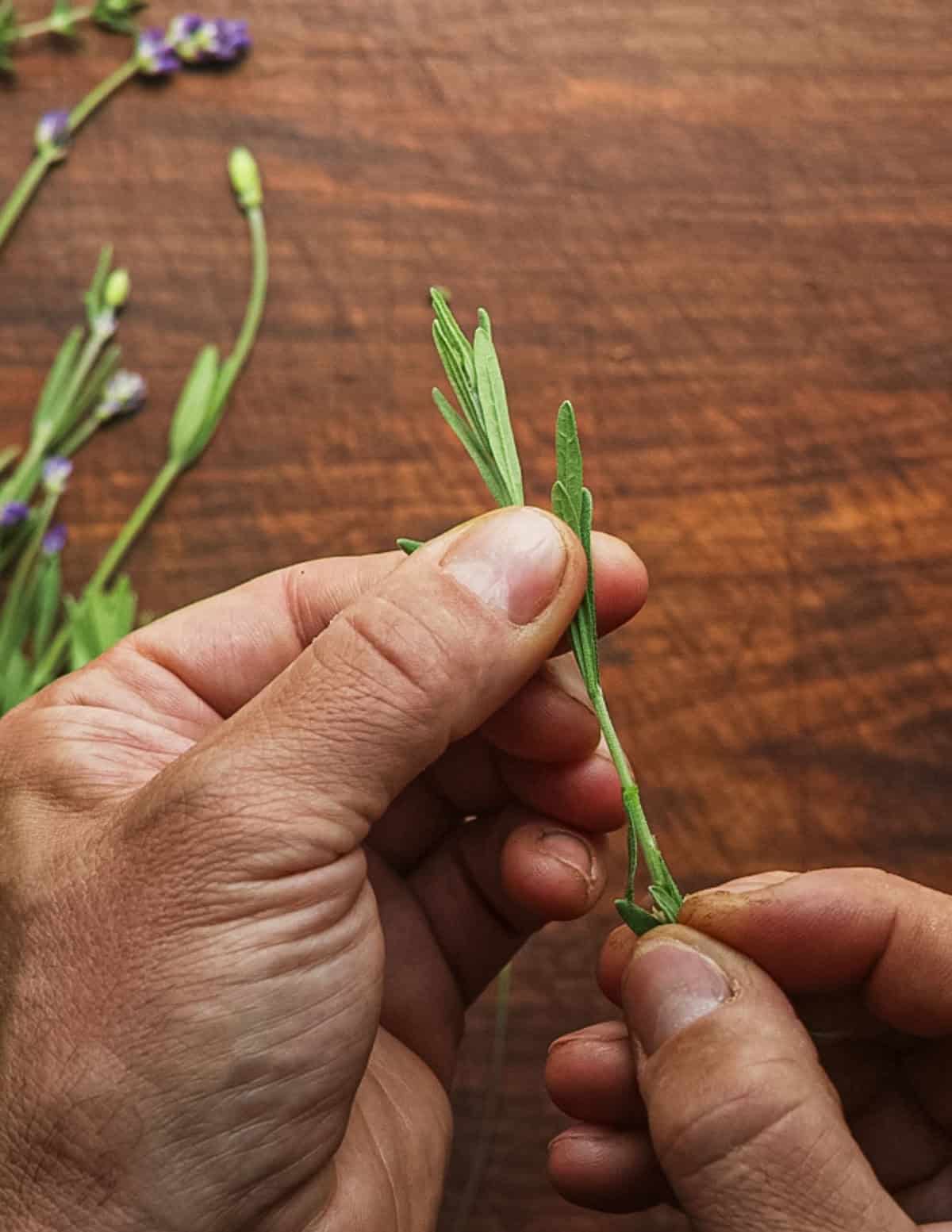
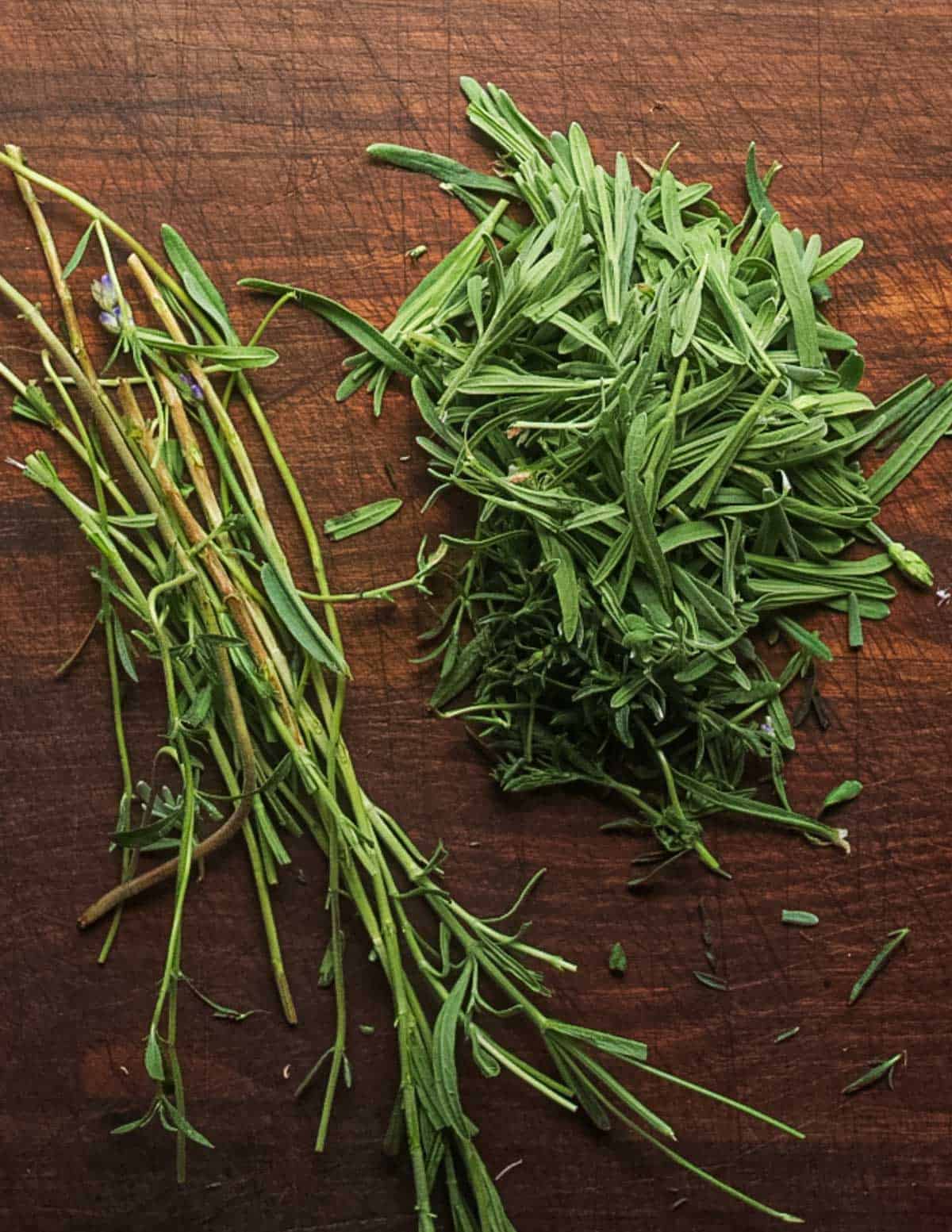
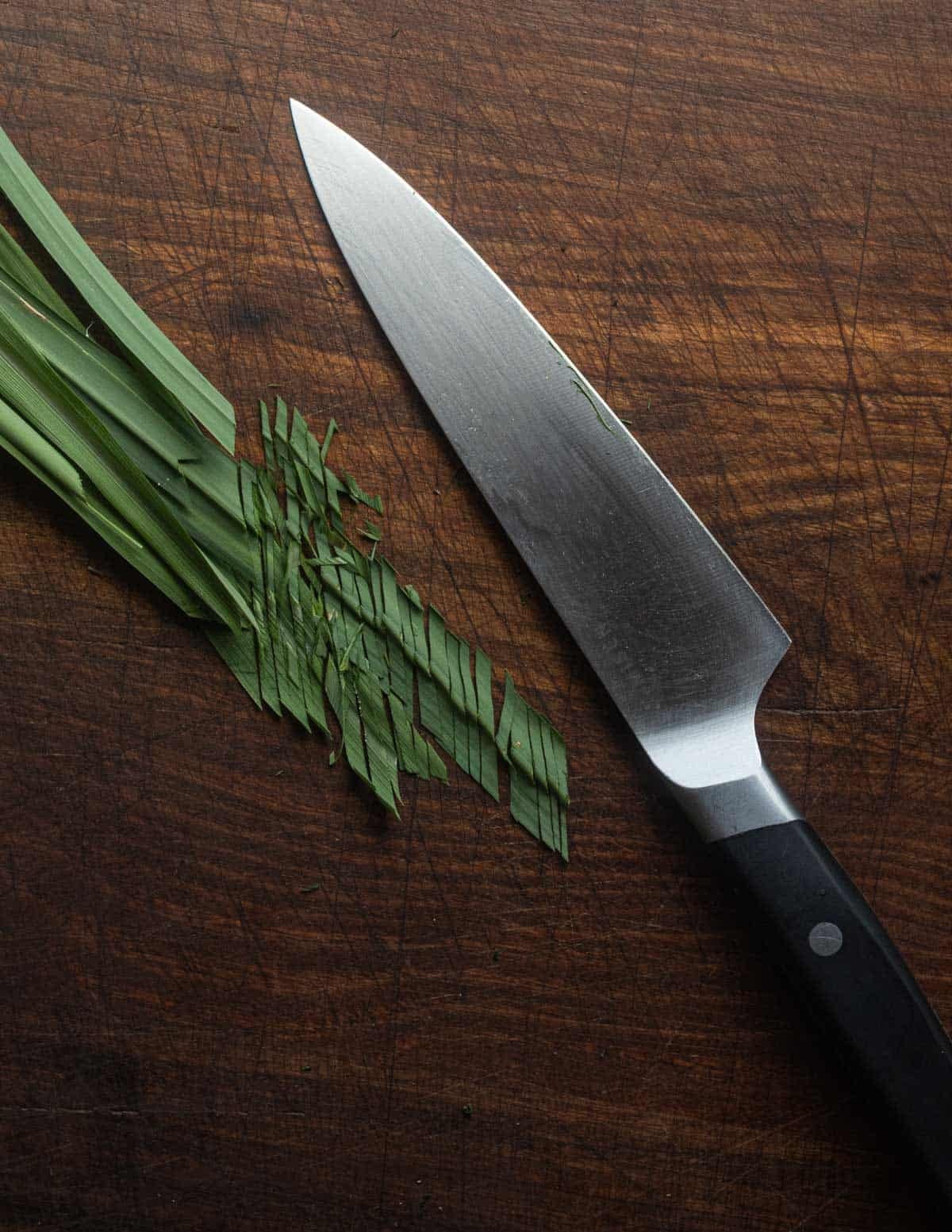
First, pick the herbs and remove any woody stems. It's good to do this with an extra set of hands to cut down on prep time. Next, mound the leaves up on a board and roughly chop them. Rosemary, lavender, lemongrass, or fresh bay leaves should chopped individually to ensure the pieces are very small.
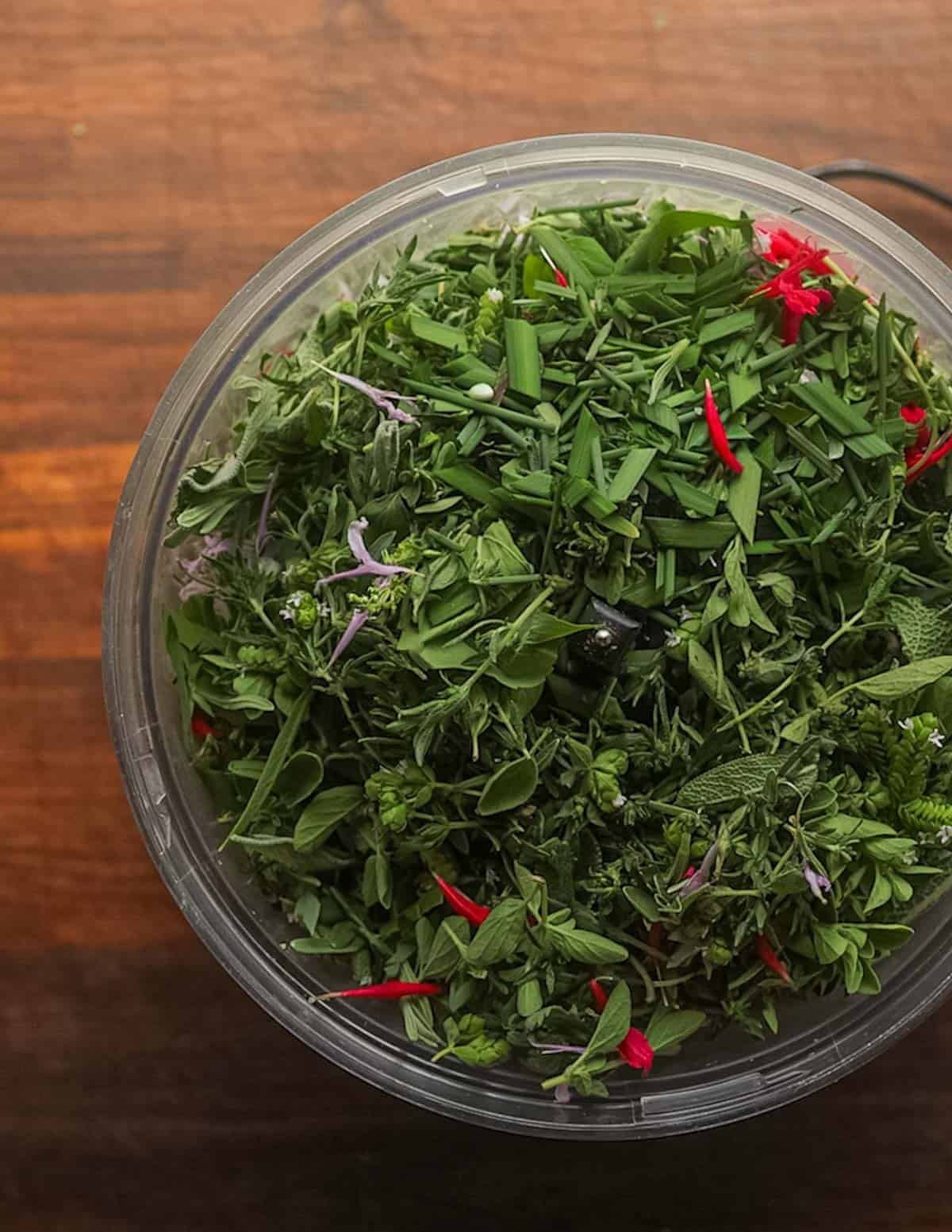
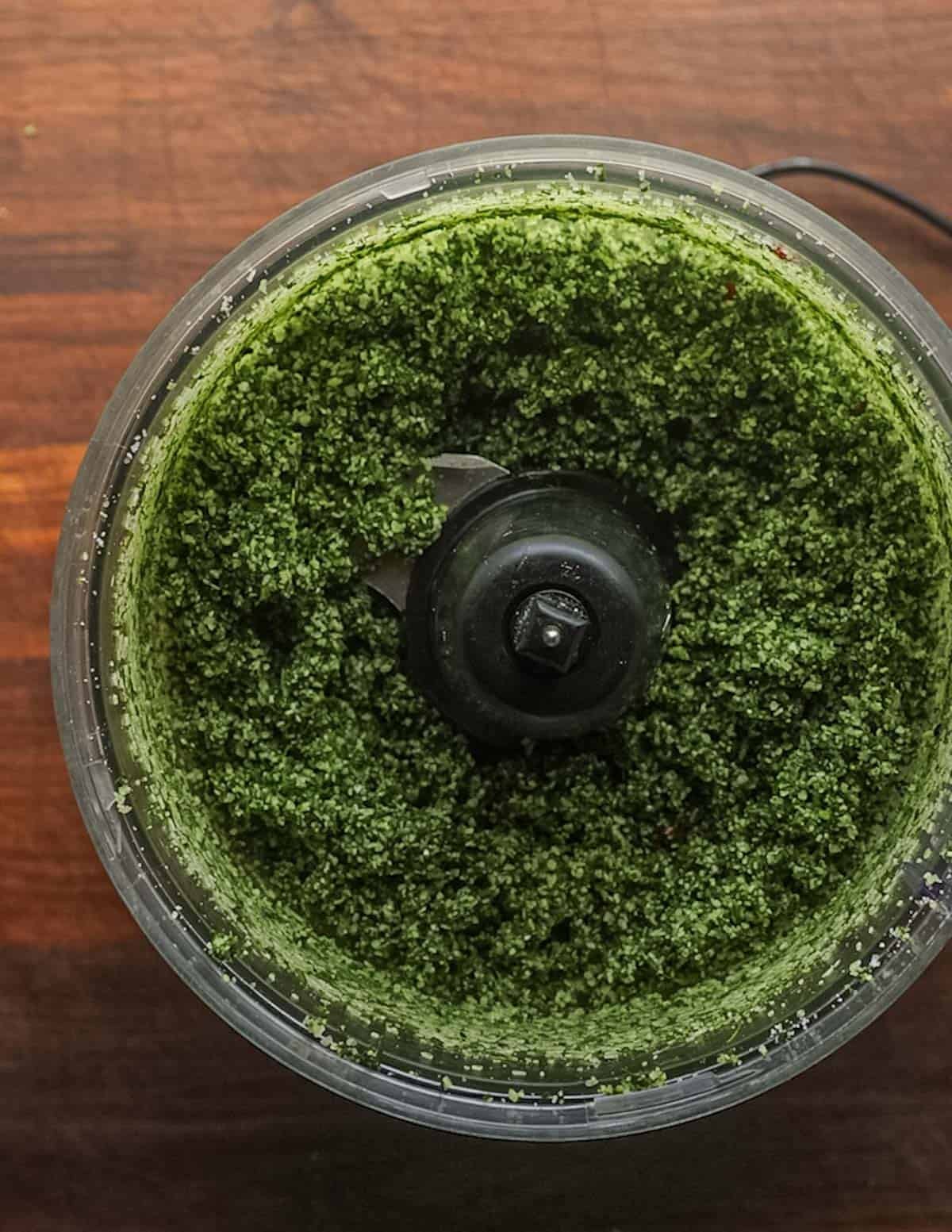
Put the herbs in a food processor with the salt and process until the mixture's an even consistency. Be careful to puree the mixture just enough to get a smooth, uniform mixture. Overprocessing will heat it and change the flavor. Immediately transfer the salt to a mason jar with a lid.
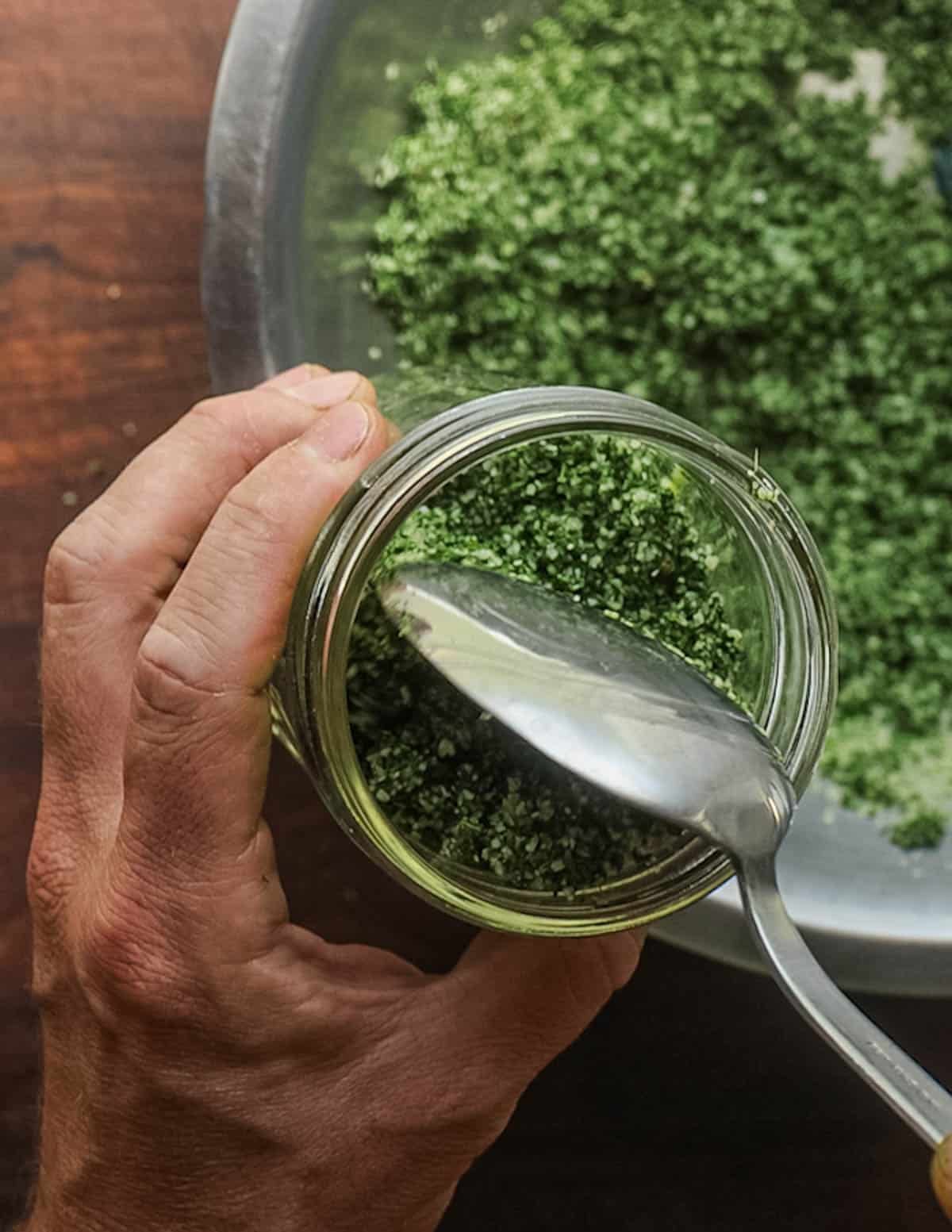
Refrigerate the salt to keep the flavor bright and fresh, or store in the freezer.
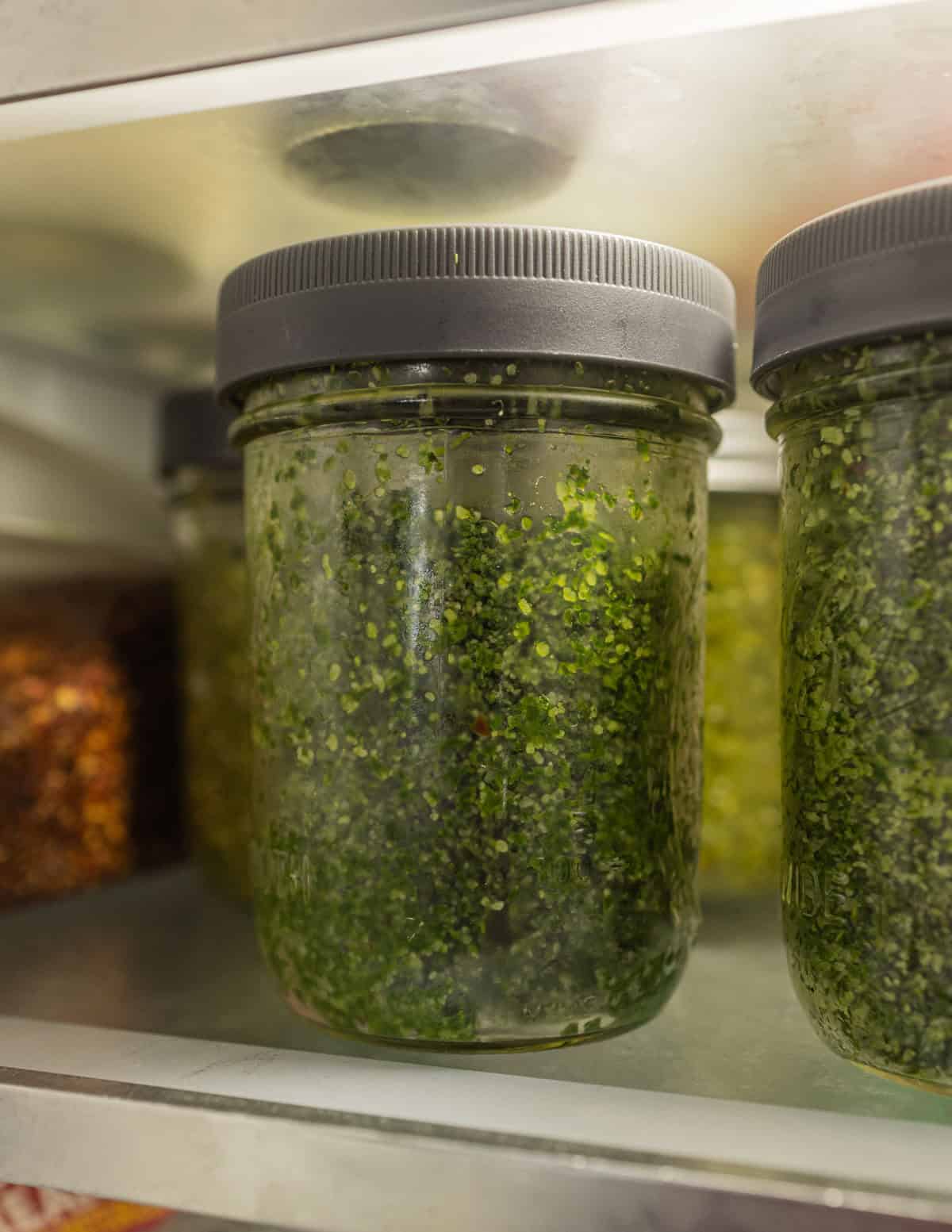
Chef's Tips
Each combination will be a little different, and this is a great excuse to get to know the herbs you grow on a more intimate level.
The goal is to make a salt where each of the individual herbs blends into the background so that you can't pick out a singular aroma. To that end, the proportions in the basic recipe are flexible, but there's a few rules I've come up with for myself to ensure each blend is balanced.
- Sage and rosemary I limit to ½ cup (½ oz) per 1 cup (8 oz) of Morton kosher salt. Any more and their flavor will dominate.
- I avoid all mint, from spearmint to pennyroyal, as well as licorice flavors like tarragon as they tend to take over.
- A huge blend of herbs is wonderful, but finding unique, complimentary combinations can be just as good. A blend of lovage, basil and lemon thyme will make your toes curl.
- Aromatic flowers like signet marigold, and bee balm are fun to add if you have some.
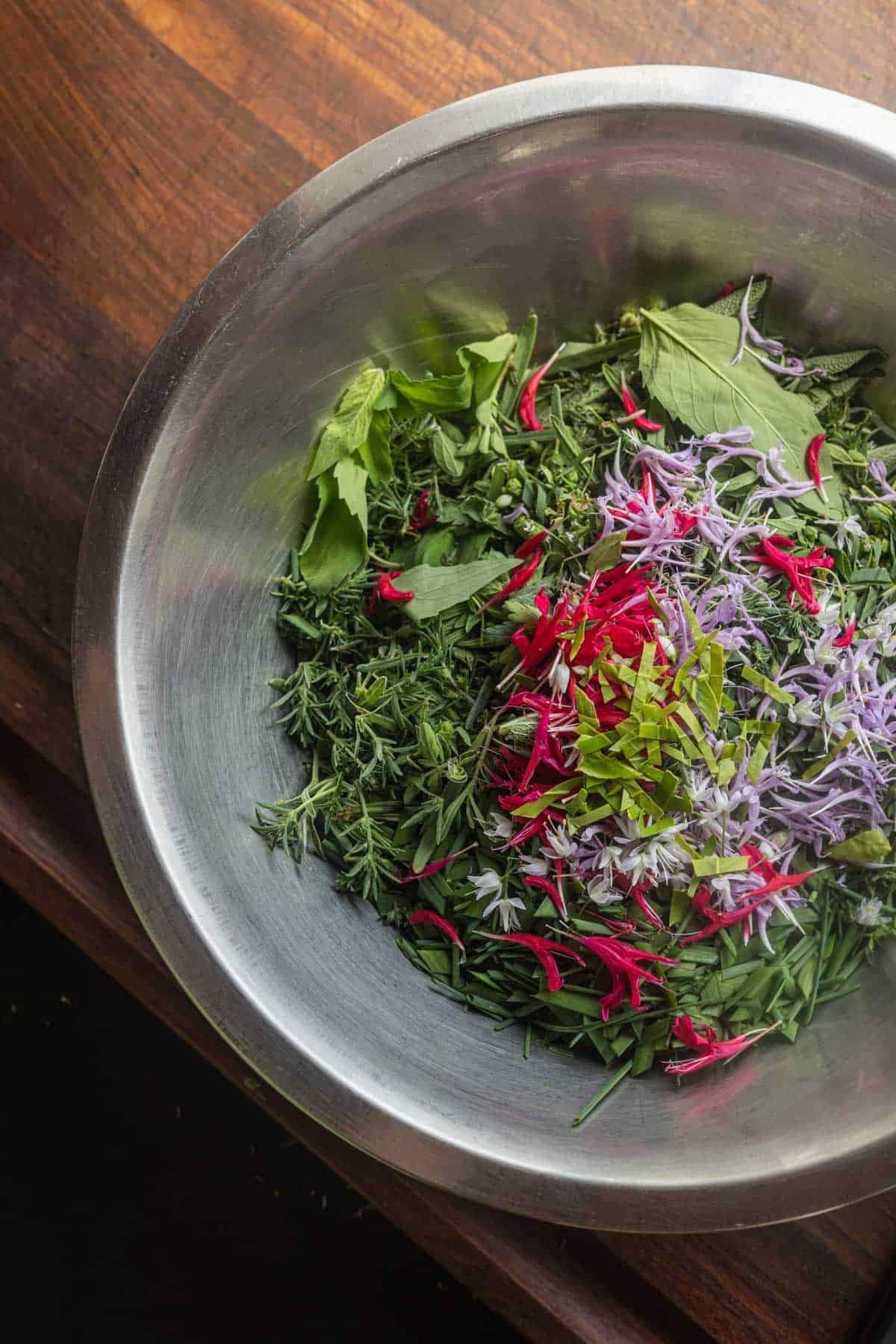
Herb Combinations I Love
I've made many combinations over the years. Here's a few examples. Note that each combination uses the same proportions of 4 oz herbs to 8 oz salt.
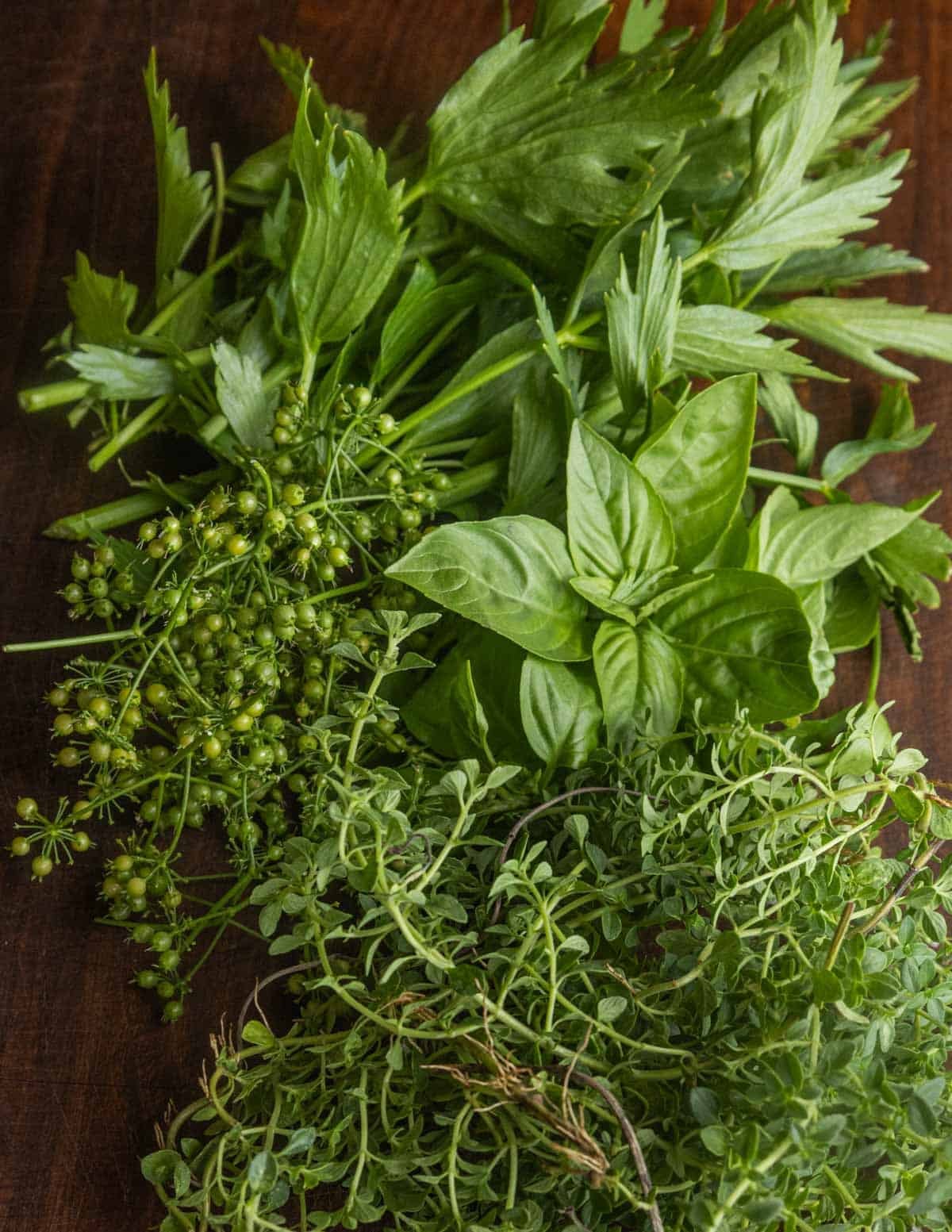
Electric Green Herb Salt
- 2 oz lovage
- 1 oz basil
- 1 oz lemon thyme (or half lemon verbena or lemon balm)
- 1 lemon leaf
- ½ oz green coriander seed (optional but so good, I often freeze it until I need)
Italian Herb Salt
- ½ oz chopped rosemary or lavender leaves
- ½ oz fresh sage leaves
- 1 oz fresh oregano or marjoram
- 2 oz fresh parsley
- ½ oz fresh thyme
- 1 small hot chili pepper, fresh
- 1 large fresh bay leaf (optional)
100% Wild Herb Salt
Fresh ground sweetfern nutlets can be substituted for the juniper, spicebush leaves and berries, too.
- 2 oz fresh bee balm leaves
- 1 oz chopped wild onion leaves
- 1 oz parsley-like leaves, like wild chervil
- ¼ oz yarrow leaves (costmary is good too)
- 1 tablespoon well-crushed wild juniper berries or cedar cones, preferably unripe and green
- 1 frozen ramp bulb
How to Use Herb Salt
Every other recipe I've looked at for comparison seems to make the same common mistake: they instruct you to dehydrate or dry the salt before using. While drying the salt won't ruin it, and it will eventually dry out after months in the fridge, you're missing out on one of the most exciting parts.
When it's freshly made, the salt will be slightly juicy. It may seem difficult to use as it can't be sprinkled, but the juiciness is part of the magic as the herbs still have a fresh flavor.
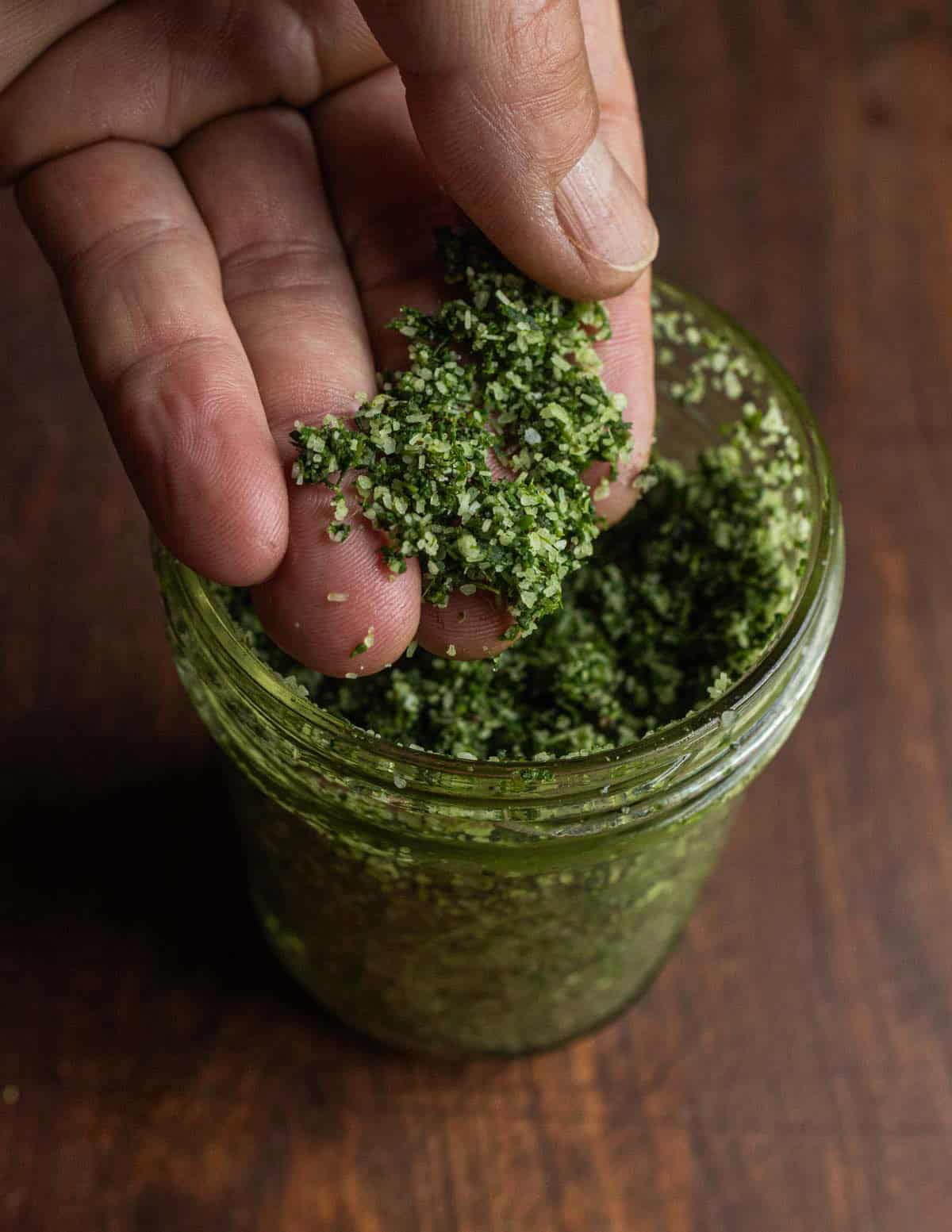
When it's still damp and fresh, think of the finished product more like a rub of salted herbs than "herb salt". Instead of sprinkling it on meat, you'll rub the meat with it, ideally letting it sit overnight before cooking, or vacuum sealing it for the strongest flavor.
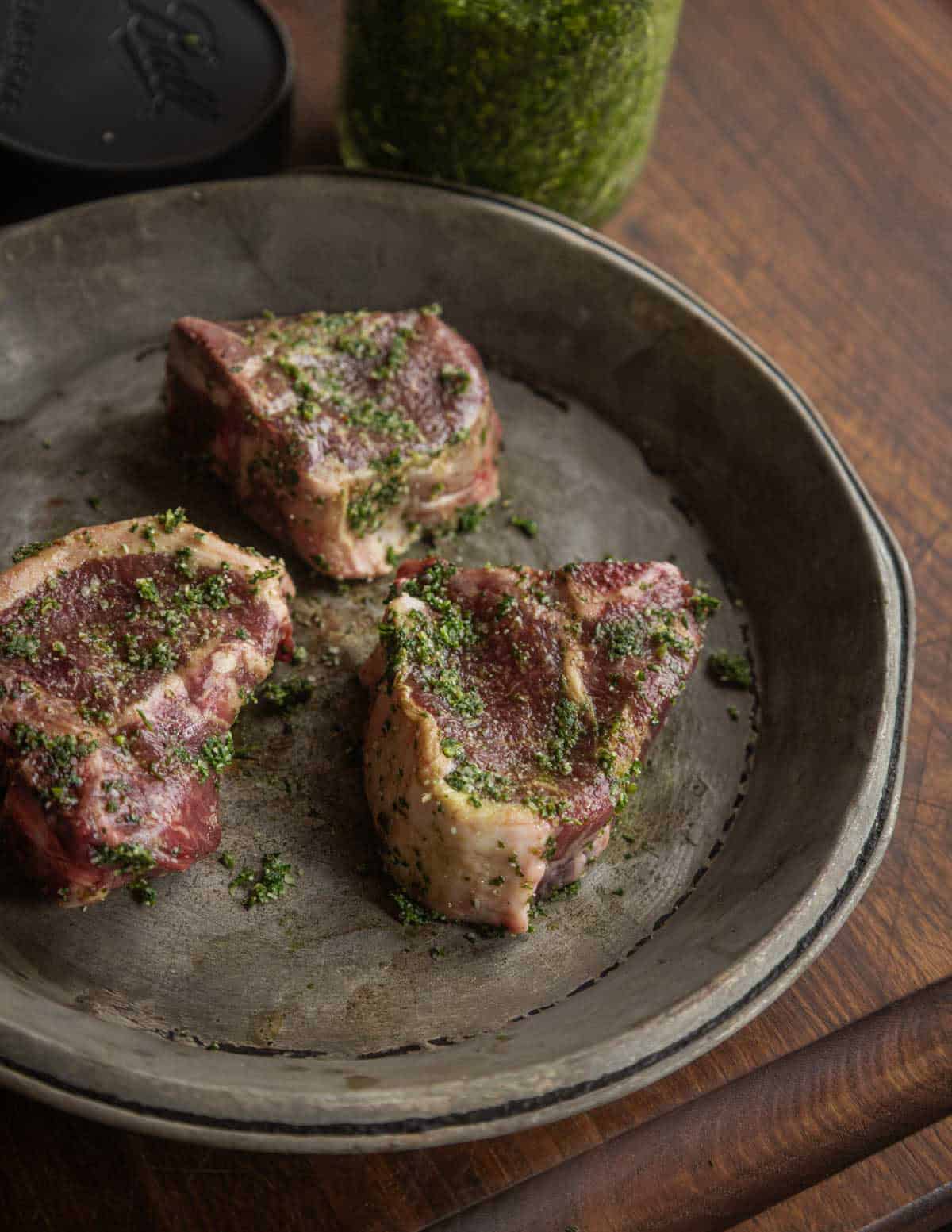
Other than that, you can use the salt anywhere you'd use regular salt. Here's a few ideas:
- Rub a piece of fish with it right before cooking.
- One of the best ways to use it is on roast chicken or grilled meats, ideally seasoned the night before.
- Fresh salts made with softer herbs like basil, lovage or oregano are great used to season a fresh salad of cut tomatoes and sweet corn.
- If you made a lot of salt, you can use it to make an herb brine for pork or poultry.
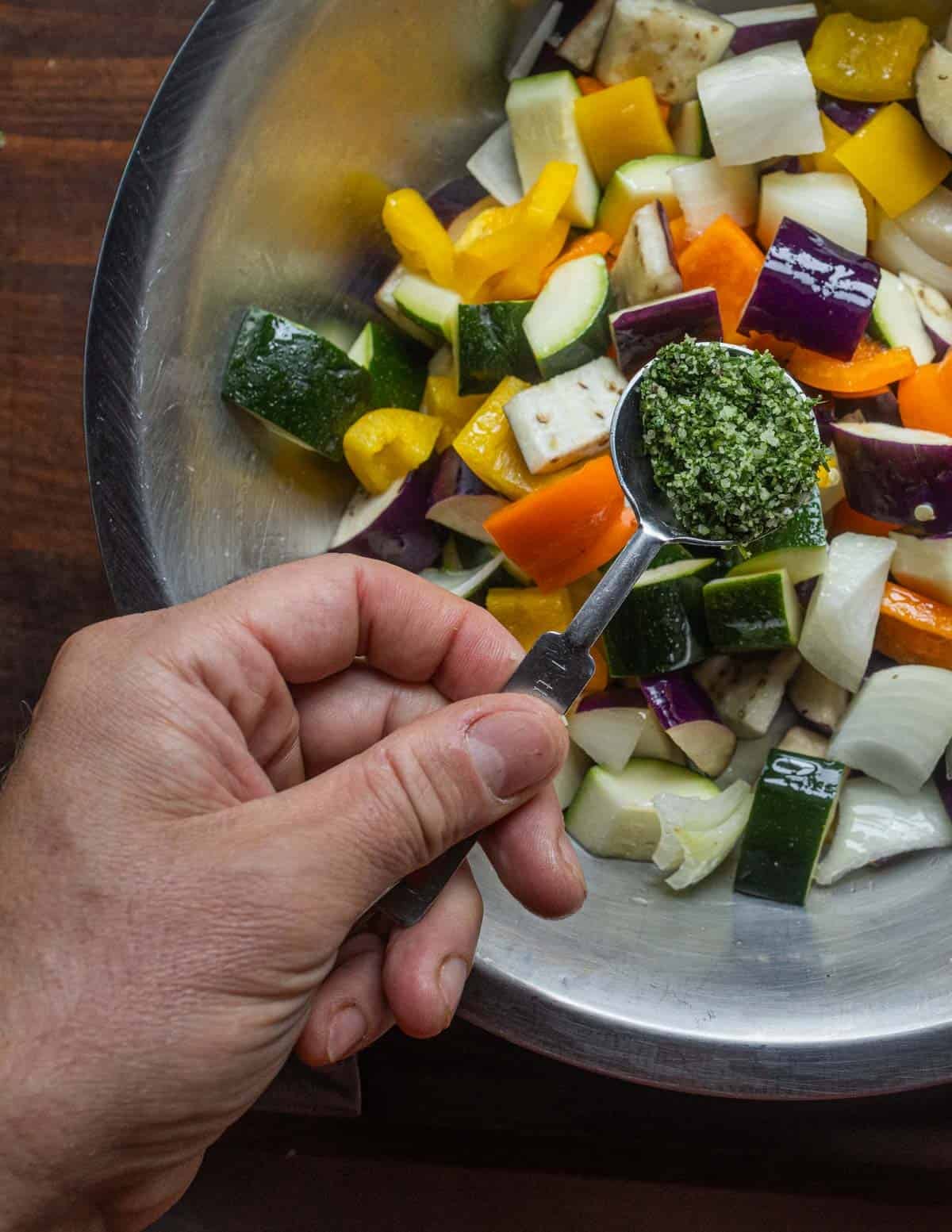
- Toss it with vegetables like carrots and parsnips, eggplant, peppers or potatoes before roasting. Start with ½ tablespoon salt per pound of vegetables.
Adjusting Salt Ratios in Cooking
One thing that can get tricky is when you're attempting to use the salt in regular recipes. With most savory dishes it's not an issue and you can simply use a bit more than you normally would, adding it to taste. For recipes where the salt is weighed, if it hasn't been dried, you can use 30% more than the recipe calls for. Typically I just add it to taste.
Related Posts
Garden Herb Salt
Equipment
- 1 Pint mason jar
- 1 chefs knife
Ingredients
- 8 oz Morton kosher salt see note
- ½ oz fresh rosemary
- ½ oz fresh sage or lavender leaves
- 1 oz fresh thyme leaves or summer savory
- 1 oz fresh oregano or marjoram
- 1 oz fresh parsley, chervil, or similar
- 1 tsp grated garlic
- 3-4 gratings of fresh organic lemon zest
- 10 grinds of the peppermill
- 1 tsp juniper berries crushed with the back of a knife
- 1 inch piece fresh hot chili pepper optional
- 1 small fresh bay leaf optional
Instructions
- inspect the herbs to make sure they're clean, if they're not, wash and dry them well.
- Pick the leaves from the herbs, removing any tough or woody stems.
- Roughly chop the herbs and put in a food processor with the remaining ingredients.
- Process the mixture on high speed, pulsing at first and then processing until smooth, about 20-30 seconds.
- Immediately transfer the herb salt to a pint jar with a lid and store in the refrigerator. It will last for a very long time, but will eventually become dry, which is fine.
Leave a Reply