
Sweet potato leaves are edible, and a delicious traditional food. While Americans know the sweet, starchy tubers, around the world both the tubers and tender green leaves are eaten where the plants are grown. Edible is an understatement too, considering how cheap and delicious these are. Today I'll walk you through processing them with a few examples of how people enjoy them around the world, and a fun, easy way you can grow them at home.
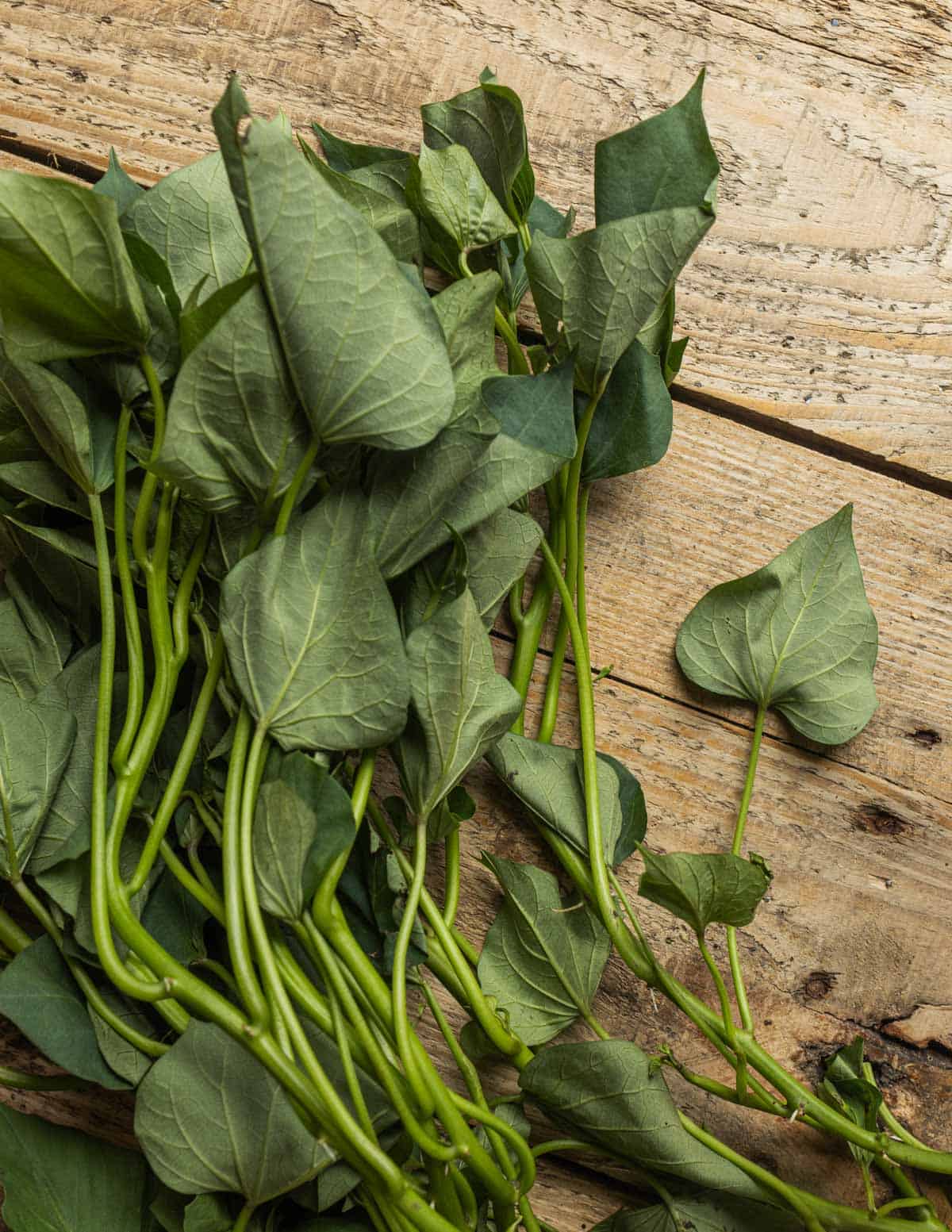
The fact that sweet potato leaves are edible will be new to plenty of Americans, but eating them is commonplace where the plants are grown and you'll find recipes all over Asia and Africa using them. I get mine from the Hmong farmer at the St Paul Farmer's Market, but they're regularly stocked in many Asian grocers, too.
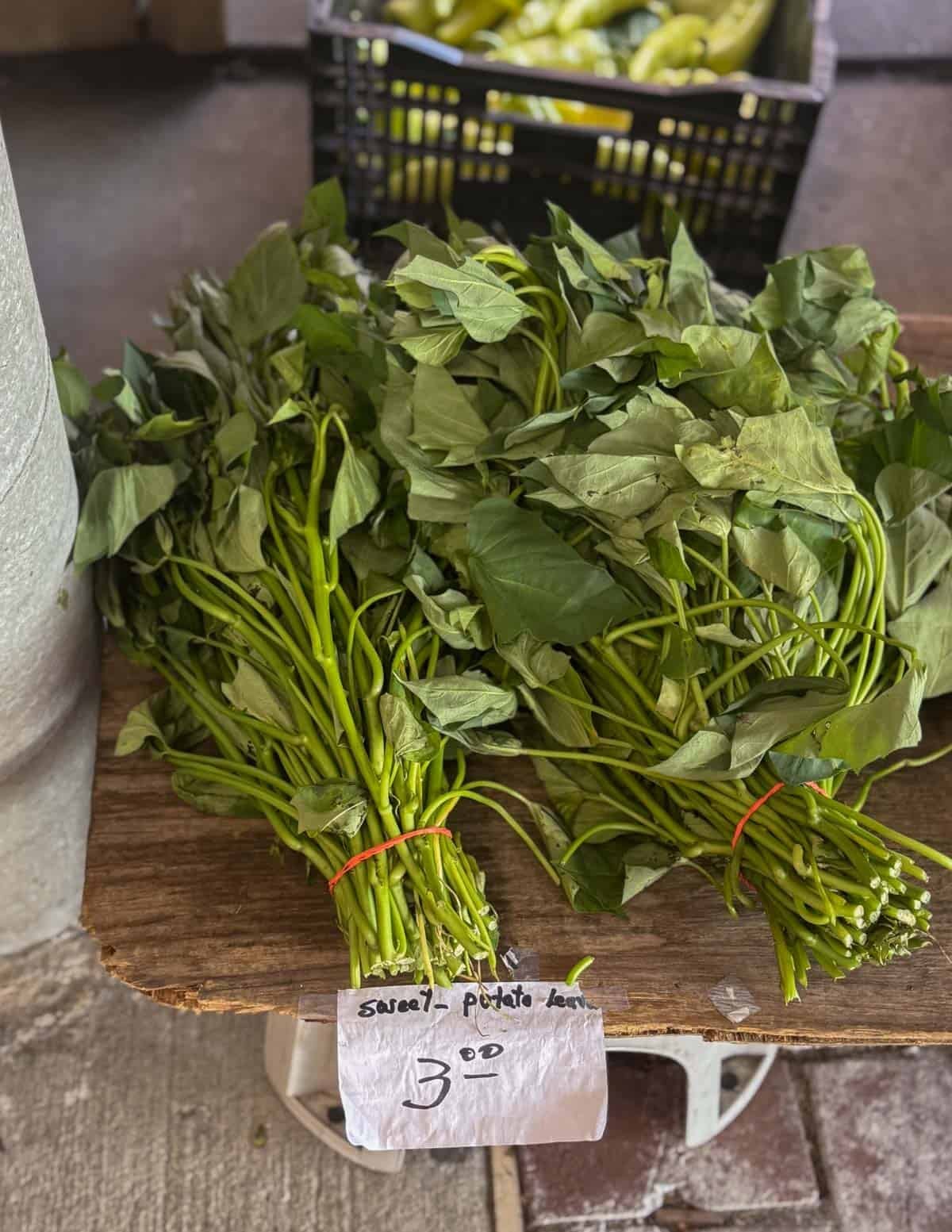
I learned about the leaves through my work with Shepherd Song Farm. They did educational work in West Africa for many years, teaching sustainable goat herding practices in partnership with USAID.
Yam vs Sweet Potato
If you've ever heard the terms yam and sweet potato used interchangeably and felt confused you're not alone. The two types of plants are often conflated and terminology is under-standardized.
For years I purchased cases of sweet potatoes labeled garnet yams-a needlessly confusing common name an American came up with to distinguish the more watery, orange sweet potatoes from ones with a drier, more potato-like flesh.
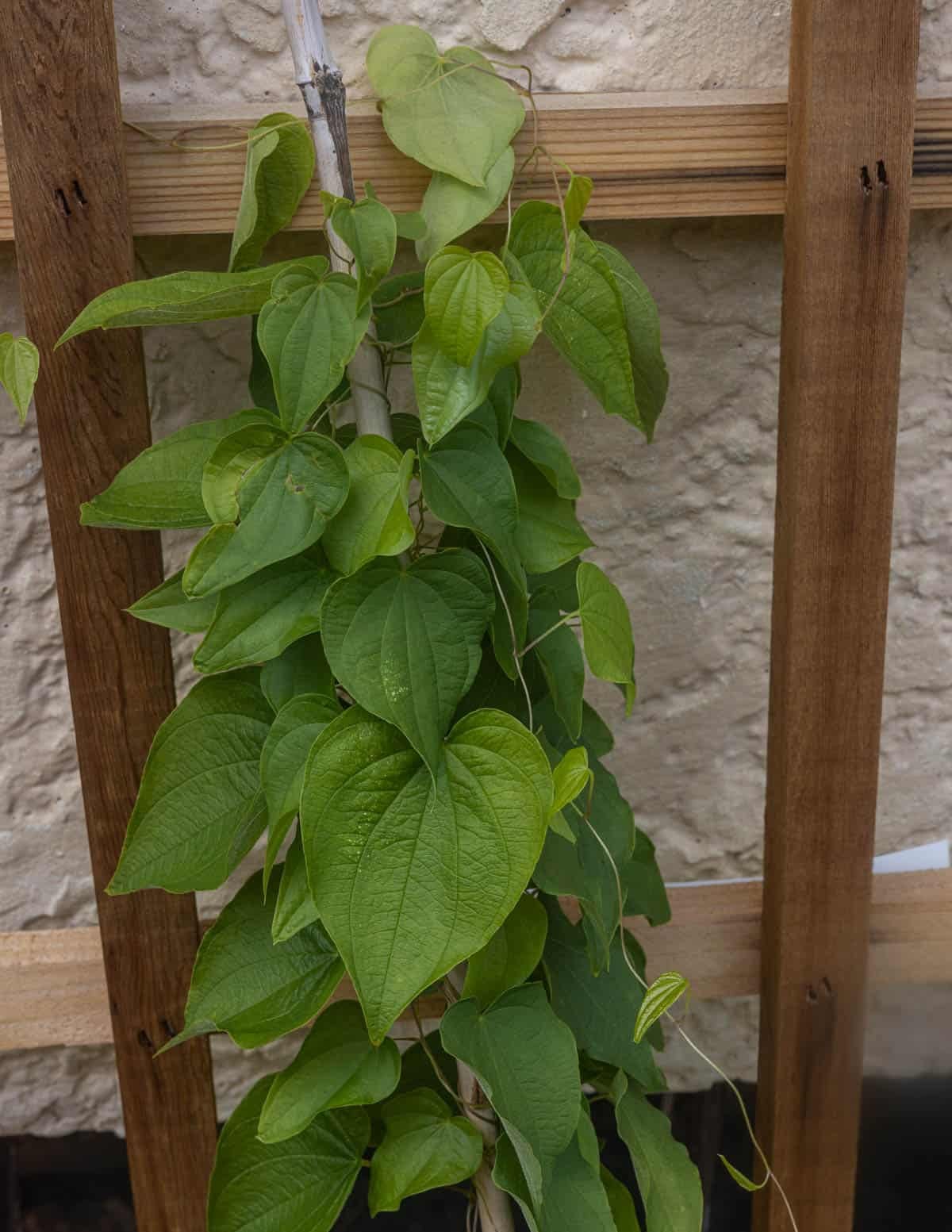
While both yams and sweet potatoes can share some similar characteristics, like heart-shaped leaves and a potentially tasty tuber, yams are in the genus Dioscorea, where sweet potatoes are Ipomea batatas. Some varieties of yam make tubers worth eating, while others, like our native American wild yam vine (shown below in my garden) do not.
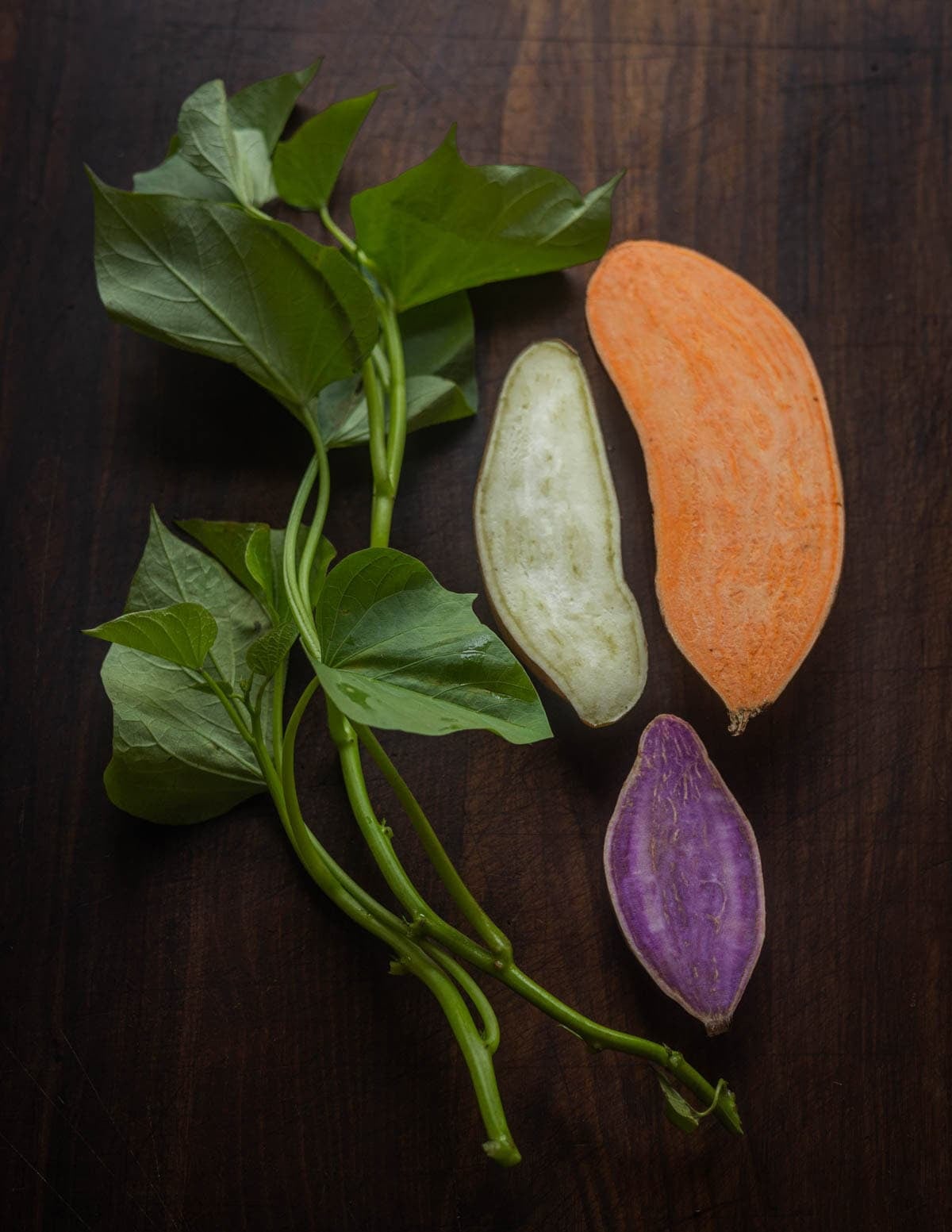
The most important thing to know for culinary purposes is that any color of sweet potato will make edible greens, but the same does not apply to yams, some of which are known to be poisonous.
Many recipes online call for "yam / sweet potato leaves", or use the words interchangeably. Dioscorea plants with edible leaves are used in some places around the world, and I've never seen any for sale.
Sweet potato leaves, on the other hand, are sold fresh in most Asian grocers I go to, as well as my local farmers markets in the summer. I have yet to find a recipe where Dioscorea greens are called for instead of Ipomea.
Growing Sweet Potato Leaves From Slips / Stems
The greens and attached stems take up a lot of space in the fridge so I usually keep them in a vase for a day or two on the counter, changing the water once a day and discarding any discolored leaves touching the water, or starting to wilt or yellow.
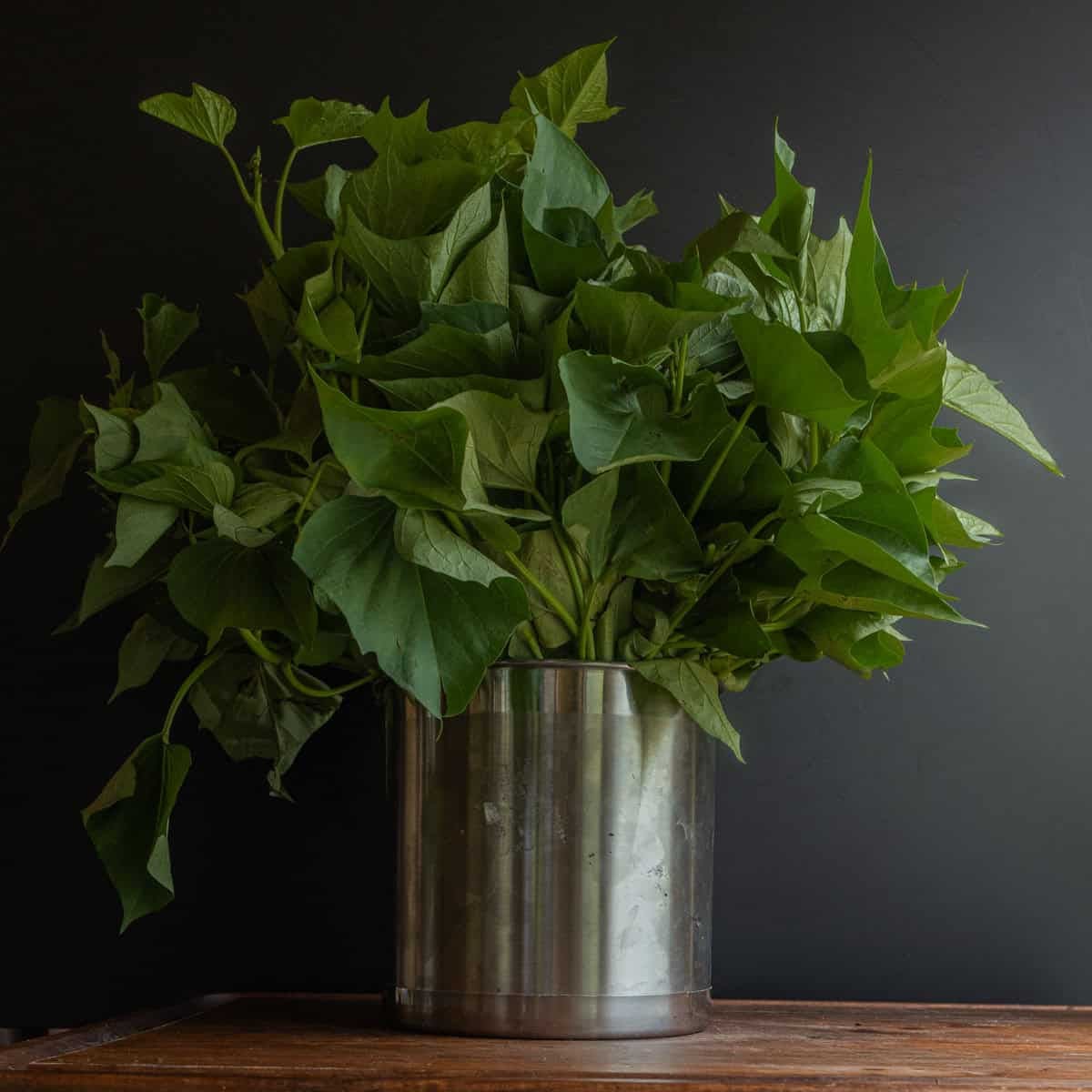
Even with their short shelf life, freshly cut slips, as they're called, are noticeably virile. Within a day or two they'll grow roots above the individual leaf nodes on the stems.
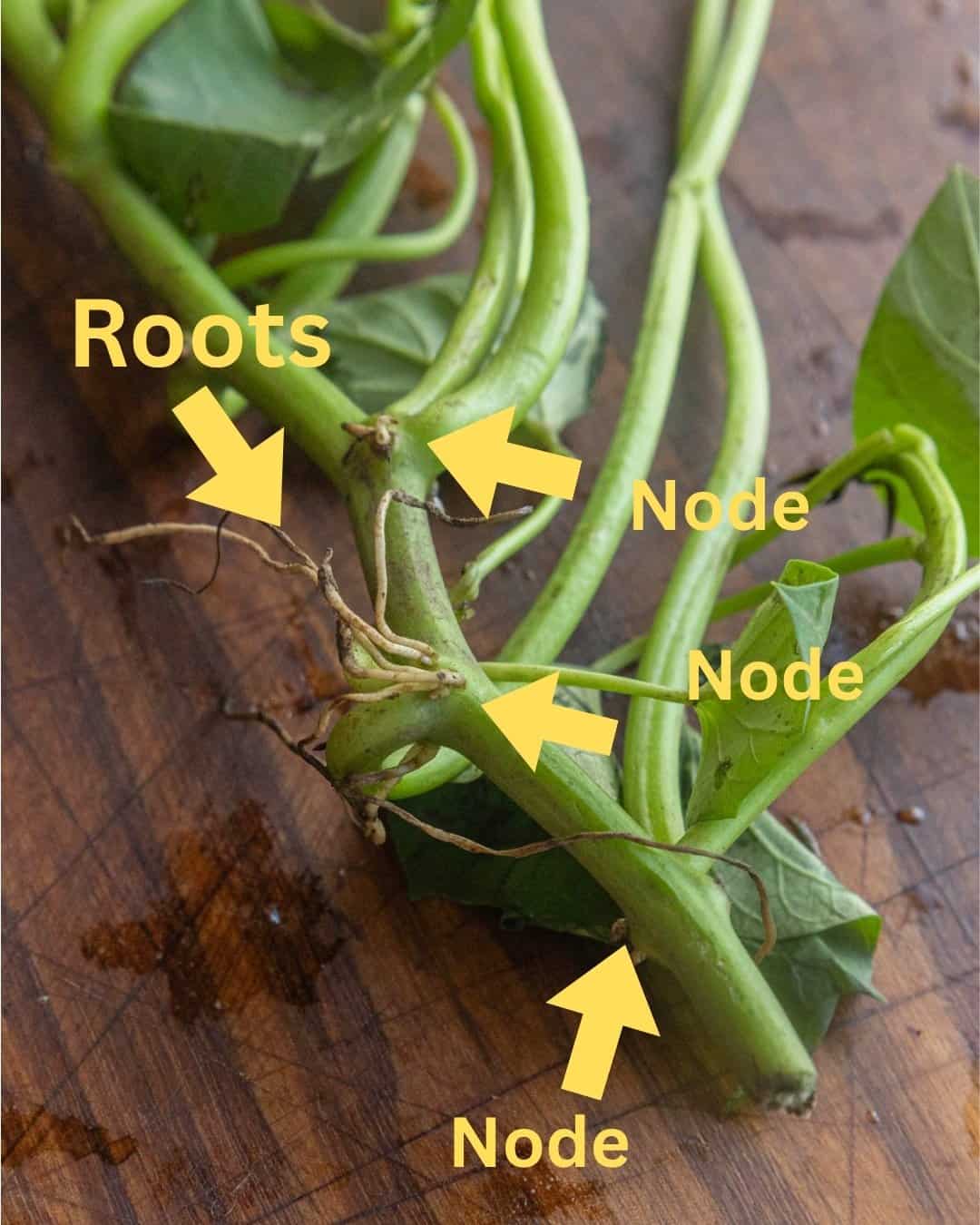
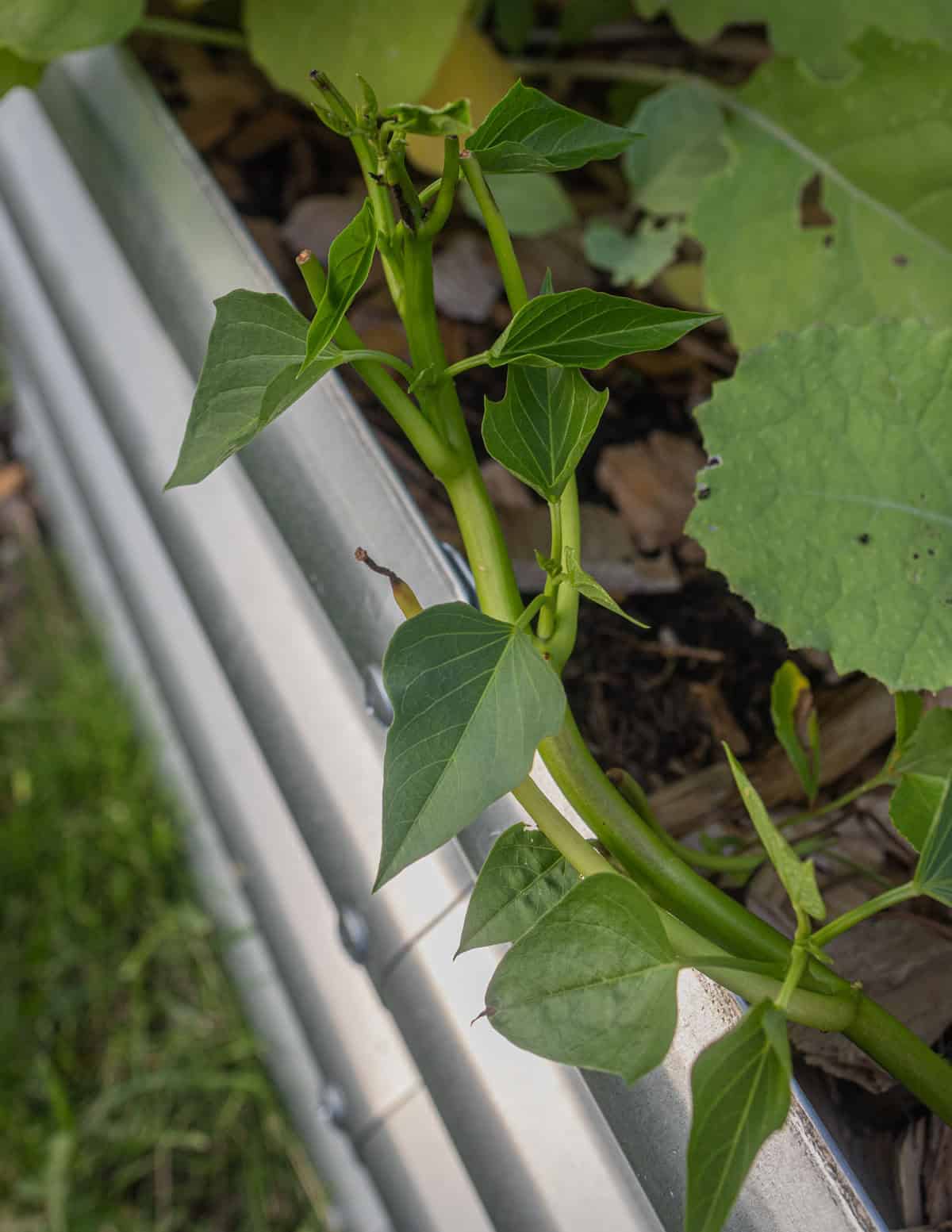
After trimming some a few years ago, I tossed a handful of stems from my window into the garden as lazy mulch. A week later I laughed out loud when I saw the mangled stems had rooted and were growing fresh leaves.
I try to get a few bundles when they first show up at the farmers market, planting the slips for extra greens over the summer. Planted in full sun they'd eventually make tubers.
Preparing Sweet Potato Vines
At farmers markets, bundles of sweet potato leaves are usually sold with a disproportionate amount of long stems attached, presumably as they keep better in-tact. A two pound bundle of greens might seem like a lot at first, but as only the greens and tender tips are used, you can generally assume a yield of around 30%.
So, if a recipe calls for one pound of sweet potato leaves, I'll buy at least three pounds before trimming. The exception here is if you see baby sweet potato leaves sold at some Asian markets which are younger and have a longer portion of tender stem.
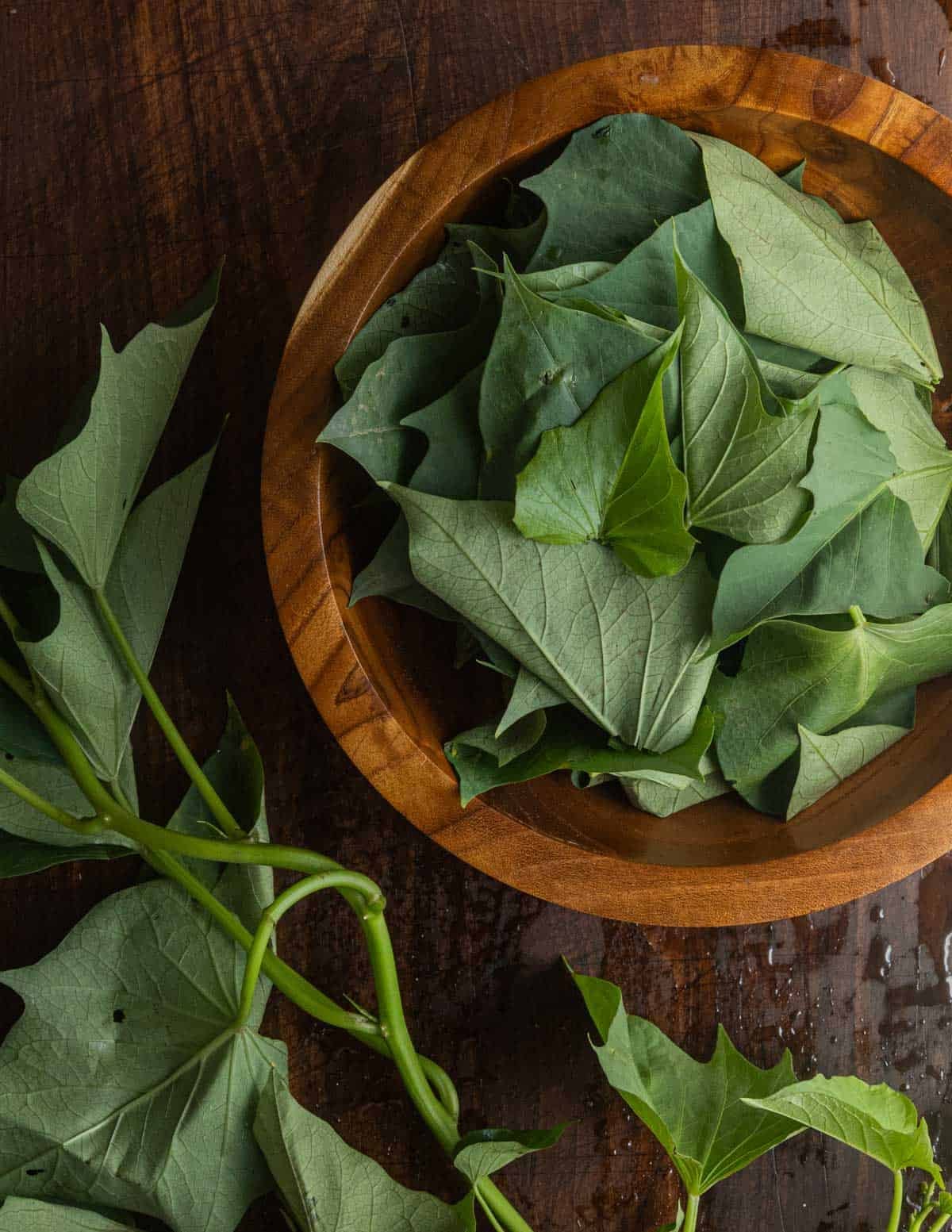
There's some flexibility here. With the individual leaves, break or cut them off where the stem is tender like you would asparagus, which is usually about an inch of stem or less. The fresh leaves can be cooked just like spinach and become tender quickly, with a subtle silkiness to them.
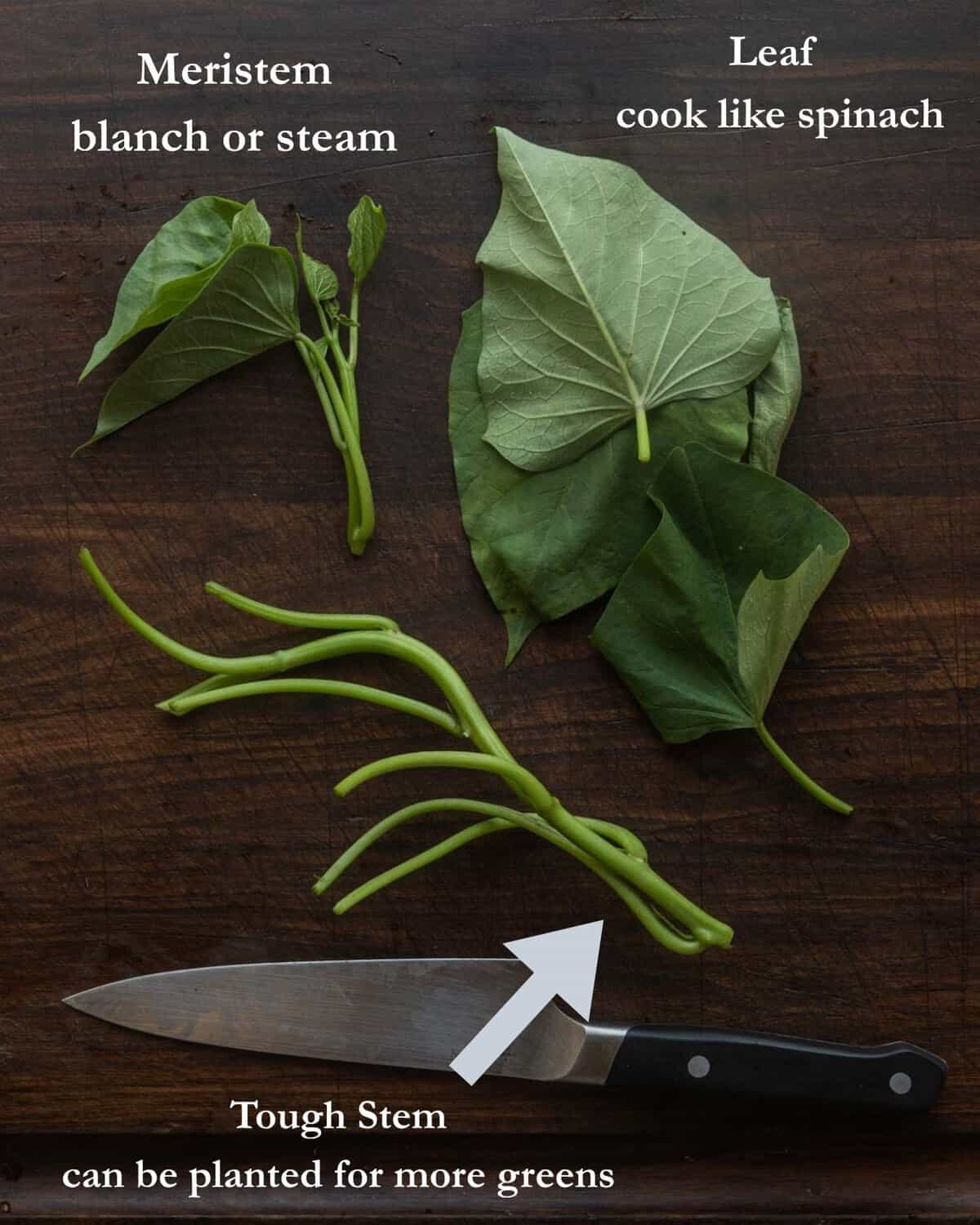
The best part, in my opinion, and one that I don't see traditional recipes for, are the meristems or tender clusters of leaves. These young clusters are tender enough that they can be cooked like a vegetable.
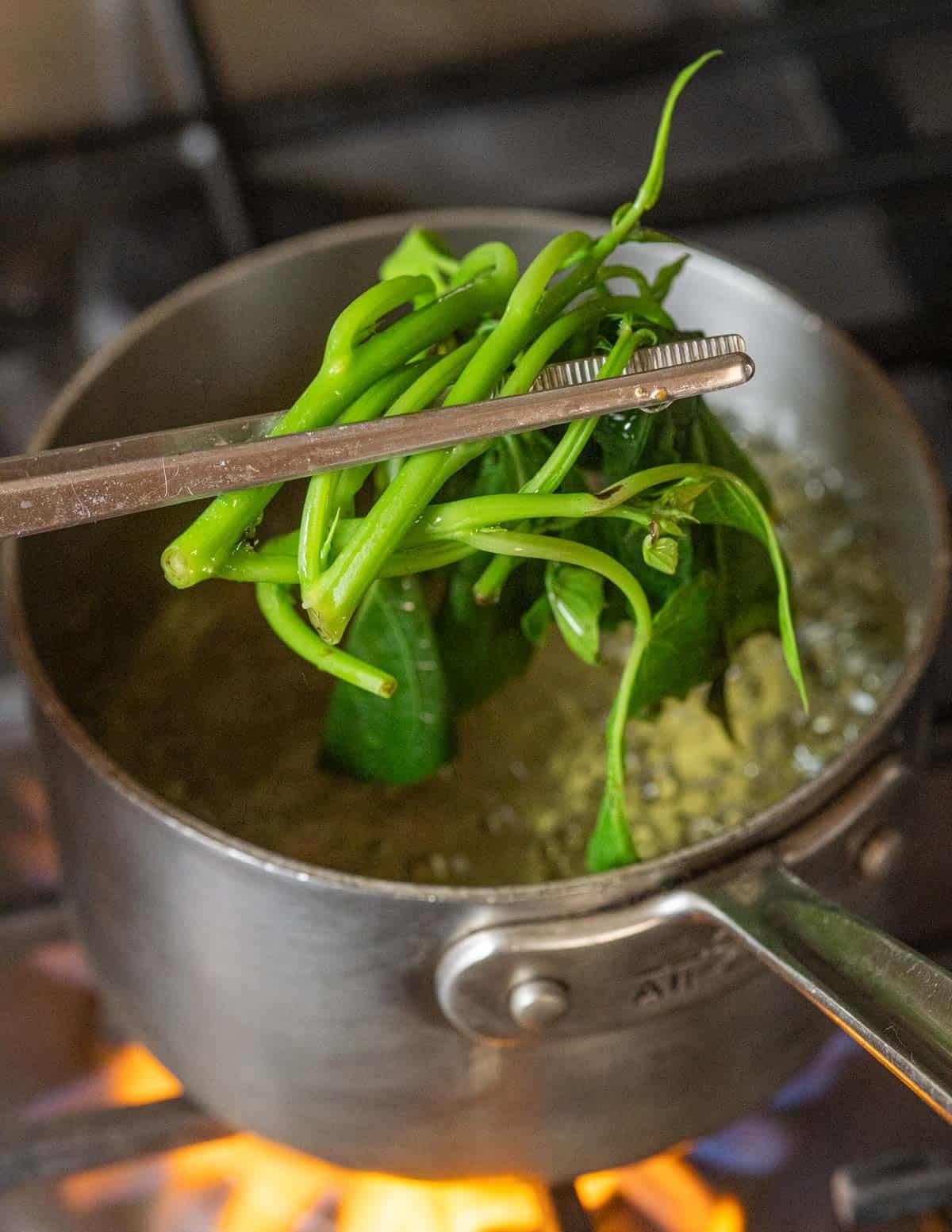
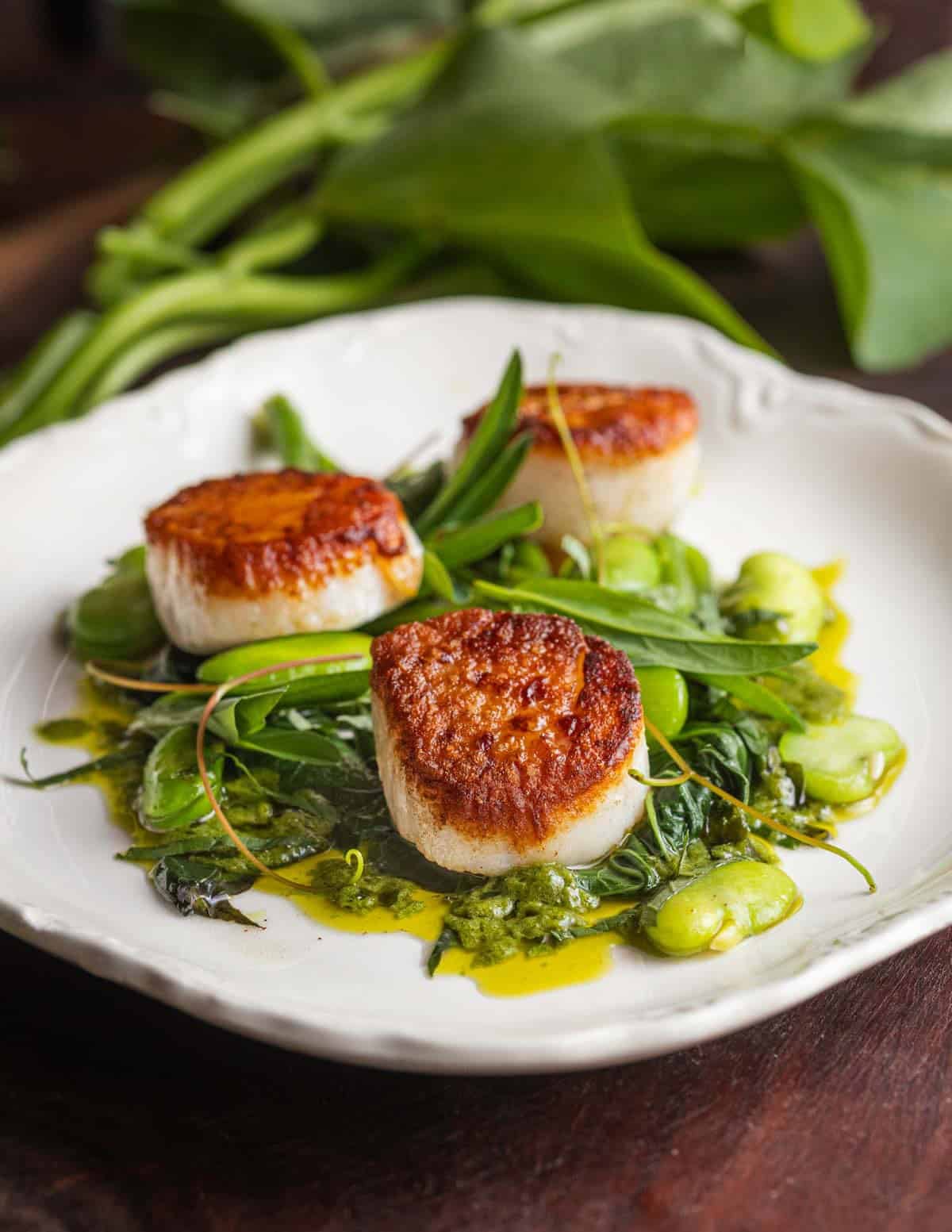
After a quick steam or boil, the tender leaf clusters make a great vegetable. They were delicious with fava beans, mint, ramp butter and scallops.
General Cooking
Many greens are compared to spinach, but sweet potato leaves are one of the closer approximations I've had in terms of texture and how they can be cooked. The flavor is a bit stronger-they have a sort of mild, grassy taste that reminds me of young sochan greens. Here's a few things I found helpful to consider from my notes.
- As the trimming makes them more labor intensive, I like to show them off alone as opposed to mixing them with other greens.
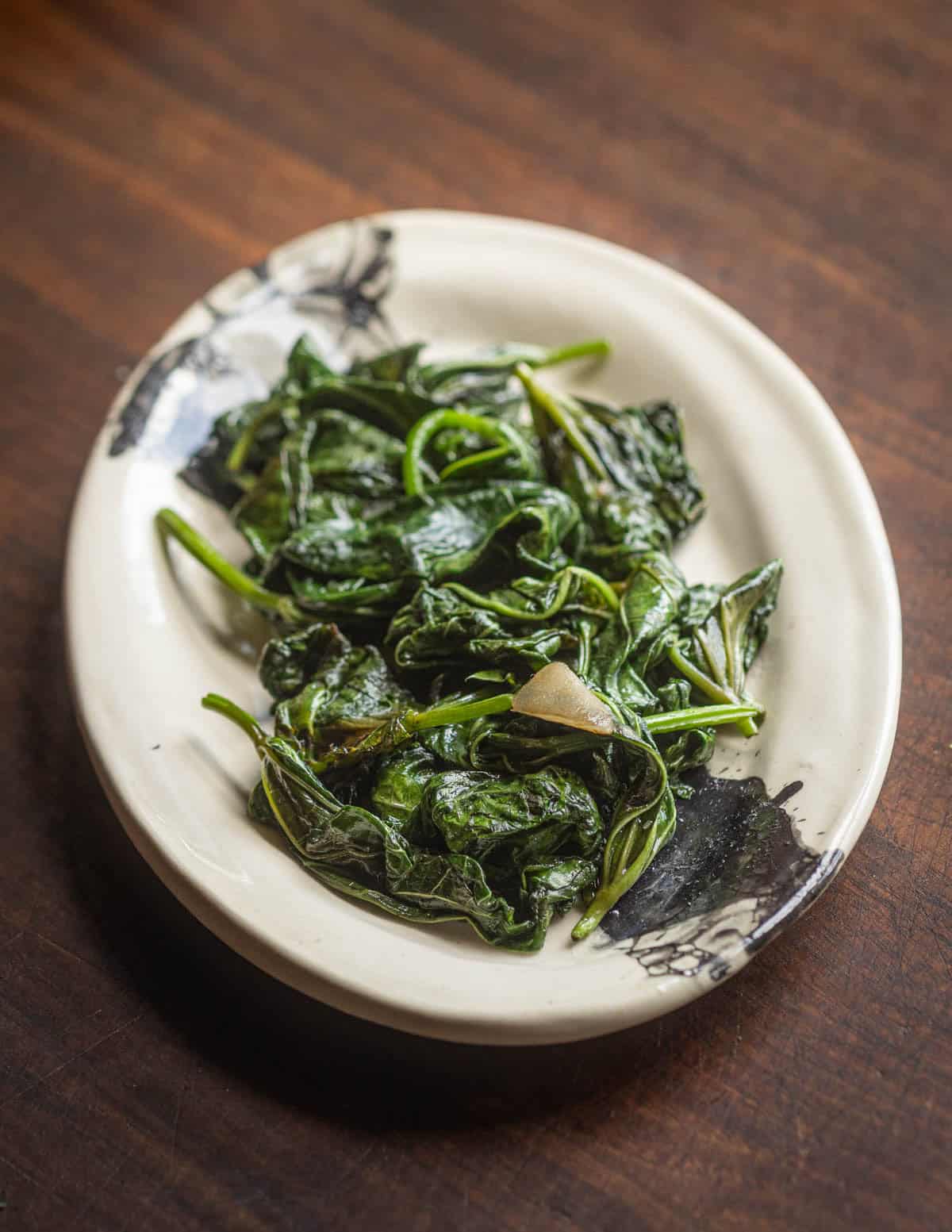
- Boiled for a moment until just tender in salted water they can be used anywhere you'd use spinach, chard, or other tender greens.
- Steamed they'll have a more assertive taste, and you'll taste the grassy notes on the finish.
- Finely chopped or pounded and cooked they will be creamy and slightly mucilaginous, but nothing like Malabar spinach, okra, or some of the Malva greens I've eaten.
- Serving the greens alongside the tubers is a natural pairing.
- I recommend removing the tender meristem leaf clusters and cooking them separately as a special side dish, adding to a stir fry, etc.
African Sweet Potato Leaf Recipes
Across Africa, one way of cooking sweet potato leaves and other greens is finely chopped, stewed with aromatics and simmered until very tender and thickened. The finished product is a bit like spicy saag curry, eaten by hand with rice or fufu (think firm polenta made from cassava flour). There's lots of variation, with additions like dried fish, crayfish or goat meat, and spices like cardamom and fresh bay leaves.
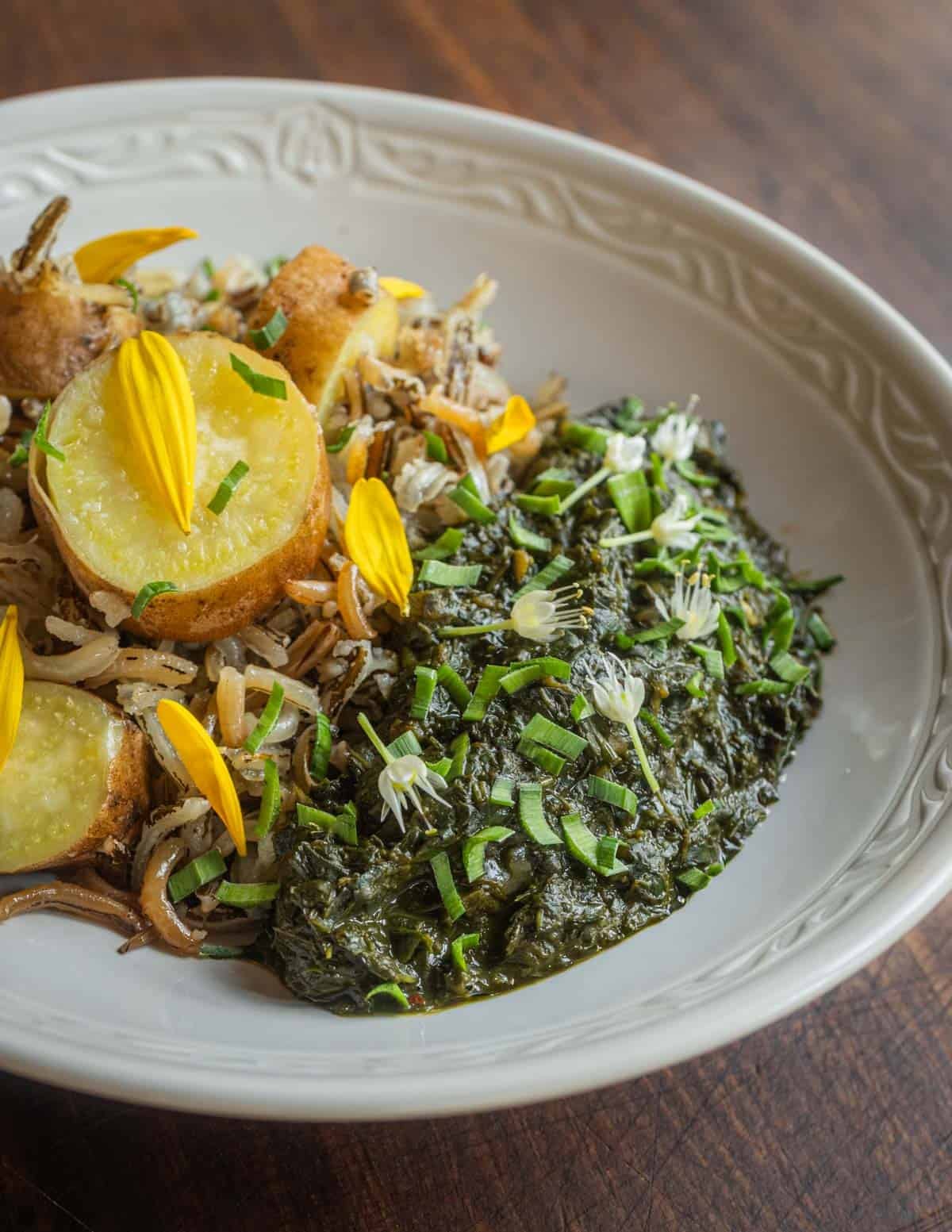
Regular readers of this site may remember African black nightshade greens and the dish made from them called Njama Njama. Stews of sweet potato leaves I've seen are similar, but may include other vegetables like eggplant or okra and is thickened with peanut butter. Below is a recipe my friends transcribed on a trip to Guinea, where it might be called Hako Pouté, or Sauce de Fueille de Patate, as French is still the official language.
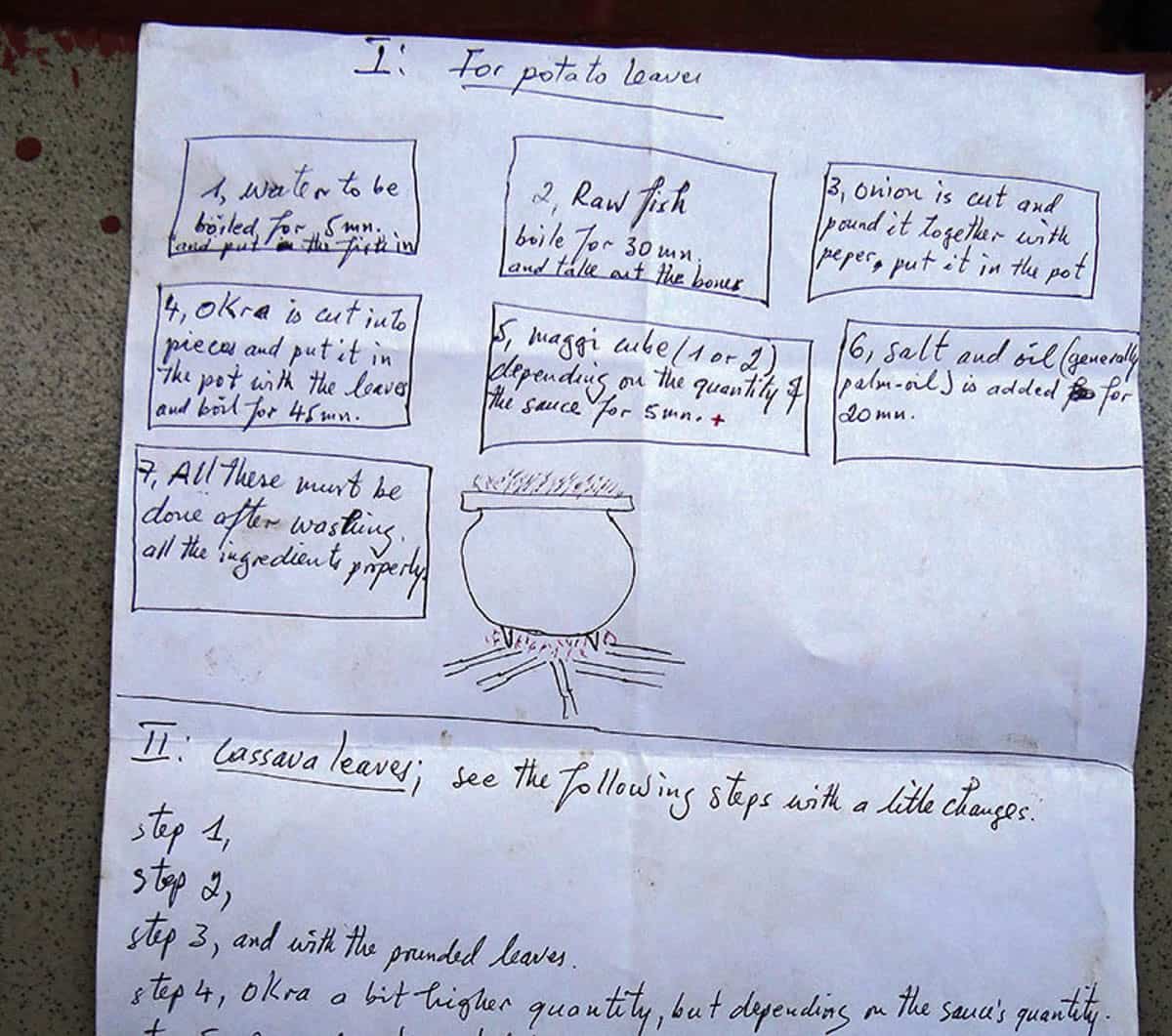
It's tricky to track down specific references, but I can only assume there's many similar recipes and regional variations across Africa. I've found it tricky to find specific examples, but a good one is the Congolese dish Matambele.
Matambele is both the regional name for sweet potato leaves in Swahili, as well as the finished dish. As any food historian would tell you, this sort of dual meaning for an ingredient is tell-tale sign an ingredient is of particular cultural significance.
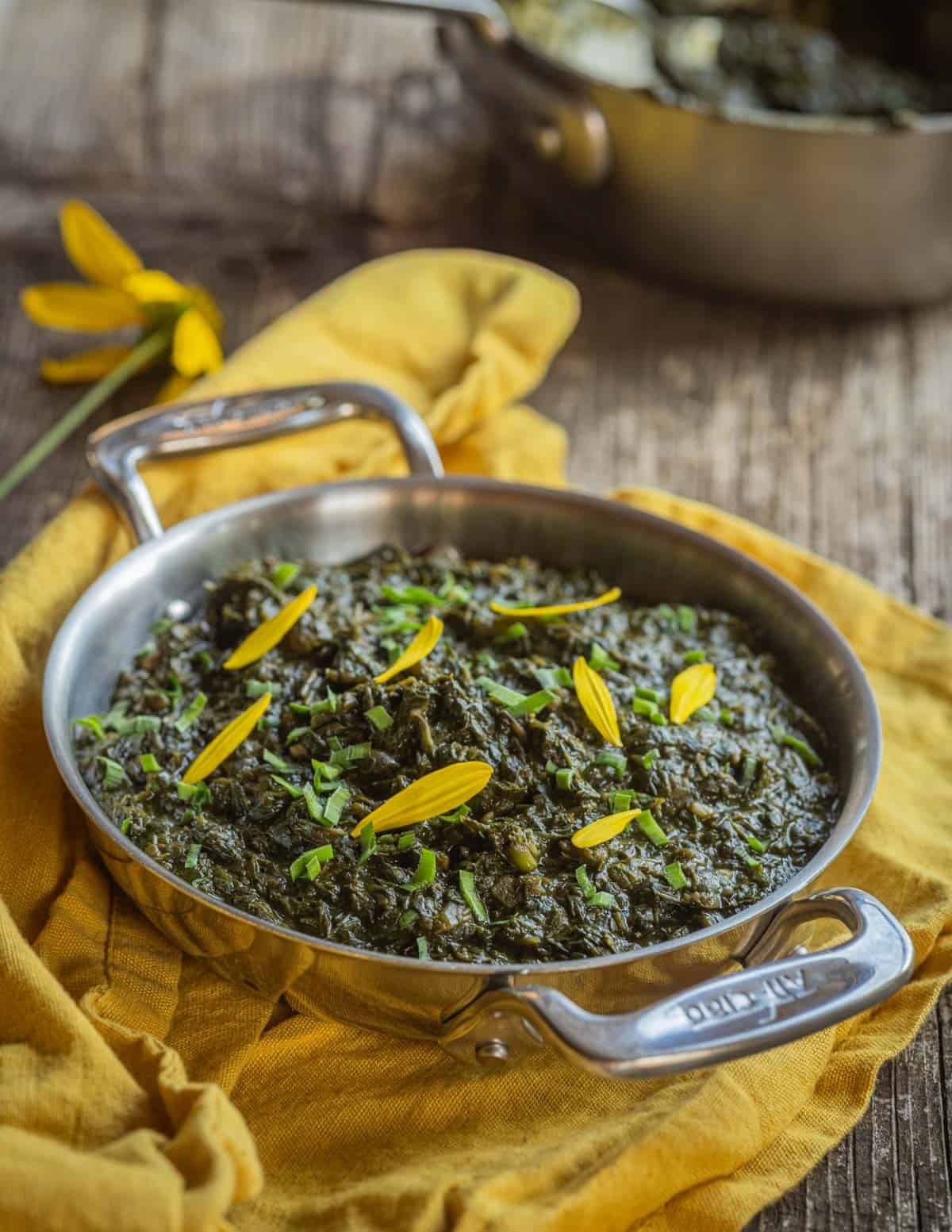
As African recipes can turn into an ingredient safari, I distilled the basics of the recipe from Guinea into something you can try at home without buying a new spice drawer. It's a great lesson in layering deep flavors in a simple dish of greens: slowly cooking pureed shallots, garlic, ginger, leeks, and eggplant in aromatic red palm oil.
Have you ever eaten sweet potato greens, or have something to add? Leave a comment and let me know!
Jane
I work in a grocery store and get to see tiktok trends wreck store shelves in real time. Lately it has been sweet potatoes. So I've shared this post with several customers buying multiple sweet potatoes at a time with a little, "Hey did you know that sweet potato leaves are edible too? There's a chef that wrote this amazing article all about it." Most people are super intrigued and want to know more. You are doing good work, friend.
Alan Bergo
Oh Jane thank you so much. That makes my day!
Erin
I am currently trying to grow sweet potatoes for the first time from sprouted potatoes I got from the grocery store. I have some greens starting to grow and I was wondering how big they have to be for me to harvest them or if I should just not harvest them at all and wait until the potatoes are fully grown. I've always wanted to try eating sweet potato leaves so I'm really excited and this sounds freaking delicious!
Alan Bergo
This is open to interpretation and personal preference. The very young leaves and tender stems are very good. The older the leaves get, the tougher the stems will be so there’s a bit of a trade off there. Some people really like the very young ones in salad.
Xuan
Always a delight to read your articles about eatable greens. Thx!
I have a patch of sweet potato in the garden in Belgium. From time to time I have enough to stirfry the leaves. But I haven't managed to grow enough to enjoy the tender stems. In my hometown in China, the tender leaf stalks are often preferred rather than the leaves. My sisters would patiently peel them and cut them into 5~7cm chunks, then stir-fry with one or two (often more) fresh chilli peppers. Sometimes with a little bacon (fat) to give it a richer taste.
Megan
I'm so glad you did an article on sweet potato leaves. They are so underrated! I started eating them a few years ago. I bought them from a Thai woman at the farmers market. She insisted that I plant them and now they have taken over my yard 😂 I usually cook them with potatoes. I take a left over baked potato and dice it and fry it until crispy and then toss in my chopped greens. I cook until the greens are wilted. It's really simple but my favorite way to eat them. I am definitely trying out the African recipe, since we already eat saag, I think we'll love it . Thanks for sharing!
Alan Bergo
Thanks Megan. I had to do two articles this week since the recipe needs to be separate. It’s a really fun dish, and the peanut butter and palm oil make it surprisingly filling. I do eat it with a spoon as opposed to my fingers though:).
Eugene
Thanks for spreading words on the edibility of sweet potato leaves. As always, you provide wonderful advices on eating wild. Growing sweet potatoes in home garden in MN seems to be more common. Teaching gardeners to harvest leaves as a green veggie would be a wonderful thing to diversify the sources of leafy green.
Alan Bergo
Thanks Eugene. The other green I learned about through working with the farmers I’d love to write an out is Moringa, I even edited a whole cook book on it they produced. Unfortunately moringa trees are much trickier to grow where I live.
Megan
I've had Moringa trees growing for some time. They thrive here in Florida. I usually avoid them because I don't like the flavor of them but I've recently started cooking with Moringa.I find I like it better cooked. I would love to make flour with the seeds one day.
Alan Bergo
Yes the green seed pods were used in the cookbook like green beans. Pretty cool how many parts of it you can eat, and the nutrient density is off the charts.
Eugenia Wade
I tried and tried but couldn’t get the seeds to germinate
Jasmine D
I actually grew mine from a full sweet potato! I started with it partially submerged in a jar of water until a lot of roots and some leaves sprouted then transferred them to my garden bed in full sun. It grew so fast! Now I am ready to harvest my first set of leaves!
Alan Bergo
Yep you can do that too! I have friends who go around to planters in MSP and purloin them here and there, although they keep them in the ground for a year to purge anything that was sprayed on them.