
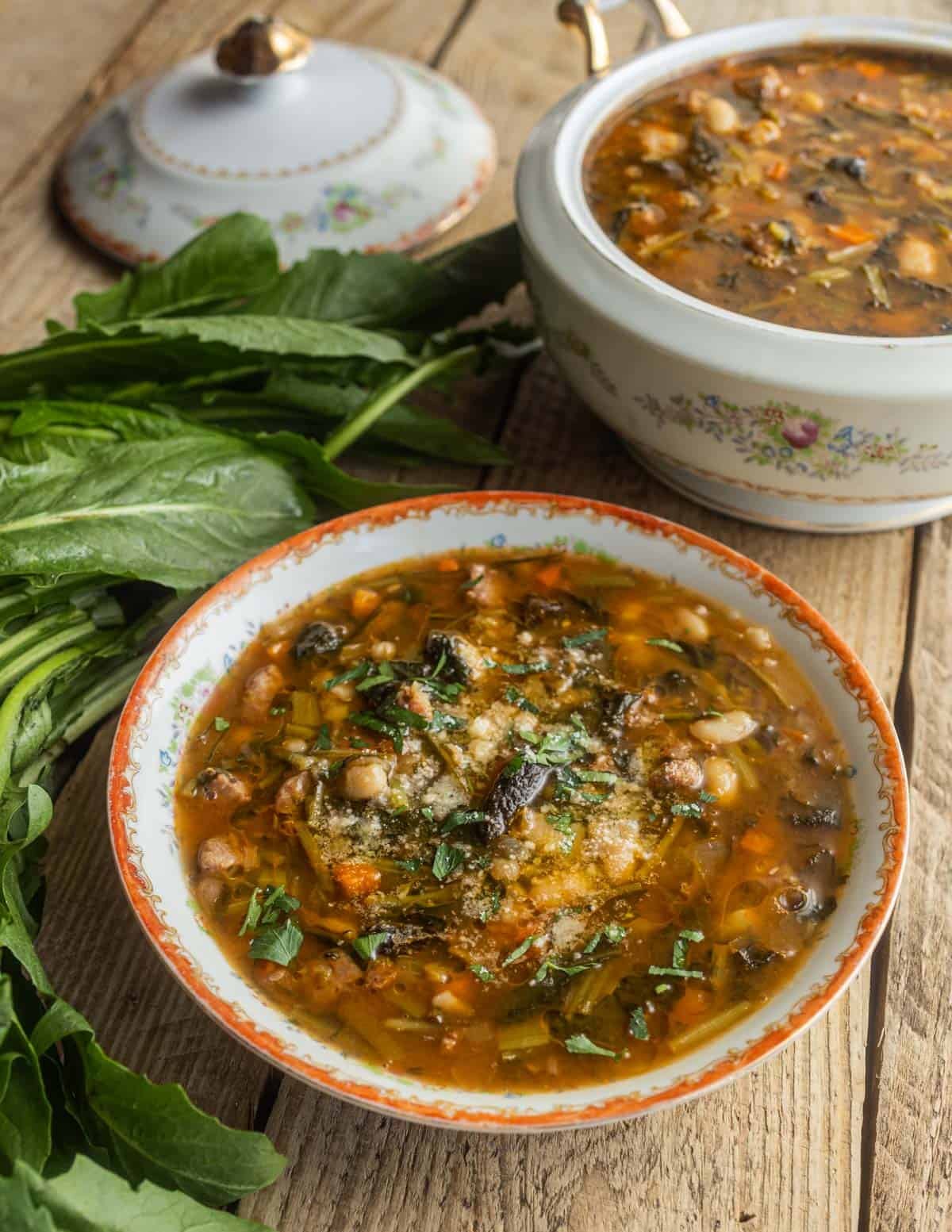
A big rustic bowl of vegetable soup is a great way to sneak some leafy greens into a meal. While most recipes will reach for kale or spinach, it's a perfect place for assertive greens like dandelions. This simple Italian sausage, white beans and dandelion soups is based on a template I use to make many similar dishes. Read on and I'll walk you through it and some ways you can vary it with whatever's on hand.
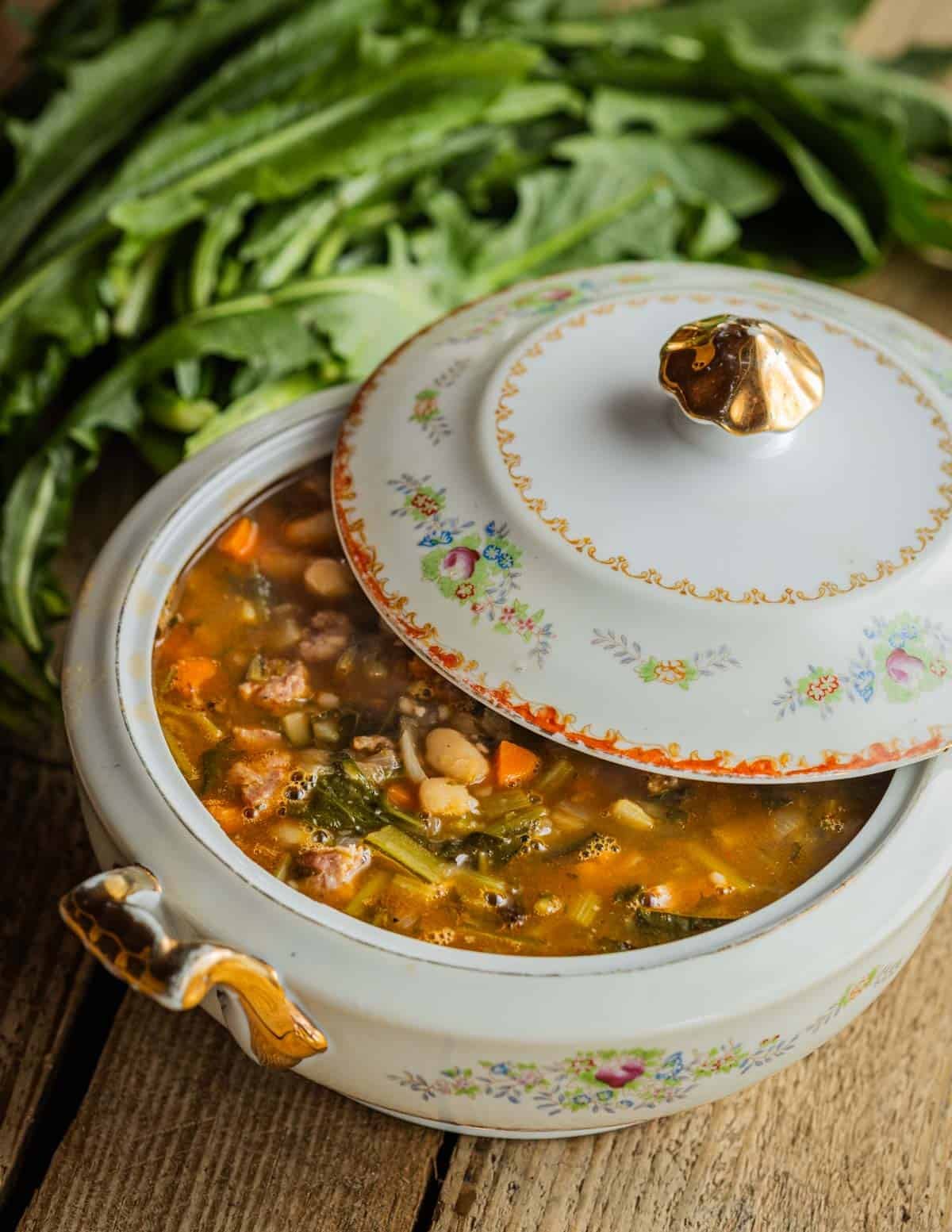
There's many ways to vary a simple soup like this, but bitter greens really shine here as you don't need a lot. If wild greens are out of season I'll check my local Asian and Middle Eastern grocers for cultivated dandelions or chicory which is what I've done here.
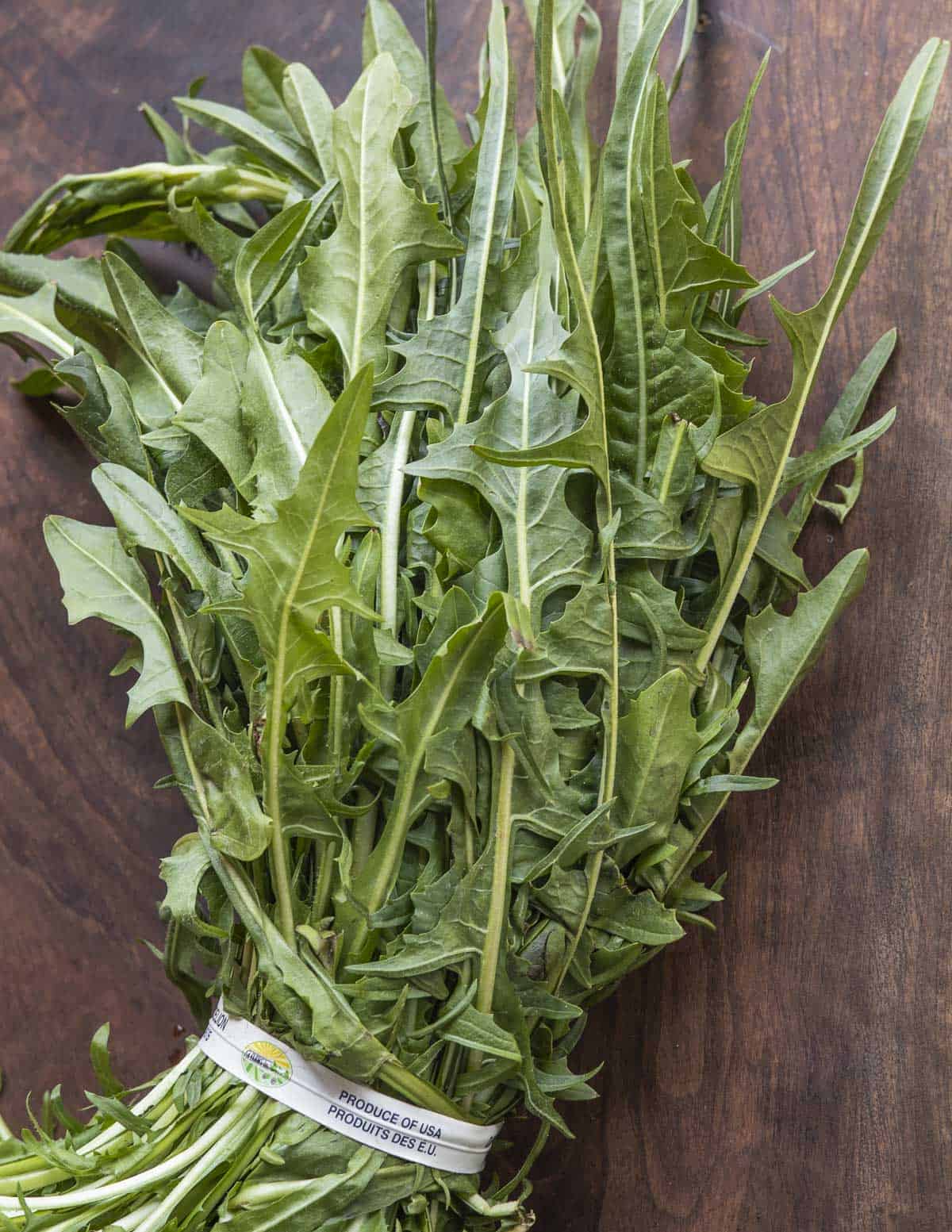
Meat is optional, but dandelions, chicory and others like wild lettuce are a perfect pairing with sausage. At the end of the day, I'll add whatever I have. There are no sacred cows here, and rapini / broccoli raab is a great substitute if you don’t have any wild bitter greens.
How to Make It
If I have time, the first thing I'll do is soak some beans, altough potatoes, pasta and farro work too. While a can works in a pinch, home-cooked beans are easier on my digestion and allow you to control the flavor. Soak the beans in cold water for a few hours or overnight, strain, cover with water, add a bay leaf and a clove of garlic, and simmer.
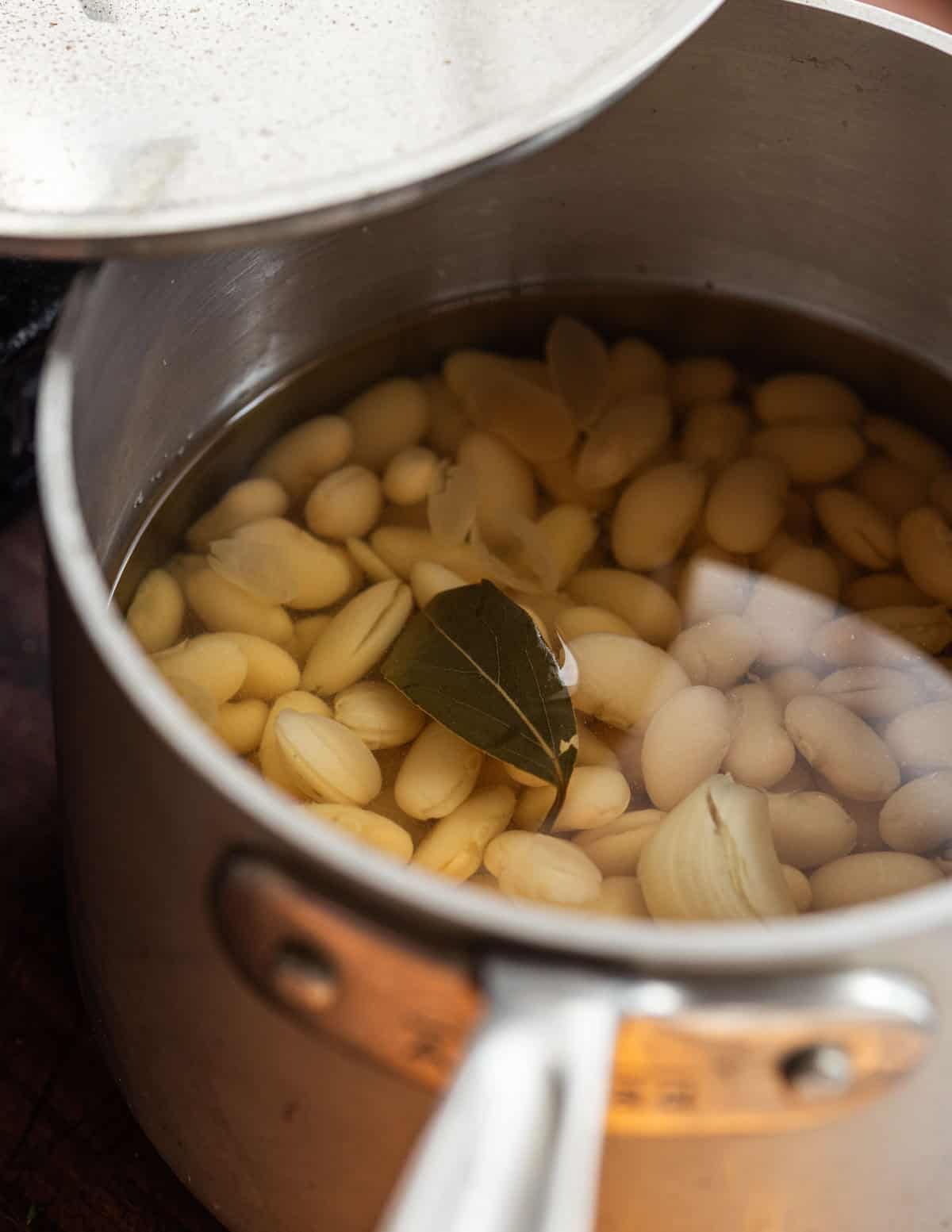
I add salt after half an hour to ensure they don't break apart. Although it tastes good, I also discard the cooking liquid, but you don't have to.
Building the Soup
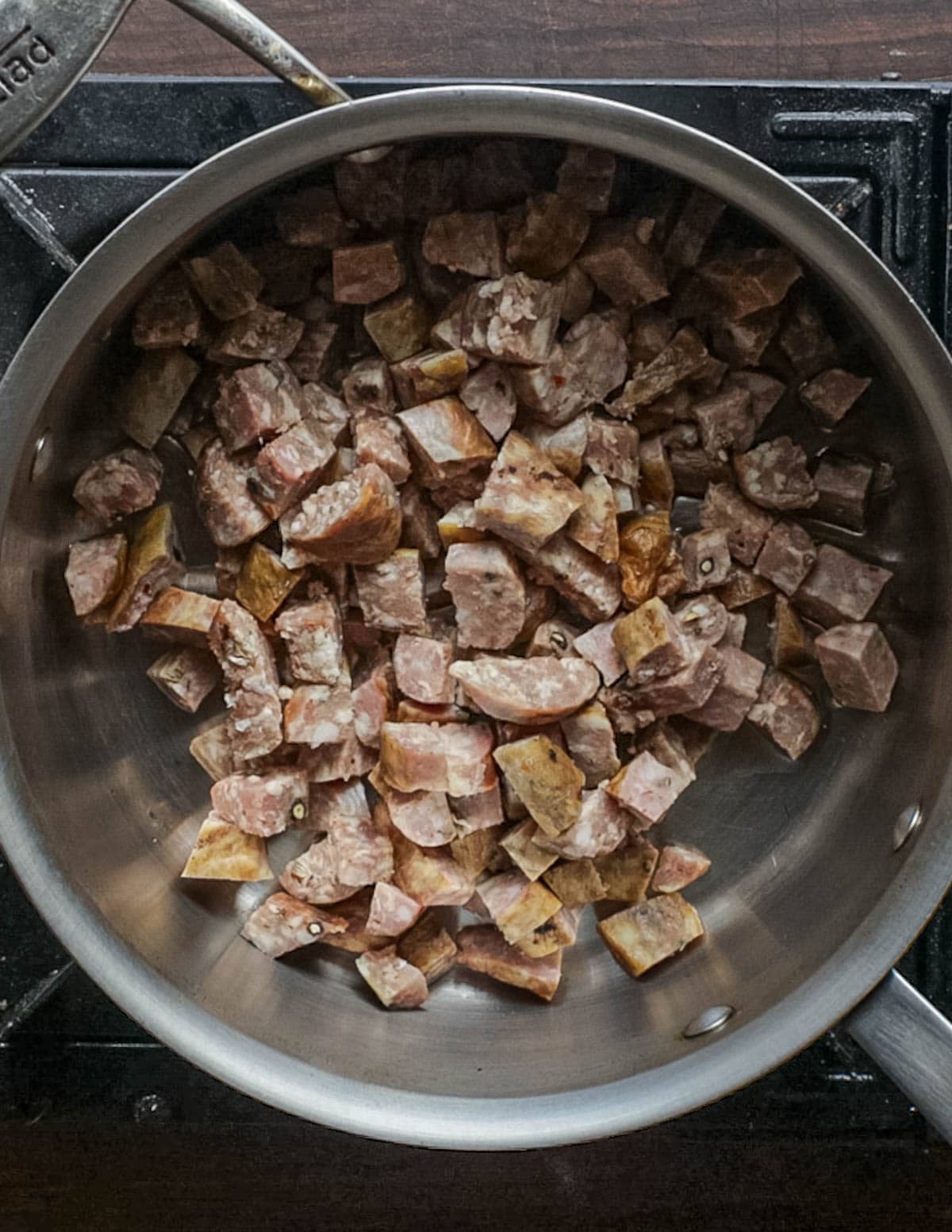
If possible, the first thing I do is build a good layer of browned bits in a pan by cooking some meat. While most soups may call for fresh, I find I get a much better fond (browned bits) from using partially cooked meat as some of the water weight's been cooked off.
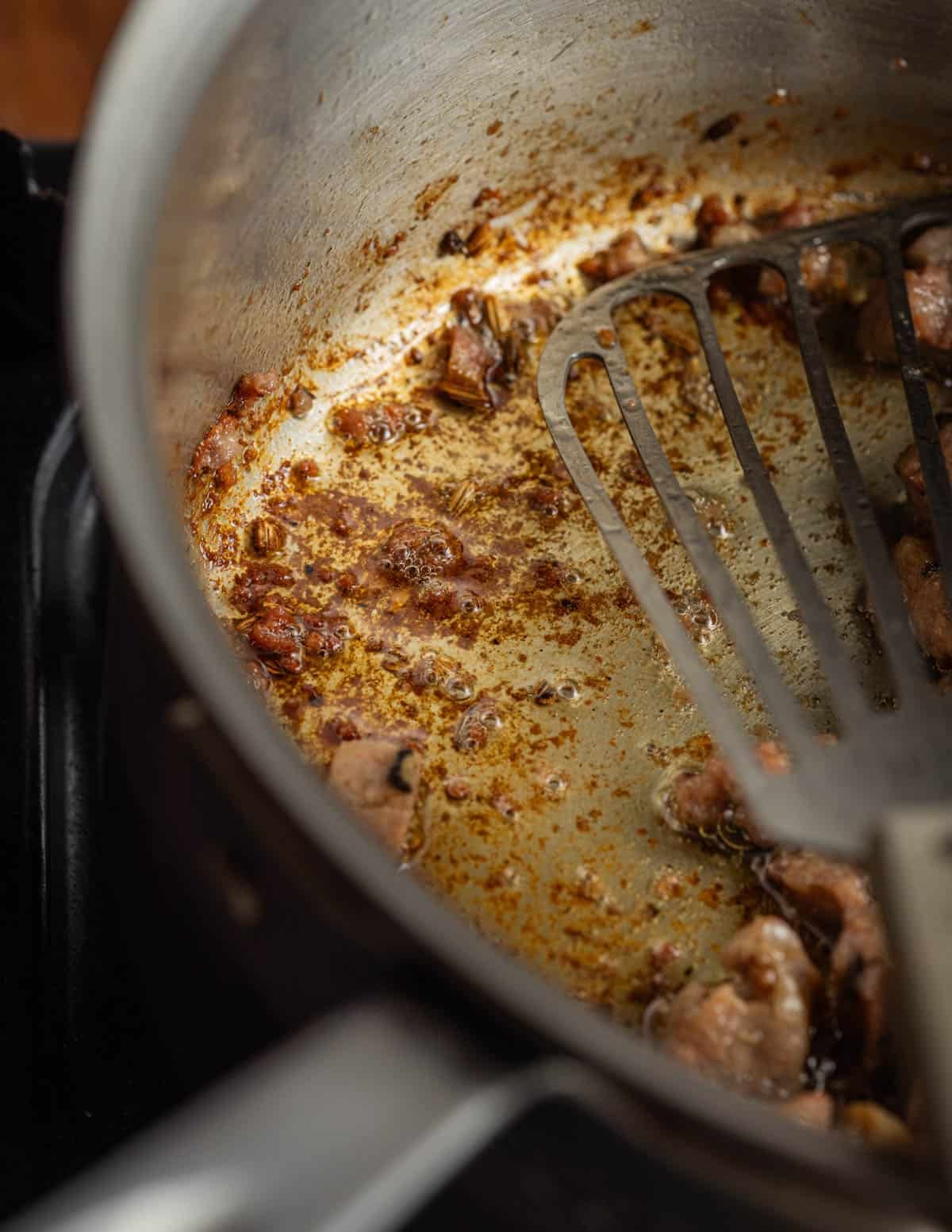
Here I've used some leftover Italian sausage I made which is so good with dandelions, but you can use whatever you have, or skip it and use the same weight of mushrooms, ideally roasted to brown them beforehand. Sometimes it might be a leftover soup bone or a few chopped salami ends.
While the meat browns I'll bring a pot of salted water to a boil and cut up the greens. One of the keys to having long leafy greens blend into a soup is to cut them into slices around an inch long so they don't hang awkwardly from a spoon.
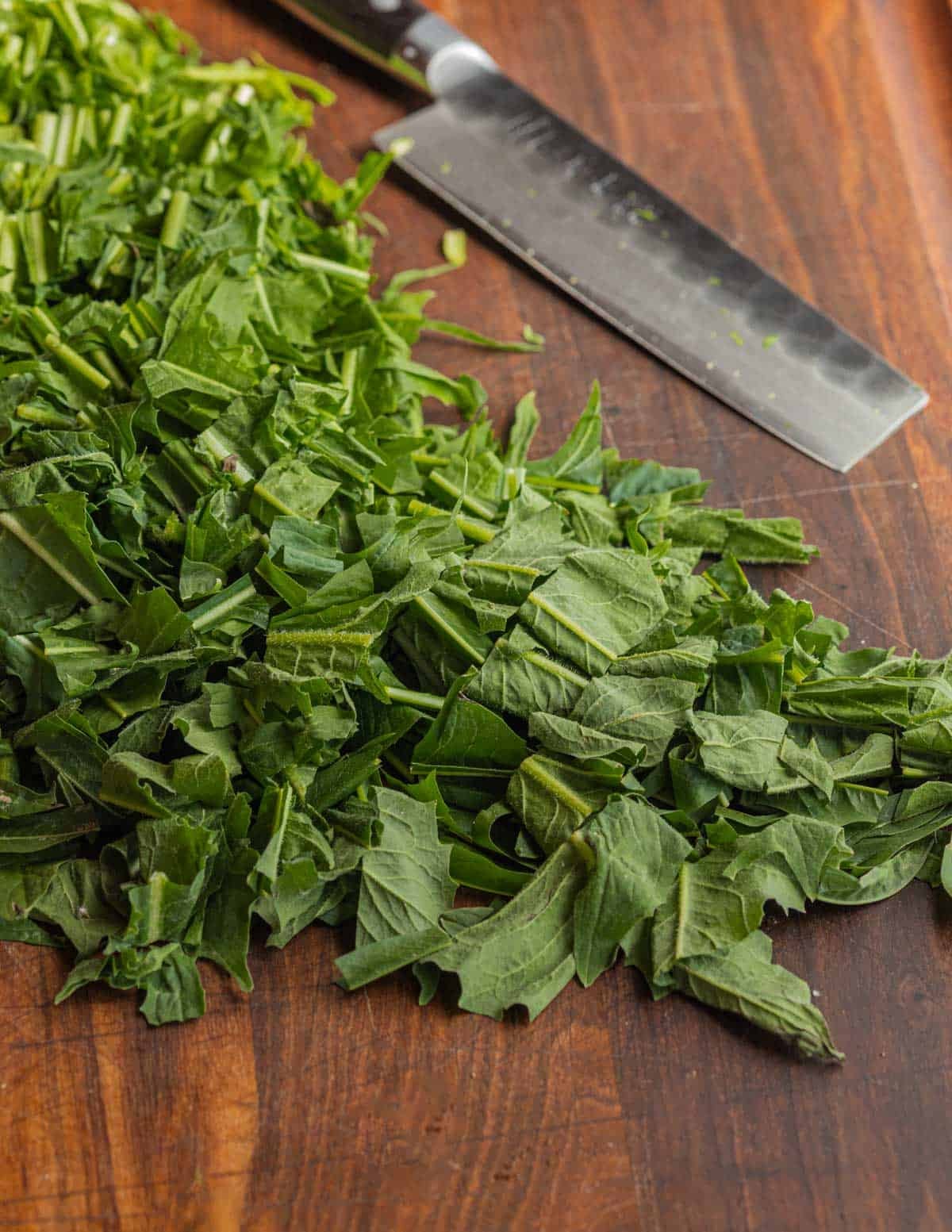
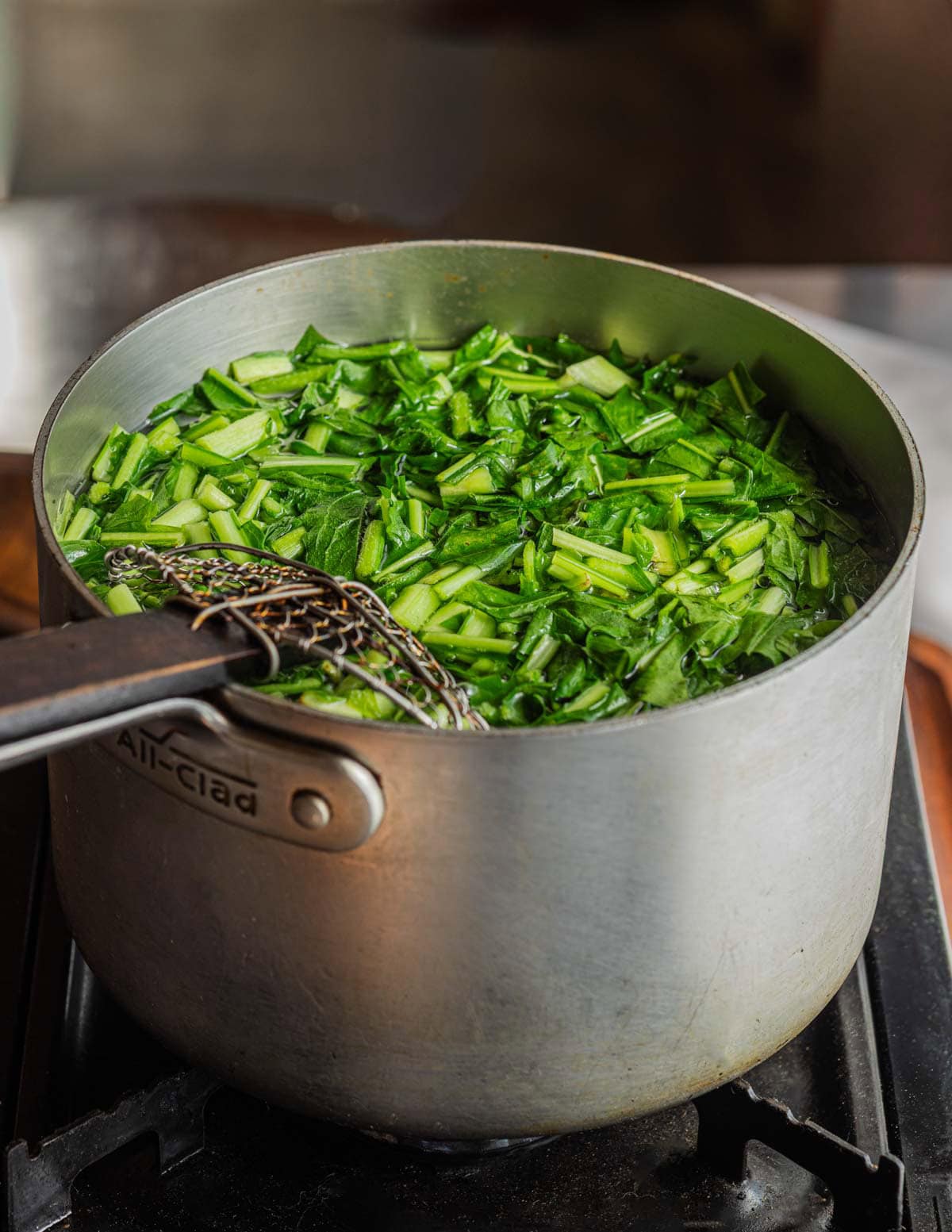
The greens are quickly blanched for 30 to 60 seconds to wilt them. With bitter greens this also helps tame the flavor. After blanching they're refreshed in cold water to preserve the texture. If you use greens with a milder flavor like lambsquarters or watercress you can add them directly to the soup.
Back to the soup base, once browned, the meat's removed and the aromatics are added. Carrot onion and celery are standard, but adding leeks or celery root are good too. One of my tricks for a great soup is to intentionally overcook the mirepoix base, which really helps build flavor. Adding tomato paste and allowing it to barely brown improves the color.
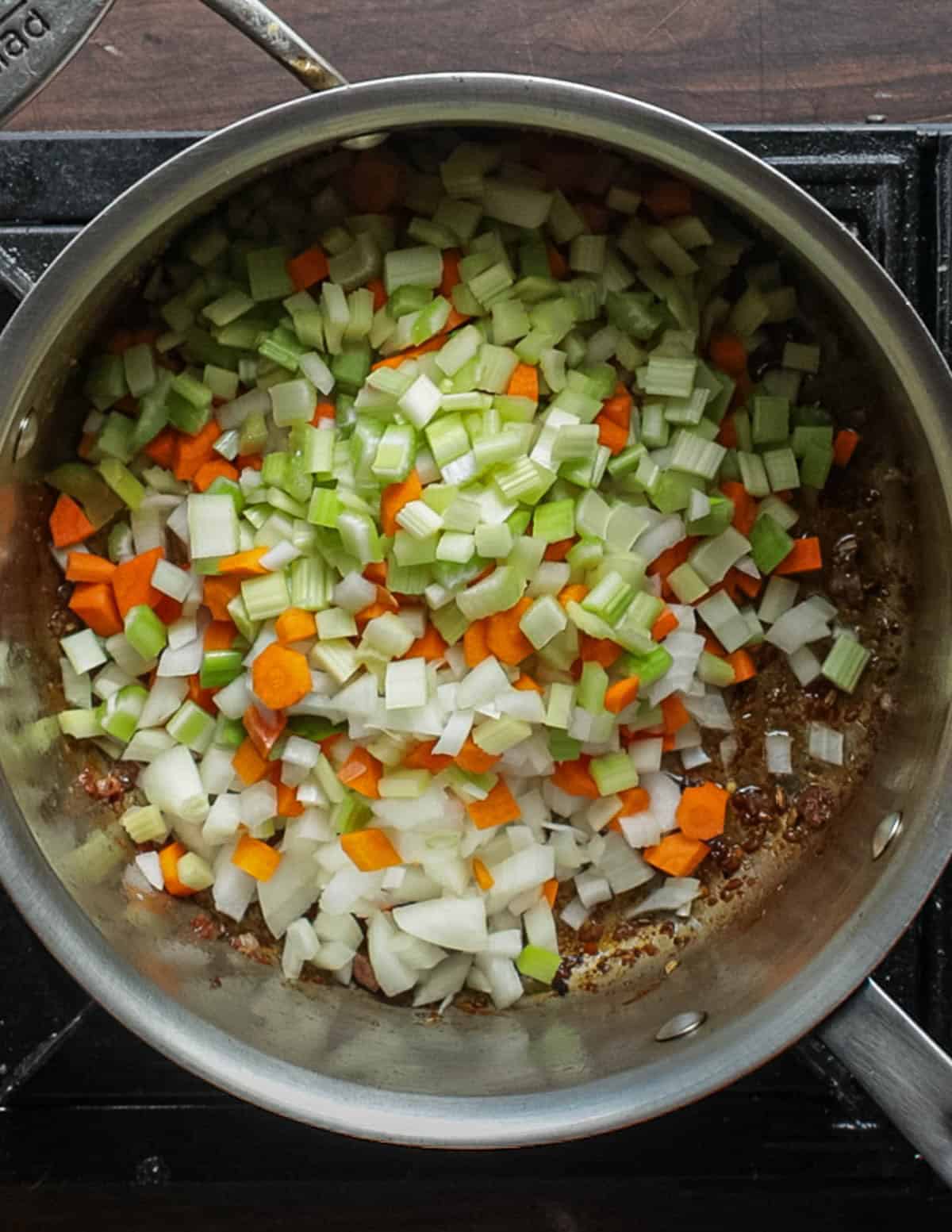

At the moment I start to get nervous the tomato paste is getting too dark I'll deglaze the pan. If sausage, smoked or salted meat like pancetta is added I'll deglaze the pan with a splash of wine. Next comes the potatoes or beans.
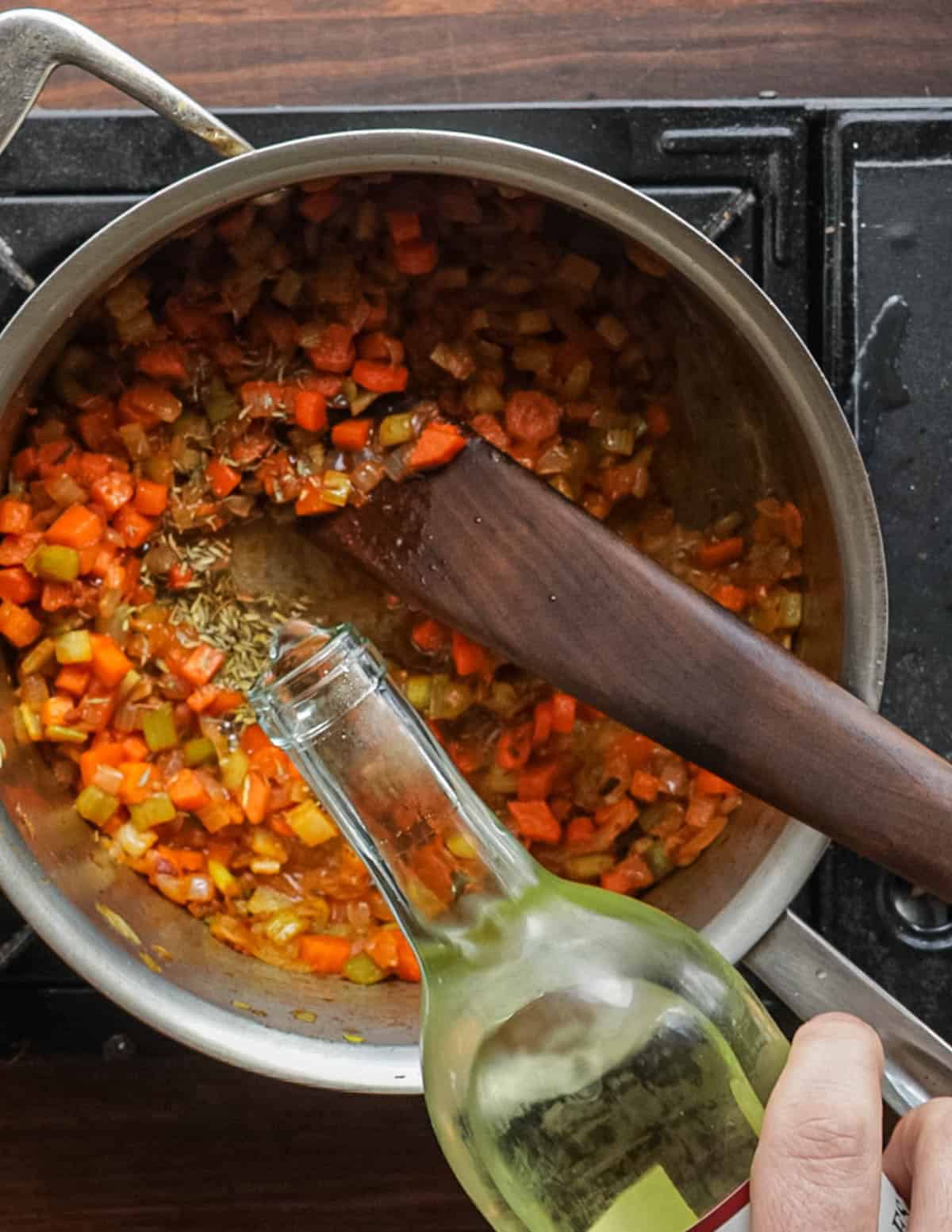
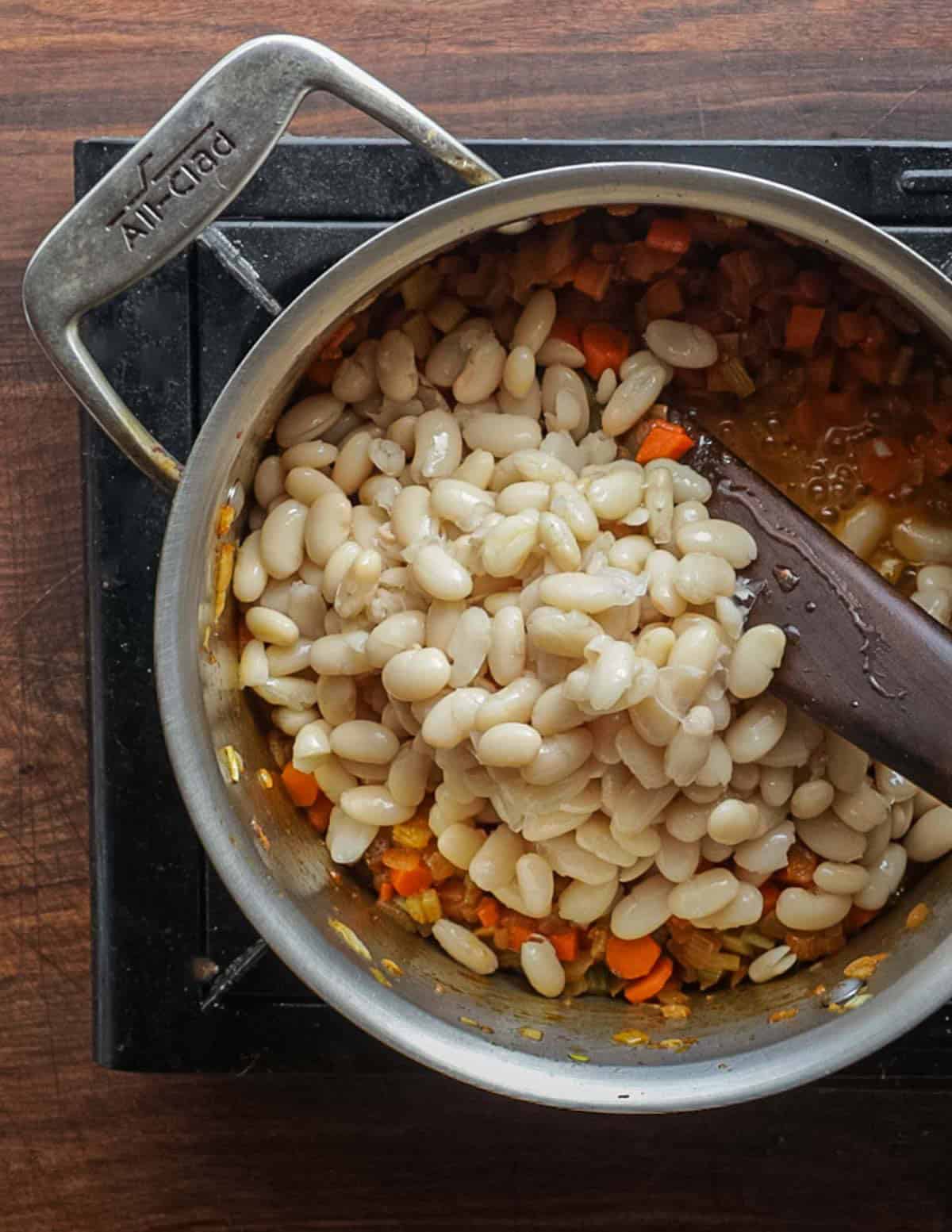
Finally the browned meat, stock and greens are added and the soup is cooked just until the greens are tender. They should never be chewy, and the Italian grandmother in me prefers them slightly overcooked, melding into the background.
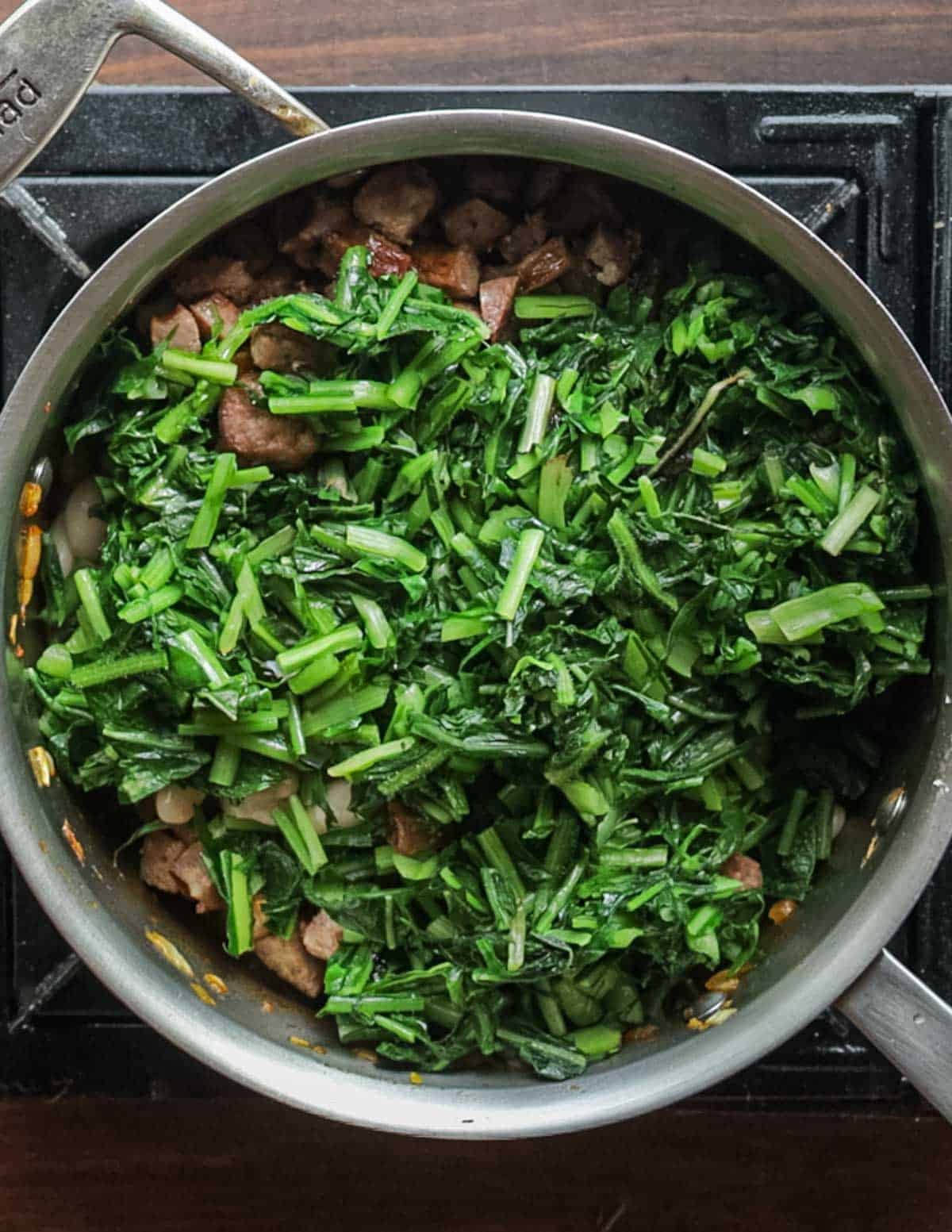
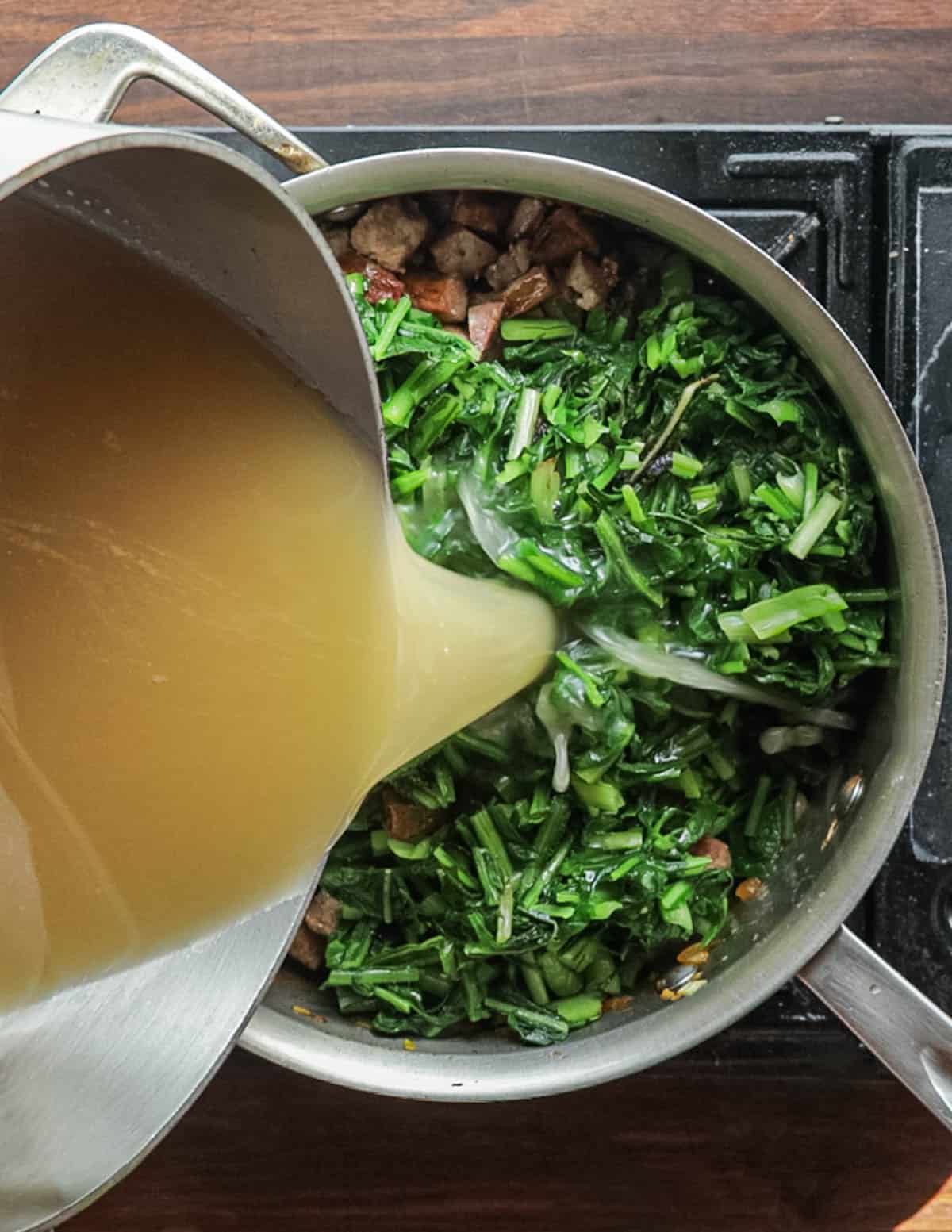
Once the greens are tender, double check the seasoning for salt and it's ready. Like most soups, the flavor noticeably improves the day after it's made.
What I've described here is also just one way I'll make a soup like this. The process and ingredients are very close to other Italian soups like minestrone, and ribollita, and I rarely make one the same way twice.
Chef's Tips and Variations
- Being gluten free I don't get to enjoy it as much, but adding tiny pasta like acini di pepe, ditalini, stars, or farfallini is fantastic.
- Pesto makes a great garnish if you have some. Ramp pesto is even better.
- The second or third day I eat the soup I love adding stale bread as for ribollita. The older the better. Add a few handfuls of stale bread-the older the better, simmering until just tender. It should be thick like oatmeal.
- I don't add a lot, but a handful of Italian dried mushrooms like porcini (here I've used morels) helps give the broth that special "je ne sais quoi". If I make it vegetarian I'll add even more, up to an ounce of dried mushrooms.
- The starch is what I change the most: sometimes wild rice, farro, potatoes, lentils, beans and just about anything that's in the pantry can be used.
- This is a great place for that expensive extra virgin olive oil, at the table.
Related Posts

Italian Sausage, White Bean and Dandelion Soup
Equipment
- 1 gallon soup pot
Ingredients
White Beans
- 1 cup dried great northern or cannellini beans or 2 12.5 oz cans, drained
- 1 dried bay leaf
- ¼ of a small onion in one piece (optional)
- 1 large garlic clove peeled and trimmed
Soup
- 2 tablespoons cooking oil
- 1 lb mild Italian sausage or hot if you prefer
- 1 cup carrots 4 oz small dice
- 1 cup celery 4 oz, small dice
- 1 cup onion 4 oz, small dice
- 2 tablespoons tomato paste
- 1 teaspoon dried thyme or 1 tablespoon fresh to taste
- ½ cup dry white wine optional
- 8 oz dandelions
- 6 cups chicken stock
- ½ oz dried mushrooms such as morels or porcini (optional)
Serving
- Fresh chopped Italian parsley
- Grated Parmigiano Reggiano grana Padano, pecorino, or your favorite parmesan
- Extra virgin olive oil a drizzle to taste at the table
- Fresh ground black pepper to taste
Instructions
Beans
- If using dried beans, soak them overnight in cold water, drain, then put in a small saucepot, cover with water by two inches, add the bay, onion and a generous pinch of salt. Bring the pot to a boil, turn the heat to a simmer and cook until the beans are just tender, about 45-60 minutes.
- Bring a pot of salted water to a boil large enough to accommodate the dandelions, 2-3 quarts is good. Line the dandelion greens up and cut them into 1 inch strips so they’ll fit on a spoon.
- Add the dandelion greens to the pot and cook until just wilted, about 30 seconds. Remove the greens, refresh in cold water, squeeze dry and reserve.
Build the Soup
- First brown the sausage in a soup pot of at least 1 gallon capacity. You can use lump sausage or links. While most recipes won’t call for it, par-cooking the sausage before browning will give you a better fond or crust on the bottom than if you cook the sausage from raw as some water weight has been removed.
- If using links, brown them well until cooked through, then remove, cool, quarter the long way and cut into bite-sized pieces. Remove the sausage from the pan using a slotted spoon or spatula, leaving the drippings behind.
- Sweat the carrot, onion and celery in the sausage drippings until very well cooked, about twenty minutes. Add the tomato paste and continue cooking until it starts to brown on the bottom, but be careful not to burn it.
- At the perfect moment when the color on the bottom of the pot starts to make you nervous, add the wine, cook until the pan is dry, then add the stock, dried mushrooms if using, beans and sausage, bring the pot to a simmer and cook for 10 minutes.
- If you’re at all wary of the cleanliness of your mushrooms, soak them in a cup of warm water first, agitating to remove grit, straining and recombining the two. If you soak the mushrooms, add the soaking liquid to the soup.
Finishing and Serving
- Finally, add the dandelion greens and cook until they’re tender and taste good to you, this will take roughly 5-10 minutes depending on the age of the greens.
- Double check the seasoning for salt and pepper, adjust until it tastes good to you, and serve. While you can serve it right away, the flavor improves greatly if the soup is allowed to rest overnight.
Video
Notes
- Instead of beans, you can substitute 2 cups of small diced potatoes, just try not to cook them to mush.
- Instead of sausage you can substitute 8 oz of fresh mushrooms, roasted or sauteed to brown them first.
- To make it a more filling meal or help it appeal to children and skeptics, you can enrich the soup with a few handfuls of cooked, tiny pasta like acini de pepe, ditalini, or farfallini.
Alisa
What does blanching the greens accomplish at the beginning of the recipe? Just curious!
Alan Bergo
Calms the flavor a bit but also ensures they’re going to be tender.
Chris
This was terrific! We have been looking for ways to incorporate foraged dandelion into our family-meal rotation (the kids love to forage nettles, violets, wild raspberries, and any other edibles), but it was generally too bitter. This recipe is really excellent and all of the ingredients are complimentary. We will be making this again!
Alan Bergo
Thanks Chris, glad you liked it.
Heather
Really enjoyed this, it was first time making dandelion greens and I was pleasantly surprised about what a nice addition they were to the soup. I used the whole bundle from the store, so probably more than the 8 oz called for, and was afraid they may be a bit bitter, but not the case. I included the wine, dried porcini and parm. Yum.
Alan Bergo
Thanks Heather
Kristin
I'm planning my next wild-foods spring dinner while I desperately wait for the snow to melt in Duluth. I think this soup will make the cut!
Alan Bergo
Yeah it’s still cold up there for you. I’m chomping at the bit over here and I have a head start from being in the metro. Everything is like an inch tall, well except my patience dock and sorrel.
Bigmike
Great soup we make often with kale. Alan, you are right this is infinitely variable but I have to have my anise hyssop and oregano or it just doesn't taste the same. Fresh chopped tomatoes are also good. Once you get anise hyssop growing somewhere in your yard, it self seeds and comes up all over.
Roberto
I've always used cavolo nero and pancetta in my bean soup. Dandelions and Italian sausage sound like a great choice. I'll give it a try.
Alan Bergo
Yes the greens are basically taking the place of cavolo nero here. Another good choice during the off season and sturdy enough that it won’t turn to mush.
Atina Diffley
Alan - You never cease to amaze me with the depth of the knowledge you so generously share. Thank you so much. I learn so much from every one of your posts -- even when I am already familiar with a wild plant used. I so appreciate this gift you share . Atina
Alan Bergo
Hey thank you.