
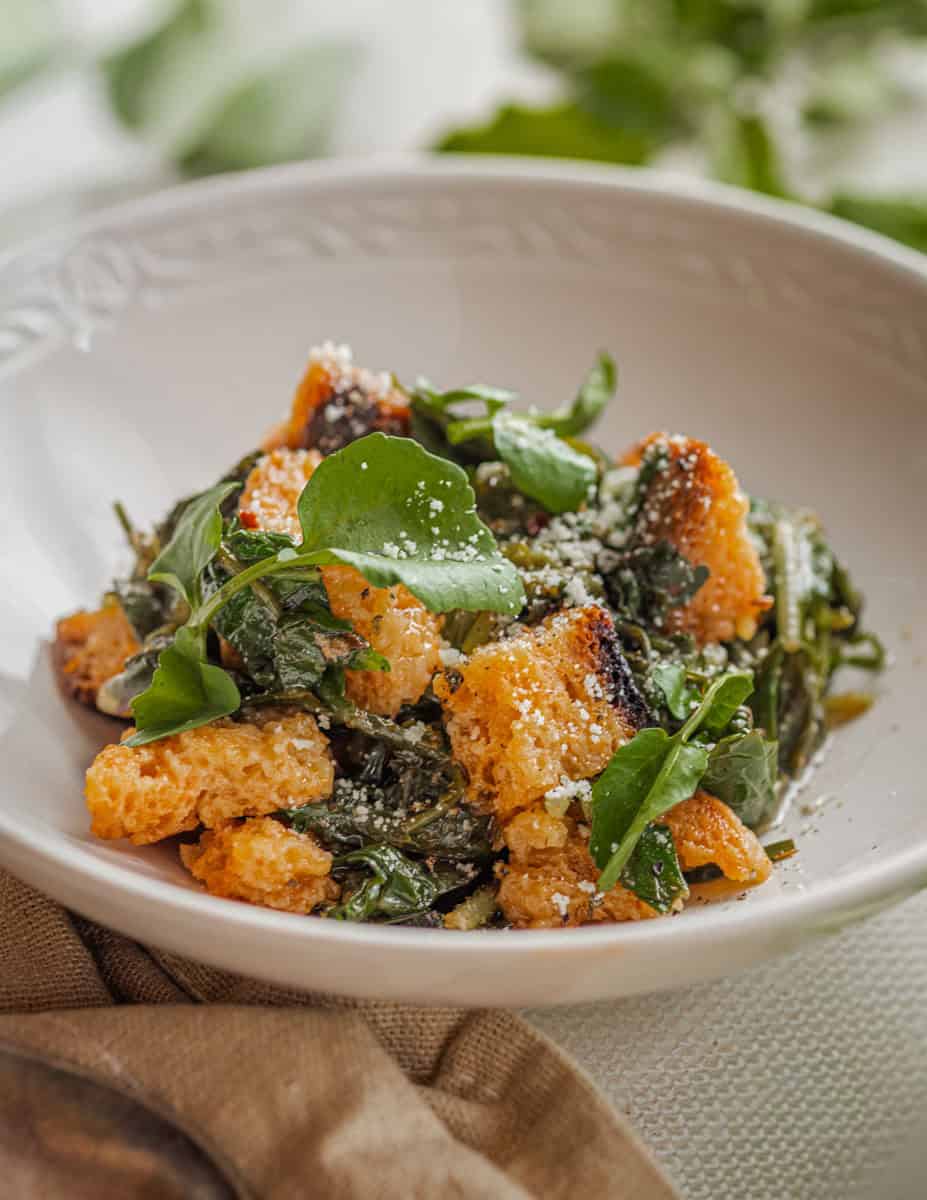
The poster child for frugal Italian cooking in the cucina povera tradition, pane cotto (cooked bread) is a humble dish found across Italy with as many variations as there are stars in the sky. My favorite version is a mix of wild greens, stale bread, a touch of tomato, olive oil and cheese.
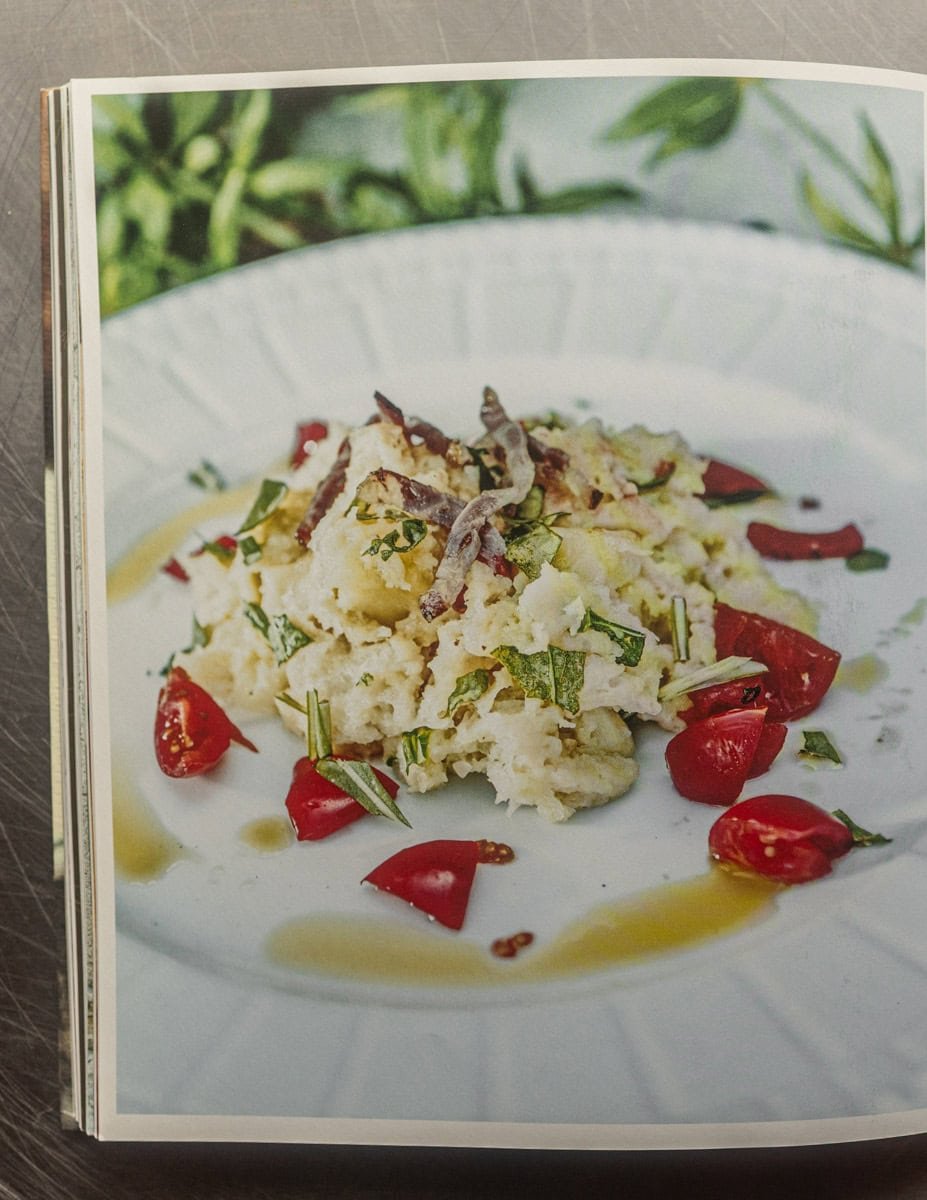
I'd made the recipe before as staff meal occasionally, but I didn't dig through all my books until a reader sent me an email discussing it after an event for my first book. A few versions are shown below from my library to give you an idea of the variation, followed by Ken's account of the dish he ate in Campagna.
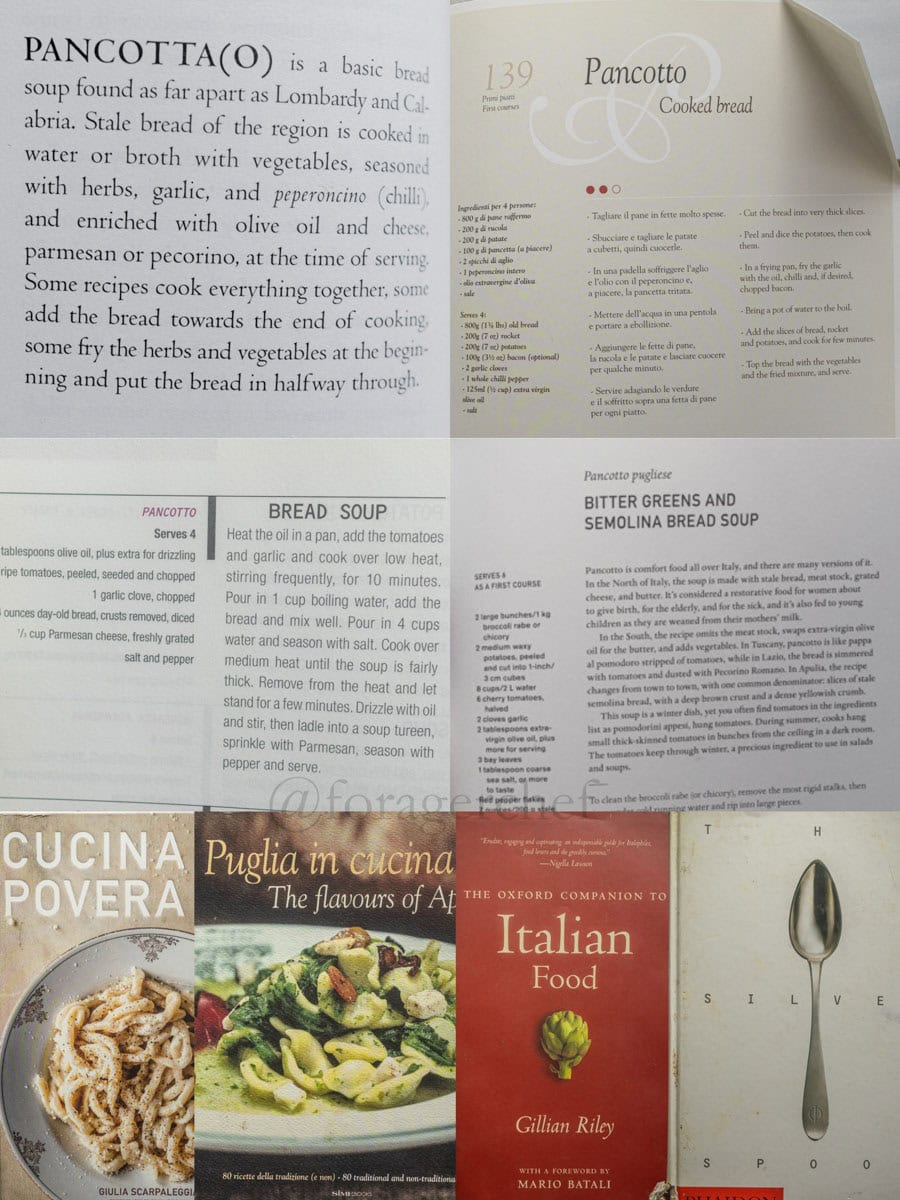
What is Pane Cotto?
Hi Alan, I wanted to thank you for an inspiring, interesting and tasty evening last night. I was interested in wild food back in the early seventies, and took a couple fascinating walks with Euell Gibbons (though his chain-smoking menthol cigarettes was off-putting!). Foraging lay dormant for decades while I cooked other things, until my wife and I started spending time in Italy, where all sorts of fascinating wild food and game would show up on tables.
Here's one dish, maybe you know it, if not it can be a small repayment for my enjoyment last night. I was messing around in the kitchen with the proprietaria of a small agriturismo near Ariano Irpino in Campania, and she suggested we make "Pane cotto" (cooked bread) for a side. We went outside, where she picked a half dozen kinds of greens from under the olive trees. She didn't know their names in Italian, only dialect, but two I recognized as different chicories. She told me the goal was to have a mix of "sweet" and "bitter".
She cooked a couple cloves of garlic, "in camicia (crushed, with the skin)", as they say, in a very generous amount of her own oil, added the washed greens, cooked them well, then added roughly torn, stale Italian bread. The bread absorbed all the oil and pan juice and the whole mess was delightful. Even at room temp-that's Pane Cotto. Thanks again and happy foraging, Ken.
Ingredients
There's not a lot of ingredients to go over, which means that all of them should be high quality. Essentially, all you need is good bread, leafy greens, a little tomato, a clove of garlic, stock and cheese.
The Bread
The bread is probably the most important. Sourdough or just a good Italian boule is fine, as long as it's dense. To illustrate just how much of a difference it makes, I made the recipe with two types of bread: a loaf of cheap French bread, and homemade chunks of sourdough from Hank Shaw that were rock hard and months old. Like a good stuffing, the older and harder the bread is, the better it will be.
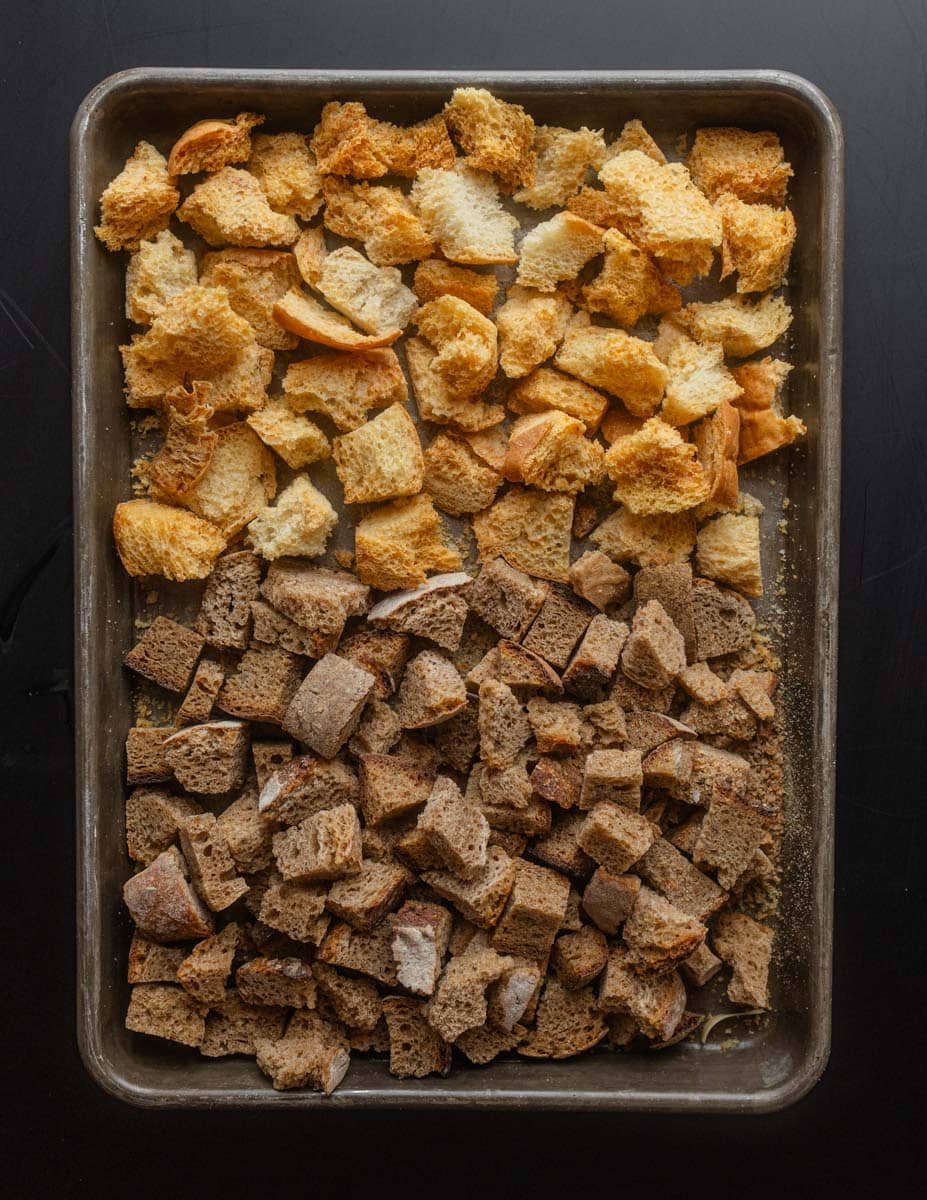
Cheap bread is light and airy, and even toasted until very dry it will quickly turn slippery, soft and mushy when cooked. Ideally, just as with ribollita and pappa al pomodoro (similar related recipes) I like the bread to hold its shape and be tender. The chunks of bread should be like soft dumplings that barely hold together.
What I found really surprising is that while most recipes measure the bread by volume (cups), weighing the bread is by far the better method here. The cheap French bread weighed a whopping 3 times less than Hank's homemade bread.
The Greens
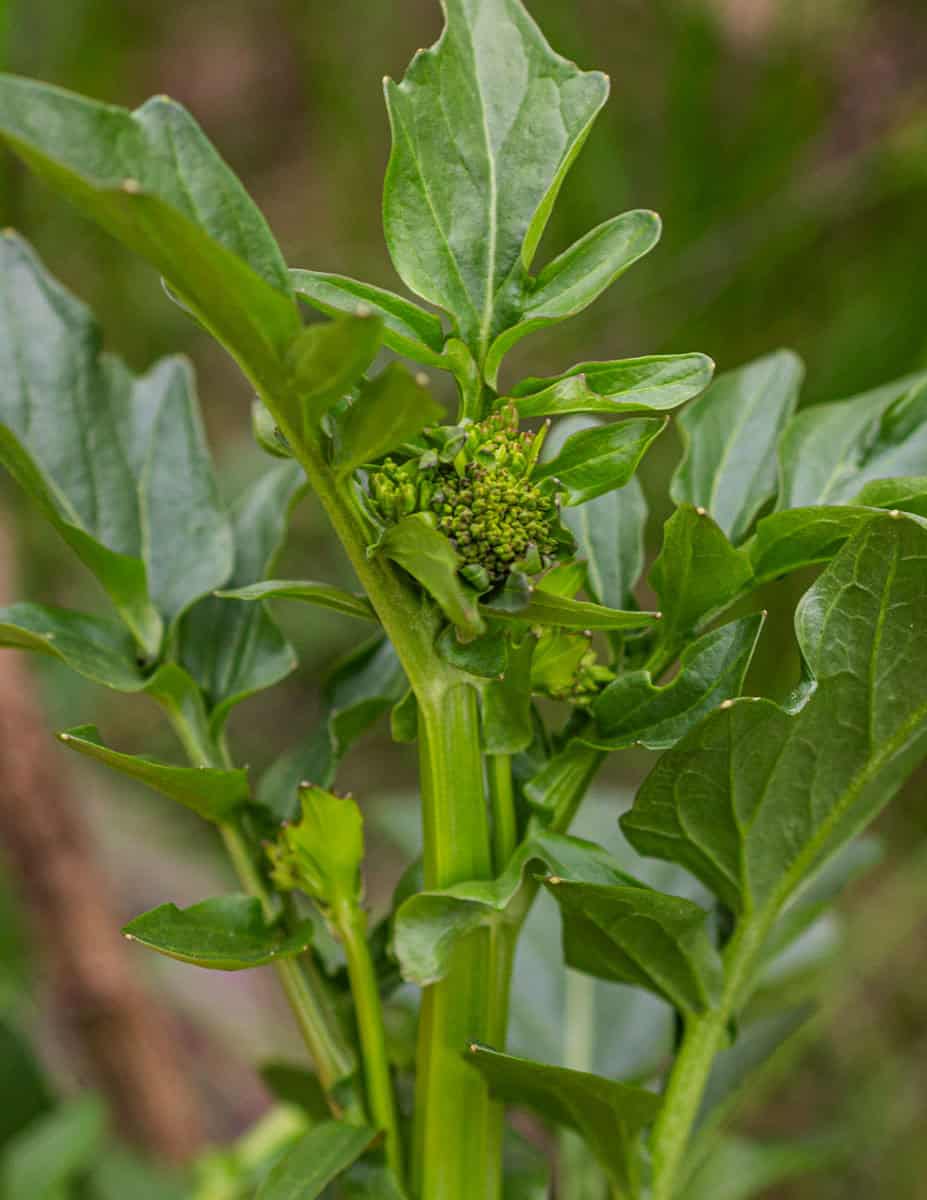
While some recipes omit them, I use the recipe as a vehicle for wild greens and would never make it without. Even with recipes that include greens, the wild purity is polluted by convenience now, with chard or spinach replacing the original erbe selvatiche (wild herbs). Broccoli raab, mustard greens and arugula are appropriate substitutes in the off-season.
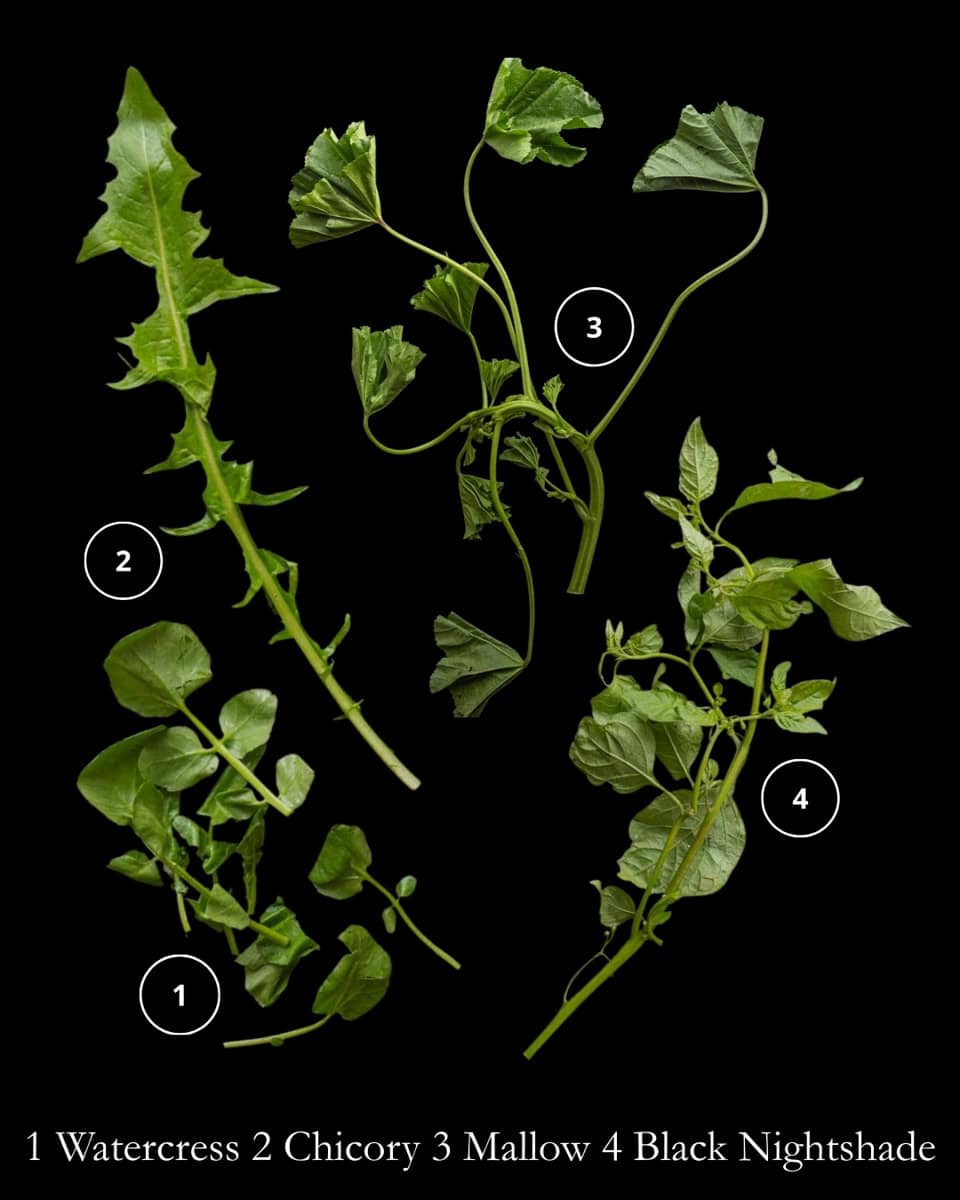
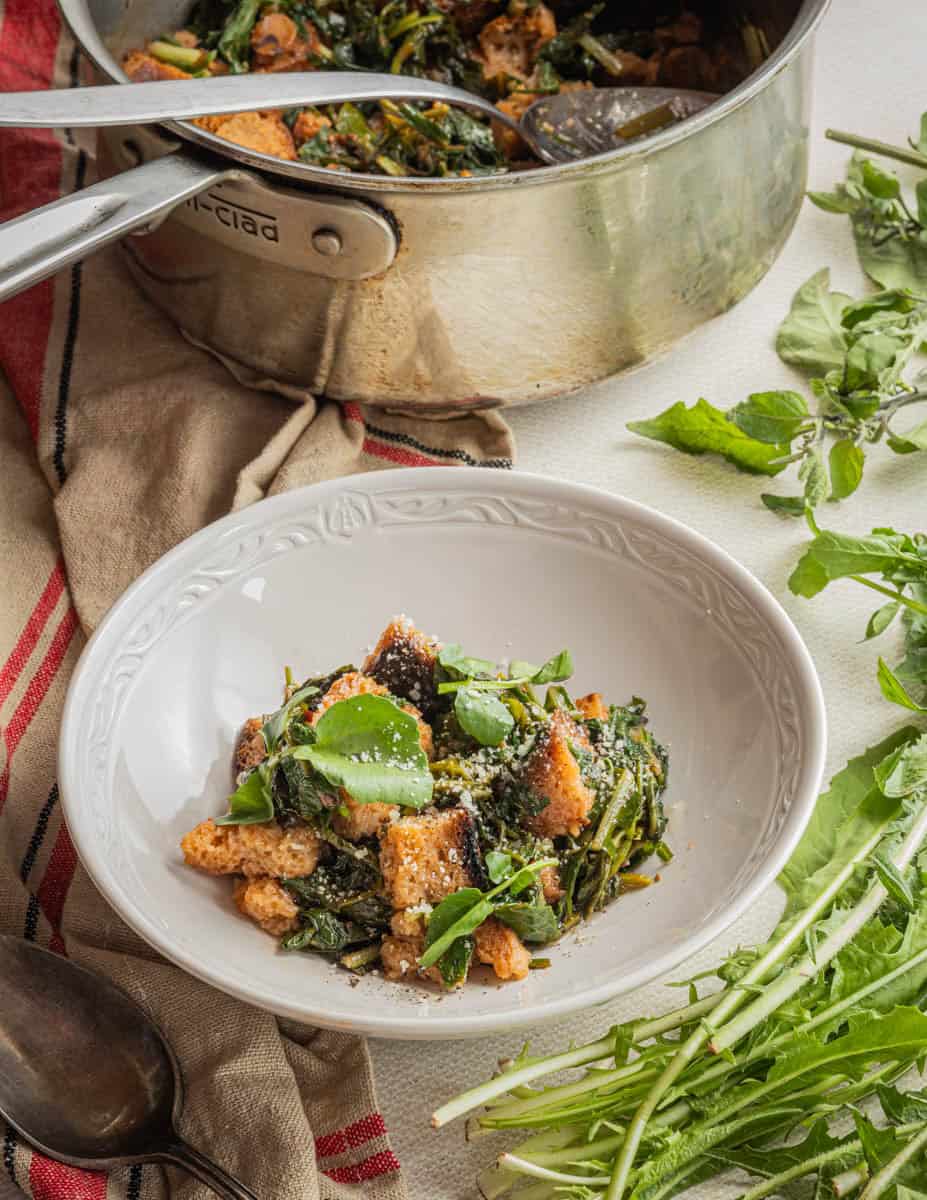
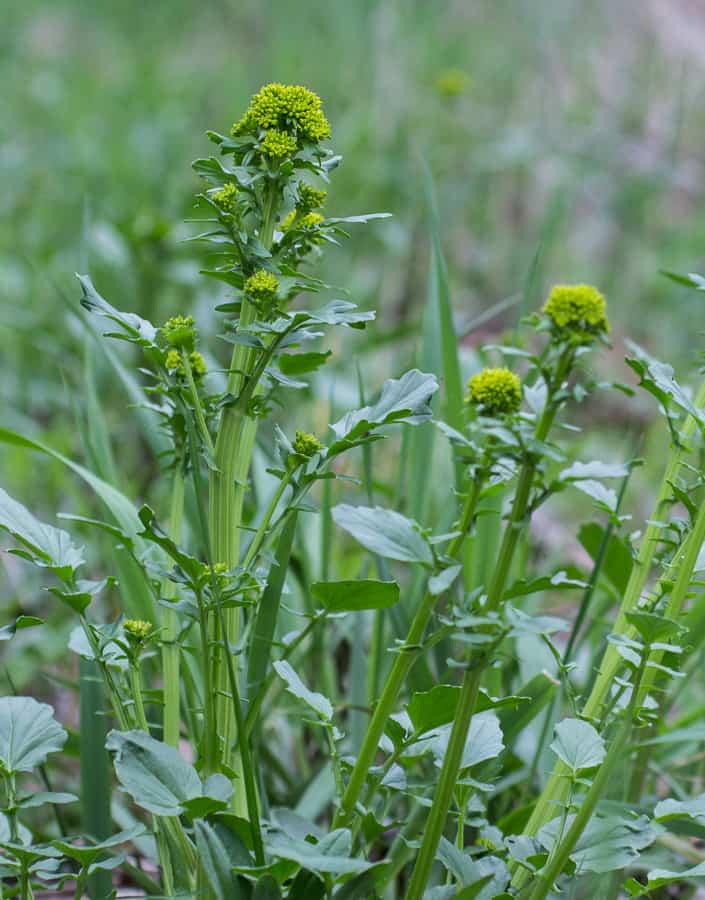
As Ken described, it's good to have a mix of sweet and bitter greens. I used a mixture of bitter chicory and black nightshade greens, along with "sweet" mallow and watercress, but the variations you can make are infinite.
While testing the proportions I used a mix of arugula and turnip greens. Broccoli raab and arugula are probably the two Italian greens I see mentioned the most in traditional recipes.
Optional Additions
As you've seen in the other recipes, bread is truly the only constant. Other starches are often added, particularly potatoes or beans. As beans can dry out, I prefer chickpeas or potatoes, but both can work.
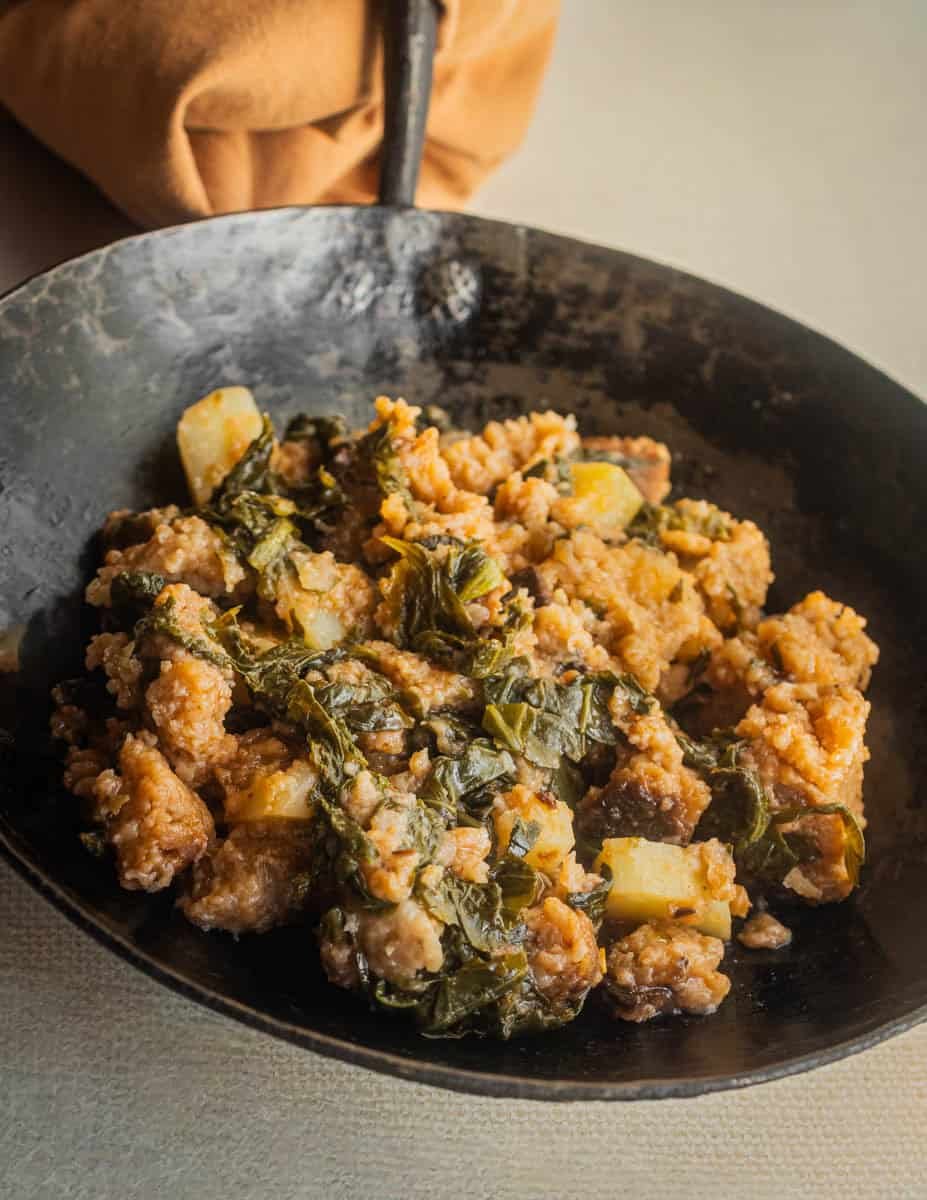
Whether or not tomato is added is also a key difference. I always add tomatoes in some form for the acid and color they provide. Just a little is all you need and they could be fresh tomatoes, canned, puree or passata (strained).
How to Make it
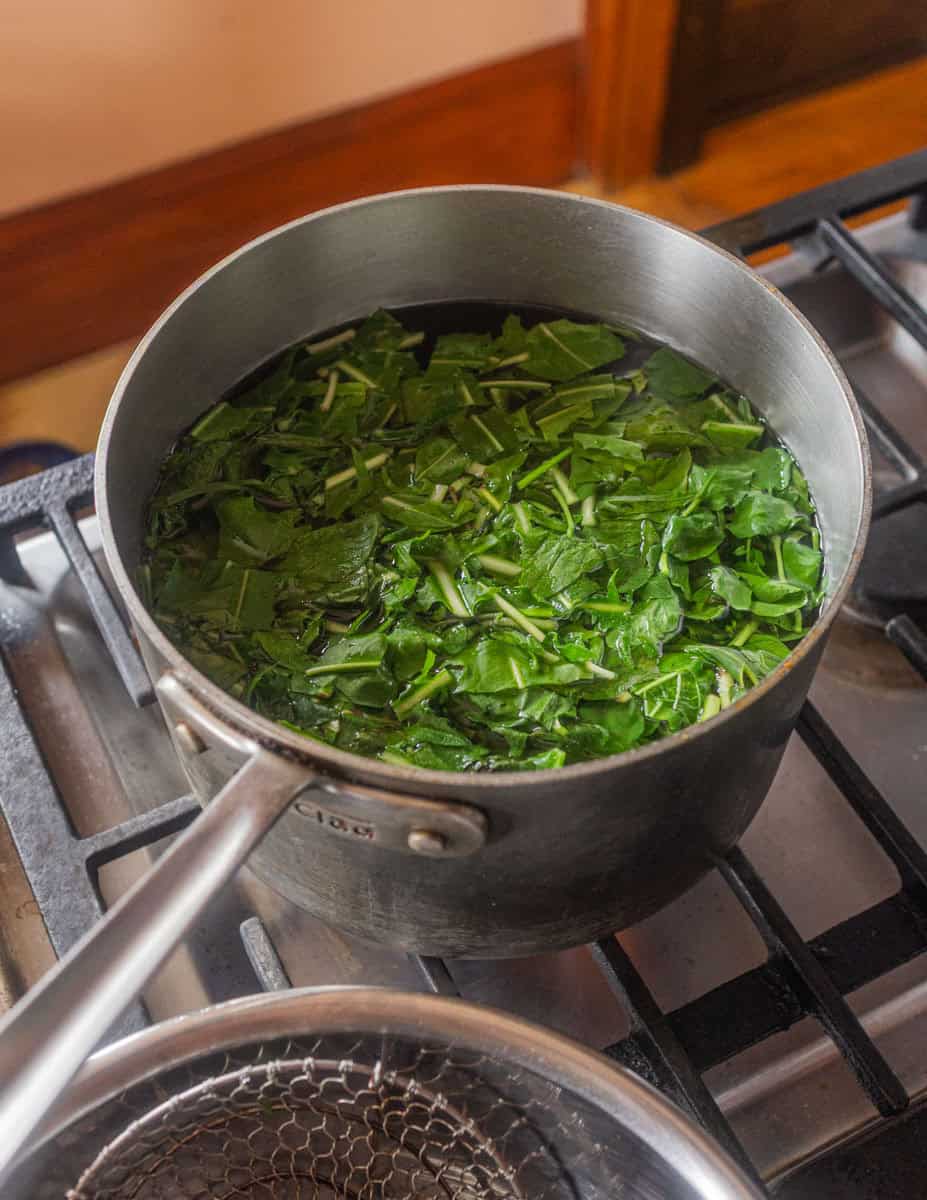
First gather a bunch of wild greens, cut them into bite sized pieces (very young greens can be left whole) and blanch them for a minute in salted, boiling water. Drain the greens and refresh in cold water, squeeze dry, and wipe the pot clean.
Add sliced garlic and olive oil to the pot and cook until the garlic is light golden. Add a pinch of crushed red pepper flakes, then the bread, greens tomato and stock and bring to a boil.
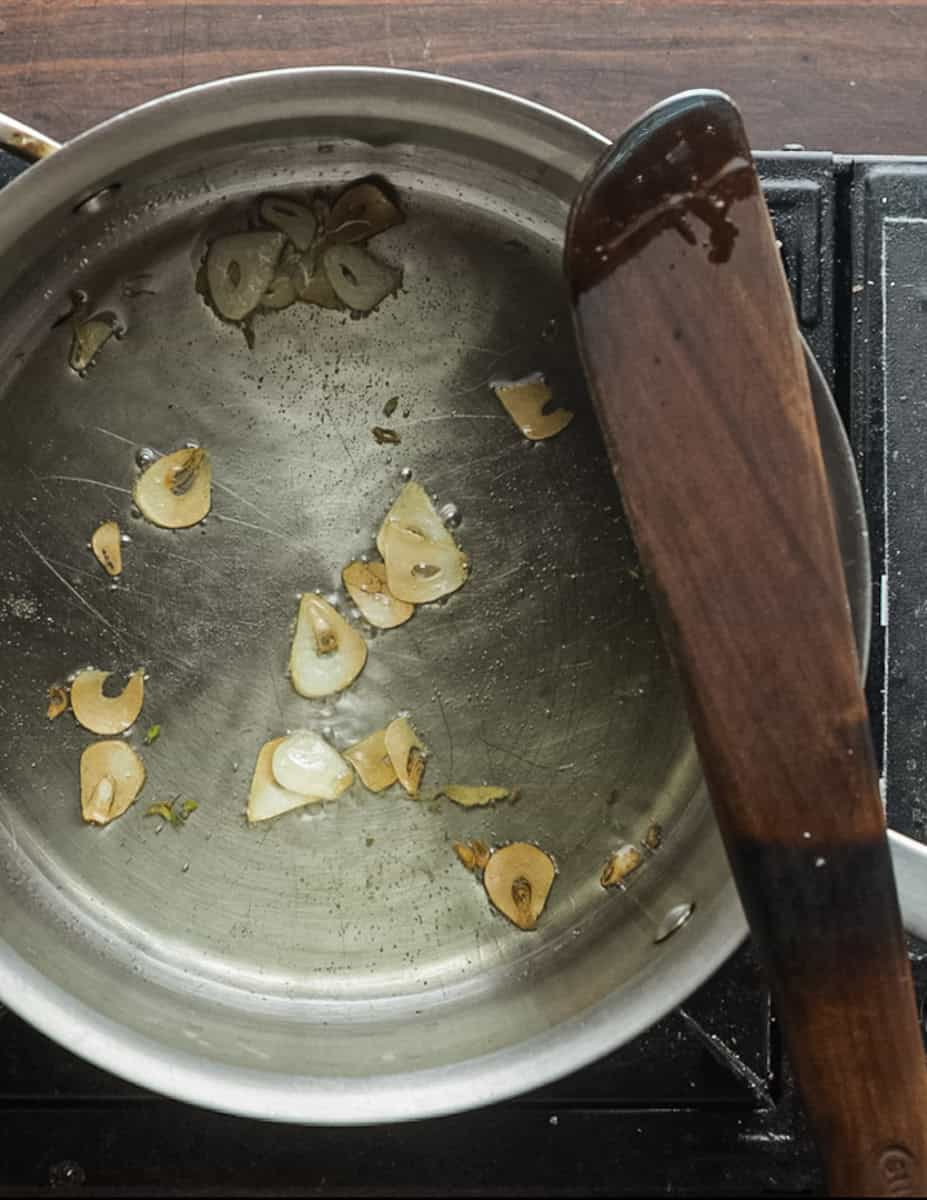
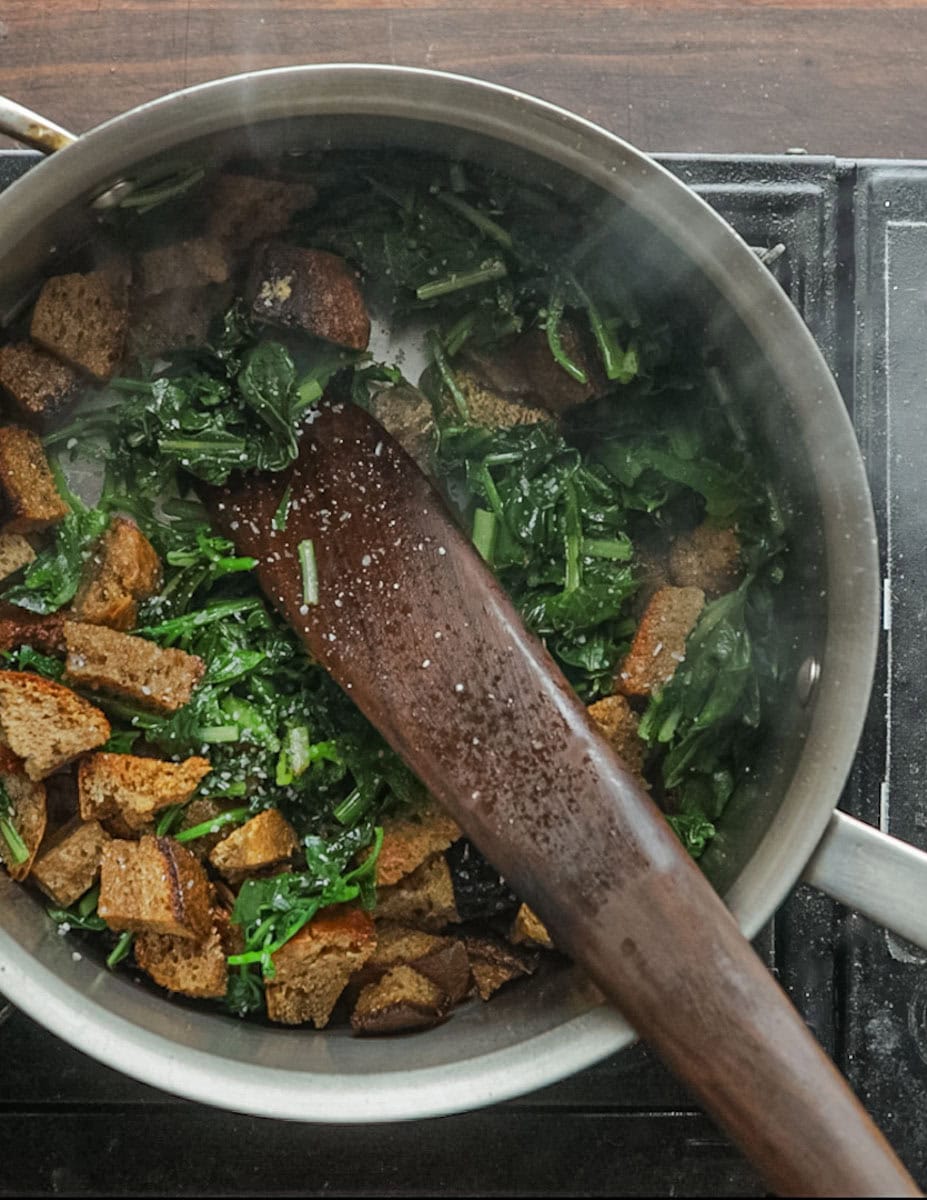
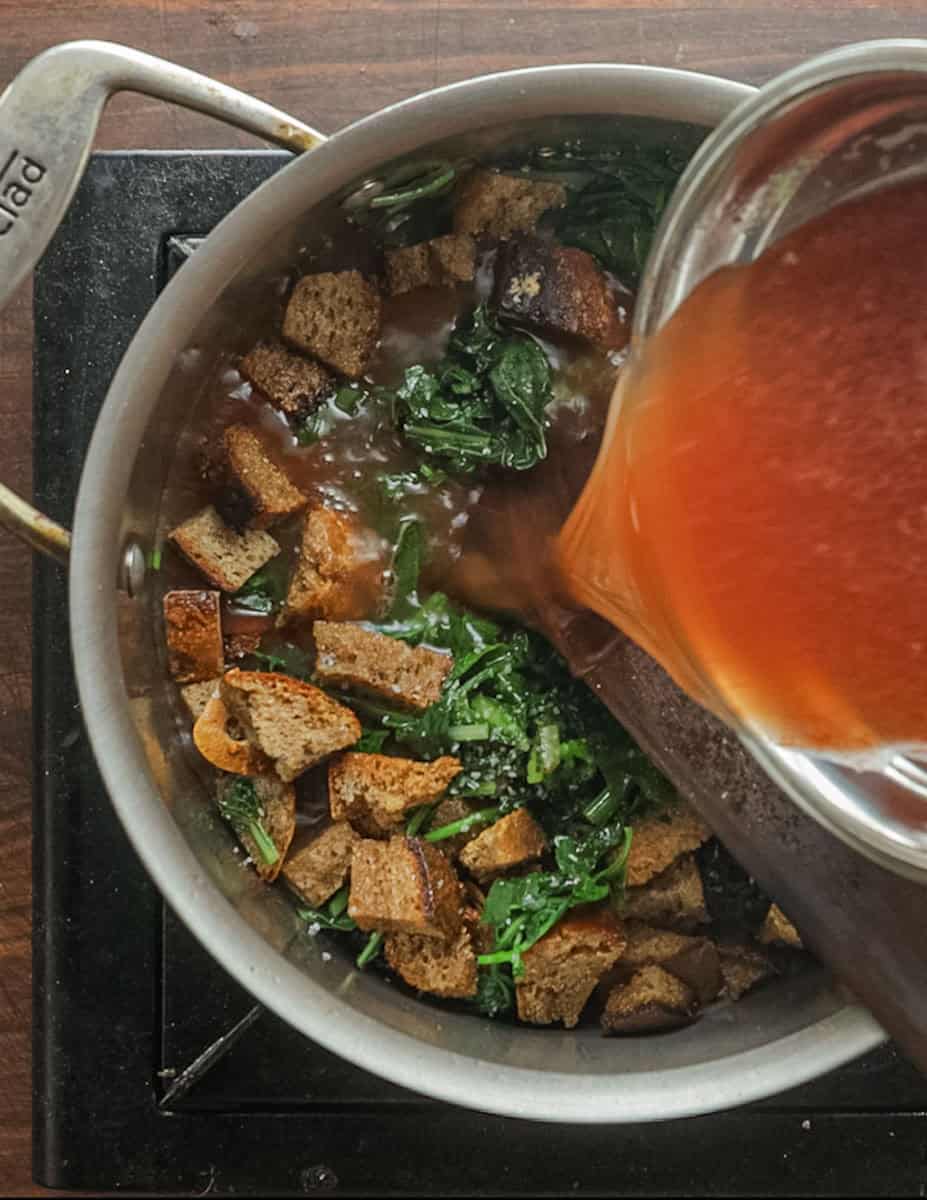
Turn the heat down, cover and simmer for 10-15 minutes, or until the liquid is mostly absorbed, similar to cooking rice. Depending on how old your bread is you may need to let to leave the pot covered to rest for a bit until all the bread is tender.
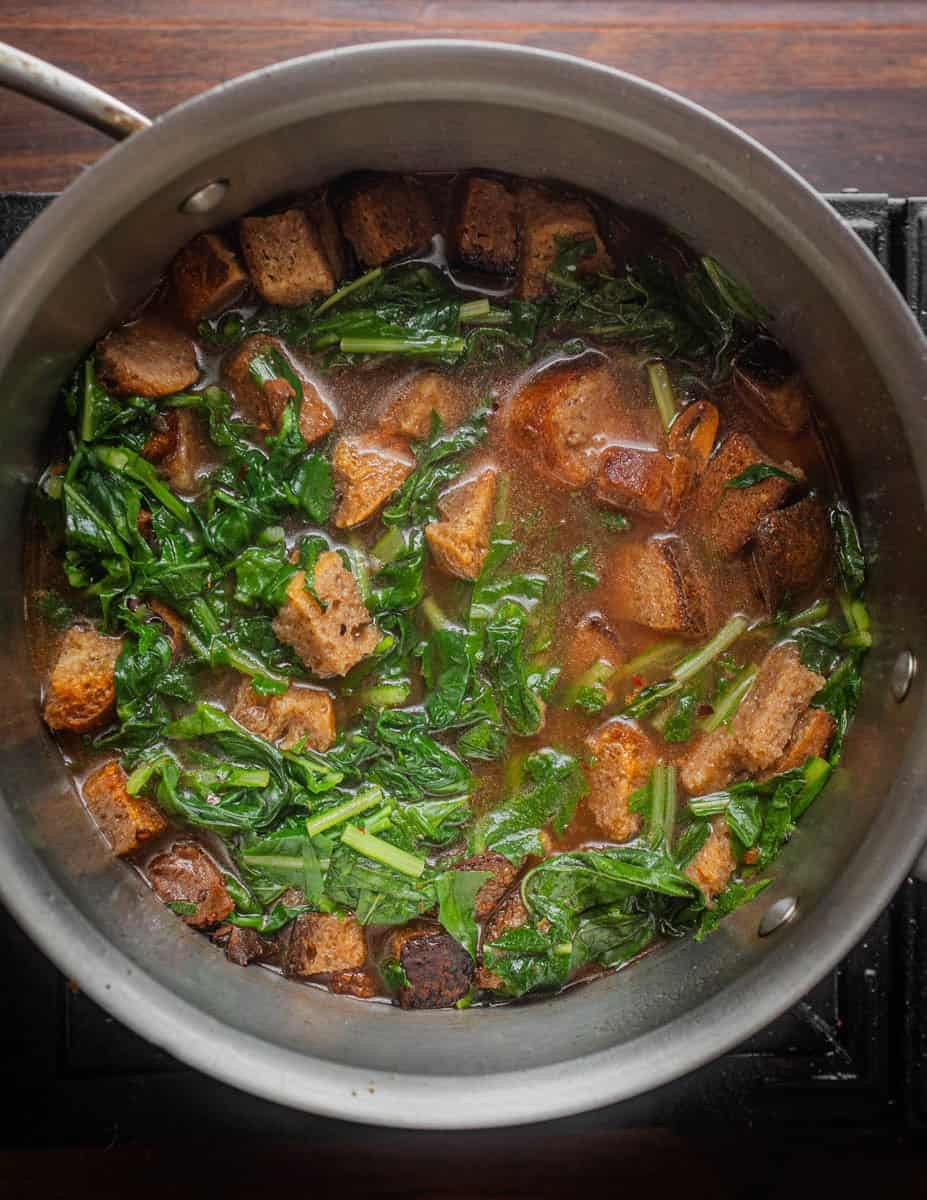
When the liquid's absorbed it's ready. Adjust the seasoning for salt and chili flakes to taste. Serve it anointed with extra olive oil or similar, fresh cracked black pepper and plenty of cheese.
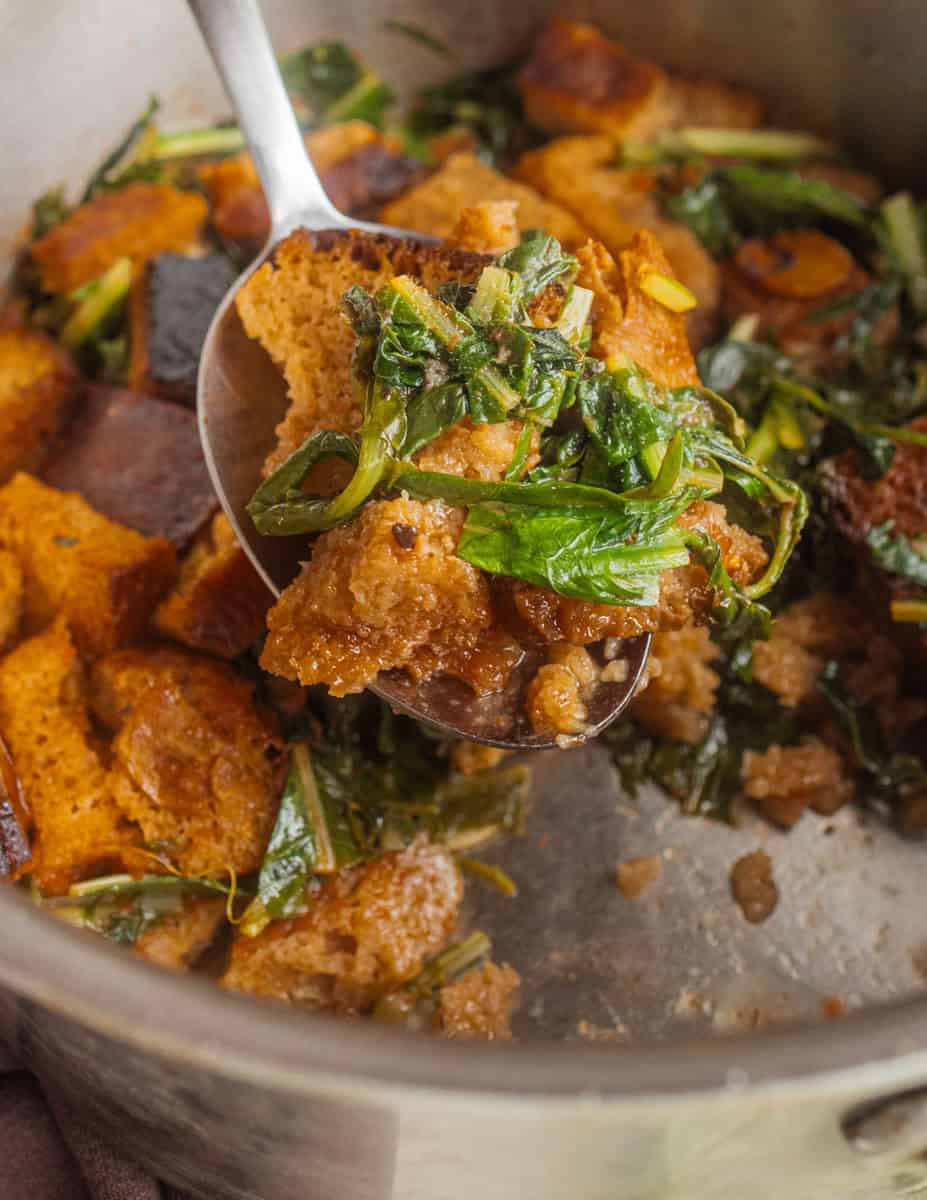
The recipe makes a small batch so you can try it out, but it's easily scaled and the flavor improves the day after it's made. It's lovely with a fried egg for breakfast, and I can't wait to make a spring version with wild garlic leaves.
Related Posts
- Ligurian Pansott con Salsa di Noci
- Puntarelle alla Romana
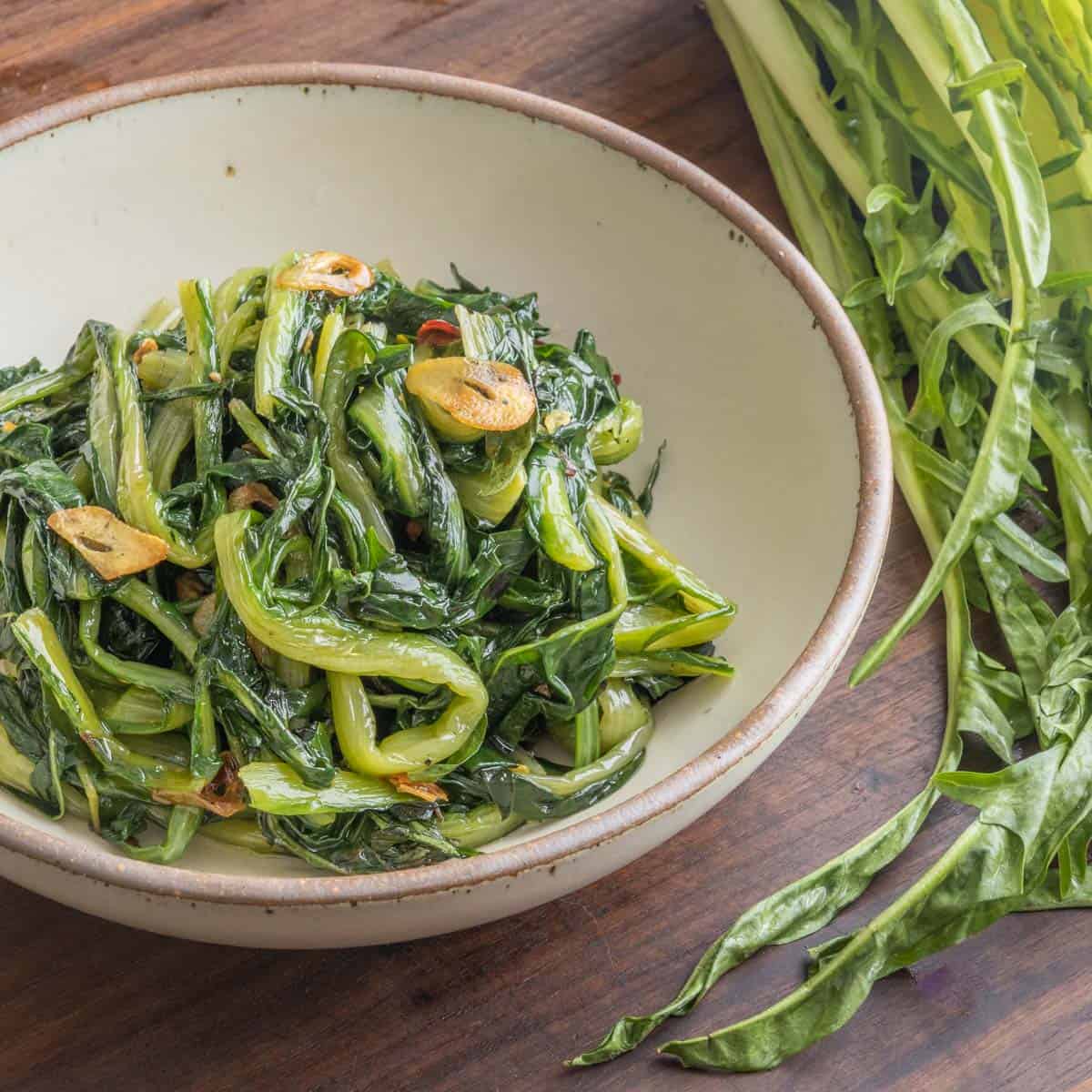
- Cicoria Ripassata en Padella (Italian Chicory with Garlic, Oil and Chili)
Pane Cotto / Pancotto
Equipment
- 1 3 quart soup pot
Ingredients
Panecotto
- 1 large clove garlic
- 2 tablespoons mild olive oil 1 oz
- 2 tablespoons extra virgin olive oil or similar, plus more for serving `1 oz
- ¼ teaspoon kosher salt plus more to taste
- 4 oz high quality stale bread cubed
- ½ cup tomato puree 4 oz
- 1 cup homemade chicken stock
- 1 pinch crushed red pepper flakes optional
- 4 -8 oz fresh wild greens a mix of bitter and sweet greens
Serving
- Fresh ground black pepper for serving, to taste
- 2 oz Parmigiano Reggiano or pecorino cheese to taste
- 1 small Russet potato, cooked white beans or chickpeas baked, peeled and cubed (optional)
Instructions
- Bring 3 quarts of lightly salted water to a boil.
- Cut the greens into pieces that will fit on a spoon, trying to keep their character as much as possible.
- Blanch the greens for 30 seconds at a rolling boil to wilt them and ensure they cook up nice and tender. Remove, rinse with cold water, squeeze dry and reserve. It's ok if there's some residual water in them.
- Wipe the pan clean and add the oil and sliced garlic. Cook the garlic on medium heat until golden brown, add the crushed red pepper flakes off the heat, stir, then add the greens and bread and a pinch of salt. Stir to halt the cooking of the garlic.
- If you want to add potatoes or beans, add them now.
- Add the stock and tomato puree, bring to a boil, then turn the heat to low, cover and simmer for 10 minutes. Stir it once or twice.
- Turn the heat off and allow the bread to soak up the residual liquid, then taste and adjust the seasoning for salt and chili until it tastes good to you.
Video
Notes
- After numerous trials at home, I've found I enjoy a much larger percentage of leafy greens than most recipes call for. Anywhere from 4-8 oz is a decent range.
- As you can see in the images, if some of the bread breaks apart it's fine. You Tube Videos online often show it being served as a bowl of mush like polenta, some as a soup.
- To reheat the mixture the next day, heat it slowly in a covered pot.
- Try topping it with a fried egg for breakfast.
- Crumbled sausage is a nice addition, or you can cook pancetta in the pan before adding the garlic.
- In the growing season I'll add other alliums, like green garlic or garlic scapes.
Leave a Reply