
I love rhubarb pie, rhubarb crisp, bars, and all of the traditional Spring desserts I grew up with. What you might not know is that savory rhubarb recipes can be great and are a good option if you need to use some up. This is my favorite, a sort of sweet and sour, savory rhubarb sauce for chicken or pork that can also double as a cheese plate condiment.
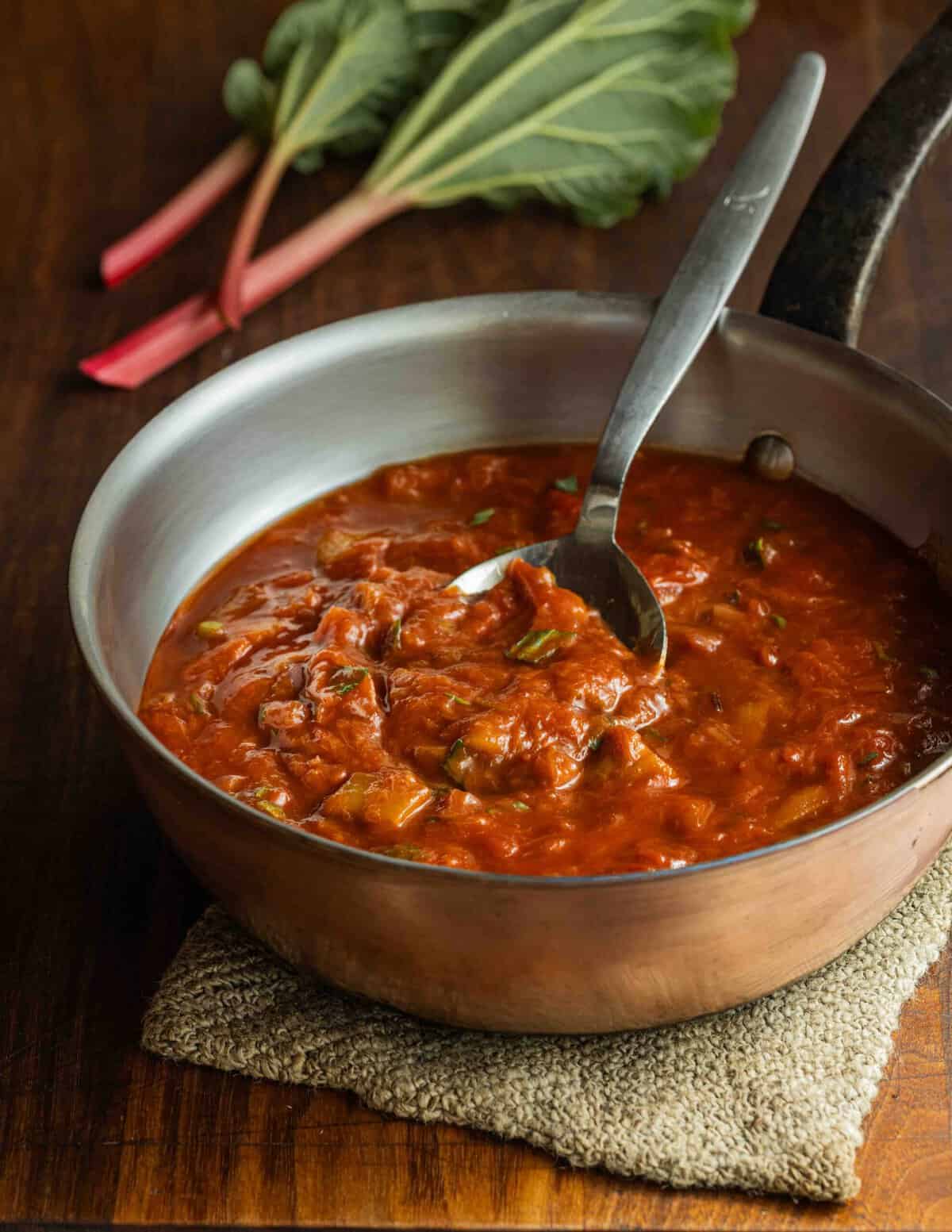
I've been making a similar rhubarb sauce for ages. It was always good, but sometimes I felt the color was lacking, especially if I used green rhubarb.
The first image I have is over 15 years old now. Taken hastily one morning before work while living in my friend's basement, I present it to you now in all it's blurry, pixilated glory.
When my friend Dorothy Kalins (founder of Saveur Magazine) sent me a copy of Chef Michael Anthony's book V Is For Vegetables, I noted his technique of adding a little tomato puree to his rhubarb sauce, and I've been making it the same way ever since. Other than that, not much has changed.
Ingredients
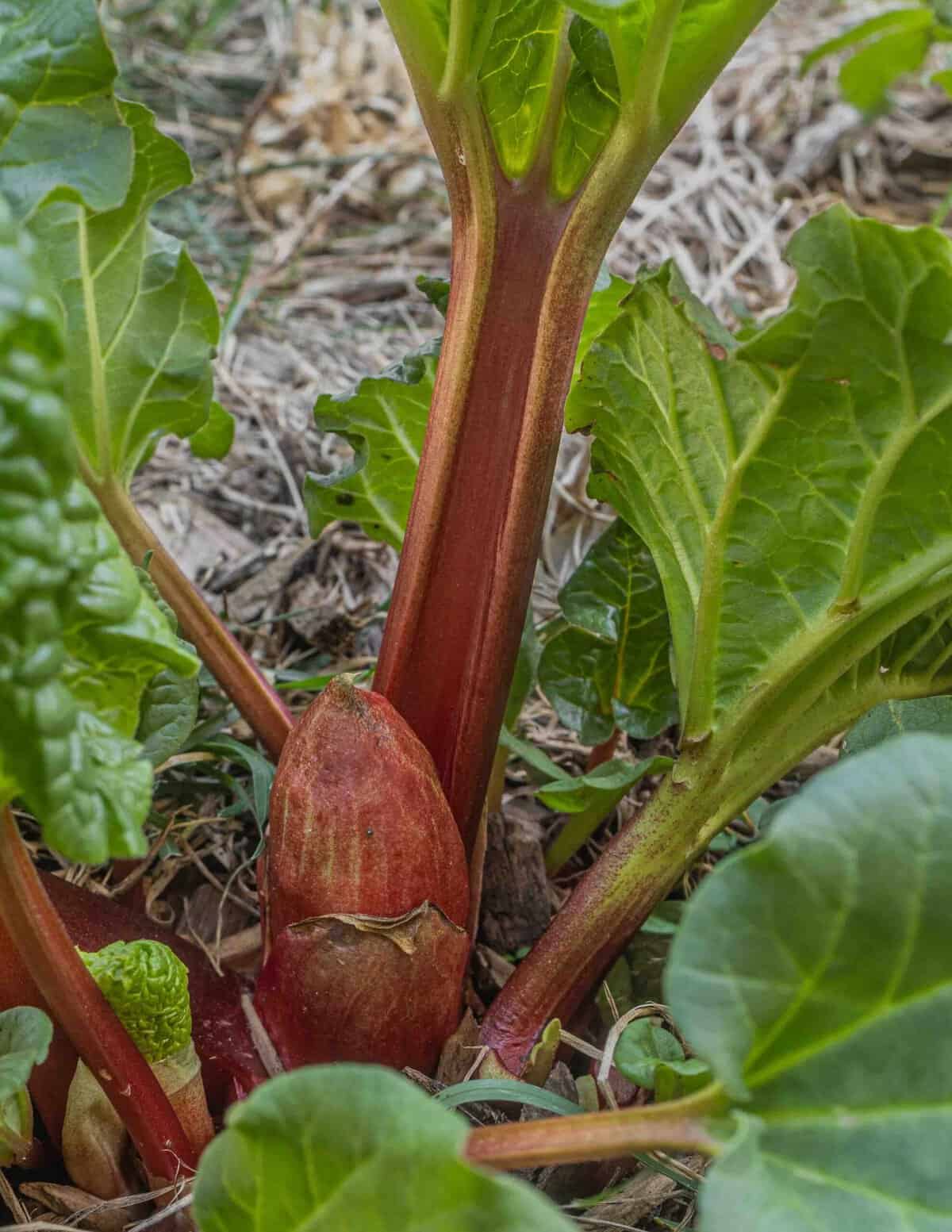
You have some options here depending on what's available. Of course you'll some rhubarb, but each of the additional ingredients play an important part too: here's a quick breakdown of what's added, and why.
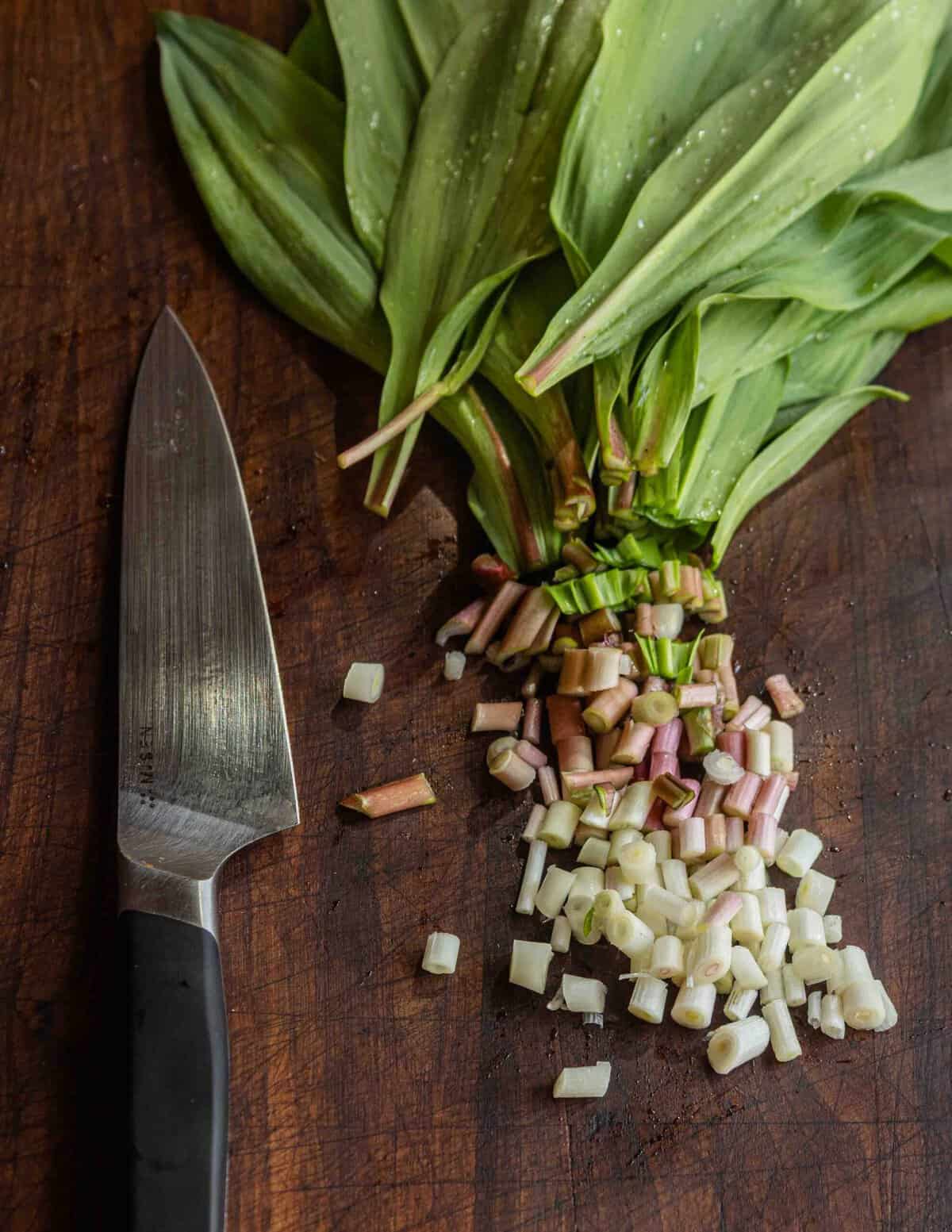
Aromatics
As they're both spring ingredients, ramps and rhubarb are a match made in heaven here, if you can find them. If you can't find ramps, you can use a mixture of garlic and shallots. Green garlic works too. A touch of grated ginger helps bridge the gap between savory and sweet.
Tomatoes
Tomatoes play an important role here. Fresh can work, but pureed and strained, canned, whole peeled tomatoes are the best. The tomato puree does double duty, helping to emulsify the natural water of the rhubarb and ensuring an attractive color whether you're using red or green rhubarb.
Sugar and Vinegar
Maple syrup or sugar helps to keep the sauce emulsified and balances the tartness. The vinegar adds depth and body, ensuring a balance of sweet and sour, as rhubarb by itself could taste a bit flat. Here I've added my homemade elderberry vinegar, but rice wine or apple cider vinegar are fine too. Red raspberry vinegar is probably my favorite.
Fresh Herbs
The finishing touch is a handful of what I would call sweet or soft herbs. Rosemary or sage are much too strong, but a handful of torn basil, mint, tarragon or chervil is magic.
How to Make it
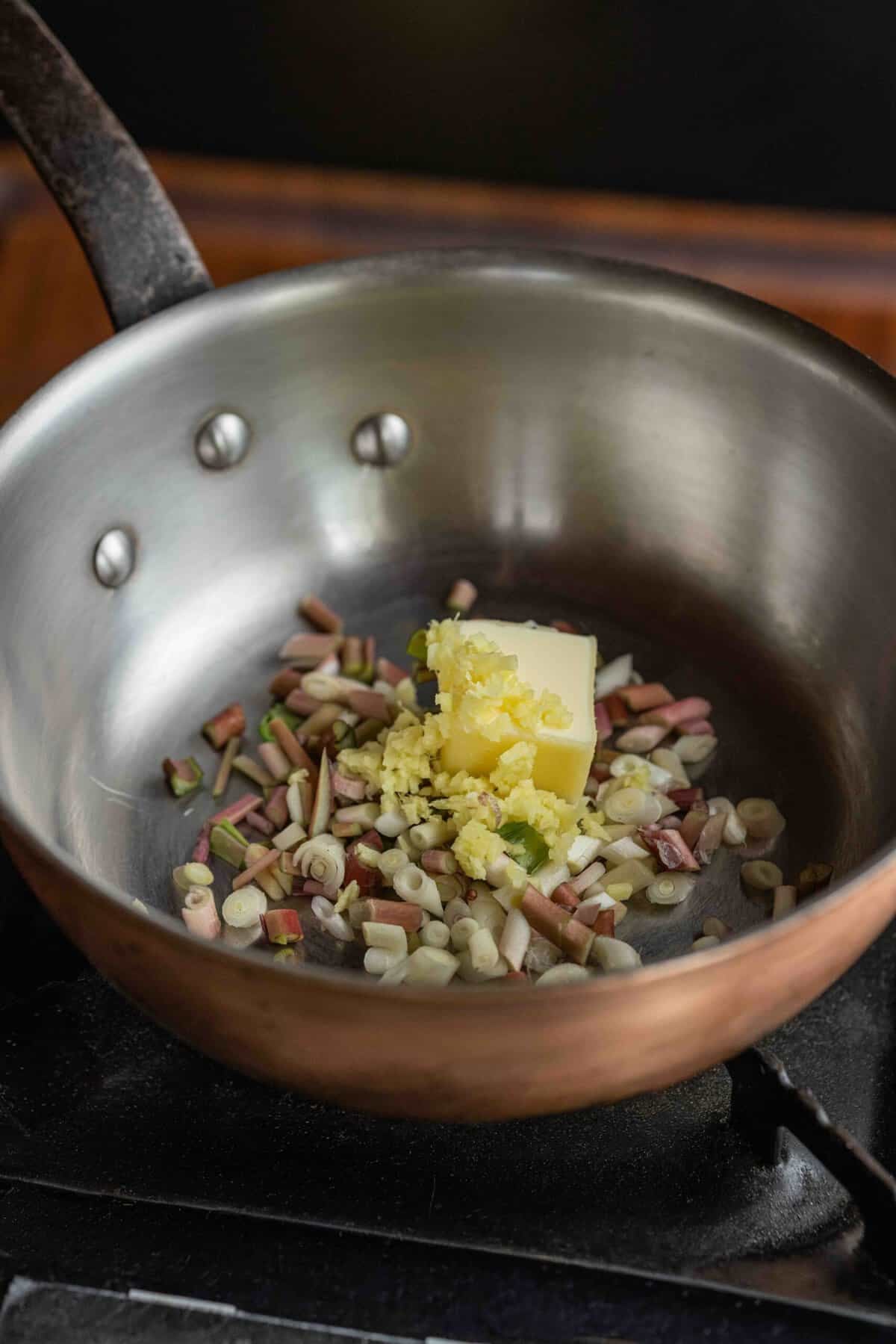
Sweat some finely diced shallots and grated garlic or sliced ramp bulbs in a tablespoon of butter. I like a slightly wide pan here, shown is an old Bourgeat saucepot I love for things like this. Using a pan around eight inches in diameter helps to evaporate moisture quickly.
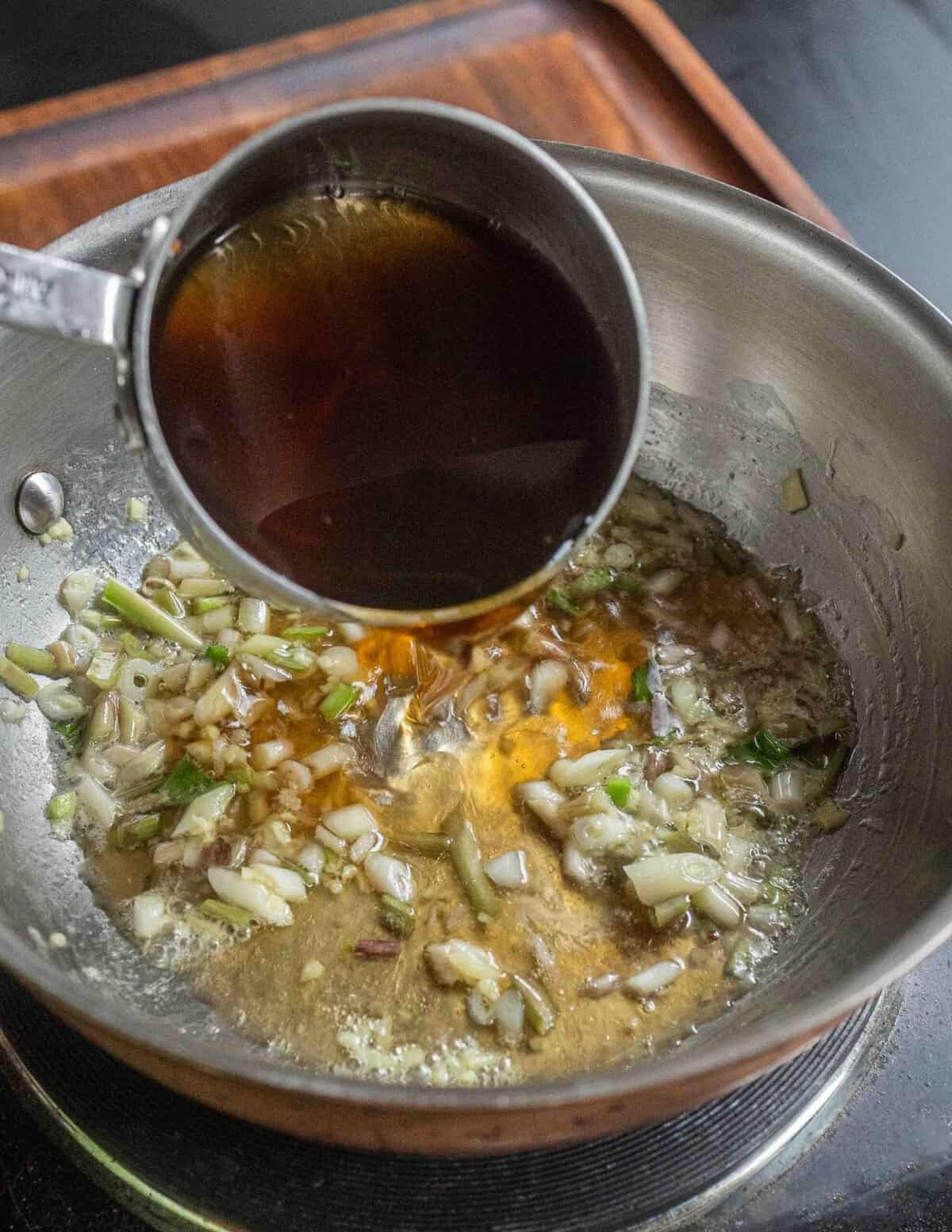
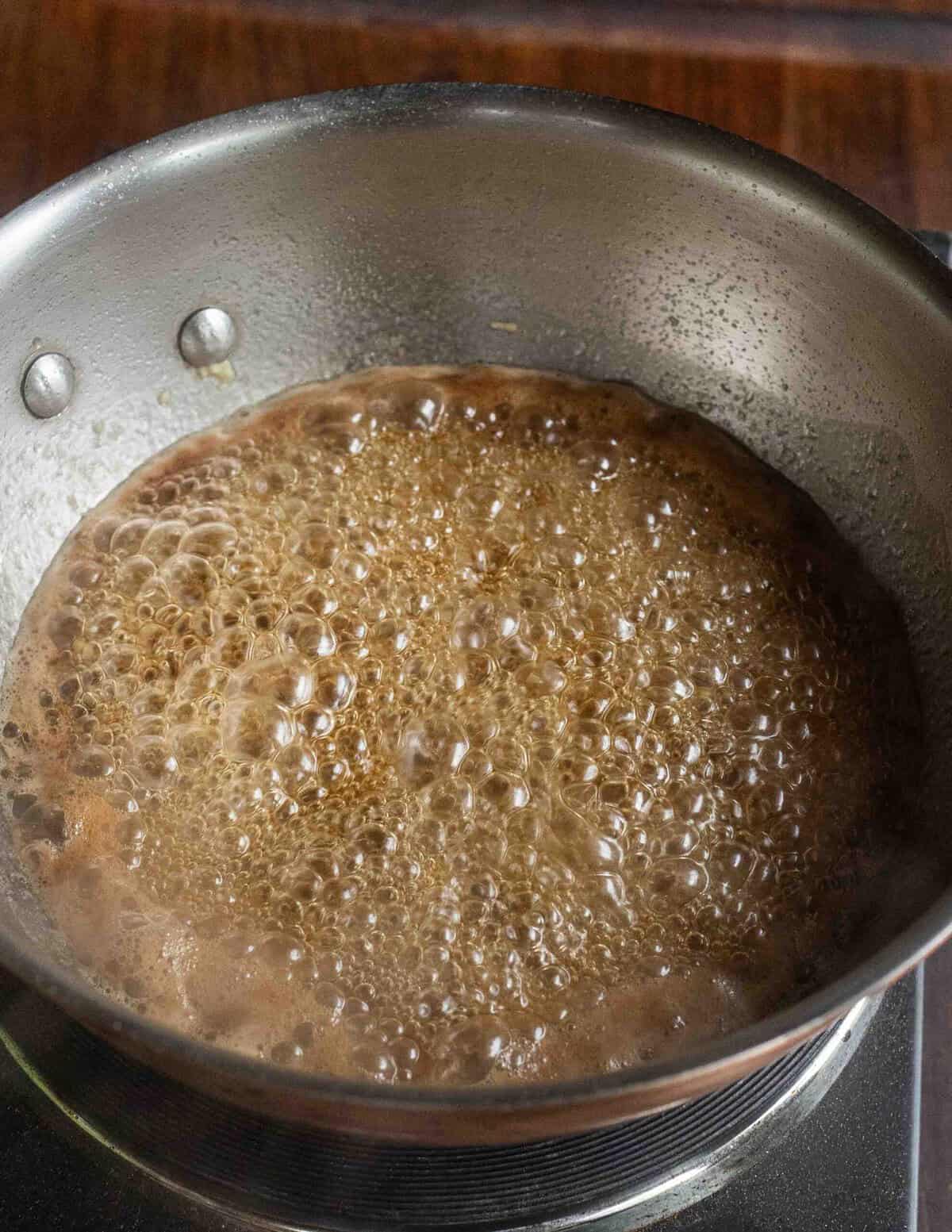
Add the vinegar and maple syrup to the pot, bring to a boil and reduce by half. add the rhubarb and tomato puree, bring to a simmer
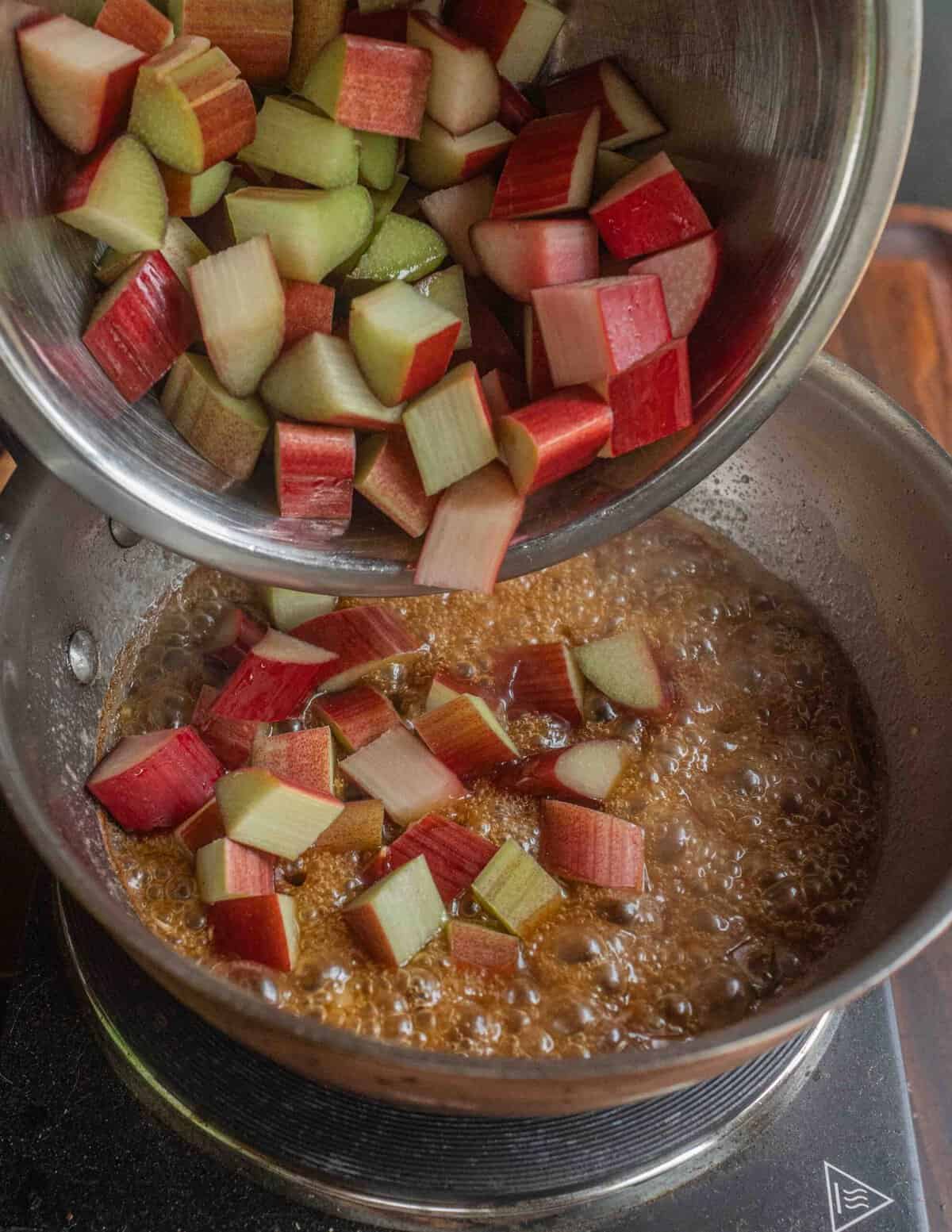
Cook until the rhubarb is tender and beginning to break down, about 15 minutes. The word sauce is open to interpretation here and I like it to be relatively chunky, like a juicy compote.
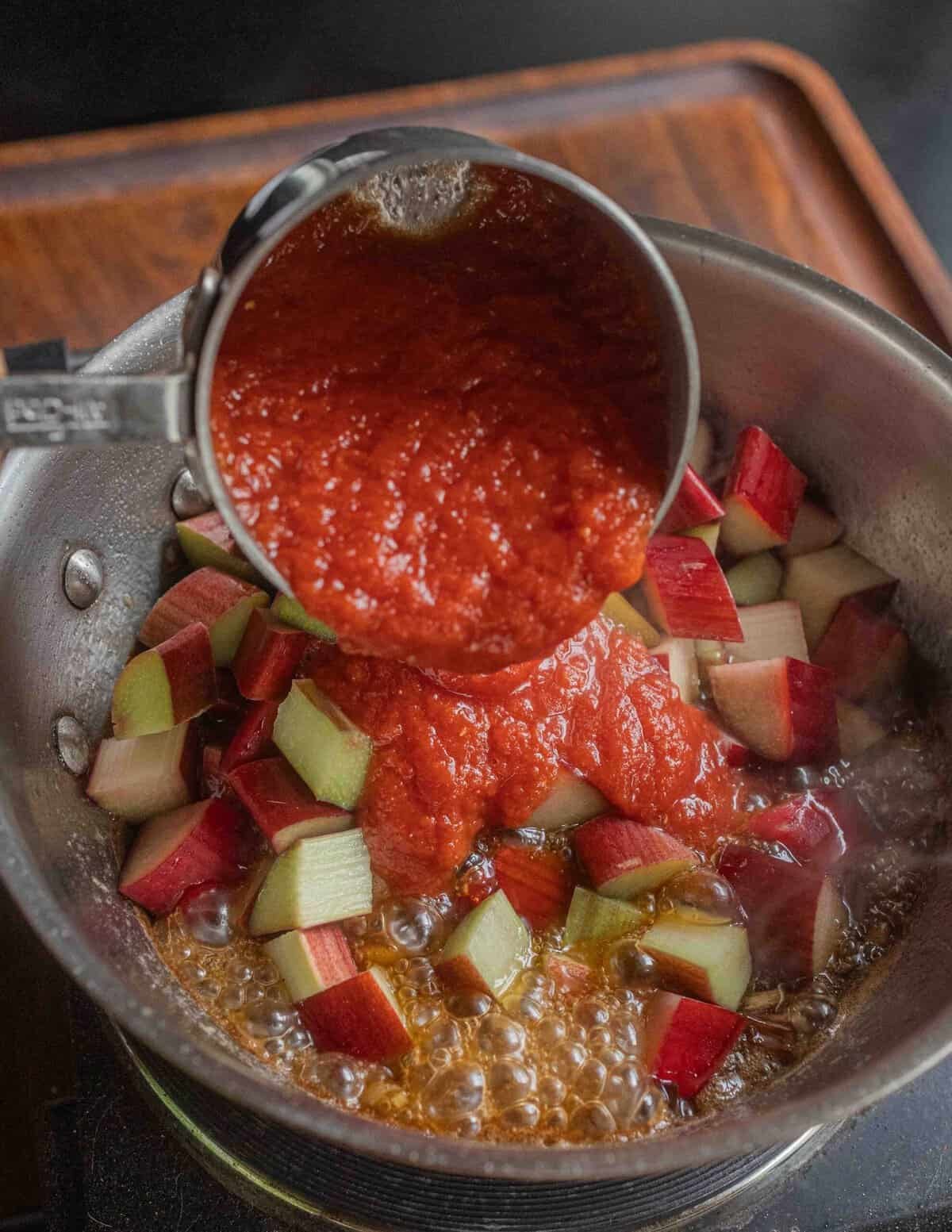
Cool the sauce, fold in the herbs, double check the seasoning for salt and adjust as needed, then refrigerate until needed. The sauce is best made at least a few hours ahead of time to give the flavors time to meld, especially if you use ramps which will perfume the mixture as it cools.
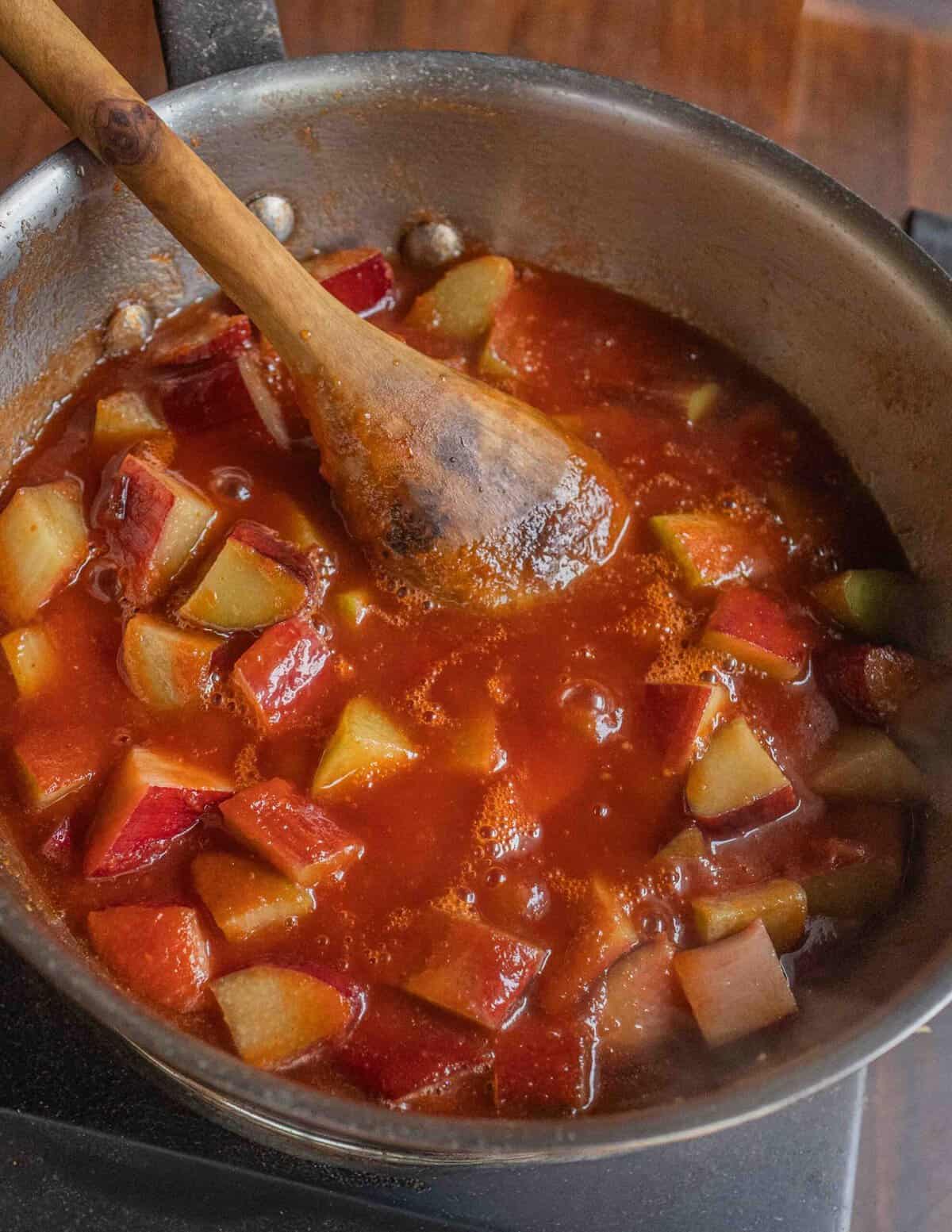
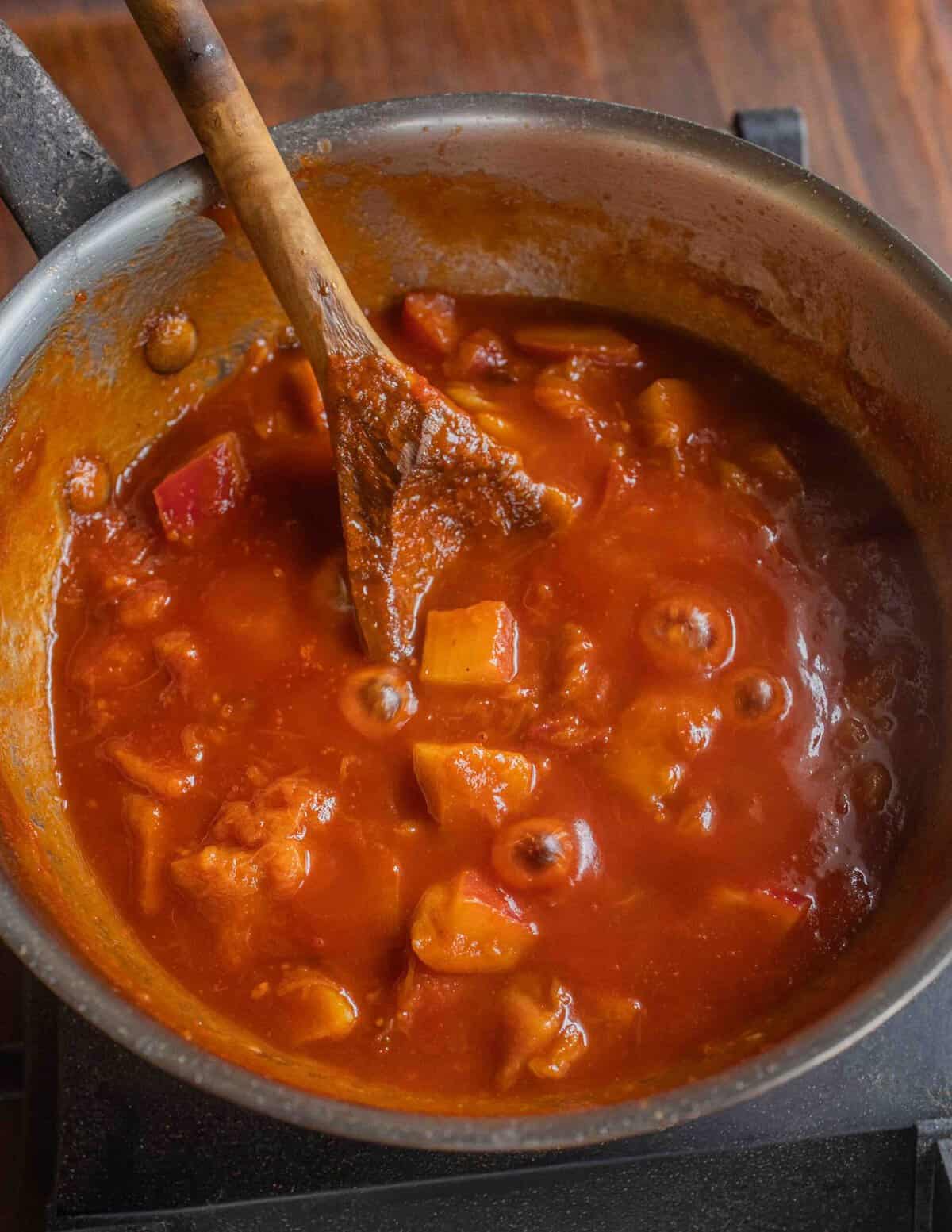
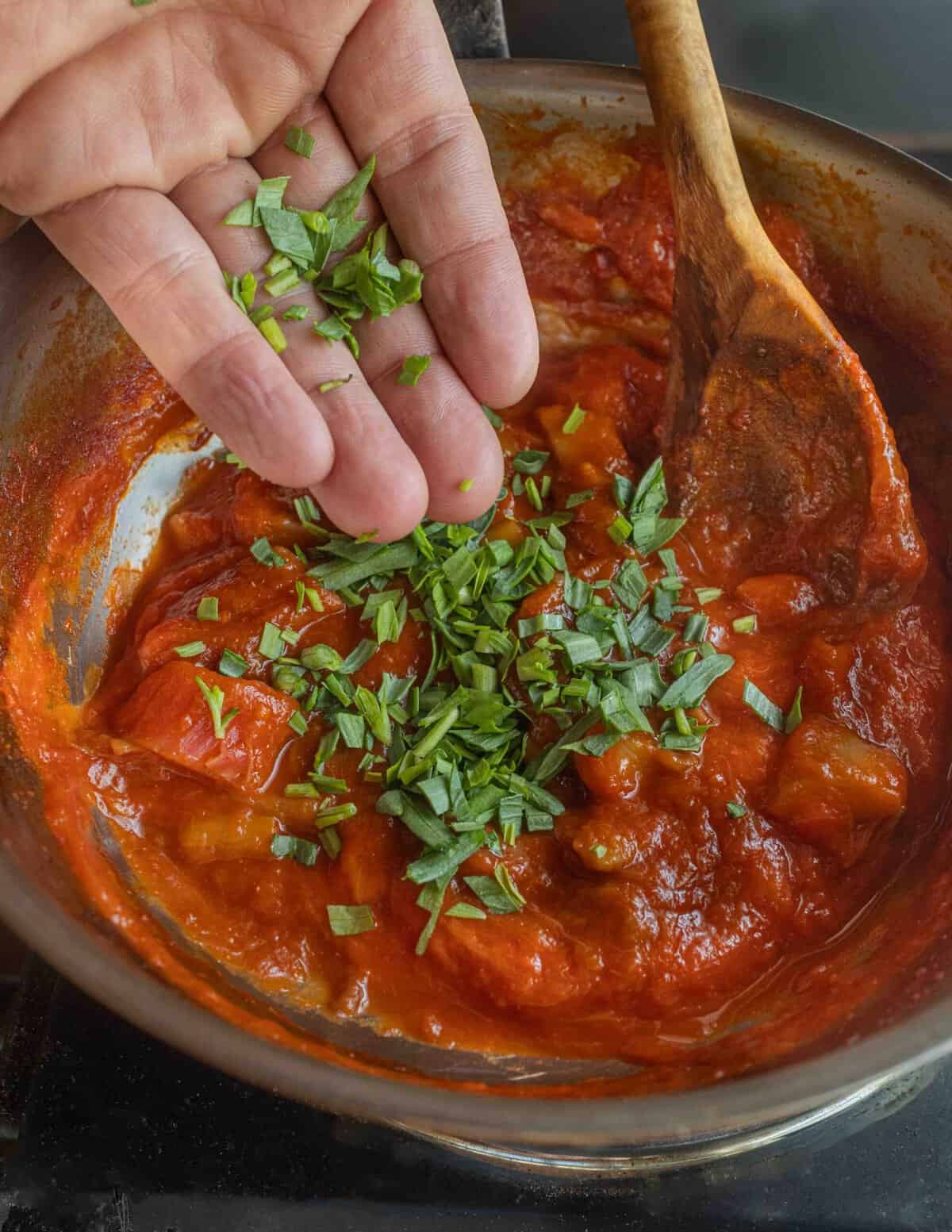
Once the sauce is cooled I'll stir in a handful of fresh herbs. I was excited to see my tarragon had overwintered next to my house so that's what I used. As I mentioned previously, basil or mint work too.
Peeling Rhubarb
While it will eventually break down, the outer skin of a rhubarb stalk is pretty fibrous. Peeling the rhubarb stalks will give you a more refined sauce, but it's optional and I typically don't.
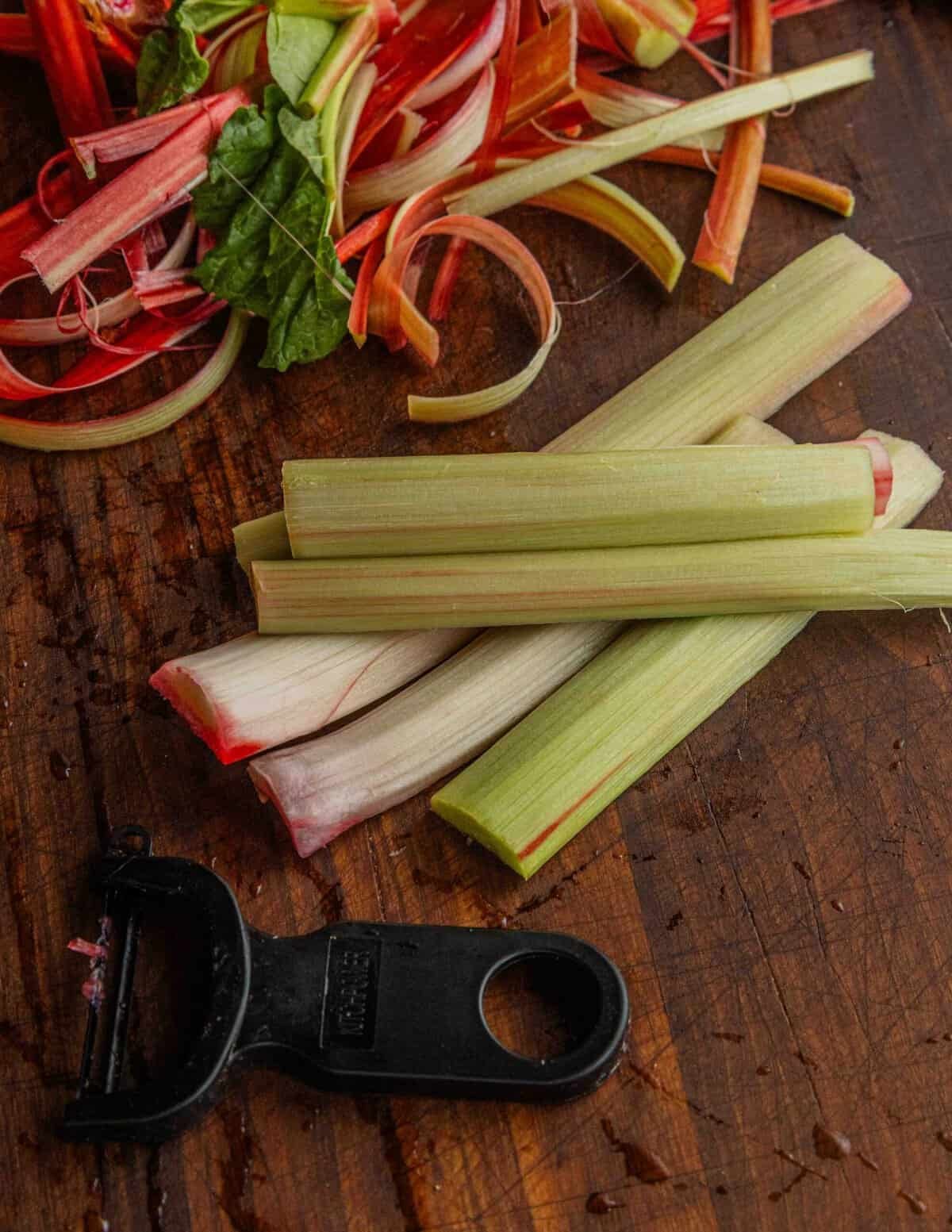
Peeling, besides removing some of the stringy fibers, also helps the sauce cook quicker. The trade-off is, especially if you're using red rhubarb, the sauce will be noticeably less vibrant. Slightly related, one time I always peel rhubarb is if it will be shaved and used in a salad or slaw.
Serving
A little sweet, a little sour, this is a perfect sauce to serve with pork or chicken. I like it with just about any cut, but it's best with grilled, roasted or seared meat as opposed to braised. Below it's shown with a smoked pork rib cap, but a loin or a pork chop is good too.
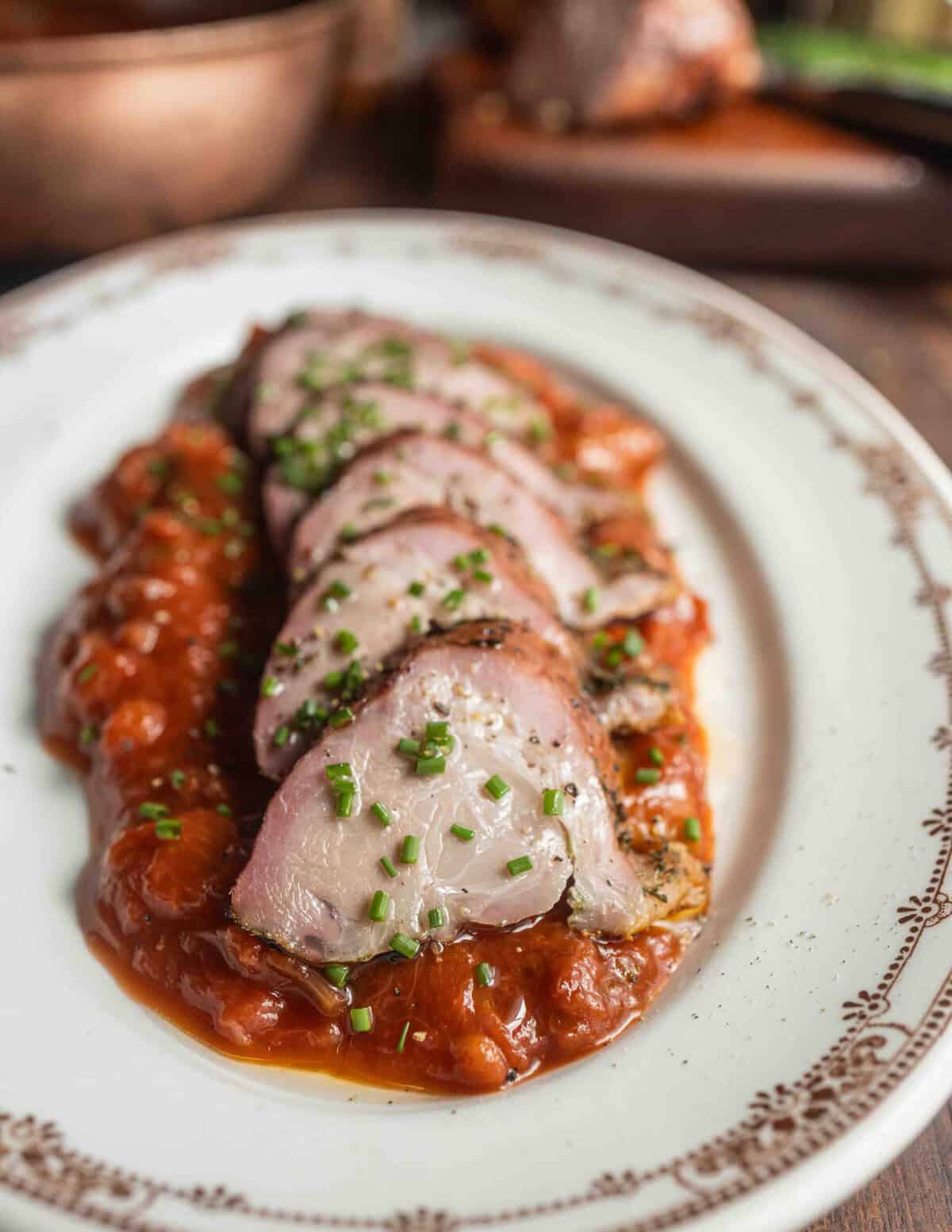
Besides meat, it's also good on a cheese plate. My friend, Chef Luke Zahm of the James Beard-nominated Driftless Cafe in Viroqua WI was serving a very similar compote on a grilled cheese sandwich they were running last year, which was excellent.
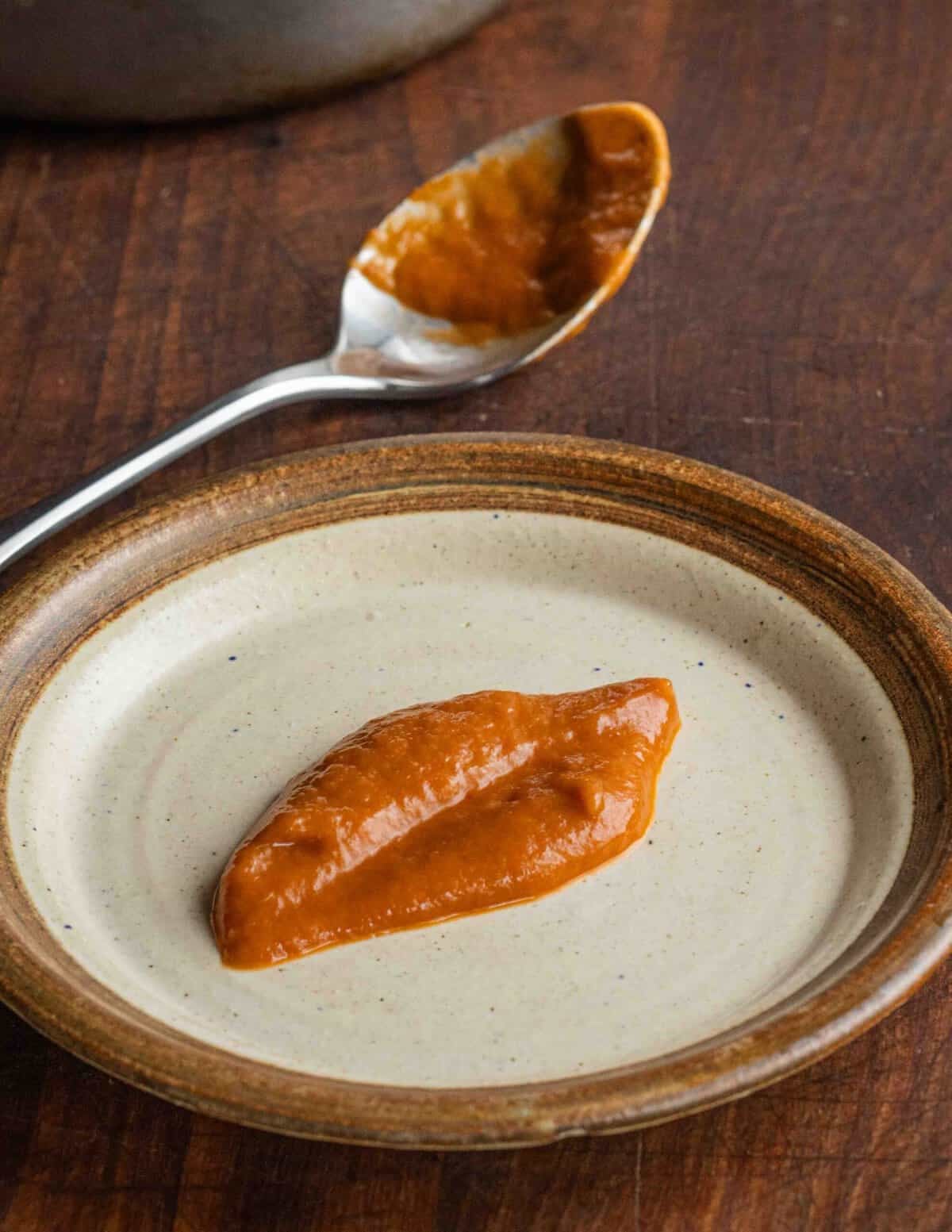
If you want, you can also puree the sauce to make it smooth, but I find I like the color and texture of the sauce when it's left chunky, personally. The blender incorporates air which lightens the color of the sauce.
Do you have any savory recipes for rhubarb you like to make each year? Let me know in the comments.
Related Posts
Savory Rhubarb Sauce / Compote
Equipment
- 1 two quart saucepot
- 1 Blender
- 1 Food mill or strainer
Ingredients
- 1 Tbsp Unsalted butter
- 2 oz Shallots finely diced or minced
- 1 Small Garlic clove grated
- 1 teaspoon Fresh ginger Grated or finely minced
- 4 pz Ramps, bulbs and leaves omit if using shallots and garlic
- ½ cup Maple syrup or sugar
- ⅓ cup Vinegar like apple cider vinegar or rice wine for a milder acidity, or homemade vinegar
- ¼ Tsp Kosher salt
- 10 oz Fresh or frozen rhubarb stalks Diced ½ inch
- 8 oz Tomato puree From canned, peeled tomatoes
- 1 tsp Dijon mustard optional
- 1-2 tablespoon Fresh tarragon, mint, basil, dill or chervil roughly chopped, to taste
Instructions
- Puree the canned tomatoes and strain to remove the seeds. Reserve the puree.
- Heat the butter in a wide two quart pot. Add the shallots and garlic, ginger, ramps or other alliums and cook for two-three minutes until softened.
- Add the salt, maple syrup and vinegar, bring to a boil and reduce by half.
- Add the rhubarb, mustard if using and tomato puree, bring to a simmer and cook until the mixture's thickened and the rhubarb's started to break down, about 15 minutes.
- Resist the urge to mash the rhubarb up. I like it somewhere between a sauce and a compote. Fishing for tart, tender pieces of rhubarb is half the fun of eating.
- Turn the heat off and allow the pot to cool, then stir in the herbs, adjust the seasoning for salt, sugar and tartness until it tastes good to you, then refrigerate until needed.
- Serve the sauce warm or cool with grilled, roasted or smoked meat like pork, chicken, or turkey.
- The sauce will keep for a long time in the refrigerator and can likely be canned, although I haven't made batches large enough to warrant it personally.
Jon C.
Absolutely delicious. I missed the boat on ramps this year so used a shallot and yellow onion. The sauce paired wonderfully with dry-aged pork chops (sous vide then seared). Can’t wait to use the leftovers with grilled cheese.
Alan Bergo
Thanks Jon.
Mike M
Alan,
I've made a traditional Newfoundland rhubarb relish that is similar to your recipe but no tomato and is sometimes served with cod. I just subbed ramps for the oinions. Another use of rhubarb you might like is dried and powdered and use like sumac. I mix it up with mint, salt, pepper, and anise hyssop for a melon/fruit spice. Also, rhubarb with blueberries is great as a fruit leather. And my favorite is rhubarb custard pie with streusel crumble on top.
Alan Bergo
Thanks Mike. Been a while since I had a custard pie.
Zach
That spice blend sounds delicious! Anyone do any experimentation with a rhubarb ceviche? After discovering Alan's fruit scrap vinegar recipe, I'm tempted to play around with a rhubarb fennel ceviche or sauce that would work well with either a mild or fatty fish. Not sure if the acid alone would be enough to "cook" the seafood or if I'd have to resort to citrus juice.
Kristy
I've already made this sauce twice! Amazing flavors and such a versatile sauce. My mouth was watering after I finished the first batch and was looking at a friend's huge rhubarb plant. They shared so I could make more. Thanks for your creativity!
Alan Bergo
Hey thanks Kristy I’m so glad you like it. My Mom and I just had some with Brisket last night.
z
Is there any reason not to try this with knotweed instead of rhubarb?
Alan Bergo
Hey Z! The color would be off putting, imo.
ieva
I've made salsa with fresh rhubarb and ground elder stalks. It was very tasty.
Alan Bergo
Thanks for reminding me there’s ground elder that next to my house I need to eradicate.