
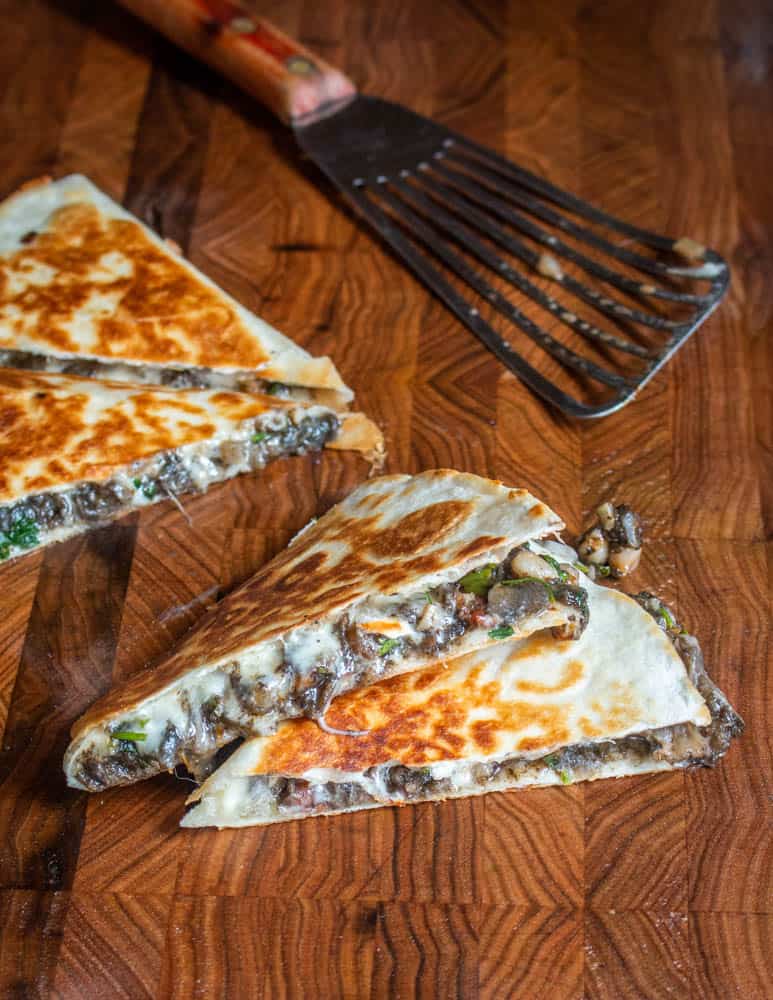
A simple quesadilla with huitlacoche (corn mushrooms) is a contender for the best quesadilla I've had. It's also one of the most traditional recipes I know of for these special mushrooms and can be made with fresh mushrooms off the cobb, frozen, or tinned. If you're new to cooking with these mushrooms, it's probably the best recipe I know of to start with.
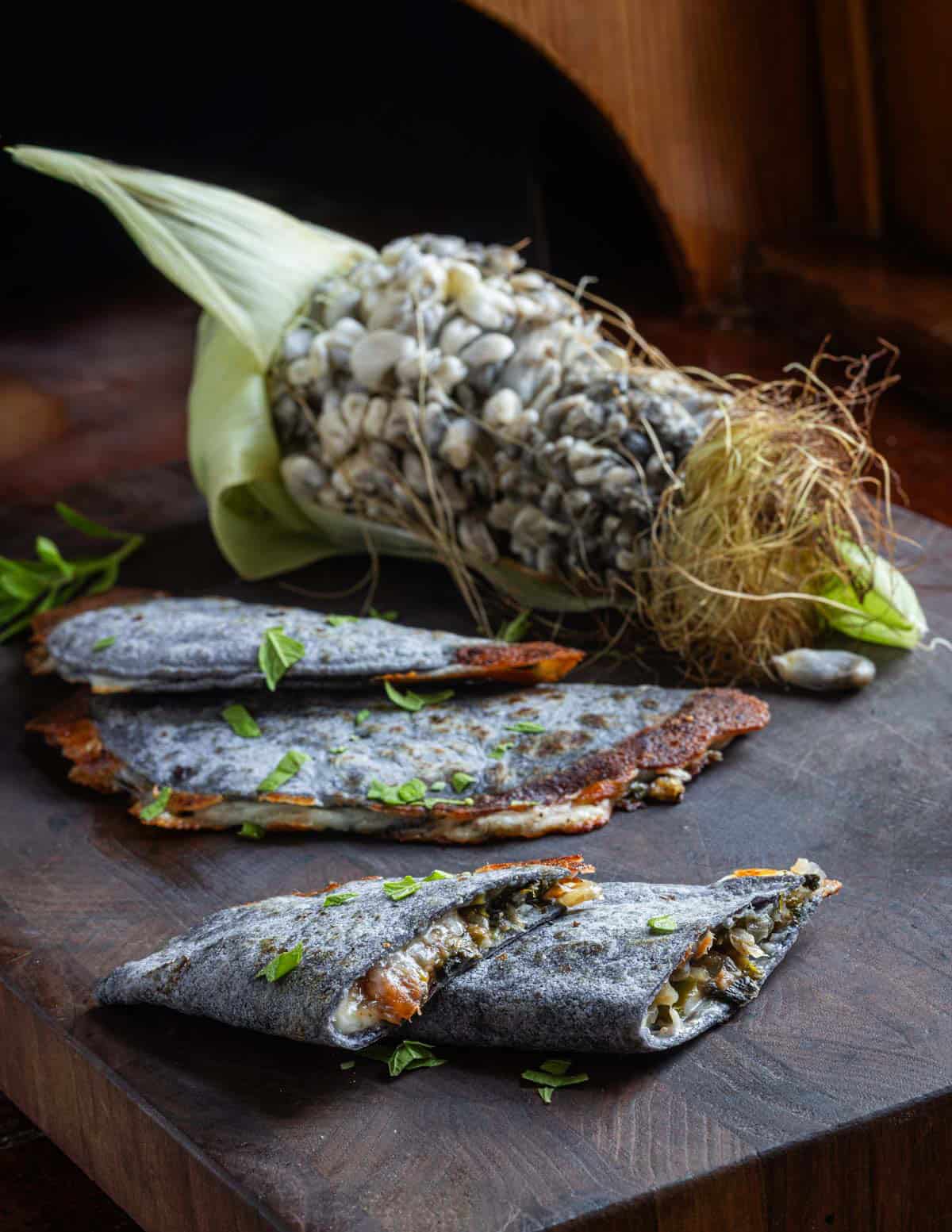
A Traditional Meat Substitute
Huitlacoche is often used as a meat replacement (zucchini blossoms too). It's harvested in large quantities in Mexico where it's sold fresh, as well as in cans year round.
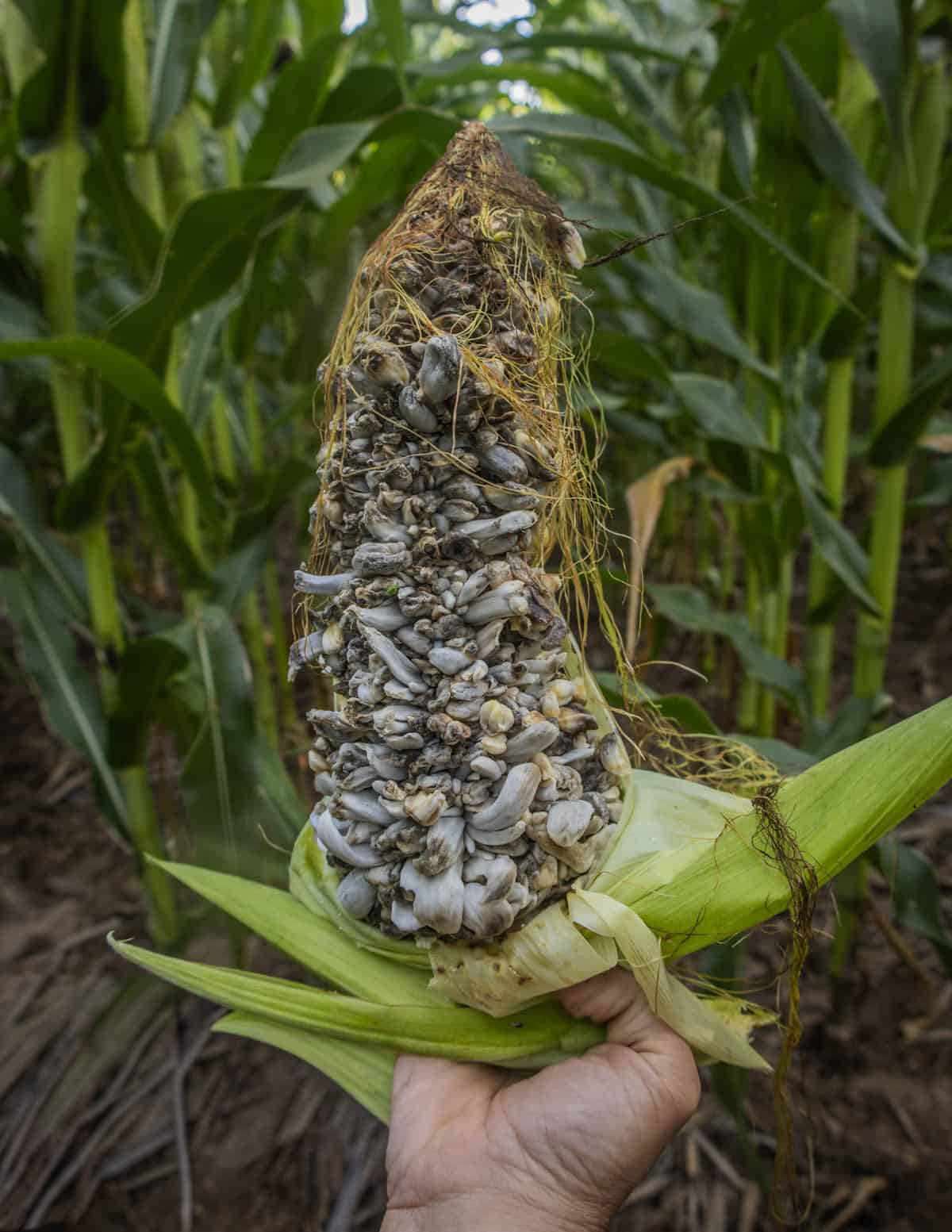
If you go to a decent Mexican restaurant with a list of protein options, along with the carnitas and al pastor, you'll probably see huitlacoche, sometimes described as corn mushrooms.
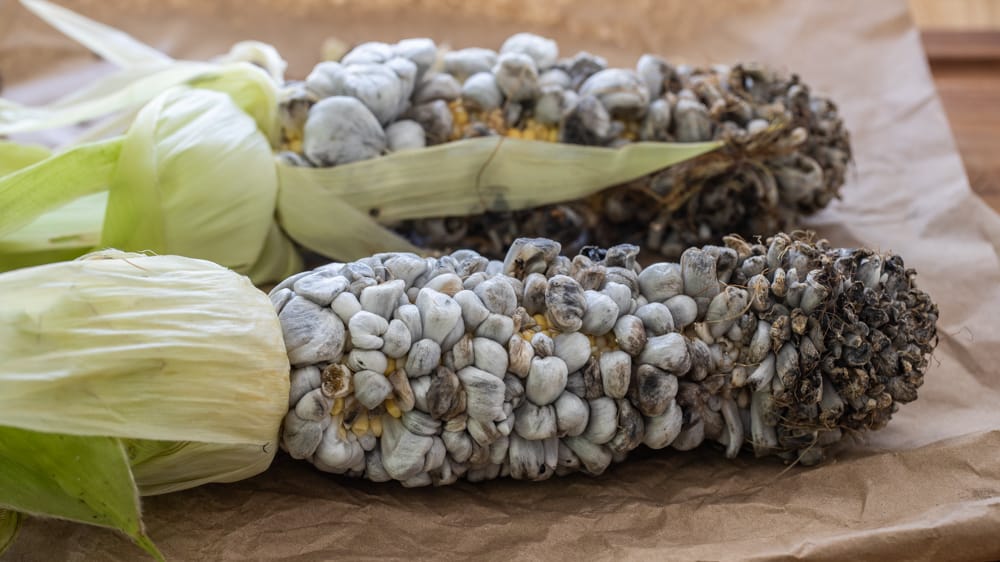
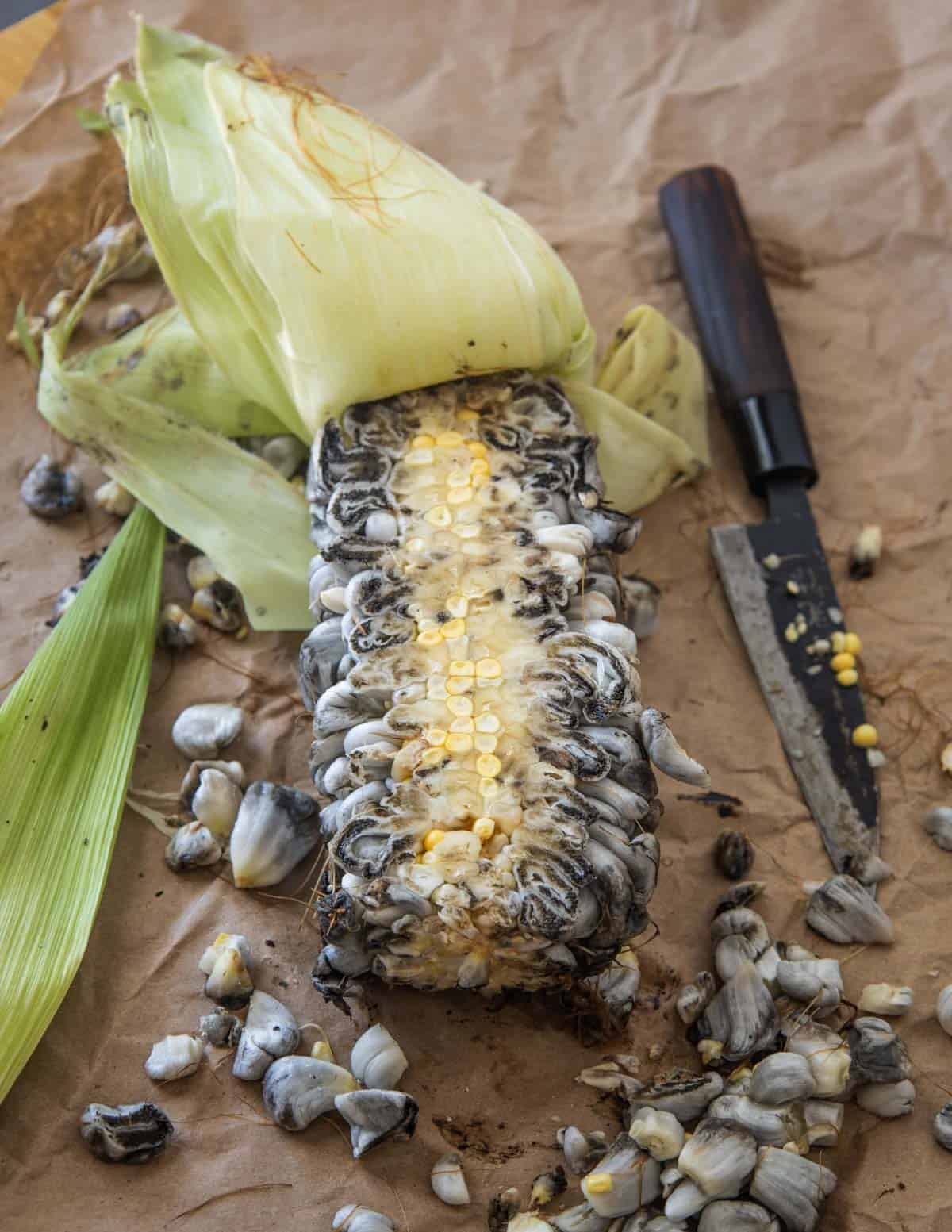
I love huitlacoche, but I don't often order it at Mexican restaurants because it's always canned which isn't as good as fresh or frozen. Canned huitlacoche is heavy on the juice and also contains a large amount of field corn that gets cut off the cob as the mushrooms are being removed.
My huitlacoche comes from my friend Mushroom Mike LLC. Based in Milwaukee, I've watched his business grow from renting a few rows of corn years ago, to being the largest supplier of huitlacoche in the United States.
How to Make it
Essentially we're just cooking down the mushrooms with onion, garlic and tomato to make a thick black paste-but it's a delicious black paste! For clarity, in the images I'm making a triple batch of the recipe as it's easily scaled.
The first thing to do is process the huitlacoche If you're lucky enough to get some fresh during the season, remove the husk, along with as much of the corn silk as you can, then cut the mushroom kernels from the cob, leaving as little mushroom on the cob as possible. If the huitlacoche is frozen, it just needs to be thawed.
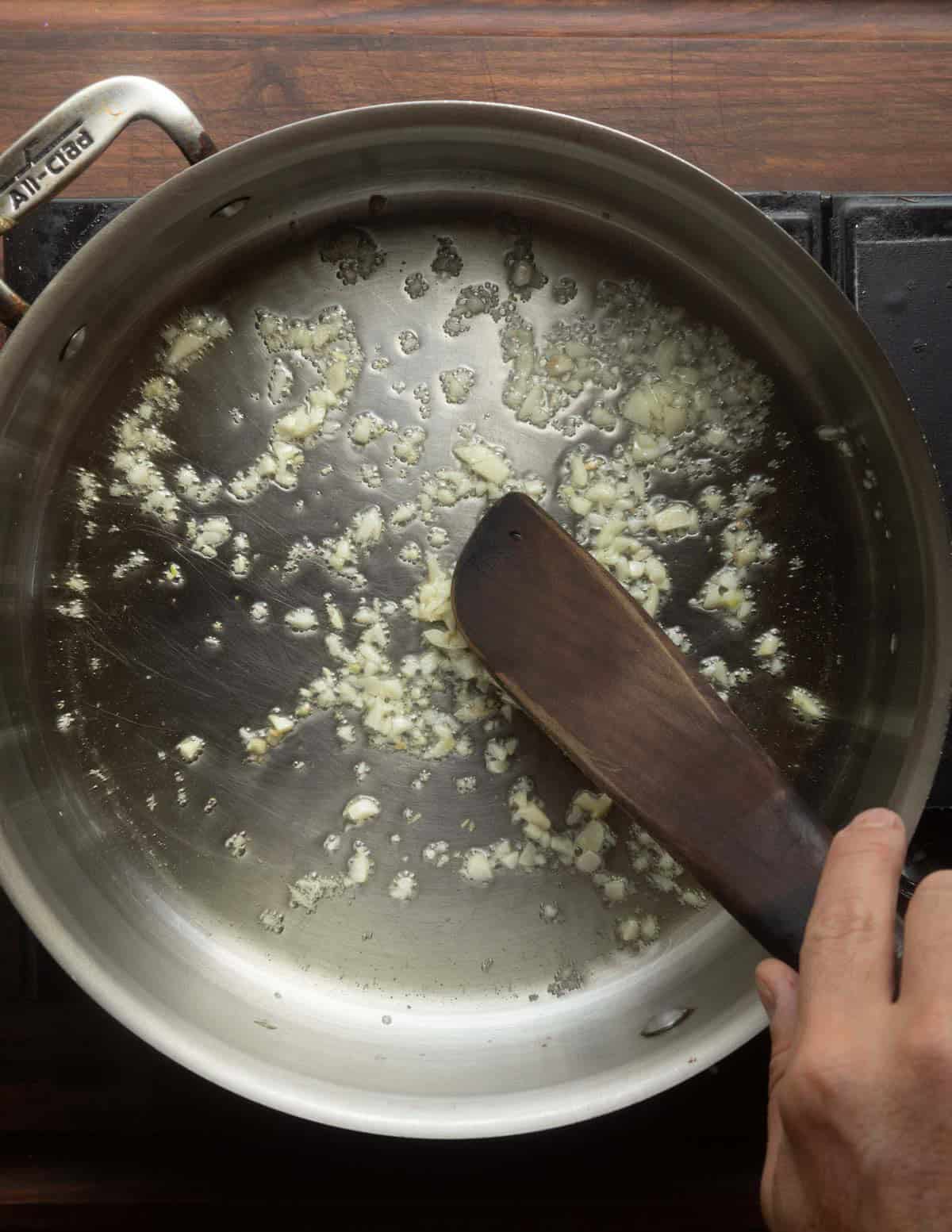
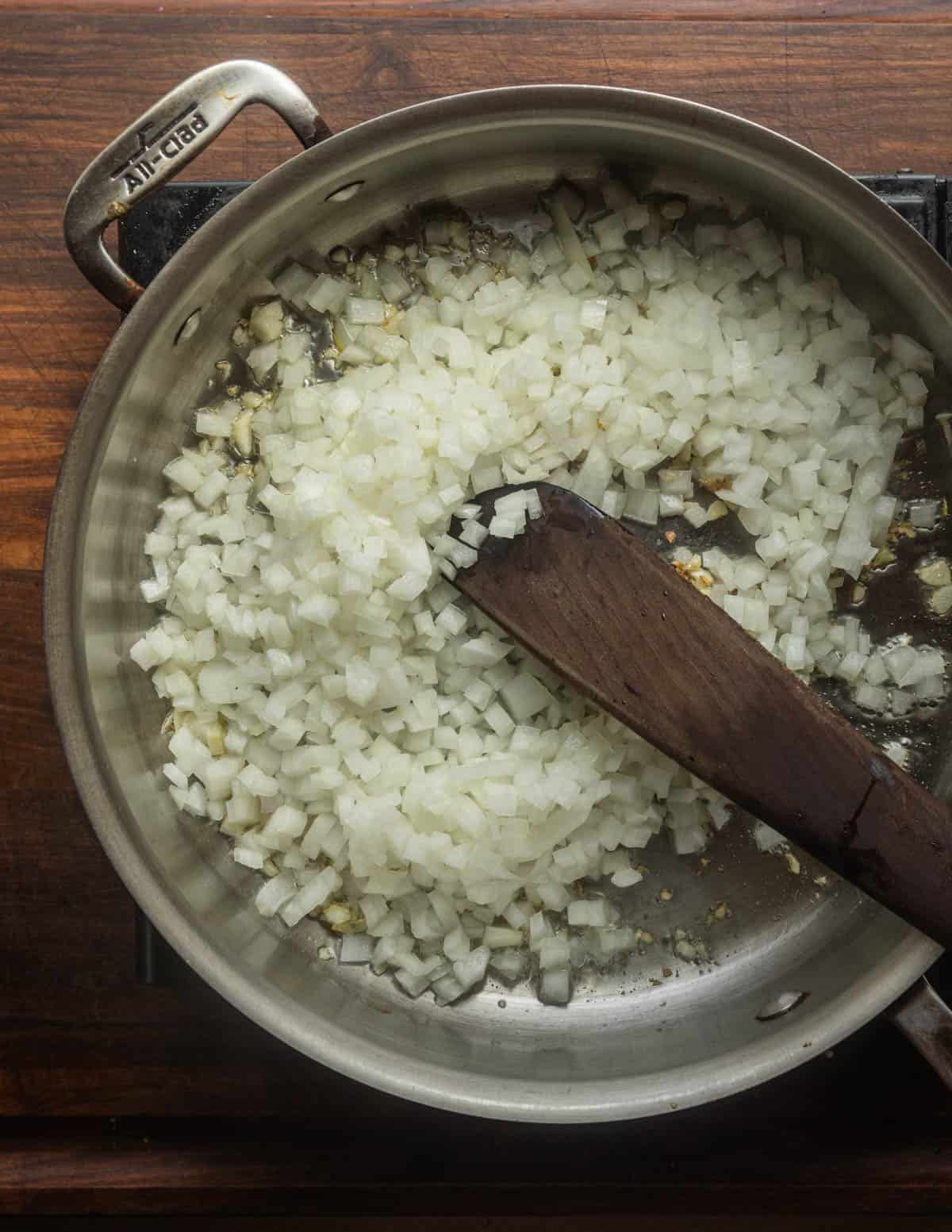
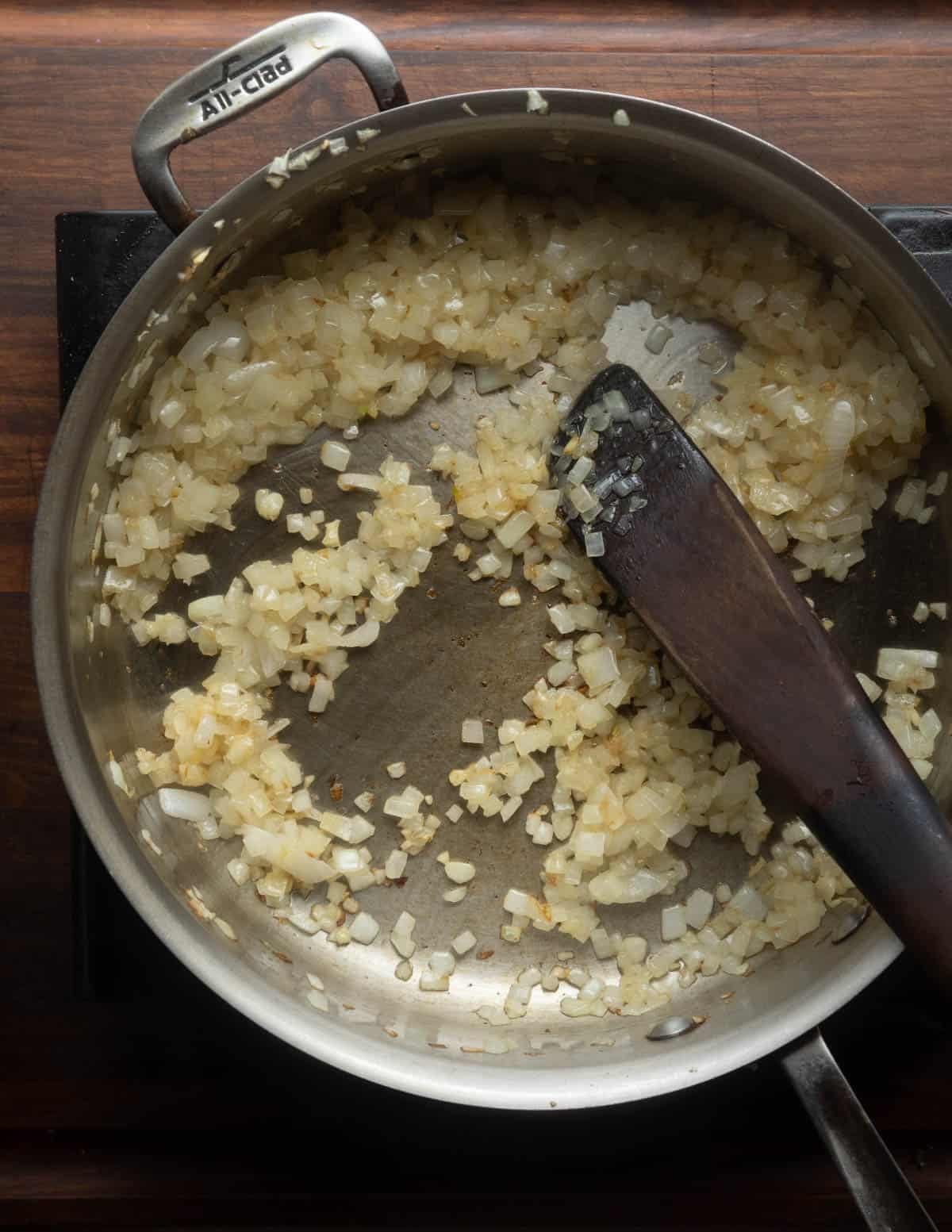
Next, build the aromatic base. Sweat some minced or grated garlic in oil until golden, then add finely chopped onions, cooking them down low and slow until tender. The subtle texture of the mushroom is the star here, so take your time and make sure the onions are tender.
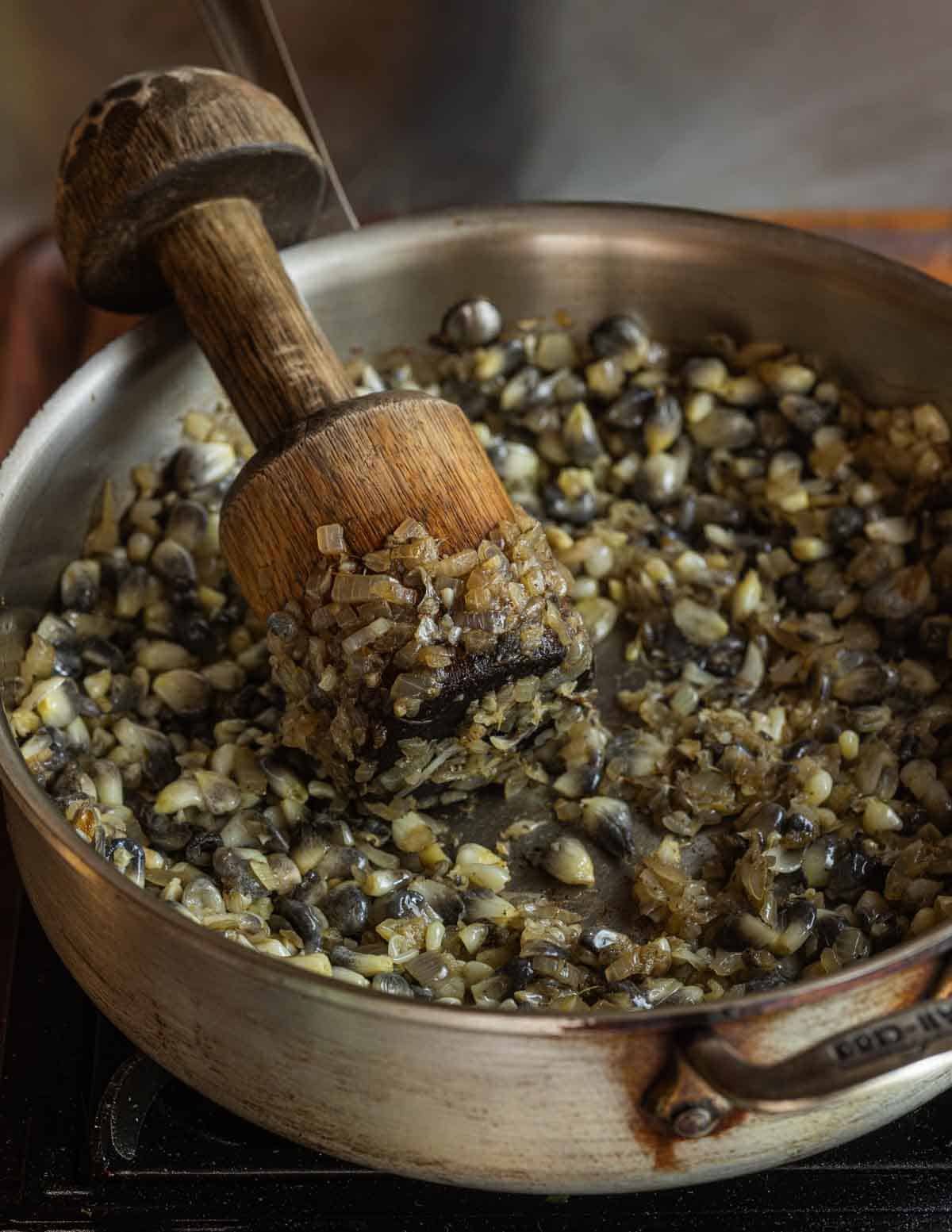
Next, the huitlacoche. Traditionally, the mushrooms might be pounded to a paste on a metate: a wide stone tool used to grind corn and other grains. Frozen mushrooms will become thick on their own, but if I use fresh mushrooms I'll crush them with a wooden mallet.
After the mushroom liquid's cooked off, add the tomatoes. If I use frozen huitlacoche, I add the mushroms and tomatoes at the same time. Fresh tomatoes are traditional, but canned are easier, and I like the way they help thicken the mixture. Depending on availability I will make it either way.
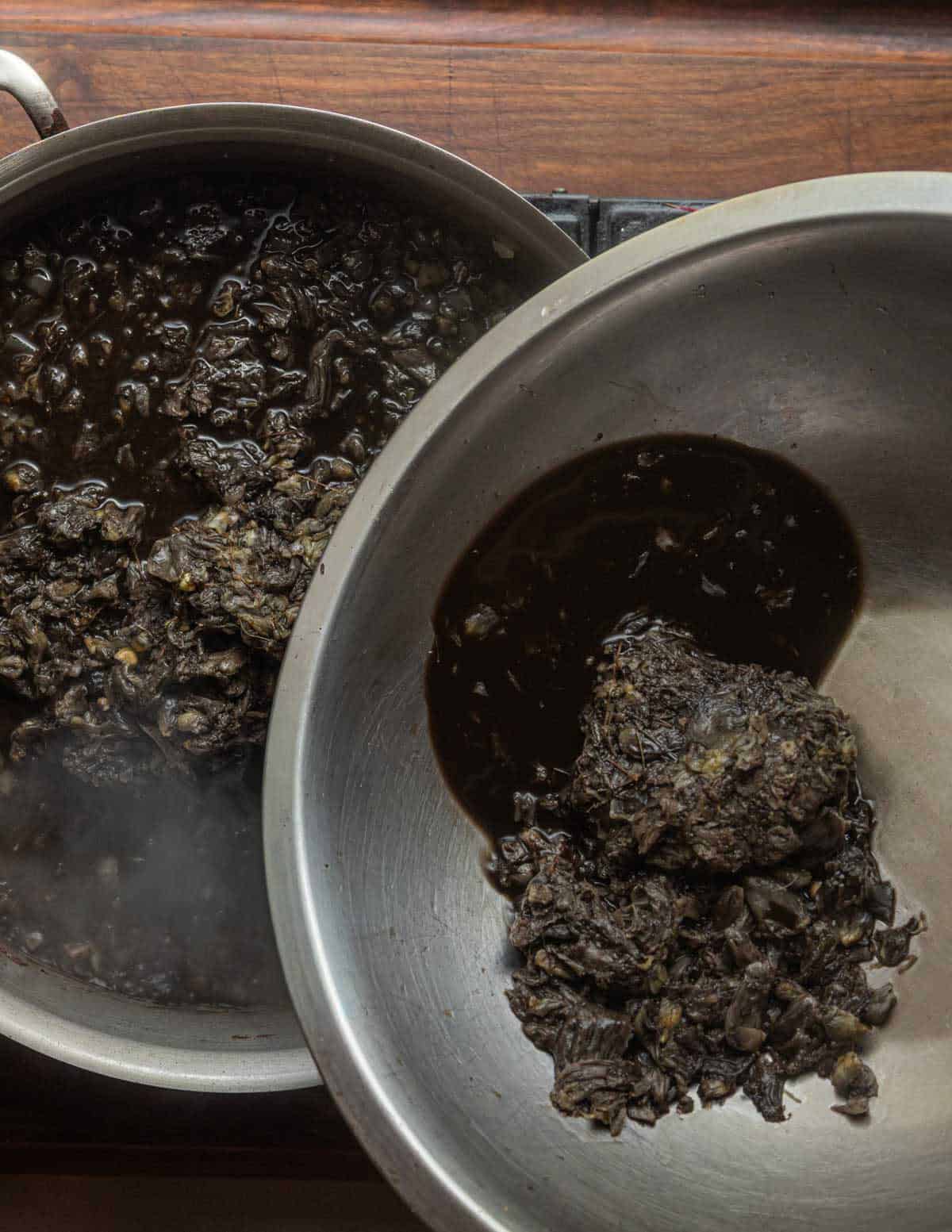
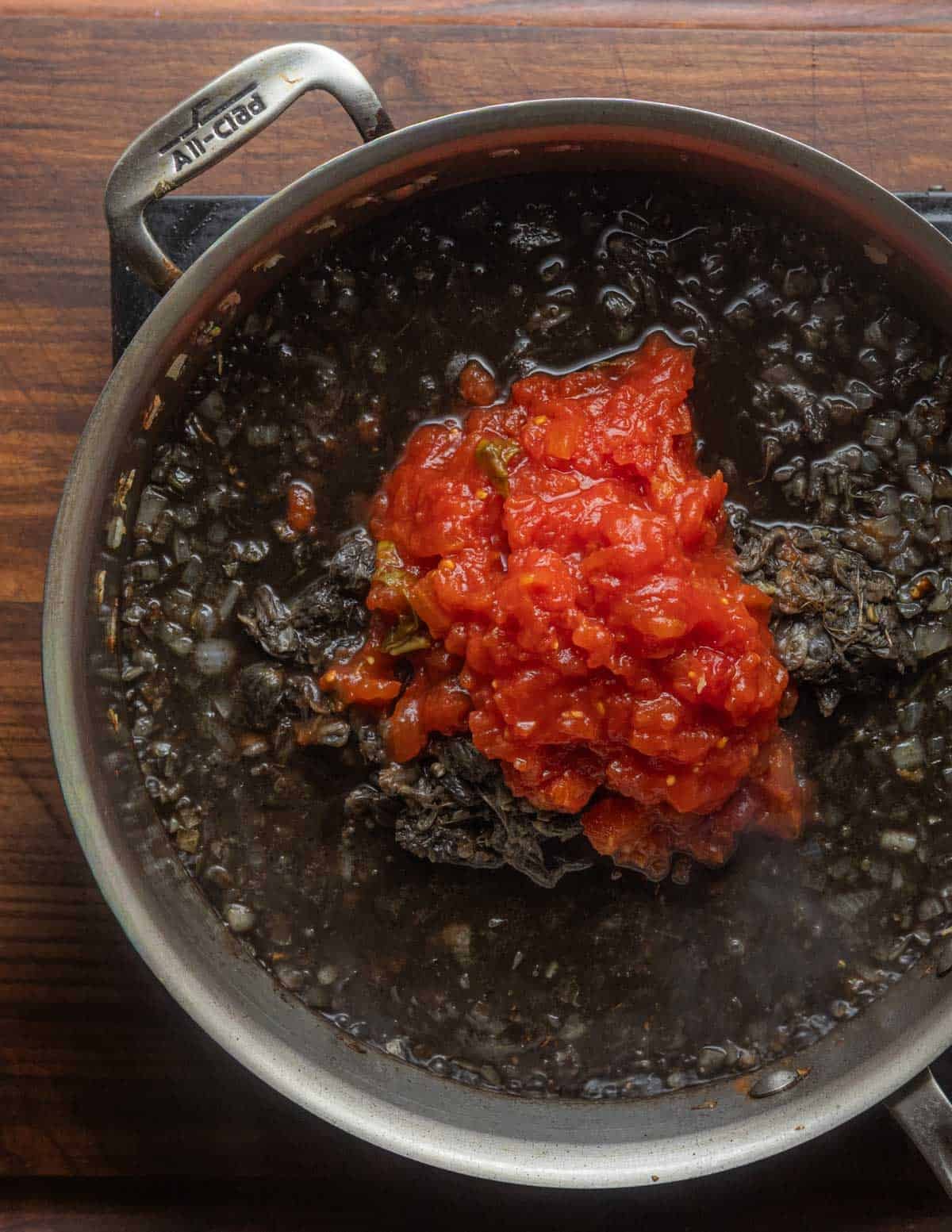
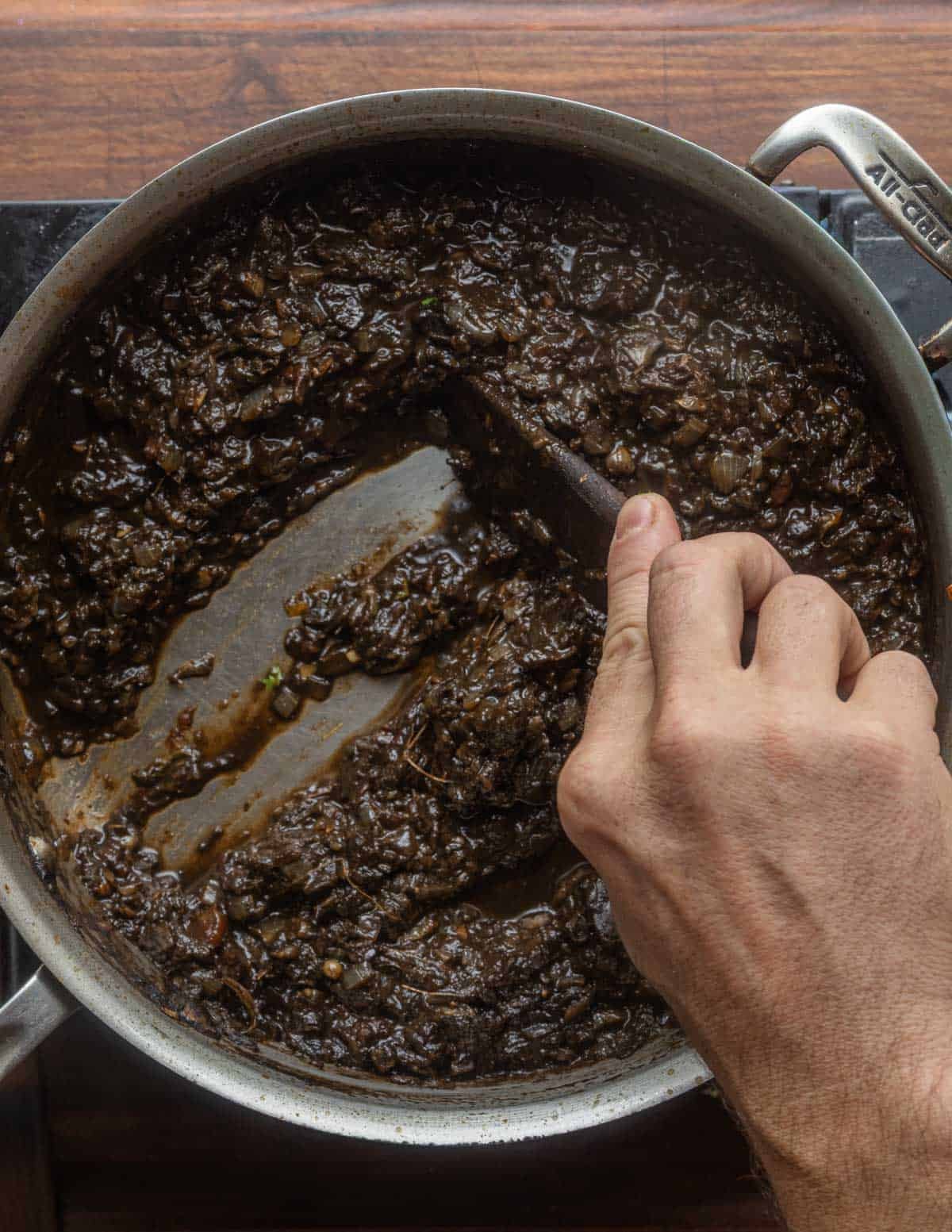
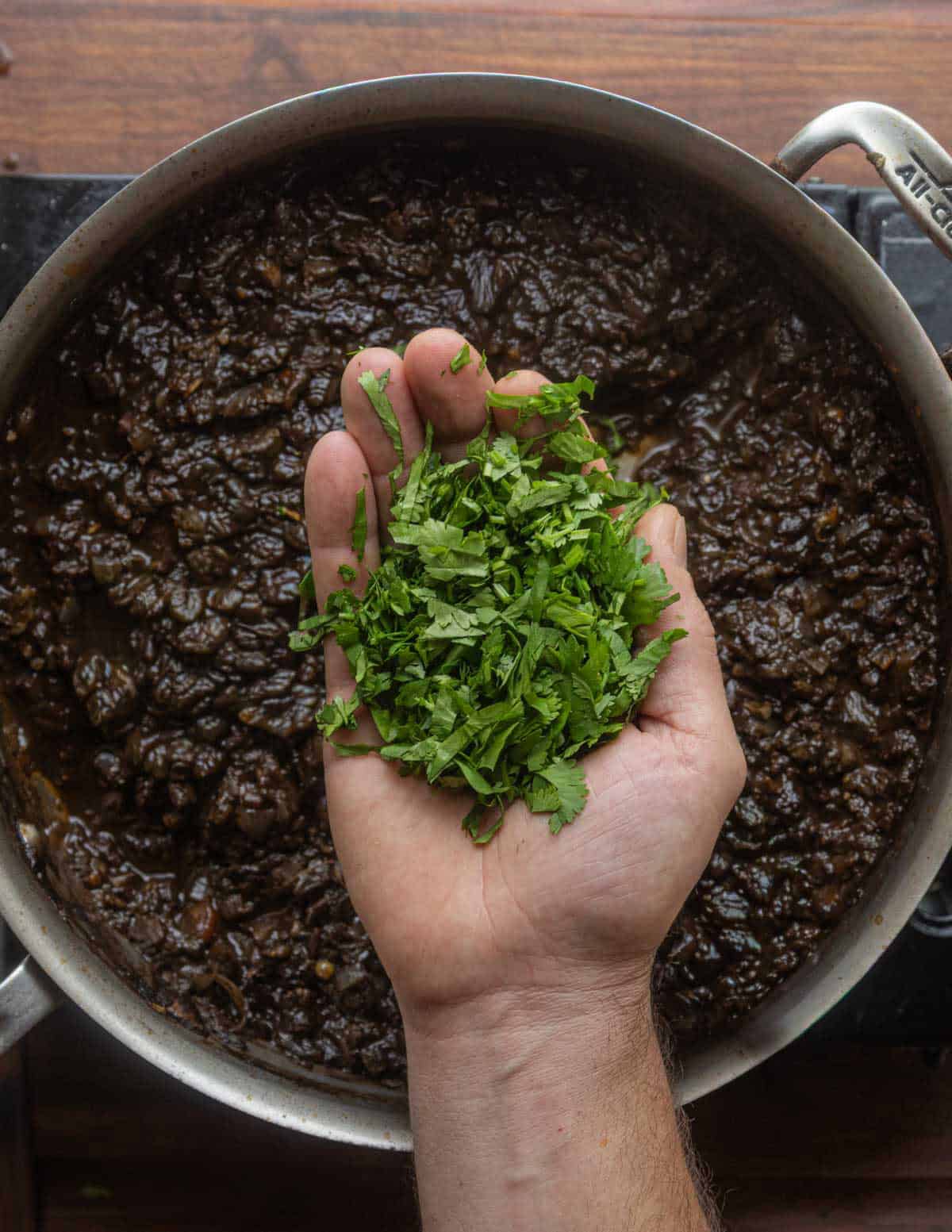
After the tomato and mushrooms are added the mixture's cooked down slowly to evaporate moisture. Once you can see the bottom of the pan when stirring it's done-season the mixture to taste and add a handful of cilantro, epazote, or both.
Final Quesadillas
Finally, the fun part. Take some tortillas and put them on a cast iron griddle or a comal with some melting cheese like Queso Oaxaca, Chihuahua or Queso Quesadilla. In a pinch mozzarella or Monterey jack is ok, but only ok. Add a spoonful of the mushroom mixture.
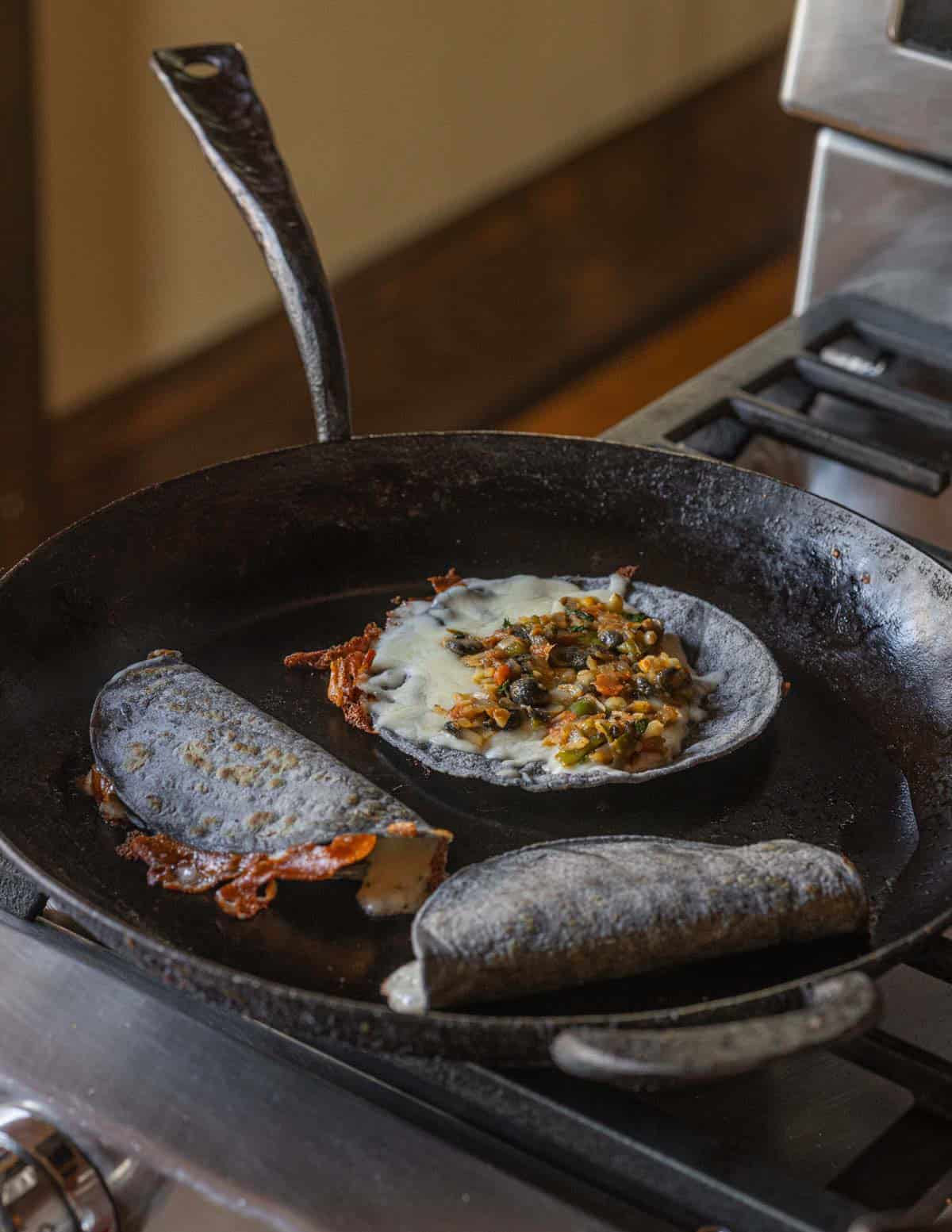
Then fold the tortilla in half, pressing down gently to force a little cheese out on the peripheries, which will give you a golden brown cheese skirt, as we say in restaurant parlance.
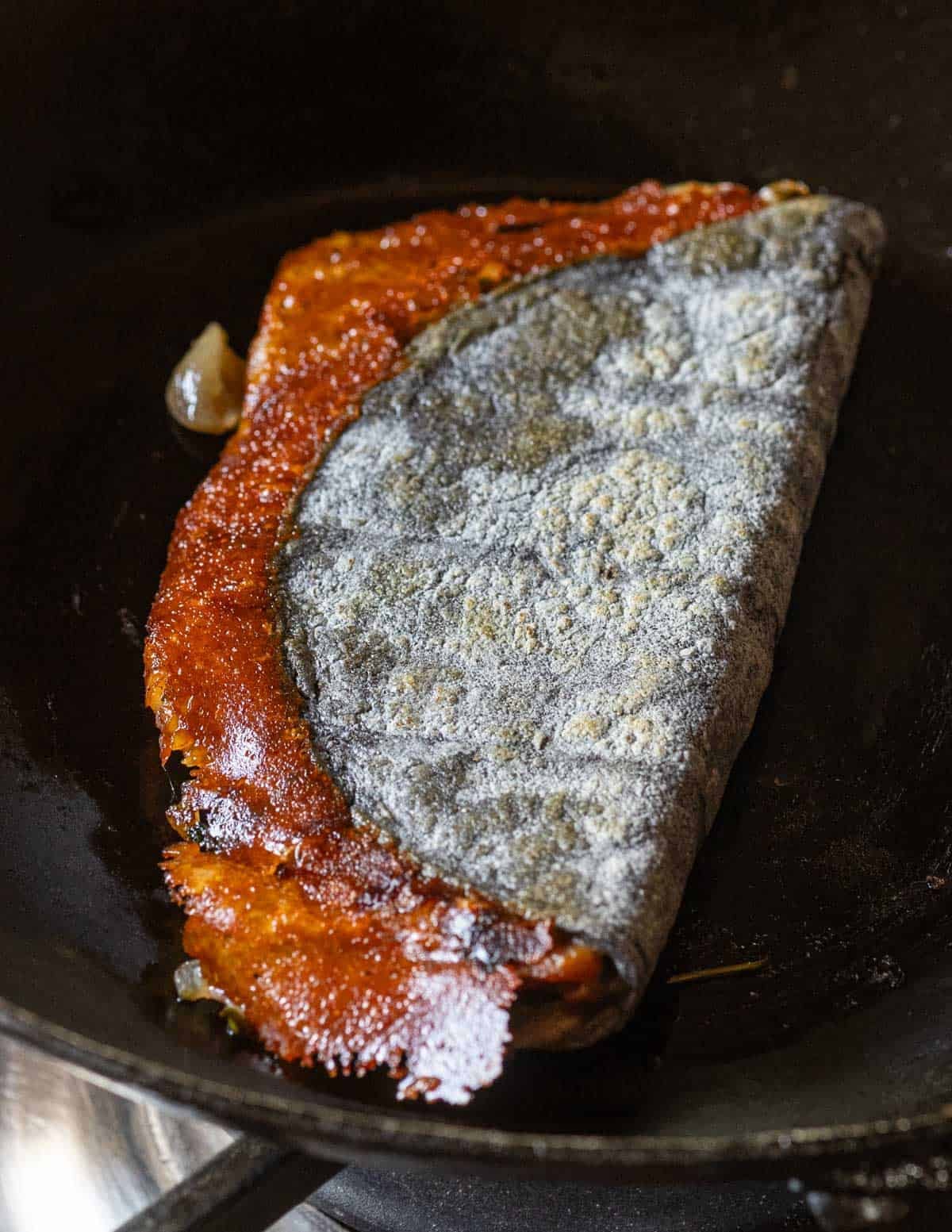
Once they're hot and the tortillas have some color they're done. If you want, peel one side up and drizzle a spoonful of hot sauce in each one, or serve some alongside.
As for the flavor, fresh from the cobb the mushrooms are mild, but frozen or canned they have a very strong, unique flavor. It tastes mushroomy and rich, almost smoky, with a slightly bitter, saffron-like metallic flavor that'll grow on you. I'll be serving a few hundred of them at the North American Mycological Society Foray next week in Michigan.
Chef's Tips
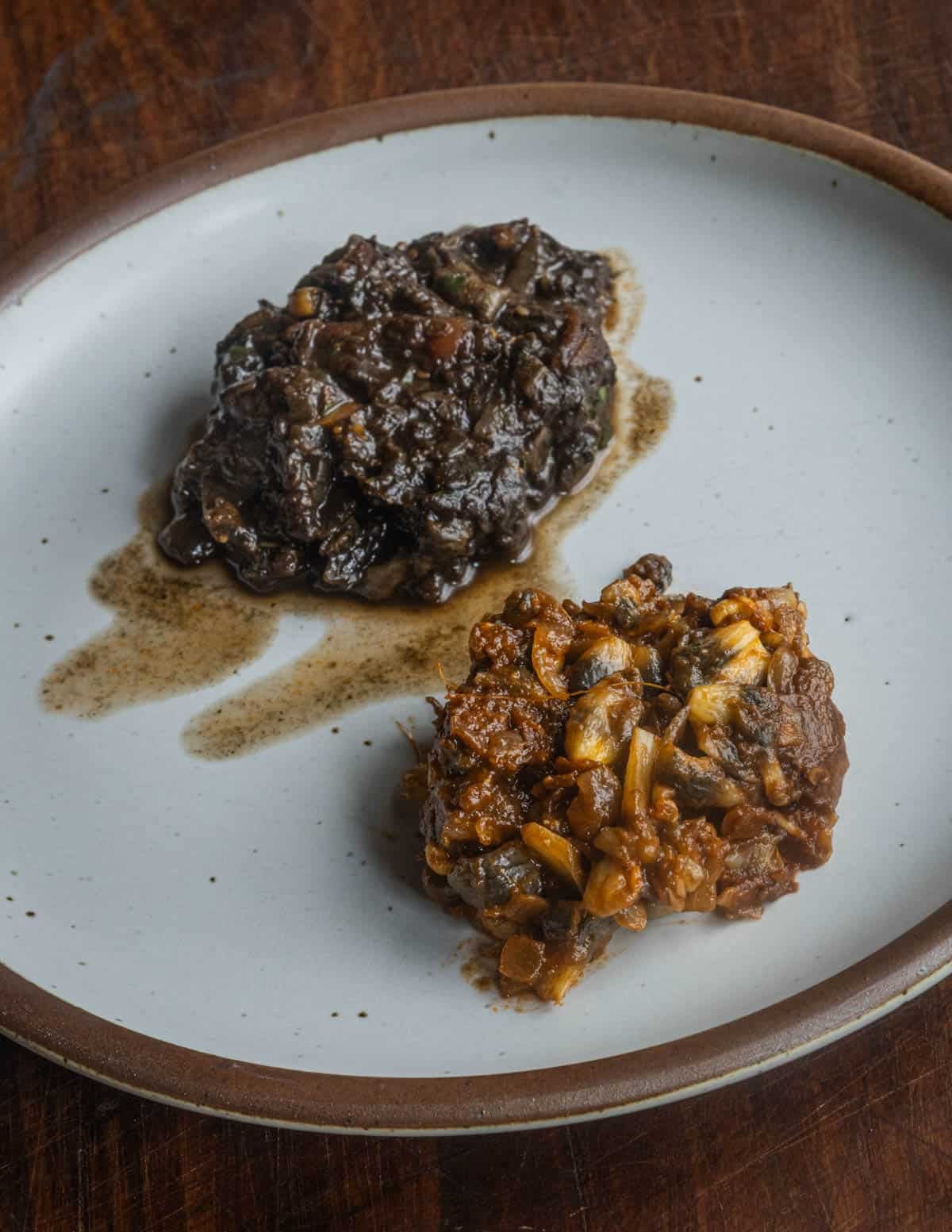
There's a very big difference in using fresh and frozen huitlacoche here. The freezing process breaks down the mushrooms somewhat, releasing a lot of water and turning jet black during the process, and developing a stronger flavor similar to canned huitlacoche.
Cut fresh off the cob, the mushrooms don't turn completely black, and you'll have many more visible kernels that keep a more firm texture. While fresh is my preference, the vast majority of people will only have access to frozen or canned huitlacoche. See the two finished products side by side below for comparison.
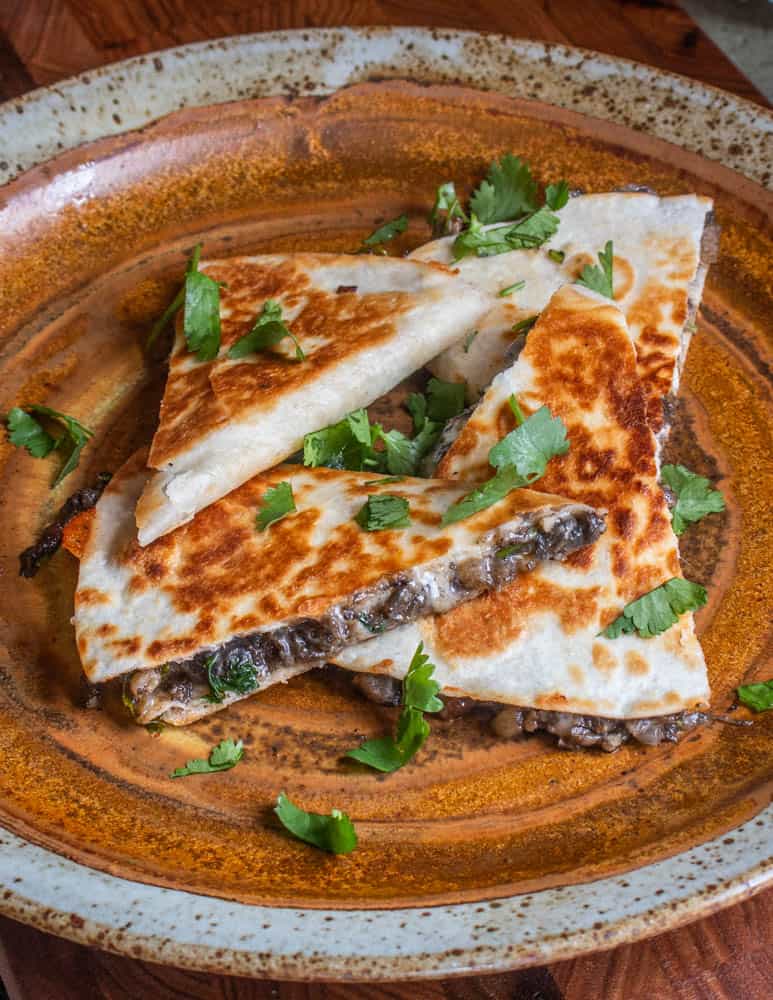
Flour tortillas get golden brown, crisp and delicious, but are not the most traditional here. I prefer corn tortillas personally, both for their chewy texture and the fact I can't tolerate gluten. As another option, consider making fresh tortillas, stuffed masa cakes or pupusas with the huitlacoche mix.
Meat eaters and vegetarians will gobble them up faster than you can say corn smut, but I've also done versions with chorizo sausage and mushrooms that were good too.
Related Posts

Huitlacoche Quesadilla
Equipment
- 1 wide skillet
- 1 mallet or similar for crushing the huitlacoche, optional
- 1 1 large cast iron skillet or griddle
- 1 wooden spoon
Ingredients
- 8 oz fresh or frozen huitlacoche you can use canned huitlacoche but it's not quite the same
- 6 oz 2 large Roma tomatoes 1 14.5 oz can chopped, whole peeled tomatoes can be substituted
- Kosher salt, to taste
- Small handful of chopped fresh cilantro Epazote can also be added, and is traditional
- 1 Tablespoons pork lard or cooking oil
- Crushed red pepper flakes or 1 jalapeno, chopped
- 1 medium onion, finely chopped
- ½ tablespoon minced garlic
- 2 oz grated cheese, such as queso Oaxaca, mozzarella, etc
- 8 inch flour tortillas or smaller corn tortillas
- hot sauce to taste preferably a Mexican brand, like Cholula or Valentina.
Instructions
Tomatoes
- Bring 2 quarts of water to a boil. Meanwhile, core the tomatoes, score the bottoms with and X, then put in the boiling water for 30 seconds or until the skin around the X starts to peel back. Remove the tomatoes, cool, peel, squeeze out the seeds and discard, then chop the tomatoes and reserve. You can also use canned, peeled tomatoes.
Huitlacoche Mixture
- In a saute pan, heat the lard or oil and add the garlic. Cook for 2-3 minutes on low until golden, then add the huitlacoche and cook, mashing the mixture up with the back of a spoon as it cooks, until the pan is nearly dry. Season the mixture with salt to taste, add the cilantro and reserve.
- (Optional) crush the huitlacoche with a mallet. Traditionally this is done using a matate before cooking, but I find it easier to do in the pan.
Finishing and Serving
- To make the quesadilla, grease a large pan, such as a 12 inch cast iron skillet. Add the tortilla and warm it on both sides for a moment or two until pliable on medium heat, then add the cheese and roughly ½ -¾ cup of the huitlacoche mixture.
- I like to add a little more cheese around the edge of the tortilla to get a crisp, brown cheese skirt. When the cheese has started to melt, fold the quesadilla in half, pressing it down gently to help it brown evenly.
- Add some extra oil if the pan looks dry. Peak under the quesadilla to check on it’s color, when one side is browned, flip it, pressing down gently again, and adding a teaspoon of oil if needed, cooking until the other side is golden brown and crisp.
- When both sides are brown and crisp, remove the quesadilla to a cutting board, cut into 4 wedges, sprinkle with cilantro and serve with your favorite accompaniments.
Video
Notes
Nutrition
John Smith
We tried huitlacoche quesadillas at a little taqueria years ago and I've been chasing that flavor since, so I really appreciate the fresh vs frozen breakdown here - I had no idea freezing turns them jet black and concentrates the flavor so much. Sweating the garlic until golden and taking the onions down low and slow before the mushrooms go in is exactly the kind of detail that makes the difference. And cooking it down until you can see the bottom of the pan is a great doneness cue for that thick black paste. Next batch I'm going with corn tortillas like you recommend and pressing them gently on the comal for that golden cheese skirt.
Jamison
Testing the form really quickly to make sure it submits properly.
Larae
Fabulous!
APRIL GRAF
Holy Huitlacoche!!! One ear of our corn came through for me....actually gave me more than 1 pound so I doubled this recipe and enjoyed the BEST quesadilla of my LIFE.....and there's enough filling left over for 2 more!!!
Hoping all our corn turns into SMUT! LOL
Alan Bergo
Hey awesome, so glad you liked it. Hopefully I’m going to pick some next weekend.
EC
Dear April,
Loved, "Hoping all our corn turns into SMUT! LOL" ! Thank you for that, and Alan, this has to be one of the most interesting I've ever read here, and I've been reading for years! And, for those of us who are not in the present position of being able to grow one's own, thanks for your Mushroom Mike LLC supplier info. As a mushroom lover, I HAVE to try these and this recipe!
Alan Bergo
Thanks EC
Trillium
these are insane. Delicious. First time trying huitlacoche, first year growing corn; I noticed it on both varieties I’m growing and got so excited. Harvested some today on a whim, checked out your site for inspiration, and beautiful quesadillas ensued. Feels like a perfect introduction to the delicacy. Thanks Alan! Love your book!
Alan Bergo
Thanks Trillium.
Jacqui
My standard way of serving huitlacoche, which is anything BUT traditional, is baked in a puff pastry crust. I fry up onions and garlic, add fresh or thawed frozen huitlacoche and epazote when I have it and then spread this mixture onto a puff pastry round, cover it with another and bake it. Sometimes I add a mild cheese but I actually think the cheese detracts from the whole huitlacoche experience.
And this year I water-bath-canned some jars of huitlacoche for my daughter because it's easier to transport than frozen. It is the first time I've done this but since it is sold canned I figured it should be OK. There is, of course, the pH issue, but we will recook it in an open pan before use anyway ...
APRIL GRAF
Sounds AMAZING!
Jamie
8 lbs of huitlacoche?!
Alan Bergo
LOL. Thanks for catching that typo. It's 8 oz.