
Pickled hyacinth bulbs, known as lampascioni, flavored with herbs, garlic and chili, are one of the most interesting antipasti I've had.
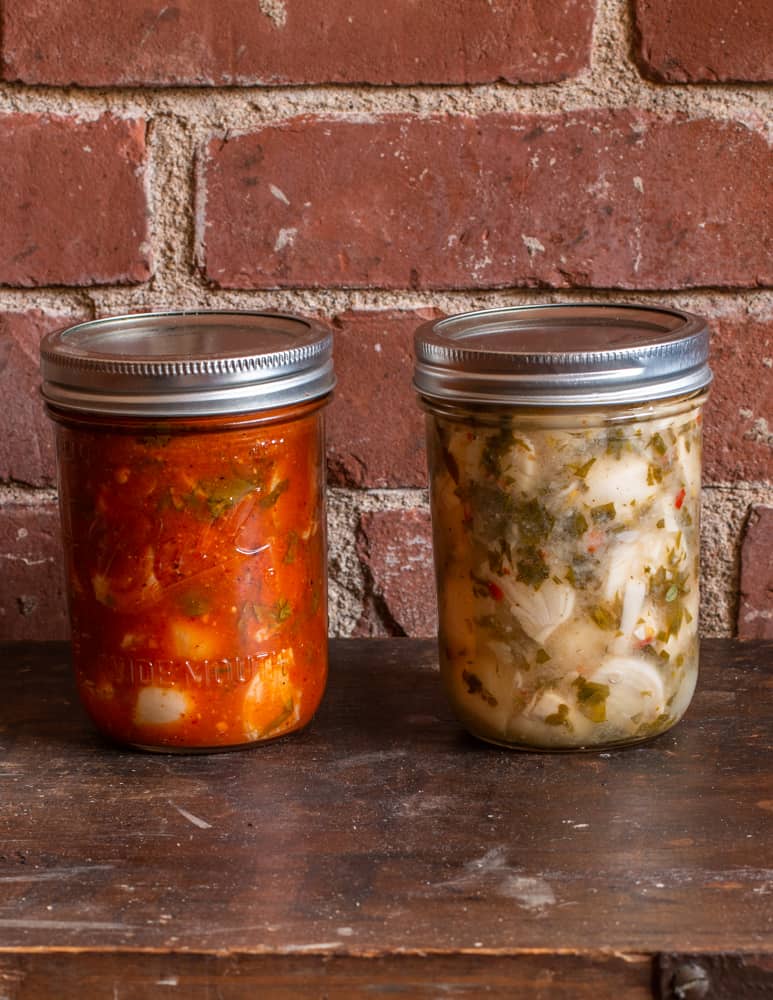
After I got some of the actual species of hyacinth that foragers cook in Italy, the first thing I did was try out some traditional recipes. Mostly these are pickled, or preserved in oil (sott'olio). I'll describe two different preparations here I've enjoyed: a simple pickle with garlic and herbs, and one using a red sauce flavored with dried chilies.
How to use
Traditionally the bulbs are served as an antipasti. Here's a few of the different ways I've seen the preserved bulbs used.
- As you would olives with a platter of cured meats and other various antipasti.
- Used in stuffings, especially with lamb.
- Battered, fried, and served as an appetizer.
Species used
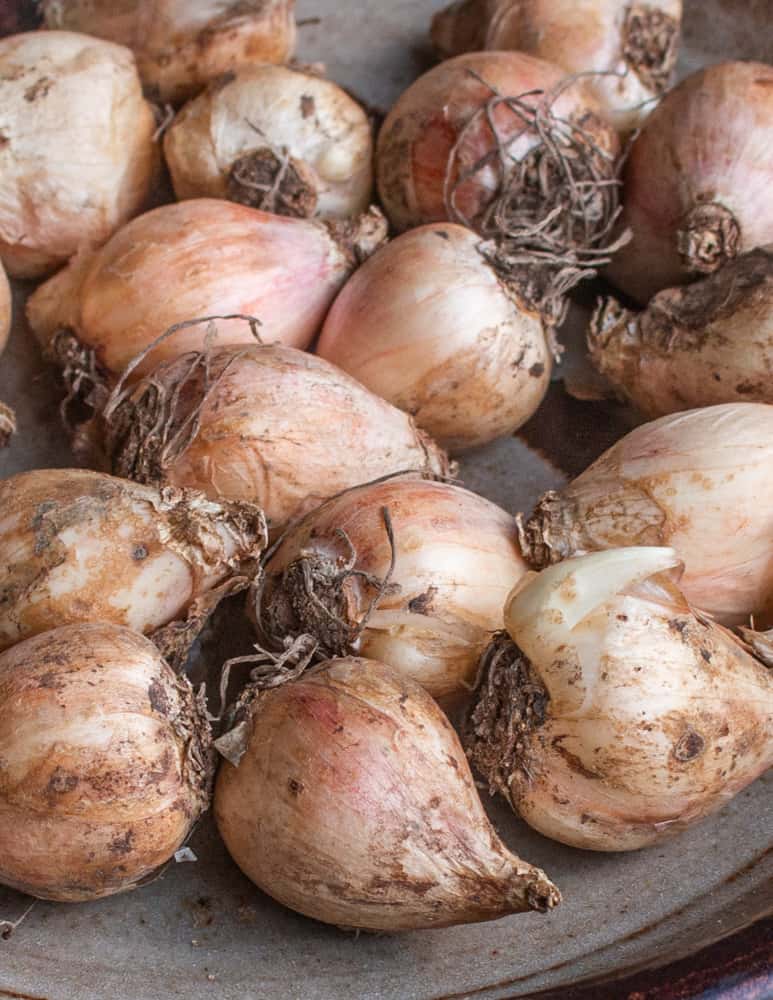
Leopoldia comosum, Muscari racemosum, and Muscari neglectum should all work here, as they're all traditionally eaten species. I've also eaten Oriental hyacinth bulbs (Hyacinthus orientalis) prepared this way, but they have a very mild, non-descript flavor compared to the true Muscari lampascioni which are very bitter.
If you look online you'll see Oriental hyacinth bulbs being described as poisonous, but any poisoning is probably from the bulbs being consumed raw, mostly by pets on accident.
I've eaten relatively large amounts of both Hyacinthus orientalis and Leopoldia comosum and haven't experienced any negative side effects, although It's important the bulbs be processed by boiling and never eaten raw.
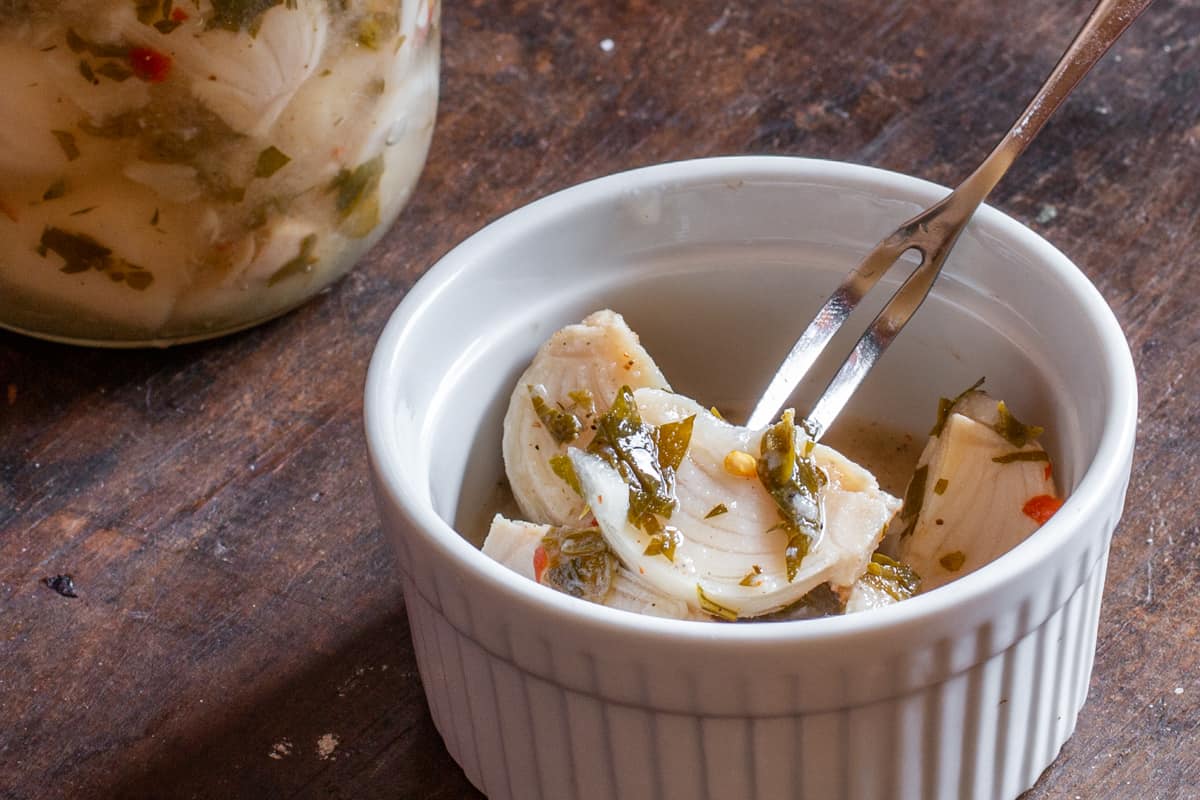
Pickled Lampascioni (Hyacinth Bulbs)
Ingredients
Lampascioni
- ¾ lb or 25-30 Muscari comosum hyacinth bulbs *see note
- For cooking the bulbs
- 4 cups water + 1 Tablespoon kosher salt
For pickling the bulbs
- 3 Tablespoons chopped fresh tender herbs such as parsley, mint, oregano, lovage, basil, etc
- ¼ teaspoon crushed red pepper
- ½ cup cider vinegar
- 1 cup water
- 1 teaspoon salt
- ½ teaspoon toasted cracked peppercorns
Instructions
Trimming
- Cut the top and bottom off of each hyacinth bulb, then cut a shallow X in the root end of each.
- Bring the 4 cups of water and tablespoon of salt to a boil with the hyacinth bulbs, and cook for 10 minutes, or until tender.
Leaching
- Drain the bulbs, discard the water, and cool. Cover the bulbs with fresh water by a couple inches and allow to rest in the refrigerator overnight or for as long as few days, changing the water a couple times if you find them unpalatably bitter. Remember that the flavor will change a bit after they're seasoned and aged in their jars.
Seasoning
- The next day, drain the bulbs well and toss with the garlic, pepper, chopped herbs, and red pepper flakes and pack into a wide-mouth pint mason jar. If you can't fit all the bulbs in the jar, cut them in half or into quarters. If you can keep them whole (sizes will vary) they'll keep the best texture.
Processing
- Meanwhile, bring the ½ cup vinegar, teaspoon of salt, and 1 cup of water to a boil, pour into the jar, agitating the bulbs with a skewer to remove any air pockets so the jar can be filled to the brim. Process the jar in a water bath for 10 minutes, cool, and store in a pantry for up to 12 months.
Notes

Lampascioni En Salsa Rossa
Ingredients
Lampascioni
- ¾ lb or 25-30 Muscari comosum hyacinth bulbs *see note
- For cooking the bulbs
- 4 cups water + 1 Tablespoon kosher salt
For pickling the bulbs
- 2 teaspoons chopped fresh rosemary or thyme
- 1 large guajillo chili or your favorite hot pepper or chili sauce, to taste
- ⅓ cup white wine vinegar
- 1 cup tomato juice or pulsed tomatoes from the garden, strained
- 1.5 teaspoon salt
- 1 tablespoon chopped garlic
Instructions
Trimming and blanching
- Cut the top and bottom off of each hyacinth bulb, then cut a shallow X in the root end of each.
- Bring the 4 cups of water and tablespoon of salt to a boil with the hyacinth bulbs, and cook for 15 minutes.
Leaching
- Drain the bulbs, discard the water, and cool. Cover the bulbs with fresh water by a couple inches and allow to rest in the refrigerator overnight or for as long as few days, changing the water a couple times if you find them unpalatably bitter. Remember that the flavor will change a bit after they're seasoned and aged in their jars.
Salsa rosa
- For the sauce, toast the chilis or guajillo on the stove top, then crush and remove the seeds (or leave them in to make it extra spicy).
- Puree the chilis, garlic, vinegar, salt and tomato juice in a blender until smooth-ish, then pack the still hot lampascioni in jars, cover with the sauce, jiggle the jars around to remove air pockets, and leave half an inch of headspace. process jars in a water bath for 10 minutes, then cool and store in a pantry.
- Sealed jars can be stored for 12 months.
Leave a Reply