
A misunderstood edible plant, black nightshade berries and greens aren't poisonous as many will claim. The common yard weed most know from its small green berries is a popular, heavily documented edible plant consumed around the world from South America to China. Today we'll look at the edible plants of the Solanum nigrum complex and how to separate them from dangerous look alikes. We'll end with some notes on cooking, and explore how black nightshade greens and berries are eaten and enjoyed around the world.
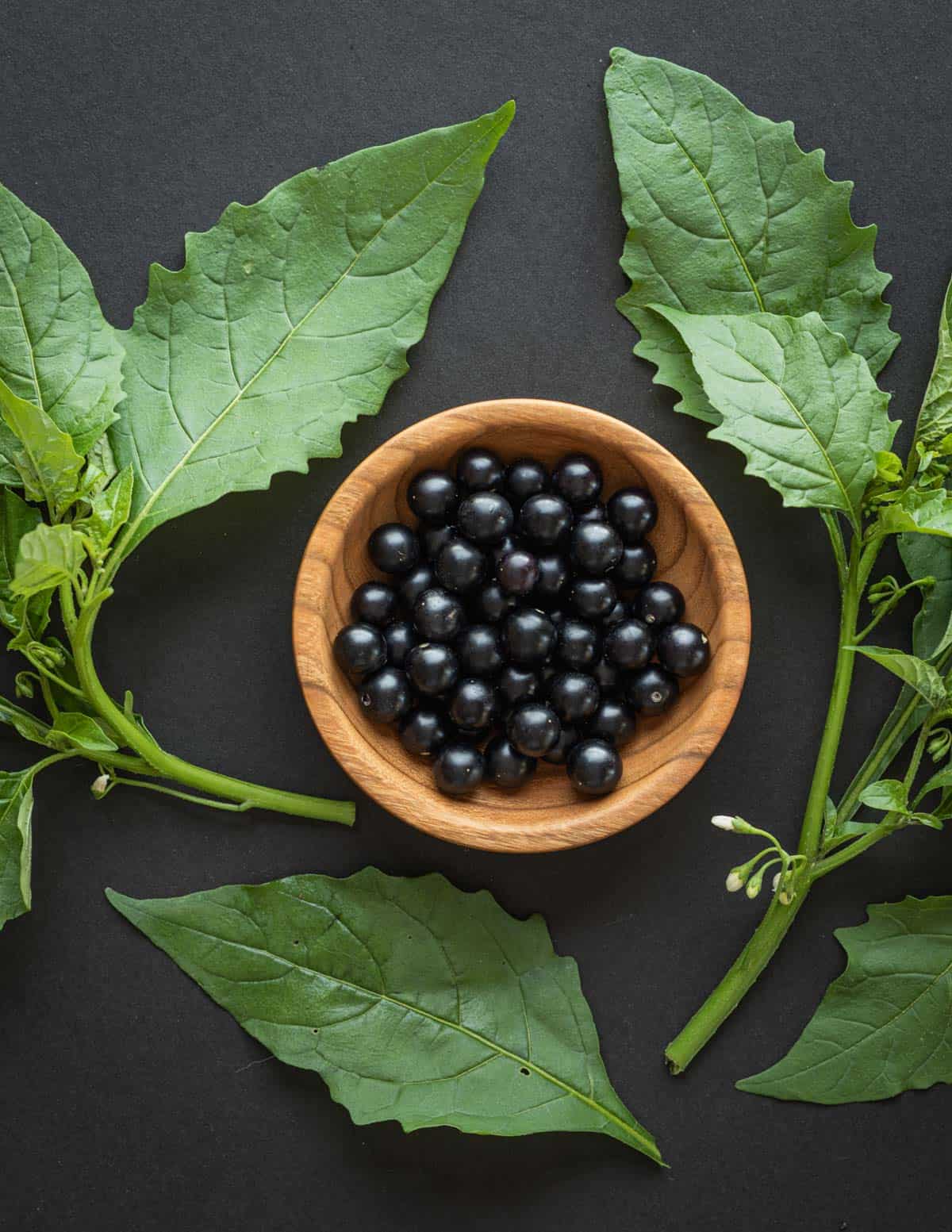
What is Black Nightshade?
These weedy fruiting shrub plants are relatives of tomatoes and eggplant in the nightshade family (Solanaceae). Originally, all black nightshade plants were known as European black nightshade (Solanum nigrum).
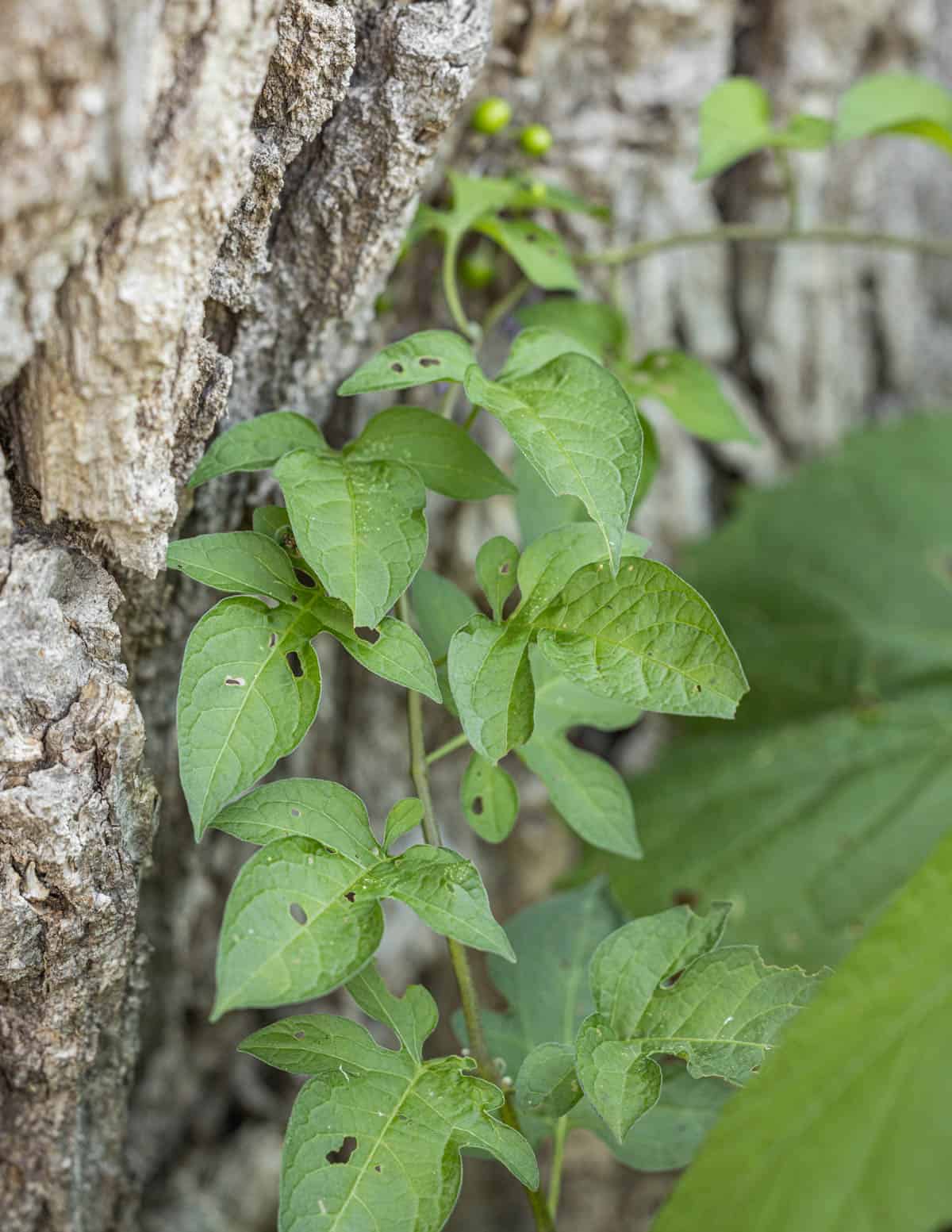
As Linnean categorization has progressed, just as with mushrooms we now know there's over two dozen individual species of black nightshade plants, at least four of which are found in North America according to Sam Thayer. All of those plants are part of what's called the Solanum nigrum complex: a group of many closely related plants.
In Western North America there's S. americanum. S. ptychanthum is found in the east, S. douglasii in the Southwest, and S. interius in the Great Plains. Other varieties could be native to Europe. No matter what variety you find, all plants in the species complex are edible.
Confusingly, African black nightshade has been grown in American and European gardener under the name garden huckleberry for over 100 years. Solanum melanocerasum and Solanum retroflexum are two common varieties of seeds that are sold.
I can only assume the name Garden Huckleberry is used to avoid the stigma around poisonous nightshades for marketing purposes. The plants have be sold under many names including: wonderberry, moralle, morella, sunberry, petty morel, blackberry nightshade, houndsberry and solanberry, to name a few.
Black Nightshade Identification
Black nightshade plants are a short lived perennial or annual, common in disturbed areas, parking lots, yards, gardens, and the edges of wooded areas. It's typically a low-growing plant, but in full sun it can resemble a small shrub up to a meter tall.
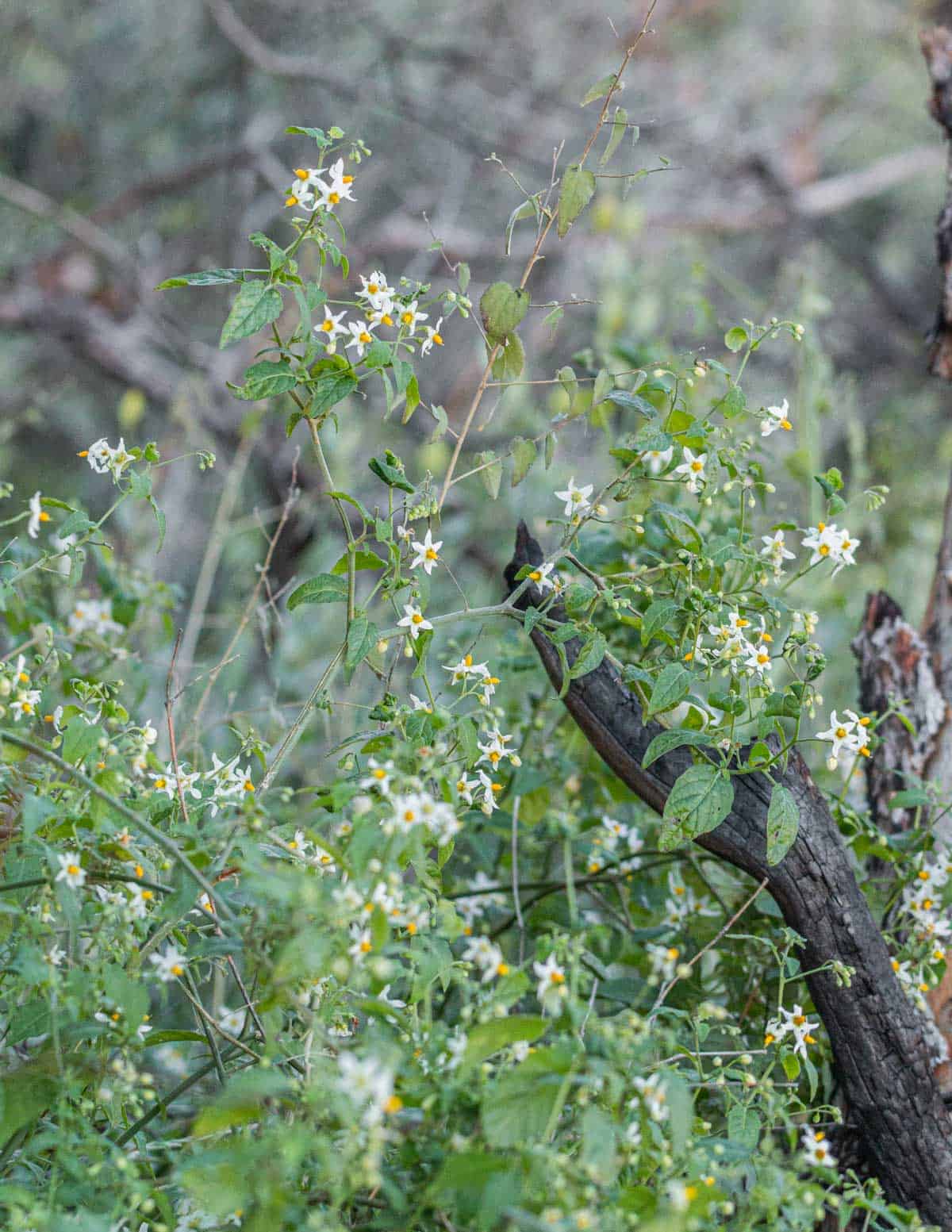
They're mildly invasive, but not difficult to control. You can remove black nightshade plants by yanking up the roots like other common weeds-there's no need to use RoundUp or herbicides.
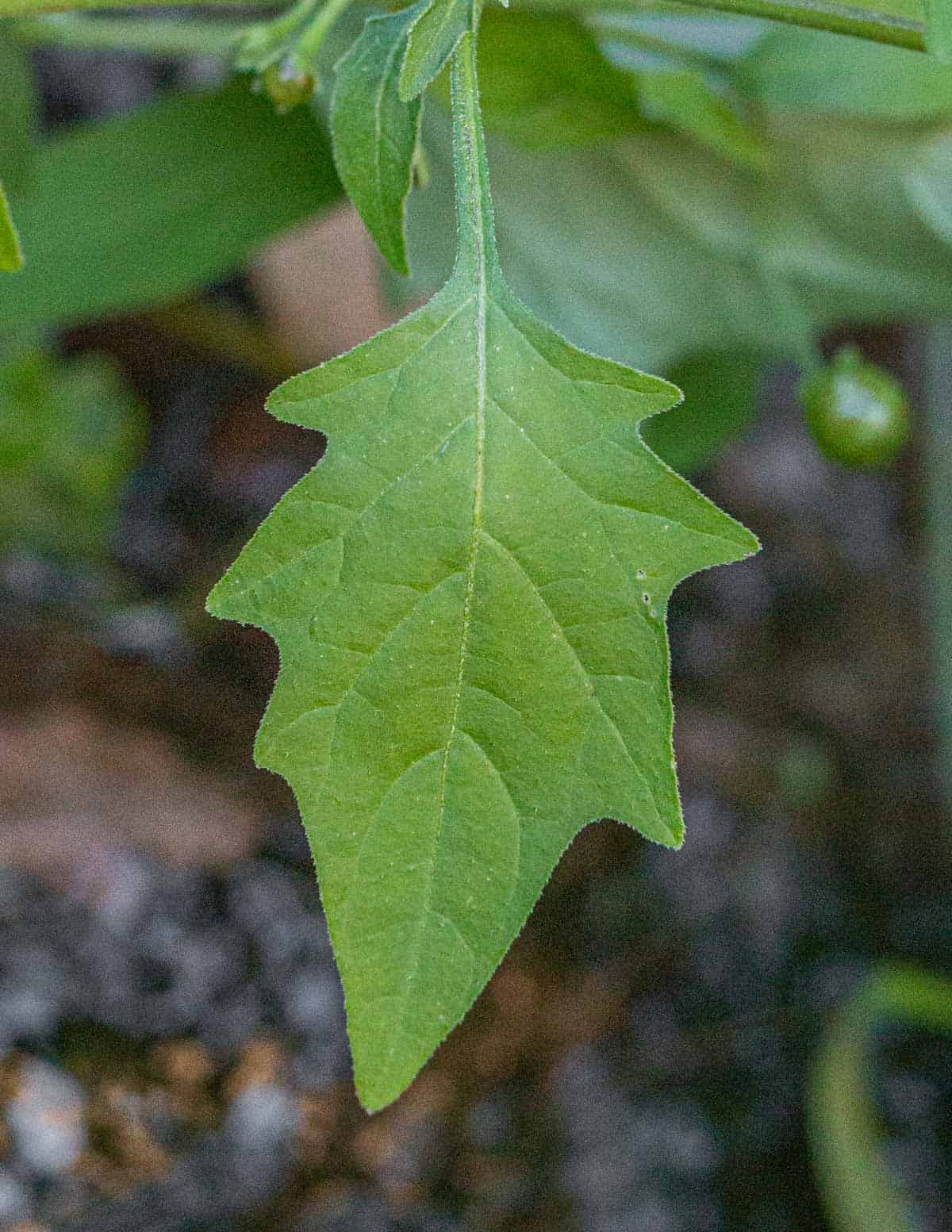
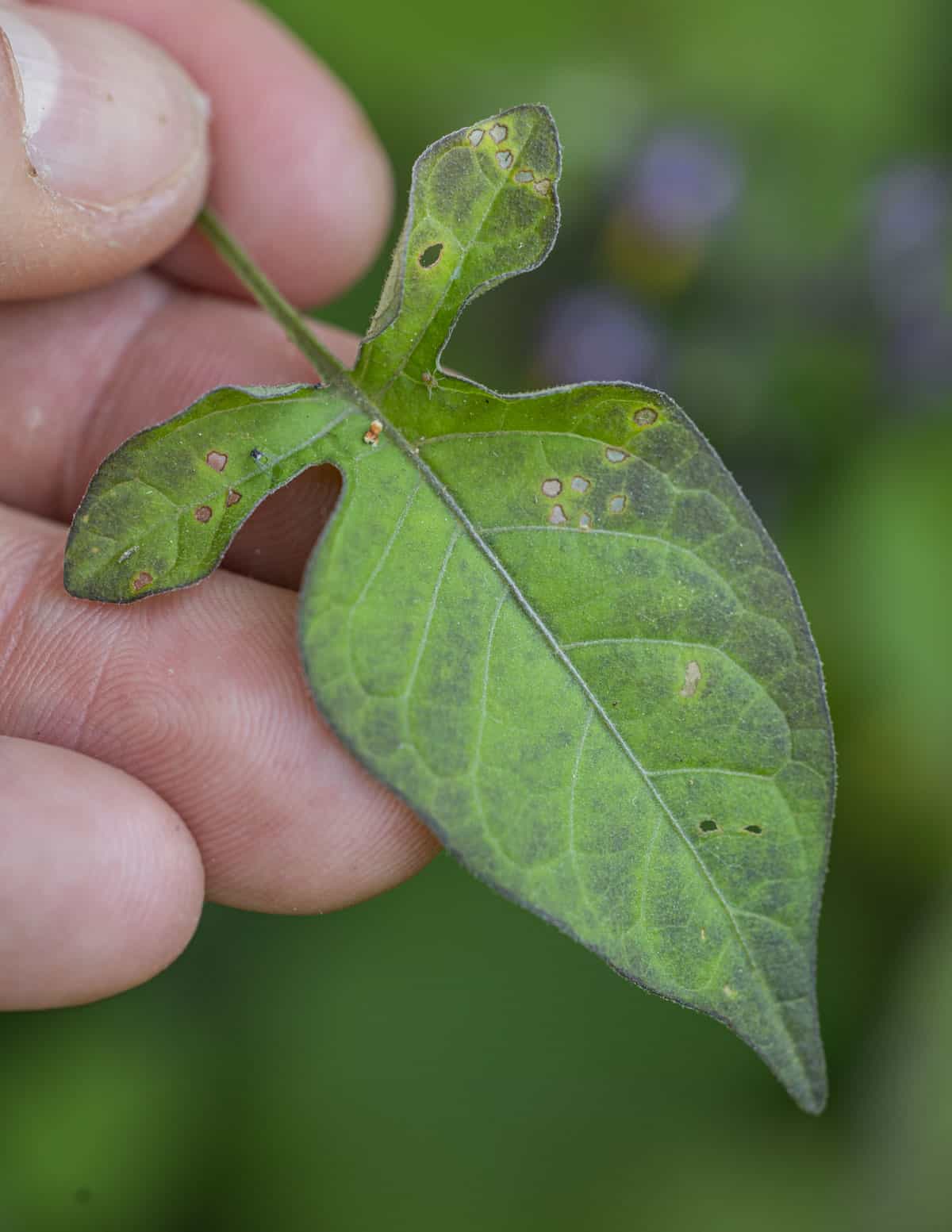
The leaves are alternate, roughly oval-shaped, and often speckled with holes from bugs and insects.
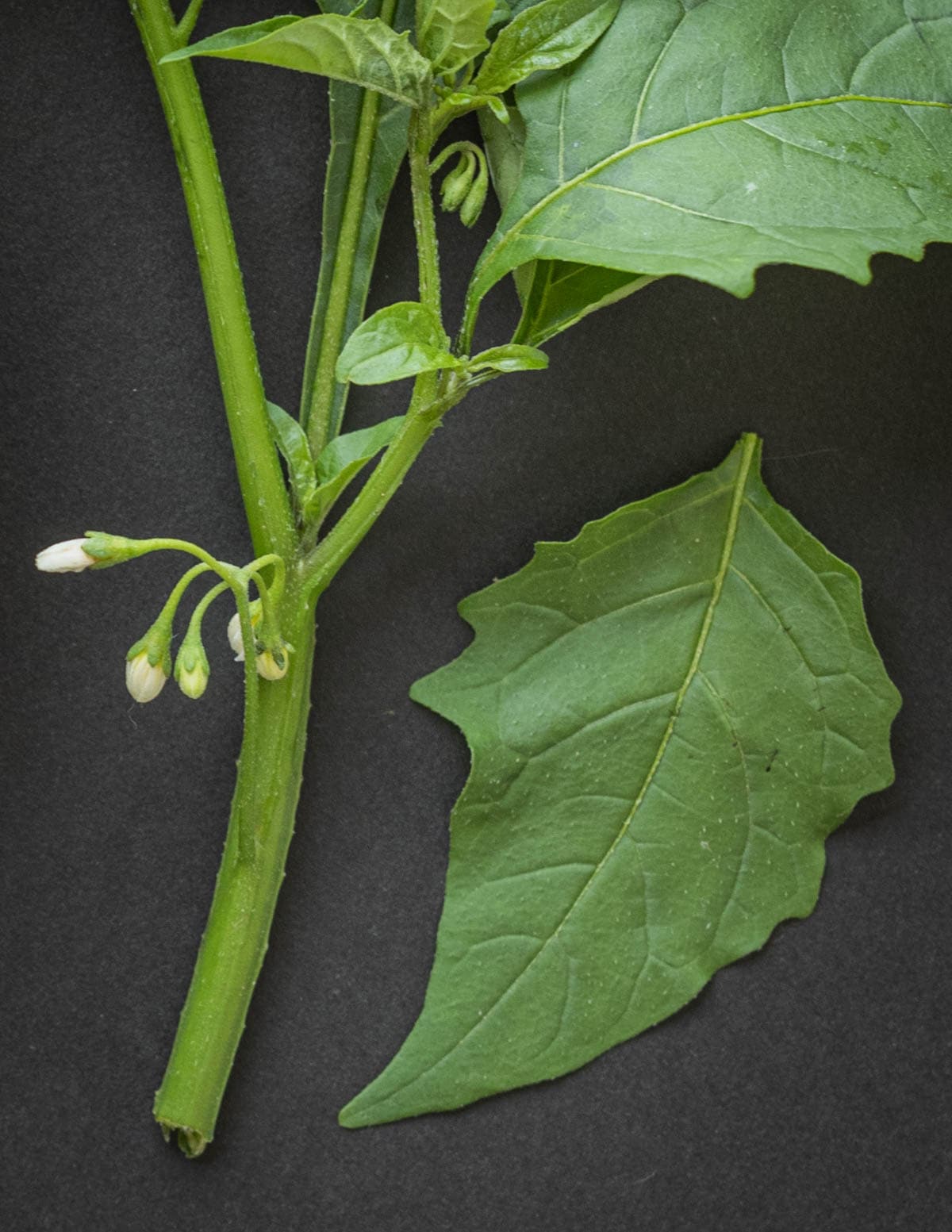
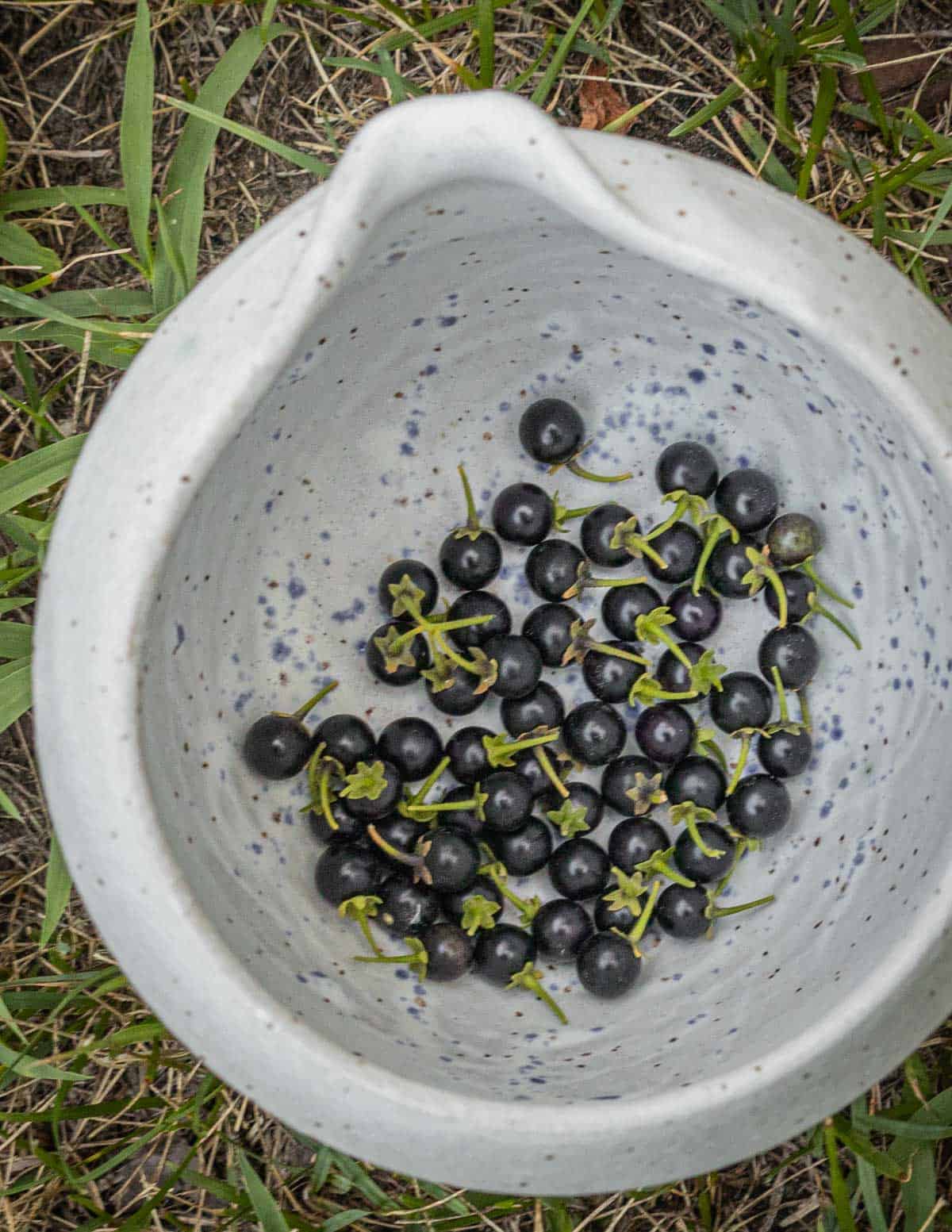
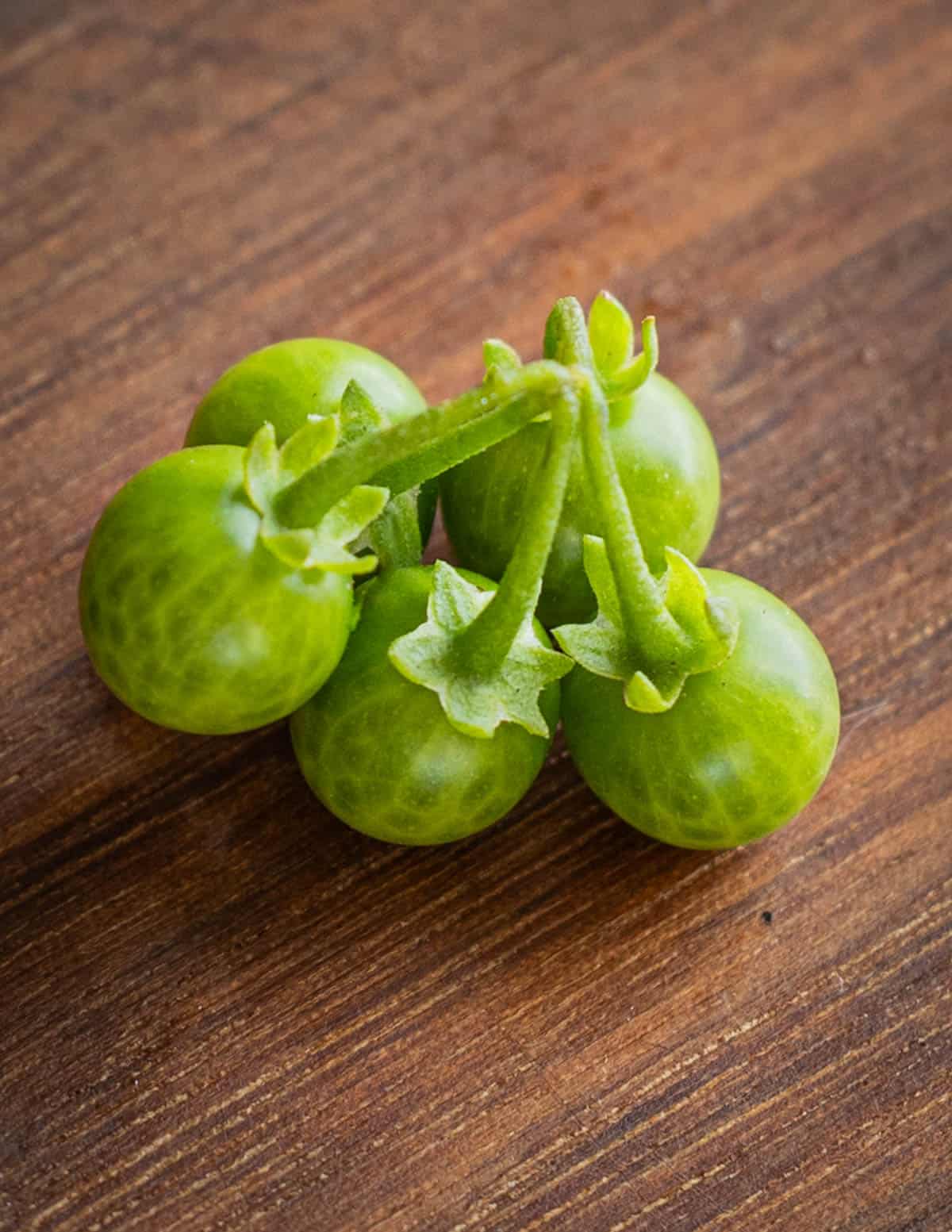
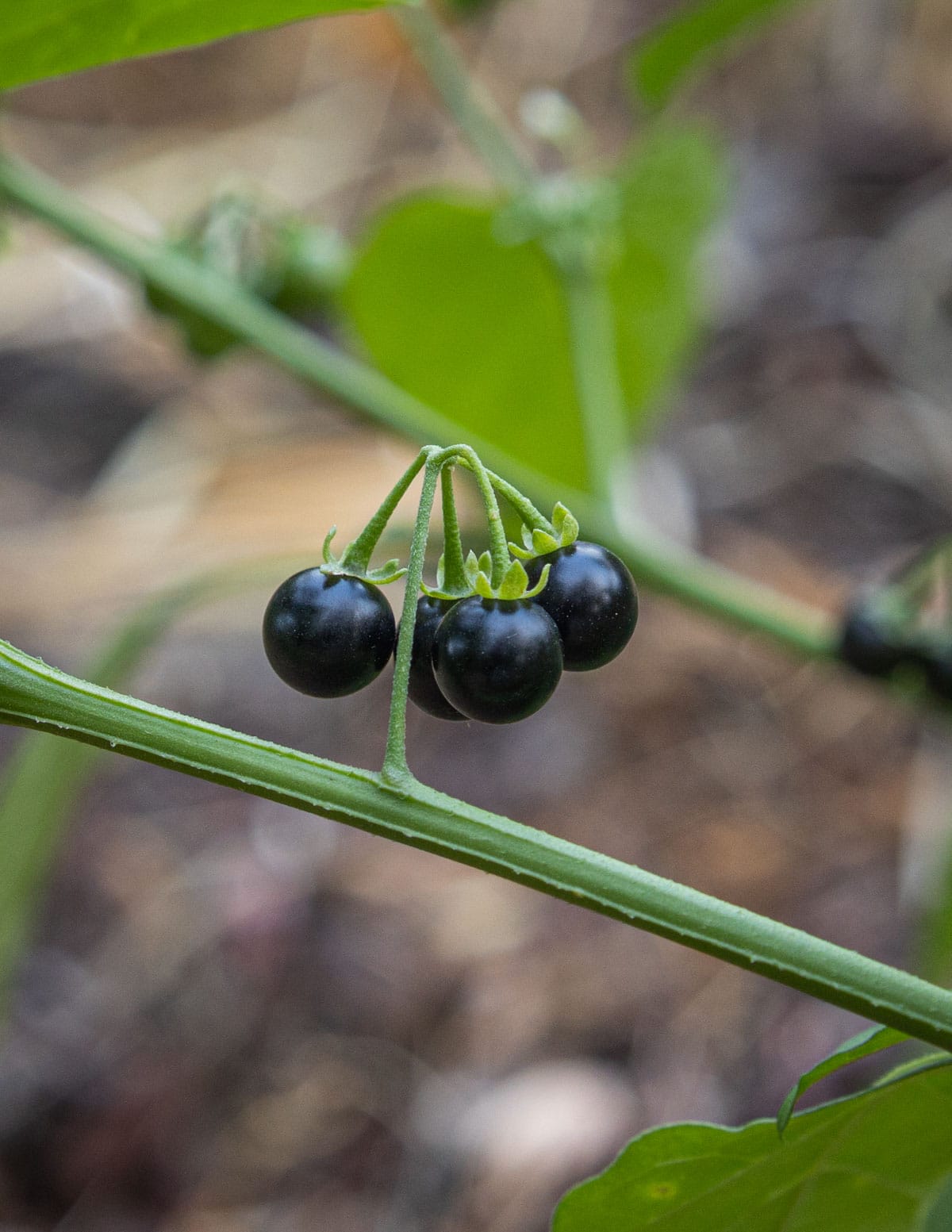
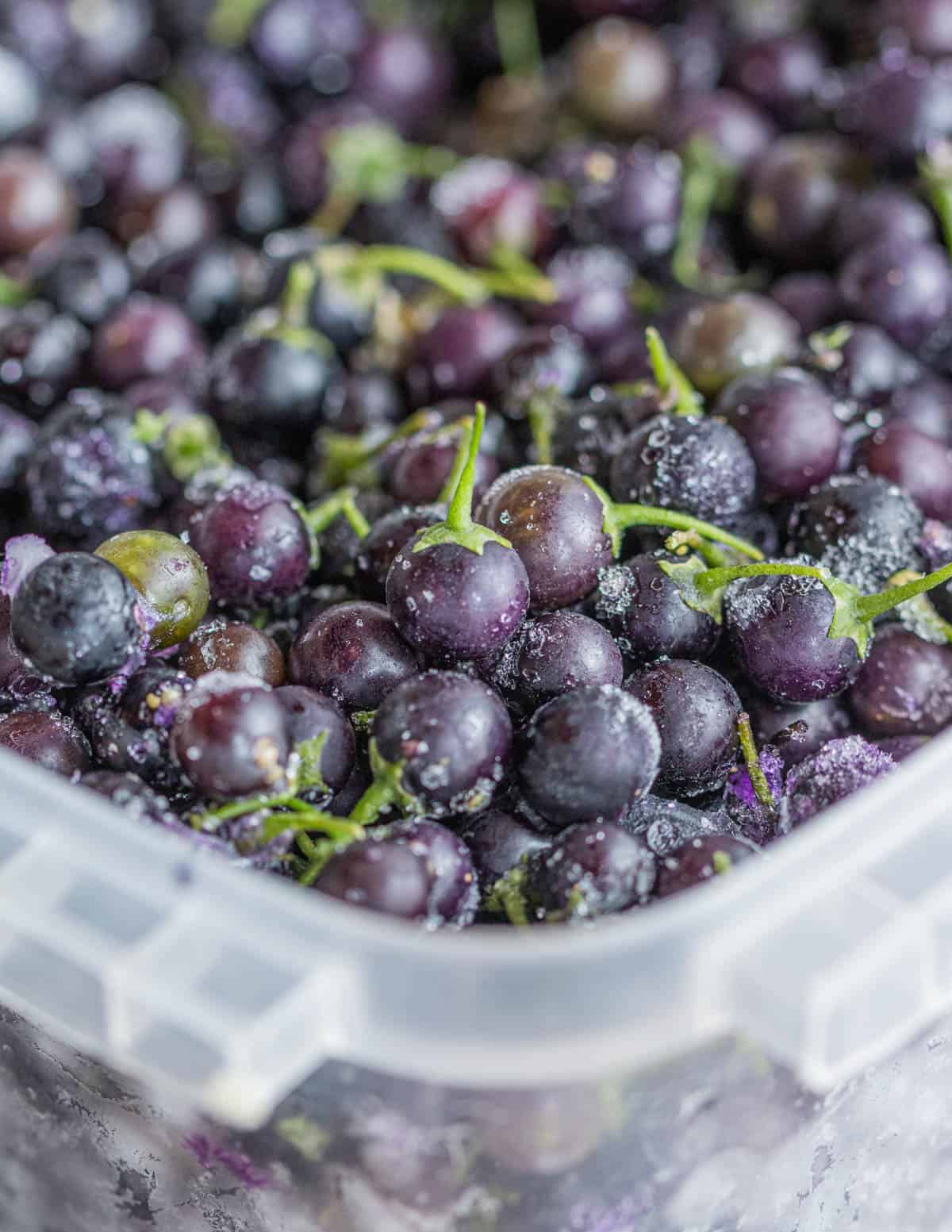
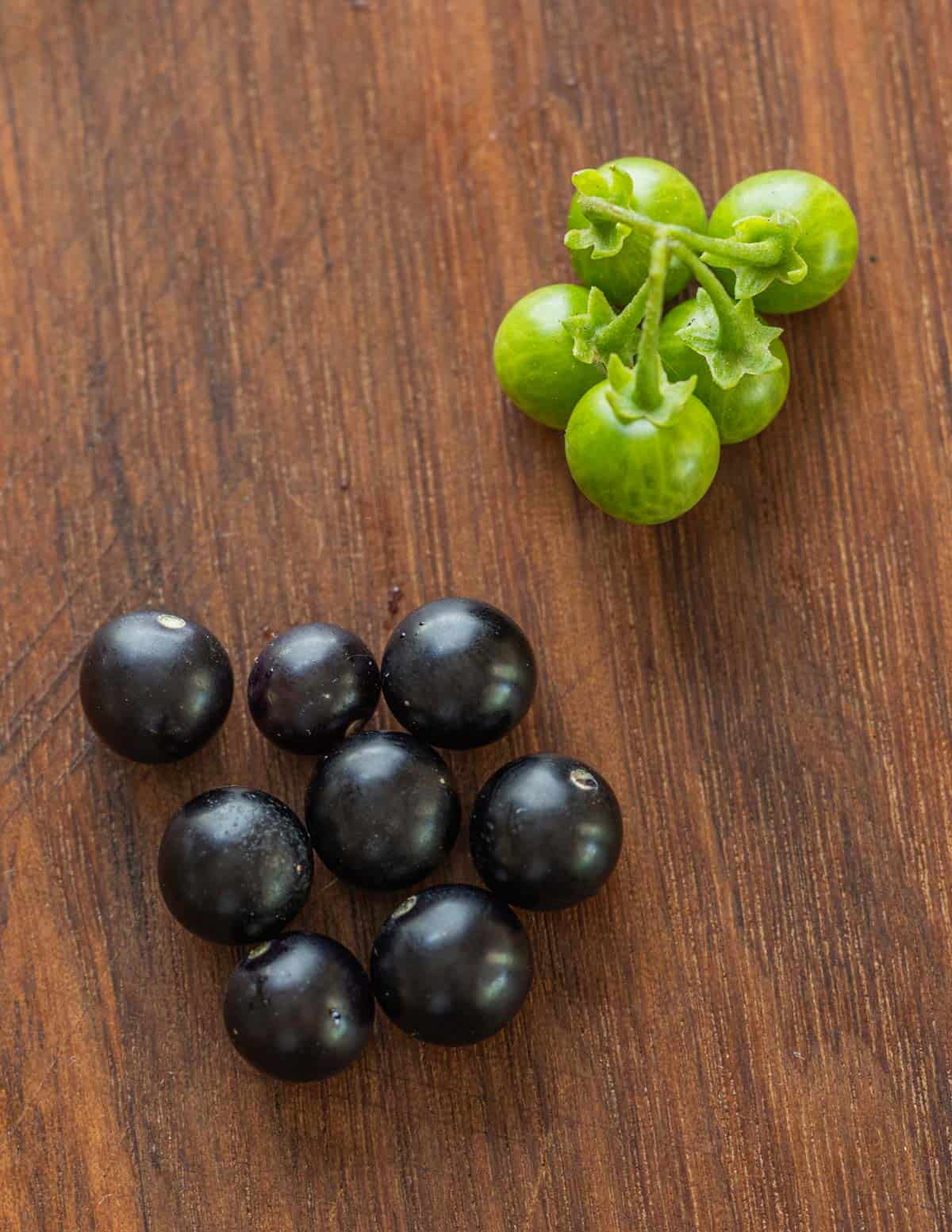
The fruit appears first as small clusters of unripe green berries that turn purple-black at maturity.
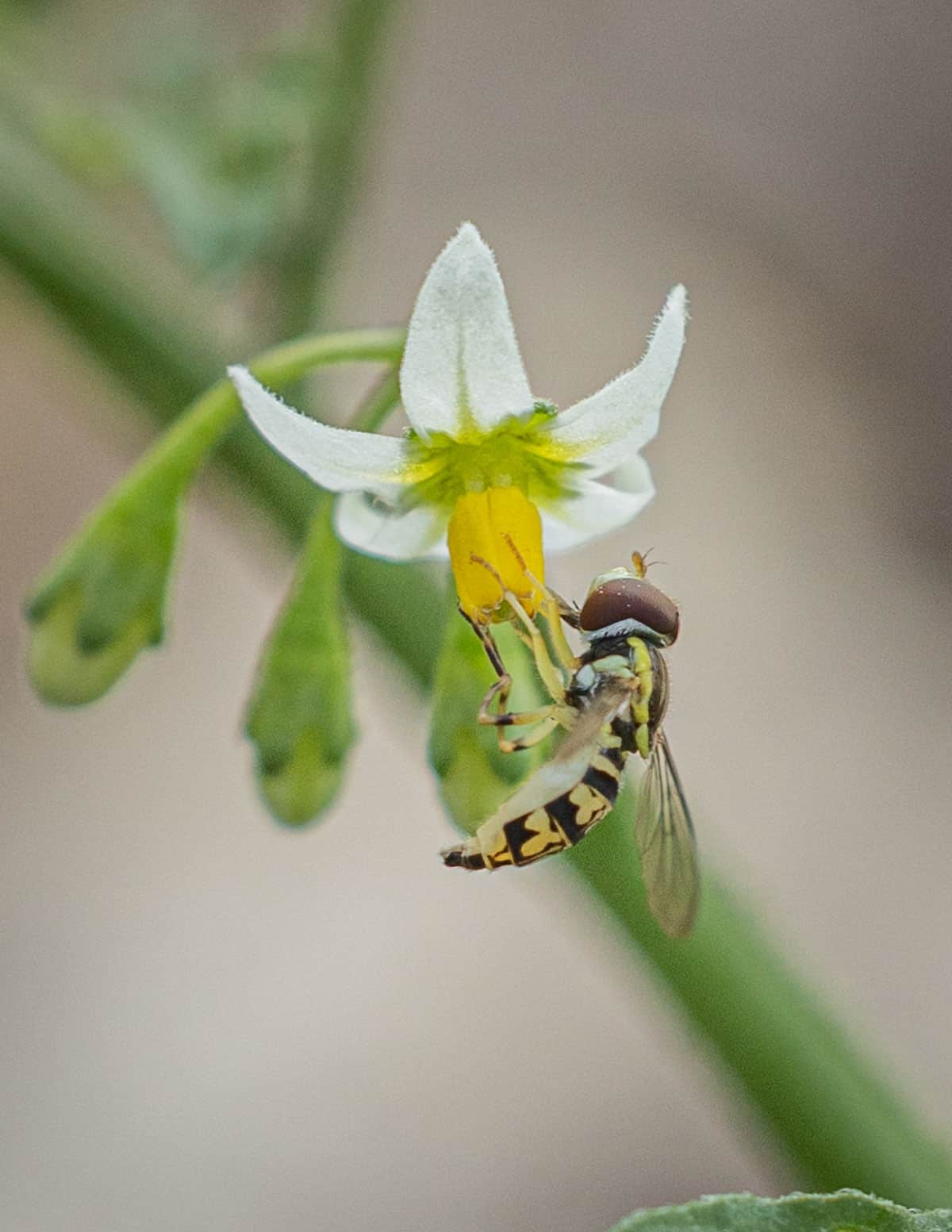
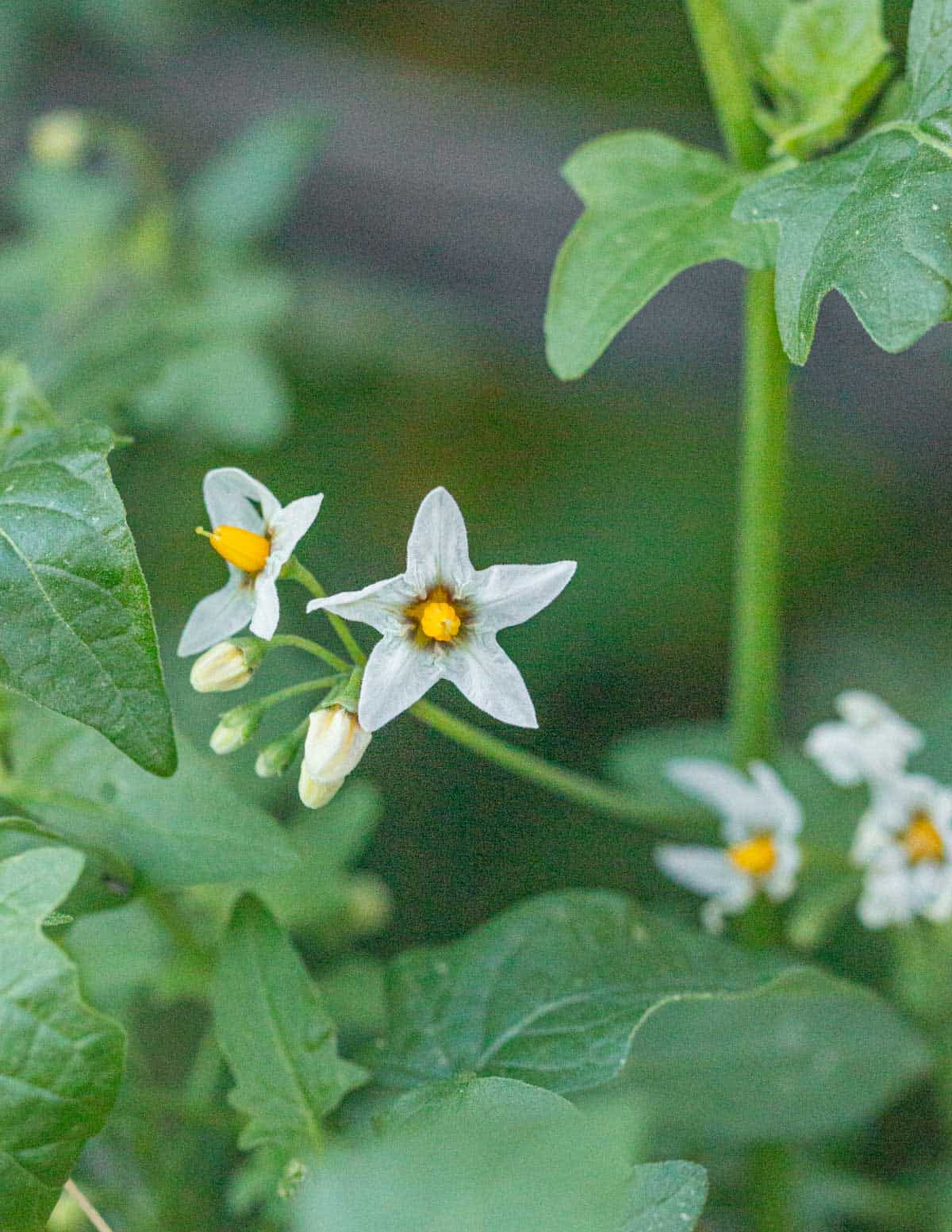
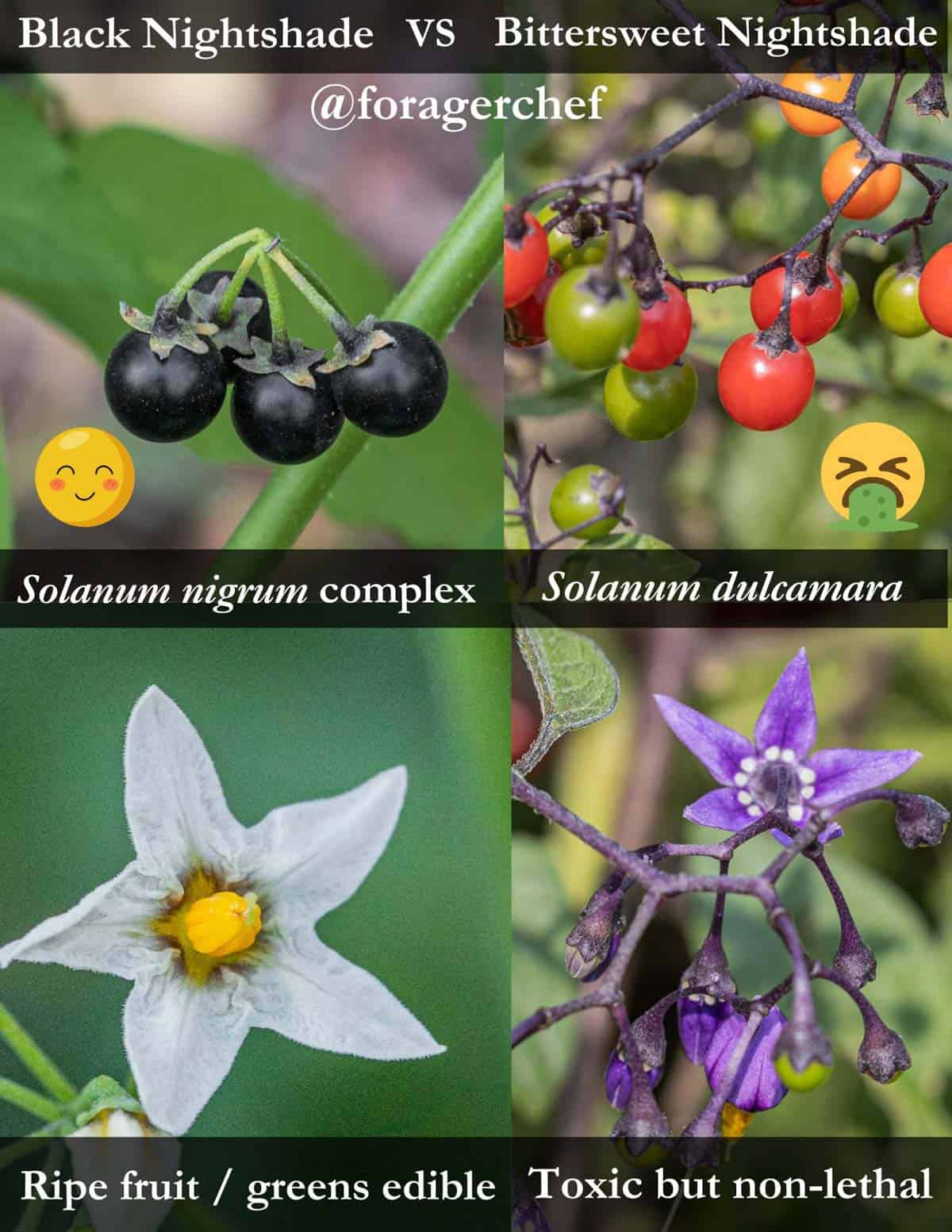
White star-shaped flowers appear in the summer and are one of the easiest ways to tell the plant apart from related Solanaceous plants.
Look alikes
There's a few important black nightshade look alikes to know that should not be eaten. Thankfully they're easy to tell apart by comparing differences in the leaves, flowers, and fruit.
Deadly Nightshade (Atropa belladonna)
Deadly nightshade is the plant responsible for the poor reputation and confusion of black nightshade as a poisonous plant, partly because both plants unfortunately share the same common name of black nightshade. Belladonna has a long and colorful history in Europe associated with witchcraft and death, and the juice is said to have been used as a poison by the Romans.
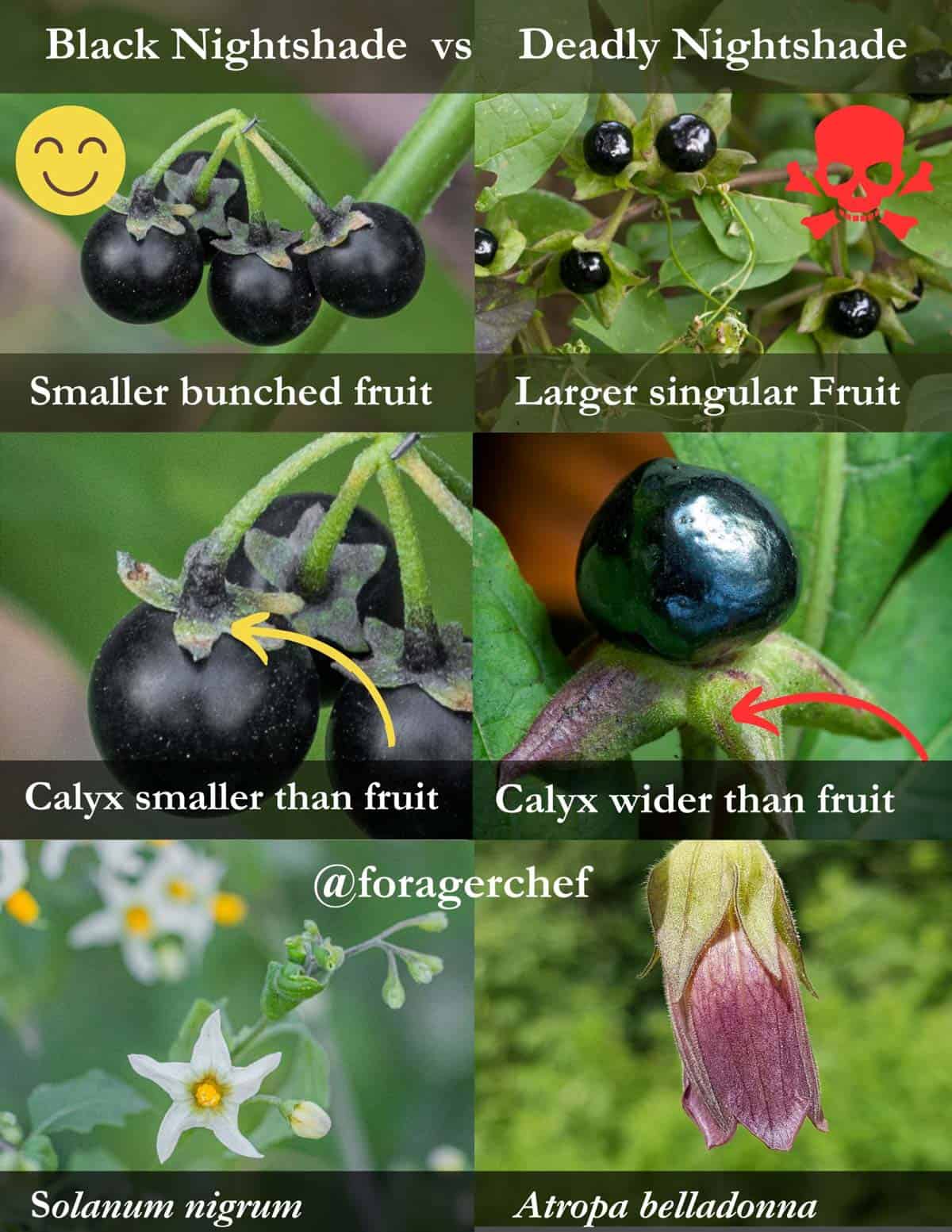
While that might sound scary, anyone can easily separate deadly nightshade and edible nightshade by looking at the following characteristics:
- A. belladonna has singular fruit larger than black nightshade plants.
- A. belladonna has a noticeably larger calyx that extends beyond the circumference of the fruit.
- A. belladonna flowers are brownish to purple. Black night shade flowers are white.
Common Nightshade (Solanum dulcamara)
Also known as bittersweet nightshade or climbing nightshade. A semi-woody vine, Solanum dulcamara is the most common black nightshade look alike most people will know. It's easy to separate edible black nightshade plants from bittersweet nightshade by the following characteristics:
- S. dulcamara has purple flowers vs the white flowers of S. nigrum plants.
- The fruit of S. dulcamara appear green first, turning orange and eventually red at maturity.
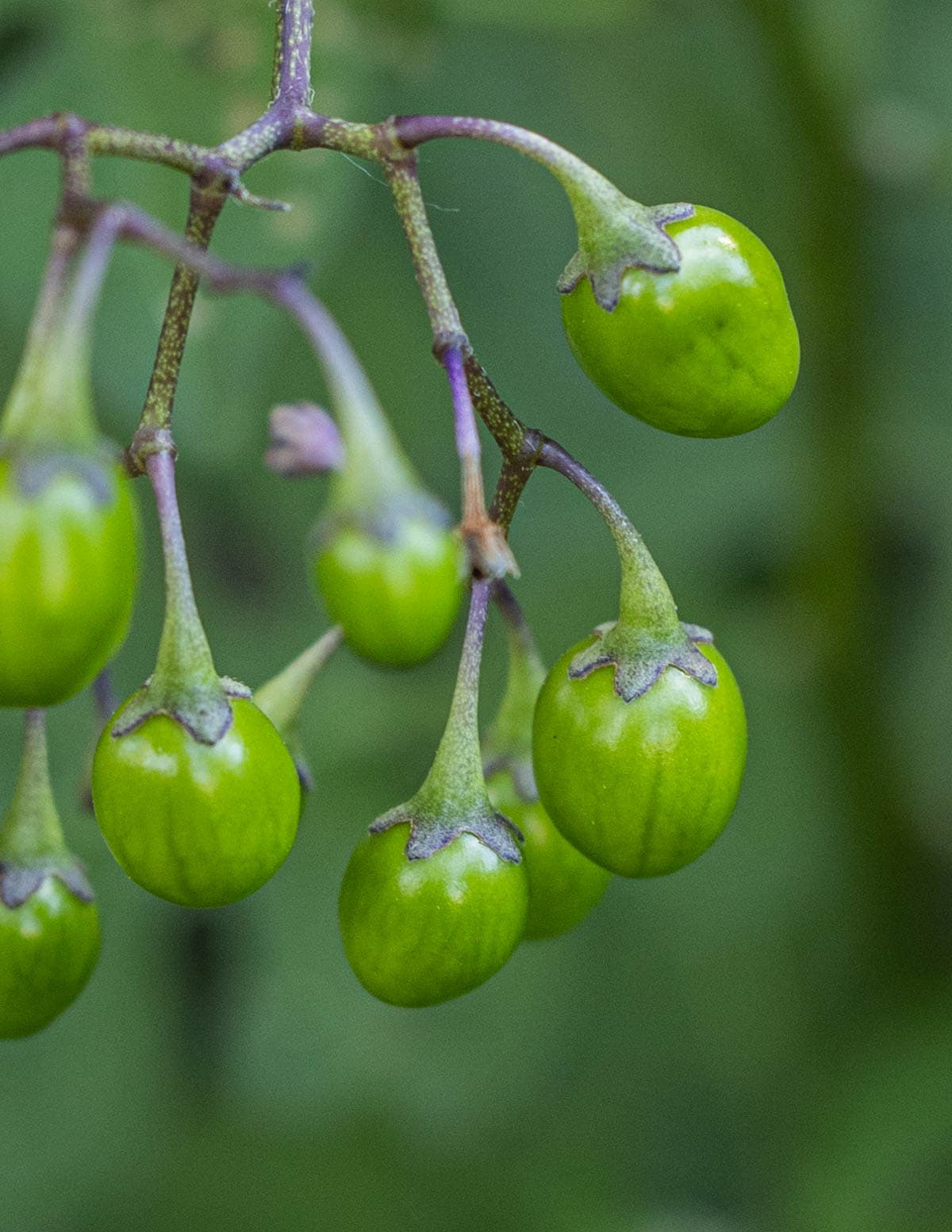
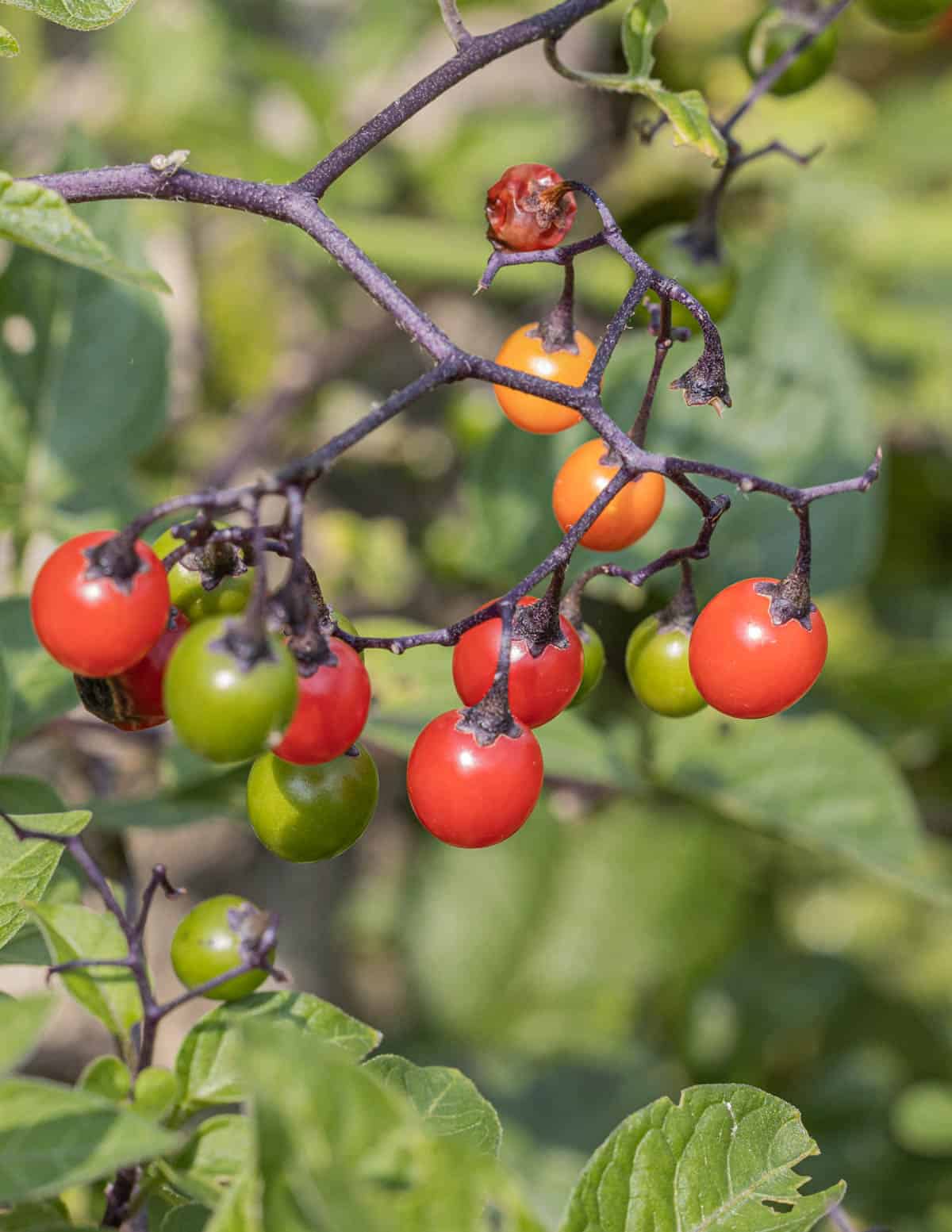
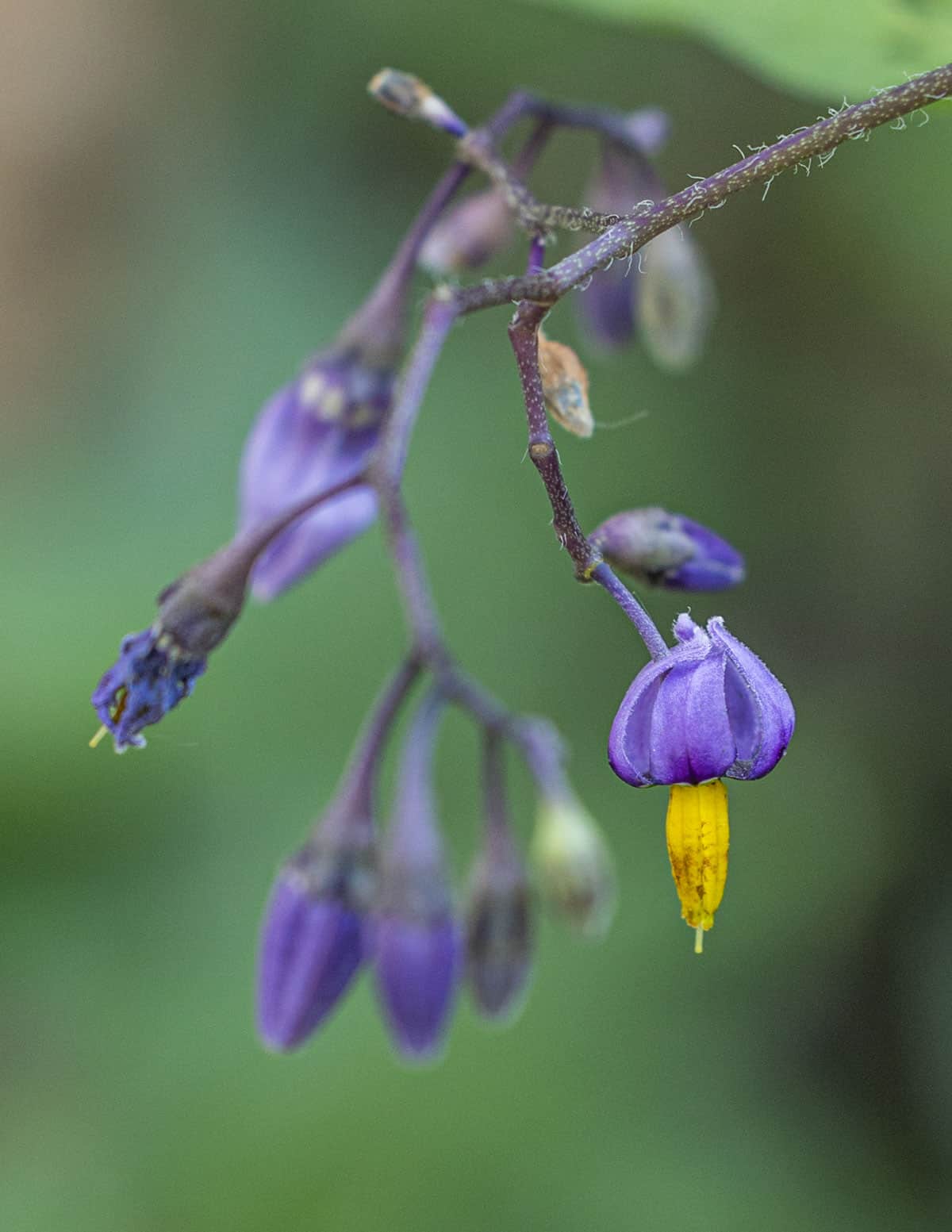
Unlike A. belladonna, bittersweet nightshade is unlikely to kill you, but it won't taste very good. The plant is considered inedible, and the leaves and unripe fruit are poisonous. There's reports of people eating ripe fruit without ill effects but it's hardly worth experimenting.
Is Black Night Shade Poisonous?
Essentially all nightshade plants we eat contain varying amounts of alkaloids like atropine, scopolamine, hyoscyamine and solanine that are all dangerous in high doses.
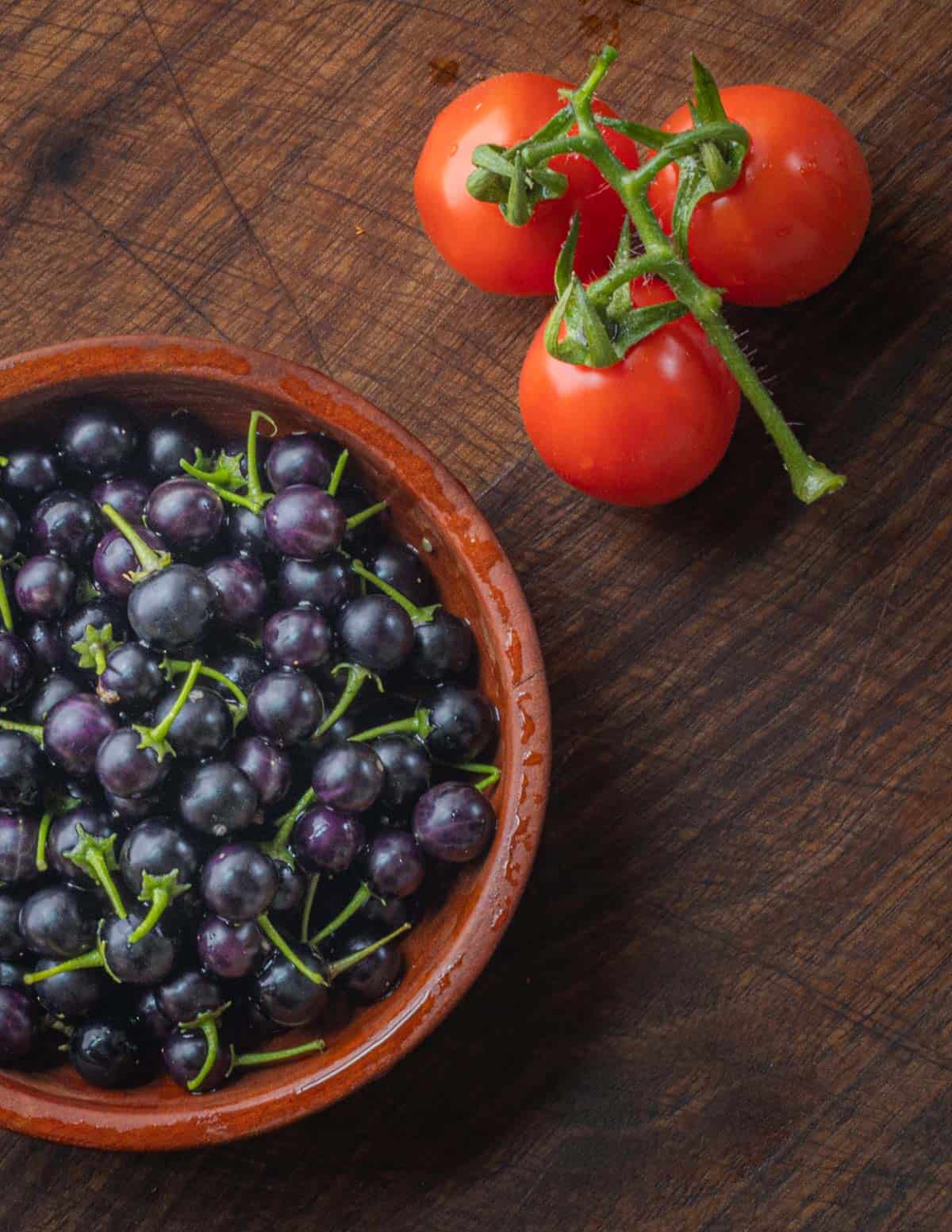
Well-documented edible nightshade vegetables like tomatoes, potatoes, eggplant and black nightshade don't have dangerous amounts of the compounds, although the leaves of some (potatoes, eggplant) are definitely toxic.
Compounds like solanine are also well known to be higher in unripe fruit, which is why you shouldn't eat green potatoes or unripe, green nightshade berries.
There's a lot of misinformation and hearsay regarding this plant. Unfortunately, many websites and resources still repeat old, outdated information.
NC State Extention (and many other University websites) still claim S. americanum can be deadly poisonous. Others conflate individual sensitivity with toxicity, claiming things like Hmong people are immune to the toxins while Caucasians are not. Yet another article describes deadly nightshade using images of edible black nightshade plants.
Sam Thayer's written a few articles on black nightshade. He's the best resource available on this topic I know of and more eloquent than I could ever be. I also love this quote from his Field Guide:
"This plant is the subject of the most pervasive myth of toxicity of any in North America. Both ignorance and racism have fed that myth. Doctors are not botanists--I have examined several documented poisonings from "Solanum nigrum" that were clearly and unambiguously misidentified Atropa belladonna."
Here's the key points to know on edibility and toxicity of black nightshade plants:
- Always eat a small amount of new plants at first to test for allergies and sensitivities. 1-2 oz of cooked greens is plenty your first time.
- The tender leaves and young shoots can be cooked anytime the plant is meristematic before flowers appear. Older leaves harvested after flowering are more bitter and mildly toxic.
- Bitter alkaloids in the greens are water soluble and can be reduced through boiling.
- The berries should be harvested when ripe and completely black.
- Ripe black night shade berries are edible raw.
- Unripe, green black nightshade berries won't kill you, but you might get an upset stomach from eating too many.
Black Nightshade Uses Around the World
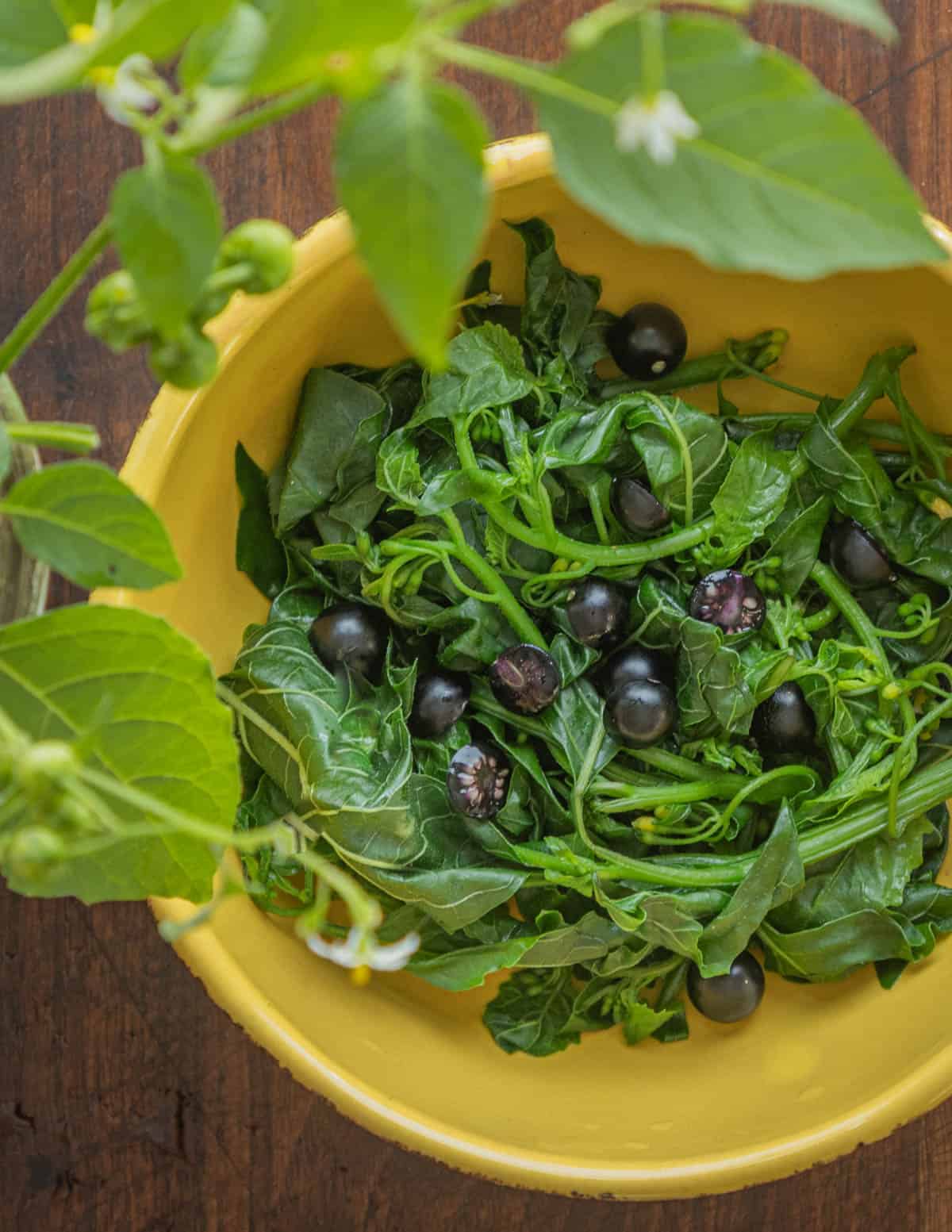
Millions of people around the world grow black nightshade as a food. Young, tender nightshade leaves are typically boiled or steamed and eaten as a cooked green or in soup. The greens have a mild bitterness and a pleasant flavor reminiscent of bell peppers and green beans. They taste much milder than tomato leaves, which are also edible.
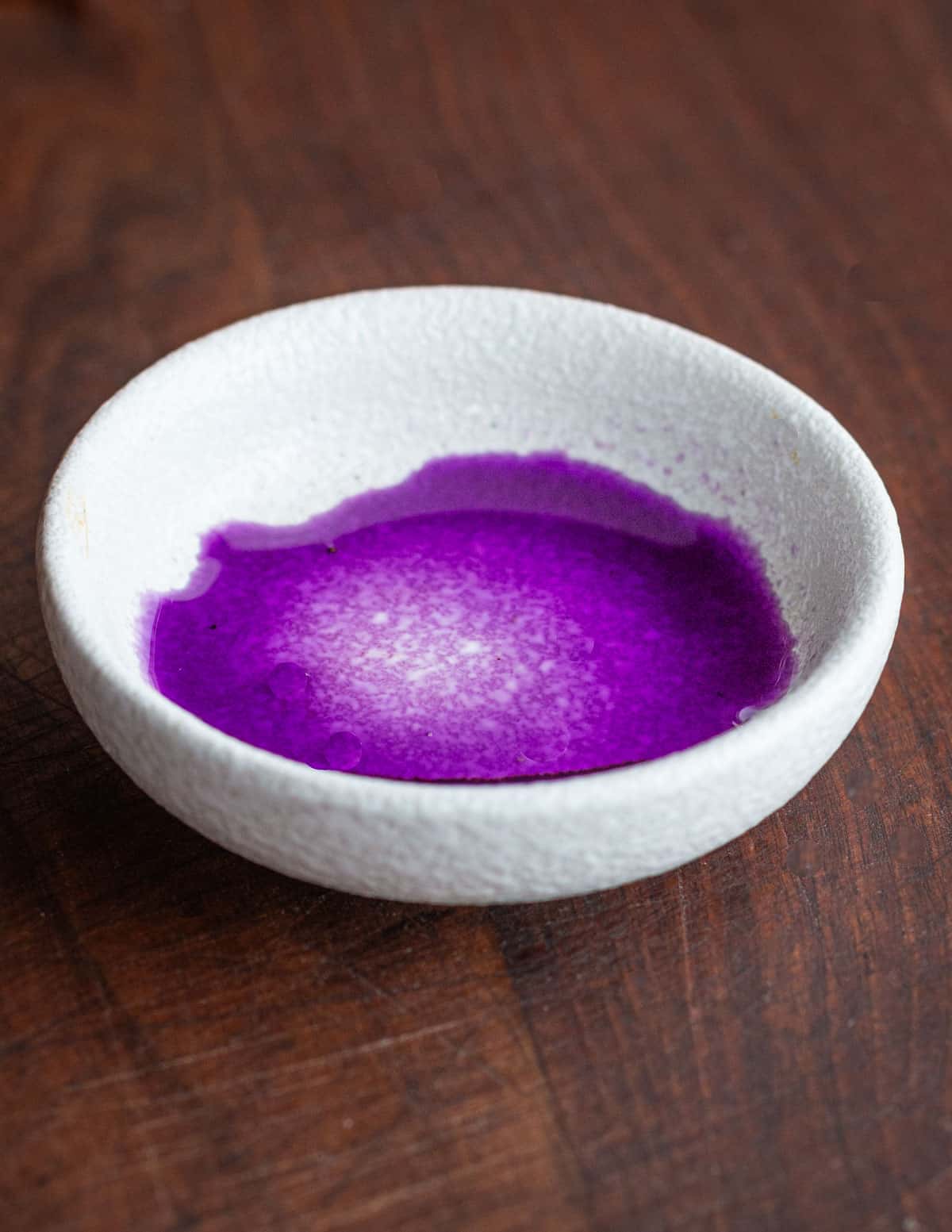
The small black berries taste like tomatoes mixed with blueberries or huckleberries. They can be used in recipes as a substitute for blueberries or made into jams, jellies, pies and juice. The many small seeds and sweet taste of the preserves reminds me of figs.
The sheer volume of ethnobotanical evidence that black nightshade is an edible, traditional food is irrefutable and among the most widely documented of any wild edible plant I've researched. Here's some examples I've gathered.
- Hmong: Hmong farmers at the St. Paul Farmers Market in Minnesota sell the greens known as Zaub iab ("Bitter vegetable") in bunches during the summer. They're commonly used in Stir-fries and soups.
- South America: Known as macuy or hierba mora in El Salvador and Guatemala, the plants are used in Gautemalan cuisine in soups like caldo de quelites or the Salvadorean sopa de mora. In Mexico they're cooked as a leafy green and known by the name "chichiquelite".
- India: Known in Hindi as manathakkali, the leaves may be cooked with onion, garlic, hot chili and grated coconut and served as a side dish with rice. In Ayervedic tradition it's known as makoy and used for medicinal benefits.
- Africa: African nightshade (Solanum scabrum and possibly Solanum psedocapsicum) are known as mnavu / managu or osuga in Swahilli. It's often cooked like creamed spinach or stewed with meat. Njama-Njama is a well known dish of stewed nightshade greens from Camaroon.
- South Africa: Known as Nastergal in Afrikaans and Umsobo in Zulu, the fruit of Solanum retroflexum and others is well known in South Africa where it's used to make black nightshade jam known as Nastergal Konfyt. One account from KwaZulu-Natal province suggested serving it with braised wildebeest shank or a corn / maize porridge.
- Greece: S. nigrum plants are known as "Styfno" in Greek. The plants are cooked as a leafy green and known colloquially as "horta" along with many other edible wild plants.
- Germany: Known as "schwartzbeeren" the plants were brought to Texas and other places by Volga Germans in the 1800's. In traditional German cuisine the fruit are used in pies, coffecake, spooned over dumplings and other baked goods like Kuchen and a filled dumpling called Maultaschen.
- New Zealand: The plants are cooked as a pot-herb / leafy green by the indigenous Maori people.
- Philippines: Known as Amti, they might be stir-fried with garlic and onion as a side dish.

What's your relationship like with this plant? If you grow black nightshade have family traditions of eating it or anything else you think would be helpful, please leave a comment.
Fiha Poon
Thank you for posting this informative post about this plant. I grew up in East Africa (then came to Canada) and I remember this plant growing in my mother's vegetable garden. I remember her mentioning that this plant usually grew out of the soil she ordered from the local farmer. My mother used the leaves to make soups. Your article on this plant brings back so much childhood memories. Would any reader be kind enough to share some seeds? Thank you.
Alan Bergo
Hi Fiha. The plants pictured in this post are very common weeds. If you're from East Africa the plants you'll be used to will be a variety of garden huckleberry. I can't send you any seeds, but you can buy them online and I've found them very easy to grow. Most people I've spoken to from West Africa grow this plant just for the leaves. Here's an example of a seller, there are many more if you look online.
Josh
I was today years old when I found out this is an edible plant. I've come across it a number of times in the last few weeks and totally dismissed it under the false pretense of deadly that I've grown up hearing. I will forever be incredibly thankful for you, your work, and the resources you share with us all! Thanks so much for this one!
Alan Bergo
Hey thanks Josh. Glad it was helpful.
Cho
Thanks so much for this post, I was seeing these berries everywhere and always thought they were poisonous. I was wondering though: Why do you advise to only pick them when they are black? I picked a fee bunches that had both black and green berries and left them by the window in the sun for a few days. Just like tomatoes the green berries turned black after a few days. But after reading your article I decided not to eat them. Is there a reason behind only picking them when they are ripe, or is it just precaution?
Thanks!
Alan Bergo
Hey Cho, glad it was helpful. I'm growing two types in my garden this year and I just love them.
Ryan
Thanks for the great article! Have you ever experimented with the leaves of physalis species? Our native "tomatillo" here in Idaho is P. longifolia. I have eaten the berries but never experimented with the leaves.
Alan Bergo
Hi Ryan, I haven't. Tomato leaves are edible but have a strong flavor and should be used as an herb. I know Physalis is related but I can't speak to their edibility personally.
Dana
Hello Alan,
This is a wonderfully concise post that helped me find another wild edible in my own backyard. Also, you've got Hindu, the religion, and Hindi, the language, switched in your article.
Alan Bergo
Thanks Dana. I can only take credit for collecting some of the info and taking the pics here, they're such a great plant! Thanks for catching my mistake there too I adjusted it.
Lorenzo
I can’t tell you how valuable this post is. The video that went along and the article of sams you linked to. Learned so much about such a controversial subject 🤙
Alan Bergo
Thanks buddy. Such a good plant!
Adrian
Thank you very much for this wonderful article. Black Nightshade (Schwarzer Nachtschatten) is quite common in the lower regions of Switzerland but all available books I know (and there are quite a few) describe it as poisonous.
Years ago I put some seeds in flower pots and within some weeks quite big plants grew (1 metre or even higher, here is a picture of mine: https://www.hikr.org/gallery/photo836283.html?post_id=52623 ). Each year I saved some of the seeds and planted them out again the next year. I enjoy this little jungle outside my window, but since I thought, the berries were poisonous I left them alone.
Over the years I found several articles on the internet describing the ripe berries as edible, so I have tried a few and never had any complaints.
Thanks to your report I now know what can be done with this plant and I am going to try making a jam from the ripe berries. There are a lot of them this year; the plants seem to like the very rainy weather we are having in Switzerland this year 🙂
Alan Bergo
Thanks Adrian, glad it was helpful. I just ate some of the greens this week from my yard.
Lora
This is such a thorough and helpful article, thank you! We recently moved and these mystery nightshade plants were popping up all over. My plant ID apps kept identifying it as a pepper plant but I had never seen a pepper that looked like this! Thanks to a tip from a friend I started researching 'nightberries' and found this article. It was an exciting find! So I ate a handful of berries last night and they were tasty - an odd but tasty mix of blueberry and tomato. It's nice to know I have more edible options on my property and was really cool to learn about a plant I had not heard of before!
Alan Bergo
Hey thanks Lora. It’s such a cool plant!
Jen
Thank you, I live south east Queensland Australia and have been educating people, one at a time, with much difficulty for a couple of decades.
I have always known them as 'ink berries'. I have had them raw, backed, jellied, jammed in any format that you would use blue berries. The most impressive way I have used them is an egg based ice cream. The colour is to die for!
Alan Bergo
Oh wow ice cream would be incredible. Thanks for sharing that.
Giuseppe Scagliarini
Thank you so much for sharing your knowledge and bringing to us a deeper appreciation of our connection with nature around us. People have eyes, but most could not see unless someone like you pointed the way.
With deep appreciation of your work,
Alan Bergo
Hey Thanks Giuseppe, black nightshade is a really misunderstood plant.
Esther
Just found your website & enjoyed reading your very helpful articles as a new mushroom forager. Then checked your wildplant site & found some of the plants I forage & look forward in Spring. My favorite plant is the black nightshade/S. Nigrum that I grew up eating in the Philippines & found them when I moved to the States. We call it "Amti" & very distinguisable from the poisonous other nightshade/A. belladonna. I just like sauteing them in garlic & onion as a side dish. It's got a lot of medicinal benefits.
Alan Bergo
Hey thanks Esther, I'm happy to add that common name to the list. Appreciate you commenting-I just love hearing all the ways this plant is used around the world!
Christine
Thank you so much for this extremely clear article! I live in France, in a Zone 7 climate, and saw this plant for the first time in my raised beds last year (the seed probably came in the compost I spread). I was curious and left it in place until I saw the green berries, concluded 'poisonous nightshade' and immediately removed it. Thanks to you, this year I will leave it in place and eat it instead!
Alan Bergo
Hey thanks Christine. It's a great plant.
Carol
Great article, thanks! It took years of observing and studying before I was ready to try black nightshade berries, but now they’re one of my favorite wild edibles.
Some readers might be confused by the fact that in some of your
photos the berries you have
gathered have the calyx and a bit of
stem attached. These should be removed before the berries are eaten. I know that the reason for leaving them attached is that, once separated from the calyx, the berries tend to burst very easily. So if you want whole berries or don’t plan to use them right away, it’s better to snip berries or ripe clusters of them from the plant, rather than pulling the fruit from the calyx….I’ve found that slightly underripe berries, like tomatoes, will continue to ripen if you leave them out on the counter, so clusters of mostly ripe berries with a few less than ripe ones can be harvested, as well.
Black nightshade berries cooked with a little sugar—they don’t need as much as you would use for a standard jam—make an outstanding accompaniment to a cheese platter!
I haven’t tried cooking and eating the greens yet, but now I certainly will.
Alan Bergo
Thanks Carol.
Linda
Thanks for the counter ripening info. I have grown several species and some are very different from others. Still haven't eaten them yet, over time I had come to believe many are edible but still wasn't sure. Kind of excited now to experiment, carefully.
Alan Bergo
Glad that was helpful Linda. I'm here if you have any more questions.
Oleg
My history of encounters with wild nightshade plants splits into two parts:
Back in 2022 I was in the process of creating a herbal garden for a client. And not surprisingly, because they grow quite in abundance around here in Ontario, there were instances of Solanum americanum available. When I was clearing the site for the garden with the intention of leaving existent wild herbs in place, I did some research about Solanum americanum. It was a pleasant discovery for me to learn that this plant could be used in medicinal purposes. So I left it in place, no matter that it will take a good space there. I didn't ever consider it being edible though.
The second occurrence of me working with nightshade was last year when I was helping my African friend harvest Solanum Scabrum. He was growing this plant primarily for leaves, not for berries. And we had to get rid of a good amount of berries then. Many of them were dropped right on the ground, I guess this year they will grow into new plants unless they were killed by the frost over winter time.
Thank you for bringing light to this mysterious plant 🙂
However, when I was reading your article I wish you could use Latin when you say 'nightshade' because it's a bit confusing which type of nightshade plant you're talking about.
Alan Bergo
Thanks Oleg. I use the Latin names throughout the article, but I don't exclusively use them as my site has, and will always be geared towards beginners. If I only used Latin names, people will complain I don't use common names. Hard to satisfy everyone.
Sam Schaperow
Aren't the seeds slightly spicy?
Alan Bergo
No they're not.
Nicole
These volunteered myself in my garden and all apps kept telling me they were black nightshade and DEADLY but I recalled someone telling me they were edible and here I am. I’m very tempted to try one of the berries now!
Alan Bergo
That’s great! Once you learn they’d shape annd how to separate them from S. dulcamara they’re easy. In the garden they’re weedy but easy to control. I’ve been encouraging them in my yard. The greens are delicious and lots of varieties to try. Fruit makes a killer jam that tastes like ground cherries mixed with blueberries.
Rachel
Yes, I have used these berries here in Australia for years. They make nice tartlets! The chooks love eating the leaves! It is a case of finding what is growing around you, and researching it!!
Nate A.
Great article! Volga Germans apparently brought seeds of black nightshade when they settled in Kansas: https://www.kitchenproject.com/german/recipes/Dumplings/Schwartzberra-Knebble/index.htm. I have Volga German ancestors who settled in North Dakota, but if they ate this plant the tradition didn't make it down to my generation.
By the way, I may be mistaken, but the middle left picture in the black nightshade vs. belladonna comparison picture, which shows green berries with an arrow pointing to the calyx with the label "Calyx smaller than fruit", looks like it could be bittersweet nightshade. The berries look more elongated than the black nightshade I have seen. But it could just be a variant I haven't seen before.
Alan Bergo
Hey thanks I can see how that image might look misleading. I swapped the picture with one that's more clear.
Monica
Thanks so much for educating me on black nightshade which grows in my yard. Unfortunately, I've pulled it out thinking it was poisonous, but if it grows back, I will check it out and compare my notes with yours.
Alan Bergo
Hey you bet. I moved into a new house last year and it was in my yard too, you can always order garden huckleberry seeds if you want to grow some.
Sam Schaperow
Or order a native Black Knight shade seeds packet.
Sam Schaperow
*night
Kelly Chadwick
Great profile on Nightshade! I was under the spell of that myth and grateful for the education and the pithy narrative it was delivered with. Will share the knowledge.
Alan Bergo
Hey thanks Kelly. In my world we've been talking about it for ages it feels like. Part of me thought it wouldn't be new to anyone anymore so I'm glad you could get something from it. Def read Sam's essay too-it's so good.
Noah
Oh, so cool!
You wouldn't happen to have any recipes for horse nettle, would you?
Alan Bergo
I wouldn't eat that plant. Green Dean says it's poisonous. I just read his article and he knows his stuff, about plants anyway. If you have evidence to the contrary I'm all ears.
Carla Beaudet
Solanum carolinense, a.k.a. Carolina Horse Nettle. Reported severely poisonous from any number of reputable sources. Which is too darn bad, because I have a hard time keeping those thorny plants out of my garden.
Sylvie
Hello Alan, you can add Reunion Island (a French department in the Indian Ocean) to your list of areas where black nightshade greens are routinely eaten. They are called Bredes Morelle (Bredes being a catch name for edible greens, wild or cultivated, that one cooks). They are sauteed with onions/shallots, ginger, garlic (sometime chile peppers) and braised - in which case they are called "fricassee" and served as a side; or there is a wetter preparation called "bouillon" served with rice for a light dinner - especially on an evening where one has had an expansive lunch!
As far as the berries, I don't dislike them (have eaten them in jam), but I don't like them enough to grow the plant.
Alan Bergo
Thanks Sylvie. I knew people would have some interesting things to share. I've never heard of Reunion Island!
Gilbert
All valuable information!
Re Reunion, it was known as Bourbon, politically offensive after the Revolution. One of the earliest places coffee was transplanted. The variety grown there was called Bourbon Arabica. There are delicious Bourbon Arabica coffees grown now in Vietnam.
Alan Bergo
Thanks for chiming in there. Learn something new every day.
Sylvie
Reunion Island also the place where a young enslaved boy Edmond Albius figured out to pollinate the vanilla orchid flower by hand to produce vanilla beans. In its native meso-America vanilla is pollinated by an endemic wasp. But once the plant was transplanted elsewhere, no vanilla bean were produced until Albius figured it out in the first part of the 19th century (can't remember the date).
Also, Gilbert, there is now a new species of coffee endemic to the island w a lower caffeine content - it's called "Bourbon Pointu", and - at least as of 5 years ago - was fetching pretty good prices in the Japanese market (or so I was told when visiting a small coffee plantation there).
Sylvie
Few people have. It's a fascinating place from the culinary perspective, the island having a mixed population of French, Malabar Indian, Pakistanese, Chinese, Vietnamese, Western Africa and Malaysian origin. With a geology and climate similar to the big island of Hawaii, and having been on the East Indian company maritime trade roads for centuries the breath of plants cultivated here is pretty astonishing... especially considering the size of the island.
Angelina Aiken
Finally, after decades of wondering what “yerba moras” were in English you have summed it up! As a child in the late 60’s, we would visit family in Mexico every summer. On our walk to the river we’d encounter these plants and would eat the ripened berries.
Now, living in Southern California, these plants pop up all over the yard every summer.
Thanks for letting us know the leaves are edible also. I’ll check out some recipes for chichquelites.
Alan Bergo
Hey thanks Angelina. I've been buying my local Asian grocer out of herba mora for the past few weeks now. Such a good plant.