
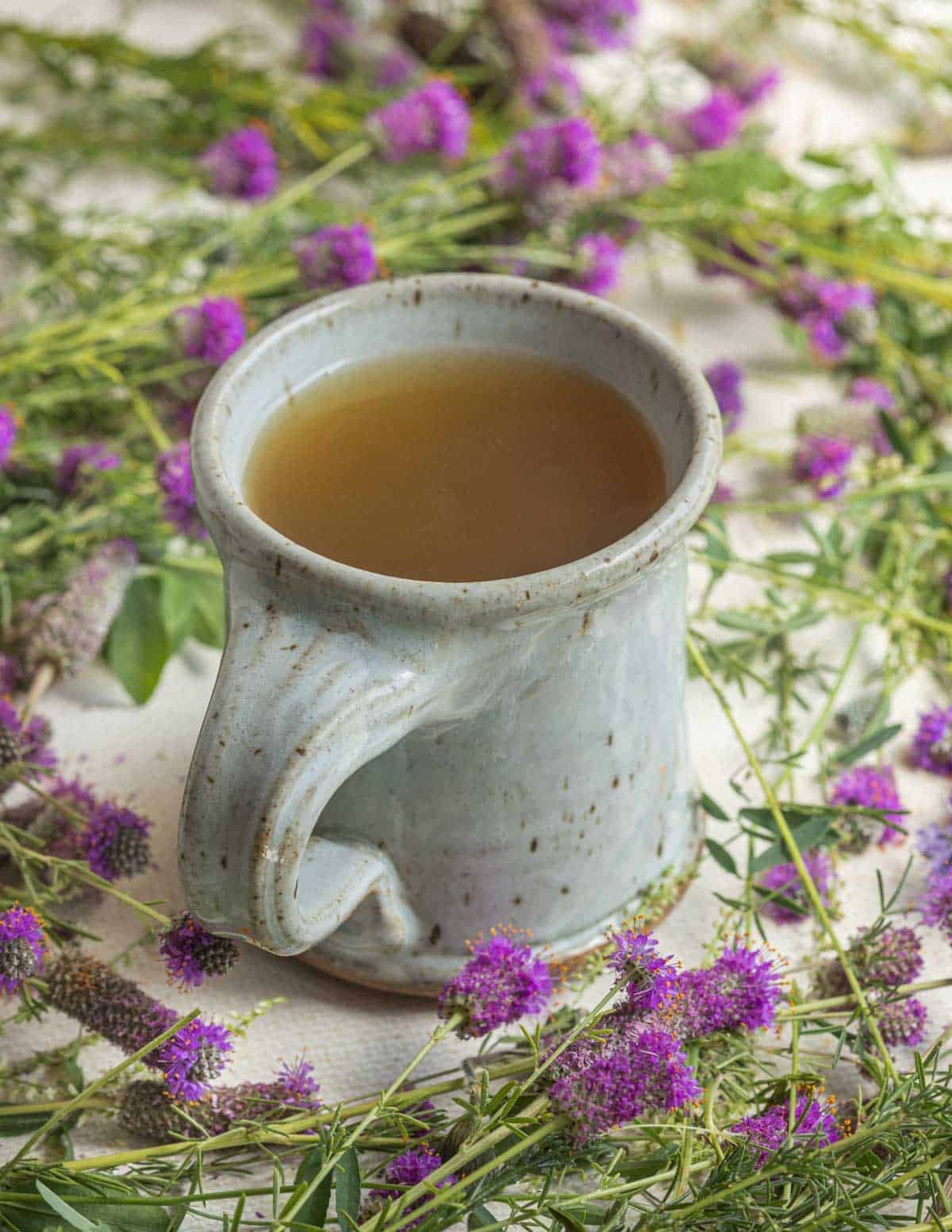
If you could taste a summer meadow in bloom, it would taste like wild clover tea. One of my favorite foraged drinks to make in the summer, it's delicate, refreshing, and delicious hot or served over ice. The artistry here is understanding the different species of clover in your area and their individual flavors. Today I'll walk you through how I make it.
This week I took a few days to get away at Nordly's near Frederic Wi. It's a beautiful getaway situated on 140 acres of private land with manicured trails and all the trimmings a forager could ask for.
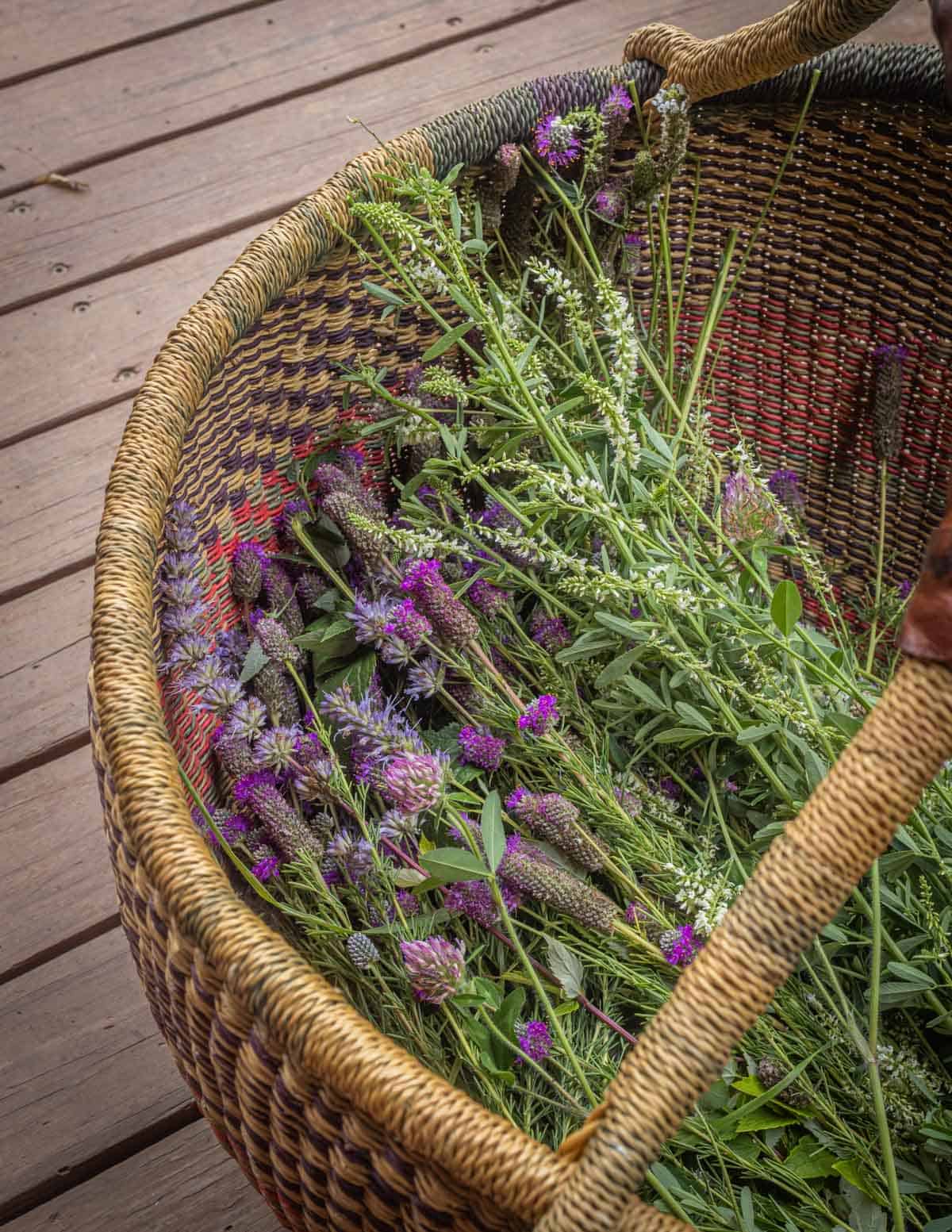
I'd planned to proofread my next book manuscript for what seems like the tenth time, but after driving up and seeing meadows of aromatic prairie flowers I decided to play in the woods and make wild teas for the next two days instead. I also cut a bunch of clover to bring home for baking with a pork roast in parchment like the French do with Hay.
Different Types of Clover
For the most floral and aromatic tea we need to discuss a few different species of clovers. There's a number of them and each type has a slightly different taste. In the recipe I use four different varieties, but there's one that will make or break it, at least for me.
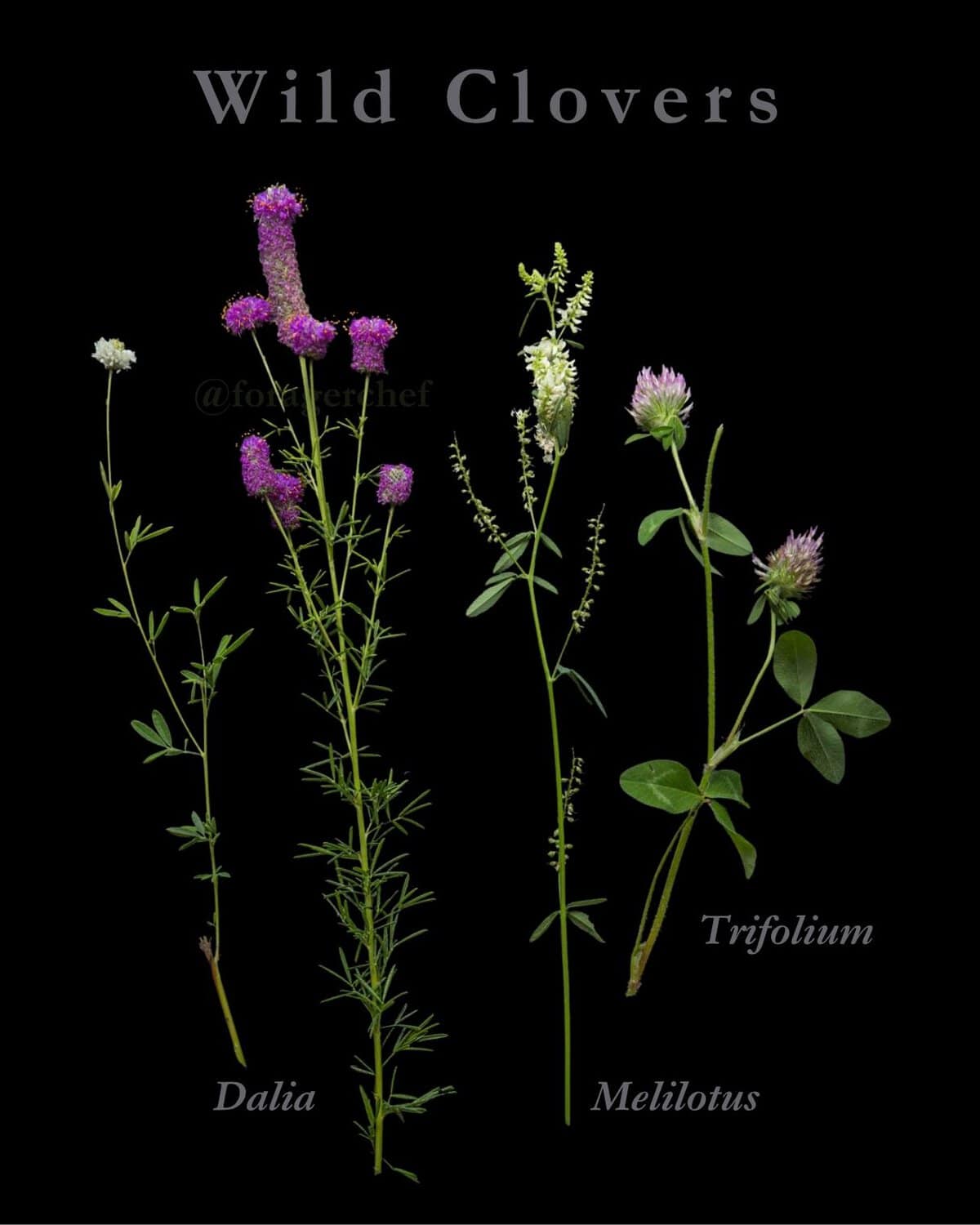
Red Clover & White Clover
The European Red clover (Trifolium pratense) is the most common I see, and often mentioned when people talk about tea. I appreciate it as a good introductory edible and a nitrogen-fixer for the soil. The flavor is very mild, with only a light floral taste.
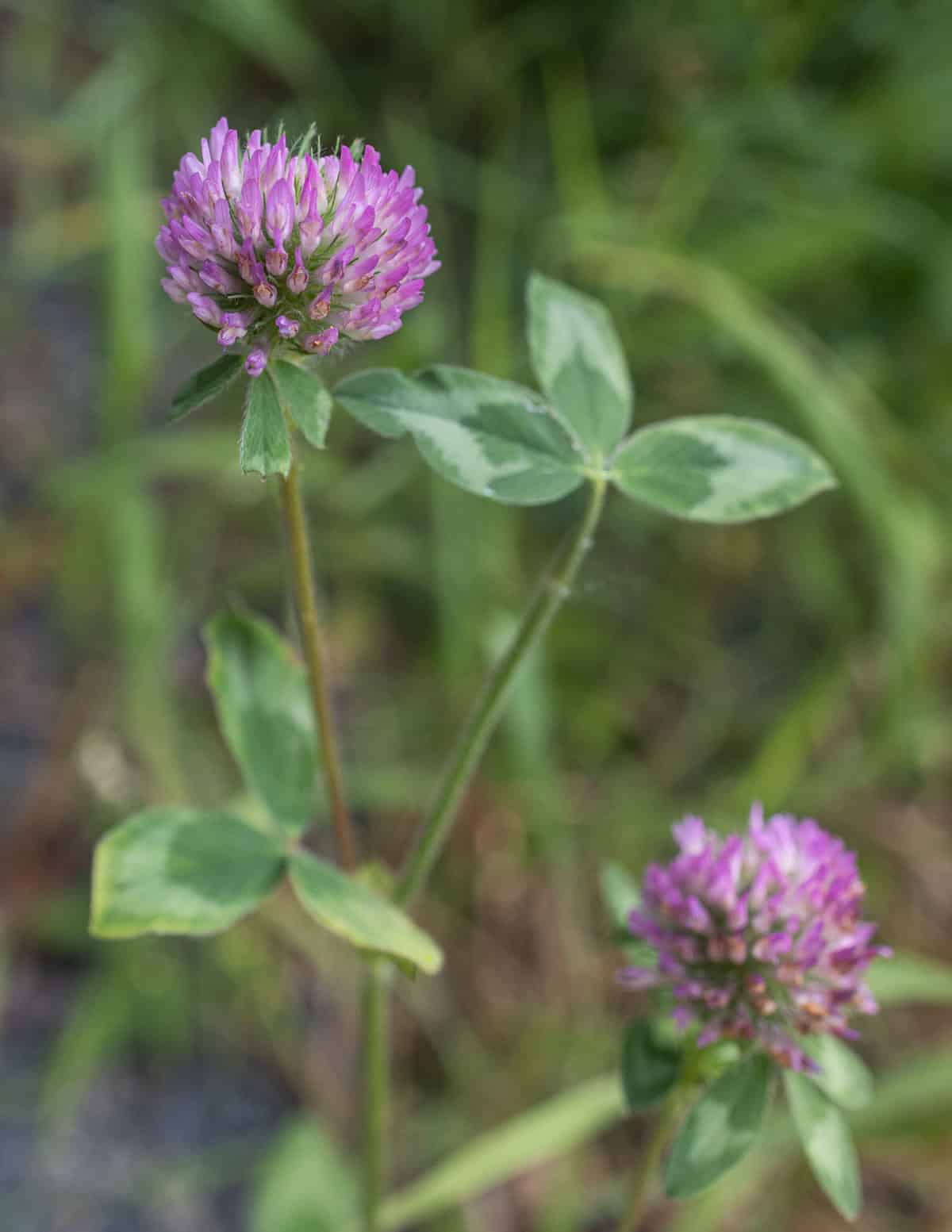
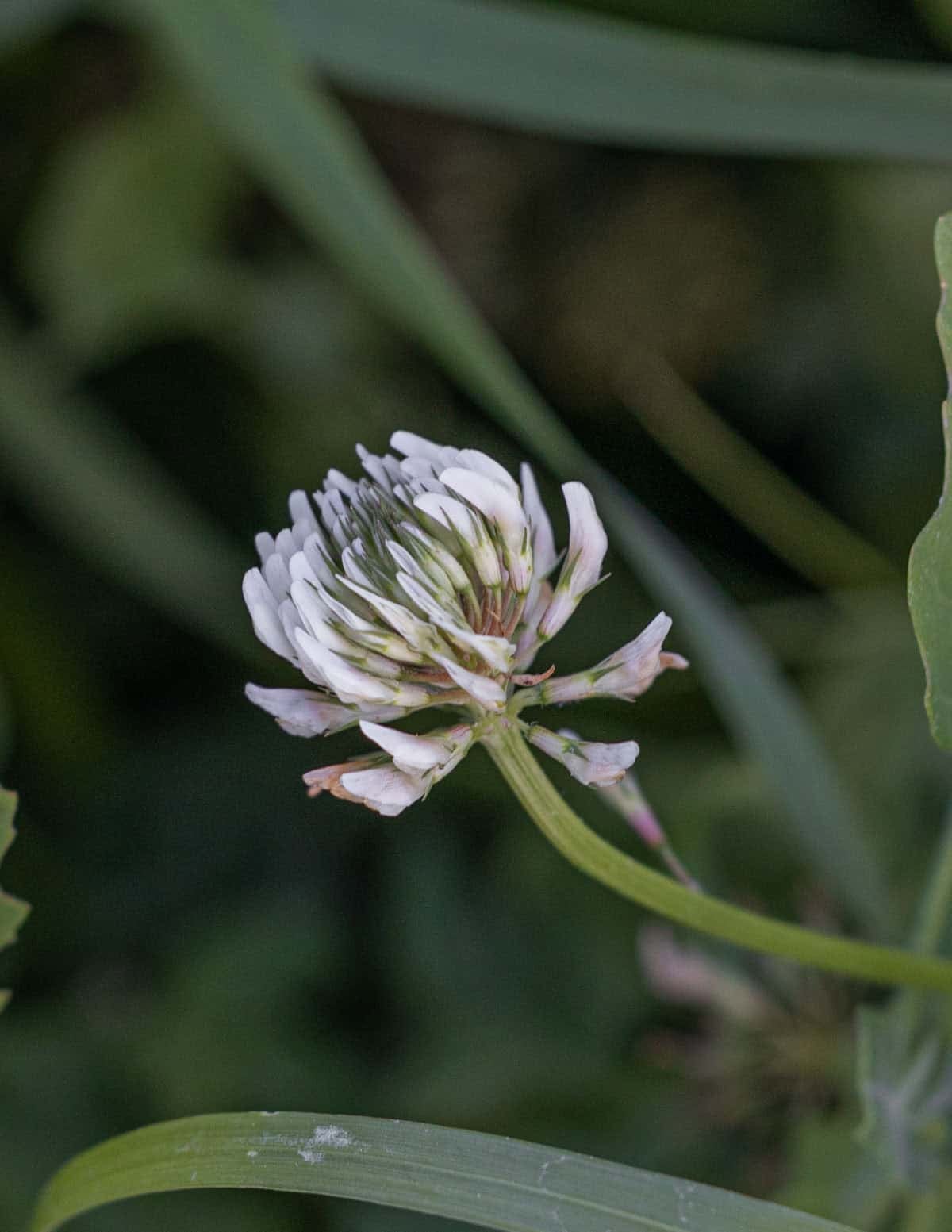
While it's ok to put some in a blend, in my opinion, all by itself it's nothing to write home about. Common white clover (Trifloium ripens) is similar in flavor and also not very interesting on it's own to me, but is fine in a blend.
White and Yellow Sweet Clover
Yellow and white clover (Melilotus officinalis and alba, respectfully) get much larger than red clover. These are weedy, non-native plants from Europe and very common in the Midwest and across North America.
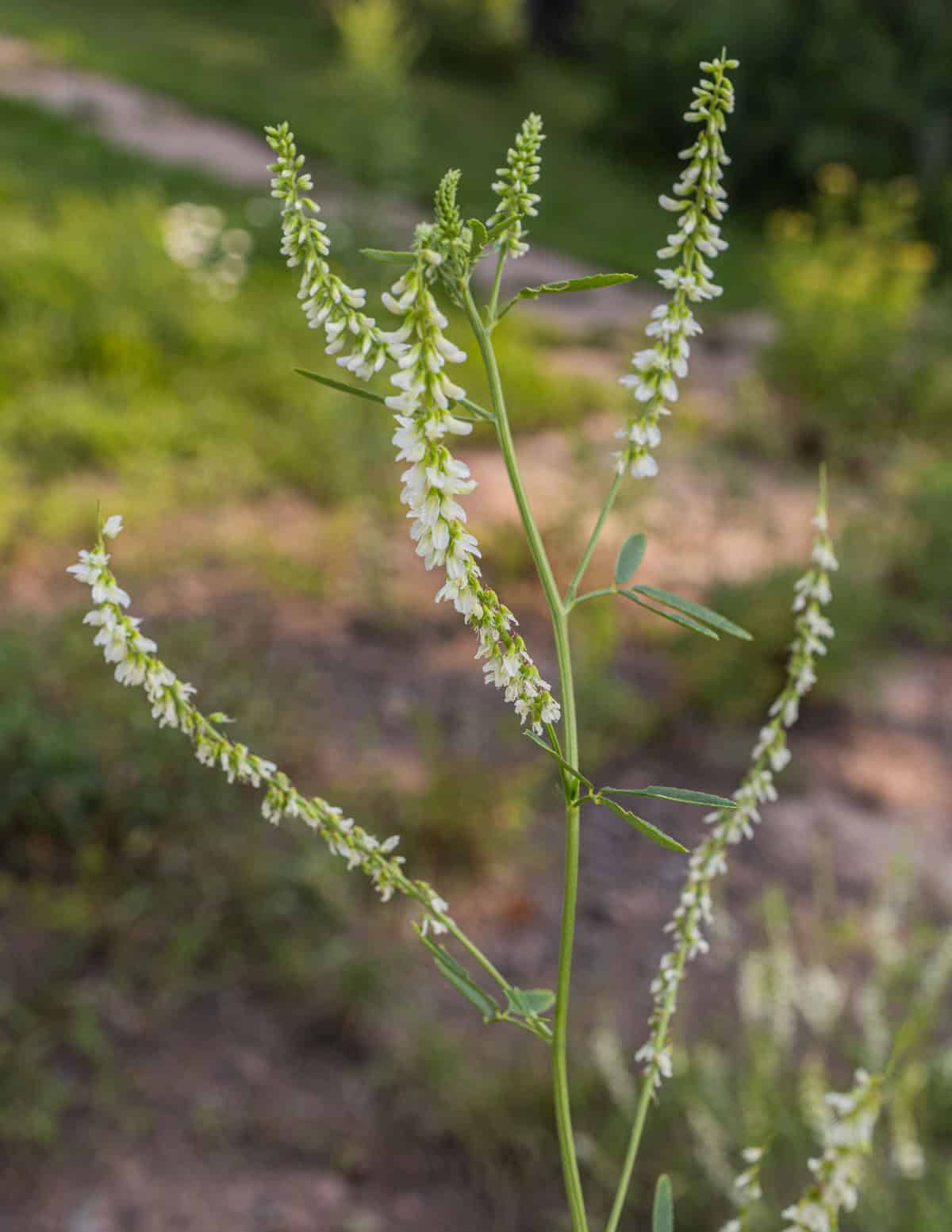
Like other clovers, they contain coumarin, a compound formerly used in Mexican Vanilla extract and the same flavoring compound found in Tonka Bean the French Chefs love. They add a sweet, vanilla-like taste to tea, with notes of hay and fresh cut grass.
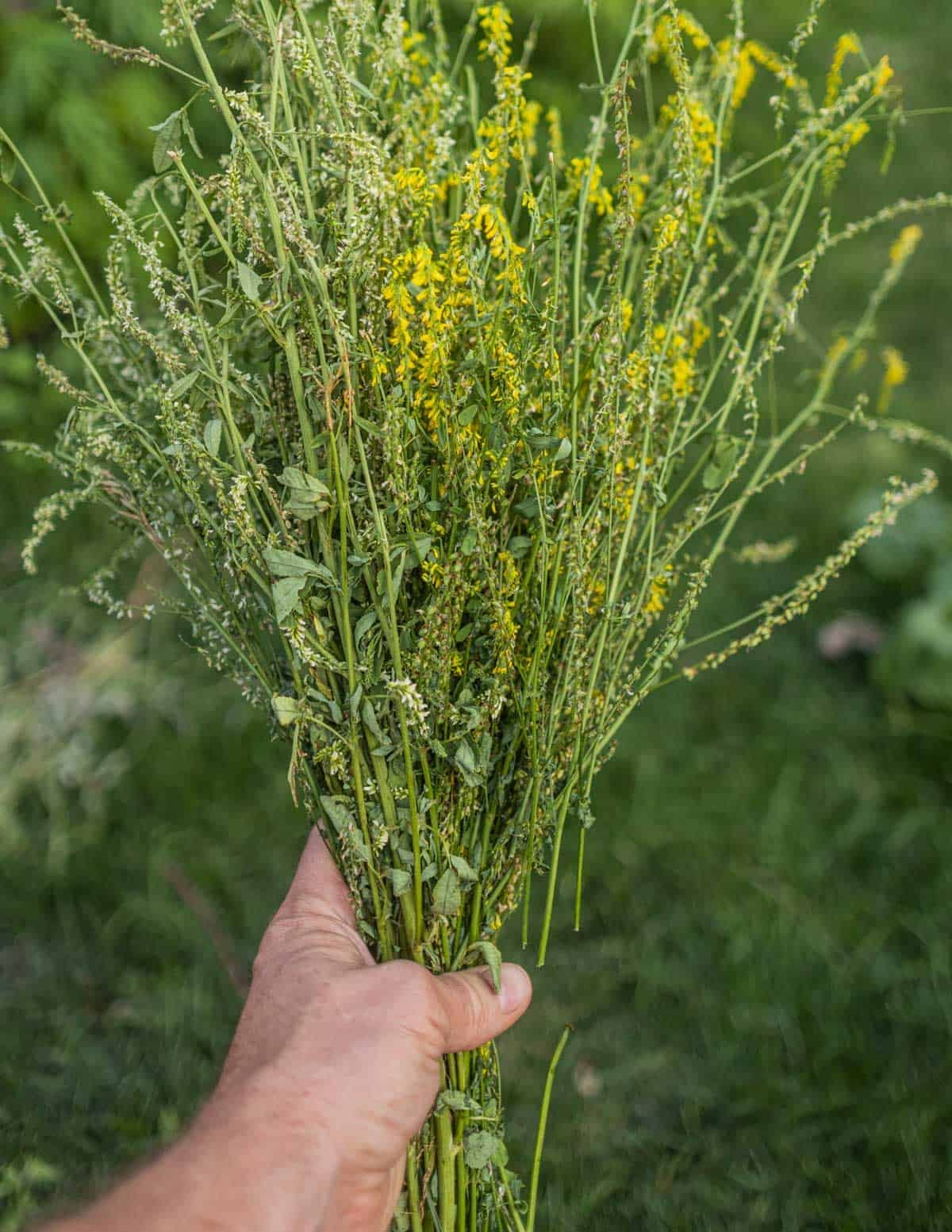
Besides tea, I love using these sweet clovers to make wild vanilla extract, which you can read about in my post on yellow and white sweet clovers. Next time you drive through farmland in the late summer open the window-I can always smell the vanilla notes of coumarin on the wind when hay is cut.
Purple Prairie Clover
The finest clover for tea I've had, Dalia purpea tastes a bit like hay and skittles. It’s different than any other species I’ve had and is the key to success in my opinion. It's floral, and vaguely fruity, with subtle notes of tangerine peel.
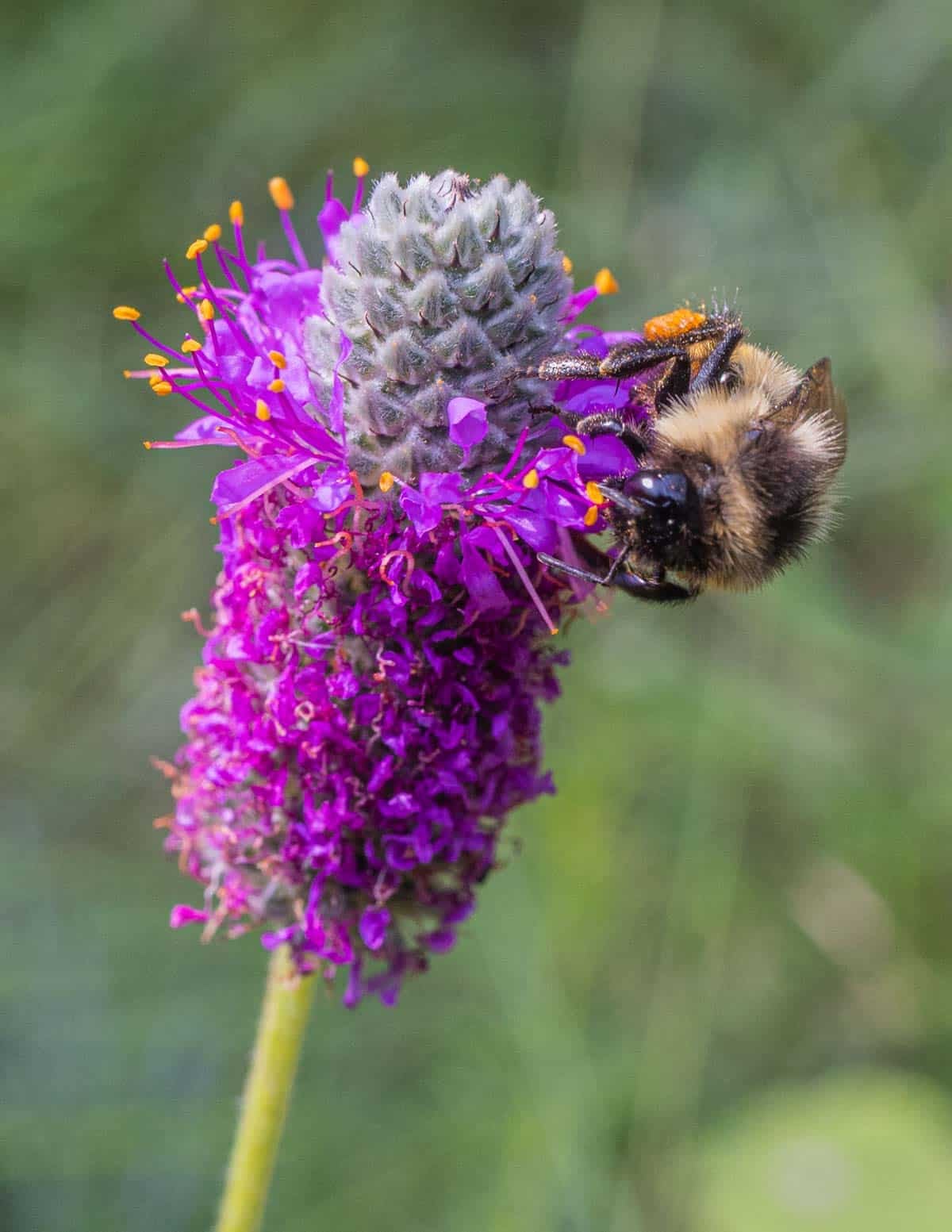
It was one of the first aromatic plants I grew when I finally bought a house. Prairie Moon Nursery sells seeds and it's easy to grow.
White Prairie Clover (Dalia candida)
A native species somewhat overshadowed by it's cousin purple prairie clover, Dalia candida looks nearly identical to purple prairie clover, except the flowers are white instead of purple. The flavor is comparable to purple prairie clover but slightly different, and not as fruity to me.
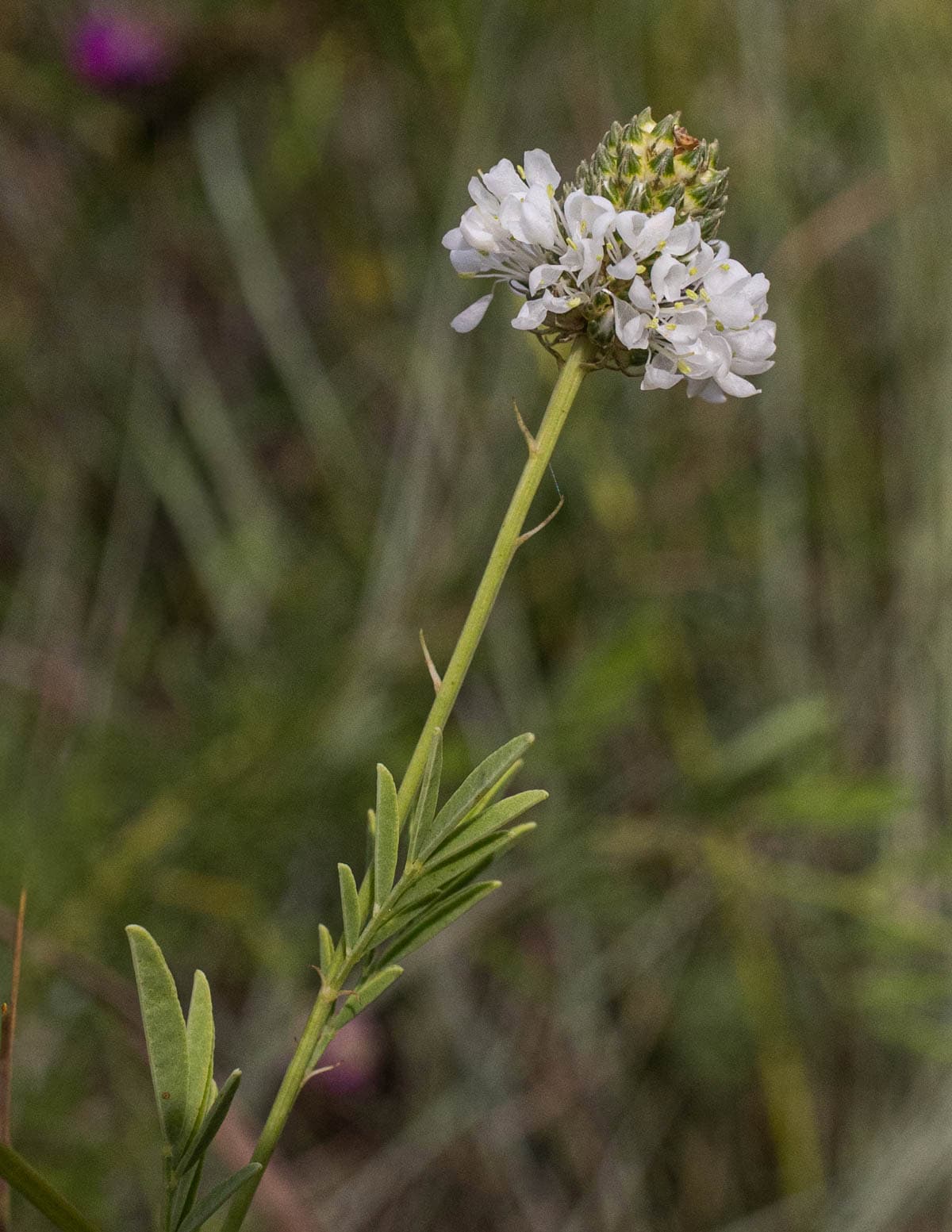
To be honest, I mention the other plants for posterity and I wouldn't bother making clover tea if I don't have purple prairie clover on hand. It's that good.
How to Make Wild Clover Tea
It's so easy a recipe is hardly necessary after your first time making it. First you'll want to harvest your clovers. The goal is to harvest plants at their peak flowering stage for the best aroma. Aromatic flowers attract more than humans, so I give the plants a good shake, laying them out on a tray outside for a few minutes to evict any insects.
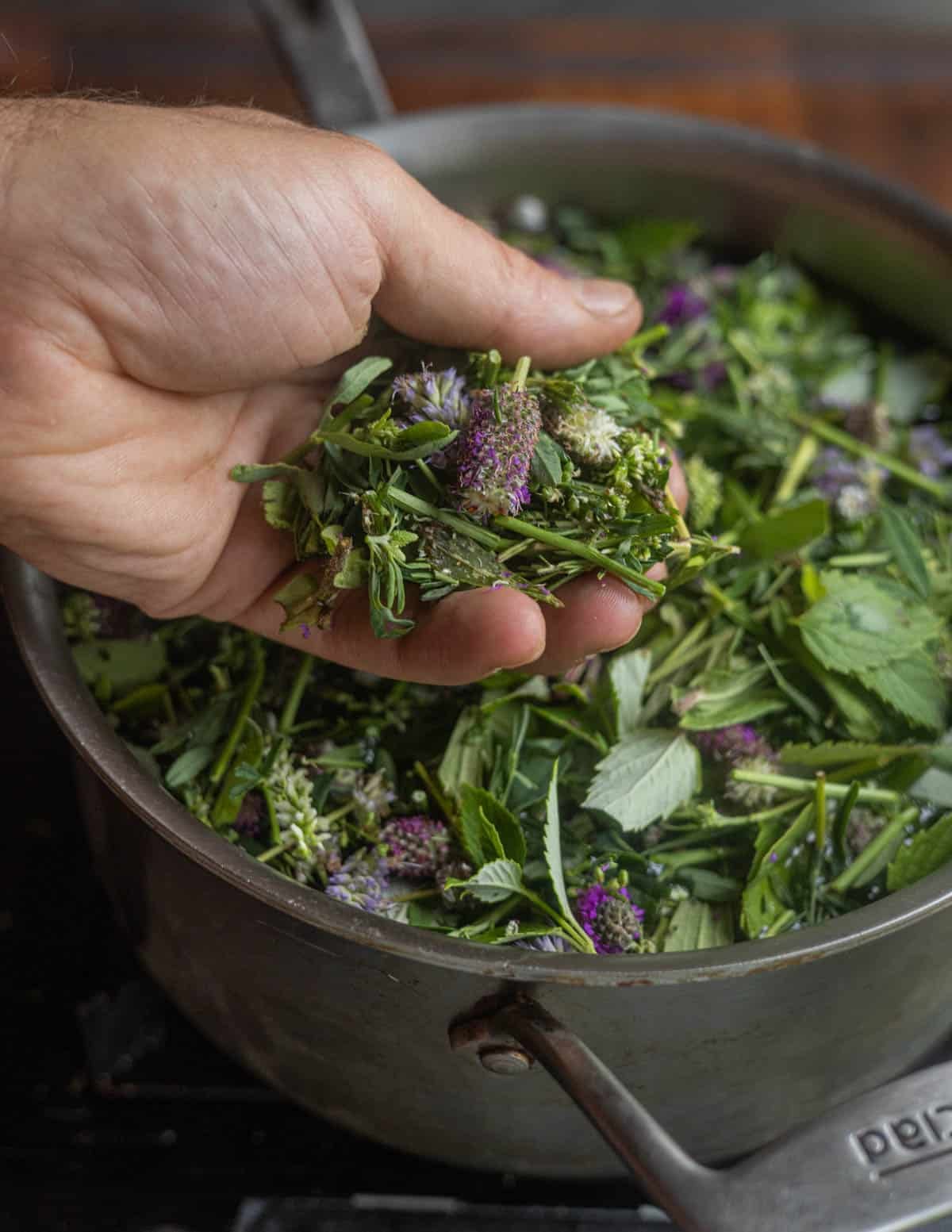
Next, use a kitchen shears or a heavy scissors to cut the plants into 1-2 inch pieces. From here the plants can be dried or used fresh, but fresh will always be more intense.
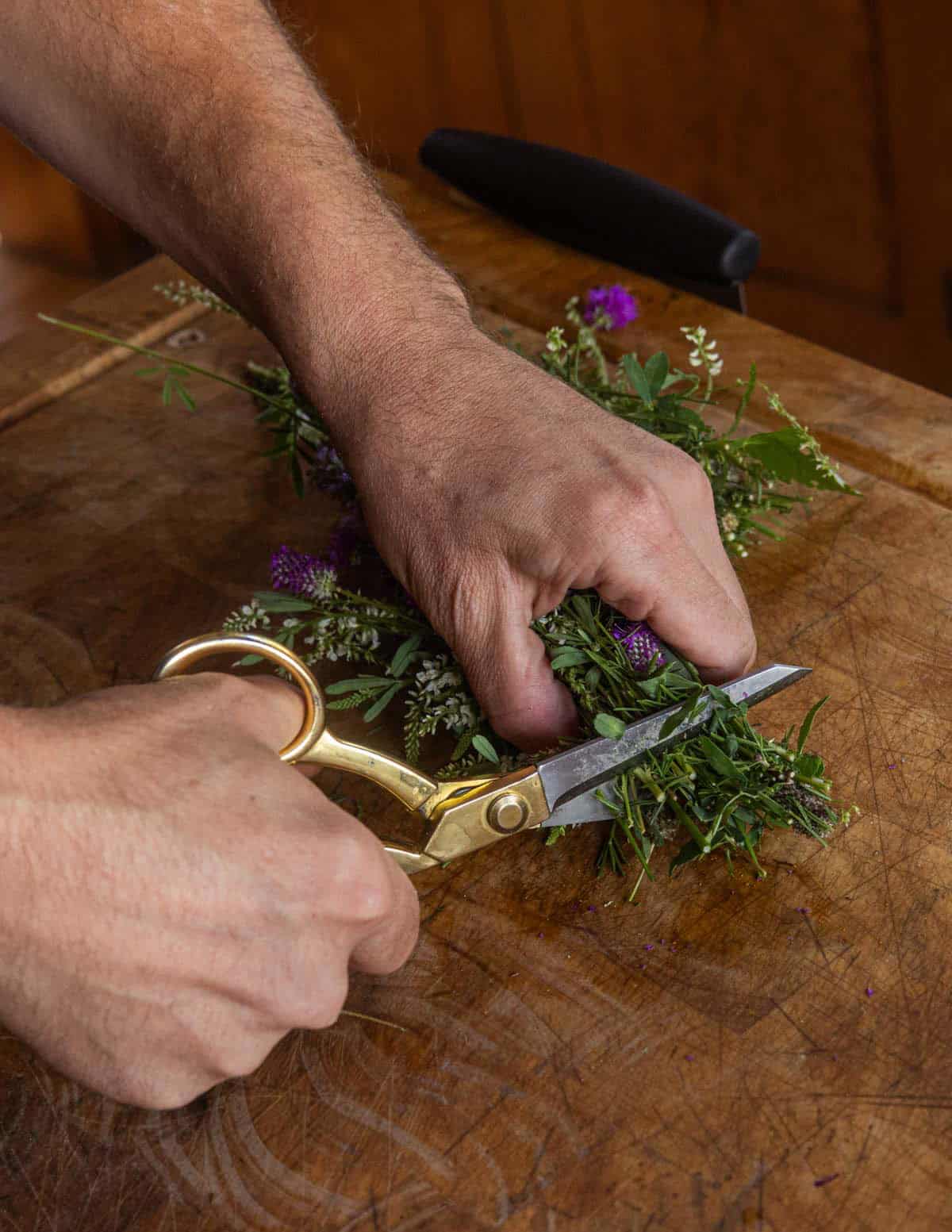
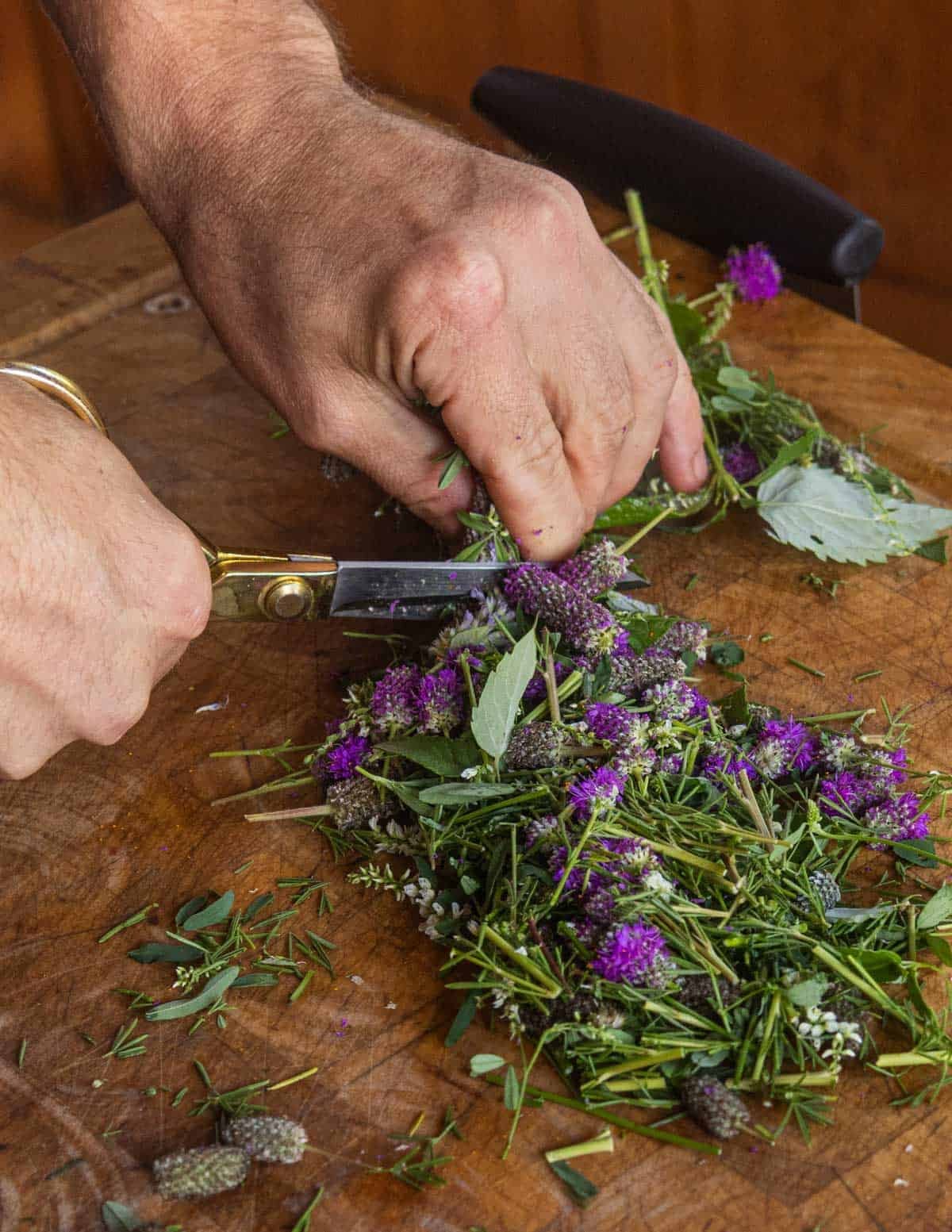
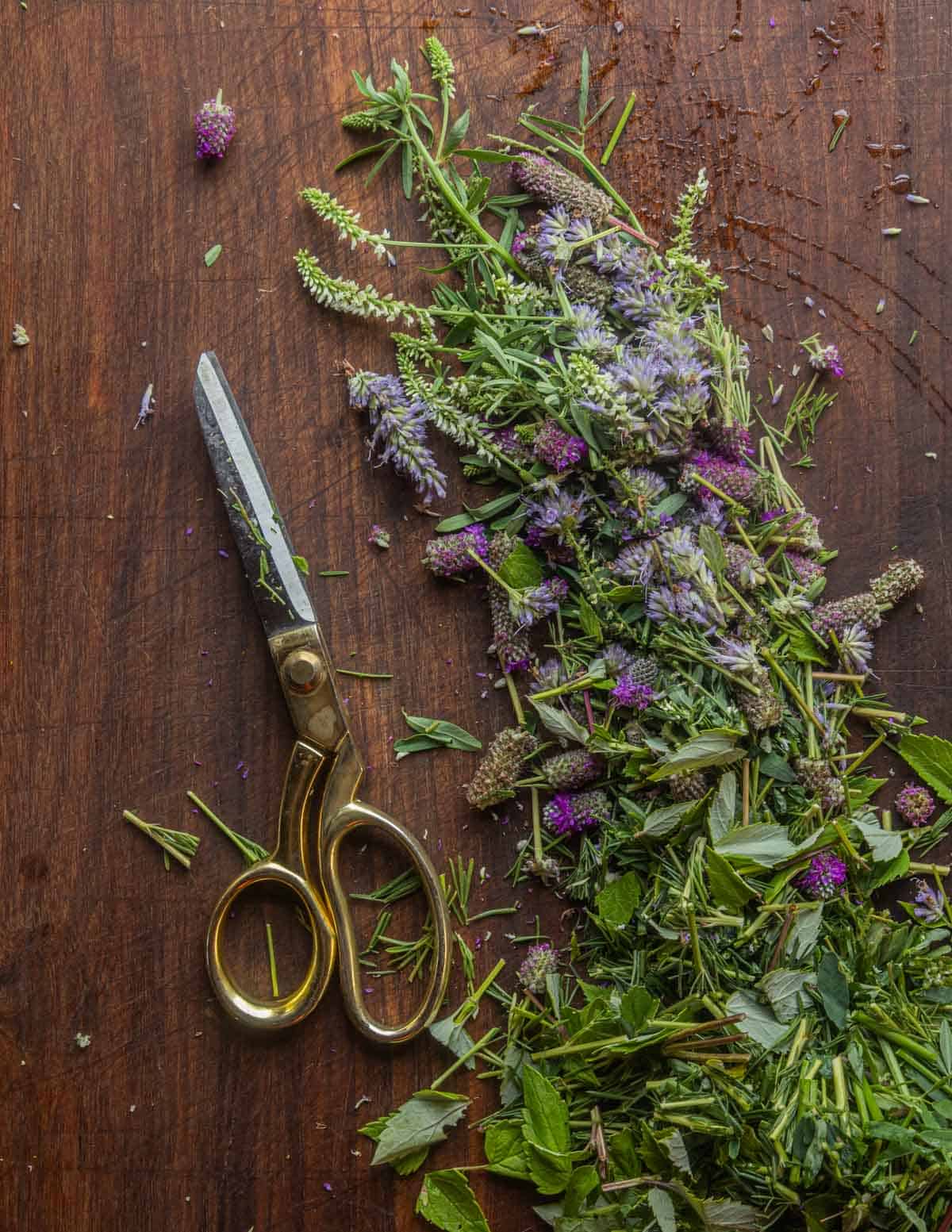
With fresh plants, I put them in a pot of water and bring it to a boil with the plants in it, then turn it off and allow it to infuse. This might seem intense for tea, but it takes longer to get a good infusion from fresh plants than from dried.
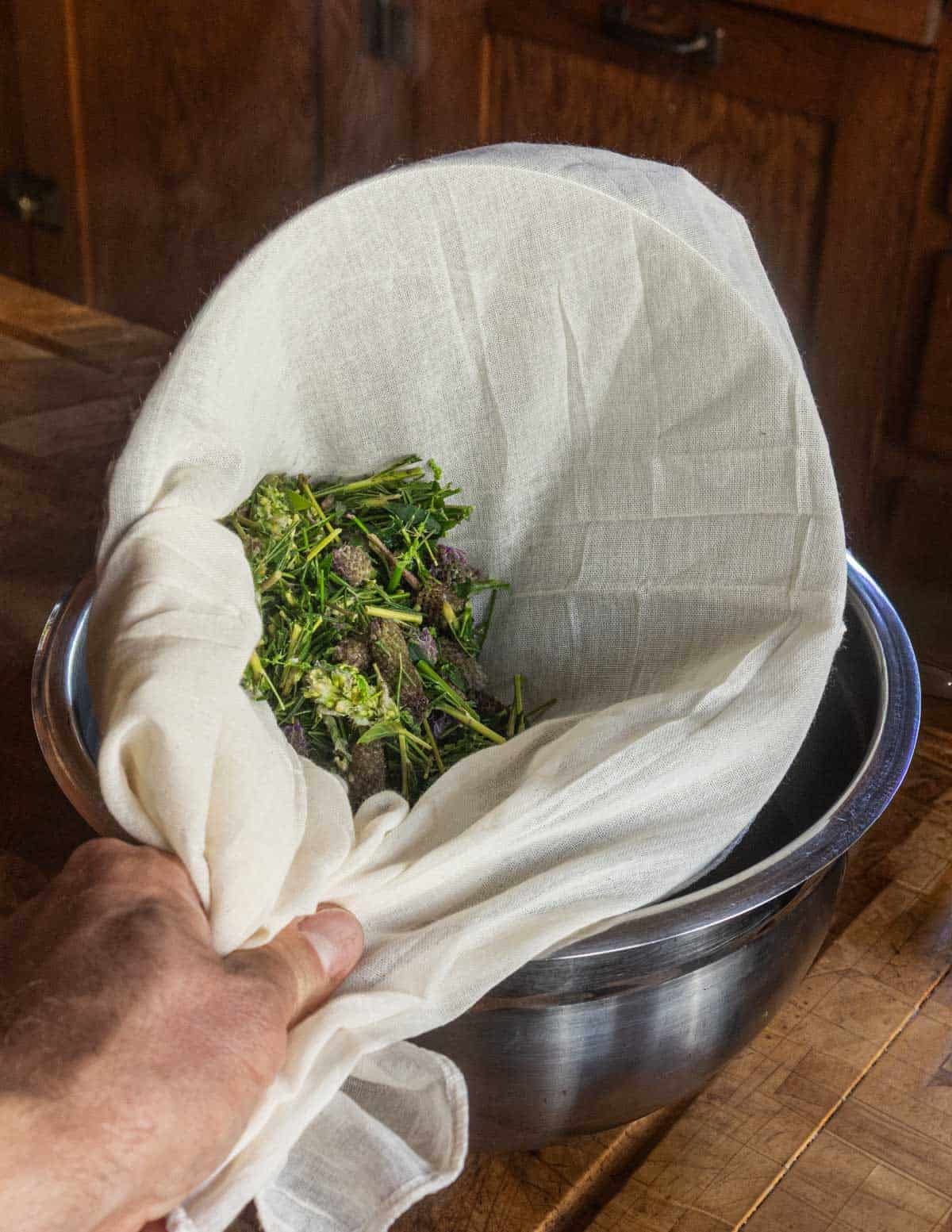
Taste the tea and see if it's to your liking, then strain and serve warm, or chill. I use a chinois in the image below, but I also use re-usable cheesecloth, depending on how I'm feeling.
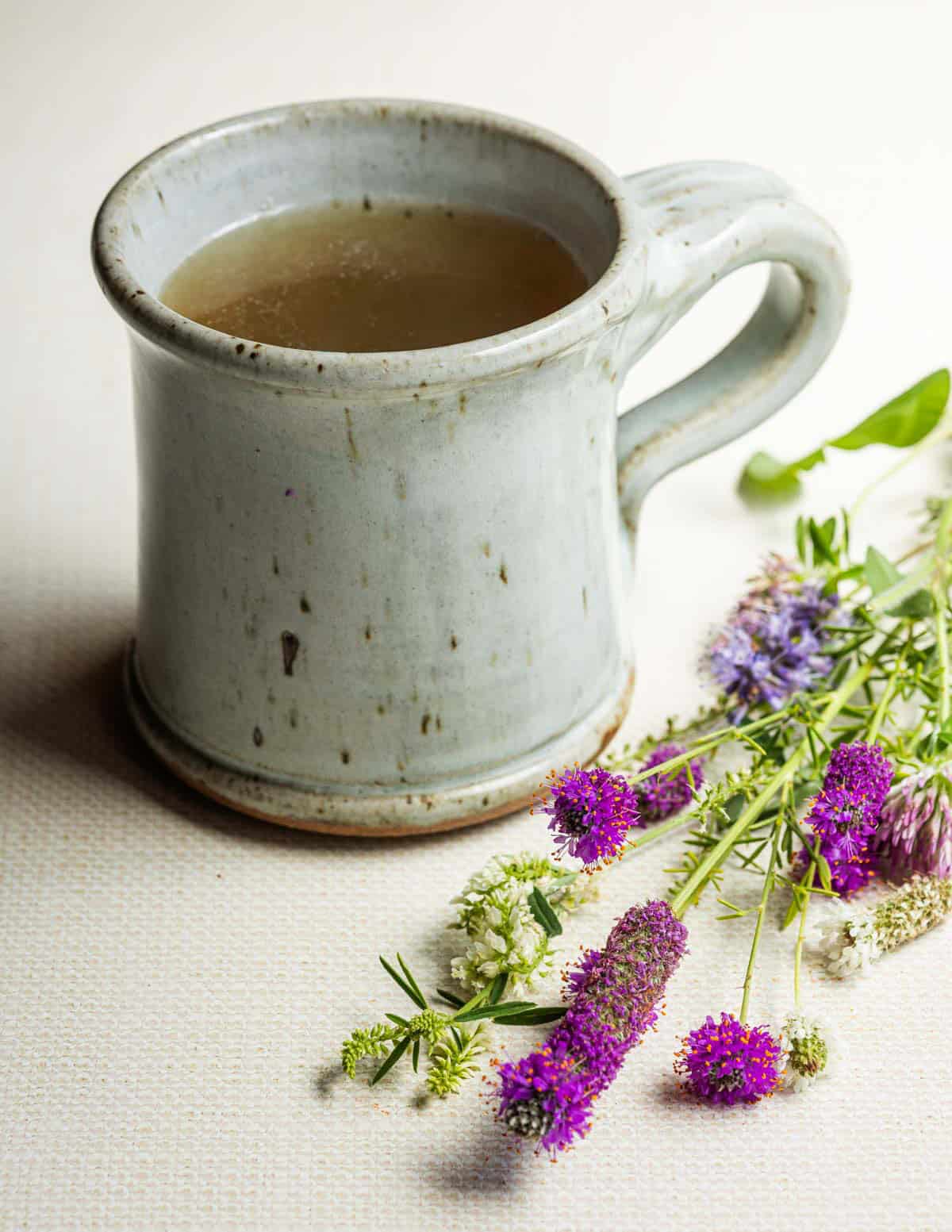
While it's fine to serve it unsweetened, a little clover honey or maple syrup will heighten the floral aromas.
Chef's Tips
- The most important thing to know here is that blooming flowers, specifically the purple prairie clover are the secret to the strongest, most floral tea.
- Following that, while you can use the plants dried, the freshest, most vibrant tea will come from fresh plants.
- Out of an abundance of caution I need to mention people on blood thinners avoid consuming too much clover tea or plants containing coumarin. Please research things yourself or consult a doctor before consuming if you're on blood-thinning medication.
Have you made tea from clovers? How do you like it? Let me know in the comments.
Related Posts
Wild Clover Tea
Equipment
- 1 Kitchen shears
- 1 2 quart sauce pot
- 1 12in x 12 in sheet of cheesecloth or a strainer
Ingredients
- 2 oz (2 cups) fresh wild clover see note
- 8 cups water
- ¼ cup maple syrup or honey optional
- 1 12 inch sprig anise hyssop optional
- 1-2 12 inch sprigs sweet bedstraw or sweet woodrfuff optional
Instructions
- Harvest the clover(s), making a point to get as many fresh, aromatic flowers as possible.
- Lay the cut plants on a tray outside. Give them a good shake and set them aside for a few minutes before processing to allow insects to leave.
- Cut the clovers into 1 inch pieces with a kitchen shears or a heavy scissors.
- Add the cut clovers to the water, cover the pot and bring to a boil. Turn the heat off, allow to infuse for ten minutes or so, then strain.
- You can also add the plant matter to boiling water like typical tea, and I haven't noticed much of a difference doing it either way.
- You can sweeten the tea to taste with honey or maple syrup which will enhance the floral aromas. Serve hot or cold as iced tea.
John Smith
That tip about shaking the blooms out on a tray outside is worth the whole read — I once steeped a basket straight from the field and learned about aphids the hard way. Red clover is all my yard offers, so the note that purple prairie clover tastes like hay crossed with skittles explains why my infusions always came out flat; that's clearly the one worth hunting, and good to know it grows easily from seed. The coumarin connection finally clicks for me too — a relative used to tuck white sweet clover into homemade vanilla extract, and I never connected it to tonka bean until now. One question: do you strip just the flower heads or cut the whole flowering top, and does sweet clover keep its vanilla note when dried the way purple prairie clover loses its fruitiness?
Alan Bergo
Cut the whole flowering top. Sweet clover actually intensifies when dried-the opposite of prairie clover.
Trevor
I only did this with red clover from our backyard, but with raw honey, my wife and I loved it! I won’t be partaking much due to phytoestrogen of course, but my wife said we will have to keep this in mind for the future.
Thanks for posting this, and I’m glad to be able to harvest my own backyard!
Alan Bergo
Thanks Trevor. As I only make this a week or two out of the year I don’t really worry much about the medicinal properties but it’s a good thing to bring up.
Roman
Hi Alan, can you speak to whether the purple variety dries well and if it retains (or enhances) some of those preferent notes?
Would you dry the flowers only?
On an unrelated note, have you tried soursop leaf tea? It's quite nice when good quality!
Alan Bergo
Hi Roman. This is one of those times where there is a big difference between dried and fresh. The purple prairie clover is not the same dried as it is fresh, and loses the high fruity notes. The dried tea is good, and I made sure to save some that way, but it’s not the same.
Christopher Blair
Grabbed some red clover this morning on my walk, after eating a handful of the ripe blackberries before the bears get them all. Couldn't identify other's in my area but will try when the field next door blooms again. Nifty tea. The floral was low and the earthy, rich grass-y flavor and sent was strong. No sugar added. Chilling balance to see what cold tastes like. Thank you very much for shining a light on this.
Alan Bergo
Thanks Chris. Just remember the more flowers you use the more floral it will be. Red clover works, but if you can find the purple prairie clover you get a fruity taste I describe as hay crossed with skittles.
Christopher Blair
Alan, do you do anything with sumac horns? Plenty of them in my neighborhood.
-Chris
Alan Bergo
Hey Chris, of course. With our lack of rain ours are nice and tart here in MN. Here my walk through of the overnight sumac lemonade.
Trevor
Do you have a link for those African baskets that are “worth their weight gold?”
Otherwise, I’m looking forward to trying it with the red clover. There’s a ton of that in my backyard and not as much time to go hunting for wild clover.
Alan Bergo
Most coops in my area sell the baskets, but you can often find them online on Etsy or eBay. African baskets.com is the wholesaler many go through but you have to buy in bulk.