
Ancient trees that've watched continents move and civilizations rise and fall, Magnolia flowers are by far the meatiest and largest flowers I've eaten, blurring the lines between flower and vegetable. They're one of the best, and largest edible flowers I've eaten. Today I'll walk you through what I know about them and how I use the flowers, which have a spicy, floral taste of ginger and cardamom.
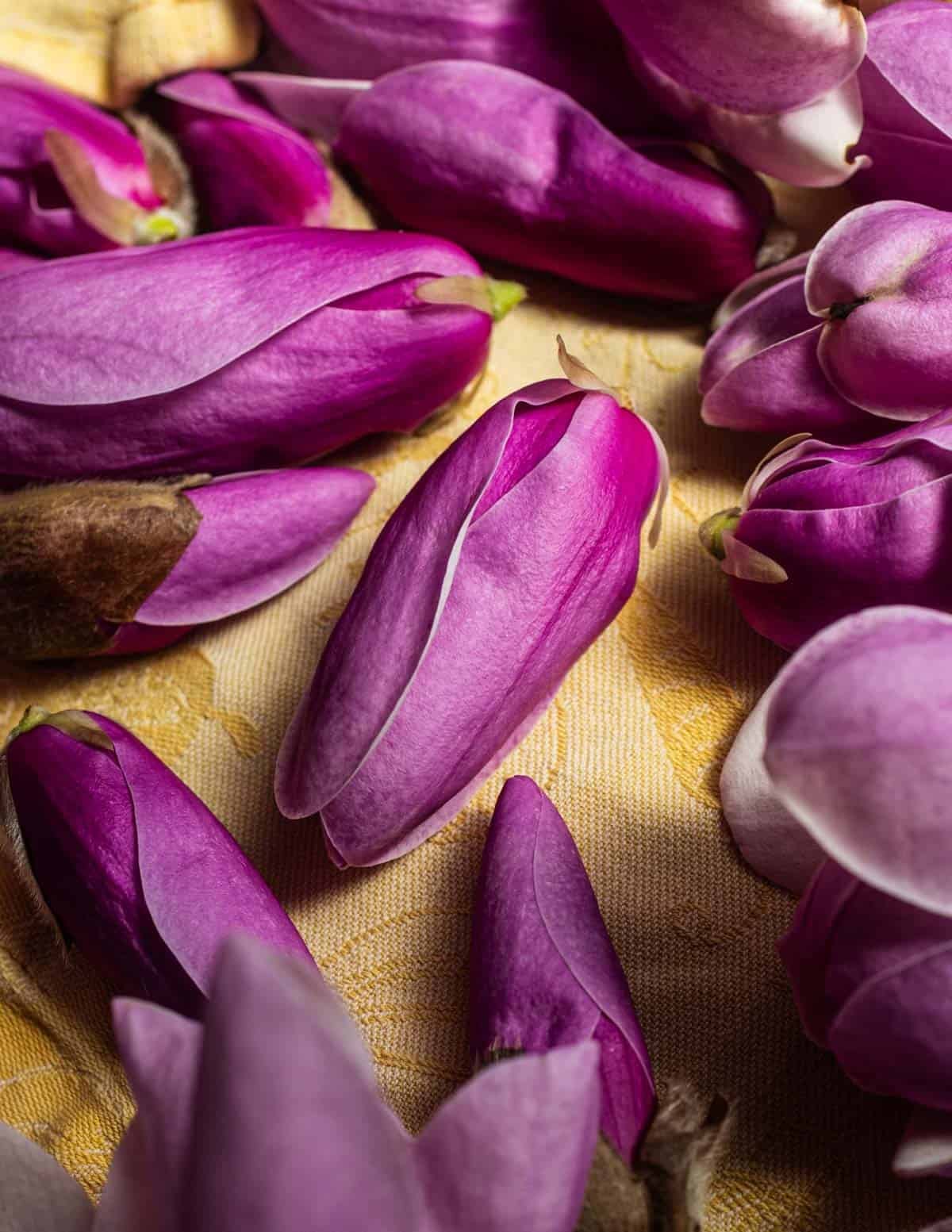
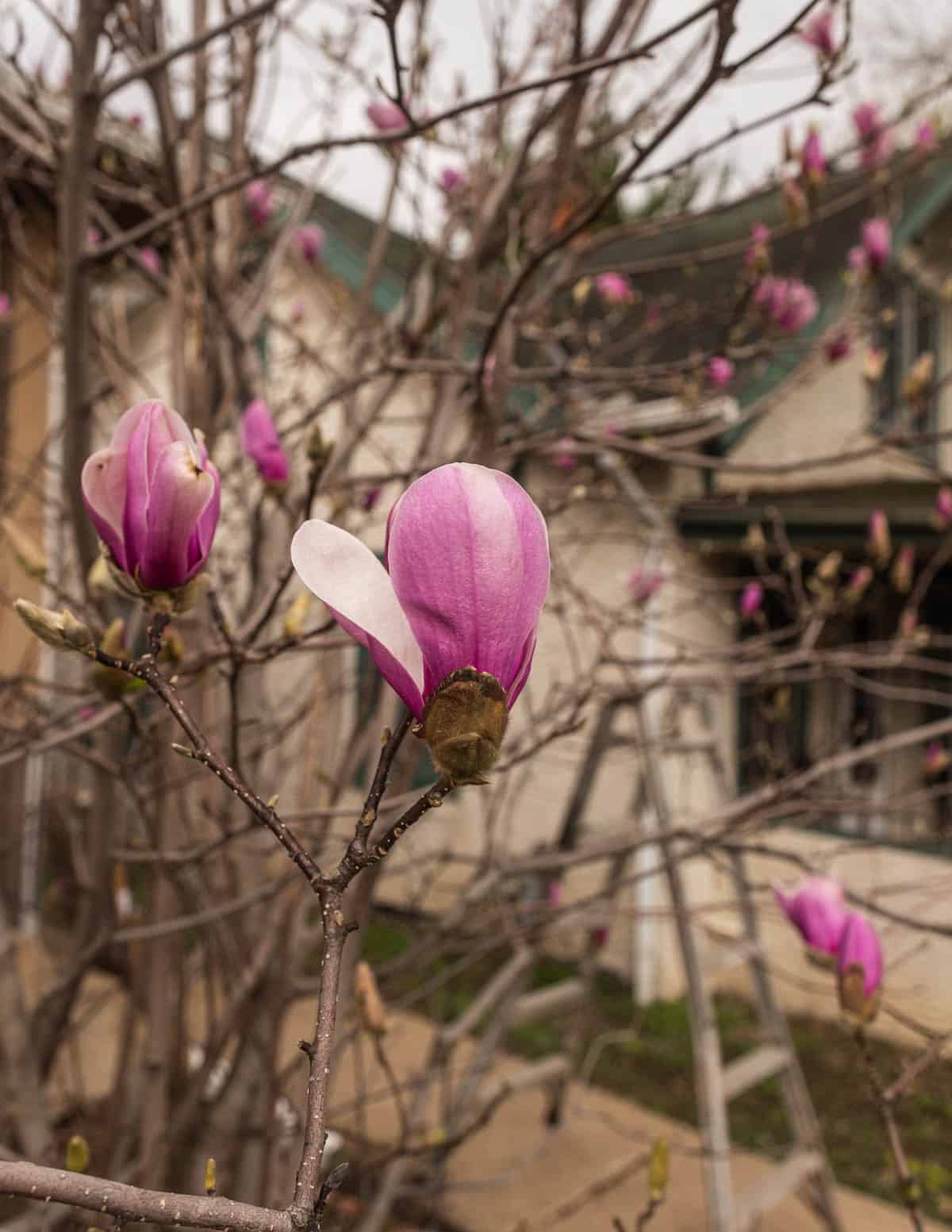
I'd known about magnolia flowers for a few years but they're hard to find in Minnesota as they tend to prefer warm climates. That means I have to look for ornamental plantings on private property. I know two trees near me: one in front of a church, and another in my friend's yard, which are what you'll see pictured.
What surprised me when I started digging into them was the lack of documentation of the flowers as an edible in foraging literature. I own many foraging books covering Appalachia to Alaska and none of them mention eating magnolia flowers. If you have any that do, please let me know.
Background
I've mentioned many old and antique plants on this site, but Magnolias are one of, if not the oldest. When I say old I mean it too: these plants date back to the Cretaceous period, meaning they co-existed with dinosaurs. The earliest identifiable fossils dating back around 95 million years.
The Genus magnolia is large, containing 200+ species, all of which should be edible. They seem to have adapted to different habitats over time in different places, having both deciduous and evergreen varieties.
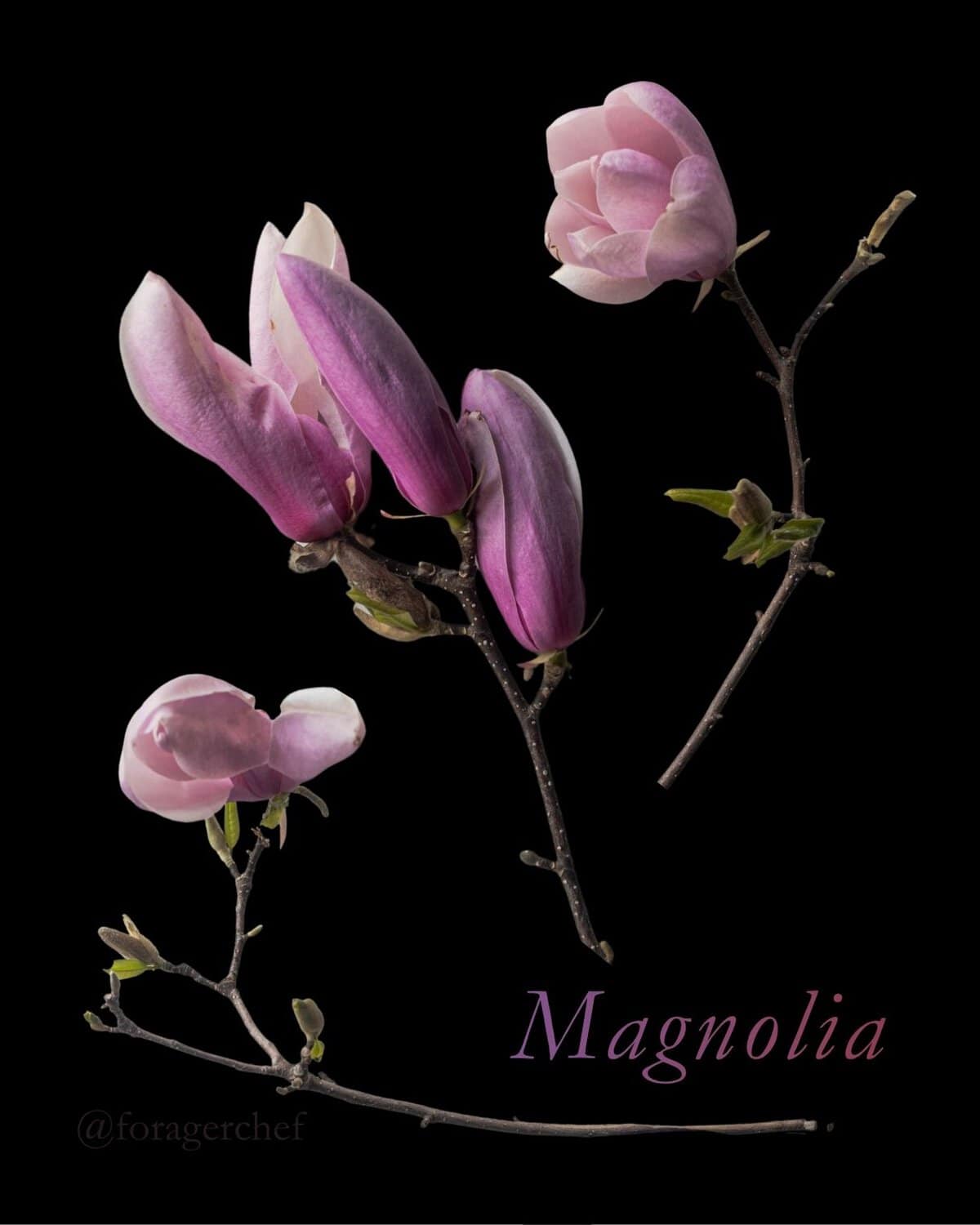
Native North American species like the evergreen Magnolia grandiflora are concentrated in the Southeast, where they survived the last Ice Age. Deciduous cultivars such as Ann, Jane, Royal Star, and Leonard Messel are derived from Asian species, and are hardy enough for Midwestern winters.
The best documented history of the plant as an edible is probably from Asia where they're used Medicinally and are well known in Traditional Chinese Medicine. Most references I can find mention pickling the flower buds and petals or using them to scent a pot of rice, using the bark for medicinal broths, or making tea. Here's a nice video from China featuring them.
Harvesting
Deciduous trees will produce blossoms before leaves in the spring. Like most flowers, you have to be quick. There's about two weeks of availability, but after that they're gone.
Harvesting flowers can be tricky as they're usually fragile, but magnolia flowers are robust and can even survive being rained on-something that can ruin smaller flowers like black locust. Stored in a hard-sided container in the fridge they can last up to two weeks, but will only be fresh and crisp for a few days.
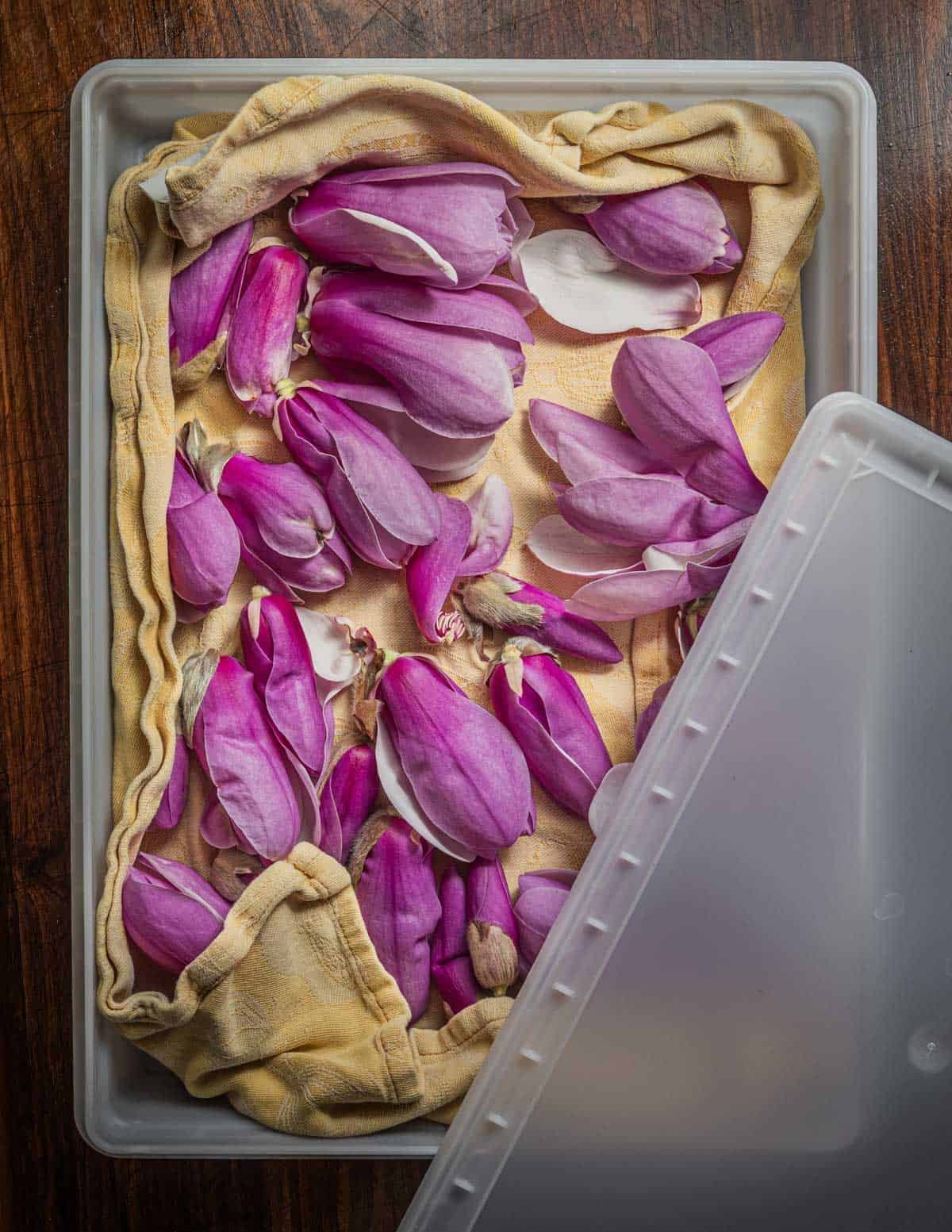
Like mulberries, flavors can from tree to tree, specifically between different species. If you have different trees nearby you'll want to taste and compare different varieties to find which one you like the best.
Flowers with white petals (technically called tepals) are said to have a milder, less bitter flavor, while those that are deep purple or pink may be more bitter.
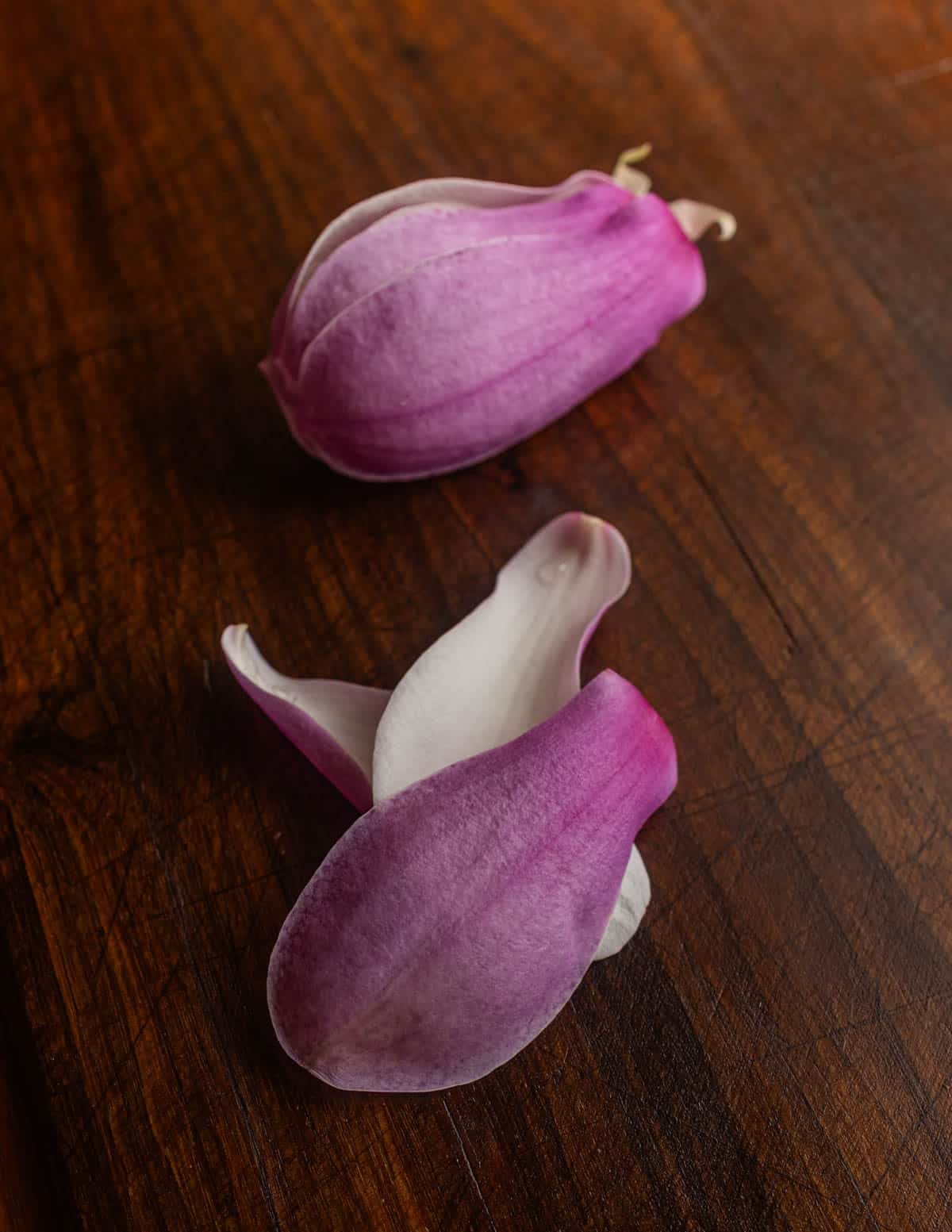
Magnolia trees are early bloomers, and the deciduous varieties will produce flowers in March and April. The ones I picked began flowering the 3rd week of April in Minnesota. Flower buds with young, tightly coiled petals will have the longest shelf life, but flowers that have begun to open will produce the largest volume. Somewhere in between that was where I liked them the best.
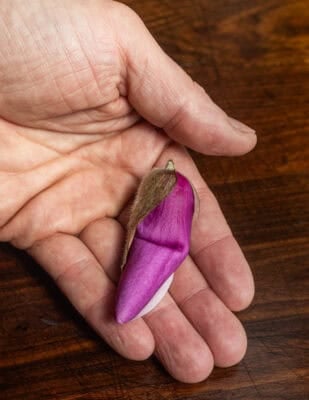
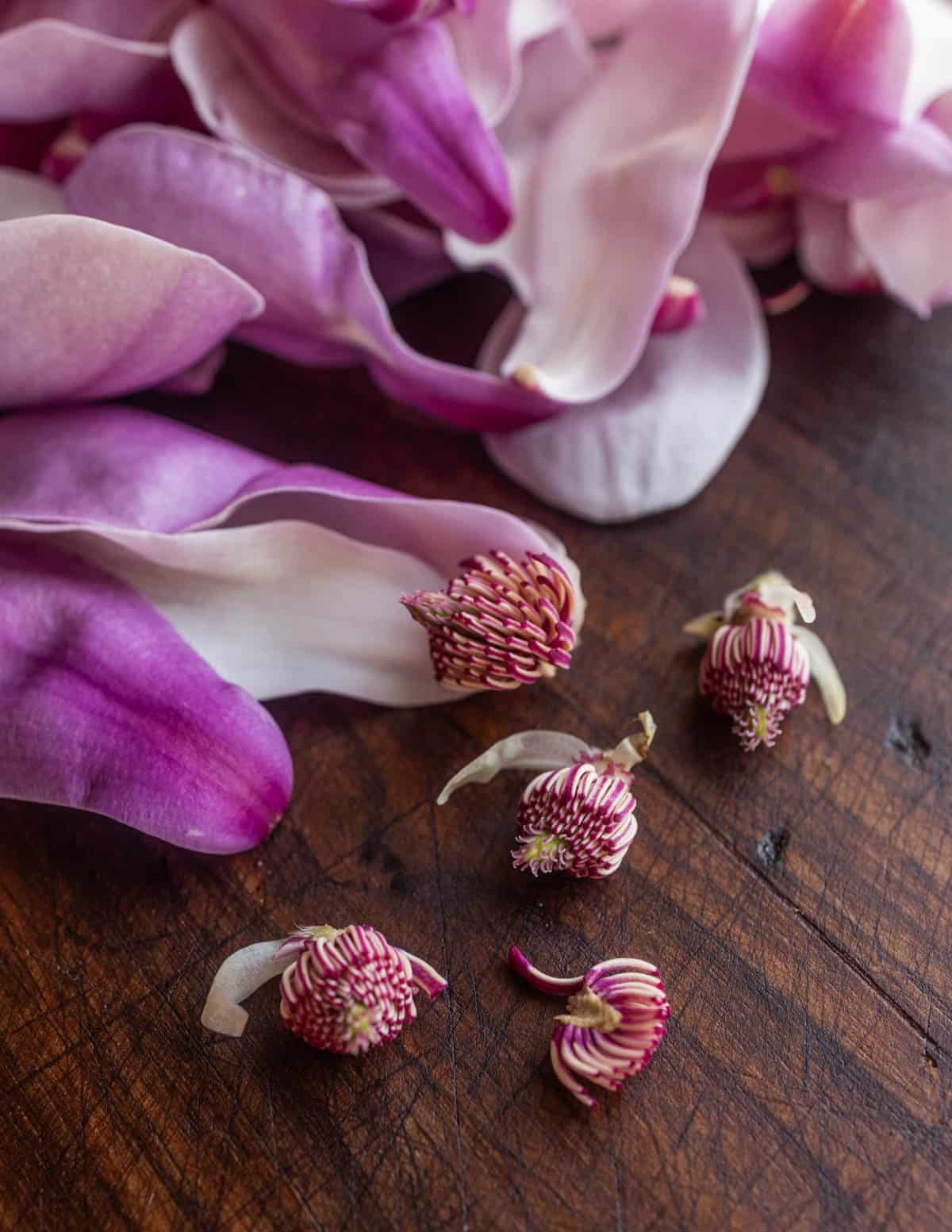
Processing is pretty straight-forward. Keep the flowers whole until ready to use, gently snap off the petals, discarding the inner stamen (male reproductive portion). The stamen isn't harmful, but it also isn't necessary and I remove them from most large flowers, like zucchini blossoms.
Cooking
Freshly harvested the petals are crisp and meaty, for a flower. Over time they'll lose some of their rigidity in the fridge, but wilted flowers can still be added to soups or other dishes where wilting them can work.
One bite of a petal reveals an intense, spicy, floral taste that's a potent combination of cardamom and ginger. All by themselves they can be a bit much for civilians. I've been looking for ways to balance their aroma but still be able to taste it.
Like the peppergrass I mentioned a few weeks ago, the flavor is intense raw, but when chewed with something else the spicy aroma becomes submissive and will be less noticeable. Here's a few other ideas I got from speaking with friends that have eaten more of them than me:
- Think of the petals as a delicate, aromatic vegetable. They can add a subtle texture to clear soups and broths. Cooking will tame their aroma, for better or worse.
- There's a few videos of battered and deep fried magnolia blossoms online and they're probably one of the most appropriate flowers for frying as they're much more substantial than, say, elderflowers.
- Consider mixing the petals with cabbage, shaved red radishes and ramps, salted and left to ferment for an aromatic white kimchi.
- Species with very large flowers can produce blossoms over 8-12 inches across, meaning you could use them as a food wrap for everything from rice, to kinpira gobo or a bite of fish tartare.
General Use
The aroma of ginger and cardamom is easy to pair with friendly flavors in sweet and savory dishes. They get along well with things like beets, fennel, orange and citrus. Unlike some strong-tasting flowers they're pretty forgiving: the more you add, the more you'll taste them.
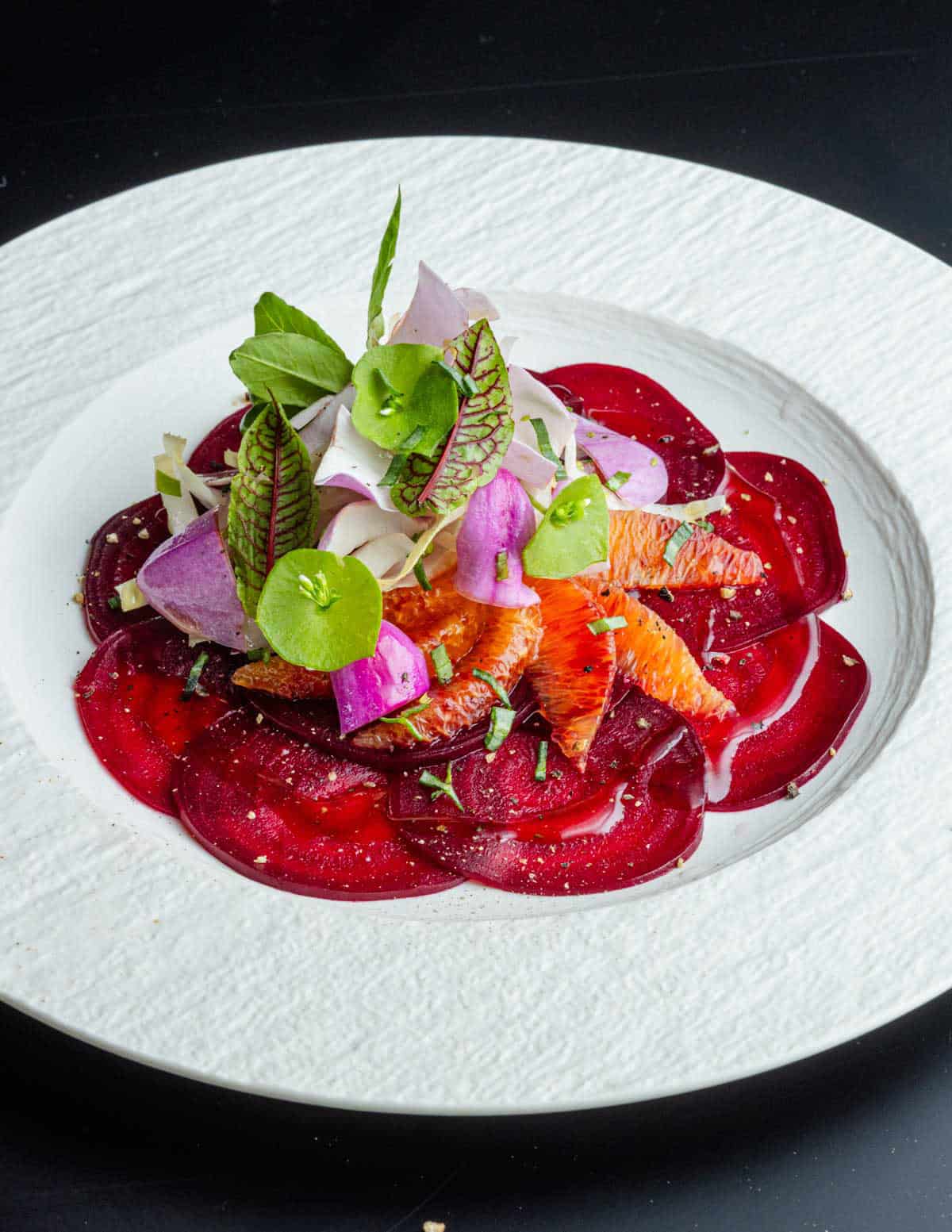
With meats, flaky white fish is what I'd reach for first, but a salad of summer greens with fresh juicy petals would be right at home alongside a piece of grilled chicken or pork too.
One of my favorite iterations I did was treating them like endive to make canapes. Take some young crisp leaves and fill the bottom portion with a dollop of whipped goat cheese piped in a pastry bag.
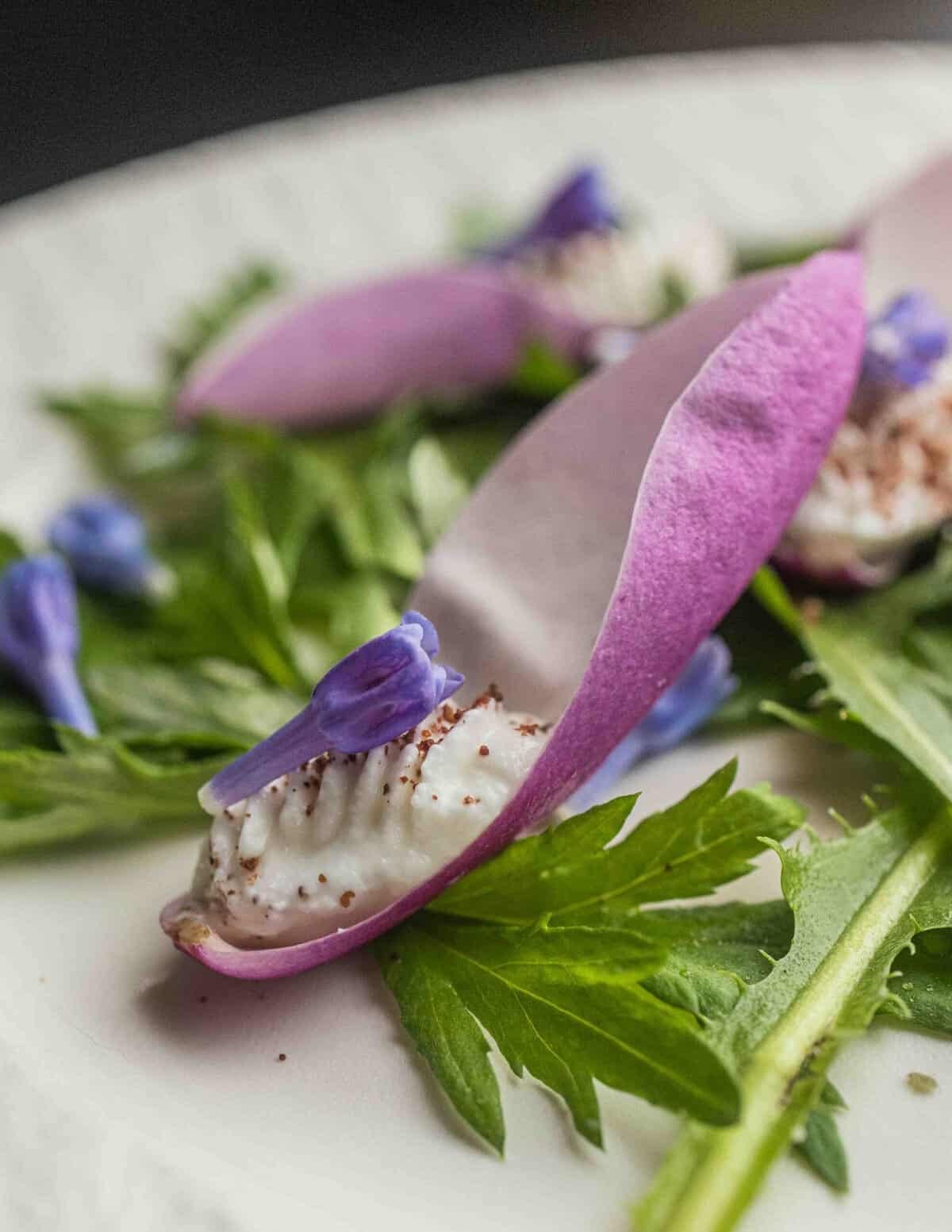
Dust it with a sprinkle of sumac and some edible flowers and serve them as a canape. It's a nice way for people to dip their toes in the water.
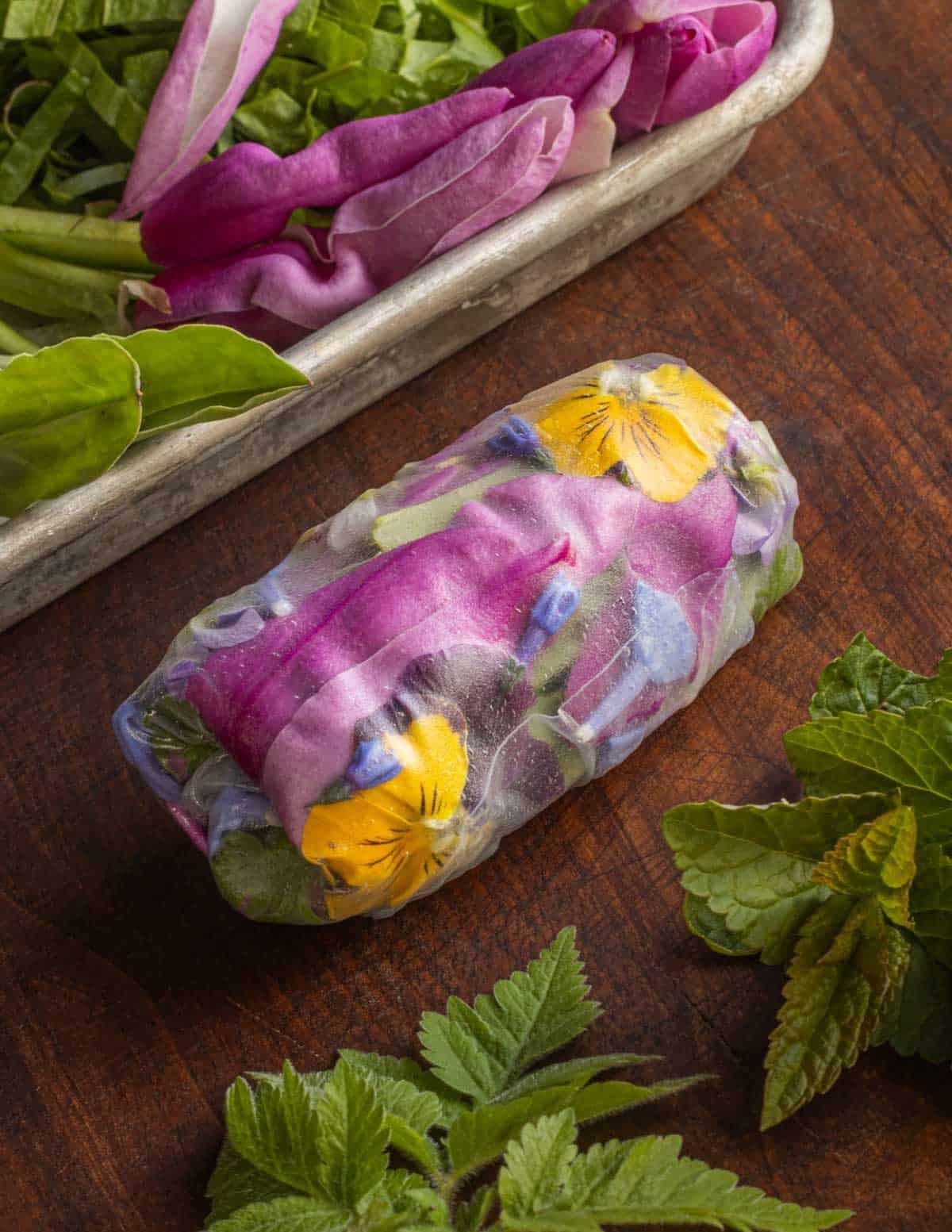
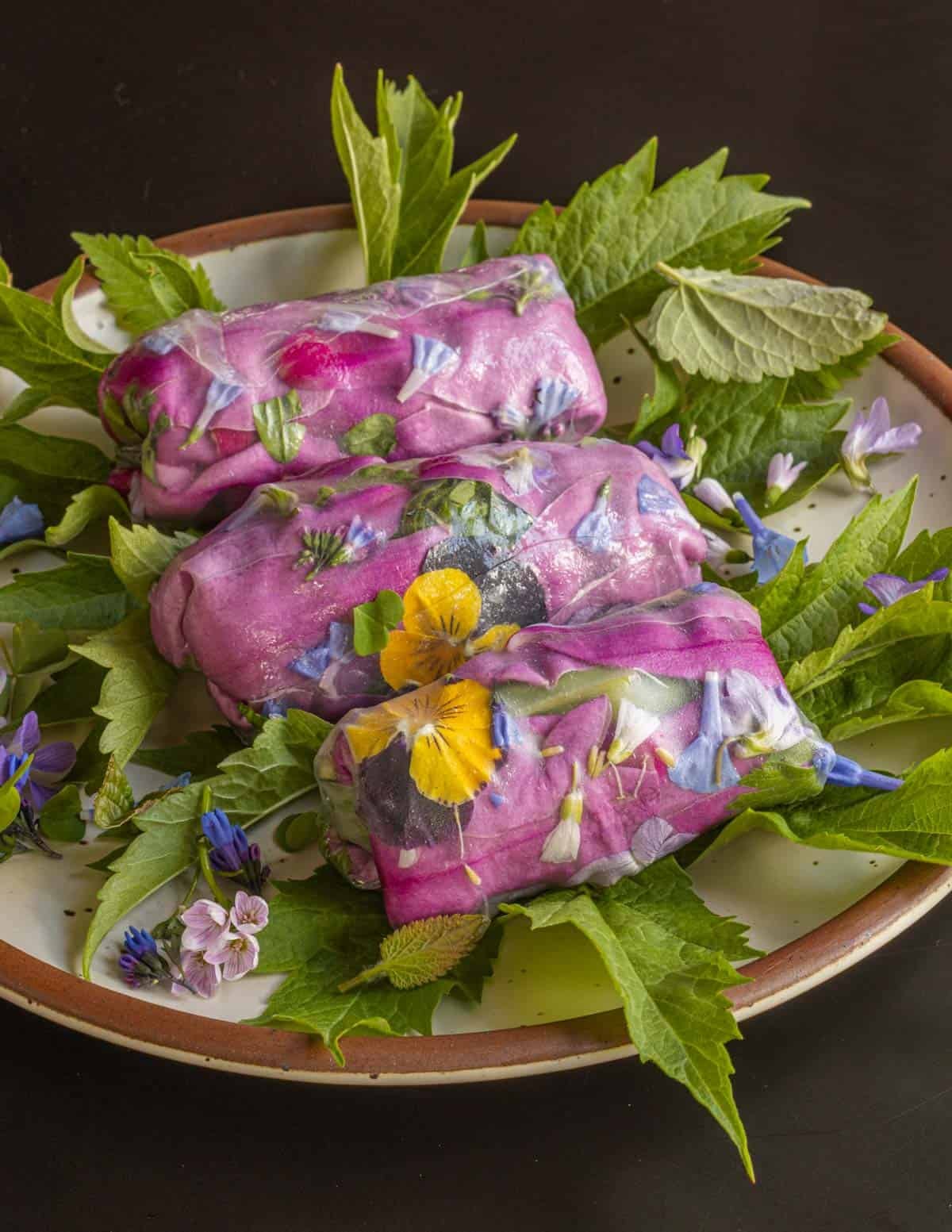
By far I had the most fun using them in wildflower spring rolls. Below are some I made with shredded sorrel, anise hyssop, cucumber, magnolia petals, bluebells and pansies. The spicy floral flavor is there, but it's balanced. I demonstrate this in the video and it's a great interactive recipe. Keep the spicy peanut sauce handy.
Pickled Flowers
A discussion of cooking with the flowers isn't complete without mentioning pickled magnolia blossoms. While I'd assume the practice originated in Asia, foragers around the world on social media have been making them for some time.
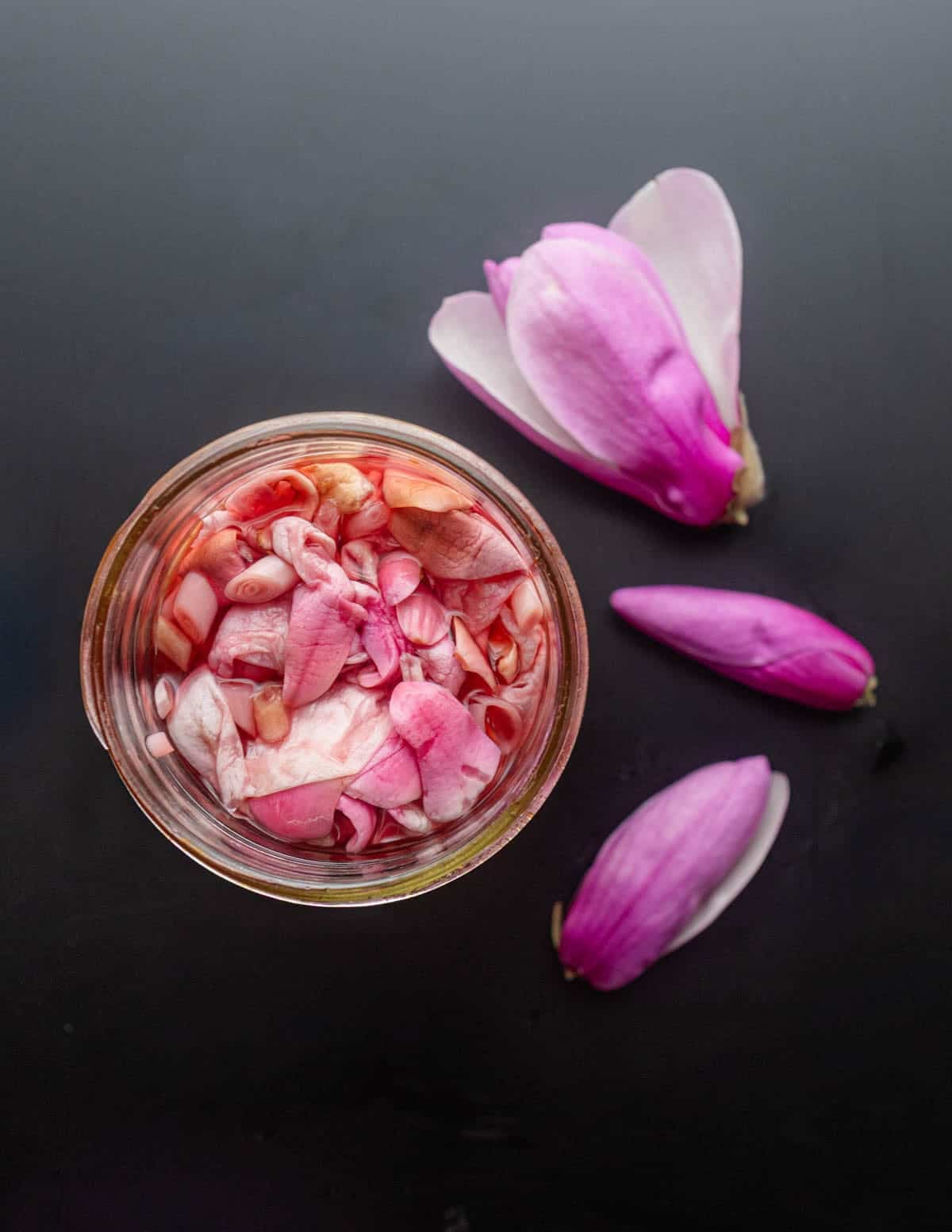
Most accounts online I see use smaller blossoms, and while they work, I can definitely see the appeal of larger, more fleshier species like M. grandiflora from a textural standpoint.
Pickling flower petals was an odd proposition for me and I learned a few things in the process. At first I assumed that the texture would be superior if they were preserved whole with cold pickling liquid, but I quickly learned my lesson when all my cold pickles discolored and oxidized, as you can see below.
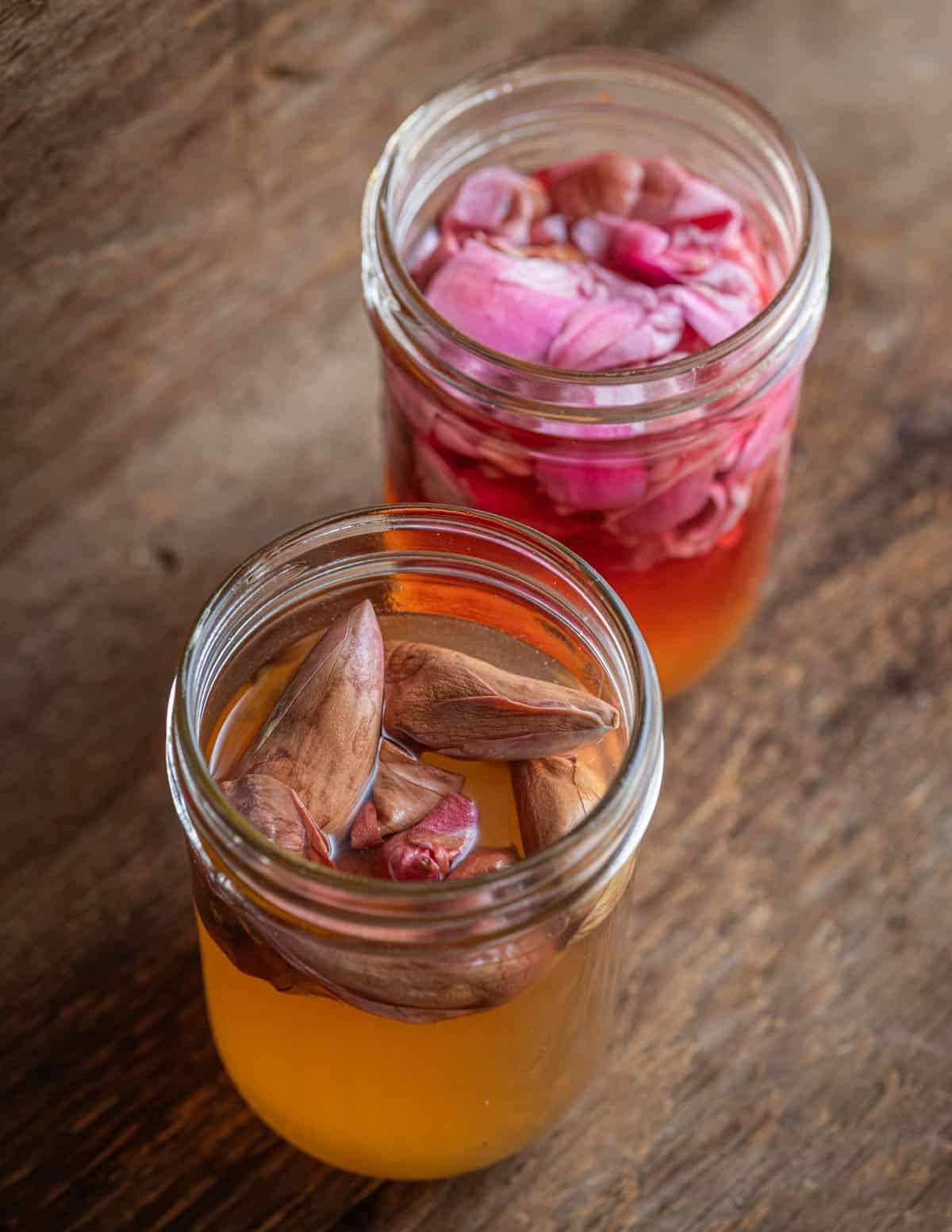
The petals keep a surprising amount of flavor after pickling, but you want to keep the liquid simple, garlic, pickling spice, or other assertive flavors will mask the natural taste of the flowers.
Some accounts compare them to pickled ginger, but they're no where near as aromatic or spicy. They can still make a fun addition to a cracker spread with goat cheese or alongside some sushi.
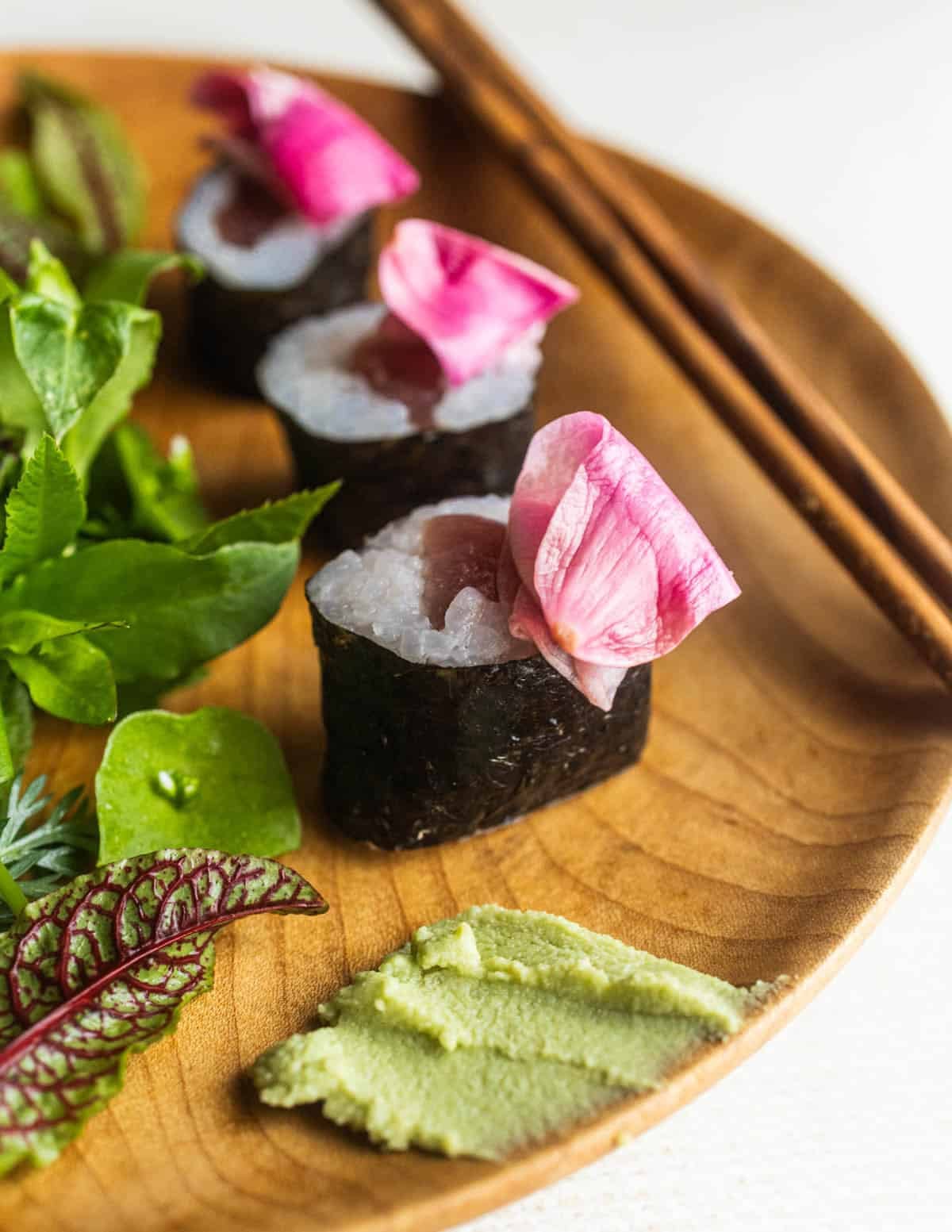
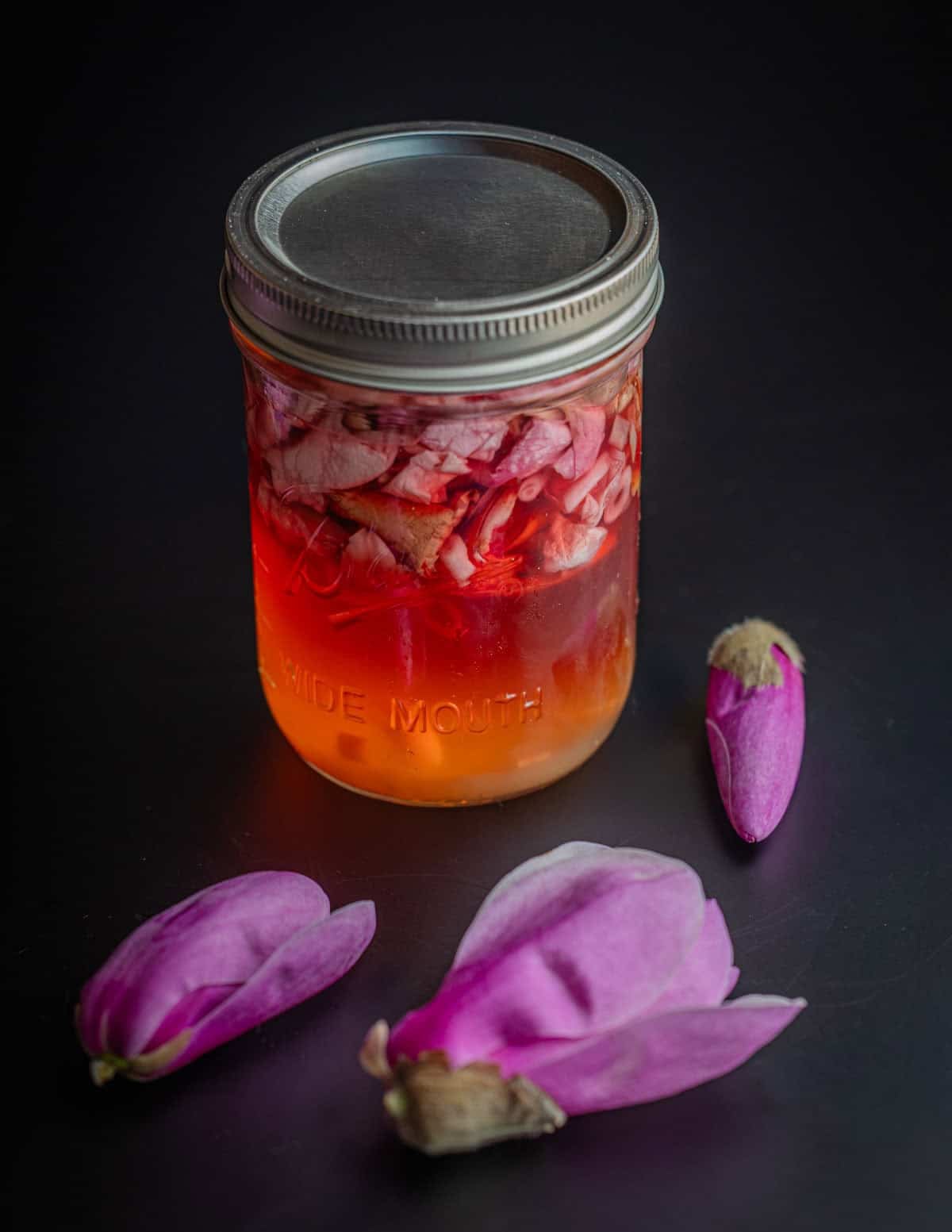
For one pint jar, bring ¾ cup rice wine vinegar, ⅓ cup honey, ¼ cup water and 1 tablespoon kosher salt to a boil and pour over 2 oz of freshly picked flowers. Allow the flowers to wilt and seal in a mason jar. I add an ounce of red ramp stems to enhance the pink color.
Have you eaten Magnolia flowers? What do you think, and what do you like to do with them?
Arc
I just discovered Magnolia blossoms this year, and they may have become my new favorite thing to forage. I made some really great syrups which I've used in coffee, cocktails, and as a soda. I oven dried some and air dried some and have used it in baked goods, the oven ones take on more of the cardamom/ginger notes and the air dried ones kept more of the bright floral, almost citrus notes. Since I have a hard time wasting parts of the plant, I also kept the stamen and mixed them into salt with dried finger long peppers from an asian market. That has been surprisingly a great finishing salt on anything from pasta and toast to cocktail rims.
Thanks for all the information in your posts! Your site is my go-to for foraging and recipe ideas.
Alan Bergo
Thanks Arc.
Chris
Awesome info, great pictures, the spring rolls look amazing, with a bit of sliced beef or pork, can't wait to play with these more. I'm surprised because I've practiced a bit of medicine and relaxation with all sorts of flowers and herbs for about 10 years but the other day I saw Giant single pedal of magnolia and picked it up, amused by it's thick cup like nature, and was blown away by it's sweet bubble-gummy smell. I never knew! As a lover of jasmine, and I've made honey suckle syrups before, I'm really excited to work with this. I'm considering a deep bath in it to contemplate its nature. The first bite was much stronger with ginger becoming obvious, which was not there in the scent. Thanks for sharing!
Alan Bergo
Thanks Chris.
Charlotte
Beautiful research. Please connect with The Sioux Chef! I would enjoy watching your collaboration!
Alan Bergo
Oh yes I know Sean and we have many mutual friends. I helped supply his tea program at their opening. My close friend Linda Black Elk runs his non-profit Natifs-definitely look her up too. I’d love to cook timpsila with him someday but he’s quite busy.
Sabryna
I agree — that would be an incrEDIBLE collaboration in deed‼️👏
Susie
I love this post, Alan. Such beautiful flowers - I would never have imagined being able to eat them ! As a fervent admirer of all things fermented I really appreciate your indication of the need to use hot water for pickling - I would not have thought that at all, so thanks for relatiing your "error" for us 🙂 I have ordered your book and am very impatient to receive it .... Thanks for all you share.
Alan Bergo
Hey thanks Susie. Also a great update here: I fermented the flowers with equal parts very finely shredded red and green cabbage by weight with a few chopped ramp stems and the flavor is and texture are great and I’d prefer it to vinegar pickles.
Diane Dodge
I've done many of these things with yucca flowers, both here and in the high desert in the San Jacinto Mountains in SoCal. It's been a big year for Our Lords Candle (Hesperoyucca whipplei), and had the opportunity to try both blossoms and bloom spikes.
Today I'm going out foraging for nettles and hosta shoots!
Alan Bergo
Thanks Diane.
Gaby
Here in Switzerland, I have a friend that uses them to make a tasty aromatic sirup. She puts the flowers in a ziplock bag with some sugar, lets it stand like a day or two and then cooks it with water to make sirup. This sirup can also be used to make cocktails and mocktails.
Alan Bergo
Thanks Gaby.
Carla Beaudet
Had a Jane Magnolia growing near the house, but the copious scale and the carpenter ants that attracted forced me to get rid of it. But now I am curious about eating magnolia blossoms, which I've never tried. There is one native magnolia around here, but I think they have already bloomed this year.
Karin
Ok, I blame you for finding Liziqi (the Chinese video) and spending my entire morning watching her magical life with her grandma. Thank you!
Btw, I miss the enormous Magnolia trees from the South - their wonderful citrusy scent too. Never knew the flowers were edible!
Alan Bergo
Thanks Karin. Yeah her videos are something else!
denisa
I absolutely love this beautiful and informative post. I’ve only used magnolia petals tossed into salads with some mandarin orange pieces. Enjoyed the mild, spicy flavor.
Alan Bergo
Thanks Denisa.
Haelie
I have enjoyed pickling magnolia blossoms and eating them with gyudon (Japanese beef and rice bowls).
Beautiful photography and recipes! Your ideas for different ways to consume them while fresh are really fun.
The biggest appeal of pickling them for me has been that they keep for at least several months in the fridge for continued use over time. It’s nice to be able to pick a large quantity and be able to preserve them for later use.
Alan Bergo
Thanks Haelie. I think using the pickles with rice bowls will be where it’s at for me.
Liz
Growing up my neighbor had a magnolia tree. As kids we would pick the blossoms and eat them and make "perfume" with the petals on the ground and crush them in a jar of water. They were so fragrant and tasty! Glad we maybe had a clue 🙂
Alan Bergo
Great story, thanks for sharing Liz.