
Possibly my all-time favorite garlic scape recipe, this simple salsa comes together lightning fast and can be canned for use throughout the year. With only a handful of ingredients you can tweak with what you have on hand, it's a great way to use up a tangle of scapes from the farmers market or the garden I reach for every summer.
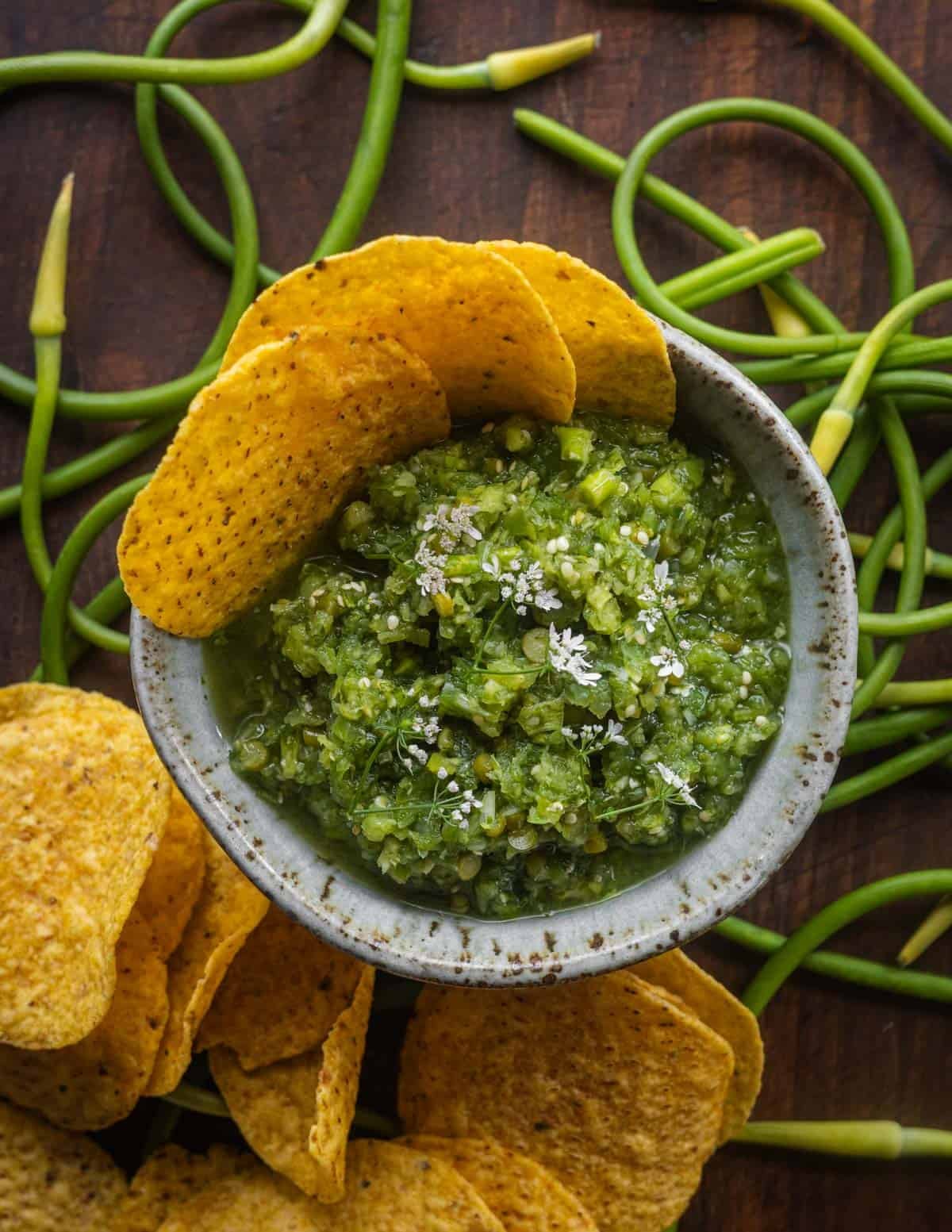
A few years ago, my friend, Chef Stephanie Kochlin (also a former long-time sous chef to Lenny Russo, like me) gave me a simple jar of tomatillo salsa from her garden.
I love tomatillo salsa, but my go-to is usually a thick, jammy salsa verde made from roasted or grilled tomatillos. This one was different, it was very fresh, light, and mild. I loved the change of pace and asked her how she made it.
It was simply a recipe born of necessity. Her garden was overflowing with tomatillos, so she buzzed up a few ingredients in the food processor and processed the jars in a water bath. It was the same improvisational cooking we were taught for the daily-changing menu at Heartland under Chef Russo, and made me nostalgic for the glory days.
The end result is light, fresh, acidic and bright-a perfect compliment to fatty grilled meats or fish I eat in the summer. It goes without saying it's also fine with tortilla chips, tucked in a quesadilla, and just about anything else you could put it on, leftover brisket and eggs being two of my favorites
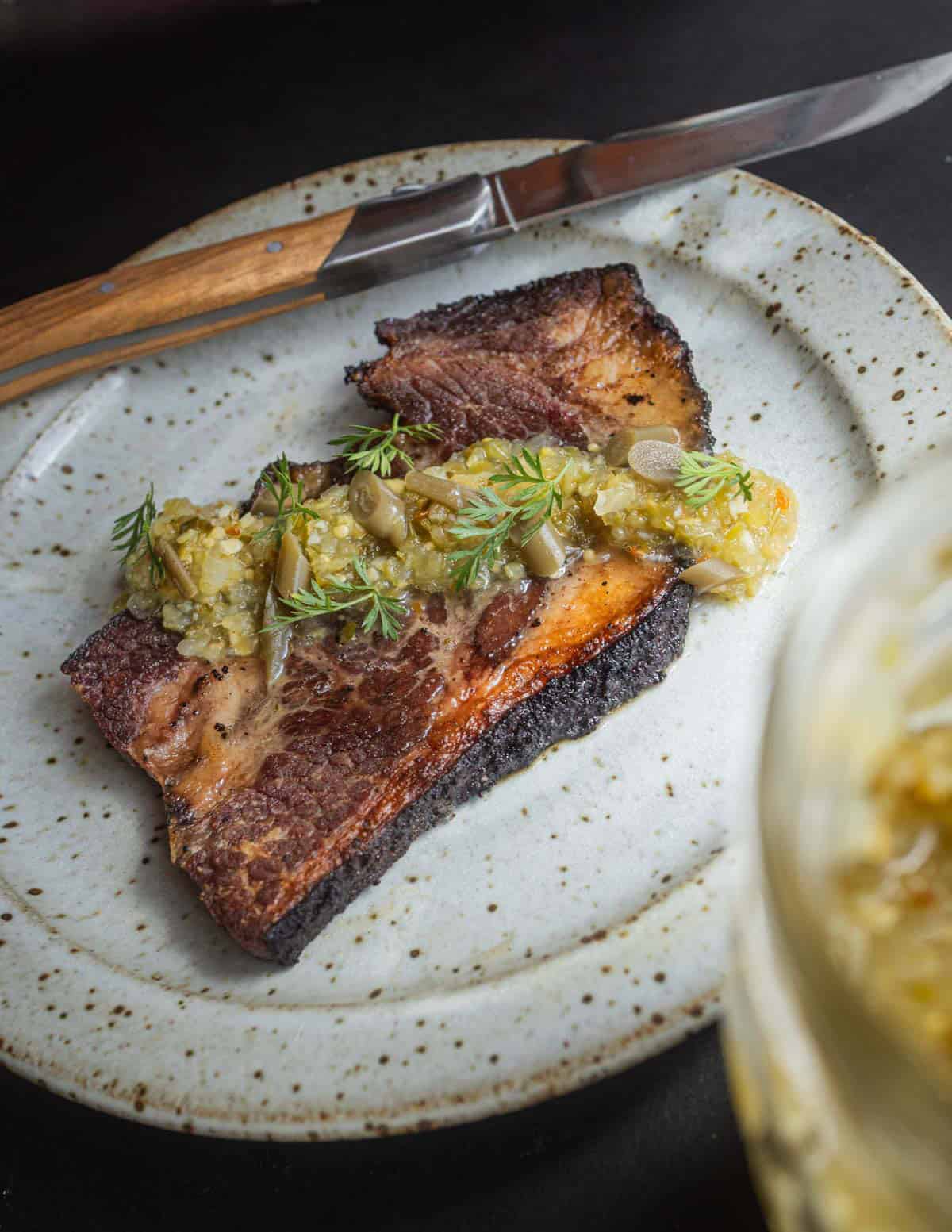
I've made many different batches of it now, but my favorite is still one I made after a trip to the farmers market in garlic scape season. If garlic scapes are out of season, it's fine to skip them and add another allium like greens onions.
How to Cut Garlic Scapes
This might be the easiest salsa I've made, all you need is a food processor and a knife.
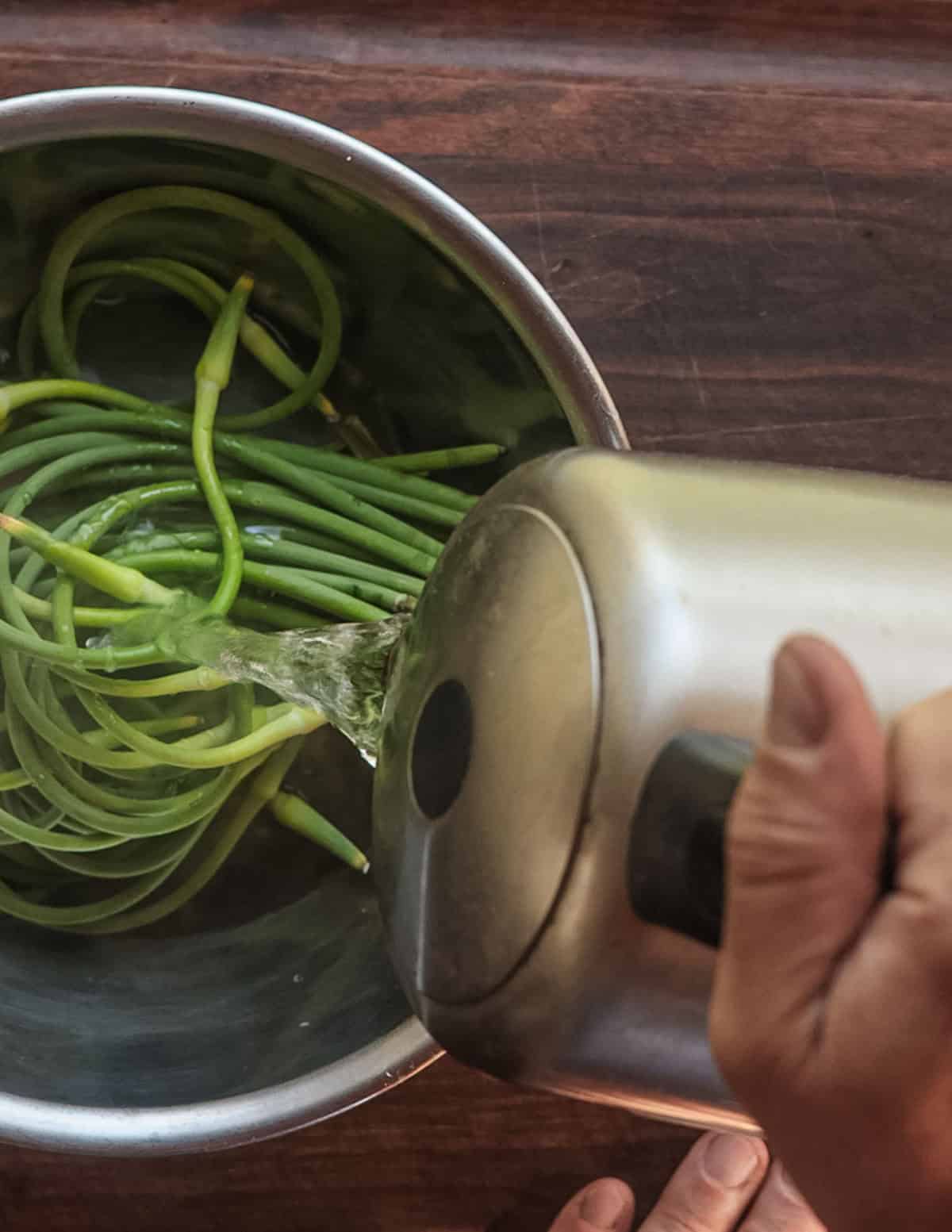
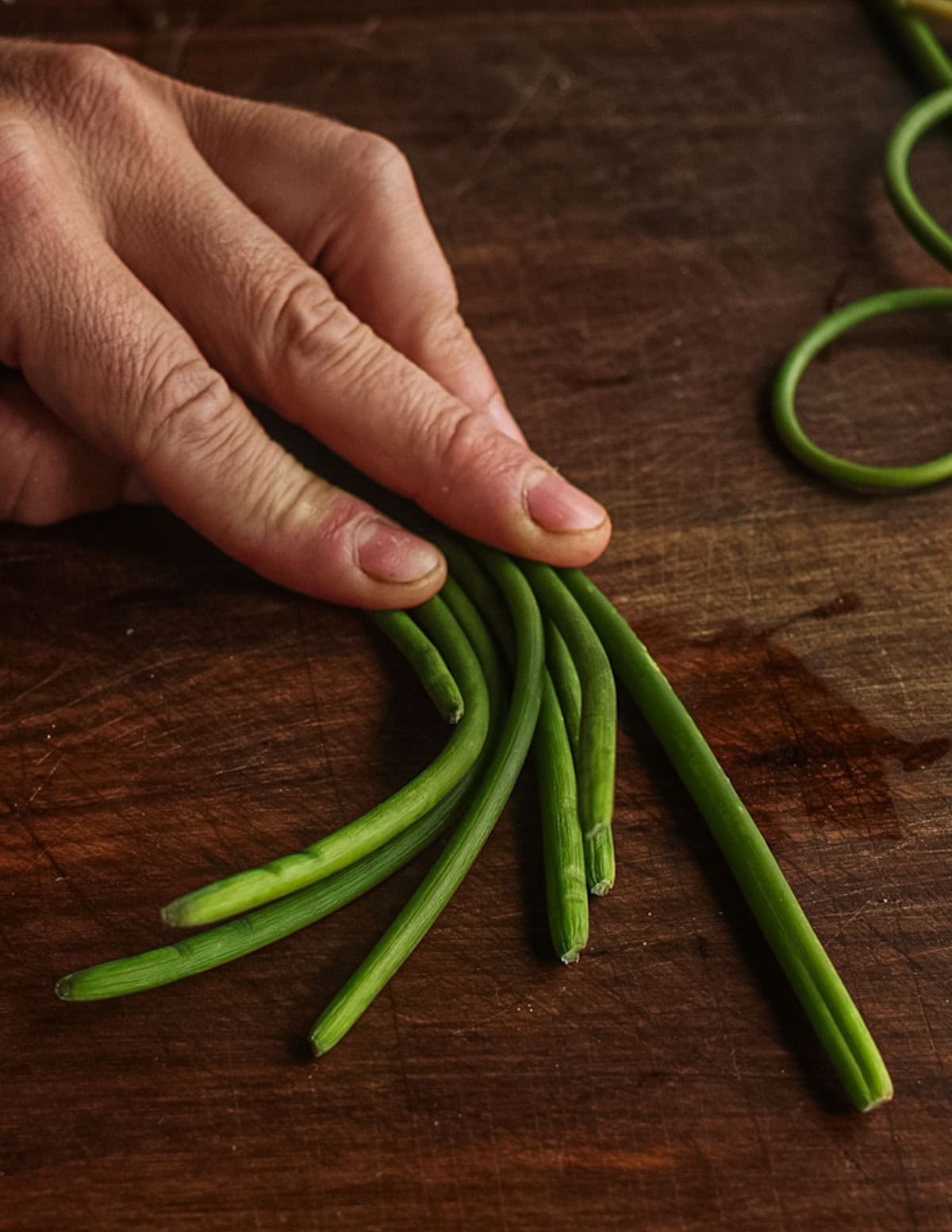
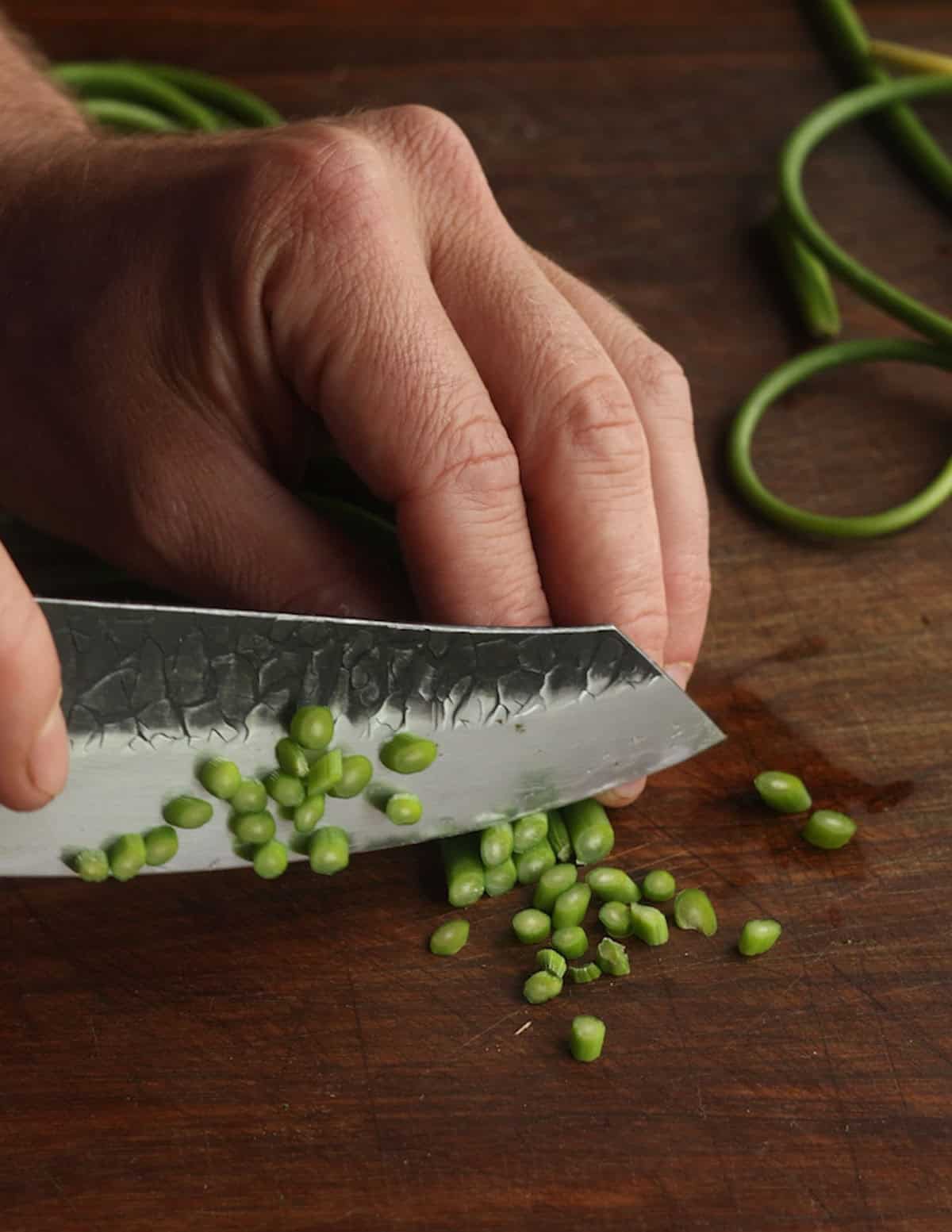
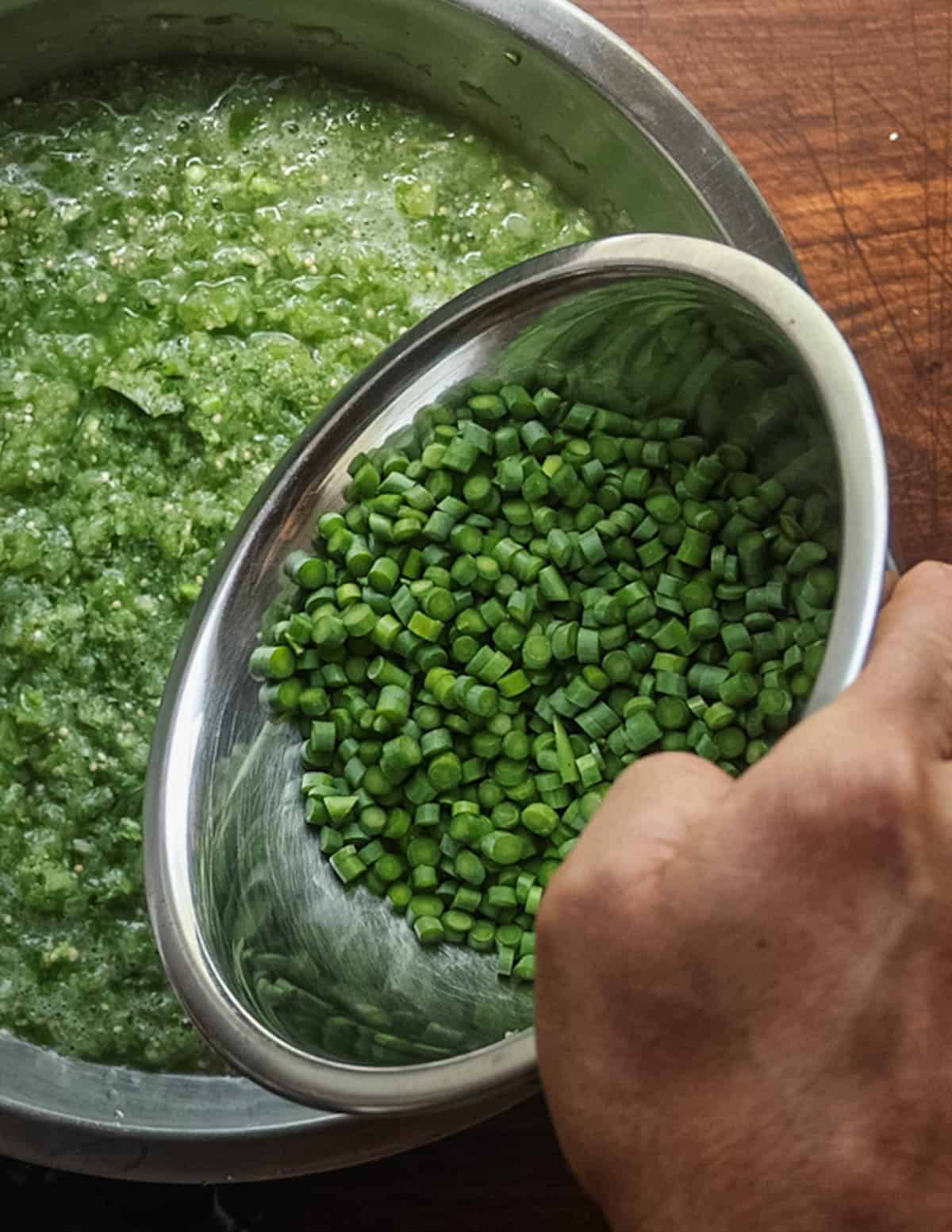
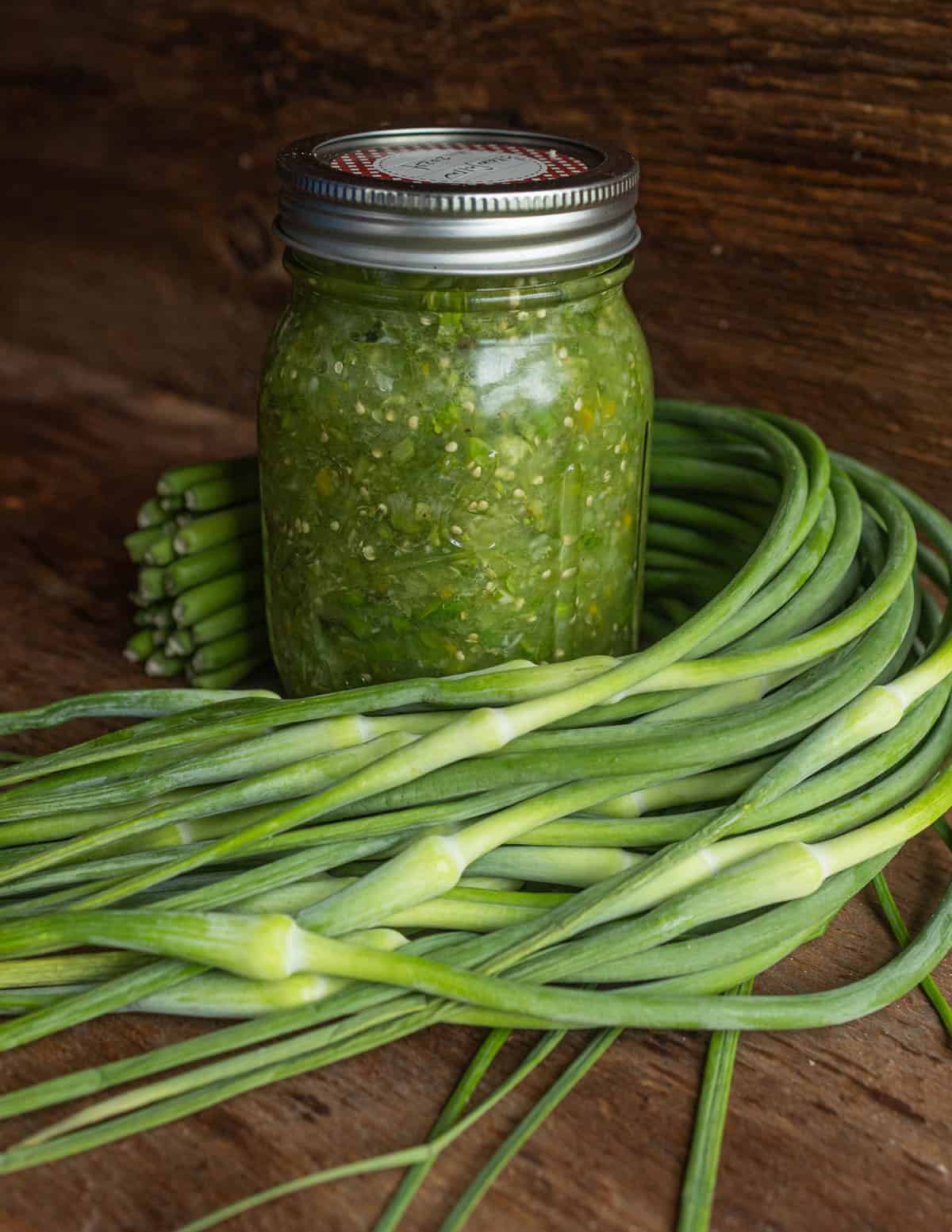
One good trick to know is how I handle garlic scapes to make them easier to cut. While they wriggle around fresh on a cutting board, dipping them into boiling water or pouring it over them in a bowl for a few seconds will soften them and make them submit to the knife. I roughly chop half of the scapes which get coarsely pureed, thinly slicing the remaining half to use as a garnish, adding them at the end.
Preparing the Salsa
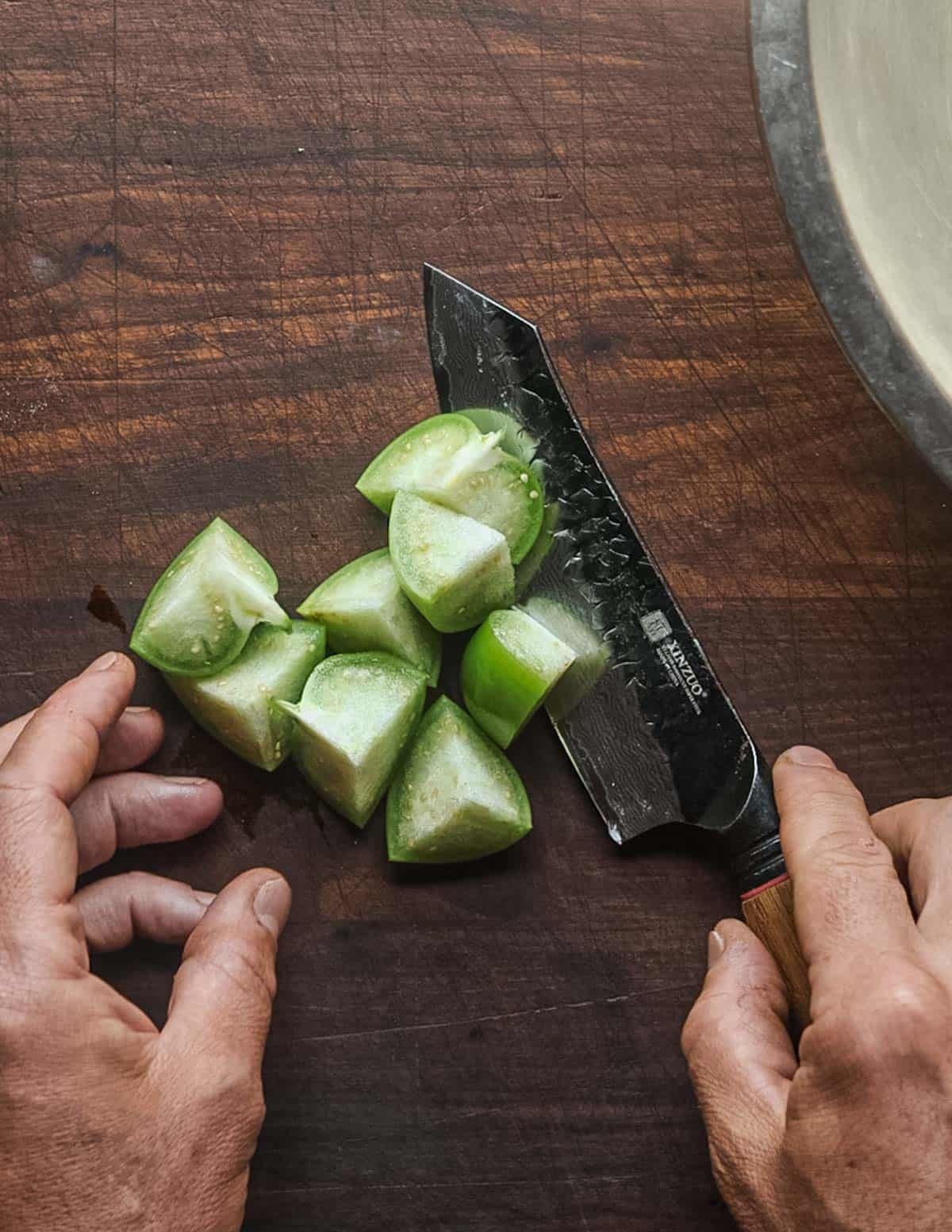
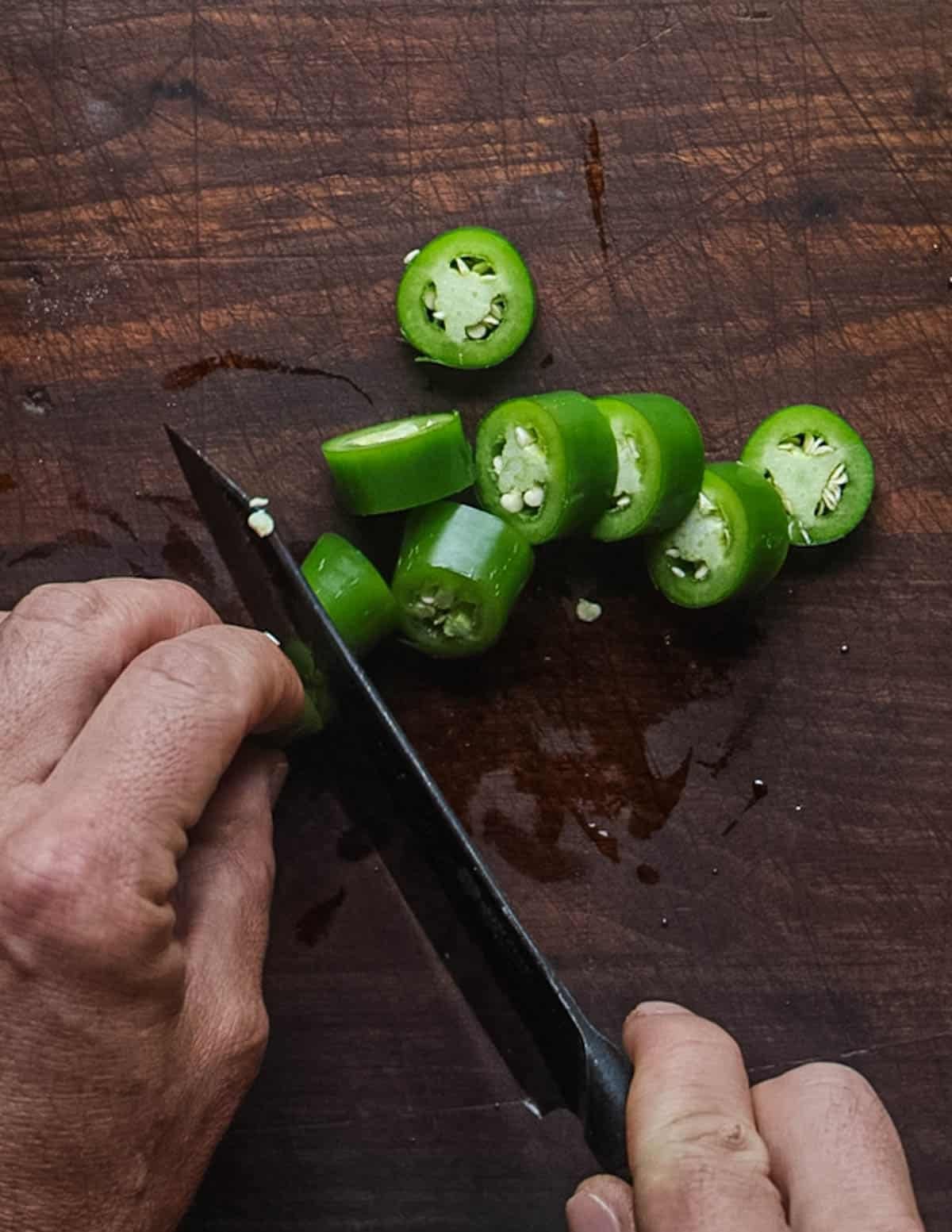
For the base of the salsa, peel the husk from some tomatillos and cut into pieces. Then cut up some alliums, like a small white onion or some green onions, along with a serrano pepper for a spicy version, or jalapeno for a milder one.
Add a bunch of cilantro, a splash of lime juice, salt to taste, and puree the whole mess in a food processor until it's relatively smooth. Essentially, that's it.
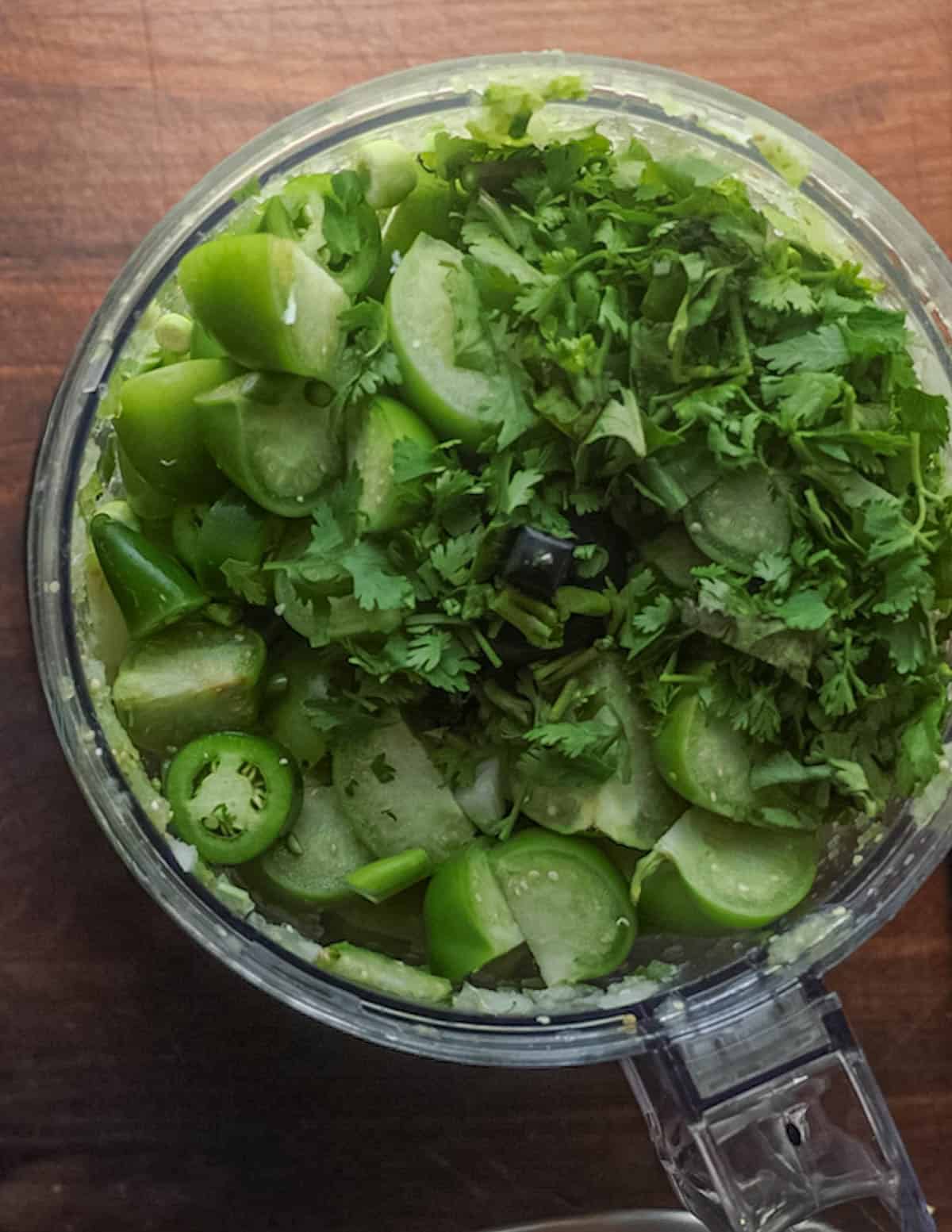
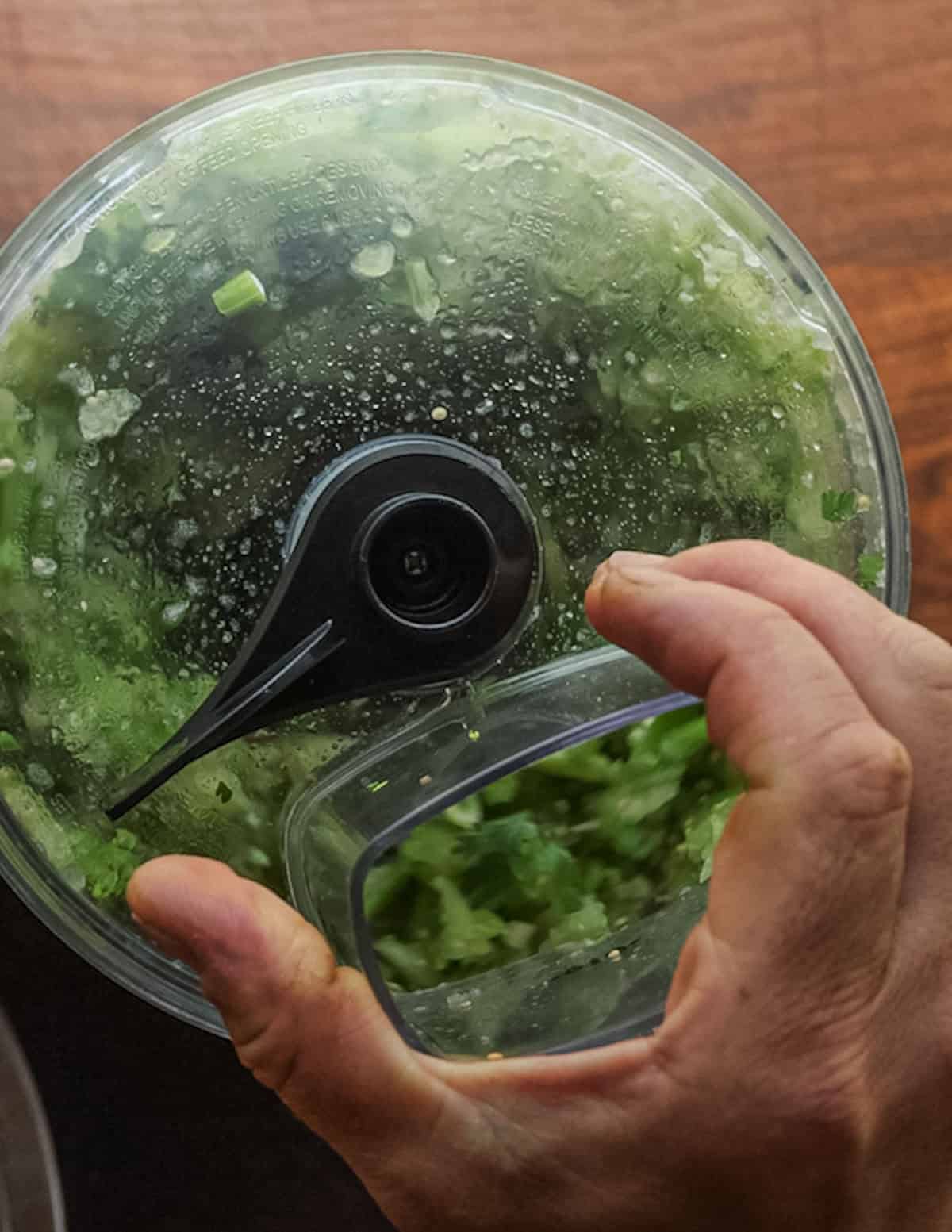
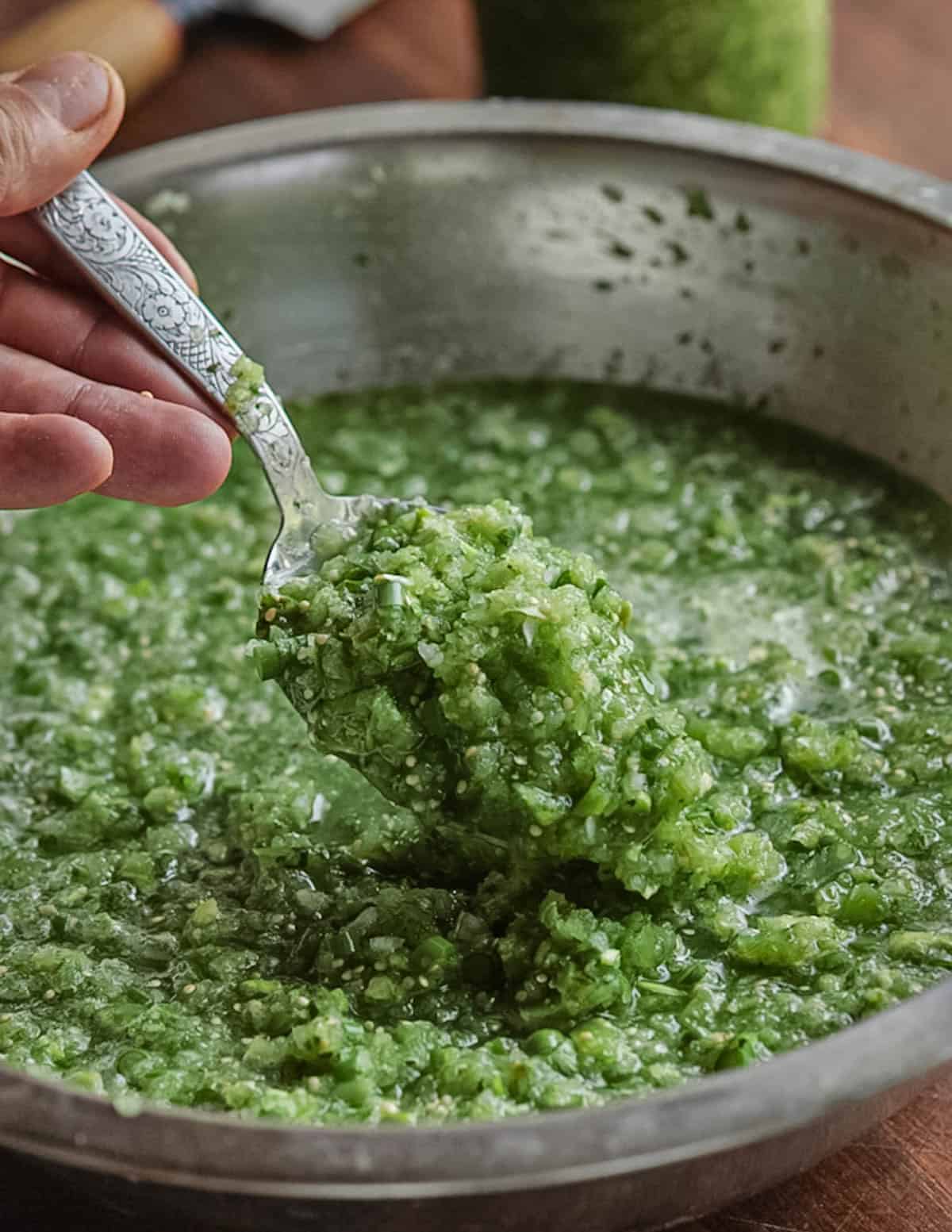
After the salsa's pureed, add the remaining garlic scapes back to the salsa as a garnish. While you can simply puree everything, seeing physical pieces of garlic scape helps emphasize them. Finally, transfer the salsa to mason jars and refrigerate.
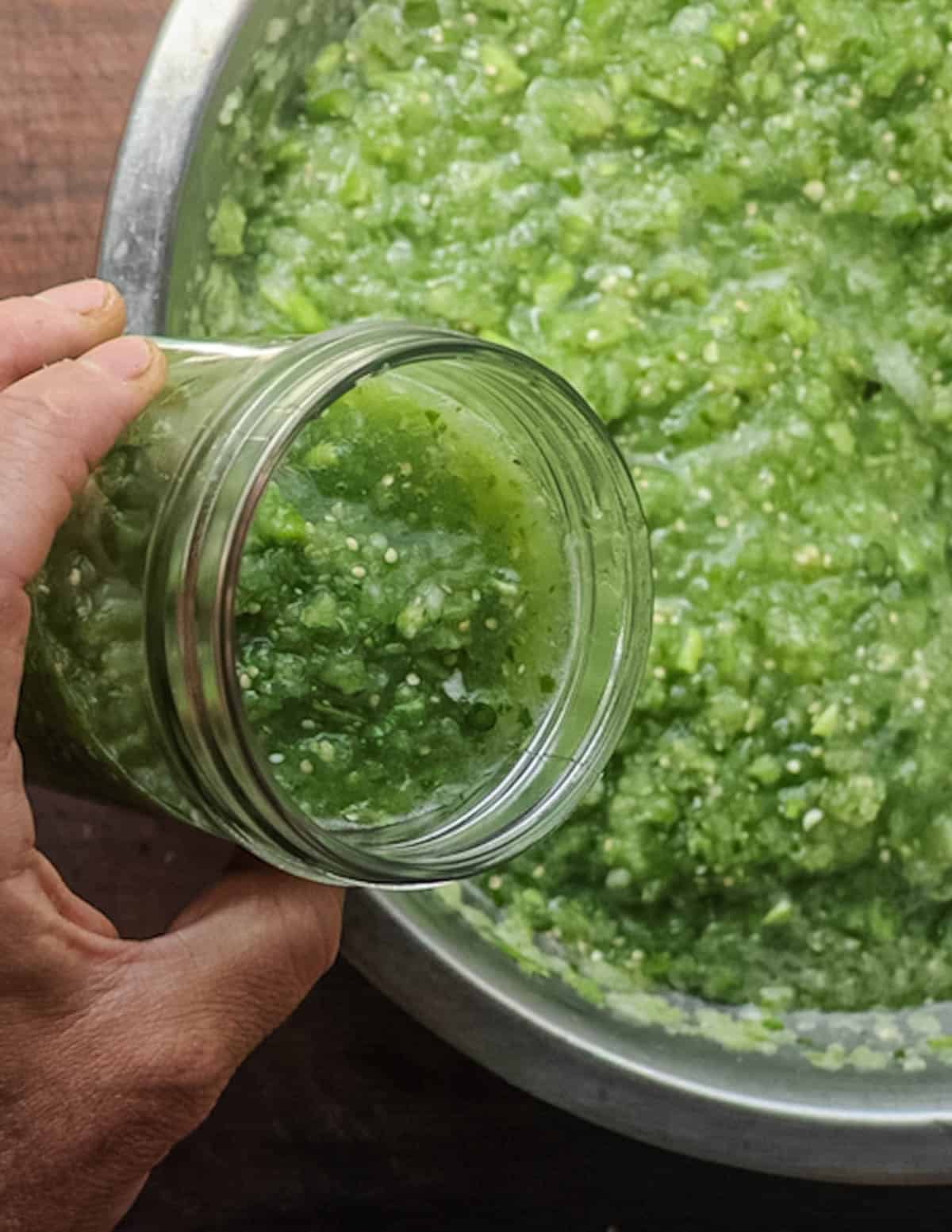
The salsa will stay fresh in the fridge for a week or two, and eating it the day after it's made is probably my favorite, but it can also be canned. The flavor's still good after canning, but I'd urge you to keep a jar or two in the fridge for as long as you can. It gets better with time and the flavor is vibrant, bright, and irresistible.
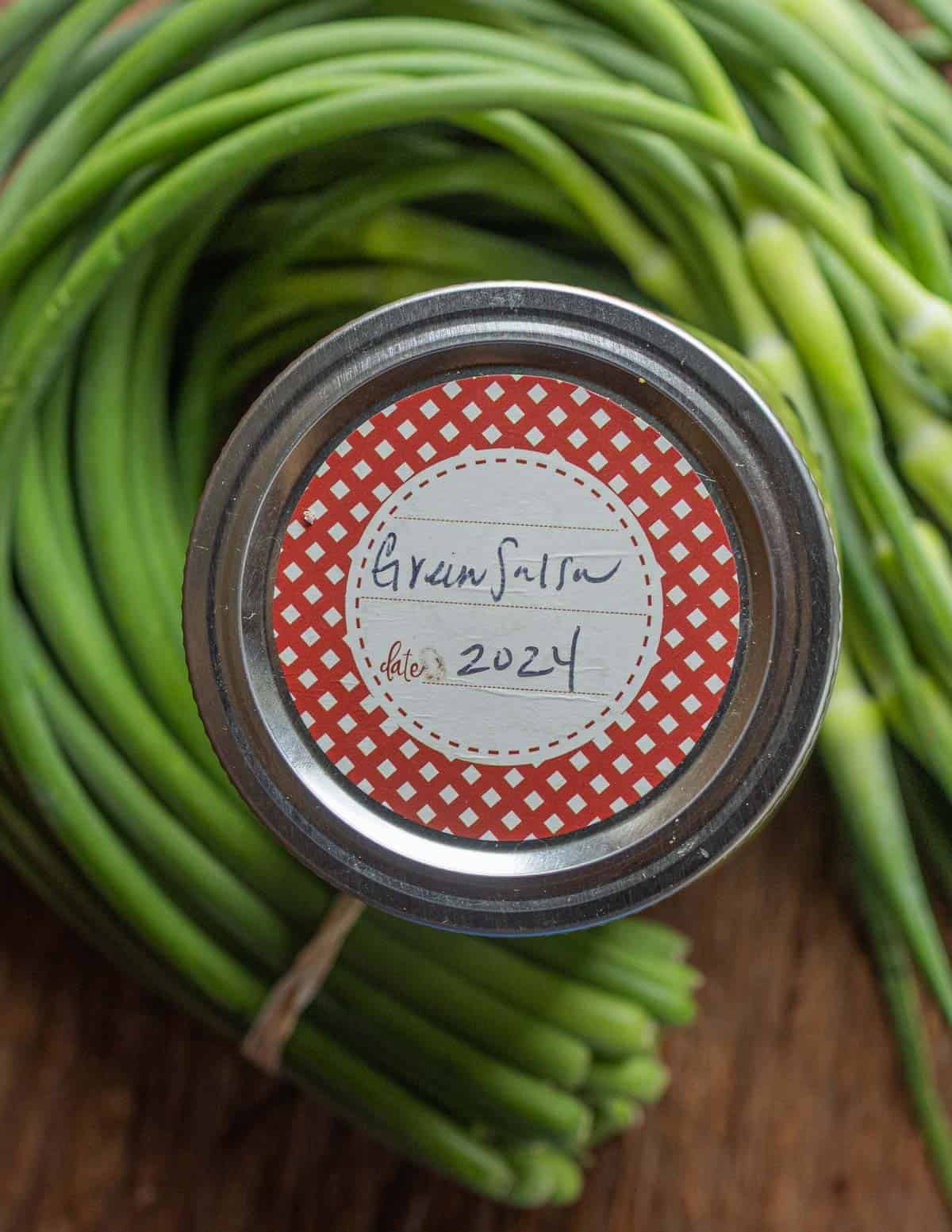
To can the salsa, prepare a waterbath canner and lower the jars into simmering water. Cover the pot, bring to a boil and cook for 10 minutes for pints. Remove the jars to cool and seal, then label, date, and store in a pantry.
Extra Credit: Add Cilantro Roots or Unripe Seeds
Garlic scapes tend to be available at the same time that my cilantro is making its unripe green seeds, which are my favorite part of the plant and the main reason I grow the herb.
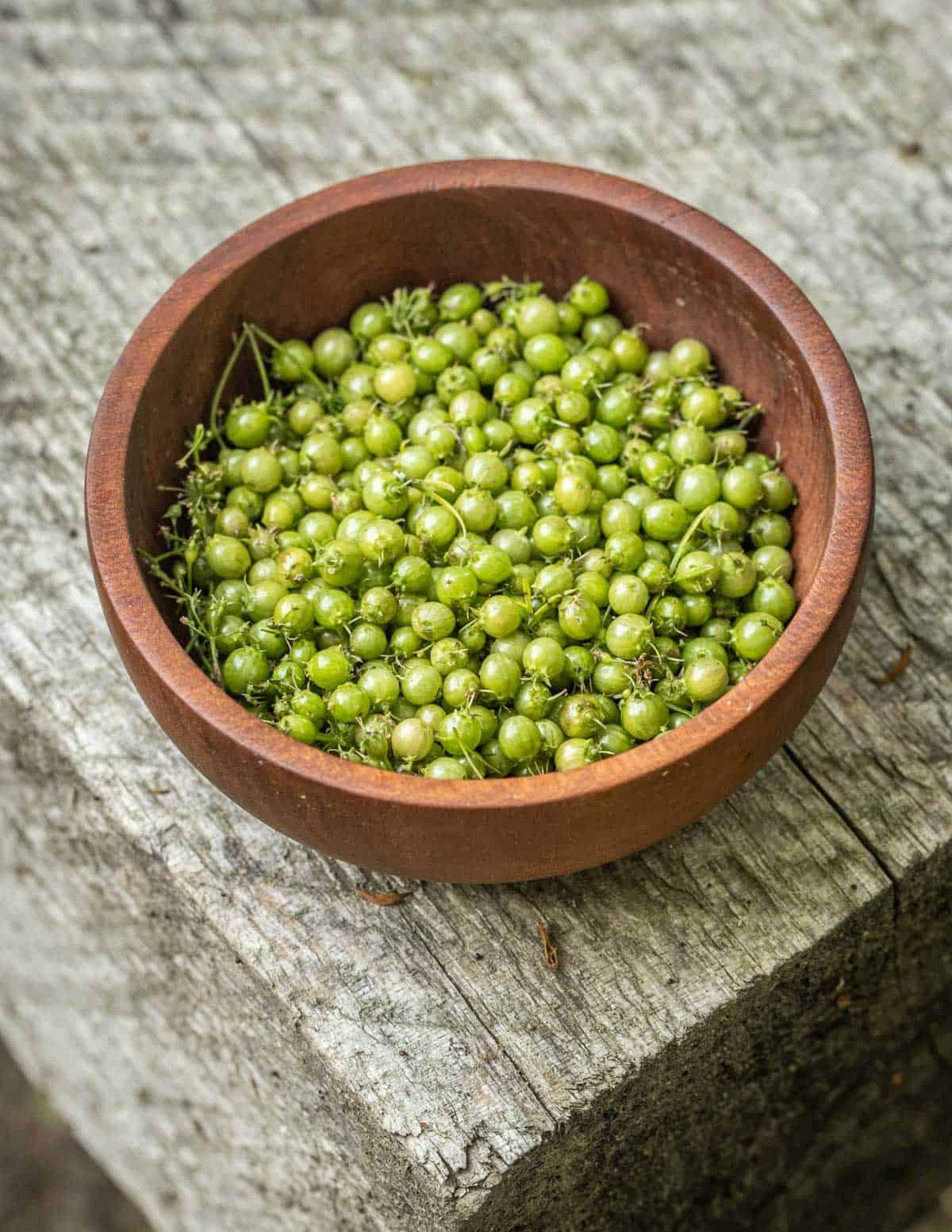
They have a potent aromatic flavor I like to describe as "green electricity". It's a vibrant, potent cilantro aroma that takes shape when the plant is flowering, strengthening its scent to attract pollinators.
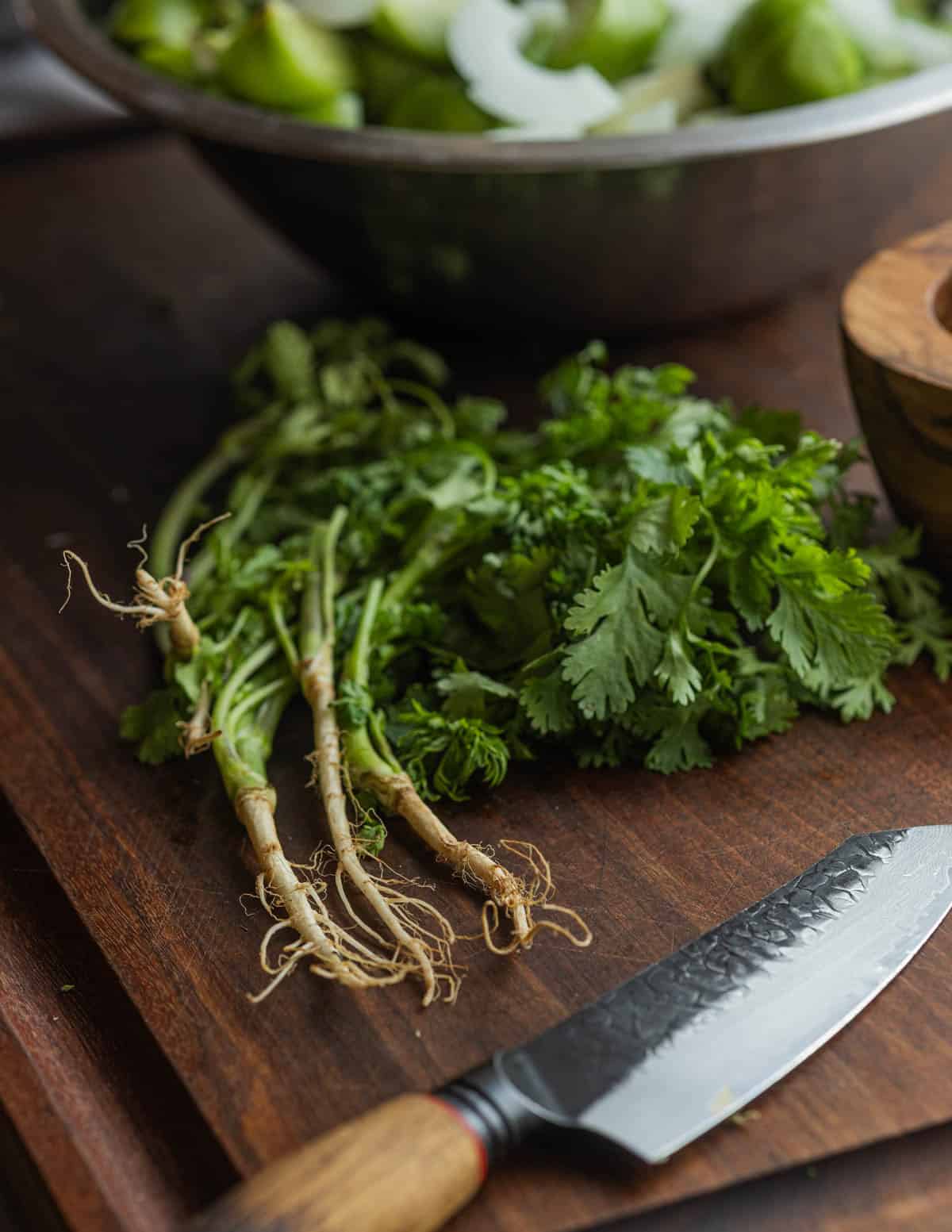
At the farmers market in the summer, cilantro with it's attached roots is also available, so I added some finely chopped, crushed roots to this batch but it's optional. The flavor of cilantro roots is identical to the unripe green coriander seeds and flowers, so don't worry if you can't find any.
Related Posts
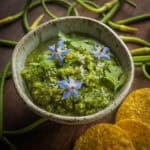
Tomatillo and Garlic Scape Salsa
Equipment
- 1 water bath canner optional
- 1 Pint mason jar optional
- 1 paring knife
- 1 Medium mixing bowl
Ingredients
- 12 oz tomatillos husk removed and rinsed
- 1 each serrano pepper or jalapeno for a milder version
- 2-3 oz fresh garlic scapes
- 4 oz white onion
- 2 oz green onion tender white and green parts only
- 1 bunch (1 oz) fresh cilantro roughly chopped
- 1 tbsp fresh squeezed lime juice or to taste
- 1.5 teaspoon kosher salt
Optional ingredients
- 2 tbsp unripe green cilantro seeds and or 1-2 cilantro roots-see note
Instructions
Garlic Scapes
- Put the garlic scapes in a bowl and pour boiling water over them. Turn them over with tongs, allowing them to soften for no more than 60 seconds. Remove the scapes and cool.
- Lay the scapes out on a cutting board and line them up, then cut into ¼ inch slices. Reserve half of the garlic scapes for adding back to the salsa after pureeing as a garnish.
Salsa
- Cut the tomatillos, onions and serrano pepper into pieces that will fit in a food processor.
- Roll the lime around on a cutting board, pressing on it with your palm to release the juice.
- Working on batches, combine the onions, tomatillos, cilantro, and half the garlic scapes and puree in a food processor until nearly smooth, adding the salt while pureeing.
- Pour the salsa into a mixing bowl, add the remaining garlic scapes and lime juice. Double check the seasoning for salt, lime and chili, adjust until it tastes good to you, then transfer to a pint mason jar and store in the fridge.
Canning (optional-you will want to triple the recipe at least)
- The salsa can also be canned. To do that, put the salsa into mason jars leaving ½ inch headspace and lower into a hot water bath canner. Cover the pot, bring to a boil and process for 10 minutes for pints.
- Remove the jars from the canner to cool and seal naturally. Inspect the jars for proper seals before labeling and storing in a pantry. The salsa will be good for a year in the jar, but should be refrigerated after opening.
Michelle
This recipe is fantastic, thanks for sharing. Just missing the step for the cilantro in the recipe.
Will definitely keep this one!
John Smith
Finally used up the tangle of scapes in the fridge with this, and the thirty-second hot-water dip before chopping is a genuine revelation - they stopped wriggling and submitted to the knife just like you said. I kept half of them out and sliced them thin for the garnish, and those little green curls on top make the jar look as fresh as the salsa tastes. Went with a single serrano for a whisper of heat, and it landed right at that light, bright place you describe, nothing like the heavy roasted verde I usually lean on. Four half-pints went into the water bath for winter and I'm already plotting a return trip to the farmers market before scape season slips away.
Alan Bergo
Thanks John.
Colleen Brown
Would this work with frozen garden tomatillo?
Alan Bergo
Yes
BoB
Hi Alan, I don't grow garlic but I do grow garlic chives so i used their scapes to make this today. My local farmers market had everything else that I didn't have on hand and this salsa turned out excellent. Thank you for another mind opening recipe.
Alan Bergo
Thanks Bob, I made a half gallon this week. Great to have in the winter.