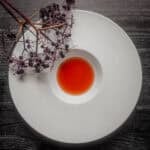
Homemade Elderberry Vinegar
Simple homemade vinegar made from elderberry scraps leftover from jelly or syrup.
Equipment
- 1 1 gallon mason jar
- Cheesecloth
- Strainer
Ingredients
- 1 cup granulated sugar
- 28 oz elderberry scrap skins, seeds, etc
- 4 oz bright colored berries, like blueberries or aronia for color
- 1 thin slice fresh ginger to speed fermentation, optional
- 2 Tablespoons living vinegar such as apple cider, or vinegar from a previous batch to speed fermentation, optional but recommended
- 2 qts water
Sweetening
- 1 cups sugar, honey or maple syrup or to taste
Instructions
Fermentation
- Mix all ingredients, stir well to dissolve the sugar and put into a container, such as a gallon mason jar.
- Cover the lid with cheesecloth to ensure the vinegar can respire and get air, which is necessary for fermentation. Leave the jar at room temperature.
- Strain the jar after two weeks, then put the strained juice into a smaller jar (½ gallon size) replace the cheesecloth, and continue fermenting at room temperature.
- Don't worry if you forget to strain the jar after two weeks-it won't harm the vinegar at all.
- After another 3-4 weeks the vinegar should be very tart and sour. At this point it's likely reached maximum tartness and doesn't need to have the cheesecloth anymore. Put a non-reactive lid on the jar and store in a pantry, using as needed.
Heating the Finished Vinegar
- If you made the vinegar with raw fruit, pour it into a pot, bring to a simmer and cook for five minutes, then allow to cool naturally.
Sweetening the Vinegar
- I really like sweetening fruit vinegars to use for pan sauces and salad dressings. Start with about ½ cup of sugar or maple syrup per quart of vinegar. Sometimes I may also add a splash of brandy.
Video
Notes
Safety Note
If your elderberries were raw or juiced from frozen, make sure to cook the vinegar after it's done fermenting to ensure it's safe. Elderberry poisoning is highly unlikely given the small amount of vinegar used in a dish, and the fact that I often cook with it, but I do recommend it out of an abundance of caution.
Nutrition
Serving: 1tablespoon | Sugar: 0.4g